Venezuela & Grenfell – 2018

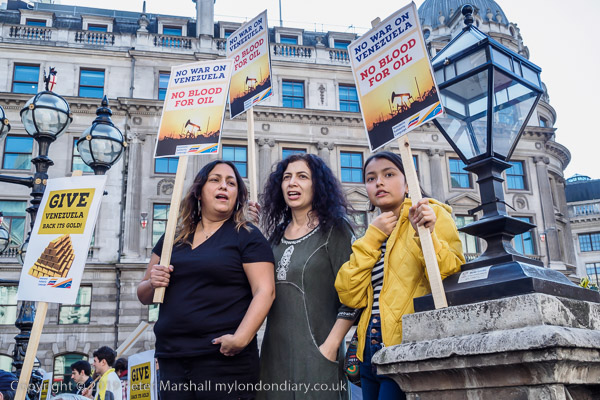
Venezuela & Grenfell: A small protest outside J P Morgan subsidiary Euroclear in the City of London called on the company to return over $1 billion of Venezuelan government funds sent to buy medicines and food for Venezuela. Later I joined the large silent march from Kensington Town Hall 18 months after the terrible fire at Grenfell Tower.
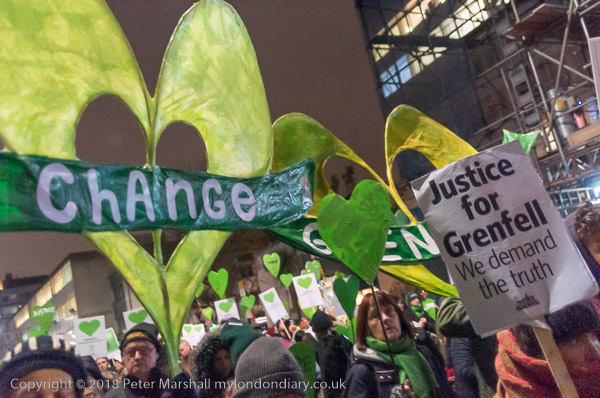
People carry large and small Grenfell hearts on the protest

Hand Back Venezuela’s stolen money

Euroclear, City of London
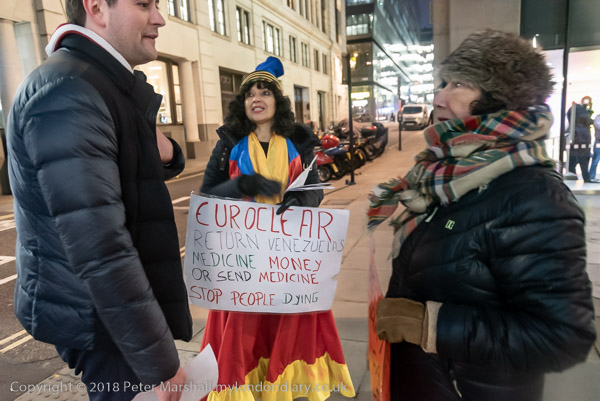
Protesters talk with a sceptical passer-by

The USA began its sanctions against Venezuela in 2005 a few years after Hugo Chávez became president in 1999. He brought in a programme of reforms to improve access to food, housing, healthcare and education and to support socialist government across Latin America and against US influence in what that country considered as its ‘backyard’.

This programme led to economic difficulties but greatly reduced inequality in the country, with many of the middle classes badly hit. The USA imposed further sanctions after Nicolás Maduro became president, partly because of the suppression of human and civil rights, but also for its claims that the regime supported revolutionary movements elsewhere in Latin American and allegations about its role in narcotics trading. Many believe that it was the nationalisation of the oil industry was the most important reason behind the US actions.

Venezuela has the world’s largest proven oil reserves, but currently earns very little from oil exports, particularly since President Trump imposed sanctions in 2017 and 2019. In the past the US was a major customer, but now because of sanctions its main sales are to China, India and Cuba. In 2025 Trump imposed a 25% tariff on all goods imported into the US from any country that imports Venezuelan oil, either directly or indirectly.

Now it seems increasingly likely that the US will openly back a coup in Venezuela, and as the recent seizure of an oil tanker makes clear, the main reason behind this is those oil reserves.

Back in 2018, Euroclear, a J P Morgan Subsidiary, was refusing to release %1 billion of Venezuelan government money that had been sent to buy medicines and food for Venezuela. They had taken the money despite US sanctions but were refusing to release it. The US then was pushing for humanitarian intervention in Venezuela but refusing allowing the money to be used to provide food and medicines. What they wanted was a change to a regime favourable to the USA.

Hand Back Venezuela’s stolen money


Grenfell silent walk – 18 months on
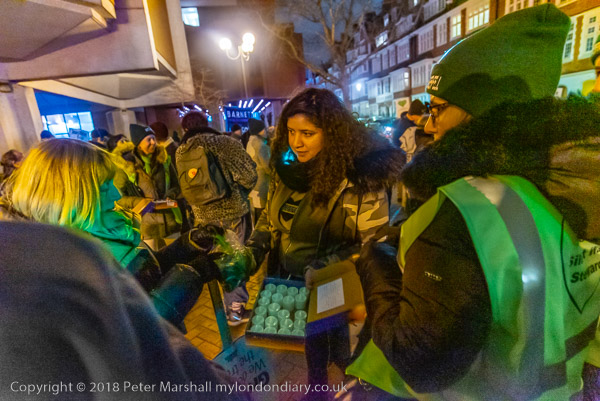
Marchers gather outside Kensington Town Hall and are offered green lights to carry

Survivors and campaigners, many of whom lost family and friends at Grenfell, took part in a silent walk marking 18 months since the disaster.
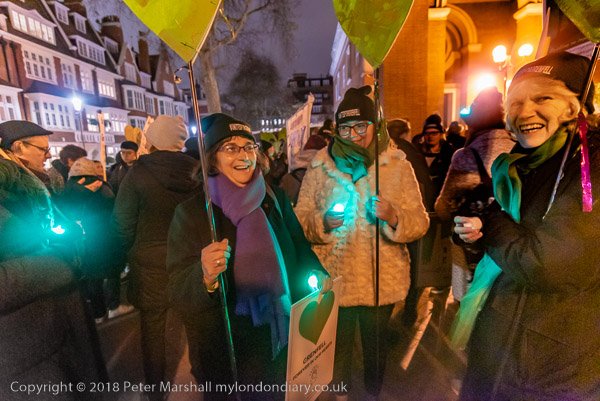
The green lights are not very bright but the area is very dark

They hold Kensington and Chelsea Council responsible both for the tragedy and for failing to deal effectively with its aftermath, with many survivors still not properly rehoused. They want justice and those responsible brought to trial, for the community concerns to be met and changes made to ensure safety for all.
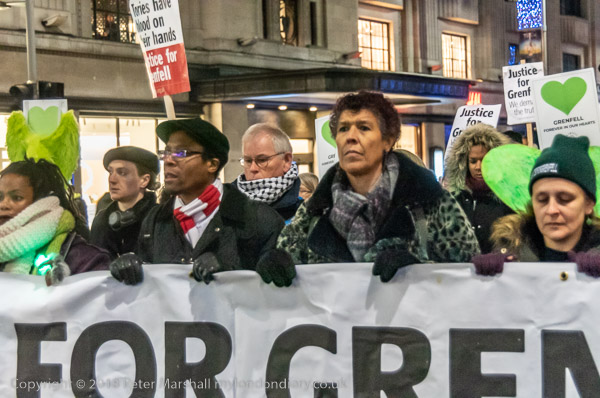
The Justice4Grenfell banner is near the back of the march


Still in 2025, after an expensive and lengthy public inquiry, little has changed and there has still been no justice.

A third group, Humanity For Grenfell joins the march

I commented back in 2018, that it seemed surprising that “the campaign has not been more forceful. Obviously those for those most closely affected by the terrible fire, trauma makes a more purposeful serious of actions difficult or impossible, but the wider community seem also to have been affected. It was unfortunate that some people set up a rival organisation to United for Grenfell which has gained much of the publicity but has failed to make any real gains and has perhaps served to de-radicalise despite its left-wing connections.

‘Grenfell Youth Know the Truth – Justice is Coming’ Much of the truth is known but as yet no sign of justice

I’ve written more about Grenfell in a recent post, noting the difference between the official response between here and the recent fire in Hong Kong, where there were arrests in the days following the fire – but we are still waiting for any here.

Many more pictures at Grenfell silent walk – 18 months on.


FlickrFacebookMy London DiaryHull PhotosLea ValleyParis
London’s Industrial HeritageLondon Photos

All photographs on this page are copyright © Peter Marshall.
Contact me to buy prints or licence to reproduce.
Venezuelan Gold, Democracy for Sudan and more

Saturday 23rd February 2019 seems now a long time ago. Although it’s only four years ago it was in the pre-Covid era. It was a busy day for me.


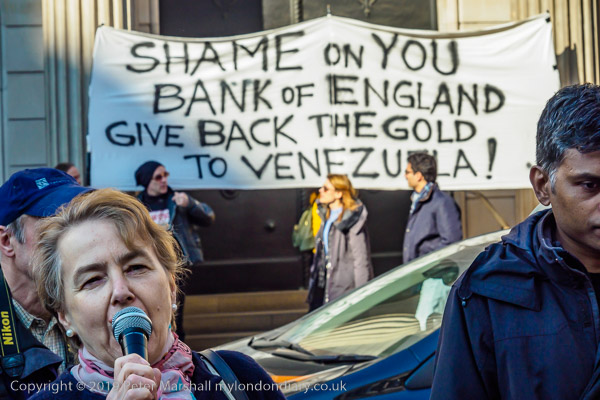
Stop Trump’s Venezuela gold & oil grab – Bank of England.

Venezuelan Gold, Democracy for Sudan
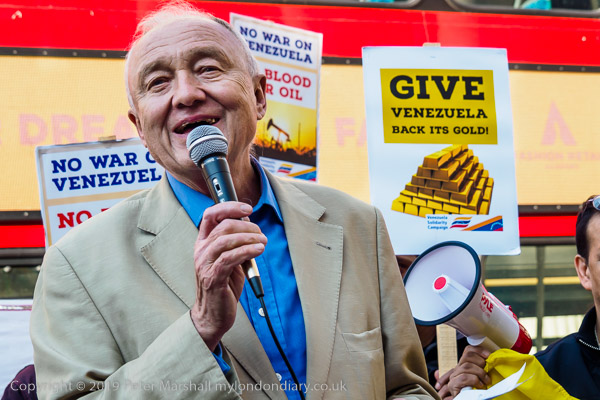
Ken Livingstone

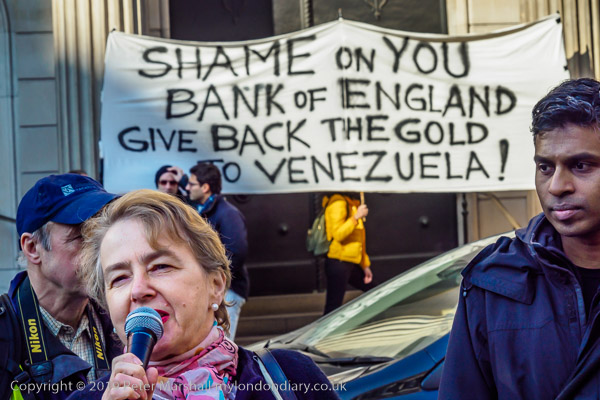
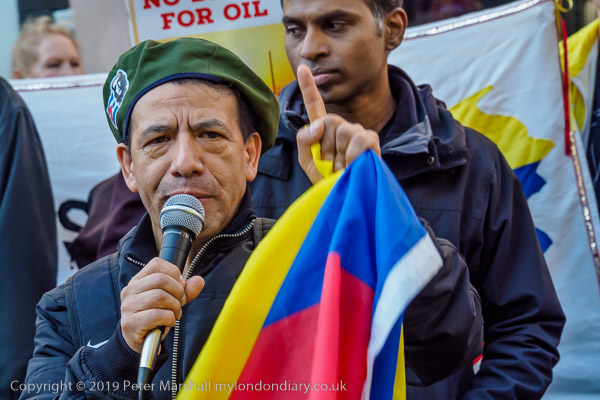
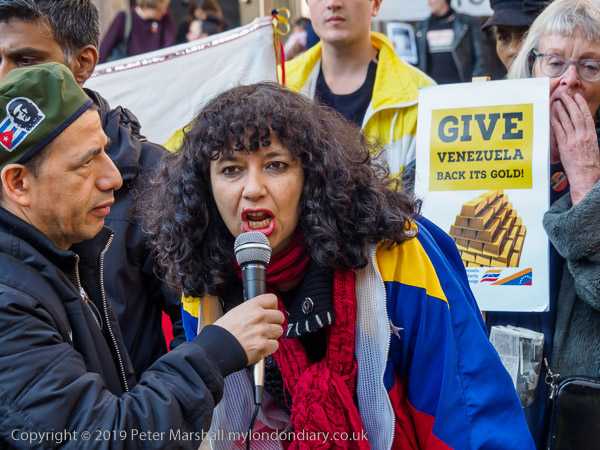
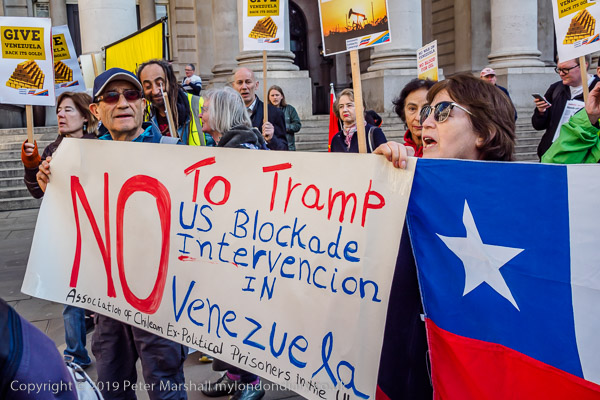
A protest outside the Bank of England calls for the bank to return the $1.3 billion of Venezuelan gold (31 tonnes) to the Venezuelan government and for an end to the US-backed attempted coup.

Venezuelan Gold, Democracy for Sudan
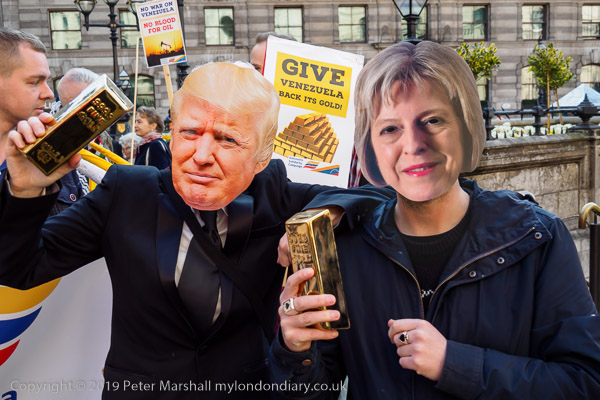
Trump and May hold up gold bars

Right-wing opposition leader Juan Guaido, illegitimately recognised by our government as President, has written to Theresa May calling for the funds to be sent to him. Among the speakers were former London Mayor Ken Livingstone and Kate Hudson of CND.

Venezuelan Gold, Democracy for Sudan

Venezuela’s 32 tons of gold are still held in the Bank of England, with the High Court’s latest decision in July 2022 based on the UK foreign secretary’s ambiguous statement about Maduro’s legitimacy as president refused to hand the gold back to its owners.

Venezualan Gold, Democracy for Sudan

More pictures at Stop Trump’s Venezuela gold & oil grab.


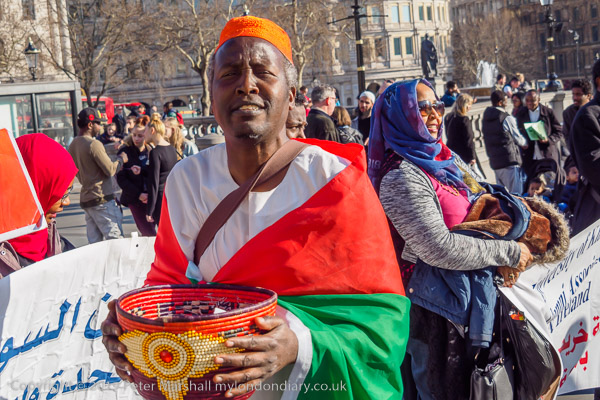
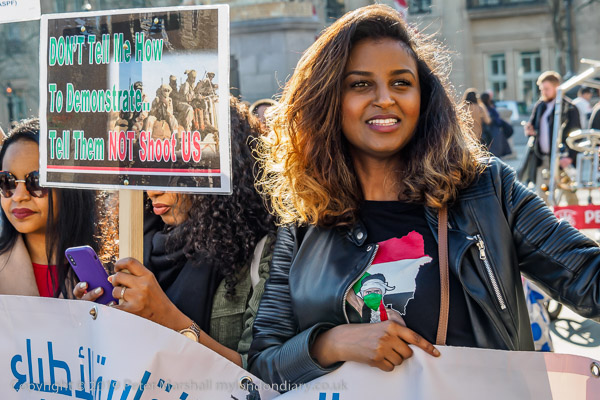
Sudanese support non-violent uprising – Trafalgar Square

Sudanese in Trafalgar Square support the peaceful protests in Sudan which began in December calling for democracy and for President Omar Al-Bashir to step down.

Eventually in April 2019 Al-Bashir was forced out of office, and later many of his supporters were sacked. But protests continued in Sudan against the military regime and following another coup in Octorber 2021 the country remains in conflict.

More pictures Sudanese support non-violent uprising.


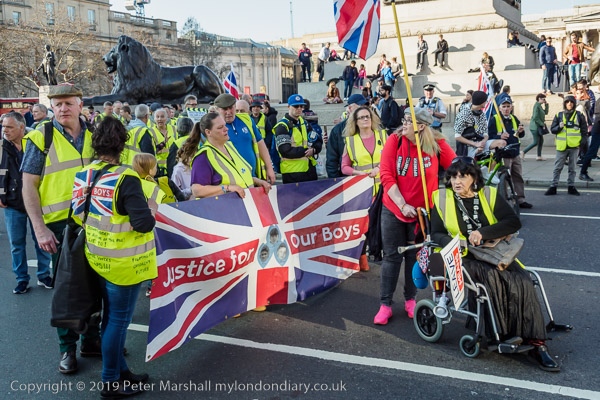
Yellow Jackets continue protests – Westminster

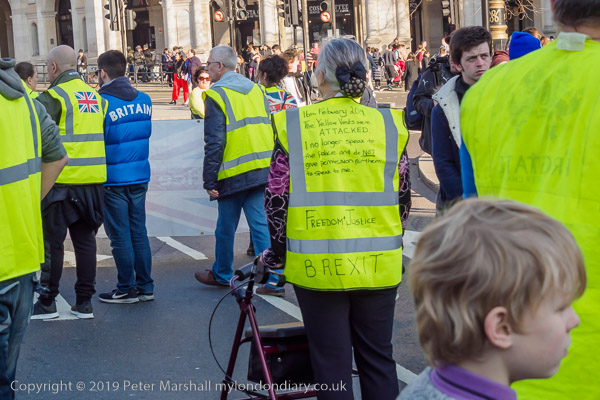
Every weekend around this time a small group of Right-wing pro-Brexit extremists wearing yellow jackets were out protesting in Westminster for several hours, walking along the street and disrupting traffic, accompanied by a number of police.

They were angry at the slow pace at which Brexit was taking place and the failure of the EU to accede to every UK demand and play dead with its legs in the air. The Leave campaign had made great promises, none of which were achievable but which had conned the public into voting for it, and had stirred up a wave of xenophobia and racism – and this was one of its results.

Another was of course the election victory at the end of the year which led to Boris Johnson becoming Prime Minister – thanks to the help of Keir Starmer who effectively sabotaged the Labour Party’s vote. Johnson pushed through an agreement which apparently he hadn’t even read and which we are still seeing the problems from in Northern Ireland.

Although I voted to remain in Europe, I can see there were some valid complaints about our membership – but these were not what the Leave campaign was fought on. Instead they pursued a course based on lies and self-interest..

Yellow Jackets continue protests


Bolivians protests against President Morales – Parliament Square

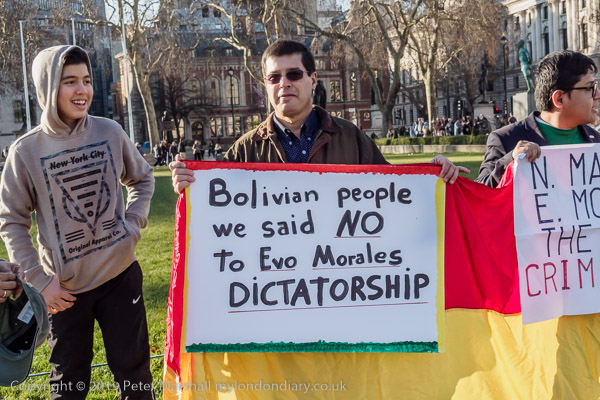
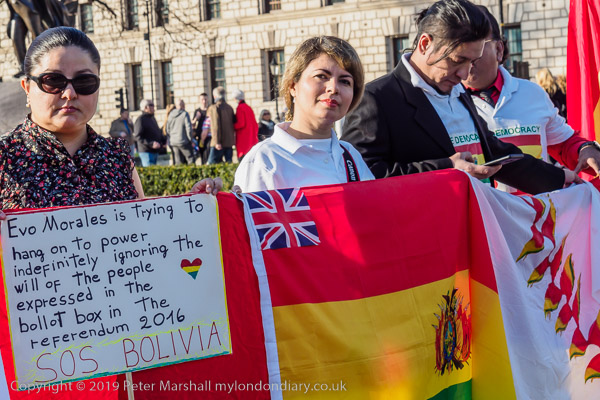
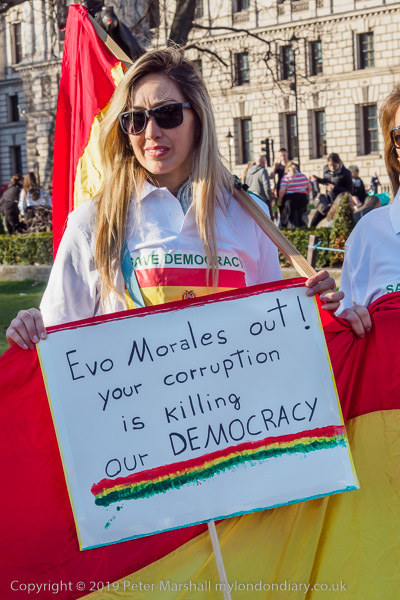
Bolivians were in Parliament Square to protest against President Evo Morales, saying he is a dictator and accuse him of corruption and interfering with the court system to remain in power.

Morales was a labour leader and activist who became the first from the indigenous population to become president in 2006. Under his leadership there were huge gains in legal rights and social and economic position for the indigenous poor in the country.

Some of those gains were at the expense of the middle classes who had been used to ruling the country, and much of the opposition to him came from them and from their international friends, particularly in the US his opposition to neoliberalism as a dangerous example to other south American countries. Almost all press reports on Bolivia (and other countries) reflect the views of the urban middle classes rather than the people as a whole.

The constitutional question to some extent cut across communities in the country and although his standing for a fourth term as approved by the Electoral Tribunal it went against a 2016 referendum which had narrowly rejected by 51.3 to 48.7% of the votes. Like Brexit a slim majority.

Violent protests continued after Morales was forced into resigning in what his supporters called a coup d’état in November 2019, though others describe it as an uprising against his unconstitutional attempt to be president for a fourth term. Protests continued to get him reinstated and were met by violence from the security forces who were exempted from any criminal responsibility by interim president Jeanine Áñez.

A new election took place after two delays in October 2020, and resulted in a landslide victory for Morales’s Movement for Socialism (MAS) party now led by Luis Arce who was sworn in as President of Bolivia the following month. One of the new government’s first actions was to return a huge loan to the IMF taken out by Áñez in order to protect Bolivia’s economy from its unacceptable conditions.

In 2021 Áñez was arrested and in 2021 she and others were sentenced to 10 years for making “decisions contrary to the constitution”” and “dereliction of duty” for her role in the coup. Other cases are still being brought against some of those involved and protests against this continue.

Bolivians protests against President Morales


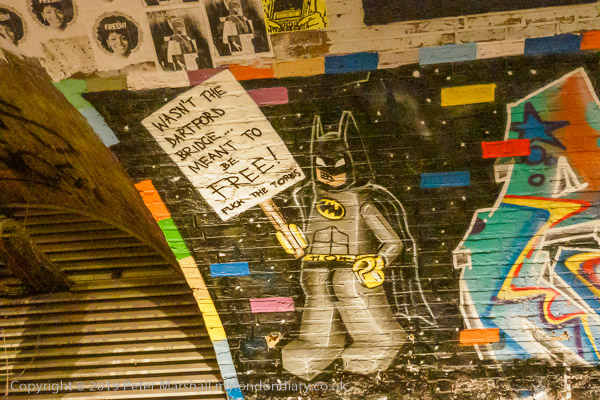
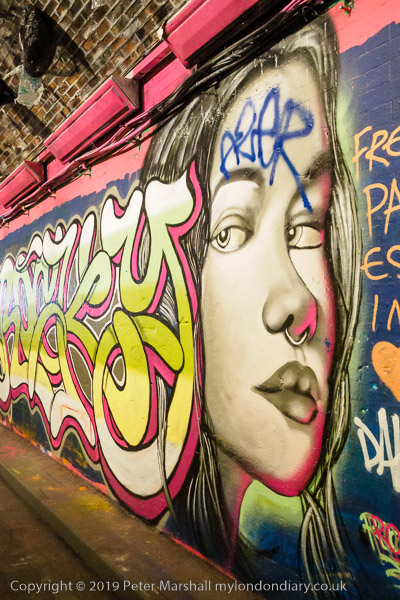
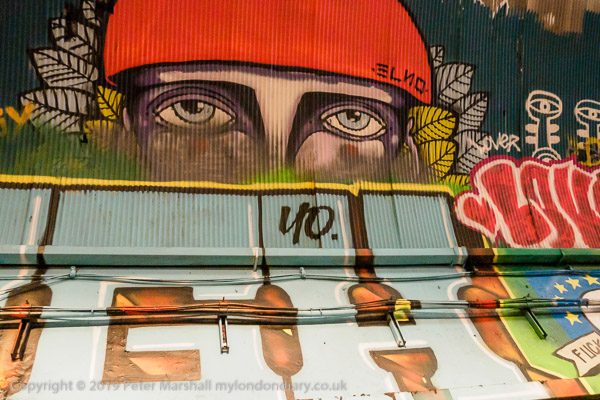
Leake Street graffiti

As I was approaching Waterloo Station I realised I had just missed a train home and would have to wait over 20 minutes for the next one so I decided to take a longer route through the tunnel under t he tracks coming out of the station to take another look at the graffiti there.

This is one of the few places in London where graffiti is allowed and encouraged, with space for some large and sometimes very intricate designs. Few last for long before they get painted over with new work, though those on the ceiling usually last a little longer.

More at Leake Street graffiti.


Bank refuses Venezuela its gold

It’s always difficult for photographers when events more or less repeat themselves, and this was the third protest I’d covered in just a few weeks about the US attempt to engineer a regime change in Venezuela, and the second outside the Bank of England, with many of the same people taking part, and it was all too easy to produce more or less the same images. As the great Yogi Berra said, ” It’s deja vu all over again”, though he also said ” I never said most of the things I said.”

Ken Livingstone was also a figure with a second coming, having run the Greater London Council and begun to bring the capital up to date in the 1980s, his success so enraged Margaret Thatcher that she abolished the council and sold off its palatial headquarters just downstream across the Thames from the Houses of Parliament.

Livingstone returned as elected mayor of the new Greater London Authority after 14 years in which London had largely stagnated, acheiving office despite determined opposition from Thatcher’s successor (following the brief interregnum of John Major), Tony Blair. Although Livingstone was the choice of Labour members and affiliates, the votes of Blairite MPs, MEPS and GLA candidates made Frank Dobson the Labour candidate, and Livingstone stood as an Independent. In the first round of voting he came out on top, with three times the vote of the official Labour candidate who was eliminated, and was elected in the second round with a vote of almost 58% .

Four years later, Livingstone was re-admitted to the Labour Party and re-elected as London’s Mayor. Despite two largely successful terms in office, he lost the 2008 mayoral election to Boris Johnson, who set out to establish himself as London’s worst mayor despite often rapturous media coverage.

Of course Livingstone was not the only speaker, but he was the major speaker at the event. He had been in the crowd at the previous protest outside the Bank of England, but this time he spoke, reminding us of his relationship with the former President of Venezuela and the contribution made by Venezuela to enable him to provide half-price bus fares for lone parents, sick and disabled Londoners. Recently after an earlier protest calling for the Bank of England to return Venezuela’s gold I wrote more on Livingstone with some pictures I’ve taken.

Stop Trump’s Venezuela gold & oil grab


There are no adverts on this site and it receives no sponsorship, and I like to keep it that way. But it does take a considerable amount of my time and thought, and if you enjoy reading it, please share on social media.
And small donations via Paypal – perhaps the cost of a beer – would be appreciated.

All photographs on this and my other sites, unless otherwise stated, are taken by and copyright of Peter Marshall, and are available for reproduction or can be bought as prints.

To order prints or reproduce images