Christmas Decorations: Twenty-two years ago I was younger and fitter and my doctor had told me to take plenty of exercise, which for me meant riding a bike. On one of these rides at the start of December I came across a house which had been decorated for Christmas and took a quick snap with the little Canon Ixus which was always in my pocket. I decided it would be an interesting project to photograph, particularly at night. I posted on a CIX photography forum asking for information about where there were houses worth photographing, but found a few others myself.
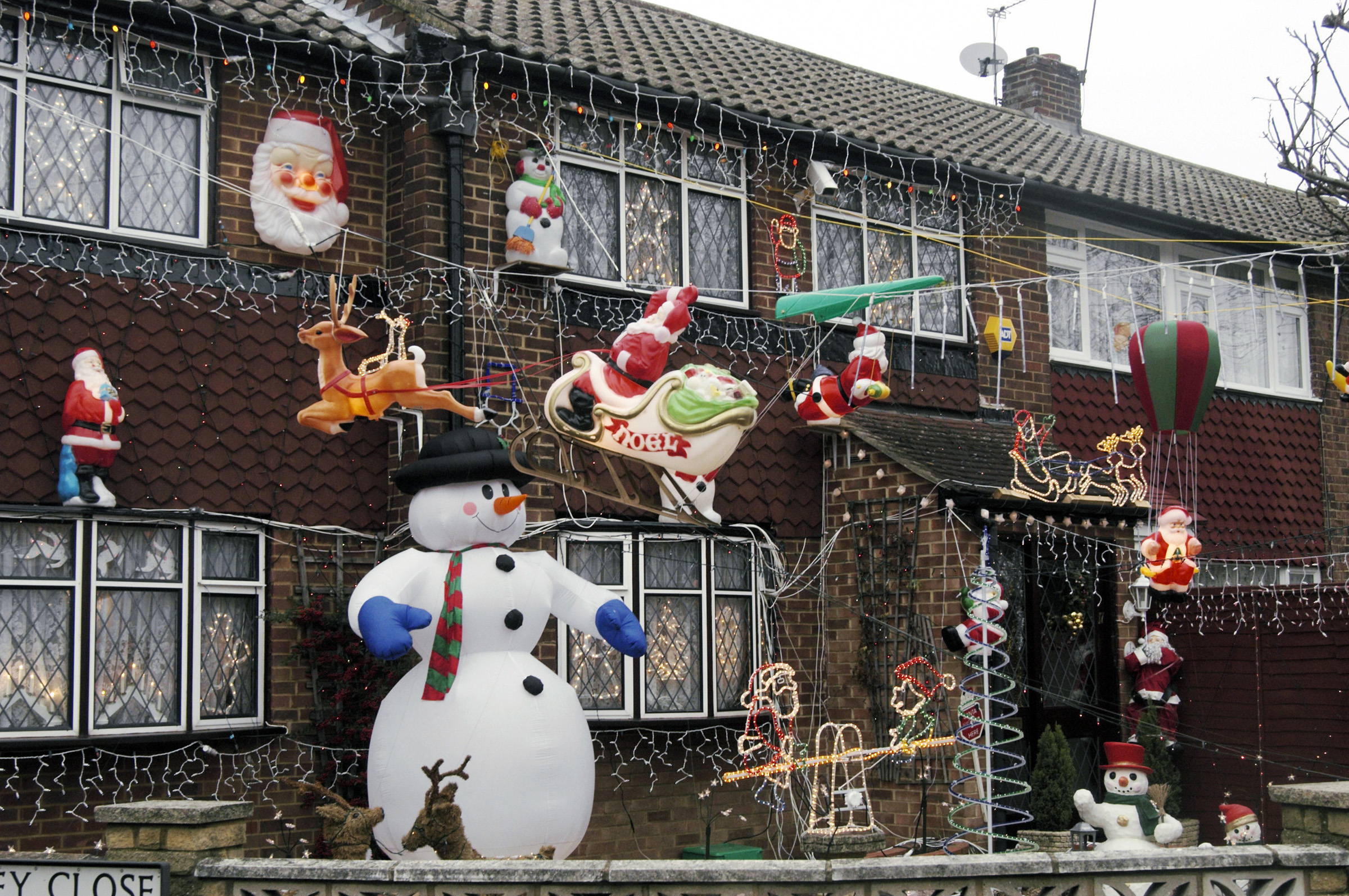
The Ixus wasn’t really up to this – as I wrote then, “they are .. very difficult to photograph well. In full darkness the contrast between the lights and the rest of the scene is too high. If you want to take pictures, then try and do so at twilight, when there is still enough light around to see clearly. The lupine hour is the best time for most ‘night’ photography.” There were just a few where I found a little flash could help but more often it ruined the effect.
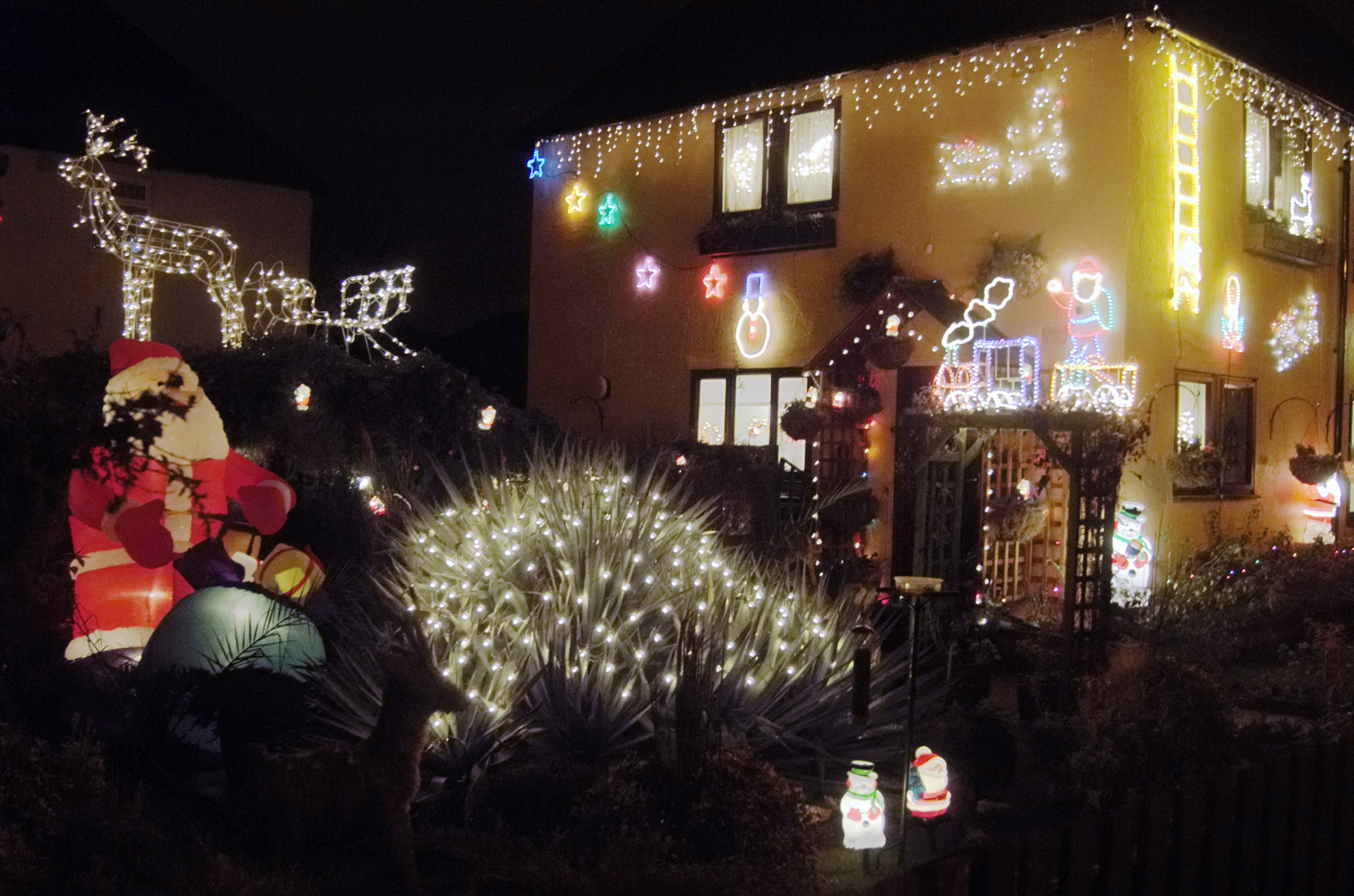
During December 2003 I loaded the bag on my Brompton with my 6Mp Nikon D100, the first really affordable digital SLR and tied on a large Manfrotto tripod and either rode from home or went by train to various areas of London, riding around an taking photographs in late afternoon or early evening.
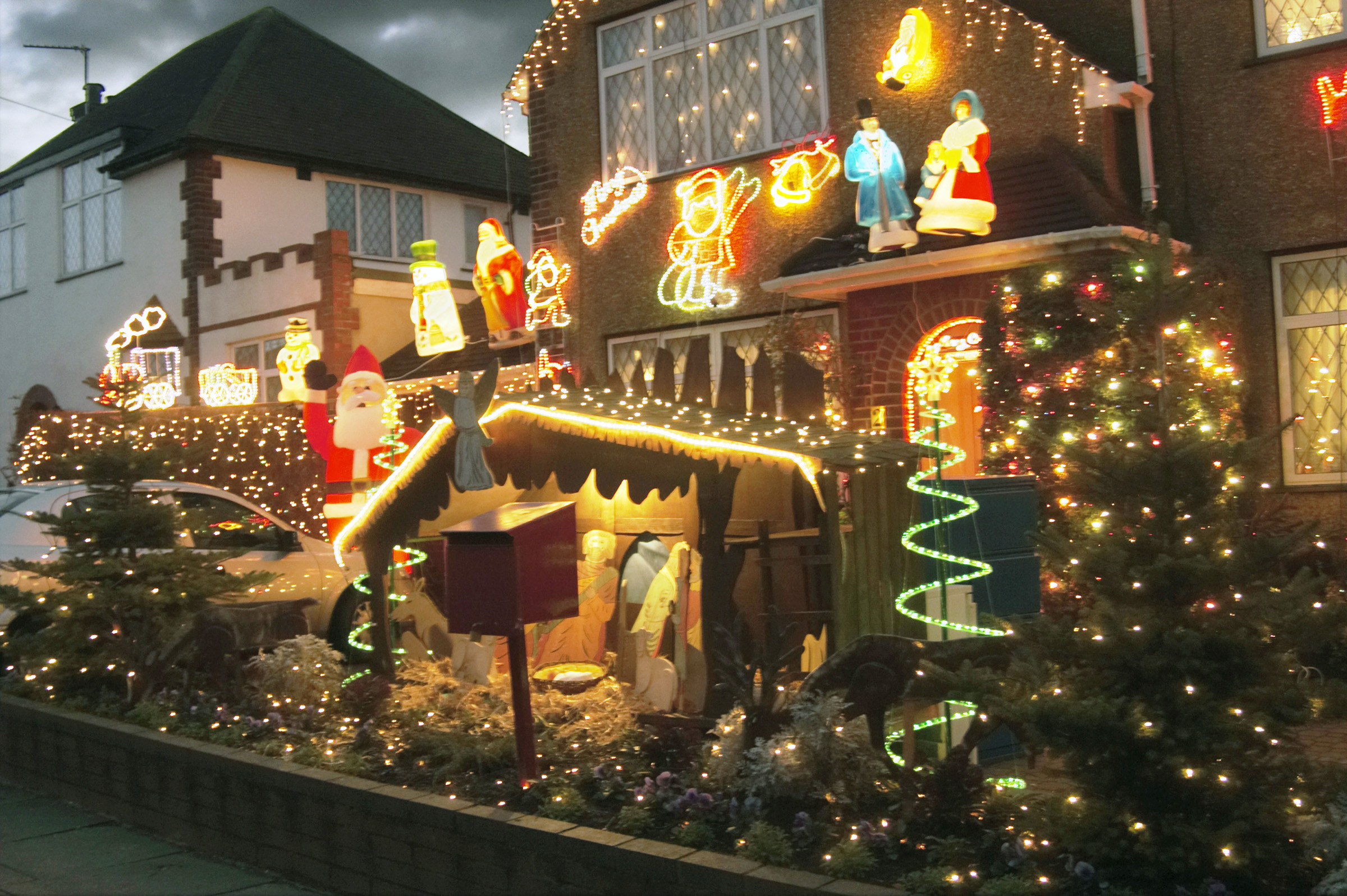
And of course I posted some of the pictures on My London Diary and wrote a piece about Christmas and the pictures – which is below- with minor corrections.
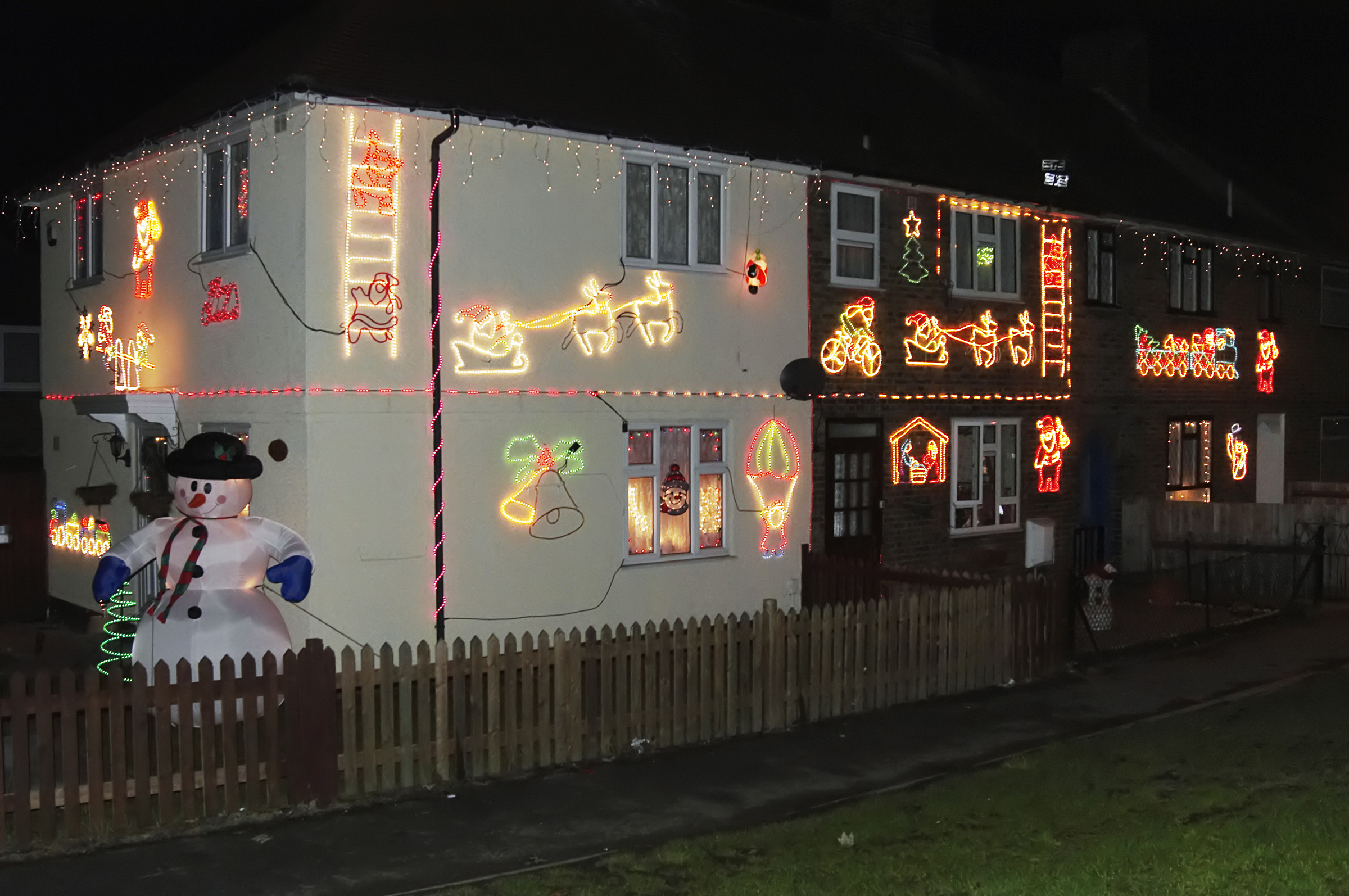
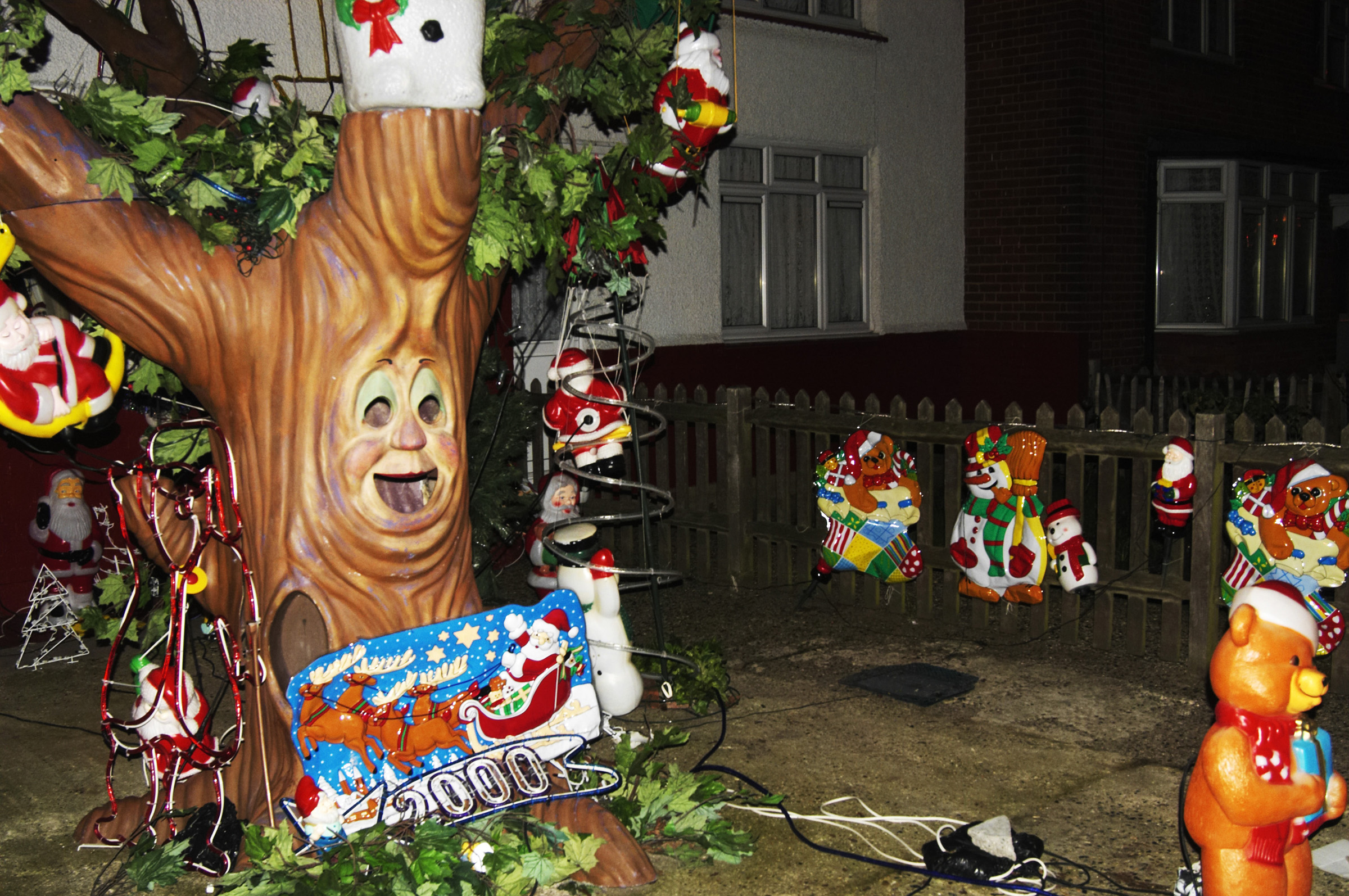
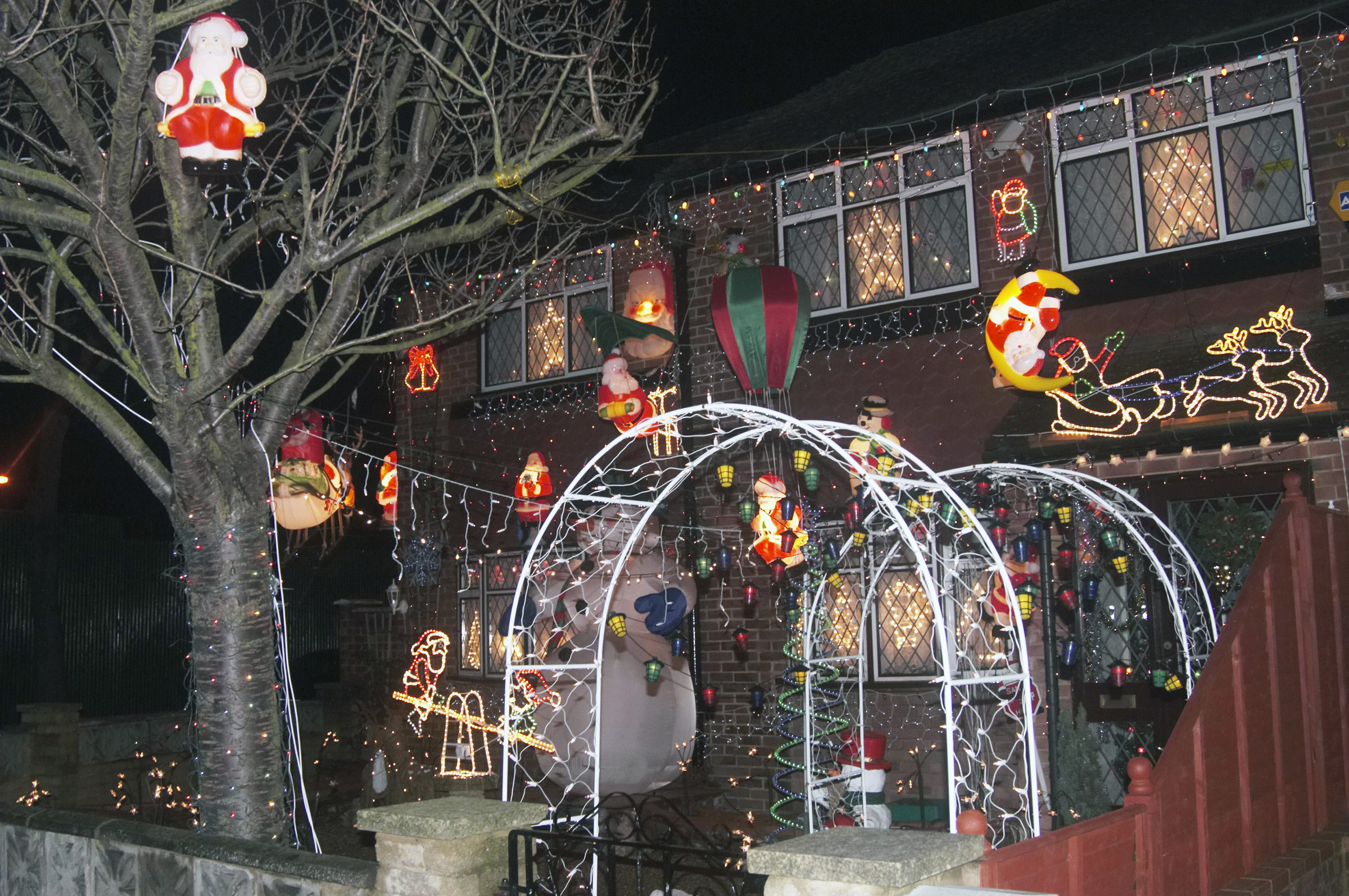
Christmas is on its way, and houses all over Britain are beginning to display the signs, some more tastefully than others. Some I’ve found are rather impressive, others I find amusing, but your opinions may well differ.
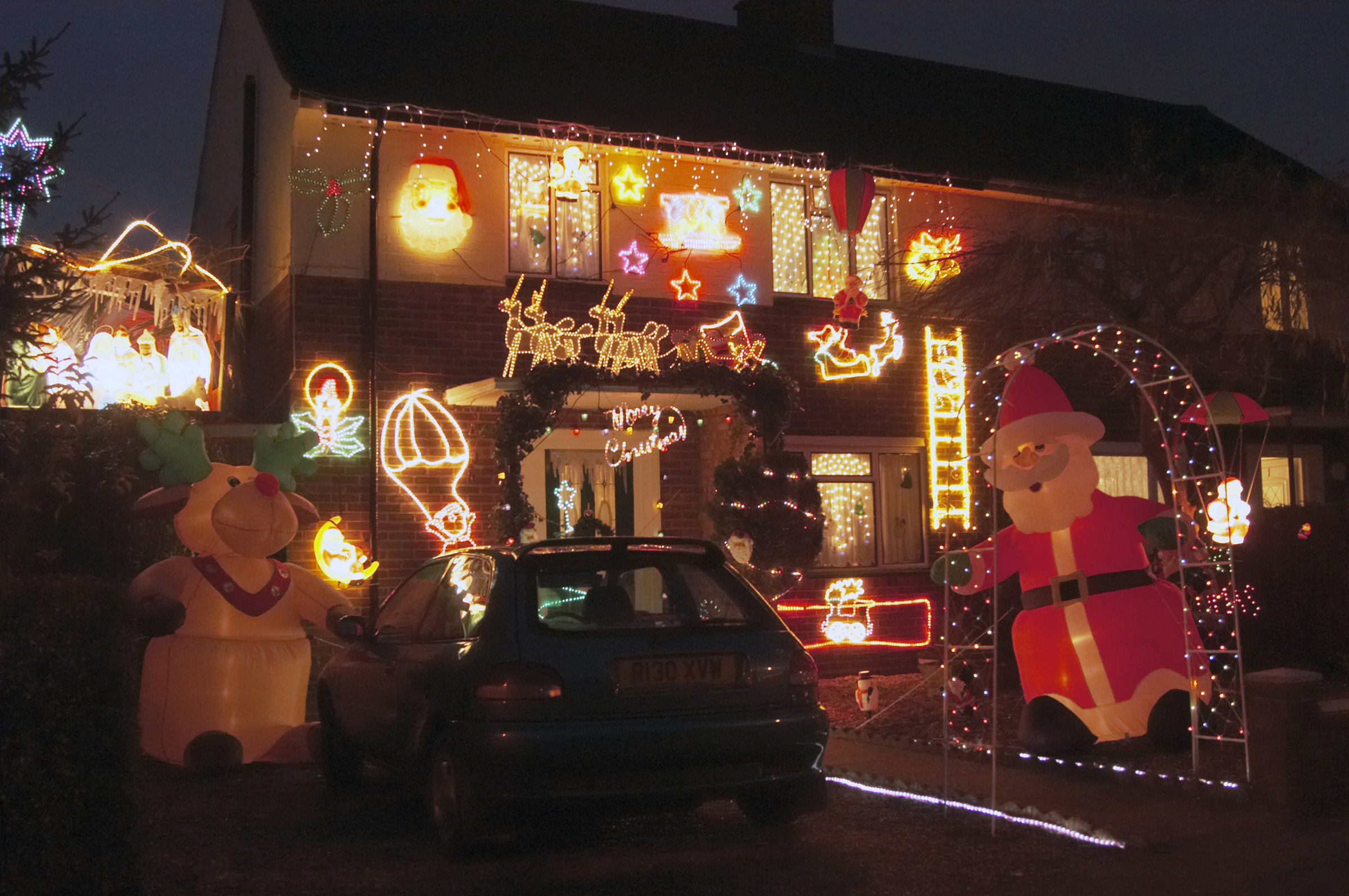
Christmas has almost completely lost the connection it had to the nativity, and the ‘Christmas Story’ is now one of cash registers and a Santa Claus who owes as much to advertising as to Saint Nicholas.
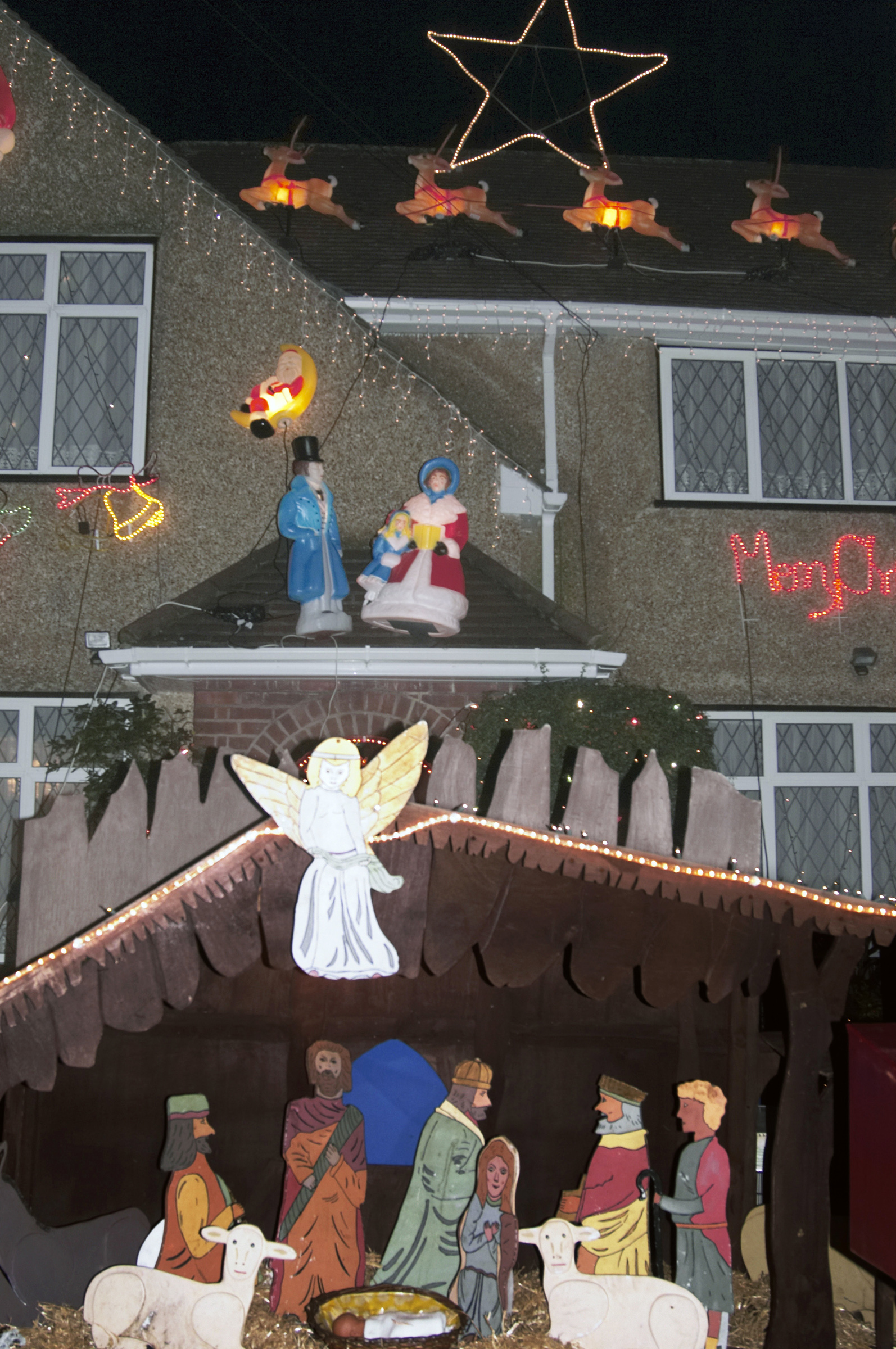
Originally of course this was a pagan festival from over 4000 years ago, the feast of the Goddess of Nature, an occasion for drinking, gluttony and gifts, so perhaps we really are getting down to our roots for once. Many celebrations, especially those for Yule (the ‘wheel’ or sun) were on the Winter Solstice – the shortest daylight, usually on Dec 21 or 22, when the rebirth of the sun was celebrated.
Pope Julius I decided it would be a good idea for Christians to celebrate the birth of Jesus on December 25 back in 350AD, so that Christians could go on celebrating yule and not feel bad about it, celebrating the birth of the Son of God while others were celebrating the birth of the sun. Though Christmas as we knew it only came in around the 1500s in Germany, many of its customs only really coming here when Victoria married Albert.
Our modern picture of Santa developed in the USA in the mid nineteenth century, particularly in the drawings of Thomas Nast for ‘Harpers’ magazine, and the jovial fat bearded man in red and white was well-established before Haddon Sundbloom annexed him for his fantastically successful coke adverts. Although Coke didn’t invent Santa, it was largely the power of their advertising that sold him to the world.
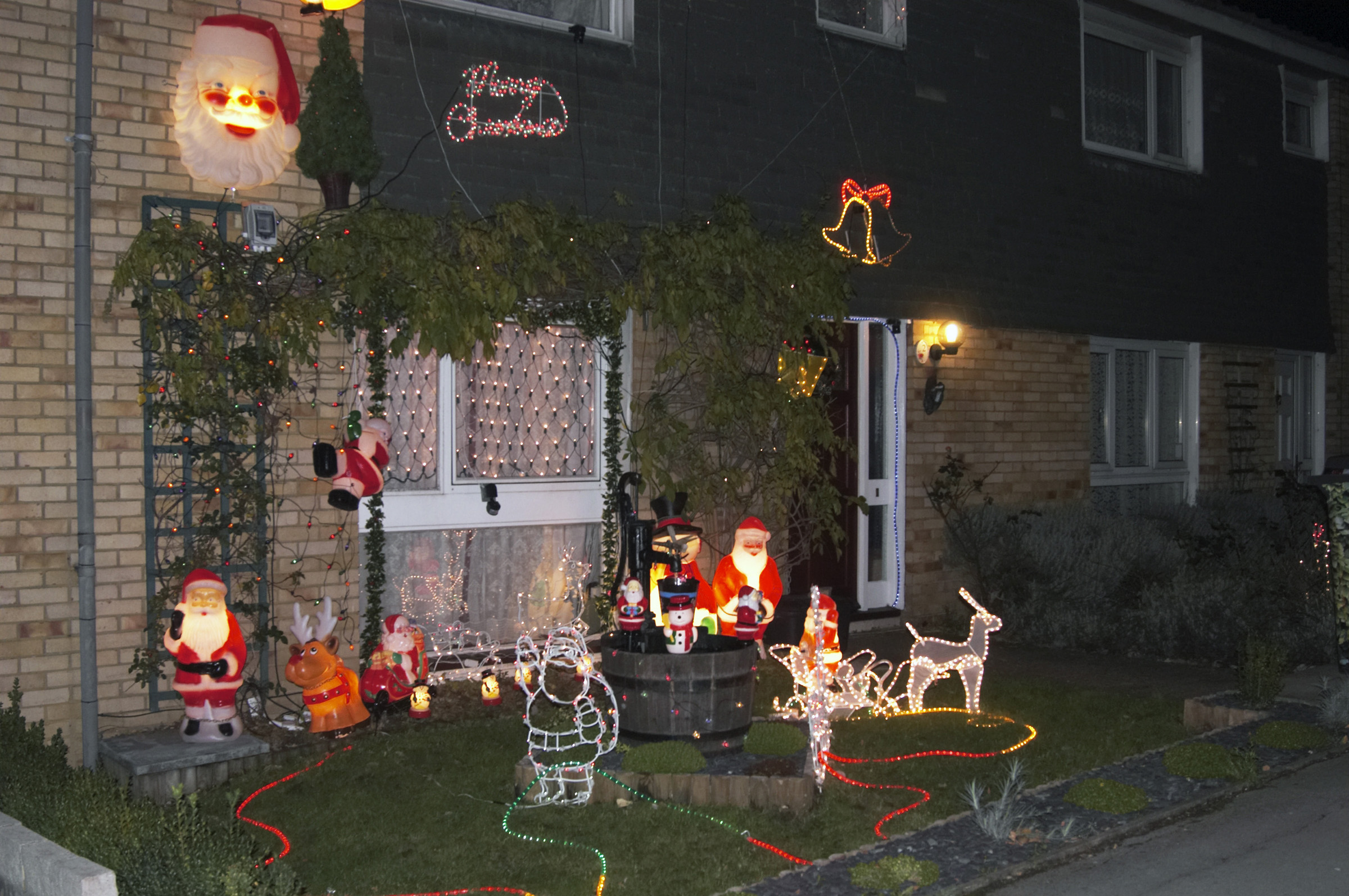
These decorated houses, often an attempt to go one better than the Joneses, have become an urban folk art. One of the glories of folk art is that it is seldom polite or tasteful, sometimes incredibly kitsch and over the top. Despite my misgivings on grounds of religion, ecology, upbringing and reserve I love them. at the very least they add a little colour to our lives.
Ruislip, Eastcote and West Drayton
The 15th was a glorious December day, cold but with a clear blue sky and sun. I took the Brompton on the train to Angel Road, then spent a couple of hours around there before heading north to Ponders End, further up the Lea Valley. around here there are still some of many industries that once filled much of the lower lea.
As it got dark I went to Enfield, in search of some houses I’d been told about, then on to North Tottenham and New Southgate and finally West Finchley. Somewhere I tried to cycle where the council had left a flower bed in the pavement and went flying, with rather painful results, but fortunately I don’t seem to have broken anything.
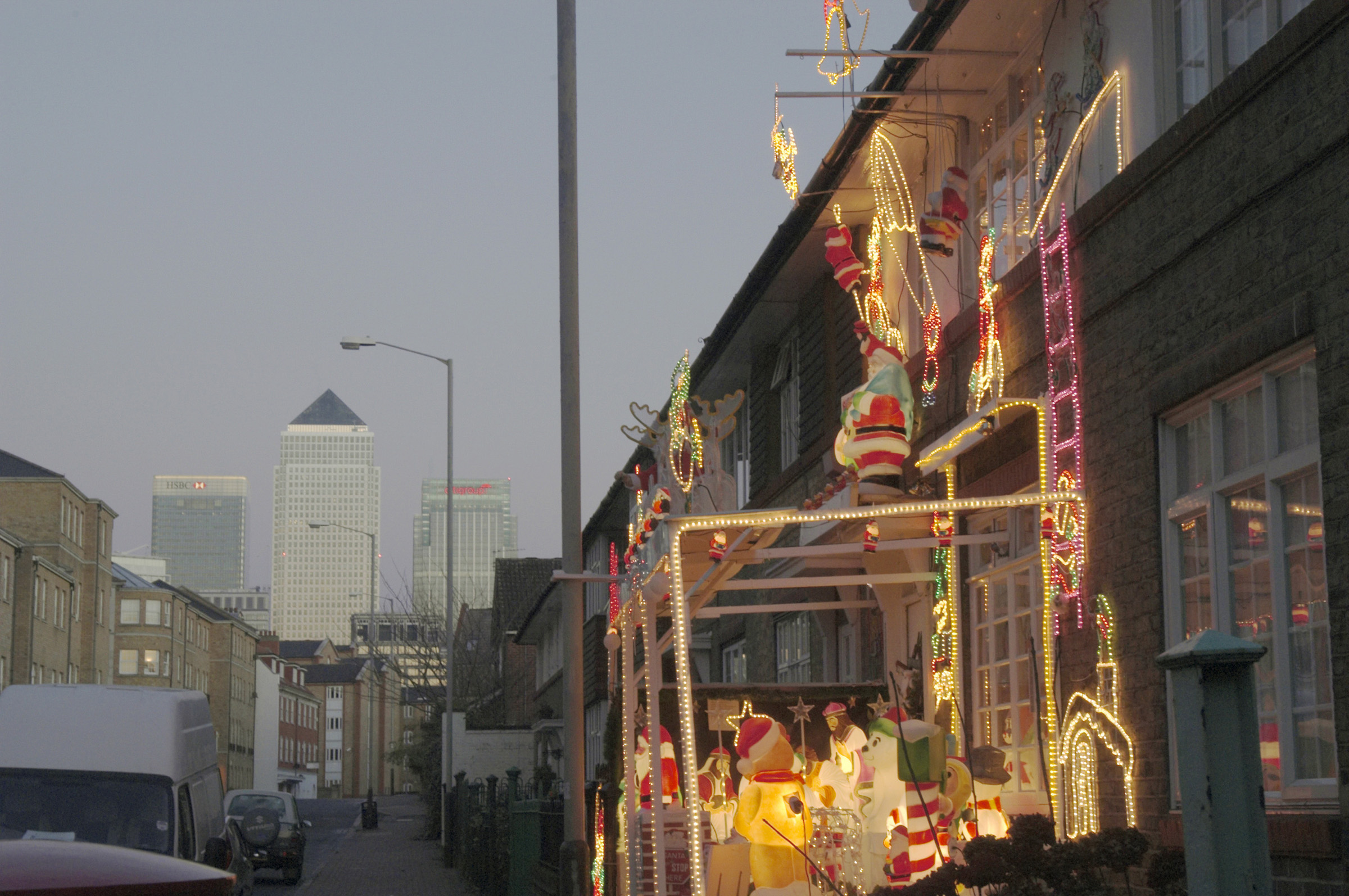
The weather was still good a couple of days later as I reached Rotherhithe in late afternoon, with a post-sunset glow along the Thames. Much of the Surrey Docks redevelopment seems sadly suburban and the new riverside flats depress by their lack of imagination, but there are some fine views along the river: even Canary Wharf can look good from a distance.
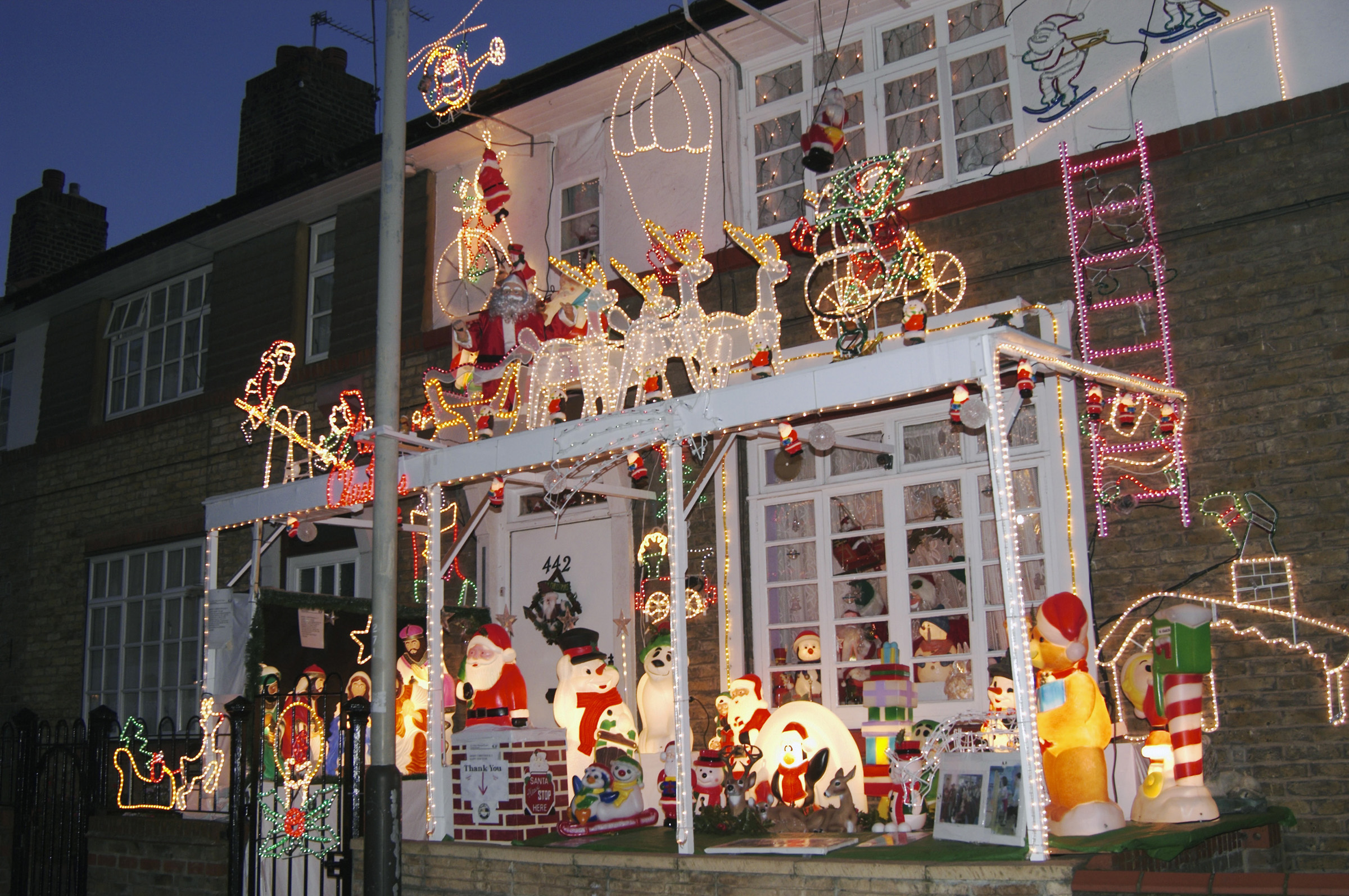
Here were a couple more houses with Christmas decorations worth photographing, before I leapt onto the east london line to new cross. Unfortunately there diddn’t seem to be any trains running to Hither Green from there (despite the timetable) but it was only a couple of miles to cycle.
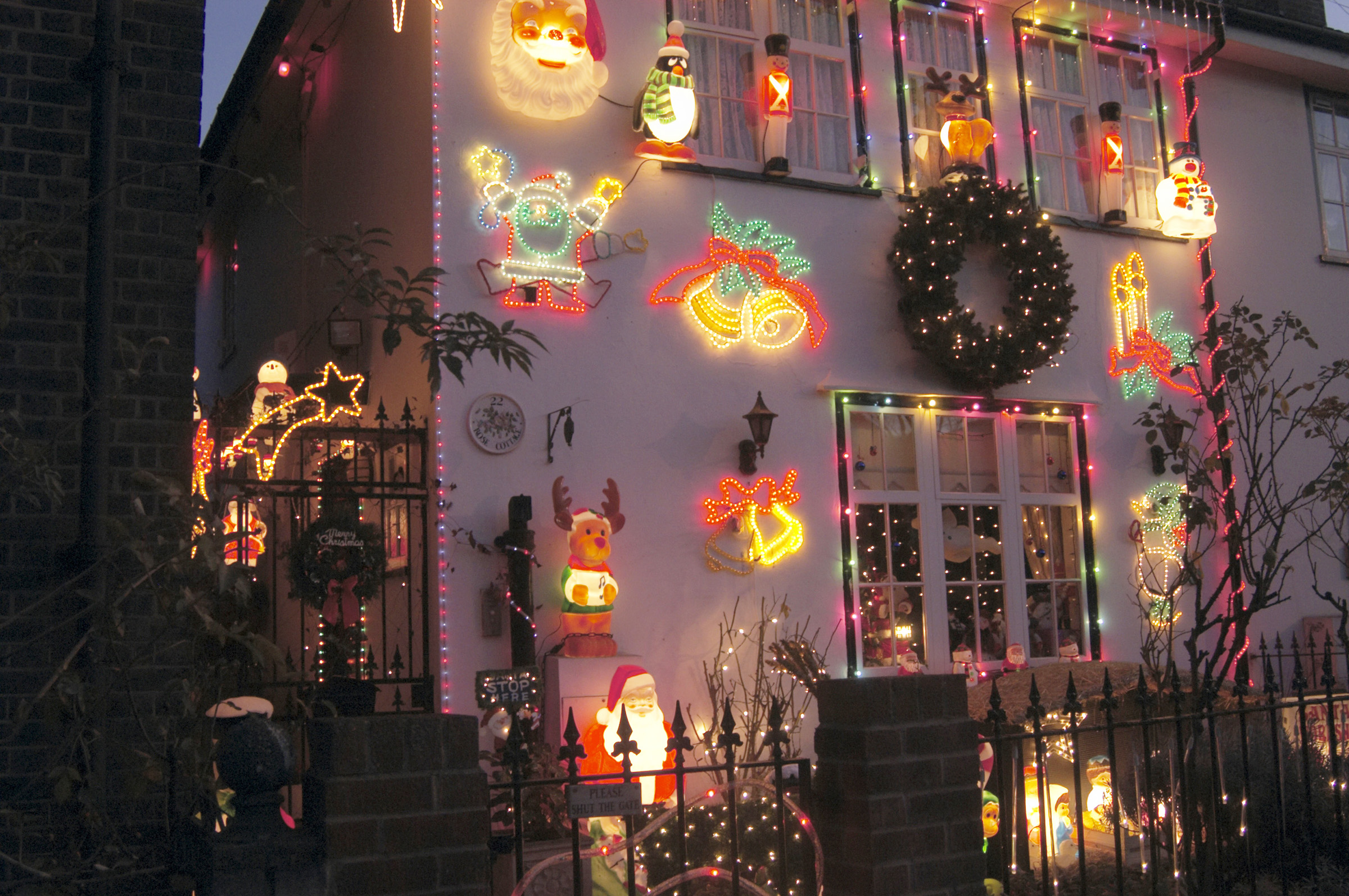
The lights in Newstead Road are perhaps the most impressive of any I’ve seen, but I can’t really find a good way to photograph them, and there are too many people around. Apparently last year they raised £3000 for charity.
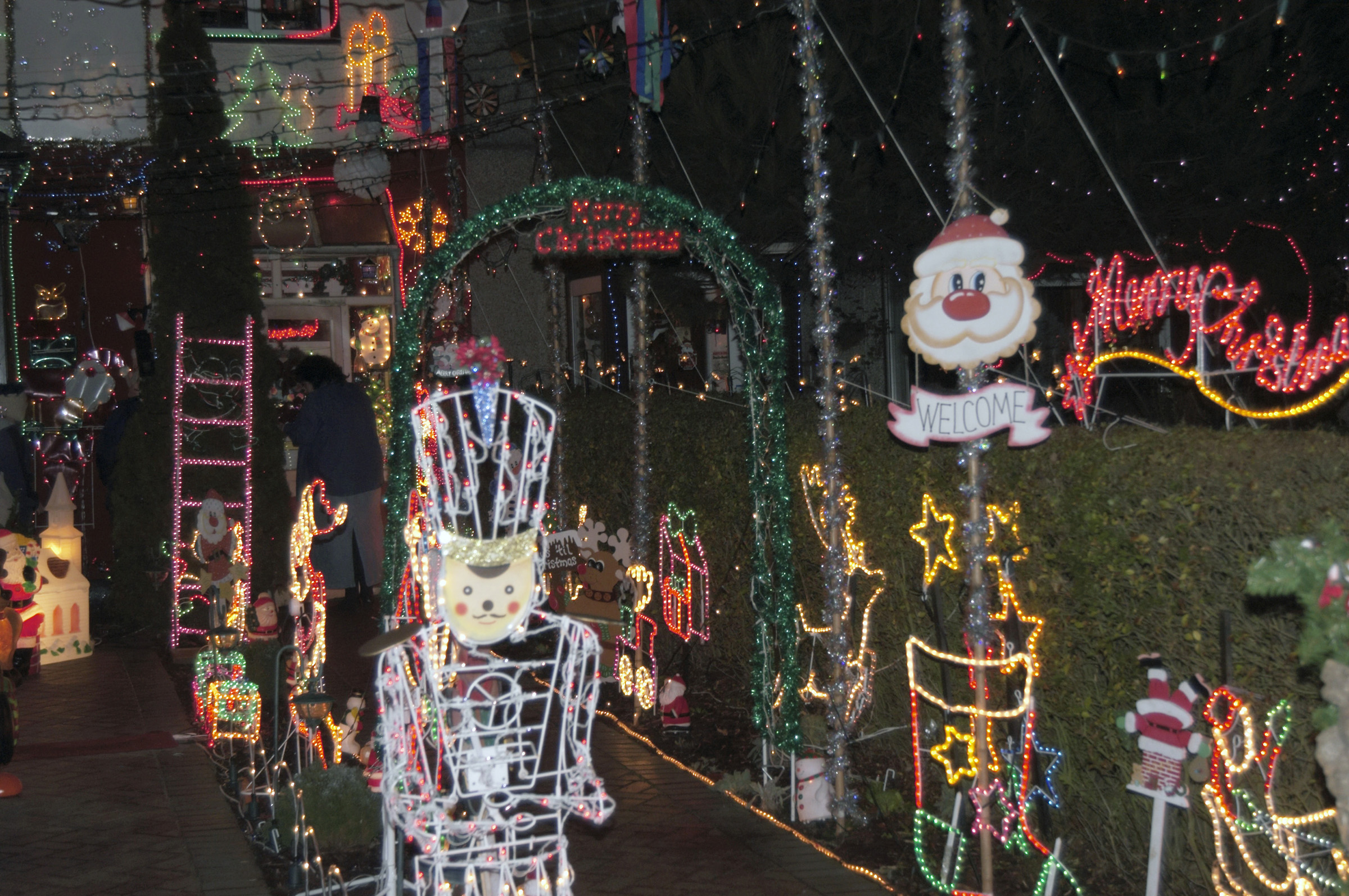
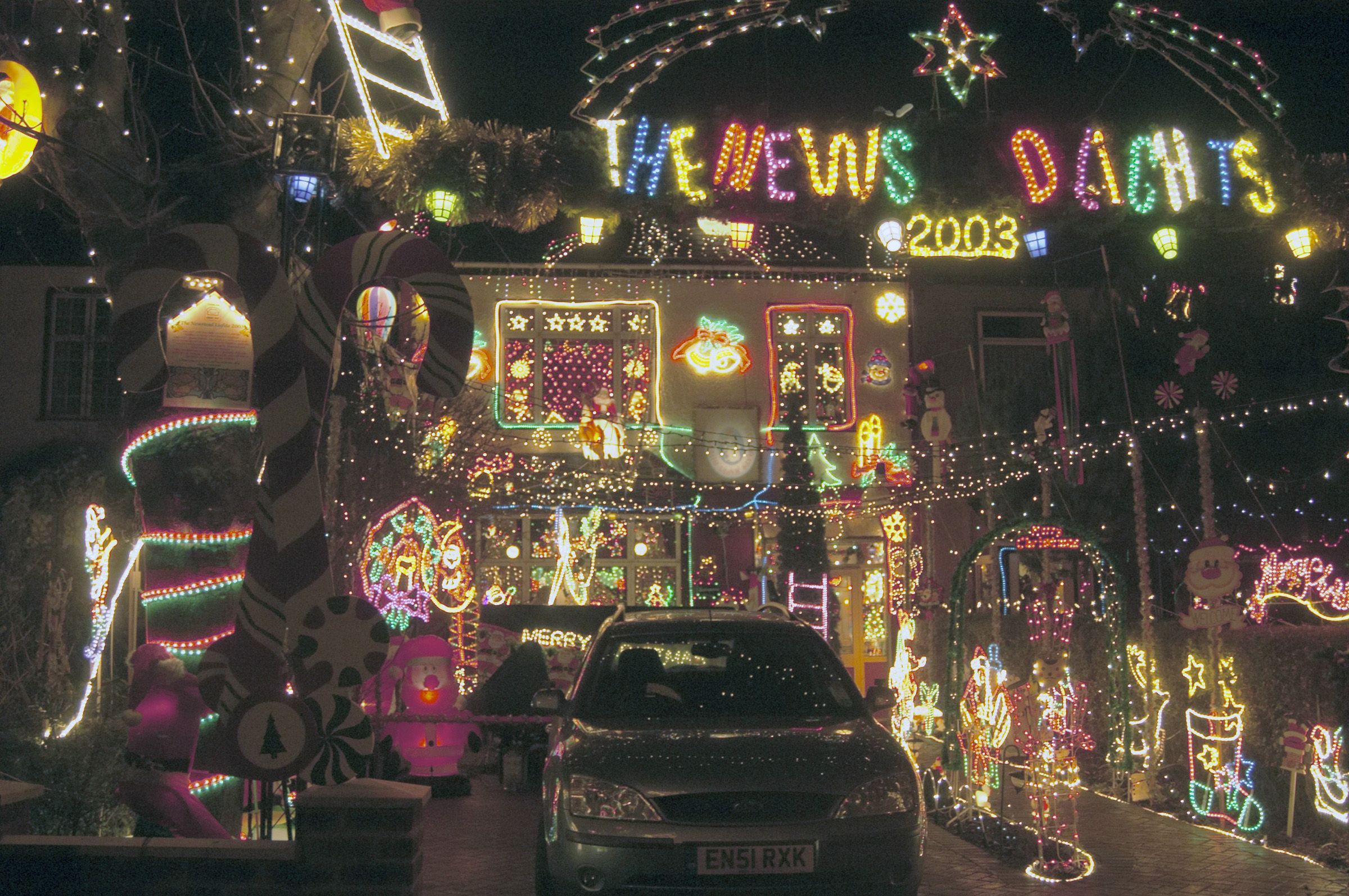
Back on my bike to the station, train to Waterloo and then another to Raynes Park and a cycle down Grand Drive to Lower Morden Lane, with fingers cold because I lost a glove on the way to Rotherhithe. This street is impressive for the number of houses with decorations, and the queue of cars driving slowly past to admire them. but none of them are really exceptional, and there wasn’t a lot to photograph.
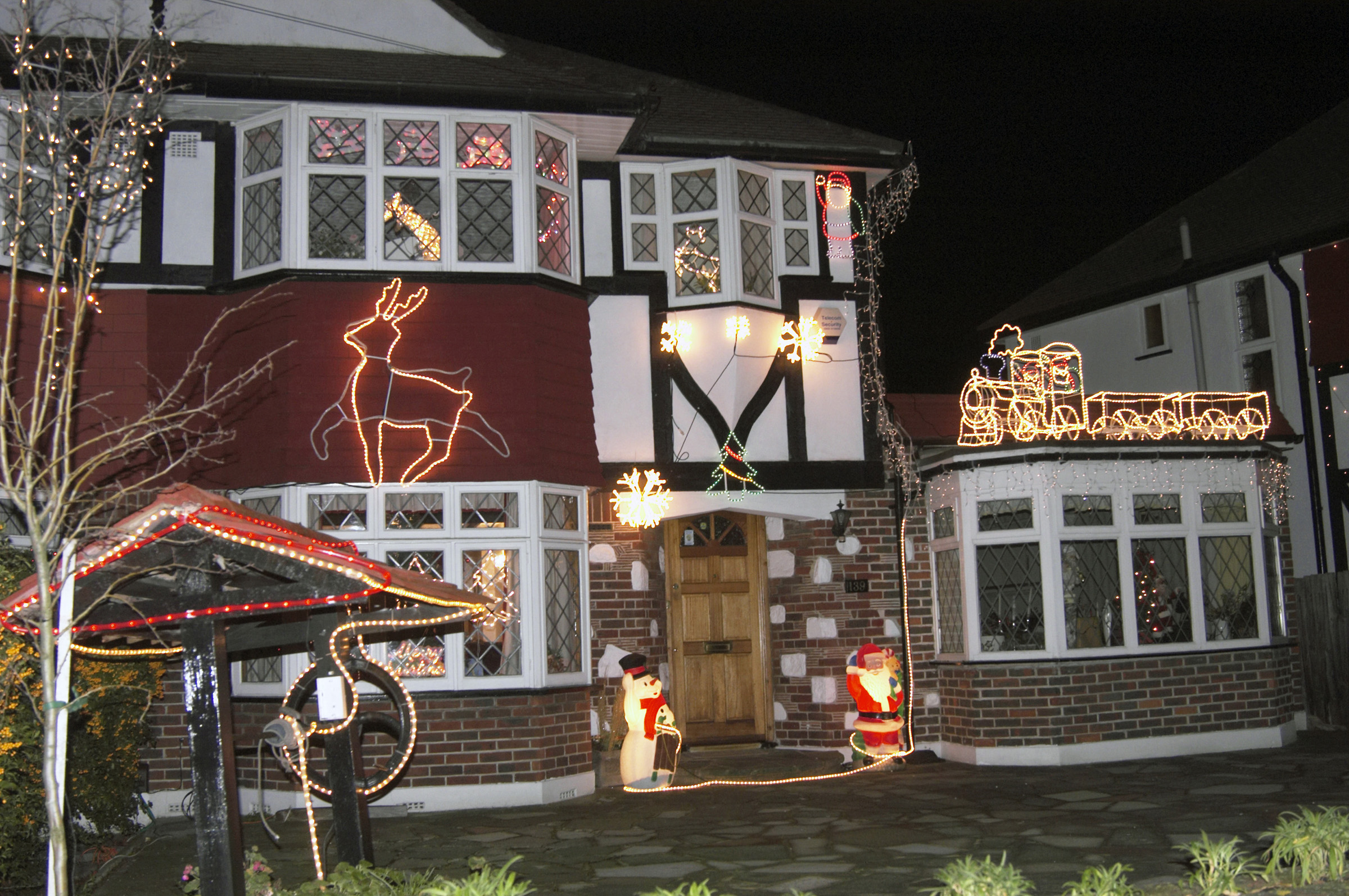
So its back on the Brompton to Raynes Park and a couple of trains home. It was great to come in and find a hot dinner in the oven waiting for me.
Flickr – Facebook – My London Diary – Hull Photos – Lea Valley – Paris
London’s Industrial Heritage – London Photos
All photographs on this page are copyright © Peter Marshall.
Contact me to buy prints or licence to reproduce.