Marco Polo, Chelsea Bridge, MAN holder & Convent – 1989

Marco Polo, Chelsea Bridge, MAN holder & Convent – More pictures from my walk which began at Vauxhall on Friday 28th July 1989 with Nine Elms Riverside. The previous post was Kirtling Street to Battersea Power Station & the Dogs – 1989

Marco Polo House, The Observer, Queenstown Rd, Battersea, Wandsworth, 1989 89-7l-13

One of few interesting postmodern buildings in London, Marco Polo House, designed by architect Ian Pollard for The Observer and British Satellite Broadcasting this was completed in 1989. It was demolished in 2014, probably to prevent it being listed and replaced by the rather anodyne flats now on the site.

Marco Polo House, The Observer, Queenstown Rd, Battersea, Wandsworth, 1989 89-7l-12

Another picture of Marco Polo House with cars parked giving a good impression of the impressive scale. At right is the railway viaduct with a train passing on the line from Victoria Station. This is the southern end of the building with a fairy mature tree newly planted in the foreground; it only briefly survived the demolition of the building.

Marco Polo House, The Observer, Queenstown Rd, Battersea, Wandsworth, 1989 89-7l-14

This giant stone carried the name of the building and I think was at the north end of the building on the corner of Sopwith Way or perhaps a little down that minor side-street. At right you can see a little of Marco Polo House and above it the unmistakable chimneys of Battersea Power Station, with the cranes with which McAlpine had removed the roof in the then recently abandoned scheme to convert it into a theme park.

Chelsea Bridge, River Thames, Battersea, Wandsworth, 1989  89-7m-64
Chelsea Bridge, River Thames, Battersea, Wandsworth, 1989 89-7m-64

I walked up Queenstown Road to the foot of Chelsea Bridge and went a few yards down the path into Battersea Park to take this picture looking across the Thames to Pimlico.

Although this was the side of an ancient river crossing fordable when the tide was low, the first bridge here was only opened in 1858 to provide access from north of the river to the new Battersea Park opened in the same year. This was a rather narrow and flimsy looking structure was named Victoria Bridge – and at the other end of the park Albert Bridge was built a few years later. Both were originally toll bridges but failed to be a commercial success and were taken over by the Metropolitan Board of Works in 1877 with the tolls being abolished in 1879.

It was renamed Chelsea Bridge when it was found to be structurally unsound to avoid any embarrassment to the Queen should it collapse but it was not until 1926 that a replacement was proposed. In the meantime the old bridge had appeared in many paintings, drawings and photographs, although the bridge that inspired Billy Strayhorn – probably from the painting by Whistler or Turner to name his impressionist composition Chelsea Bridge, was almost certainly of Battersea Bridge. The jazz standard was first recorded by the Ellington orchestra in 1941, after both had been replaced by more modern structures. Somehow I think the tune would have been less successful had it been named Battersea Bridge.

The current bridge opened in 1937 and “was the first self-anchored suspension bridge in Britain, and was built entirely with materials sourced from within the British Empire.” The main cables attach to the end of the bridge deck rather than onto the bank.

Marco Polo House, The Observer, Queenstown Rd, Battersea, Wandsworth, 1989 89-7m-66

I turned around and walked back down Queenstown Road, and could not resist taking more pictures of Marco Polo House from the opposite side of the road.

Towering above it was the giant gasholder and I carefully chose my position to make this into an unlikely addition to the post-modern building. This was the largest and seventh gasholder to be built on the site for the Nine Elms gas works which was further down Nine Elms Lane and was built in 1932 to the innovative designs of the German company Maschinenfabrik Augsburg-Nürnberg and so was the MAN holder. It and the other remaining holders were finally demolished in 2015.

Marco Polo House, The Observer, Queenstown Rd, Battersea, Wandsworth, 1989 89-7m-51

And this was the final picture I took of Marco Polo House on the walk, showing the south end of the building and attaching to it at right two of the Battersea Power Station chimneys.

Convent of Notre Dame, School, Battersea Park Rd, Battersea, Wandsworth, 1989  89-7m-53
Convent of Notre Dame, School, Battersea Park Rd, Battersea, Wandsworth, 1989 89-7m-53

I turned back onto Battersea Park Road to make this photograph of the former convent school, with the MAN gasholder appearing on the right edge of the picture. The Sisters of Notre Dame came to Battersea in 1870 to provide Catholic education for the poor children of the area with a public elementary school and also a private day school. In 1901 it reopened as Notre Dame High school for Young Ladies and in 1906 increased in size as it began to admit girls on LCC County Scholarships and a new wing was opened in 1907. Until 1919 there were some dormitories for boarders which were then converted to more classrooms and a library.

The grammar school expanded further after the Second World War and became a comprehensive in 1972, closing in 1982 when the building was sold. It was later converted into flats as The Cloisters.

More from my walk into Battersea in later posts.


FlickrFacebookMy London DiaryHull PhotosLea ValleyParis
London’s Industrial HeritageLondon Photos

All photographs on this page are copyright © Peter Marshall.
Contact me to buy prints or licence to reproduce.


Kirtling Street to Battersea Power Station & the Dogs – 1989

Kirtling Street to Battersea Power Station & the Dogs continues my walk which began at Vauxhall on Friday 28th July 1989 with Nine Elms Riverside. The previous post was More from Nine Elms Riverside.

Works, Kirtling St, Nine Elms, Wandsworth, 1989 89-7l-36

The riverside path still ends at Kirtling Street but Greenham’s aggregate wharf has now been replaced by the central site of the Tideway 25km London super sewer project underneath the River Thames due for completion in 2025, when it should prevent 95% of sewage spills in London entering the river. It was here that the two tunnel boring machines were lowered 50 metres below ground to make their way east and west to produce the central section of the tunnel between Fulham and Bermondsey.

T & W Farmiloe, paint factory, Cringle St, Nine Elms, Wandsworth, 1989 89-7l-21

This bricked up entry in a tall brick wall on the corner of Cringle Street was for many years all that remained of the 50-year-old glass, lead, paint and sanitary ware manufacturing company which had opened a large 4-storey factory here in 1884 with a frontage on Nine Elms Lane. The Farmiloe brothers had set up in business in Westminster in the 1840s as glass cutters and taken over the Island Lead Mills in Limehouse in 1885, and expanded with a brass foundry on Horseferry Road, a varnish works in Mitcham and this large warehouse in Nine Elms, producing everything a plumber could need. In the twentieth century their main business moved to sanitary ware and paint, including ‘Nine Elms’ white lead paint which was made at this white-lead factory built around 1910. I think the company which had trademarked ‘Nine Elms’ had long vacated the site before it was dissolved in 1988. The trademark passed to Akzo Nobel and expired in 2005.

Works, Sleaford St, Nine Elms, Wandsworth, 1989 89-7l-23

Sleaford Street was on the eastern side of one of the earliest developments in the area, Battersea New Town, begun in the 1790s and was first developed on its west side the by Southwark butcher William Sleford. Apparently later “One side of Sleaford Street was formerly derided as Ginbottle Row, while the other was called Soapsuds Bay, presumably because it accommodated laundresses.”

I can find no signs of the building in this picture and most of the west side of Sleaford Street is now occupied by a large block of flats extending back from the corner with Nine Elms Lane completed around 2008. John Oswald and Sons had a foundry in the street from 1871 and this may be their building.

At the left of the picture you can see the Battersea gasholder, demolished 2014-7 and at right Battersea Power Station.

Battersea Power Station, Battersea Park Rd, Nine Elms, Wandsworth, 1989 89-7l-24

A slightly unusual view of the power station six years after its final closure. Planning permission was obtained for it conversion to a theme park, but the scheme was halted when money ran out in March 1989. By this time the roof had been removed, presumably by McAlpine whose name adorns the building, which led to considerable subsequent deterioration of the steelwork and foundations.

After various failed redevelopment plans the power station was eventually refurbished as an expensive tourist destination surrounded by new homes, a hotel, shops and restaurants and a new London Underground station. McAlpine was the construction manager for the final phase three of the development.

Battersea Power Station, Battersea Park Rd, Nine Elms, Wandsworth, 1989 89-7l-25

Another view of the wrecked power station, along with a rather unconvincing double at the right with a view of the abandoned scheme.

Battersea Dogs Home, Battersea Park Rd, Battersea, Wandsworth, 1989 89-7l-11

Then there was no way back to the riverside before reaching Chelsea Bridge at the north end of Queenstown Road. A long detour away from the river around the power station and gas works site took me past Battersea Dogs Home where I took this picture with one dog begging on the top of the wall and another emerging from the Exit to the building. There is now a rather larger building on the site and it has added ‘and Cats’ to its remit.

The description of my walk will continue in a later post.


FlickrFacebookMy London DiaryHull PhotosLea ValleyParis
London’s Industrial HeritageLondon Photos

All photographs on this page are copyright © Peter Marshall.
Contact me to buy prints or licence to reproduce.


More from Nine Elms Riverside

More from Nine Elms Riverside: My walk on Saturday 29th July continued from yesterday’s post.

Libation, River Thames, Riverside Walk, Nine Elms, Wandsworth, 1989 89-7l-66

At the end of the William Henry Walk I photographed a small coastal vessel, the Libation, moored at a short pier.

Libation, River Thames, Riverside Walk, Nine Elms, Wandsworth, 1989 89-7l-51

As a took a few photographs the skipper of the vessel came up to talk with me. He told me that he and his mate brought the ship up on the tide every day with a load of gravel dredged from the estuary, where it was unloaded by the crane with a grab into the hopper at left of the picture. As soon as I ended the conversation and moved on I regretted I had not asked him if I could take his picture, but it was too late to go back.

The Battersea Barge, Bistro, River Thames, Nine Elms Lane, Nine Elms, Wandsworth, 1989 89-7l-41

The Battersea Barge is at the west end of this section of walk, immediately west of the Heathwall pumping station. And although the area around has changed completely the Battersea Barge is still there, a 1930s Dutch barge converted to a floating bar and restaurant, much in demand for private parties, though it now seems only to offer a bar to which people are welcome to bring their own food – and there are many local outlets which have now opened. And it now has a sister ship nearby, another converted Dutch barge, the Tamesis, a “walk-on neighbourhood bar, live music & events space” moored nearby.

Until around 2008 the path here was reached by an fairly narrow alley beside a warehouse, but the commercial properties along this side of Nine Elms Lane were replace from 2012 on by tall residential blocks, part of the immense development that has taken place in the Nine Elms area.

River Thames, Riverside Walk, Nine Elms Lane, Nine Elms, Wandsworth, 1989 89-7l-44

The dock here was originally Manor House Wharf and a dock ran into the gas works on the other side of Nine Elms Lane. The jetty at Imperial Wharf allowed larger ships to unload coal here.

Jetty, River Thames, Imperial Wharf, Nine Elms Lane, Nine Elms, Wandsworth, 1989 89-7l-31

The jetty for the Nine Elms Gas Works was rebuilt in 1952 to handle the flatiron coastal colliers which brought coal to the works. The gas works had begun here in 1858 and were taken over by the Gas Light and Coke Company in 1883 who ran them until nationalisation in 1949. The gas works closed in 1970 when the UK changed to natural gas.

There are now more houseboats moored here in what is now called Nine Elms Pier.

Pier, Riverside Walk, River Thames, Kirtling St, Nine Elms, Wandsworth, 1989 89-7l-34

At the west end of the Tideway Walk I used the steps up to the jetty to take this and a landscape format image from the same position – below. Both are looking upstream towards Battersea Power Station at left and its jetties and cranes, and on the other side of the river the 1875 chimney for the Western Pumping Station on Grosvenor Road.

Pier, Riverside Walk, River Thames, Kirtling St, Nine Elms, Wandsworth, 1989 89-7l-35

The Tideway Walk ends here, turning south to Kirtling Street, which leads back to the main road. The riverside here is still in industrial use as the Cringle Dock Solid Waste Transfer Station. Back in 1989 there was a long walk before you could access the river at Chelsea Bridge and Battersea Park, but now you can go down Cringle Street to the Battersea Power Station development.

My description of this walk continues in a later post towards Battersea.


FlickrFacebookMy London DiaryHull PhotosLea ValleyParis
London’s Industrial HeritageLondon Photos

All photographs on this page are copyright © Peter Marshall. Contact me to buy prints or licence to reproduce.


Nine Elms Riverside – July 1989

Nine Elms Riverside – July 1989: One of the benefits of working as a teacher as I still was in 1989 was certainly the long Summer holiday and I spent quite a lot of these taking photographs as well as going away for several weeks with my family – though some years this was also a photographic opportunity. And most years we also spent a week or so in Hull where I was able to add a few pictures to the work that had resulted in my exhibition Still Occupied in the Ferens Art Gallery there in 1983.

But our travels around the country in the Summer of 1989 – which as well as Hull included a week with a group of friends in a large holiday cottage in Scotland – only began in August, and the day after my visit to Hackney on Friday 28th July 1989 I returned to take up my work where I had left off earlier in Nine Elms.

Brunswick House, Market Towers, Wandsworth Rd, Vauxhall, Lambeth, 1989 89-7k-13

Tuuning west out of Vauxhall Station took me to the junction of Wandsworth Road and Nine Elms Lane. Brunswick House at right appeared in an earlier post on my walks in 1989. This mid 17th century house, extended in 1758, bought by in 1869 by “the London and South West Railway Company who used it as offices and a Scientific and Literary Institute. In 1994 it was sold to the railway staff association who again sold it in 2002. It is now a restaurant and the yard around it is used by an architectural salvage and supply company.

Market Towers was clearly a very much later building, or rather pair of buildings, the taller 290ft high with 23 floors, completed in 1975, with offices a pub, the Market Tavern, on the first floor. The pub was built to serve workers at the adjoining New Covent Garden Market completed in 1974 and its licence allowed it to open in the early hours. By the 1980s this had made it into “South London’s first gay pub with a 2am licence“.

According to Wikipedia, the buildings were bought by the misleadingly named property developer Green Property in 2008 and four years later they were given planning permission to redevelop. Instead they sold it to Chinese developer Dalian Wanda. It was demolished in 2014-5 who gained revised planning permission for two buildings containing 436 flats and a hotel, City Tower with 58 floors and 654ft tall and River Tower 42 floors and 525ft. The project was sold on to another Chinese company, and there were various problems over building contracts which delayed completion. The Park Hyatt London River Thames hotel is now predicted to open in mid-2024.

Nine Elms Cold Store, Nine Elms Lane, Nine Elms, Lambeth, 1989  89-7k-14
Nine Elms Cold Store, Nine Elms Lane, Nine Elms, Lambeth, 1989 89-7k-14

This tall, windowless monolith states across its top ‘NINE ELMS COLD STORE‘ and was built in 1964 on a former gas works site to store meat and other frozen goods brought by ship into the London Docks and transferred here by lighters. At its side was a large railway goods yard, from which these goods could be taken by rail as well as lorries from the site. But only a few years after its completion, London’s docks began to close and by 1979 it was redundant.

This gas works had closed in 1956 and the site was in use as a coach park when the cold store was built, and also included a small creek, Vauxhall Creek, which once had been the mouth of the River Effra, long culverted and diverted which was then filled in. After it ceased to be used as a cold store it stood for 20 years with various schemes for redevelopment coming to nothing. Part of the delay was caused by the huge cost of demolition, part by Lambeth Council not then wanting the kind of luxury riverside flats than now occupy the site, the 50 storey 594 ft St George Wharf Tower completed in 2014, as well as by some dodgy business dealings.

The cold store was used for various films as a dystopian urban location, was a dangerous gay cruising handily placed for the Market Tavern, as well as allegedly for “black magic, devil worship, sacrifices, and orgies” but was finally demolished in 1999.

River Thames, Riverside Walk, Nine Elms, Wandsworth, 1989 89-7k-15

I had crossed the border from Lambeth to Wandsworth and beyond the cold store the Riverside Walk had been opened up by the council as far as the Thames Water pumping station at Heathwall and after a short diversion past that to Kirtling Street, some years later in 1996 becoming a part of the new Thames Path.

This view from the path across the river past a moored lighter is from its start and there are now new buildings on the riverbank at the left, but the rest remain. These buildings are on Grosvenor Road, Pimlico. You can see the tower of Westminster Cathedral in the distance and I think to its left is the rather ugly block which contains Pimlico station.

A large brick arch on the riverbank is the ancient mouth of the River Tyburn, long since culverted. Plans for the resurfacing of the river by the Tyburn Angling Society seem limited to Mayfair and not to extend to the Thames, though the chances of it happening are as close to zero as can be imagined.

Battersea Power Station, River Thames, Riverside Walk, Nine Elms, Wandsworth, 1989 89-7l-02

The bend of the river here makes it look as if I was walking on water to take this picture, but my feet were firmly on dry land. Battersea Power Station has since then been given something of a facelift, with the removal of some of the more interesting features of the riverfront, as well as now being surrounded on several sides by large blocks of flats and being turned into a wasteful luxury shopping centre.

The pair of distant chimneys just to its right are Lots Road Power Station. The nearer bridge is Grosvenor Railway Bridge taking trains into Victoria Station, but Chelsea Bridge just upriver can also be seen clearly.

Battersea Power Station, River Thames, Riverside Walk, Nine Elms, Wandsworth, 1989  89-7l-64
Battersea Power Station, River Thames, Riverside Walk, Nine Elms, Wandsworth, 1989 89-7l-64

Another view upstream from the riverside path, which shows all four chimneys of Battersea Power Station as well as the riverside path and some of the earlier flats built beside the river here, Elm Quay Court. This luxury flat development built in 1976-8 includes secure underground parking and a 47ft swimming pool, gym and sauna.

Elm Quay Court, 30 Nine Elms Lane, Wandsworth, 1989 89-7l-54

A view of the Elm Quay Court flats from the road. The new US Embassy was built opposite them. Neither building seems attractive to me. The best feature of the US Embassy is the moat which runs along only its north side, and the best feature of Elm Quay Court is the riverside walk, which enables the public to walk past it almost without seeing the building.

My account of my walk will continue in a later post.


FlickrFacebookMy London DiaryHull PhotosLea ValleyParis
London’s Industrial HeritageLondon Photos

All photographs on this page are copyright © Peter Marshall. Contact me to buy prints or licence to reproduce.


Our Pre-Chistmas City Walk – 2017

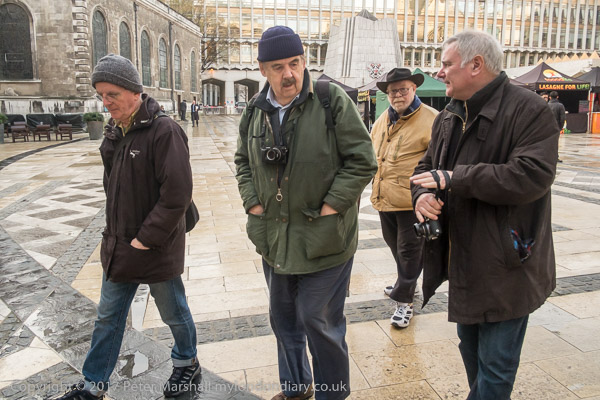
Our Pre-Chistmas City Walk – On Thursday 7th November 2017 I met up old friends, all photographers, for the early Christmas social event we’ve organised most years. It had proved difficult to find a date everyone could make and several of the group were missing and we were down to five of us.

Our Pre-Chistmas City Walk
Four – and I was holding the camera

It’s a sobering thought that six years on only three of the five are still in the land of the living, with first Alex and more recently John having died. I’ve several times written about John Benton-Harris on this site over the years and he also years ago contributed two guest posts, as well as featuring his surprise 70th birthday party in 2009.

Our Pre-Chistmas City Walk

I’d worked with John in recent years on producing a number of books, including a few for the Café Royal Books series, including his Saint Patrick’s People, though his major work, ‘Mad Hatters’ on the English sadly remains unpublished. And I’d gone with him taking pictures to St Patrick’s Day events in London and elsewhere. Although he had some health problems and was in his 80s, his death still came as a great shock to us all.

Our Pre-Chistmas City Walk

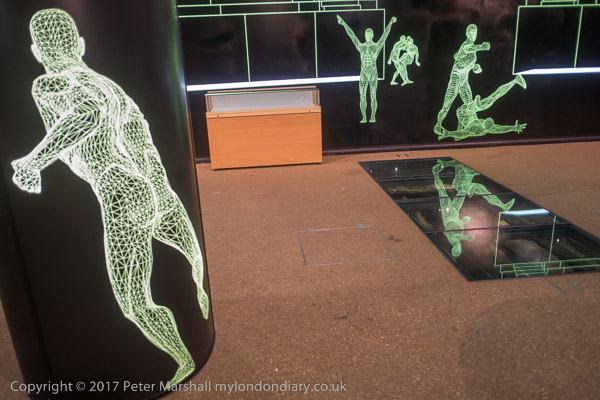
We met at St Paul’s Underground Station and our first visit was to the Guildhall Art Gallery, where we went “down into its depths where a few years ago the remains of the Roman Coliseum were discovered and are now rather well displayed, before looking at the City of London’s art collection on display. It’s a rather mixed bunch with some fine works ancient and modern along with some rather tedious municipal records of great occasions that would have looked fine in the Illustrated London News but don’t really cut it as vast canvasses on the gallery wall.” (Quotes her are from my article written here in December 2017)

Our Pre-Chistmas City Walk

Some years earlier in 2005 I had been to the opening of a show at the gallery featuring works by some of London’s best-known living painters curated by Mireille Gailinou for a now defunct organisation I was then the treasurer of, London Arts Café, ‘London Now – CITY OF HEAVEN CITY OF HELL’ and had given my opinion on the gallery’s collection to the then curator who was very shocked when I’d said I would quite happily burn one of the largest canvases. Fortunately that had not resulted in me being banned from the gallery!

That show is now long gone, as too is the London Arts Café, but its web site with more about this and other shows and events we organised remains currently on-line. And despite my opinions the Guildhall Art Gallery is still worth visiting both for the artworks and certainly for its Roman remains and entry is free.

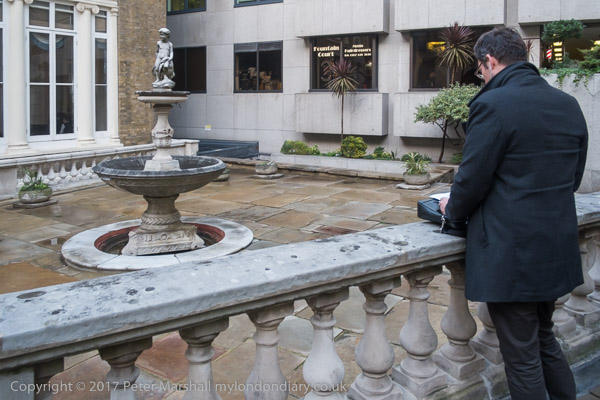
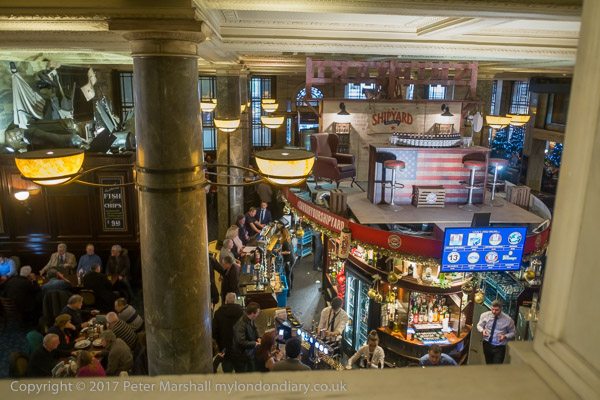
From there we walked “on past the Bank of England we walked into Adams Court and walked around in a circle before driven by thirst to the Crosse Keys, where I failed to resist the temptation of a pint of Smokestack Lightnin’, a beer from the Dorking Brewery, named after my favourite Howling Wolf track – I still somewhere have the 45rpm record. It was the first time I’ve come across the idea of a ‘smoked’ beer, and while interesting I think it would be best drunk around a bonfire.”

John had left us when we went into the pub, saying there was still light to take photographs and he wanted to make the most of it, but he seemed seldom to enjoy coming with us into pubs. The Crosse Keys is one of many interesting buildings – old pubs, theatres, cinemas, banks etc – around the country that Wetherspoons have taken over and preserved and though their owner has terrible politics and the chain poor conditions of service they offer cheap and generally well-kept beer and plain good-value food. Obviously their staff should unionise and fight for better terms.

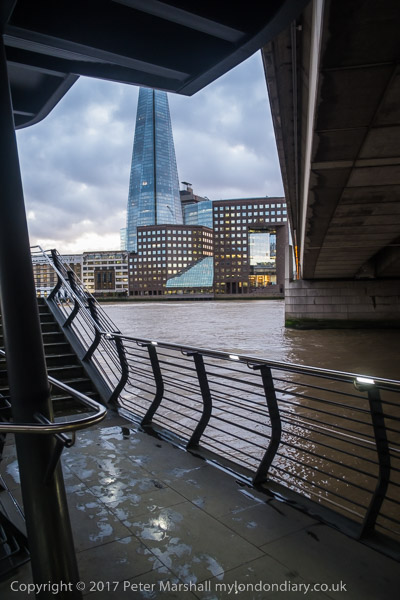
We didn’t stay long in the pub, just a quick pint on the balcony and a short visit to the toilets in the depths, before leaving. Alex said goodbye here, seeing a bus that would take him back home to Hackney rather than go west with us, and I led the remaining two “down to the river, where we turned upstream along the Thames path. The light was fading a little, but perhaps becoming more interesting, but when we left the river at Queenhithe it was time to make our way back to St Paul’s to catch a bus and get a table for our meal together before the city workers crowded in.”

All the pictures accompanying this post were made with a Fuji X-E1 and 18mm Fuji lens, an almost pocketable combination. The 18mm f2 is probably my favourite Fuji lens, though often I prefer the added flexibility of the slightly slower but still fairly compact 18-55mm zoom. Later I moved up to the X-E3, which has better auto-focus and a significantly larger sensor and is slightly smaller, but both are still very usable cameras, and the X-E1 is now available secondhand pretty cheaply. It’s still a great camera for street photography and as an introduction to the Fuji range.

A few more pictures at Photographers Walk.


Santas, Education, Nativity 2014

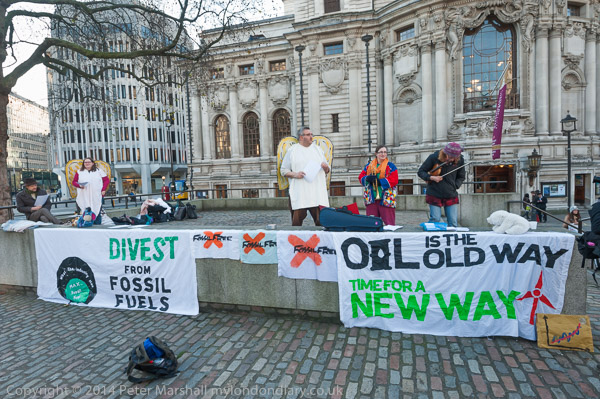
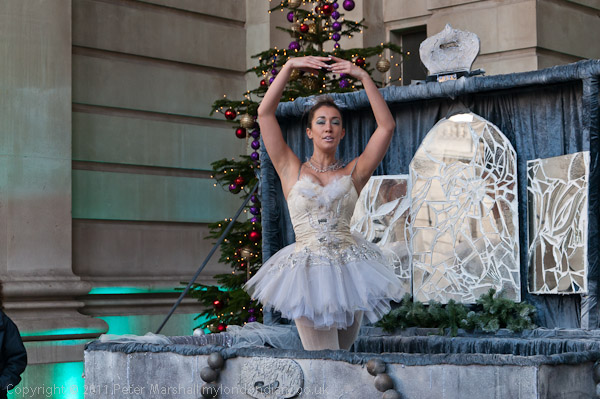
Santas, Education, Nativity – London was getting into the Christmas spirit on Saturday 6th December 2014, with boozy hordes of Santas on the streets and a Fossil Free Nativity Play in Westminster. But a national day of education activism against tuition fees had also been called and I photographed a march in south London.


South London March for Free Education – Clapham

Santas, Education, Nativity

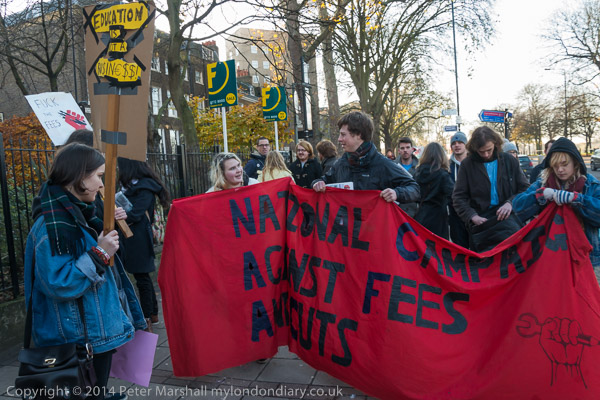
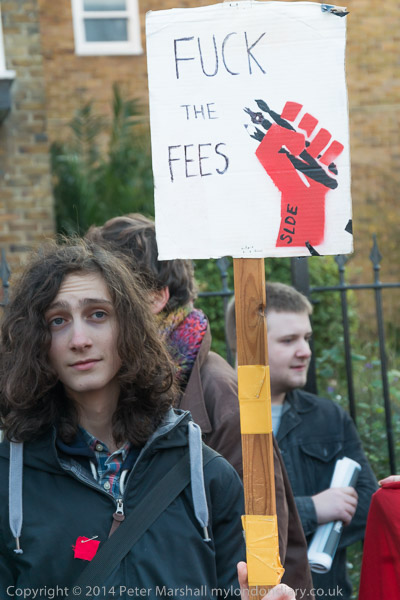
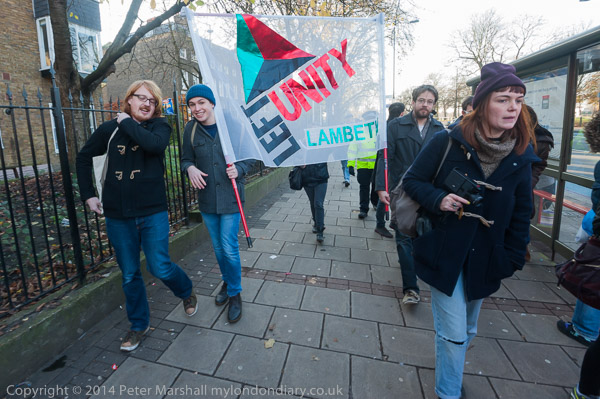
There was a disappointing turnout for the march against tuition fees which gathered outside Lambeth College facing Clapham Common.

Santas, Education, Nativity

It perhaps wasn’t a good day to have called for a protest, as many students will already have left London to go home for the Christmas break, and others will have been busy with other things including Christmas shopping. And I’m sure there will have been rather more running around the capital in Santa costumes for Santacon.

Santas, Education, Nativity

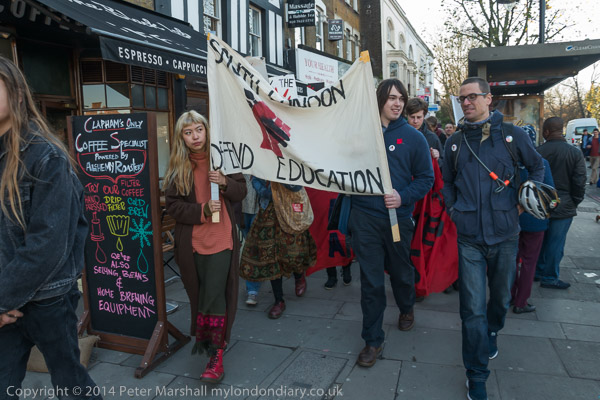
The marchers included people from the National Campaign Against Fees and Cuts, Lambeth Left Unity and South London Defend Education. This was one of a number of events taking place that day across the country including others around London.

Santas, Education, Nativity

I walked a short distance with the march taking a few photographs before leaving them to take the tube to Westminster. They were marching to a rally in Brixton where they expected rather more to attend.

A few more pictures at South London March for Free Education.


Fossil Free Nativity – Churches Divest! – Broad Sanctuary

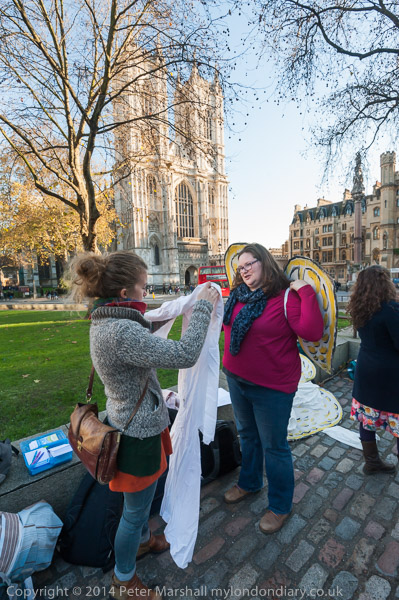
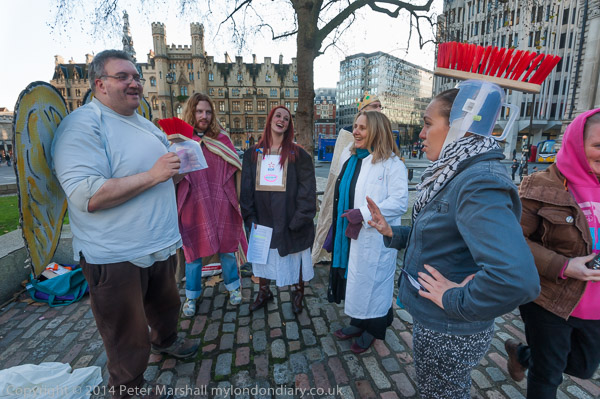
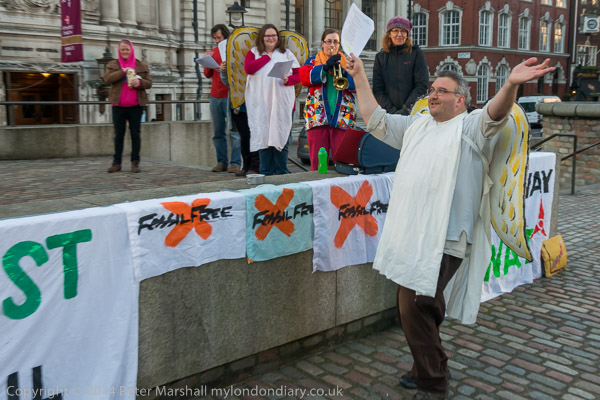
Christian Climate Action and Occupy organised an entertaining performance of a Fossil Free Nativity Play between Westminster Abbey and Methodist Central Hall, part of a continuing campaign to get churches to disinvest from fossil fuel companies.

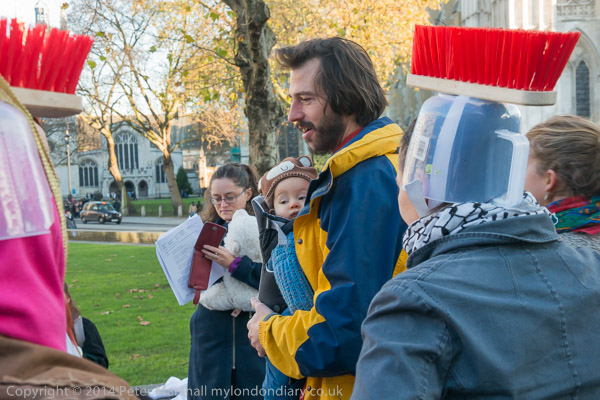
Among the members of the cast were Wesley Ingram who wrote the play and performed as the Angel Gabriel, and George Barda of Occupy who played Joseph with his child as the baby Jesus.

Few of the actors had seen the script before the performance and the costumes and props were interesting rather than authentic – perhaps the best being the headgear for the Roman soldiers.

Their was some lively music from violin and trumpet and at the end of the performance everyone posed behind the banners calling for the churches to divest from fossil fuels. But there was no sign of the clergy from either Westminster Abbey and Methodist Central Hall,

More at Fossil Free Nativity – Churches Divest!.


Santacon

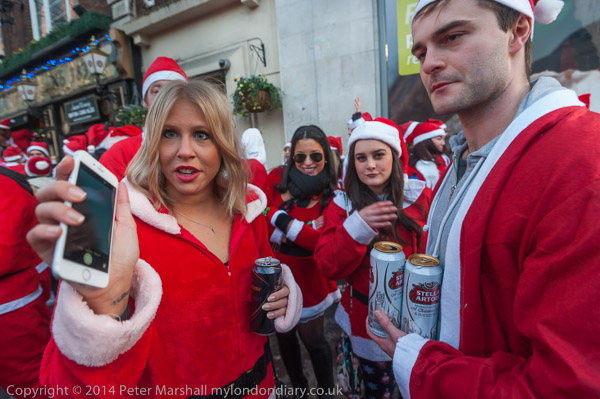
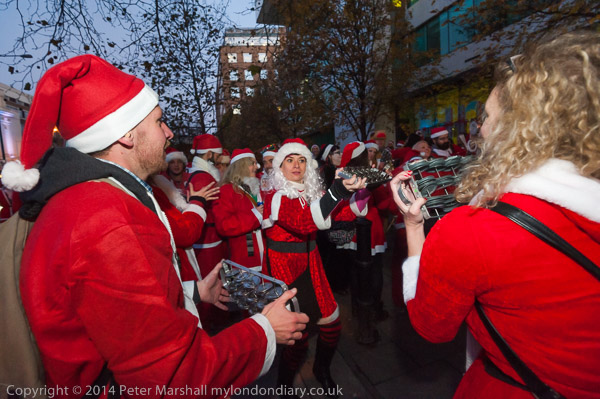
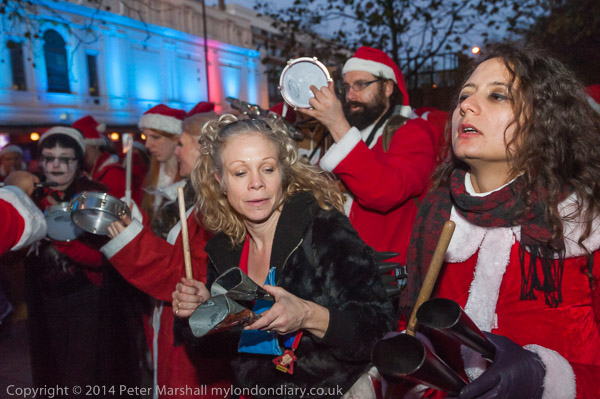
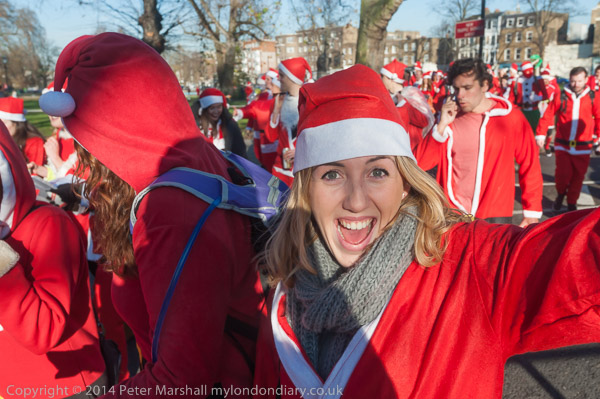
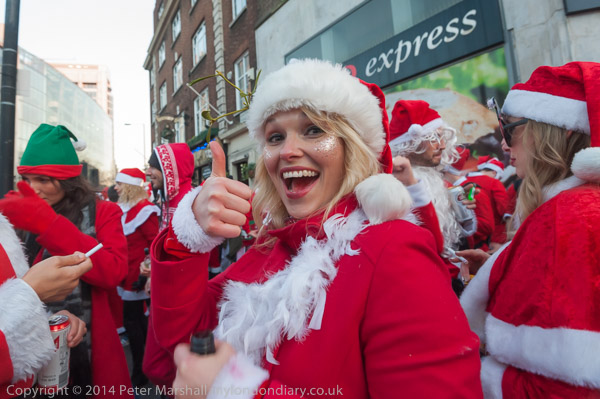
Around a thousand young people in Santa suits, along with the odd elf, reindeer and other Christmas-themed costumes were milling around the edge of Clapham Common for the start of day-long alcohol-fuelled crawl through London (with a little help from public transport.)

Similar groups were starting from meeting points in East and North London and they hoped to meet up later in the day at Marble Arch or Hyde Park, though I think for many the festivities would end in Trafalgar Square.

Later in the day I met up with rather more of the Santas coming from North London close to Great Portland Street station, by which time they were rather merrier. I also met a couple of photographer friends who had also come to take pictures. Most of the Santas were keen to be photographed and quite a few also got me to take pictures on their phones, though I found that rather beyond me. I hope a few worked.

I went with them along to Baker Street taking pictures and later in the day wrote:

Thousands in Santa suits and other Xmas deviations, police trying hard to keep smiling, cans of beer, doubtfully soft drinks, just a few Brussel sprouts in the air, crowded bars, sprawling mass of mainly young people having fun on the streets of London. Santacon.

It was getting dark and although I could still work it meant using flash and I didn’t feel the results were as good. I left them there to make my way to join my two friends who by then were sitting in one of the nicest pubs in the area and was delighted to find a pint waiting for me on the table.

Many more pictures at
Santacon Start in Clapham
Santacon North London


Climate Justice, Congo & London – 2011

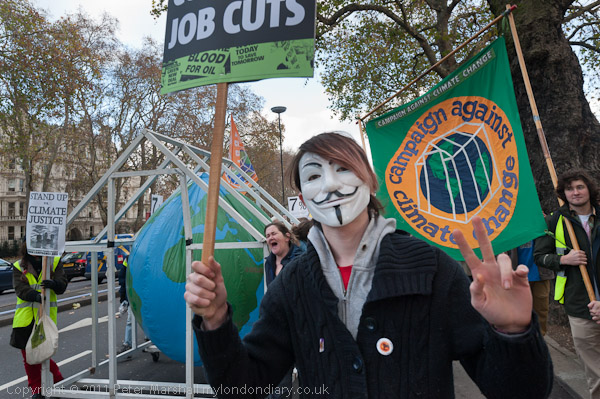
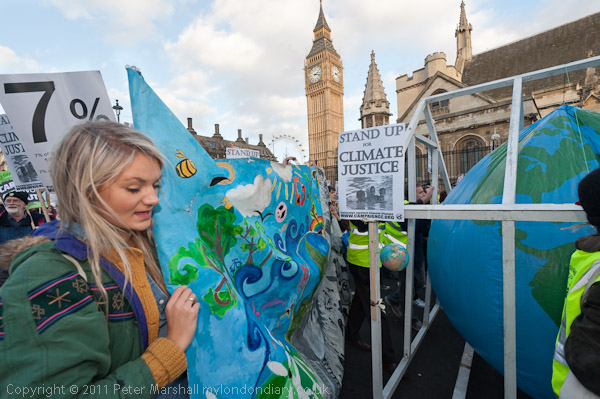
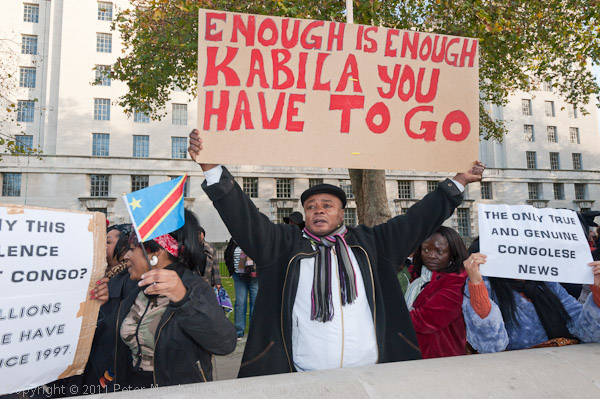
Climate Justice, Congo & London – On Saturday 3rd December 2011 there was an Xmas shopping event in the City, normally pretty dead at weekends and Occupy were holding climate justice workshops before joining Campaign Against Climate Change’s annual march. That took me past a protest at Downing Street against the vote-rigging in the recent election in the DRC. I’d taken some pictures earlier as I was going around London and took a few more in the dark later on my way to an event in Acton.


City Xmas Celebrations – Bank

Climate Justice, Congo & London
A live musical box

There was a special Xmas Saturday shopping event in the centre of the City of London which usually closes down for the weekend, but I think it was aimed more at the wealthy 1% than me.

Climate Justice, Congo & London
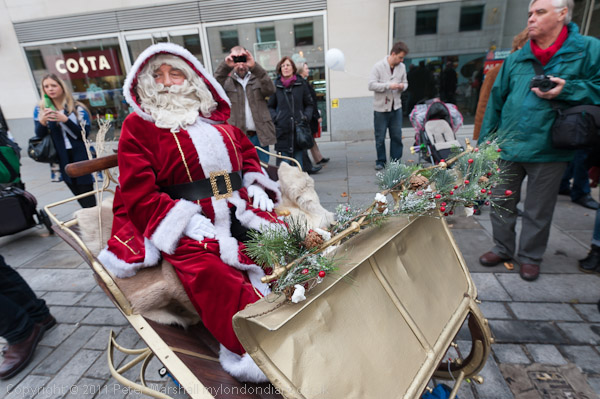
Santa had come with real reindeer

I wouldn’t normally have gone but it was on my fastest route to St Paul’s Cathedral and it was the first time the City had held such an event. Though unless there were rather more visitors later in the day it would probably be the last. I didn’t feel welcome and didn’t stay long.

More – including reindeer – at City Xmas Celebrations.


Occupy LSX Climate Justice Workshops – St Paul’s Cathedral steps

Climate Justice, Congo & London

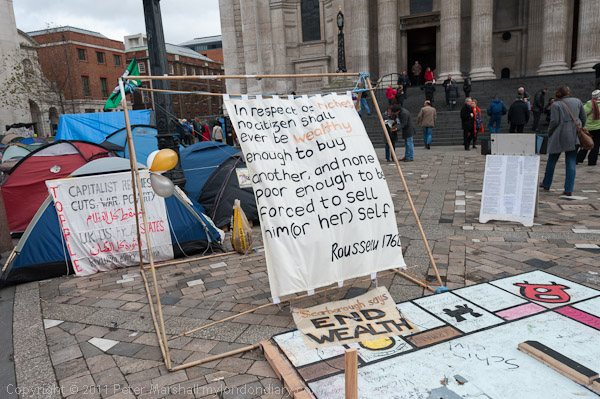
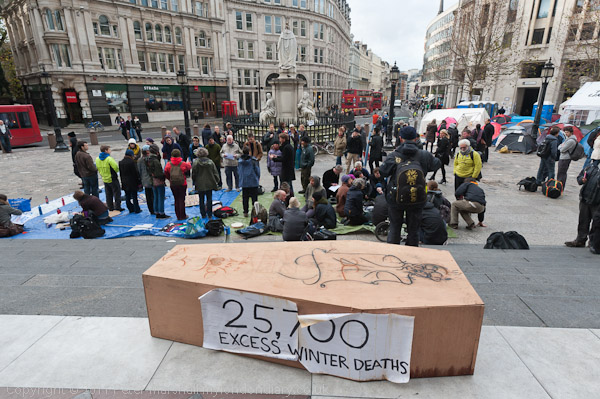
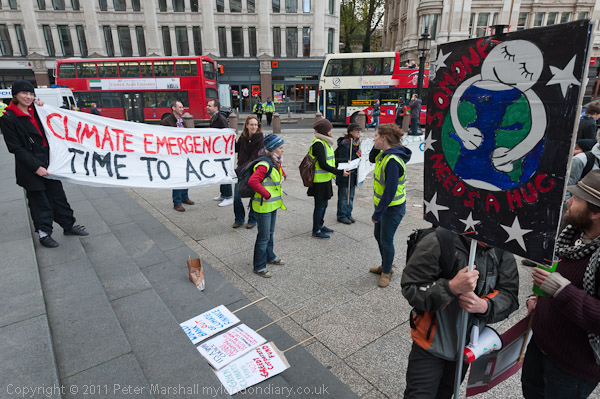
Occupy London was still camping next to St Paul’s Cathedral, having been there since 15th October, and they were holding workshops when I arrived about various aspects of climate justice and campaigning, and preparing banners and posters for the Climate Justice march later in the day.

Climate Justice, Congo & London

They planned to make their way to the start of the march in a ‘Climate Walk of Shame’ around the offices of various climate change villians (‘unsavoury sites of climate criminality’) in the City.

As often with Occupy, the plenary session went on longer than anticipated. Many people wanted to contribute and some at rather greater length than necessary and the walk began rather late.

I’d hoped to be able to go with them, but only went as far as their first stop at one of the banks in St Paul’s Churchyard before I had to leave to make my own more direct way to the start of the march in Blackfriars.

Occupy LSX Climate Justice Workshops


Stand Up For Climate Justice – Blackfriars to Old Palace Yard

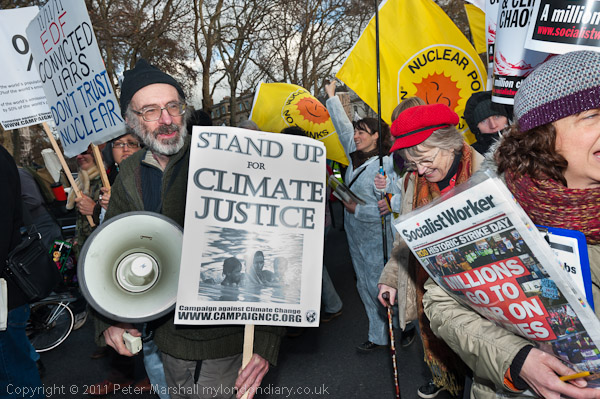
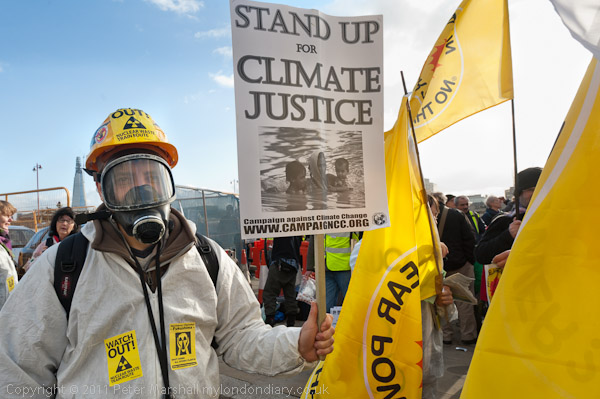
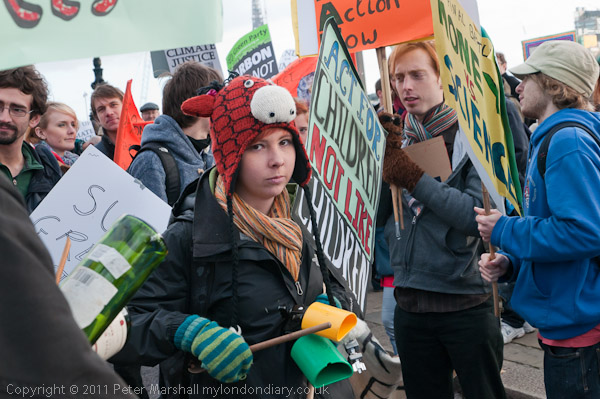
Around a thousand people gathered at Blackfriars for the march organised by the Campaign Against Climate Change to a rally opposite the Houses of Parliament.

Climate talks were taking place in the 17th UN conference in Durban, but seemed unlikely to make much progreess as the US were continuing to refuse to accept mandatory limits on carbon emissions. It seemed likely this would prevent any progress on global reductions in emissions, and seemed certain to lead to catastrophic increases in global temperature. Or, as I put it “bluntly, our planet is going to fry.”

While Barbara Boxer the head of the Senate environment committee was pointing out that the US is the world’s largest historic emitter and thus has a moral obligation to reduce greenhouse gas emissions, the US right, and the ‘Tea Party’ movement in particular, were still denying the existence of climate change and vehemently opposing any restrictions on the emissions of US industry.

By 2011 there had long been no serious scientific debate about the reality of climate change, though still some controversy about the exact magnitude and the timescales involved. But all informed opinion agreed that urgent action is needed, though the heavily funded fossil fuel lobby was still spreading lies and opposing any action.

Since 2011 things have become even more clear and the effects have become worse than even the more pessimistic scientists then predicted. But still politicians are not taking the urgent actions needed, and limiting the temperature rise to 1.5°C now seems impossible.

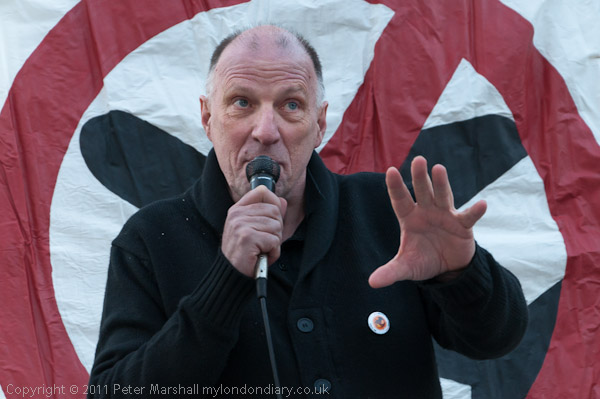
Among many speakers was John Stewart of HACAN who pointed out that while the richest 7% who cause 50% of the world’s pollution, aircraft use, one of the major sources of emissions, is limited to an even more limited group of the world’s population, with only 5% of the world’s population ever having flown.

More at Stand Up For Climate Justice.

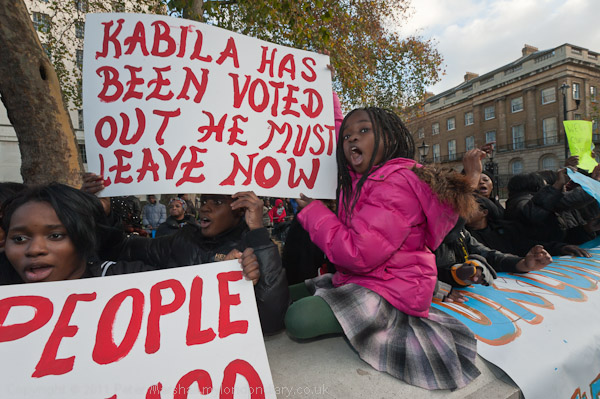
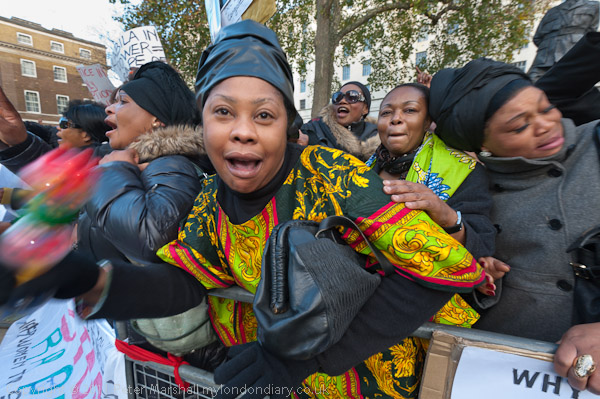
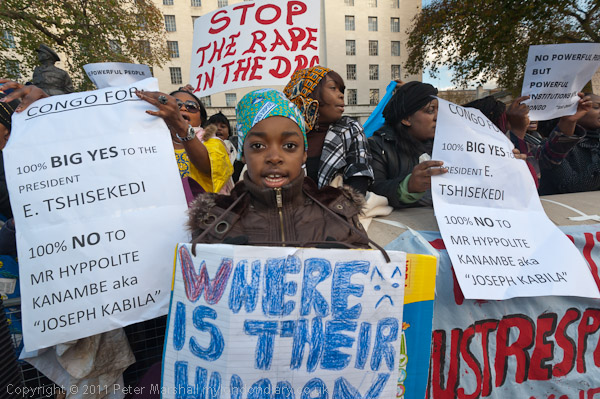
Congolese Protest Against Kabila Vote-Rigging – Downing St

The Democratic Republic of the Congo is both blessed and cursed by its immense mineral resouces, probably the richest of any country in the world, including 80% of the world’s cobalt reserves, and between 65-80% of coltan, the mineral from which tantalum capacitors, vital for mobile phones, games consoles, computers and other electronic devices are made.
Despite this wealth of the DRC, the people remain some of the poorest in the world, and because of these minerals the country is one of the most corrupt in the world. The move towards renewable energy and the increasing need for batteries for electrical vehicles has led to increased geopolitical competition over the DRC’s cobalt resources.
The area has been the subject of various wars and there is still conflict as well as widespread violation of humanitarian and human rights law, including the sexual abuse of women and children.

The Kabila regime has been kept in office by western interests who have now turned a blind eye to the widespread vote-rigging violence and fraud in the elections. The opposition later claimed to have outvoted Kabila with 54% of the vote to his 26%, while Kabila claimed to have won by 49% to 32%.

In 2019, the son of the candidate thee protesters say won the 2011 election became President in the first peaceful transition of power since the DRC became independent but the early years of his presidency were still with governments dominated by supporters of Kabila. In 2021 he was able to form a new government which among other measures has promised to reverse deforestation in the DRC by 2030.

More at Congolese Protest Against Kabila Vote-Rigging.


London Wandering – City and North Acton

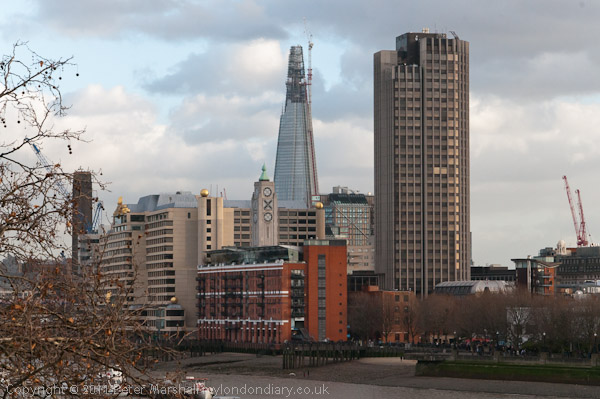
I’d taken a few views of London as I walked with the Climate March.

And in the early evening I went to an event in North Acton, walking to the venue from Willesden Junction. There are just a few more on-line at London Wandering.


Cressingham Gardens Calls For A Ballot – 2017

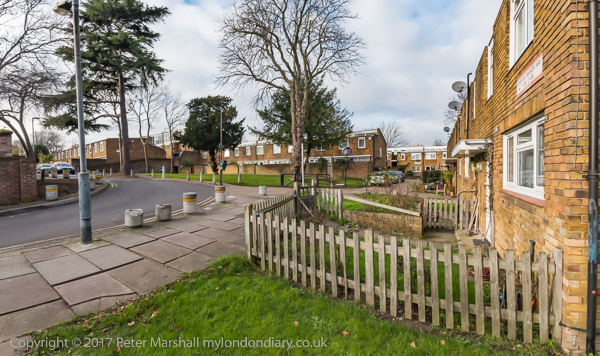
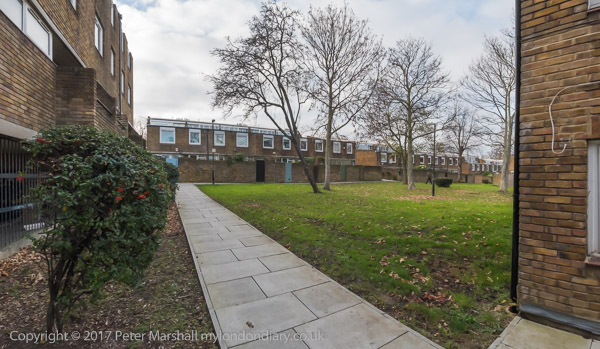
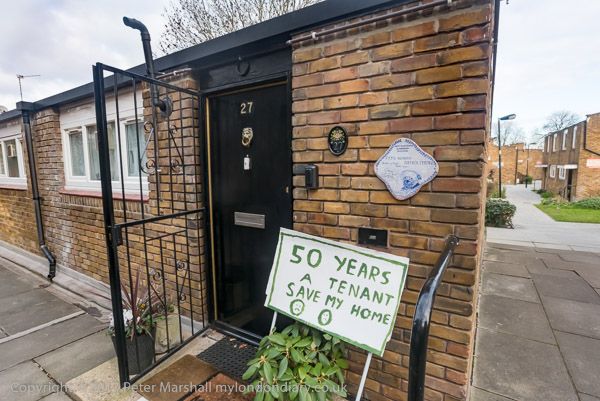
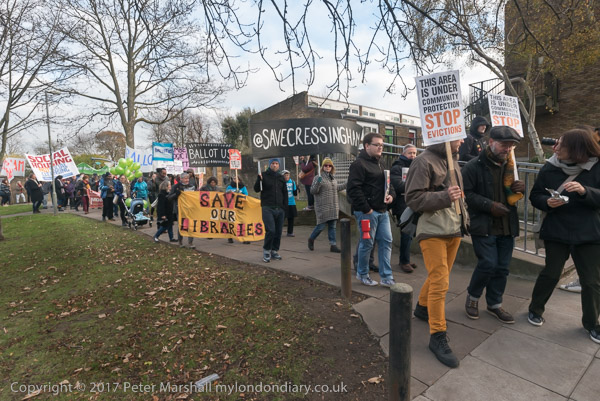
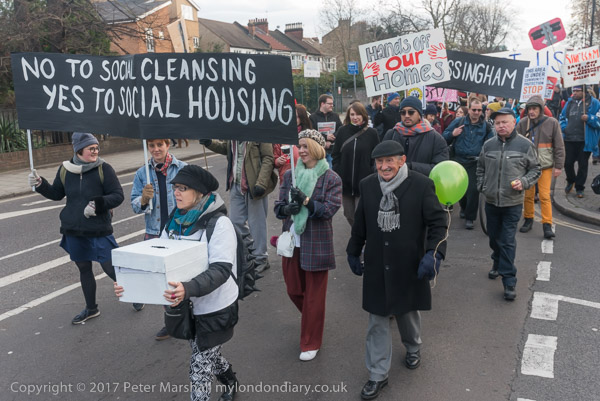
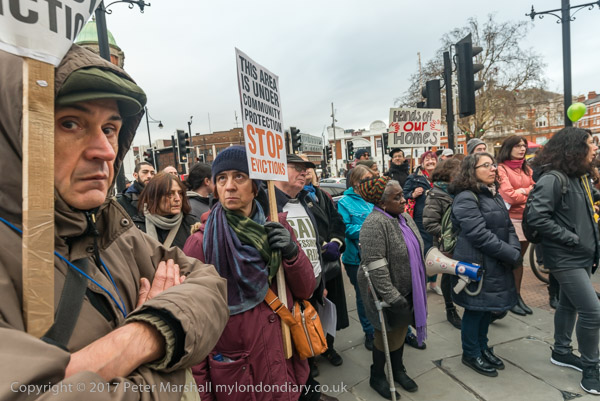
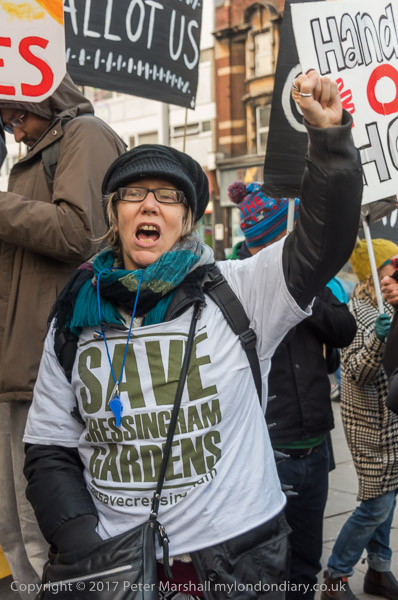
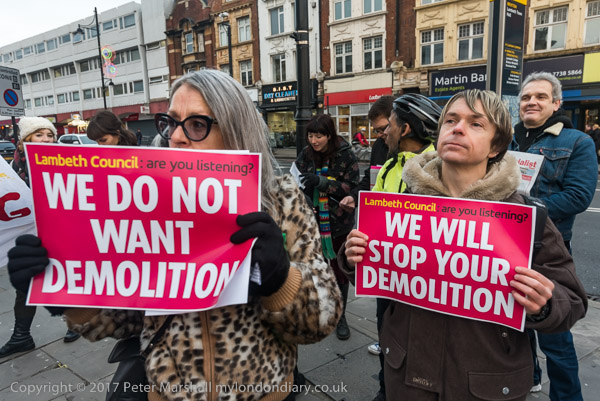
Cressingham Gardens Calls For A Ballot – On Saturday 2nd December 2017 residents of Cressingham Gardens in Tulse Hill marched with supporters to a rally at Lambeth Town Hall in Brixton to demand Lambeth Council hold a ballot of residents over the plans to demolish their homes. I went early to take a walk around the estate and take some photographs before the rally and march.


Cressingham Gardens – Tulse Hill, Brixton

Cressingham Gardens Calls For A Ballot

Council estates generally get a bad press, with media attention concentrating on those which were badly planned and have been allowed to deteriorate, often deliberately populated with more than than share of families with problems of various kinds, used as ‘sink estates’ by local councils. Some councils have even employed PR companies to denigrate and demonise those of their estates they want to demolish and sell off to private developers.

Cressingham Gardens Calls For A Ballot
This has always been a popular estate, and has a low crime rate for the area

These developers have also powerfully lobbied our main political parties who have handed over much of their policies over housing to developers and estate agents and other property professionals who stand to make huge profits from turning public property into private estates.

Cressingham Gardens Calls For A Ballot

Yet many council estates are pleasant places to live, often much better planned than private developments of the same era, and providing more space for people than the cramped and expensive flats that are replacing them where redevelopment schemes have gone ahead. Lambeth Council have several such estates, including those at Central Hill and Cressingham Gardens where this would clearly be the case, and residents at both sites have campaigned strongly to keep their homes.

Cressingham Gardens Calls For A Ballot

We seem always to be in a housing crisis in the UK, and some of the solutions that were taken to meet this have not always worked to well, particularly with some system-built high rises which were shoddily erected by private developers for councils.

After I left home in the early 1960s I lived in private rented flats, then in a New Town in a flat from the development agency and then for many years now as an owner occupier. The private rentals were pretty squalid and the publicly owned flat was rather more spacious than the small Victorian house we have lived in since. It would have been good to have been able to move into socially owned housing when we relocated but it wasn’t available.
Until the Thatcher government came into power public housing had regarded as something desirable with even Conservative Councils such as Lambeth was then having a mission to provide quality housing for working class Lambeth residents. They employed some of the best architects in the country, such as Edward Hollamby, the chief architect for Lambeth Council who was responsible for Cressingham Gardens and designed this low rise ‘garden estate’ development built in 1967 to 1979 at low cost and with a high population density, but with the 306 homes each having their own private outdoor space.
As the Twentieth Century Society state “this is one of the most exceptional and progressive post-war social housing estates in the UK” but the application for listing the estate in 2013 was rejected despite Historic England praising the way the design responds to its setting, with skill and sensitivity, “both in the scale and massing of the built elements, as well as through the integration of these elements with informal open spaces which bring a park-like character into the estate”. It appears to have been a decision made in defiance of both the estate’s architectural and historical merit and solely on political grounds.

The estate is on the Twentieth Century Society Buildings at Risk list. Lambeth Council have completed their preparation and brief for its complete demolition and their web site states they “will shortly be starting RIBA Stage 2 (Concept Design).


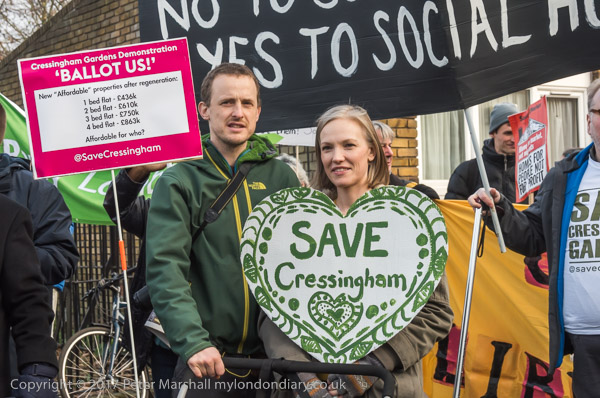
Cressingham Gardens residents say Ballot Us!

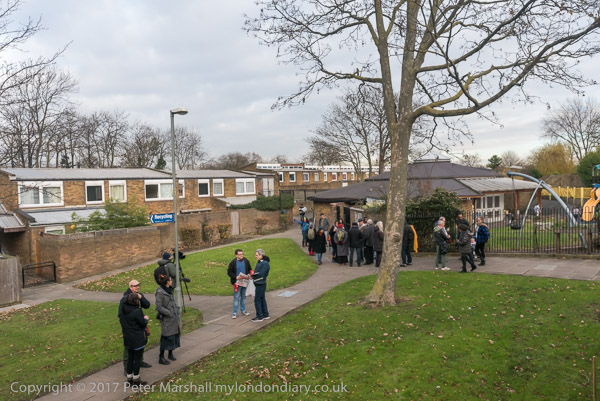
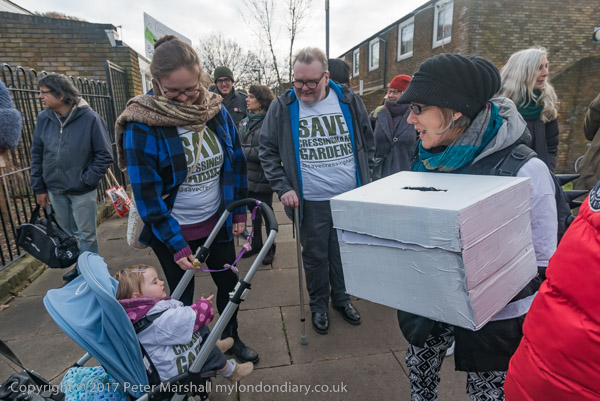
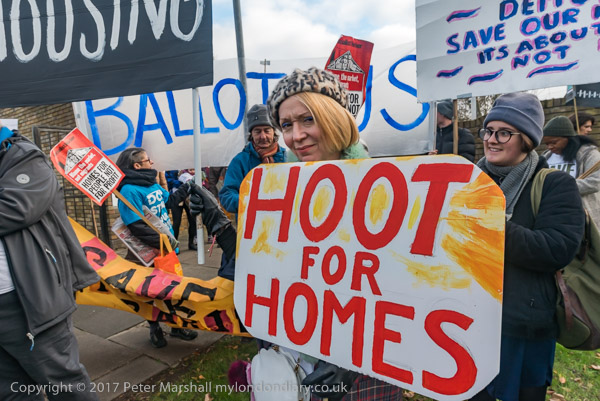
People met up next to the Rotunda in the centre of the estate designed by Hollamby as a children’s nursery, many carrying banners and posters. Residents were joined by other campaigners, including those trying to save Lambeth’s libraries and housing campaigners from north London.

Residents love living on Cressingham – a small well-planned estate with a great community feeling and many know that they will be unable to afford the so-called afford ‘affordable’ homes that the council wants to replace their homes with – a 2 bed flat after regeneration will cost £610 (at 2017 values.)

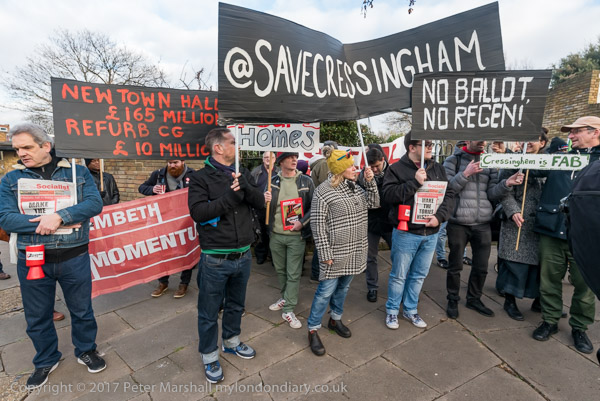
They want the estate to be refurbished rather than demolished, which the council says would cost £10 million. Many dispute the council’s costings and say that some of the problems the council has identified are a matter of poor maintenance rather than needing expensive building works. But residents in any case point to the council having just spent over £165 million on a new Town Hall and say refurbishment is a cheap option.

It isn’t the cost of refurbishment which makes the council turn it down, but the profits that developers can make from the site – and which the council hopes to be able to get a share. Though such schemes haven’t always worked out well. Although the developers have done very nicely out of demolishing the Heygate site in Southwark and building high density blocks on it, the council made a huge loss, though some individuals involved have ended up in lucrative jobs on the back of it.

Lambeth is a Labour Council, and since the previous Labour Party conference party policy had been that no demolition of council estates should take place without consent, but Lambeth Council seem determined to ignore this and go ahead with their plans for a so-called ‘regeneration’ which would see all 300 homes demolished, without any plans to provide immediate council housing for the roughly 1000 residents who would be made homeless. To the council these residents are simply occupying a site worth several hundred thousand pounds – an asset the council wants to realise. It doesn’t care about communities, about people.

Those who have become leaseholders of their homes are likely to get even more shoddy treatment. The amount of compensation they are likely to receive is likely to be less than half they would need to buy a comparable property in the area – on or the rebuilt estate.

Cressingham is in a very desirable location, on the edge of a large park and with good transport links a short distance away. Many are likely to have to move miles away on the edge of London or outside to find property they can afford, far from where they now live and work.

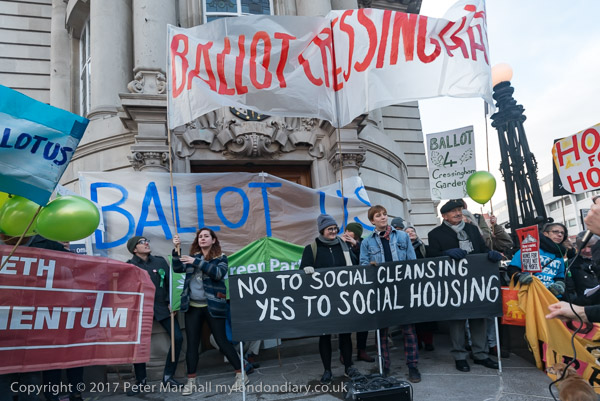
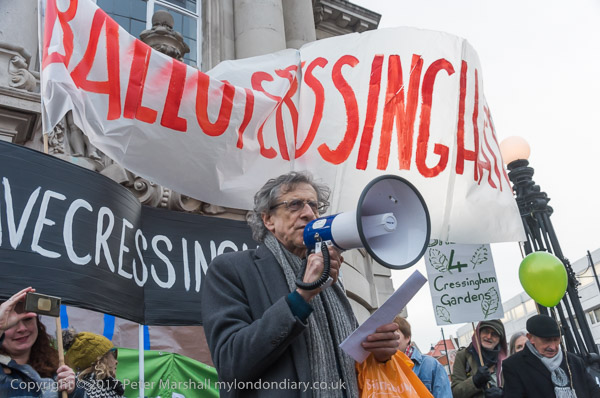
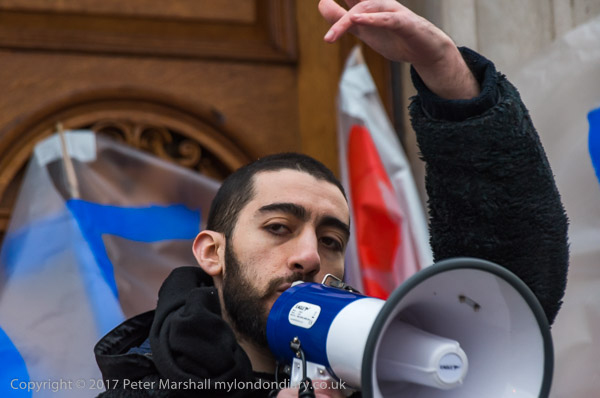
The march set off for Brixton Town Hall on the corner of Acre Lane where a small crowd of supporters was waiting for them. The placed a box containing petition signatures in front of the locked doors on the steps and a rally began with shouts calling for a ballot.

Among those who had come to speak along with residents from the estate were Tanya Murat of Southwark Homes for All and Piers Corbyn, a housing campaigner also from neighbouring Southwark.

One of the strikers from the Ritzy cinema opposite told us that none of them could now afford to live in Lambeth now, and it’s clear that we need more social housing not less in the area. A local Green Party member also told us that they were the only party in the area campaigning for more social housing.

Potent Whisper performed his take on Regeneration, ‘Estate of War’, from this Rhyming Guide to Housing. The video of this was recorded in Cressingham Gardens.

Others who had come along included people from Class War and the e RCG (Revolutionary Communist Group) who have been very active in supporting social housing campaigns as well as Roger Lewis of DPAC who told us how council cuts affect the disabled disproportunately.

More on My London Diary:
Cressingham residents say Ballot Us!
Cressingham Gardens


Anti-Fur, Karma & Knightsbridge – 2007

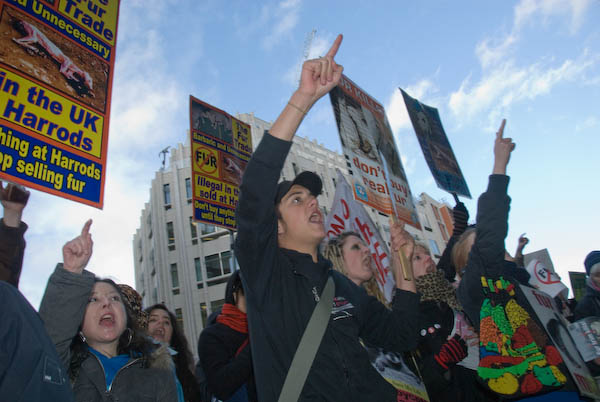
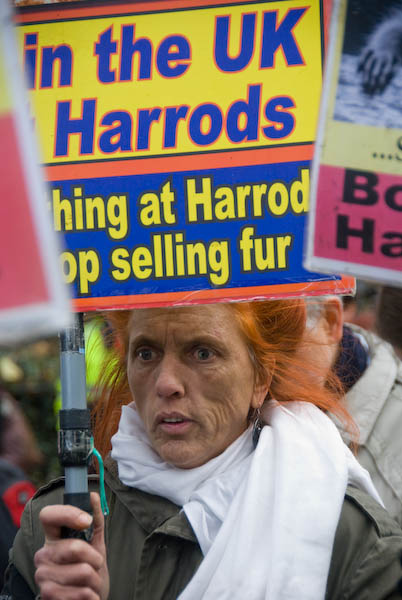
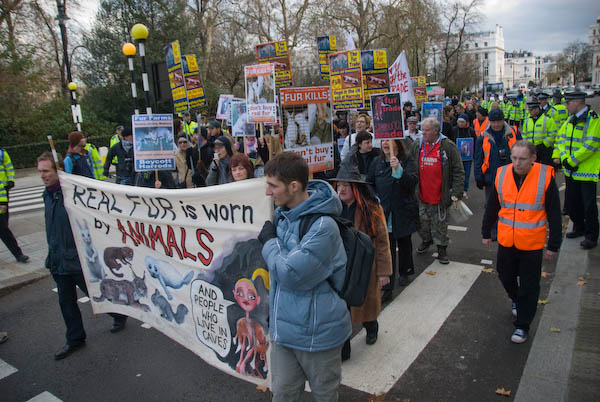
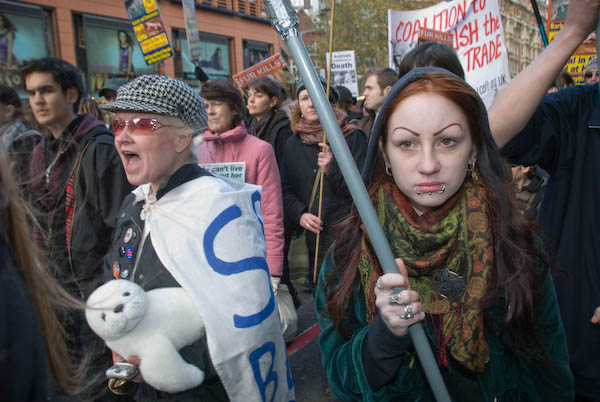
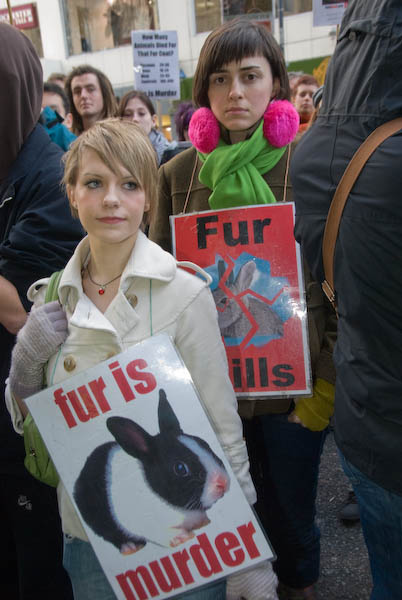
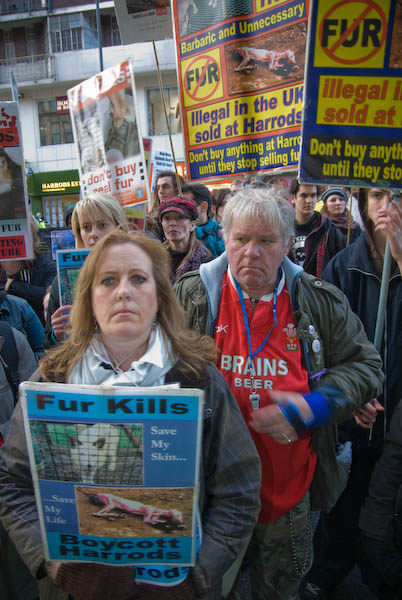
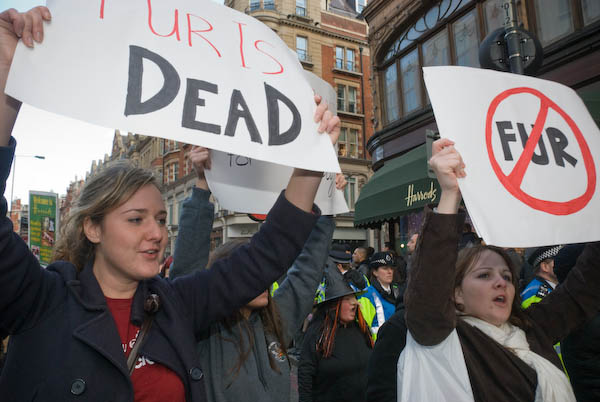
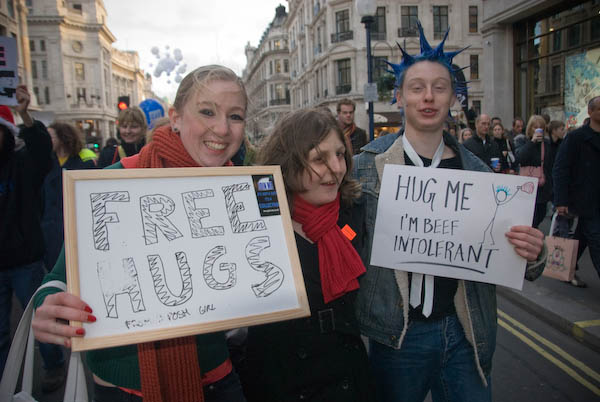
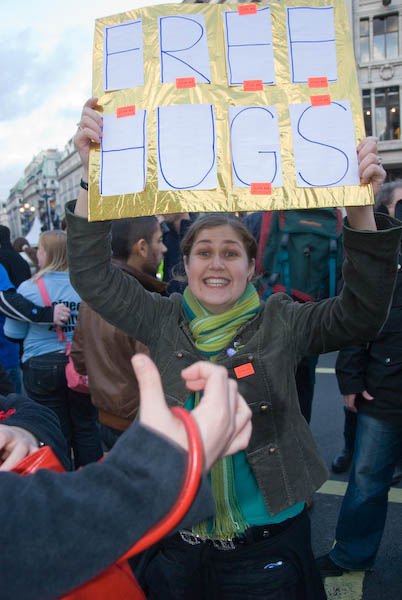
Anti-Fur, Karma & Knightsbridge. Saturday 1st December 2007 I came to London mainly to photograph the National Anti-fur march, but arrived rather early and took a walk around Knightsbridge and Hyde Park and after the march went on to see what was happening in Oxford Street and Regent Street where there was a traffic-free day to promote what the Church of Stop Shopping labels the Shopocalypse and stoke global warming. But I was warmed just a little by free hugs from Danny’s Karma Army.


National Anti-fur March – Belgrave Square – Harrods, Knightsbridge

Anti-Fur, Karma & Knightsbridge

Although farming of animals for fur was banned in this country in 2003, both fur farming and extensive trapping of wild animals for fur still take place in other countries.

Anti-Fur, Karma & Knightsbridge

Many of the countries where fur farming still takes place allow far more cruel practices than those that led to the ban here on the grounds of animal cruelty. Animals are reared in extremely crowded conditions and killed inhumanely – and on some farms skinned while still alive.

Anti-Fur, Karma & Knightsbridge

Trapping of animals for their fur also involves cruel practices, with wild animals caught in steel jawed traps, often only found and clubbed or suffocated after several days of agonising pain. Still in use in the USA and Canada, leg-hold traps were banned in the UK in the 1950s.

Anti-Fur, Karma & Knightsbridge

Yet despite this it remains legal to import most furs into the UK, although imports of seal, cat and dog fur are banned. But the UK still imports £55 million worth of fur a year, and estimated 95% of which comes from fur farms. The government abandoned promises to bring in legislation though they have now stated a willingness to support a private members bill on the matter should one be promoted. It seems unlikely that this will happen before the coming election.

Public opinion is very much against the use of animal fur, with opinion polls showing over 90% would like to see a ban. And most consumers now think that fur on garments is synthetic, but many of the big names in fashion and fashion stores are still designing with and selling animal fur. Their wealthy clients, including many overseas customers perhaps still see expensive animal furs as something to desire rather than as it should be, a badge of shame.

The marchers gathered in Belgrave Square and then marched past many of the shops which in 2007 were still selling garments using animal furs, which then included most of the famous names including Gucci, Versace, Fendi, Amani, Dolce and Gabana. Various stores, including Escada, Joseph and Burberry are also targets for the campaign, but the loudest condemnation was reserved for Harrods, the only department store in the UK still selling fur – and still selling animal fur in 2023.

Protests like this one and the continuing pressure from organisations such as PETA have led to many of thes brands end the use of animal furs. A post on Panaprium lists some who no longer do so: “Versace, Furla, Armani, Calvin Klein, Gucci, Michael Kors, Ralph Lauren, Tommy Hilfiger, Shrimps, and Vivienne Westwood” and also high street brands “Topshop, Zara, Gap, French Connection, AllSaints, Hobbs, John Lewis, Marks & Spencer, House of Fraser, Ted Baker, H&M and Whistles“.

But there is still more to do. The Panaprium post by Alex Assoune is headed 28 Shameless Fashion Brands Still Using Fur in 2023 and lists them, as well as stating “There are too many fashion brands that use animal fur to list them all. It’s shockingly disgusting that clothing brands still engage in such barbaric practices for vanity and profits.”

More on My London Diary National Anti-fur March.


Knightsbridge and Hyde Park

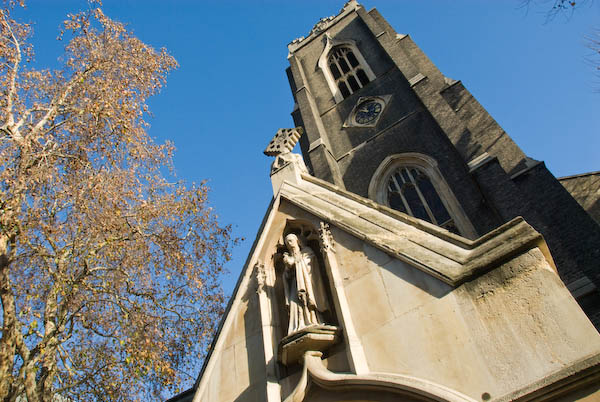
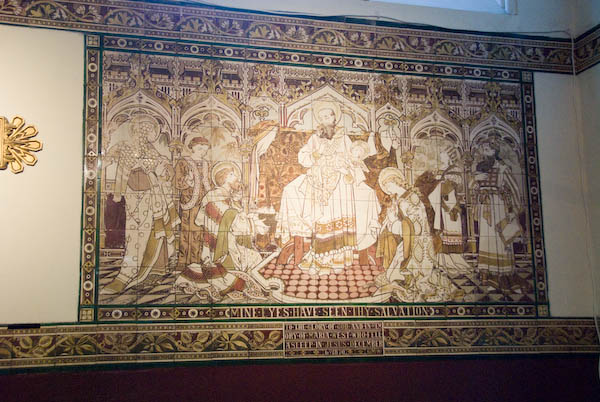
I’d often walked past St Paul’s Church in Wilton Place, a nineteenth century Gothic building (erected in 1840, but much altered 50 years later) but had never before been inside. I’d arrived in Belgrave Square rather a long time before the anti-fur march was ready to start and as the church as open took the opportunity to go inside.

The building is worth a visit, not least for the interesting sepia tile pictures by Daniel Bell dating from 1869-79.

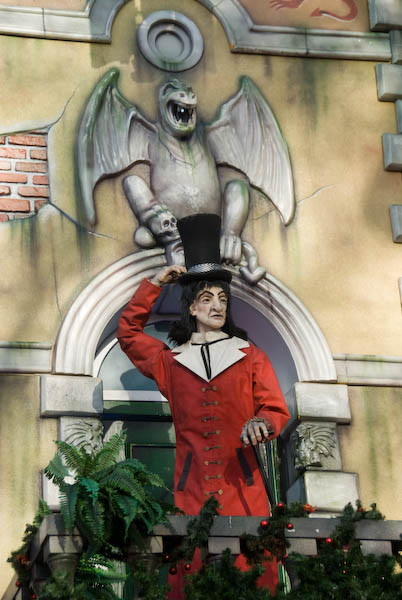
I crossed to Hyde Park, where there was an extensive funfair for the Christmas season and I wandered through it taking a few pictures before hurrying back to the march, stopping to take a couple of pictures of the French Embassy.

Knightsbridge & Hyde Park


Danny’s Karma Army – Taking Kindness Very Seriously – Regent St / Oxford St

Back in 2001, Scottish comedian and presenter Danny Wallace put an advert in a free newspaper call on people to ‘Join Me’ inviting people to join him in carrying out a random act of kindness for a stranger every Friday. To his surprise thousands did and in 2003 he wrote the book ‘Join Me’ about how he he “accidentally started a ‘cult‘” .

Initially known as ‘Join Me’ this movement became known as Danny’s Karma Army, and on December 1st 2007, some of them were out on Regent Street which together with Oxford Street was enjoying a traffic-free day for shoppers.

As I wrote in 2007:

There were a few street performers and musicians, but generally it seemed a recipe for incredible levels of boredom and immoderate spending, with one credit card company offering special prizes to big spenders.

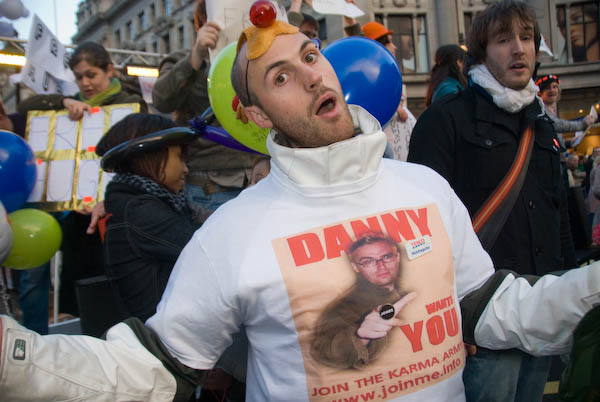
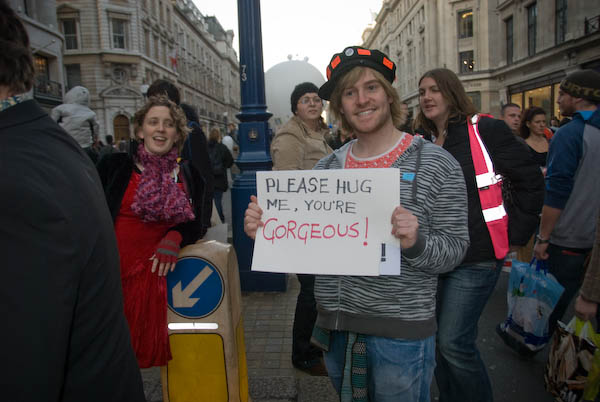
The only relief from this was offered by members of Danny’s Karma Army who were offering free sweets and free hugs – and I took advantage of both as well as some pictures.

They do “random nice things for strangers on Fridays” but were putting in a bit of overtime on a Saturday. As well as rather silly and pointless things, some also apparently do rather more useful things like becoming first-aiders and supporting charities with money or time. So although personally I’d run a mile from a cult leader like Danny, good luck to them. And thanks for the sweets and hugs.

Danny’s Karma Army

You can hear more about Danny Wallace in a podcast interview with James O’Brien and hear Wallace now every week when “The Great Leader and his I.B.S (Important Broadcast Squad) assemble every Sunday morning from 11am – 1pm!” on an Apple Podcast Radio X, also available live on DAB.

Danny’s Karma Army


Grenfell Councillors Visited – 2017

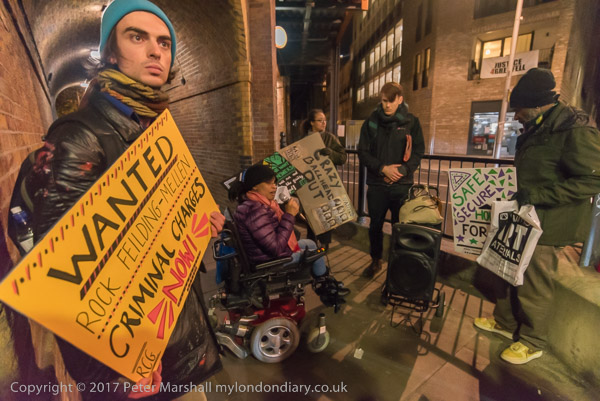
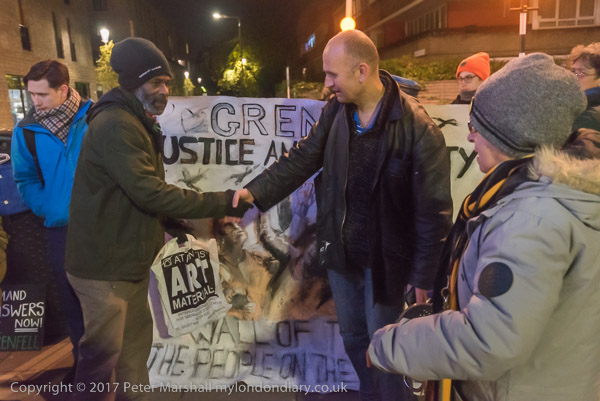
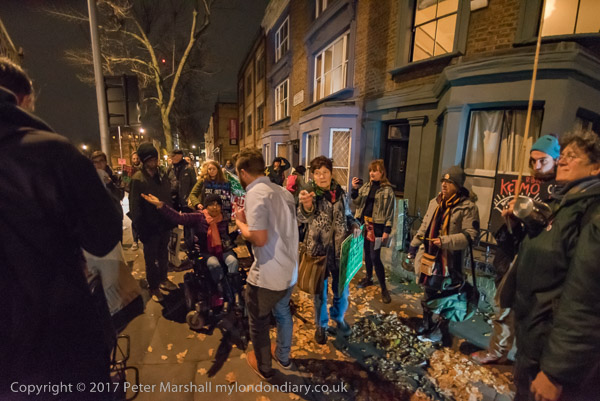
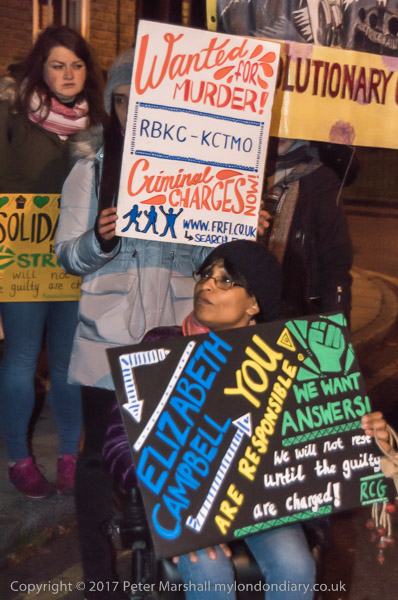
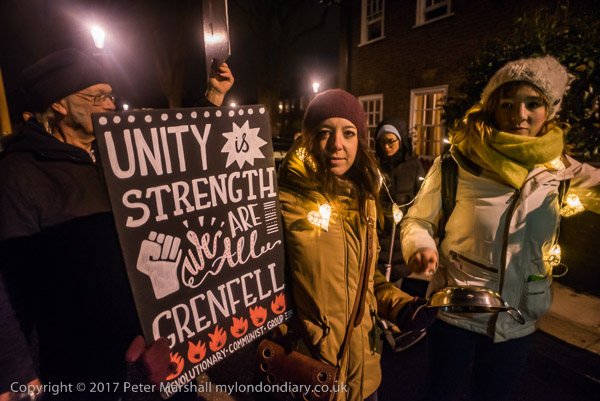
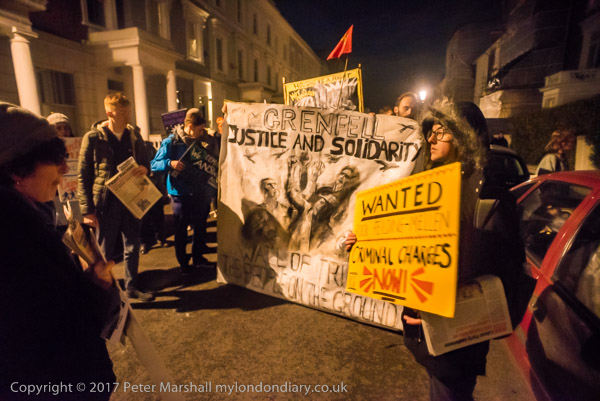
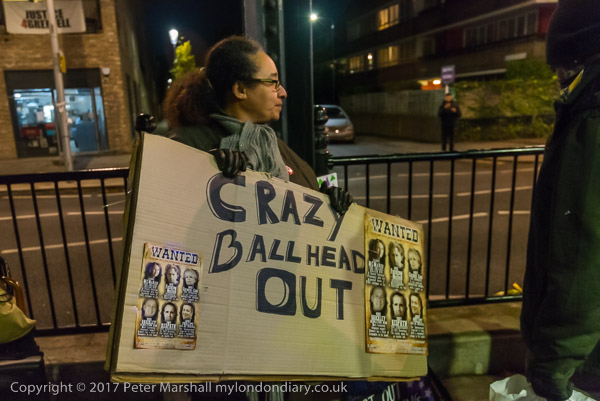
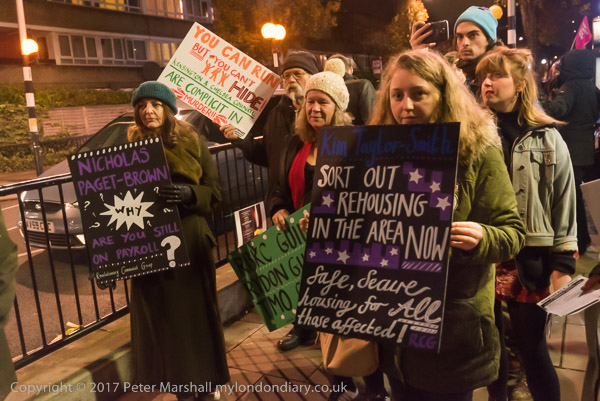
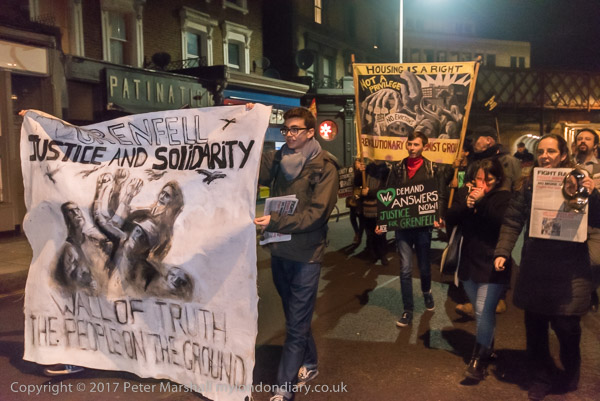
Grenfell Councillors Visited – Five and a half months after the terrible fire at Grenfell tower the local council responsible seemed still to be doing little to rehouse those displaced and there had been no criminal charges brought. A small group of local residents and supporters from the Revolutionary Communist Group took to the streets of North Kensington to try and call on councillors and ask questions. Of course six years later they are still waiting for justice – and it seems unlikely ever to happen. The British establishment has long practised ways of looking after its own.


Protesters visit Grenfell councillors – North Kensington

Grenfell Councillors Visited

The group gathered at Latimer Road station in the early evening where they held a short rally. They then set off to march to the addresses of several councillors in the area, though most of the council come from the wealthier end of the borough rather than North Kensington.

Grenfell Councillors Visited

I could have told them (and probably did) that they were wasting their time at the first address, that of Councillor Rock Feilding-Mellen, former deputy leader of Kensington Council and their cabinet member for housing in charge of the installation of the dangerous cladding which caused the fire to spread disastrously. He had urged the consultants in 2014 to cut the cost of the cladding leading to the safe zinc cladding specified being replaced with flammable panels – and he only worried about whether they were the right colour. Those making them were labelled as troublemakers (and worse.)

Grenfell Councillors Visited

Other councillors were also involved in various decisions and lack of action, including deciding against an inspection of fire doors in properties in the borough that the London Fire Brigade had made a few months before the fire.

Grenfell Councillors Visited

Seven major complaints made about safety by residents to through the Grenfell Action Group were detailed in evidence to the Grenfell inquiry; these were simply dismissed by the Royal Borough of Kensington and Chelsea officers and councillors and in particular by the Kensington and Chelsea Tenant Management Organisation (KCTMO) responsible under the council for the management of Grenfell and other properties in the borough.

Feilding-Mellen, elected as a councillor in 2010 was made Deputy Leader of Kensington & Chelsea Council (RBKC) and Cabinet Member for Housing, Property and Regeneration in 2013 with no obvious qualification or experience for either position and began a campaign of social cleansing, to, in his words, “wean people off” living in social housing in the borough.

He cut the council’s housing waiting list in half, removed the right of residents forced out of the borough in redevelopment schemes to return and began an aggressive campaign of removing social assets from North Kensington. Both North Kensington Library and Westway Information centre were sold at cut price to Notting Hill Prep School and the Isaac Newton Centre to Chepstow House Prep School.

Both Feilding-Mellen and council leader Nicholas Paget-Brown were forced to resign from their posts weeks after the fire, though both remained councillors. Feilding-Mellen moved out of his house not far from Grenfell Tower at the end of June, claiming there had been threats against him and vandalism. He was thought to have retreated to the safer climes of Chelsea Harbour, though his wealthy family have quite a few properties around the country and doubtless abroad. Feilding-Mellen’s evidence to the inquiry sickened many as it seemed greatly concerned with getting free publicity for his business interests in psychoactive substances, which includes offering supervised, legal psilocybin retreats in Jamaica and The Netherlands.

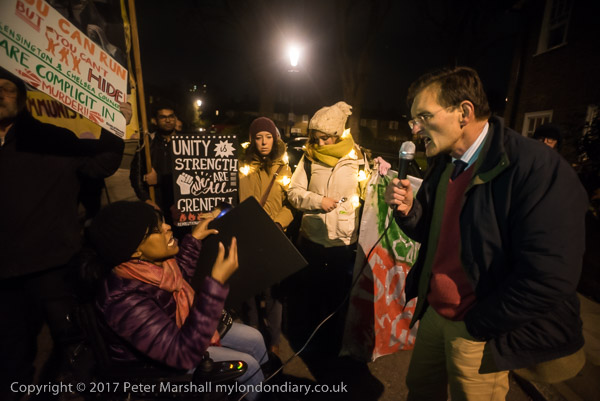
David Lindsay speaking

The protesters were more successful in their visit to councillor David Lindsay, a locally born Conservative councillor who is said to be genuinely community minded and respected in North Kensington and was elected as Mayor of Kensington and Chelsea for 2022-23. He came out from his home and talked with them, explaining he had no connection with housing before the fire and had gone down to Grenfell at 4am on the morning of the fire to open up a centre for those affected. He told them that the council were trying hard to find suitable accomodation for the survivors and had spent considerable sums in doing so. The local residents told him they felt the council had been and still was failing in its duties and were not satisfied with his answers.

Finally I went with them some way further south into to rather wealthier areas, stopping outside the house of a third councillor in Portland Road. If they were home they were in hiding, but a neighbour came out to to complain that the protesters were waking his children up, and saying that they shouldn’t protest here and shouldn’t protest at night, but should do so in the daytime when no one would be at home and affected by it. He was met with some very angry and rather rude responses – and the protest continued rather longer and much more noisily that it would otherwise have done.

The group then turned around to make its way back towards Grenfell Tower, but I left them. The Royal Borough doesn’t seem to spend a great deal on street lighting and the batteries in my LED light were failing. I’d taken enough photographs and I was cold and tired and needed to eat and get home to work on the pictures.

More pictures at Protesters visit Grenfell councillors.