St George, Armenian Genocide & Congo – 2011

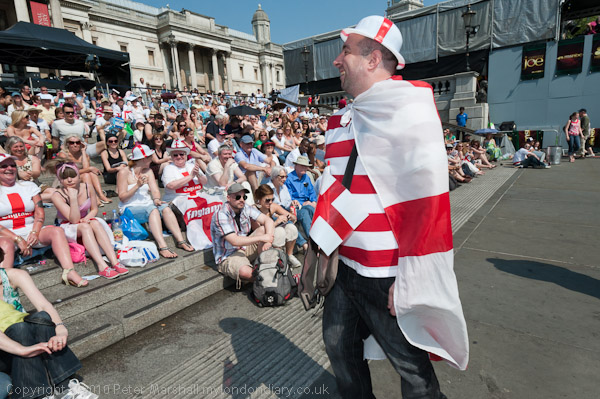
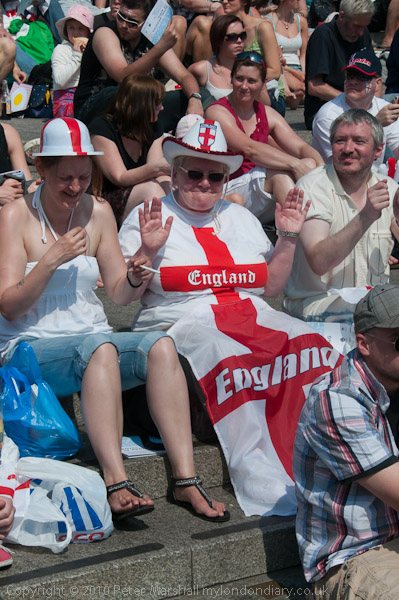
St George, Armenian Genocide & Congo: On St George’s Day, 23 April 2011 I found little celebration taking place in Lcndon but mad3e a few pictures before photographing an Armenian march calling on our government to officially recognise the Armenian Genocide, then a protest over human rights violations in the Congo.


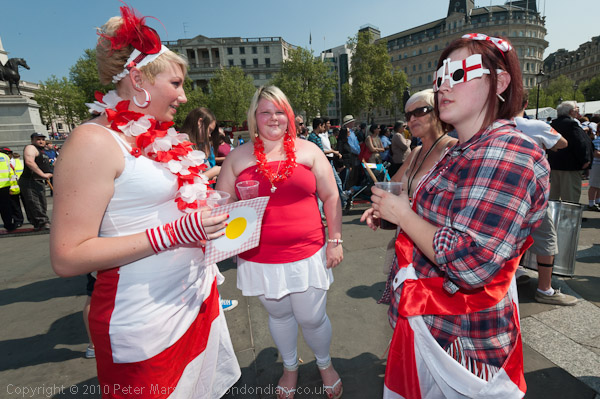
St George’s Day in London

Westminster
St George, Armenian Genocide & Congo:

I found it hard to find much celebration of St George’s Day in London in 2011. He had become the patron saint of England in the Tudor era, but had been almost forgotten by the Royal Society of St. George was founded in 1894 to try and revive the tradition.
St George, Armenian Genocide & Congo - 2011

But it was not until the 1990s that we saw much revival, with the English football team and right wing political groups widely adopting the St George’s flag, preciously mainly the preserve of miniscule nationalist political groups. The Royal Society of St George was joined by English Heritage in promoting the idea.

I photographed the Royal Society of St George event at Covent Garden in 2005, but it was only in 2010 that London Mayor Boris Johnson hosted the first celebration in Trafalgar Square. Before these there had of course been celebrations in various pubs around London, soemtimes rather right-wing events. In 2016 I photographed two rival St Georges in the same pub in Southwark.
St George, Armenian Genocide & Congo - 2011

But it was the then Labour leader Jeremy Corbyn who was the first major leader to make a promise in his party manifesto. Had his 2017 election campaign not been sabotaged by the right wing in his party, today would now be a Bank Holiday.
St George, Armenian Genocide & Congo - 2011

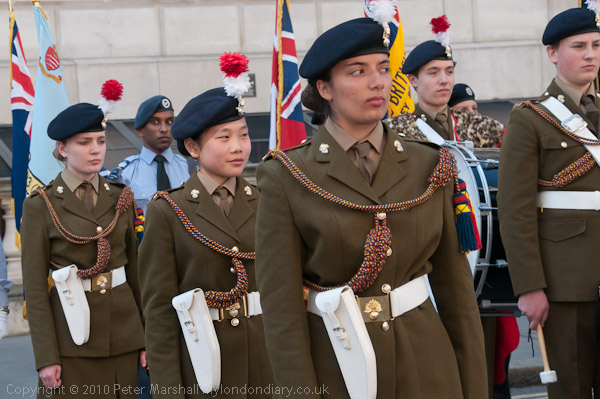
The 2011 celebrations in London seemed very limited. There was a parade marking the 150th anniversary of our military cadet units (though as I note in My London Diary this was rather premature for the air cadets.) And later I went to Trafalgar Square for the Mayor’s official celebrations and was very unimpressed.

St George’s Day in London


Recognise The Armenian Genocide

Oxford St to Downing St
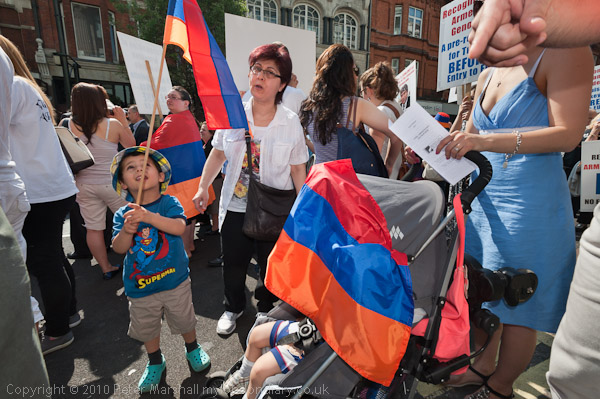
Between 1915 and 1923 the Turkish authorities killed around 1.5 million Armenians, around 70% of Turkey’s Armenian population in a deliberate attempt to rid Turkey of people who did not fit in with their desire to create a homogeneous Turkish nation. Armenians have a strong national identity, centred around their Christian heritage which did not fit well into a largely Muslim Turkey.

The genocide began on 24 April 1915 when Turkish authorities arrested and murdered around a thousand leading members of the Armenian community in Constantinople. They then killed the roughly 300,000 Armenian conscripts in the Turkish Army.

This was followed by “mass killings, deportations and death marches of women, children and elderly men into the Syrian Desert. During those marches, many of the weak or exhausted were killed or died. Women were raped. The deportees were deprived of food and water. Starvation and dehydration became commonplace.”

St George, Armenian Genocide & Congo - 2011

Turkey still refuses to admit to the genocide, and insists that the deaths were the result of a civil war. But it was a ‘war’ against a people who had no weapons and no organisations to fight and were simply slaughtered because they were Armenian.

St George, Armenian Genocide & Congo - 2011

The term ‘genocide’ did not exist at the time and was coined by Raphael Lemkin who described it as “The sort of thing Hitler did to the Jews and the Turks did to the Armenians.” One of the first resolutions proposed by him and passed by the UN was ‘The Prevention and Punishment of the Crime of Genocide’.

St George, Armenian Genocide & Congo - 2011

The annual march in London calls on the UK Government to officially recognise the Armenian genocide – as the UN Commission on Human Rights and many countries around the world have done, including France, Germany, Italy and others of our European neighbours. It’s hard to understand why we have not done so, though successive UK governments have taken the line it is a matter for international courts to decide, not governments. But others think that trade issues are the real reason.

More about the march and the reasons behind it and about “Hrant Dink (1954-2007) ‘The 1,500,001st Victim of The Armenian Genocide'” on My London Diary.

Recognise The Armenian Genocide


Congolese Protest in London

Great Portland St to Downing St
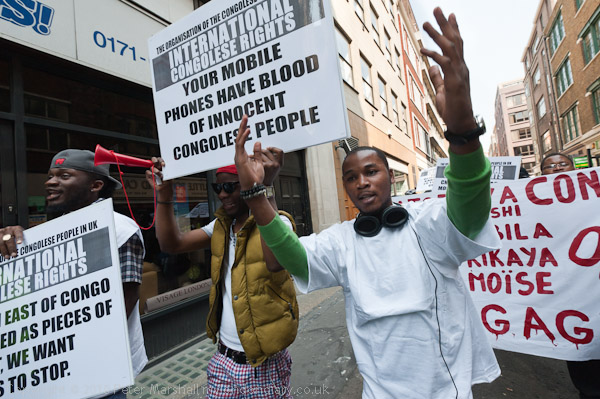
The International Congolese Rights organisation (ICR) were marching from the Congolese Embassy in Great Portland Street to Downing St calling attention to human rights violation in the Democratic Republic of Congo (DRC) and asking the UK Government to put pressure on President Kabila to hold elections or resign.

Formed in 2004 to defend the defend the rights of Congolese citizens living in the UK the ICR as held a number of demonstrations aimed at exposing the systematic violation of human rights in the DRC aimed at getting the UK and the international community to take action.

Ever since the end of colonial rule in the former Belgian Congo there has been fighting in the Congo. The DRC has vast mineral resources, probably “the richest of any country in the world, including 80% of the world’s cobalt reserves, and between 65-80% of coltan, the mineral from which tantalum capacitors, vital for mobile phones, games consoles, computers and other electronic devices.” It also has large amounts of copper and is the world’s second largest diamond producer. A large proportion of its trade is now with China.

Despite these resources, the DRC remains the second poorest country in the world, with almost three quarters of its 124 million people in extreme poverty as a result of its underdevelopment in the colonial era and the war and political turmoil since independence.

The main banner of the protest stated ‘David Cameron – Why Are So Quiet On 8 Million Deaths in D. R. Congo?‘ and people carried placards about the suffering in the country including the killings and the widespread use of rape as a military and political tactic.

They called for elections and for DRC President Joseph Kabila to step down and to face trial at the International Criminal Court.

Congolese Protest in London


FlickrFacebookMy London DiaryHull PhotosLea ValleyParis
London’s Industrial HeritageLondon Photos

All photographs on this page are copyright © Peter Marshall.
Contact me to buy prints or licence to reproduce.
Climate Justice, Congo & London – 2011

Climate Justice, Congo & London – On Saturday 3rd December 2011 there was an Xmas shopping event in the City, normally pretty dead at weekends and Occupy were holding climate justice workshops before joining Campaign Against Climate Change’s annual march. That took me past a protest at Downing Street against the vote-rigging in the recent election in the DRC. I’d taken some pictures earlier as I was going around London and took a few more in the dark later on my way to an event in Acton.


City Xmas Celebrations – Bank

Climate Justice, Congo & London
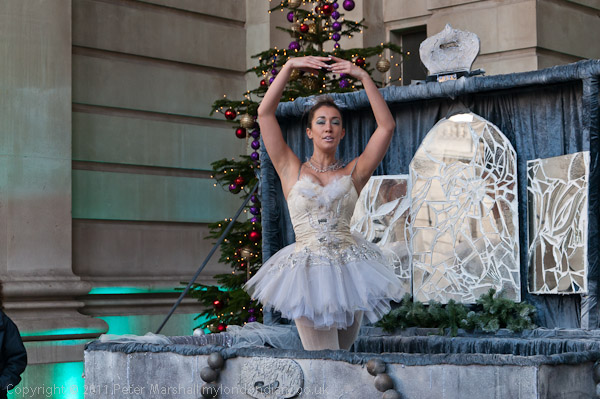
A live musical box

There was a special Xmas Saturday shopping event in the centre of the City of London which usually closes down for the weekend, but I think it was aimed more at the wealthy 1% than me.

Climate Justice, Congo & London
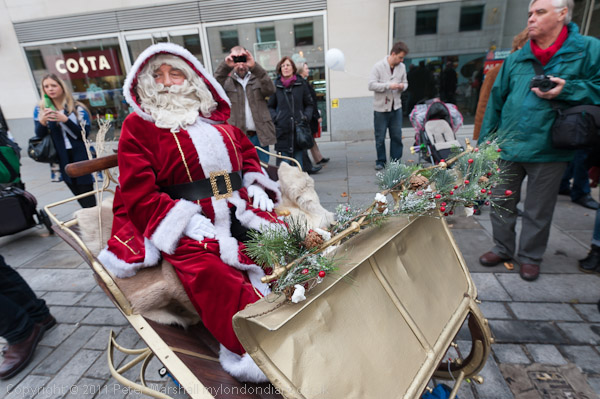
Santa had come with real reindeer

I wouldn’t normally have gone but it was on my fastest route to St Paul’s Cathedral and it was the first time the City had held such an event. Though unless there were rather more visitors later in the day it would probably be the last. I didn’t feel welcome and didn’t stay long.

More – including reindeer – at City Xmas Celebrations.


Occupy LSX Climate Justice Workshops – St Paul’s Cathedral steps

Climate Justice, Congo & London

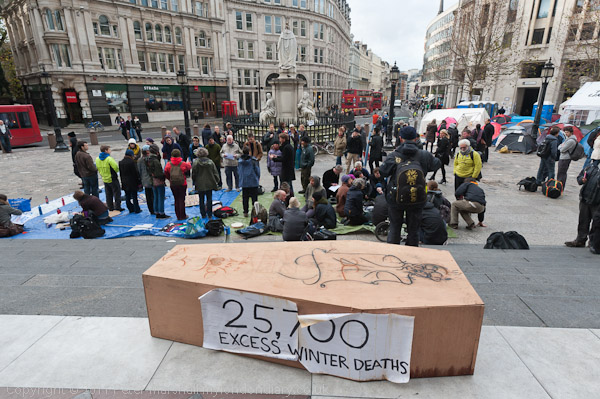
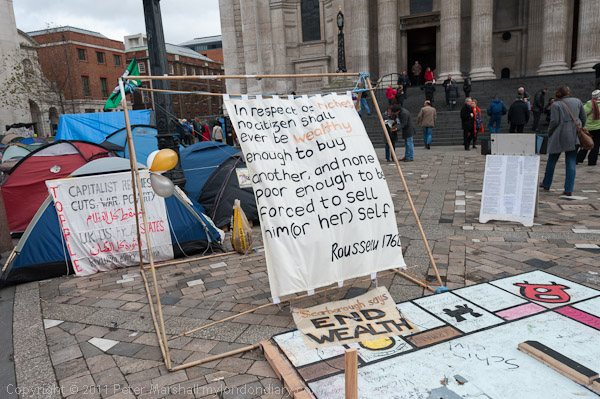
Occupy London was still camping next to St Paul’s Cathedral, having been there since 15th October, and they were holding workshops when I arrived about various aspects of climate justice and campaigning, and preparing banners and posters for the Climate Justice march later in the day.

Climate Justice, Congo & London

They planned to make their way to the start of the march in a ‘Climate Walk of Shame’ around the offices of various climate change villians (‘unsavoury sites of climate criminality’) in the City.

As often with Occupy, the plenary session went on longer than anticipated. Many people wanted to contribute and some at rather greater length than necessary and the walk began rather late.

I’d hoped to be able to go with them, but only went as far as their first stop at one of the banks in St Paul’s Churchyard before I had to leave to make my own more direct way to the start of the march in Blackfriars.

Occupy LSX Climate Justice Workshops


Stand Up For Climate Justice – Blackfriars to Old Palace Yard

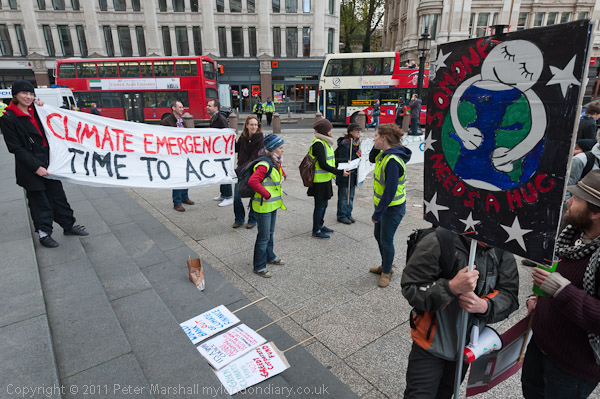
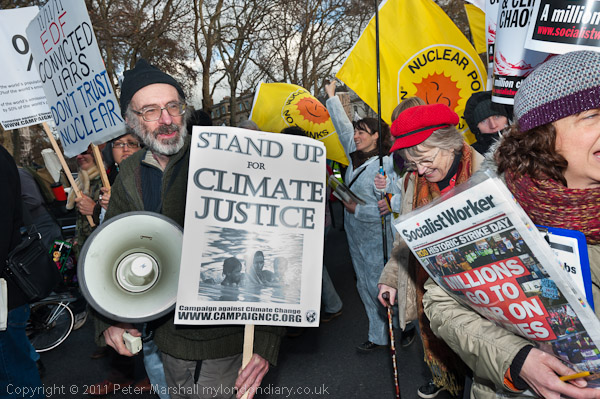
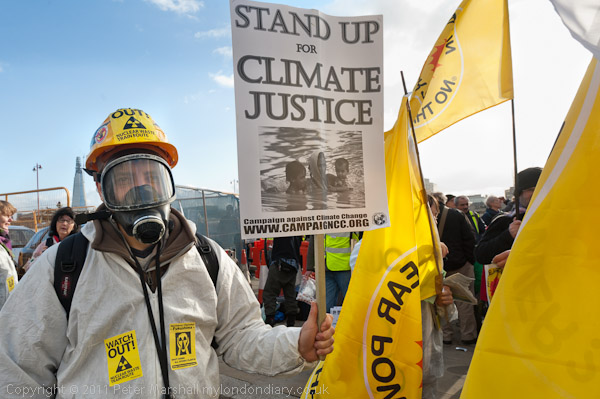
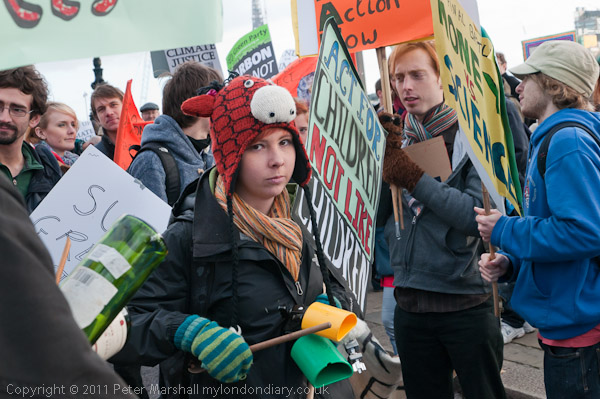
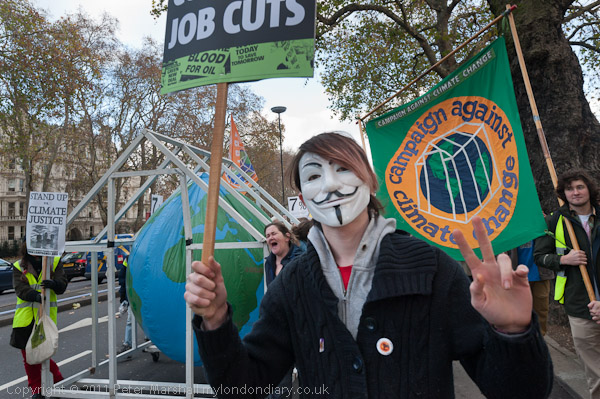
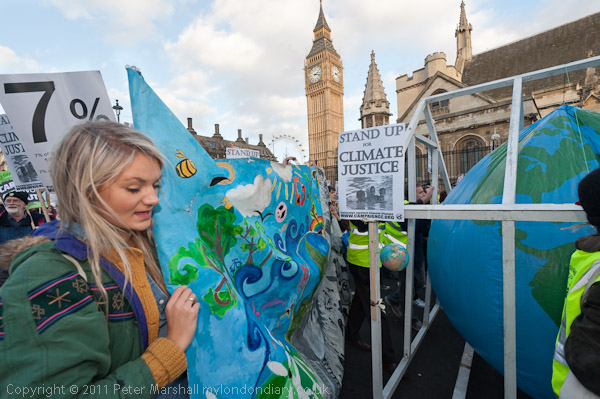
Around a thousand people gathered at Blackfriars for the march organised by the Campaign Against Climate Change to a rally opposite the Houses of Parliament.

Climate talks were taking place in the 17th UN conference in Durban, but seemed unlikely to make much progreess as the US were continuing to refuse to accept mandatory limits on carbon emissions. It seemed likely this would prevent any progress on global reductions in emissions, and seemed certain to lead to catastrophic increases in global temperature. Or, as I put it “bluntly, our planet is going to fry.”

While Barbara Boxer the head of the Senate environment committee was pointing out that the US is the world’s largest historic emitter and thus has a moral obligation to reduce greenhouse gas emissions, the US right, and the ‘Tea Party’ movement in particular, were still denying the existence of climate change and vehemently opposing any restrictions on the emissions of US industry.

By 2011 there had long been no serious scientific debate about the reality of climate change, though still some controversy about the exact magnitude and the timescales involved. But all informed opinion agreed that urgent action is needed, though the heavily funded fossil fuel lobby was still spreading lies and opposing any action.

Since 2011 things have become even more clear and the effects have become worse than even the more pessimistic scientists then predicted. But still politicians are not taking the urgent actions needed, and limiting the temperature rise to 1.5°C now seems impossible.

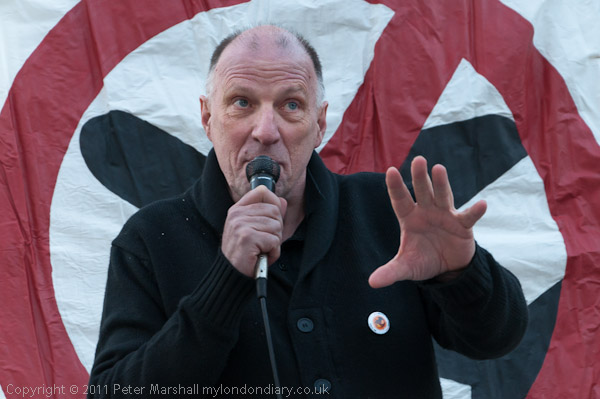
Among many speakers was John Stewart of HACAN who pointed out that while the richest 7% who cause 50% of the world’s pollution, aircraft use, one of the major sources of emissions, is limited to an even more limited group of the world’s population, with only 5% of the world’s population ever having flown.

More at Stand Up For Climate Justice.


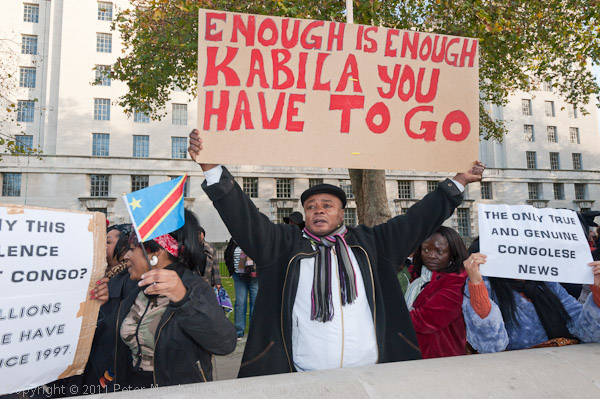
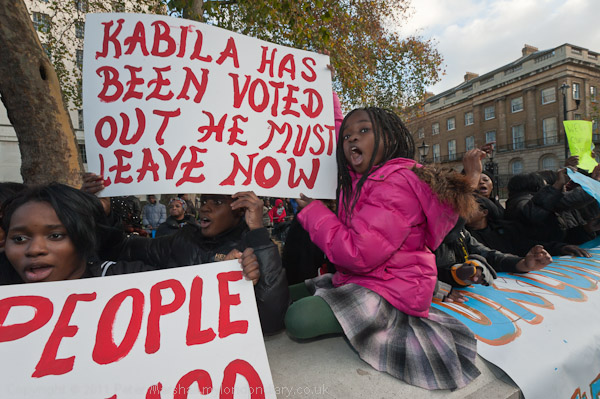
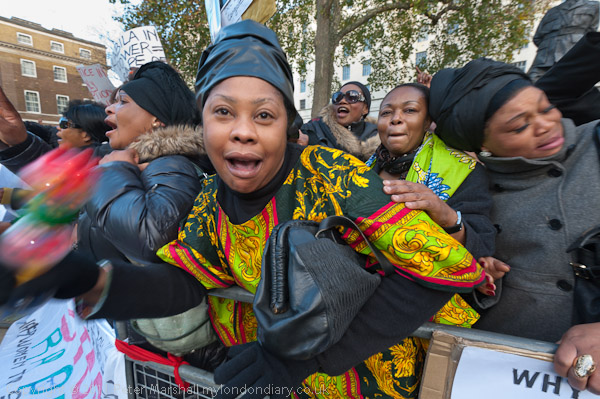
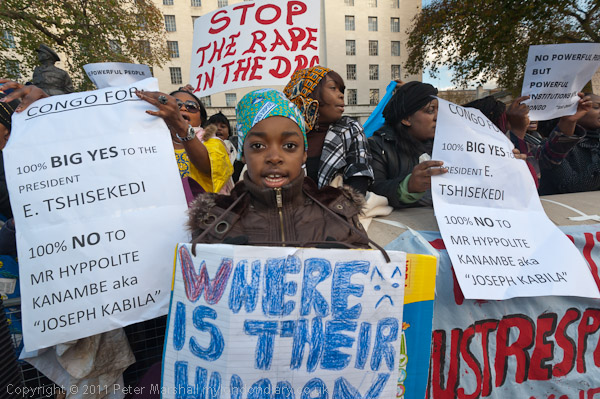
Congolese Protest Against Kabila Vote-Rigging – Downing St

The Democratic Republic of the Congo is both blessed and cursed by its immense mineral resouces, probably the richest of any country in the world, including 80% of the world’s cobalt reserves, and between 65-80% of coltan, the mineral from which tantalum capacitors, vital for mobile phones, games consoles, computers and other electronic devices are made.

Despite this wealth of the DRC, the people remain some of the poorest in the world, and because of these minerals the country is one of the most corrupt in the world. The move towards renewable energy and the increasing need for batteries for electrical vehicles has led to increased geopolitical competition over the DRC’s cobalt resources.

The area has been the subject of various wars and there is still conflict as well as widespread violation of humanitarian and human rights law, including the sexual abuse of women and children.

The Kabila regime has been kept in office by western interests who have now turned a blind eye to the widespread vote-rigging violence and fraud in the elections. The opposition later claimed to have outvoted Kabila with 54% of the vote to his 26%, while Kabila claimed to have won by 49% to 32%.

In 2019, the son of the candidate thee protesters say won the 2011 election became President in the first peaceful transition of power since the DRC became independent but the early years of his presidency were still with governments dominated by supporters of Kabila. In 2021 he was able to form a new government which among other measures has promised to reverse deforestation in the DRC by 2030.

More at Congolese Protest Against Kabila Vote-Rigging.


London Wandering – City and North Acton

I’d taken a few views of London as I walked with the Climate March.

And in the early evening I went to an event in North Acton, walking to the venue from Willesden Junction. There are just a few more on-line at London Wandering.