St George, Armenian Genocide & Congo: On St George’s Day, 23 April 2011 I found little celebration taking place in Lcndon but mad3e a few pictures before photographing an Armenian march calling on our government to officially recognise the Armenian Genocide, then a protest over human rights violations in the Congo.
St George’s Day in London
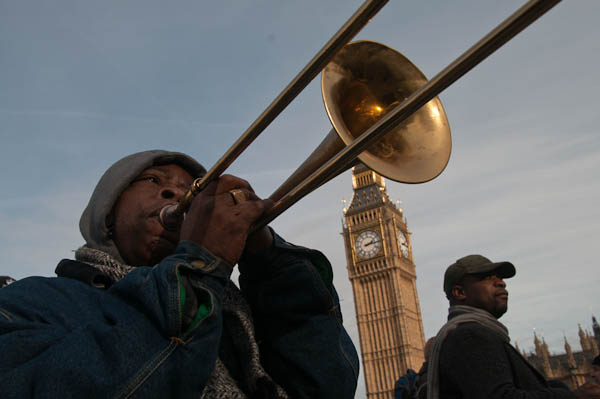
Westminster
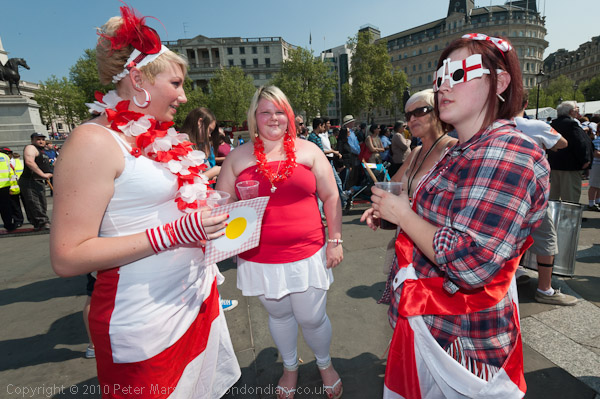
I found it hard to find much celebration of St George’s Day in London in 2011. He had become the patron saint of England in the Tudor era, but had been almost forgotten by the Royal Society of St. George was founded in 1894 to try and revive the tradition.
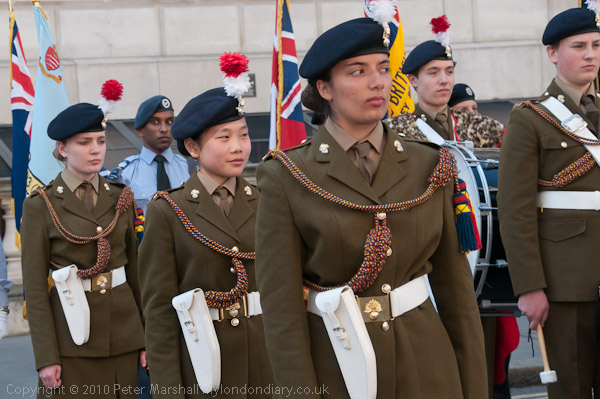
But it was not until the 1990s that we saw much revival, with the English football team and right wing political groups widely adopting the St George’s flag, preciously mainly the preserve of miniscule nationalist political groups. The Royal Society of St George was joined by English Heritage in promoting the idea.
I photographed the Royal Society of St George event at Covent Garden in 2005, but it was only in 2010 that London Mayor Boris Johnson hosted the first celebration in Trafalgar Square. Before these there had of course been celebrations in various pubs around London, soemtimes rather right-wing events. In 2016 I photographed two rival St Georges in the same pub in Southwark.
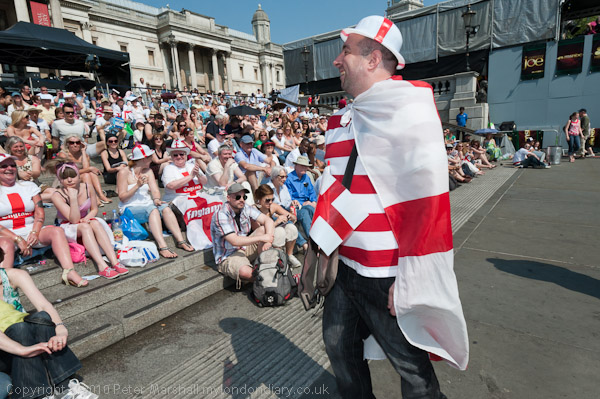
But it was the then Labour leader Jeremy Corbyn who was the first major leader to make a promise in his party manifesto. Had his 2017 election campaign not been sabotaged by the right wing in his party, today would now be a Bank Holiday.
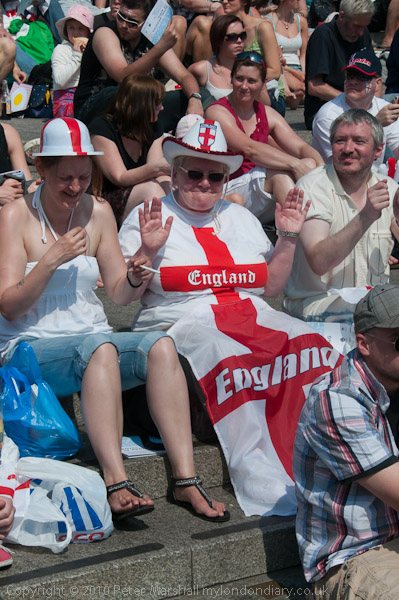
The 2011 celebrations in London seemed very limited. There was a parade marking the 150th anniversary of our military cadet units (though as I note in My London Diary this was rather premature for the air cadets.) And later I went to Trafalgar Square for the Mayor’s official celebrations and was very unimpressed.
Recognise The Armenian Genocide
Oxford St to Downing St
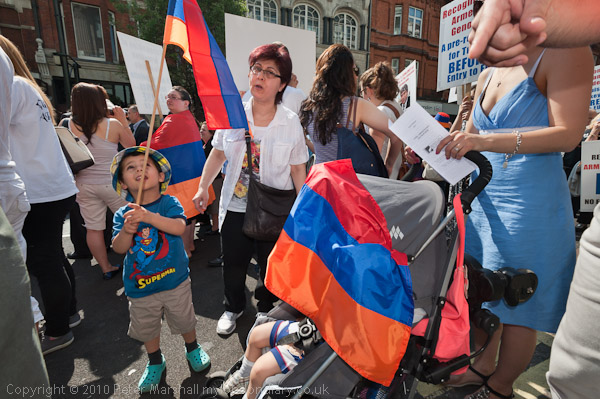
Between 1915 and 1923 the Turkish authorities killed around 1.5 million Armenians, around 70% of Turkey’s Armenian population in a deliberate attempt to rid Turkey of people who did not fit in with their desire to create a homogeneous Turkish nation. Armenians have a strong national identity, centred around their Christian heritage which did not fit well into a largely Muslim Turkey.

The genocide began on 24 April 1915 when Turkish authorities arrested and murdered around a thousand leading members of the Armenian community in Constantinople. They then killed the roughly 300,000 Armenian conscripts in the Turkish Army.

This was followed by “mass killings, deportations and death marches of women, children and elderly men into the Syrian Desert. During those marches, many of the weak or exhausted were killed or died. Women were raped. The deportees were deprived of food and water. Starvation and dehydration became commonplace.”

Turkey still refuses to admit to the genocide, and insists that the deaths were the result of a civil war. But it was a ‘war’ against a people who had no weapons and no organisations to fight and were simply slaughtered because they were Armenian.

The term ‘genocide’ did not exist at the time and was coined by Raphael Lemkin who described it as “The sort of thing Hitler did to the Jews and the Turks did to the Armenians.” One of the first resolutions proposed by him and passed by the UN was ‘The Prevention and Punishment of the Crime of Genocide’.

The annual march in London calls on the UK Government to officially recognise the Armenian genocide – as the UN Commission on Human Rights and many countries around the world have done, including France, Germany, Italy and others of our European neighbours. It’s hard to understand why we have not done so, though successive UK governments have taken the line it is a matter for international courts to decide, not governments. But others think that trade issues are the real reason.
More about the march and the reasons behind it and about “Hrant Dink (1954-2007) ‘The 1,500,001st Victim of The Armenian Genocide'” on My London Diary.
Recognise The Armenian Genocide
Congolese Protest in London
Great Portland St to Downing St
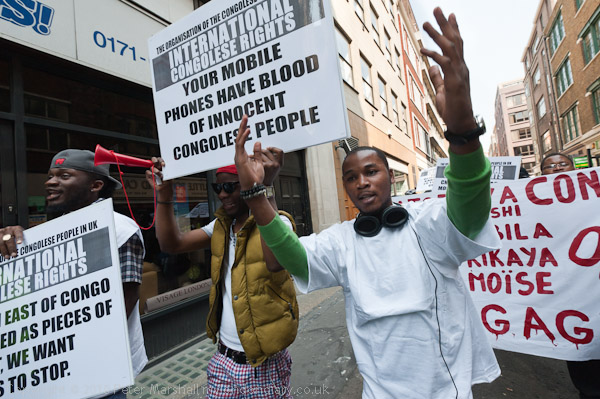
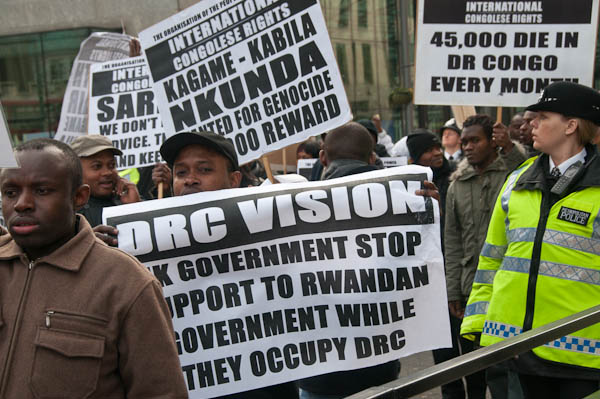
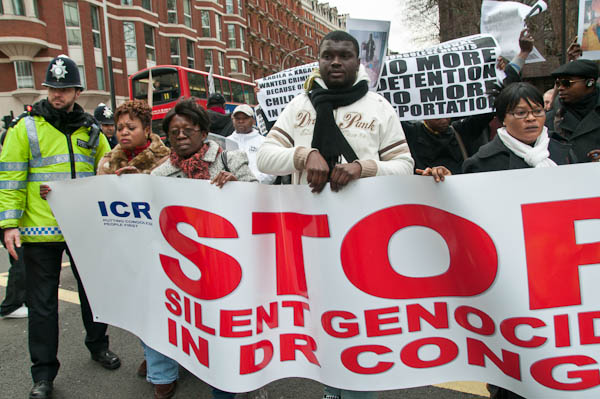
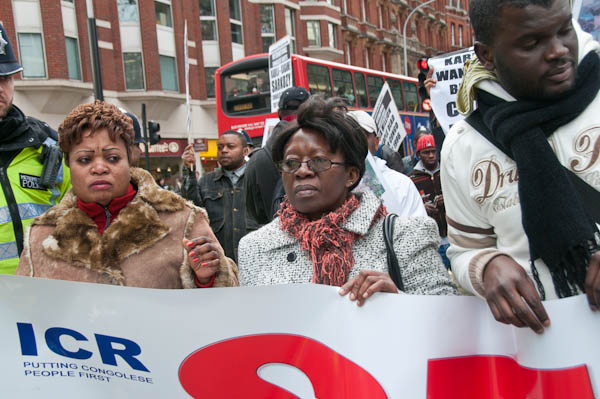
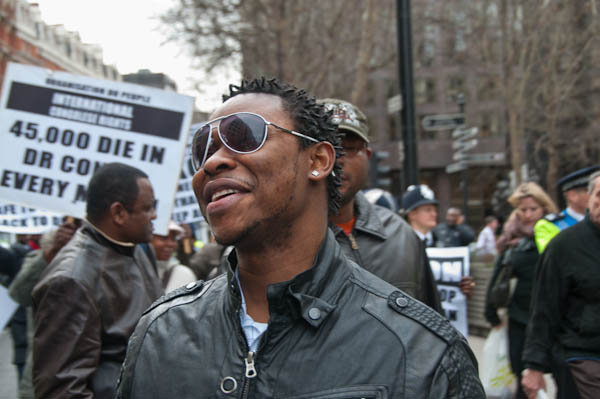
The International Congolese Rights organisation (ICR) were marching from the Congolese Embassy in Great Portland Street to Downing St calling attention to human rights violation in the Democratic Republic of Congo (DRC) and asking the UK Government to put pressure on President Kabila to hold elections or resign.

Formed in 2004 to defend the defend the rights of Congolese citizens living in the UK the ICR as held a number of demonstrations aimed at exposing the systematic violation of human rights in the DRC aimed at getting the UK and the international community to take action.

Ever since the end of colonial rule in the former Belgian Congo there has been fighting in the Congo. The DRC has vast mineral resources, probably “the richest of any country in the world, including 80% of the world’s cobalt reserves, and between 65-80% of coltan, the mineral from which tantalum capacitors, vital for mobile phones, games consoles, computers and other electronic devices.” It also has large amounts of copper and is the world’s second largest diamond producer. A large proportion of its trade is now with China.
Despite these resources, the DRC remains the second poorest country in the world, with almost three quarters of its 124 million people in extreme poverty as a result of its underdevelopment in the colonial era and the war and political turmoil since independence.

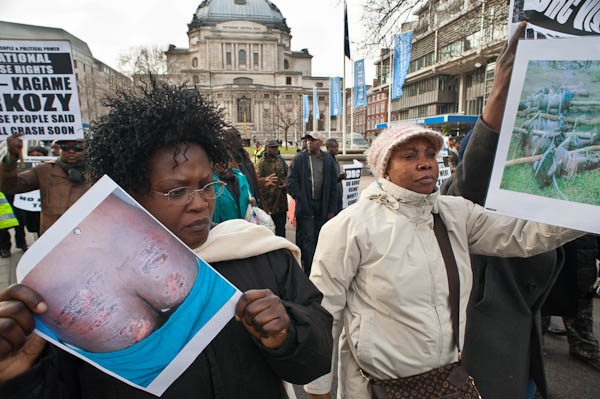
The main banner of the protest stated ‘David Cameron – Why Are So Quiet On 8 Million Deaths in D. R. Congo?‘ and people carried placards about the suffering in the country including the killings and the widespread use of rape as a military and political tactic.

They called for elections and for DRC President Joseph Kabila to step down and to face trial at the International Criminal Court.
Flickr – Facebook – My London Diary – Hull Photos – Lea Valley – Paris
London’s Industrial Heritage – London Photos
All photographs on this page are copyright © Peter Marshall.
Contact me to buy prints or licence to reproduce.