Hardest Hit March Against Cuts – 2011

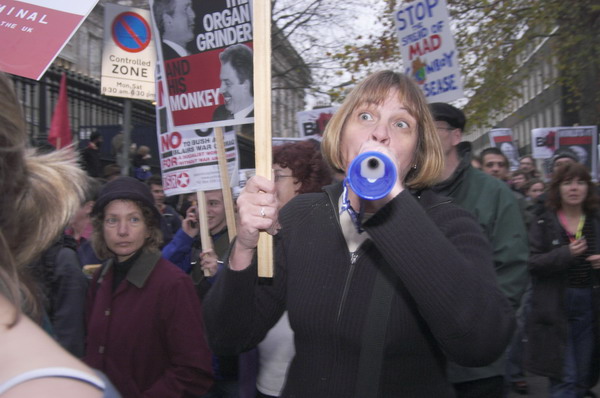
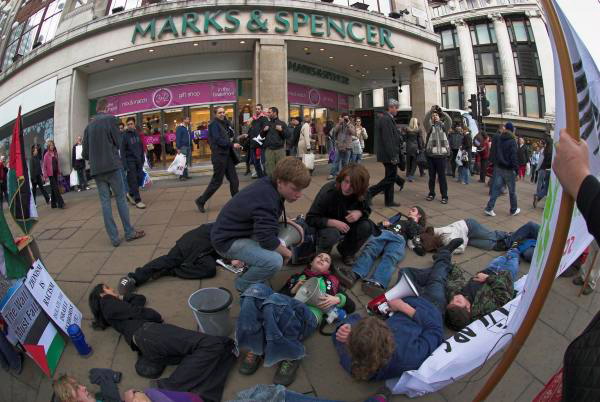
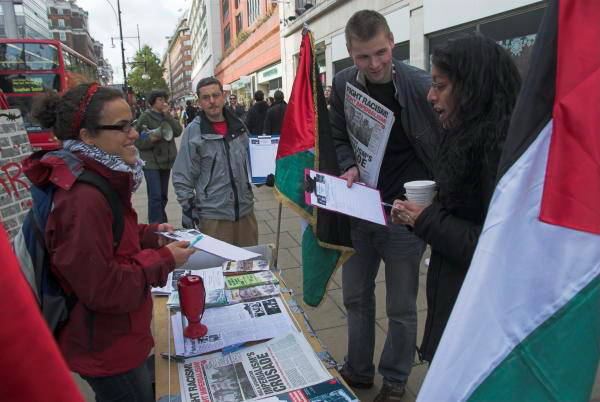
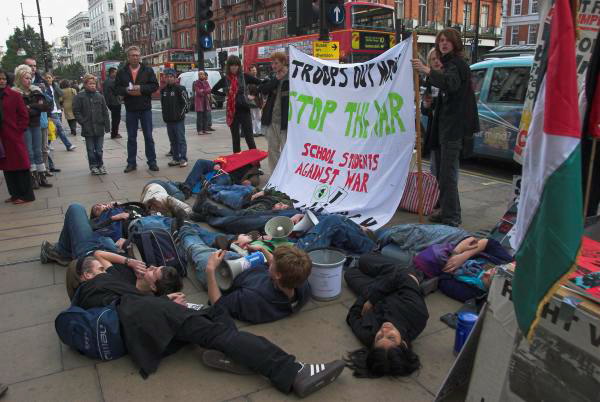
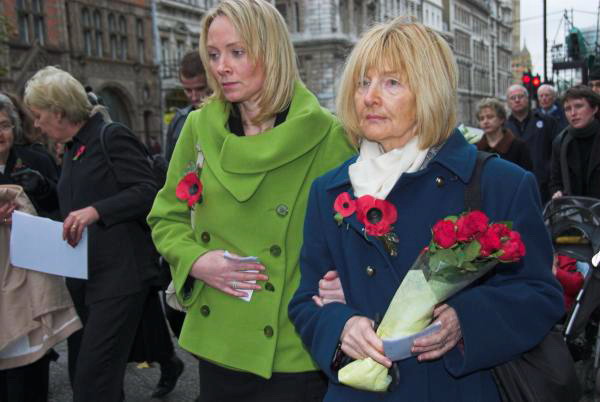
Hardest Hit March Against Cuts: On Wednesday 11th March 2011 around 10,000 people, many in wheelchairs came to march in London calling for an end to harassment and benefit cuts for the disabled.

Hardest Hit March Against Cuts - 2011

The Hardest Hit march was supported by a huge range of charities and organisations representing and supporting the physically and mentally disabled, including major unions such as PCS, UCU and Unite.

Hardest Hit March Against Cuts - 2011

The protest came a year after the formation of the coalition government led by David Cameron with Lib-Dem leader Nick Clegg as his deputy, with real power staying with the Tory majority and is now widely seen as a disaster for the Lib-Dems. Under Chancellor George Osborne the coalition plunged the country into the start of ten years of austerity, with particularly swingeing cuts to local government services as well as a drastic attack on all those claiming benefits.

Hardest Hit March Against Cuts - 2011

The cuts disproportionately affected the poor and the disabled while the wealthiest in our society were hardly if at all affected. In 2018 the UN special rapporter on extreme poverty concluded his visit to the UK by reminding us that ‘Poverty is a political choice‘ and that ‘Austerity could easily have spared the poor, if the political will had existed to do so’.

Hardest Hit March Against Cuts - 2011

For the disabled and those on benefits there were cuts and freezes and the situation was made worse by the ignorance and incompetence of Iain Duncan Smith, Secretary of State for Work and Pensions from 2010 to 2016.

It was under Labour in October 2008 that Work Capability Assessments were introduced but the numbers made before 2010 were relatively small and they were used for new Employment and Support Allowance (ESA) claimants and a small number of ESA reassessments. It was only in Spring 2011 under the coalition government that a programme began to move those on existing benefits onto ESA using the WCA tests administered by Atos began.

Already by 2011 there had been serious criticisms both of the unsatisfactory nature of the tests and of the failures by Atos to administer them correctly, and this protest march called both for an end to the cuts in benefits for the disabled and “and in particular for an end to the discredited and iniquitous testing regime administered by Atos Healthcare, which has replaced proper medical tests by a computer-based system that often ignores the actual needs of those being assessed, and has as unacceptably high error rate, with a majority of appeals against its assessments succeeding.

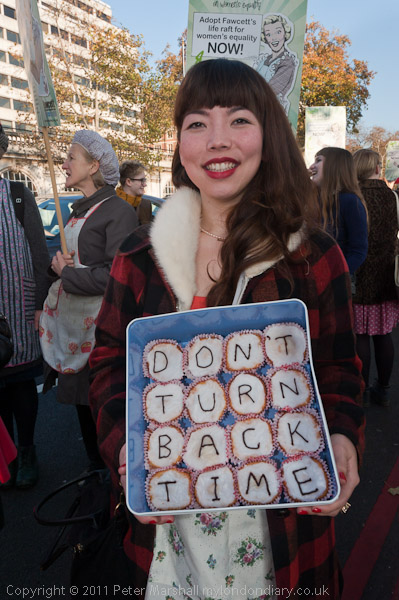
The Braille spells out SHAFTED

Despite the huge body of evidence and the many deaths the system caused, only minor changes were made and it was not until 2014 that the contract with Atos was ended, only for them to be replaced by Maximus who carried on the same way. Atos, now renamed IAS, remains now a part of the assessment system for ESA, Universal Credit and PIP along with Maximus and Capita.

Both New Labour and the Coalition made cuts in many positive projects and organisations set up to help the disabled. One of these was Remploy, whose last state-run sheltered factory set up to employ disabled labour closed in 2013 with the loss of over 1700 jobs. It is now a part of Maximus.

This protest got more media attention than most, largely because of the presence among those leading the march of Sally Bercow, the wife of the then Speaker of the Commons, and actress and activist Jane Asher, president of three of the organisations involved, Arthritis Care, National Autistic Society and Parkinson’s UK. It was followed by a mass lobby of MPs.

Since then there have been many more protests against the unfair treatment of the disabled as various benefits have been scrapped and Universal Credit has led to further problems, but nothing on this scale. Disabled people have not only suffered most they have also become some of the more active protesters, particularly led by groups that were on this march including Disable People Against Cuts (DPAC), Mental Health Resistance Network (MHRN), Winvisible, Black Triangle and others.

This ‘Hardest Hit’ march came during a ‘National Week of Action Against Atos Origin‘ organised by disability activists, claimant groups and anti-cuts campaigners and two days earlier they had protested outside the offices of Atos Healthcare in London. You can see more on My London Diary in Disabled Protest Calls Atos Killers.

More at Hardest Hit March Against Cuts.


Protest against fast track deportations

Protest against fast track deportations: On 5th May 2014, the early May bank holiday, protesters went to Harmondsworth Immigration Detention Centre close to Heathrow in solidarity with the prisoners inside who had gone on mass hunger strike against the unfair ‘fast track’ system which denies many a proper hearing. The were also protesting against other problems in the private-run prison.

Protest against fast track deportations

The hunger strike by over 300 men held at the centre was sparked off by the failure of the only fax machine at the centre, an essential service for those trying to prepare their case to gain asylum in the UK.

Protest against fast track deportations

The strike was suspended over the weekend after Home Office officials met delegates from the hunger strikers and promised to give answers to their demands on Tuesday, 6 May.

Protest against fast track deportations

Detained Fast Track (DFT) was first introduced by New Labour, but its use had expanded under the coalition government. As I noted, it “is inherently unfair, giving asylum seekers little or no time to prepare their cases and has resulted in many unfair decisions. It disadvantages those in most need of asylum who are unlikely to have prepared essential documents in advance and to be in a condition to represent themselves effectively. And as they are held in detention it is very difficult or impossible for them to prepare a case, particularly when communication with the outside world is limited and difficult.

Protest against fast track deportations

As well as being unfair, DFT is also expensive, thought to at least double the costs to the country for every asylum seeker held in detention, though the government does not release the exact figures. But despite the cost, the quality of accommodation and services in the detention centres is extremely poor. Many of those held have medical problems, often linked to the reasons why they fled their countries and there has been a desperate lack of proper healthcare at this and other immigration detention centres.

It’s hard to escape the feeling that many in the Home Office – including those in charge – have lost any feeling of compassion for the desperate people who seek asylum, seeing them as a threat to our country, best locked away and as far as possible out of mind. In my post on the protest I mentioned the case reported by HM Inspectorate of Prisons of an 84 year old man suffering from dementia who died after being held for almost 3 weeks without and proper medical attention before being taken to hospital in handcuffs.

Hard too not to see the incompetence often displayed as deliberate, as in the case of those held sometimes for over a year after having agreed to voluntary repatriation or those transferred to here for interviews in London and then abandoned here rather than being returned to other detention centres to continue to consult with their lawyers and have family visits.

We could vaguely see a lot of hands and very dim faces in the windows. As well as the grid of the fence there is a layer of dirty glass and another of plexiglass between them and us

Difficult to understand the lack of legal help and advice at this and other centres enabling the detainees to prepare their cases, and the many holdups that they encounter in doing this – even when the fax machine is working.

Probably the main changes that have taken place at Harmondsworth since this protest nine years ago is that the prison, together with its neighbour Colnbrook are under a new private management and that security and police presence has been considerably tightened. In 2014 the protesters were able to walk down the private road leading to a BT site between the two prisons and continue around the outside of the 20ft high prison fence. Since then protests have been restricted to the front of the building, out of sight of the prisoners. Back in 2014 the police told them that so longs as they behaved sensibly and caused no trouble they would be allowed to protest – and they were.

Later in 2014 the High Court ruled that the Detained Fast Track procedure was was unlawful, though the Home Office appealed and eventually only minor changes have been made. The process is clearly in breach of international law, as is the wholesale detention of asylum seekers.

As recently as 2018 the UK again committed to a declaration that it would “ensure that any detention in the context of international migration follows due process, is non-arbitrary, is based on law, necessity, proportionality and individual assessments.” Current and proposed UK policies break every aspect of this commitment and other aspects of international law, much of which was driven by the UK and to which successive governments have at least paid lip-service. Our current government has declared it will ignore those aspects it finds inconvenient.

More on the protest at Support Harmondsworth Mass Hunger Strike.


C of E Praises Weapons of Mass Destruction

C of E Praises Weapons of Mass Destruction

Westminster Abbey has been home to some pretty bizarre events over the last thousand years or so since the site first became home to a small monastery on Thorney Island around 960 AD, and another will be taking place this weekend.

C of E Praises Weapons of Mass Destruction

Possibly the most obscene and blasphemous service there took place on Friday 3rd May 2019, when a service was held there celebrating Britain’s weapons of mass destruction, giving thanks for 50 years of continuous nuclear threat by British submarines armed with nuclear missiles.

C of E Praises Weapons of Mass Destruction

As protesters across the road pointed out, Britain was currently wasting £205 billion on the replacement of Trident, around a quarter of a year’s total government spending on a weapons system which can never be used as it would be totally catastrophic for the world.

C of E Praises Weapons of Mass Destruction

The established church has of course a long record of taking the wrong side in history, supporting the rich and powerful, something Christianity inherited from older religions, which throughout history have been ways to subjugate the common people and keep them docile.

This weekend we see this again in action, with a ceremony taking place in which people around the country are to be invited to swear an oath of allegiance, though I think many will be swearing other things about this. It follows in a tradition established in 1066 when our Norman conquerors celebrated their victory with the first coronation there.

Reading the Bible and in particular the New Testament, supposedly the basis of Christianity, we find a very different religion, one in which swords shall be beaten into ploughshares and the love of power is seen as a sin. Certainly not one as the protesters pointed out one that would be thanksgiving for nuclear weapons.

CND and Christian CND protested opposite Westminster Abbey against the blasphemous and morally repugnant thanksgiving service celebrating Britain’s nuclear weapons. It was a much more Christian event than that taking place across the road, though the Christians there were joined by others including Buddhists.

Those present took part in a die-in after which there was a rally, but I left to go home, stopping briefly on my way to photograph a small group of Fridays For Future climate protesters in Parliament Square.

Fridays For Future climate protest
Die-In against Nuclear Weapons celebration


World Justice And A Black Friday

World Justice And A Black Friday: Friday 2nd May 2008 was unusual for me as my work began with and event by Just Share in front of the Bank of England when my wife and I appeared together in public, a rather rare event as she seldom comes to London. But later it was a very dark day for London as the results of the Mayoral Election were announced, the begining of 8 years of rule by a dangerously incomptent, unreliable and untrustworthy man who went on to become prime minister and make a real mess of the country too. In between the two events I had time to visit an exhibition and take a little walk along the riverside.


Just Shares Take On The Bank – Royal Exchange, Bank, London

World Justice And A Black Friday

‘Just Share’, based at St Mary-le-Bow church in Cheapside, describes itself as “a coalition of churches and development agencies seeking to engage with the City of London on issues of global economic injustice” and to “address the widening gap between rich and poor in the global economy.”

World Justice And A Black Friday

They had organised the event on the steps of the Royal Exchange in front of the Bank of England, with stalls from several groups involved in the trade justice movement including Operation Noah (a Christian-based charity campaigning about the environment) and Muslim Aid, before speeches by Ann Pettifor of Advocacy International and Operation Noah, previously Jubilee 2000, and The Guardian’s economics editor Larry Elliott.

World Justice And A Black Friday

Following this we walked the short distance to St Mary Woolnoth – one of Hawksmoor’s finest buildings, and where former slave captain John Newton, who wrote ‘Amazing Grace’, preached his last 28 years – a few yards away.

World Justice And A Black Friday

Here there was a seminar where Pettifor expanded her argument about the false basis of our current economic system, which is the subject of her book ‘The Coming First World Debt Crisis‘ arguing that the current global debt-based financial systems are unsustainable and that a structural change is necessary to give proper regard to actual production, and the rediscovery of the insights of earlier Christian (and of course Muslim) traditions.

There wasn’t a huge attendance at the event, and probably a majority of those present were wearing dog collars. I didn’t find it easy to make interesting pictures though I did photograph most of the speakers. And I suspect it fell on very closed ears in financial circles where people were and are personally doing very well from our failed system.

More pictures at Just Shares Take On The Bank.


London Riverside – South Bank and Southwark

It was some time before the result of the London Mayoral elections was to be announced in the early evening, and I made my way to the Hayward Gallery to see an exhibition there before taking a leisurely walk along the South Bank to City Hall. I think there may well have been time for a little food and liquid refreshment too.

On Bankside I made this picture of Cardinal Cap Alley and the house that Christopher Wren didn’t live in. You can see some more pictures from the walk, including at the Hayward Gallery, a distant view of Tate Modern’s chimney, St Pauls Cathedral and the Millennium Bridge and Fishmonger’s Hall at London Riverside.


No to the Crook, the Toff, the Fascist or Cop – City Hall, Southwark

Like other photographers attending protests in London I had become used to being routinely photographed by police photography teams, the so-called Forward Intelligence Teams, FIT. But sitting reading on the steps in Potters Fields on this occasion waiting for things to start I attracted more than the usual attention, perhaps because the book I was reading had the title ‘Terrorist’. As I point out in My London Diary, this is not a training manual, but a novel by one of America’s leading novelists, John Updike.

I was filmed for over a minute and a number of still photographs were taken. Some months later I made a freedom of information request asking what pictures the police held of me, giving this as one of the dates on which I had been photographed. I paid my money, waited and eventually got the response – that they had no pictures of me.

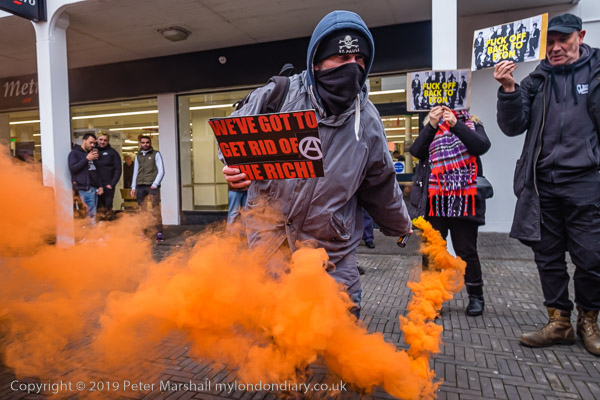
I was there to take pictures as several anarchist groups had come to protest at the result, saying ‘No to the Crook, the Toff, The Fascist or Cop’, declaring none of the four candidates suitable to be Mayor. Personally I felt they were being a little unfair to previous mayor Ken Livingstone who while he had his faults had largely done his best for London and certainly now seems a shining beacon of honesty compared to most of the leading Tories – including Starmer – we have seen since.

Things outside City Hall remained pretty calm until Fitwatch got fed up with being photographed and began to try to frustrate the FIT teams by surrounding one of them with their banners. The police called up reinforcements and the Territorial Support Group (TSG) arrived and began pushing everyone around, including the protesters, press and bystanders, most of whom were tourists, in the direction of a penned area a short distance away. As I reported, ‘One French woman was bemused. “But why are they just letting themselves be pushed” she asked me as I took photographs. “Because this is England and not France” I replied.’

One man sitting watching from the river wall refused to move and was told he was obstructing the highway – which he clearly was not. Eventually they arrested him and dragged him away. But otherwise the police were reasonably well-behaved and on showing my press card I was allowed to walk away from the area.

I was keen to do so, not just because I didn’t want to be kettled, but also because I had seen some of the cannier members of Class War moving away and was able to photograph them displaying an Anti-Fascist banner from a balcony overlooking the site for a few minutes until they melted away as officers began moving in our direction, finding refuge in a nearby pub. By the time the police arrived they obviously couldn’t be bothered to chase them, and contented themselves with moving the innocent public away from the balcony, and after a short time, also moving the press. I went and joined Class War in the pub briefly before leaving for home.

More at No to the Crook, the Toff, The Fascist or Cop.


April 28th 2015 IWMD

April 28th 2015 IWMD; April 28th every year is International Workers Memorial Day, and last year here on >Re:PHOTO I wrote about this, beginning with a quote from the TUC web site:

Every year more people are killed at work than in wars. Most don’t die of mystery ailments, or in tragic “accidents”. They die because an employer decided their safety just wasn’t that important a priority. International Workers’ Memorial Day (IWMD) 28 April commemorates those workers.

TUC – International Workers’ Memorial Day

I wrote more about it and illustrated the post with pictures taken mainly at previous years on Tower Hill. You can still read it at International Workers’ Memorial Day (IWMD).

This year there are events planned in Stratford, Barking and Walthamstow marking the event, as well as others around the country, and many workplaces will be holding a minute’s silence at 12 noon.


On Tuesday 28th April 2015 two of the three events I covered were related to IWMD, but I also went to Holloway Prison with protesters demanding the release of an immigration detainee being held there.


Qatar Slave Labour deaths – World Cup 2022 – Qatari Embassy, Mayfair

April 28th 2015 IWMD

My working day began with trade unionists outside the Qatari embassy in Mayfair, where they attempted to deliver a letter on International Workers Memorial Day protesting the slaughter of migrant slave labour workers on World Cup building sites. At current death rates, over 4,000 migrant workers will die by 2022.

April 28th 2015 IWMD

According to a Guardian report, on average one Nepalase worker there dies very two days, and including the deaths of Indian, Sri Lankan and Bangladeshi workers the death rate is most likely more than one every day. At least 964 workers from Nepal, India and Bangladesh died working in Qatar in 2012 and 2013.

April 28th 2015 IWMD

Work had still to begin on eleven of the 12 stadiums needed for the 2022 World Cup and there are likely to be many more dying due to the appalling exploitation and abuse of these migrant workers.

April 28th 2015 IWMD

The International Labour Organization had urged Qatar to “ensure without delay, access to justice for migrant workers, so that they can effectively assert their rights […] strengthening the complaints system and the labour inspection system”.

According to Amnesty many of the migrant workers have there passports confiscated when they arrive for work in Qatar and are forced to work long hours for very low pay day after day with no rest and are often physically and sexually abused.
Police moved the protesters away from the embassy to the other side of the road but allowed a small deputation to approch the doorway with a letter. A police officer went inside the embassy to ask if someone would come to the door to accept this from Gail Cartmail, Assistant General Secretary of Unite the Union. After a lengthy wait, a man came to the door and refused, and the protesters then left it on the doorstep.

In 2021 The Guardian revealed that “More than 6,500 migrant workers from India, Pakistan, Nepal, Bangladesh and Sri Lanka have died in Qatar since it won the right to host the World Cup 10 years ago“. A few days football came at a very bloody price.

Qatar Slave Labour deaths – World Cup 2022


Holloway protest for Yarl’s Wood protester Anna – Holloway Prison

From Mayfair I travelled to a very different area of London for a protest outside Holloway Prison, a Victorian prison in one of the poorer areas of North London which had housed only women prisoners since 1902 and was closed a year after this protest.

Anna, a detainee in Yarls Wood immigration detention prison, had been one of a group of women defending another detainee, a torture victim, who was about to be deported. Thirty guards rushed into the room and brutally assaulted them all, taking them to solitary confinement in the ‘Kingfisher’ isolation unit at Yarl’s Wood. Both Anna and another woman, Lillija, were threatened with prison, but only Anna was transferred to Holloway prison and was being held there although she was had not been charged with any offence.

Both women had been involved in a Channel 4 News exposure of the abuses of women by guards in Yarls Wood which had led to one guard being suspended.

Many of those at the emergency protest organised by Movement for Justice demanding Anna’s release had served time in Yarls Wood or other immigration prisons.

When a group of three prison employees came out to argue with the protesters that their protest simply upset women being held inside the jail they told them from their first hand experience how greatly they had welcomed knowing that there were people outside the prison who were aware of them and wanting to help.

Free Yarl’s Wood Anna from Holloway


Hotel Workers Rise Up on Workers Memorial Day

Finally I came back to central London and the Hilton London Metropole hotel on the Edgware Road in Bayswater and in another protest for International Workers’ Memorial Day against the exploitation of workers, mainly migrants organised by the Unite Hotel Workers branch. Workers at luxury hotels in portering and household services are employed by agencies on minimum wage, zero hours contracts and denied basic rights.
Several workers including former room attendant Barbara Pokryszka spoke at the protest, complaining of heavy workloads and abusive treatment by management, who fail to treat them as human beings, saying “We Are Not Machines”. As in other areas of work outsourcing to contractors who pay minimum wage and impose abysmal conditions is at the root of the abuse.
Luxury hotels have a world-wide reputation to maintain and this would be damaged if they were found to be treating staff on their payroll in such a disgusting way. A night’s stay for two in a room costs over £200 and housekeeping worker would usually have to clean between 12 and 20 rooms in an 8 hour shift. The worker’s pay for cleaning – before deductions would be around £85 while the hotel guests would be paying over £3000 for their stay. Hotels could surely pay more to their essential workers.

Hotel Workers – Workers Memorial Day


March of the Beekeepers 2013

March of the Beekeepers 26th April 2013: Where would we be without Bees? Personally as I’ve written before I wouldn’t be here at all. I owe my own very existence to them, as when my father as a young man decided to become a beekeeper he went to a class at the Twickenham and Thames Valley Beekeepers Association in Twickenham, given by a professional beekeeper, Alf. Fred and Alf became friends, and both had sisters (my father five of them, but Alf only one.) And so I grew up with an Uncle Alf, my mother’s brother and his wife Mabel was one of Dad’s sisters.

March of the Beekeepers

Alf and Dad were both beekeepers with prize certificates for honey etc to prove it. In our house, honey came in 28lb tins which I’d spent hours in a room sealed against bees sweating turning the handle of an extractor, and there were hives at the bottom of the garden against the factory wall, often surrounded by the sharp metal curls of swarf which came over, more dangerous than the bee stings.
March of the Beekeepers
My father had hives in several other gardens in the area, and looked after bees for at least one nearby middle-class resident, and for some years the hives at the Twickenham apiary, a job he took over from Alf. I think most of dad’s bees came from swarms which the police would regularly call and ask him to deal with – and he would get on his bike with a box to bring them back. He was something of a jack of all trades, growing vegetables to feed us and doing odd painting, decorating, plumbing and building work as well as selling a few jars of honey. Alf was a dedicated beekeeper and travelled further afield, with hives as far away as Gloucestershire, busily pollinating the orchards.
March of the Beekeepers

Somehow I never took up beekeeping, though I’d helped Dad for years. Living in various flats for around ten years took me out of the loop, and when I finally moved to a house with a garden I was too busy with other things, not least photography.

March of the Beekeepers

Bees are essential for all of our lives as one of the major pollinators of fruit and they are under great threats. Bee colonies have been dying, and a major cause of this has been the use of neonicotinoid pesticides. These can kill bees but also seriously weaken their resistance to other factors – including climate change and the Varroa mite.

Though there had been strong pressure particularly in the EU for these pesticides to be banned, the UK had abstained from a vote to ban them following a report by the European Food Safety Agency (EFSA). This was despite the decline in bee numbers being particularly drastic in England, with the number of colonies down to under half of those present in the 1980s. These pesticides don’t only kill bees they also kill other pollinating insects such as moths, which have also seen a huge decline in recent years.

The protest on Friday 26th May 2013 was supported by a wide range of organisations including Friends of the Earth, Greenpeace, Pesticide Action Network (PAN), RSPB, Soil Association, The Natural Beekeeping Trust, the Wildlife Trusts and 38 Degrees and urged Environment Secretary Owen Paterson to take urgent action and to support a further EU ban being debated the following Monday.

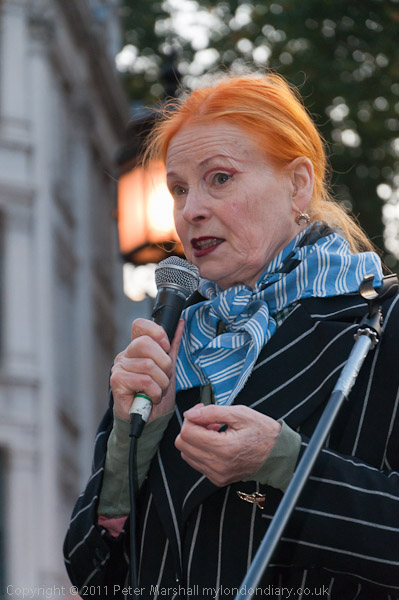
While the protesters stayed in Parliament Square I went with a small group led by fashion designers Dame Vivienne Westwood and Katharine Hamnett to take a petition with 300,000 signatures to Downing St.

A ban on the use of three neonicotinoids came into force in the UK and EU in 2018, but the UK government has since in the last three years running allowed a so-called emergency use of the banned pesticide thiamethoxam – a teaspoon of which is enough to kill around 1.25 billion bees on sugar beet crops. This is against the advice of the government’s own Expert Committee on Pesticides and would be unlawful were we still in the EU. Brexit means we can kill bees.

More at March of the Beekeepers.


End outsourcing at University of London

End outsourcing at University of London: Five years ago, on Wednesday 25th April 2018 I was with workers from the Independent Workers Union of Great Britain – IWGB on the first day of a two day strike at the University of London central administration by over 100 cleaners, porters, security officers, receptionists, gardeners, post room staff and audiovisual staff.

End outsourcing at University of London

They were calling for an end to the outsourcing of their jobs in the university to various contracting companies and demanding to be directly employed by the University, and receive the same conditions and benefits as directly employed colleagues. As well as the workers, academics, students and other trade unionists came to support them in a lively rally outside the gates to Stewart House in Russell Square..

End outsourcing at University of London

The rally was part of a successful campaign led by the IWGB which began in 2010 and ten years later the university central administration changed to directly employ porters, receptionists, post room and audio visual technicians, with cleaners following shortly after in November 2020.

End outsourcing at University of London

The IWGB are still campaigning to bring workers in-house in other universities in London, including UCL, and they and other unions have been successful elsewhere. United Voices of the World are one of these and some of their members had come to the rally to show their support.

Here’s what the IWGB say about their campaign:

Cleaners and security staff at universities across London are organising for equality with directly-employed staff!

Outsourced workers suffer from far worse terms and conditions than directly-employed colleagues, facing no sick pay, bare minimum holiday entitlement and meagre pensions. Bullying, mismanagement and discrimination by unaccountable outsourced managers are common.

Workers in the IWGB union are leading the fightback. Through public campaigning and strike action we can end outsourcing at London universities!

End outsourcing at University of London

Among the speakers at the gates of Senate House was Shadow Chancellor John McDonnell who also brought support from Jeremy Corbyn and promised a Labour government would bring in new trade union laws and end the unfairness of outsourcing. Unfortunately should we now get a Labour government at the next election its policies will be more about protecting company profits than protecting workers.

There were plenty of others as well as IWGB members who spoke, and one was a woman from UCU at Goldsmiths University who had come with a large donation from them to the strike fund.

Billy Bragg came to give his support, singing three songs, and got us joining in on some of them, and Archie Shuttlebrace sang with Rebecca Wade Morris. Chip Hamer (Grim Chip) and another of the poets from Poetry on the Picket Line performed some of their work.

Then it was time for a march around Russell Square, with over 200 people briefly holding up traffic. The march was lead by the yellow Precarious Workers Mobile three-wheeler and a samba band.

They returned to the gates of Stewart House and the rally continued with more music, poetry and dancing.

More at End outsourcing at University of London


NHS, Shaker, Drax, Gurkhas, Herbalists & Bikes

Wednesday 24th April 2013 was a busy day for protests in Westminster. And there was one in the City.


Protest the Privatisation of NHS – Old Palace Yard

NHS, Shaker, Drax, Gurkhas, Herbalists & Bikes

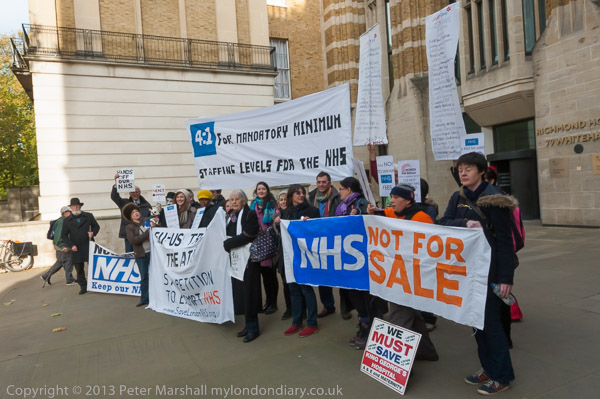
The House of Lords was debating NHS regulations which imposed full competitive tendering on the NHS, a key part in the escalating backdoor privatisation of the NHS.

Unite had set up a ‘Wheel of Fortune’ game show hosted by people wearing ‘David Cameron’ and ‘Jeremy Hunt’ masks and listing the likely costs of various procedures due to the tendering system. They feared “that the coalition’s NHS policies, including a multi billion pound funding squeeze coupled with a massive reorganisation, will destroy the 65 year old health service, paving the way for a new marketised system where paying up to £10,000 for maternity costs or £13,450 for a new hip is the norm.”

NHS, Shaker, Drax, Gurkhas, Herbalists & Bikes

Unite said that already more than £20 billion of health costs go to private companies, who take their decisions on the basis of profit rather than the interests of patients. The Lords were debating a motion for the annulment of the regulations on the grounds that Parliament had been assured “that NHS commissioners would be free to commission services in the way they consider in the best interests of NHS patients“.

Protest the Privatisation of NHS


Bring Shaker Aamer Home – Parliament Square

NHS, Shaker, Drax, Gurkhas, Herbalists & Bikes

Following a petition with 117,387 signatures to bring Shaker Aamer home from Guantanamo, a debate had been held that morning by MPs in Westminster Hall, where most of the 17 MPs who spoke called for his release, including Shaker’s own MP, the Conservative MP for Battersea, Jane Ellison, who also came out to speak with the protesters.

NHS, Shaker, Drax, Gurkhas, Herbalists & Bikes

Unfortunately such debates, although they do increase pressure on the government to take action have no actual consequences. But perhaps it did help to persuade the government that it had to ignore the embarrassment of British agents at being complicit in his torture by the US and make clear to the US government he should at last be released after being held for 12 years, long after he had been cleared of any involvement in terrorism. As I noted, “The facts about torture are now largely public and totally indefensible and it is time for justice to be done.”

Bring Shaker Aamer Home


Drax Biomass Threat to our Planet – Princes St, CityDrax AGM, wpp

Green Party leader Natalie Bennett speaking at the protest

I had to take the tube to the City to attend a protest outside Gocer’s Hall where the AGM of Drax, the huge coal-burning power station near Selby in Yorkshire was being held. Drax was planning to convert half its capacity to bio-mass and become the largest biomass-burning power station in the world, using 1.5 times the total UK wood production per year.

The wood pellets would come mainly from devastating clear-cutting of highly diverse forests in North America, and although re-grown will eventually remove the same amount of carbon this will take a hundred years or more – during which time the carbon Drax emits – roughly 50% greater than burning coal – will be contributing to disastrous global warming.

Drax already has a disastrous impact in South America were land is being grabbed from traditional communities for open cast coal mining, usually with complete disregard for their human and civil rights, cleared of its biodiverse forests and diverted from food production – often in places where food is desperately needed. Conversion to wood-burning at Drax will result in even more environmental and social destruction.

The incentive to change to wood-burning is that under current government policies Drax will receive huge government subsidies from funds intended to promote renewable energy, diverting funds from schemes for energy production and conservation that actually will help to combat climate change.

Drax Biomass Threat to our Planet


Gurkhas Call for equal treatment – Old Palace Yard

I returned to Westminster, where Several hundred Gurkha pensioners and supporters were holding a rally on the 198th anniversary of the first recruitment of Gurkhas into the British Army to deliver a petition to David Cameron asking for equal treatment to other British Army ex-soldiers.

British Army Gurkhas who retired before 1997 were granted the right to settle in the UK in 2009, but their pension remains only a fifth of that of other British soldiers, and is impossible to live on in the UK, being based on the cost of living in Nepal.

Gurkhas Call for equal treatment


UK herbalists Want Regulations – Old Palace Yard

Also in Old Palace Yard were UK herbalists, both traditional and Chinese, protesting against the failure of the government to bring in the statutory regulations they had promised to do by 2012.

Under EU regulations from 2004, traditional remedies then in use could continue to be provided until 2011, but after that had to be covered by national policies to regulate their safety and effectiveness. Although the government had promised to set this up, it has so far failed to do so, and they are now unable to prescribe many commonly used and effective common herbal remedies.

UK herbalists Want Regulations


Get Britain Cycling Report Launch – Parliament Square

Finally, in Parliament Square, Christ Boardman, a gold medal cylist in the Barcelona Olympics posed with MPs from the All Party Parliamentary Cycling Group to launch their report ‘Get Britain Cycling.’

This calls for more to be spent on supporting cycling and that it should be considered in all planning decisions. They want more segregated cycle lanes and for the 30mp urban speed limit to by reduced to 20mph. Children should be taught to ride a bike at school and the government should produce and annually report on a cross-departmental Cycling Action Plan. Cycling has enormous advantages both individually and for us all in better health and reducing pollution with reduced health spending.

Get Britain Cycling Report Launch


Greedy Property Developers Reward Themselves

Greedy Property Developers Reward Themselves: Eight years ago on Tuesday 12 April 2015 I photographed housing activists protesting outside the expensive dinner at a Mayfair hotel for the 2015 Property Awards. The protesters held their own alternative awards ceremony for housing protesters as a part of the event.

Among those in my pictures is Aysen from the Aylesbury Estate. The Fight4Aylesbury exhibition in her flat on the estate continues today, Friday 21st April 2023, and on Saturday 22nd and Sunday 23rd. Parts of some of my pictures from this event were used in collages in that show.


Property Awards at Mayfair Hotel – Grosvenor House Hotel, Park Lane

Greedy Property Developers Reward Themselves

Property developers have powered the incredible rise in London Housing prices by building luxury flats for mainly overseas investors, many of which remain unoccupied to be sold later at even higher prices to other investors, and also by working with London councils to redevelop social housing largely for private sale.

Greedy Property Developers Reward Themselves

Together with the actions of successive governments – Tory and Labour – they had created what by 2015 was clearly the worst shortage of affordable housing in history, with a record number of evictions and the doubling of rough sleeping in London. Over 50,000 families have had to move out of London while many more properties in the capital remain empty.

Greedy Property Developers Reward Themselves

As I wrote: “Housing in London has ceased to be something to meet human need, and instead is servicing greed and selfishness.” And the expensive dinner taking place that evening in the luxury Mayfair hotel was to give awards to the property developers for their greed. Among those taking part in the protest outside were people from estates which are being redeveloped, including Southwark Council’s Aylesbury estate and Sweets Way in north London who were facing eviction because of the policy of social cleansing driven by councils and developers.

People arriving at the dinner were met by a noisy crowd calling for a fair housing policy outside the ‘red carpet’ entrance to the hotel on Park Lane and had to walk past the protesters to enter. Police tried to keep the entrance clear and some hotel staff directed the guests to other entrances to the hotel, where the protesters also followed.

The protesters held an alternative awards ceremony in front of the hotel entrance, awarding large cardboard cups for the Young Protester of the Year, Placard Making, Demonstration of the Year and Occupation of the Year.

Protesters also briefly occupied occupied a neighbouring branch of estate agents Foxton, who have played a leading role in the gentrification of London. Together with other estate agents they have also been an important influence on the housing policies of both Tory and Labour.

Foxtons is notorious among those who rent property for driving up rents – and in 2022 the London Renters Union reported that their annual revenue had increased by £5m as rents in London went up by an average of 20.5% in 3 months, with one Foxtons tenant reporting a rise of £12,000 per year!

Shortly before I left it became clear that most of those coming to the dinner were being directed to a rear service entrance to the hotel and the protesters moved around the block to hold a rally there. The gate was rapidly closed and there were some minor scuffles as police attempted to move the protesters away. I heard later that there had been two arrests after I left.

Many more pictures at Property Awards at Mayfair Hotel.


Armenians, Copts and Venezuela – 20 April 2013

It’s easy to forget in our current government racist climate towards asylum seekers that Britain has a long history of giving sanctuary to political activists from around the world who have been forced to leave their countries and there are a number of statures, memorials and plaques around the city that remind us of this.

Of course our historical record is blemished; although we supported those striving for freedom from the rule of other European countries, attempts in our own Empire to gain independence were met with often illegal, ruthless and horrific violence as well as deliberate famines starving many of the general population – as in India, Ireland, Kenya and elsewhere.

Despite increasingly draconian laws enacted in recent years Britain remains a relatively free country. Protests are coming under increasing restrictions, but we can still protest although it is now rather more likely we may end up in prison for doing so in any active way – and protesters have even been jailed recently for contempt of court for attempting to defend their actions.

Over the years I’ve covered many protests by communities from other countries living in the UK, often involving people who came here as asylum seekers. Most are protesting in solidarity with protesters and victims in their home countries and some because those at home are unable to protest.

The three events I covered on Saturday 20th April 2013 were taking place for different reasons but all involved people whose origins are in other countries and were protesting about events in those countries, current or historical.


Armenians Remember the Genocide

Armenians, Copts and Venezuela - 20 April 2013

Armenians march through London every year in memory of the Armenian Genocide by Turkey. Beginning in 2015, Turkey arrested around a thousand members of the Armenian community and murdered them, followed by the killing of around 300,000 Armenian conscripts in the Turkish Arm and then “mass killings, deportations and death marches of women, children and elderly men into the Syrian Desert. During those marches, many of the weak or exhausted were killed or died. Women were raped. The deportees were deprived of food and water. Starvation and dehydration became commonplace.”

Armenians, Copts and Venezuela - 20 April 2013

Most of the deaths came in 1915, but massacres and deportations continued on a smaller scale until 1923, with around 1 – 1.5 million people – roughly 70% of the Armenian population in Turkey – being killed.

Armenians, Copts and Venezuela - 20 April 2013

Armenia has an ancient cultural heritage, with the first Armenian state dating back to 860BC, and at times its territory has included large parts of its surrounding countries. It was invaded by many other countries and in the 16th century was divided between the Turkish Ottoman Empire and Persia (Iran.) Russia took over the Iranian area following a war with Persian in the early 19th century.

Armenians, Copts and Venezuela - 20 April 2013

The Armenian Genocide took place during the collapse of the Ottoman Empire. After the Turkish revolution of 1908 there had been a massacre of around 20-30,000 Armenians at Adana in 2009. But it was during the First World War when Russia and the Ottoman Empire were fighting each other that the genocide took place, probably as a reaction to Armenian volunteers fighting on the Russian side.

Turkey still denies that the genocide took place, despite the incontrovertible evidence, and say that the deaths were the result of a civil war although the Armenians had no weapons and no military organisation.

Although the UN Commission on Human Rights has described it as genocide and many countries around the world have officially recognised it as such, including the United States, France, and Germany and the Scottish, Welsh and Northern Ireland parliaments, the UK government has instead come up with trivial excuses for refusing to do, including the fact that the term genocide was only defined in 1948. When the UN did so then, Raphael Lemkin who had coined the term genocide, described it as “The sort of thing Hitler did to the Jews and the Turks did to the Armenians.”

My London Diary describes the march through London to the Cenotaph, where there were speeches and wreaths were laid. I left the march as it moved off to a service in St Margaret’s Church in Parliament Square.
Armenians Remember the Genocide.


Copts Say End Egyptian Persecution – Old Palace Yard, Westminster

Around the corner from the church I joined UK Copts who were protesting Against the new Muslim Brotherhood led fascist regime in Egypt, which is attacking freedom, muzzling the press, undermining the legal system and encouraging attacks on religious minorities.

The protest followed an attack on April 8th on people leaving a mass funeral in St Mark’s Cathedral, Cairo, for 5 Copts who had been killed in violent clashes in the northern suburbs of the city. As the hundreds of worshippers tried to leave they were attacked with stones and Molotov cocktails thrown from nearby buildings and had to retreat back into the cathedral.

Clashes continued outside the cathedral, Egyptian security forces fired shots into the building and police fired tear gas. One Copt was killed and 84 people including 11 police were injured.

After the attack President Morsi spoke with Pope Tawadros II and issued a statement that he had given orders that the police guard the cathedral and that the state would protect the lives of both Christians and Muslims. But this was just one of many attacks on Copts in Egypt and they feel the authorities are encouraging violence against them.

The Copts see this as part of a growing Islamicisation which is also undermining Egypt’s judicial system, and as a deliberate attack on all opposition, including the liberal and left political opposition as well as all minority religious groups. The stress their protest was not against Muslims but to persuade the British government to stop supporting the current fascist regime in Egypt and to put pressure on the Egyptian government to uphold human and civil rights.

Copts Say End Egyptian Persecution


Stand Off at Venezuela Embassy – South Kensington

Following the death of President Hugo Chávez on 5 March 2013, elections were held in Venezuela on 14 April 2013 which resulted in a close victory with a majoirty of around 223,600 votes for Nicolás Maduro, the successor chosen by Chávez to stand for the United Socialist Party.

Opposition candidate Henrique Capriles refused to accept the result, demanding audits – which confirmed he had lost. Venezuela has a highly sophisticated and automated voting system that left no room for reasonable doubt that he had lost.

Middle-class Venezuelans who oppose Maduro and come along to protest at the embassy, and a wider group of people, mainly South Americans but not all from Venezuela, had come to defend it.

As I commented:

Maduro’s support comes largely from the workers in Venezuela, for whom the Chavez ‘revolution’ has seen real gains, including much improved healthcare. Many of those who were there to support him today had come to Britain as refugees – largely as a result of US-backed military coups in their countries. Their support for Chavez, and after him Maduro is hardly surprising.

More about the protest on My London Diary: Stand Off at Venezuelan Embassy