April 28th 2015 IWMD; April 28th every year is International Workers Memorial Day, and last year here on >Re:PHOTO I wrote about this, beginning with a quote from the TUC web site:
Every year more people are killed at work than in wars. Most don’t die of mystery ailments, or in tragic “accidents”. They die because an employer decided their safety just wasn’t that important a priority. International Workers’ Memorial Day (IWMD) 28 April commemorates those workers.
TUC – International Workers’ Memorial Day
I wrote more about it and illustrated the post with pictures taken mainly at previous years on Tower Hill. You can still read it at International Workers’ Memorial Day (IWMD).
This year there are events planned in Stratford, Barking and Walthamstow marking the event, as well as others around the country, and many workplaces will be holding a minute’s silence at 12 noon.
On Tuesday 28th April 2015 two of the three events I covered were related to IWMD, but I also went to Holloway Prison with protesters demanding the release of an immigration detainee being held there.
Qatar Slave Labour deaths – World Cup 2022 – Qatari Embassy, Mayfair
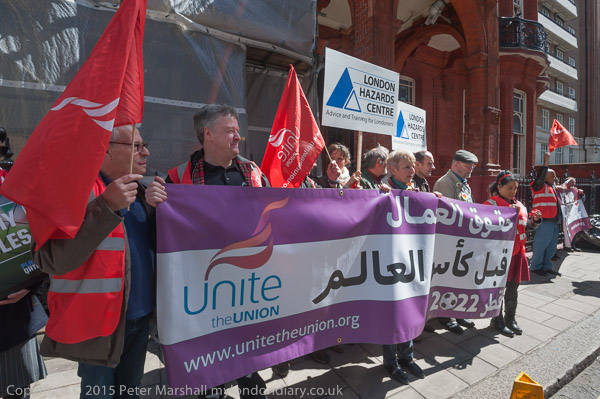
My working day began with trade unionists outside the Qatari embassy in Mayfair, where they attempted to deliver a letter on International Workers Memorial Day protesting the slaughter of migrant slave labour workers on World Cup building sites. At current death rates, over 4,000 migrant workers will die by 2022.
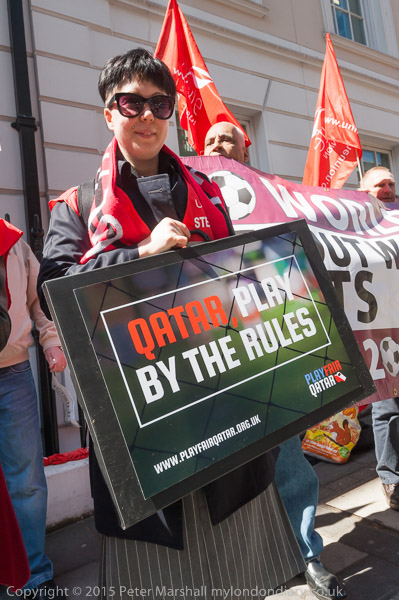
According to a Guardian report, on average one Nepalase worker there dies very two days, and including the deaths of Indian, Sri Lankan and Bangladeshi workers the death rate is most likely more than one every day. At least 964 workers from Nepal, India and Bangladesh died working in Qatar in 2012 and 2013.
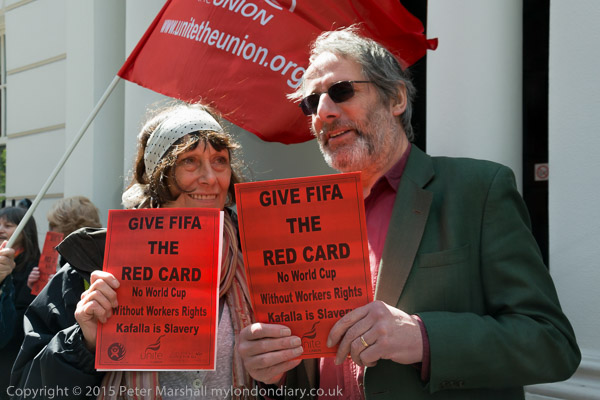
Work had still to begin on eleven of the 12 stadiums needed for the 2022 World Cup and there are likely to be many more dying due to the appalling exploitation and abuse of these migrant workers.
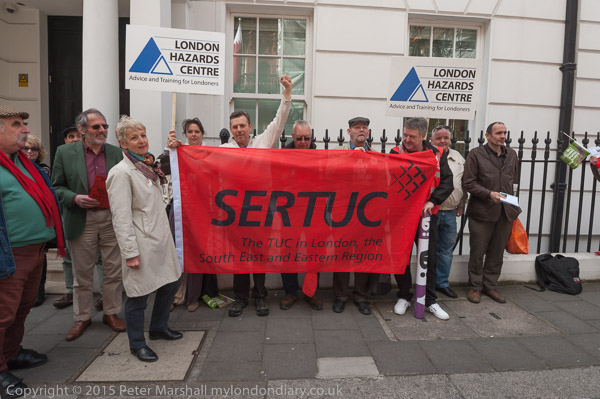
The International Labour Organization had urged Qatar to “ensure without delay, access to justice for migrant workers, so that they can effectively assert their rights […] strengthening the complaints system and the labour inspection system”.
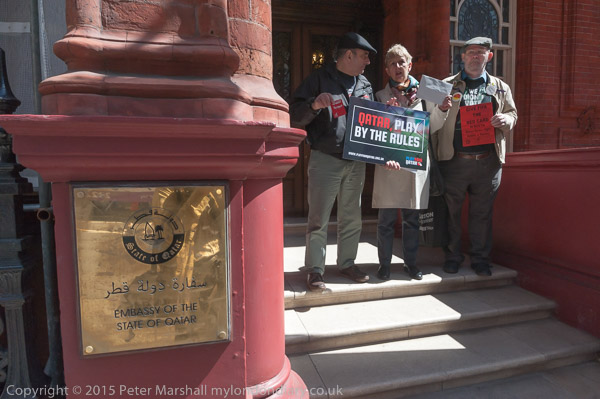
According to Amnesty many of the migrant workers have there passports confiscated when they arrive for work in Qatar and are forced to work long hours for very low pay day after day with no rest and are often physically and sexually abused.
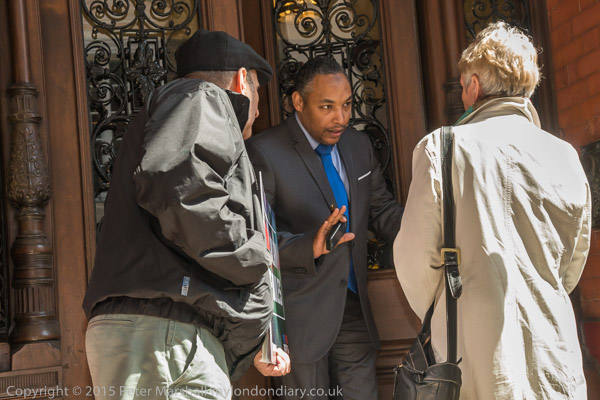
Police moved the protesters away from the embassy to the other side of the road but allowed a small deputation to approch the doorway with a letter. A police officer went inside the embassy to ask if someone would come to the door to accept this from Gail Cartmail, Assistant General Secretary of Unite the Union. After a lengthy wait, a man came to the door and refused, and the protesters then left it on the doorstep.
In 2021 The Guardian revealed that “More than 6,500 migrant workers from India, Pakistan, Nepal, Bangladesh and Sri Lanka have died in Qatar since it won the right to host the World Cup 10 years ago“. A few days football came at a very bloody price.
Qatar Slave Labour deaths – World Cup 2022
Holloway protest for Yarl’s Wood protester Anna – Holloway Prison
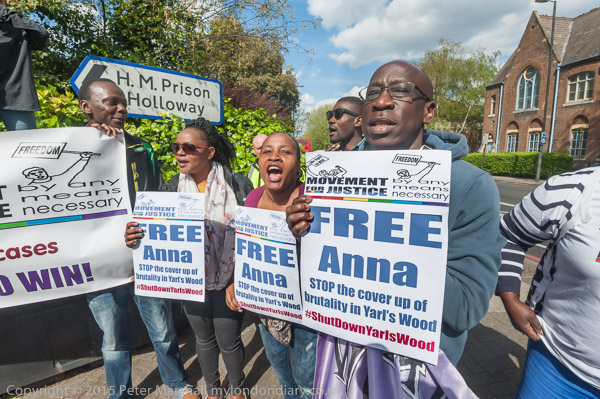
From Mayfair I travelled to a very different area of London for a protest outside Holloway Prison, a Victorian prison in one of the poorer areas of North London which had housed only women prisoners since 1902 and was closed a year after this protest.
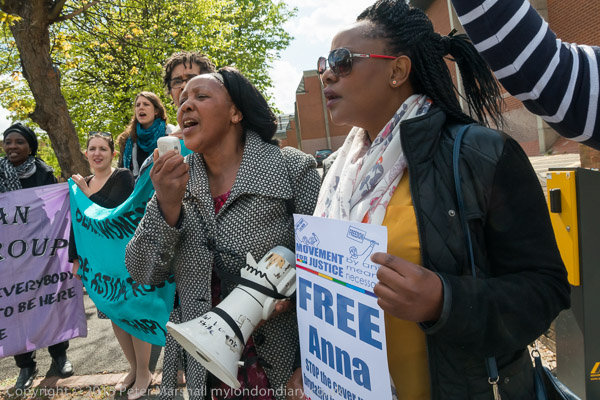
Anna, a detainee in Yarls Wood immigration detention prison, had been one of a group of women defending another detainee, a torture victim, who was about to be deported. Thirty guards rushed into the room and brutally assaulted them all, taking them to solitary confinement in the ‘Kingfisher’ isolation unit at Yarl’s Wood. Both Anna and another woman, Lillija, were threatened with prison, but only Anna was transferred to Holloway prison and was being held there although she was had not been charged with any offence.
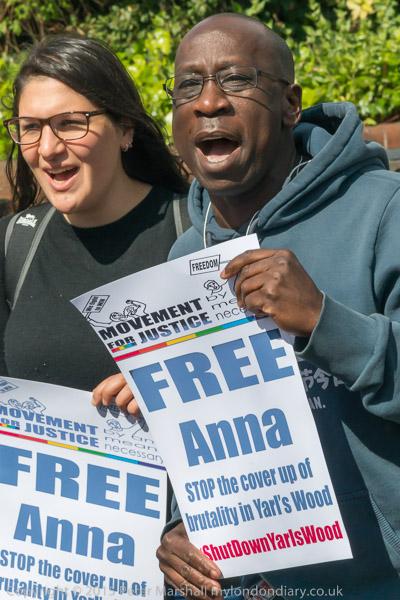
Both women had been involved in a Channel 4 News exposure of the abuses of women by guards in Yarls Wood which had led to one guard being suspended.
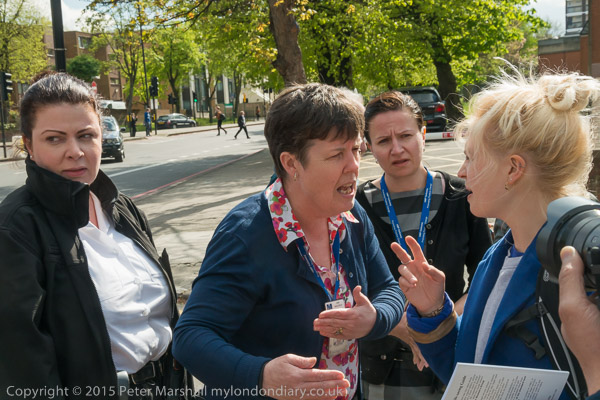
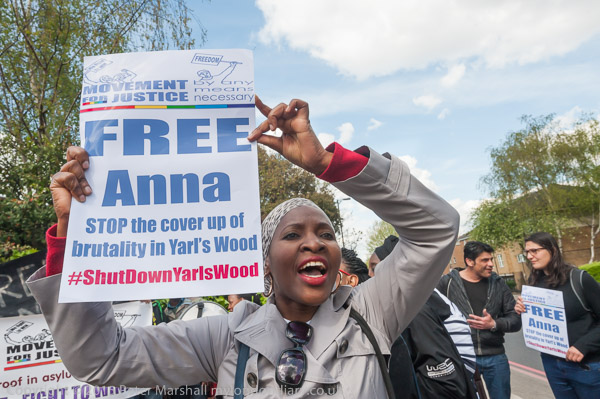
Many of those at the emergency protest organised by Movement for Justice demanding Anna’s release had served time in Yarls Wood or other immigration prisons.
When a group of three prison employees came out to argue with the protesters that their protest simply upset women being held inside the jail they told them from their first hand experience how greatly they had welcomed knowing that there were people outside the prison who were aware of them and wanting to help.
Free Yarl’s Wood Anna from Holloway
Hotel Workers Rise Up on Workers Memorial Day
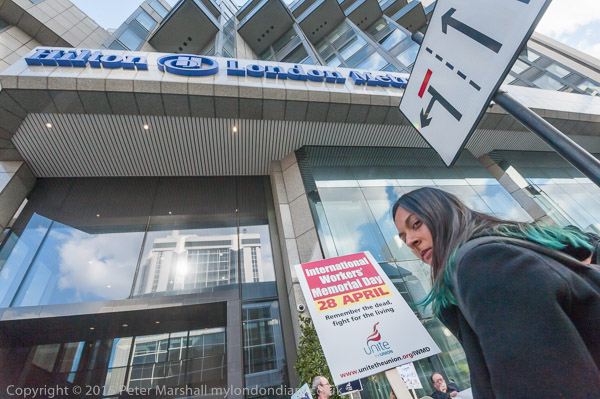
Finally I came back to central London and the Hilton London Metropole hotel on the Edgware Road in Bayswater and in another protest for International Workers’ Memorial Day against the exploitation of workers, mainly migrants organised by the Unite Hotel Workers branch. Workers at luxury hotels in portering and household services are employed by agencies on minimum wage, zero hours contracts and denied basic rights.
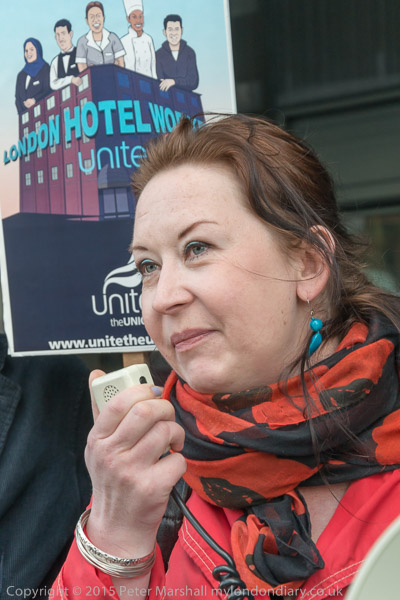
Several workers including former room attendant Barbara Pokryszka spoke at the protest, complaining of heavy workloads and abusive treatment by management, who fail to treat them as human beings, saying “We Are Not Machines”. As in other areas of work outsourcing to contractors who pay minimum wage and impose abysmal conditions is at the root of the abuse.
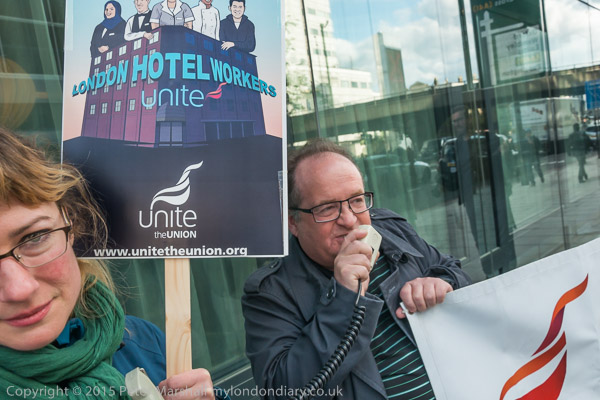
Luxury hotels have a world-wide reputation to maintain and this would be damaged if they were found to be treating staff on their payroll in such a disgusting way. A night’s stay for two in a room costs over £200 and housekeeping worker would usually have to clean between 12 and 20 rooms in an 8 hour shift. The worker’s pay for cleaning – before deductions would be around £85 while the hotel guests would be paying over £3000 for their stay. Hotels could surely pay more to their essential workers.
Hotel Workers – Workers Memorial Day