Stop Killing Londoners

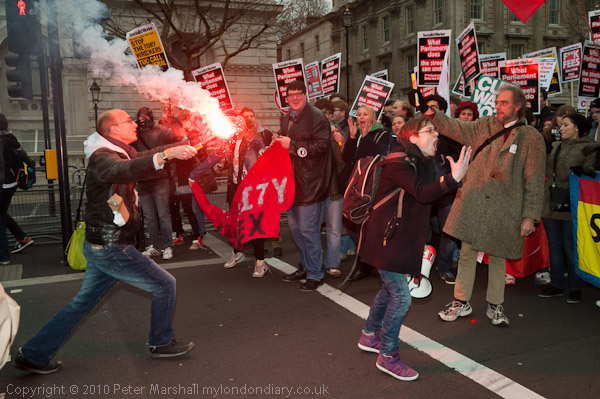
Stop Killing Londoners: In the rush hour on Friday 2nd August Rising Up environmental protesters in Stop Killing Londoners briefly blocked the busy Marylebone Road at Baker St in ‘Staying Alive’ road-block disco protest to raise awareness and call for urgent action over the high pollution levels from traffic on London streets which cause almost 10,000 premature deaths in the city each year.

Stop Killing Londoners

The recent court decision that the Mayor of London can go ahead with the ULEZ expansion planned for the end of August 2023 will be welcomed by many Londoners, despite the continuing protests against it over recent months. According to Transport for London (TFL), 9 out of 10 cars seen driving in outer London already meet the ULEZ emissions standards and so will not need to pay the daily charge.

Stop Killing Londoners

It is nothing like the blanket scheme many of the protesters allege. Almost all petrol vehicles under 16 years old or diesel vehicles under 6 years old already meet the emissions standards and will be exempt, as will motorcycles etc built since 2007, lorries, taxis, most vans, buses and coaches. There are various exemptions and grace periods for disabled and some other users, and all vehicles over 40 years old are also exempt.

Stop Killing Londoners

But of course it will cause hardship for some car users, particularly those on low incomes who live outside London but drive into it for work and who will not be eligible for the Mayor’s £110m scrappage scheme for “Londoners on certain low income or disability benefits, and eligible micro businesses (up to 10 employees), sole traders and charities with a registered address in London.” They would be helped if boroughs outside the London border would also offer scrappage schemes.

Stop Killing Londoners

Back in 2017, Stop Killing Londoners decided to protest to raise the profile of the damage that air pollution at illegal levels was doing to Londoners. Polluting road vehicles produce around half of that pollution, and it is a problem in outer areas of London as well as in the centre – and also in at least some areas of the fringe, including where I live.

The scientific evidence shows that air pollution in London causes thousands of early deaths each year, although there are some differences about the actual number. The studies quoted by Stop Killing Londoners suggest it was over 9,000 a year, though TfL quotes a figure roughly half that.
But as well as those who die, many others suffer from life-changing illnesses caused or exacerbated by the polluted air, including cancer, asthma and lung disease as well as dementia.

Most dangerous pollution is invisible – oxides of nitrogen and small particles in the air, though we can often smell it in London, and we see larger particles deposited on our roads. Since the ULEZ zone was introduced in central London nitrogen oxide levels have almost halved. But cutting dangerous particulates means reducing the number of vehicles on our streets, so we need to see further money going into making cycling safer and improving public transport.

Like the ULEZ expansion, the protest wasn’t welcome with some drivers, although the protesters made clear with notices and on a megaphone why they needed to protest and that they would only hold up traffic for a few minutes – less than some delays caused by road works and their temporary lights. A few left their vehicles and came to argue, and a man in a white van tried to drive through them, only stopping when people sat on the bonnet of his van – when he threw water over them.

Stop Killing Londoners decided that TfL seemed to be doing very little in 2017 to cut pollution and intended their protests to push them into action. Even Boris Johnson as Mayor until 2016 had realised he had a legal obligation to do something about it and had begun plans for a ULEZ zone, but little happened until Sadiq Khan became mayor in 2016. And the ULEZ zone only came into effect in April 2019. Perhaps the series of protests may have accelerated its introduction as they did make news headlines.

Stop Killing Londoners road block


Reparations, North Woolwich & LouLou’s

Reparations, North Woolwich & LouLou’s: Thursday 1st August 2019 was a long and busy day for me with an Afrikan Emancipation Day protest, finishing a walk in North Woolwich I’d begun six months earlier and photographing an evening protest outside the exclusive Mayfair club LouLou’s.


Afrikans demand reparations – Brixton, London.

Afrikans demand Reparations, North Woolwich & LouLou's

People of African origin met in Windrush Square in the morning to demand an end of the Maangamizi, the continuing genocide and ecocide of African peoples and Africa on Afrikan Emancipation Day.

Afrikans demand Reparations, North Woolwich & LouLou's

After speeches & libations they marched from Brixton to Westminster with a petition calling for an end to acts of violence by Britain, the misuse of taxes and the stolen legacy plundered from Afrika under the British Empire and European Imperialism and demanding reparations.

Afrikans demand Reparations, North Woolwich & LouLou's

The protest was supported by Extinction Rebellion XR Connecting Communities who marched in an Ubuntu Non-Afrikan Allies bloc.

Afrikans demand Reparations, North Woolwich & LouLou's

I left the march as it went past Brixton Police Station on its way to protest outside the Houses of Parliament so I could have some lunch before going to take pictures elsewhere.

Many more pictures on My London Diary at Afrikans demand reparations.


DLR – Bank to North Woolwich

DLR HQ at Poplar

I’d taken the tube back into central London to have a quick lunch before taking the DLR from Bank to London City to King George V Dock station for the final section of the walk I had begun in February but had run out of time to finish because I’d had to take a roundabout route to get there as the direct DLR services were suspended following an accident.

Bow Creek

This time the trains were running properly. They start from Bank and so come into the station empty and I was able to chose my seat and for once I found myself sitting next to a clean window on my way to North Woolwich and took a number of pictures.

Tate & Lyle

Later on my way back to Canary Wharf from King George V I was less lucky and the windows were rather grimy, but I still made a few images.

More at DLR – Bank to London City Airport.


North Woolwich, Royal Docks & the Thames

The footpath goes across these gates of the entrance lock to Albert Dock Basin

I took a few pictures as I walked from the elevated King George V station at North Woolwich to the King George V Dock entrance and joined the path by the river.

The lock here is huge, 243.8m long and 30.48m wide. I’d first photographed the area back in the 1980s as a part of a wider project on the Docklands following their closure, both in colour but mainly in black and white – in the album 1984 London Photographs. Although the docks themselves remain, much around them has changed, although there are still some derelict areas.

The riverside path here is part of the Capital Ring, and continues north and over lock at the Albert Dock entrance to the curiously desolate Armada Green Recreation Area.

Here the path ends, with beyond it the former site of the Beckton Gas Works, used as a location for at least 17 films and TV series since its closure, though best known as a stand-in for Vietnam in the 1987 Full Metal Jacket. Past that is the Beckton Sewage Treatment Works, set up in 1864 as part of Joseph Bazalgette’s scheme to treat London’s sewage and still receiving it from all of London north of the Thames.

I had to turn inland, through more recent development and the refurbished Gallions Hotel around Alber Dock Basin. I went briefly under the new bridge to see again the East London University student residences, then went back and across it, taking more pictures from the bridge and the road on my way back to King George V station.

Many more pictures at North Woolwich Royal Docks & Thames.


LouLou’s stop exploiting your workers – Mayfair

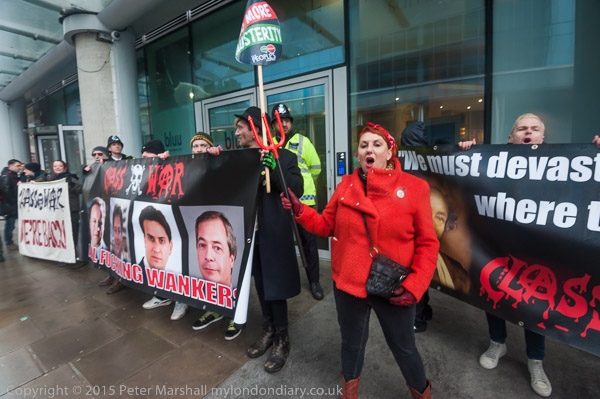
Finally I joined the IWGB Cleaners and Facilities Branch outside the exclusive Mayfair private club LouLou’s where they were picketing and protesting for kitchen porters to be paid a living wage, be treated with dignity, respect and given decent terms and conditions including proper sick pay, holidays and pension contributions. Recently outsourced to ACT, porters want to be returned to direct employment.

Among those supporting them were Class War, and in the picture above Ian Bone confronts a police office asking why they protect and support the rich. Needless to say the officer had no answer to the question. In general the protesters were reasonably behaved and acting within the law, but police and security hired by the club worked together to try and prevent their protest being effective.

There were angry scenes as staff escorted wealthy clients of the £1800 a year club past the picket, particularly when some roughly pushed the protesters. Police repeatedly warned the protesters but not the security men or customers who had assaulted them. The security also tried to prevent the picket from handing their flier to the customers.

As at previous protests outside of the club, none of the security staff were wearing the visible SIA door supervisor licences required under the Private Security Industry Act 2001, but the police refused to take any action over this.

More pictures at LouLou’s stop exploiting your workers.


Save Legal Aid – 2013

Save Legal Aid – 2013: On Tuesday 30th July 2013, ten years ago today, the Save Legal Aid Campaign held a rally outside the Old Bailey in protest against proposed cuts in legal aid which they say would severely damage the UK justice system, removing legal aid completely for many and providing a poor quality cut-price service for others.

Save Legal Aid - 2013
Labour shadow minister Sadiq Khan in fighting mood

The proposals would bring in compulsory tendering on price, with legal aid services being provided by the lowest bidder and remove any choice by defendants of who should represent them. They say this would replace all the current specialist solicitors by groups such as Tesco and Eddie Stobart employing less qualified and experienced people and providing an inferior service for those unable to pay – and so choose – their solicitors.

Save Legal Aid - 2013

The rally also celebrated the successes of the UK’s legal aid system, which speakers said had been the envy of the world since it was brought in on 30th July 1949, exactly 64 years earlier, an event celebrated with the singing of ‘Happy Birthday’ and the cutting of a cake by MP Diane Abbott.

Save Legal Aid - 2013

For many of us those celebrations rang hollow. The legal aid system by 2013 was but a pale shadow of that brought in by the Legal Aid and Assistance Act on 30th July 1949. It was a skeleton that was being celebrated, although one that as several speakers who had benefited from it showed still had some effect. In the unlikely event we ever get a reforming Labour government it could perhaps still be revived, but more likely any future government will destroy it still more as New Labour did.

Legal cases in the UK are incredibly expensive in part because of the nature of our legal system which is an adversarial one, but also because of some traditional practices which render it less efficient and protect the interests of some of those who are a part of the system.

Save Legal Aid - 2013

Probably the only sound legal advice is to stay away from the law unless you are very rich. Although its often said that the same law governs both rich and poor, in practice that is not really the case, and in particular those in the middle of society get screwed.

Legal Aid was first introduced in the UK in 1949 when the welfare state was attempting to make justice fair for all. It could be claimed for almost all criminal or civil matters except libel and defamation and around 80% of the UK population were eligible for some support, with those more able to pay receiving support on a sliding scale depending on their income.

It wasn’t then a great cost to the economy as then only a small fraction of the population gad access the the legal advice that might have led them to take action in the courts. If you were poor you seldom came to court except when arrested – and most cases were dealt with by magistrates with legal aid seldom being involved.

In the 1970s Law Centres were set up in many of the poorer areas of the country, giving free advice and explaining and aiding their clients to take matters of social welfare, housing and criminality to the courts. And in 1973 a ‘Green Form Scheme’ was set up to allow those of low incomes to get legal advice from solicitors. Both led to increases in cases and a corresponding increase in the overall cost of legal aid.

The Commonwealth Immigrants Act 1962, the Commonwealth Immigrants Act 1968, the The Immigration Act 1971 and the the British Nationality Act 1981 each led to a predictable and dramatic increase in the number of cases requiring legal aid to resolve disputes.

Various actions were taken to reduce the cost to the country of legal aid, with eligibility being drastically reduced both by income limits and by reducing the areas of work for which it was available.

Shami Chakrabarti of Liberty

New Labour reformed the system when they came to power, but their reforms proved a disaster and they piled a second disaster on top by privatising the system. By the time the coalition government came to power there wasn’t really a great deal left, but their Legal Aid, Sentencing and Punishment of Offenders Act 2012 (LASPO) saw off most of what remained.

Since then, to get legal aid you have to have a disposable income of less than £733 a month and less than £8000 of disposable capital. Those receiving universal credit and some other benefits also qualify. There are different income and asset qualification levels for criminal proceedings in Crown Court cases.

As well as these tests legal aid is only available if your case passes a “merits” test as defined by The Civil Legal Aid (Merits Criteria) Regulations 2013. It has to be assessed by the Director as being in the public interest and having at least a 50% chance of success.

Speakers at the protest included Raphael Rowe, wrongly imprisoned as one of the M25 three, Anne Hall the mother of Daniel Roque Hall, a man suffering from a rare condition who would have died in prison without legal aid which got him released to receive care, and Sally, the mother of a rape victim who police failed, as well as Sadiq Khan MP Labour’s Shadow Justice Secretary, Ian Lawrence of NAPO, activist, poet, co-founder and co-chair of BARAC Zita Holbourne, Shauneen Lambe of Just for Kids Law and criminal defence solicitor and Justice Alliance member Matt Foot, but the loudest applause was for a rousing speech by Shami Chakrabarti of Liberty. You can see pictures of all of them and more about the protest on My London at Save Legal Aid.


Justice for Rashan Charles & The Met

Justice for Rashan Charles: On Saturday 29th July 2017 I photographed a protest outside Stoke Newington Police Station over the death of Rashan Charles, who had died after being handcuffed by two police and held on the floor of a shop on Kingsland Road in Dalston in the early morning of Saturday 22nd July.

Justice for Rashan Charles
Rashan Charles’ father (left) stands beside Edson da Costa’s father as he speaks

The pictures on this post come from that protest, which was attended by members of his his family as well of those of Edson da Costa who died after being arrested in Beckton the previous month.

Justice for Rashan Charles
Weyman Bennett of Stand Up to Racism

An inquest into the death of Charles returned a verdict of that a package he had swallowed when being chased into the shop by an officer had blocked his airway causing the death. But it also found that the officers had failed to call for an ambulance when they should, but more controversially argued that this would not have saved his life.

Justice for Rashan Charles

The inquest into Da Costa’s death revealed a number of errors by police but the jury was told by the coroner that “there is no legal or factual basis for reaching a factual conclusion which is critical of the police” and reached a verdict of death by misadventure primarily due to his swallowing a plastic bag of illegal drugs.


Justice for Rashan Charles

In March 2023, Baroness Louise Casey who had been charged with investigating the Metropolitan Police following the murder of Sarah Everard in 2021, issued her official report with the conclusions that they were guilty of institutional racism, misogyny and homophobia.

Stafford Scott

It came as no surprise to those of us who had read the many under-reported stories over the years of people – black and white, men and women – who had been picked on and brutally treated and some killed by police over the years on social media and in minority publications. Nor those of us who had attended protests against their behaviour or watched them in action at times against protesters.

Dianne Abbott MP

Our mass media have always ignored many of these cases and underplayed others, almost always taking the side of the police and acting more as a PR agency for them, always keen to spread the rumours, lies and misleading press statements the police rush out to excuse their mistakes and misbehaviour.

Friends of Rashan Charles

We saw this at its most blatant over Hillsborough, again with the shooting of Jean Charles de Menezes and the killing of Ian Tomlinson while trying to walk back to his hostel through a protest at the Bank of England.

We’ve also seen the deliberate actions by the police to pervert the course of justice in high profile cases including the racist killing of Stephen Lawrence, where they investigated his family and friends while treating one of his killers as a witness. Daniel Morgan’s family have just received an apology and compensation over their failure to properly investigate his axing to death in a Sydenham pub car park in 1987 – a panel concluded that the Met’s “first objective was to protect itself” against the allegations of corruption against some of its officers.

Many other campaigners have exposed deliberate obstruction by police to inquiries into deaths, particularly those in police custody, such as Sean Rigg, which I’ve written about here before.

In the last few days, 25 years after his racist murder in Kingston, Lakhvinder Ricky Reel was awarded an honorary degree by Brunel University, part of a long campaign to get justice by his mother Sukhdev Reel.

Sukhdev Reel at Downing Street in 2000

Ricky and his friends had been victims of a racial attack in the town centre and six days later his body was recovered from the Thames. His family had been urging the police to search the river since he disappeared – and his body was found after only 7 minutes of searching. The Met refused to treat his death as a racist attack and made many failures in their investigation, devoting more resources to spying on his family by the undercover Special Demonstration Squad for their campaigning.


Al Quds Day march for Jerusalem 2014

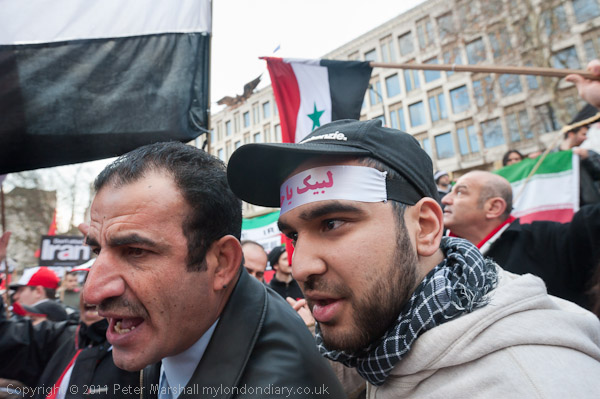
Al Quds Day march for Jerusalem: In 2014 the annual Al Quds Day march was held on Friday 25th July and came the day before a major protest close to the Israeli Embassy over attacks by Israeli forces on Gaza which had killed over a thousand Palestinians, mainly civilians.

Al Quds Day march for Jerusalem

I’ve written many times before about these marches which began in Iran in 1979 and is a anti-Zionist protest in solidarity with the Palestinian people and in support of their rights and specifically concerned with the Israeli occupation of East Jerusalem (Al Quds) and the West Bank which followed the 1967 Six-Day War. Israel celebrates this with a national holiday on Jerusalem Day.

Al Quds Day march for Jerusalem

Public events take place across the Arab world, particularly in countries with large Shia Muslim communities and also in London and some cities in Europe and America. Many of these events are organised by groups funded by Iran.

Al Quds Day march for Jerusalem

Critics have often accused the event of being anti-Semitic, but on the various occasions I’ve photographed them there has been little evidence of this. I have seenboyco a few people who have turned up with anti-Semitic slogans on placards being forced to discard them or leave the march by the stewards.

Al Quds Day march for Jerusalem

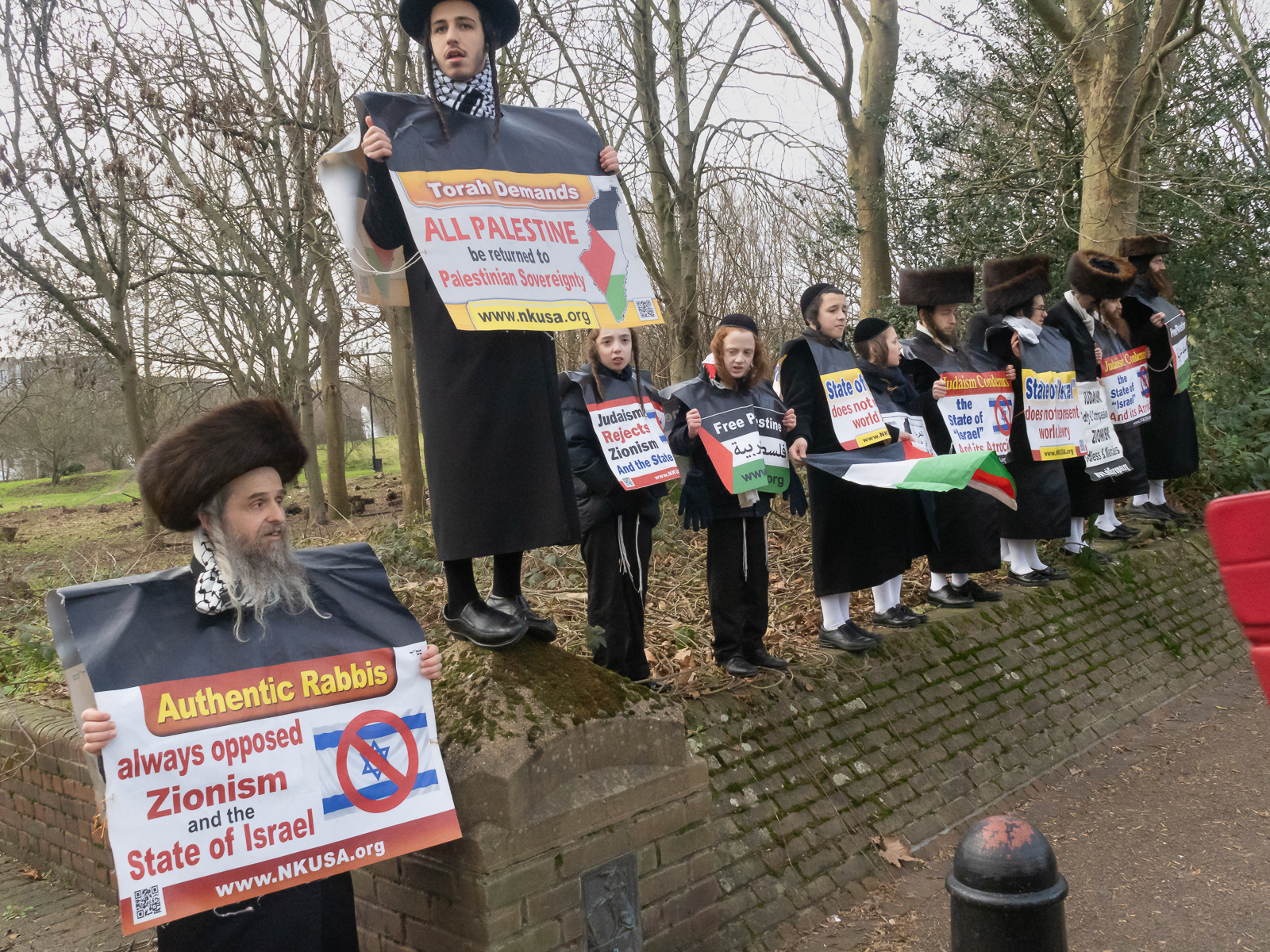
Although the vast majority of marchers are Muslims there is also a significant number of Jews on the march, most obviously with the ultra-orthodox Neturei Karta Jews carried their usual placards and banners against the Zionist state and condemning the atrocities carried out in its name. They say that Judaism is not a nationalist religion and reject any idea of a Jewish State. But many of the the non-Muslims from various left groups that support the march are also Jewish.

The march in London was fairly large with perhaps 5-10,000 people, including many who had come in coaches from mosques around the country. Many had come with families and some marched together, but mostly men and women marched in separate groups as you can see from my pictures. The women were considerably more colourfully dressed and along with the Neturei Karta – all male – are over-represented in my coverage of the event.

The march calls for Freedom for Palestine and for all oppressed people across the world, and it also calls for a boycott of Israel and an end to Israeli occupation of Palestinian land and Israeli apartheid. And clearly this is an anti-Zionist event, but not anti-Jewish, as one of the chants used by the marchers made clear: ‘Judaism Yes, Zionism No!’.

I left the march as it turned off of Regent Street to make its way to a rally at the US Embassy. By that point there had been no sign of the opposition to the march I had seen in some previous years from Zionist, Iranian freedom, communist and royalist movements and UK right wing fringe groups, but I think there many have been some Zionists waiting to protest against it at the US Embassy.

Many more pictures at Al Quds Day march for Jerusalem.


Rail Strikes, Tickets & Right to Ride

Some of my thoughts about the UK railway system and my experiences of it with pictures from a protest on Thursday 20th July 2017 about the real problems faced by disabled rail users.


Rail Strikes, Tickets & Right to Ride

I’ve spent quite a lot of my life on trains. Not many very long journeys, though I did once go to Marseilles from Victoria long before the age of Eurostar and TGVs and I’ve always taken the train on my visits to Paris, Brussels and Scotland as well as most trips around England as I don’t drive. But the great bulk of my rail journeys have shorter commutes to photograph in and around London.

It was really the advent of the Travelcard in 1983 and its later extensions that made much of my photography of London practicable. Before that going Waterloo (or Vauxhall) had been easy for me, but getting around in London was a nightmare of buying tickets for individual journeys on trains, underground and buses. Well paid photographers could use taxis, but I was making little for most of the time and used them only rarely – mainly when others were paying or we could share.

The Travelcard also significantly reduced the costs of journeys involving several forms or transport or even several buses, and for those of us coming from outside London gave us freedom to travel within all six zones of Greater London. So news that it is to be ended for those living outside the boundary is not at all welcome.

Rail Strikes, Tickets & Right to Ride

More recently, engineering works at weekends and rail strikes have also affected my photography. There have been days when I’ve decided not to try to get into London as the though of perhaps an extra couple of hours or even more sitting on trains and buses have just made it not seem worthwhile.

Of course I support the rail workers. The government’s approach to the disputes, forcing the various rail companies into confrontation rather than trying to find solutions is totally ridiculous and unsupportable. At the root of the problem is the fragmentation of privatisation and the opportunities it gave and continues to give the companies – many owned by foreign state railways – opportunities to profit at the expense of the tax payer. Radical reforms are needed, almost certainly involving some bringing back of rail into public ownership and undoing at least some elements of splitting up the essentially indivisible.

Rail Strikes, Tickets & Right to Ride

And engineering work is essential, though I do wonder why it seems to happen now far more frequently than it used to. It does seem to be handled more efficiently in some continental countries and involve less disruption of weekend services.

The government and rail companies are now proposing to get rid of most of the rail ticket offices. We have a hugely complex ticketing system with many anomalies and which ticket machines and online ticketing are unable to process. Even the workers in ticket offices can’t always get things right. But before cutting back on their services which many – particularly the old, disabled and less frequent travellers – find essential, we need first to unify and simplify rail ticketing.

Rail Strikes, Tickets & Right to Ride

We have seen some improvements of our rail system since I first began using it back in the 1960s. There have been considerable improvements in rolling stock, begun under British Rail as did our faster services and Inter City lines, some electrified at that from London to Manchester. Design improvements have also changed our commuter trains (though in some areas these are still sadly out of date) making my journeys into London much less noisy and smoother.

I do miss not being able to open windows and doors, but can see the reasons for this. But though we no longer have to wait at stations while the guard or station staff rush along the platform to close doors thoughtlessly left open by exiting passengers making the stops at stations a minute or so shorter, and though the newer trains have better acceleration and faster maximum speeds and are running on smoother rails, travel times have actually increased.

The reason for the slacker timetables is clear. Train companies have to pay for trains that run late. So they add a minute here and a minute there to the schedules. They also close train doors before the time the train is due to leave, sometimes 30s, sometimes a minute. So my 9.59 train is now a 9.58:30 train, often leaving passengers who should have just caught it fuming on the platform. And instead of the journey taking 28 minutes it now takes 34 – or even 38 at weekends.

DPAC/RMT ‘Right to Ride’ protest – Dept of Transport

But my problems and moans about trains are trivial compared to those faced by those in wheelchairs or otherwise requiring support. On Thursday 20th July 2017 I was with DPAC (Disabled People Against Cuts) and RMT members outside the Dept of Transport, calling for disabled people to have the same right to use rail services as others.

DPAC (Disabled People Against Cuts) had called this protest during their week of action while the London World Para Athletics Championships was taking place. DPAC say the government uses this and similar events to try to show it is highly supportive of the disabled while actually they are highly discriminatory against all those who are not high-performing para-athletes.
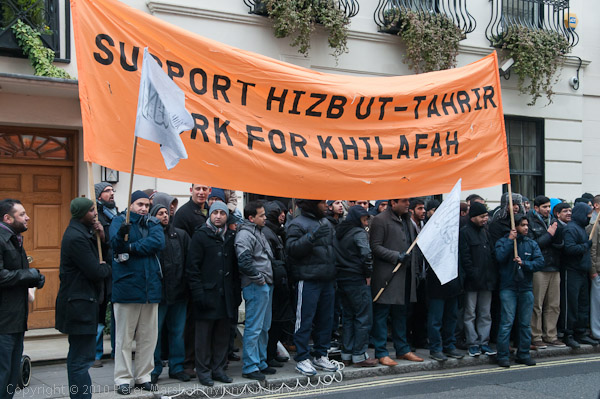
Many of the changes which the government is trying to impose on our railways, including Driver Only Operated trains, the removal of guards from trains and rail staff from stations all threaten the freedom of disable people to travel. DPAC have joined with RMT staff on picket lines for industrial action against these changes which discriminate against the disabled and threaten rail safety.

Disabled people requiring support to travel – such as a ramp to board a train – have to give a day’s notice, and even then are sometimes stranded when staff fail to turn up – often being left on the platform or taken to the next station. London buses now have driver-operated ramps, but no trains have these fitted.

After speeches and delivering a petition demanding the right to ride on trains without having to give a day’s notice they blocked the road outside the ministry in protest for ten minutes. DPAC are now protesting with rail workers against the proposed ticket office closures.

More pictures at DPAC/RMT ‘Right to Ride’ protest


BEIS Birthday Strike, Ecocide and XR Procession

BEIS Birthday Strike, Ecocide and XR Procession: Monday 15th July 2019


BEIS workers begin indefinite strike, Westminster

BEIS Birthday Strike, Ecocide and XR Procession

Low paid cleaning and catering workers at the Department for Business, Energy and Industrial Strategy (BEIS) on Victoria Street celebrated the third anniversary of their fight for proper pay and conditions with cakes as they walked out on the first ever indefinite strike at a government ministry.

BEIS Birthday Strike, Ecocide and XR Procession

The workers are demanding the London Living Wage and to be directly employed by the department rather than outsourcing companies ISS and Aramark.

BEIS Birthday Strike, Ecocide and XR Procession

As the workers came out on strike hey got a rousing reception from a crowd of around 100 with speeches from one of the strikers, PCS general secretary Mark Serwotka, RMT General Secretary Mick Cash, newly elected UCU general secretary Jo Grady , Shadow Chancellor John McDonnell, Labour MP Mary Glindon, National Vice-President of the PCS Zita Holbourne, Sam Gurney, TUC Regional Secretary, Kiri Tunks, Joint President of the NEU and Sandy Nicoll of SOAS Unison who led the succesful campaign to bring workers there back in-house. and one of the strikers.
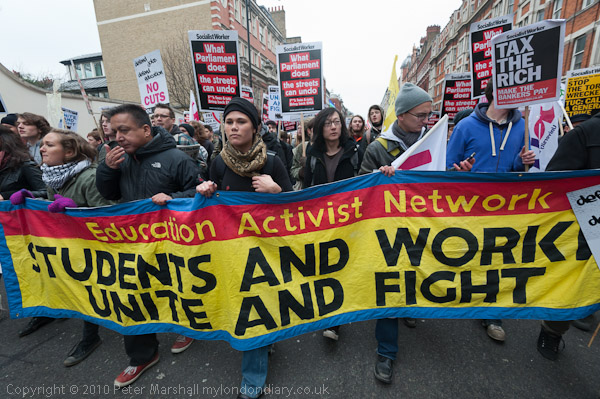
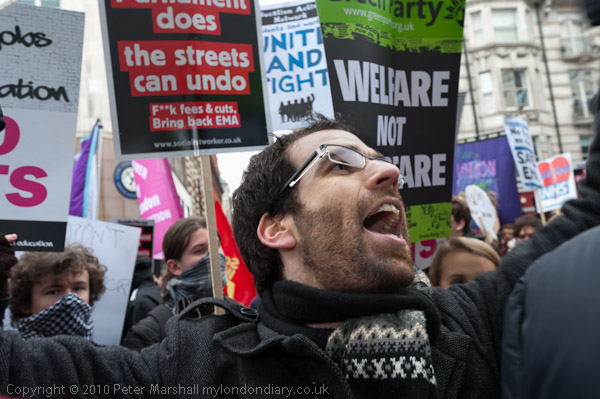
BEIS Birthday Strike, Ecocide and XR Procession

I stayed long enough to eat a piece of one of the cakes which had been made for the protest, but then had to leave as the party continuned outside BEIS.

More pictures at BEIS workers begin indefinite strike.


XR call for Ecocide Law – Royal Courts of Justice, Strand

BEIS Birthday Strike, Ecocide and XR Procession

Extinction Rebellion was beginning another series of protests in five major cities against the criminal inaction by the government on climate and ecological collapse.

The main theme of the day’s protest was to call for a law making ecocide a criminal offence.
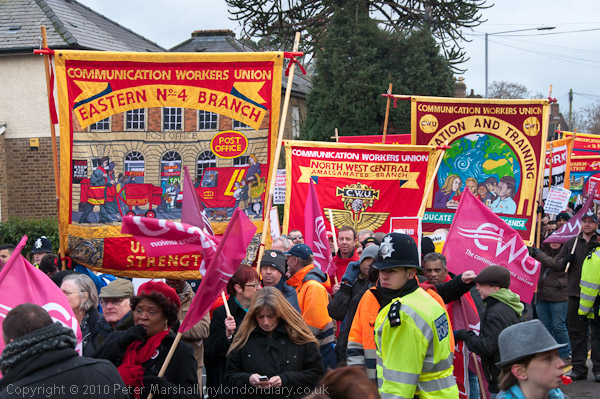
The protesters brought a yacht named after Polly Higgins who fought for years for an Ecocide Law to the Royal Courts of Justice.
They continued her fight blocking the Strand all day with performances, discussions, speeches, music and ceremonies in front of the yacht.
We need urgent action and our government along with most others has failed, continuing with policies which seem designed to make the situation worse and bring life on earth to an end, and XR is certainly bringing that to people’s attention, even if our media are still largely ignoring it and concentrating on trivia. But although I fully support the aims of XR I do find some of XR’s activities – yachts and new-age mumbo jumbo – off putting. In part I guess it’s a class thing – much of their activity seems insufferably middle class. Its probably an age thing too.

XR call for Ecocide Law


XR Summer Uprising procession

Having occupied the street across the front of the Royal Courts of Justice all day, the protesters and their yacht moved on around afternoon tea time to their home for the next three days, on Waterloo Millennium Green, a park area just south of Waterloo Station.

At the front of the procession were banners and a large crowd of people with XR flags, more banners, posters and placards, as well a large pink dodo. Bringing up the rear was the blue yacht named for the late Ecocide Law protester Polly Higgins, on a boat trailer, escorted by police.

When the procession was all on Westminster Bridge it came to a halt and people sat down blocking the road for a short protest against the police violence towards peaceful protesters when they were arresting people during the ‘Garden Bridge‘ occupation of the bridge in April.


There were a few short speeches there and the procession moved on. It came to a halt a little further on after police tried to block it on from moving onto the Millennium Green.

By this time the back of the procession was on its way around the IMAX Waterloo roundabout, and the rush hour was beginning. I hung around for around half an hour before deciding it was time to get on a train home. But by stopping the protest police had brought a large area of south London quite unnecessarily to a standstill.

Many more pictures at XR Summer Uprising procession.


Letting Agents, Bears, Bahrain & John Lewis

Letting Agents, Bears, Bahrain & John Lewis: Four protests on what started out as a very wet day in London on Saturday 14th July 2012.


Tenants Protest Letting Agents Scam – Drivers & Norris, Holloway Rd

Letting Agents, Bears, Bahrain & John Lewis

My working day began on the pavement outside letting agents Drivers & Norris on Holloway Road, condemning them for having taken over £300 from home seekers and providing nothing return but refusing to return the payment.

Letting Agents, Bears, Bahrain & John Lewis

Some of the members of the Harringey Private Tenants Action Group taking part in the protest had paid upfront fees of £300 in cash to secure new flats, but the company had failed to provide them with any offers of accommodation but had refused to return the fee.

Letting Agents, Bears, Bahrain & John Lewis

Drivers & Norris and other companies say that the cost is to cover the reference checks that they have to make, but these cost them around £19. The fees are simply a scam to increase the company profits at the expense of poor and vulnerable people in need of housing.

Letting Agents, Bears, Bahrain & John Lewis

Police arrived and attempted to get the protesters to stop, suggesting it might distract drivers on the busy main road and cause an accident. It seemed simply another attempt by the police to suppress the right to lawful protest and to take the side of the wealthy against the poor. The protesters of course refused to stop and the officers went in to drink tea with the estate agents leaving the small peaceful protest to continue.

My comment back in 2012 “Agents have profited greatly from the lack of affordable housing in the London area, with property prices well above anything that anyone on an average wage can afford. Coupled with a systematic attack by successive governments on the security of private tenants and on the provision of social housing over more than 30 years this has resulted in a dire shortage of housing for ordinary people in London and the south-east. Even where housing developments are taking place in London, the properties are often many bought by overseas investors interested in high profits in an overheated housing market.” Things since then have got worse.

More at Tenants Protest Letting Agents Scam.


PETA ‘Spare the Bears’ March – Marble Arch

From Holloway Road I rushed down to Marble Arch on the Underground to meet the PETA march as it arrived there from its start close to Waterloo. I’d gone there before going to Haringey, but hadn’t found anything I thought worth photographing in the steady rain, so had gone away to return to the march later.

PETA was demanding an end to killing of bears for the Queen’s Guards’ ceremonial headwear. It takes the skin of a whole black bear to make a busby, and they are cruelly hunted. They say some bears escape after being shot several times and bleed to death and that in “some Canadian provinces, there are no restrictions on the shooting of mothers who have nursing cubs, leading to the slaughter of entire families during hunts.”

The MoD still takes 100 bear skins a year from Canadian hunters and justifies its refusal to move to using synthetic materials by saying “one has come remotely close to matching the natural properties of bear fur in terms of shape, weight and its ability to repel moisture in wet conditions.” Perhaps we should just stop dressing parts of our army as toy soldiers.

More pictures PETA ‘Spare the Bears’ March.


Solidarity with the Bahraini prisoners – Bahraini embassy, Belgrave Square

A short bus ride and walk took me to the Bahraini embassy where protesters were gathering to call for the release of prisoners in Bahrain, to condemn the killing of Mohammad Rahdi Mahfoodh and attacks on his funeral, and for an end to the puppet regime of the Bedouin Al Khalifa tribe.

I arrived as the protest was beginning and some of the protesters and speakers including Jeremy Corbyn had arrived.

But unfortunately I had to leave for the cleaners’ protest in Oxford St before things really got going and before the main speeches from Corbyn and others.

Solidarity with the Bahraini prisoners


John Lewis cleaners step up protest – Oxford St

At the protest during Friday’s strike

I had been at the flagship John Lewis store on Oxford Street the previous day when their cleaners were taking a day of strike action, with a rally and a brief invasion of the store, the first strike at John Lewis since it became the John Lewis Partnership (JLP) following a strike in 1920.

The cleaners have been in dispute with the JLP for some years, campaigning for their service to the company to be recognised and to be treated like the other workers there who are ‘partners’ and benefit from an annual bonus from the company profits. They also are demanding to be paid the London Living Wage. Rather then directly employ its cleaning staff JLP has outsourced them to Integrated Cleaning Management (ICM).

A woman stops to photograph the protest

The strike was precipitated when ICM announced there would be a 50% cut in jobs and hours to clean the store, and refused to pay the living wage. ICM also refuse to recognise the IWW, officially recognised as a trade union in the UK in 2006, for collective bargaining, although almost all the cleaners are now members.

ICM is part of the Compass Group, and the IWW point out this had pre-tax profits of £581 million in the last year and paid its chairman Sir Roy Gardner £477,000 pa. They also say that Gardner is a major donor to Conservative Party funds, and gave £50,000 to Cameron’s election campaign.

Today police had arrived in advance of the protest and were stationed in small groups at each of the shop entrances. Behind those at the main entrance watching the rally cleaners pointed out to me one of the JLP management who scurried away as soon as he saw my camera pointing in his direction – but not before I had photographed him.

Despite talks that have dragged on for some years, John Lewis still refuses to accept that it should treat its cleaners with the same decency as its other workers, hiding behind the fact that they are not the actual employers although the cleaners work in their store and are essential to its running.

The cleaners were employed by ICM on the legal minimum wage, more than two pounds an hour below the London Living Wage, a figure representing the minimum needed to live in London. This is calculated annually by the Resolution Foundation, overseen by the Living Wage Commission and was in 2012 backed by both London Mayor Boris Johnson and Prime Minister David Cameron.

The rally on the pavement in front of the shop was peaceful but lively and noisy and received a great deal of support from shoppers passing by on the busy street including John Lewis customers. The cleaners were to strike again the following Friday with further protests outside the store then and on every Saturday afternoon.

Friday protest Cleaners Strike at John Lewis
Saturday protest John Lewis cleaners step up protest


Housing For Need Not Greed

Housing For Need Not Greed: Mostly my posts here look at old work, either from a few years ago or my work on London back in the 1980s and 90s. But I’m still goining out at taking pctures if not quite as often as I once did. So this post is about one of the two events I photographed last weekend.

Housing For Need Not Greed - Aysen Dennis - Fight4Aylesbur
Aysen Dennis – Fight4Aylesbury

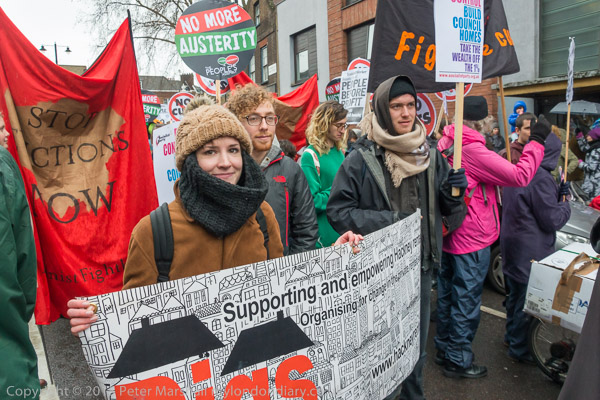
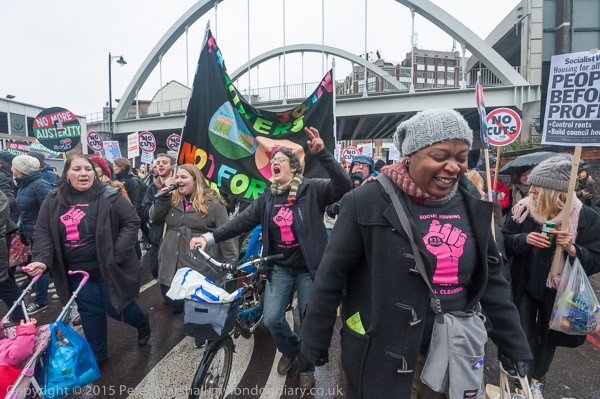
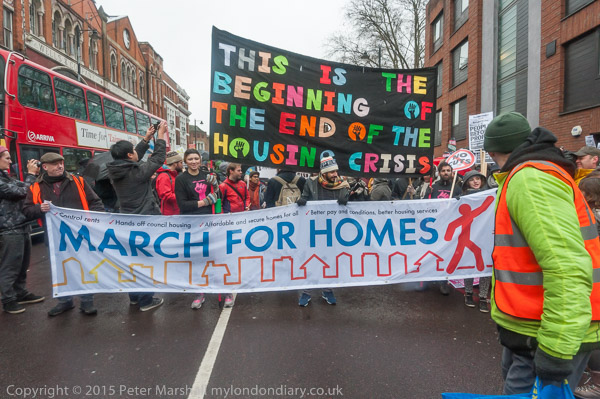
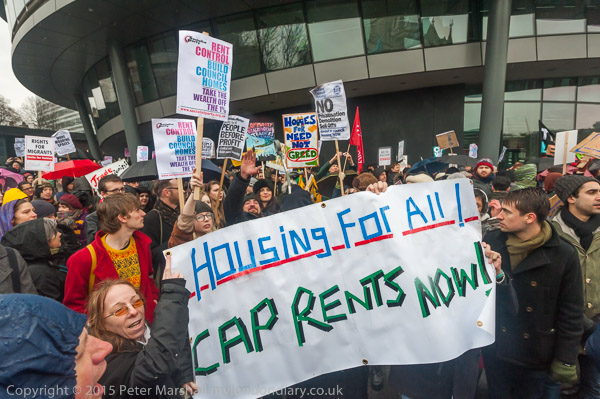
Last Saturday, 8th July 2023 was National Housing Action Day, and a march from the Elephant to the Aylesbury Estate was one of 16 across the country on National Housing Day. Others were taking place in Lambeth, Islington, Kensington, Cardiff, Glasgow, Abbey Wood, Wandsworth, Harlow, Merton, Ealing, Cornwall, Folkestone, Devon, Birmingham, and Hastings.

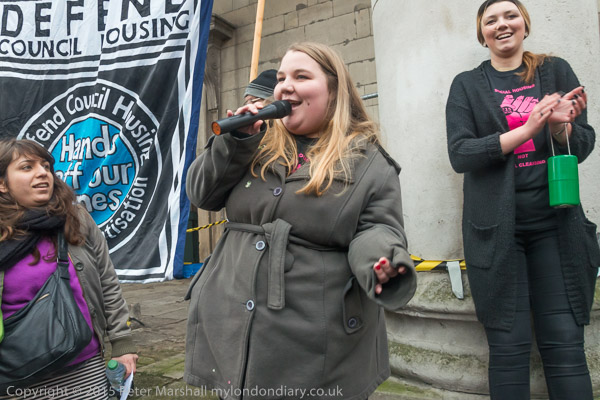
Housing For Need Not Greed -Tanya Murat - Southwark Defend Council Housing
Tanya Murat – Southwark Defend Council Housing

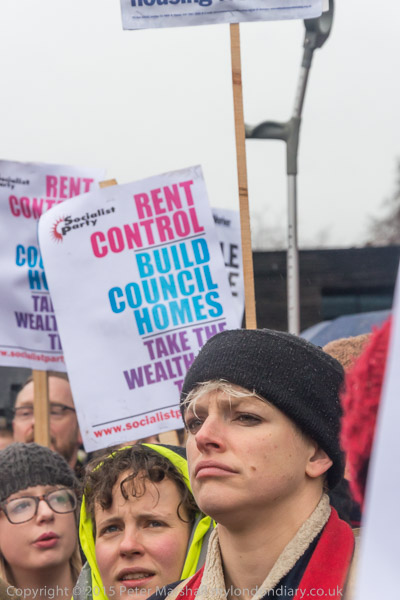
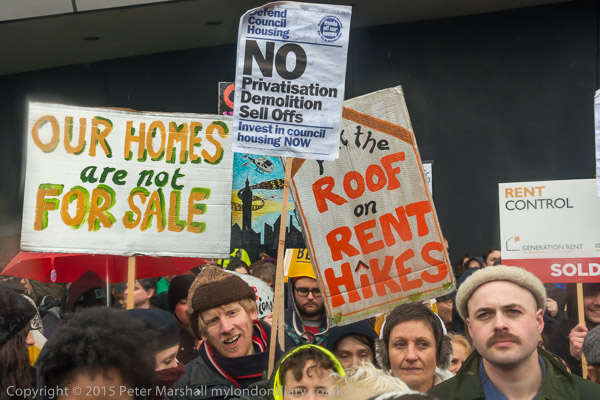
The Southwark protest demanded Southwark Council stop demolishing council homes and refurbish and repopulate estates to house people and end the huge carbon footprint of demolish and rebuild. They demanded housing for need not corporate greed, refurbishment not demolition, filling of empty homes and an end to the leasehold system.

Housing For Need Not Greed
Marchers at the Elephant on their way to the Aylesbury Estate

Demolition and rebuilding of housing produces huge amounts of CO2, and whenever possible should be avoided now we are aware of the real dangers of global warming. Instead existing buildings should be insulated, retrofitted and refurbished and properly maintained.

Housing For Need Not Greed

Southwark Council’s estates have for well over 20 years been deliberately run down and demonised with some being demolished and replaced. Around 1000 council homes on the Aylesbury Estate have already been demolished buy around 1,700 are still occupied but currently scheduled for demolition.

Marchers on Walworth Road on their way to the Aylesbury Estate.

These homes were well built for the time to higher standards than their replacement and could easily and relatively cheaply be brought up to modern levels of services and insulation with at least another 50 years of life. The estate was carefully designed with open spaces, natural daylight and a range of properties, many with some private outdoor space. The planned replacements are at higher density, less spacious and unlikely to last as long – and only include a small proportion at social rents. Current tenants are more secure and the properties are far more affordable.

People on the street watch and video the march

Many of those whose homes have already been demolished here and on the neighbouring Heygate estate have been forced to move outside the area, some far from London as they can no longer afford to live here.

Bubbles and Marchers on Walworth Road on their way to the Aylesbury Estate.

Although the developers have profited greatly from their work with Southwark Council here and in other estates, and some officers and councillors involved have personally landed well-paying corporate jobs and enjoyed lavish corporate hospitality, the schemes have largely been financial disasters for the council and council tax payers.

Fight4Aylesbury was formed in 199 as Aylesbury Tenants and Residents First, and has been fighting Southwark Council’s plans to demolish the estate since then. While these schemes – part of New Labour’s regeneration initiative – have always been destructive of local communities and disastrous for many of those whose homes have been demolished, we now see that they are also environmentally unsupportable.

You can watch a video on YouTube of Aysen Dennis, Fight4Aylesbury and Tanya Murat, Southwark Defend Council Housing talking about the protest, and FIght4Aylesbury recently released a newsletter, The Future of the Aylesbury with more details on the estate and their proposals. A few more of my pictures from the event are in the album Housing For Need Not Greed – National Action Day, London, UK and are available for editorial use on Alamy.


Trump Not Welcome in UK, 2018

Trump Not Welcome in UK: There were huge protests against the July 2018 visit by US Presdent Trump to the UK, said to be a ‘working visit’ and he was kept well away from most of them, but some protesters made their way to still protest outside the official reception at Blenheim Palace in Oxfordshire and when he took tea with the Queen in Windsor. But apparently he did find the time to tell Prime Minister Theresa May she was making a mess of Brexit.

I photographed the following two protests on Thursday 12th July 2018, the day he arrived in the UK, but there was much more to come the following day.


‘Trump: Climate Genocide’ Giant banner – Westminster

Climate activists marked Trump’s visit to the UK by dropping a giant banner 100 meters long on the river wall of the Thames opposite the Houses of Parliament. The banner carried the message ‘TRUMP: CLIMATE GENOCIDE’ in fluorescent orange letters around 15ft high.

Trump Not Welcome in UK, 2018

This wall directly faces the terrace where MPs and their guests could clearly see and read the message across the river a little over 250 yards wide at this point. Having photogrphed them bringing the huge banner to the scene and beginning to hang it over the wall I rushed up onto Westminster Bridge photograph it from there.

Trump Not Welcome in UK, 2018

Trump derided and ignored the clear science on climate change, supporting his fossil fuel supporters and donors in their bid to destroy human life on earth for the sake of their short-term profits. Every year now the effects of these policies in destabilising global climate become clear. US policies – not just under Trump but certainly since their refusal to get behind the 1997 Kyoto Protocol if not before, have played a major role in our current dire situation. Trump worsened this, and his actions and failures have condemned billions to death and are a major crime against humanity.

‘Trump: Climate Genocide’ Giant banner


Noise protest against Trump – Regent’s Park

Trump Not Welcome in UK, 2018

Trump’s jet landed at Stanstead Airport and a helicopter was flying from there to the US Ambassador’s residence, Winfield House in a large private estate at the northwest corner of Regent’s Park before taking him on to dinner with Theresa May at Blenheim Palace.

Hundreds of campaigners with drums, whistles, megaphones, pots and pans, recordings of the cries of migrant children and some very loud shouting had come to the nearest public part of Regent’s Park to show their feelings about him and the visit. Among them were a number of Armericans living in Britain as well as various groups on the UK left.

A 10ft wire fence separated the protesters from the large lawn and there was a high police presence at the protest. It was watched from behind the fence by a small group of police some yards away, and doubtless rather more police and others were behind them screened by the bushes and trees closer to the house.

Almost certainly the protest organisers would have wanted to protest closer to the house on the Outer Circle, from where the house is visible, though largely screened by trees. But Regent’s Park is a Royal Park, owned by the Crown Estate and they and the police will have made clear a protest there would not be tolerated. As the Royal Parks state “the location of the demonstration will be agreed through discussion between the Park Manager, the police, the organisers, and other relevant authorities.”

Although the protest was some distance from the lawn where his helicopter was taking off and landing, the noise it was making would have been audible from there and the house. Some of the protesters were intending to remain making a noise all night, but I went home soon after his helicopter landed the first time.

But, as I wrote then, “it seems likely that Trump will have been aware of them as he flew in and out and before reaching the presumably well double or triple-glazed security of Winfield House. Though he will probably have convinced himself they were welcoming him and dismissed the TV and newspaper coverage as ‘Fake News!’

Many more pictures on My London Diary: Noise protest against Trump