No Third Runway – 31 May 2008

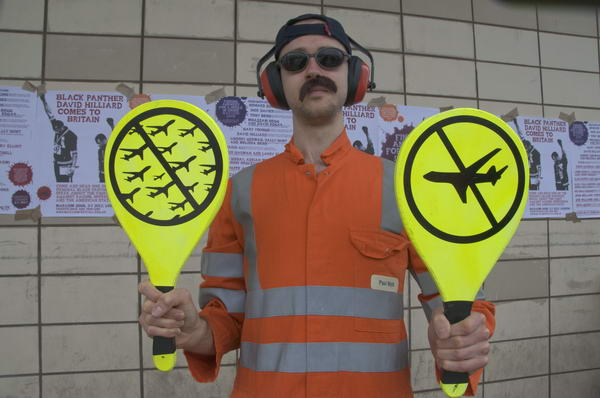
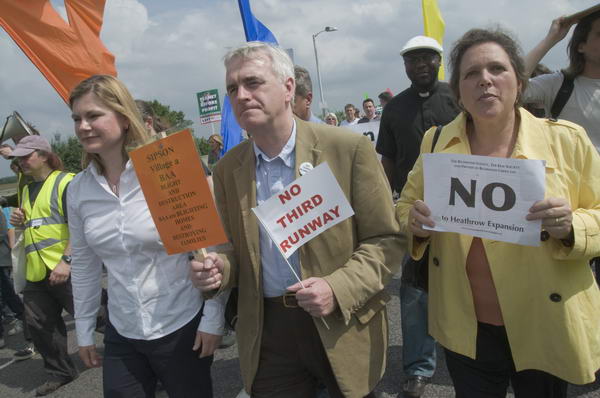
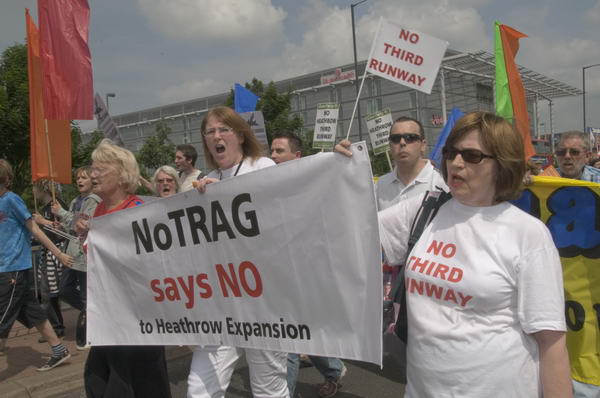
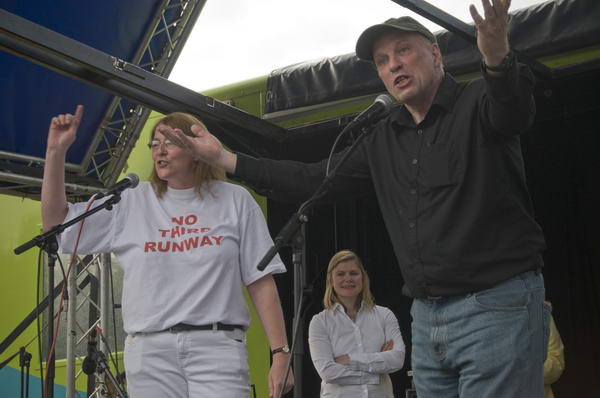
No Third Runway – 31 May 2008 – several thousand campaigners against the expansion of London’s Heathrow Airport marched from Hatton Cross through part of the airport to the village of Sipson which will be obliterated if the third runway is built.

No Third Runway - 31 May 2008

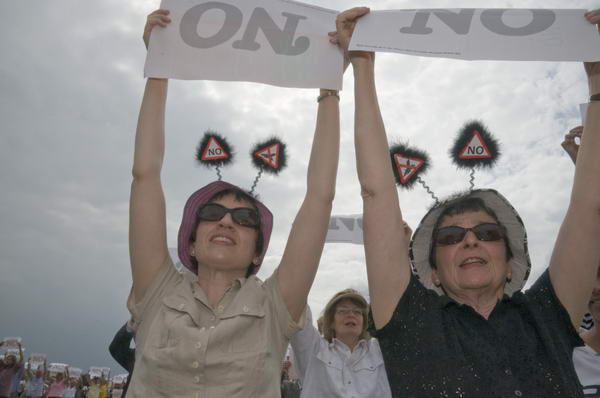
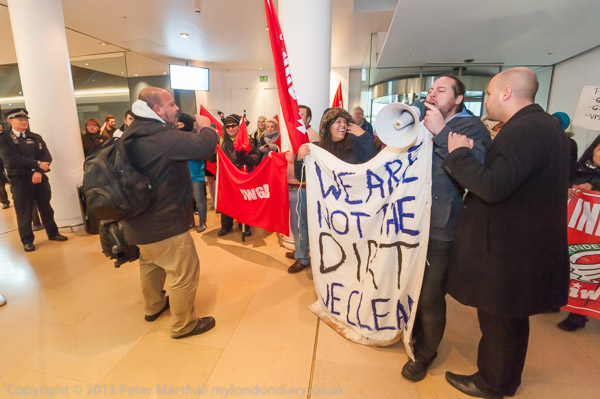
I’m not sure whether it was on this occasion or another similar event where I was approached and asked if I would like to be the official photographer at height on a cherry-picker taking the photograph of thousands below me on the ground in a giant ‘NO’ each holding up the message ‘NO’ but having no head at all for heights I was very pleased to be taking part in the event with both feet firmly on the ground. I was holding up my poster with its ‘NO’ in one hand and my camera in the other when I made this picture.

No Third Runway - 31 May 2008

I don’t think I’ve ever had much of a head for heights. Perhaps it was my early experiences when my father was sometimes left with the baby and had to take to to work with him – even when he was up fixing roofs. I have some vague but vivid memories of being up on the roof of a house, perhaps our own, under the Heathrow flightpath with aircraft – propellor rather than jet in those days – passing low overhead. But things have worsened in more recent years as my balance has worsened, and now even low walls are a step too high.

The account on My London Diary – Heathrow – Make a Noise – No Third Runway – makes my views on Heathrow clear, beginning with the paragraph “It is now obvious to everyone with their head out of the sand is that London Heathrow is in the wrong place. It always was, since its creation by subterfuge and lies during the last years of the war, but no government since has had the nerve to challenge the powerful aviation lobby.

No Third Runway - 31 May 2008
MPs Justine Greening (Con, Putney), John McDonnell (Lab, Hayes & Harlington), and Susan Kramer (LibDem, Richmond Park)

It was a view backed by the politicians of all parties who came to speak at the rally, though Labour – then in government – were only (if ably) represented by local MP for Hayes and Harlington, John McDonnell. And although the Deputy Mayor of London was there, Mayor Boris Johnson who had promised to come had decided instead to fly off for a holiday in Turkey – just as he has done on various occasions as Prime Minister. The Archbishop of Canterbury had also been expected, but was at the last minute unable to make it and sent an envoy with his message.

No Third Runway - 31 May 2008

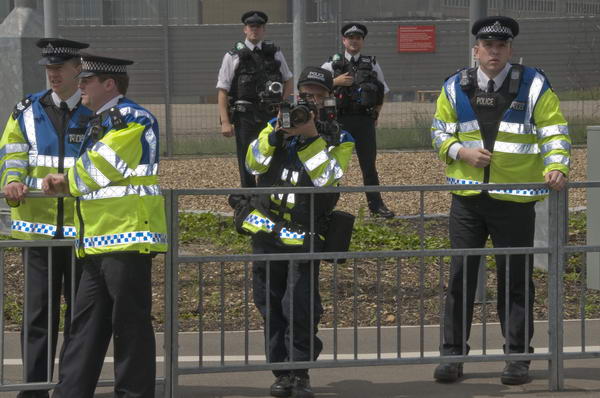
Most of those marching were local residents, particularly from Sipson and Harmondsworth which would be destroyed by the development, but also from the other areas under the flightpath, which includes a great swathe of West London. Given the nature of the protest and those taking part the level of police interest in it seemed excessive, and it was noticeable that they seemed to be particularly interested in photographing and filming the photographers who were covering the protest – I several times found myself staring into the lens of the police team.

I don’t know why the police do this, nor what happens to the photographs and videos. On the only occasion I’ve bothered to send a Freedom of Information request requesting details of the photographs they have of me from a number of events where they had quite clearly taken them I received a reply stating that there were no images on record… We are not being told the truth.

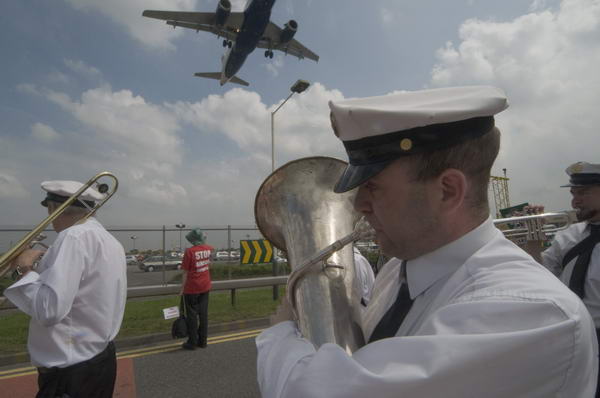
One of very few flights on the northern runway as the march went past

Notably missing from the event were any representatives of Spelthorne Council, my local council and the only council in the area not to oppose the expansion. The Conservative MP for Spelthorne, David Wilsher also supported airport expansion against the then party line and “also denies that climate change is caused by human activities and some constituents expect him to announce his membership of the flat earth society any day soon. Best known for his introduction of the anti-gay ‘Section 28’ amendment in 1988 he replaced for the 2010 election by Kwasi Kwarteng after being implicated in an expenses scandal involving the payment of £105,00 of parliamentary expenses to a company set up with his partner to run his office. The inquiry into his expenses was suspended because of his poor health.

John Stewart of HACAN and Geraldine Nicholson of NOTRAG perform a duet: NO THIRD RUNWAY

You can read a full account of the march and rally with a large number of pictures on My London Diary: Heathrow – No Third Runway


Holloway, Nakba, Refugees & Topshop

Holloway, Nakba, Refugees & Topshop – Six years ago, the 14th May 2016 was also a Saturday, and like today there was a protests for Nakba Day, the ‘day of the catastrophe’, remembering the 80% of Palestinians forced to leave their homes between December 1947 and January 1949, but also several others on the streets of London which I covered.


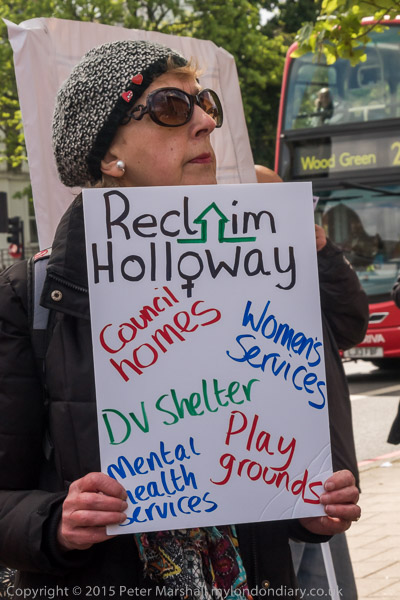
Reclaim Holloway – Holloway Road

Holloway, Nakba, Refugees & Topshop

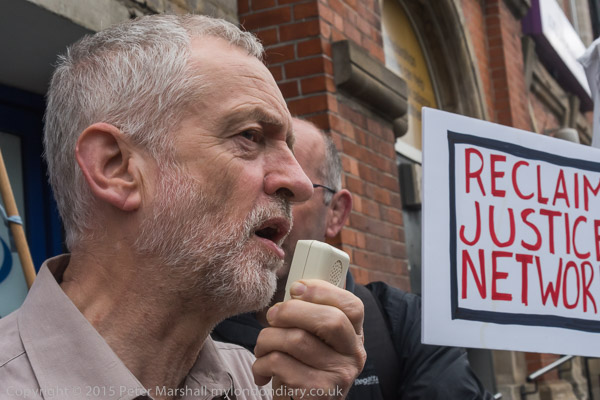
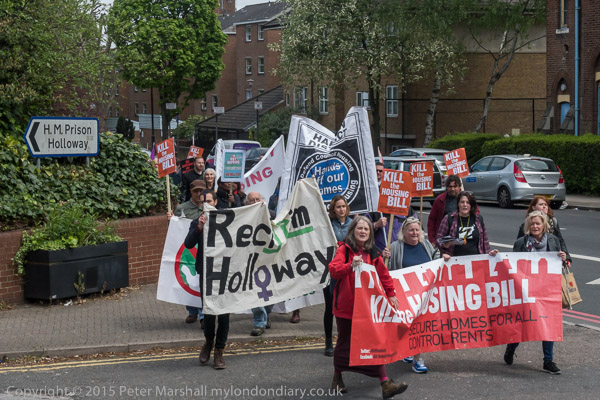
Local MP and Labour Party leader Jeremy Corbyn spoke outside London Met on Holloway Rd at the start of the march by Islington Hands Off Our Public Services, Islington Kill the Housing Bill and the Reclaim Justice Network to HMP Holloway demanding that when the prison is closed the site remains in public hands, and that the government replace the prison with council housing and the vital community services needed to prevent people being caught up in a damaging criminal justice system.

Holloway, Nakba, Refugees & Topshop

A group of around a hundred then marched from there to Holloway Prison, apparently already largely emptied of prisoners, and held a long rally there with speeches by local councillors, trade unionists and campaigning groups. Islington Council would like to see the prison site and adjoining housing estate then owned by HM Prisons used for social housing rather than publicly owned land being sold for private development.

Holloway, Nakba, Refugees & Topshop

The Ministry of Justice sold the site to housing association Peabody for £81.5m in 2019 and their plans include 985 homes and offices, with 60% of so-called affordable housing as well as a women’s building with rehabilitation facilities reflecting the site’s history. The development stalled in February 2022 with Peabody saying they were unable to afford the money needed to fit out the women’s centre.

Reclaim Holloway


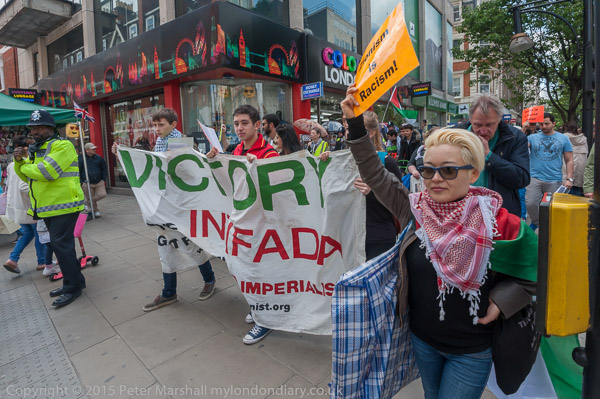
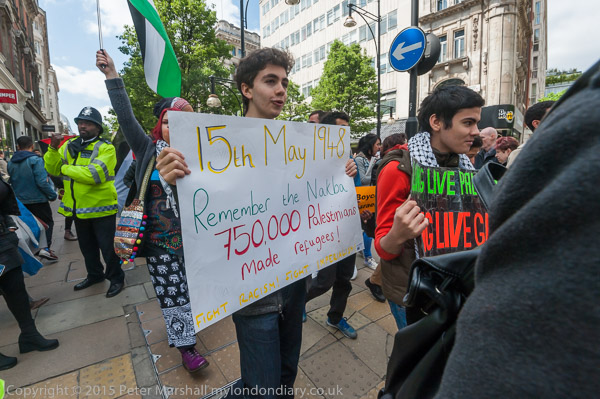
68th Anniversary Nabka Day – Oxford Street

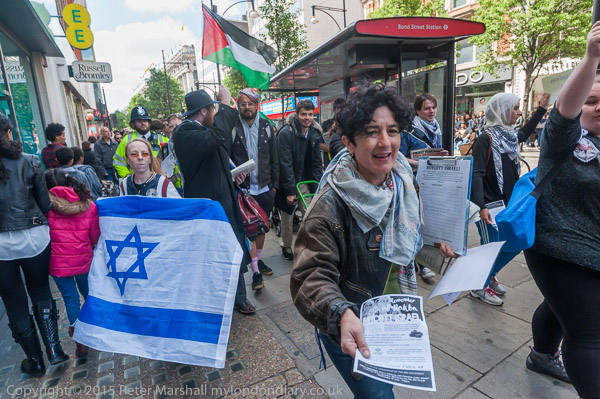
Protesters made their way along Oxford St from their regular Saturday picket outside Marks & Spencers, handing out leaflets and stopping outside various shops supporting the Israeli state for speeches against the continuing oppression of the Palestinian people and attempts to criminalise and censor the anti-Zionist boycott, divestment and sanctions (BDS) movement.

Nabka Day, the ‘day of the catastrophe’ remembering the 80% of Palestinians forced out of their homes between December 1947 and January 1949 is commemorated annually on May 15th, but the protest was a day earlier when Oxford Street would be busier. The Palestinians were later prevented by Israeli law from returning to their homes or reclaiming their properties, with many still living in refugee camps.

The protesters included a number of Jews who are opposed to the continuing oppression of the Palestinians by the Israeli government. A small group of counter protesters shouted insults and displayed Israeli flags, accusing the protesters of anti-Semitism but the protest was clearly directed against unfair and illegal policies pursued by the Israeli government rather than being anti-Semitic. The counter-protesters tried unsuccessfully to provoke confrontation, standing in front of the marchers and police had at times to move them away.

68th Anniversary Nabka Day


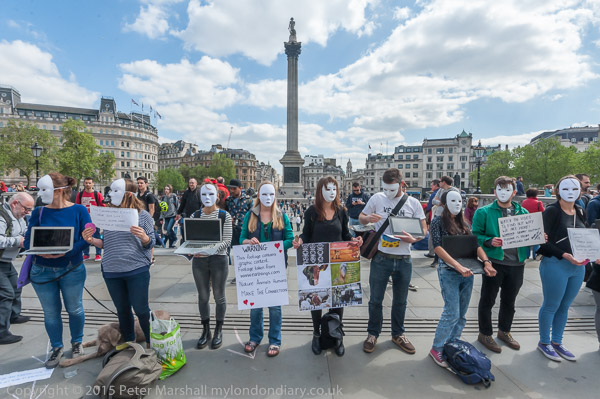
Vegan Earthlings masked video protest – Trafalgar Square

Vegans wearing white masks stood in a large circle in Trafalgar Square holding laptops and tablets showing a film about the mistreatment of animals in food production, bullfighting, etc. The protest was organised by London Vegan Actions and posters urged people to stop eating meat to save the environment and end animal cruelty.

Vegan Earthlings masked video protest


Refugees Welcome say protesters – Trafalgar Square

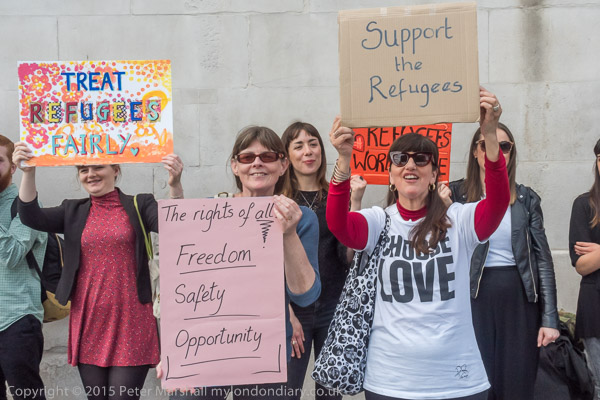
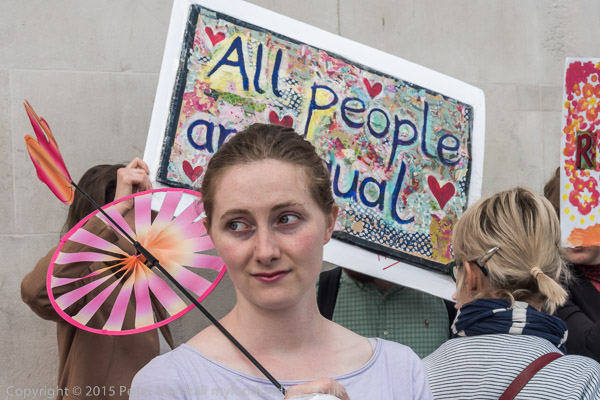
Another small group of protesters stood in front of the National Gallery held posters calling for human rights, fair treatment and support for refugees. Some held a banner with the message ‘free movement for People Not Weapons’.

Refugees Welcome say protesters


Topshop protest after cleaners sacked – Oxford St

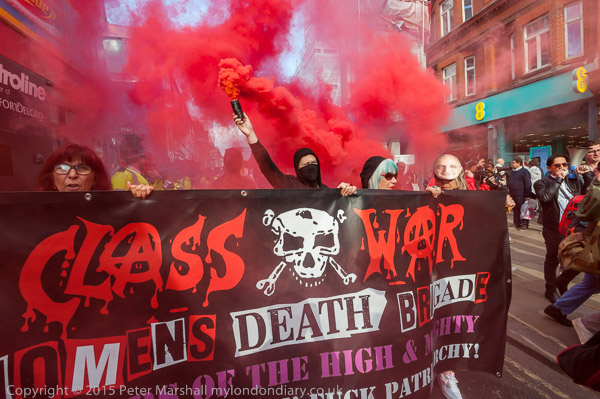
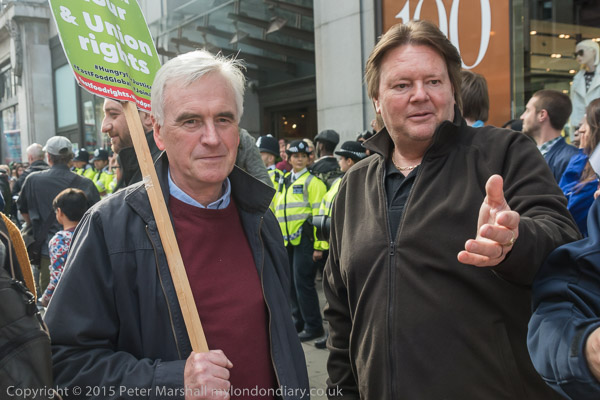
Finally I was back on Oxford St where cleaners union United Voices of the World (UVW) was holding one of protests outside Topshop stores around the country following the suspension of two cleaners who protested for a living wage; one has now been sacked. Joining them in the protest were other groups including Class War, cleaners from CAIWU and other trade unionists including Ian Hodson, General Secretary of the BWAFU and Shadow Chancellor John McDonnell.

Shadow Chancellor John McDonnell, MP and Ian Hodson, Baker’s Unions General Secretary outside Topshop

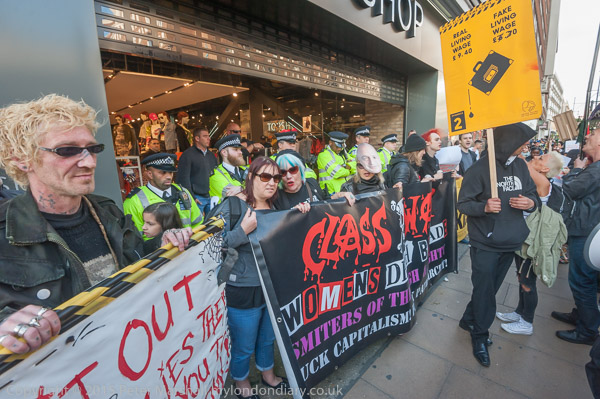
The Oxford Street Topshop was heavily defended by police, as well as by illegal extra security guards wearing no ID. Several hundred protesters held up banners and placards and with the help of the police blocked the entrance to the shop, though the protesters made no serious attempt to enter the building.

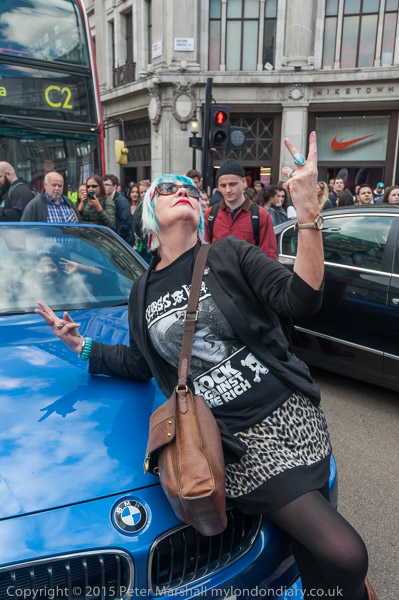
Jane Nicholl of Class War poses on a BMW as they block Oxford Circus

After a while some of the protesters, led by the Class War Womens Death Brigade, moved onto the road, blocking it for some minutes as police tried to get them to move. The whole group of protesters then moved to block the Oxford Circus junction for some minutes until a large group of police arrived and fairly gently persuaded them to move.

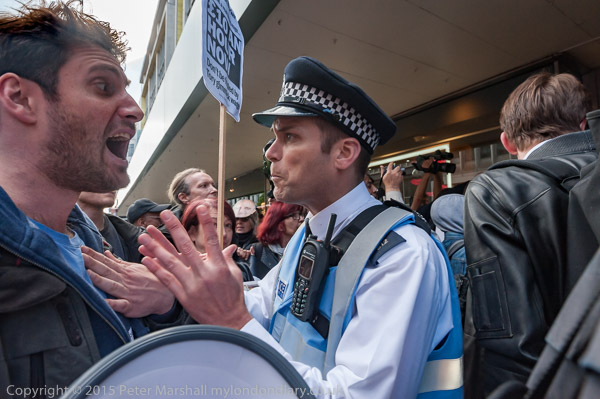
UVW’s Petros Elia argues with a police officer outside John Lewis

They moved off, but rather than going in the direction the police had urged them, marched west along Oxford St to John Lewis, where they protested outside the entrance, where cleaners have a longstanding dispute. The cleaners who work there are outsourced to a cleaning contractor who John Lewis allow to pay low wages, with poor conditions of service and poor management, disclaiming any responsibility for these workers who keep its stores running.

There were some heated exchanges between protesters and police but I saw no arrests and soon the protesters marched away to the Marble Arch Topshop branch to continue their protest.

Topshop protest after cleaners sacked


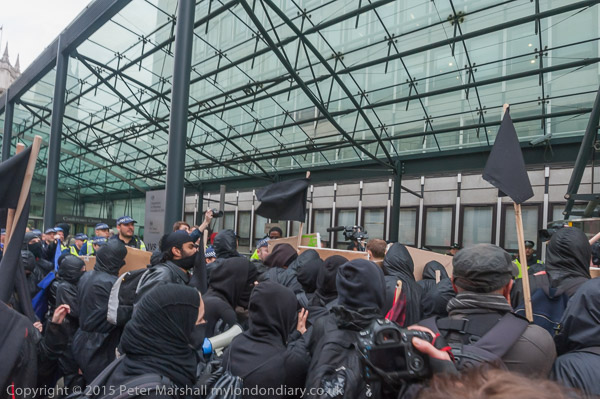
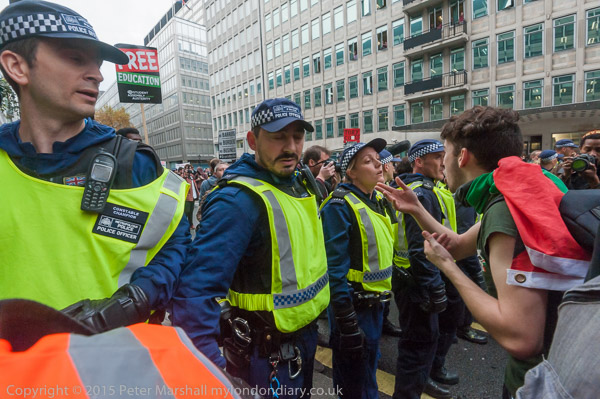
Docs Not Cops, Nigerian Girls, Fast Food Workers & Homeless Deaths

Docs Not Cops, Nigerian Girls, Fast Food Workers & Homeless Deaths – four quite different protests on Wednesday 15th April 2015, seven years ago today.


Checkpoint Care – Docs Not Cops – Royal London Hospital, Whitechapel

Docs Not Cops, Nigerian Girls, Fast Food Workers & Homeless Deaths

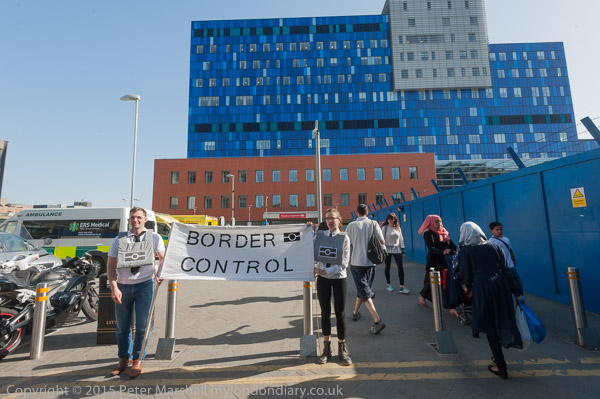
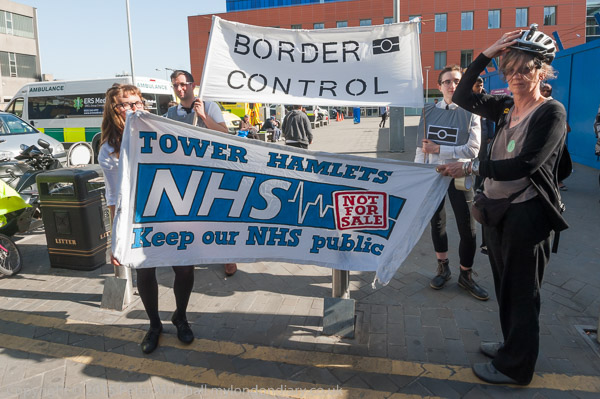
Docs Not Cops set up a mock border checkpoint at the entrance to the Royal London Hospital in a protest against plans to charge migrants for NHS treatment which will force doctors to check on the immigration status of those needing treatment. Hospital security staff came out and forced them to move off hospital owned land and the border, marked by shiny stainless steel posts, shifted a few yards away with the protest continuing there.

Docs Not Cops, Nigerian Girls, Fast Food Workers & Homeless Deaths

Most of those protesting were medical students or health service employees. The Royal London serves an area with a large immigrant population and health workers, including local GP Dr Anna Livingstone. Many of those entering and leaving the hospital both staff members and patients stopped to express support for the action.

Checkpoint Care – Docs Not Cops


Bring Back Our Girls – Nigerian Embassy, Northumberland Ave

Docs Not Cops, Nigerian Girls, Fast Food Workers & Homeless Deaths

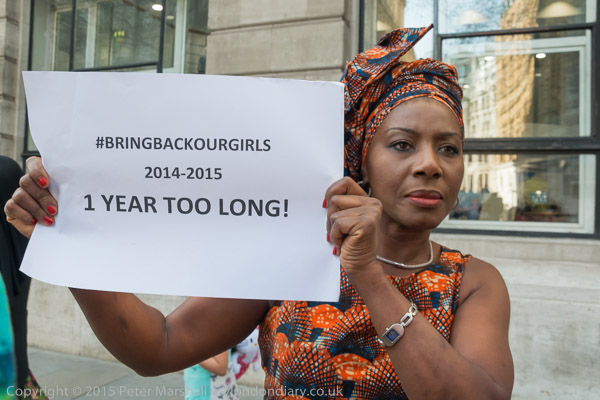
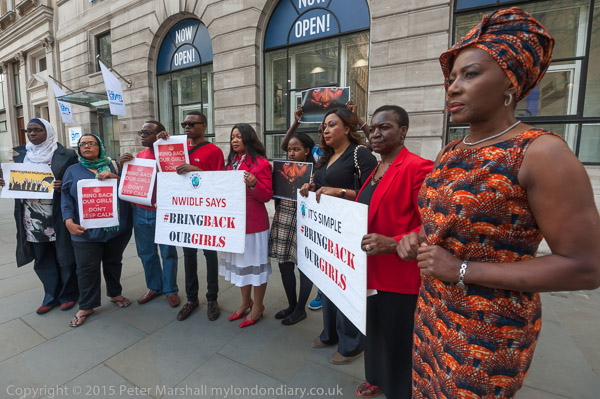
The monthly protest outside the Nigerian Embassy was very polite and relatively quiet as men and women from the Nigerian Women In Diaspora Leadership Forum held up posters and photographs calling for the return of the over 200 Chibok girls abducted by Boko Haram – and they did it on the opposite side of the road from the Embassy rather than the wide pavement immediately in front of it.

Docs Not Cops, Nigerian Girls, Fast Food Workers & Homeless Deaths

They feel that the Nigerian government has done little to try to get the return of the girls who were abducted a year earlier and hopedd that the new Nigerian government would take a firmer line.

Bring Back Our Girls


Fast Food Rights at McDonald’s – Whitehall

Docs Not Cops, Nigerian Girls, Fast Food Workers & Homeless Deaths

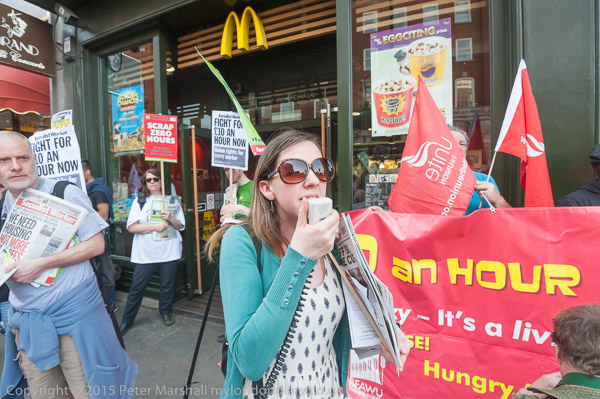
Trade unionists protested outside McDonald’s in Whitehall in solidarity with US fast food workers on strike for higher pay, justice, dignity and respect. They also demanded union rights, a £10 minimum wage and an end to zero hours contracts for workers in UK fast food outlets.

Speakers at the protest included Ian Hodson, National President of the Bakers, Food & Allied Workers Union (BFAWU) who is one of the leaders of the Fast Food Rights campaign, and victimised National Gallery PCS rep Candy Udwin, one of the leaders of the strikes there against privatisation.

A manager from McDonald’s was clearly angry and came out to talk to police about the protest. They told him that people had a right to protest on the pavement.

Fast Food Rights at McDonald’s


No More Deaths on our Streets – Westminster

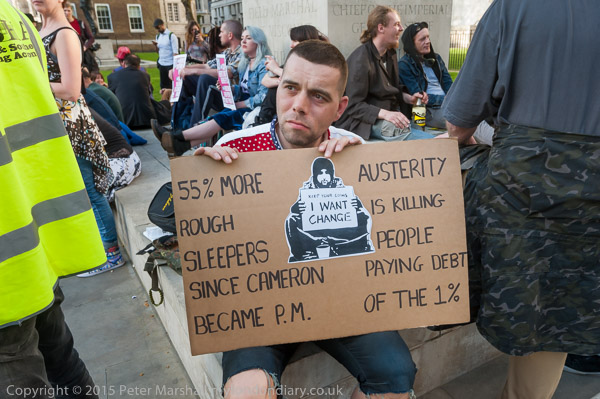
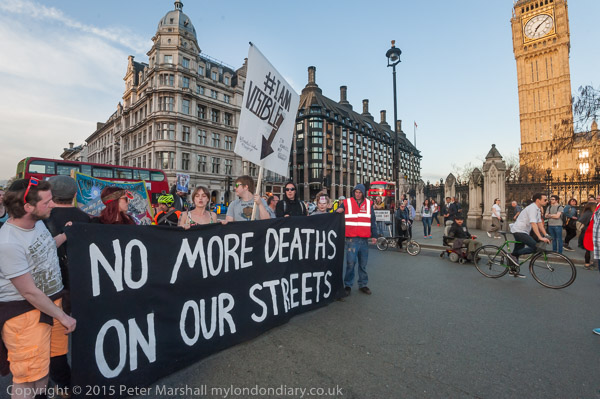
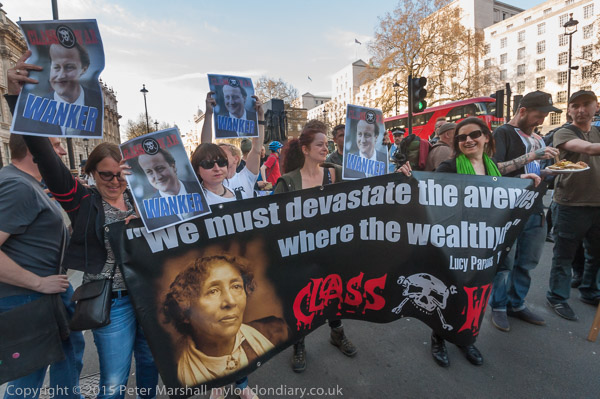
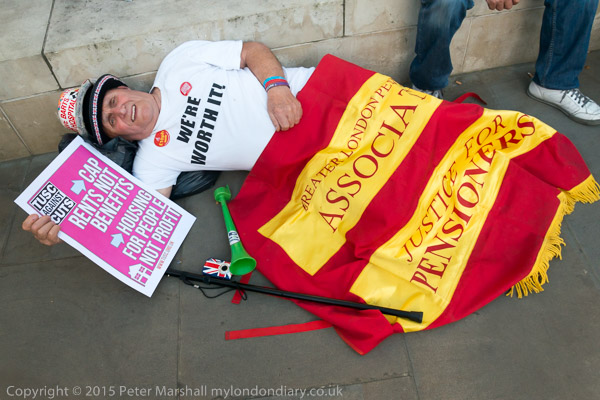
People from various groups, including those involved in day to day practical support of the homeless on the streets with food and shelter as well as charities, political groups and housing and homeless activists, squatters and more met at 6pm opposite Downing St to call for an end to homeless people dying on our streets. As one poster stated, ‘I want Change – ‘55% More Rough Sleepers since Cameron Became PM – Austerity is killing people paying debt of the 1%‘ The main banner stated ‘NO MORE DEATHS ON OUR STREETS‘.

Recent years had seen a dramatic rise in the number of homeless people on the streets of London in particular due to the removal of welfare support and increasing official persecution, with government cuts making it harder for local authorities to provide support.

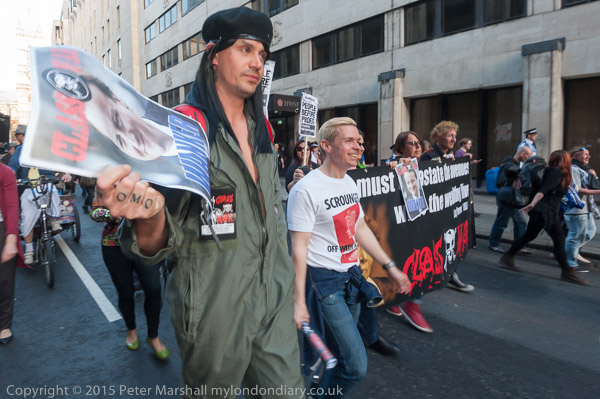
Prominent among the groups taking part were supporters of Class War, including their parliamentary candidate for Westminster in the 2015 elections the following month, Adam Clifford.

After protesting for some time outside Downing St and going on to the road to block traffic, the protest moved on to Parliament Square, marching along the road and blocking traffic there before going into the back streets south of St James’s Park.

Adam Clifford

They seemed to be going around in a circle but finally decided they would head for Buckingham Palace. But by then I was getting tired and decided to go home.


More at:

No More Deaths on our Streets
Fast Food Rights at McDonald’s
Bring Back Our Girls
Checkpoint Care – Docs Not Cops


Harmondsworth – A Middlesex Village

Harmondsworth – A Middlesex Village

Harmondsworth - A Middlesex Village

Going back to Harmondsworth feels very much like going back to my childhood as I grew up only a few miles away and lived for years on a bicycle cycling out from Hounslow and along country lanes through villages like this on the edges of London, before the M25 and M4 chopped up the country around here and the growing airport at Heathrow produced both sprawling new housing estates and a huge increase in traffic in the area.

Harmondsworth - A Middlesex Village

From 2003 to 2009 I took part in the protests against the plans to build another huge runway for Heathrow, which now only uses two though it was built with more on its existing site. The shorter runways were abandoned partly because planes grew larger. I was very pleased when one closed as on the few days a year when there were strong cross-winds it brought planes at low heights over my current home a couple of miles away, sometimes low enough to shake the whole building. I think building Terminal 4 which opened in 1986 put an end to its use.

Harmondsworth - A Middlesex Village
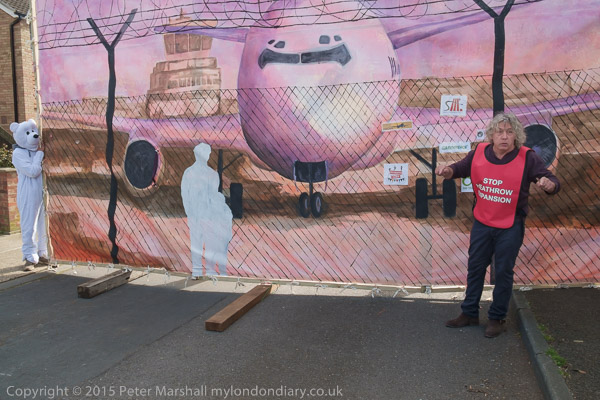
A mural across where the airport would end

We celebrated in 2009 when plans for a third runway were dropped, but the lobbyists for Heathrow expansion didn’t take no for an answer and persuaded the coalition government to set up the Davis Commission to put the plans back on the table again. The protest in Harmondsworth on Sunday 12th April 2015 was before the report came out, but its conclusion was predictable – and the one it had been set up to come to.

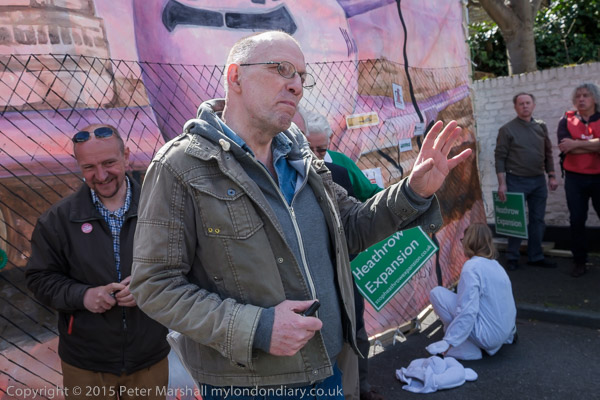
John Stewart of HACAN

Since then and the government’s acceptance of the case it made for expanding Heathrow, the world has changed, or at least our understanding of the future has. The case for airport expansion has disappeared and we now know that we have to have rapid decarbonisation of the economy to survive. Instead of looking forward to exponential growth we need to find ways to stabilise and reduce demand and aviation is one of the most climate-damaging sectors.

While Davis took as its basis that expansion is necessary to continue growth, it is now clear that expansion would be a disaster. At last I think that message is beginning to get through to our government, though too often it is still thinking in terms of short-term financial benefits to the pockets of its members and their friends.

Harmondsworth - A Middlesex Village

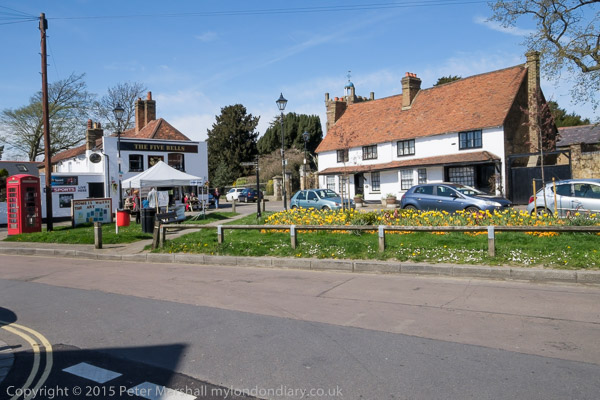
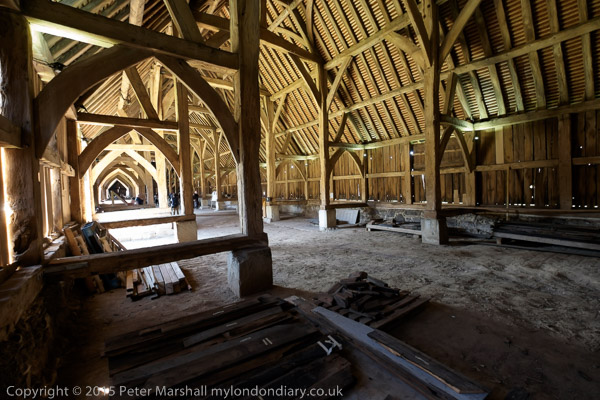
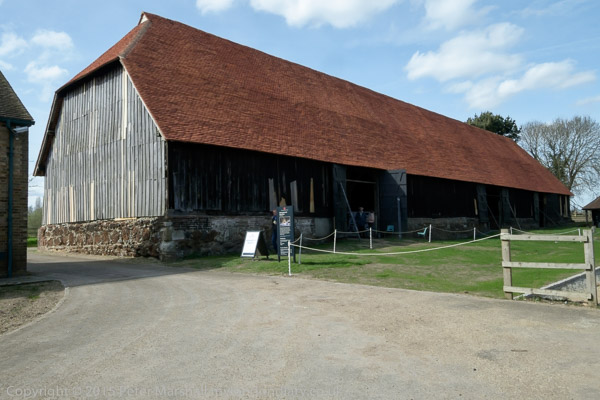
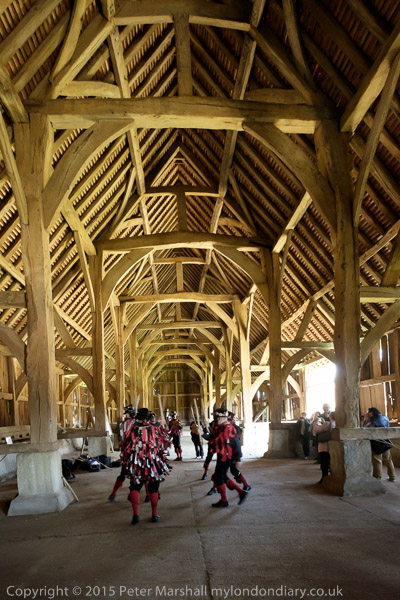
Harmondsworth is still one of the most interesting of the small villages on the fringes of London, with a fine church in its churchyard, and although its village green is a pocket handkerchief compared to many it still has a couple of pubs and some picturesque cottages along its north side. But the real gem of the village is tucked away immediately to the left, its magnificent Grade 1 listed Great Barn, built in 1426 , the largest surviving example all-timber barn which Sir John Betjeman called ‘the Cathedral of Middlesex’.

Harmondsworth - A Middlesex Village

In agricultural use until the 1980s, it was then allowed to decay until a public campaign strongly supported by the local MP John McDonnell persuaded English Heritage to take it over in 2012. They carried out a substantial restoration leading to it being re-opened to the public free of charge on selected days and it is managed by the Friends of the Great Barn at Harmondsworth. My pictures of the barn are not available for any editorial or commercial use.

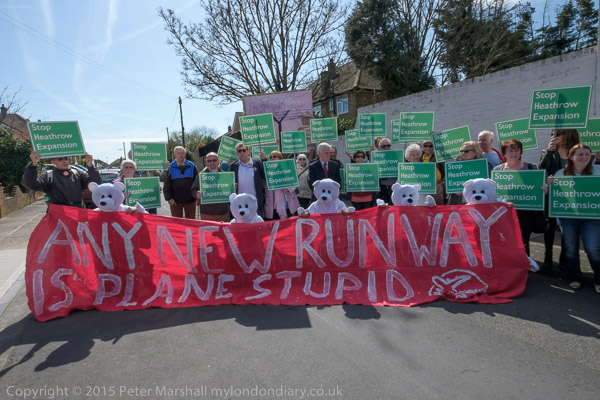
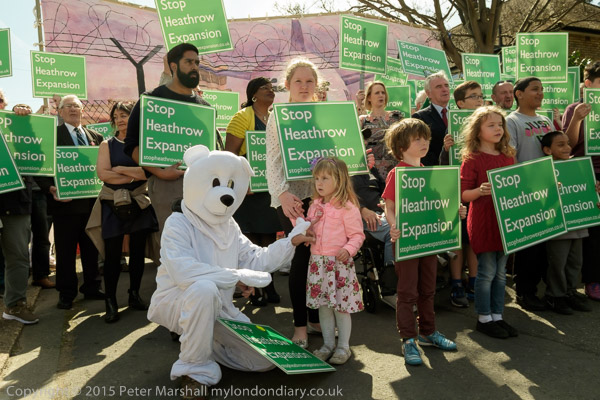
On the 12th April 2015, the Datchet Border Morris were dancing inside the barn and around the village green during the day. The campaign to save the village (again!) was launched with a huge mural and speeches from all but one of the candidates standing for the area in the general election the following month. The Lib-Dem candidate also supported the campaign but had been sent the wrong date for the rally. Also present were campaigner John Stewart of HACAN, and five polar bears who had held a protest a few weeks earlier with the banner ‘Any New Runway Is Plane Stupid‘.

Harmondsworth - A Middlesex Village

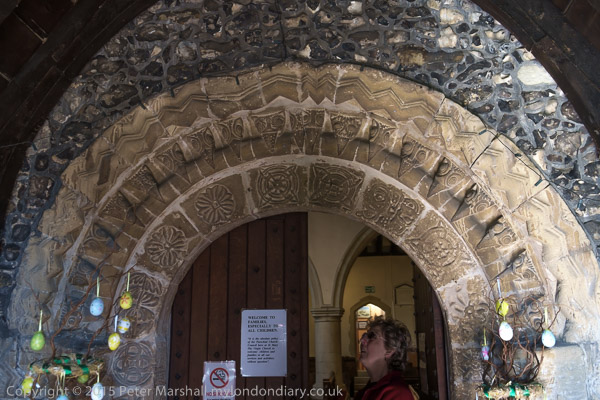
The weather was fine and it was an interesting day – and warm enough for me to sit outside and eat a quick lunch in the garden of the Five Bells, before rushing to photograph the Morris performing again outside The Crown. And before leaving for home I went to take another look around the interior of the parish church, parts of which date from the 12th century.

More at Heathrow Villages fight for survival.


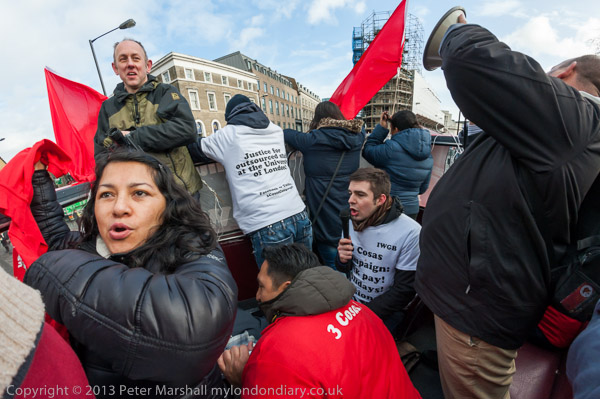
University of London 3 Cosas Strike

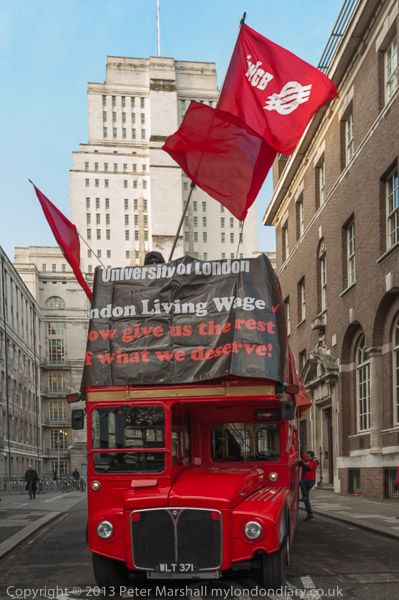
On the IWGB battlebus

Eight years ago on Tuesday 28th January 2014 low paid workers at the University of London were on the second day of their 3 day strike. Their union had organised a day of action around London and I had been invited to come and photograph it, having photographed a number of their previous protests.

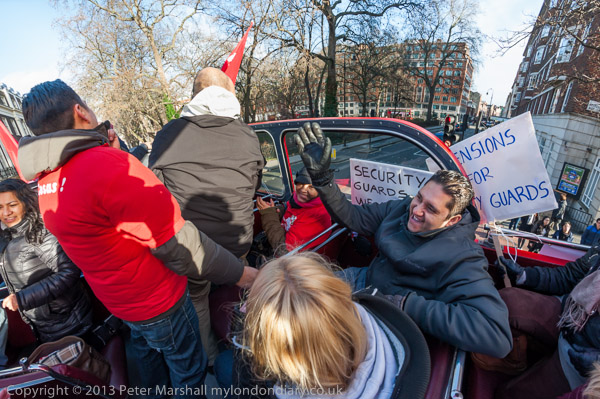
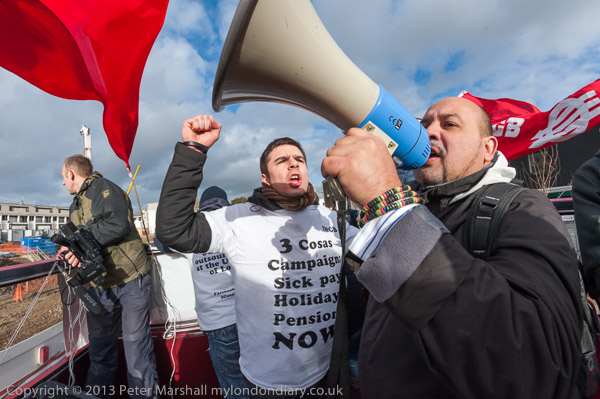
University cleaners, maintenance and security staff were demanding that the University recognise their trade union, the IWGB (Independent Workers’ Union of Great Britain) and give them better pay and conditions, comparable with other university staff they work alongside. The ‘3 Cosas’ were sick pay, paid holidays and pensions – all areas where these staff were only being given the legal minimum (and sometime not even that.)

As I wrote in 2014:

“although these workers work at the university and carry out work essential for the running of the university, the university does not employ them. Most low paid workers – cleaners, maintenance and security staff, catering works and others – at the University of London are no longer directly employed by the University, but work in the University on contracts from contractors Cofely GDF-Suez (who took over the former contractor Balfour Beatty Workplace at the end of last year.) The policy of outsourcing these workers seems largely intended to evade the responsibilities of London University towards an essential part of their workforce.”

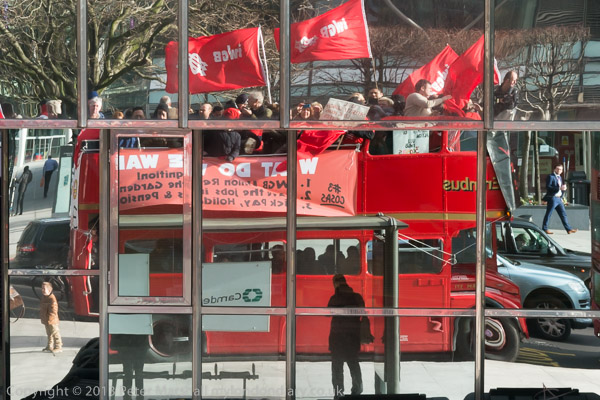
3 Cosas’ Strike Picket and Battle Bus

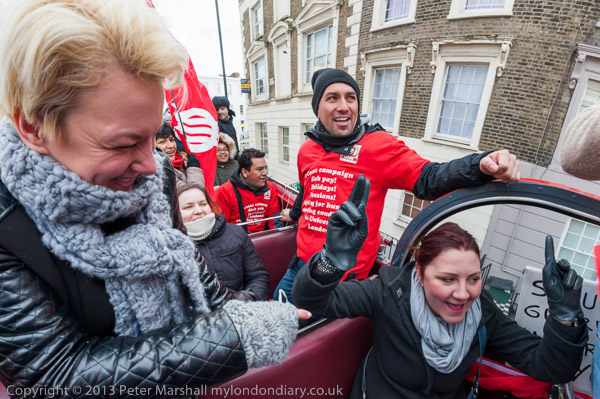
It meant an early start for me, although the pickets had been outside Senate House for four hours when I arrived at 9am. Living outside London though on its edge I seldom arrive before 10am as it doubles my travel costs and I’ve never been a happy early riser. Fortunately the weather was good, a bright winter day and I’d dressed for the weather with thermal underwear, thick socks and a woolly hat, though it was still pretty chilly on top of the open-top bus.

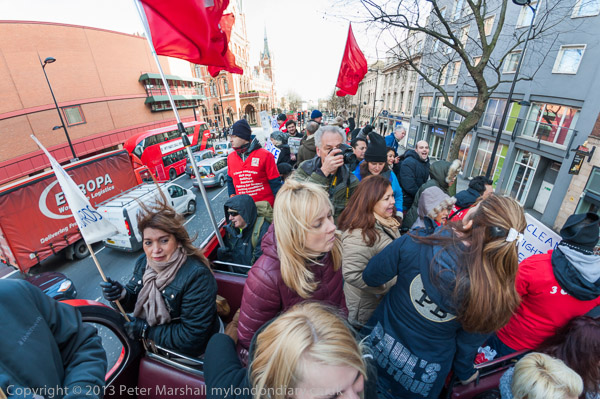
The bus turned out to be a 1960 Routemaster which was sold by London Transport in 1986 but only converted to open-top in 2001. (I’d long thought that there was a plentiful supply of such vehicles after drivers attempted routes under low bridges, but apparently not, although a couple of bridges near where I live have had quite a few victims over the years.) Compared to modern buses, Routemasters offered a very bumpy ride with considerable vibration, and taking pictures on the upper deck required some faster than normal shutter speeds and most of the time working one-handed while clinging on with the other.

Space on bus tops is also quite small and moving around impeded both by the seats and the other riders (I think it’s a more appropriate term than passengers) and though they were very cooperative the top of the bus was pretty full. Most of the pictures I made were taken when the bus was stopped either at junctions or for short protests and my fisheye lens proved really useful.

The bus trip began at Senate House, and then began an extensive tour around central London, making a tour of various university sites where IWGB members were striking. There was a great deal of booing as we passed the Unison headquarters on Euston Road, as many of the workers had left Unison in disgust as they felt the were not supporting the demands of low-paid workers. The IWGB had intended to stop outside the offices of The Guardian newspaper, but had been held up too much by London’s traffic and drove past and on to Parliament Square.

Here we jumped off the bus and marched to Parliament where the IWGB had arranged to meet Labour MPs John McDonnell and Jeremy Corbyn for a short rally (and Andy Burnham sent a short message of support.)

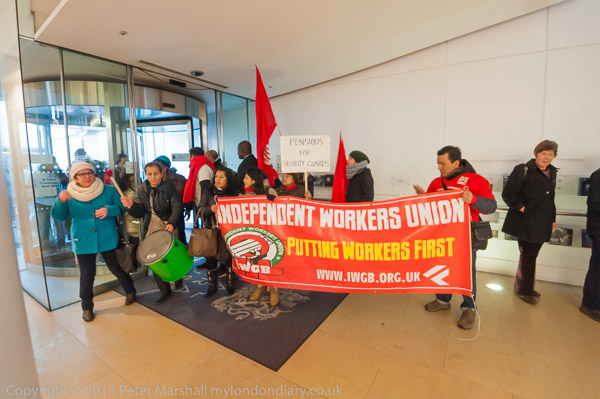
There was a short shower before the bus came to pick us up on the Embankment, taking us to a side street near the Royal Opera House. Everyone kept quiet as we got off, then rushed around the corner and into the foyer. IWGB members there had voted for a strike the following month for union recognition and the London Living Wage.

In the foyer we were met by a man who introduced himself as the Unison Health & Safety rep and told the IWGB President and the other protesters that the ROH had already agreed that the cleaners will get the Living Wage, but had not yet told them. The Opera House recognises Unison, despite the workers almost entirely being IWGB members. It’s a ridiculous situation but one which is allowed under our poor trade union laws, though not one that makes sense for either workers or employers.

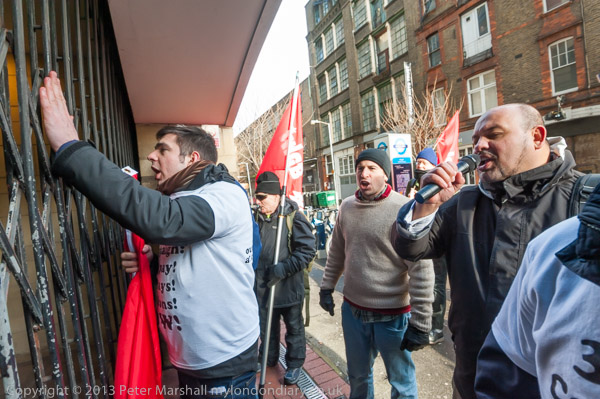
After making their views clear the IWGB members left quietly and got back onto the bus for the final visit of the day, to the Angel Islington, where Cofely GDF-Suez (who took over employing the workers at the University of London from the former contractor Balfour Beatty Workplace in December) has its offices. As at the Royal Opera House, there were plenty of police present and waiting for the protesters, but here they managed to lock the metal gates on the two entrances to Angel Square as the bus arrived, leaving the protest to take place in front of one of them in Torrens Place.

From here the bus was going on to the union offices at the Elephant and Castle and I was invited to join them for a very late mid-afternoon lunch but unfortunately I had work to do on the many pictures I had taken and had to leave them and make my way home.

IWGB at Cofely GDF-Suez
IWGB in Royal Opera House
IWGB at Parliament
‘3 Cosas’ Strike Picket and Battle Bus


Students March Against Huge Fee Rise

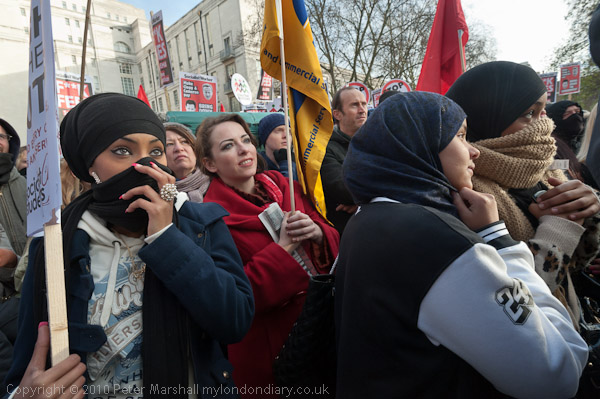
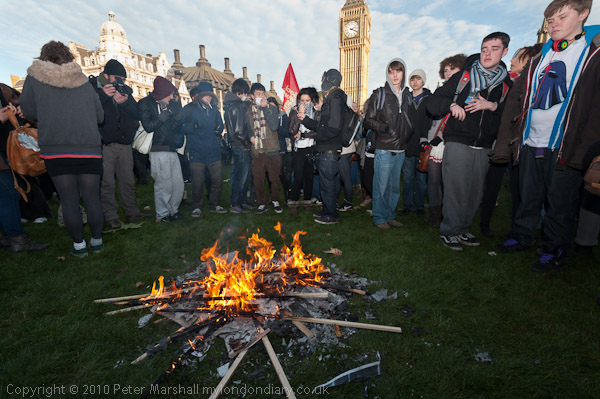
Thursday 9th December 2010 was the day of a third student protest against the three-fold increase in university tuition fees which was being debated in Parliament that day, and the scenes in the area around were probably the most confusing of any I’ve seen in London.

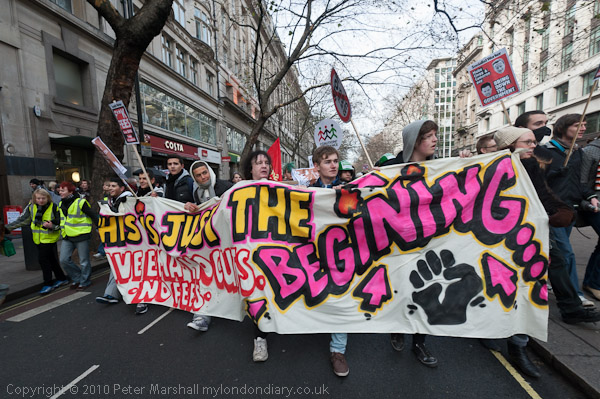
My account of my day on My London Diary runs to around 1,700 words, and I’ll attempt not to repeat myself here, while giving a rather shorter account. The march started outside the University of London Union in Malet St, with a crowd of perhaps 10-20,000 including many sixth-formers who would be hit by the £9,000 a year fees when they went to university as well as current students and supporters.

There was a good atmosphere as the crowd listened to speeches there from trade unionists, John McDonnell MP and two sixthformers from schools that were being occupied in protest who got the largest cheers. As usual with student protests there was plenty to photograph.

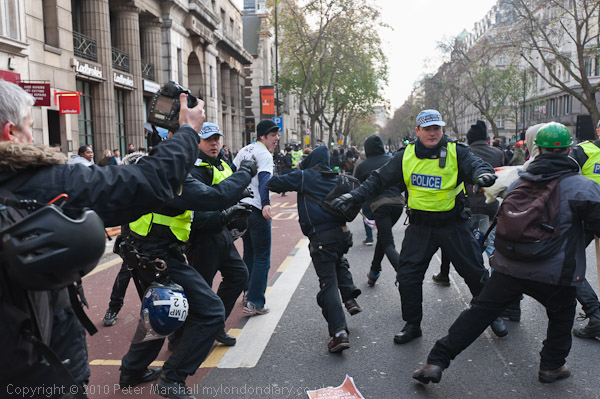
The march began well though progress was rather slow, and several hundred students decided to walk in front of the main banner and for some reason police tried to stop them. They thought they were about to be kettled and rushed off towards Covent Garden. The official march continued without obstruction along the agreed route along the Strand. It wasn’t at all clear what the police had intended, and this was something that set the scene for the day.

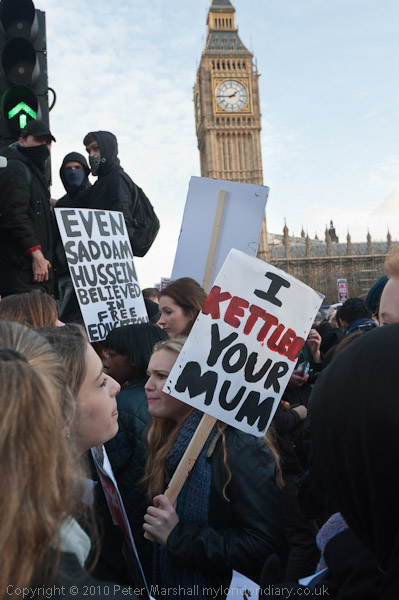
Many more protesters joined the march at Trafalgar Square, and rather than proceed down Whitehall, police and march organisers had agreed on a route though Admiralty Arch and down Horseguards Road, and then left into Parliament Square. The march was then meant to continue down Bridge Street to an official rally on the Embankment, but most marchers had a different idea and wanted to stay in Parliament Square, the obvious place for the protest to continue.

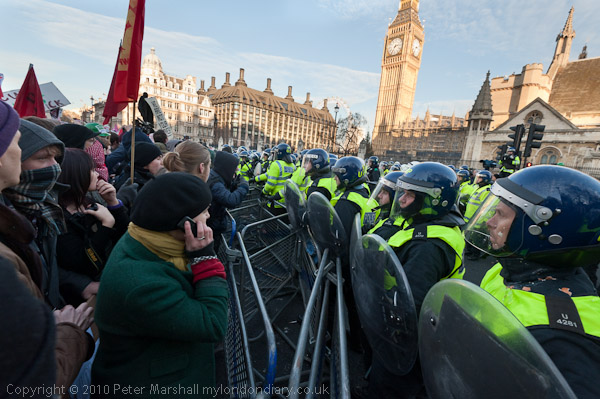
It’s hard to understand why either police or march organisers had thought people would march on rather than stay outside Parliament – and probably many on the march had simply assumed it would end there. And soon police were actually preventing any who wanted to go on by blocking all the exits from Parliament Square except that into Whitehall (which they later decided to block.)

I managed to move around thanks to my press card, but even with this I was often refused access through police lines even in calm areas, and had to move along and find other officers in the line who would let me through, or take a longer walk around to get to where I wanted. The police didn’t appear to know what they were supposed to be doing and at one point I was being crushed by the crowd against the barriers in front of the riot police who were threatening us with batons unless we moved back – which was impossible because of the crush. Several press colleagues did get injured.

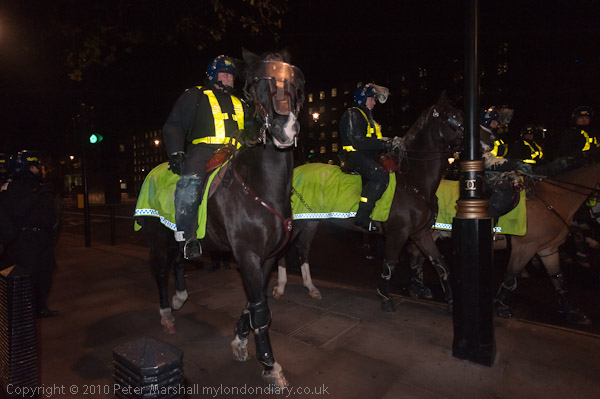
Late in the day students who wanted to leave were told by officers they could do so by going up Whitehall – only to be stopped by other police who were closing the street off. We were pushed back into Parliament Square by riot police and police horses. Police told protesters they were not being detained although they were not being allowed to leave, a kind of police logic most of us find infuriating.

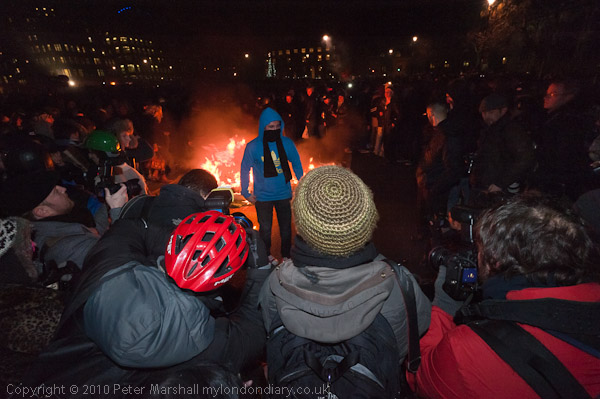
Kettling like this is used by police as a kind of minor but arbitrary punishment, and as in this case it often leads to violent incidents and arrests which are then used to retrospectively justify police actions. After I had managed to get through one of the police lines and catch a bus away from the area I heard that Police had pushed a large group into a very confined space on Westminster Bridge with a total disregard for their safety, with some needing medical treatment for crushing. As I pointed out “there could easily have been more serious or fatal injuries and people pushed into the freezing river below.”

Of course protests like this need to be policed to avoid serious disorder. But the confused and sometimes unnecessarily violent way it was done on this occasion seemed to create most of the problems of the day.

As well as a long account of my day there are many more pictures on My London Diary in Students Against Cuts – Day 3.


Discriminatory Welfare Reforms 2016

SNP MP Tommy Sheppard speaking

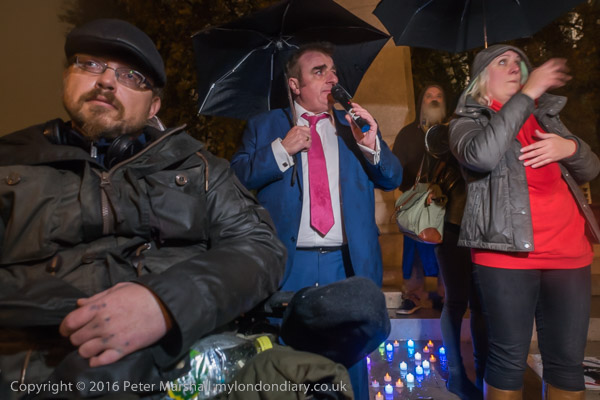
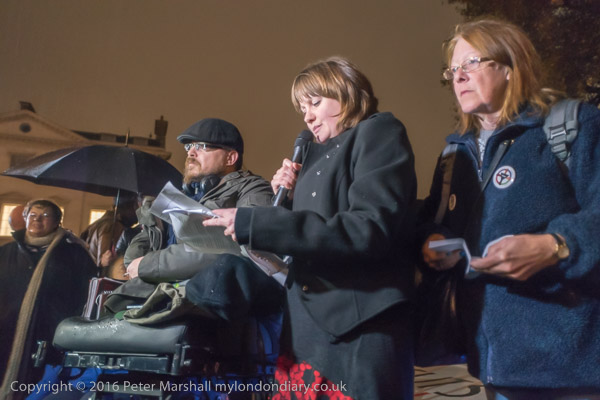
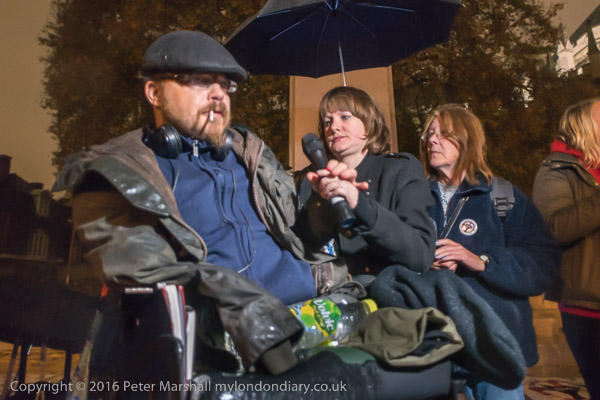
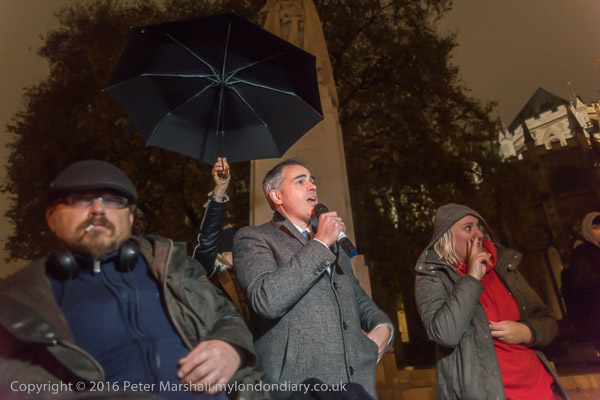
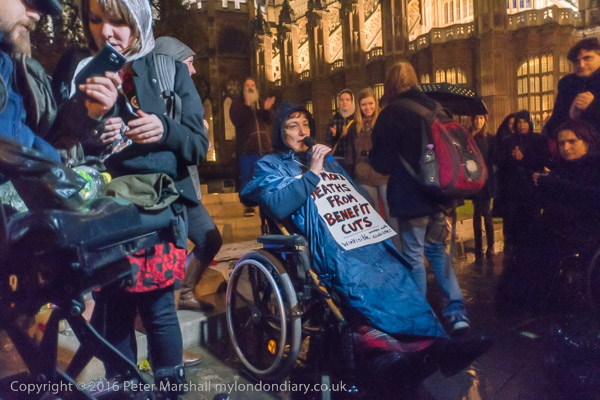
Five years ago it was a cold, wet and windy night on Wednesday 16th December as I tried to photograph a protest in Old Palace Yard opposite the Houses of Parliament by Disabled People Against Cuts and Black Triangle as inside Tory MPs were voting for the Welfare Reform and Act 2016 which abolished the work-related activity component of the Employment and Support Allowance for new claimants from April 2017.

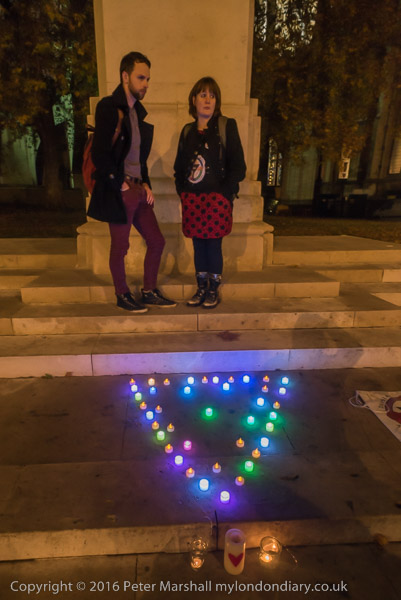
Candle tribute to DPAC co-founder Debbie Jolly

ESA is a benefit for those who have a health condition or disability which limits their ability to work. To claim it people have to undergo a Work Capability Assessment, which either find them fit for work and so not eligible, decides they should go into a group which has to undertake ‘work-related activity’ which might at some later date make them capable of work or puts them into a support group where they are not required to undertake such activities.

Equivalent measures were also introduced for those who have been transferred to Universal Credit, and mean that those who have to undergo work-related activities will get roughly £30 a week less, a huge proportion of their benefits which would go down from £102 to £73 per week. The government claimed that this will “remove the financial incentives that could otherwise discourage claimants from taking steps back to work” and when proposed said it would save £640 million a year by 2020-21.
Andy Greene of DPAC chaired the event

The House of Lords amended the bill to remove the cut, but the amendment was overturned by the Tory majority in the House of Commons.

Green Party co-Leader Jonathan Bartley

The protest came after the report of a United Nations Convention on the Rights of Persons with Disabilities (UNCRPD) inquiry had published a report condemning the ‘grave and systematic violations of disabled people’s rights’ which had resulted from the UK government welfare reforms.

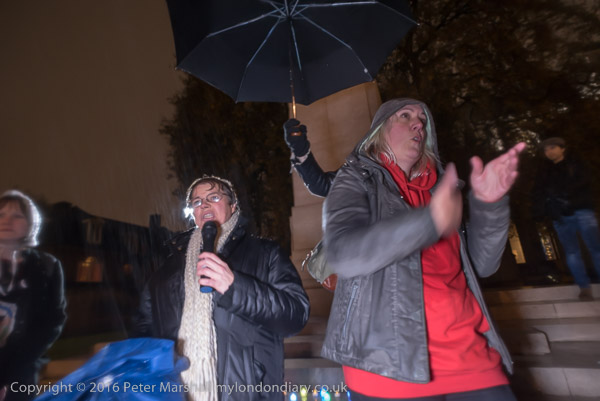
Claire Glasman of WinVisible speaking

The event also included a vigil with candles and a silence in memory of one of the co-founders of DPAC, Debbie Jolly who had died the previous week. The group was founded to campaign against the unfair Work Capability Assessments in 2010. Unsound in their nature the tests were conducted by largely unqualified staff working with incentives and targets to fail claimanst by commercial companies including Atos.
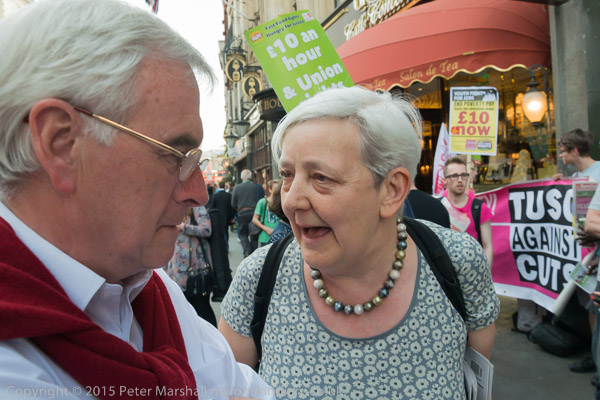
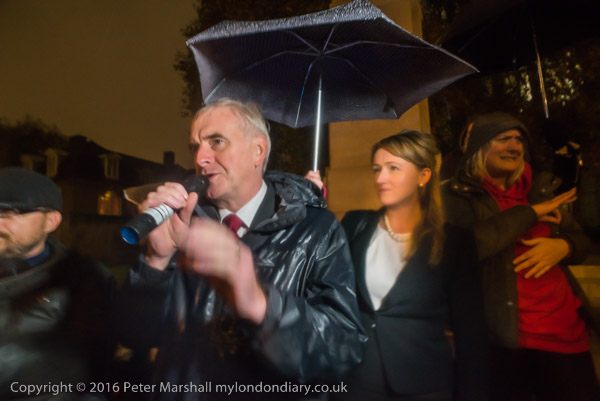
John McDonnell MP with Rebecca Long-Bailey holding an umbrella

There was a long list of speakers including SNP MP Tommy Sheppard, Labour Shadow Chancellor John McDOnnell, Green Party co-leader Jonathan Bartley, Claire Glasman of WinVisible and John McArdle of Black Triangle and I tried hard to take photographs and keep my cameras and flash unit and LED light as dry as possible. The LED light was really not powerful enough except at very close distances and there was very little ambient light in the area. I was having problems taking pictures and these were not helped when at a critical point the six AA batteries fell out of the LED unit as I had forgotten to fix the back in place, and rolled across the pavement and into the crowd listening to the speeches. Fortunately those around me picked them up and handed them back to me.

This wasn’t an occasion for great pictures, but I was pleased to have been able to produce a reasonably decent set of images despite the weather and the lousy light.


Free Education – No Barriers, Borders or Business

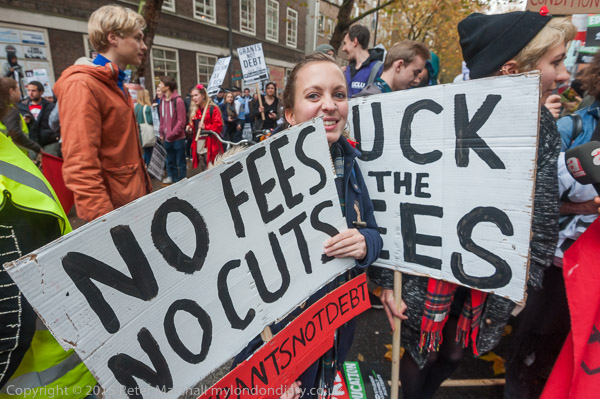
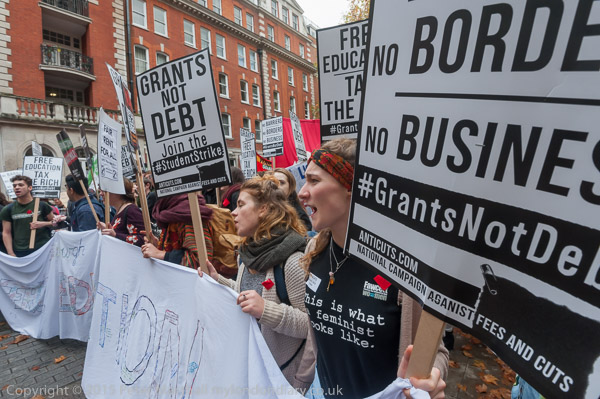
Free Education – No Barriers, Borders or Business was the call by the National Campaign Against Fees and Cuts (NCAFC) on their march through London on Wednesday 4th November 2015 against the abolition of maintenance grants and demanding free education without fees and huge student debts and an end to turning higher education into a market system impoverishing staff and students.

The march began in Malet St outside what had been the University of London Union, founded in 1921 as the University of London Union Society and was run by students for students. In 2013 the University of London decided to close ULU, taking over the building and running it as ‘Student Central’, now managed by the university, though continuing to offer similar services and resources for the 120,000 students, including bars, restaurants, shops, banks, a swimming pool and a live music venue – though some of these were on a reduced scale. But in 2021 it was announced that Student Central was to close and the building would become a teaching space for neighbouring Birkbeck College.

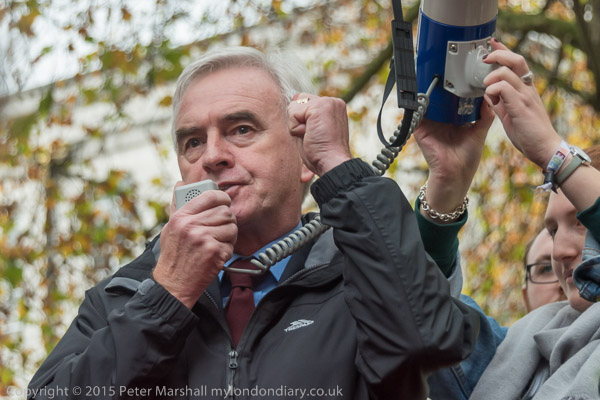
There were some speeches in Malet St before the march began, with speeches from several student representatives from various universities around the country, teaching staff and some fighting words from Shadow Chancellor John McDonnell MP. Green Party leader Natalie Bennett also marched with the students.

Antonia Bright of Movement for Justice spoke about the UK’s racist immigration policies and invited students to protest at Yarls Wood on the following Saturday.

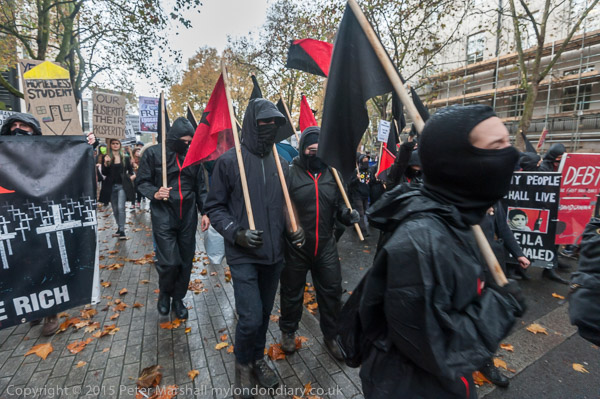
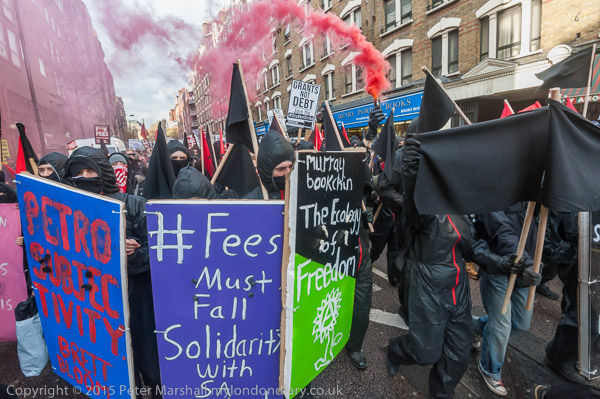
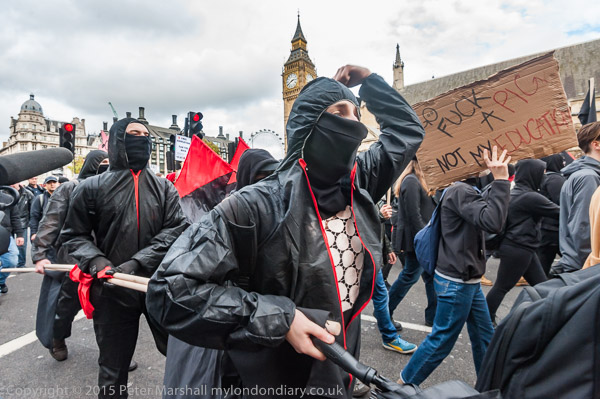
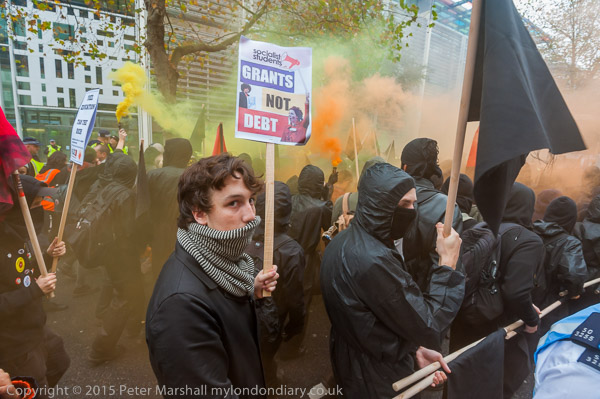
Among the marchers was a ‘black bloc’ carrying red and black anarchist flags and including Class War carrying their ‘WE HAVE FOUND NEW HOMES FOR THE RICH’ banner, along with a ‘book bloc’ carrying large polystyrene padded posters with the names of left wing and anarchist classic books on them or slogans such as ‘Rise, Riot, Revolt.’

The march went through Russell Square Square and down to High Holborn where it turned west and then took Shaftesbury Ave and the Charing Cross Rd to Trafalgar Square.

From there it went down Whitehall to Parliament Square where I left it briefly to photograph campaigners from the Save Shaker Aamer Campaign who had mounted a weekly vigil for his release from Guantanamo and were holding a ‘Welcome Home Shaker’ celebration.

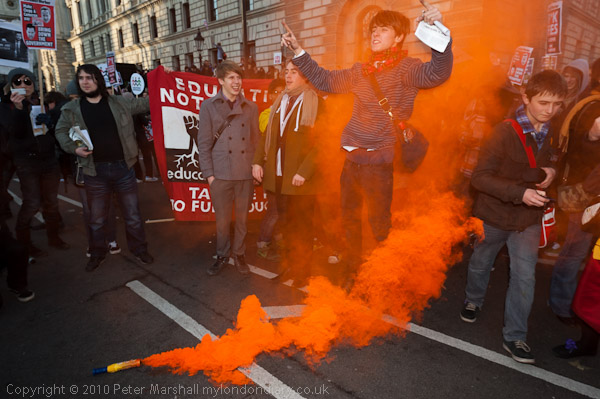
I caught up with the marchers again at the Home Office, where there was a great deal of noise, confusion and coloured smoke before the marchers turned around and walked back towards Victoria St.

They gathered outside the Dept of Business, Innovation & Skills, where a black clad block charged the mass of police protecting the building, but were forcefully repelled. More police arrived and started pushing everyone away, including peaceful protesters and photographers. I was sent flying but fortunately into some of the protesters rather than to the pavement.

Eventually the pushing stopped and the police set up lines across the street which prevented the more peaceful protesters leaving the area. I tried to leave, showing my press card. After some minutes of being refused I found an officer who let me through and I walked along the street to rest and wait to see how the situation would develop. Eventually the students managed to break through the police line and run along to join the others already there, and they moved off. I decided I’d had enough and made my way to Victoria station to catch a train.

More pictures:

Students at Home Office and BIS
‘Welcome Home Shaker’ celebration
Free Education – No Barriers, Borders or Business


London 22nd October 2014

ILF

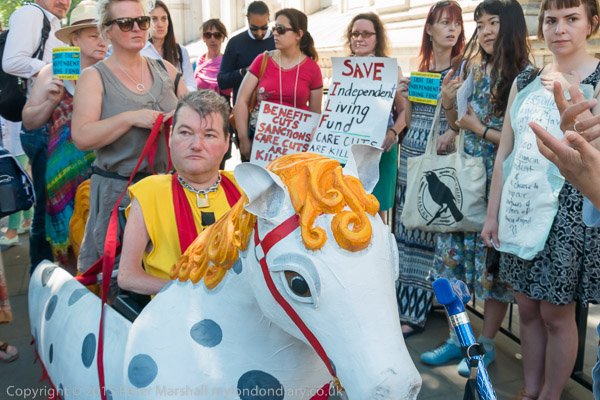
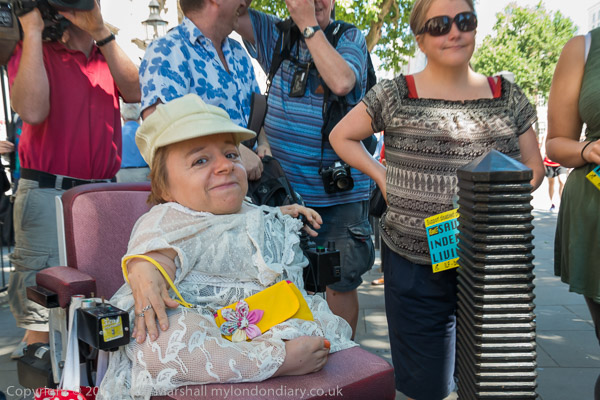
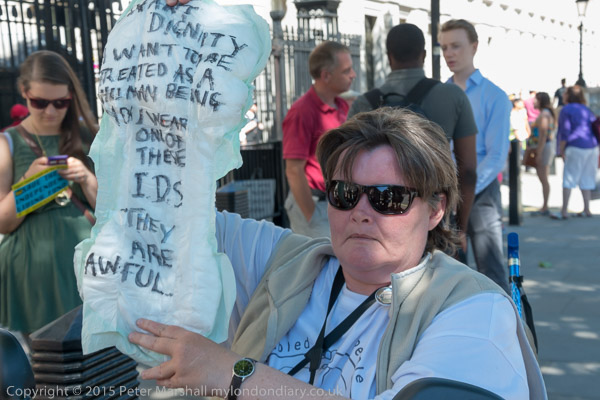
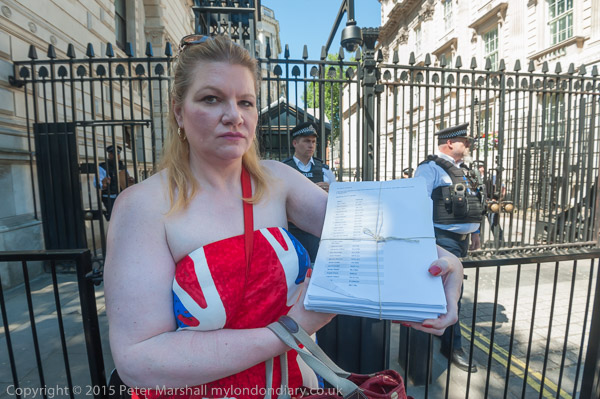
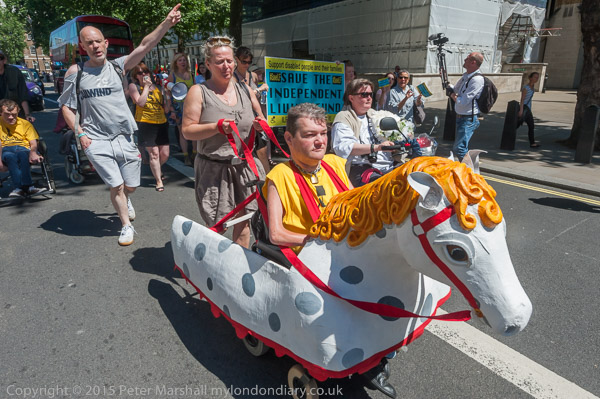
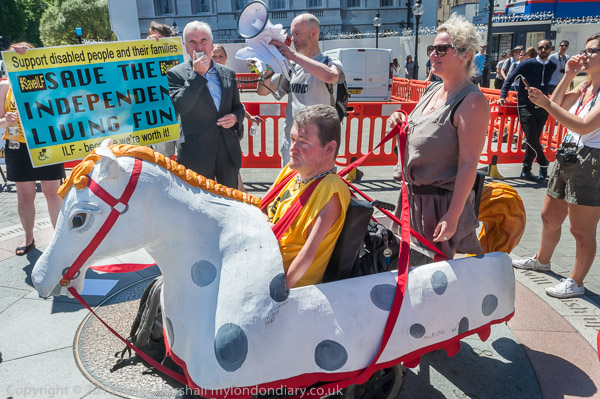
The Independent Living Fund enabled many disabled people to continue to live with dignity and to work making a positive contribution to society and the government decision to close it led to many protests and to legal actions to try and stop it under the Equality Act.

Although a court ruled that the minister concerned had acted illegally, all it required was that the new minister reconsidered the plans. He did so, and decided to go ahead, though with a three month delay. And a judge ruled in December 2014 that although in axing the ILF he knew that the closure would mean many disabled people would lose their ability to live independently in the community his decision was legal.

The decision to end ILF was clearly wrong, clearly immoral, but so long as the legal niceties were observed the government was able to go ahead with it, and our law gave no protection.

The vigil outside the court while the case was being heard attracted wide support, including from Inclusion London, Norfolk and Suffolk DPAC local DPACs, the Greater Manchester Coalition of Disabled People, Transport for All, Winvisable, PCS Union, the TUC, and other organisations,and there was even a simultaneous vigil in Toronto, Canada. Three MPs, John McDonnell, Andy Slaughter and Jeremy Corbyn, came to give their support, and there were speeches by campaigners including Paula Peters and Andy Greene, with John Kelly singing.

As expected the vigil ended with a short direct action by DPAC and others, briefly blocking the Strand outside the law courts.

Free Shaker Aamer

This was one of a long series of regular vigils opposite Parliament for Shaker Aamer, an innocent charity worker arrested by bandits and handed over to US forces who have imprisoned and tortured him for over 12 years. He was cleared for release in 2007 but remained in Guantanamo with our government failing to press for his release because his testimony could embarrass MI6 as well as the US.

London Panoramas

I had time before another protest to visit an exhibition at the Museum of London Docklands and on the journey to pause and make some panoramic images.

Probably the most interesting were inside Westminster station, where “the beams and buttresses, designed by Hopkins Architects and completed in 1999 for the opening of the Jubilee Line are also the foundations of the block of parliamentary offices above the station, Portcullis House, and were deliberately Piranesian, though sometimes I get more of the feeling of Escher as you seem to walk endlessly up escalators and around the interior.”

Democracy Camp – Poet Arrested

I returned to Parliament Square where the Democracy Camp was still holding workshops, though police and the GLA ‘heritage wardens’ had fenced off the main grass area.

Danny, one of the protesters had been sitting on the plinth next to the statue of Churchill since the previous afternoon and poet Martin Powell arrived with a pot of food for him, which he tossed up to him, going straight into his hands, despite police warning him he could be arrested.

How can feeding the hungry be a crime?” he asked and he was arrested and led away in handcuffs around two sides of Parliament Squareperforming his poem ‘The Missing Peace’. I left while Danny was still on the plinth, though later that evening police finally found a ladder and brought him down after over 26 hours.

Musical Poor Doors

It was Class War’s 14th weekly protest at the ‘rich door’ of Redrow’s One Commercial St flats and it was a lively affair, with the banners dancing to the music of Rhythms of Resistance, a poetic performance and some rousing speeches against social apartheid.

There were a lot of police present and some stood in front of the door and ushered a few people in and out but made no attempt to stop the hour long protest, which though noisy remained entirely peaceful. Some of the police clearly enjoyed the music and watching the dancing.


More at:
Musical Poor Doors
Democracy Camp – Poet Arrested
Canary Wharf & Westminster Tube
End UK shame over Shaker Aamer
DPAC High Court Vigil for ILF


Grow Heathrow Open Day 2012

A bike-powered smoothie maker

Transition Heathrow had moved onto the disused market garden site in Sipson immediately to the north of Heathrow Airport at the start of March 2010 when the site was a local eyesore and dumping ground. They had come to fight against the plans for a third runway at Heathrow, which would destroy the whole village of Sipson, but immediately realised the potential of the site to create a productive alternative home that would become a creative hub for the area.

Being a relatively local resident and also involved in the fight against the third runway I’d heard about them more or less from the start, but I’d not managed to visit – and on the couple of occasions I’d passed the gates they were locked. Later they got more organised with advertised opening times but I was busy with other things.

Inside a temporary home

They had to begin by clearing out 30 tons of rubbish, including much that had been illegally dumped there, and persuading the local council to take it away. They made some of the existing buildings habitable and many of those who came to live there built their own small temporary homes, while others continued to live in tents.

A wood-fire heated shower on the site

By 2012 the site had become in an inspiration for alternative life-styles with lessons for us all, and when the site owners won a court case to evict the site, Judge Karen Walden-Smith described the project as “much loved and well used” by the local community and they were granted leave to appeal on human rights grounds. They were evicted from a part of the site in 2019, but the final eviction only came on 8th March 2021. It was a sad end.

On Saturday 8th September 2012 I made my first visit to what was by then a thriving site having an Open Day, with a special welcome and programme of events. Among the other visitors I met and photographed was local MP John McDonnell, a firm supporter of the project who was quoted on their web site:

“This inspirational project has not only dramatically improved this derelict site but it has lifted the morale of the whole local community in the campaign against the third runway and in planning a sustainable future for our area. We cannot lose this initiative and I will do all I can to enable it to continue.”

The site was running regular bicycle workshops, art workshops and gardening with site residents and local residents. The bike workshop was recycling old bicycles, using the parts from old and abandoned bikes to create impressive ‘new’ machines as well as teaching people to repair their own bikes. I only wish it was still running as there are now a couple of old bikes in my own shed I’d go there with for their help.

A new meeting area, built with mud and waste materials

I was also impressed by their vegetable growing – which as I say in My London Diary made some of those produced in my own garden a few miles away look rather pathetic. The meeting room, newly built from recycled materials with walls of reinforced mud and donated straw bale seating was also impressive. Many rural buildings in the past were built using ‘wattle and daub’ and this is a more modern use of a similar technique, with thick walls giving good thermal properties, though I think this example is too well ventilated to be cosy.

Comfortable seating – all thrown out from homes

Living ‘off-grid’ and making use of recycled furniture and household goods is obviously not a possible future for the whole of society, but it does provide inspiration for how we might live better with less, and in doing so reduce our own carbon footprint. But despite the comfortable furnishing and great vegetarian or vegan food, it made me feel I was too old and used to my way of life to join them, and as I ended my comments I wrote “But although it seemed to be a very pleasant place to live on a warm summer day, I think it might be rather a harsh existence in winter.”

I returned several times in the following years and was always impressed by Grow Heathrow.

More at Grow Heathrow Open Day


All photographs on this and my other sites, unless otherwise stated, are taken by and copyright of Peter Marshall, and are available for reproduction or can be bought as prints.