March Against Cuts & Bloomsbury Festival – 2010

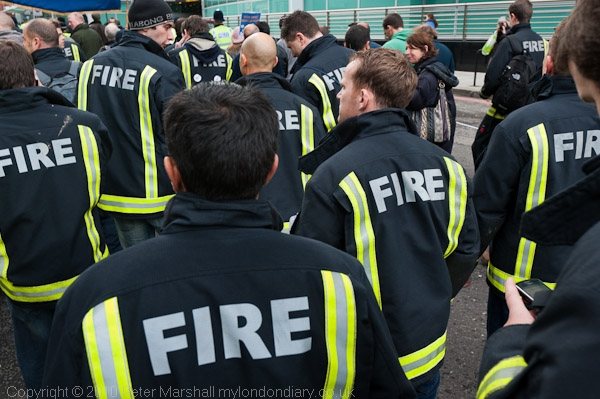
March Against Cuts & Bloomsbury Festival: On Saturday 23rd October 2010 striking London firefighters led a march with other trade unionists against government cuts on spending on public services announced a few days earlier. After photographing the march I walked around Bloomsbury where Bloomsbury Festival was taking place over a week or so.


Trade Union March Against Cuts

Euston Rd to Bedford Square
March Against Cuts & Bloomsbury Festival - 2010

London’s firefighters were taking part in an 8-hour strike from 10am, called after the London Fire Brigade had in August begun firing 5,600 of them to bully them into agreeing a new contract. 79% of firefighters had voted in a ballot over strike action with 79% supporting the strike.

March Against Cuts & Bloomsbury Festival - 2010

The Fire Brigade Union had been negotiating with the LFB over a new contract, but say that the Conservative chair of the London Fire and Emergency Planning Authority had pushed the LFB to adopt a more aggressive stance, firing the workers and then offering re-employment on a less favourable contract imposed without negotiation. Birmingham City Council were also attempting this for their 26,000 workers and Sheffield had also sent similar letters to their employees.

March Against Cuts & Bloomsbury Festival - 2010

Many of us were astonished that any reputable employer could even consider this ‘fire and rehire’ approach, and doubted its legality. Surely every worker treated in this way must have a cast-iron case for unfair dismissal – or certainly should have. Though as usual the main thrust of our laws is to protect the interests of the rich and powerful against the rest of us, so perhaps they could get away with it despite the clear injustice.
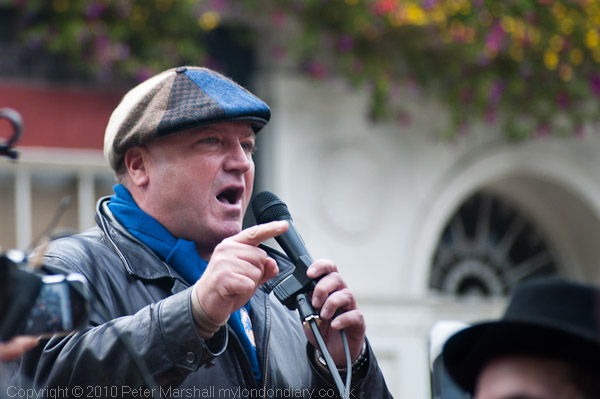
March Against Cuts & Bloomsbury Festival - 2010
Bob Crow, RMT

If they could do it for firefighters, councils and other employers could do it for other workers and many other trade unionists had come out in support of the FBU, with the London march being called by the RMT, FBU, NUT, PCS and the National Shop Stewards Network.

March Against Cuts & Bloomsbury Festival - 2010
Matt Wrack, FBU

The cuts announced by Chancellor George Osborne in the previous Wednesday’s Comprehensive Spending Review had been anticipated but still shocked. We – the country’s workers – were being made to pay for the greed of the wealthy bankers who had caused the crisis but were being given handouts. The London march and rally was just one of others across the country including in Cardiff, Manchester, Bristol, Lincoln and Wigan.
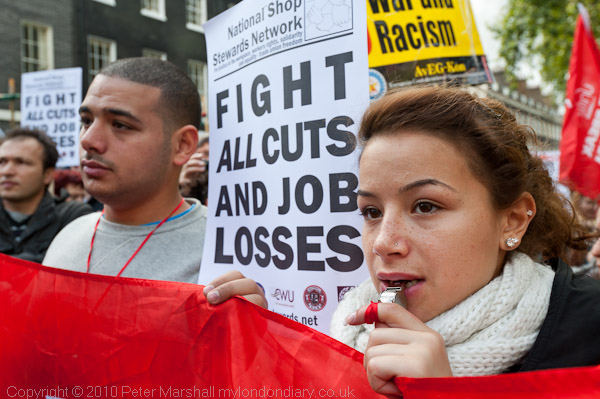
At the rally in a corner of Bedford Square there were calls for a much more positive approach from the TUC, and a demand that they bring forword the national demonstration which was planned for Spring 2011 but the TUC kept to its planned date of March 26th.

Some of those taking part in the march and rally went on to a TUC organised rally against the cuts in the nearby TUC HQ Congress House, organised by the South-East Region TUC, but I left to take a walk around the Bloomsbury Festival.

More pictures at Trade Union March Against Cuts.


Bloomsbury Festival
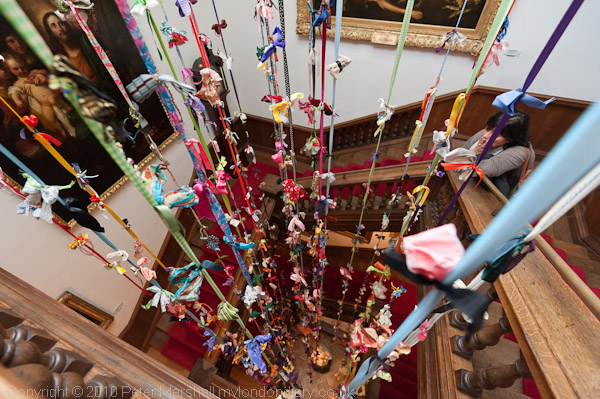
Modern cloth strips at the Foundling Museum, where ‘Threads of Feeling’ was showing.

The annual Bloomsbury Festival began in 2006, but this was the first year I had noticed it, and although there had been some events earlier in the week that sounded interesting I hadn’t had time to attend them.
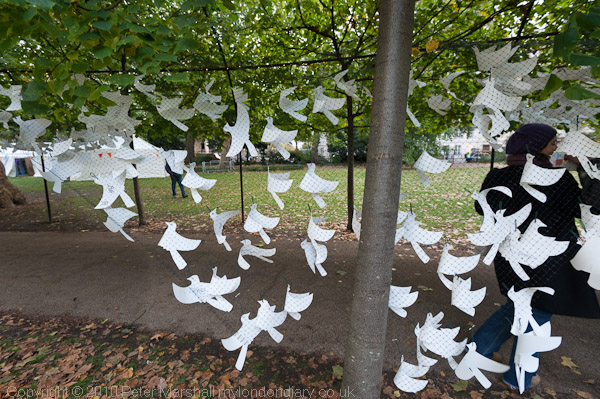
Paper birds in Russell Square where the main stage and stalls were

On Saturday there were free events taking place across the area, in museums and galleries, parks and gardens, as well as various dance and film performances, exhibitions, walks and tours and workshops. I walked through the area, visiting most of the squares and parks in which there were artworks as well as some of the museums and exhibitions.
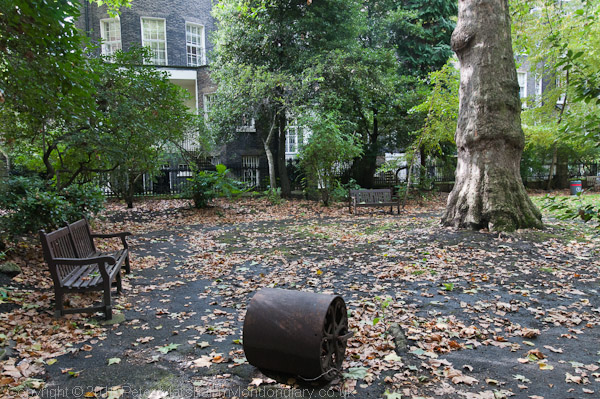
Malet St gardens

But much of what interested me on my walk were things I saw or found in the area itself, with some of the ‘found art‘ rather more interesting than the actual festival pieces. I was pleased to be able to go into the the charming private garden in Malet St – and the trees, leaves and the grass roller excited me considerably more than the work of photographic art strapped to a couple of trees.

It was good to go into the Foundling Museum for my first visit there, both to see its permanent exhibition with its incredibly moving special display the pieces of 18th century cloth, textile tokens left by mothers with the babies taken to the Foundling Hospital in the hope they could later be identified and reclaimed, along with a show Threads of Feeling, based on this.
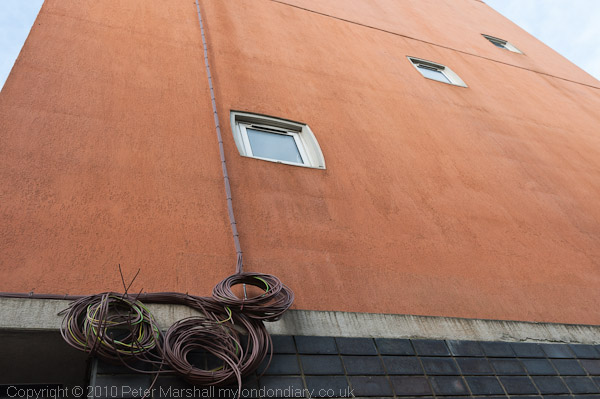
More pictures at Bloomsbury Festival.


FlickrFacebookMy London DiaryHull PhotosLea ValleyParis
London’s Industrial HeritageLondon Photos

All photographs on this page are copyright © Peter Marshall.
Contact me to buy prints or licence to reproduce.

Marine A, Mandela, CPS Failures, Cops off Campus – 2013

Marine A, Mandela, CPS Failures, Cops off Campus: On Friday 6th Decemeber 2013 some very varied events were taking place in Central London. Here they are in the order I photographed them.


EDL Protest Supports Marine A – Downing St

Marine A, Mandela, CPS Failures, Cops off Campus - 2013

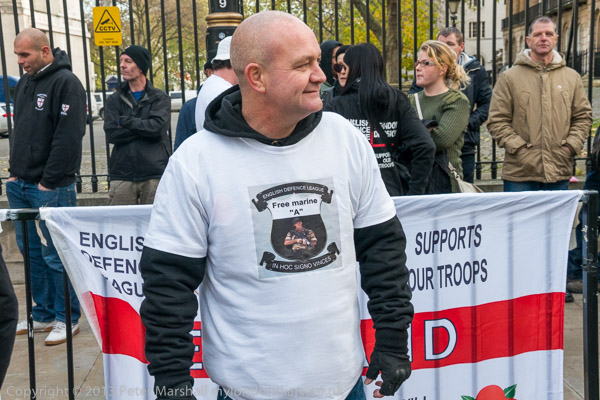
The EDL had called for a major protest at Downing Street on the day that ‘Marine A’, Sergeant Alexander Blackman, was to be sentenced, but only around 50 supporters were there when I arrived.

Blackman was being tried for the murder of a wounded Taliban insurgent in Afghanistan in contravention of the Armed Forces Act 2006, and became the “first British soldier to be convicted of a battlefield murder whilst serving abroad since the Second World War.

Marine A, Mandela, CPS Failures, Cops off Campus - 2013

I commented “I doubt if there are many serving soldiers who would wish to see the Geneva conventions disregarded, and wonder what support if any this protest would have from serving soldiers, many of whom have condemned strongly the cold-blooded killing of a prisoner by Marine A and called for an appropriate sentence.

However many did feel when later that day he was sentenced to “life imprisonment with a minimum term of ten years and dismissed with disgrace from the Royal Marines” he had been treated harshly, and in 2014 the sentence was reduced to eight years, then after a public campaign overturned on appeal and reduced to manslaughter on the grounds of diminished responsibility. Given the time he had served he was released in April 2017.

EDL Protest Supports Marine A


Tributes to Mandela – Parliament Square & South Africa House

Marine A, Mandela, CPS Failures, Cops off Campus - 2013

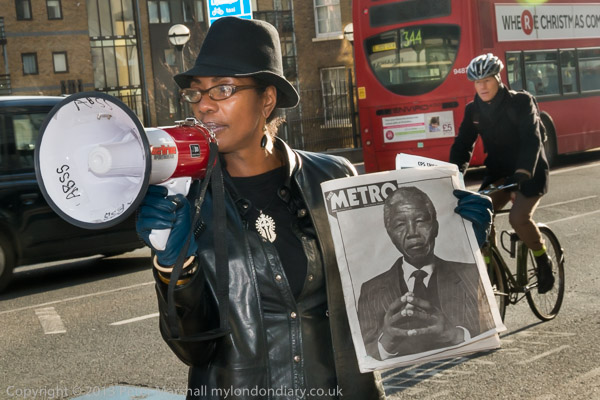
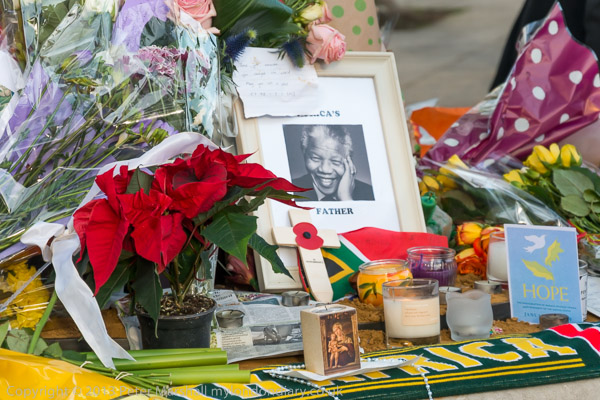
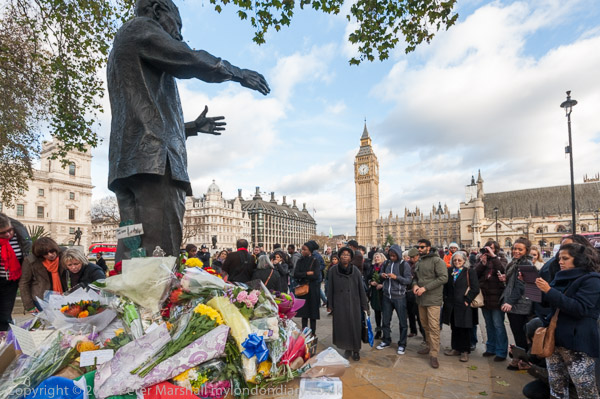
Nelson Mandela, the “Father of the Nation” who had become the first president of a new post-apartheid South Africa from 1994-1999, having previously spent 27 years in prison before his release in 1990, had died the previous day, 5th December 2013.

Marine A, Mandela, CPS Failures, Cops off Campus - 2013

People brought flowers to the Nelson Mandela statue in Parliament Square and to South Africa House in Trafalgar Square, where a long queue waited patiently for several hours to sign a book of remembrance in the High Commission.

Tributes to Mandela


Bereaved protest at CPS Failure – Southwark Bridge

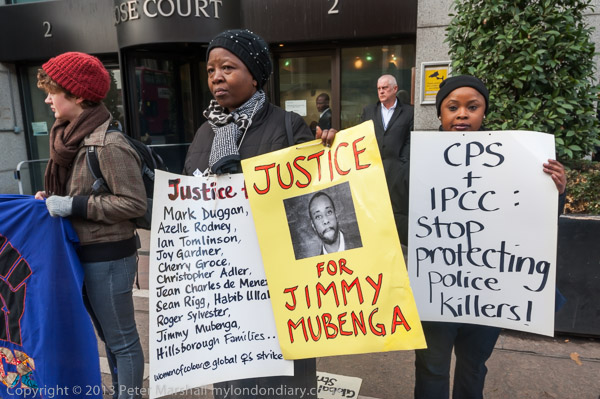
Marcia Rigg holds a picture of Mandela as she addresses the protest against the PCS

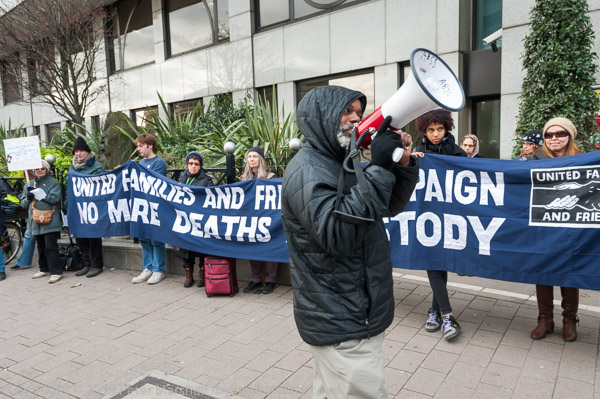
Since 1990 there had been 1433 deaths of people in custody, many under highly suspicious circumstances and not a single conviction of any police, prison officers or security guards who have either failed in their duty of care or more actively caused their deaths.

Relatives and friends of those who dies had come to protest outside Rose Court, the home of the Crown Prosecution Service. The last successful prosecution brought against a police officer was for involvement in a black death in custody was in 1972, after the death of David Oluwale in 1969. Police officers have been prosecuted for several other black deaths in custody – Joy Gardner, Christopher Alder and Mikey Powell – but none was successful.

The standard response from the CPS – led by Keir Starmer from 2008-2013 – is that there is ‘not enough evidence to prosecute’, largely because the cases have not been properly investigated. Often the police involved are simply not questioned, and in some other cases they simply refuse to answer questions.

Bereaved protest at CPS Failures


‘Cops Off Campus’ Protest Police Brutality – Bloomsbury

Following protests by students and others against student fees and cuts, the closure of the student union and calling for acceptable pay and conditions for low paid largely migrant cleaners, catering staff, security staff and others, the University management had tried to ban protests on campus and had brought in numbers of police to enforce that ban.

This protest was called after the previous day police had brutally assaulted a group of students who had briefly occupied a part of Senate House, arresting a number of students including the Editor of the student newspaper and a legal observer.

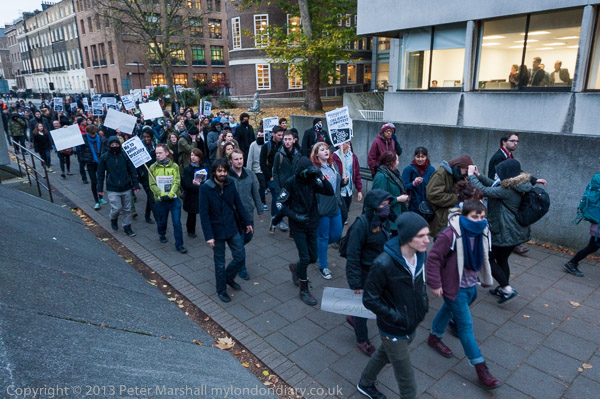
The organisers had intended this to be an entirely peaceful march around the various s sites of the university in the area to the west and north of Russell Square, but it was clear that the police had other ideas. There seemed to be police vans down every side-street in the area as students assembled on the pavement outside the University of London Union in Malet St.

There were a few short speeches before the march set off to walk around the block but were stopped by a line of police across the street, with those who tried to walk through it thrown roughly backwards.

They turned around only to find police blocking both the other end of the street and a side street leading to Gower Street and their only way open was to go onto the campus, walking past SOAS and out onto Thornhaugh Street. There they turned up into Woburn Square and then turned to make their way into UCL, only to find the gates from Torrington Place were locked and guarded by security.

They then turned into Gower Street where they saw another group of police rushing towards them and they then rushed through the gates into the Main Quad. Here there was a lot of discussion about what to do next and they eventually decided to take a back street route to Torrington Square, and set off at a rapid pace. I took a more direct route to meet them there. But by now it was dark and I was tired of walking around London and decided to go home.

The police operation seemed to me “an incredible and pointless waste of public money, and it resulted in more inconvenience to the public than if the event had not been policed at all.” Perhaps more importantly this kind of policing alienates a large proportion of young people, acting strongly to destroy the ‘policing by consent’ which has always been the the basis of our police system.

More at ‘Cops Off Campus’ Protest Police Brutality.


FlickrFacebookMy London DiaryHull PhotosLea ValleyParis
London’s Industrial HeritageLondon Photos

All photographs on this page are copyright © Peter Marshall.
Contact me to buy prints or licence to reproduce.

Free Education – No Barriers, Borders or Business

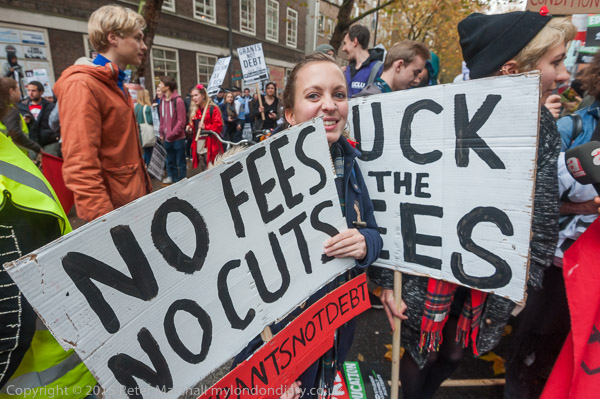
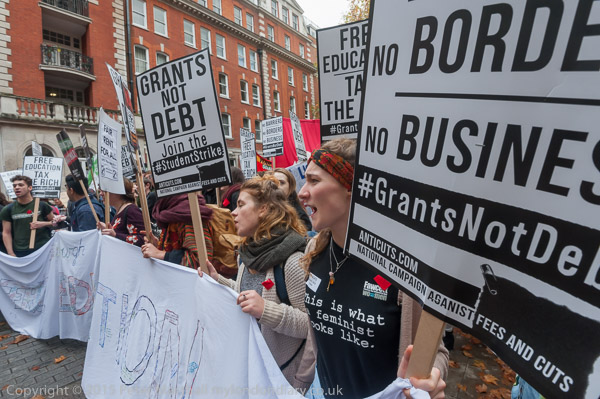
Free Education – No Barriers, Borders or Business was the call by the National Campaign Against Fees and Cuts (NCAFC) on their march through London on Wednesday 4th November 2015 against the abolition of maintenance grants and demanding free education without fees and huge student debts and an end to turning higher education into a market system impoverishing staff and students.

The march began in Malet St outside what had been the University of London Union, founded in 1921 as the University of London Union Society and was run by students for students. In 2013 the University of London decided to close ULU, taking over the building and running it as ‘Student Central’, now managed by the university, though continuing to offer similar services and resources for the 120,000 students, including bars, restaurants, shops, banks, a swimming pool and a live music venue – though some of these were on a reduced scale. But in 2021 it was announced that Student Central was to close and the building would become a teaching space for neighbouring Birkbeck College.

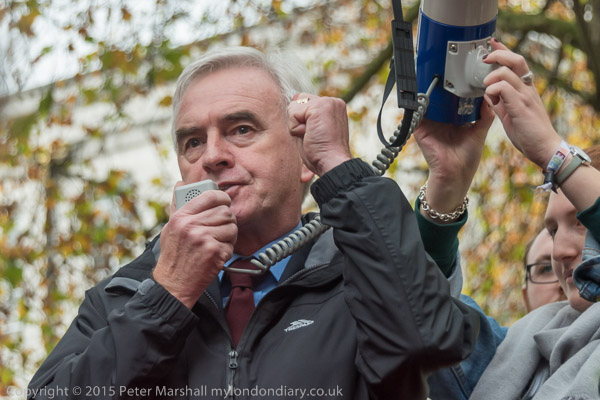
There were some speeches in Malet St before the march began, with speeches from several student representatives from various universities around the country, teaching staff and some fighting words from Shadow Chancellor John McDonnell MP. Green Party leader Natalie Bennett also marched with the students.

Antonia Bright of Movement for Justice spoke about the UK’s racist immigration policies and invited students to protest at Yarls Wood on the following Saturday.

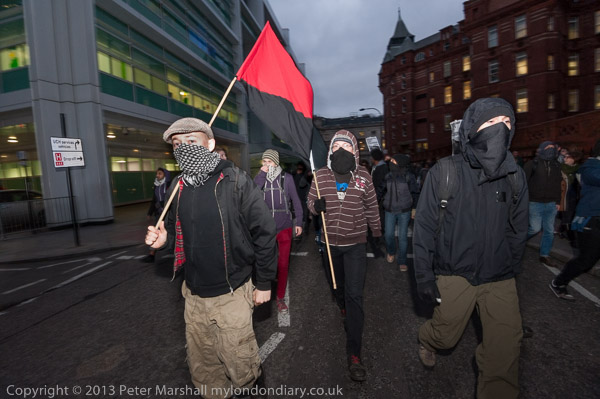
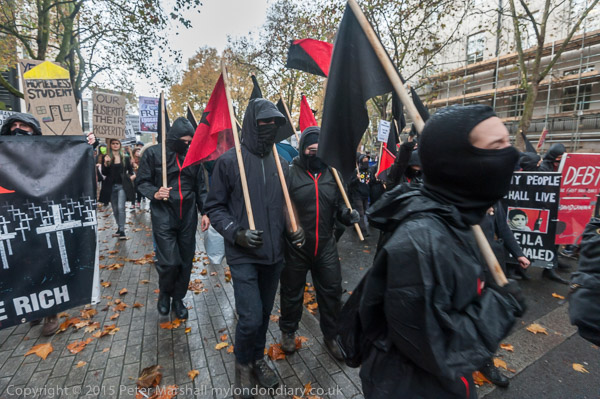
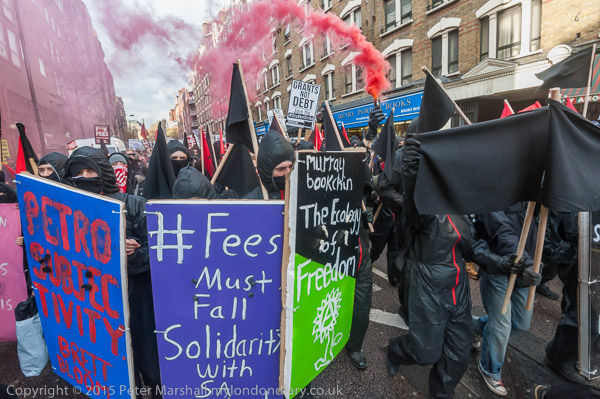
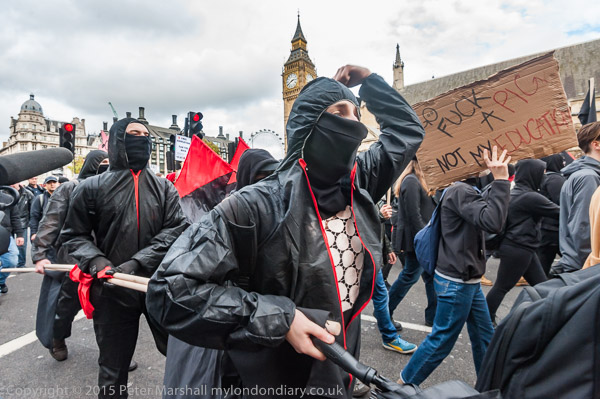
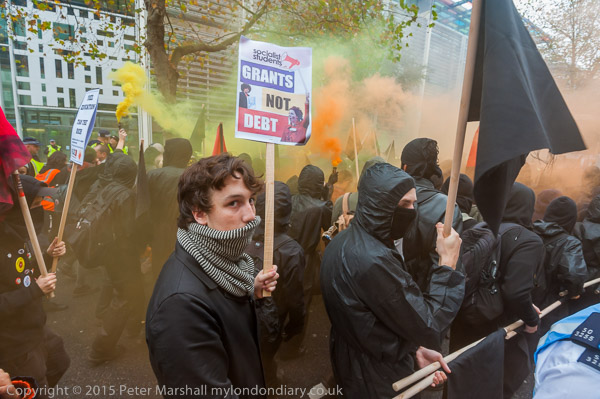
Among the marchers was a ‘black bloc’ carrying red and black anarchist flags and including Class War carrying their ‘WE HAVE FOUND NEW HOMES FOR THE RICH’ banner, along with a ‘book bloc’ carrying large polystyrene padded posters with the names of left wing and anarchist classic books on them or slogans such as ‘Rise, Riot, Revolt.’

The march went through Russell Square Square and down to High Holborn where it turned west and then took Shaftesbury Ave and the Charing Cross Rd to Trafalgar Square.

From there it went down Whitehall to Parliament Square where I left it briefly to photograph campaigners from the Save Shaker Aamer Campaign who had mounted a weekly vigil for his release from Guantanamo and were holding a ‘Welcome Home Shaker’ celebration.

I caught up with the marchers again at the Home Office, where there was a great deal of noise, confusion and coloured smoke before the marchers turned around and walked back towards Victoria St.

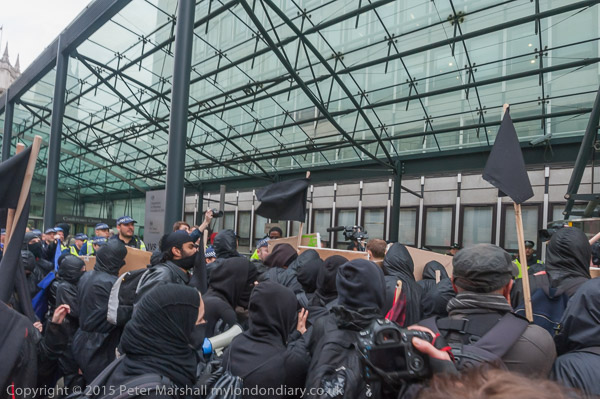
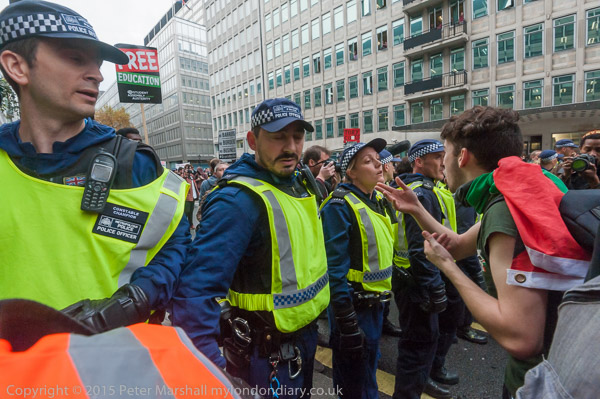
They gathered outside the Dept of Business, Innovation & Skills, where a black clad block charged the mass of police protecting the building, but were forcefully repelled. More police arrived and started pushing everyone away, including peaceful protesters and photographers. I was sent flying but fortunately into some of the protesters rather than to the pavement.

Eventually the pushing stopped and the police set up lines across the street which prevented the more peaceful protesters leaving the area. I tried to leave, showing my press card. After some minutes of being refused I found an officer who let me through and I walked along the street to rest and wait to see how the situation would develop. Eventually the students managed to break through the police line and run along to join the others already there, and they moved off. I decided I’d had enough and made my way to Victoria station to catch a train.

More pictures:

Students at Home Office and BIS
‘Welcome Home Shaker’ celebration
Free Education – No Barriers, Borders or Business