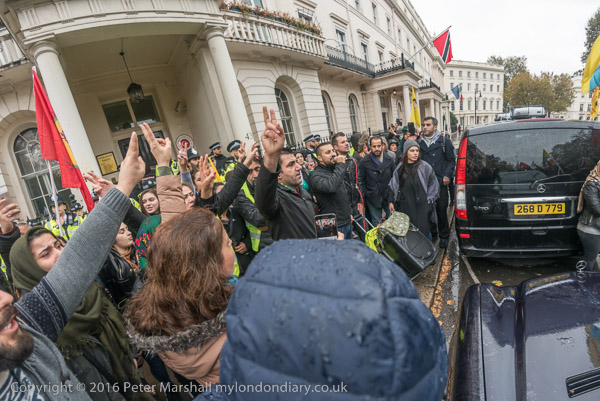
Heathrow Villages fight for survival – 2015

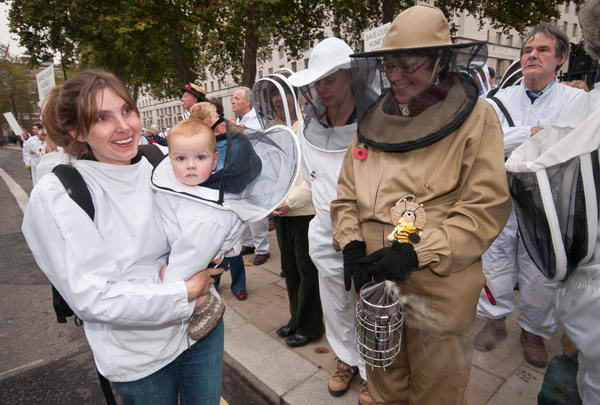
Heathrow Villages fight for survival: On Sunday 12th April 2015 in the run up to the 2015 General Election, campaigners launched a renewed fight against the expansion of Heathrow which threatens to swallow up much of the area, showing again the local determination to protect its historic community against a third runway.

Heathrow Villages fight for survival - 2015

As a fairly local resident although on the other side of Heathrow I’d been involved in the successful campaign a dozen years earlier against the expansion, which had eventually convinced all political parties that expansion at Heathrow was politically impossible. And when the 2010 election put a Tory Lib-Dem coalition into power plans were cancelled as the Lib-Dems had always strongly opposed them.

Heathrow Villages fight for survival - 2015
Datchet Border Morris in the Great Barn

But Heathrow had not taken NO for an answer and had continued to spend a considerable amount lobbying for it, including setting up a heavily funded PR organisation called ‘Back Heathrow’ to come up with spurious survey results suggesting local backing for expansion.

Heathrow Villages fight for survival - 2015

In 2012 the coalition government set up an Airports Commission led by Sir Howard Davies who had held many leading roles as an economist for both governments and private companies and who when appointed resigned from his roles as an adviser to GIC Private Limited, formerly known as Government of Singapore Investment Corporation, a part owner of Heathrow.

Heathrow Villages fight for survival - 2015

Officially the commission’s role was to consider how the UK could “maintain its status as an international hub for aviation and immediate actions to improve the use of existing runway capacity in the next 5 years” but unofficially it was designed to produce a political consensus in its final report in Summer 2015 that would put Heathrow expansion back on track.

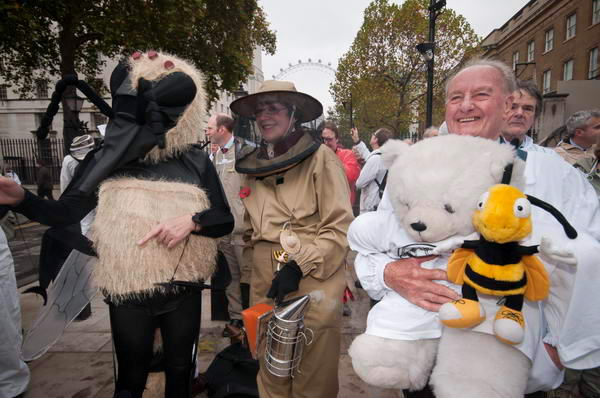
The Polar Bears brought their banner ‘Any new runway is Plane Stupid’

In October 2016 the Tories under Theresa May made a third runway and a new terminal a central Government policy, and in June 2018 the House of Commons voted by a large majority in favour, despite the opposition or abstention of most London MPs.

Clifford Dixon (UKIP), Pearl Lewis (Conservative), John McDonnell (Labour) and Alick Munro (Green)

The Supreme Court in 2020 ruled the government’s decision had been unlawful as they had not taken their committments to climate change under the Paris agreement into account. The government then accepted the judgement, but Heathrow appealed and won, with the ban being lifted.

John Stewart of HACAN (Heathrow Association for the Control of Aircraft Noise)

However the plans have so far not gone ahead, in part because governments have not agreed to pick up the huge infrastructure costs around the airport that would be required and that Heathrow were unwilling to finance.

A war veteran plants a tree on the recreation ground against Heathrow expansion

When the right-wing led Labour government came to power in 2024, they immediately set about making changes to the planning process that would enable developments like Heathrow to go ahead with little or no proper examination and inquiries. And in January 2025 they “confirmed it was the new Labour government’s plan to proceed with a third runway within the current parliamentary term.”

However the arguments against expansion continue to grow in strength, particularly on environmental grounds and the Trump-initiated slump in world trade seems likely to damage the economic arguments for expansion as well as increase the already huge costs of the project. So it still seems unlikely that it will happen, and certainly not by the “projected completion date around 2040.”

You can read more about the activities in Harmondsworth around the village centre back in April 2015 on My London Diary and see the strength of the local opposition back then. There were Morris Dancers performing outside the village pubs and inside the incredible Grade I listed Great Barn and a rally with the Plane Stupid polar bear, speeches from the general election candidates and protesters on what would be the new Heathrow boundary in the village centre.

Heathrow has of course promised the Great Barn would be protected along with the fine part 12th Century Parish Church, but they would not be the same without their context.

Heathrow represents a huge failure by successive governments over many years to set up a new major airport for London at some more suitable location. Even when opened as a civil airport in 1946 it was not a particularly suitable location, though when relatively small and quiet aircraft such as the DC3 were in use it was not a great problem. But once these began to be replaced by larger noisier and more polluting jets and passenger numbers and traffic in the surrounding area shot up the need to close it and move to a new location was clear. Heathrow’s answer was always to expand and make the problems worse, building new terminals (and actually closing runways that had become too short for the newer aircraft.) Heathrow should have been closed down years ago – and would have been a great site for a new town.

Heathrow Villages fight for survival.


FlickrFacebookMy London DiaryHull PhotosLea ValleyParis
London’s Industrial HeritageLondon Photos

All photographs on this page are copyright © Peter Marshall.
Contact me to buy prints or licence to reproduce.


Ian Tomlinson Killing & Sri Lanka Genocide – 2009

Ian Tomlinson Killing & Sri Lanka Genocide: On Saturday 11th April 2009 people marched from Bethnal Green Police Station to the spot were news vendor died after an unprovoked attack by police officer Simon Harwood. I also photographed a much larger march by Tamils against the genocide taking place in Sri Lanka.


March in Memory of Ian Tomlinson – Bethnal Green Police Station & Bank

Ian Tomlinson Killing & Sri Lanka Genocide - 2009

G20 Meltdown, the organisers of the protest at Bank on April 1st 2009 where police officer Simon Harwood attacked Ian Tomlinson leading to his death, had organised a memorial march from Bethnal Green Police Station to the place where he died a few yards away from the attack.

Ian Tomlinson Killing & Sri Lanka Genocide - 2009
Police discuss the march with Chris Knight

Tomlinson was not involved in the protest, but simply trying to make his way home after having been working, selling newspapers in the City. The protest would probably have been over by the time he was killed, but police had turned what had been intended as a carnival party into something far more sinister, kettling and then attacking many demonstrators and killing Tomlinson. There were numerous injuries and one photographer had his teeth knocked out, but I had seen the kettle coming and had left the area to cover another event.

Ian Tomlinson Killing & Sri Lanka Genocide - 2009

At the Tomlinson family’s request, the march was peaceful, silent and respectful. Before it started his stepson Paul King spoke briefly, describing the family’s trauma from the tragic death of his step-father, a “much-loved and warm-hearted man,” and pain at seeing the video of the assault, and he hoped that the investigation would be full and that “action will be taken against any police officer who contributed to Ian’s death through his conduct.”

Ian Tomlinson Killing & Sri Lanka Genocide - 2009
Paul King

As usual the investigation was carried out by the IPCC and the Crown Prosecution Service decided not to charge Harwood. After an inquest verdict of unlawful killing the CPS had to change their mind and charged him with manslaughter.

The sisters of Sean Rigg, murdered by police at Brixton the previous August were on the march

The jury was unable to hear evidence about his behaviour in previous incidents and was seriously misled both by some of Harwood’s own evidence and the evidence given by the first pathologist who had examined the body, Dr Freddy Patel. He had destroyed some vital evidence, puring away body fluids and had a long record of botched postmortems, having previously been suspended twice and finally was struck off the medical register in 2012.

After Harwood’s acquittal he was dismissed from the police. Tomlinson’s family took civil proceedings and in 2013, “the Metropolitan Police Service paid Tomlinson’s family an undisclosed sum and acknowledged that Harwood’s actions had caused Tomlinson’s death.

I left the march before it arrived at Bank, but returned the following day to photograph the flowers that had been left in Royal Exchange Buildings where the assault had taken place and a vigil was being held by Chris Knight, one of the G20 Meltdown organisers and a few others.

More at In Memory of Ian Tomlinson.


Tamils March – Stop Sri-Lanka Genocide – Temple to Hyde Park

A huge crowd had assembled on the Embankment at Temple, perhaps as many as 200,000, a very high proportion of Tamils in the UK who are thought to number around 300,000, around two thirds of them of Sri Lankan origin. It was a crowd with very few white faces.

Despite the size of the protest there appeared to be very little UK media interest and I saw no photographers or TV crews from major UK media covering the march to Hyde Park. Where there are usually a crowd of photographers in front at the start of large marches in London, for this one there was just me and three other freelances, none of whom get regular work for the mass media.

By April 2009 the civil war in Sri Lanka was clearly coming to an end, with the Tamil Tigers having been pushed back into a very small area. They had been defeated at a major battle at Aanandapuram on 5th April and the final assault by the government forces came at the end of the month with Sri Lanka declaring victory on May 16th.

Many of those taking part in the march were clearly supporting the “the LTTE, the Liberation Tigers of Tamil Eelam. A few carried actual tigers, fortunately only large toys, but many more wore the colours or carried flags or portraits of the founder and leader of the Tamil Tigers, Velupillai Pirapaharan.

The LTTE was proscribed in 2000 and they were clearly committing an offence under the Terrorism Act 2000 by supporting the group or wearing clothing which arouses the “reasonable suspicion that he is a member or supporter of a proscribed organisation.” But clearly the Tamils were not intending to cause any serious trouble and police sensibly made no attempt to arrest them all. Only three arrests were reported.

The Tamils had lost in Sri Lanka and many both civilians and combatants were killed during the civil war – possibly almost 150,000 in the last 8 months of the civil war. Around 300,000 were transferred into special closed camps, described by many as concentration camps – they were slowly released and the camps were closed by the end of September 2012.

Many more pictures at Stop Sri Lanka Genocide.


FlickrFacebookMy London DiaryHull PhotosLea ValleyParis
London’s Industrial HeritageLondon Photos

All photographs on this page are copyright © Peter Marshall.
Contact me to buy prints or licence to reproduce.


2004 Aldermaston March

2004 Aldermaston March. On Friday 9th April the 2004 Aldermaston March began with a rally in Trafalgar Square before following the route taken by the first march back in April 1958, which had also begun with a rally in the square. The 2004 march was called as a protest against the development then of a new generation of nuclear weapons.

2004 Aldermaston March
A young marcher on the way from Reading to Aldermaston

I covered the rally and went with the marchers as far as Hyde Park, and cycled to join them again in Maidenhead on Sunday 11th, walking with them for a few miles before returning to pick up my bike and cycle home. On the final day I caught the train to Reading and walked with them to Aldermaston.

I put many of my pictures from the march on My London Diary where you can still view them, and wrote a post about the events which I’ll reproduce here with proper capitalisation and some minor corrections, along with a few of the pictures I made in London on Friday 9th April 2004.


Aldermaston 2004: No New Nukes Rally & Start of March

2004 Aldermaston March

Aldermaston isn’t in London, but the ‘stop the next generation of nuclear weapons‘ march from London to Aldermaston started on Good Friday, 9 April 2004, from Trafalgar Square, where there was a ‘No New Nukes‘ rally.

2004 Aldermaston March

Aldermaston and nearby Burghfield are at the centre of the UK’s atomic weapon programme, and the march was a protest against the development of a new generation of nuclear weapons.

2004 Aldermaston March
Pat Arrowsmith addresses the rally

In 1958 the dangers of nuclear war were clear to most of us, and almost fifty years of the proliferation of weapons of mass destruction among members of the nuclear club make them even more of a danger now. We have seen another almost 50 years of lies and deception dressed up as security and national interest. For example we still haven’t been told of the nuclear warheads kept by our American allies at Lakenheath.

It was good to see many familiar faces, both on the platform and off, with addresses from Tony Benn, Jenny Jones, Pat Arrowsmith, Jeremu Corbyn and more, including a fine performance from Susannah York. There were a considerable number who had been on the first Aldermaston march, back in 1958, forty six years ago. I was too young to be involved then, but my two older brothers had been there.

Street theatre about Trident from Theatre of War

‘Theatre Of War’ gave a spirited performance, and there was a jazz band to add a little spirit at the front of the march, perhaps a reminder of the trad boom of the fifties. Pat Arrowsmith, Bruce Kent and some other CND veterans were up there too, leading off the 2,300 who led off through St James. The police estimated the march at 1000. I actually stood and counted as they went by, and although it isn’t an exact science with a march this size, I won’t be more than fifty or so out either way.

A single Trident submarine has warheads equivalent to 3000 Hiroshima bombs.

It was a cheerful sendoff to those marchers on the long plod to Aldermaston, one of several marches there starting from different parts of the country.

At Hyde Park, the march proper formed up, with around 430 making their way west through Kensington and towards the first night stay at Southall. I couldn’t walk all the way, although I’d probably covered as much distance running around taking pictures and left the march in Kensington.

On Saturday, the march continued from Southall to Slough via Uxbridge. I had other things to do in the East End and central London, but I managed to catch up with the march on Sunday morning at Maidenhead Bridge with some furious bike riding from Staines.

Pat Arrowsmith

By then, some problems with Thames Valley Police had emerged, with the police trying to force the march on to the pavement, while some marchers insisted on keeping to the road. In the end a compromise emerged, with the police tolerating those who wanted to stay on the road walking close to the edge of the pavement.

From Maidenhead it seemed a long walk along the A4 to Knowl Hill for a rather late lunch stop. There we were greeted from a distance by the sounds of the Sheffield Samba Band who piped the march in to lunch. I regretted not bothering to pick up my meal tickets, but was really too busy to stop to eat. I photographed the column of marchers setting off for Reading and then started a more lonely walk back to Maidenhead and my bike.

Bristol Radical Cheerleaders

By this time I was feeling the strain. Even on my ‘day off’ on Saturday I’d walked over 10 miles with a heavy camera bag, and the weight of a Nikon with a solid lens round my neck was getting to be too much. So for Monday I travelled light, working with a tiny Canon Digital Ixus. It had the nasty habit of often not taking a picture until a second or so after you pressed the button, by which time I’ve usually put the camera down, so I came home with quite a few pictures of random patches of road and grass from Berkshire. However, as you can see on My London Diary, some came out.

On Monday I walked all the way and a few miles more, with pictures from Reading to Burghfield, were we stopped close to AWE Burghfield [where atomic bombs are made] to the end of the march rally at AWE Aldermaston, after which we took a walk halfway round the large site.

Aldermaston2004 was jointly organised by CND, the Aldermaston women’s peace Camp and Slough4Peace.


My pictures from the rally and march start here on My London Diary, with more pictures starting on further web pages for Friday, Sunday and Monday.

CND is still active, still campaigning for peace and a nuclear free world and opposing the UK’s possession of nuclear weapons. As they say, “Nuclear weapons threaten us all. And they are an obscene drain on public finances.” You can find out more about their actions and sign their petition calling on the government to embrace diplomacy and peace negotiations, instead of nuclear weapons and war and take steps towards nuclear disarmament and a safer world.


FlickrFacebookMy London DiaryHull PhotosLea ValleyParis
London’s Industrial HeritageLondon Photos

All photographs on this page are copyright © Peter Marshall.
Contact me to buy prints or licence to reproduce.


Junior Doctors and Student Nurse Bursaries – 2016

Junior Doctors and Student Nurse Bursaries: On Wednesday 6th of April 2016 I photographed a picket and rally against the imposition of new contracts on junior doctors – hospital doctors now renamed to resident doctors to better reflect their status and then a march rally and die-in against the axing of NHS Student Bursaries.

Junior Doctors and Student Nurse Bursaries - 2016

The NHS was under attack from the Conservatives in various ways throughout their time in government from 2010 to 2024 and its hard to find any rational explanation of most of their policies other than a desire to bring in increasing privatisation. A desire perhaps largely driven by MPs financial interests in health companies as well as by the donations they receive.

Junior Doctors and Student Nurse Bursaries - 2016

Although the Labour Government quickly solved some of the outstanding pay issues in the NHS, research reveals that “Starmer’s cabinet received more than £500,000 in donations alone from lobbyists, hedge funds and private equity firms connected to the private healthcare sector since 2023.”

Junior Doctors and Student Nurse Bursaries - 2016

The Good Law Project gives more details on some of these donations to Wes Streeting. They say that “60% of the registered donations accepted by the health secretary come from people and companies linked to private health“, amounting to a total of £311,400 since 2015. Streeting has been one of the most vigorous advocates of private health company involvements in the NHS.


Support for Junior Doctor’s Picket – St Thomas’ Hospital

New contracts being imposed by Secretary of State for Health and Social Care Jeremy Hunt were described as sexist, racist and classist, and as aimed at easing the takeover of the NHS by private healthcare companies which is currently taking place. The doctors say the contract will reduce safety in hospitals, removing safeguards on overwork and unsocial hours. They claim the contract will particularly affect the disabled and women in general, both as workers in the NHS and as users of its services.

Junior Doctors and Student Nurse Bursaries - 2016

There were speeches at a rally next to the picket line at St Thomas’ Hospital and supporters, including Sisters Uncut, trade unionists, students, student nurses, medical professionals and DPAC members had come to support the doctors.

As well as some junior doctors, other speakers included Sara Tomlinson of Lambeth Teachers Association who announced that the NUT would be coordinating its strikes with further actions by the doctors, Danielle Tiplady, an organiser of the ‘Bursary or Bust’ campaign against the government’s intention to axe NHS student bursaries, Paula Peters of DPAC and a speaker for Sisters Uncut.

Support for Junior Doctor’s Picket


Bursary or Bust march to Dept of Health

Danielle Tiplady of Bursary Or Bust leads the march in front of Florence Nightingale over Westminster Bridge

As the picket outside St Thomas’ Hospital was about to come to an end most of those who had taken part in the rally marched the short distance across Westminster Bridge to a rally in Whitehall outside Richmond House, then the headquarters of the Department for Health and Social Security.

The march was led by DPAC and student nurses from the ‘Bursaries or Bust’ campaign included Sisters Uncut, trade unionists, students, medical professionals and DPAC members. They were followed a few minutes later by junior doctors at the end of their picket.

Bursary or Bust march to Dept of Health


Bursary or Bust Die-In & Rally – Dept of Health, Whitehall

It was hard to see the axing of bursaries for student nurses which eventually happened in 2017 as anything more than a direct attack on the NHS, then and now desperately short of nurses. The most recent statistics show 27,000 unfilled nursing positions.

Nurses are required as an integral part of their training to spend long hours working as nurses in hospitals where they are a vital part of the workforce. Along with long hours of study this makes them unable to take the part-time jobs that many students now work.

Axing the bursaries also makes it much for difficult for more mature entrants and those from less affluent backgrounds to train to become nurses and midwives.

Bursary or Bust Die-In & Rally


FlickrFacebookMy London DiaryHull PhotosLea ValleyParis
London’s Industrial HeritageLondon Photos

All photographs on this page are copyright © Peter Marshall.
Contact me to buy prints or licence to reproduce.


Against the Invasion of Iraq – April 2003

Against the Invasion of Iraq: The US and its allies had begun the invasion of Iraq on 20th March 2003, with Britain taking part despite the huge opposition of the British people. President Bush had decided months earlier that the invasion would take place and the US had manufactured fake information that Iraq had failed to abandon its weapons of mass destruction.

Against the Invasion of Iraq - April 2003

UK’s Prime Minister Tony Blair had added his own lies to this to persuade the British parliament, presenting the “dodgy dossier” together with highly misleading statements. Although 84 Labour MPs voted against (along with almost all of the Liberal Democrats and most of the smaller parties) and there were 94 mainly Labour abstentions the Labour Government won the vote easily with the support of the Conservative Party. For many of us it seemed a vote which demonstrated a complete failure of our parliamentary democracy, MPs following the party line and voting for war in clear disregard of the evidence.

Against the Invasion of Iraq - April 2003

And the BBC and mass media had failed to properly investigate and challenge the official position, with the BBC moving into an establishment role in supporting the war.

Against the Invasion of Iraq - April 2003

On Saturday 5th April Stop the War, CND and others organised another protest against the war and I walked with the protesters from outside Broadcasting House in Portland Place to a rally close to the US embassy in Grosvenor Square and later posted the following piece (corrected as usual) on My London Diary with some of my pictures.

Against the Invasion of Iraq - April 2003

April started with the country at war, invading Iraq together with the USA.

On Saturday 5th I went to a march to protest against this and to call for proper reporting of the events in the media, especially the BBC.

I walked to the march past the houses of parliament and a small group of protesters in whitehall who were pointing out the number of Iraqi civilians already killed by the allied forces.

The main thrust of the demonstration now was that the civilian population of Iraq should be respected. The use of weapons such as depleted uranium shells and cluster bombs will mean the deaths continue for generations after the end of the fighting.

The march started opposite the BBC building in Portland Place and went to Grosvenor Square, close to the US Embassy. There were perhaps five thousand marchers, and several hundred police surrounding them most of the time. As the speakers pointed out, it was difficult not to see the war as a US takeover of the country when plans were already in place for Americans to run the country after the war.

The killing of Iraqis must stop, and rapid progress should be made to hand control of the country back to its people.

Peter Tatchell

Iraq has still not recovered from the disastrous effects of the invasion and in particular from the failure of the USA to think beyond getting rid of Saddam Hussein and his regime. In doing so they also demolished the civil state and the internal security of the country turning it into a lawless state.

It is now clear that there were no “Weapons of Mass Destruction” and that the whole invasion was justified on what were known at the time to be lies.

The USA established a provisional authority led by US diplomat Paul Bremner which made the ridiculous decision to disband the Iraqi Army and exclude all members of Saddam’s Ba’ath party from government in Iraq rather than taking these over and using them to build a new Iraq.

Adrian Mitchell

As well as leaving the country at the mercy of a wide range of militia units this also disqualified the entire civil service at all levels from taking part in the rebuilding of the the country – including all government officials for whom party membership was simply a condition of service, even the 40,000 teachers.

Lindsay German

As Wikipedia states, in 2023, “Corruption remains endemic throughout all levels of governance while US-endorsed sectarian political system has driven increased levels of violent terrorism and sectarian conflicts within Iraq.” And although accurate estimates are difficult, probably by now over a million Iraqis have died because of the invasion and the insurgencies that followed. Around 2.4 million Iraqis have left the country as refugees and well over a million remain internally displaced inside the Iraq.

As we are now seeing under Trump, a total irresponsibility and ignorance seems to be at the heart of US foreign policy. Trump has just made this more open and obvious.

There are just a few more pictures with the original article, particularly of the speakers at the event.


FlickrFacebookMy London DiaryHull PhotosLea ValleyParis
London’s Industrial HeritageLondon Photos

All photographs on this page are copyright © Peter Marshall.
Contact me to buy prints or licence to reproduce.


Visteon, City & Fashion Victims – 2009

Visteon, City & Fashion Victims: On Saturday 4th April 2009 I went to protest in support of the Visteon factory occupation in Enfield, came back the the City but missed a protest over the police murder of newsvendor Ian Tomlinson and then photographed a fashion show protest on Oxford Street against the slave-like labour of workers in Bangladesh producing cheap clothes for Primark.


Solidarity at Visteon Enfield

Visteon, City & Fashion Victims - 2009

I wrote a few days ago about the Visteon pensions scandal where former Ford workers who were transferred to parts manufacturer Visteon, ‘An Enterprise of Ford Motor Company‘, in 2000 had lost up to half of their pensions when Visteon went into administration on 31st March 2009 when administrators KPMG immediately closed the company down.

Visteon, City & Fashion Victims - 2009
An Enterprise of Ford Motor Company, Limited

Together with workers at the Visteon Belfast site, the workers at Visteon Enfield had occupied their factories and were refusing to leave until Visteon and Ford made good on the firm promises made in 2000 they had that they would receive the same pensions and redundancy arrangements they had enjoyed previously.

Visteon, City & Fashion Victims - 2009
Workers on the roof demand the terms promised by Ford when the business was sold off

Workers in Belfast had occupied their factory immediately after a 5 minute meeting had told them they had lost their jobs and that they had an hour to take any personal possessions and leave work immediately – without pay. Enfield workers occupied their factory the following day.

Visteon, City & Fashion Victims - 2009

KPMG’s response was to go to the courts and secure a court order for repossession, while Ford simply denied all responsibility in the matter (though five years later were eventually forced by Unite to pay some compensation.)

I went to the factory at Ponders End, Enfield along with several hundred other trade unionists and others for a rally outside the plant to show our support for their case. A number of those who spoke at the rally had organised collections for the occupiers in their workplaces, reporting unanimous support for the dismissed workers, and others had also brought practical support – sleeping bags, food and money – to enable the occupation to continue.

More at Solidarity at Visteon Enfield


City Walk – Bank and Bishopsgate.

I was later than I had hoped by the time my train from Ponders End reached Liverpool Street and had missed the rally at Bank in memory of the news vendor Ian Tomlinson who died of a heart attack minutes after being attacked and violently pushed to the ground in an unprovoked attack by a riot policeman, dieing from a heart attack minutes after. The murder had been captured on video by an onlooker and The Guardian had published the video – still on their web site.

After the rally the protesters had marched away – and I could see and hear a police helicopter following them on the way towards Bethnal Green. I didn’t have time to try and catch up with them, but wandered through some of the streets in the City, including some that Tomlinson had wandered through as he tried to make his way home through the area where police were kettling and attacking the April 1st Financial Fools Day G20Meltdown protesters. On 4th April those streets were empty.

More pictures at City Walk.


Primark – Fashion on the Cheap from Sweatshops

War on Want and No Sweat were drawing attention to Primark profiting from selling clothes made by sweated labour in Bangladesh with a ‘fashion show’ outside the company’s flagship Oxford Street store.

Models used the pavement as a catwalk, walking in chains “to symbolise the slave labour conditions of the Bangladeshi workers who make the cut-price fashions on sale at Primark. Workers who make the clothes earn as little as 7p an hour and work up to 80 hours a week.”

The Primark store opened here in 2007 and flourished as the recession made people turn to cheaper suppliers with their profits in the year to September 2008 up by up by 17% at £233 million.

Notices in the store windows claimed they “care about the conditions of the workers who make their clothes, but the reports by War on Want tells a very different story. These clothes are only cheap because those who make them get poverty pay, work long hours and get sacked if they try to organise or ask for improvements in their dangerous and unhealthy working conditions.”

Although the links on the My London Diary post are now out of date, War on Want are still campaigning for garment workers around the world including in Bangladesh, as are No Sweat.

In 2009 I commented:

Primark and others could still have a moral and reasonably profitable business if they restrained their greed and ensured that the workers who make their clothes worked in reasonable conditions and got a living wage – which in Bangladesh is only around £45 a month. But that is over three times what workers making clothes for Primark are currently paid.

Primark’s profits continue to rise, and although it claims it has “improved working conditions and implemented ethical initiatives, reports and investigations suggest that worker exploitation in its supply chain, including issues like low wages and unsafe working conditions, unfortunately still persists” according to Google’s Generative AI.

More at Primark – Fashion from Sweatshops.


FlickrFacebookMy London DiaryHull PhotosLea ValleyParis
London’s Industrial HeritageLondon Photos

All photographs on this page are copyright © Peter Marshall.
Contact me to buy prints or licence to reproduce.


Fools Paradise Parade 2006 & Police State 2025

Fools Paradise Parade Against London Exclusion Zone: Another of my old posts on My London Diary that I’ll capitalise appropriately and make minor corrections is on the Fools Paradise Parade Against London Exclusion Zone which marched from beside the London Eye to Parliament Square on 1st April 2006. As well as the few pictures I’ll post here there are many more on My London Diary. And I’ll end with a dramatic illustration of our shift towards a police state as we have moved over my lifetime fromthe welfare state to a warfare state.

April Fools Day was a good day to demonstrate against the Serious Organised Crime And Police Act 2005 exclusion zone, which bans democratic protests within a kilometre of the the Houses of Parliament unless they have previous permission, as well as greatly restricting what protesters can do. It’s a peculiarly foolish piece of legislation, rushed through to try and tidy up Parliament Square and protect the government from the embarrassment of seeing Brian Haw and other peace protesters on their patch of grass in Parliament Square.

Even more foolish in that, at least so far, it hasn’t worked, although the authorities have appealed against Brian’s legal victory to be allowed to remain.

Attacking the pinata in Parliament Square, Westminster, London

April Fools were those who stuck their head in the sand and ignored the Calendar Change in 1752, which was accompanied by a shift in the New Year from March 25th (the Feast of the Assumption) to Jan 1st (the Feast of the Circumcision, latterly renamed the Solemnity of St Mary, Mother of Jesus.) The Inland Revenue still celebrates the old date (augmented by the 11 lost days of the Calendar Change and another that got lost in 1900) by starting the new tax year on April 6th.

The Fools Paradise Parade started on the Victoria Embankment next to the London Eye, with police taking only a friendly interest, but an argument with security men who told us we were on private property. Nice to know that its yet another bit of London that someone has flogged off, but it is public right of way, and we weren’t doing anything that could legally be objected to.

Tony Blair won the vote to lead the march

The main problem they had seemed to be that people were photographing them, which demonstrated their lack of training in their job, as did their attitude to the members of the public.

The Queen was soon telling Mr Blair exactly what he could do.

Eventually the parade made its way along the riverside path and across Westminster Bridge to Parliament Square, where there was a bit of a party, with a pinata stuffed with presents being attacked and destroyed by the children.

Charlie X

In Parliament Square the parade was greeted by Brian Haw, still continuing his protest despite SOCPA. April 1st also marked the start of our very own FBI, the Serious Organised Crime Agency which seems likely to be used against political opposition as well as serious crime.

Parliament’s incompetence in drafting the law so it failed to ban Brian Haw was corrected in a rather concerning court appeal decision where basically the judgement said that it didn’t matter what the law said as it was clear what parliament had intended.

An illegal political placard just somehow slipped out in front of the houses of Parliament

But the provisions on protests in the area around parliament were later repealed and replaced by the Police Reform and Social Responsibility Act 2011, which instead “restricts certain “prohibited activities” in Parliament Square garden and the adjoining footways. The police have used these powers to confiscate pizza boxes, tarpaulin and umbrellas from protesters in Parliament Square.” It was rather a case of one step forward, two steps back and almost killed Barbara Tucker who had by then taken over from Brian Haw.

Since 2006 we have seen many further restrictions on our right to protest and draconian prison sentences given to peaceful protesters. Some of the restrictions have been brought in by the Tories prompted by the success of protests by grass roots unions against companies particularly in London paying poverty wages and badly treating workers while others reflect the success of protests in promoting public awareness of issues including climate change and Israeli genocide in Gaza.

More pictures on My London Diary


The move towards a police state we are now witnessing was dramatically illustrated last week when when on 27th March more than 20 uniformed police, some equipped with tasers, forced their way into the Quaker Westminster Meeting House, searched the entire building and arrested six young women holding a meeting over concerns for the climate and Gaza.

As the Quakers state:

The Police, Crime, Sentencing and Courts Act 2022 and the Public Order Act 2023 have criminalised many forms of protest and allow police to halt actions deemed too disruptive.

Meanwhile, changes in judicial procedures limit protesters’ ability to defend their actions in court. All this means that there are fewer and fewer ways to speak truth to power.

Their statement concluds:

“Freedom of speech, assembly, and fair trials are an essential part of free public debate which underpins democracy.”


FlickrFacebookMy London DiaryHull PhotosLea ValleyParis
London’s Industrial HeritageLondon Photos

All photographs on this page are copyright © Peter Marshall.
Contact me to buy prints or licence to reproduce.


Pension Justice, Ethiopian Tyrant & Rioters United – 2010

Pension Justice, Ethiopian Tyrant & Rioters United: Three very different protests on Wednesday 31st March 2010.


Ford/Visteon Workers March For Pension Justice

Pension Justice, Ethiopian Tyrant & Rioters United - 2010

Former Ford workers who had been transferred to parts manufactuer Visteon, ‘An Enterprise of Ford Motor Company‘, in 2000 and had lost up to half of their pensions when Visteon went into administration and its UK plants were closed in 2009 marched through London from the Unite offices in Holborn to a rally outside Parliament.

Pension Justice, Ethiopian Tyrant & Rioters United - 2010
Fraud – Justice for Ford / Visteon Workers

Many who came had worked at Swansea and there were others from the Belfast plant as well as from the North London factory in Enfield where I had gone in April 2009 to photograph the factory occupation and its end following a court order.

Pension Justice, Ethiopian Tyrant & Rioters United - 2010

The occupation by the workers had failed in their efforts to keep the factory open and prevent administrators KPMG from gutting the factory and selling its high-tech machinery to China. But the fight to get back their stolen pensions continued,

Pension Justice, Ethiopian Tyrant & Rioters United - 2010
Marchers at Downing St
A speaker holds up the Ford & Visteon rule books – identical except for the covers

When the workers were transferred from Ford to Visteon they were given a ‘cast-iron’ guarantee by Ford and Visteon that their working conditions and pensions would be protected – and the only change in the book governing these was in the colour and logo of the cover – from blue to tangerine.

But when Visteon went into administration the factories and the 3,000 employees lost their jobs, adminstrators KPMG had no interest in the workers and Ford reneged on their promises. The former employees had to rely on the much less generous terms of the government Pensions Protection Fund. Their union, Unite, supported them in the long fight for justice that ensued – including this rally – as did others from the trade union movement and a long list of MPs. They demanded Ford meet its pension obligations of £350 millions to its former employees.

The fight by Unite continued and even got some support from the coalition governments Minister for Pensions Steve Webb (Lib-Dem). It took until April 2014 before Ford eventually came to a settlement with Unite covering around 1,200 ex-Ford workers. Even PM David Cameron praised “all those who played a role” in the fight.

Much more about the event and more pictures on My London Diary
Ford/Visteon March For Pension Justice


Ethiopians Protest Bloodthirsty Tyrant

Ethiopians protested opposite Downing Street where Ethiopian Prime Minister Meles Zenawi was co-chairing the UN climate finance group.

He was the leader of the coalition of rebel groups, the Ethiopian People’s Revolutionary Democratic Front (EPRDF) which it took power in 1991, and has been Prime Minister since 1995, imposing what has become a one-party state, with many opposition politicians being imprisoned and press freedom being highly restricted with leading journalists being jailed for criticising Zenawi.

Somalis came to demonstrate with the Ethiopians against the “Butcher of the Horn of Africa.”

Human rights violations and corruption are rife in Ethiopia, and food aid, education and jobs all depend on membership of the ruling party. His opponents regard Zenawi as a bloodthirsty tyrant and call for him to be brought to trial at the ICC at The Hague on charges of genocide.

Human Rights Watch (HRW) have accused his regime of war crimes in the Somali regions of Ethiopia and against the Anauk communities in Gambella in 2003-4. Despite this, the Ethiopian government was the largest recipient of UK budget support in Africa, and the protesters called on the government to think again and withdraw support from the regime.

Ethiopians Protest Bloodthirsty Tyrant


Rioters United! 20 Years Since the Poll Tax Riots

Rioters Re-United!’ returned to Trafalgar Square on the 20th anniversary of the Poll Tax Riots saying it was the London mob who brought Thatcher down and announcing an Anti-Election campaign to keep the mob in business and pronounce sentence on politicians.

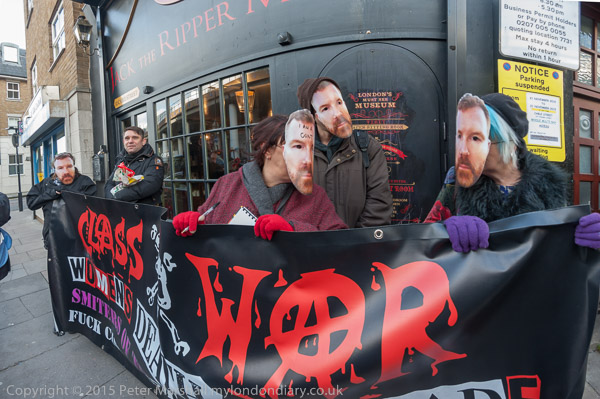
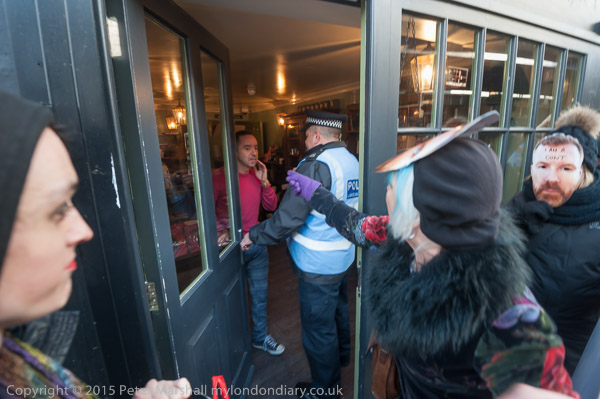
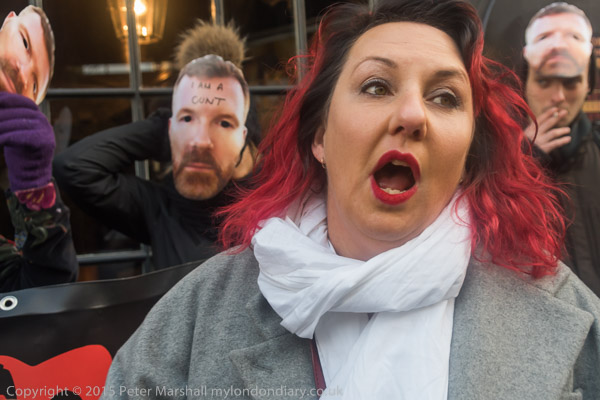
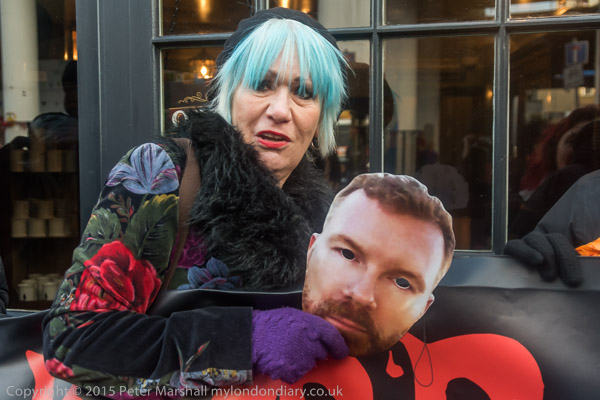
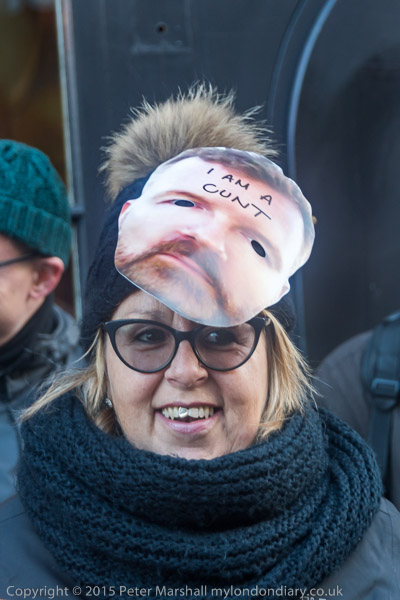
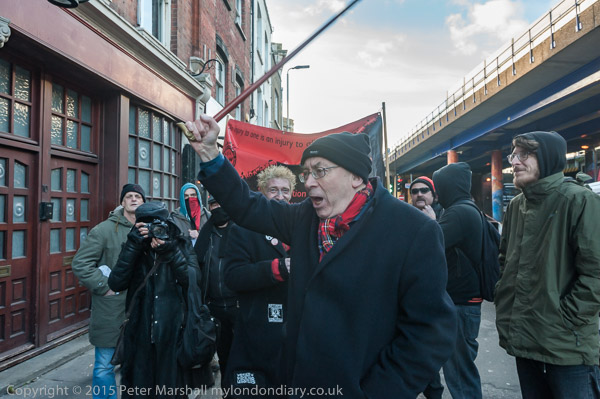
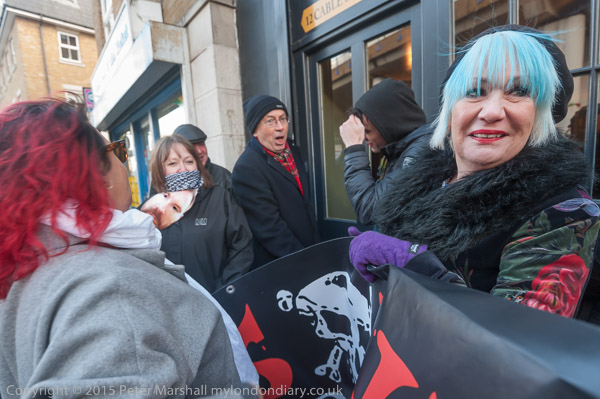
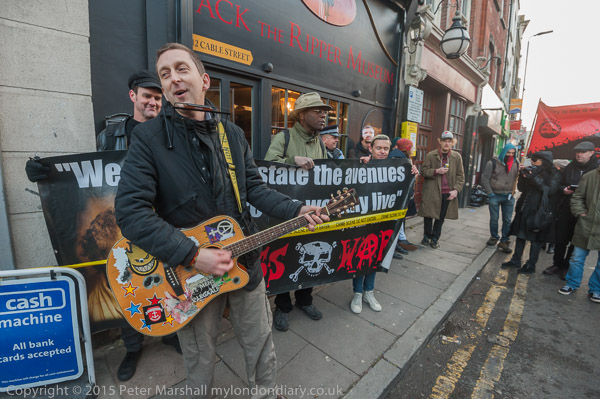
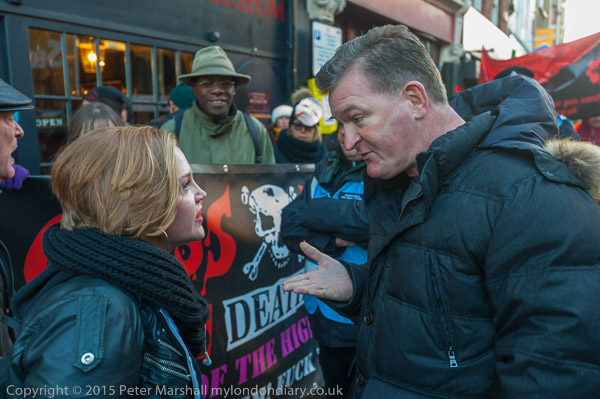
Chris Knight, one of the leading figures behind last year’s April 1 demonstrations at Bank announced that the Four Horseman of the Apocalypse who led the marches there would this year on May Day be dragging our political leaders (in effigy at least) from their various HQs to stand trial at a people’s assembly in Parliament Square. Since the event is called ‘Carnival of Death’ I think we can take it that the sentence has already been passed, and as Knight reminded us, the only good politician, the only honest politician is a dead politician.

A tap on the shoulder from Mr Bone

As I commented “no party leader will actually be hanged, and the police should not make the mistake they made last year at Bank of confusing the rhetoric with reality, which led to their ridiculous over-reaction, with squads of riot police psyched up to batter largely innocent and joyful protesters – and the death of a bystander. “

A PSCO was called on by the Heritage Wardens to tell the 30 or so former rioters that they were not allowed to hold protests or other events in Trafalgar Square without permission. Of course they simply laughed at him, and continued even after a dozen police officers he had phoned for support arrived and stood around watching. “Fortunately they had enough sense not to try and stop the commemoration, which ended after around 30 minutes when the organisers decided it was time to go down the pub.”

Ian Bone

Of course politics and parliament carried on regardless. The turnout at our general elections is low, with the Institute for Public Policy Research finding that only 52% of the UK adult population bothered to vote in 2024, considerably less than the official turnout of 60% which only counts those who have registered as voters. Starmer was brought to power in a landslide by roughly a third of a half of us – if the PPR is correct, around 17%. The real winners in the 2024 vote were those who didn’t bother at 48%,

The lion thinks about May Day. Parliament still to do.

The Tories had brought in the voter ID law in the hope that this would result in more Labour voters being unable to register their votes. It probably did – but this was not enough to save them after their obvious and dramatic failures in government under May, Johnson, the brief but disatrous Truss and Sunak. Labour have failed to repeal this law, and are currently emulating the Tories in losing support. If they continue their current policies it seems likely that even fewer will bother to vote at the next general election – and the next election will see the landslide continue to put Labour on the sidelines with the Tories.

Rioters United! celebrate Poll Tax Riots


FlickrFacebookMy London DiaryHull PhotosLea ValleyParis
London’s Industrial HeritageLondon Photos

All photographs on this page are copyright © Peter Marshall.
Contact me to buy prints or licence to reproduce.


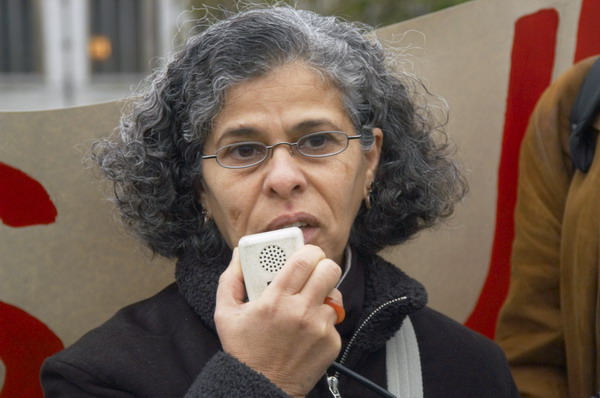
Iraq War & Climate Change -2003

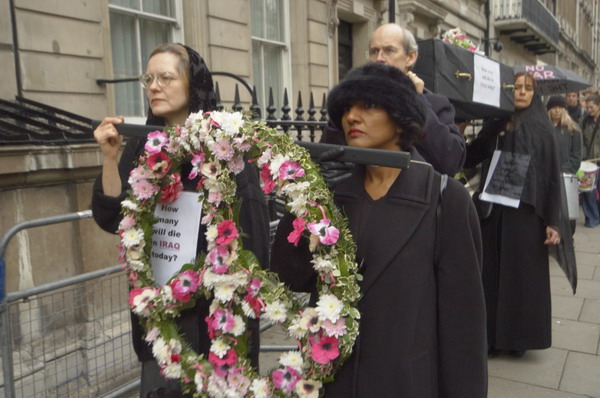
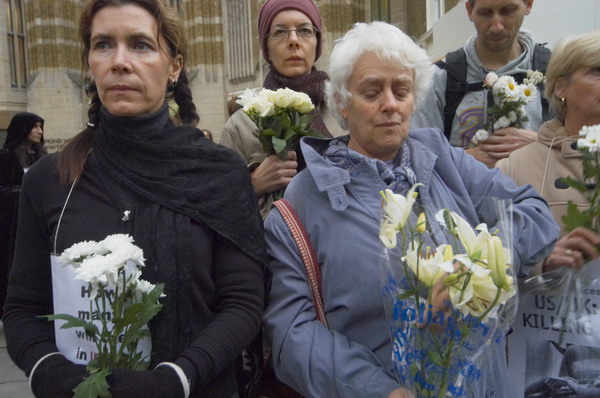
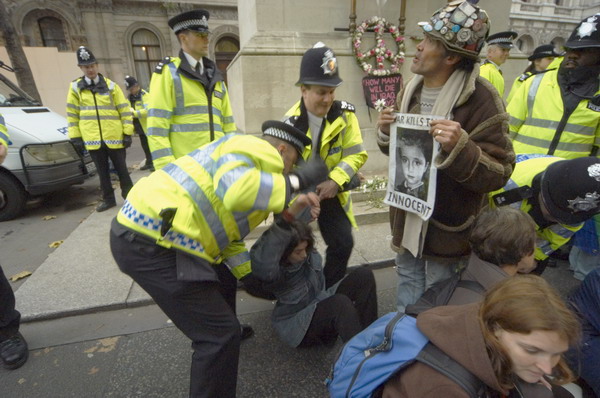
Iraq War & Climate Change: Two separate protests on Saturday 29th March. The invasion of Iraq had begun nine days earlier and there were protests against it around the country including one I covered outside the BBC where a march from North London came to protest against the biased coverage on BBC radio and TV.

Iraq War & Climate Change:

Broadcasters were carefully toeing the government line on the war and acting as its mouthpiece. The country was at war and accurate unbiased coverage appeared to be the first casualty.

Iraq War & Climate Change:

I didn’t write much about the protest, but the pictures and the posters and placards told the story.

Iraq War & Climate Change:

The BBC lost a great deal of credibility over its coverage and I don’t think it has ever recovered from this, And of course it has gone on with biased coverage of other situations including its coverage of the attacks on Jeremy Corbyn and of the Israeli government’s actions in Palestine over the years and particularly the genocidal attacks since the October 7th Hamas attack.

Iraq War & Climate Change:

After the protest at the BBC I went on to cover an event calling for urgent action on Climate Change. Twenty two years ago there was still time to avoid its worst effects – if the world took urgent action, but instead most governments dragged their feet, driven by fossil fuel interests and making largely token changes if any. In the UK we are still thinking in a way that should be unthinkable about discovering and exploiting new oil resources such as Rosebank and BP has recently moved away from Green energy back to oil. Total madness.

The Kyoto Protocol had been agreed at the United Nations Framework Convention on Climate Change (UNFCCC) in December 1997 and set targets industrialized countries and the European Union to reduce their emissions by an average of 5% below 1990 levels during in 2008-2012. Some did, although largely by various ways of fiddling the figures, but the major polluters – India, China and the USA made no attempt to do. The main cause of its failure was that the United States never ratified the agreement.

Kyoto was largely replaced by the 2015 Paris agreement and we are now seeing the results of the failure of this to be properly implemented. But here is what I wrote about the ‘Kyoto march’ organised by the Campaign Against Climate Change on Saturday 29th March.

Marchers had started at the UK Esso HQ in Leatherhead and were marching to a party outside the US Embassy. I joined them at the Imperial War Museum to take photographs.

The march marked the the second anniversary of Bush’s decisive rejection of the Kyoto climate treaty. Esso (ExxonMobil) is a key partner in Bush’s energy policy and its opposition to controls on energy use. The per capita energy use of US citizens is dramatically higher than that of other advanced countries, with no incentives for its reduction and a policy of low tax on fuel that makes the US by far the worst polluter of the planet.

More pictures from the Iraq war protest on My London Diary – and on the Kyoto March here.


FlickrFacebookMy London DiaryHull PhotosLea ValleyParis
London’s Industrial HeritageLondon Photos

All photographs on this page are copyright © Peter Marshall.
Contact me to buy prints or licence to reproduce.
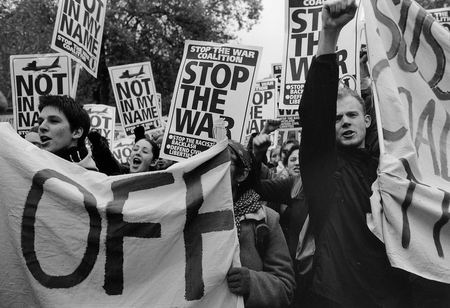

Protest the Pope – 2010

Protest the Pope: Sunday 28th March 2010 saw a large protest by a coalition of organisations against the historic state visit planned for the forthcoming September by Pope Benedict XVI. This was the first official visit ever by a Pope to the UK, although in 1982 Pope John Paul II made a pastoral visit here.

Protest the Pope - 2010

England has had a long tradition of anti-Catholicism dating back to even before Henry VIII, often said to have begun with the martyrdom of Saint Alban, beheaded in St Albans (then Verulanium) at some time in the 3rd or 4th century. But matters certainly came to a head (!) again with the split from Rome on largely political and matrimonial grounds by Henry in 1536 in England and 1538 in Ireland (where Henry also ruled, although only proclaiming himself King in 1541 following several hundred years of Anglo-Norman invasion.) The reformation in Scotland in thanks to John Knox in 1560 was considerably more on religious grounds.

Protest the Pope - 2010

Catholicism became illegal across the British Isles and under Elizabeth I a failure to attend weekly Anglican services became an act of high treason. King James II was actually a Catholic when crowned and tried to remove the restrictions on Catholics and establish greater freedom of religion, but this was a major part of his downfall and replacement by Dutch Calvinist William III. It was under his reign that in 1701 the Act of Settlement prohibited any one who was a Catholic or married one from becoming an heir to the throne. This latter restriction remained in force until 2013 with our PM David Cameron in 2011 still insisting that the monarch must be a card-carrying member of the Church of England but at least they can now marry Catholics.

Protest the Pope - 2010

Every November 5th we still celebrate the foiling of a Papist plot to blow up Parliament by burning effigies of Catholic Guy Fawkes – though at some celebrations now they also burn effigies of various politicians. And in previous centuries we had serious anti-Catholic riots although we now think of these as confined to Northern Ireland and thankfully somewhat diminished in recent years. But Orange Order marches here in England as well as in Ulster remain a reminder of anti-Catholic prejudice.
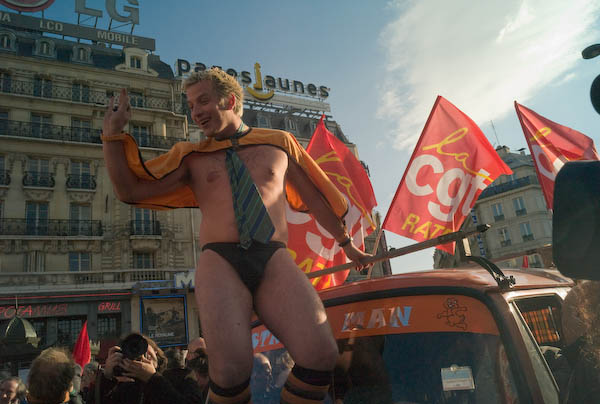
Protest the Pope - 2010

And of course it hasn’t just been Catholics who have suffered from religious prejudice and persecution over the years, but also non-Conformists, Jews and Muslims. Although most of the legal restrictions have now gone we have seen a considerable rise in antisemitism and Islamophobia particularly in extreme right circles.
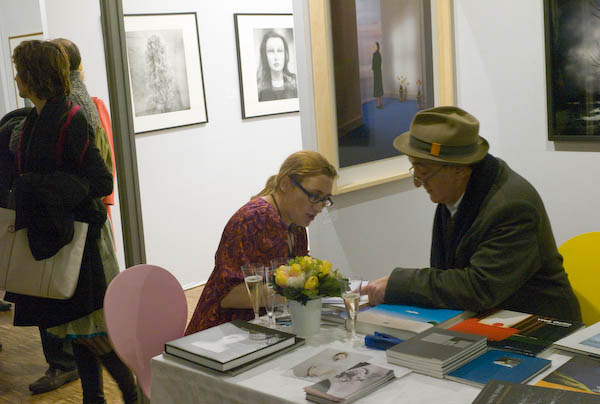
But the protest in 2010 was driven by the continuing revelations of sexual abuse by priests and in Catholic organisations and the evidence that leading Catholic figures were trying to cover these up rather than take effective action. Of course it isn’t just Catholics who abuse, and recent events in the Anglican church have opened up our knowledge of institutional failings there too. And to be fair to religions we are also aware of similar problems in the army and some left and right wing political parties too, as well as Harrods and other private companies.

You can find out more about the event in my account and more pictures on My London Diary but I’ll end with a couple of long quotes from that article, the first a list of the organisations that were involved in the protest and the second about why the objected to the state visit.

The coalition includes eleven organisations: the British Humanist Association, Central London Humanist Group, Council of ex-Muslims of Britain, Gay & Lesbian Humanist Association, International Humanist and Ethical Union, National Secular Society, North London Humanists, One Law for All, OutRage!, Southall Black Sisters and Women Against Fundamentalism. The largest banner was for London for a Secular Europe, though there was also one for the National Secular Society and many Outrage! posters; both Peter Tatchell of Outrage! and Terry Sanderson, President of the NSS were taking part.

And about the Pope and the Catholic Church:

He is the head of a church which, as well as failing to deal with childe abuse, has opposed the distibution of condoms, increasing family sizes and the spread of AIDS in poor countries, denied abortion to women, including the most vulnerable, opposed equal rights for LBGT people, and rehabilitated holocaust deniers.

The Pope is also head of state of the Vatican which has not signed many major human rights treaties and has produced concordats with many states that effectively deny their citizens human rights.

Protest the Pope


FlickrFacebookMy London DiaryHull PhotosLea ValleyParis
London’s Industrial HeritageLondon Photos

All photographs on this page are copyright © Peter Marshall.
Contact me to buy prints or licence to reproduce.