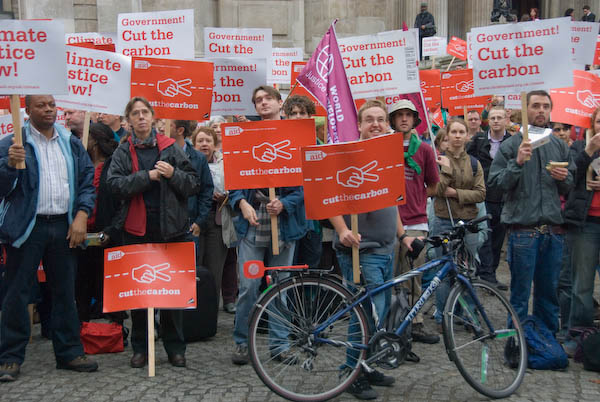
Cut the Carbon March: Tuesday 2nd October 2007 saw the final stage of Christian Aid’s Cut the Carbon March of a thousand miles by marchers from around the world as well as the UK which had begun 80 days earlier in Northern Ireland. The march aimed to increase awareness of the growing danger of global heating with world temperatures increasing as we continue to put greenhouse gases into the air by burning fossil fuels, and to prompt the New Labour government led by George Brown into decisive action to end fossil fuel use. Among those who took part in 2007 were groups from countries already suffering from the effects of climate change.
Unfortunately although it did something to increase awareness it led to little real action and now when we in the UK are beginning to feel the heat we have a Labour government which is likely to approve the production of natural gas from the Jackdaw North Sea field and oil from Rosebank north-west of the Shetlands.
Here from My London Diary is my 2007 account of the Final Mile of the Christian Aid march with a few of the pictures – you can see more at christian aid cut the carbon march – final mile.
Christian Aid – Cut the Carbon March – The Final Mile
City Hall to St Paul’s Cathedral
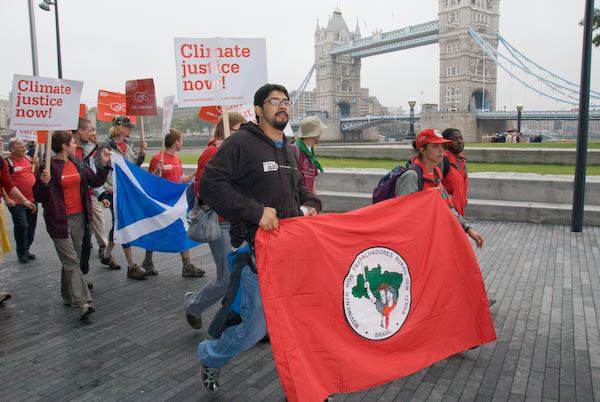
Around a thousand supporters turned up on a dull damp Tuesday morning to accompany the Christian Aid ‘Cut The Carbon’ marchers on the final mile of a walk that had started in Bangor, Northern Ireland, then took them a thousand miles via Edinburgh, Newcastle On Tyne, Leeds, Birmingham, Cardiff, Bournemouth (for a meeting with George Brown at the Labour Party conference) and on to London (including a picnic at Battersea the previous Sunday.)

AA few of the international marchers had to go home before the end, but most, together with those from the UK, made it to the end, and spoke at the rally in the City Hall Scoop before the march set off.
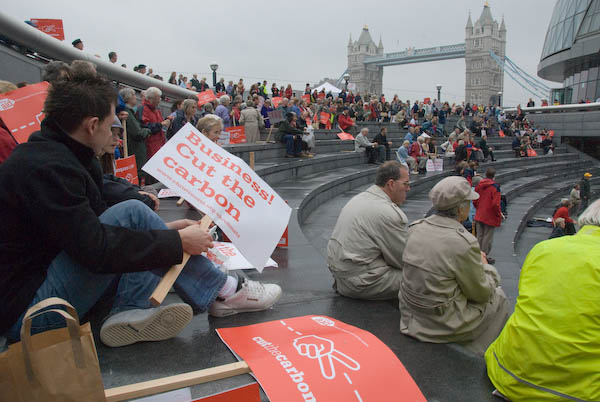
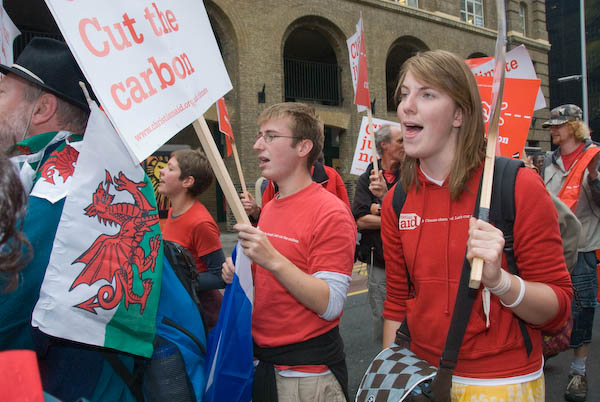
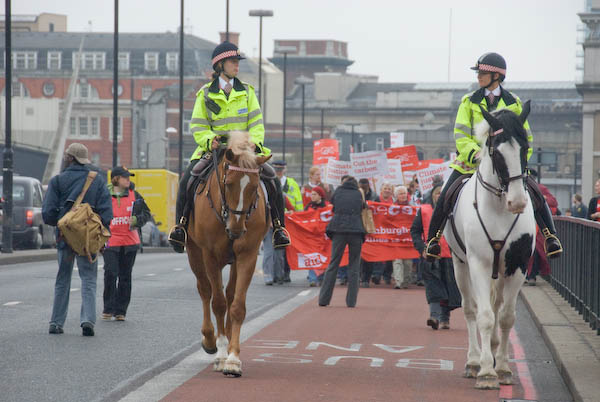

The route led over London Bridge and then up past the Stock Exchange to St Paul’s Churchyard, where there were more speeches, particularly from a Muslim marcher, before a service in the cathedral.
As photography isn’t allowed at events inside St Paul’s (its one of the few places I’ve actually been thrown out of for trying to take pictures) I came home as people streamed inside. The marchers were due to meet with Hilary Benn afterwards to press the case for climate justice. [Benn was Secretary of State for International Development from 2003 until earlier in 2007 and was in October 2007 Secretary of State for Environment, Food and Rural Affairs.]

Several speakers from this country and abroad had made the point that Britain lead the world in creating the problem when we began the industrial revolution and so should feel a great obligation to get things going to save the world from the disaster into which it is currently fast heading.
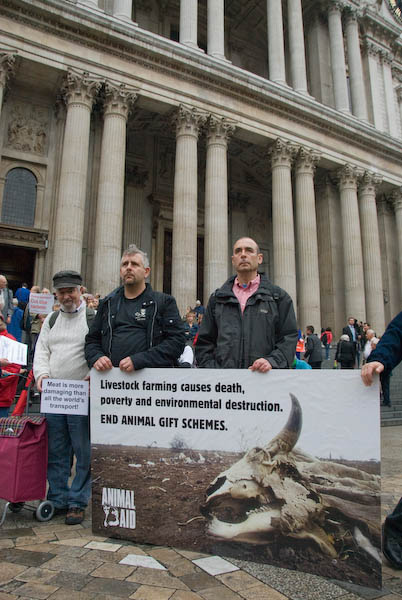
Other demonstrators at St Paul’s made the point that raising animals was an important factor in the high carbon footprint; growing and eating crops can be far less wasteful and polluting. [They pointed out that] Christian Aid’s development policies would be better directed to encouraging vegetarian and vegan production rather than the current reliance in some projects on raising animals for food.
Many more pictures at Christian aid cut the carbon march – final mile.
I was pleased that my exhibition of pictures of environmental protests at London as a part of Foto Arte in Brasilia in December 2007 was able to include the top picture in this post, showing the Brazilians from the Movimento Dos Trabalhadores Rurais Sem Terra (Landless Workers’ Movement) leading the march with Tower Bridge in the background, and I think some from this group may have come to the talk on car culture I gave at the festival.
Flickr – Facebook – My London Diary – Hull Photos – Lea Valley – Paris
London’s Industrial Heritage – London Photos
All photographs on this page are copyright © Peter Marshall.
Contact me to buy prints or licence to reproduce.