Cut the Carbon March – 2007

Cut the Carbon March: Tuesday 2nd October 2007 saw the final stage of Christian Aid’s Cut the Carbon March of a thousand miles by marchers from around the world as well as the UK which had begun 80 days earlier in Northern Ireland. The march aimed to increase awareness of the growing danger of global heating with world temperatures increasing as we continue to put greenhouse gases into the air by burning fossil fuels, and to prompt the New Labour government led by George Brown into decisive action to end fossil fuel use. Among those who took part in 2007 were groups from countries already suffering from the effects of climate change.

Unfortunately although it did something to increase awareness it led to little real action and now when we in the UK are beginning to feel the heat we have a Labour government which is likely to approve the production of natural gas from the Jackdaw North Sea field and oil from Rosebank north-west of the Shetlands.

Here from My London Diary is my 2007 account of the Final Mile of the Christian Aid march with a few of the pictures – you can see more at christian aid cut the carbon march – final mile.


Christian Aid – Cut the Carbon March – The Final Mile

City Hall to St Paul’s Cathedral
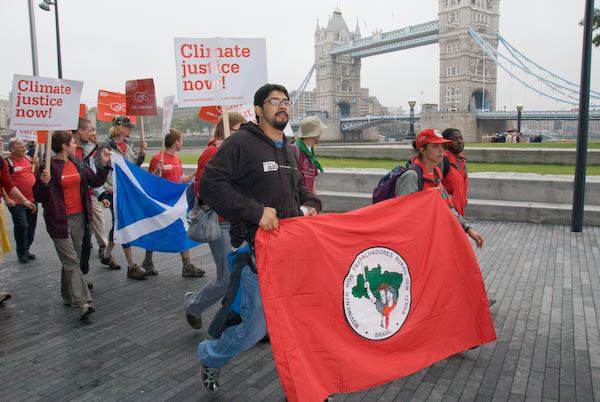
The final mile took marchers from a rally at City Hall to St Paul’s Cathedral – the end of their 1000 mile walk

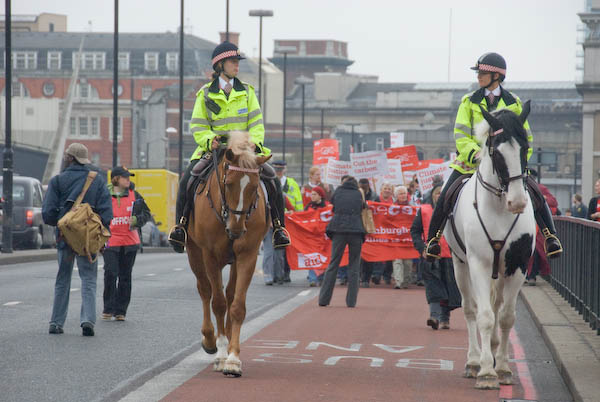
Around a thousand supporters turned up on a dull damp Tuesday morning to accompany the Christian Aid ‘Cut The Carbon’ marchers on the final mile of a walk that had started in Bangor, Northern Ireland, then took them a thousand miles via Edinburgh, Newcastle On Tyne, Leeds, Birmingham, Cardiff, Bournemouth (for a meeting with George Brown at the Labour Party conference) and on to London (including a picnic at Battersea the previous Sunday.)

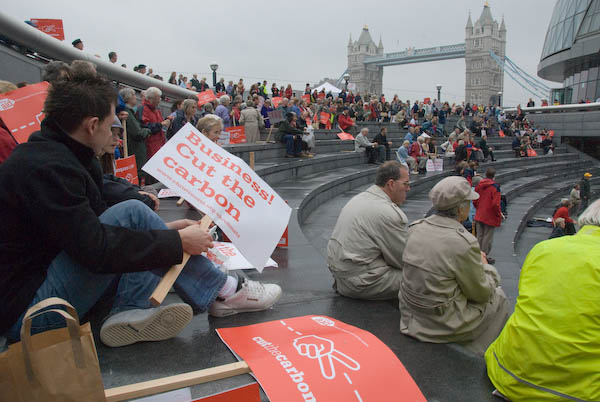
AA few of the international marchers had to go home before the end, but most, together with those from the UK, made it to the end, and spoke at the rally in the City Hall Scoop before the march set off.
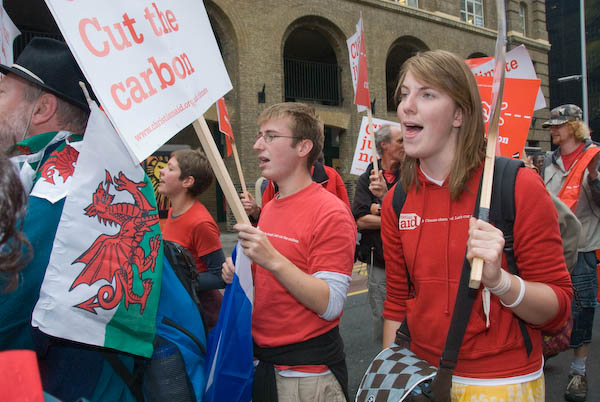
The route led over London Bridge and then up past the Stock Exchange to St Paul’s Churchyard, where there were more speeches, particularly from a Muslim marcher, before a service in the cathedral.

As photography isn’t allowed at events inside St Paul’s (its one of the few places I’ve actually been thrown out of for trying to take pictures) I came home as people streamed inside. The marchers were due to meet with Hilary Benn afterwards to press the case for climate justice. [Benn was Secretary of State for International Development from 2003 until earlier in 2007 and was in October 2007 Secretary of State for Environment, Food and Rural Affairs.]

Several speakers from this country and abroad had made the point that Britain lead the world in creating the problem when we began the industrial revolution and so should feel a great obligation to get things going to save the world from the disaster into which it is currently fast heading.
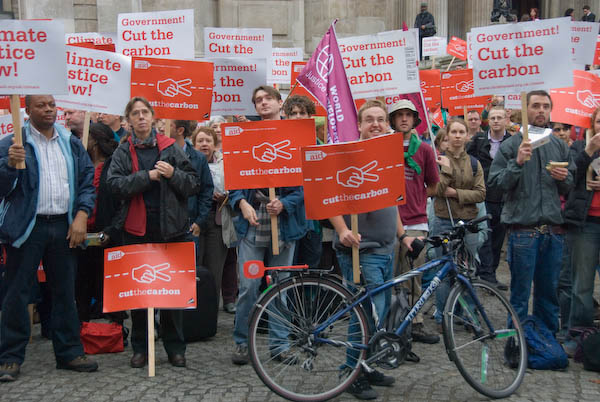
Protesters at St Paul’s Cathedral send a clear message to Hilary Benn and the government to Cut the Carbon

Other demonstrators at St Paul’s made the point that raising animals was an important factor in the high carbon footprint; growing and eating crops can be far less wasteful and polluting. [They pointed out that] Christian Aid’s development policies would be better directed to encouraging vegetarian and vegan production rather than the current reliance in some projects on raising animals for food.
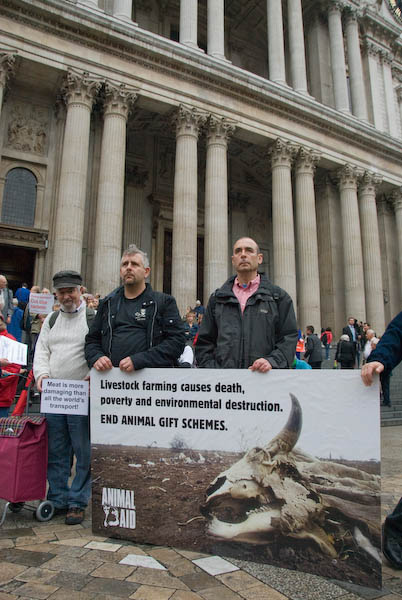

Many more pictures at Christian aid cut the carbon march – final mile.


I was pleased that my exhibition of pictures of environmental protests at London as a part of Foto Arte in Brasilia in December 2007 was able to include the top picture in this post, showing the Brazilians from the Movimento Dos Trabalhadores Rurais Sem Terra (Landless Workers’ Movement) leading the march with Tower Bridge in the background, and I think some from this group may have come to the talk on car culture I gave at the festival.


Flickr – Facebook – My London Diary – Hull Photos – Lea Valley – Paris
London’s Industrial Heritage – London Photos

All photographs on this page are copyright © Peter Marshall.
Contact me to buy prints or licence to reproduce.
Uganda, Green Belt, Olympic Site – 2008

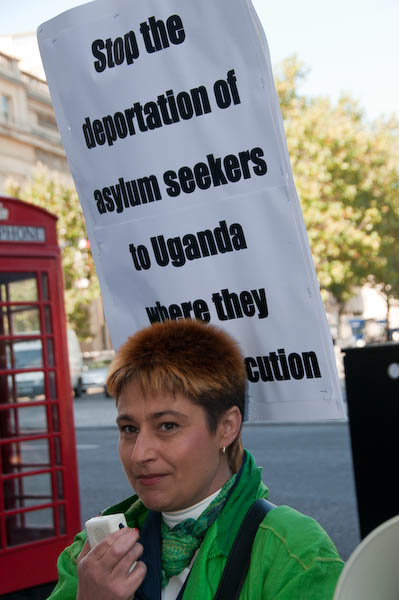
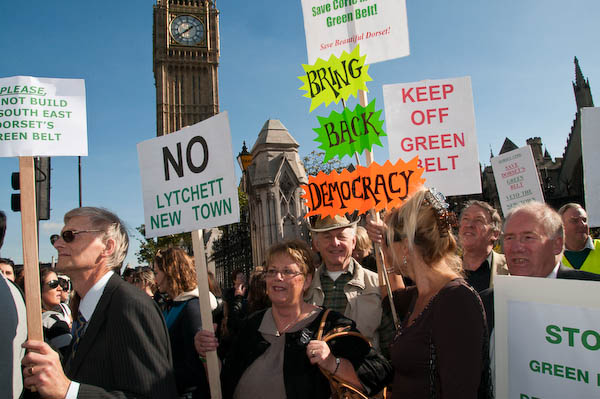
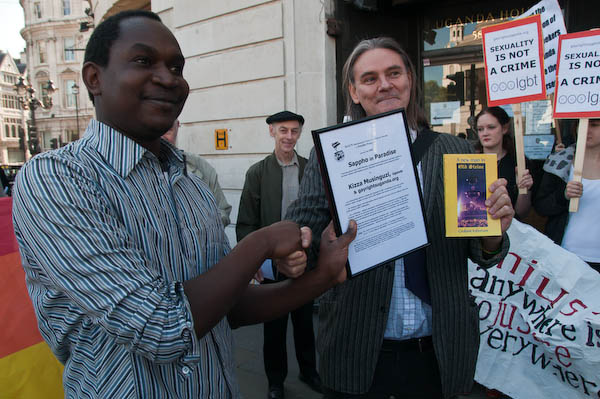
Uganda, Green Belt, Olympic Site: Thursday 9th October 2008 was Uganda Independence Day and I began work at a protest at the Ugandan Embassy in Trafalgar Square against the persecution of gays in that country. In Parliament Square I met protesters who had come from Dorset to bring a petition against a proposed new town on Green Belt land on the outskirts of Bournemouth and Poole. Then as I had a few hours before a meeting it was an opportunity to take another walk to see what I could by then of the fenced off Olympic site.


Demonstration Against Ugandan Human Rights Abuse

Ugandan Embassy, Trafalgar Square

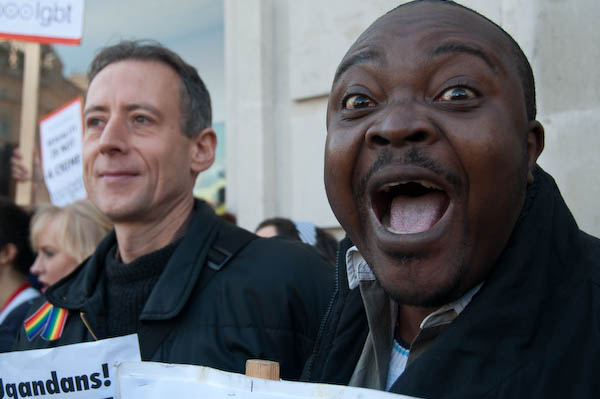
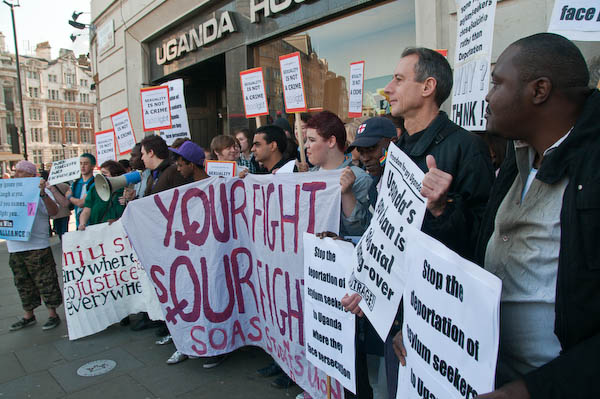
Peter Tatchell of Outrage! and Davis Makyala of Changing Attitudes in the demo outside Uganda House

As I wrote in 2008, “October 9 is Uganda Independence Day, but for gay Ugandans in particular there is little to celebrate… “Homosexuality is illegal in Uganda and the penalty can be imprisonment for life, and gay rights campaigners have been imprisoned and subjected to torture. The Ugandan Anglican church is a leading force in anti-gay campaigns.”

The Ugandan government intimidates and tortures gay people and excludes them from healthcare. British arms exports have been used against protests there, killing at least three demonstrators by 2008.

Kizza Musinguzi who was jailed and tortured in Uganda receives the 2008 Sappho in Paradise book prize

Ugandans fleeing the country because of persecution and seeking asylum in the UK were among those forcibly sent back to the country without proper consideration of their cases under our “fast-track” process which was later declared unlawful.

Emma Ginn of https://medicaljustice.org.uk/ Medical Justice

The LGBTQ rights situation in Uganda is now even worse following the passage of ‘the Anti-Homosexuality Act, 2023, which prescribes up to twenty years in prison for “promotion of homosexuality”, life imprisonment for “homosexual acts”, and the death penalty for “aggravated homosexuality“.’

More on My London Diary at Ugandan Human Rights Abuse.


Green Belt Protest Rally

Westminster

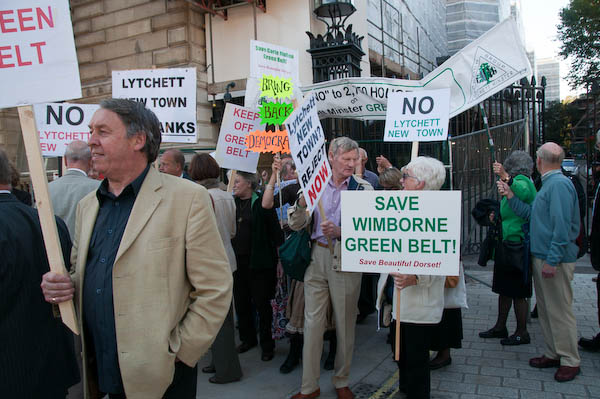
People from villages on the outskirts of Bournemouth and Poole had come to protest against the proposed Lychett New Town on Green Belt land in Dorset.

Apparently Hazel Blears, Secretary of State, had told Dorset County Council it must build a New Town at Lytchett Minster with over 7,250 houses in the Green Belt around Poole & Bournemouth, and local residents had set up a campaign about it.

Octavia Hill had first proposed the idea of green belts in 1875 but it was the 1947 Town and Country Planning Act which allowed local authorities to set them up and they were further encouraged to do so by Tory Housing Minister Duncan Sandys in 1955. The idea was to put an end to the unplanned sprawl of ribbon development along major roads leading out from all our cities and provide areas for local food growing, forestry and outdoor leisure.

As I commented, “it has made a valuable contribution to improving the quality of life in our towns and villages and to conserving the countryside.” But as I also wrote, “Many of us feel that the whole of the current planning structure works against sensible and ecological development, but the answer to this is not to relax planning controls but to bring in improved – and in some respects tighter – controls.”

Unfortunately the changes announced by Labour in 2024 which include some Green Belt being re-classified as ‘Grey Belt’ seem largely intended to make things easier and more profitable for developers.

Consultations took place in 2025 over proposals for Lytchett Minster & Upton in the Dorset local plan which lists opportunity sites for over 5000 new homes – and a new petition was set up opposing them.

Green Belt Protest Rally


Stratford Marsh (Olympic Site) & Hackney Wick

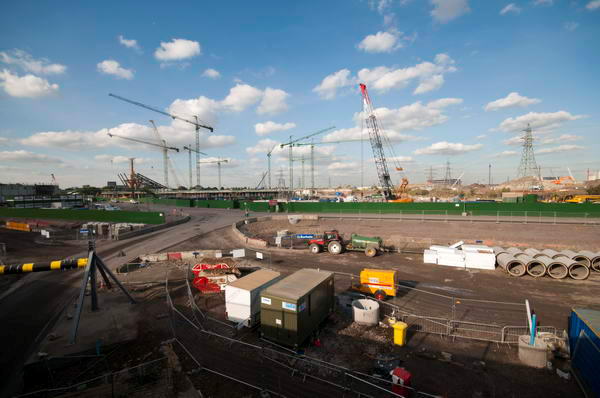
Looking towards the main stadium in left half of picture, along what was once Marshgate Lane.

“It has always been an interesting walk through Stratford marsh on top of the Northern Outfall sewer, although rather more so in the past when there were so many places one could leave it to explore further rather than coming up against the big blue fence.”

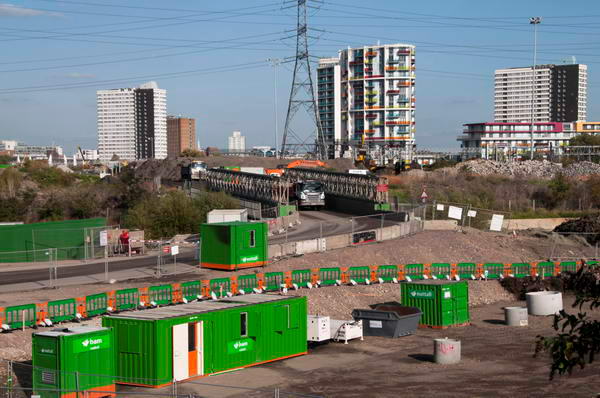
Bridge over City Mill River from the Greenway

I commented back then of my annoyance at the statements made by the Olympic authorities that after the Olympics they would be opening up the previously inaccessible area to the public. In fact they were destroying the area where it had always been interesting to wander along the various largely riverside footpaths – many of which had been cleared to make them easier to walk in the 1990s.

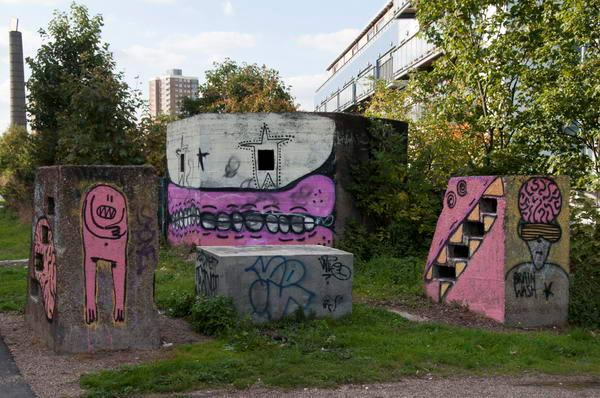
Work by Hackney Wick’s most prolific artist

You can see many pictures that I took in the area on my Lea Valley website And as a replacement we now have a park which seems rather arid. Perhaps by 2112 it might look better.

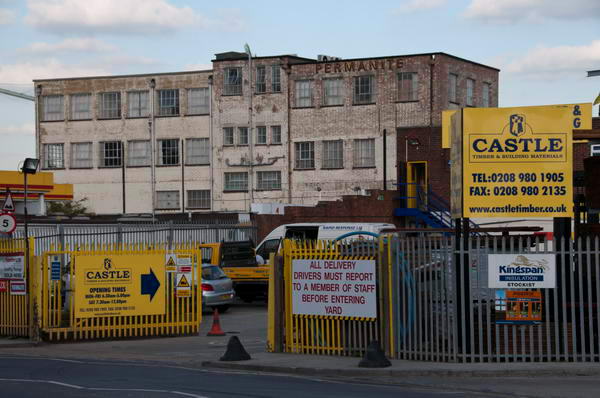
Foarmer Permanite Works

In 2008 most of the Olympic area was fenced off, but I enjoyed the walk along the ‘Greenway’ on top of the Northern Outfall Sewer to Hackney Wick where I dound much to interest me and “taking the train back from Hackney Wick to Stratford there were many signs of fairly frenzied activity visible.”

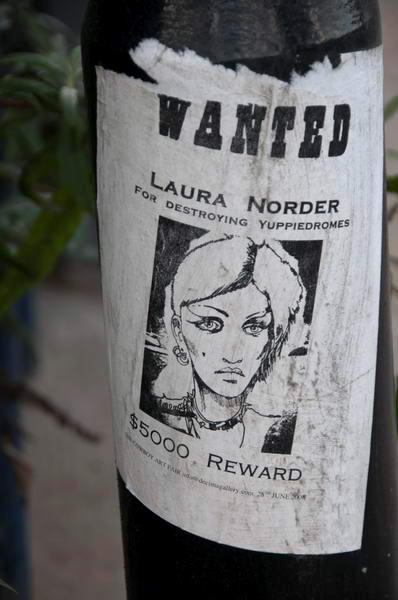
Wanted – Laura Norder – $5oo Reward – advertising an art fair at Decima Gallery in Hackney Wick

Many more pictures, particularly around Hackney Wick at Stratford Marsh (Olympic Site) & Hackney Wick.


Flickr – Facebook – My London Diary – Hull Photos – Lea Valley – Paris
London’s Industrial Heritage – London Photos

All photographs on this page are copyright © Peter Marshall.
Contact me to buy prints or licence to reproduce.