Bow Creek: Priors to Pura Foods

Bow Creek, Leamouth Rd, Leamouth, Tower Hamlets, Newham, 1982 36v-23_2400

Goiong down Leamouth Road roughly south and parallel to the river there were a few places where you could look back up to the East India Dock Road and the disused railway bridge that crossed the creek a little to the south of the road. The bridge had carried a line which came from where Canning Town Station now is along the route now followed by the DLR but continuing across the river to pepper warehouses for the East India Docks opposite the docks on the eastern side of Leamouth Road, still shown on my 1939 Philip’s A B C Pocket Atlas-Guide to London and its Outer Districts.

J J Prior, Ship Repairs, Orchard Wharf, Bow Creek, Leamouth Rd, Leamouth, Tower Hamlets, 1982 36v-36 (2)_2400

Where the river swung around the Limmo Peninsula – now the Bow Creek Ecology Park – the view was wide open with the river only separated from the road by an open fence. Close to the bend to the west was Orchard Wharf, where J J Prior were still carrying out ship repairs. The flats in the background are on the other side of the East India Dock Road.

Pura Foors, Bow Creek, Tower Hamlets, 1983 36v-21_2400

Looking up the creek on the eastern side of the peninisula was the west bank of the second peninsula, occupied by a large edible oil factory, Pura Foods, the smells from which were often rather noticeable. There were local campaigns to have this factory shut down, and eventually it did move out, relocating a few miles down-river. This peninsula is now redeveloped as City Island.

Pura Foods, Orchard Place, Leamouth, Tower Hamlets, 1982 32f-33_2400

Roads in this area were disrupted when the Lower Lea Crossing was built – it opened in 1991. When I first went to photograph the area, Leamouth Road (historically called Orchard St) continued to meet Orchard Place at a T-junction, with Orchard Place going north to the Pura Food site and south, then turning east to Trinity Buoy Wharf.

Pura Foods, Bow Creek, Tower Hamlets, 1989 89-4c52_2400

Although there were still high walls along the northern section of Leamouth Rd, there was a clear view of Bow Creek looking south from the East India Dock Road only around a hundred yards east of where the river, here flowing roughly north, went under the bridge in the opposite direction.

Bow Creek, Pura Foods, Essex Wharf, Wharfside Rd, East India Dock Rd, Newham, Tower Hamlets, 1989 89-4b12_2400

Wharfside Road comes in a short tunnel under the East India Dock Road on which I was standing to take this picture, leading to Essex Wharf and the saw mills for the timber yard. The Docklands Light Railway now runs along here on the route of the the former rail line to the pepper warehouses, just in front of the line of parked cars in this picture.

There is now a footbridge across the DLR leading to a riverside path, built at around the same time as the new railway, the gates to the bridge were kept locked for most of its first twenty years but now seem to be permanently opened, and it provides a good short cut to Canning Town Station, whose riverside entrance was also locked for years after it was built, as well as to a new footbridge to City Island which replaced the factory here. You can also now walk or cycle down here to the right to visit the Bow Creek Ecology Park. Although very different it is still an interesting area in which to walk.

Clicking on any of the above images will take you to larger versions in my Flickr album on the River Lea. A further post will start at Wharfside Road and look at my pictures moving along Bow Creek towards the Thames.


All photographs on this and my other sites, unless otherwise stated, are taken by and copyright of Peter Marshall, and are available for reproduction or can be bought as prints.
Show Workers Some Love

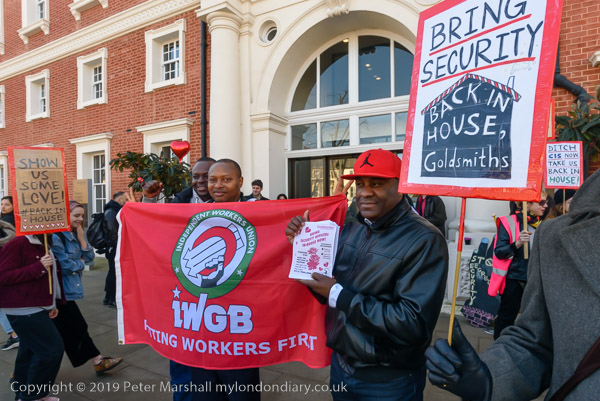
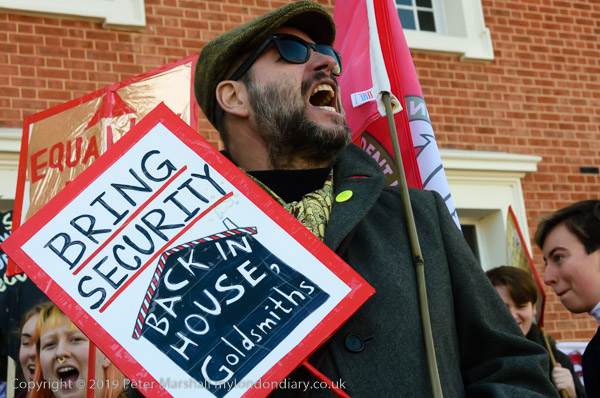
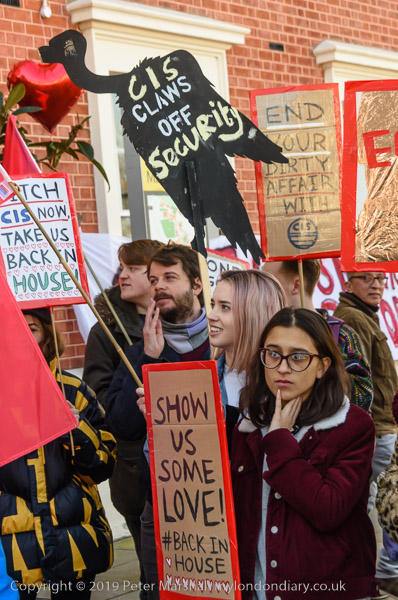
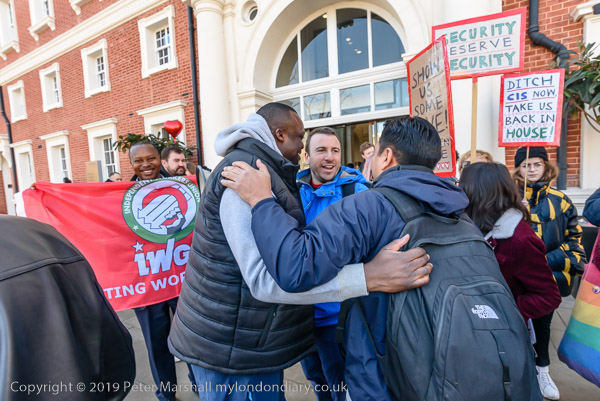
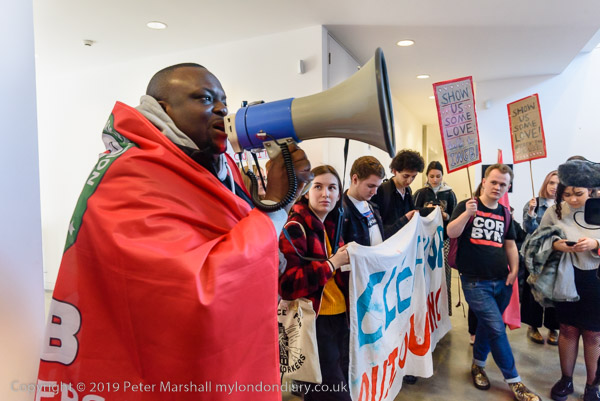
On St Valentine’s Day, Feb 14 2019, the Security and Receptionists Branch of the IWGB union and students launched their campaign for Goldsmiths University of London to directly employ its security officers, with a protest outside and inside the university buildings. The protest, on St Valentines Day, called on the university to show its workers some love.

I was pleased to be invited to go to photograph the event, and thankful that unlike many union pickets it was to take place at lunchtime rather than at the kind of ungodly hour of the morning that many of our worst paid have to clock in. I’m afraid I decline all requests that would involve me getting out of bed well before dawn and leave those to younger photographers who live closer, in part because travel until after the morning peak into London costs more than any likely return from reproduction fees.

Goldsmiths is in New Cross, a rather run-down area of South London that I’ve known for years and is rapidly sprawling over the whole area. Long ago, before I started taking photographs I made the pilgrimage to Chris Wellard’s Jazz & Blues Record Shop on Lewisham Way, probably the finest in the world until its closure in the mid-70s, later demolished for a new block for the college just a few yards further down the road. Goldsmiths has never quite gained the same reputation, though I have been there for the odd (sometimes very odd) meeting and event since. And more often to visit a late artist and photographer friend whose studios were just a little further on down the road at Lewisham Arthouse.

A group of students stood outside the old college building, waiting for the event to start, and eventually members of the IWGB arrived. Chris Wellard’s advertising always use to contain strict instructions to take the BR Southern trains from London Bridge rather than use the Underground (now the Overground) and perhaps they hadn’t observed these.

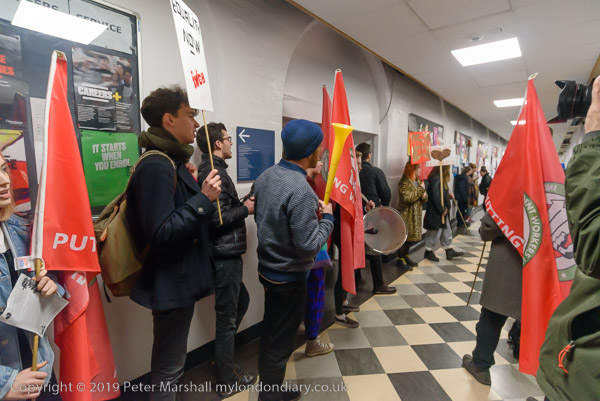
But things soon warmed up, and after some short speeches, including a warning from IWGB General Secretary Jason Moyer-Lee that this was a peaceful protest and we should be careful not to cause any damage a show of hands was voted to protest inside the building. We walked inside and made our way through the campus, stopping at various areas where people were eating lunch to for the union leaders to speak briefly – and to considerable applause from most – about the campaign.

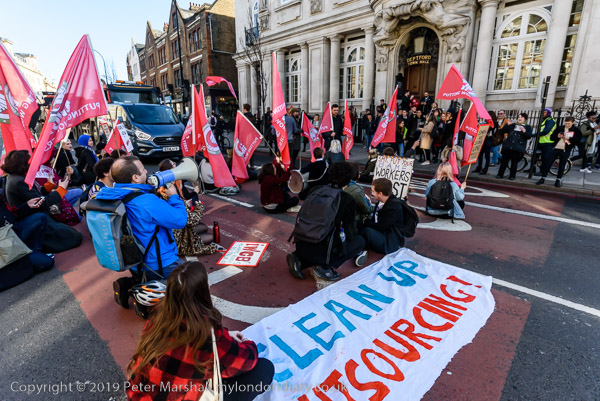
The protesters then walked down to New Cross Road, where the university management no has its offices in the former Deptford Town Hall, and sat down in the busy road outside for a few minutes blocking all traffic.

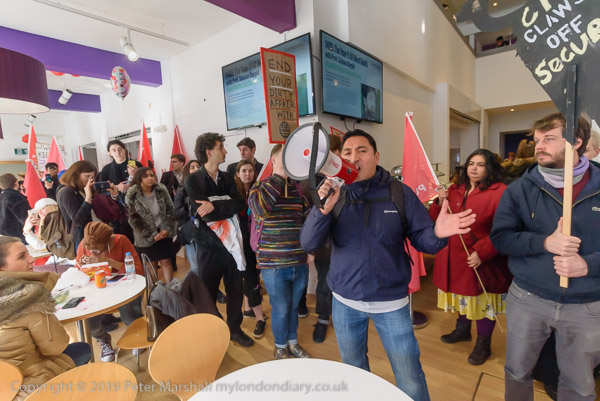
Walking back into the university campus, they group briefly occupied the foyer of the Ben Pimlott Building, before walking back to the front of the main building for a final rally.

It had been a lively and highly noticeable protest, bringing the claim for security staff to be directly employed by the university with similar terms and benefits to others at Goldsmiths to the attention of a large number of students, staff and management.

Exactly a year later, on Valentines Day 2020, the IWGB Security Guards & Receptionists Branch tweeted (with a short video):

More pictures at Bring Goldsmith’s Security In-House.


All photographs on this and my other sites, unless otherwise stated, are taken by and copyright of Peter Marshall, and are available for reproduction or can be bought as prints.


Leamouth Panorama 1982

East India Dock Gates, Leamouth Rd, Leamouth, Tower Hamlets, 19882 32e-14_2400

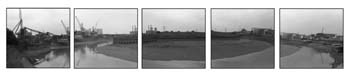
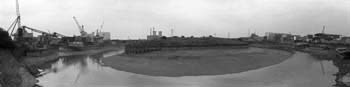
It was back in July 1982 I took my first walk down Leamouth Road, where there were still high walls for the closed East India Docks and some wharves on Bow Creek were still in use, their walls and sheds hiding the river from view. But at the southern end, where the river swung around a 180 degree bend, the view opened up, with only a fence and a couple of feet of weed-covered earth between the pavement and the river wall. It was getting late and I had to rush away, but I had seen a view that I could not do justice too with even my widest lens, a 21mm f3.5 Zuiko.

Bow Creek, Leamouth Rd, Leamouth, Tower Hamlets, Newham, 1982 32f-63_2400

The fence was old and rusty, and one short section had broken, and on my return in August I made my way through the gap with my hefty Manfrotto tripod. There wasn’t enough space to set it up properly with the legs fully extended and opened, but after a bit of a struggle I managed to get it level. I checked it with the separate spirit level I carried in my camera bag, then put my Olympus OM1 in place and checked with the level again.

J J Prior, Ship Repairs, Orchard Wharf, Bow Creek, Leamouth Rd, Leamouth, Tower Hamlets, 1982 32f-53_2400

It was a slow business, and I was just a little worried that someone might come along and question what I was doing, though rather more worried that I might fall over the low wall onto the muddy shingle perhaps 6ft below.

J J Prior, Ship Repairs, Orchard Wharf, Bow Creek, Leamouth Rd, Leamouth, Tower Hamlets, 1982 32f-54p_2400

I think the lens I used was probably the 35mm f2.8 shift, though at its central non-shifted position, and I tried to position its nodal point roughly above the axis of rotation, though it was not too critical here as only the first and final exposures would include any near detail.

32f-56p_2400

I then began a series of six exposures, swinging the camera on the tripod roughly 30 degrees between each exposure (the tripod has a scale in degrees) using the handle on the pan and tilt head. All went well until the last of six exposures, though it was a little tricky working in a rather confined space, and I needed to move away from where I had been crouching to the right of the tripod so as not to be in the picture.

Bow Creek, Leamouth Rd, Leamouth, Tower Hamlets, Newham, 1982 32f-41p_2400

It wasn’t a tragedy as I squeezed between the tripod and the fence, and I managed not to knock the whole set-up into the creek, but I did knock it a little out of place, and while the first five exposures have the horizon almost exactly level, the sixth was perhaps ten degrees askew.

Of course I took a replacement, and it was only after I’d printed it that I found it wasn’t quite an exact fit, and when I carefully cut and pasted the six prints to make a single panoramic image the difference showed, at least to me. So instead I put the images, cropped slightly to reduce the overlap, into a row of images with a margin between each of them. More recently of course I’ve been able to scan the images and combine the digital files, and it more or less works, but ends up with a very long thin panorama that doesn’t work well on screen.

A few years later I returned with a panoramic camera and made a very different picture just a few yards away, but the original scene had changed dramatically.

Clicking on any of the larger pictures in this post will take you to a larger version in my Flickr album, from where you can explore other pictures of Bow Creek.


All photographs on this and my other sites, unless otherwise stated, are taken by and copyright of Peter Marshall, and are available for reproduction or can be bought as prints.

Kyoto & One In Love – 2005

The texts from two posts from My London Diary for Saturday 12 Feb 2005, sixteen years ago. I’ve had to change the formatting a little to fit this site, but otherwise the text is identical. There are more pictures from each event on My London Diary.

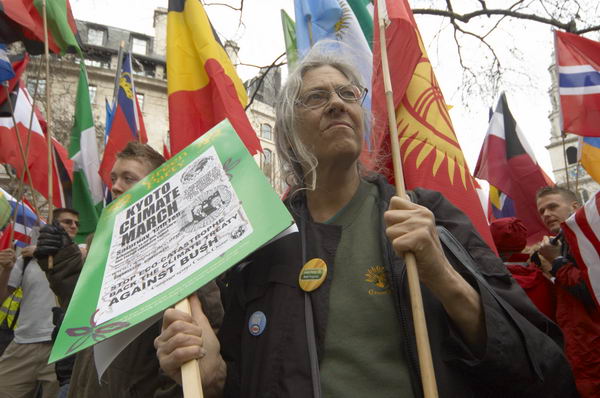
Campaign against Climate Change Kyoto Climate March

London, 12 Feb, 2005

When i talked about the dangers of increasing co2 emission and the need to cut down use of fossil fuels 35 years ago, i was a crank. now everyone except the usa oil lobby and their political poodles recognises that climate change is for real. even blair has recognised it as the most vital issue facing us, threatening the future of the planet, although actually taking effective action still is a step too far for him. however he did call for a conference to examine the problem, which told him and us that we had perhaps ten years to take action before it would be to late.

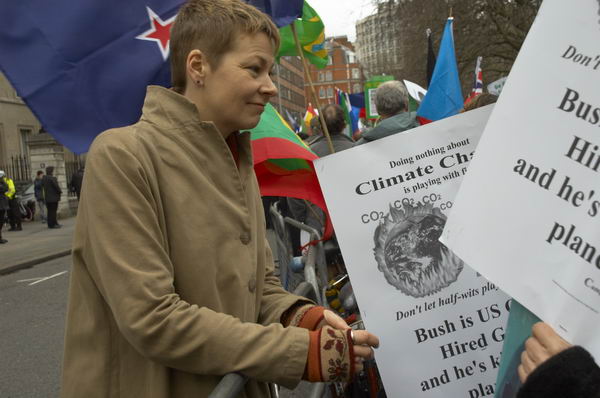
Caroline Lucas

kyoto is history now thanks to the US boycott, (although it comes into effect this week), but it should have been the first inadequate step on the road to action. every journey has to start somehow, and even a half-hearted step is better than none, and would have led the way to others. what got in its way was texan oil interests, whose political face is george w bush.

i’ve photographed most of the campaign against climate change’s kyoto marches over the past few years. this one was probably the largest, and certainly excited more media interest, truly a sign that the issue has become news.

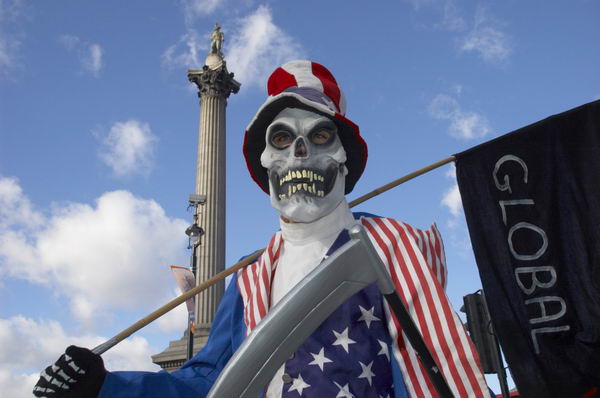
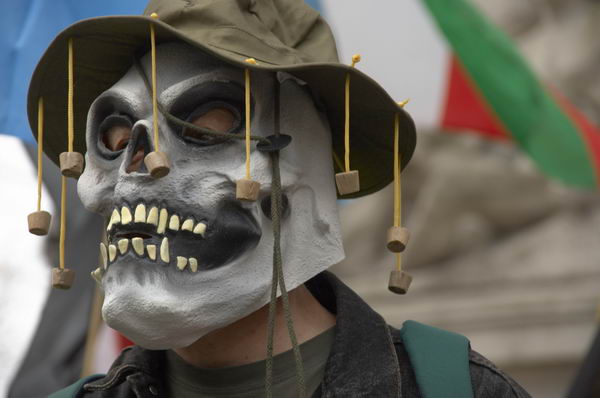
starting in lincoln’s inn fields, the march stopped first outside the uk offices of exxonmobil, on the corner of kingsway, for a brief declaration, then for a longer demonstration outside the australian high commission in aldwych (with guest appearances by ‘john howard’ and an australian ‘grim reaper’ with cork decorated hat), before making its way past trafalgar square and picadilly circus to the us embassy.


O-I-L One in Love

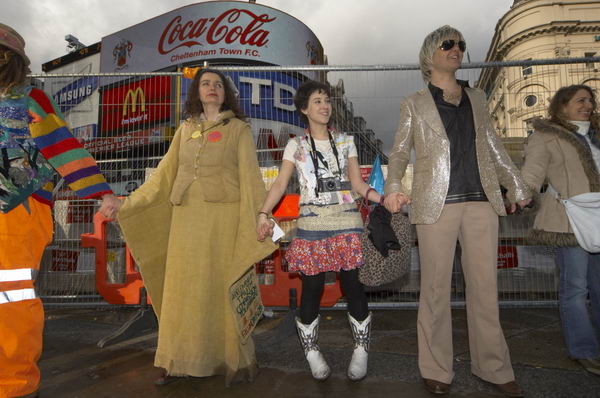
Reclaim Love, Eros, Picadilly Circus, London, London, 12 Feb, 2005

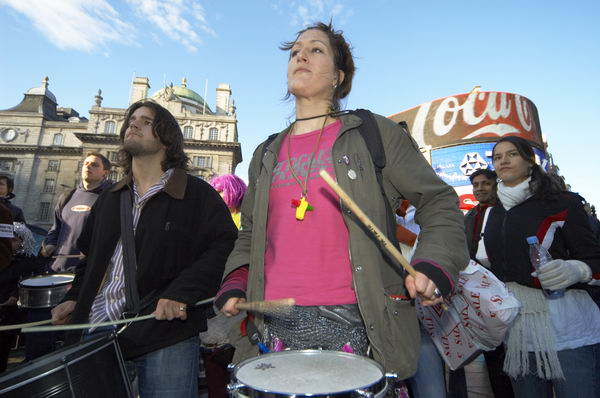
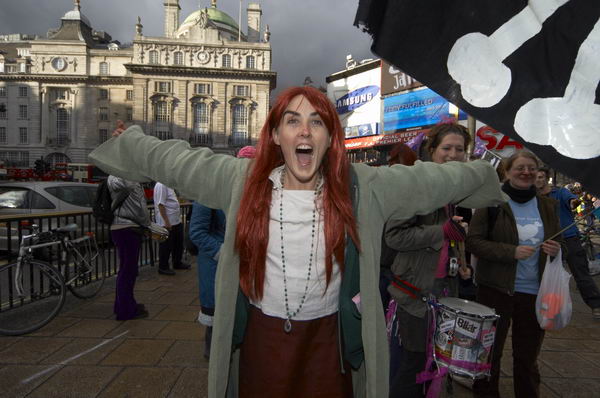
i left them in picadilly and returned to eros, where o-i-l, one in love, were organising a small gathering to “reclaim love” and “send love and healing to all the beings in the world” on the eve of valentine’s day. it’s something we could all do with, and it was good to see people enjoying themselves around the statue of eros, in what is usually one of the most depressing spots on london’s tourist circuit.

there was the samba band again, rhythms of resistance, (hi guys) and dancing and people generally being happy and friendly and free reclaim love t shirts and apart from the occasional showers it was harmless fun. rather to my surprise, the police either didn’t notice it or decided to ignore it, an unusually sensible strategy.


More pictures of both events on My London Diary.

This year there can be no street party at Eros in Piccadilly Circus, but Venus CuMara invites you to celebrate the 20th anniversary of Operation Infinite Love, Global Annual Love and Peace Meditation/street party by joining her on her Youtube ‘love stream / live stream/ life stream’ Global Love Meditation at 3.33 pm on St Valentine’s Day, Sunday 14th February 2021.

“MAY ALL THE BEINGS IN ALL THE WORLDS BE HAPPY AND AT PEACE”


All photographs on this and my other sites, unless otherwise stated, are taken by and copyright of Peter Marshall, and are available for reproduction or can be bought as prints.

A Busy Monday

Kashmiris call for independence

Monday 11th of February 2019 was an unusually busy day for me covering protests in London, with several unrelated events taking place across Central London.

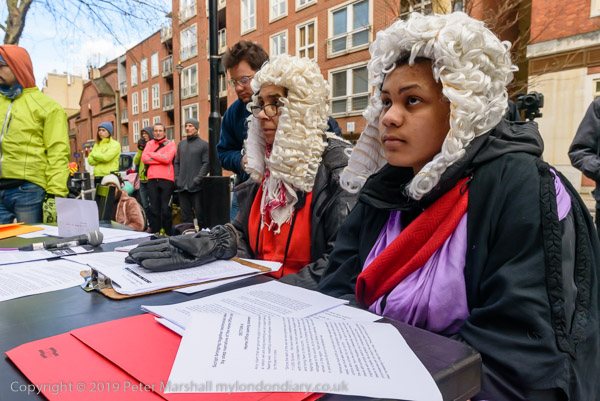
My day began outside in Marsham St, where groups outraged at the callous hostile environment introduced by Theresa May as Home Secretary from 2010 to 2016 and carried on by her successors Amber Rudd and Sajid Javid (and of course from later in 2019 by the despicable Priti Patel) held a mock trial of the the Home Office.

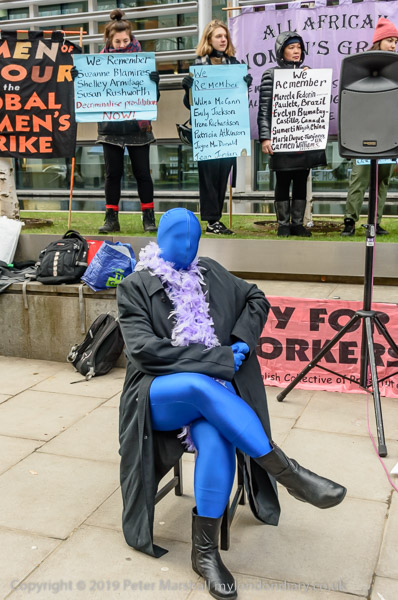
The Home Office were represented by a figure in Tory blue

The Home Office runs a violent, racist, colonial, and broken asylum, detention and deportation regime which treats refugees and asylum seekers as criminals, judged guilty without trial and often faced with impossible hurdles as they attempt to prove their innocence and claim their rights. It puts pressure on police and the CPS to launch false prosecutions – such as that of the Stanstead 15 who peacefully resisted an asylum flight and were charged and convicted under quite clearly ludicrous and inapplicable terrorism laws – and whose conviction was recently quashed on appeal.

Two years ago I wrote:

There were testimonies from individuals, groups and campaigns about suffering under the vicious system of rigged justice, indefinite detention, ill-treatment and arbitrary arrest and deportation. Two judges watched from their bench and those attending were members of the jury; I left before the verdict, but it was never in doubt.

People’s Trial of the Home Office

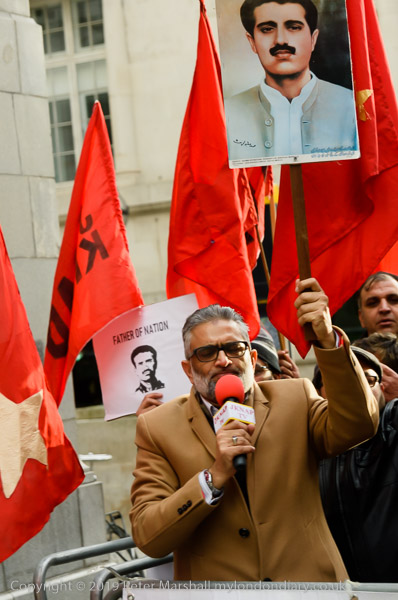
I left early to cover a protest at India House in Aldwych by the Jammu Kashmir Liberation Front calling for freedom, there on this day as it was the 35th anniversary of the hanging by India of Maqbool Bhat Shaheed in 1984. The population of Jammu and Kashmir is around 12.5 million, and India has over 800,000 troops in Kashmir, who shoot to kill, torture, rape and burn homes with impunity, killing over 100,000 Kashmiris since 1988. More recently India has even tightened its control over Kashmir, getting rid of the constitutional limited autonomy of the area, politically integrating it with India although this seems unlikely to lessen the continuing fight of the Kashmiri people for independence.

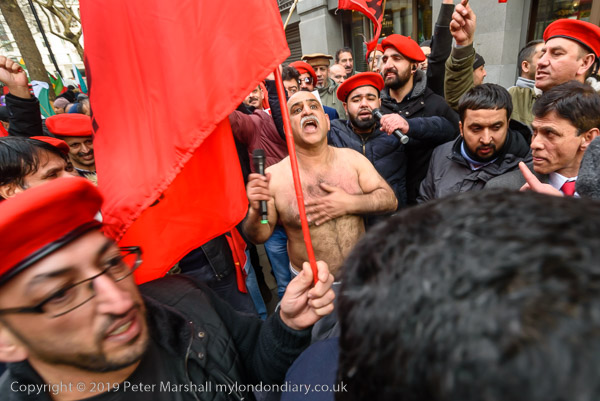
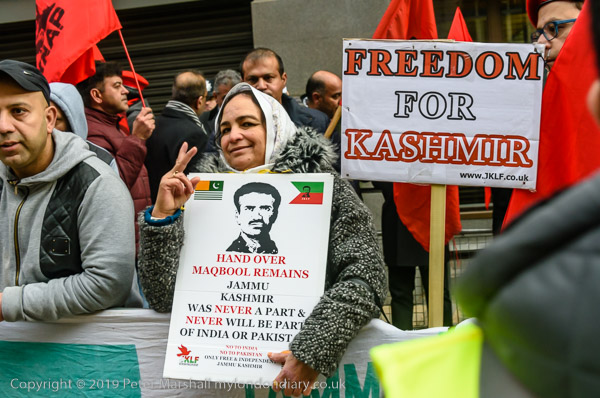
Later I photographed a protest by a second group of Kashmiris, the Jammu Kashmir National Awami Party UK, calling for the remains of Maqbool Bhat Shaheed to be released and for independence for Kashmir.

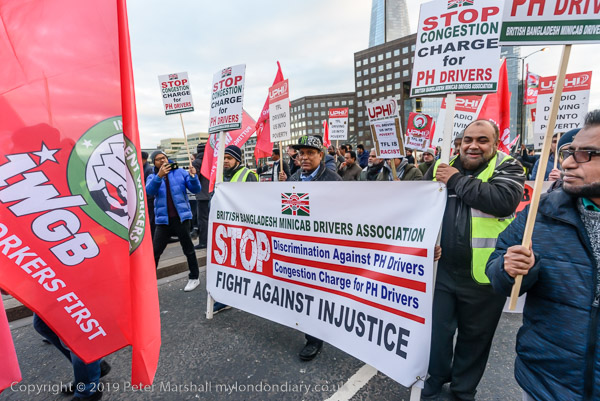
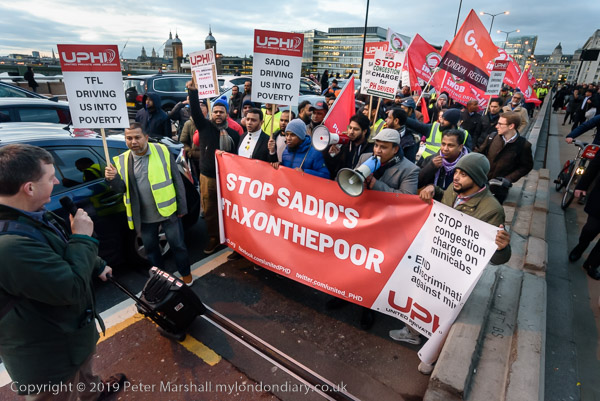
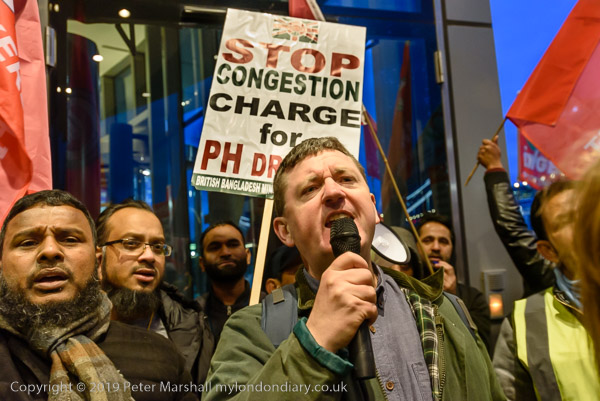
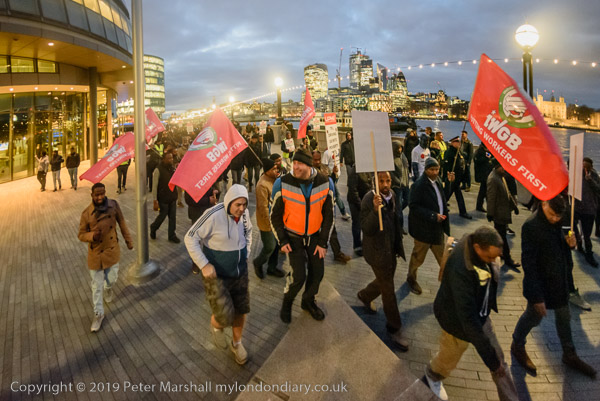
In late afternoon, private hire drivers came to London Bridge in their cars to protest against the decision by Transport for London (TfL) to make them pay the London congestion charge. London’s traditional Licenced Taxis – ‘black cabs’ – will remain exempt in what clearly seems unfair discrimination.

Minicab drivers have been organised by the International Workers Union of Great Britain (IWGB) into the United Private Hire Drivers (UPHD) which includes the British Bangladesh Minicab Drivers Association, the Minicab Drivers Association and the Somali All Private Hire Drivers, SAPHD. Most private hire drivers are from Black, Asian and minority ethnic groups while black cab drivers are almost entirely white and the UPHD claim that TfL’s decision is a case of race discrimination.

London’s Licensed Taxi system dates back to the era of horse-drawn vehicles (Hackney Carriages) and seems largely inappropriate now in the age of smart phones and sat navs. ‘Plying for hire’ creates both congestion and pollution on our overcrowded city streets, and is now unnecessary when cars can be summoned by phone, and good route-planning software with real-time traffic information out-performs the archaic ‘knowledge’ routes.

The drivers parked on London Bridge and blocked both carriageways, then locked their vehicles to march along the bridge and hold a rally, then marched to hold a noisy protest outside City Hall. From there some went to Tower Bridge to block that, but were persuaded by the UPHD stewards to leave and return to their vehicles.

UPHD drivers protest unfair congestion charge
Kashmir Awami Party call for Freedom
Kashmiris call for freedom
People’s Trial of the Home Office


All photographs on this and my other sites, unless otherwise stated, are taken by and copyright of Peter Marshall, and are available for reproduction or can be bought as prints.

Chinese New Year 2008

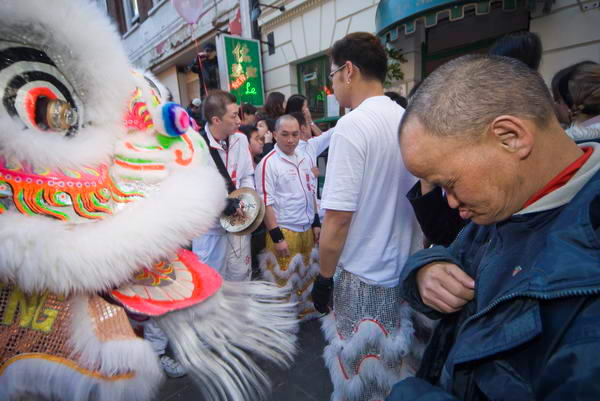
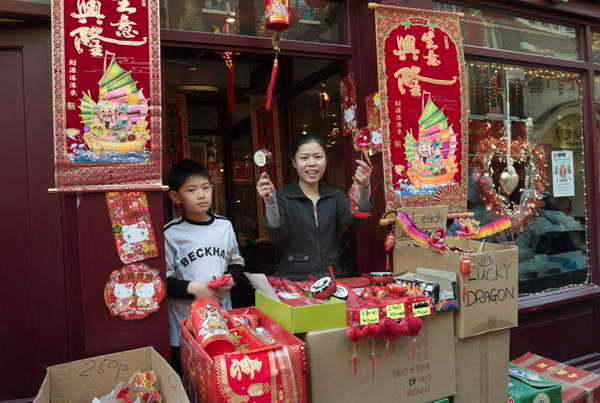
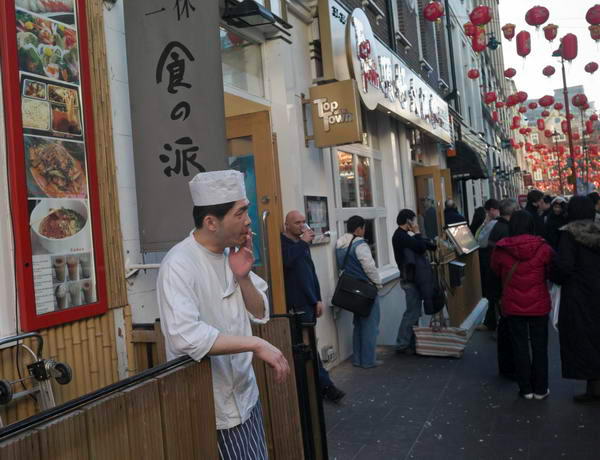
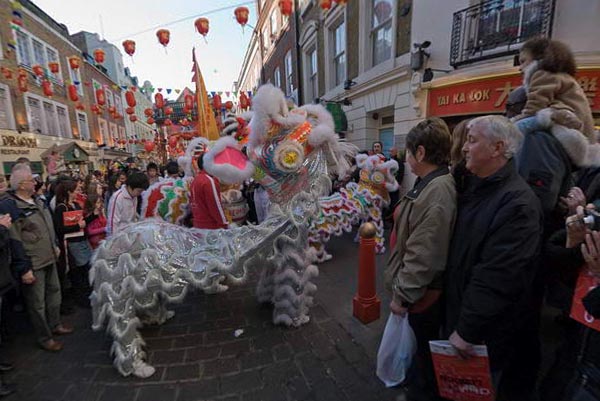
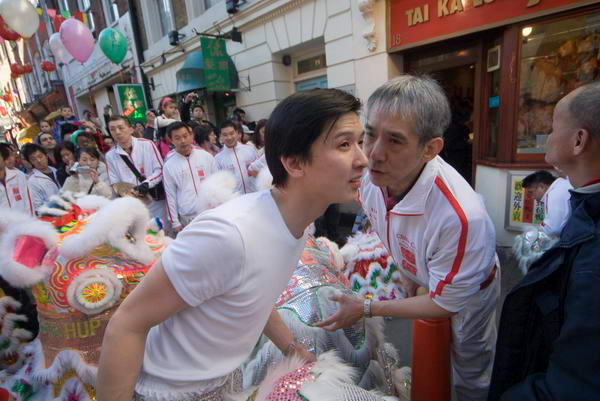
Back in 2008 I photographed the London celebrations in Chinatown for the Year of the Rat, which took place on February 10th, 2008, and wrote this short text:

Chinese New Year Celebrations, Soho

Soho, Westminster, London. Sunday, 10 Feb, 2008

The Chinese New Year celebrations in London have rather got out of hand, with more and more people flooding in to Chinatown, and an incredible amount of sponshorship for the event. There is strong evidence in the programme, now 120 thick pages mainly of advertising, along with some of the most tedious photographs you will ever see. The genuinely useful content in it could have been handed out on a much more user-friendly 2 sides of A4.

But if you can avoid the worst of the crowds, it’s still a fun event and at times spectacular. But there are 51 other weekends of the year when its probably more interesting to come and see Chinatown how it really is.

http://mylondondiary.co.uk/2008/02/feb.htm#chinese

This year the celebrations are almost certain to be considerably more muted and mainly on-line. The Chinese New Year is actually in two days time on 12 Feb and in more normal times would have been celebrated next Sunday rather like in 2008 with crowds in Soho and a procession, with events in Trafalgar Square and Leiscester Square. But for the Year of the Ox I think you will have to make do with a virtual celebration – and perhaps a Chinese takeaway.

It’s a while since I’ve actually gone to the celebrations in Soho. Said to be the largest celebrations of the New Year outside Asia, the event has become far too crowded for me, and frustrating to try to photograph. Back in 2008 I went early, before the crowds built up, but later it became very hard to get the pictures I wanted.

Using a fisheye lens did enable me to find a little space where there was really none; some of these pictures I ‘de-fished’ to give straight verticals but others I left with the obvious curvature. But more of the pictures were taken with the 12-24mm Sigma lens, giving a very wide rectilinear view even on the DX Nikon D200 I was then using.

Some of the other images – including three here – were taken on a Leica M8, mainly with a 35mm Summilux F1.4 lens. Although this was fine when taking pictures, it was an older lens and required considerable fiddling with software to get usable results, as not only did the sensor vignette badly, but the vignetting came with colour casts.

The M8 was a good black and white camera, but something of a disaster with colour. Leica and most early reviewers had failed to notice that because the M8 sensor had no IR filter it recorded much black clothing as strongly magenta, and there were other incorrect colours. The company eventually supplied those who had bought the camera with two IR cut filters, but that limited my choice of lenses to two – and one of my favourite lenses could not take a filter.

Given those limitations, the M8 was fine to use, with a simple interface that enabled you to take still pictures without the huge thick manuals that most digital cameras need. But I soon get fed up with all the hassle of processing the images, and got rid of it. It was an expensive experience that soured my whole view of Leica, and why I now use Fuji cameras rather than Leica.

We can also wish ourselves Happy New Year “Xin Nian Kuai Le” or “San Nin Faai Lok” and hope for ‘Happiness and prosperity!’ doing our best to pronounce 恭喜发财 / 恭喜發財, something like ‘gong-hey faa-choy

Chinese New Year Celebrations, Soho


All photographs on this and my other sites, unless otherwise stated, are taken by and copyright of Peter Marshall, and are available for reproduction or can be bought as prints.

Bow Creek from East India Dock Road

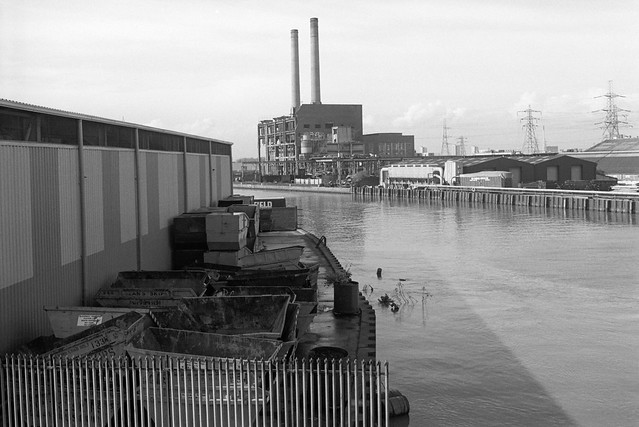
Bow Creek, West Ham Power Station, East India Dock Rd, Tower Hamlets, Newham, 1989 89-4c55_2400
Bow Creek, West Ham Power Station, East India Dock Rd, Tower Hamlets, Newham, 1989

Bow Creek truly became magical as it passed under the East India Dock Road, and although it has now lost much of the interest on its banks, the incredible flattened S-shape as it curves before reaching the Thames remains impressive.

Bow Creek, West Ham Power Station, East India Dock Rd, Newham, 1989 89-4c56_2400
Bow Creek, West Ham Power Station, East India Dock Rd, Newham, 1989

The creek bends almost 90 degrees to flow roughly south under the road at Ironbridge Wharf (the iron bridge long replaces by more modern concrete structures) only to take a hairpin 180 degree bend to return almost back to the road before sweeping another 180 degrees down to go over the elevated Lower Lea Crossing. From there its convolutions continue with a 90 turn to the east and another to the south before entering the Thames as Leamouth, around 900 metres away as the gull flies, but 1900 by boat.

Bow Creek, East India Dock Rd, Poplar, Tower Hamlets, Newham, 198232f-24_2400
Bow Creek, East India Dock Rd, Poplar, Tower Hamlets, Newham, 1982

Its course defines two very different peninsulas; to the west on largely undeveloped and now a nature reserve, with the DLR crossing to it on a viaduct and running up it, and on the east an industrial site, then occupied by the edible oil company Pura Foods (earlier Acatos & Hutcheson) and now the site of the City Island development.

Timber yard,  Essex Wharf, Bow Creek, East India Dock Rd, Newham, Tower Hamlets, 1989 89-4c51_2400
Timber yard, Essex Wharf, Bow Creek, East India Dock Rd, Newham, Tower Hamlets, 1989

On the eastern bank of the river south of Canning Town station is another so-called peninsula, the Limmo Penisula, which became a major Crossrail works site and is now a housing development. The name was previously used for the whole area around this part of Bow Creek and the nature reserve, now the Bow Creek ecology park was first called the Limmo Peninsula ecological park. It is an area of confusing names, with the new development south of the Lower Lea Crossing taking its name, Goodluck Hope, from the area now called City Island. It was also easy to get a little confused by the area itself with the wandering of the river, and even when writing this post I had problems sorting out pictures just from the appropriate area.

Pipe Bridge, Bow Creek, Tower Hamlets, Newham, 1989 89-4c63_2400
Pipe Bridge, Bow Creek, Tower Hamlets, Newham, 1989

The pipe bridge possibly carried gas from the nearby Poplar Gas works to Canning Town; downstream was a disused railway bridge. A new ‘blue bridge’ was later erected between these two (it appears in my 1992 pictures) and the pipe bridge was taken down though its brick piers left in place – now only the eastern one remains.

Timber Yard, Bow Creek, Tower Hamlets, 1989 89-4c65_2400
Timber Yard, Bow Creek, Tower Hamlets, 1989

The pictures in this post were all taken on or close to the East India Dock Road where it crosses Bow Creek, beginning with a couple looking up river and with the rest looking towards the south. In later posts I’ll cover the area further down Bow Creek which played an important part in the industrial (and footballing) history of the nation, and return with the creek back almost to the road.

Bow Creek, Leamouth Rd, Leamouth, Tower Hamlets, Newham, 1982 32f-36_2400
Bow Creek, Leamouth Rd, Leamouth, Tower Hamlets, Newham, 1982

The pictures here are from visits to the area in 1982 and 1989, but I also took some in 1983, and returned again in 1992, mainly to make some panoramic views, which I’ll write about in a later post. You can see more of my pictures in my Flickr album – this area is on page 4 – and clicking on any of the above pictures will also take you to the larger version there.

Class War v. Qatari Royals

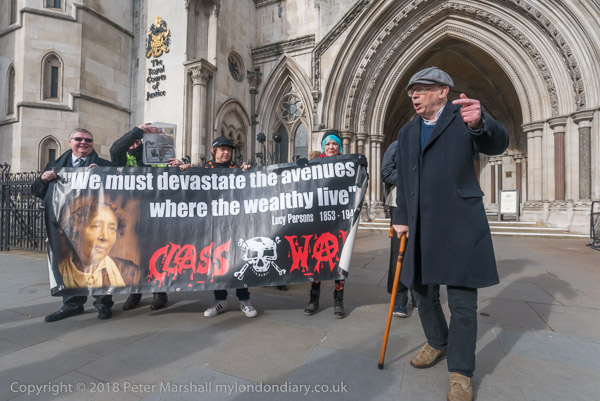
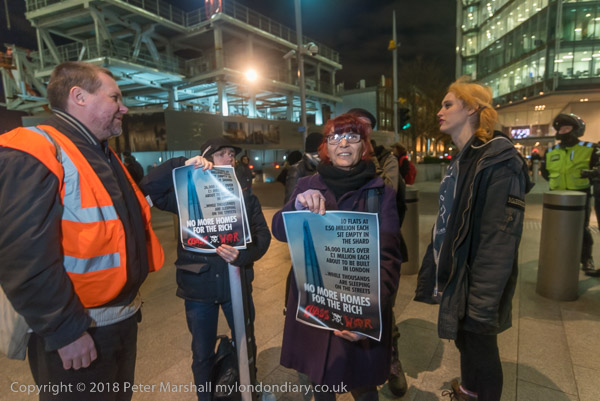
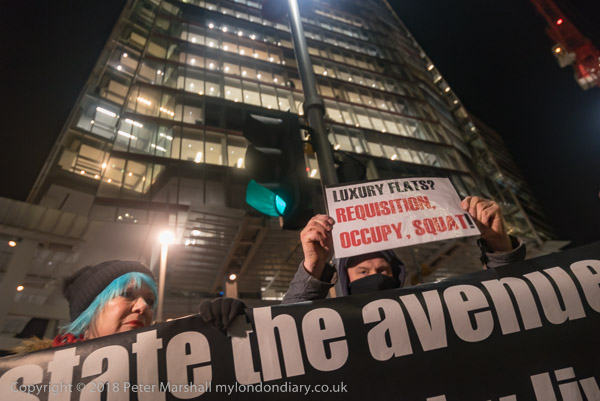
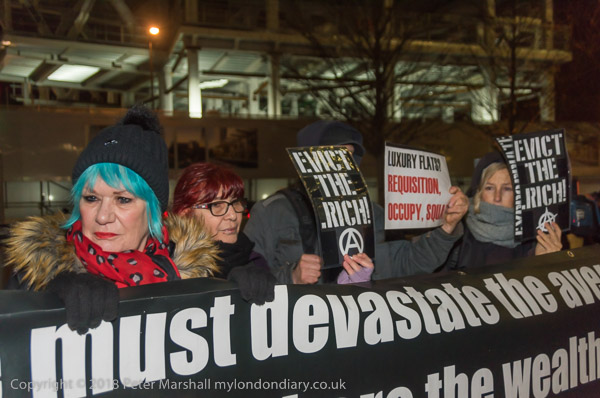
Three years ago today, on 8 Feb 2018, Class War had planned a protest outside London’s tallest building, the Shard, to point out the housing crisis, which is currently affecting many in London. They chose to protest at the Shard, because there are ten £50m apartments there which have remained empty since the building was completed.

We don’t actually have a housing shortage as there are more than enough properties for everyone to have a decent home. The problem is that current policies allow property to be left empty and encourage developers to build high priced flats which either remain unsold or are bought as investments and largely left empty for all or most of the time. There were then plans to build a further 26,000 flats in London costing more than a million pounds each, many on former council estates where social housing has been demolished at a time when London has a huge housing crisis with thousands sleeping on the street, and over 100 families from Grenfell were still in temporary accommodation.

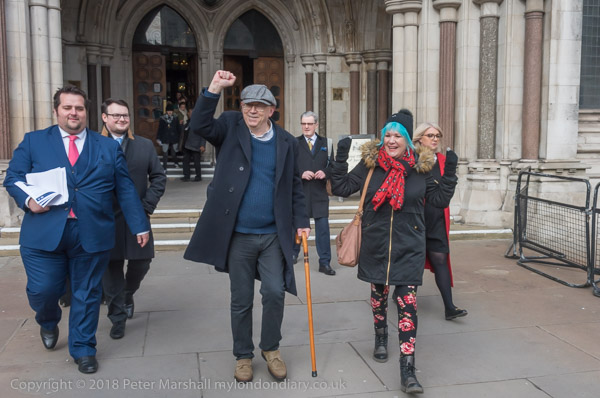
The owners of The Shard, the Qatari royal family, went to court to seek an injunction against the Class War protest, seeking an injunction against Ian Bone and “persons unknown” and, despite their fortune estimated at over £250 million pounds, seeking legal costs of over £500 from the 70 year-old south London pensioner.

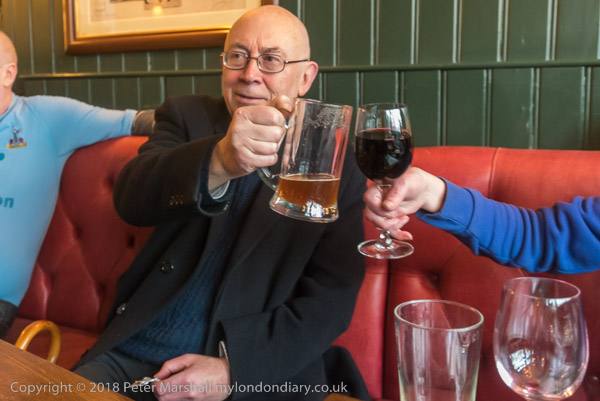
Fortunately barrister Ian Brownhill offered to conduct Bone’s defence pro bono and in the High Court hearing the Qatari royals were forced to drop the attempt to ban protests and the demand for fees but Bone accepted a legal restriction on him going inside the Shard and its immediate vicinity. But that meant the planned protest that evening could still go ahead, and Bone and his team emerged from the court victorious. His health issues meant that he was himself in any case unable to attend the protest.

At the protest there were large numbers of police and security, along with many in plain clothes and two officers with search dogs. The protest was always intended to be a peaceful one and the protesters were careful to remain outside the boundary of The Shard, marked with a metal line in the pavement. The police nonetheless harassed them, making a patently spurious claim that they were causing an obstruction to commuters attempting to enter London Bridge station and trying to move them further away from The Shard. Although the protest clearly wasn’t causing any serious problems to those entering or leaving the station, the larger numbers of police and security were.

Three years on, London still has a huge problem, with huge numbers of unaffordable flats still being built, particularly in the huge development area in Vauxhall and Nine Elms, including the developments around the US Embassy and the former Battersea Power Station. Some developments here include small areas of social housing, with ‘poor door’ entrances hidden away around the backs of some of the towers, the residents or which are excluded from the many facilities which are provided for the wealthy.

While blocks have large and well-furnished foyers with a concierge service for the rich, as well as some recreational facilities, social housing tenants typically enter a narrow bleak corridor with no space even for parcel deliveries. Just like the block in Aldgate where Class War’s long series of protests put the issue of ‘poor doors’, where poorer tenants are segregated from their wealthy neighbours on the national agenda back in 2014.

In July 2019, Communities Secretary James Brokenshire was “appalled” by the examples of segregation he had seen and promised to put an end to the use of “poor doors” in housing developments in England. It appears to have been a Broken promise, and Class War are thinking it is time for more action.

Class War protest at Shard
Class War victory against Qatari Royals


All photographs on this and my other sites, unless otherwise stated, are taken by and copyright of Peter Marshall, and are available for reproduction or can be bought as prints.

Arbaeen – 7 Feb 2010

One side of my work on London that has perhaps been overlooked, certainly in my posts on this site, is the coverage of religious festivals. Of course not all are public events and most of my work has been on the streets, but there are many processions and similar events that I’ve been able to photograph, mainly by Christians, Sikhs, Hindus and Muslims.

Some of these have been taking place in London for many years – such as the annual procession from the Italian Church in Clerkenwell which dates back to the Victoria era, while others have only come here as London has become more multicultural with the arrival here of many from our former colonies. But we have also seen a revival of some older traditions in more recent years, for example with more Christian processions of faith on Good Fridays, as well as the importation of Christian events from other countries and such as the annual blessing of the River Thames.

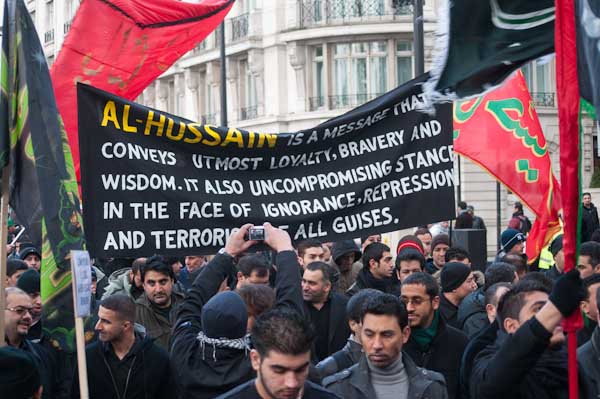
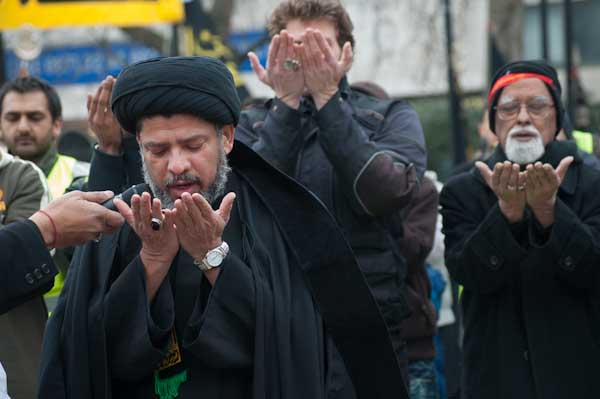
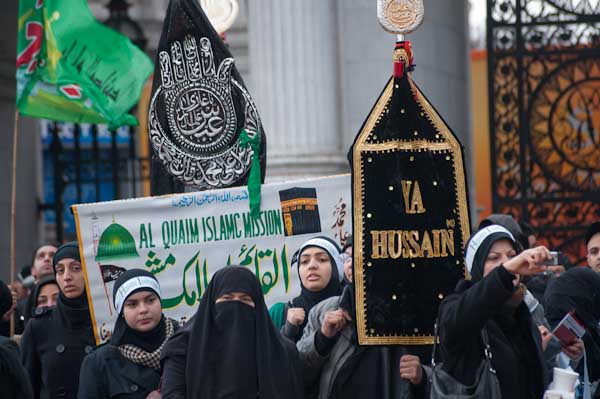
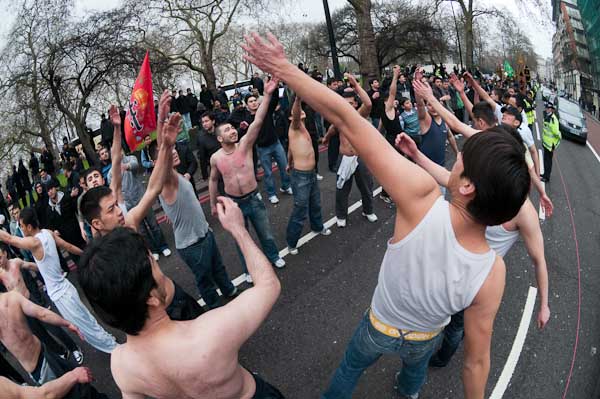
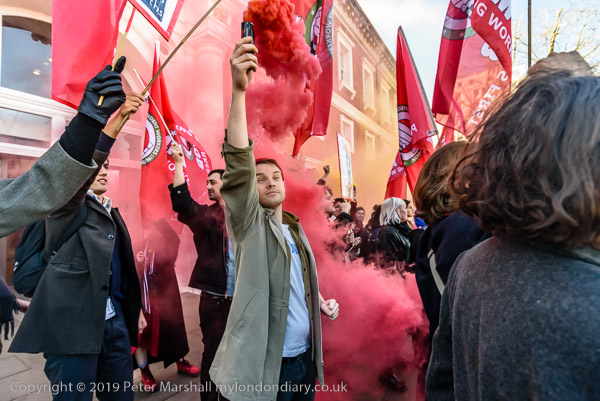
One of the larger and more colourful of these annual festivals is the Arbaeen procession of mourning by Shia Muslims organised in London by the Hussaini Islamic Trust UK since 1982, the largest and oldest such event in Europe.

It commemorates the sacrifice made by the grandson of Mohammed, Imam Husain, killed with his family and companions at Kerbala in 680AD and takes place on the Sunday following the end of 40 days of mourning the martyrdom of Husain.

I’ve photographed this event on several occasions, and in 2010 I wrote:

Imam Husain is seen by Shia Muslims as making a great stand against the oppression of a tyrant and representing the forces of good against evil. Husain and his small group of supporters were hugely outnumbered but chose to fight to the death for their beleifs rather than to compromise. Their stand is a symbol of freedom and dignity, and an aspiration to people and nations to strive for freedom, justice and equality.

London Arbaeen Procession

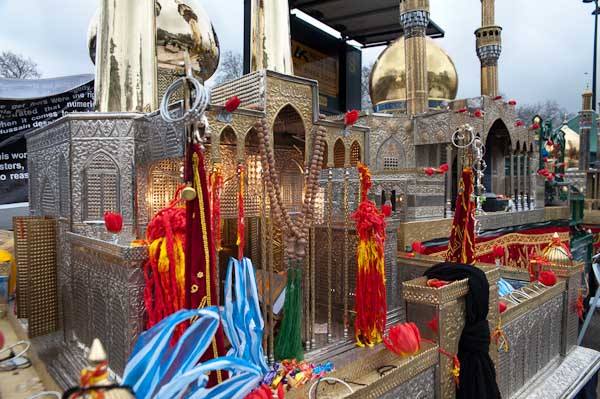
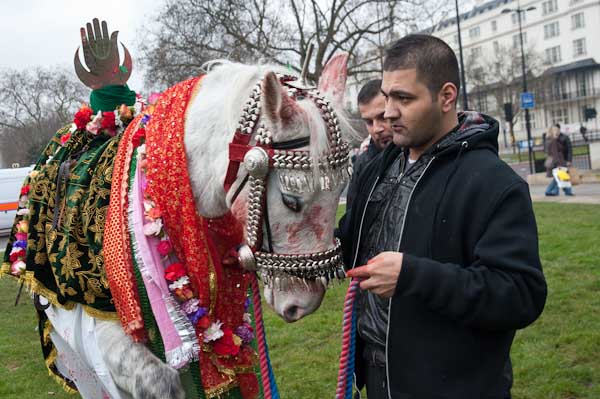
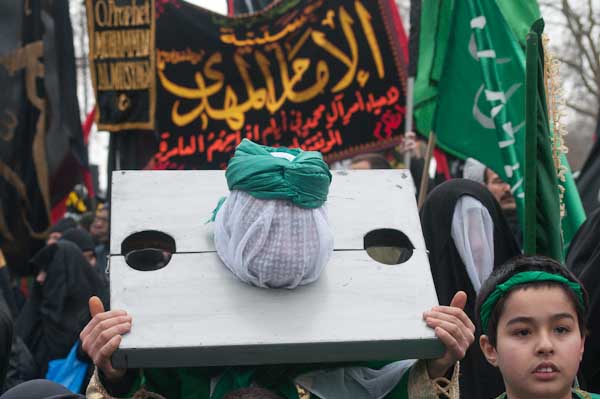
You can see and read more about the procession, with its impressive silver and gold replicas of the shrines of Karbala, Zuljana, the horse of Imam Husain, its flags and banners, the re-enactment of the events by children, the prayers and recitations,

and the beating of breasts on My London Diary: London Arbaeen Procession.

You can also find pictures of the Arbaeen processions in March 2007, March 2008, February 2009, Jan 2011 and Jan 2012 on My London Diary.


All photographs on this and my other sites, unless otherwise stated, are taken by and copyright of Peter Marshall, and are available for reproduction or can be bought as prints.


South of Bow Locks – the 1980s

Bow Creek, Bow Locks, Hackney, Tower Hamlets, 1983 36v-52_2400

Back in the 1980s it wasn’t possible to walk beside Bow Creek from Bow Locks south to the East India Dock road, as the banks were occupied by various industrial and commercial sites, including two gas works and West Ham power station. And although there have been plans by the councils for many years, even today you can only walk down on the Newham bank as far as Cody Dock, on a path opened to the public some years ago with the ridiculous name of the Fatwalk, but since renamed. There is a tantalising walkway visible continuing past the dock along the former power station bank, but this is still closed to the public.

Clinic, Bromley-by-Bow, Tower Hamlets, 1983 35v-35_2400

While this was a limitation, it was also an opportunity to explore the two areas where roads ran close (or not too close) to Bow Creek to both the east in West Ham and west in Bromley and Poplar, and I was rewarded by some images I found interesting, though parts of my walks were along fume laden streets with heavy traffic.

Blackwall Tunnel Northern Approach, Tweed House, view, Bromley-by-Bow, Tower Hamlets, 1983 35v-3pan_2400

Tweed House, a tall block of council flats on the Blackwall Tunnel Approach Road next to the Limehouse Cut enabled me to take some pictures which I more recently stitched together to create two panoramas of the area – the individual pictures are also in the Flickr album. Click to see the larger versions on Flickr.

Blackwall Tunnel Northern Approach, Tweed House, view, Bromley-by-Bow, Tower Hamlets, 1983 35v-4-pan_2400

From various places both on to the east and west of Bow Creek I found rather satisfyingly bleak views of the distant power station, including one with a young mother with a small baby in a pram.

Lochnagar St, Bromley-by-Bow, Tower Hamlets, 1983 36v-42_2400

Others were emptier still, like this

Lorry Park, Gillender St, Bromley-by-Bow, Tower Hamlets, 1982 32e-42_2400

or more minimal and just occasionally rather threatening; some streets around here featured in crime films and TV dramas of the era, gangster London.

Lochnager St, Poplar, Tower Hamlets, 1982 32e-34_2400

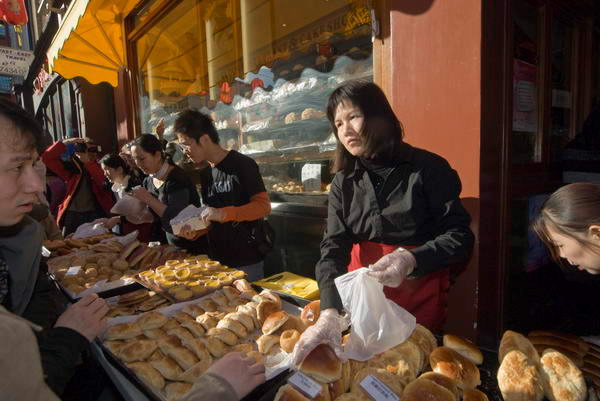
But there was also a little chance for fun, with a cafeteria with two giant cooling towers to take away the cooking fumes and the unlikely name of Oasis.
Oasis, Cafeteria, Cafe, Bidder St, West Ham, Newham, 1983 36v-12_2400

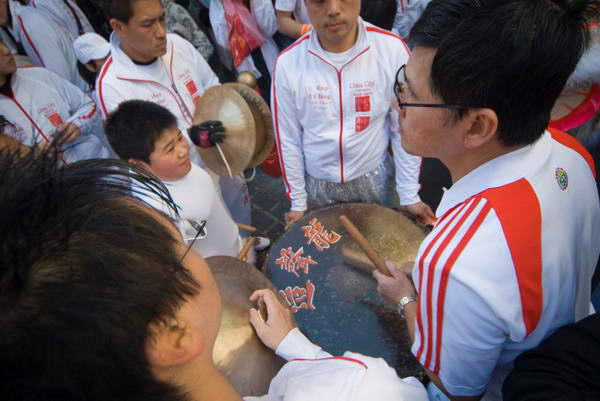
Poplar Gas Works was on a rather smaller scale to Bromley-by-Bow, but its gas holders still dominated the working class housing around it. Two young girls playing on the grass came to see what I was doing and insisted on being photographed, though I perhaps should have stepped back a foot or two to avoid cropping their feet to get the gasholder in the frame.
Girls, Gasholder, Poplar Gas Works, Rutland Terrace, Oban St, Poplar, Tower Hamlets, 1983 35v-55_2400

At East India Dock Road I was able to return to Bow Creek – and things got even more interesting (and although very different they still are) as I hope to show you in the next installment of my work from the Flick album River Lea – Lea Navigation – 1981-92 – the pictures above are all on Page 4.

Clicking on any of the images above should take you to a larger version on Flickr, and you can also go on to explore the album from there.


All photographs on this and my other sites, unless otherwise stated, are taken by and copyright of Peter Marshall, and are available for reproduction or can be bought as prints.