Paris and the Nouvelle Vague

Paris and the Nouvelle Vague: Pictures from my own work in Paris over the years and a short review of a current show online and at the Peter Fetterman Gallery in Santa Monica, California.
Paris and the Nouvelle Vague
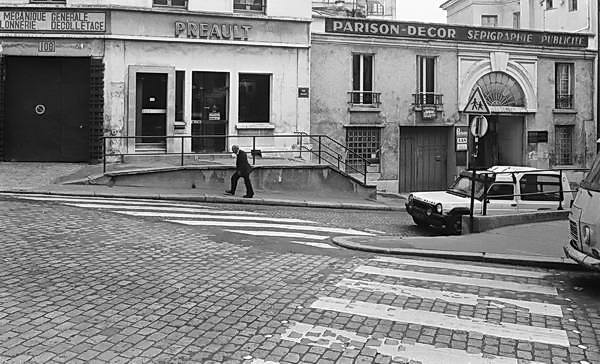
Quai de Jemappes / Rue Bichat, 10e, Paris, 1984

I first photographed in Paris in 1966, before I was really a photographer, when I spent a week there with the woman I was to marry two years later. I had bought a 36 exposure process-pad cassette of cheap slide film for the holiday, loading it into my fixed lens Halina camera.
Paris and the Nouvelle Vague
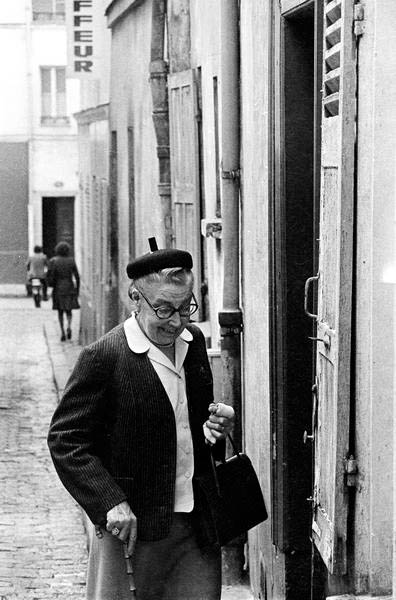
1973

Getting into a rowing boat to row at Versailles I dropped my camera into the lake. The man hiring the boats fished around a little with his boat hook, then waved us off, promising to continue the search. When we came back an hour later he proudly presented it, obviously hoping for a reward. But we were penniless students and all he got were profuse thanks.
Paris and the Nouvelle Vague
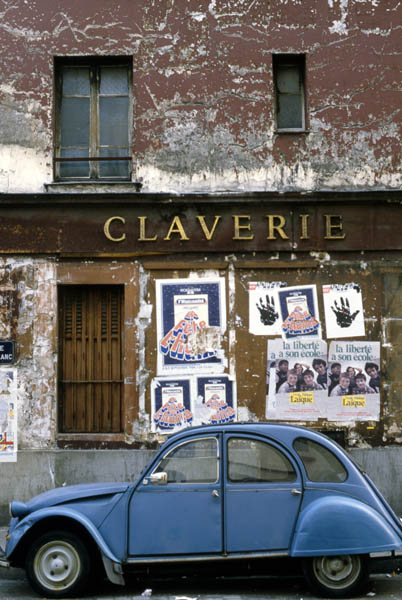
1984

The camera was never the same again with a leaf shutter that would sometimes stick open – and it was six years before I could afford to replace it. The colour slides had an interesting hue.
Paris and the Nouvelle Vague
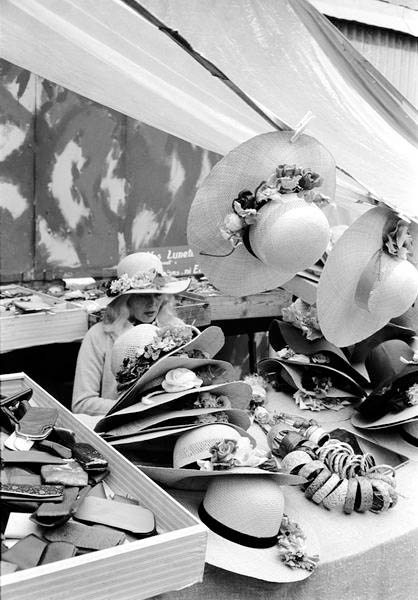
1973

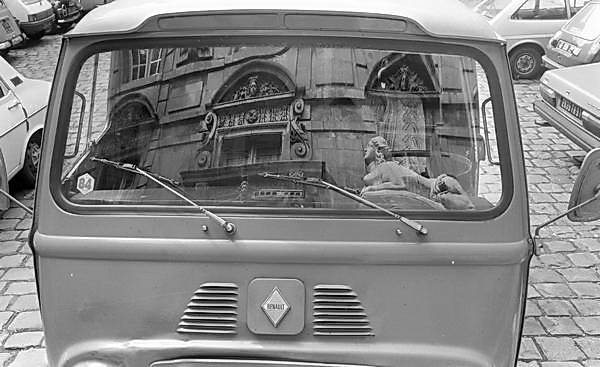
Our next trip to Paris was in 1973, when we spent several weeks in a student hostel in the centre of Paris and spent long days walking almost every walk in an old Michelin Green Guide. I’d given the Halina away and now had a clunky Russian Zenith with three Russian lenses and a good supply of bulk loaded cassettes of black and white film.
Paris and the Nouvelle Vague
1984

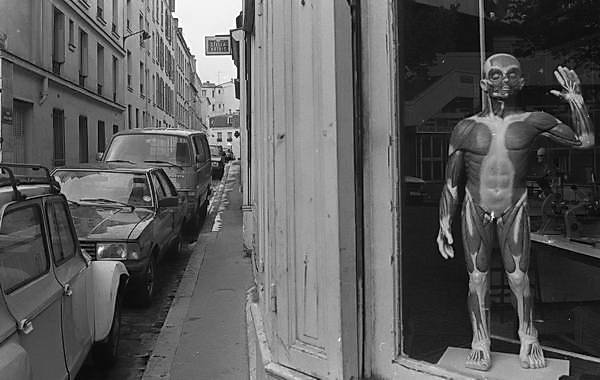
You can see many of the pictures from that visit on my Paris Photos web site along with those from some later visits, particularly in 1984 when I worked on the project that became my show and later a book, In Search Of Atget. After that we returned every two or three years until fairly recently, and pictures from some of the later visits – mainly for Paris Photo – are also online.
1984

Peter Fetterman Gallery
Nouvelle Vague

SEPTEMBER 6, 2025 – JANUARY 3, 2026
Santa Monica, California

I seldom write reviews of photographic exhibitions now, either of shows I go to or those I simply see on line. Mostly because few interest me and those that do are mainly of work by photographers who I’ve written about at length in the past (though many of those that I wrote professionally are no longer available.)

But this show attracted me, both as a photographer and also as someone who now watches (or falls asleep watching) a wide range of films. I first got a real interest in film back in the 1960s and the films that excited me most were those of the French New Wave, particularly Truffaut and Godard, but later others including Chabrol, Rivette and Varda. And of course a great fan of photographers such as Willy Ronis and Robert Doisneau, and finally as someone who has enjoyed many stays in Paris over the years, at times immersing myself in its thriving photographic culture during the Mois de la Photo, so different and more intense than anything in London. And this is a show which is much more about Paris than about the Nouvelle Vague.

You can see pictures from the show on the Peter Fetterman Gallery website.

Raymond Cauchetier who died from Covid in 2021 at the age of 101 worked as a set photographer on many of the best-known films of the French “early New Wave period, including Truffaut’s Jules et Jim (1962) and La peau douce (1964), Agnès Varda’s Cléo de 5 à 7 (1962), Jacques Demy’s Lola (1961) and Jacques Rozier’s superb but overlooked Adieu Philippine (1962).” Jonathan Romney, wiriting in the BFI’s Sight and Sound could have included many others, notabley À bout de souffleand ‘Une femme est une femme‘.

A former member of the French Resistance he spent much of the 1950s photographing in South East Asia including in the war in Vietnam, Japan and Hong Kong and it was in Cambodia where he first worked as a set photographer.

He failed to get work as a photojournalist after returning to France but when working on photo-romans was introduced to the then film critic Jean-Luc Godard who hired him as set photographer for his debut film, ‘À bout de souffle‘ in 1960. Cauchetier also worked on his ‘Une femme est une femme‘.

He left the world of cinema a few years later in 1968 as the pay for set photographers was too low, but it was apparently only in 2005 when French copyright law was clarified that he was able to exhibit and publish much of his work from those 8 years. In France, unlike the UK, USA and most other countries, photographers retain copyright of their work even when they are working as employees.

It was good to see the Peter Fetterman Gallery highlighting his work in their new exhibition, Nouvelle Vague, which they call “a compelling survey of French photography drawn from some of the most celebrated artists of the 20th century“.

And the show on-line does have some interesting images by some of the better known French photographers of the era, including Edouard Boubat, Jean-Philippe Charbonnier, Robert Doisneau, Willy Ronis and Sabine Weiss, mainly from an earlier age in the 1940s and 1950s along with a few pictures which just happened to have been taken in Paris by others. And although Henri Cartier-Bresson just had to be there, he is hardly well represented.

Of those who are not French the work of Louis Stettner – who went to Paris in 1947 for three weeks and stayed five years stands out. And he arguably played an important part in bringing the ideas and approaches of New York’s Photo League with him. But there are some whose presence seems to me to simply dilute the show.

Menilmontant, 2004

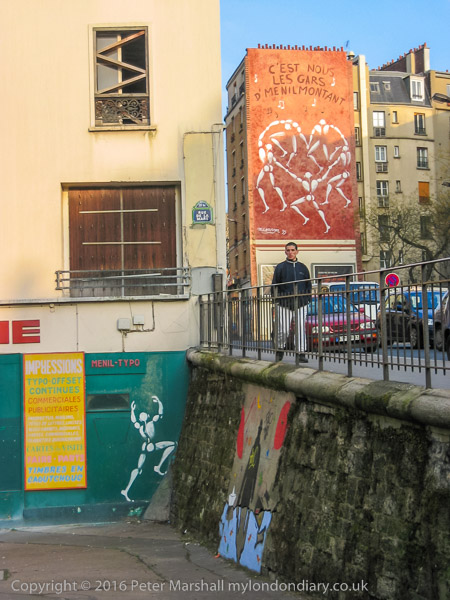
More of my own work on Paris on my Paris Photos web site, and in my books In Search Of Atget and Photo Paris available from Blurb, as well as in several albums on Flickr including Paris 1997. I really should do more books on my work in Paris.


FlickrFacebookMy London DiaryHull PhotosLea ValleyParis
London’s Industrial HeritageLondon Photos

All photographs on this page are copyright © Peter Marshall.
Contact me to buy prints or licence to reproduce.
Limehouse and the City – Panoramas 1994

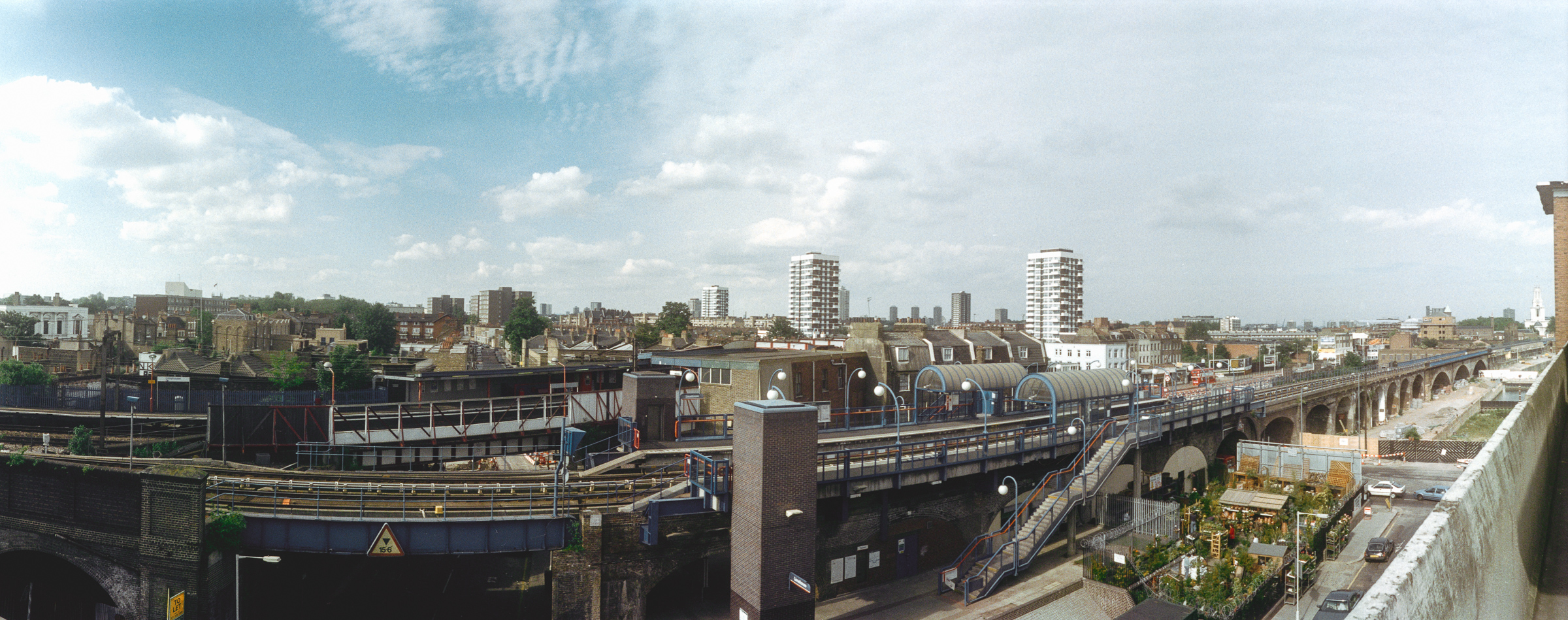
Limehouse and the City – Panoramas 1994: I made one panorama at the end of my trip to Limehouse in June which is on a film processed in July which I overlooked when posting pictures to Flickr.

DLR Viaduct, Limehouse, Tower Hamlets, 1994, 94-701-51

This was taken from the top floor of John Scurr House on Ratcliffe Lane where there are open balconies leading to the flats it shows both the National Rail and DLR Limehouse stations with the DLR viaduct leading east, with the white tower of St Anne’s Limehouse just visible at extreme right before the top of the brickwork of the stairs.

You can also just see the north side of Limehouse Basin on the other side of Branch Road, and lower right of centre is a small but packed garden centre. A bus goes along Commercial Road and you can see the houses and flats of Limehouse and Bow beyond. Like all the other pictures in this post it was taken with a swing-lens panoramic camera with a horizontal angle of view of over 120 degrees.

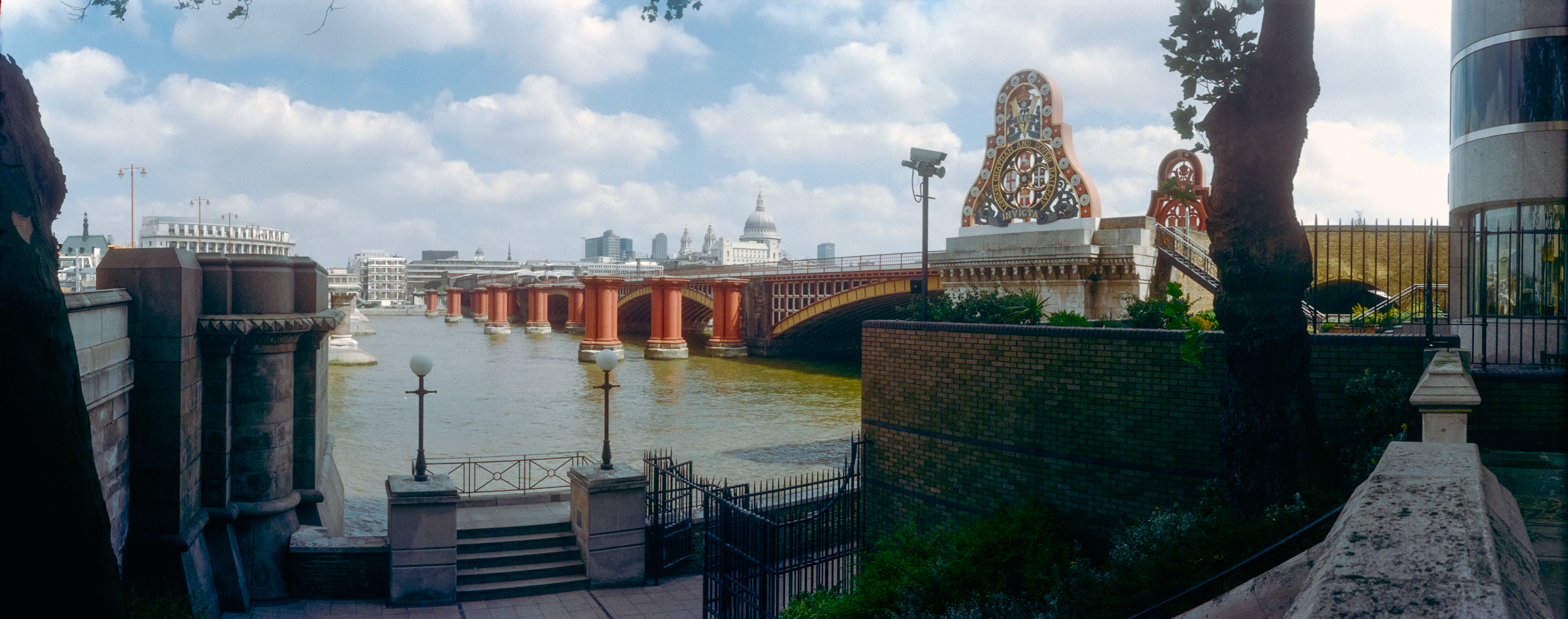
Blackfriars Rail Bridge, Blackfriars Bridge, River Thames, Southwark, 1994, 94-701-42

Early in July I took a train to Waterloo and walked into the City from there, pausing before I crossed Blackfriars Bridge to make this panorama. This is the only place where the City comes ‘South of the River’ and where I was standing in Rennie Garden I was already in the City of London, though the wall at right and half the rail bridge past it is in Southwark.

While the City boundary for the other bridges is in the centre of the river, for some reason the Blackfriars and Southwark Bridges Act 1867 put the full length and its southern end within the city’s borders, in the parish of St Anne Blackfriars.

The garden here Rennie Garden is named after John Rennie (1761 – 1821) the engineer who built several of London’s bridges but not this one, which was by by Joseph Cubitt, also responsible for the dismantled railway bridge whose red piers remain.

This was the site of the Albion Flour Mills designed by Samuel Wyatt on this site in 1786 to house the machinery of Matthew Boulton and steam engine of James Watt – and it was this steam-powered corn mill, the first major factory in London, which is thought to be the inspiration for William Blake’s ‘dark satanic mills’.

The Albion Mill died by its own hand, burnt down in 1791 by a fire probably caused by poor maintenance when a bearing overheated, but four years earlier Robert Barker had sent his son Henry Aston Barker to sit on the roof of the building to make the sketches for his ‘London from the roof of the Albion Mills‘ which he then added detail, “greatly enlarged and painted in distemper on canvas.” He coined the name ‘panorama’ and in 1787 patented the idea. His panorama, first shown at the Albion Mill shortly before it was burnt down and then shown in various galleries in London.

Sets of aquatints were made by Frederick Birnie which toured Europe and went to the United States and while these survive in various collections the original panorama is lost.

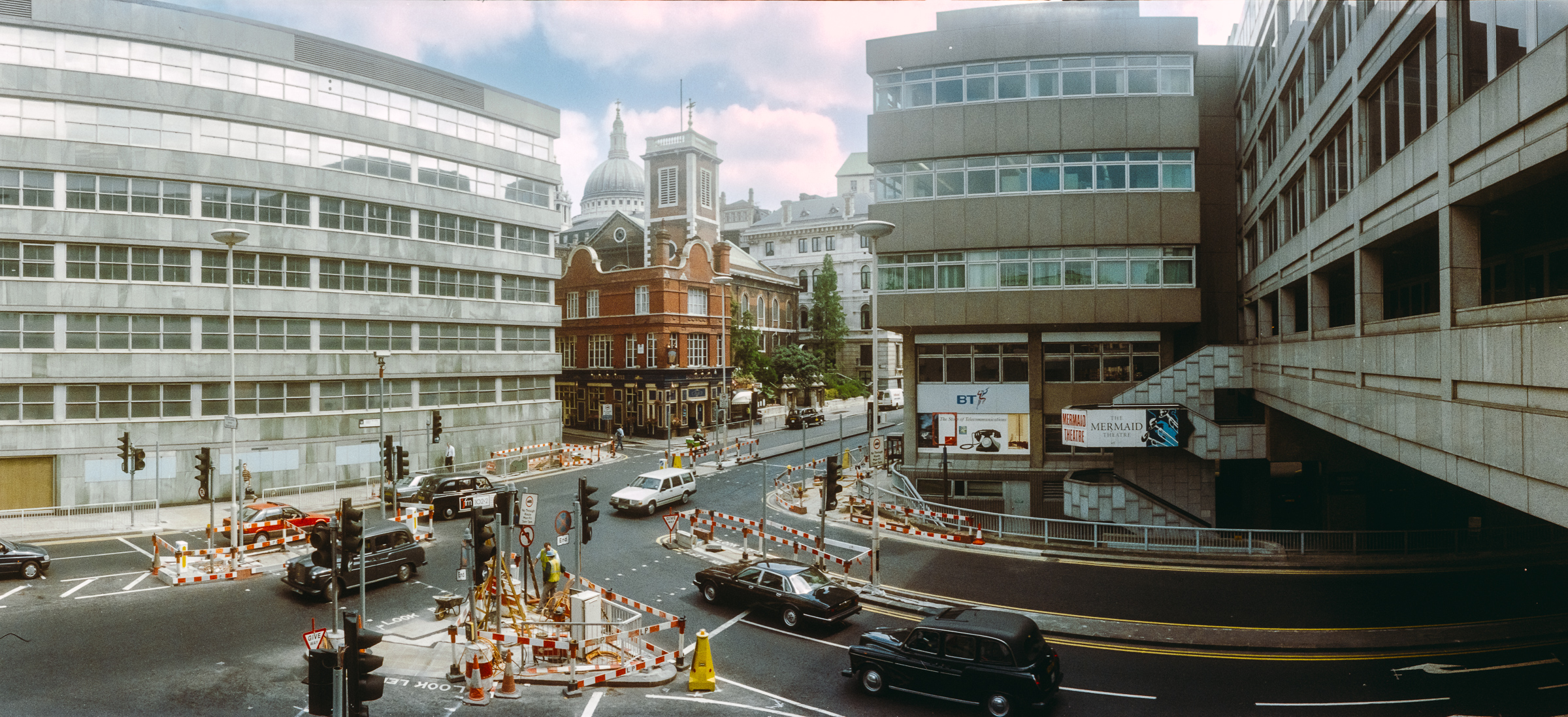
Puddle Dock, Queen Victoria St, City, 1994, 94-701-33

Puddle Dock was a dock and also a sewer outfall and was filled in during the comprehensive reclamation and redevelopment of the area between 1962 and 1972 which created Upper Thames Street as a major road and Puddle Dock linking this to Queen Victoria Street underneath part of Baynard House, a Brutalist office block built for BT and completed in 1979.

As a part of plans to separate vehicle and pedestrian movement in the City it included a walkway leading to Blackfriars Station from which I made this panorama. The dome of St Paul’s can be seen just to the left of the tower of St Andrew by the Wardrobe.

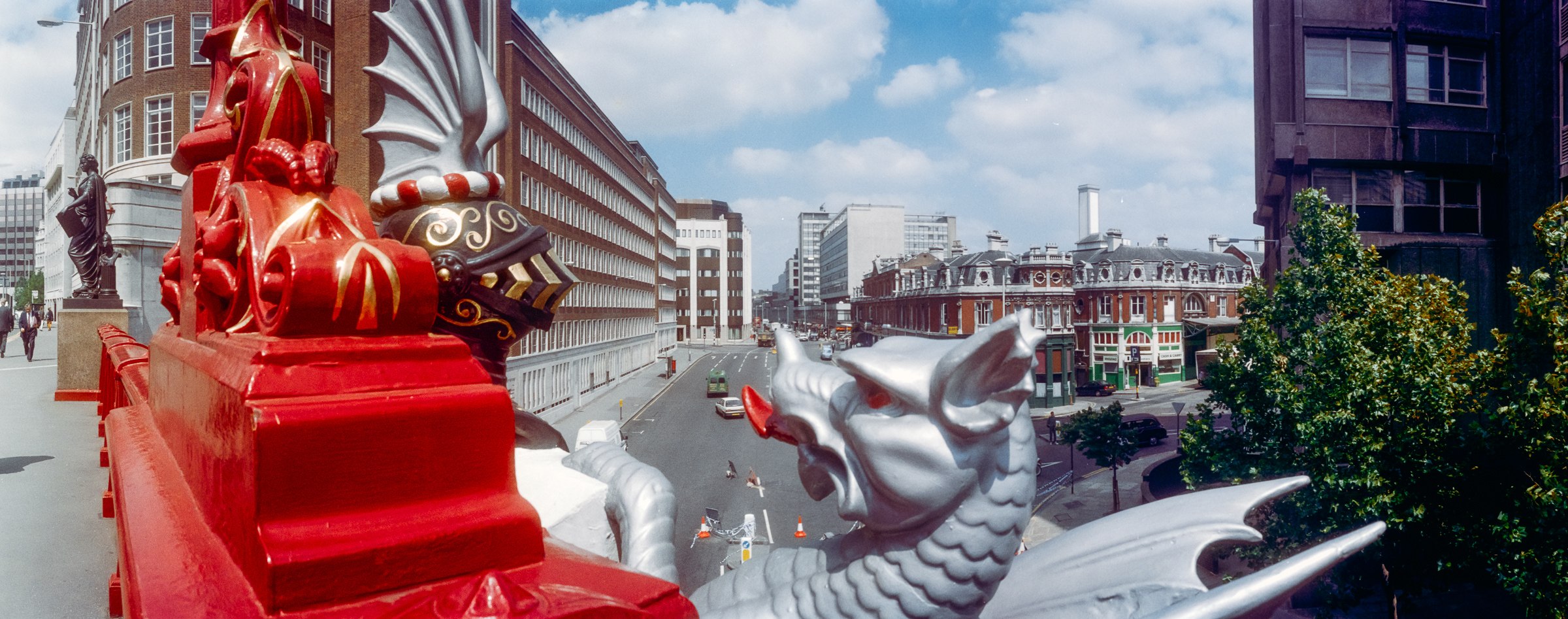
Sculpture, Farringdon Rd, Holborn Viaduct, City, 1994, 94-702-51

Holborn Viaduct was London’s first flyover, connecting the City with Holborn over the deep valley of the River Fleet, which had be culverted here in the 18th century, in part for the building of New Bridge Street. Built in 1863-69 it links Holborn Circus with Newgate Street and was a major redevelopment ‘”the most ambitious and costly improvement scheme of the [nineteenth] century” (White 47), and it involved some outstanding feats of Victorian engineering.

Over the years I’ve made quite a few panoramas on and of the viaduct and written about it at some length – here are a few from 1994. You can read a detailed account on the Victorian Web site.

Sculpture, Farringdon Rd, Holborn Viaduct, City, 1994, 94-702-52
Sculpture, Farringdon Rd, Holborn Viaduct, City, 1994, 94-703-11

More from July 1994 in the City later.


FlickrFacebookMy London DiaryHull PhotosLea ValleyParis
London’s Industrial HeritageLondon Photos

All photographs on this page are copyright © Peter Marshall.
Contact me to buy prints or licence to reproduce.

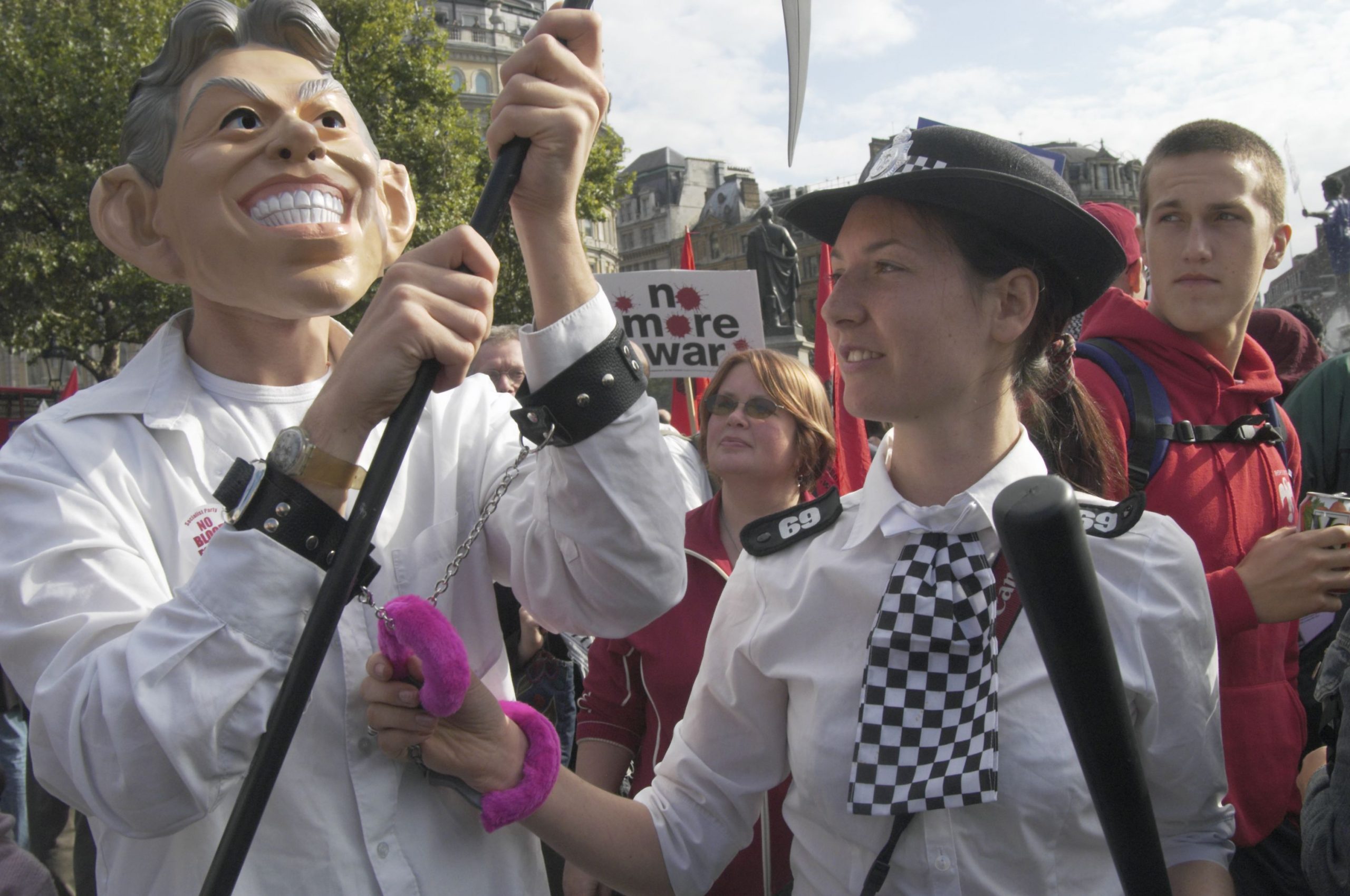
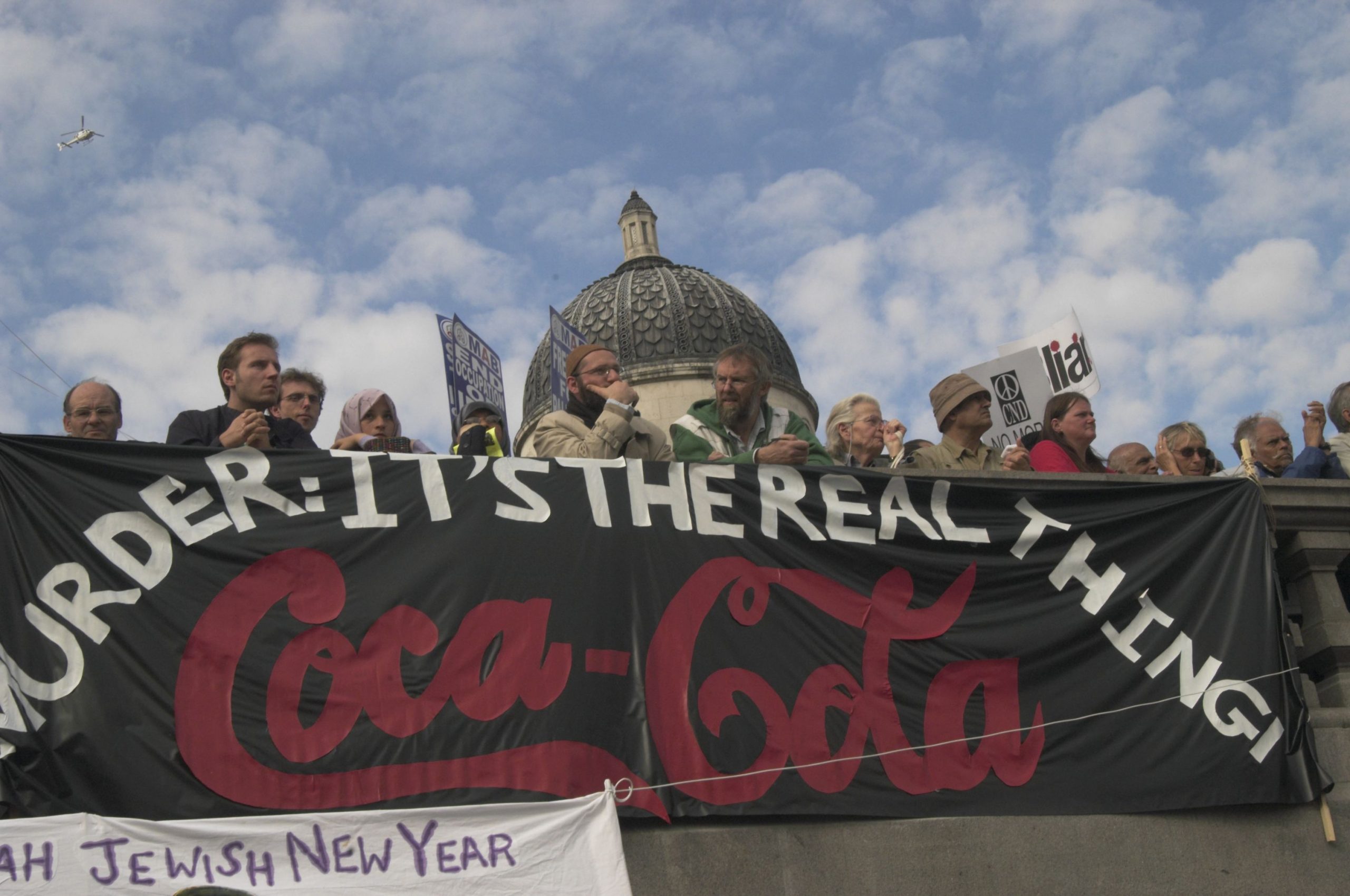
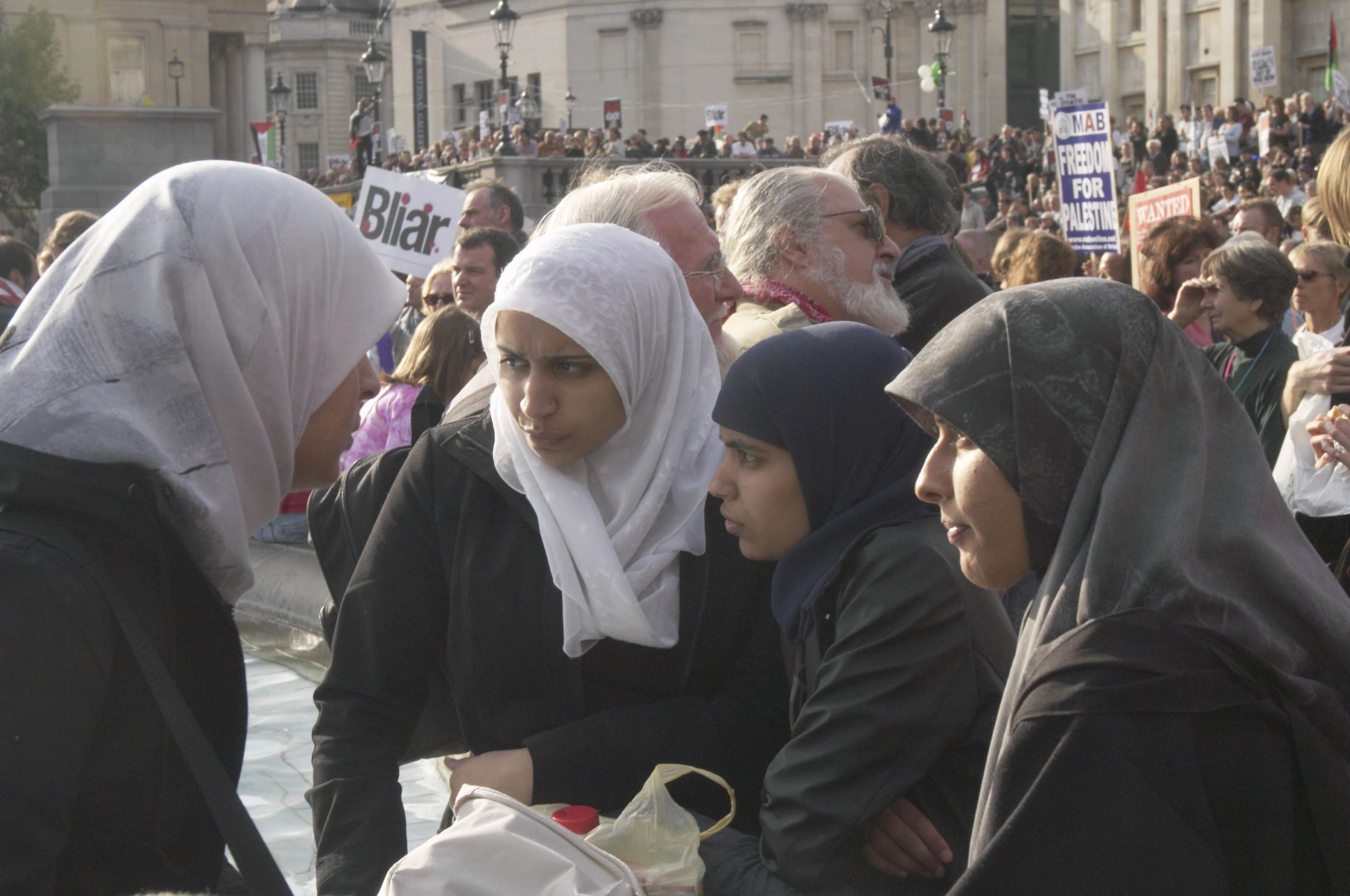
Anti-War March in London – September 28th 2003

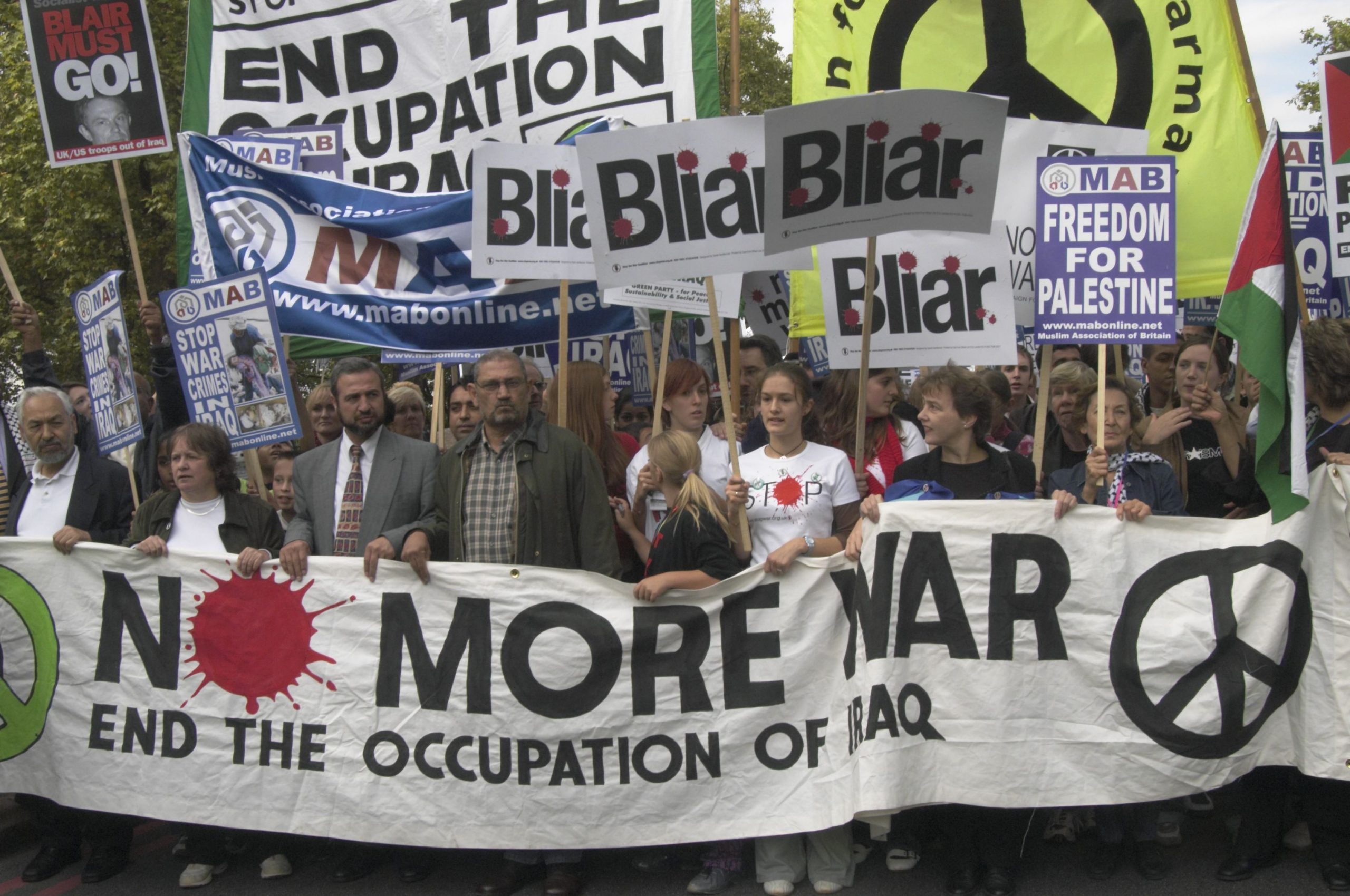
Anti-War March in London: In the face of protests across the country and the world – “between 3 January and 12 April 2003, 36 million people across the globe took part in almost 3,000 protests against the Iraq war” the USA together with the UK, Australia and Poland began the invasion of Iraq on 20 March 2003.

In the UK we had our largest ever anti-war protest on 15th February, with estimates of between 750,000 and 2,000,000 people taking part in a march and rally. I wasn’t there as I had come out of hospital the previous day and was still too weak to walk more than a few steps, so was left at home when my wife and elder son went out to protest. It was the only major London protest against the war I didn’t photograph.

Protests in London continued, with people angered that their voices had not been heard, and particularly as we learnt more about the lies and deceit that Tony Blair had marshaled to get the decision to go to war past Parliament and in particular about the two ‘Dodgy Dossiers’ which Alistair Campbell had “sexed up”, the later one plagiarised from an article by a research associate at a US institute and the earlier making false claims about “weapons of mass destruction.” No WMDs were found in Iraq.

The earlier dossier had made the false claim that some of Iraq’s chemical and biological weapons were deployable within 45 minutes, a claim that according to BBC journalist Andres Gilligan was added at the insistence of Andrew Campbell. Gilligan claimed that his source for that was an off-the-record talk with weapons expert David Kelly. Although the Hutton Inquiry concluded Kelly had killed himself following the investigations into this exposé some still suspect our security services took a hand in his death.

You can read an account of the protest in The Guardian, Anti-war protesters vent their frustration, which notes that this was “Britain’s fifth anti-war protest in a year snaked from Hyde Park through the centre of London and filled Trafalgar Square with anti-Blair placards. It was the first national rally since Saddam Hussein’s regime fell in Iraq and the tone had changed since 1.5 million marched to prevent war in February.” It gives the police estimate of the numbers taking part at 20,000 and Stop the War’s figure of 100,000 – the actual figure was probably about halfway between the two.

I didn’t write much at the time – and didn’t post many of the pictures I took, and a few of those here are published for the first time. Here is my 2003 piece – with a link to the orginal.


The Anti-War March on 27 September was another big event, though not on the massive scale of February’s event.

It took about an hour and a half to pass me on Park Lane. The numbers reported by the police and BBC both seemed derisory. Perhaps they were closer to the numbers that ended up in Trafalgar Square, but there were far more on the march itself.

Estimating numbers is hard once the numbers get too high to really count – perhaps a few thousand. The Countryside Alliance had the right idea on this, with their arch on Whitehall although I never see one of their car stickers with 400 thousand and something on without thinking ‘and I was 3 of them.’

More pictures at http://mylondondiary.co.uk/2003/09/sep27-01.htm


FlickrFacebookMy London DiaryHull PhotosLea ValleyParis
London’s Industrial HeritageLondon Photos

All photographs on this page are copyright © Peter Marshall.
Contact me to buy prints or licence to reproduce.


Charlton and Maryon Park – 1990

Charlton and Maryon Park is the final part of my walk on Saturday 20th January 1990 which began with Westcombe Park and Blackheath 1990

Springfield Grove estate, Charlton Rd, Charlton, Greenwich, 1990, 90-1j-62

This estate was built on what had earlier been the site of the late 17th Century Springfield House, which was demolished just before the Second World War – the LCC had bought Stonefield Farm in 1927 for the Thornhill Estate. During the war there was a pig farm on the site. Springfield House took its name from a spring here which ran down in a valley here when the house was built. and though it is sometimes described as a wooded combe (dry valley) construction of the estate was held up in 1949 by the spring having to be stemmed and the ten blocks date from 1951-2.

The blocks were named with associations to previous Lords of the Manor of Charlton “Bayeaux – Bishop Odo of Bayeaux ; Downe & Ducie – Sir Wm.Ducie created Vise.Downe ; Erskine – Sir John Erskine Games – Wm.Langhorn Games ; Langhorne – Sir Wm.Langhorn, Mar – Earl of Mar (Sir J.Erskine) ; Priory – Priory of Bermondsey and Wilson – Sir Thos. Wilson 6th Bt. who married into the Maryon family, owners of the Manor & Estates.

These ten brick LCC point blocks in the Sparingfield Grove Estate (also known as Thornill Estate which it adjoined) were built around 1950, and the view between the towers here is described in the conservation area document as the most dramatic of the “number of good panoramic vistas” from the escarpment here, with a view towards the Thames and central London. The estate was built by the LCC but was transferred to the London Borough of Greenwich when that was set up and then in 1999 to a housing association. In 2012 the blocks were clad hiding the brickwork, which although I think is aesthetically poorer will have been much appreciated by residents for increasing their comfort.

I walked along here, but perhaps the best way to appreciate the views is from the upper deck of a bus going along Charlton Road or Charlton Church Lane.

War Memorial, Drinking Fountain, Public Toilets, Charlton House, Charlton Church Lane, The Village, Charlton, Greenwich, 1990, 90-1j-54

The triangle in the middle of the junction between Charlton Church Lane and The Village would, apart from the traffic be a pleasant place to sit and there is now a seat between the war memorial and the drinking fountain, though I think you need to bring your own drink. Most of our old drinking fountains have been disconnected for hygienic reasons, though London does now have some new ones. At least in winter you can see a wide variety of architecture, though trees tend to block some views for the rest of the year.

The cattle trough which replaced the old village stocks must I think have been just out of my picture on the left and like the drinking fountain was erected to commemorate the coronation of King Edward VII in 1902, together costing £247 donated by local residents and Sir Spencer Maryon Wilson, 11th Bart – who gets his name on the side of the trough. The fountain was damaged in 1980 when a driver without tax or licence drove into it; Greenwich Council decided they could not afford the £3,000 needed to repair it, but local residents again reached into their pockets.

Charlton House, The Village, Charlton, Greenwich, 1990, 90-1j-66

Charlton House is said to be the “finest Jacobean mansion in all London”, designed by architect John Thorpe, said to have been the inventor of “humble and now-ubiquitous corridor” which allowed independent entrance to the various rooms of a grand house – previously each room had led through doors to the next in what was know an an enfilade.

The house was first opened to the public in 1909 with the one shilling (5p) entry fee going to provide free lunches for the children of Deptford. Now in public ownership for 100 years it is one of the few things that cost less than then, with house and grounds free to the public.

The large classical arch was once the entrance to the grounds but is now isolate, all on its own in a large area of grass.

Charlton House, Charlton, Greenwich, 1990, 90-1j-55

Part of the house was badly damaged by wartime bombing in 1944 but has been carefully restored, and perhaps the only visible sign is a slightly lighter colour to the bricks used – and apparently the sundial between the first and second floor windows was fitted upside down.

Charlton House, Charlton, Greenwich, 1990, 1990, 90-1j-56
Charlton House, Charlton, Greenwich, 1990, 1990, 90-1j-42

The house was built by the crown for Prince Henry, the son of James I, and older brother of the future Charles I and his then tutor, Sir Adam Newton who was Dean of Durham, though hardly convenient for him as the 260 mile commute would then have taken several days. But I imagine he could claim his salary while working from home despite there being no internet connection.

The house has a grandly decorated doorway.

Roman Stone, Acorn, Charlton House, Charlton, Greenwich, 1990, 1990, 90-1j-45

Charlton was of course long famous for its Horn Fair, held not at Charlton House on the top of the hill but at Cuckold’s Point on the River Thames. It was described by Daniel Defoe as a “yearly collected rabble of mad-people” which “ought to be suppressed, and indeed in a civiliz’d well govern’d nation, it may well be said to be unsufferable” and at which “the women are especially impudent for that day; as if it was a day that justify’d the giving themselves a loose to all manner of indecency and immodesty, without any reproach“.

And in 1872 it was suppressed but a considerably “tamer version of the fair was re-established in 1973 in the grounds of Charlton House“. I went at least once and was disappointed, particularly by the lack of female impudence.

The ‘Roman Stone’ is not of course Roman, but an artificial stone probably bound together with Portland Cement (invented by Joseph Aspdin in 1824) much used for garden ornaments in the Victorian era and beyond. These materials can be moulded using sand moulds.

Woodland Terrace, from Maryon Park, Charlton, Greenwich, 1990, 90-1j-25

Woodland Terrace is in what was a large wooded area known as Hanging Woods which hung on the side of the slopes rising from the River Thames here. The main Dover Road runs through these woods and Shooters Hill was a popular haunt for highwaymen, though less popular for travellers. Hanging Woods was a wild wooded area good for the gentlemen of the highway to hang out and evade pursuit.

Maryon Park, Charlton, Greenwich, 1990, 90-1j-11

Maryon Park is a former quarry, part of Charlton sandpits on the edge of Hanging Wood, which the Maryon-Wilson family gave to the LCC in 1891. The sandpits were dug in the 18th and 19th centuries for sand in the local foundries and for making glass, and there were also chalk pits nearer to the river. One of the four pits, Charlton Station Pit is now The Valley, home to Charlton Athletic Football Club, and another, Gilbert’s Pit, is part of a nature reserve. The East Pit is Maryon Park, along with an un-quarried ridge on its west side.

Maryon Park, Charlton, Greenwich, 1990, 90-1j-15

On the Charlton Parks Reminiscence Project you can read a great deal about the history of the park which was opened in 1890. Serpentine fenced paths lead down from Woodland Terrace to the floor of the park below. The park’s moment of fame came in 1966 with the filming there in Michelangelo Antonioni’s ‘Blow Up‘ featuring David Hemmings, and Vanessa Redgrave. A YouTube video ‘Blow Up Revisited‘ intercuts scenes from the film with those taken in the same areas of the park in 2010.

I’d photographed the park in 1985 and in 1990 only too a few pictures of some of the fences before rushing to the station to catch a train towards home.


FlickrFacebookMy London DiaryHull PhotosLea ValleyParis
London’s Industrial HeritageLondon Photos

All photographs on this page are copyright © Peter Marshall.
Contact me to buy prints or licence to reproduce.


Muslim Veils, Illegal Goods, Murders, Union Busting and London – 2010

Muslim Veils, Illegal Goods, Murders, Union Busting and London: Saturday 25th September 2010 was a day for several fairly small protests around London, involving me in quite a lot of travelling around. As well as photographing Muslim women protesting against a French ban on Islamic face veils, a protest and counter-protest at a shop selling products from an illegal Israeli settlement, families of murder victimes calling for tougher sentences and a protest against a company employing cleaners for their union-busting activities I also took quite a few pictures as I rode buses and walked around between these events.


Hizb ut-Tahrir Women Protest French Veil Ban

French Embassy, Knightsbridge

Muslim Veils, Illegal Goods, Murders, Union Busting and London - 2010

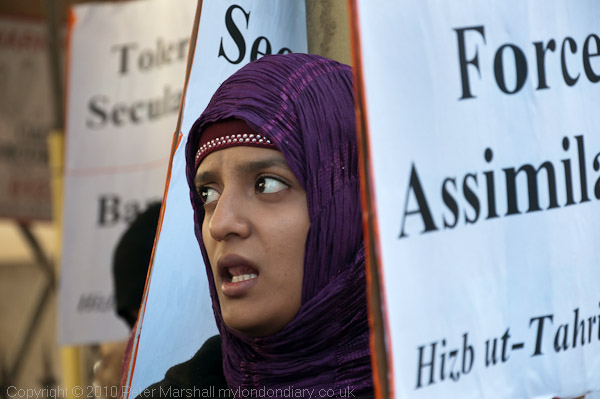
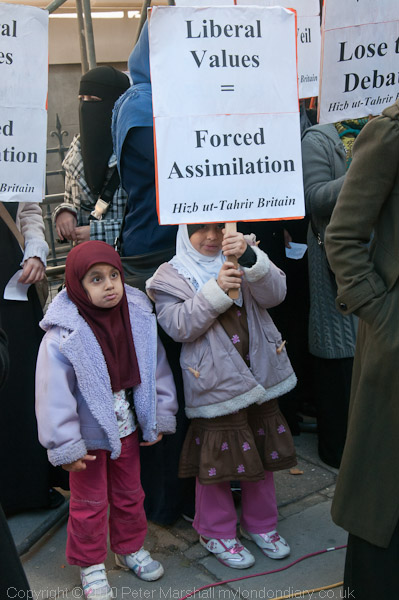
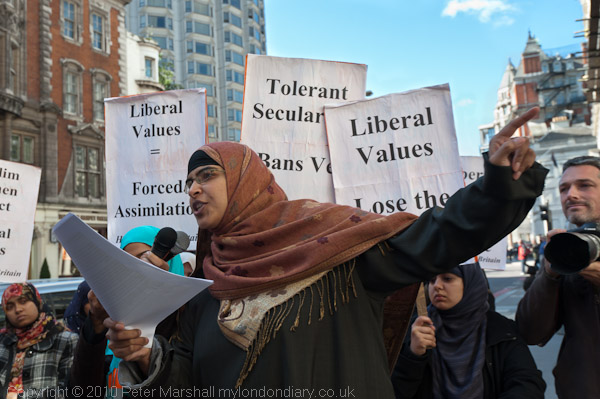
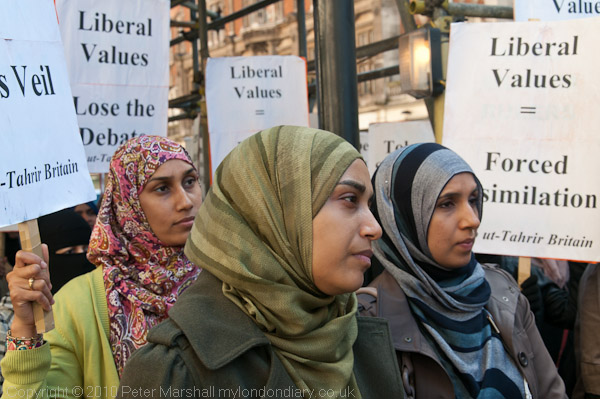
I’ve often commented on how women were normally sidelined – literally – at protests by the now banned Hizb ut-Tahrir Britain but at this protest outside the French Embassy they were very much at the front, with around 80 women, many with children, and only a handful of men – who did seem to be organising the event.

Muslim Veils, Illegal Goods, Murders, Union Busting and London - 2010

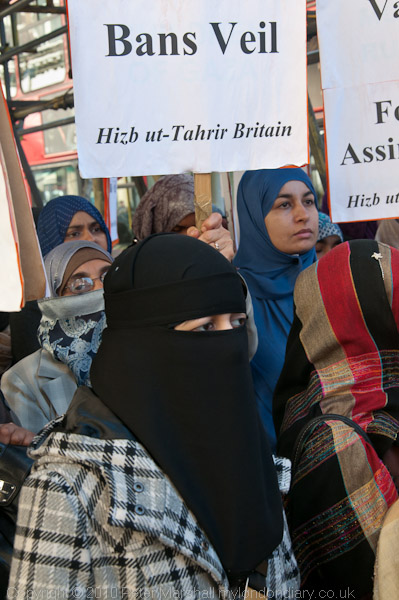
They were to protest against a law passed by the French Senate on September 14th to prohibit all full-face coverings in public places, clearly aimed at Muslim women who wear the niqab or burkha.

Muslim Veils, Illegal Goods, Murders, Union Busting and London - 2010

Such garments were then rarely worn in France, certainly outside of Paris and some Mediterranean coastal cities, and of France’s 2-3 million Muslim women the ban is thought likely to only effect around two thousand of them.

Muslim Veils, Illegal Goods, Murders, Union Busting and London - 2010

Very few of the women at the protest wore veil, most simply covering their hair. The protest in a wealthy area of London close to Harrods was passed by quite a few women who were veiled, but who all seemed to ignore the protest.

I wrote:’ Speakers at the event castigated the French government for taking a measure which they felt limited the freedom of women to make decisions on what they wear while at the same time ignoring issues that degrade and oppress women – such as domestic violence, and “the objectification and sexualisation of women’s bodies in pornography, lap-dancing clubs, advertising, and the entertainment industry, all permitted under the premise of freedom of expression and driven by the pursuit of profit in Western societies.”‘

More at Hizb ut-Tahrir Protest French Veil Ban.


Protest Against Illegal Israeli Goods

Ahava, Monmouth St, Covent Garden

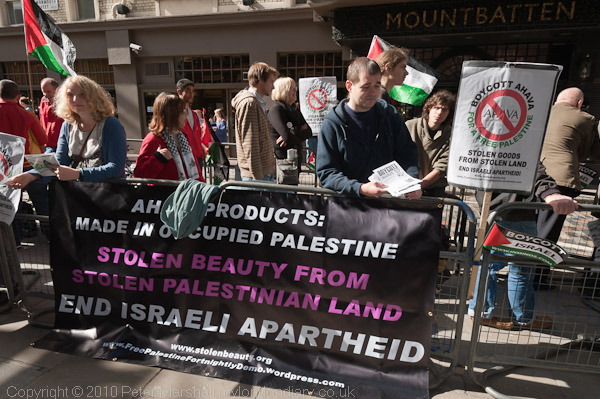
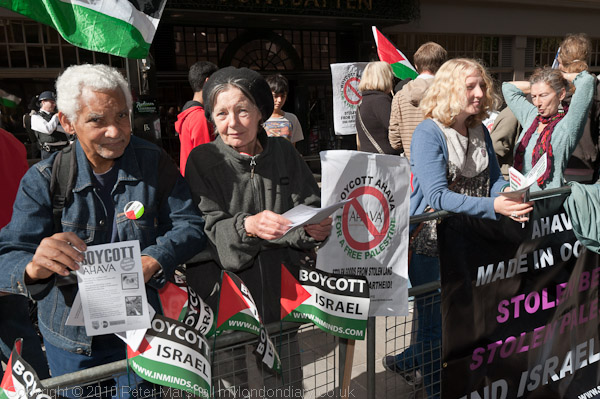
This was one of a series of fortnightly demonstrations outside the Covent Garden Ahava shop which sells products manufactured in an illegal Israel settlement on occupied Palestinian land. These protests were a part of an international ‘Stolen Beauty’ campaign organised by ‘Code Pink’, a women-initiated grass-roots peace and social justice movement which began when American women came together to oppose the invasion of Iraq.

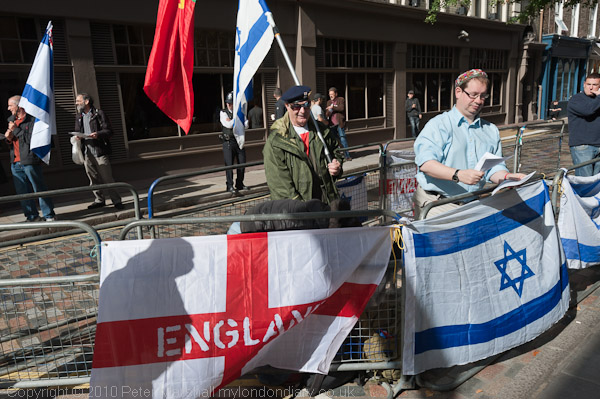
As usual there was a smaller counter-demonstration by a few EDL supporters and a handful of Zionists, handing out leaflets which described the call for a boycott as “bigoted, complicitly and politically antisemitic“.

The protesters say Israel in in breach of international law and Ahava “has openly flouted tax requirements by exploiting the EU-Israel trade agreement and violates UK DEFRA guidelines in respect of proper labelling.” I read the leaflets they handed out and the web sites calling for the boycott and could find no evidence of anti-Semitism. Many calling for a boycott of Israeli goods are Jewish and I reflected that when I began taking photographs in London no Jewish shop would have opened on a Saturday.

More at Protest Against Illegal Israeli Goods.


Families of Murder Victims Call For Justice

Embankment

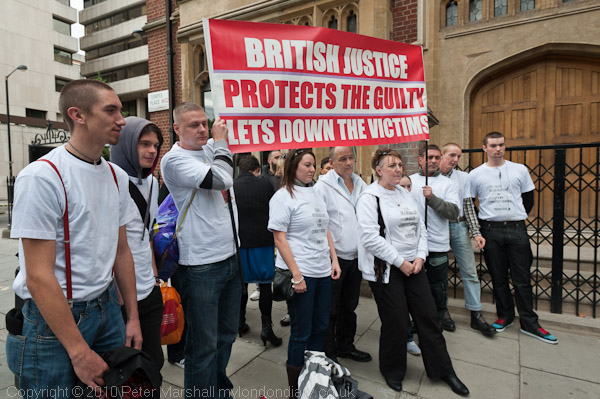
‘Families Fighting For Justice’, including many families of murder victims, marched through London on Saturday calling for tougher sentences for murder – with life sentences meaning life imprisonment.

The group was formed in Liverpool by Jean Taylor whose sister, son and daughter were all murder victims. She set up a petition which said “Life should mean life, for first degree murder, also tougher sentences for manslaughter” and in 2008 recruited families of other murder victims to join her and march with it to Downing Street.

You can read some of the horrendous stories on the groups web site, and some I was told at the protest were truly heartbreaking and showed why many ordinary people have lost faith in our justice system – and I highlight one of them on My London Diary.

But as I also commented “I don’t feel that the ‘Life 4 A Life’ campaign would actually do much if anything to solve the problem“. Murder is never a rational act where murderers weigh up how long a sentence they might get if caught and draconian sentences would have little or no deterrent effect. Things more likely to help include better social services and policing, but we really need “changes that bring back some of our community spirit and give people a greater engagement.” There really is such a thing as society despite Thatcher’s dismissal and we uirgently need more of it.

Much more at Families of Murder Victims Call For Justice.


Protest Over Initial Rentokil Union Busting

Old St

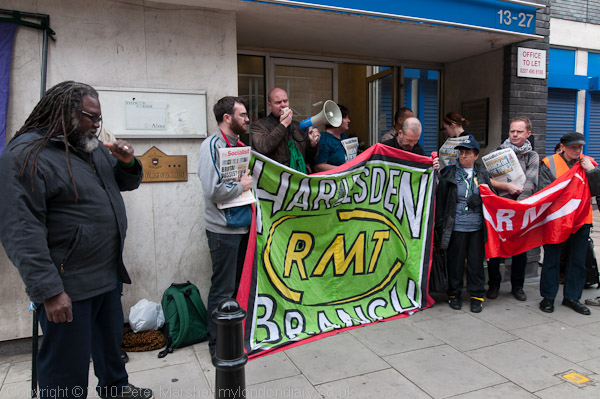
A short protest by around 20 trade unionists outside the Initial Rentokil offices in Brunswick Place near Old Street on Saturday afternoon marked the start of the campaign against the company for its intimidation and bullying of union members who choose to speak out about pay and employment practices and play an active role in the union.

The cleaners employed by the company at the Eurostar terminals at St. Pancras International were RMT members and the dispute between the union and Initial has continued.

The unions alleged that Initial was deliberately employing workers with doubtful immigration status so they can pay minimum wages and provide sub-standard working conditions, often requiring them to work without proper safety equipment or precautions. They allege that workers who question their rights or attempt to organise have been reported to the immigration authorities who have then raided the workplace.

More at Protest over Initial Rentokil Union Busting.


Around London

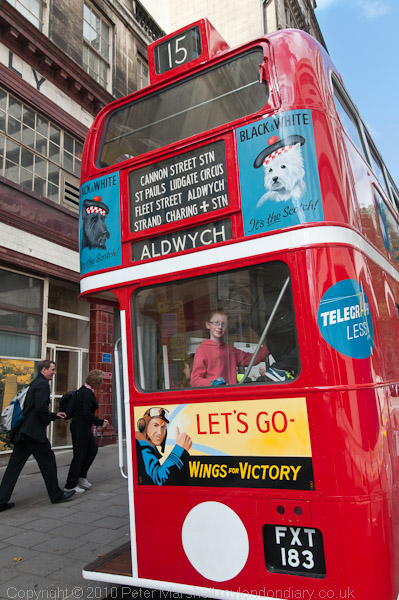
One bus I didn’t travel on but photographed outside the former Aldwych Piccadilly Line Station.

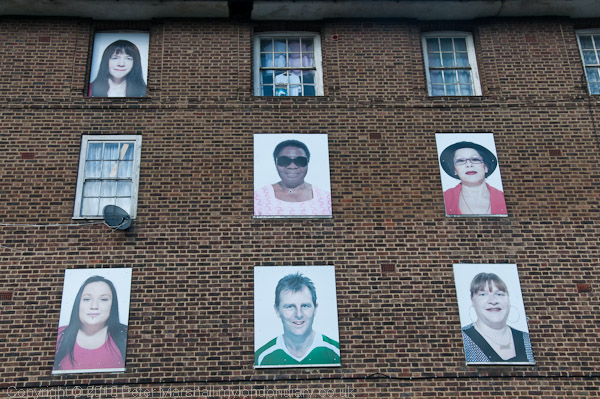
‘I am Here’, one of London’s largest art installations overlooking the Regent’s Canal at Haggerston with photographs of former residents on empty flats where people are moved out to redevelop the Haggerston estate – with the promise they will be moved back to new social housing on the estate

Missing letters on an advert beside the canal for Ron’s Shellfish on sale every Saturday at Hoxton Market create a puzzle for those walking by, though this and another picture on My London Diary concentrate on the images and miss out the centre of the sign.

Decoration on the Suleymaniye Mosque on Kingsland Road which mainly serves the British Turkish community.

More at Around London.


FlickrFacebookMy London DiaryHull PhotosLea ValleyParis
London’s Industrial HeritageLondon Photos

All photographs on this page are copyright © Peter Marshall.
Contact me to buy prints or licence to reproduce.

Autumn Equinox: The Druid Order, Primrose Hill – 2007

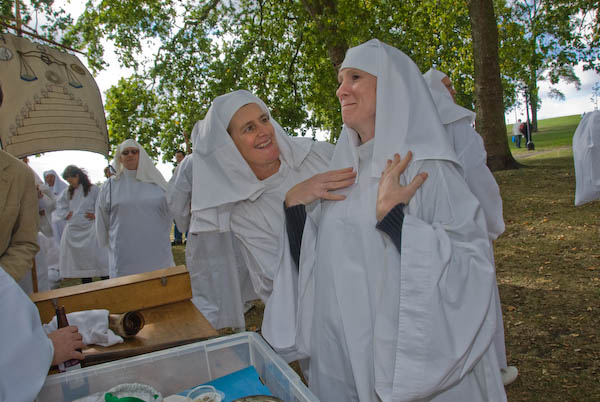
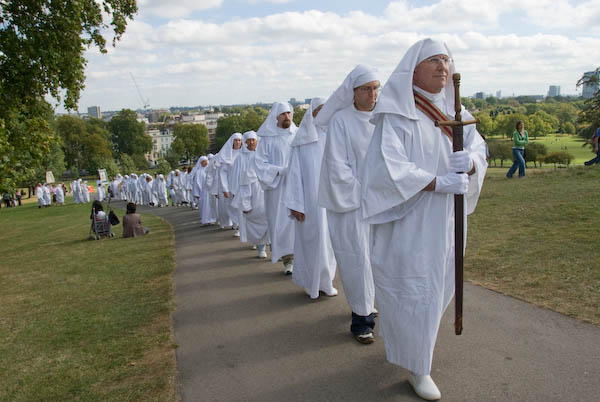
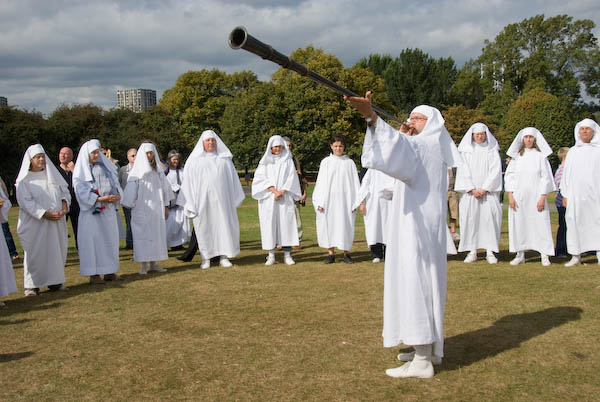
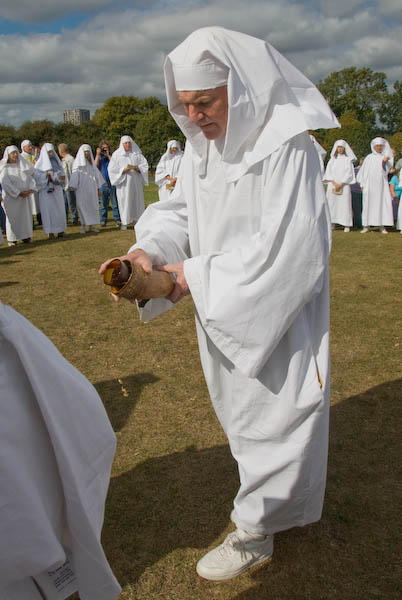
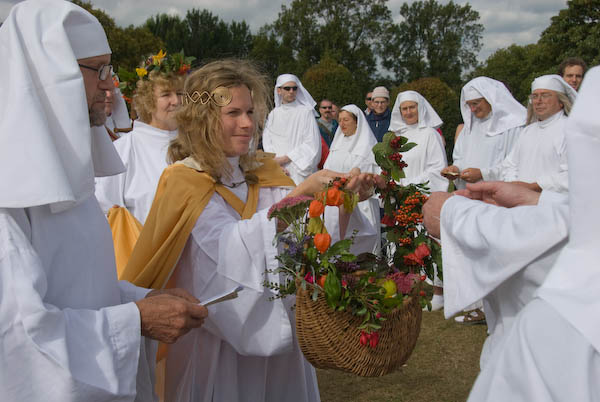
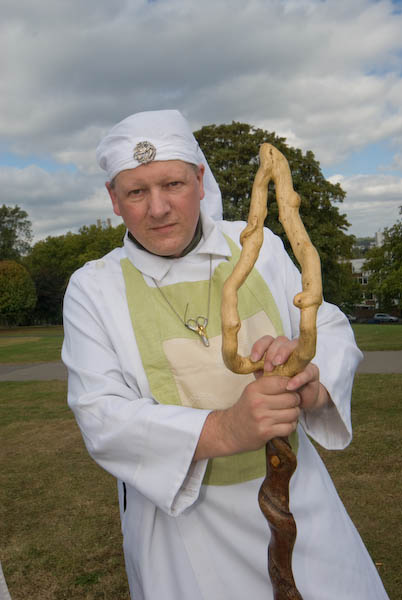
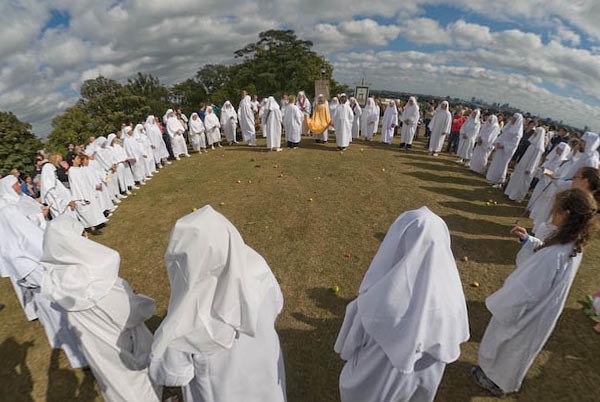
Autumn Equinox: The Druid Order: The Autumn Equinox was on September 23 in 2007, and as usual The Druid Order celebrated in with their ritual on Primrose Hill and I went to photograph it.

Autumn Equinox: The Druid Order, Primrose Hill - 2007

My photographs show the event from the preparations including a brief practice for a few on the hill top in normal clothing, and then their robing and preparation for the march up the hill and the various stages of the ceremony.

Autumn Equinox: The Druid Order, Primrose Hill - 2007

I had another event to attend elsewhere and had to rush off before they ended the event with a procession back down the hill, which I did photograph in other years. But I was on my way to a guided walk around ‘London Street Women’, statues on the streets of the City – you can also see pictures of them on My London Diary.

Autumn Equinox: The Druid Order, Primrose Hill - 2007

In this post I’ll stick with the Druids. I photographed The Druid Order both in the autumn at Primrose Hill and at Tower Hill for the Spring Equinox on quite a few occasions and in some I give a fairly detailed account of their history (they began early last century) and the more ancient traditions as well as of the various stages in the ceremonies.

Autumn Equinox: The Druid Order, Primrose Hill - 2007

Back in September 2007 my account was rather brief but earlier in the year I had written captions to the pictures of the similar Spring celebration which explained what I thought was happening at each stage.

Here is the piece I posted on the September 2007 page with the usual minor corrections:


The Druid Order has three public ceremonies each year, celebrating the Spring Equinox at Tower Hill, Summer Solstice at Stonehenge and Autumn Equinox (Alban Elued) at Primrose Hill.

I got there rather early, and found quite a few people enjoying the hill in their own way – including those who were running up it as well as others merely enjoying the panoramic view over london, as well as a group of half a dozen people in normal clothes practising a simple ritual of Peace To The Four Corners.

At least this told me I was in the right place, and I soon spotted a larger group gathering in under the trees a short distance away.

The ceremony followed the same pattern as in the spring, with a few minor differences.

I did have a small surprise, when i came across a rival druid, Jay The Taylor, the Druid of Wormwood Scrubs, part of the Loose Association Of Druids, who had come to celebrate the event in the Hawthorn Grove (not a feature marked on my map) and seemed surprised to see the other druids.


There are around 80 pictures from Primrose Hill on My London Diary, presented there in the order in which I took them, at Autumn Equinox – The Druid Order.


FlickrFacebookMy London DiaryHull PhotosLea ValleyParis
London’s Industrial HeritageLondon Photos

All photographs on this page are copyright © Peter Marshall.
Contact me to buy prints or licence to reproduce.

Countryside Alliance March – 2002

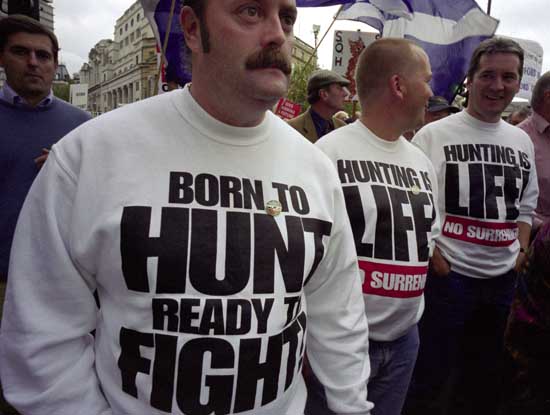
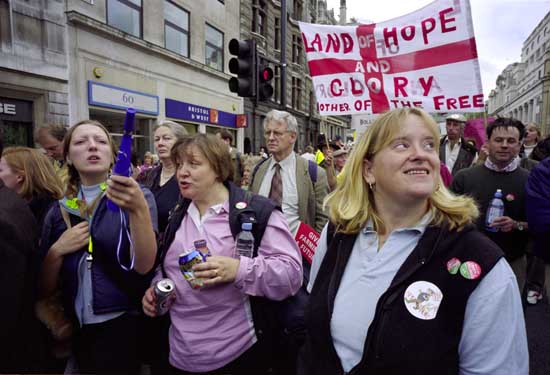
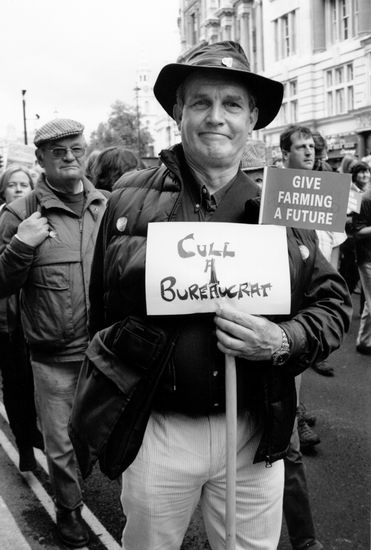
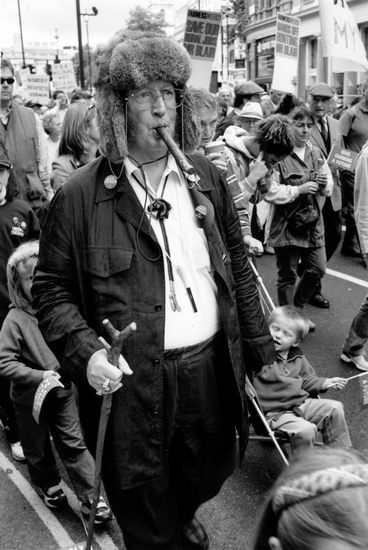
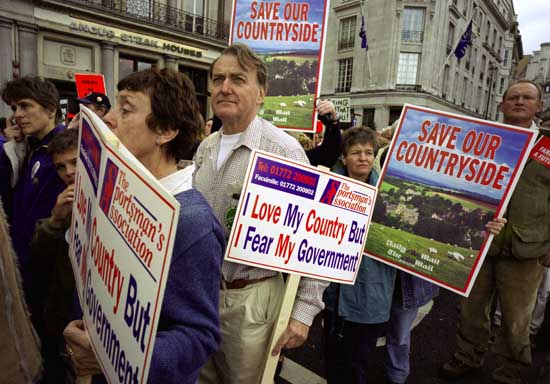
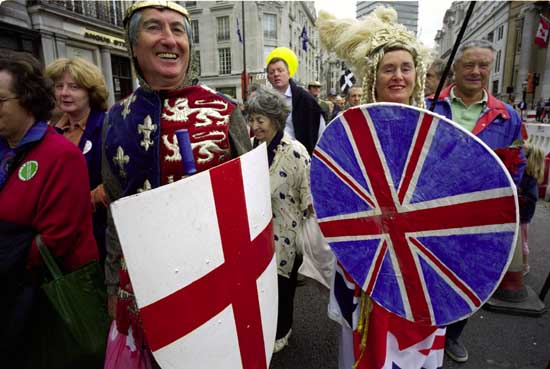
Countryside Alliance March: I photographed several marches in London by the Countryside Alliance, but the one on Sunday, September 22 2002 was I think the largest with “407,791 protestors eventually sheep-clicker-counted at the finish line.”

Countryside Alliance March - 2002

The main focus of the “Liberty and Livelihood” march was the opposition to a ban on hunting with dogs proposed by the New Labour Government which became law in 2004. But there were various other issues and grievances of rural communities raised by marchers who felt the “rural way of life was under attack.”

Countryside Alliance March - 2002

The march had originally been arranged for March, but a foot and mouth outbreak resulted in it having to be delayed. A huge amount of organisation had gone into the event, with special trains from around the country bringing many of the marchers to the capital. And rather than rely on police or media estimates of the numbers taking part they used their experience in counting sheep going though gates to count the numbers taking part.

Countryside Alliance March - 2002

On My London Diary I wrote only a couple of short paragraphs about the event and posted a handful of black and white images. I don’t think I have put any of the colour work I took on-line, though one or two have been published elsewhere.

Countryside Alliance March - 2002

The protest and the hunting ban were very much in the news at the time and I felt then it was unnecessary to write anything about them.

Countryside Alliance March - 2002

Those who came to London for the protest later felt that although they had failed to stop the ban it had been worthwhile. One of the organisers is quoted in the 2022 post Remembering the biggest rural protest the UK has ever seen saying “People understood the injustice of the hunting legislation and also wanted to make a really strong statement that the countryside stood together and you could not just pick off one part of rural Britain and think it was an easy hit.”

I did have relatives who farmed and an uncle who was a water bailiff and I had stayed in rural Wales and helped with harvests in my youth, but have spent my life in cities and suburbs.

I’m also against hunting and some of my ancestors were I think evicted from their holdings in the clearances so people could breed grouse to be shot, so my brief account in 2002 was perhaps rather unkind and of course my pictures showed the people didn’t really all look the same. But photography always dramatises events and makes them look more colourful – there is nothing to photograph in the dull bits. Here is what I wrote:


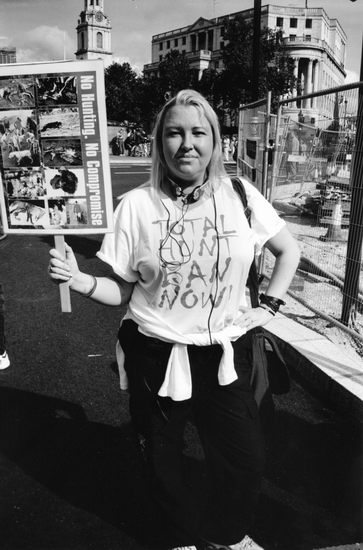
The Countryside Alliance came to town on 22 Sept. It was a very large but rather dull event. There were a few brave anti-hunt demonstrators, and a balloon from the RSPCA which got attacked a few times – the countryside is not apparently in favour of free speech.


One of a small number of anti-hunt demonstrators who were subjected to considerable abuse. One had her banner torn from her hands. Several attempts were made to cut the cables holding a balloon with an anti-hunting message in Traalgar Square.

When I got fed up with too many people looking exactly the same filing past I went to Tower Bridge, which was having a day as a beach (like ‘Paris Plage’, but that lasted rather longer) and took a few snaps of Ken etc.


I don’t think I have yet digitised any of those images of the Tower Bridge beach or London’s Mayor Ken Livingstone, though perhaps I will one day. There are just a few more pictures from the 2022 march on-line on My London Diary and a larger set in black and white from the 1998 Countryside March begins here on Flickr, and in colour in the mini-site UP FROM THE COUNTRY.


FlickrFacebookMy London DiaryHull PhotosLea ValleyParis
London’s Industrial HeritageLondon Photos

All photographs on this page are copyright © Peter Marshall.
Contact me to buy prints or licence to reproduce.

Forgotten Journalists, Immigration Deaths & Traffic Fumes – 2017

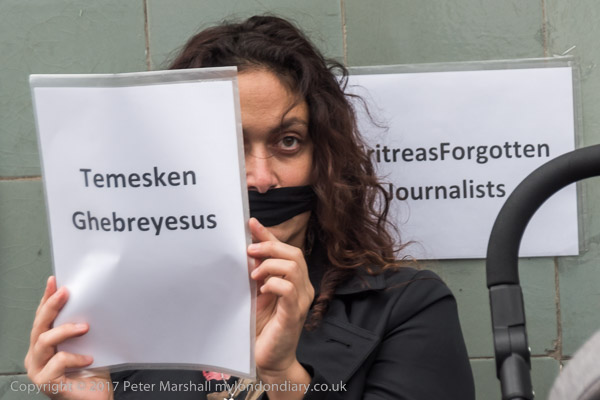
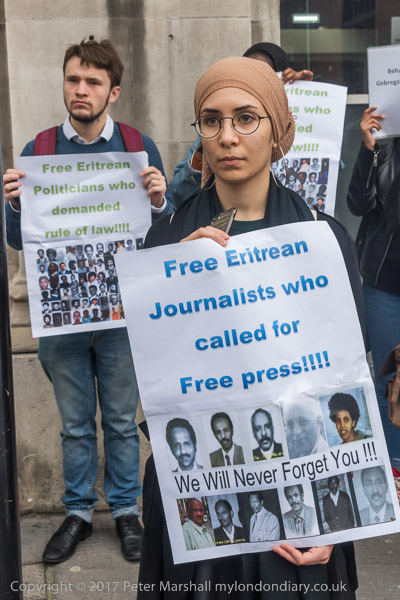
Forgotten Journalists, Immigration Deaths & Traffic Fumes: On Thursday 21st September I photographed a protest in Islilngton against the deaths and detention of journalists in Eritrea, a protest at the Home Office following the the deaths of men in immigration detention centres and ‘Stop Killing Londoners’ bringing traffic to a halt at rush hour to dance in Trafalgar Square in a short protest about the illegal levels of air pollution.


Free forgotten jailed Eritrean Journalists – Eritrean Embassy, Islington

Sixteen years earlier in September and October 2001 Eritrean dictator Isayas Afewerki closed all independent media and began the arrests of journalists and opposition politicians.

Around a dozen prominent journalists were arrested along with politicians. Since then they have been in isolation without charge, without trial and without contact with the outside world. Nobody knows their whereabouts and only four are now thought to be still alive.

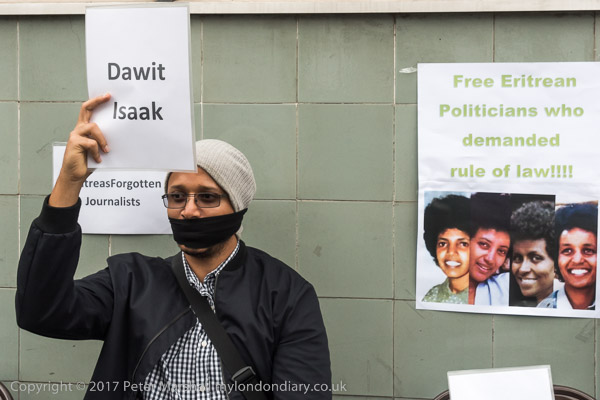
One man with dual Eritrean-Swedish citizenship, Dawit Isaak, was in 2024 awarded the Swedish Edelstam human rights prize for his exceptional courage. In 2001 he had founded Eritrea’s first independent newspaper Setit which had called for democratic reforms and had criticised the government. His daughter accepted the prize on his behalf. If still alive he is now 60, having been in jail for 23 years.

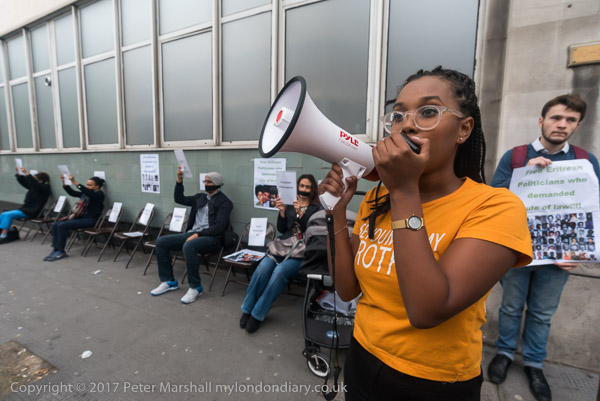
The imprisoned journalists were represented at the protest by empty chairs, with people sitting on them holding posters showing the names and photograph of those thought to be still living. Others stood with similar posters of those thought dead as well as some with pictures of the missing politicians.

More at Free forgotten jailed Eritrean Journalists.


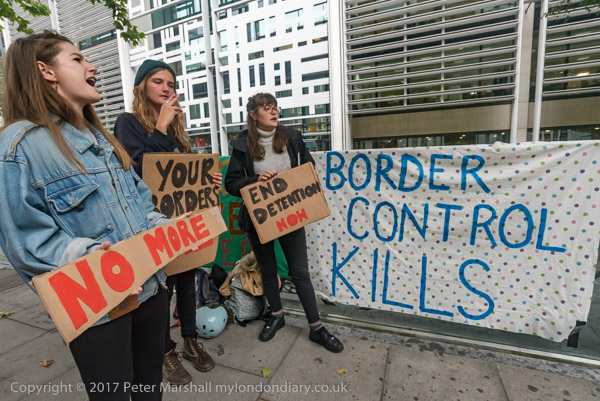
No More Deaths in immigration detention – Home Office

The protest had been called at short notice after the death was announced of a Chinese man held at Dungavel immigration detention centre. Earlier in the month a Polish man took his own life in the Harmondsworth centre after the Home Office refused to release him despite the courts having granted him bail.

Since 1989 there have been 31 people who have died in immigration removal centres. “Britain is the only country in the EU which subjects refugees and asylum seekers to indefinite detention, and the conditions in the detention centres have been criticised in many official reports and media investigations.” It leads some to lose hope.

No More Deaths in immigration detention


Trafalgar Square blocked over pollution deaths

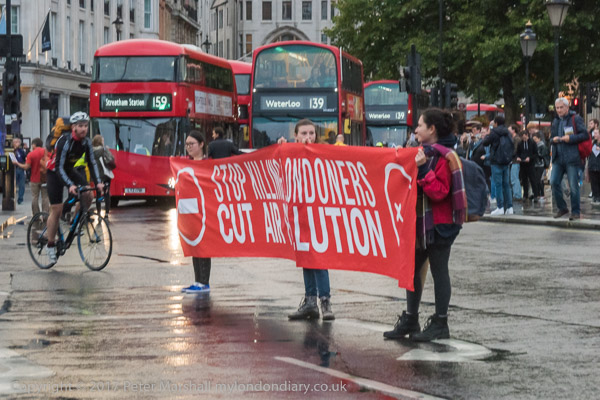
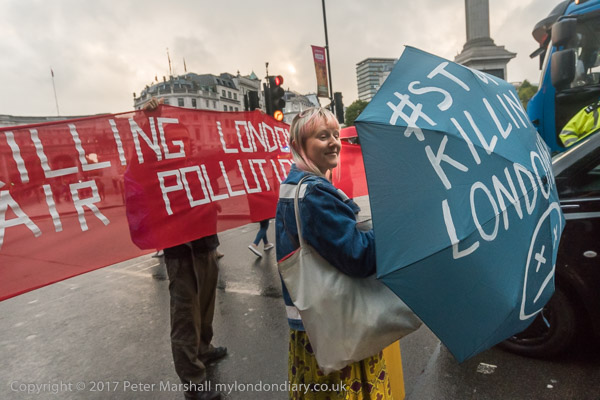
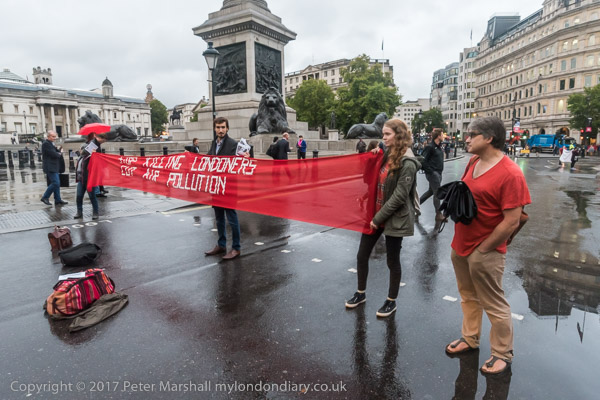
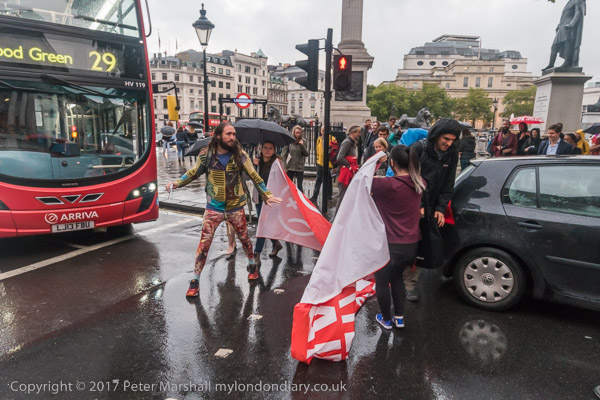
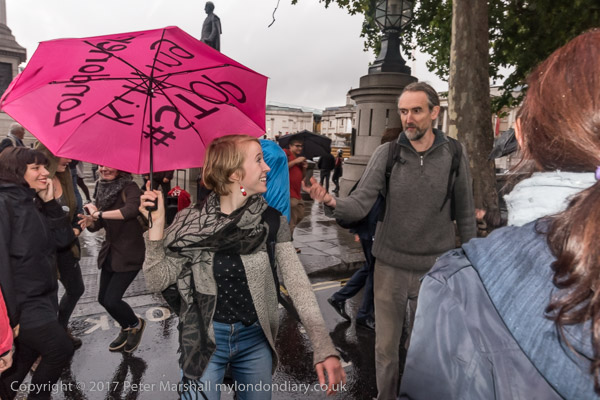
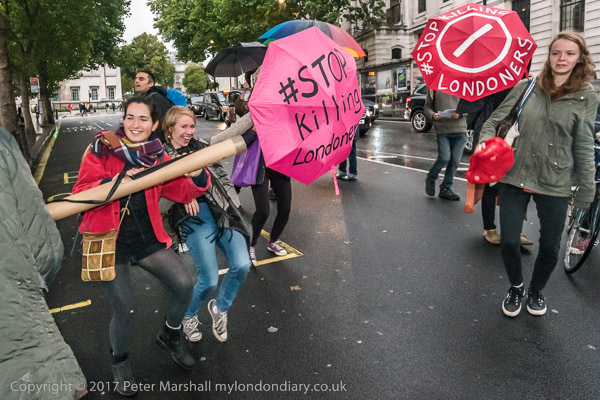
Campaigners from ‘Stop Killing Londoners‘ cleared Trafalgar Square of traffic in a short protest against the illegal levels of air pollution in the capital which result in 9,500 premature deaths and much suffering from respiratory disease.

Trafalgar Square, an iconic meeting place at the heart of London is also a major traffic junction, with five major roads bringing traffic in and taking it away with often long queues. Stopping the traffic at all five points needed careful planning and coordination, with five groups with large banners stepping out and blocking traffic.

The square itself was greatly improved when the road along its northern side was pedestrianised and the current terrace built with its wide steps leading down into the rest of the square. Though I think a more drastic pedestrianisation of both Trafalgar Square and Parliament Square along with Westminster Bridge – with some provision for buses, cycles and horse-drawn vehicles – would now be a very welcome improvement.

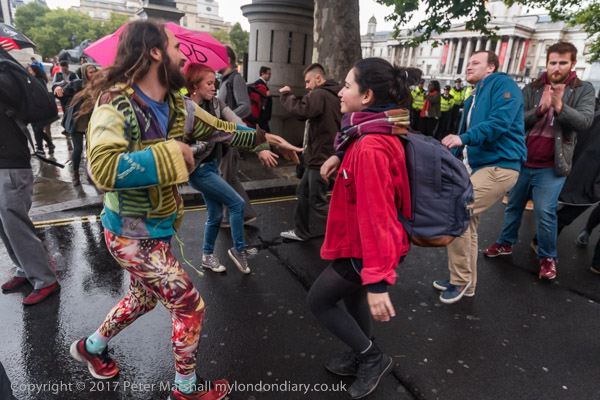
The protesters had planned to hold up the traffic for ten minutes. They told drivers, a few of whom were irate, that the protest would only be brief and to stop their engines to cut pollution – though most failed to do so. The protesters then danced in the roads to loud music from the sound system they had brought with them.

Among those leading the protest was Roger Hallam, recently released from a four year prison sentence for organising a series of protest to block the M25 which took place in November 2022. Earlier this month, three of the activists who were on trial for actually climbing the gantries in the protest against the government’s plan to licence over 100 new oil and gas projects against all expert advice were unanimously found not guilty by a jury which decided they had a reasonable excuse for their actions.

The activists stopped their protest which was to demand action by the Mayor and TfL after about the ten minutes they had previously decided it would last and when police came and asked them to do so they immediately left the roads.

Since 2017 under London Mayor Sadiq Khan, elected in 2016, London pollution levels have dropped dramatically with the first 24-hour Ultra Low Emission Zone (ULEZ) in 2019, extended in 2023 to cover the whole city, the switch to less polluting vehicles including buses and taxis and the encouragement of cycling and other measures. Protests such as these and others will certainly have helped spur the city into action.

More at Trafalgar Square blocked over pollution.


FlickrFacebookMy London DiaryHull PhotosLea ValleyParis
London’s Industrial HeritageLondon Photos

All photographs on this page are copyright © Peter Marshall.
Contact me to buy prints or licence to reproduce.

EDL Protest Opposed by Unite Against Fascism – 2014

EDL Protest Opposed by Unite Against Fascism: Eleven years ago on Saturday 20th September 2014 Unite Against Fascism held a protest against a march and rally by the English Defence League in Whitehall. The whole event was on a very much smaller scale than last Saturday and I was able to move fairly freely between the two groups and photograph both groups.

EDL Protest Opposed by Unite Against Fascism - 2014

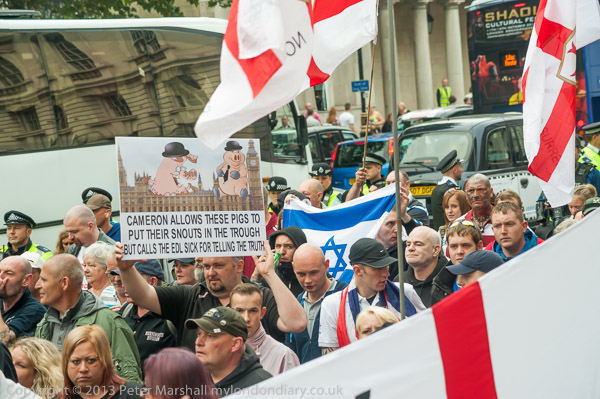
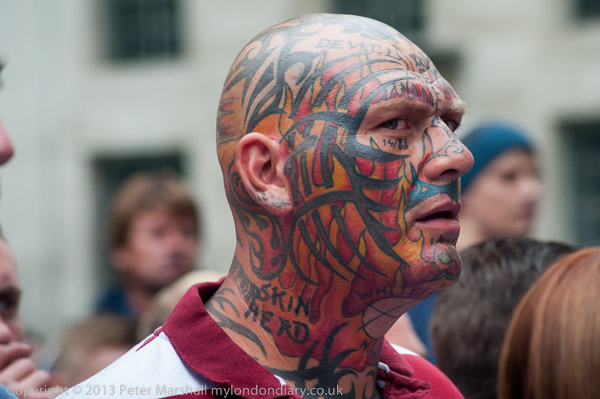
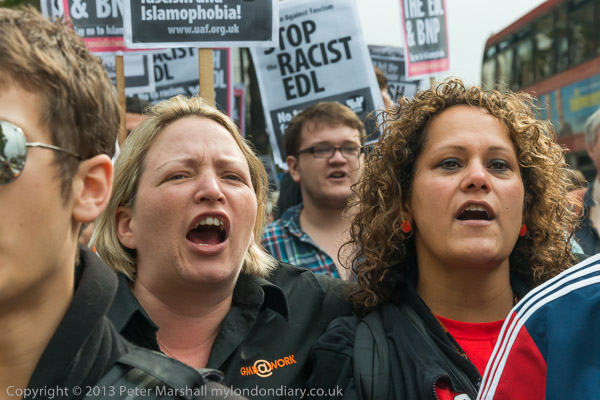
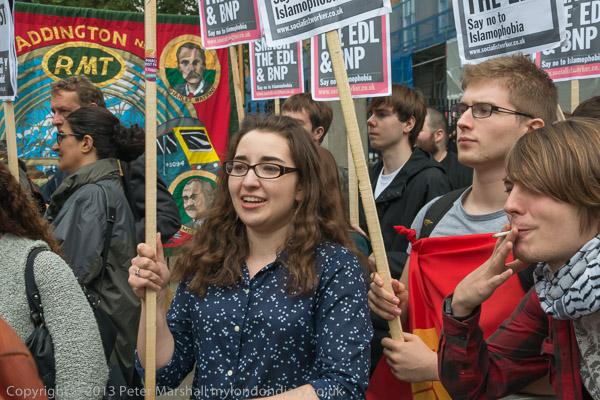
In 2014 there were only a few hundred people in each of the two groups, with probably twice as many EDL as UAF, and more police who kept them apart, although the two protest pens on Richmond Terrace opposite Downing Street where they gathered were less than a hundred yards apart.

EDL Protest Opposed by Unite Against Fascism - 2014

The EDL were protesting “against government inaction on child sexual exploitation, immigration, returning jihadis, FGM, Halal food, Imams, Islamic Schools, Shariah courts, the burkha etc” and in my account on My London Diary I gave more detail on their complaints.

EDL Protest Opposed by Unite Against Fascism - 2014
Weyman Bennett

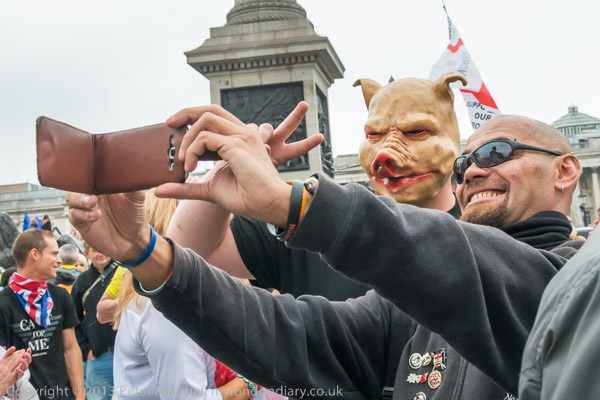
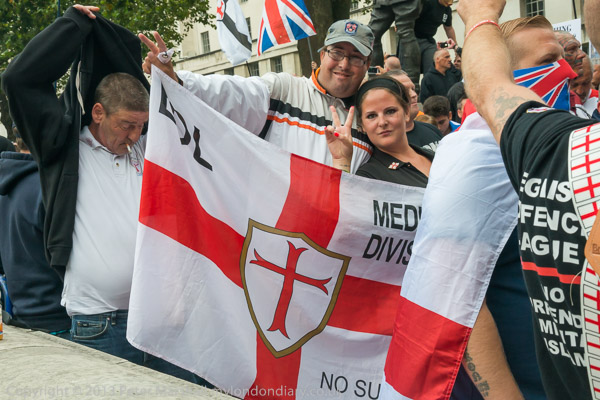
The EDL then marched to to Trafalgar Square for a rally. As I commented, “The atmosphere here was rather friendlier than at some previous EDL protests, and the press were able to walk freely among the gathering crowd, many of whom posed for photographs.”

EDL Protest Opposed by Unite Against Fascism - 2014
Taking a selfie with the man in the pig’s head

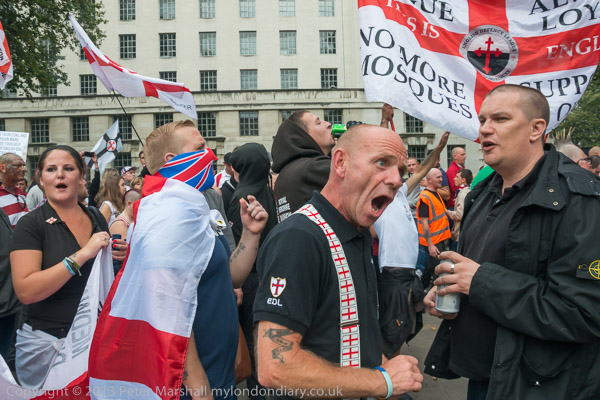
I also reported accurately on the behaviour of the protesters – including a chant of “Allah, Allah, who the f*** is Allah”. As often at EDL protests some did point and shout at me, mistaking me for ‘Searchlight’ photographer David Hoffman – and I was able to correct some of them and we had a polite conversation.

EDL Protest Opposed by Unite Against Fascism - 2014

After waiting for a couple of coaches that had been stopped by police on their way into London the EDL lined up for a march down Whitehall back the the pen opposite Downing Street where they held a rally.

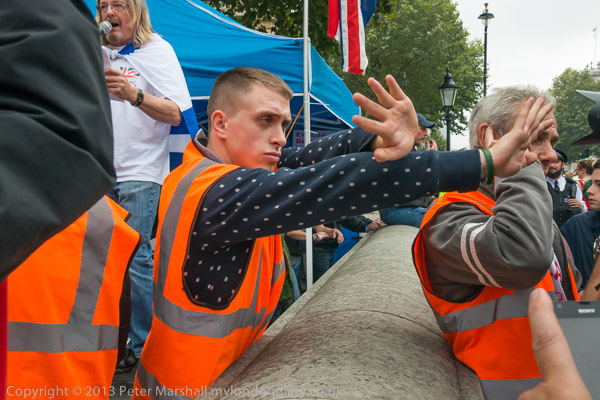
Taking photographs at the rally became much more difficult, with people objecting to being photographed – and some complaining to the police, who told them we had a right to take photographs on the public street. There was a lot of angry shouting of insults at photographers and people trying to block our view, turning their backs and moving in our way, though police prevented any actual violence. But some clearly posed for the photographers.

The organisers then made our job more difficult, moving large banners to try and block our view of the speakers. After a while I got fed up and returned to photograph at the counter-protest. Here, although people were shouting angrily at the EDL, there was a very different atmosphere, with none of the hate towards photographers of the EDL, people welcoming being photographed showing their opposition.

Probably last Saturday there were probably not that many more hardcore Nazis, racists and Islamophobes among the many thousands marching in the ‘Defend The Kingdom’ march. Unfortunately many more have been mobilised by years of anti-immigrant propaganda by both major parties as well as by the incessant publicity given to Farage by our mass media, particularly the BBC, as well as the social media lies of Tommy Robinson and others.

We’ve seen the consistent abuse of language – there are no ‘illegal immigrants’ arriving our beaches, they are asylum seekers, refugees and migrants – some of whom may later become illegal, but the great majority are found to have a legal claim.

An EDL steward holds his hands up in front of a camera lens

There is no ‘flood’ of migrants – Britain takes far fewer than many other European countries – and certainly a very small number compared to countries closer to the conflicts which are driving migration.

I went back to photographing the UAF counter-protest

And so on. Both Tory and Labour governments have stirred up hatred with hostile policies trying to outflank the right, while neither has provided humane and efficient systems for dealing with migration. Labour does at least say they are trying to shake up the Home Office, though so far with little apparent effect.

And Labour doesn’t look good. In the recent legal case a temporary injunction was granted against extradition of a man to France, when Home Office officials admitted his case had not been sufficiently considered. Presumably the decision to try and deport him immediately was simply taken on political grounds by the new Home Secretary.

More about the 2014 protest and counter-protest with many more pictures on My London Diary at EDL London March & Rally.


FlickrFacebookMy London DiaryHull PhotosLea ValleyParis
London’s Industrial HeritageLondon Photos

All photographs on this page are copyright © Peter Marshall.
Contact me to buy prints or licence to reproduce.

Housing Crisis Protest in Stratford – 2015

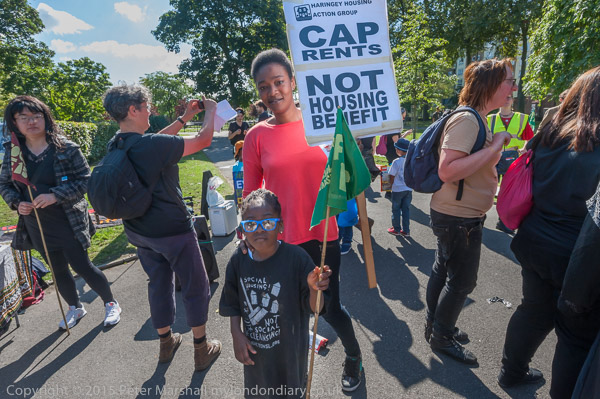
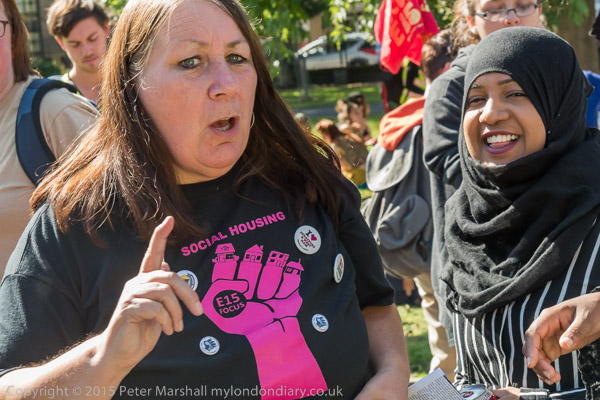
Housing Crisis Protest in Stratford: Housing activists marched through Stratford on Saturday 19th September 2015, with a short occupation of estate agents Foxtons by Class War ending with a rally by Focus E15 outside the flats on the Carpenters Estate they had occupied a year earlier.


Focus E15: Rally before March – Stratford Park

Housing Crisis Protest in Stratford - 2015

Two years earlier Newham Council had tried to close the Focus E15 hostel housing young mothers in Stratford, but they had fought the eviction which would have seen them dispersed across the country into private rented flats with no security of tenure and in some cases hundreds of miles from family and friends.

Housing Crisis Protest in Stratford - 2015

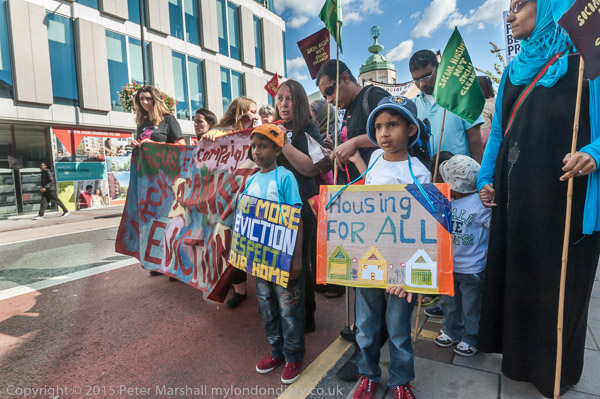
The Focus E15 campaign had attracted wide support and gained national headlines when they had occupied a small block of flats on the Carpenters Estate in Stratford. They succeeded in getting rehoused in London but continued with a much wider ‘Housing For All’ campaign for proper housing for the people of London who are facing being replaced by a new and wealthy population.

Housing Crisis Protest in Stratford - 2015

The campaign has continued, with a weekly stall on Stratford Broadway and protests to stop evictions in the borough. Their actions enraged the then Mayor of Newham Robin Wales and led to various attacks by him and council officials including the issuing of penalty notices and the farcical “arrest” of the table they used as their stall. These almost certainly played a part in his downfall in 2018 when local party members in this Labour stronghold turned against him.

Housing Crisis Protest in Stratford - 2015

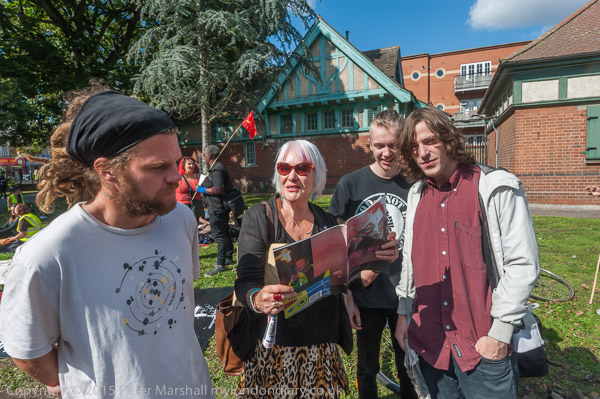
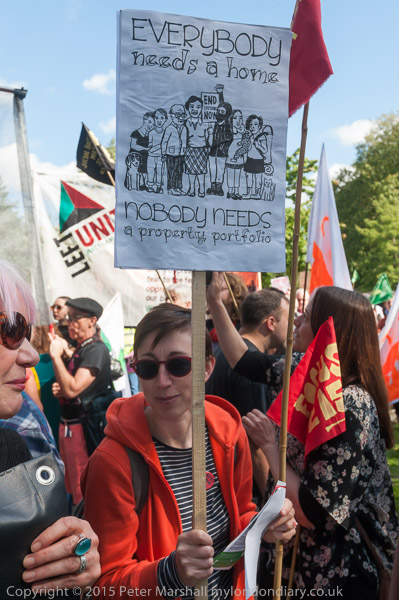
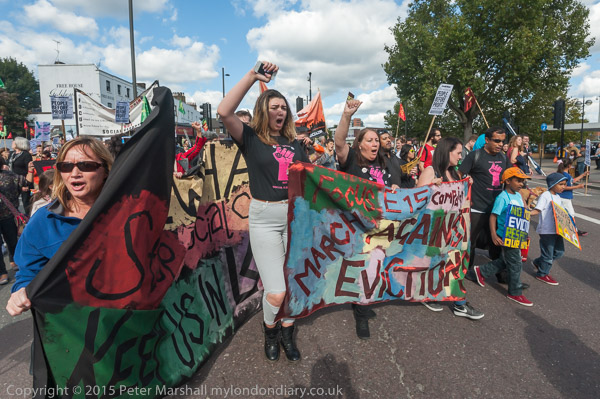
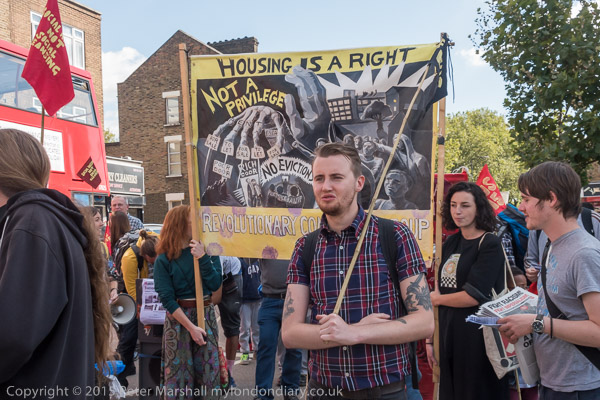
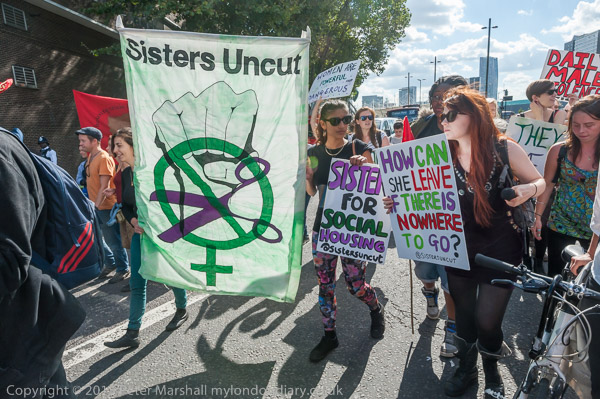
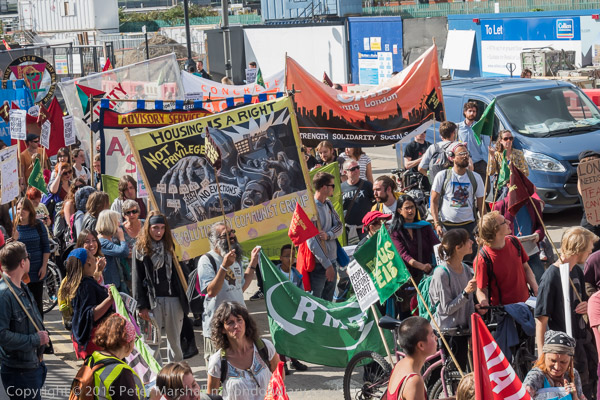
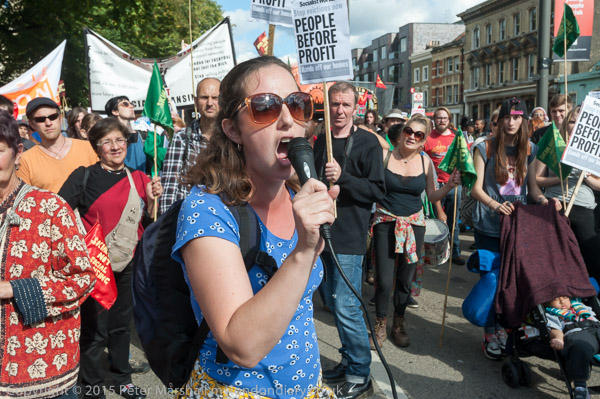
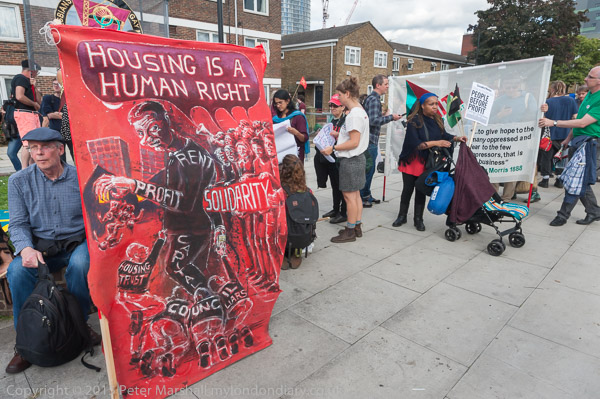
The march brought together housing activists from around 50 different groups around London including many from council estates under threat of development under the guise of regeneration, private tenants facing eviction or huge rent hikes, and some political groups. Fortunately not all spoke before the march. You can read a long list in my account on My London Diary at Focus E15: Rally before March.


Focus E15: ‘March Against Evictions’ Stratford

It was a large and high-spirited march from Stratford Park and around the busy centre of Stratford with banners, placards and much loud chanting, demanding Newham Council end its policy of gentrification and use local resources to house local people and an end its policy of social cleansing, moving them out of London.

Housing has always been a problem in London, at least since the industrial revolution led to a great increase in the population and enlargement of the city. From the late Victorian period various charities and philanthropically minded commercial enterprises began to construct housing – mainly blocks and estates of flats – for the working poor, and from around 1900 they were joined by local municipalities and importantly the London County Council.

After the First World War, the Addison Act in 1919 to build “homes for heroes” and later housing acts led to 1.1 million council homes being built in the years before the Second World War.

From the 1950s, London Councils led by all parties built large amounts of council housing, with many finely designed estates, providing much higher quality homes than those in the lower end of the private sector, where much of the population was housed in poorly built and maintained overcrowded slums. At least rents were relatively low – until rent control was abolished in 1988.

That was only one of the changes made under Margaret Thatcher that hugely worsened housing for the majority. Council housing, earlier seen as a way of providing decent housing at reasonable cost for that majority became seen as simply a provision for the failures in our society who were unable to get onto the “housing ladder” and buy their own homes.

Her introduction of ‘right to buy’ was a disaster for public housing and new council building was almost entirely ended – 5 million council houses were built between 1946 and 1981, but only 250,000 have been built since. And her abolition of the GLC largely ended any overall planning for housing in London.
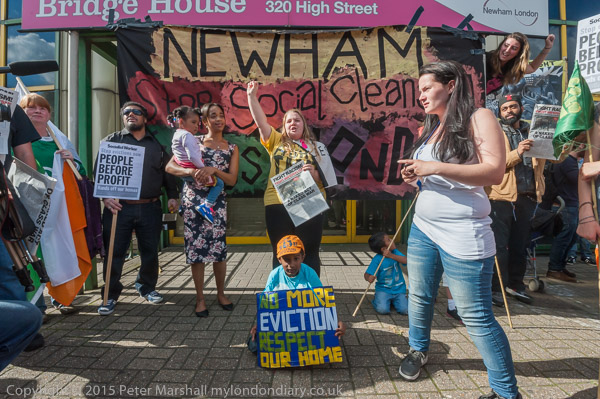
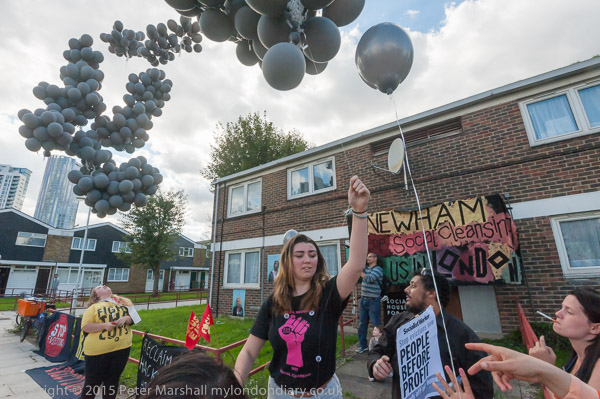
The march stopped in front of Newham’s Housing Offices where they put up the banner ‘Newham Stop Social Cleansing – Keep us in London’ banner on Bridge House and held a short rally before continuing to the Carpenters Estate.
More pictures at Focus E15: ‘March Against Evictions’.

Class War Occupy Stratford Foxtons

Housing policy under New Labour and since has been largely determined by estate agents including Savills and Foxtons who have been leaders in the gentrification of many areas of London.

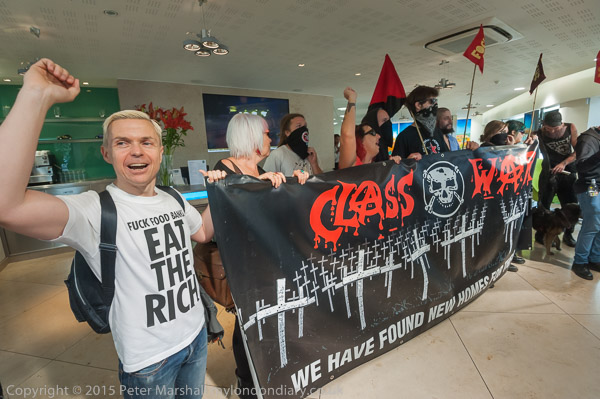
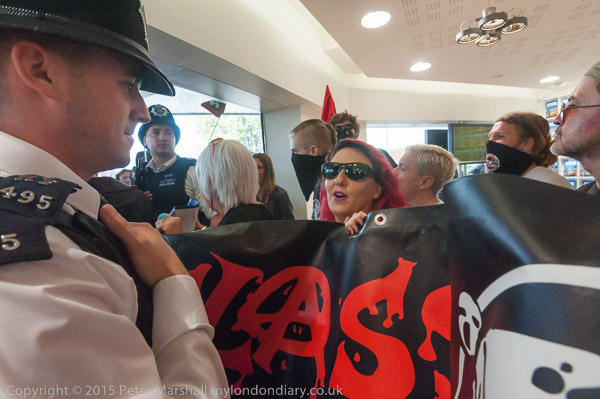
Class War seized the opportunity to rush into Foxtons as the march went past and I followed them before the police managed to stop others joining them.

Fuck Food Banks – Eat the Rich’ and the Class War banner ‘We have found new homes for the rich’

They caused no damage and left shortly after police came inside and talked to them, rejoining the march.

More pictures at Class War Occupy Stratford Foxtons.


Focus E15: Anniversary of Carpenters Occupation

It was two years after the Focus E15 campaign had begun and a year since they occupied 4 flats on the Carpenters Estate.
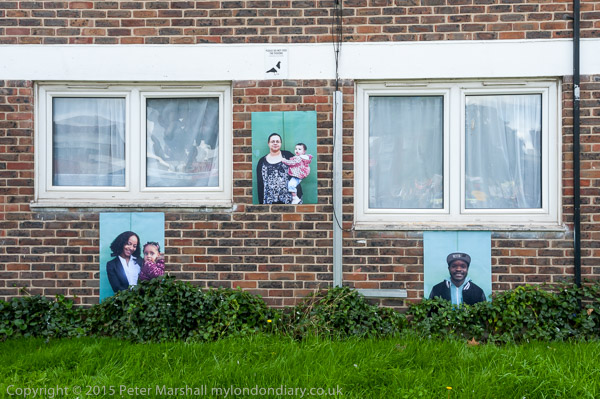
For the event the pictures of people from Focus E15 put on these flats with the message ‘This home needs a family‘ in June 2014 were up again

Jasmin Stone of Focus E15 speaks at the rally

I had gone into the flats with them that afternoon and seen perfectly good properties in fine condition which had been simply closed up and left after the tenants were moved out. On one wall was a calendar from 2004 they had left behind.
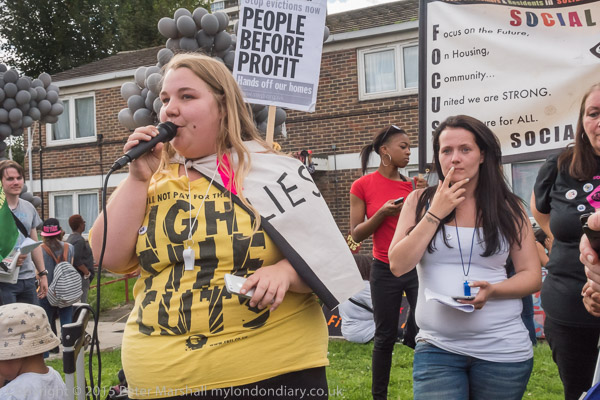
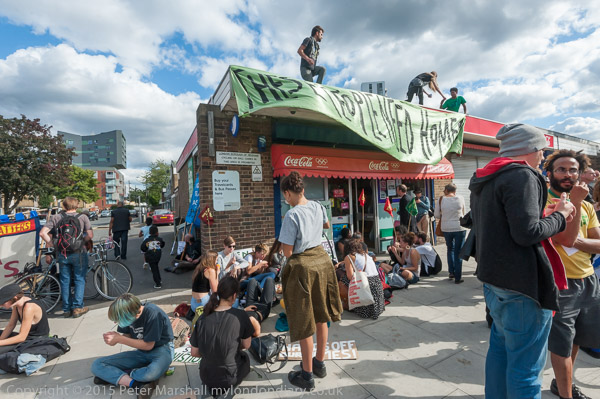
Despite a huge housing shortage in the borough they had remained unoccupied for ten years. Since the occupation by Focus E15 these four flats now have residents, but only 28 empty properties on the had been re-let a year after Newham had been shamed by their action.


There were a few speeches and then a party began. Some people had climbed up to the roof of the shops with the ‘These people need homes’ banner, but it was time for me to go home, stopping briefly at the pub with Class War on the way.

More at Focus E15: Anniversary of Carpenters Occupation.


FlickrFacebookMy London DiaryHull PhotosLea ValleyParis
London’s Industrial HeritageLondon Photos

All photographs on this page are copyright © Peter Marshall.
Contact me to buy prints or licence to reproduce.