Walworth Road, Harker’s Studios & John Ruskin

This continues my posts on my walk in Walworth on 8th January 1989. The previous post was
Liverpool Grove & Octavia Hill.

Wooler St, Wendover, Aylesbury Estate, Walworth, Southwark, 1979 89-1c-44

The domestic scale of the long terrace built around 1900 contrasts with the huge slab block of Wendover on the Aylesbury Esate, built between 1963 and 1977 to provided good quality social housing. Poor maintenance by the council allowed the estate to deteriorate and it became demonised as a problem estate.

Although a majority of residents wanted to remain and voted for refurbishment, Southwark Council decided to demolish the estate. They were met with considerable local resistance with some blocks being occupied by activists. Although parts of the estate have been demolished the fight to retain the rest continues.

The council’s policy seems driven by the hope of large profits for themselves as well as the developers from replacing much of the estate by properties which can be sold at market prices. Similar hopes led to the demolition of the Heygate estate but this resulted in a massive loss for the council, details of which were accidentally disclosed, although some of those from the council involved in the scheme moved to highly lucrative jobs as a result of it.

Heygate’s demolition also resulted in a huge loss of social housing in the area, and the displacement of former residents to outlying areas of London and beyond. Many of the relatively low quality high price flats on the site were sold overseas as investment properties, their value increasing as London house prices soar.

Wooler Street was on the edge of the Octavia Hill planned estate and contains a number of terraced maisonettes and houses of a more conventional late Victorian/Edwardian design. The Octavia Hill (Liverpool Grove) Conservation Area appraisal suggests they “are most likely part of the same development“. Possibly they come from a development by the Church Commissioners before Hill became involved.

Merrow St, Walworth Rd, Walworth, Southwark, 1989 89-1c-35

Merrow Street is one of the older streets in the area and this picture shows its junction with Walworth Road. The buildings here are still much the same but their uses have changed. Panache Exclusive Footwear is now a pawnbrokers and The Rock pub which was at 374 Walworth Rd since at least the 1860s became an Irish pub, Liam Og’s around 2005. Liam Og’s apparently featured male strippers at Sunday Lunchtimes, though this perhaps put customers off and in 2009 it became Banana’s Bar which closed a few years later.

There were plans to demolish this building approved in 2018 but then further plans to reopen it as a Beer and Burger Bar with Dance Hall’ in 2020 which failed. In 2021 it became Homeland Furniture.

Fielding St, Walworth, Southwark, 1989 89-1c-36

Fielding Street is on the west side of Walworth Road and according to the Walworth Road Historic Area Assessment was laid out (then as Olney St) “after the sale of Montpelier Tea Gardens and Walworth Gardens, post 1844“. These terraced houses with basements have rather impressive doorways are shown on the earliest large-scale maps of the area I can find surveyed around 1870. The skip shows that extensive work was being undertaken on at least one of them.

Cafe, Arnside St, Walworth, Southwark, 1989 89-1c-22

There is still a café here, though it had become the Continental Cafe rather than remaining Irish until 2012. It then became the ‘University of Suya’ which I think was a Nigerian restaurant, and later the frontage added the words ‘African Bar & Grill’ to make its offerings clearer.

The doorway at left was the entrance to flats above the shops at 403 Walworth Road.

Works, Horsley St, Walworth, Southwark, 1989 89-1c-23
Harkers Studios, Horsley St, Walworth, Southwark, 1989 89-1c-23

Horsley Street is a short street running from Arnside Street south to Westmoreland Road.

Harkers Studios was purpose built for Joseph Harker’s theatrical scenery painting business in 1904 and was grade II listed in 1989. The large doors at left have the number 43 and ‘MOSS EMPIRES LTD’, the owners of many UK theatres named on them.

More recently the works became ‘The Furniture Union’ or TFU, an upmarket supplier of furniture, bathroom ware, kitchens, lighting, furnishings and accessories. It has recently been converted into “stunning apartments, which manage to preserve the special architectural and historic interest of the building.

Flats, Arnside St, Walworth, Southwark, 1989 89-1c-24
Flats, Arnside St, Walworth, Southwark, 1989

Wellington House is part of a small estate with four blocks including the rather similar Arnside House now managed by the Keniston Housing Association, “providing low cost rented accommodation to people who find it difficult to compete in the private rented sector. We charge rents at below market rates. Most people who live in our properties have been referred to us through choice based lettings schemes run by local councils.”

Venus Fish Bar, shop John Ruskin St, Walworth, Southwark, 1989  89-1c-25
Venus Fish Bar, John Ruskin St, Walworth, Southwark, 1989 89-1c-25

Until 1937 this street was called Beresford Street and like many other streets was renamed when the LCC finally decided to rid London of duplicated street names. They had begun the job when they were formed in 1889, but only really got down to it seriously in the mid 1930s. The name John Ruskin Street was chosen to remember the prominent Victorian writer, philosopher and art critic who died in 1900.

Ruskin grew up in nearby Herne Hill and was mainly educated at home (as were many children of wealthy families.) But at the age of 15 he spent a year attending the school in Camberwell run by Thomas Dale, who earlier had been the first professor of English at any English university. But Dale left London University after only a couple of years, finding it too “godless” and set up his own school.

Probably what most people now remember about Ruskin was his failure to consummate his marriage with Effie Gray, allegedly because of his discovery on his wedding night that unlike the classical statues with which he was familiar, real women had pubic hair. Their marriage was eventually annulled 6 years later. Perhaps the name of the Venus Fish Bar had some connection with this story.

BRAC is something of a mystery, but I think it may simply be from bric-à-brac as I think this was a business selling secondhand furniture and small objects such as we might now find at car boot sales. But there could be a quite different explanation, and suggestions for what BRAC here could stand for as an acronym are welcome. The BRAC building has been demolished and replaced by a block of flats but the building on the left remains, now residential.

West End Hair Styling, John Ruskin St, Walworth, Southwark, 1989 89-1c-26

West End Hair Styling at 13 John Ruskin St where pensioners could get a trim for £1.50 is now I think a travel agent, having been for some years a bar and restaurant.


The first post on this walk on January 8th 1989 was Elephant, Faraday, Spurgeon & Walworth Road.


Liverpool Grove & Octavia Hill

This continues my posts on my walk in Walworth on 8th January 1989. The previous post was People’s Health, Chapel Furniture, Sutherland Square & Groce Bros.

St Peter's Church, Liverpool Grove, Walworth, Southwark, 1989 89-1c-63
St Peter’s Church, Liverpool Grove, Walworth, Southwark, 1989 89-1c-64

Liverpool Grove was designated as a conservation area in 1982 as the Octavia Hill (Liverpool Grove) Conservation Area. The street runs east from Walworth Road with this vista of St Peter’s Church, then goes south of the church, continuing to the east as far as Portland Street (named after an earlier Prime Minister, William Cavendish-Bentinck, 3rd Duke of Portland.)

Churchyard, St Peter's Walworth and Trafalgar House, Walworth, Southwark, 1989 89-1c-65
Churchyard, St Peter’s Walworth and Trafalgar House, Walworth, Southwark, 1989 89-1c-65

The area to the east of the Walworth Road was first developed around the end of the wars against Napoleon, and Liverpool Grove gets its name from Robert Banks Jenkinson, 2nd Earl of Liverpool who was the Tory Prime minister from 1812 to 1827. So far as I’m aware he had no particular connection with the area. His almost 15 years as prime minister makes him the third longest serving after Sir Robert Walpole and William Pitt the Younger. A rather odder claim to fame is that he was the first of our prime ministers to wear long trousers.

Rear, St Peter's Church, Liverpool Grove, Walworth, Southwark, 1989 89-1c-66
Rear, St Peter’s Church, Liverpool Grove, Walworth, Southwark, 1989 89-1c-66

The development of the area created a need for a new church, and Sir John Soane (1753-1837) was appointed as architect with St Peter’s Church being consecrated in 1826. It is now Grade I listed. It was the first church designed by Sir John Soane and badly damaged during WW2, then rebuilt in 1953.

Octavia Hill Housing, Liverpool Grove, Walworth, Southwark, 1979 89-1c-53

There are some remains of the first early Georgian and later Victorian housing in the area but the largest area around St Peter’s Church belonged to the Church of England and by the end of the 19th century had become one of LOndon’s most densely populated slums – or ‘rookeries’ as they were known.

Octavia Hill Housing, Liverpool Grove, Walworth, Southwark, 1979 89-1c-54

In 1904 the Church asked Octavia Hill, (1838-1912) one of the leading housing reformers since the 1860s to oversee the redevelopment of the area. She set new standards for working class housing and the estate includes cottage style terrace houses and three-storey tenement flats, some reflecting a Regency Style and others Arts and Crafts, in Liverpool Grove and side-streets from it including Saltwood Grove, Worth Grove, Portland St, Wooler St,

Worth Grove, Liverpool Grove, Walworth, Southwark, 1979 89-1c-55

Although the estate has a fairly high population density, Hill was also inspired by the Garden City Movement and the Arts and Craft village style development included the planting of many street trees; they or possibly their later replacements are very clear in my photographs.

Worth Grove, Liverpool Grove, Walworth, Southwark, 1979 89-1c-43

Her development from 1904-1914 remains largely intact and at least externally little altered, with only a very small area of Second World War bomb damage being rebuilt to a similar design. There was rather more redevelopment of the surrounding area in the 1950s.

Merrow St, Walworth, Southwark, 1979 89-1c-46

The area is an incredibly well preserved example of early twentieth century social
housing, with a very different scale to much of the large blocks of the era by housing associations such as Peabody.

This walk will continue in a later post.

The first post on this walk was Elephant, Faraday, Spurgeon & Walworth Road.

Cable Street, Fish Island & Hackney Wick

Cable Street, Fish Island & Hackney Wick

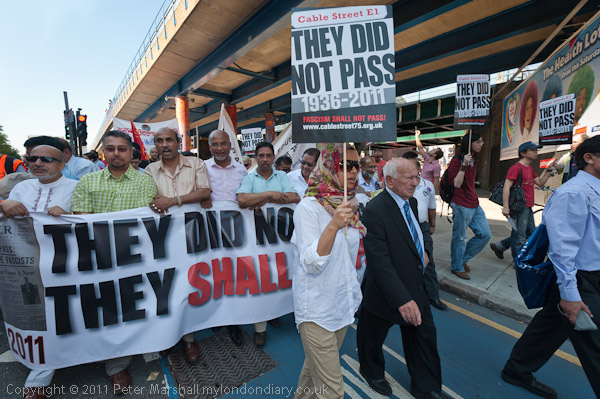
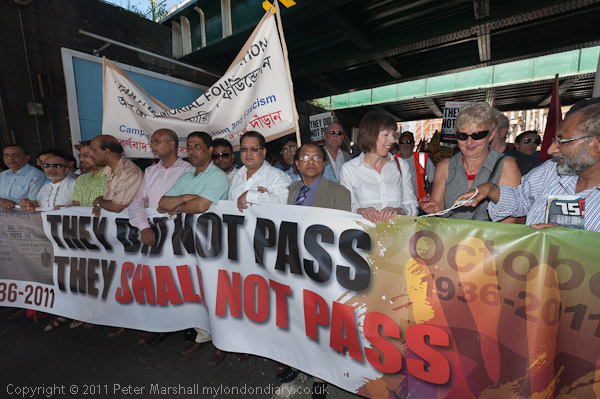
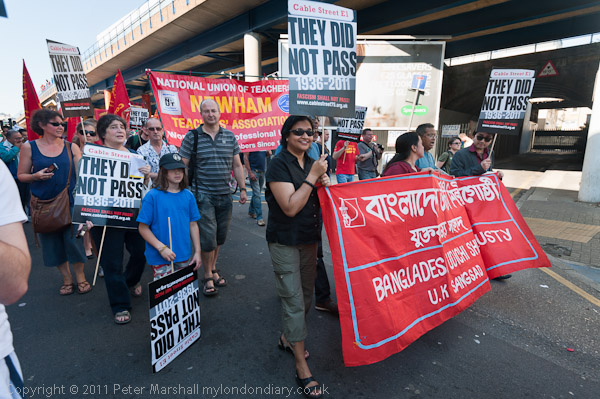
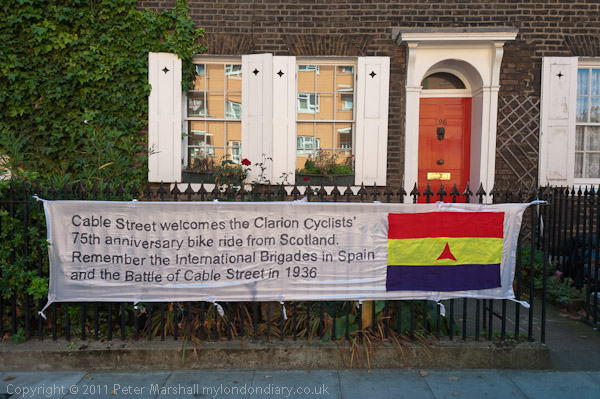
On Sunday 2 October 2011 a march and rally celebrated the 75th anniversary of the Battle of Cable St, when when Mosley’s fascists were prevented from marching into London’s largely Jewish East End.

Cable Street, Fish Island & Hackney Wick

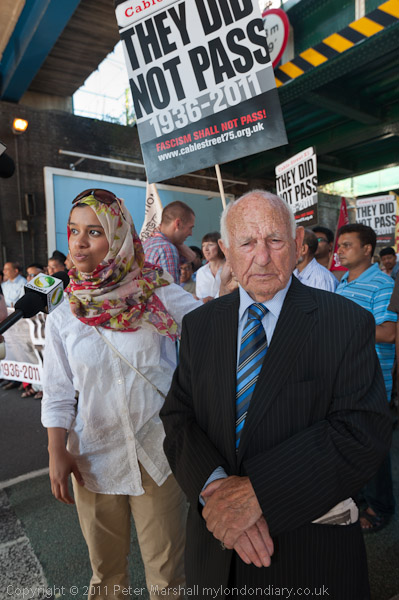
Over a thousand trade unionists and anti-fascists came to march along Cable St remembering the day, including the then TUC Deputy General Secretary Frances O’Grady, and the marchers were led by Max Levitas who had been at the battle in 1936, then aged 21, and remained active as an anti-fascist until his death in 2018, including serving for a total of 15 years as a Communist coucillor in Stepney.

Cable Street, Fish Island & Hackney Wick

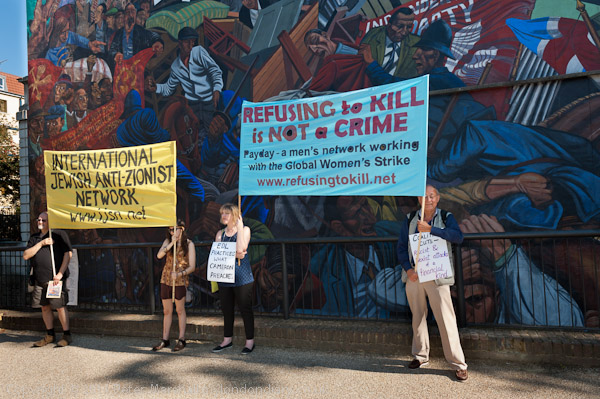
At the rally close to the fine Cable Street mural we were reminded that official bodies including the Board of Deputies of British Jews had advised people to stay away from Mosley’s march and that the local opposition was organised largely by the Communist Party of Great Britain, led by Phil Piratin, who nine ears later became Communist MP for Mile End. As well as large number of local people, both Jews and others, thousands of others opposed to fascism flocked in to defend the area.

An estimated 1-300,000 people gathered at all the roads leading into the East End, determined to stop the march on October 4th by 3,000 uniformed fascists. The fascists waited outside the Royal Mint while 7,000 Metropolitan Police, including their entire mounted section and an autogiro (a primitive form of helicopter with an unpowered rotor) overhead, attempted to clear a route for them.

When the anti-fascists heard the police were trying to force a route along Cable Street, Irish dockers, Jewish tailors and other anti-fascists built three barricades across the street with thousands arriving to stop the police clearing the street. Eventually Mosley abandoned the march and took his supporters back towards Hyde Park.

There were around 175 people injured, men, women and police and around 150 arrests. Most were charged with obstructing the police and received fines, typically of £5, but some thought to be ringleaders were sentenced to three months hard labour.

The event raised public awareness of the British Union of Fascists and led to the passage of the 1936 Public Order Act which prohibited the wearing of political uniforms in public except for ceremonial occasions, outlawed paramilitary organisations, banned offensive weapons at public meetings and gave power to the police to impose conditions on marches and arrest unruly counter-demonstrators. It also allowed the Home Secretary to ban protests in a area where serious disorder was likely and made it an offence to use “insulting words likely to cause a breach of the peace” in public speeches.

Mosley continued to have many supporters in the East End after the battle, and Bethnal Green was one of his strongholds. There were gangs of fascist youths in Mile End who assaulted Jews on the street and smashed the windows of Jewish homes and shops.

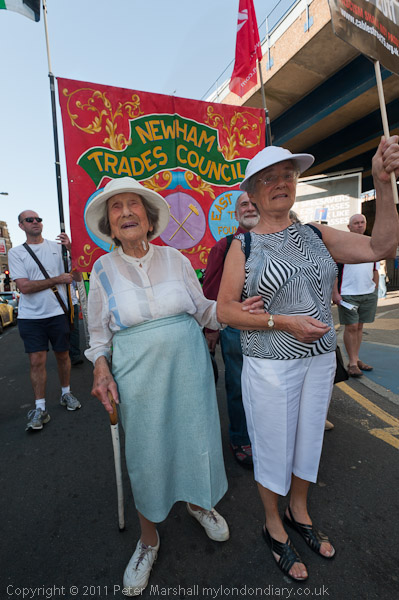
Hettie Bower (left)

Levitas was not the only veteran of the 1936 battle at the event, and there were other veteran antifacists taking part too. The oldest was was 106 year old Hetty Bower, still looking extremely well, and walking with the aid of a stick. Rather younger at 94, Beattie Orwell was still looking very sprightly and had been at the battle at the age of 19.

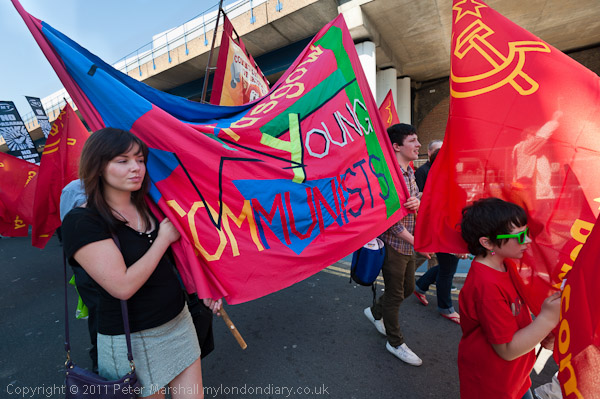
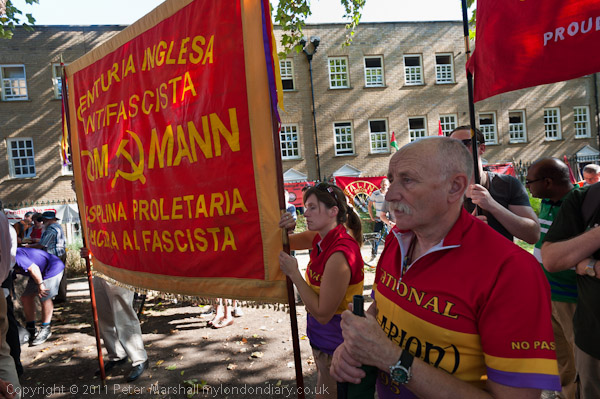
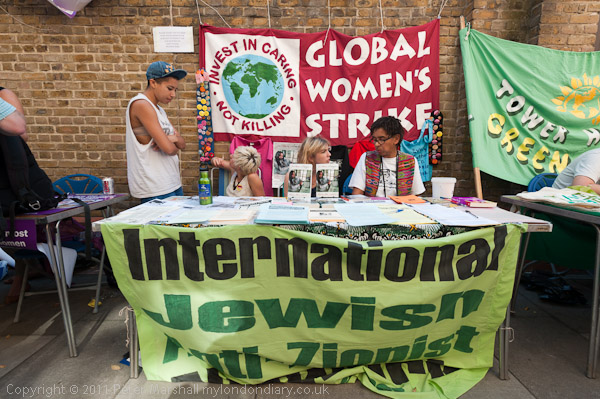
There were also banners from the Spanish Civil War which was also taking place 75 years ago, as well as those from many trade unions and political groups including those representing the newer communities of the area, with local activists reminding those present of the continuing need to fight against fascism and racism, and in particular the need to oppose the English Defence League, who just a few weeks earlier had attempted to march into Tower Hamlets but had been stopped by a popular mobilisation.

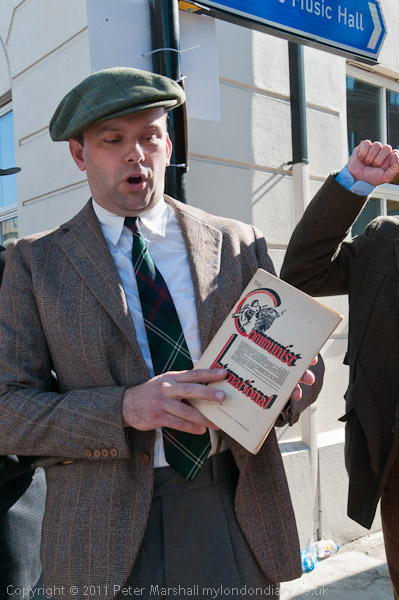
A short distance away in Grace Alley Wilton’s Music Hall, the oldest surviving Grand Music Hall in the world, was hosting a four day programme of events commemorating Cable St with various performances, book launches, exhibitions and stalls, street theatre and music along the alley outside.

Battle of Cable St – 75 Years.


Fish Island, Olympic Views & Hackney Wick

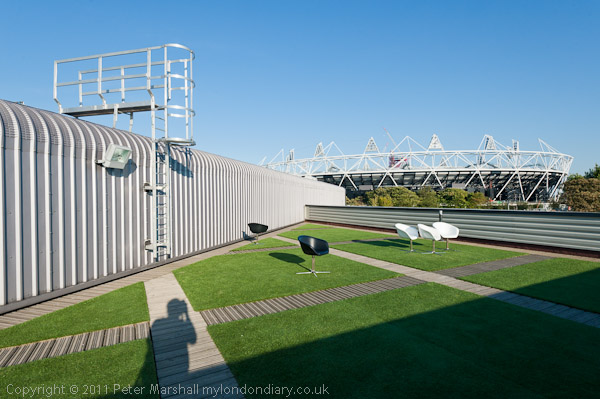
Olympic Stadium from Forman’s roof

I left Cable Street and took a bus to Bethnal Green, then walked along the Roman Road and and on across the motorway to Fish Island, on my way to visit the gallery space on the top floor of Forman’s, salmon smokers and one of the few local businesses that seems to have done well out of the Olympics.

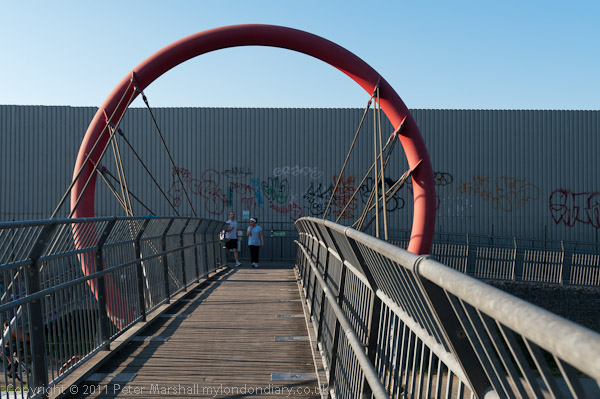
Footbridge across the Hertford Union Canal to Hackney Wick

They had been moved from a factory more or less where the Olympic Stadium was being built to new modern premises on the opposite bank of the Lea navigation, designed and painted salmon pink to look like a lump of salmon and appropriately in the area known from its street names as Fish Island. As well as the smoking plant it also houses a restaurant and a large art space, with views over the Olympic site both from the front of the gallery and the adjoining roof terrace.

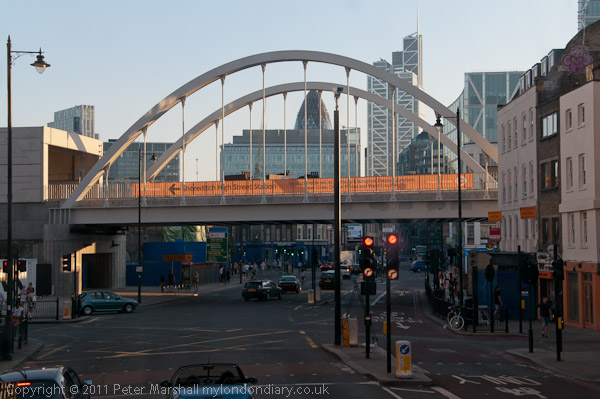
Shoreditch High St

After viewing the exhibition and taking some photographs there I walked from Fish Island over the footbridge to Hackney Wick, visiting a lively street market there and then walking along the Lea Navigation towpath to the Westway and back into Hackney Wick for a bus back though the City and on the Waterloo.

More pictures at Fish Island, Olympic Views & Hackney Wick.


Southall – Britain’s Holy City – 2005

Southall - Britain's Holy City - 2005

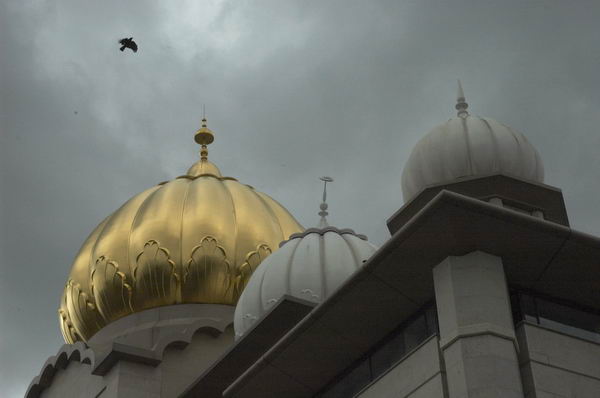
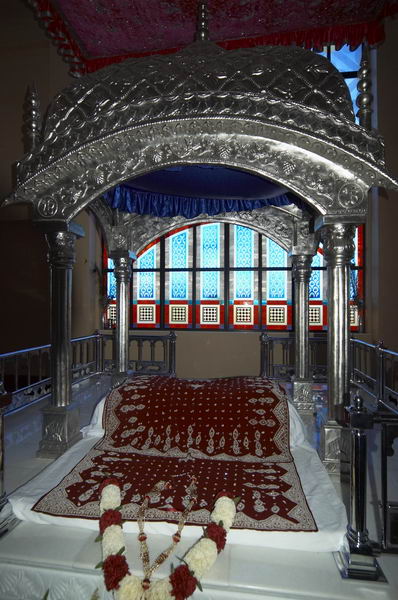
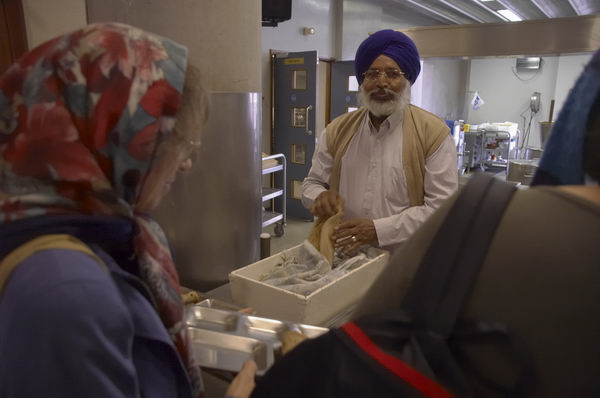
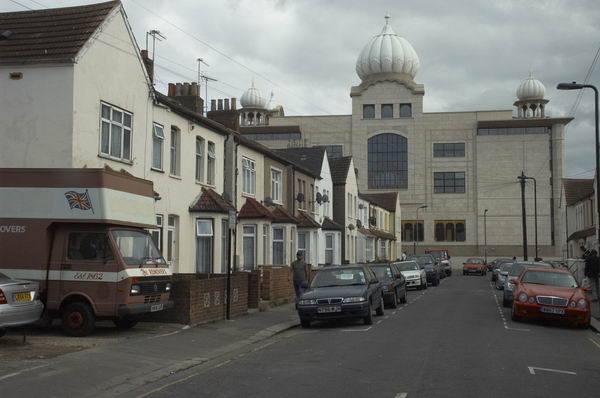
Seventeen years ago I was fortunate to be able to go on a tour of the Sri Guru Singh Sabha Gurdwara, opened in 2003 and said to be the largest Sikh temple (Gurdwara) in Europe and the fourth largest in the world, led by one of the Sikh volunteer guides and the architect, Richard Adams of Architects Co-Partnership.

Southall - Britain's Holy City - 2005

The tour had been organised by art and urban historian Mireille Galinou for the group London Arts Café, and was one of a series of interesting events and exhibitions between 1996 and 2007, which you can still read about on the rather messy London Arts Café web site that I was responsible for, though the front page of this makes very clear that the London Arts Café is no more. The site remains on line as a record of its activities.

Southall - Britain's Holy City - 2005

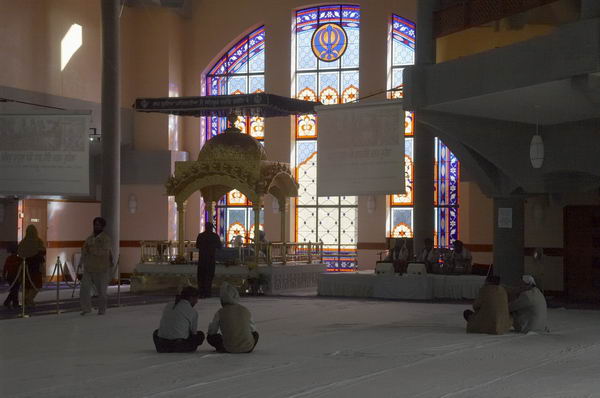
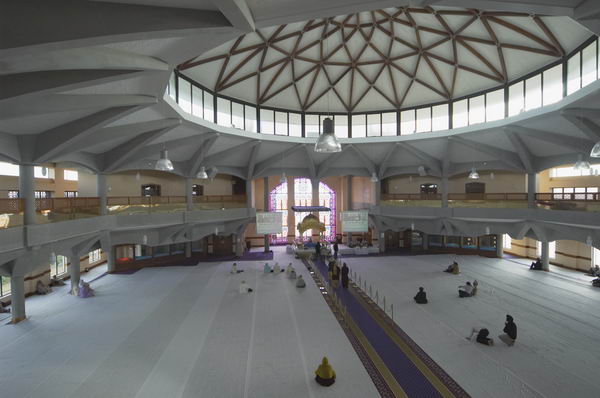
Architects Co-Partnership had won an open competition to design the building, and Adams had worked fully with the Sikh community to produce a building suited to their needs. It does so impressively: clean simple surfaces, powerful colour in the windows and light streaming into the central stairway and lobby from the large window and glass roof areas.

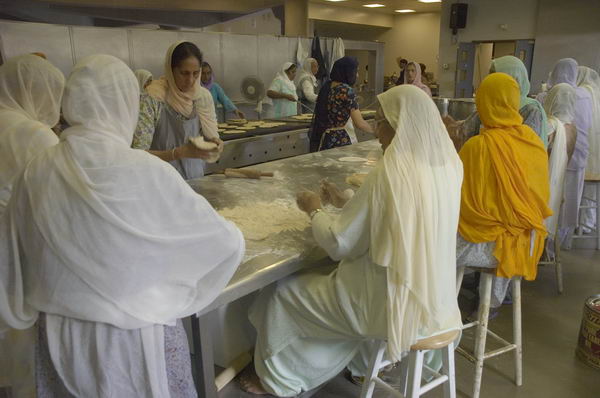
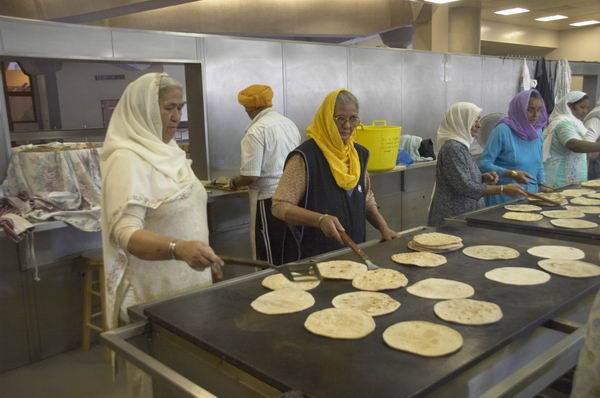
The Gurdwara has a vast prayer hall officially capable of seating up to 3,000 people, a fine marriage room (and two years later I photographed one of my wife’s colleagues getting married here), and various other facilities including a Langar (dining hall). This free community kitchen can serve over 20,000 vegetarian meals on a festival weekend.

The building had a powerfully religious atmosphere, and on entering we removed our shoes, covered our heads with scarves provided and washed our hands before continuing into the temple.

As we went around both our Sikh guide and the architect explained how the building served the basic Sikh tenets of service, humility and equality. The guide explained the spiritual guidance from the Sri Guru Granth Sahib, religious writings which were appointed as spiritual head of the Sikh religion by Guru Gobind Singh around three hundred years ago.

The building was extremely impressive, and there was a great atmosphere to in the community kitchen where volunteers, mainly women, were working together to prepare the free vegetarian meals. Although normally I would have sat to eat on the floor in the traditional way, a rather painful knee made it easier for me to stand and eat at one of the tables along with most of our group.

The food is free, but in return people are expected or welcomed to perform some service to the temple in thanks or give an donation which we gladly did. The meal was delicious and made a good end to a most interesting visit.

I ended my account on My London Diary:

Southall is now Britain’s Holy City, apparently with places of worship for over 50 religions or denominations. Brother Daniel Faivre’s ‘Glimpses Of A Holy City’ published in 2001 after more than 20 years of living in Southall gives a good insight into some of this diversity.

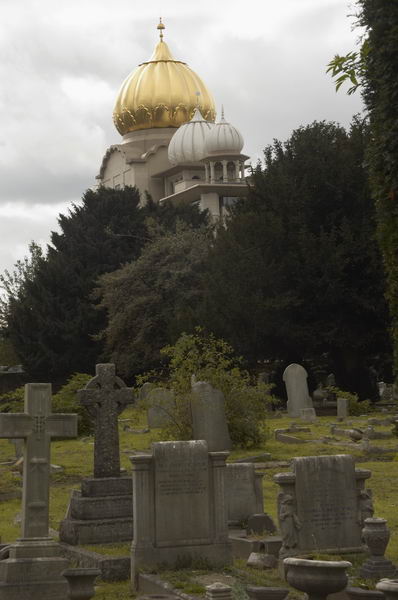
We didn’t on this occasion visit any of these others, but did go for a short walk before catching our bus home, going into the Christian cemetery opposite the Gurdwara and some streets around for some views of the building’s exterior, as well as some local views.

I’d visited Southall before to photograph some of the religious festivals – both Sikh and Hindu – in the town and there are pictures of some of these on My London Diary, as well as pictures from Vaisakhi celebrations here and in Hounslow, Slough, Woolwich, East Ham, Gravesend and Sikh protests in central London. You can find these by searching on My London Diary.

More pictures on My London Diary.


Luxury Cars, Poverty Wages

Luxury Cars, Poverty Wages

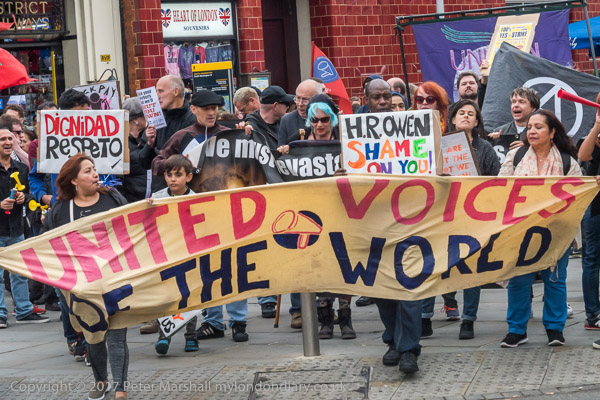
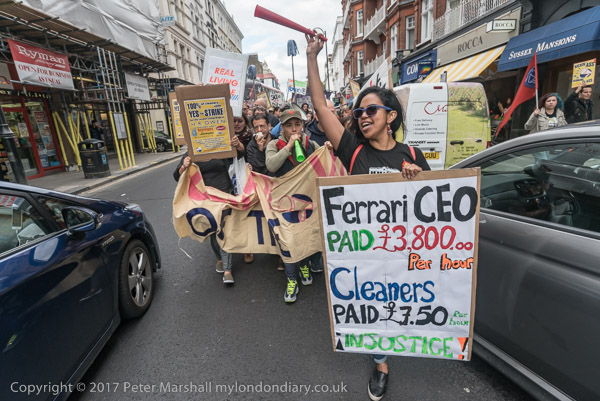
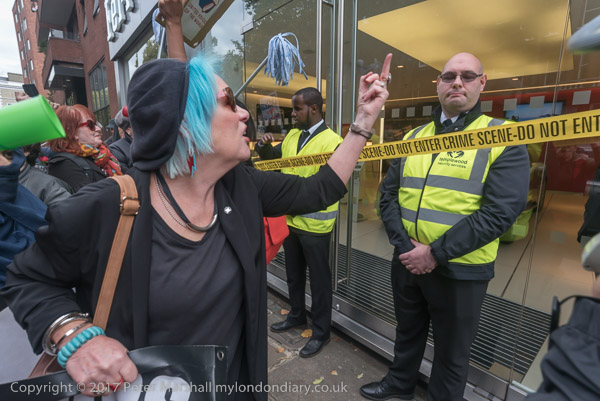
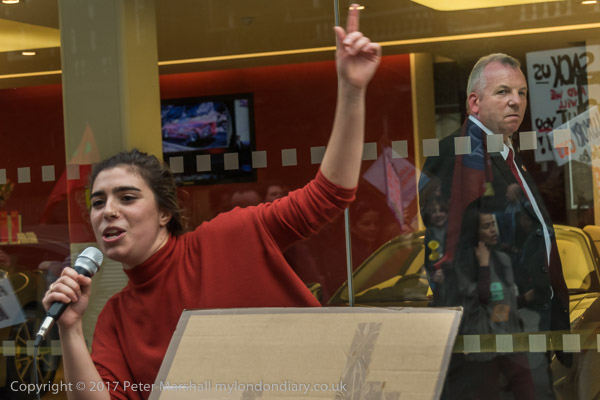
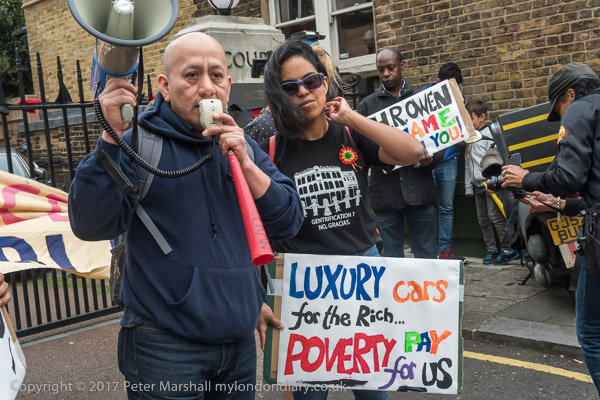
Five years ago on 30th September 2017 United Voices of the World, a grassroots trade union for low paid, migrant and precarious workers, protested in South Kensington against luxury car dealers H R Owen who had suspended their two cleaners without pay for asking to be paid a living wage.

Luxury Cars, Poverty Wages

The UVW has many members among London’s low paid minority ethnic communities, particularly Spanish speakers, and has led successful campaigns to get them better treatment at work and to be paid the London Living Wage.

Luxury Cars, Poverty Wages

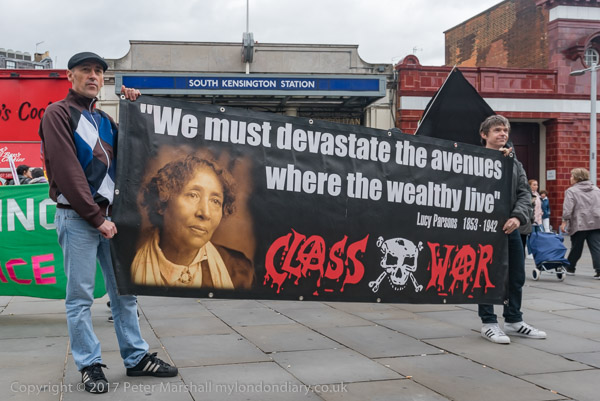
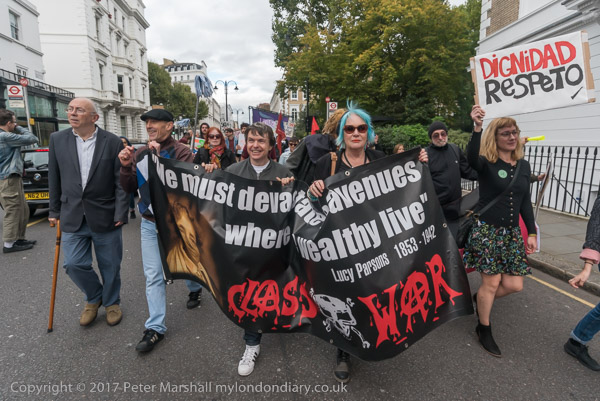
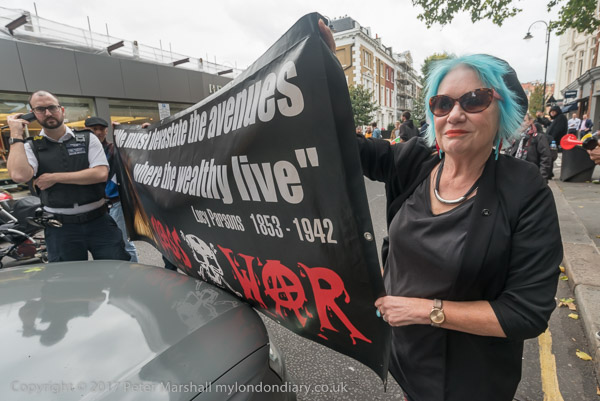
In this and other protests they have been supported by other groups, particularly Class War and the Revolutionary Communist Group and there were a number from these and other unions at the protest.

Angelica Valencia

The Ferrari showrooms have only two cleaners, Angelica Valencia and Freddy Lopez, and they were then employed at the minimum wage by cleaning company Templewood, who the UVW also say have made unlawful deductions from their wages and are in breach of the minimum wage legislation.

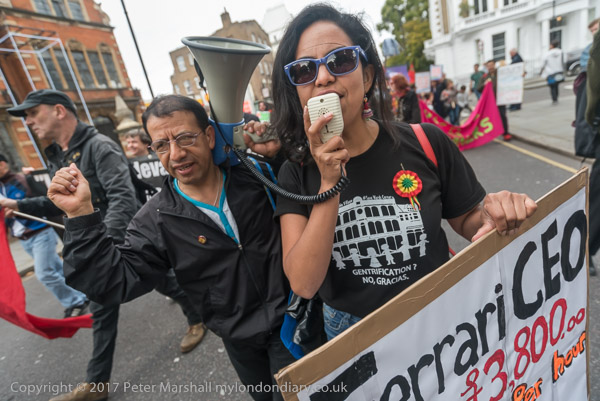
Freddy Lopez, speaking in Spanish, with Claudia ready to translate

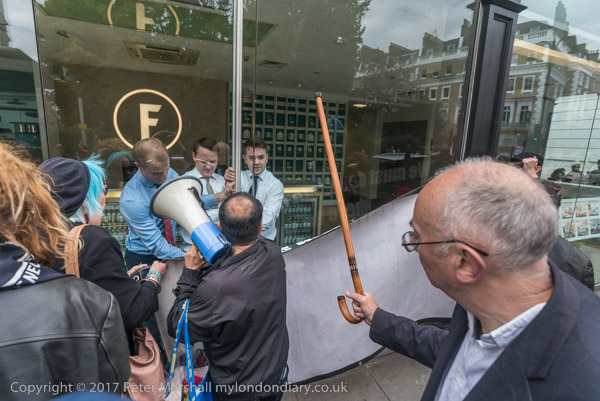
Almost a hundred supporters met outside South Kensington Station in the late afternoon and then marched to the Ferrari showroom. On their way they paused briefly to protest at H R Owen’s Lamborghini showrooms and then the entrance to their offices.

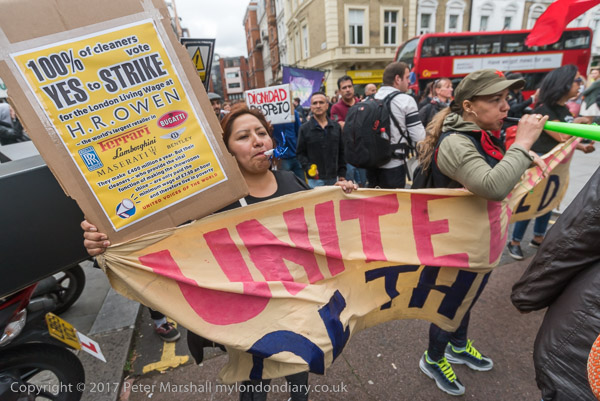
They stopped outside the showrooms on the Old Brompton Road for a long and noisy protest, with speeches, chanting, drumming and ending with dancing on the roadway.

Ian Bone of Class War waves his stick at a branch of Foxtons

Loud peaceful protests such as this attract a great deal of local attention to the disputes and shame employers into meeting the demands of low paid and badly treated workers. They are effective in persuading the owners of businesses to lean on outsourcing companies to treat their staff better.

Although outsourcing companies are only concerned with exploiting their workers for greater profits, businesses such as H R Owen are very much aware of the negative publicity from the exploitation on their premises being made public.

The success of protests like this, particularly against some of the leading companies in the City of London, by the UVW and other active grass roots unions is doubtless one of the reasons that led the government to enact the Police, Crime, Sentencing and Courts Act 2022 which gave the police powers to act against noisy protests. It remains to be seen how the police, and the Met in particular, will make use of these.

Jane Nicholl makes her opinion clear

The amount of money involved in paying decent wages to the two cleaners is clearly miniscule compared the the price of the cars being sold in the showrooms. The web site tells me that in 2022 the Ferrari range is priced between £166,296 – £263,098.

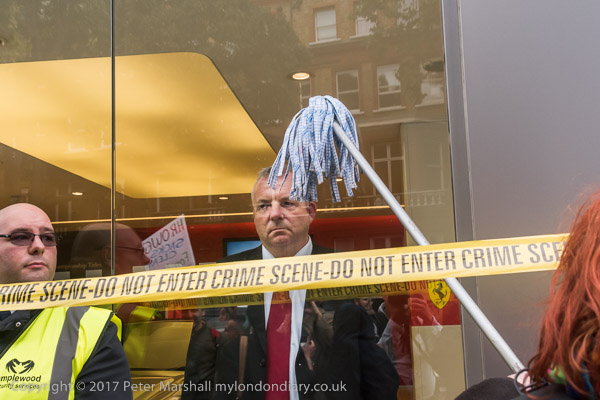
Class War had brought some ‘DO NOT ENTER CRIME SCENE’ tape and some of the supporters of the cleaners had come carrying mops which they waved at the people inside the showroom.

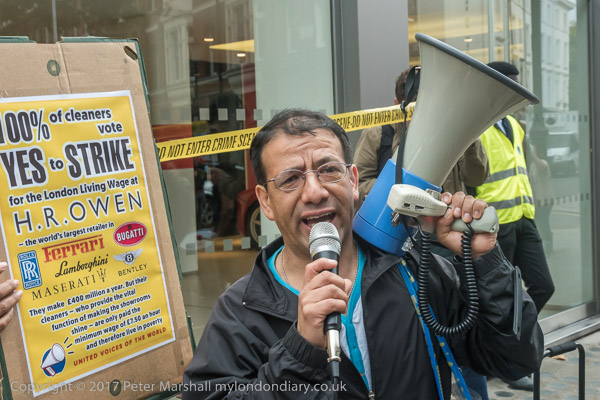
Victor of the UVW speaks with his usual passion

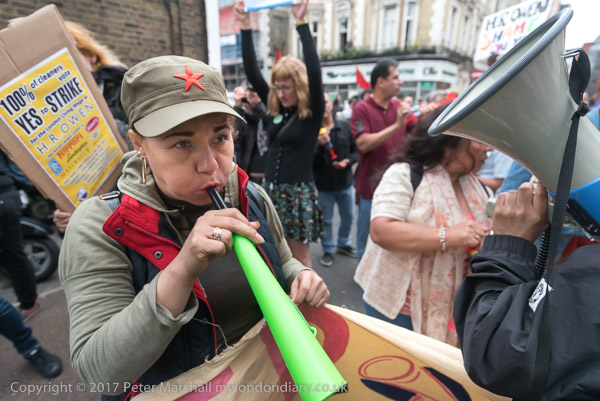
As the poster states, both of the cleaners voted for strike action in the workplace ballot, giving this a 100% vote. Most if not all the strikes by the UVW have had very high levels of support among workers. The poster also points out that H R Owen are making £400 million a year but the strikers were only paid £7.50 an hour. Paying them a living wage would have a totally insignificant impact on company profits but make a huge difference to the cleaners.

Police talked to the protesters and tried to keep traffic flowing along the road, though there was very little of it and little disruption was caused. But Class War did hold up a few cars for a minute or two with their banner.

The peaceful protest ended with music and dancing – and some more speeches. On their web site, the UVW state:

“In a David vs Goliath battle, UVW members Freddy and Angelica, friends from Ecuador, took on luxury car dealership HR Owen and beat the odds; overcoming intimidation and suspensions, they won the London Living Wage. Their victory was a testament to the power of UVW’s worker-led direct actions.”

https://www.uvwunion.org.uk/en/campaigns/hr-owen-ferrari-dealership/

You can see many more pictures of the successful protest at Cleaners at luxury car dealers HR Owen.


Kew, Brentford, Syon & Isleworth Walk

Part 2 Syon and Isleworth

Kew Bridge, Brentford, Syon & Isleworth

A public footpath, now also on the Thames Path, leads from Brentford across Syon Park to Isleworth. Its a longish stroll with parkland on one side and at times just a high wall on the other, but does pass several historic buildings, though you would need to pay the entrance fee to the gardens and great conservatory to see most of them well. The estate is still privately owned and permission is needed for any filming and photography within the park.

Entry is free to the garden centre, and we went in to look at some of the buildings inside as well as to use the toilets. They also have a cafe and restaurant but we didn’t stop. Much of the garden centre was once the Riding School.

I wasn’t feeling well as we walked though here – still perhaps suffering from the virus which I’d had a couple of weeks earlier. So I didn’t feel much like taking pictures as we walked though. But I hadn’t found much I thought worth photographing on previous walks through here, expect for the view of Zion House. This is on the flight path into Heathrow, and there is an aircraft in my picture coming in to land there.

Kew Bridge, Brentford, Syon & Isleworth

In my teens I was a Sea Scout in Isleworth, or rather a Senior Scout, and we theoretically went boating in the Thames here, though I think rather rarely. But this was also another route into Kew Gardens, with Church Ferry going across the names from by the corner of Parke Street and Church St. I also remember coming here to paddle and possibly even swim in the river, though it was pretty polluted back in the 1950s.

Kew Bridge, Brentford, Syon & Isleworth

Isleworth was also the place where I drank my first pint of beer, which I think cost 1s/5d or around 7p. Not at the London Apprentice, which we thought of as a rather snooty place for the nobs, but at a small pub further down Church Street which had few problems with serving under-age drinkers. It’s no longer there.

Kew Bridge, Brentford, Syon & Isleworth

We made it into the London Apprentice, sitting outside by the river for a drink, though still feeling ill I stuck to tonic. One of my colleagues found an excellent real ale, which I looked at longingly. It was a very pleasant place with a good atmosphere and friendly bar staff, so we stayed for another, and then thought the menu seemed fine and had a meal.

Kew Bridge, Brentford, Syon & Isleworth

Finally we made it out of the pub and continued along Church St to the Duke of Northumberland’s River, perviously known as the Isleworth Mill Stream. There were several mills which relied on the stream, including one close to here said in 1845 (by which time there were also a couple of steam engines on site) to be the largest flour mill in England, Kidd’s Mill. This section of the river was built in the late 15th century for Syon Abbey, before the Northumberland’s built their house on the abbey site, and brought water from the River Crane at Whitton to augment a small stream which ran into the Thames at Isleworth.

Kew Bridge, Brentford, Syon & Isleworth

But the River Crane couldn’t provide a sufficient and reliable supply of water, and in 1530 a new section of the river was dug from Longford to take water from the River Colne. This merges with the Crane close to Baber Bridge on the edge of Feltham, though there are then separate channels across Hounslow Heath and through Crane Park before the eastern section of the river diverges. I played around, paddled and fished in much of this as a boy.

Kew Bridge, Brentford, Syon & Isleworth

The walkway beside this small river on its last few yards into the Thames was closed, but a nearby alley took us to to the riverside opposite Isleworth Ait. At Swan Street we made a brief detour to admire the Grade II listed Old Blue School built in 1842 and now converted into expensive flats, before returning to the riverside. The tide was low and there was almost no water in places here, and we watched as a man left work at the boatyard and walked across the mud to his works van parked by the river.

Kew Bridge, Brentford, Syon & Isleworth

We continued through a small park area, once part of the grounds of the Catholic Convent Nazareth House, until the Thames Path we had been following took us out onto Richmond Road. Here we left the Path, turning right onto Richmond Road and then going down Queen’s Terrace to Kings Terrace, walking north to turn down Byfield Road.

Kew Bridge, Brentford, Syon & Isleworth

Where this turns to the left we stopped to admire the small 1885 Elizabeth Butler almshouses, almost missing behind us the finely decorated May Villas from a similar era before taking the alley to Twickenham Road. Here next to the bus stop where our walk ended was the house with its blue plaque informing us ‘VINCENT VAN GOGH the famous painter lived here in 1876.” The bus came before I had time to make a photograph. It will still be there the next time I’m in Isleworth.


Kew, Brentford, Syon & Isleworth Walk

Part 1 – Kew Bridge and Brentford

My walk a few days ago in September 2022 began at Kew Bridge Station. I’d come half an hour before I was due to meet my two companions to take a short walk around one of the newer parts of the area before meeting them for a longer walk to Isleworth.

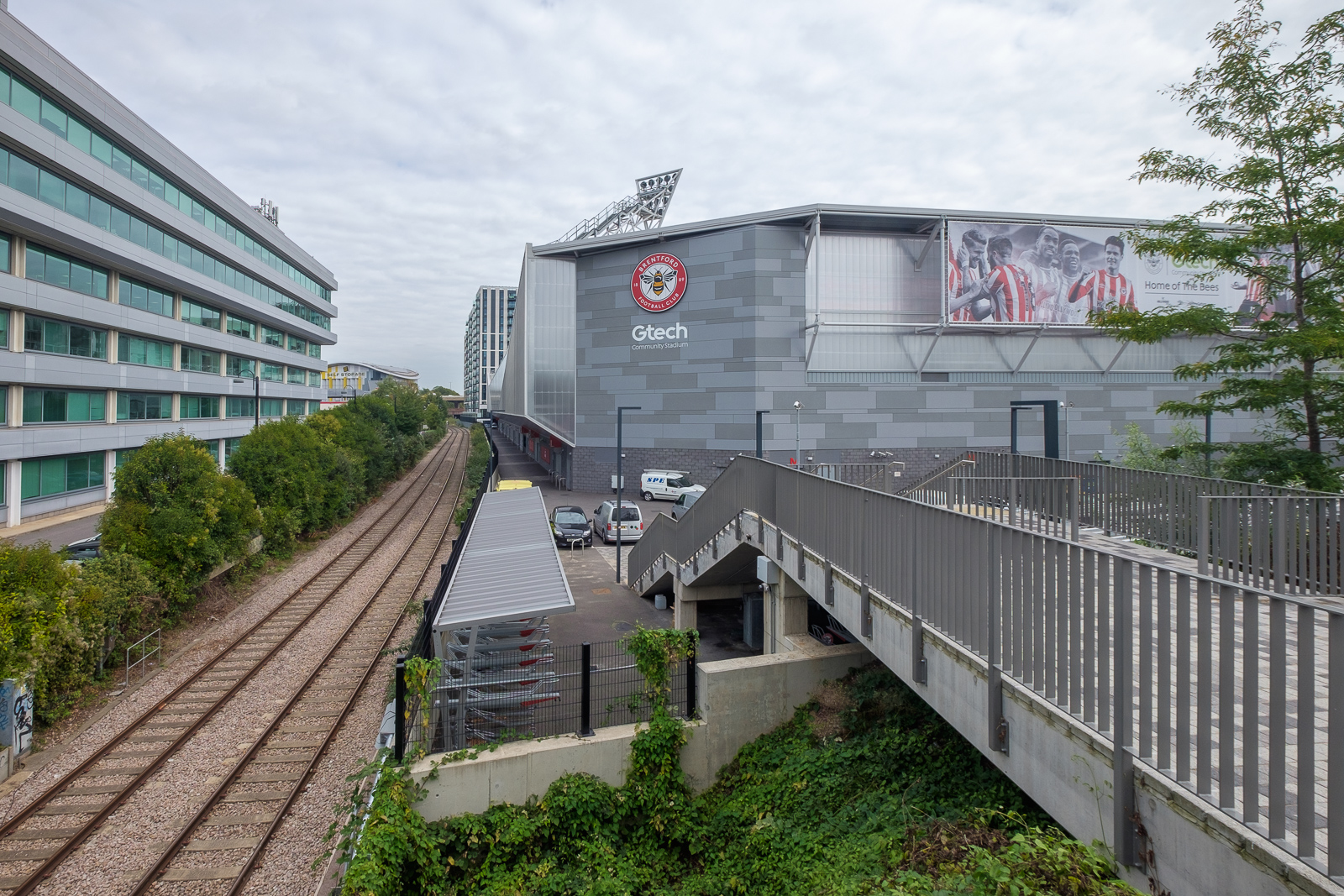
Lionel Road runs north of the railway up to meet the Great West Road. It used to be a rather run down area with railway sidings on one side and a few old commercial buildings and works to the north. The last time I’d walked down here on my way to Gunnersbury Park in 2018 the whole area had been a building site, but now is home to Brentford FC, currently doing pretty well in the Premier League.

Brentford was my local team when I was a kid, and several members of the award-winning under-11 team I played for at left back on went on to play for them at their old ground (and at Chelsea.) One of the other patrol leaders from my scout group stayed there until he retired, though I never met him after I hung up my woggle, but read his obit in the local rag.

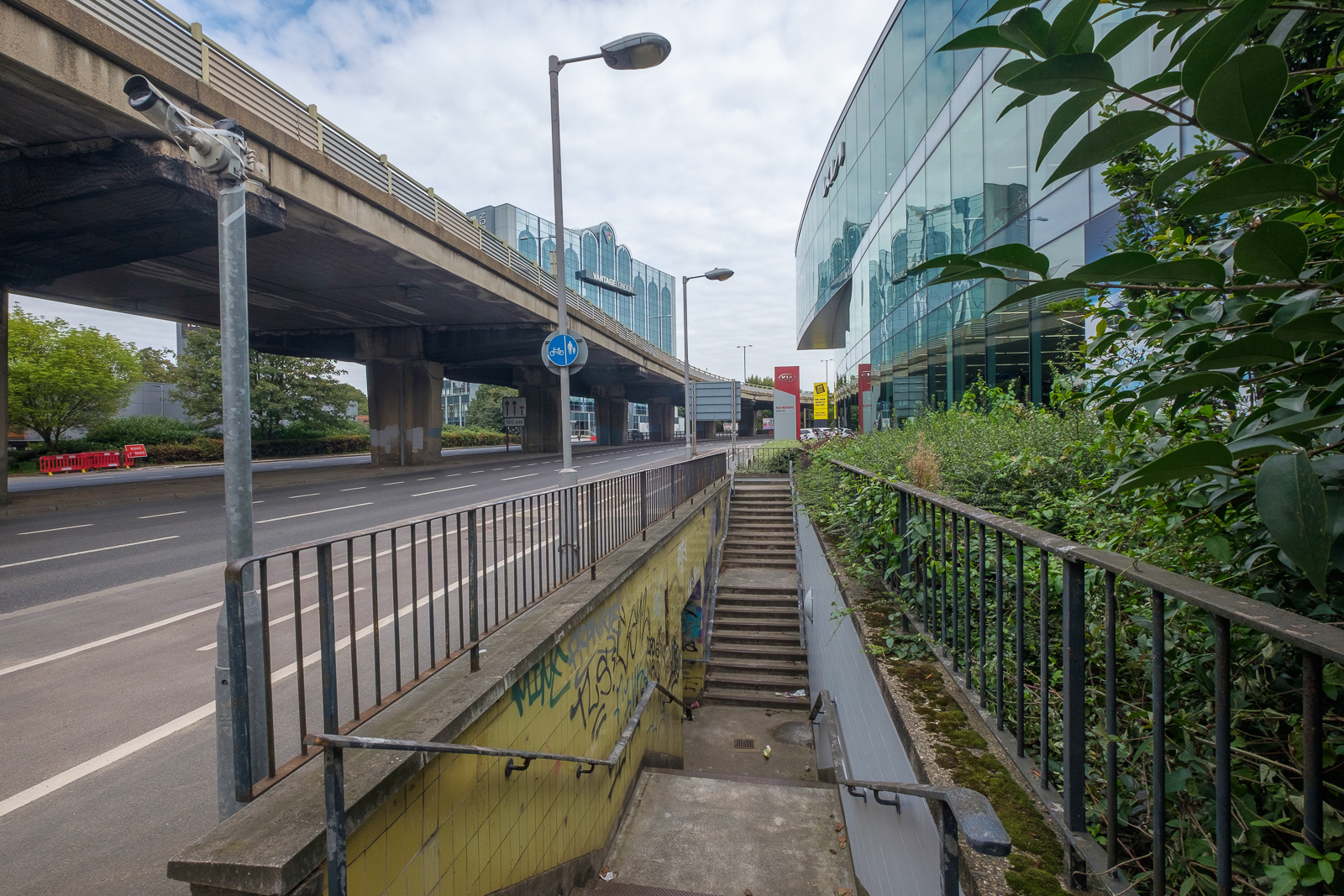
Past there I came to the Great West Road, a 1930s dual carriageway with cycle tracks I sometimes used further west on my way home from school. In the 1980s or 90s I photographed most of the remaining Art Deco factories along it, though the bulldozers got to some first. Now it reminds me of J G Ballard’s novels, particularly ‘Crash’, set around the area we both lived in, with the elevated M4 above the older modern road.

A new Brentford of tall blocks has sprouted here, though more land remains to be built on. A little-used rail line goes through it, the Kew Curve, with Brentford’s stadium replacing the sidings and cattle pens to its west, with new building on the east in what was Brentford Market. It moved to this site in 1893 after the Brentford Local Board had bought the 2 acre site from the Rothschild estate because market trading in the area around the Express Tavern immediately south of the station which had developed informally away from Brentford’s traditional market in Market Place had become a public nuisance. The site was extended in 1905 and then covered land now part of the Chiswick Roundabout. The market moved to the edge of Southall in 1974 as the new Western International Market and the Fountains Leisure Centre was built on part of the site, with the rest staying derelict for years.

My maternal grandfather, then a market gardener in Feltham, would drive his cart with produce to Brentford Market in the early years of the last century, past the house in Hounslow where my father, then a young boy, used to see him driving past. Around twenty years later when he became engaged to my mother he found out who he was.

I met my two colleagues and we walked together down by the west side of Kew Bridge to the Thames. To our right was where the Kew Bridge Ecovillage had squatted from June 2009 until May 2010, now occupied by 164 flats, a business centre, gym and pub.

The Hollows runs west between riverside moorings and recent blocks of luxury flats, eventually returning us to Brentford High St, and a park beside the river now called Watermans Park. This was the site of Brentford Gas Works which straddled the High Street here and was a great attraction when we took the bus through it in my childhood, usually on our way to Kew Gardens. Entrance then was only an old penny, and it was a cheap outing for families in the area. My father would have his scissors in his pocket and perhaps take the odd small cutting to grow in our garden. Rather cheaper than garden centres.

But if you were lucky as the bus drove slowly down the usually congested street, one of its Intermittent Vertical Retort would open sending a wall of red hot coke to the ground, quite an amazing site as we peered from the top deck. It almost made up for the smell.

A gas works had been set up here and began production in 1821, first supplying has for lighting the turnpike to Kensington, but later serving large areas around. Later other gas works were set up in Southall and then elsewhere as demand continued to rise. in 1926 the Brentford gas company became a part of the Gas Light and Coke Co which later became British Gas plc. Brentford Gas Woks closed in 1963 and the riverside buildings were demolished in 1965 though the large gasholder remained until 1988.

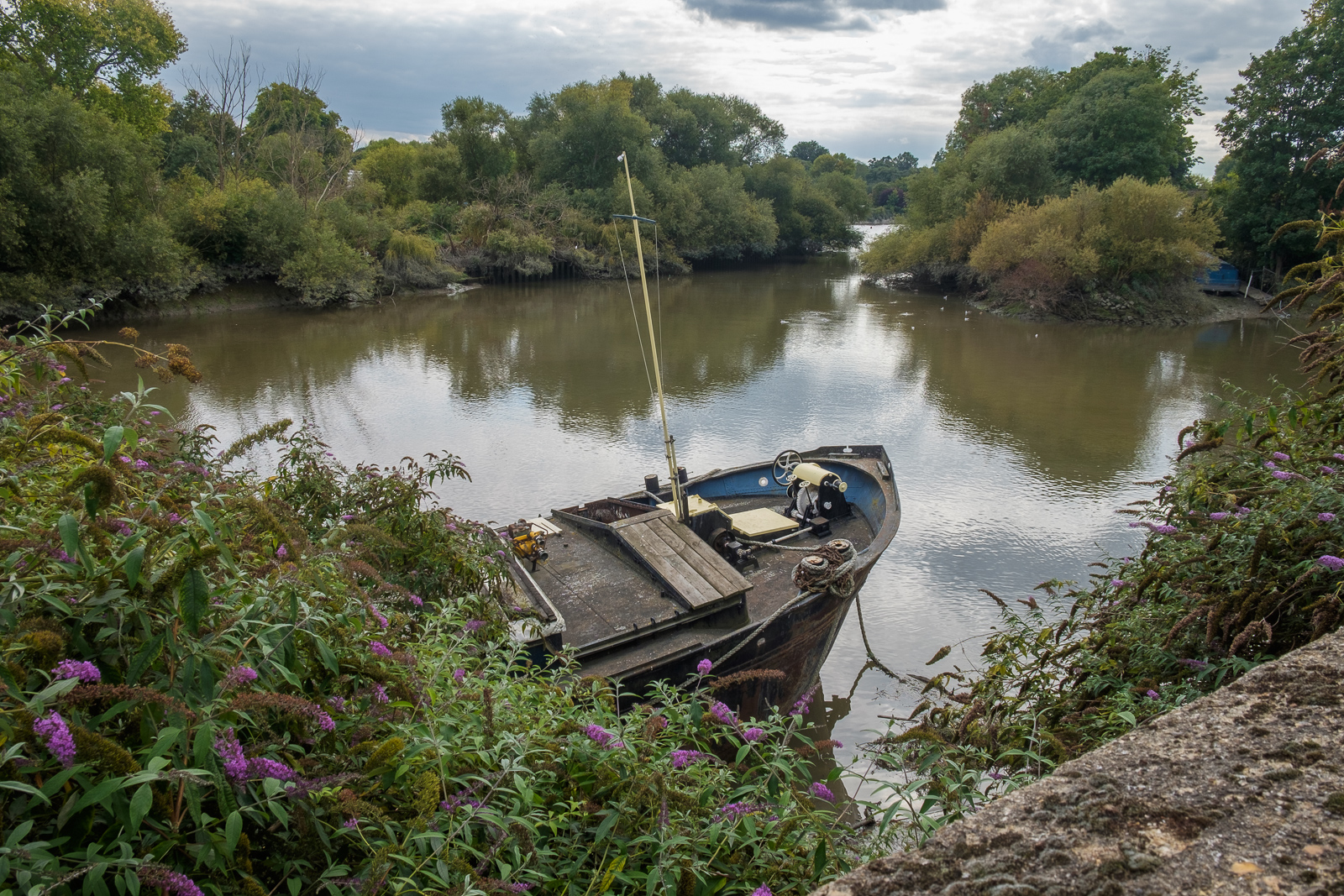
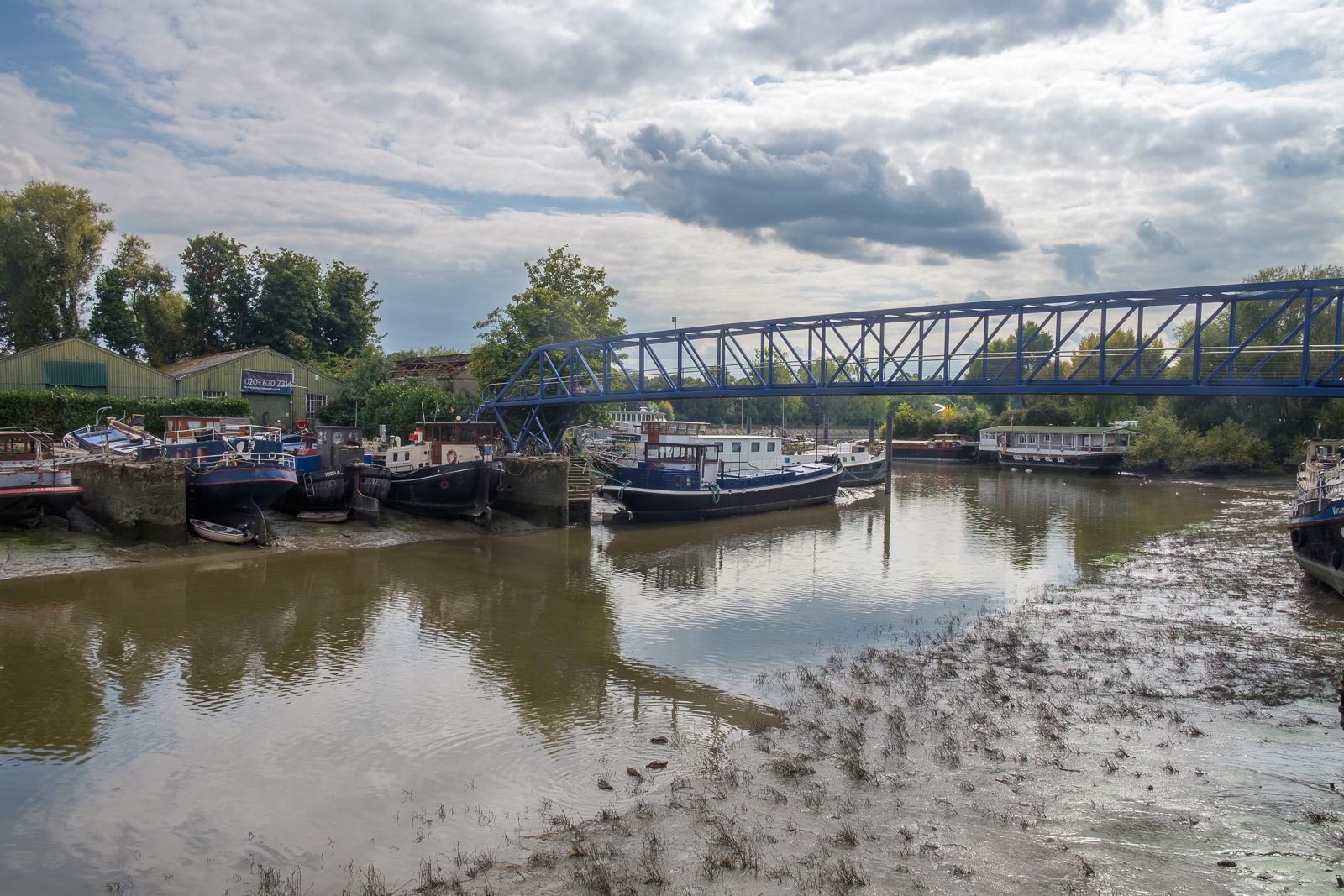
All than now remains of the gas works are some of the substantial posts of the gas works jetty, where colliers once brought in coal. There has been a long battle over the rights to moorings here between boat owners and Hounslow Council with boat owners claiming that the foreshore here belongs neither to the council nor to the PLA but to the Bishop of London, and refusing to abide by various eviction notices. Most have now moved but some derelict boats remain.

Brentford Ait runs along the centre of the river here. It was bought in the late 19th century by the Crown who planted trees on it to hide the gas works from visitors to Kew Gardens on the opposite bank. A few yard upstream is Lot’s Ait, where the Thames Steam Tug and Lighterage Company Ltd set up a boatyard in 1920 – most of the Thames lighters were built there. The boatyard closed in the 1970s, but was reopened in 2012 when a new footbridge was constructed to it.

As well as the park, the Watermans Arts Centre was also built on the gasworks site. We walked between it and the river, and continued on the riverside path, past the bridge to Lots Ait and recent blocks of flats. There are new moorings around here too.

A small spit of land leads from the bottom of Ferry Lane (more new flats) to an artwork by the riverside. I’m not quite sure what to make either of Liquidity or another similarly decorated column not far away, but it could provide a useful windbreak in bad weather. This was where once a ferry ran across to Kew Gardens.

We followed the Thames Path around a small dock, on what was the site of the Thames Soap Works and then continued along the side of the River Brent which flows into the Thames here, continuing along this beside the winding river past another boatyard to Brentford High Street.

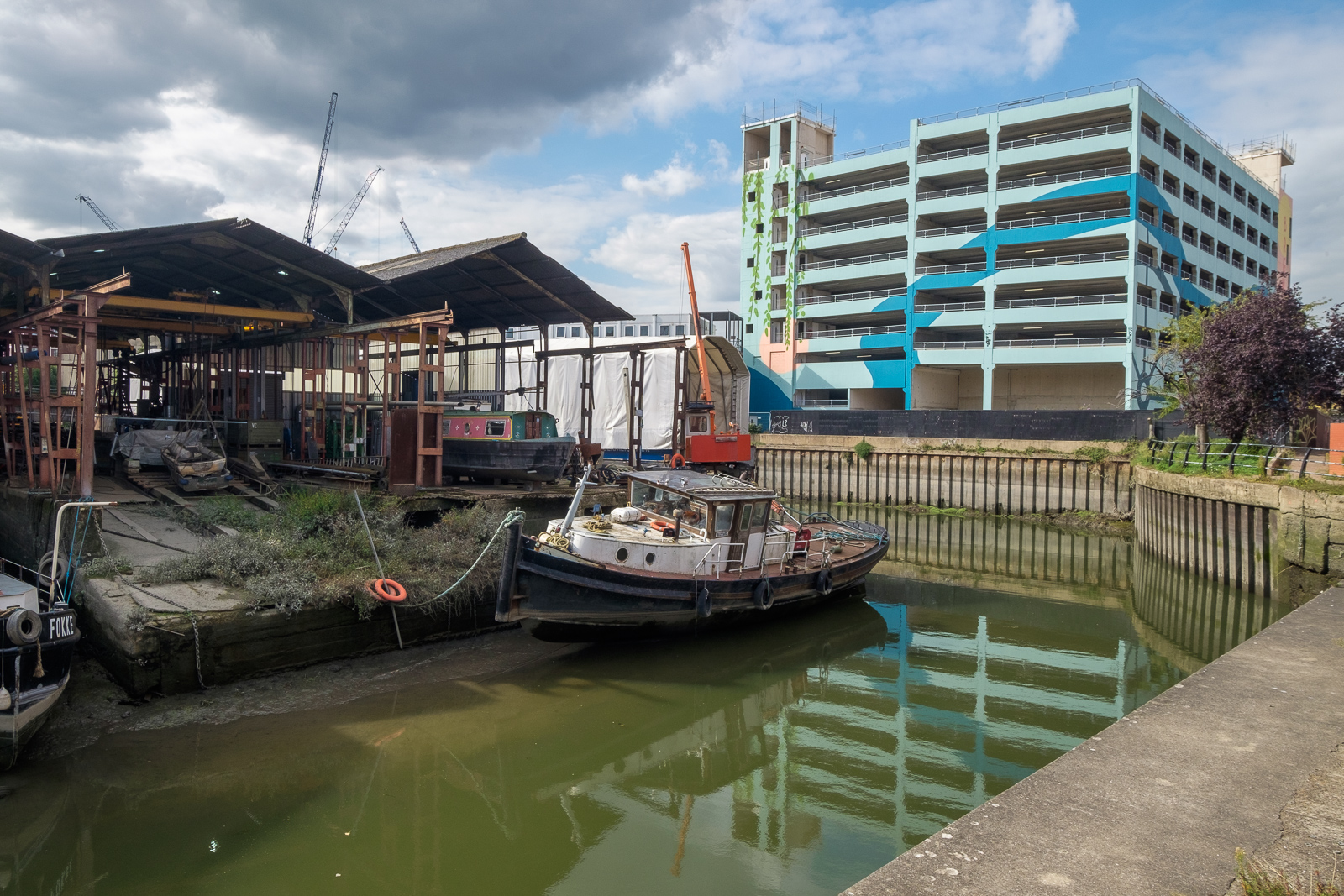
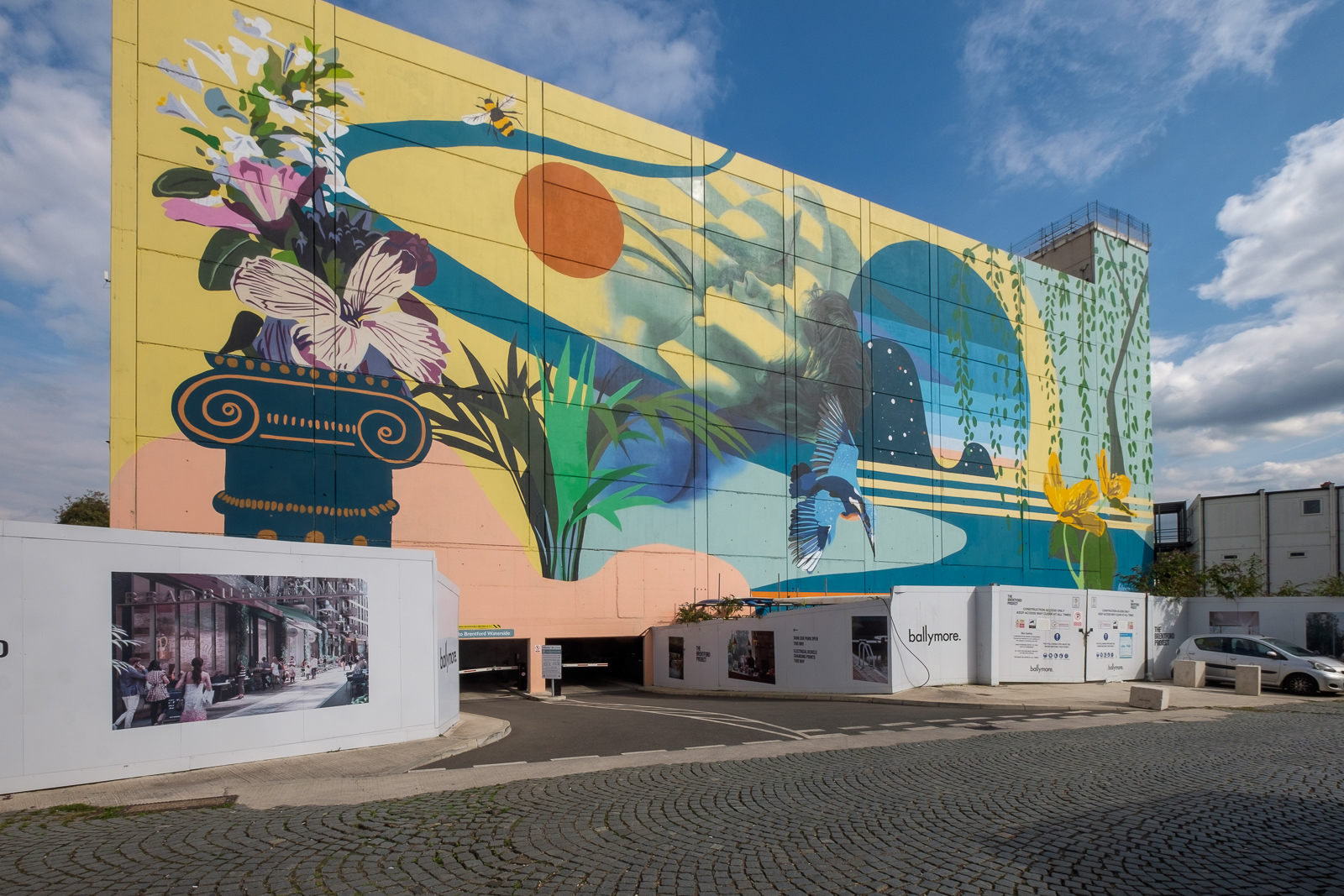
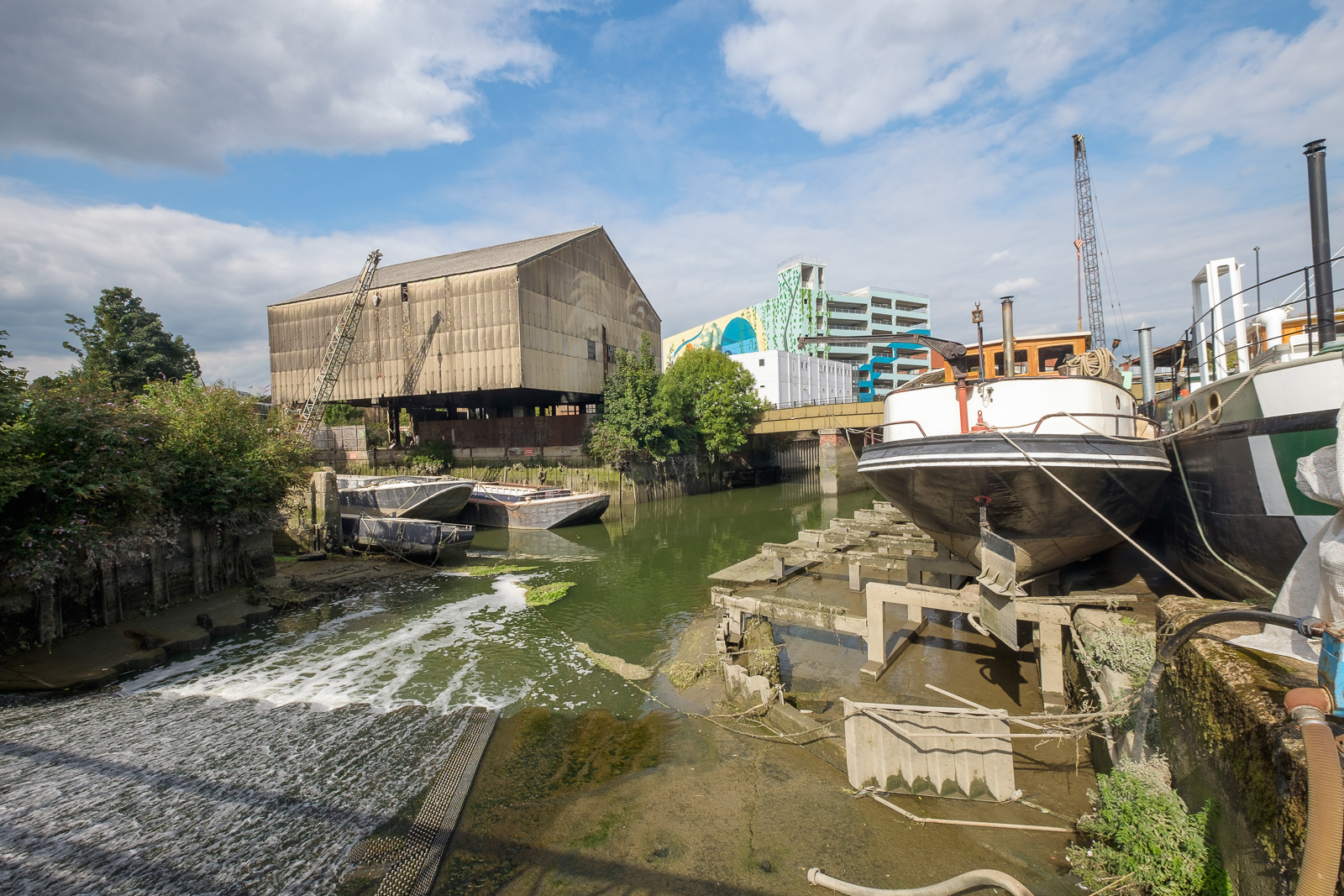
A few yards along we turned left down Dock Road to Thames Lock, past a huge mural and the other end of the boatyard, to Thames Lock, the southern end of the Grand Union Canal. Here we took the path beside the north side of the canal, leading across a bridge over the Brent to Johnson’s Island and Catherine Wheel Road.

The mural, on the side of a multi-story car park had included a giant kingfisher, and I’d joked saying this was the only kingfisher we’d see in Brentford. But as we walked across the bridge over the River Brent and stopped to take pictures, perched on the top of a post there was one, still only for a second before flying out of sight. By the time I’d raised my camera to my eye it was gone, though since I had and extreme wideangle lens it would hardly have been visible, just a few more colourful pixels.

I’d planned to walk along Brent Way and rejoin the canal towpath, but the whole of this area is now a huge building site, and instead we walk along the High Street to the canal bridge. I couldn’t bring myself to walk down to the Gauging Lock preserved there, though I’ve done so several times before, but the changes to the area, now with a marina, flats and hotel made me feel too sad; we simply stood on the bridge and looked for a while before moving on.

Part 2 will continue the walk from here to its end in Isleworth. You can see more pictures from the walk in a Facebook album.


Nanas Ask Queen To Stop Fracking

One of many senseless and potentially very dangerous decisions by the new UK government has been to give the go-ahead to companies to explore sites around the UK for possible fracking. It makes no sense as it will have no short-term impact on energy supply and takes us entirely in the wrong direction so far as our stated aim towards net-zero carbon emissions. And it would almost certainly result in considerable earthquake damage.

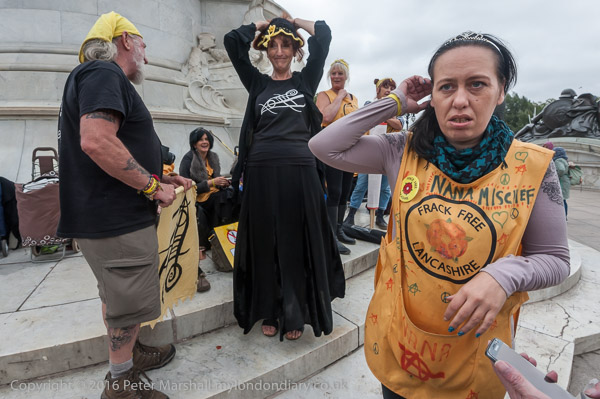
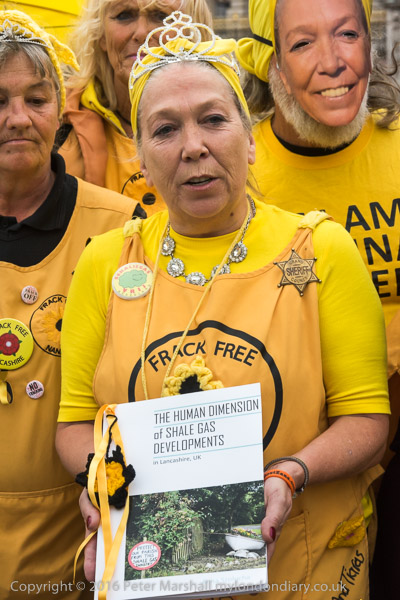
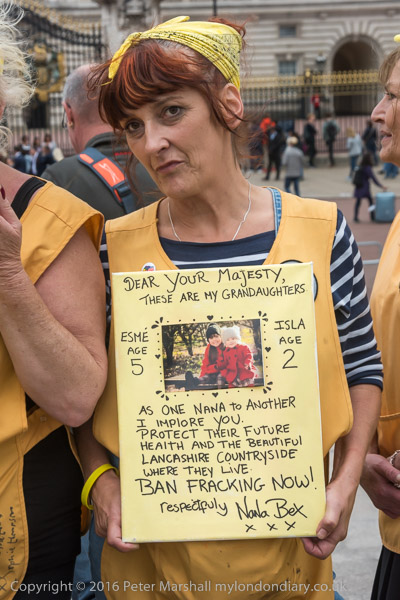
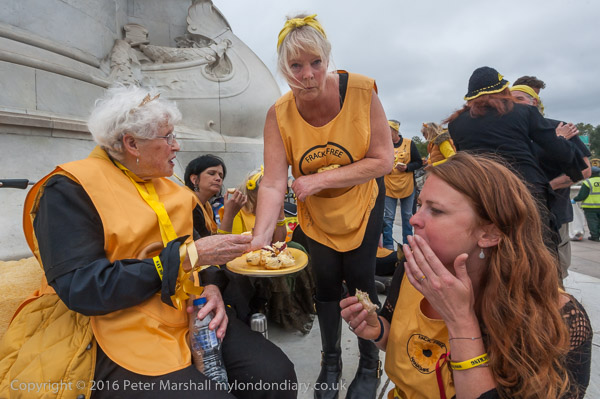
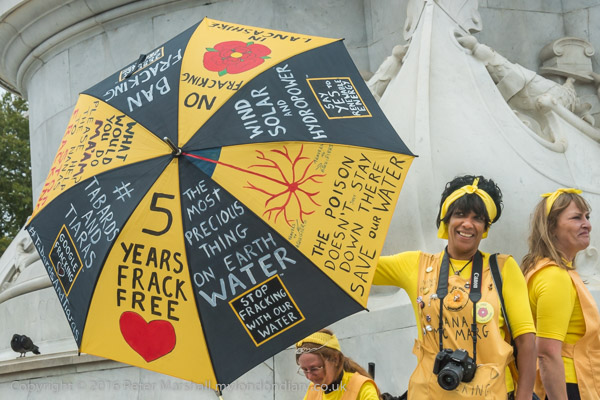
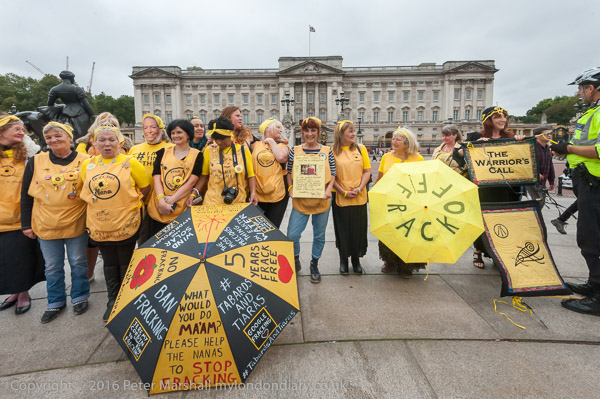
On Tuesday 27th September 2016, Lancashire’s famous anti-fracking Nanas – the Nanas from Nanashire – came to Buckingham Palace in a protest with tiaras and tabards as well as tea and scones to present a detailed report by Anna Szolucha on ‘The Human Dimension of Shale Gas Developments, and to call on Her Majesty as the most powerful grandmother in the land to stop fracking for the sake of future generations.

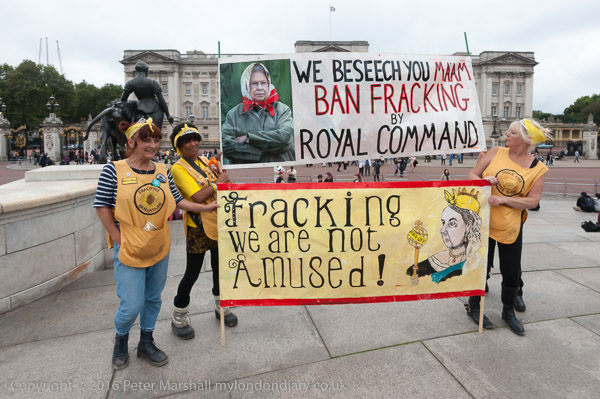
Of course they were not allowed into the palace but protested on the Queen Victoria Memorial fountain opposite the front of the palace, where police made clear to them that they were not allowed to display their banners. They were accompanied there by Green Party co-leader Jonathan Bartley. The Nanas came to petition the Queen as they say they have exhausted all other democratic openings.

Some, including leading campaigner Tina Louise Rothery put on tiaras for the protest, and after most of the police had left some did get out their banners and display them briefly before getting down to the serious business with tea and scones.

As well as banners they had come with umbrellas and posters, which had not been proscribed by the police. Though perhaps these were too small to be read by the Queen, though being a horse-racing owner she doubtless has a very good pair of binoculars and was possibly peering out through the curtains from one of the seventy or more windows across the front of the palace.

I stayed around for an hour or two talking with the protesters and photographing. Apparently shortly after I left a man arrived and tried to serve a court order on Tina Louise Rothery who is being pursued over a huge legal bill claim against her by fracking company Cuadrilla who took a case against her for “for camping in a field, doing no damage and exercising a right to protest peacefully“.

She was the only named defendant in the case which appears to have been taken in an attempt to prevent further protests, grossly inflating the costs of a called eviction carried out when the protesters had already left. She has consistently refused to cooperate with the court over payment, saying that the costs are totally illegitimate, and if Cuadrilla persist risked being sent to prison for contempt of court.

The Nanas kept up their protest in front of the palace for around 24 hours before going back to Lancashire. Perhaps King Charles will have greater sympathy with the aims of their protest.

More pictures at Nanas call on Queen to stop Fracking.


People’s Health, Chapel Furniture, Sutherland Square & Groce Bros

This continues my posts on my walk in Walworth on 8th January 1989. The previous post was Heygate, Shops, English Martyrs & St John the Evangelist


Municipal Offices, Borough of Southwark, Larcom St, Southwark, 1989 89-1b-34
Health Centre, Borough of Southwark, Larcom St, Southwark, 1989 89-1b-34

This building on the corner of Larcom Street and Walworth Road is now Larcom House and has a blue plaque for “Michael Faraday – 1791-1867 – Scientific genius and discoverer of electromagnetism’ put there by the London Borough of Southwark. It isn’t clear why they put it here as he was born in Newington Butts.

Built as a health centre in 1937 this Grade II listed art deco building is now office space and offers are invited for internal development behind the listed facades

Health Services Department, Metropolitan Borough of Southwark, Walworth Rd, Larcom St, Southwark, 1989 89-1b-36

This is the main frontage of the 1937 Grade II listed health centre, with statues of mother and children on the roof showing its association with family health, and the text ‘THE HEALTH OF THE PEOPLE IS THE HIGHEST LAW’. It appears to be still in use as the Walworth Clinic.

Houses Cleared, Browning St, Walworth, Southwark, 1989 89-1b-22

The building remained in use as a secondhand furniture business, Chapel Furniture, until it was demolished in 2016 and replaced by a new block. At 4 Downing St it was not actually a former chapel, but St Mark’s Church Hall, for St Mark’s Church in East Street, opened around 1874.

There was a much larger and well-known chapel a little further along Browning St, the York Street Chapel, an Independent or Congregational chapel built in 1790. It was renamed Browning Hall in 1895 after Robert Browning, the Victorian playwright and poet who was baptised here in 1812, and York Road was also renamed Browning St in the 1920s.

The church was very active in relief of poverty in the area and had a settlement on Walrworth Rd, opened in 1895 by Herbert Asquith. Charles Booth began a campaign here with a conference in 1898 and in 1899 Browning Hall became the headquarters of the National Committee of Organised Labour on Old Age Pensions, which eventually led to the Old Age Pensions Act of 1908. Browning Hall was demolished in 1978 when a council housing estate was built here.

King & Queen St, Walworth, Southwark, 1989  89-1b-24
King & Queen St, Walworth, Southwark, 1989 89-1b-24

Until the 1920s I think this street was simply one of many King Streets in London. Many London streets were renamed in the 1920s and 30s to try make their names unique in the city. There was at the time a Queen’s Head pub in the street, long gone.

Although my contact sheet suggests this was taken in King & Queen Street, there is nothing in the picture which allows me to confirm that. I’d walked some distance before I took my next pictures on the west of Walworth Road, and it could well have been another nearby street.

But this was certainly somewhere in Walworth and I think demonstrates the run-down nature of the area at that time. The rubbish on the grass here may have been in part because this was close to the busy East St Market which I avoided on this walk, though I did photograph there in later years.

Sutherland Square, Walworth, Southwark, 1979 89-1b-26

The oldest houses in Sutherland Square date from the early 19th century and most of the houses and railings are Grade II listed. The square was built on part of the former Royal Surrey pleasure gardens, but not long after it was completed the London, Chatham and Dover Railway line was opened on a viaduct across the east end of the square. The gardens continued as a the Surrey Zoological Gardens and Surrey Music Hall until sold for housing development in 1877, and a small area of them became a public park, Pasley Park, in the 1980s.

Southwark designated the Sutherland Square Conservation Area in 1982.

Sutherland Square, Walworth, Southwark, 1989 89-1b-14

The notice on the wall states ‘COMMUNITY GARDEN. PLEASE DO NOT STEAL PLANTS AND FLOWERS. THEY ARE PROVIDED FOR OUR ENJOYMENT by NO 12 the Sq’ . The notice has gone, but there is now a rather more healthy looking area of planting here on the corner just to the west of the railway viaduct.

Macleod St, Walworth Rd, Walworth, Southwark, 1989 89-1c-61

Macleod Street leads from Sutherland Square east to Walworth Rd, and this building on the corner is now a gym, with the ground floor on this corner being an Iceland store.

The building has a long frontage on Walworth Road, which now houses several shops. It was built around 1960 as a Co-operative store. Previously the site had been occupied by Grose Bros department store. This had started as a drapery business in the area by John Wellington Grose who was born in Padstow, Cornwall around 1840. He had two daughters and four sons, some at least of whom continued the business.

To be continued…


The first post on this walk was Elephant, Faraday, Spurgeon & Walworth Road.
Comments and corrections to these posts are alway welcome.


Veils, Ahava, Justice, Rentokill & A Walk

Veils, Ahava, Justice, Rentokill & A Walk - Fish on Regent's Canal
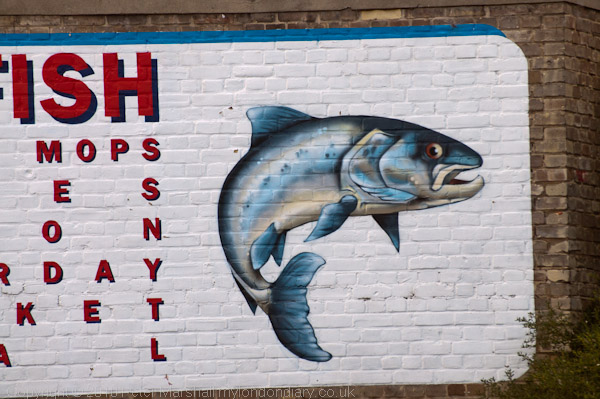
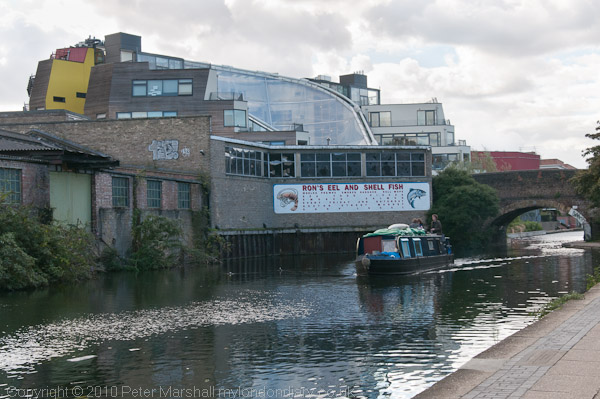
A fish on the Regent’s Canal

On Saturday 25th September 2010 I made a few pictures while travelling around London to photograph some rather varied protests and then took a walk mainly beside the Regent’s Canal in Shoreditch and Haggerston before going home.

Veils, Ahava, Justice, Rentokill & A Walk

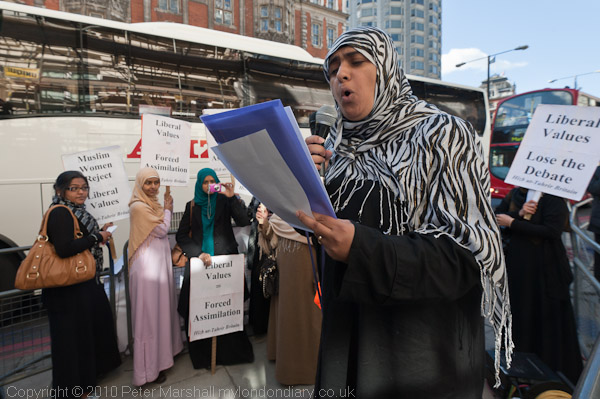
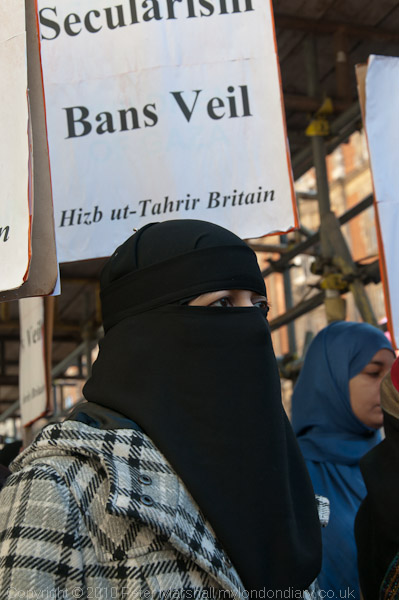
My day in London began with a bus ride from Clapham Junction to Knightsbridge, where around 80 Muslim women from Hizb ut-Tahrir Britain had come with a letter to the French Ambassador protesting the French parliament decision to ban face veils.

Veils, Ahava, Justice, Rentokill & A Walk

Although the ban prohibits all face coverings, it is mainly aimed at Muslim women who wear the niqab or burkha. Both were then uncommon in France outside of Paris and some Mediterranean coast cities and some estimate they were only worn by around 2000 of France’s 2-3 million Muslim women, most of whom, like the great majority of women at the protest wear headscarves rather than face coverings.

Judging from the slogans, placards and speeches this was more a protest against ‘liberal values’ and “the objectification and sexualisation of women’s bodies in pornography, lap-dancing clubs, advertising, and the entertainment industry, all permitted under the premise of freedom of expression and driven by the pursuit of profit in Western societies.”

The French ban seems an unfortunate restriction of the rights of women to decide how they wish to dress, but is also a measure to oppose the power of clerics and others to limit the freedom of women by forcing them to wear face coverings, which seems to to be fully in line with the French tradition of liberty. And being a liberal and secular society doesn’t necessarily mean giving free rein to the exploitation of women or others for profit. We can oppose these without wanting to impose the kind of restrictions on others that groups such as Hizb Ut Tahrir advocate.

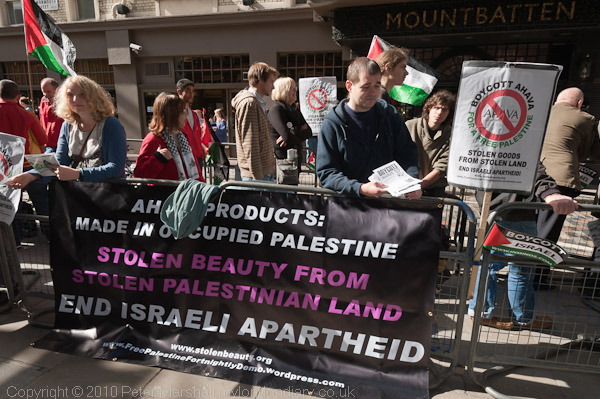
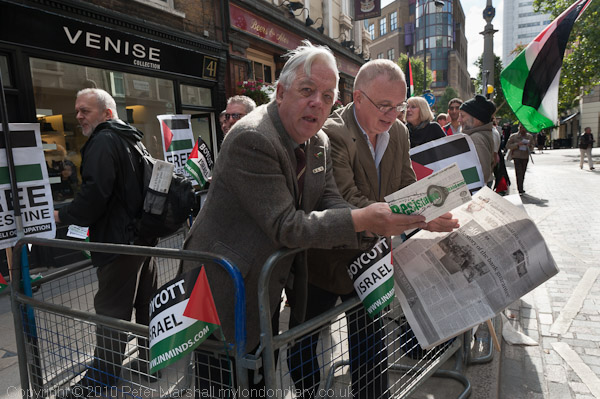
From Kensington I went on to Covent Garden where Pro-Palestinian demonstrators were holding another of their fortnightly demonstrations outside the Covent Garden Ahava shop which sells products manufactured in an illegal Israeli settlements on occupied Palestinian land.
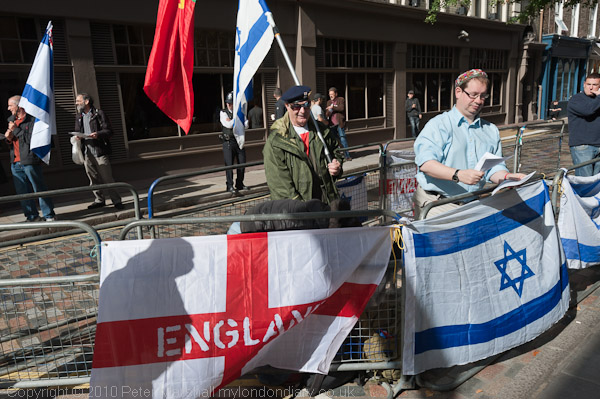
As on previous occasions their protest was met by a smaller counter-demonstration by supporters of the right-wing English Defence League (EDL) and Zionists. At previous protests there had been some attacks by the EDL on the protesters, but while I was present they were content with shouting.
The Ahava protests are part of an international ‘Stolen Beauty’ campaign organised by ‘Code Pink’, a women-initiated grass-roots peace and social justice movement which began when American women came together to oppose the invasion of Iraq. They say that Ahava “has openly flouted tax requirements by exploiting the EU-Israel trade agreement and violates UK DEFRA guidelines in respect of proper labelling.”

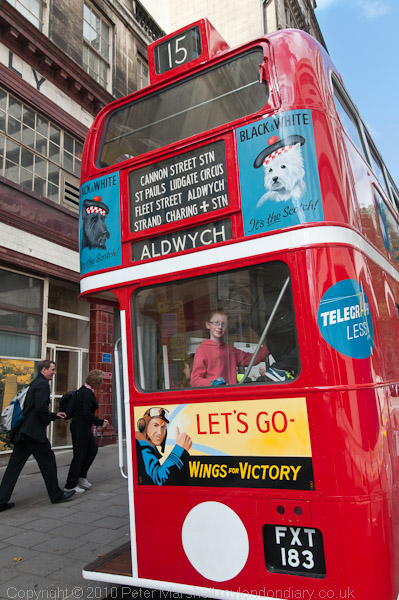
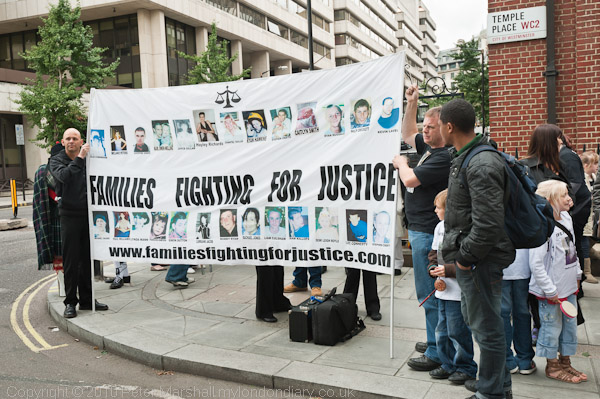
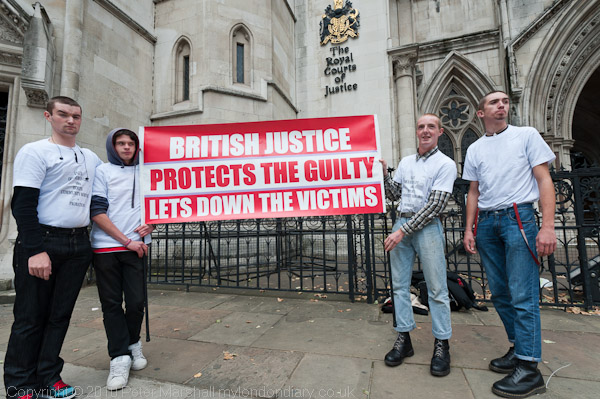
I walked down to the Embankment, pausing to photograph a rather fine Routemaster bus with vintage advertising, and a few boats taking part in the ‘Great River Race’. In Temple Place I met protesters from ‘Families Fighting For Justice’, members of families of murder victims, who were calling for tougher sentences for murder – with life sentences meaning life imprisonment.

Some of the stories I heard from them were truly heartbreaking and showed why many ordinary people have lost faith in our justice system. Although I don’t feel that their ‘Life 4 A Life’ campaign would actually do much if anything to solve the problem, clearly some action is called for, both in improving child protection by our social services and also in how we regulate behaviour on our streets. Part of this is better policing, but increased spending on youth services and community support is vital. Instead we got years of austerity cutting these and other essential services.

I left the march as it headed off towards a rally in Waterloo Place; it was smaller than expected and police insisted they march on the pavement rather than taking to the road, which reduced its impact.

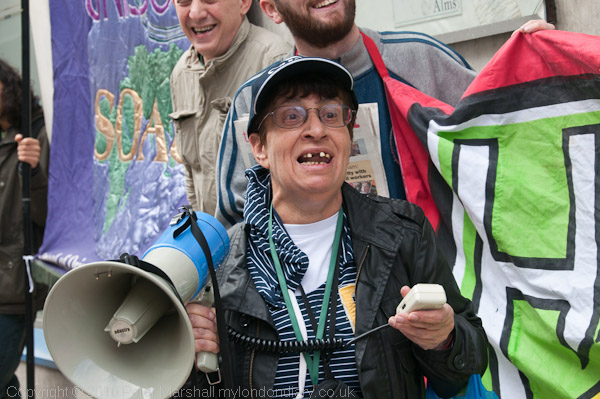
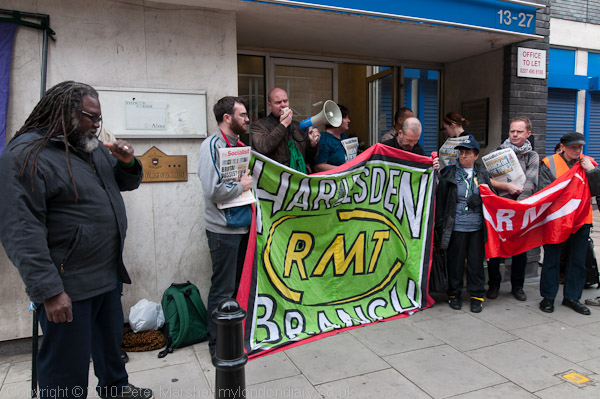
I was on my way to Old Street where the RMT and other unions were holding a short demonstration outside the Initial Rentokil Offices in Brunwick Place as the start of a campaign against the company’s union-busting activities towards its cleaning staff.

The RMT say Initial Rentokil intimidates and bullies its members and deliberately employs workers whose immigration status is doubtful so that they can pay minimum wages and provide sub-standard working conditions, often requiring them to work without proper safety equipment or precautions. They allege that workers who question their rights or attempt to organise have been reported to the immigration authorities who have then raided the workplace. The protest was also supported by members of Unite and Unison.

It was still before 3pm when the rally ended and I decided to take a walk before going home. I walked roughly north to the Regent’s Canal.

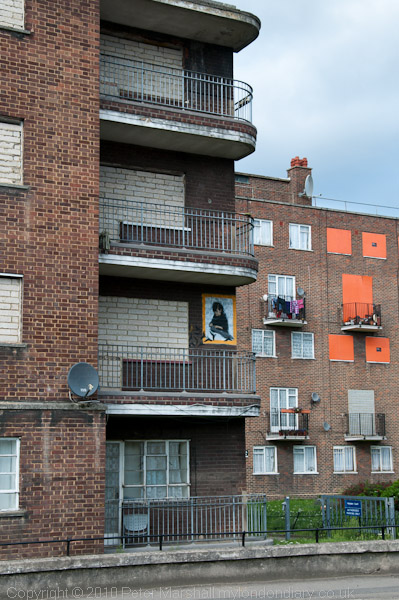
On the Haggerston Estate I found flats bricked up as people have been moved out to redevelop the estate. They are said to be moving back when new social housing is built – along with some at market prices.

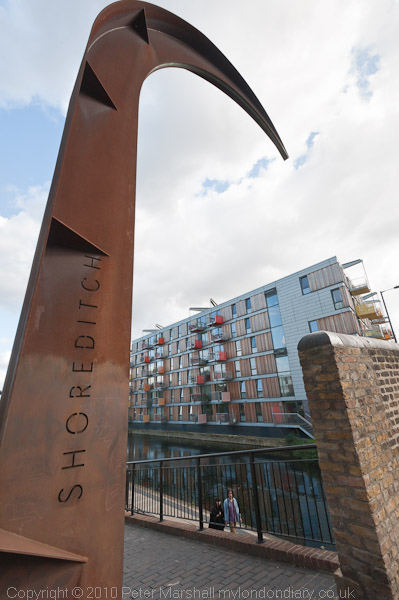
Shoreditch and Haggerston were both very much up and coming areas, with some expensive flats beside the canal.

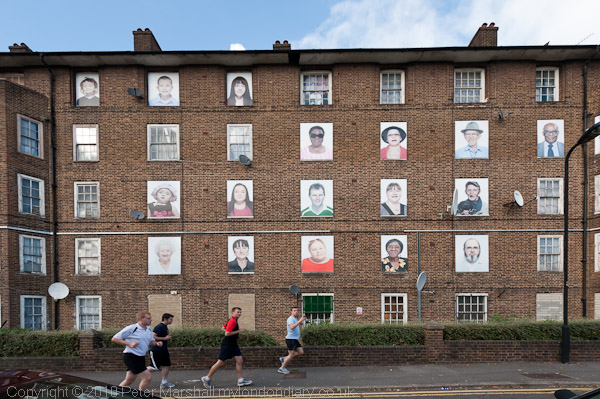
One of the reasons to walk this way was to see a large art work on the long block of flats by the canal, ‘I am Here’, one of London’s largest art installations., with giant portraits of the residents.

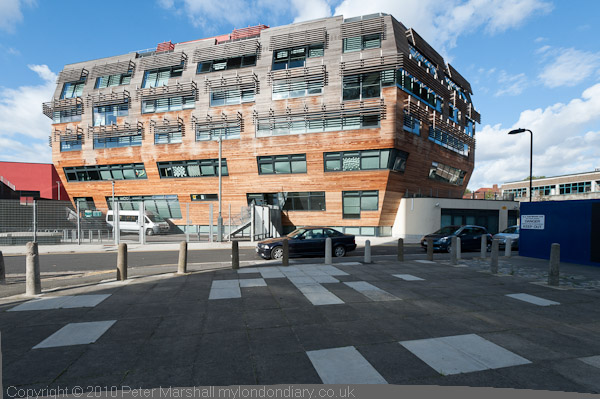
But I was also keen to photograph other buildings in the area, including the Bridge Academy.

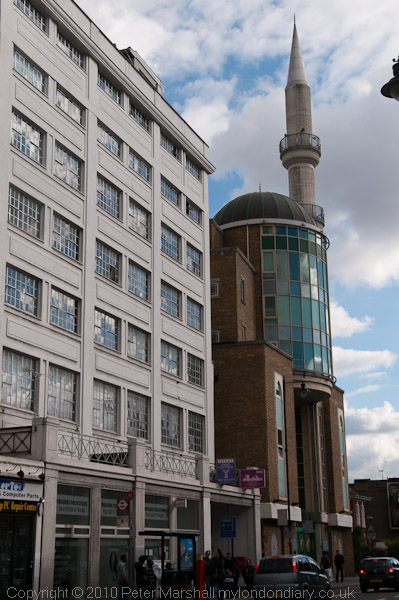
And, on Kinsgsland Road, the Suleymaniye Mosque.

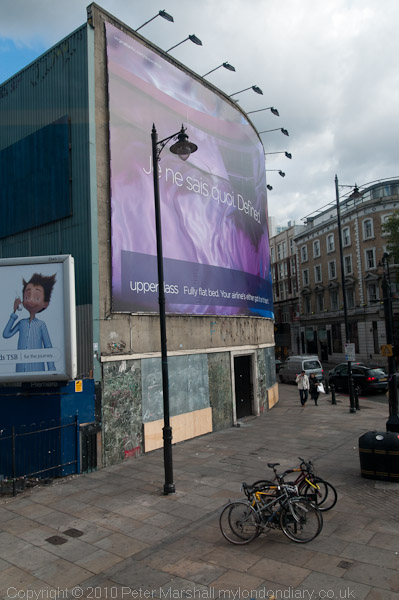
Even when finally I got on the 243 bus I was still taking pictures, including a rather sad view of the former Foundry, a lively venue where I had been to a great photo show not long before, now boarded up and covered with a giant advertising hoarding,

More pictures from my walk and the protests on My London Diary:

Hizb ut-Tahrir Protest French Veil Ban
Protest Against Illegal Israeli Goods
Families of Murder Victims Call For Justice
Protest over Initial Rentokil Union Busting
Walking Around London