Dalston, Shacklewell and Stoke Newington – 1989

This post is the second and final part on my walk in Hackney which began with Dalston Doorcases to Marie Lloyd.

German Hospital, Chapel, Ritson Rd, Dalston, Hackney, 1989 89-7k-32

Founded in 1845 with German staff to provide medical services to German-speaking immigrants who had settled in parts of North London. English staff took over when the German staff were interned in 1940. It became a part of the NHS in 1948, and only closed in 1987. The Grade II listed buildings survive and were converted into affordable flats.

Man on van, Ridley Rd, Dalston, Hackney, 1989 89-7k-33

I wandered up into Ridley Road where business was beginning to slack off in the market for the day. This man having a cigarette sitting on the bonnet of a van saw my camera and asked me why I was taking photographs. We had a short talk and he insisted I take his photograph, so here he is.

Public Washing Baths, Shacklewell Lane, Shacklewell, Hackney, 1989 89-7k-34

I continued north to Shacklewell Lane and took this picture of the Public Washing Baths, built by the Metropolitan Borough of Hackney in 1931 when many houses in the area were without bathrooms. Many poorer families and single people lived in one or two rooms sometimes without any running water or gas supply in their rooms and shared lavatories and kitchens with other tenants of the buildings.

This bath house provided 24 baths for men, 16 for women and they will have been well used in the early years before slum clearance provided better housing for many in the area. They were damaged by bombing in 1940 and reopened in 1942 and only closed some time in the 1960s. It is now occupied by the Bath House Children’s Community Centre who bought it from Hackney Council in 2002. This is now part of the St Mark’s Conservation Area, designated in 2008.

Works, 124-128 Shacklewell Lane, Hackney Downs, Hackney, 1989 89-7k-36

Built in 1932 as the Albert Works for the printers Henry Hildesley by architects Hobden & Porri, it later became the Rona Fashions House of George Gowns Ltd, but by 1989 their name had been removed from the facade leaving the marks you can see on the horizontals of the building. I think it was then still in use for the rag trade but my picture has the end of the names ‘RONA ROON… and Bab… hidden by the trees of Shacklewell Green.

Robert William Hobden who died in 1921 and Arthur George Porri (1877-1962) whose practice was based in Finsbury Square were responsible for many commercial and public buildings across London in first third of the twentieth century but seem suprisingly little known – perhaps a good subject for some academic research.

Henry Hildesley the printers are best known for the many posters they produced, including some for London Transport and HMSO, with many produced to help the war effort in the 1940s. The building, now called Cotton Lofts is in the Shacklewell Green conservation area designated in 2018 and is now flats.

Houses, Perch St, Hackney Downs, Hackney, 1989 89-7k-22

I can no longer remember the route I took to make the three final images in this post, but they were all made on 27th July 1989.

This terrace was built in 1882 and the conservation area statement calls it and other similar buildings in nearby streets “attractive and architecturally interesting”.

Former synagogue, Montague Road Beth Hamedrash, 62a Montague Rd, Dalston, Hackney, 1989 89-7i-16

Founded in 1910, this Strictly Orthodox Ashkenazi synagogue owned by the Federation of Synagogues was closed and the membership merged with the West Hackney Synagogue in 1981. Used for some years by Roots Pool Community Association and Dalston Community Centre it was eventually converted into flats as Montague Court.

Shops, Cazenove Rd, Stoke Newington, Hackney, 1989 89-7k-26

Possibly I may have taken a bus to pay a visit to Abney Park Cemetery, close to where this final image was made though if so I took no pictures on this occasion, or perhaps just to make this picture.

Shops were added in the front gardens of these houses built in 1878, and that now housing the artist’s house Madame Lillie was initially a carpentry workshop owned by the Wright family. In 1917, when Mrs Wright was a widow, her daughter Lillie opened a corsetry shop, which continued in business until she retired in 1970. In 1973 she sold the shop and house to her young artist nephew Paul David Wright. He converted the premises into studios for artists and a gallery space.

You can read the first part of this walk at Dalston Doorcases to Marie Lloyd.

Hong Kong, Fur, Brixton & Carnaby – 2019

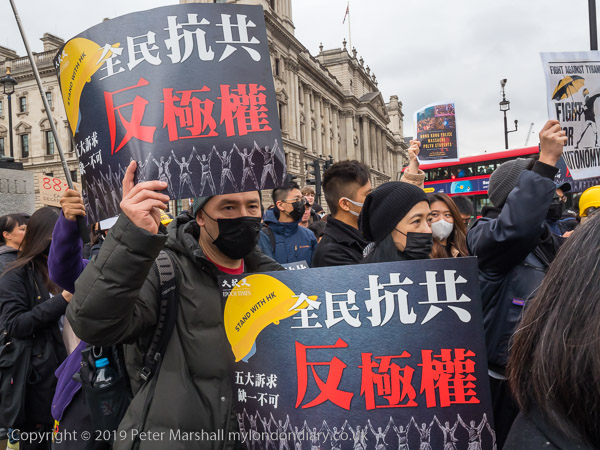
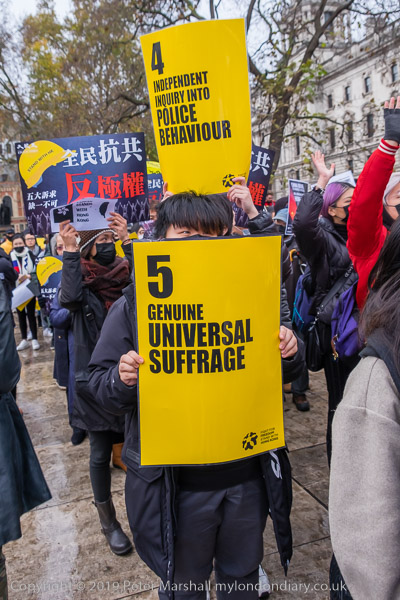
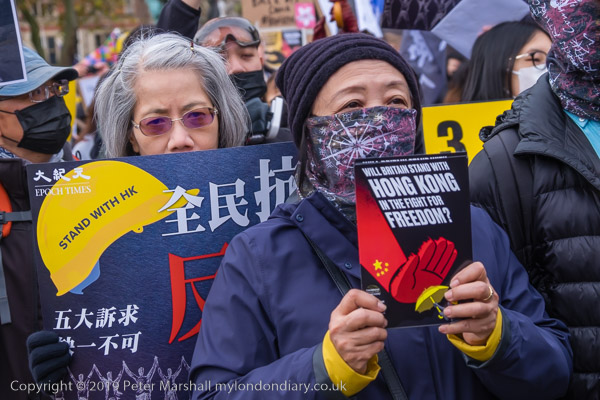
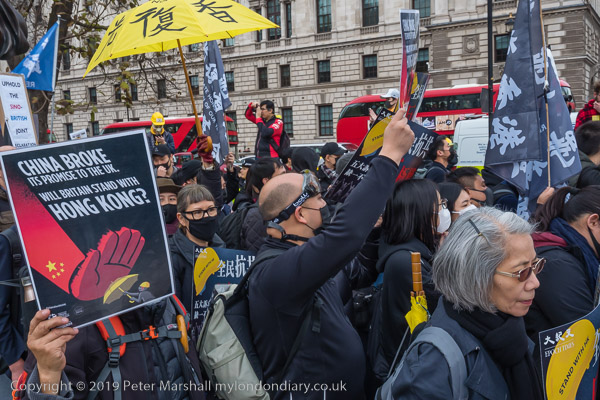
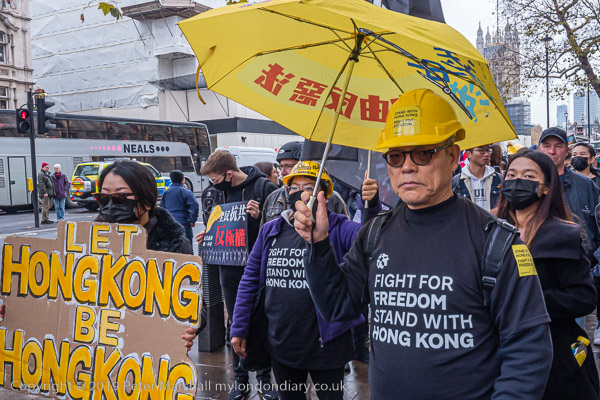
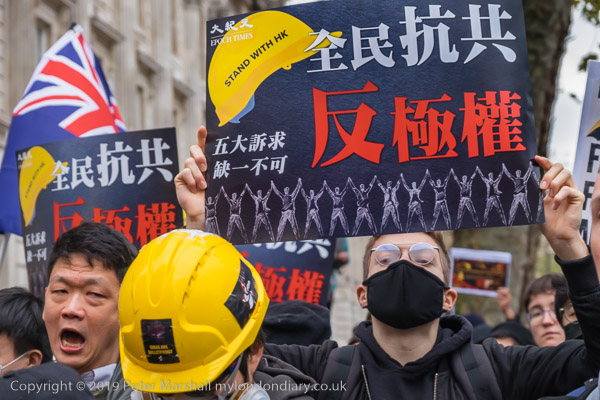
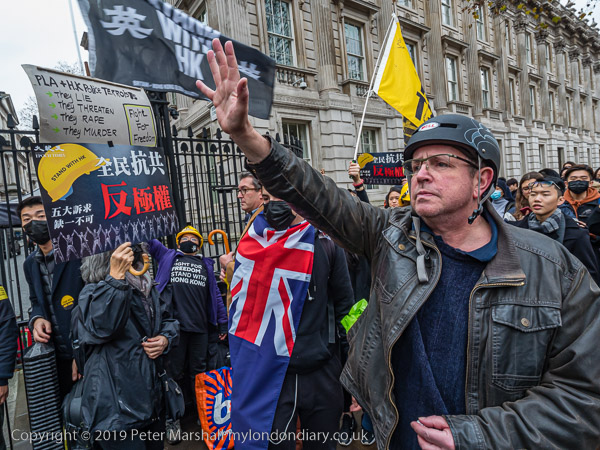
Hong Kong, Fur, Brixton & Carnaby – There were five events listed in my diary for Saturday 23rd November 2019, but I only photographed two of them, the Stand With Hong Kong march and rally and the annual March Against Fur, though I missed the others. But I did take a couple of short walks. I can’t remember now why I went to Brixton, but my trip to Carnaby Street was to see a small exhibition in a shop I had three pictures in.


Stand With Hong Kong – Westminster

Hong Kong, Fur, Brixton & Carnaby

Sadly the idea that the British Government could in 2019 have any real influence on China over the breaches of Sino-British Joint Declaration agreed in 1984 when Margaret Thatcher was in power was always an illusion.

Hong Kong, Fur, Brixton & Carnaby

In 2014 the Chinese government had said it regarded the agreement had already met its objectives following the handover in 1997 and they regarded it as now having no legal effect. The British government disagree but have no possibility of doing anything to change Chinese minds or actions.

Hong Kong, Fur, Brixton & Carnaby

So while I had great sympathy with people of Hong Kong who had been protesting there as well as their supporters in foreign countries including UK, it was clear that these protests would not change policies in Hong Kong.

Hong Kong, Fur, Brixton & Carnaby

Finally the British government had to admit this and it led to the setting up of the Hong Kong British National (Overseas) visa scheme in 2021, which allowed Hong Kong British National (Overseas) citizens (BNOs) and their close family members to move the the UK for five years after which they can apply for leave to remain and, after a further year for British citizenship.

Perhaps protests such as these did influence the government in how the scheme was set up, with a fairly generous interpretation of the rules governing family members, although the route to becoming a British citizen seems unnecessarily long and complicated.

BNO status was set up by an Act of Parliament following the 1984 declaration for Hong Kong residents who wished to retain a connection with the UK after the handover to China and had to be claimed before that too place in 1997. About a third of Hong Kong residents had BNO status and the scheme would also allow a similar number of their families to get visas.

Although the total number of people eligible to come to the UK was thought to be over 5 million, the number expected to take up the offer was expected to be around 320,000 and so far is only roughly half this. Although much cheaper than other visa schemes it remains quite expensive as a health charge is also applied and for a family with one child the total costs over the period to obtain British citizenship is around £20,000.

Stand With Hong Kong


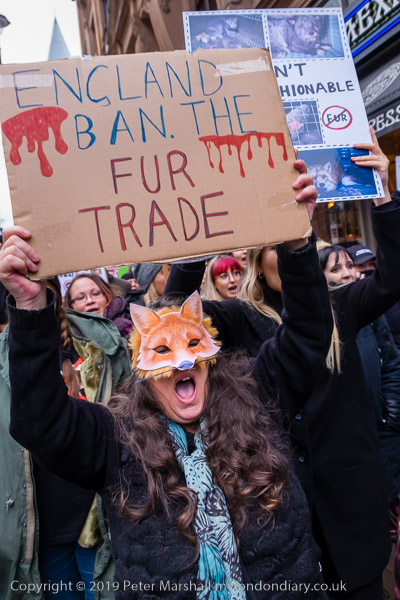
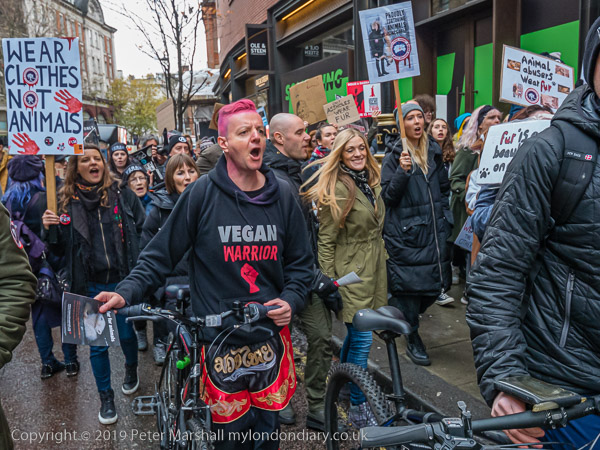
March Against Fur 2019

After a rally in Leicester Square the march set off through central London.

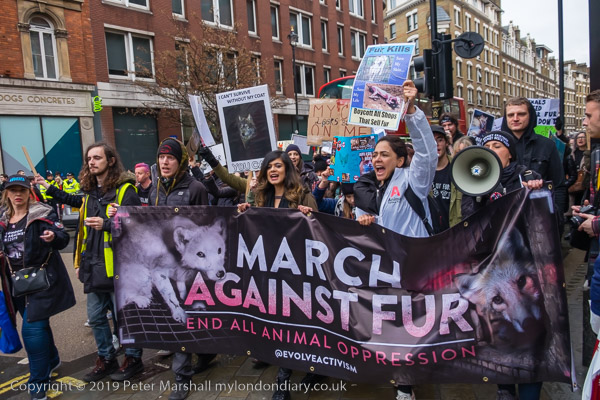
The march went along the pavement along Charing Cross Road, which was extremely crowded.

Though it spilled out onto the road.

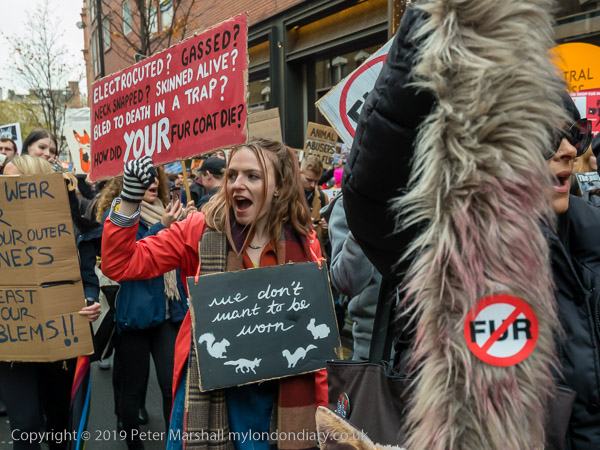
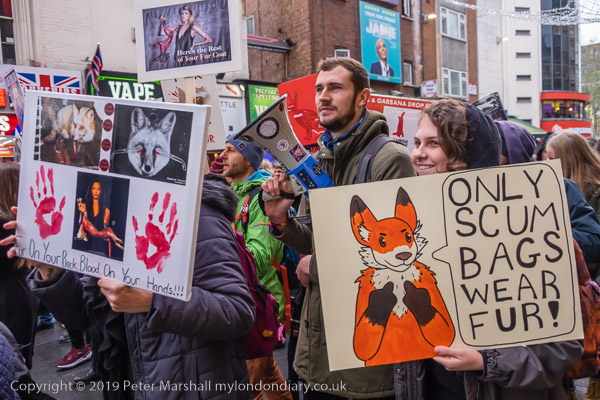
Although the main focus of the many posters was against fur and the ending of the fur trade, the main banner called for an end to all forms of animal oppression and many on the march were vegans.

I left the march as it turned down Shaftesbury Avenue for a tour of the West End and stores selling fur products, calling for an end not just to using fur in clothing but against all exploitation of animals of all species, whether for meat, dairy, wool, leather or other products.

More pictures at March Against Fur 2019


Brixton & Carnaby Street

First Child by Raymond Watson, a memorial to 116 children murdered by the Afrikaner police force in Soweto in 1976 was the first public sculpture by a Black artist in the UK, commissioned in 1998 by the 198 Gallery.

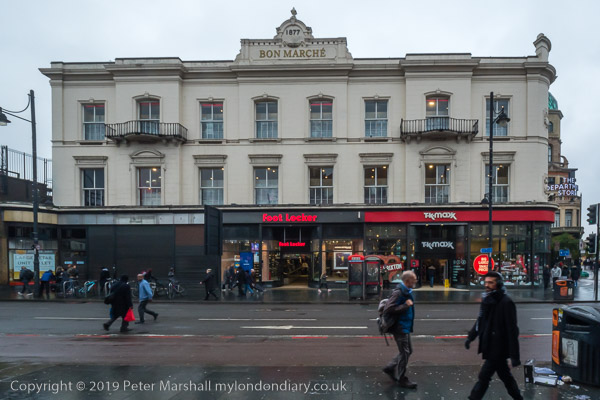
Bon Marché, Britains first purpose built department store, was opened in 1877. Its founder went bankrupt but the store continued in business with various owners until 1975. Since then it has been refurbished with almost all ground floor detail lost.

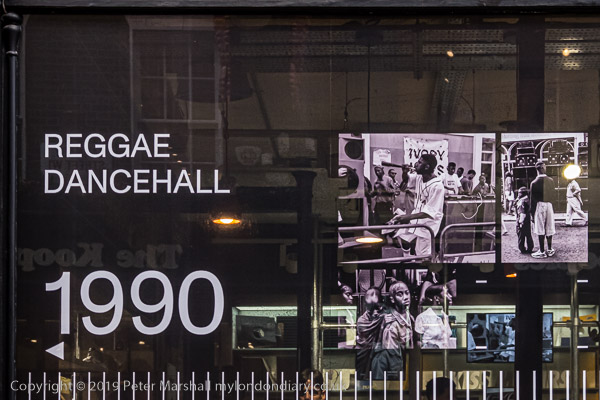
I paid a brief visit to Carnaby Street where 3 of my pictures were in the window of a shop called Size? in a temporary display celebrating the apparently iconic Nike Air Max 90 introduced in 1990. I took the three rather maroon images in this picture of the window and the one at the right, taken at Notting Hill Carnival in 1990 shows a man in rather long shorts wearing those trainers. There were ten panels in the display, the other nine using later pictures taken by other photographers.

Brixton
Carnaby Street Show


Dalston Doorcases to Marie Lloyd

Dalston Doorcases to Marie Lloyd – On Thursday 27th July 1989 I took the North London Line to Dalston Kingsland and crossed the road into Ridley Market and walked along Colvestone Crescent and on to Montague Rd. I can’t now remember what had brought me to North London for this brief interruption to my series of walks south of the river.

Doorway, Montague Rd, Dalston, Hackney, 1989 89-7k-61

Here there are four houses on both sides of the street with similar doorways to the pair in my photograph with these odd decorative figures supporting the lintel. Those further down the street have simpler largely geometrical designs.

I was unsure what to call these muscular male figures, hand on hips staring down at the ground with what appear to be victory wreaths of laurel leaves around their heads and a pair of rather fishy looking tails. A long and detailed study published by the Hackney Society, The Victorian Villas of Hackney by Michael Hunter tells me they are mermen, and provides other examples of ‘bizarre doorcases’ in the Victorian villas of the 1850s and 1860s in Dalston. These date from 1861-6.

Shopfront, Cecilia Road, Dalston, Hackney, 1989 89-7k-63

There are several houses close to Dalston Lane at the south end of Cecilia Road that have converted shopfronts with consoles matching that at the top right of this shop and this was one of these.

Although the advertising for the News of the World and Silk Cut suggests this was once a newsagent and tobacconist, it looks as if it was by 1989 a junk shop.

Eagle Shipping Services, 168, Dalston Lane, Dalston, Hackney, 1989 89-7k-65

This building on the corner of Stanford Mews is still there and has kept its decorative iron balcony railing though not the Eagle Shipping Services advertising and graphics. Its upper floor is now simply painted white while the ground floor has been converted into a ‘rustic health food cafe & shop‘, Healthy Stuff.

Jas. Elves, marble mason, Carrara House, 164, Dalston Lane, Dalston, Hackney, 1989 89-7k-66

James Elves was a marble mason and called his premises at 164 Dalston Lane Carrara House, after the area in Italy famous for its marble. Born in Shoreditch he lived and worked here with his family from around 1900 at least until 1930.

The house is still there and also its porch, but the tiles – presumably marble – of the front path have been replaced with duller slabs.

Houses, 112-4, Greenwood Rd, Dalston, Hackney, 1989 89-7k-53

A few yards south of Dalston Lane, these houses in Greenwood Road were looking a little the worse for wear in 1989 but are considerably smarter now. With three stories and a basement these houses are now largely converted into four flats.

Doorways, 96-98, Graham Rd, Dalston, Hackney, 1989 89-7k-42

I continued south to Graham Road where I found more of Hackney’s remarkable doorcases. The left hand door is 98B as I think there will he a separate door in the area below to the basement flat.

Michael Hunter has a picture of a similar pair a few doors down where he states that the Roman standards are based on pattern books of classical architecture, “but the extraordinary swags of solidified shells over the doors of… Graham Road defy analysis.

The unfortunate door at right has since been replaced, but with another design that while preferable is still not in keeping with the building.

Doorways, 96-98, Graham Rd, Dalston, Hackney, 1989 89-7k-45

A closer view of one of the swags showing more clearly the shells and at the centre a lion’s head.

Marie Lloyd, plaque, 55, Graham Rd, Dalston, Hackney, 1989 89-7k-46

Finally for today, a rather simpler doorway in Graham Road with the GLC plaque recording that Marie Lloyd, Music Hall Artiste lived here. The dates are those of her life, 1870-1922.

Born in Hoxton in 1870 as Matilda Wood, she made her first appearances on stage when she was 14, taking the stage name Marie Lloyd the following year. So many of the old music hall songs we now know were made famous by here, not least for her remarkable use of nuance and double-entendre as well as displaying her undergarments in a way that respectable Victorians found deplorable but music hall audiences loved.

She moved into this house after her marriage in 1887 – but the marriage was not happy for long. After a disastrous bust-up she moved out from Graham Road in 1894.

As she sang ‘A little of what you fancy, does you good‘ but in her life she certainly became ‘one of the Ruins That Cromwell Knocked About a Bit‘ and at her funeral, thousands took the advice of ‘My Old Man‘ and followed the van to her burial from Woodstock Road in Golders Green to Hampstead Cemetery. Train journeys recently have often left me wondering ‘Oh Mr. Porter, what shall I do?

More from his walk shortly.


Our Flag & Olympic Site 2007

Our Flag & Olympic Site – On Saturday 17th November 2007 I had a more varied day than usual, beginning with a march my football supporters, then a walk around the outside of the then fenced off Olympic site followed by an Olympic-related symposium. I can’t remember anything about the symposium, though I think it was almost certainly critical of what was being done to London, its future being sacrificed to a highly commercial sports festival.


March For Our Flag – Westminster

Our Flag & Olympic Site 2007

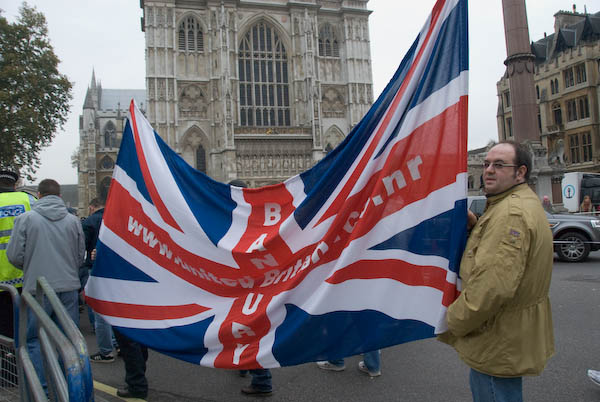
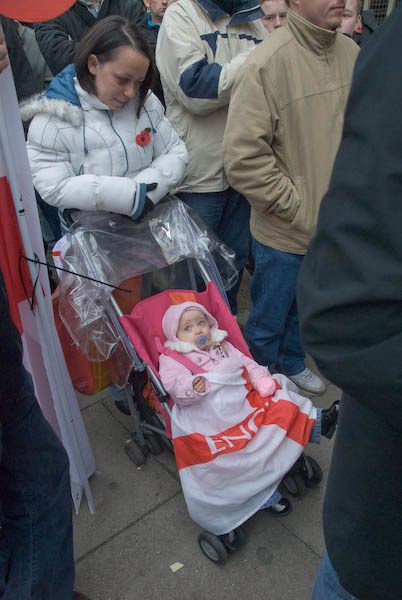
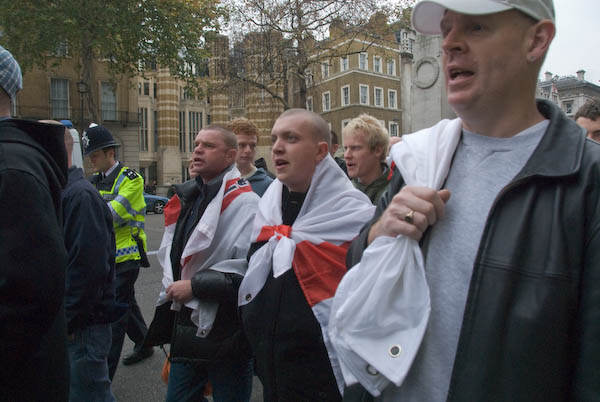
A few months earlier in February 2007 I’d photographed and written about a ‘March for Our Flag’ organised by football supporters, particularly Tottenham fans. The main group backing that – and the repeat march this month through Westminster – was the United British Alliance. There was a suggestion that, although a patriotic event, it was at least trying to detach itself from the racism of the far right.

The UBA web site described itself as “a multi-ethnic, multi-faith organisation with a passionate interest in reclaiming our once proud nation from the grip of international terror and political correctness gone-mad,with a view to re-installing some pride in our communities and way of life.”

Our Flag & Olympic Site 2007

As I commented in November 2007:

Although individuals may well be sincere in these attempts, it isn’t so easy to shake off this impression. Some of the links on the [UBA] web site are to people and groups who I would consider as having extreme views, and the discussion you can find on football forums and elsewhere seems clearly Islamophobic.

Our Flag & Olympic Site 2007

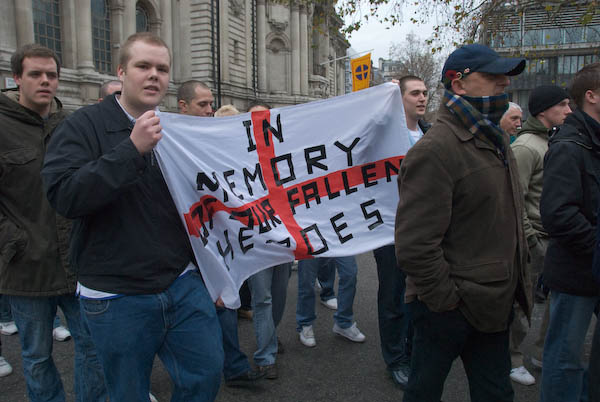
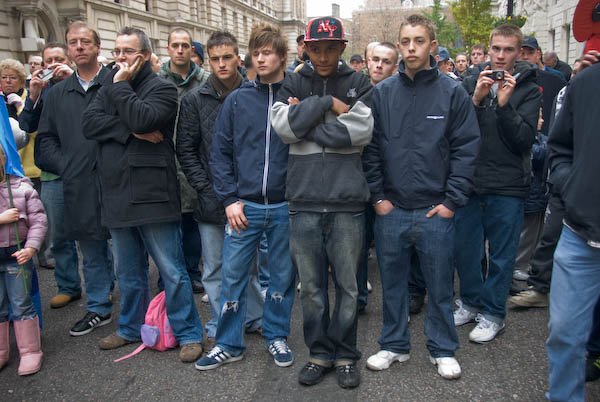
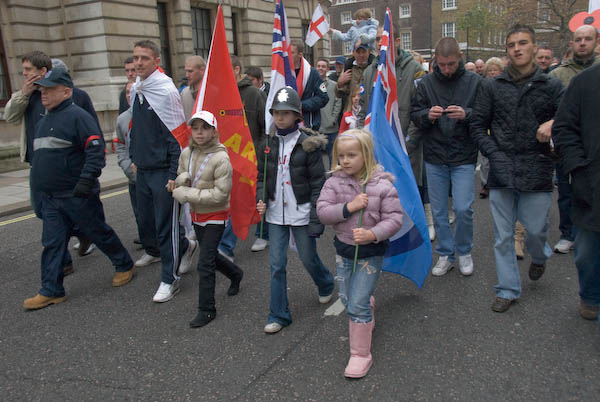
Although there were even fewer supporters this time – well under 200 – there did seem to be a slightly calmer attitude and a slightly wider range of people attending, although still only one or two black faces.

Our Flag & Olympic Site 2007

Curiously enough, on the UBA web site galleries, all the marchers have their faces – or at least their eyes – blacked out. The only people not given this treatment are the police escorting the event.

Our Flag & Olympic Site 2007

As I’ve often said, the only way to protect our freedom is by being free. That includes standing up for what you believe – and being seen to do so. So I’m totally opposed to this kind of censorship of the news. Freedom of expression is a part of the British heritage of which I’m proud. As too are Morris Dancing, Association and Rugby football along with the many other things, including the way we have successfully integrated elements from other cultures and religions into our way of life over the years – and continue to do so.

My London Diary

My pictures from the 17th November do show one or two families and their children took part and I can see just one darker face among the young men. In view of recent events and the behavior of Suella Braverman my final two sentences are very appropriate and very relevant: “We all need far more positive messages and actions from our politicians to lead us all – including Britain’s muslims to a new and united vision of our society. Islamophobia needs combating, not encouraging.”

More pictures on My London Diary


Stratford – Olympic Edge

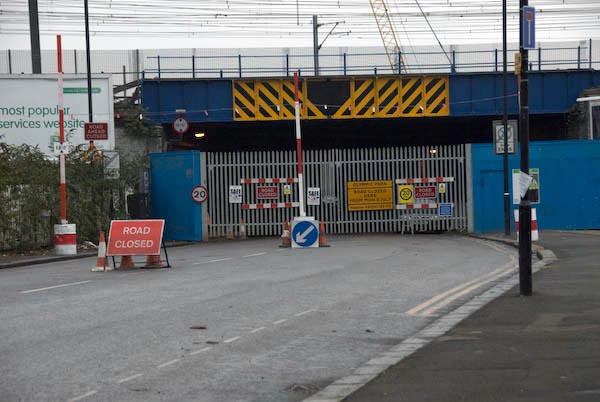
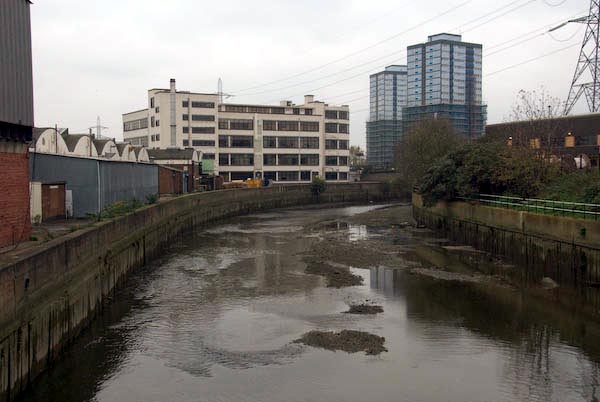
I walked out of Stratford Station and across the footbridge leading to the Carpenters Estate and on to Bridgewater Road, a dead end with a bridge across the tidal Waterworks River.

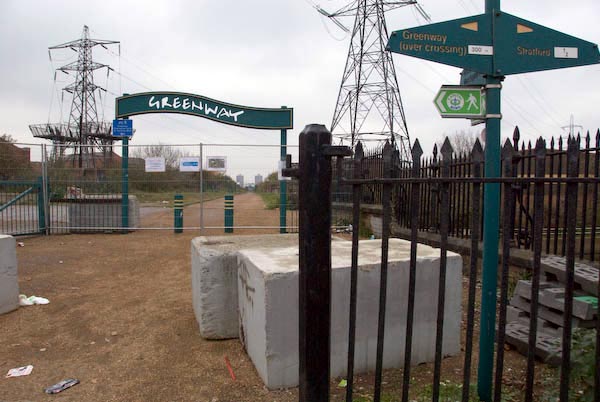
The road to Hackney Wick is firmly closed and so too was the Greenway just a few yards from the entrance on Stratford High Street.

You could walk down it just a few yards, and I took another picture looking back along the Waterworks River towards Bridgewater Road where I had been standing earlier.

I took a few pictures around the edge of the area, then walked back along the High Street towards the centre of Stratford.

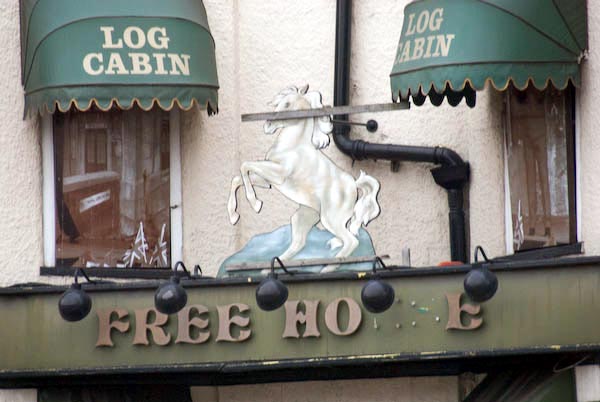
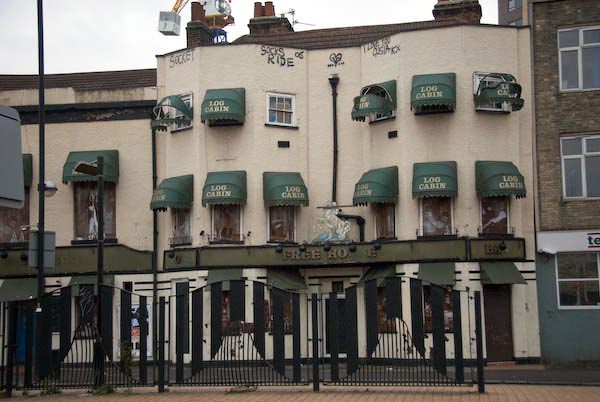
The Log Cabin pub had been here at 335-337 High Street, Stratford as a coaching inn since at least the mid-18th century, though it was known as The Yorkshire Gray before being renamed around 1997 when the hiddeous green excresenes were added. The building was Grade II listed in 2003, almost certainly saving it from demolition and is thought to date from around 1740, and though parts were rebuilt in the late nineteenth century much of the interior had survived more or less intact. It closed in 2001 and is now a hotel.

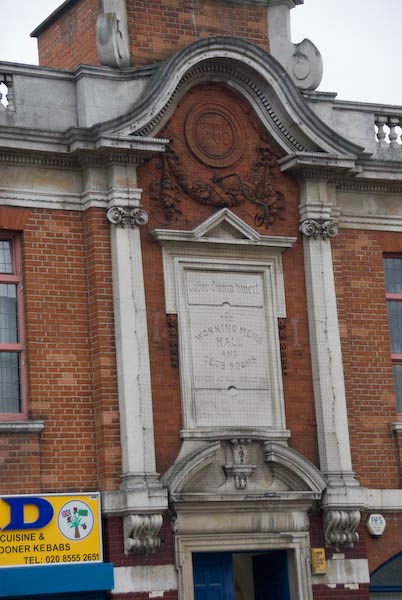
My final picture was at The Working Mens Hall and Club Rooms on Romford Road, founded in 1865 and rebuilt in 1905, with the motto Labor Omnia Vincit (Work Conquers All). Perhaps it was here that the symposium was held, and I have a very vague recollection of a talk by Iain Sinclair, although that could have been on quite a different occasion.

A few more pictures here.


Bonnington Square and Kennington Lane – 1989

Bonnington Square and Kennington Lane – The final set of pictures from my walk on 19th July 1989 which began with Stockwell Park, Bus Garage, Tower and Mason. It continues from my post More From Stockwell & South Lambeth.

Bonnington Square, Vauxhall, Lambeth, 1989 89-7h-31
Vauxhall Grove, Bonnington Square, Vauxhall, Lambeth, 1989 89-7h-31

At the end of Langley Road I came to a remarkable area of Vauxhall. Built in the 1870s for railway workers Bonnington Square was in the late 1970s compulsorily purchased by the GLC who intended to demolish it and build a school. But one resident, a Turkish shopkeeper, took legal action to prevent the demolition and eventually the GLC gave up. Squatters moved in to occupy almost a hundred emptied properties, setting up a vegetarian cafe, a wholefood shop and bars and a community garden.

Bonnington Square, Vauxhall, Lambeth, 1989 89-7h-32

The squatters formed a housing co-op and eventually negotiated a lease and in 1998 were able to buy the buildings from Lambeth Council. Most are now still owned by low-rent housing cooperatives. A few are privately owned, I think including some where the GLC had not managed to get residents to move out. The gardens are still collectively run, as was the café.

Bonnington Square, Vauxhall, Lambeth, 1989 89-7h-33

The story is told in The Mavericks of Bonnington Square which also includes a 20 minute film produced around 2011 which gives an interesting view of the area and the incredible transformation made by those who moved in, and also includes many of their photographs from the early days. People had more or less to rebuild many of the properties and developed an incredible community spirit in doing so. The area is now described as a “botanical oasis hidden in the midst of Vauxhall” and includes two community gardens, one on an area destroyed by wartime bombing.

Bonnington Square, Vauxhall, Lambeth, 1989 89-7h-31

I went to Bonnington Square quite a few times, often taking a short wander through on my way from visiting friends who lived in a council flat close to the Oval to Vauxhall Station, not to take pictures but just because it was an interesting diversion if I had a few minutes before my train came, and I also went to some of the festivals there.

St Peters, Vauxhall, Kennington Lane, Vauxhall, Lambeth, 1989 89-7h-26

I often walked past St Peters Church and went inside a few times, including to a service led by a trendy young cleric in black leathers. Now I think worhips there is rather different. The Grade II* listed church built in 1863-4 was the first major town church by the renowned British Gothic Revival architect John Loughborough Pearson. It has magnificent interior and a fine exterior; shortages of cash meant the church was rather plainer than Pearson’s orginal plans, probably much to its advantage. The site was given free by the developer of Vauxhall Gardens on the provision that all seats in the church should be free and not rented. It has a fine acoustic and now hosts concerts as well as services.

Around the corner linked to the side of the church are the schools built a few years earlier (also designed by Pearson) to train local children to be draughtsmen and artists for Maudslay’s engineering works and Doulton’s pottery factory nearby. The wall at the left of the picture is of another building by Pearson, though you can see little of it in this picture, his St Peter’s Orphanage and Training College for the daughters of clergy and professionals and also Grade II* listed, now converted into flats as Herbert House.

Shops, Kennington Lane, Vauxhall, Lambeth, 1989 89-7h-25

A lively row of small shops is still present here on Kennington lane, although now rather less useful and perhaps a little more run-down. I stood regularly at the bus stop here for buses to Camberwell and Peckham as well as walking past on another longer route to see my friends or to take my cameras in for repair at Fixation down the road, and made a few photographs here over the years.

Window display, Kennington Lane, Vauxhall, Lambeth, 1989 89-7h-11

This was part of the window display in one of those shops in July 1989., including two Edward Weston posters of Clark Gable and Grouch Marx. The Marilyn Monroe image was her first of her to appear on the cover of LIFE on April 7, 1952, taken by Philip Halsman, and it was later published widely, including again inside LIFE in 1962 at the time of her death.

Happy Birthday Nicaragua, Harleyford Rd, Kennington Lane, Vauxhall, Lambeth, 1989 89-7h-24

On the corner of a very busy traffic junction just yards southeast of Vauxhall Station this white wall was a good site for graffiti, though in my picture it is partly obscured by the street furniture. I think I chose the viewpoint to make sure that the message ‘Happy Birthday Nicaragua – 10 years of liberation – (and a long way from Thatcher)’ was clear.

The Sandinistas took power in Nicaragua in July 1979, ending long years of dictatorhsip by the Samoza family who had been put into power there by the US who occupied the country from 1912 until 1933. Thatcher was only prime minister from 1979 until 1990 but it seemed much longer and caused a decisive shift to the right and towards an emphasis on individual greed rather than social responsibility that continues to this day.


South Lambeth & Vauxhall 1989

South Lambeth & Vauxhall 1989: Yet again I’ve found some more pictures from my walk in South Lambeth on 19th July 1989, which began with Stockwell Park, Bus Garage, Tower and Mason. This time the pictures comefrom the end of the walk where I had wrongly remembered my route that day. I didn’t always develop films in the order in which they were taken and things sometimes got rather out of order in my files.

After taking pictures on Old South Lambeth Road I thought I had simply walked to Vauxhall Station without taking more pictures. But I now realise I had walked further up the South Lambeth Road an had then gone on to take some photographs in Vauxhall.

South Lambeth Library, South Lambeth Rd, South Lambeth, Lambeth, 1989 89-7h-66

In a previous post I wrote about the library and linked to an article on Vauxhall History about the fights by people in the area on several occasions to keep their library open. Thanks to their efforts the library, in the heart of Lambeth’s Portuguese community, is still open five days a week, though doubtless it will not be long before Lambeth Council tries yet again to close and demolish it.

South Lambeth Library, South Lambeth Rd, South Lambeth, Lambeth, 1989 89-7h-51

Despite the street name on the wall, South Lambeth Library is on South Lambeth Rd, and Wilcox Close is here simply a pedestrian way than runs along its southern side, with vehicle access to the houses in the Wilcox Cloase being from Kenchester Close, another street in the Mawbey Brough council estate built here in the 1970s – one of the times the community had to unite to save the library.

This picture concentrates on the highly ornamented frontage of the building. Particularly impressive are the decorated words TATE FREE LIBRARY.

South Lambeth Library, South Lambeth Rd, South Lambeth, Lambeth, 1989 89-7h-52

A final picture of the library in this post shows more of the library building, which is only locally listed, which gives it no protection. In a previous post I suggested that this was because it had been considerably altered since it was built in 1888, losing the copper cupolas on top of its powers possibly to meet demand for metals in the war and also losing a fine porch, probably to allow road widening. Historic England seem to be very reluctant to list buildings which have been significantly altered.

Wheatsheaf Hall, Wheatsheaf Lane, South Lambeth, Lambeth, 1989 89-7h-55

Opened in 1896 as the Wheatsheaf Congregational Church Mission and used until 1939 as a mission hall, it claims to have been the first free public library in Lambeth, though possibly this was in the small villa on the site before this, as South Lambeth Library opened in 1888. The building was Grade II listed in 1975.

In 1980 Lambeth Council began proceedings to evict the then tenants Cinebuild to develop it as a tenant’s hall and community centre which opened in 1988 and continues in use “for community and business meetings, meditation groups, faith groups, council surgeries, rehearsal space, weddings, christenings, birthday parties and bingo.”

Wheatsheaf Hall, Wheatsheaf Lane, South Lambeth, Lambeth, 1989 89-7h-42

Another view of Wheatsheaf Lane and the hall, which still looks much the same now. The pub glimpsed at left was The Wheatsheaf, reflecting the agricultural nature of the area, parts of which were still fields when this was first opened. It is known to have been here in 1788, though this building is Victorian. It closed as a pub in 2017 and is now a Brazilian restaurant.

St Anne & All Saints, Miles St, South Lambeth Rd, South Lambeth, Lambeth, 1989 89-7h-44

According to Vauxhall History, a chapel was built on this site in 1793 after much pleading from local parishoners who had to walk across marshland to get to St Mary’s Church next to Lambeth Palace. It was a dangerous route as this offered hiding places for robbers who would attack those walking through it.

They were allowed to build a private chapel and the cost of building was paid for by selling shares entitling those who bought them to seats in the chapel and leasing other seats. There were no free seats and the poor still had to cross the hazardous marsh.

Perhaps it was because it was a chapel for the rich and not the rapidly growing working class population of the area was that led to a fire which partly burnt the chapel down in 1856 and an incident of sacrilege of which details have not survived the following year.

In 1860 the Church of England decided to set up a separate parish of South Lambeth and to build a new church on the chapel site. They wanted to take over the chapel, and it took them 8 years to find all the shareholders and get the site conveyed to them. A slow process of rebuilding then began to turn the chapel into something more suitable for a parish church which was only completed in 1876 to the designs of architect R Parkinson. It was rebuilt again in 1958 after bomb damage in the Second World War.

The church was dedicated to St Anne probably as a tribute to Ann Beaufoy, the wife of George Beaufoy who had become head of the local vinegar factory in 1851 and had been one of the promoters of the new parish. It was his son Mark Beaufoy, who became MP for Kennington who chaired the meeting in his home in 1881 to found the Waifs and Strays Home, now the Children’s Society.

Behind the church is the tall tower block of BT’s Keybridge House on South Lambeth Rd, built 1975-7 and demolished in 2015. Few would mourn its passing but many wish its successor was rather better.

'SCHOOLS ARE PRISONS', Langley Lane, Vauxhall, Lambeth, 1989 89-7h-46
‘SCHOOLS ARE PRISONS’, Langley Lane, Vauxhall, Lambeth, 1989 89-7h-46

This was taken in Langley Lane but although the wall is still there the building behind it has gone and it is now just a car park at the rear of the imposing 5 storey block of the former LCC’s 1908 Lawn Lane Schools. Later this was Vauxhall Central Girls School which in 1957 this became one of two buildings of Vauxhall Manor Secondary School, a comprehensive 11-18 girls school. This merged with the Beaufoy School, a school for boys in 1983 to become the mixed comprehensive Lilian Baylis School, now on Kennington Lane The Lawn Lane building has now been converted to flats as ‘The Academy’.

A later post will I hope finish this walk with some pictures from Vauxhall.


Armistice Day Protests 2006

Armistice Day Protests – Today I hope to be photographing a huge protest calling for a ceasefire in Gaza and peace in the Middle East as it makes its way from Hyde Park to the US Embassy. It’s an event some Tory politicians have tried to arouse controversy around, aided by some of the media in their lies. Armistice Day has always been an occasion for protests for peace and making it out as some huge national celebration we all share in is untrue as this post shows.

Armistice Day Protests

Both the BBC and the Tories seized on the fact that some people at a protest in London shouted ‘Jihad!’ but lie in saying it was an offshoot from the huge march taking place in London calling for peace and justice for Palestine.

It’s a lie that the BBC continues to let them promulgate without question, although their journalists must surely know that this was at an entirely separate protest organised by Hizb ut-Tahrir Britain, an Islamic fundamentalist political organisation dedicated to the establishment of an Islamic caliphate, whose lead banner at their protest read “Muslim Armies! Rescue the People of Palestine!”.

Armistice Day Protests

I’ve photographed many protests by Hizb ut-Tahrir in London since I first came across them in 2004 and they are very different and entirley separate from those organised by mainstream Muslim organisations, Stop The War, CND and the others now leading the protests by hundreds of thousands across the country calling for an end to the killing of civilians – whether Palestinian or Israelis – in Palestine and Israel. Most are particularly enraged by the killing of so many children in Gaza by air strikes which Israel claims are targeted, but are targeted on places where many people live and so die in them.

I think most of us who march – and the many more who support the marches but are unable to attend – want peace and the justice that can only come if there is a thriving country where Palestinians can live normal lives in peace and not under military rule and an apartheid regime.

Armistice Day Protests

Probably that can only come about with a two-state solution and a massive world aid programme to restore the incredible damage in Gaza as well as establishing rational borders for Palestine with the removal of many of the illegal settlements.

I grew up in a largely working class area on the outskirts of London in the 1950s, and then I think it was true that virtually the whole of the country paused to celebrate and commemorate the armistice, joining in with the minute’s silence in schools, shops, works and offices and traffic on the roads coming to a halt.

Armistice Day Protests

But even then relatively few joined in the military style parades on Remembrance Sunday, with most of my friend’s parents who had fought in WW2 having had more than enough of that kind of thing. My attendance was compulsory as a Wolf Cub and Boy Scout but I resented it and my freezing legs as cold November winds blew up my shorts – and the derision from friends who weren’t members. And by the time I was a Senior Scout we collectively refused to take part.

The idea that Armistice Day is not a suitable day for a peaceful protest calling for an end to the fighting and peace in the Middle East seems to me to be beyond absurd – yet again is taken seriously and promoted by the BBC. Armistice Day has I think always seen protests for peace – and November 11th 2006 was no exception.

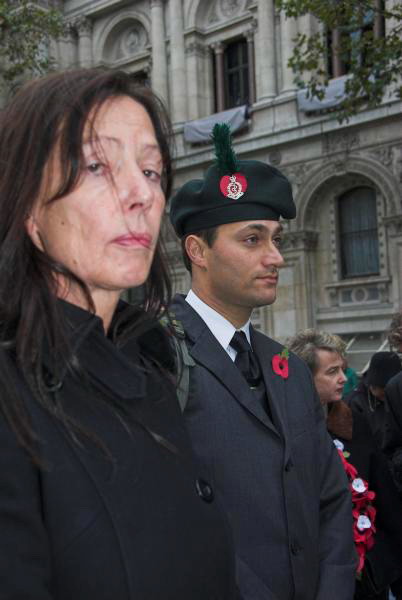
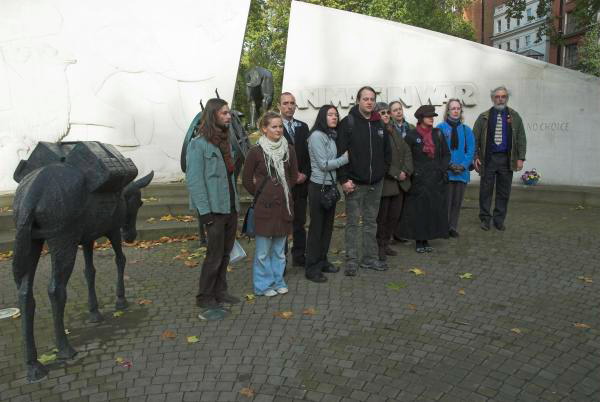
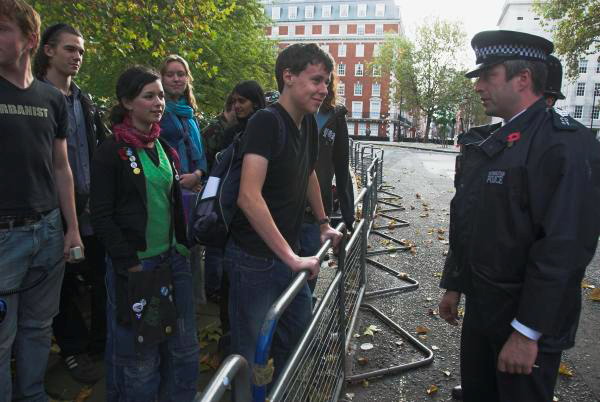
On that day I began on Park Lane, where there was a brief ceremony in front of the sculpture commemorating animals who died in war in the central area there at 11 am. There were only a small group there, wearing poppies they described as purple, though to me they seemed more lilac or mauve. In 2018, the Peace Pledge Union sold 122,385 white poppies: more than any year since white poppies were first worn in 1933, and many keep their white poppies to wear in following years, as unlike the red poppies their sale is not intended to raise funds but they are simply worn as a symbol of remembrance and peace.

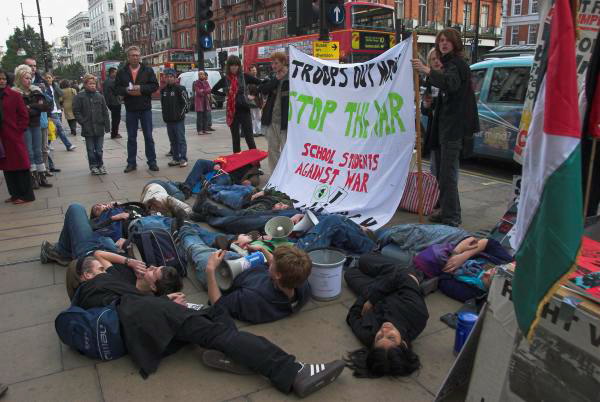
I moved on to Grosvenor Square and the US Embassy where School Students Against The War had scheduled a ‘die-in’. Unfortunately only around 20 had turned up for it – probably now many work on Saturdays or prefer to enjoy a lie-in at home.

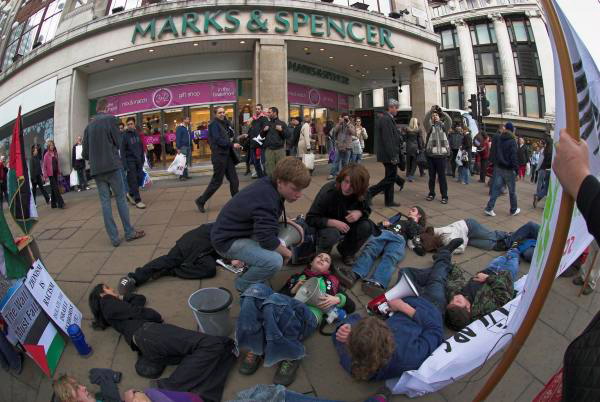
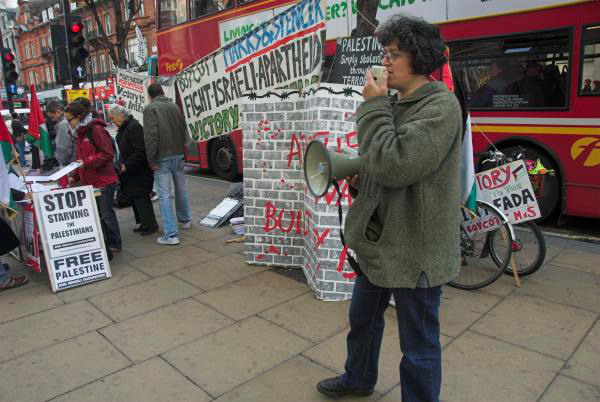
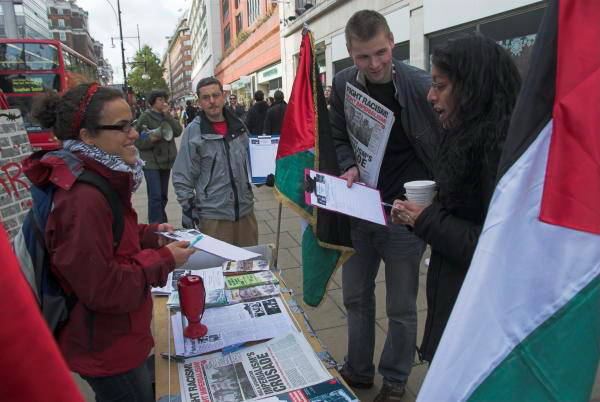
Another short walk took me to Marks & Spencer on Oxford Street, where a protest was taking place as a part of the fourth International Week of Action against the Apartheid Wall in Palestine.

Fight Racism, Fight Imperialism who had organised this event also hold regular vigils outside M&S every Thursday evening, calling for a boycott of the company as part of a wider Boycott Israel campaign. M&S sell goods including those coming illegally from the occupied territories of Palestine and give financial and moral support to Israel.

School Students Against The War came from the US Embassy to join them and staged their die-in on the wide pavement in front of M&S. This certainly generated a great deal of attention and they made some short speeches to the the crowds milling past M&S before marching off down Oxford Street with their megaphones and banner. They staged a second ‘die-in’ further down the street, again attracting the attention of shoppers, although perhaps surprisingly, not the police none of whom seemed to be around.

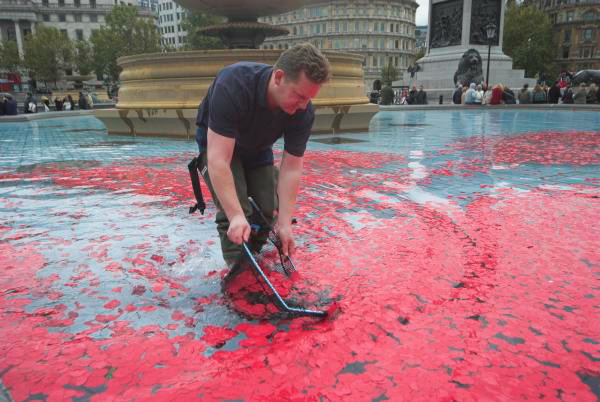
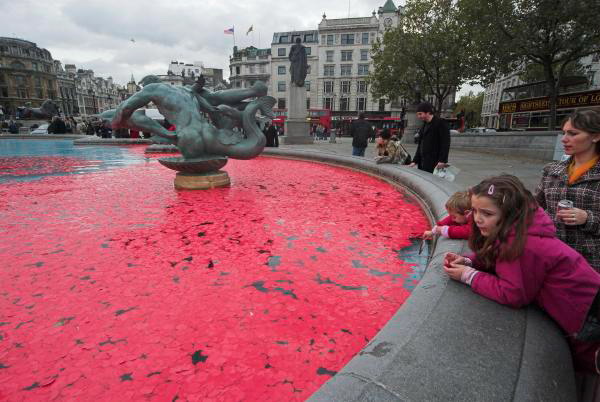
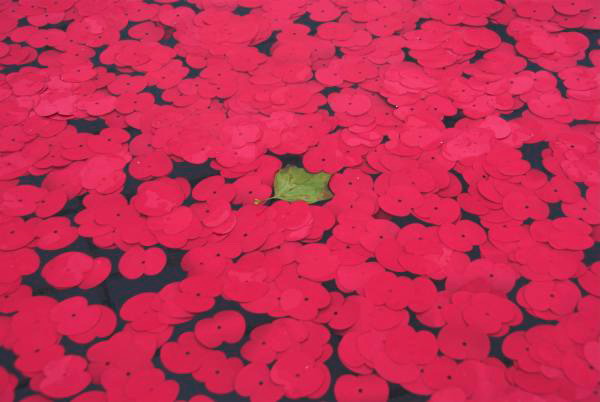
I went on to Trafalgar Square where I hoped to photograph the fountains filled with red poppies, but I arrived a little late to find a man in waders fishing them out with a shrimp net. It was bizarre if not surreal, although not quite what I’d been hoping for.

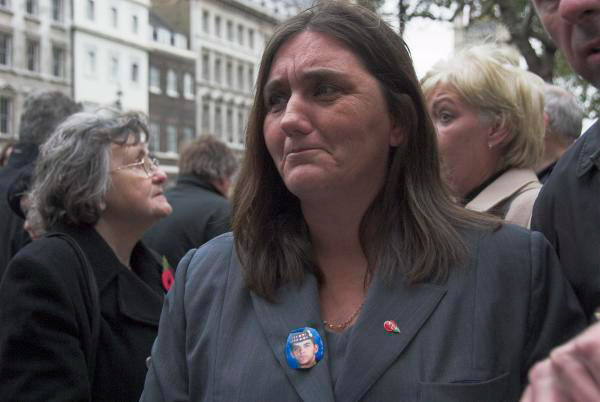
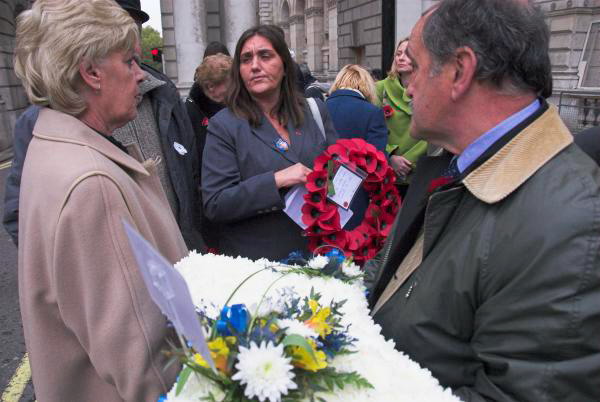
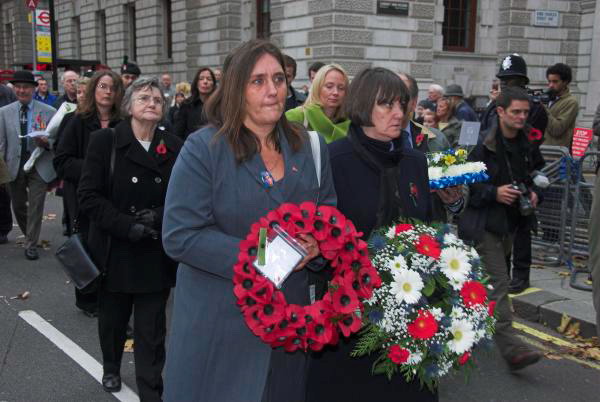
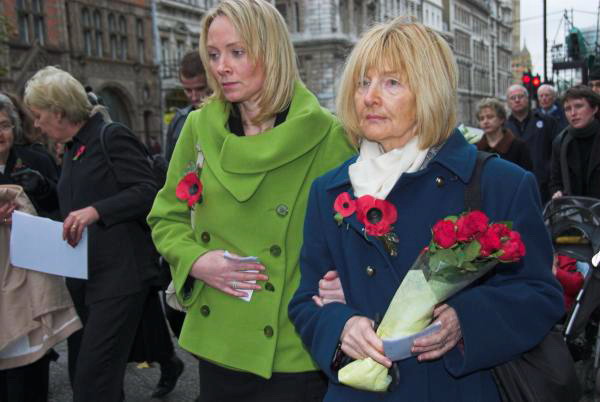
My main event of the day was taking place on Whitehall, at the Cenotaph. Not the military parade ‘at the eleventh hour‘ which I had refused to cover, but a commemoration by some of the families of servicemen killed in Iraq.

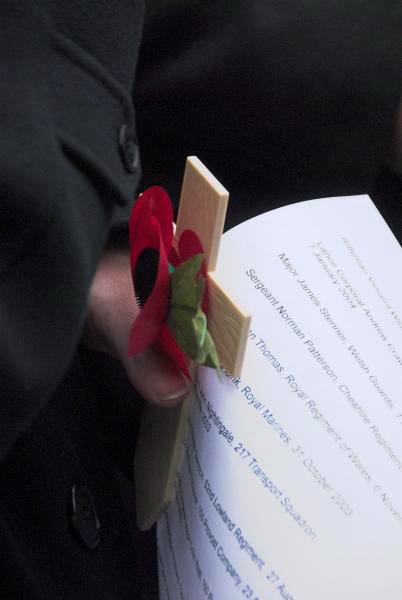
Led by a piper they marched solemnly to stand in front of it, while they came up to read out the names of the 121 dead British servicemen killed in the Iraq war. A small selection of names of Iraqi civilians killed was also read out. It’s difficult to estimate the exact number who have died, and more deaths have occured since 2006. The US Brown University Watson Institute now states “we know that between 280,771-315,190 have died from direct war related violence caused by the U.S., its allies, the Iraqi military and police, and opposition forces from the time of the invasion through March 2023.”

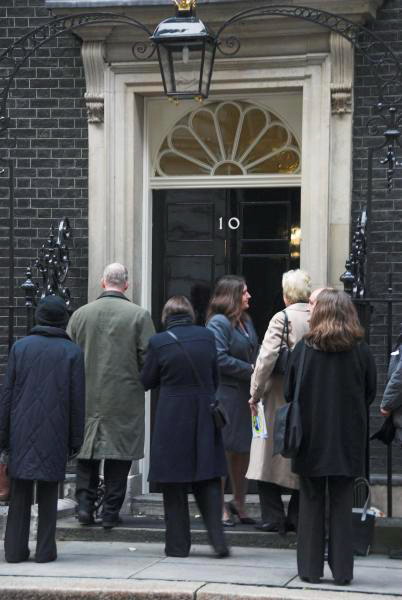
A deputation then took a letter in to Downing Street for Prime Minister Tony Blair who had misled parliament and ignored the largest protest ever seen in the UK to take the country into a misguided invasion together with the USA.

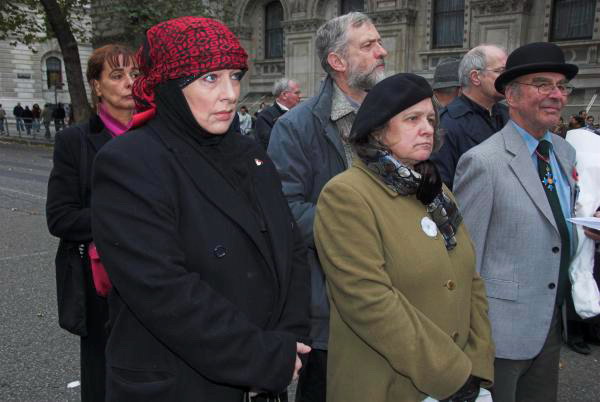
Among those taking part in what was an extremely moving ceremony were Rose Gentle of Military Families Against The War, and others who have lost sons or partners in Iraq, including Ann Lawrence, Roger Bacon, Natasha Mclellan, Maureen Bacon as well as Lance Corporal George Solomou, from the London Regiment of the Territorial Army who refused to go to fight in Iraq. Families of some serving soldiers also took part.

Also there and supporting the event among others were Kate Hudson of CND, Yvonne Ridley and Lindsey German of Respect and Stop The War, fashion designer Katherine Hamnett, and Jeremy Corbyn MP.

This was an event that attracted considerable media attention; there is a delicate balance between intruding on private grief, but those there had chosen to make their grief public, and we had to record it for them.

More Pictures on My London Dairy – Scroll down the page there for links.


Thames Path, Tradescants, Leake Street – 2014

Thames Path, Tradescants, Leake Street – On Monday 10th November 2014 I went on a walk with some of my family in Lambeth, where my sister in particular was keen to visit the Garden Museum in the deconsecrated St Mary’s Church next to Lambeth Palace.

Thames Path, Tradescants, Leake Street

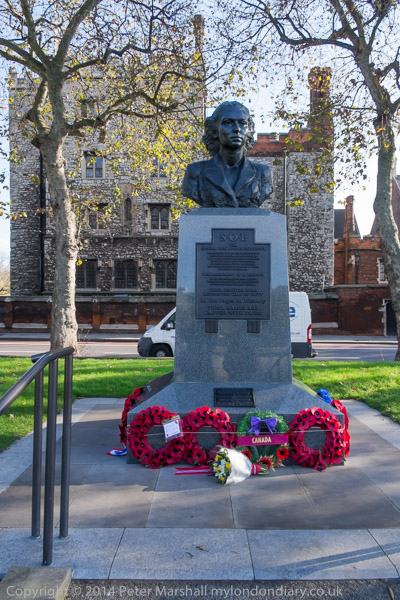
We began our walk at Waterloo station, making our way to the riverside path along by the Thames and walking west past St Thomas’s Hospital. A lttle beyond that in front of Lambeth Palace is a memorial bust of Violette Szabo, (1921-1945) standing on a monument to the SOE, the Maquis and the Norwegian resistance commandos, heroes of Telemark. Szabo, a Lambeth resident, was posthumously awarded the George Cross and the Croix de Guerre and was one of the 117 of the 470 agents the SOE sent to France who did not survive

Thames Path, Tradescants, Leake Street

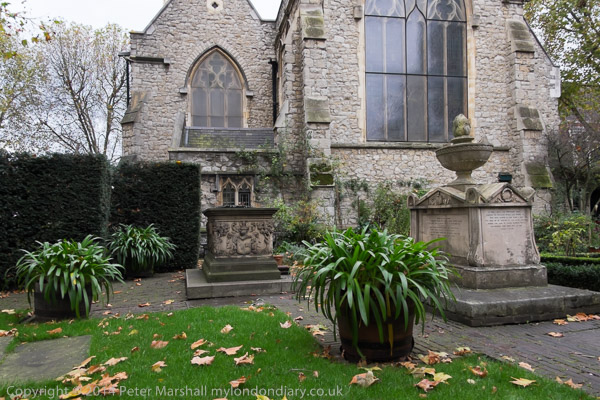
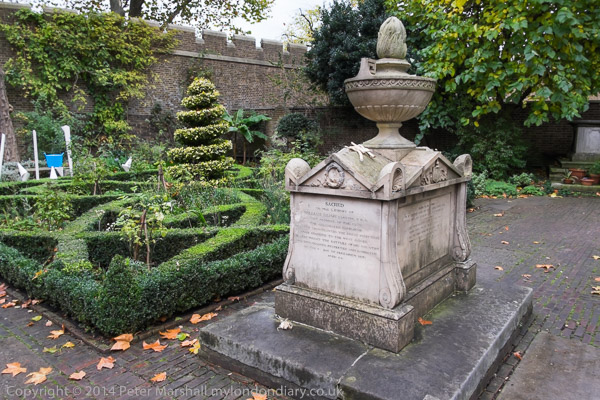
On My London Diary I give some more detail about the setting up of this museum after Rosemary Weekes (later Nicholson) began her campaign to save the church and the fine tomb of father and son John Tradescant, 17th century plant hunters and royal gardeners in its churchyard as a Museum of Garden History. Her work together with her husband John Nicholson is commemorated in the garden with a plaque.

Thames Path, Tradescants, Leake Street

I posted a photograph of a sculpture commemorating the two John Tradescants – father and son – a few days ago in the post Old Clapham Road and South Lambeth – 1989 and wrote rather more about them later in another post on my 1989 walk, Tradescant, Old South Lambeth Rd and Caron, which began with a picture of houses on Tradescant Road, built on the site of their home in South Lambeth, and I’ll try not to repeat myself more than I need here.

Thames Path, Tradescants, Leake Street

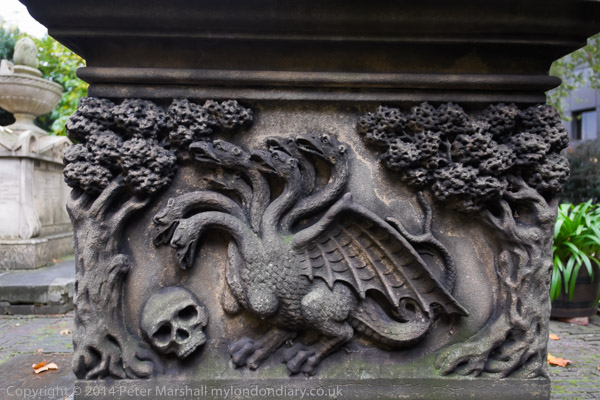
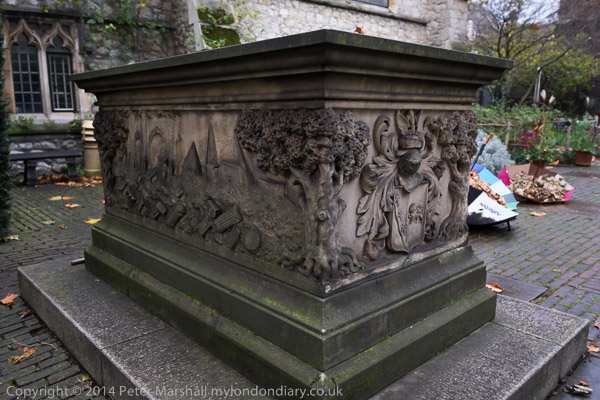
The Tradescant tomb was first commissioned by Hester Tradescant, the widow of the younger John when he died in 1662 and had elaborate carvings depicting rather fancifully some of the specimens of various kinds from their travels in search for new plants around much of the world. These formed the basis of the first public museum in England – the Lambeth Ark – and were fraudulently stolen by a neighbour who pretended to support this who later presented them to Oxford University to establish the Ashmolean Museum.

By the mid-nineteenth century the original memorial was in very poor condition, probably attacked by the noxious acidic fumes from the many industries in the area, and in 1853 a replica was re-carved using limestone from Darley Dale in Derbyshire.

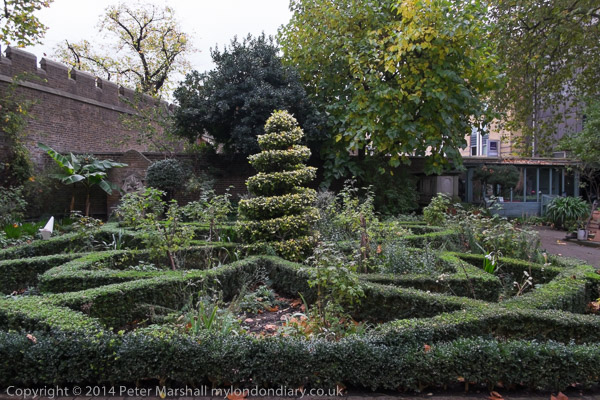
Also in the museum garden if the tomb of the notorious Captain Bligh of the Bounty, on whose ships the Tradescants brought back some of their plants. John Tradescant the Older had begun work as gardener to one of the wealthiest families in England and here there is a recreation of one of his Knot Gardens, based on designs for gardens at Hatfield and Cranbourne.

The museum is well worth a visit, particularly for keen gardeners, and has a pleasant cafe and of course a shop. The Tradescants also set up what was possibly the first garden centre a short distance away, though I think you would have then needed very deep pockets to buy any of their plants, many of which are now very common in our gardens.

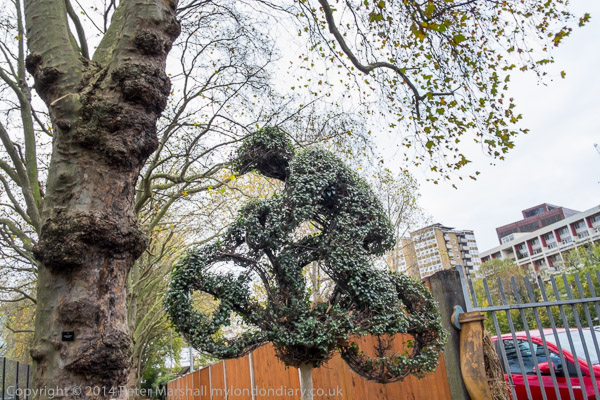
We walked back through Archbishop’s Park, a public park with some fine trees and some green cyclists.

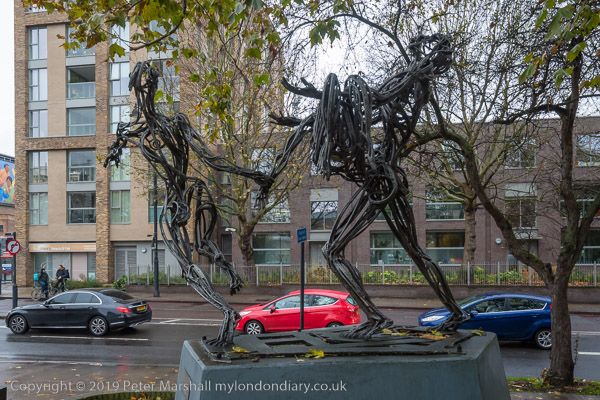
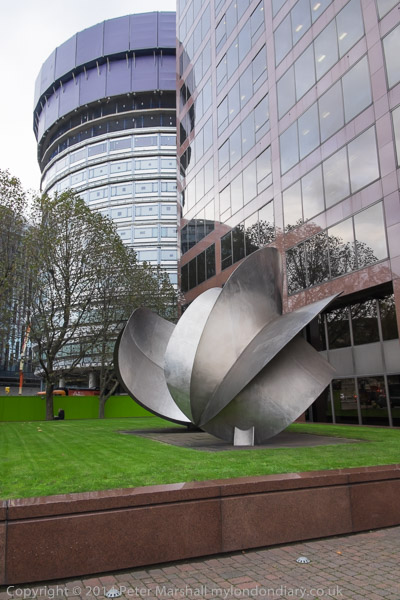
And came out on Lambeth Palace Road which has some modern buildings and a large metal sculpture, South of the River’ by Bernard Schottlander (b.1924) which was cast by British Steel in 1976 outside the offices at Becket House. As we went past the Lying-In Hospital (now just a frontage to a recent hotel) I found we had over 20 minutes before our train so I led our group down into Leake Street.

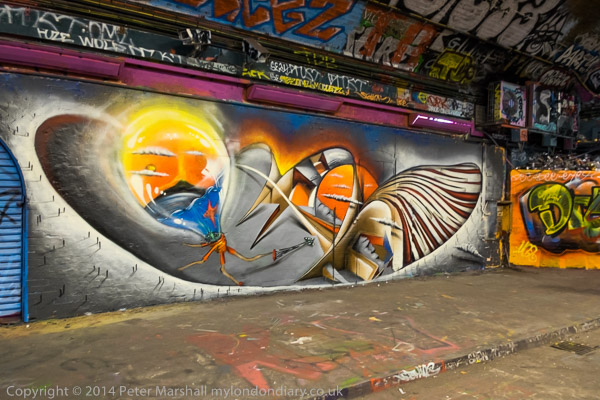
Although much of several parts of London are now covered with graffiti I think this tunnel remains the only officially sanctioned area for artists. I’d been there on various occasions but I think it was the first time the others in our group had been there

It wasn’t the fastest way to get into Waterloo Station, and took us to the far end from where our trains now run from the former Waterloo International platforms, but we still caught our train with time to spare.

Many more pictures from the walk and museum garden – including more graffiti – on My London Diary at Lambeth Walk.


More From Stockwell & South Lambeth

More From Stockwell & South Lambeth: My apologies that the previous post in this series from my walk on 19th July 1989, Tradescant, Old South Lambeth Rd and Caron, ended with a repeat of three images taken on Fentiman Road from my walk two days earlier.

After taking pictures on Old South Lambeth Road I probably simply walked to Vauxhall Station without taking more pictures. But I have now found a few more pictures I took probably at the start of the walk which began with Stockwell Park, Bus Garage, Tower and Mason, and also some at the end of my walk in Vauxhall.

Houses, 43-49, Lansdowne Gardens, Stockwell, Lambeth, 1989  89-7h-14
Houses, 43-49, Lansdowne Gardens, Stockwell, Lambeth, 1989 89-7h-14

These fine houses were built in the mid-nineteenth century and are Grade II listed. The closer and further houses are semi-detached pairs while 47 in the middle is detached. Behind them is the tower block Edrich House on Lansdowne Way.

House, 93, Priory Grove, Stockwell, Lambeth, 1989 89-7i-62

Priory Grove runs south from Lansdowne Way (formerly Priory Road) and much of it is beside Larkhill Park. This four-storey block, with the name at the top Priory Building is close to its end at Larkhall Lane. In 1989 it had two doors, but now there is only one at the left giving access to the four flats inside. The ground floor has been coated with stucco eliminating the architraves which are a feature of the upper floors.

Larkhall Lane, Stockwell, Lambeth, 1989 89-7i-65

Larkhall Lane has a listed building and several on the local list, but all I chose to photograph were a couple of odd corners, the first perhaps showing something of the state of the property with a fine stone hidden pillar. I think this has now disappeared.

Larkhall Lane, Stockwell, Lambeth, 1989 89-7i-52

66 Larkhall Lane is now much improved rendering, a tidy garden and the anachronistic shutter removed. The tree has also gone and I suspect much of the interior has also been remodelled. A property listing on the web describes it now as “This is an attractive 2 bed, 1 bath semi-detached house in Lambeth, London. This efficient home is 753 square feet in size with 2 fireplaces and has been extended 3 times since construction before 1900” and estimates its value at £1m-£1.2m.

341-9, Wandsworth Rd, South Lambeth, Lambeth, 1989 89-7i-56

I think I took this rather rapidly through a gap in the traffic which perhaps accounts for its rather odd tilt. At left is a rather odd Gothic Grade II listed building trying to be a castle, with shops on the ground floor and an octagonal tower at each end. The building dates from the mid-19th century but the shops reaching out to the main road were added probably around 40 years later over what was originally a front garden and have since been much altered.

Tucked away in the centre of the picture is a slim building with some interesting polychromatic brickwork at No 345, small and rather unusual Victorian infill.

Wilbraham House,  Wandsworth Road, Nine Elms, Lambeth, 1989  89-7i-41
Wilbraham House, Wandsworth Road, Nine Elms, Lambeth, 1989 89-7i-41

Through the imposing three story vehicle entrance of Wilbraham House we can see Fosbrooke House behind. This long block of flats occupies most of the block between Thorncroft St and Wilcox Road. One web site helpfully tells me it was built between 1930 and 1949 and my guess would have been it was at the end of that period. Four impressive sets of steps on the frontage lead to the 36 flats, with glass bricks providing natural lighting for the stairs. Nine Elms underground station opened in 2021 is just a few yards up the road.

The Elephant And Castle, pub, South Lambeth Place, Vauxhall, Lambeth, 1989 89-7k-11

You get a good view of these elephants from trains going through Vauxhall Station on the Windsor and Reading lines I normally go to Waterloo on. This picture is taken from immediately outside Vauxhall Station entrance. The pub building is still there but closed in 1997 and is now a Starbucks, but its upper floors look much the same. The local list dates it as mid-late 19th century, but the building replaced an earlier one on the site.

The name Elephant And Castle thought to have been first used for pubs around 1770 in nearby Southwark probably derives from the coat of arms of the Cutler’s Company who adopted it in 1622. They used ivory to make knife handles. Though if so it may have been used first for a pub in the City for which we have no record.

I’ll post the other pictures I’ve found from the end of the walk in Vauxhall later.


Tradescant, Old South Lambeth Rd and Caron

Tradescant, Old South Lambeth Rd and Caron continues my walk on Wednesday 19th July 1989 in Stockwell and South Lambeth which began with Stockwell Park, Bus Garage, Tower and Mason. The previous post was Clapham Road and South Lambeth – 1989.

Houses, Tradescant Rd, South Lambeth, Lambeth, 1989 89-7f-24

I took a picture (not on-line) on the corner of Tradescant Road, and then walked down it, pausing to take this single image on my way towards South Lambeth Road. I think I took this picture of an exuberantly growing hedge and a spindly small tree largely because I was thinking about the name of the street and the history behind it.

John Tradescant the Elder (c. 1570s–1638) settled in Lambeth and with his son John is said to have founded gardening as we know it in England, importing many of the trees, shrubs and plants we now grow.

He had begun his career as a gardener to the Cecil family, one of Englands richest and most politically influential families and had laid out the gardens at the Early of Salisbury’s new house, Hatfield House in Hertfordshire, travelling across Europe to find new plants for it. In 1617 he helped finance an expedition to the colony of Virginia, and among the plants this brought back was one later named Tradescantia virginiania.

John the Elder in the following years travelled to Russia, bringing back the larch tree, to Algeria coming home with apricots, gladioli and horse chestnuts, to the Middle East for Lilac, as well as to Italy and Turkey and later to France from were he introduced the poppy and scented stock. Later his son also travelled to Viginia bringing home many plants including Virginia Creeper and added to the collections which were exhibited to the public and sold from their nursery.

The family also set up the first public museum in England in the 1630s, the Lambeth Ark or Musaeum Tradescantianum, dsplaying the many curiosities natural and manmade they also brought back from their travels. Thee family were tricked out of this after the death of the younger John and his wife by the wealthy collector Elias Ashmole who later gave it to Oxford University as the main founding collection of the Ashmolean Museum.

You can see more about the family and their huge contribution to gardening at the Garden Museum which is next door to Lambeth Palace in the deconsecrated church of St Mary-at-Lambeth, where the Tradescants are buried.

The Tradescant’s main house, Turret House, was demolished in 1881 and two streets, Tradescant Street (now Road) and Walberswick Street (named after the Suffolk village where some of the family lived) laid out on the site.

Girl, doll, shop, South Lambeth Rd, South Lambeth, Lambeth, 1989 89-7f-25

On South Lambeth Road I came across this young girl sitting on a stool and playing with a doll outside her family shop. I didn’t want to disturb her and took this picture as she was lost in play.

House, 99, Old South Lambeth Rd, South Lambeth, Lambeth, 1989 89-7f-13

The demolition of the Tradescant’s house which apparently had been long-abandoned and overgrown South Lambeth Road in 1881 enabled the South Lambeth Road to be straightened and widened in 1883, leaving a section of the old road to the east, now known as Old South Lambeth Road. No 99-105 South Lambeth Road are Grade II listed as an early 19th century terrace, with the listing noting their graceful railings which attracted me.

As you can see at the left of the picture some of these properties were in a fairly poor state in 1989. This was then the side wall of a shop, now converted to residential use and in rather better condition.

Old South Lambeth Rd, South Lambeth, Lambeth, 1989 89-7f-14

This section of Old South Lambeth Road is named on Google Maps as Heyford Terrace, although I think this is simply this long row of 8 terraced houses on the east side of the street, separately numbered from the rest of this short road. I think they were built as terraced housed but are now flats and are late Victorian, built not long after the rerouting of the road in 1883.

The houses at the end of the road are in Heyford Avenue, I think also developed around 1890.

House, 119, Fentiman Rd, South Lambeth, Lambeth, 1989 89-7f-15

I walked down Dorset Road and then turned left into Meadow Road to take me to Fentiman Road where I made my next picture about a quarter of a mile later. I’m rather surprised I didn’t find anything to interest me in that distance.

This house is in one of two similar short terraces immediately west of the junction with Meadow Road and I now think is No 119. The eleven other houses have similar decorative elements though the gables are varied with three patterns. I think then that many now had vigorously overgrown front gardens like this making hiding much of the ground floors, though now some are cleared for parking cars.

House, 104, Fentiman Rd, South Lambeth, Lambeth, 1989 89-7g-62

The houses opposite on the north side of the road here are rather larger and detached. Those at 106-112 are listed as is the church on the east side of this house. I think I photographed this rather than the listed buildings as for the reflection in the car and the tree shadow in the lower part of the image.

Caron's Almshouses,  Fentiman Rd, South Lambeth, Lambeth, 1989 89-7g-63
Caron’s Almshouses, Fentiman Rd, South Lambeth, Lambeth, 1989 89-7g-63

A few yards further along Fentiman Road are Caron’s Almshouses, founded in 1618 by Noel Caron, Dutch Ambassador to the court of King James 1, and a popular local philanthropist who lived in South Lambeth.

Originally on Wandsworth Road, Caron’s Almshouses became unsuitable for elderly people and moved to these new buildings in Fentiman Rd in 1854. The buildings were leased to the Family Housing association in the 1990s and repaired and modernised for local women in need and officially reopened by the Dutch Ambassador in 1997.

I included these last two pictures in a post on a previous walk made two days earlier in 1989, and I’m unsure now on which of the two walks in the same area they were taken on.