More from May Days: 2012

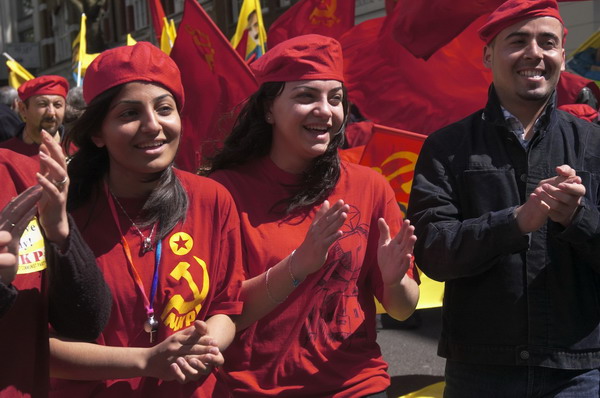
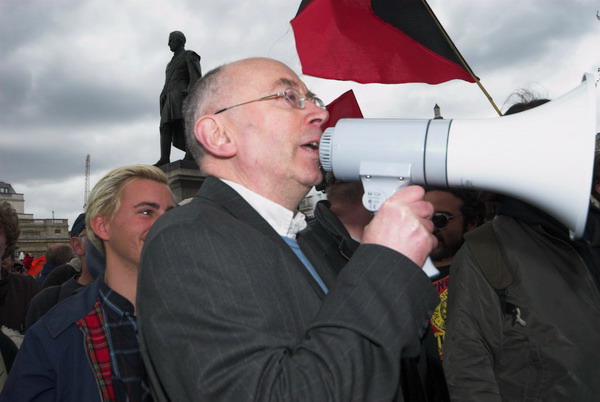
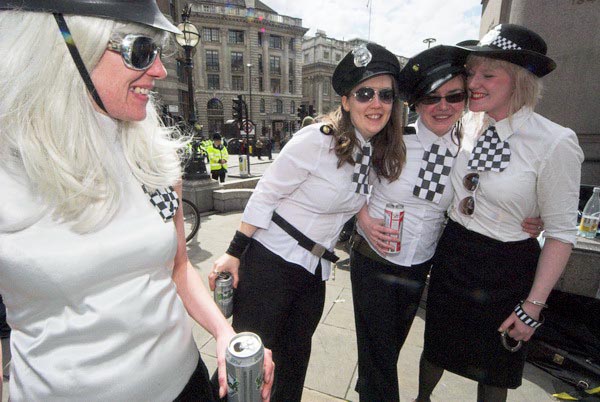
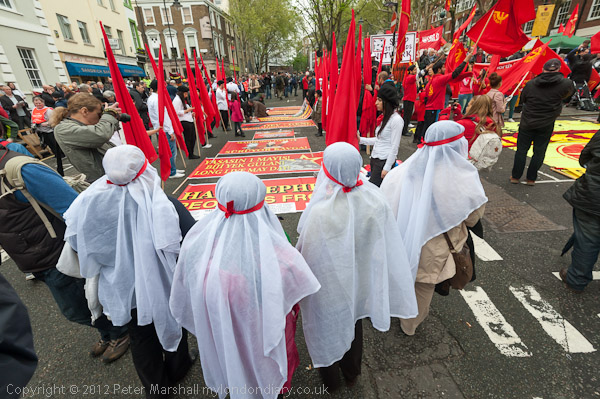
The 2012 march lived up to its billing in bringing together “trade unionists, workers from the many international communities in London, pensioners, anti-globalisation organisations, students, political bodies and many others ” to march through London, and was perhaps even more varied than in previous years.
There were the usual large groups of Turkish and Kurdish socialists and others from around the world, and on My London Diary I wrote:

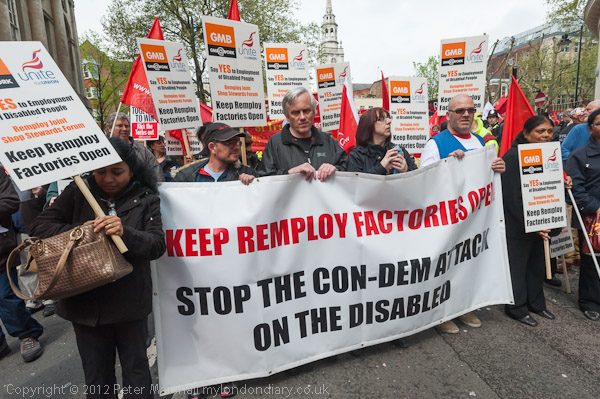
Among the various key issues for workers raised by this year’s march were the attacks on pensions and other cuts, the closure of one third of Remploy factories with the loss of jobs by more than 1500 disabled people, and the workfare scheme which is being used to compel the unemployed to give free labour to companies or lose their job-seekers allowance, leading to less paid jobs being available.

London May Day March
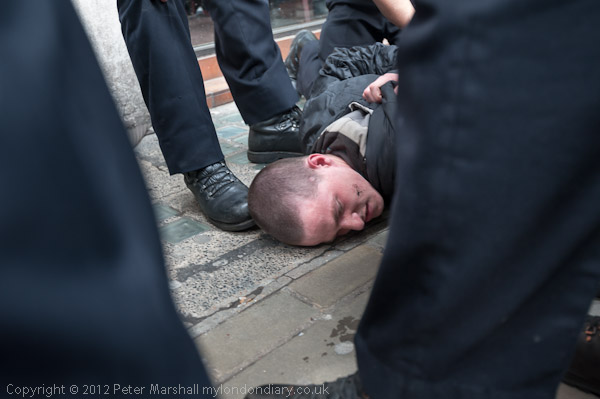
At the back of the march were several hundred autonomous bloc protesters who stopped to protest on the Strand outside some of the shops using free labour or avoiding paying taxes, including branches of McDonalds, Greggs, Topshop and Pizza Hut. They had been accompanies and harassed on the march by a large group of police, and when they stopped to protest there were minor scuffles and several arrests. Occupy protesters put up several tents when the marchers reached Trafalgar Square, and were forced by police to remove them.
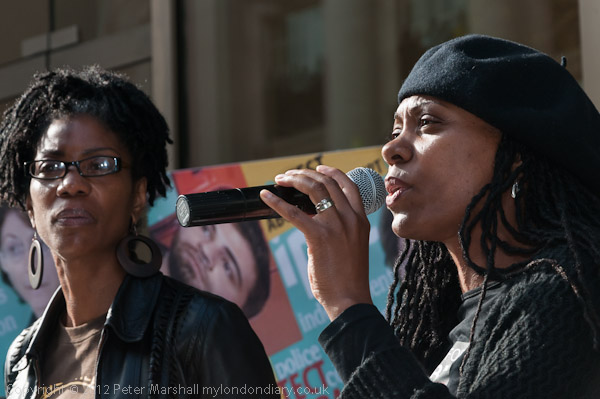
Samantha Rigg speaks about the killing by police of her brother Sean

Outside the IPCC offices on the Strand, Campaign 4 Justice and Merlin Emmanuel, Smiley Culture’s nephew had organised a rally against the corruption of the IPCC which was set up to replace the previous corrupt Police Complaints Authority. The IPCC is dominated by former police officers and they called for a citizen-led body that has proper powers and true independence from the police.
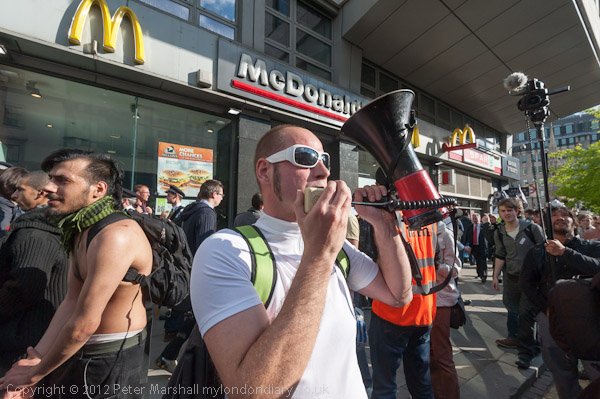
After the rally in Trafalgar Square, London Solidarity Federations and Occupy London led a crowd of several hundred to protest outside various branches of shops which were taking part in Workfare schemes. I joined them on Oxford St, where there were a series of minor skirmishes with police who tried to prevent them entering the shops. The protesters finally returned to Charing Cross police station and the Strand, and suddenly the police went off shift and disappeared.

The protesters held a discussion, undecided about how to proceed without their opposition, and some, led by Occupy London, decided to head for the City with the ‘Reclaim May Day‘ maypole, stopping on the way for a very short protest at the Royal Courts of Justice.
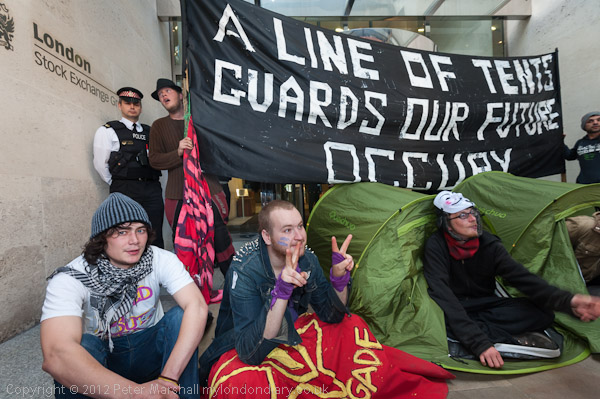
A van of City of London Police came to take a brief look at them before driving away, and they made their way to the Stock Exchange unescorted. After posing for pictures they then occupied the entrance to the closed Stock Exchange and were soon joined by a handful of police officers.

People were beginning to party in the square and it looked as if little was likely to happen, so I left for home. Eventually the protest here ended around 11pm.

Stock Exchange Occupied
May Day Workfare Protest
Abolish The Corrupt IPCC
London May Day March


All photographs on this and my other sites, unless otherwise stated, are taken by and copyright of Peter Marshall, and are available for reproduction or can be bought as prints.
More from May Days: 2011

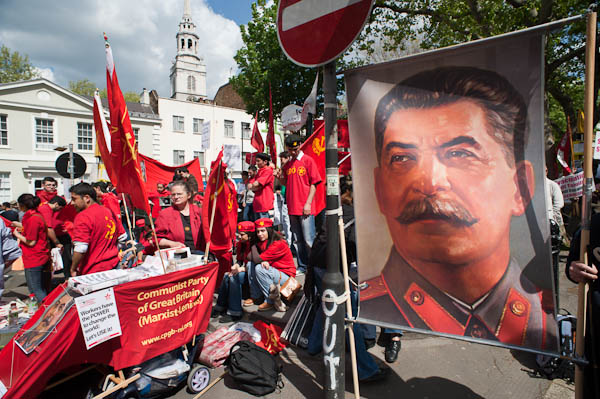
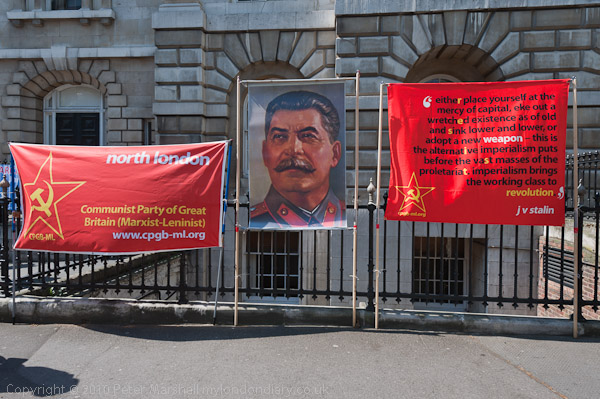
May Day 2011 was a Sunday which helped swell the numbers gathering at Clerkenwell Green, though perhaps the trade union groups were rather less numerous than usual. But of course the usual communist and socialist groups were there, and the CPGB-ML with their large image of Stalin and a banner with a quote from him with letters picked out in yellow to spell ‘resist’ along with the word revolution.

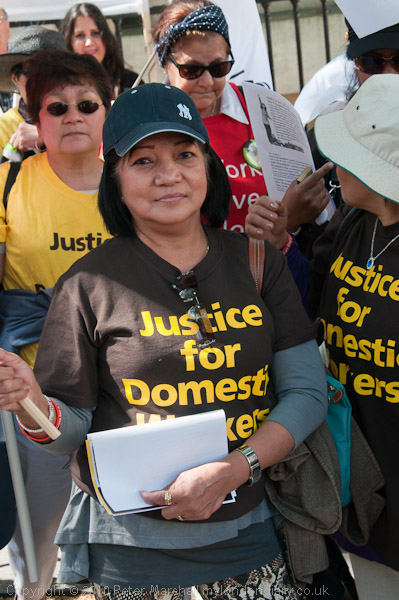
A new group in this year’s march was ‘Justice for Domestic Workers‘ (J4DW), a self-help group for migrant domestic workers and part of the hotel, restaurant and catering branch of the Unite the union. They were using the event to launch a new petition urging the UK government to change its position and endorse the 2011 ILO convention on Domestic Workers. The UK joined the ILO in 1919, but since the Tories came to power in 2010 have only ratified conventions on Maritime Labour and Fishing.

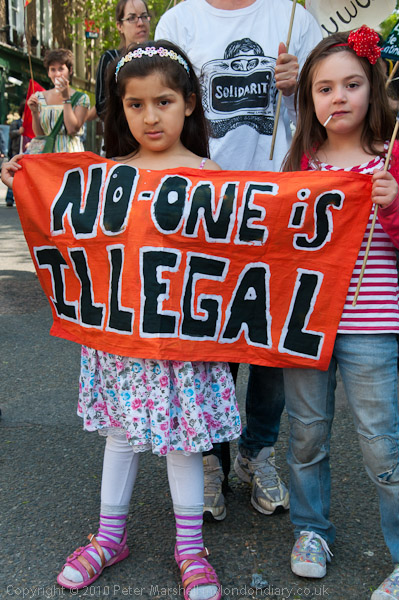
There was a large group from the Latin American Workers’ Association, calling for justice for refugees and asylum seekers, with the message ‘No-One Is Illegal’ carried by two of their younger supporters.

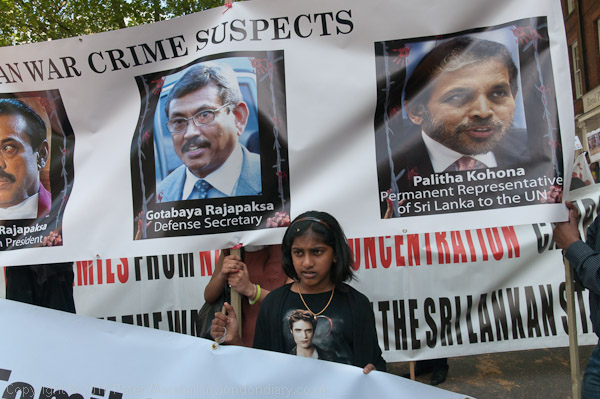
As in previous years there was a very strong representation of nationalist communist groups from London’s Turkish, Kurdish and Cypriot communities as well as a large group of Sri Lankan Tamils calling for the war criminals from Sri Lanka to be taken to the International Criminal Court and asking why the UN and NATO had not intervened when their community in Sri Lanka was facing massacre.

I followed the march a short distance, stopping to photograph until the end of the march had gone passed me, then decided to go home rather than continue to the rally in Trafalgar Square.

London May Day March


All photographs on this and my other sites, unless otherwise stated, are taken by and copyright of Peter Marshall, and are available for reproduction or can be bought as prints.

More from May Days: 2010

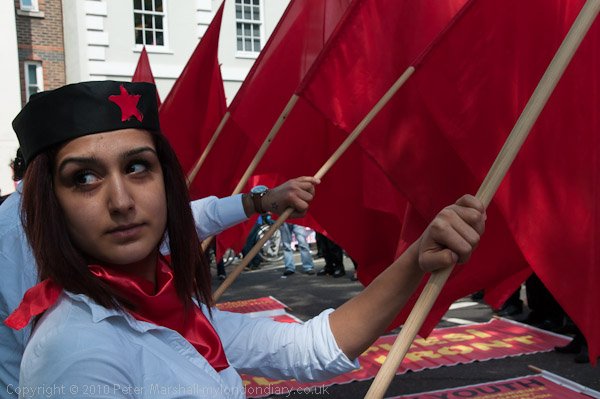
Perhaps because in 2010 May Day was a Saturday and an election was coming up in five days time there were more things than usual happening as well as the usual Trade Union & Socialist May Day March from Clerkenwell Green. This had its usual mix of communist and socialist groups from London’s various communities along with trade unions, campaign groups and others but with a strong anarchist bloc, including the Black Horse of Anarchy and an executioner.

Among the trade union groups were the National Union of Sex Workers.

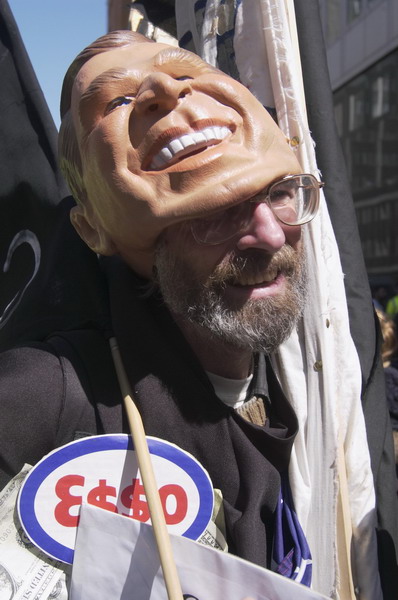
While the official TUC rally took place in Trafalgar Square I joined the May Day ElectionCarnival in Parliament Square. There the Black Horse of Anarchy which had marched from Clerkenwell with an effigy of Nick Griffin was joined by the three other Horses of the Apocalypse which had made shorter journeys from the Westminster campaign headquarters of the three political parties, bringing with them effigies of Gordon Brown, David Cameron and Nick Clegg.

There was an extremely crowded and rather confused series of executions with plenty of gore, not easy to photograph, though I took rather a lot of pictures.

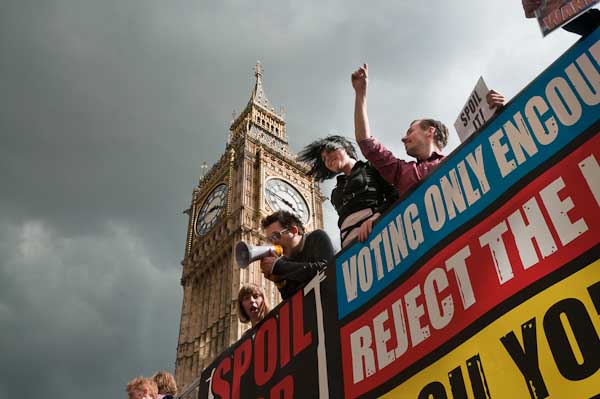
The sky turned black but the storm held off for the heads of class traitors to be exhibited on poles

and the Space Hijackers to finally arrive with their ‘Spoil Your Vote Campaign Bus‘, which had been touring London. Their message was clear:

“If voting actually changed anything they would ban it. Did you get to vote on the Iraq war? Did you get to vote about regulations on banking? Did you get to vote on MP’s expenses? Is this a democracy or a bad joke?

Why play by the rules in this farce of an election?

Every spoilt ballot gets counted and shown to the candidates in that constituency, so why not reject the lot of them and tell them what you think with your ballot paper?”

Rhythms of Resistance had made their way from Parliament Square to the Leake Street graffiti tunnel, where the Rave Against The Machine continued in the dry as the storm broke overhead.

Rave Against The Machine
Spoil Your Vote Campaign Bus
May Day Election Carnival
Trade Union & Socialist May Day March


All photographs on this and my other sites, unless otherwise stated, are taken by and copyright of Peter Marshall, and are available for reproduction or can be bought as prints.

More from May Days: 2009

Another year, another May Day. 2009 was just a little different with more happening at Clerkenwell Green than usual, though some things remained the same. Although in my very early years Stalin was known through our press as ‘Uncle Joe’ and it was certainly the case that it was the Russian Army that played the major role in the defeat of Hitler, it does seem to me somehow obscene to be continuing a cult of his personality with what we now know about him.

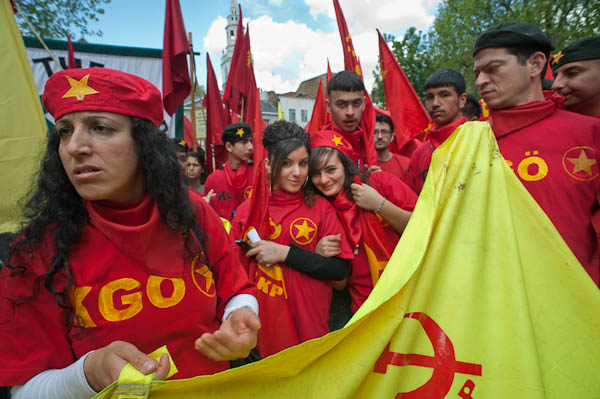
As always the Turkish and Kurdish community were out in force – here the KGÖ (Komünist Gençlik Örgütü), the youth wing of the Marxist Leninist Communist Party (Turkey) MLKP.

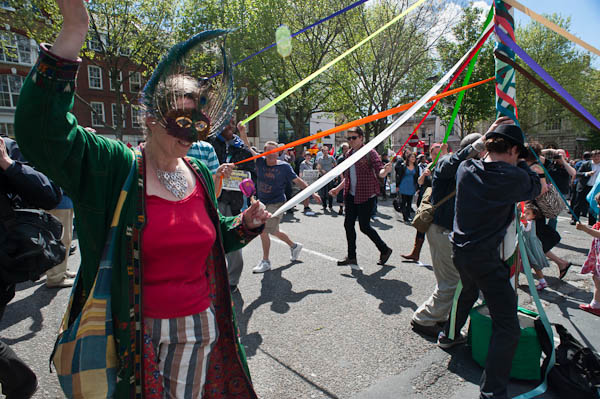
Unusually there was a maypole, brought and erected by Chris Knight and others from G20 Meltdown, and a few people tried to dance around it.

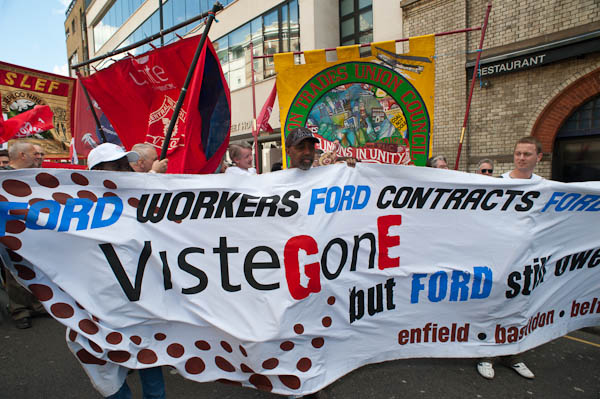
There were the usual collection of trade union banners, with pride of place going to a couple carried by Ford workers following the Visteon dispute, as well as various other left-wing groups from the UK and abroad.

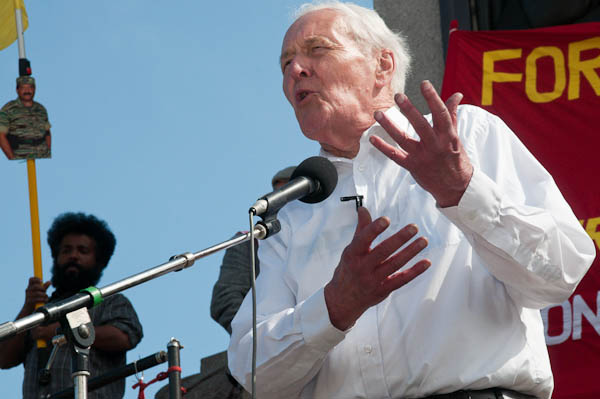
As in previous years the rally at Trafalgar Square failed to acknowledge the predominant presence of various minority communities on the march and was dominated by speakers from the large unions and Labour party. The star of the event was undoubtedly Tony Benn. At his left a Tamil holds a placard with a picture of Velupillai Prabhakaran, the leader of the Liberation Tigers of Tamil Eelam (LTTE) who was killed in an ambush by Sri Lankan government forces only a few days later on May 18.

Earlier there had been heated arguments on the march against the participation by the Janatha Vimukthi Peramuna (JVP), a Sinhalese communist and Marxist–Leninist party which is a part of the government oppressing and fighting the Tamils.

More at May Day March & Rally


All photographs on this and my other sites, unless otherwise stated, are taken by and copyright of Peter Marshall, and are available for reproduction or can be bought as prints.


More from May Days: 2007

A fairly random selection of pictures I like from my coverage of May Day events in London in 2007.

Unusually my photographic day began in Whitehall where a small group of what I described as “the more eccentric elements of middle england” had gathered with a horse-drawn hearse and a dragon to take a coffin draped in a St George’s flag to Downing St, celebrating 300 years of union with Scotland by asking for English devolution. On My London Diary I wrote (and all in lower case):

i never did find out what the barnett formula they were against was, but i’m sure that these were people in favour of warm beer, cricket and morris dancing as well as good manners. st george didn’t look like the type to scare dragons (and the dragon wasn’t either scary or easy to photograph.)

but i’ve never really thought of myself as being very english. like most of the english, most of my family came from somewhere else at some time or other. i only knew one of my four grandparents and i’m not convinced she spoke english, but then she didn’t say much either.

apart from my lack of sporting skills i could have qualified for at least two of our national sides (so perhaps after all i could have played cricket for wales.) if i ever think of myself know as having any kind of cultural identity now (and it’s a very un-english thought) it would be as a londoner. maybe

http://mylondondiary.co.uk/2007/05/may.htm

From there I made my way to Clerkenwell for the annual London May Day march, dominated as usual by large groups from London’s ethnic communities.

Also on the march were trade unionists with their banners and campaigning groups such as ‘Stop The War’. Among other groups you can see in my pictures are Chagos Islanders and Gate Gourmet strikers who were protesting at being betrayed by their union, the T&G W U.

The marchers went on as usual to Trafalgar Square where a man stood with a whistle and a sign to welcome them.

I went on to Canary Wharf, where the Space Hijackers, outnumbered around ten to one by police, were holding their ‘Booted and Suited’ party in Reuters Square

And the day ended with a little police sadism:

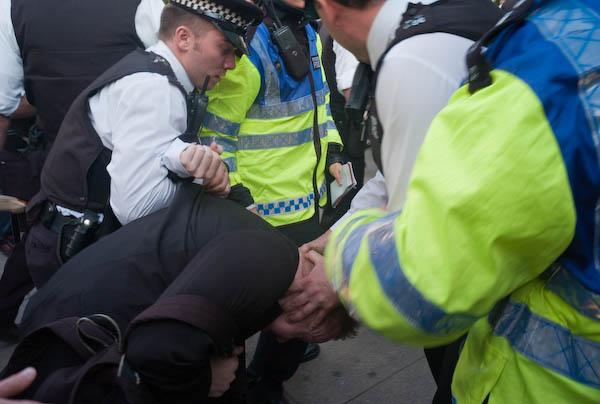
A police officer applies a dangerous ‘pain compliance’ hold cutting blood supply to the brain of a man who wasn’t resisting arrest, while another officer forces his hand up behind his back. The man was then put in a police van and driven away. He had apparently ignored a police order to move on.

The whole of the Canary Wharf area is one of those increasing parts of the city which are private fiefdoms, with the public only allowed access to serve the needs of capital as workers or consumers. It has its own security service, but on this occasion only their boss, wearing a suit, was in evidence, coming to talk with protesters and police. It dresses its security officers in uniforms which closely resemble those of police officers, in a way that seems to be an offence under the Police Act 1996. Having invited several hundred police officers to the event I imagine they had decided having the security officers there would be too confusing.


All photographs on this and my other sites, unless otherwise stated, are taken by and copyright of Peter Marshall, and are available for reproduction or can be bought as prints.


May Day

Today’s May Day will be very different, with no march in London, no meeting in Trafalgar Square and none of the other activities we have seen in recent years. There will be online events, but it really isn’t the same. And I think I will take few if any pictures.

Until 2000, I was working on May Day most years and missed the May Day celebrations, except, when as in 1999 they fell on a weekend. In 2000 things were a little different, and while doubtless the usual trade union celebrations went on, rather more of us gathered in Parliament Square on May Day, a Monday, for an anti-capitalist protest, indulging in a little guerilla gardening. It wasn’t as the BBC and newspapers recorded a riot, but a good-natured protest with people having fun and a little minor law-breaking and only became nasty when the police charged in after windows were broken at a McDonald’s. I went home as I didn’t want to be kettled.

It was 2003 before I returned to photograph May Day events, and I wrote:

may day has perhaps settled into a rather predictable event now. the socialist left – and what is left seems to be a few unions and a number of ethnic communist party groups – march from clerkenwell to trafalgar square, while anti-capitalist protestors do not a lot around town.

My London Diary

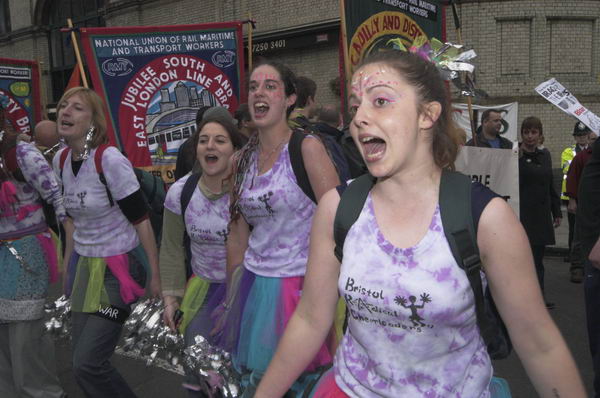
and the few images I put on line reflect this. My coverage the following year, 2004, was a little more upbeat, perhaps because I met up again with the Bristol Radical Cheerleaders who certainly livened things up, but also because I was getting better at using a digital camera. But most of my coverage then was still in black and white and I still haven’t added the pictures I said would follow.

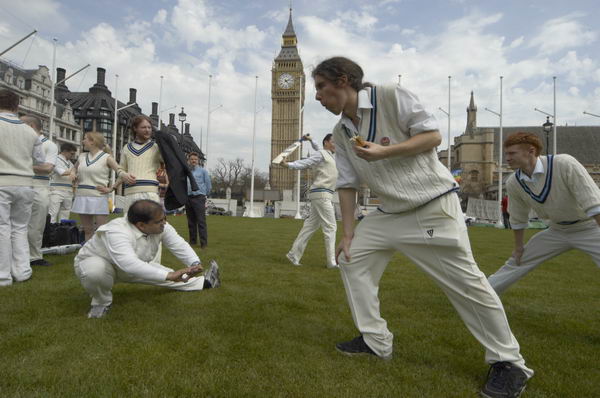
I photographed May Day and the march again in 2005, but the highlight of the day was provided by the Space Hijackers who had challenged our 600 odd MPs to an Anarchist Cricket match to be held in Parliament Square.

I wasn’t surprised when no members of the opposing team actually turned up, but their absence didn’t detract from the event.

2006 was perhaps my busiest May Day ever, beginning with the launch of the London Citizens Workers’ Association at Westminster Cathedral, then photographing the London May Day March, which included a strong autonomous anti-capitalist bloc.

Among the speakers at Trafalgar Square, though not on the main platform was Ian Bone of Class War, once labelled the most dangerous man in England, and even at this event attracting considerable police attention.

I went on from Trafalgar Square to the Bank of England where the Space Hijackers were holding their Police Victory Party. Unlike at their cricket match there was a large attendance by the opposition, though they didn’t really join in the party organised for them.

Long Live May Day!


All photographs on this and my other sites, unless otherwise stated, are taken by and copyright of Peter Marshall, and are available for reproduction or can be bought as prints.


Sue Davies (1933-2020)

I was sad to read yesterday of the death of Sue Davies, who was the inspiration and for around 20 years director of London’s Photographers’ Gallery, the first permanent space in the UK dedicated to showing photography.

You can read as I did her obituary by Michael Pritchard on the British photographic history blog which gives details of her life and her great contribution to photographic life in this country, beginning at the ICA before founding the gallery, and I won’t repeat what he says here, but add my own personal thoughts, not about Sue Davies, who I never knew well, but about the gallery she founded.

Before I became an active photographer I had been for a short time a member of the ICA but cannot remember which exhibitions and events I attended there (it was the ’60s and a long time ago.) But the opening of the gallery in Great Newport St more or less co-incided with my moving back down south and my beginnings as an active photographer, and though I missed its start I was soon a member and a regular attender at openings and talks there.

I never really got to know Sue Davies, though I did occasionally talk to her at events over the years, but I did get to know some of the staff who worked with her, particularly in the bookshop and cafe, as well as volunteers who staffed the library and photographers who like me would drop in occasionally when they were around in London, perhaps for a coffee and to browse in the bookshop. After lectures and openings some of us would find our way to the Porcupine pub close by where the discussions were often intense and opinions rather more frank than in the gallery.

For some years too the gallery hosted a group of “young” photographers, though some were even older than me and we would bring in our own work for discussion, sometimes with more established photographers – such as Martin Parr – coming to add their views. And although I never found taking my work to show the gallery curators helpful, I did benefit from an insightful and embarrassingly public review at a gallery event by Ralph Gibson.

As Pritchard states, “Davies was encouraged to step down as director in 1991” possibly because of problems with funding and somehow after she left the gallery was never the same for me. Of course there had been other changes – the young photographers group had been dropped, probably because it was too anti-establishment (and the gallery did have a clique of the old guard we considered as the dead hand of UK photography.) And a few years earlier Clare de Rouen had left the bookshop to work at Zwemmers around the corner where many of us spent more time.

But there were other changes, with programming that appeared to me in general less interesting, and certainly in more recent years often showing work that seems of relatively little photographic interest. So much so that I decided a few years back not to renew my membership, despite still feeling considerable gratitude for its past.


1986 Complete – Page 2

Varden St, Whitechapel, Tower Hamlets 86-5d-11_2400

Images in this post are embedded from Flickr where you can view them at a large size by clicking on the image. You will need to use your browser back button to return to this post. Or you can right-click and select ‘Open link in new tab’.

My album 1986 London Photographs is now complete on Flickr, and this is the second of a short series of posts pointing out a few of my favourite images from the year.

Fashion St, Spitalfields, Tower Hamlets 86-4r-16_2400

Several things come out strongly to me as I look through these pictures, mostly taken around Brick Lane and other areas of Whitechapel. One of the major themes that has run through much of my photography is the writing on the wall, whether graffiti or signs and posters. Language is such an important aspect of our social interactions and its inclusion in these images makes them into a record of how people lived and thought.

Brick Lane, Spitalfields, Tower Hamlets 86-5a-01_2400

In 1984 London was rapidly becoming the multicultural city we now know, though of course it had been so on a lesser scale for many years if not centuries. Spitalfields where some of these pictures were made had long been a home for new communities moving to London and there was still abundant evidence of its Jewish population as well as the Bangladeshis who had by then largely replaced them.

Commercial Rd, Whitechapel, Tower Hamlets 86-5c-64_2400

Housing, then as now, was an important issue in London in particular, and some of these pictures reflect this and other issues such as racism. Although I think some of these pictures are well-composed and even attractive compositionally, I’ve always considered the formal aspects – line, shape, tone, texture, form etc to be the means to communicate a message rather than an end in themselves. I aimed to make photography that had something to say and said it well rather than to produce well composed, attractive or even striking or popular images.

Limehouse, Tower Hamlets 86-5h-66_2400

There are another 95 pictures on the second page of the album, all with a location, taken from the usually rather incomplete information I recorded on the contact sheets. I’ve tried to check these before posting, but corrections and other comments are always welcome. I’m happy for these pictures – with suitable attribution – to be shared on social media, but they remain copyright and any commercial or editorial use requires a licence from me.


All photographs on this and my other sites, unless otherwise stated, are taken by and copyright of Peter Marshall, and are available for reproduction or can be bought as prints.

There are no adverts on this site and it receives no sponsorship, and I like to keep it that way. But it does take a considerable amount of my time and thought, and if you enjoy reading it, please share on social media.
And small donations via Paypal – perhaps the cost of a beer – would be appreciated.


Tags: 

South of the River 1985

Container ship, biker, Shornemead Fort, Shorne, Gravesend, Gravesham 85-6c-43_2400

In 1984, I more or less came to an end of my work on the River Lea (though I returned to it later) and the major focus of my photography shifted to London’s Docklands, and I’d photographed the West India and Millwall Docks as well as the Royal Docks, pictures from which I’m currently posting daily on Facebook. And later in that year I also went to the Surrey Docks, where work by the London Docklands Development Corporation was well advanced.

I was very aware of the political dimensions of the redevelopment, with the LDDC taking over from the elected local authorities and imposing its own largely business-led priorities which although accelerating the development distorted it away from the needs of the local area, and particularly away from the still pressing need for more social housing and for better employment opportunities for local people.

Northfleet, Gravesham 85-8e-35_2400

In those years I read every book in my local library on the history and geography of London, and began to build up my own collection of older works bought from secondhand bookshops and by post. Before the days of on-line listings I used to receive a monthly duplicated list of books on offer from a dealer I think in Brighton, and found many topographic and photographic items of interest, often very cheaply, and would look forward to receiving heavy parcels wrapped in several layers of newspaper. Yes, there was mail order before Amazon, and it was rather more exciting.

Cement Works, Northfleet, Gravesham 85-8e-53_2400

It was reading one of the books, Donald Maxwells ‘A pilgrimage of The Thames’, published in 1932 with his imaginative text and evocative drawings (some originally printed in the Church Times) that prompted me to walk in 1985 as he did from Gravesend west through Northfleet and Greenhithe exploring what he christened ‘the Switzerland of England’. As a rather more down-to-earth guide I also had the more academic ‘Lower Thameside’ picked up for pennies in a secondhand bookshop, which included a chapter on its 1971 cement industry by geographers Roy Millward and Adrian Robinson.

Crossness Marshes, Belvedere Power Station, Belvedere, Erith 85-9j-53_2400

My series of walks traversed what was an incredible industrial and post-industrial landscape, altered on a huge scale by quarrying and industry, continuing past Gravesend along the riverside path past Erith and Woolwich to Greenwich and Deptford (areas also covered in my 1985 London Pictures), as well as walking further east to Cliffe and Cooling.

Cement Works, Manor Way, Swanscombe, Dartford 85-9g-36_2400

It was a project that I returned to for several years – and I went back to the area more recently when the Channel Tunnel Rail Link was being built as will as the occasional walk or bike ride over the years.

You can see 280 of my pictures from 1984 now on Flickr in the album
1985: South of the River: Deptford to Cliffe


All photographs on this and my other sites, unless otherwise stated, are taken by and copyright of Peter Marshall, and are available for reproduction or can be bought as prints.

There are no adverts on this site and it receives no sponsorship, and I like to keep it that way. But it does take a considerable amount of my time and thought, and if you enjoy reading it, please share on social media.
And small donations via Paypal – perhaps the cost of a beer – would be appreciated.


Regents Canal 200

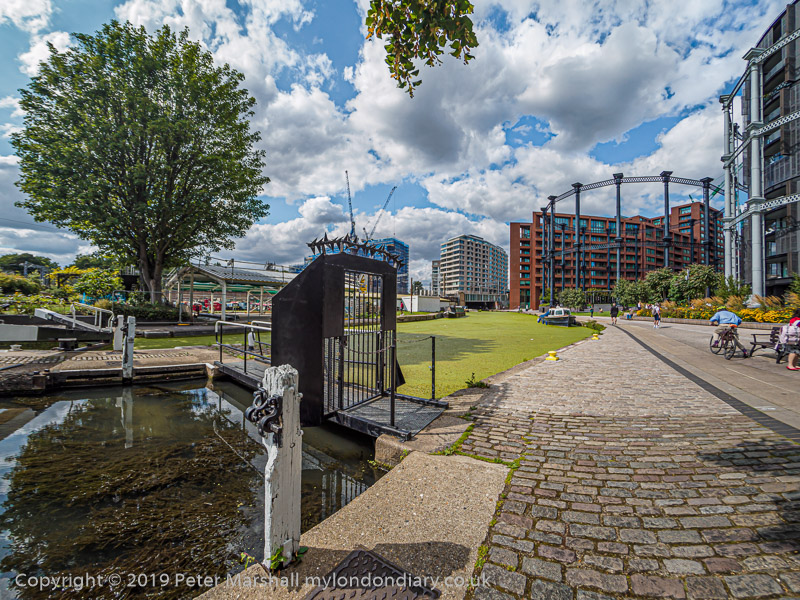
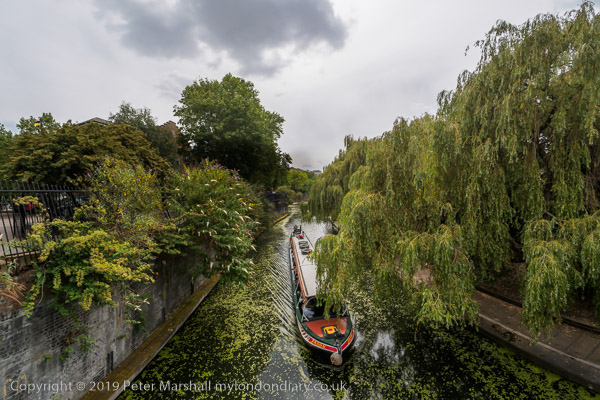
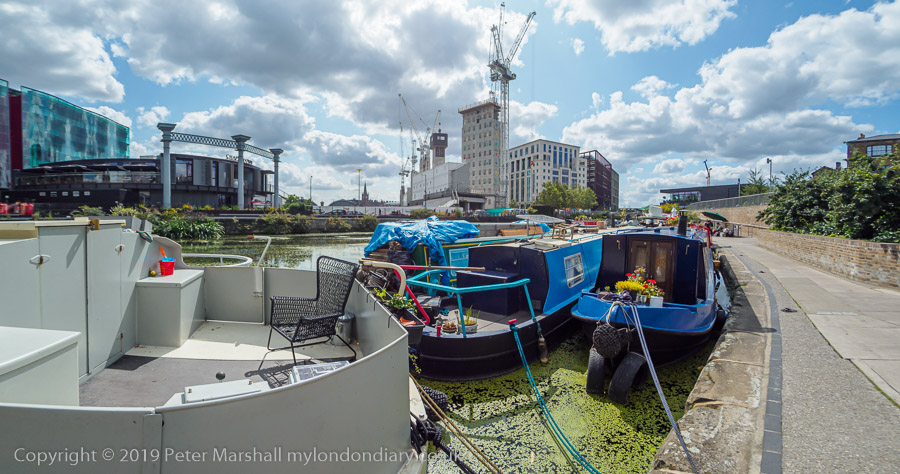
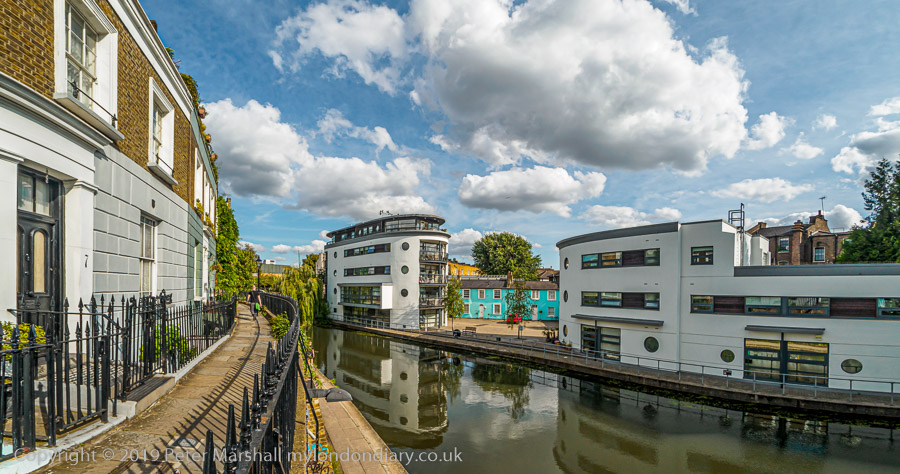
For various reasons it took rather longer than expected to build the Regent’s Canal around the north of London, joining the Grand Union Canal Paddington Arm to the River Thames at Limehouse, but the full length was finally opened in 1820, two hundred years ago this year.

Having realised this anniversary was approaching, early in 2019 I began a series of pictures to celebrate it, and had been intending to present these in a small show I was to have along with an artist friend, Hilary Rosen, at the Street Gallery in University College Hospital London.

The show was to have opened on 19th March this year, but a few days before we realised that it would be impossible because of the Coronavirus pandemic. We had to cancel the opening, but then it became clear to us that it would not be sensible to invite people to go to a hospital to look at an exhibition, and told the gallery that it had to be postponed. A few days later, the government realised they had to do something too, and on March 23 imposed the lockdown.

I’d picked just a dozen images for this show, but had taken hundreds if not thousands in preparation. I’d had the pictures printed and had spent a day mounting and framing them on the Sunday before the show was to start, but simply had to take them back up into my loft rather than to be hung at the gallery.

In making my selection I’d obviously wanted to show what I thought were the best images, but also to show work along the length of the canal from its start at Little Venice to its end at Regent’s Canal Dock (now Limehouse Dock marina.) My preliminary selection included several images from some of the more interesting areas, as well as a few from other places that didn’t make the final cut.

Rather than go back and make a new selection for an on-line presentation I’ve decided to simply put the 42 from my preliminary selection on-line, and to do so on Flickr, where they are displayed at a higher resolution than on Facebook or my own web site (where I think most or all have already appeared at smaller size.)

The images appear in two different aspect ratios, though they all have more or less the same horizontal angle of view, roughly equivalent to the full human binocular field of clear vision. Some are cropped at top and bottom, enabling me to move the horizon away from the centre line and to avoid the more extreme curvature at the edges which the necessary non-rectilinear perspective needed for such extreme angles of view dictates.

You can see them at Regents Canal 200 on Flickr.

C-type prints from the exhibition were to be on sale unframed and printed with images 42×22 cm or 36×24 cm (and a white border) at £200. For this online show they can be ordered direct from 6me at half this price, £100, including postage and packing to the UK. Overseas orders will cost a little more.


All photographs on this and my other sites, unless otherwise stated, are taken by and copyright of Peter Marshall, and are available for reproduction or can be bought as prints.