Back to Poplar in 1988

My previous post, Around Devons Road, Bow 1988, ended outside Spratt’s Patent Limited on Morris Road on the south bank of the Limehouse Cut. My walk continued south down Chrisp St to the East India Dock Road, then turning east for around 350 yards and then back up the next main route north, St Leonards Road.

Plaque, George Lansbury, Poplar Councillors, East India Dock Rd, Poplar, Tower Hamlets, 1988  88-7t-66-positive_2400
Plaque, George Lansbury, Poplar Councillors, East India Dock Rd, Poplar, Tower Hamlets, 1988 88-7t-66-positive_2400

This ‘blue plaque’ is actually and appropriately a red one, placed here by Tower Hamlets Environment Trust with the text ‘Near this place on July 29th 1921 George Lansbury led the people and councillors of Poplar on their march to the high court for the equalisation of rates to poor boroughs.’

According to a long article in Wikipedia, as a youth Lansbury was a supporter of the Liberal Party and particularly Gladstone, but while campaigning for the party he became greatly influenced by leading socialists including William Morris, Eleanor Marx, John Burns and Henry Hyndman, and resigned in 1892, joining the Social Democratic Federation. He worked for a short period as the SDF paid national organiser, leaving that job to return to Bow to take over the running of the sawmill owned by his wife’s family.

Lansbury was first elected to Poplar Borough council in 1903 and in 1910 became MP for Bow and Bromley. He resigned in 1912 in order to fight a by-election in the constituency standing as the ‘Women’s Suffrage and Socialist’ candidate, and although neither Labour nor Liberal parties put up candidates to oppose him he lost to a Conservative candidate with the name of Blair. Reginald Blair had campaigned under the slogan “No Petticoat Government”.

Earlier in 1912 Lansbury had campaigned with others to found a daily socialist newspaper, the Daily Herald, and became editor in 1914. Under his editorship the paper opposed the 1914-18 Great War with Germany and supported the 2017 Russian Revolution.

Lansbury and 29 fellow Poplar councillors were jailed in 1921 for refusing to pay unfair sums from the rates to fund the London County Council, Metropolitan police and other London-wide bodies, instead using the money to support the local poor. Their imprisonment led to public outcry and they were released after six weeks, with a law hastily passed to make richer London boroughs pay their fair share. The campaign made Lansbury a popular hero, and the following year he was elected as local MP with a large majority, holding the seat until his death in 1940.

From 1932 to 1935 Lansbury was the Leader of the Labour Party, but was forced to resign because his Christian pacifist principles became increasingly unacceptable as war with Germany and Italy looked increasingly inevitable. Ernest Bevin put in the final knife, pointing out at conference that his beliefs contradicted the party policy to oppose fascist aggression. Lansbury resigned a few days later, his deputy Clement Atlee becoming leader.

The Falcon, pub, East India Dock Rd, Poplar, Tower Hamlets, 1988  88-7t-51-positive_2400
The Falcon, pub, East India Dock Rd, Poplar, Tower Hamlets, 1988 88-7t-51

The Falcon was at 202a East India Dock from 1869 until it closed in 1985. In my picture you can see some of the windows are boarded up inside and one in Bullivant Street is broken. The first building here was around 1819 and was owned by a Poplar wine merchant, so it may have been a pub earlier. The Truman, Hanbury & Buxton building in the picture dates from 1911 and was demolished shortly after I took this picture.

The A13 here has been widened and nothing on the south side of the road here remains. There are flats on the corner of Bullivant St, a few yards further south than the front of the former pub.

Chinese, East India Dock Rd, Poplar, Tower Hamlets, 1988  88-7t-52-positive_2400
Chinese, East India Dock Rd, Poplar, Tower Hamlets, 1988 88-7t-52

I think this heavily metal shuttered frontage was a Chinese restaurant on the north side of East India Dock Road, probably in the block opposite Bullivant St. Unfortunately I can’t read the two Chinese characters but was intrigued by them and the hanging curtain behind them in this small aperture at the bottom of the doorway.

Tunnel Furnishers Ltd, East India Dock Rd, Poplar, Tower Hamlets, 1988  88-7t-53-positive_2400
Tunnel Furnishers Ltd, East India Dock Rd, Poplar, Tower Hamlets, 1988 88-7t-53

Tunnel Furnishers, a furniture warehouse, was as few doors along East India Dock Road east from The Falcon pub on the corner of Bullivant St. A rather fine 1930s building, this was also lost in the widening of the road not long after I photographed it.

It looks rather like a cinema, but was built in 1938 for the Borough of Poplar as Electricity Showrooms and Offices, replacing an earlier showroom on the site. Closed in 1972, the upper floors continued to be used for training by the London Electricity Board until 1975, after which it was sold for commercial use. Like the rest of the block it was demolished in 1991.

Lodore St, Poplar, Tower Hamlets, 1988  88-7t-55-positive_2400
Lodore St, Poplar, Tower Hamlets, 1988 88-7t-55-positive_2400

My walk took me into what is now the St Frideswide’s Mission House Conservation Area, where a couple of days earlier I had photographed the Follett St Seamen’s Mission, and I took another, very similar picture of that building, before going further along the street and turning into Lodore St.

The view above is I think from Follett St, and shows the rear of one of the buildings of St Frideswide’s on Lodore St, but I think the archway, probably part of the chapel, has been demolished.

Christ Church, Oxford was originally the church of St. Frideswide’s priory, and St Frideswide’s Mission was set up by members of Christ Church College led by the father of Alice in Wonderland, Dean Liddell. A church was built here around 1892, with the Mission house opened in 1893, devoted to a girl’s and mother’s group.

St Frideswide's, Mission House, Lodore St, Poplar, Tower Hamlets, 1988  88-7t-41-positive_2400
St Frideswide’s, Mission House, Lodore St, Poplar, Tower Hamlets, 1988 88-7t-41

The building was paid for by Miss Catherine Phillimore (1847-1929) , who I think was then well-known as an author as well as a translator of Italian books on artists, a wealthy spinster living at Shiplake House in Henley-on-Thames. A number of her books have been reprinted in recent years and are still available.

St Agnes House, Follett Street Poplar, Tower Hamlets, 1988 88-7t-43-positive_2400
St Agnes House, 18, Follett Street Poplar, Tower Hamlets, 1988 88-7t-43

This was built to allow the work of the mission to expand in 1899, and also paid for by Catherine Phillimore. In 1900 it became the Hostel of the Poplar Association for Befriending Girls. The washing on the balcony shows it was still in use in 1988.

St Frideswide’s was the inspiration for the TV series ‘Call the Midwife’ and there is a good article on the Poplar London web site which praises the accuracy of the series and its depiction of the Religious Sisters of Saint John the Divine and their midwives, though complaining that it unfairly makes the residents of Poplar look dirty.


My walk will continue in a later post. You can see larger versions of the pictures by clicking on any of them, which will take you to the album where you can browse more.
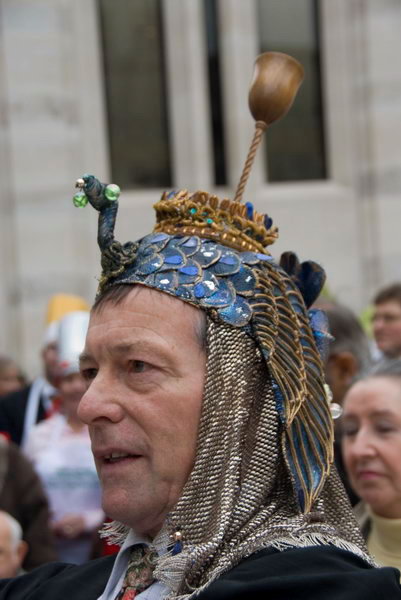
Pancakes, a Farm and More From London

Pancakes, a Farm and More From London 2007. Fifteen years ago on Tuesday 20th February 2007 I had a long but enjoyable day.


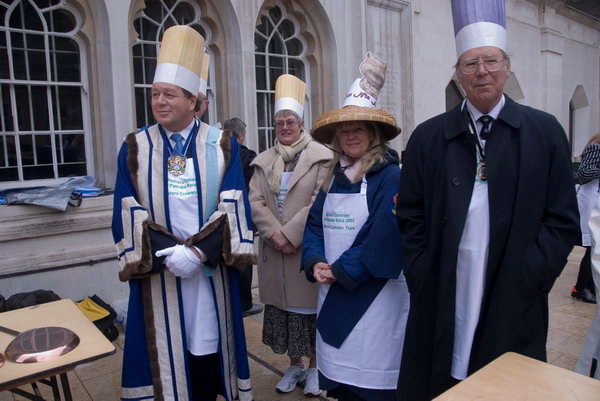
Worshipful Company of Poulters Pancake Race

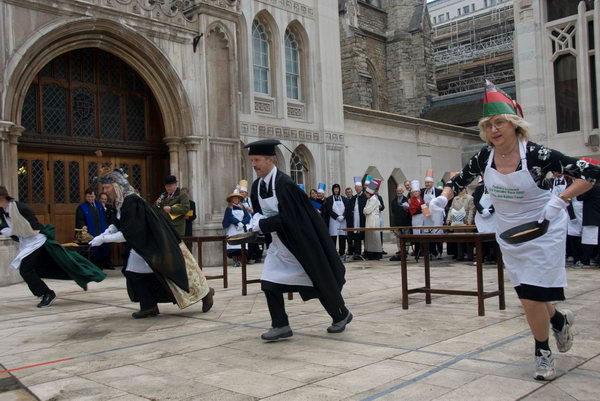
It was Shrove Tuesday, and my working day began in Guildhall Yard at the centre of the City of London, where some of its older institutions were enjoying letting their hair down a little in the Worshipful Company of Poulters Pancake Race.

I wrote then: ” it was first run in 2005, but as befits the city it has a serious set of classes and rules, music from the Worshipful Company Of Musicians (1500), time-keeping by the Worshipful Company Of Clockmakers (1631) and a starting cannon for each of the many races provided and fired by the Worshipful Company Of Gunmakers (1637.)

The guilds are now largely charitable organisations and the event each year supports the current Lord Mayor’s charity, which in 2005 was Voluntary Service Overseas, VSO. But although it is just a bit of fun, it also strongly showed the competitive nature of the the City.


Great Spitalfields Pancake Race

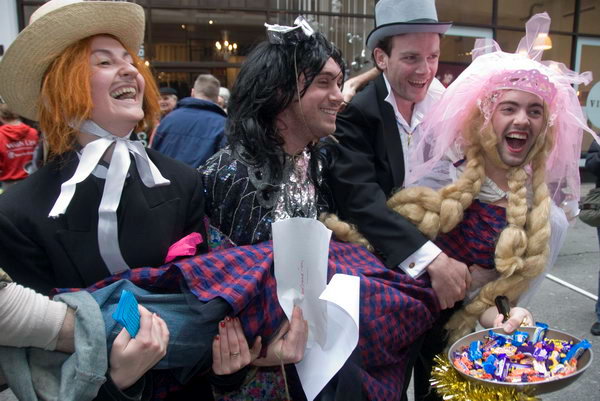
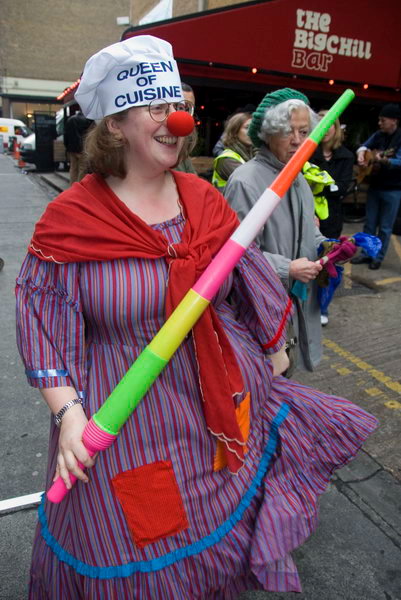
There was a very different feel to the Great Spitalfields Pancake Race at Trumans Brewery in Spitalfields, organised by Alternative Arts where teams from local businesses were competing in fancy dress on Dray Walk. Rules there were minimal and the emphasis was on fun.

I arrived rather out of breath and very late, having run most of the way from the Guildhall, and was only just in time to see the final race and the prize-giving.


Spitalfields Urban Farm

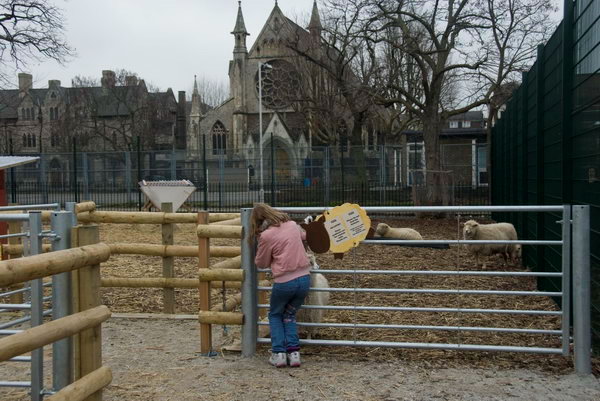
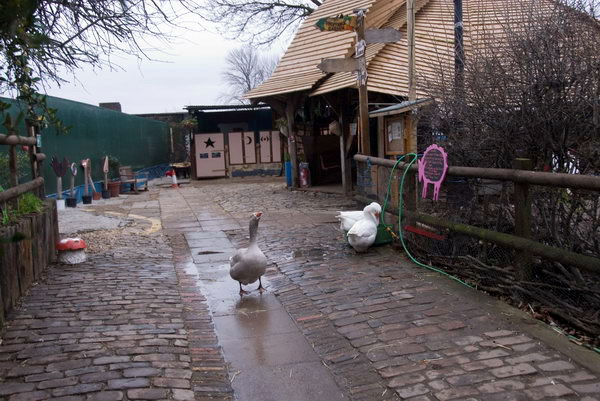
I had nothing particular to photograph for the rest of the day and decided to accompany a friend who was looking after a couple of his neighbours children and take a look at the Spitalfields Urban Farm. A late friend of mine had helped to set up and running an urban farm in Vauxhall in 1977 a year earlier than the Spitalfields farm, but part of the same movement in those years.

The farm was set on land which had previously been a part of a goods yard for the railway coming from East Anglia into Liverpool St. I imagine the only animals then would have been coming to slaughter in London markets, but now they had a happier future, providing environmental education and a great deal of enjoyment to people of all ages in the local community.


Art, Architecture and a Hoody

I said good goodbye to my friend and the children he was with at the farm and went for a short walk around Spitalfields on my way to catch a bus on Norton Folgate, one of those great historical names that we still have in London.

Norton Folgate, on the north edge of the City of London used to be an “extra-parochial liberty”. According to Wikipedia there are several theories about the name. Norton probably came from Old English words north and tun, the latter meaning farmstead. But Folgate is more of a mystery; possibly it came from the name of a Lord of the Manor or alternatively from the Saxon ‘foldweg’ meaning highway, but I think its derivation is probably a mystery lost in time.

Before the Reformation the area was occupied by the Priory and Hospital of St Mary Spital, and when the priory closed down it became Crown property, and was not included in the neighbouring parishes. Being a liberty meant the King surprisingly didn’t claim an income from it. In 1900 it became a civil parish and in 1921 it was divided in two the west part going to the borough of Shoreditch and the east to the borough of Stepney. Both these were abolished in 1965 with the formation of the London Boroughs of Hackney and Tower Hamlets. Finally in the 1990s parts of the area were transferred to the City of London, though my walk was streets of Tower Hamlets.


Another London

I was on my way to New Malden where I was meeting Paul Baldesare and a few other photographers in an Italian cafe before going on to give them a guided tour of our show (with Mike Seaborne), Another London, then taking place in Kingston Museum.

The website I think shows all of the photographs in the show by all three of us. My own contribution was on photographs of public events in London, concentrating on those “related to particular ethnic communities in the capital, while others are from very local events such as street parties and festivals.” It includes quite a few made with the show in mind in the London Borough of Kingston.


My photographs from 20th February 2007 are linked from the February 2007 page of My London Diary, but you will need to scroll down to find both the texts and links to the images, a problem with the site design which I improved the following year.


Around Devons Road, Bow 1988

Around Devons Road, Bow 1988. My previous post about my walk on Sunday 31st July 1988 ended on Rounton Road, but I knew I wanted to take more pictures in the area around Devons Road, so I headed back there.
Devons Rd, Bow, Tower Hamlets, 1988 88-7s-24-positive_2400
Devons Rd, Bow, Tower Hamlets, 1988 88-7s-24

There is still a patch of grass and a zebra crossing here, close to the junction with Violet Road (now a mini-roundabout) but the bus shelter and the closer shops, including Hilton Furniture Centre, the Car Service, the Bookmakers and six more, some boarded up, which had been up for auction (by order of the L. R, B – “3 investment and 6 vacant“) six months before I took the picture are long gone. In the distance is the Lighthouse Baptist Chuch, still a local landmark.
The LRB was not of course the London Review of Books (as Google now thinks) but the London Residuary Body, set up in 1985 to dispose of the assets of the Greater London Council after its abolition by Thatcher in 1986, a decision which continues to blight London.

Service Station, Violet Rd, Bow, Tower Hamlets, 1988 88-7s-25-positive_2400
Service Station, Violet Rd, Bow, Tower Hamlets, 1988 88-7s-25

I was amused by Violet Road Service Station which appeared to me to be trying to be a caravan and had an impressive pile of wooden pallets on its forecourt. Long demolished and I think replaced by flats.

Works, Yeo St, Bow, Tower Hamlets, 1988 88-7s-26-positive_2400
Works, Yeo St, Bow, Tower Hamlets, 1988 88-7s-26

The building at right with the exterior staircase in what seemed to me a 1950s style has been replaced by a Tesco Express and flats. The large pile of pallets and the caravan both connected in my mind with the the previous image I had made (above).

The low building on Violet Road at left survived into this century when it served as a huge billboard along the street for the Caspian Wharf development whose sales & marketing suite and showhome were in Yeo St, but was replaced by a 7-storey canalside block around 2012.

Spratts Patent Limited buildings are still there – one clearly being converted into flats when I made this image.

Glaucus St, Bow, Tower Hamlets, 1988 88-7s-14-positive_2400
Glaucus St, Bow, Tower Hamlets, 1988 88-7s-14

I think this is the best of four frames (two on Flickr) I made of this heap of crumpled metal on the clearance site on Glaucus St and Yeo St. I couldn’t make up my mind exactly what it had once been.

According to the Greek myths, Glaucus of Corinth was a son of Poseidon who loved the beautiful nymph Scylla and who showed little interest even after had himself turned into a merman to pursue her. He made the mistake of going to her jealous rival Circe for a love potion which whem she swallowed it instead changed her into a sea-monster who went on to lived in the rocks beside the whirlpool of Charybdis.

However I suspect the street name did not come directly from the Greeks, but was possibly the name of one of the ships built in a nearby shipyard. The name is also used for a genus of sea-slugs and was the title given to a book of scientific reports on the voyages of HMS Challenter in 1873-6.

Glaucus St, Bow, Tower Hamlets, 1988 88-7s-15-positive_2400
Glaucus St, Bow, Tower Hamlets, 1988 88-7s-15

Another view of the development site in Glaucus St.

Works, Yeo St, Bow, Tower Hamlets, 1988 88-7s-16-positive_2400
Works, Yeo St, Bow, Tower Hamlets, 1988 88-7s-16

Yeo Street still contains some industrial buildings on the wharves along the Limehouse Cut, but this one is of the same site as a previous image in this post, now a Tesco Express and flats on the corner with Violet Road.

This was formerly Violet Street, and I wonder if the name may have been linked to dyes produced in chemical factories along the cut. Mauveine, the first synthetic dyestuff was discovered not far away by William Perkin working in the attic of his family home in 1856, though he set up his factory in Greenford. But the dye was a Victorian sensation and perhaps increased the popularity of the name Violet, though other flower names also became popular around the 1880s.

Violet Rd, Bow, Tower Hamlets, 1988 88-7t-61-positive_2400
Violet Rd, Bow, Tower Hamlets, 1988 88-7t-61

Another view of the building on Violet Road, on the corner of Yeo St, which shows a similar external staircase on the opposite end of the building.

Morris Rd, Bow, Tower Hamlets, 1988 88-7t-62-positive_2400
Morris Rd, Bow, Tower Hamlets, 1988 88-7t-62

Across the bridge over the Limehouse Ct, Violet Road becomes Morris Rd, and a board in front of Spratt’s Patents Limited tells us this is now Tower Studios and that the two luxurious penthouse appartments due for completion in May 1987 have now been sold.

Still more pictures from my walk on 31st July 1988 in a later post here.


Bromley-by-Bow – July 1988

Bromley-by-Bow – July 1988. My previous post on my walk on Sunday 31st July 1988 ended at Watts Grove off Devons Road, and I spent some time exploring the area around here and in Bow Common and Bow.

All Hallows, Church, Devons Rd, Bow, Tower Hamlets, 1988 88-7s-45-positive_2400
All Hallows, Church, Devons Rd, Bow, Tower Hamlets, 1988 88-7s-45

The church of All Hallows on Devons Road was funded by the Clothworkers’ Company who got the money from the site of All Hallows Staining, demolished except for its tower in 1873. That tower, now Grade I listed, is still there just off Mark Lane, next to St Olave’s Church Hall. They paid for a church by architect Ewan Christian, completed in 1874. Unfortunately this was badly damaged by bombing, and only its core remained in the new church on the site by A P Robinson completed in 1955 in an ‘Early Christian’ style. The church has its address on Blackthorn St and is not yet listed.

Shops,  Devons Rd, Bow, Tower Hamlets, 1988 88-7s-46-positive_2400
Shops, Devons Rd, Bow, Tower Hamlets, 1988 88-7s-46

There was still a tyre shop, though no longer J R Tyres, at 119 Devons Road in 2021, though I think this end of the row of shops is currently being rebuilt. Some years since I made this picture this shop had previously been rebuilt, its ground and upper floor losing their late Victorian frontage.

The Widow's Son, The Bun House, pub, Devons Rd, Bow, Tower Hamlets, 1988 88-7s-32-positive_2400
The Widow’s Son, The Bun House, pub, Devons Rd, Bow, Tower Hamlets, 1988 88-7s-32

The Widow’s Son has the distinction of being the only listed building in the South Bromley Ward of Tower Hamlets, though I suspect its Grade II* listing reflects the legend associated with it – of the widow’s son who joined the Navy to fight Napoleon and wrote telling his mother he would be home for Easter and told her to cook a hot cross bun and have it waiting for him. He never came, but every year on Good Friday she baked a fresh bun for him, and a large collection was found hanging in a net from the ceiling beams of her cottage after her death.

The Widow’s Son, commonly known as the Bun House, was built on the site of her cottage, and the net containing the buns, was hung above the bar, with a sailor from the Navy adding another each year on Good Friday. From some time in the 1990s the buns were baked and supplied by Mr Bunn’s Bakery, a family-run business a few miles away in Chadwell Heath.

The pub was built around 1848, and its single bar largely retains its fittings from around the 1870s. It closed and was put up for sale in 2016, but was reopened in time for Bun Day in 2017 and was refurbished with new kitchens in 2019 and is more a pub/restaurant. I think it reopened after a further temporary closure due to Covid, but haven’t been able to check personally.

Joe's Auto Spares,  Cantrell Rd, Bow, Tower Hamlets, 1988 88-7s-34-positive_2400
Joe’s Auto Spares, Cantrell Rd, Bow, Tower Hamlets, 1988 88-7s-34

Joe’s Auto Spares were in a railway arch immediately west of the Cantrell Road Bridge, where there are still businesses in the arches, though many are now being priced out as railway arches – such as those in the centre of Brixton – are redeveloped and re-let at much higher rents.

Railway, bridge, gasholder, Cantrell Rd, Bow, Tower Hamlets, 1988 88-7s-35-positive_2400
Railway, bridge & gasholder, Cantrell Rd, Bow, Tower Hamlets, 1988 88-7s-35

I walked into the southern end of Tower Hamlets Cemetery Park to take a wider view showing the railway bridge and Joe’s Auto Spares, with one of the two remaining gasholders of Bow Common Gasworks behind. The gasholders, long redundant, were only demolished a few years ago and the site is now a development of around 1450 homes, a new sixth form centre, some commercial uses and a new area of open space.

Car spares, Cantrell Rd, Bow, Tower Hamlets, 1988 88-7s-36-positive_2400

I couldn’t resist taking another picture of the scrapyard beside the railway which has featured in a previous post. The site is now a part of the Tower Hamlets Cemetery Park.

Demolition, Fairfoot Rd, Bromley, Tower Hamlets, 1988 88-7s-21-positive_2400
Demolition, Rounton Rd, Bromley, Tower Hamlets, 1988 88-7s-21

Walking back towards the east I came to Rounton Road, where a row of late Victorian houses was being demolished. I think the tower block just visible in the background is probably Gayton House just off of Knapp Rd. The whole area around Rounton Road has been redeveloped.

Lozinski Ltd, Rounton Rd, Bow, Tower Hamlets, 198888-7s-22-positive_2400
Lozinski Ltd, Rounton Rd, Bow, Tower Hamlets, 198888-7s-22

Lozinki Ltd, an engineering company helpfully give their address as Rounton Ropad, Bow, and their site is now Miami Car Wash. Through the railway brdige you can see Navenby Walk. The tree is also still there.

H Barnett & Co, Rounton Rd, Bow, Tower Hamlets, 1988 88-7s-23-positive_2400
H Barnett & Co, Rounton Rd, Bow, Tower Hamlets, 1988 88-7s-23

The railway bridge, as well as the brick building are still there but the writing on the wall for H Barnett & Co, as well as the Vehicle Spares sign have gone and the wall and street sign both replaced. The building, obviously much altered by the brickwork, is a sub-station for the railway with a bridge carrying cables across to the tracks at its rear.

I still had a lot of wandering to do – so there will be further posts from my walk around Bow.


A Threatened Hospital, Riverside Walk, Syria & Mali

A Threatened Hospital, Riverside Walk, Syria & Mali – pictures from nine years ago on February 15th 2013.

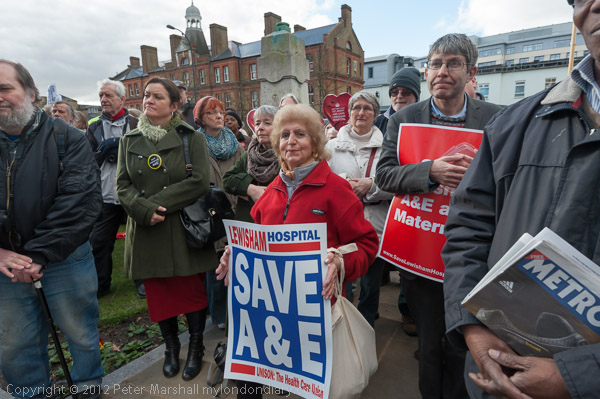
Fight to Save Lewisham Hospital Continues

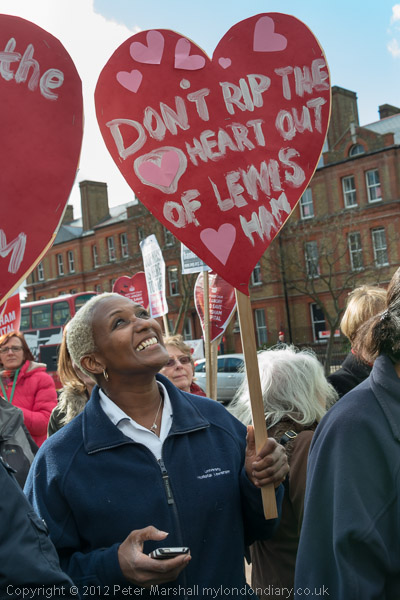
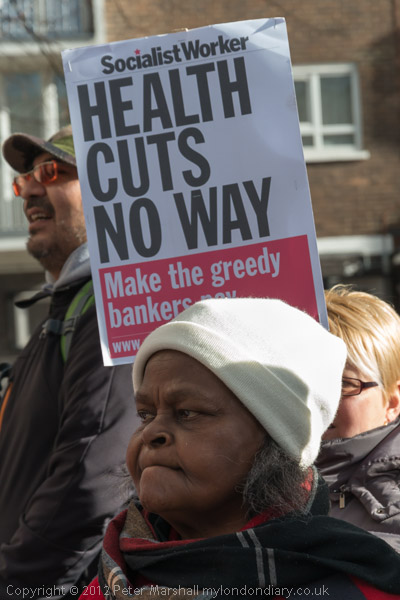
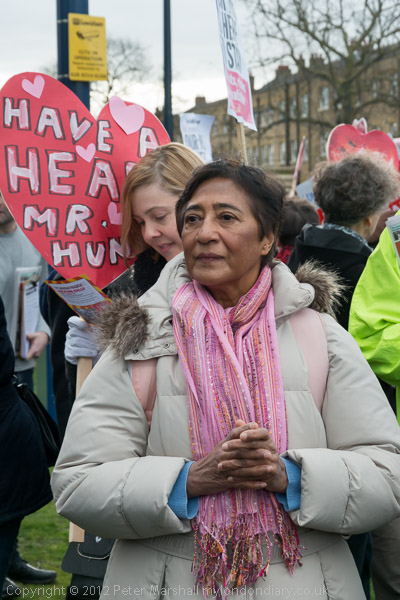
My work began at a lunchtime rally opposite Lewisham Hospital where the whole local community is fighting to save their hospital with both a legal challenge and further mass demonstrations including a ‘Born in Lewisham Hospital’ protest a few weeks later. Parts of the hospital across the main road are in the picture.

People were appalled by then Health Minister Jeremy Hunt’s decision to accept the proposals for closure, and to ignore the mass protests by local residents. Not only are the proposals medically unsound and will lead to patient deaths, but they also represent short-term thinking that will result in a huge waste of public funds.

Lewisham was a sucessful and financially sound hospital and had received sensible public investment to provide up to date services, and the services to be cut will have to be set up again at other hospitals. Closing Lewisham would not only incur high costs, but would waste the previous investment in its facilities.

Closure was only considered because of huge debts inherited when it was merged into a group which had earlier made a disastrous PFI (private finance initiative) agreement to build a new hospital a few miles away. Both the hospital group and Jeremy Hunt had been shown to be telling lies about the scope and cost of the replacement A&E and maternity facilities which would be needed if Lewisham were closed.

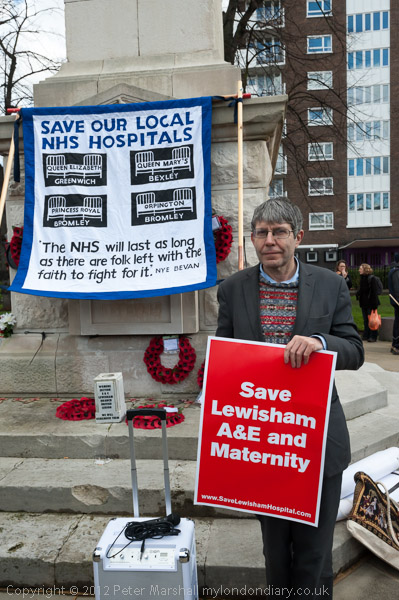
The well-attended protest was organised by the Save the Lewisham Hospital campaign which was raising funds for a legal challenge as well as a new poster and leaflet campaign and the forthcoming mass demonstration. But this was not just a campaign for Lewisham, but one that is vital for the whole of the NHS. Behind the speakers was a banner for the South-East London ‘Save Our Local NHS Hospitals’ campaign quoting Nye Bevan: ‘The NHS will last as long as there are folk left with the faith to fight for it.‘ They certainly had the faith in Lewisham.

Fight to Save Lewisham Hospital Continues


Thames Path Greenwich Partly Open

Here’s what I wrote back in 2013:

I had some time to spare between protests and it was a nice day, around 10 degrees warmer than we’d been having and sunny, so I decided to take a bus to North Greenwich and walk along the Thames Path, having heard that parts of it had re-opened. The weather changed a little and there were some dramatic skies.

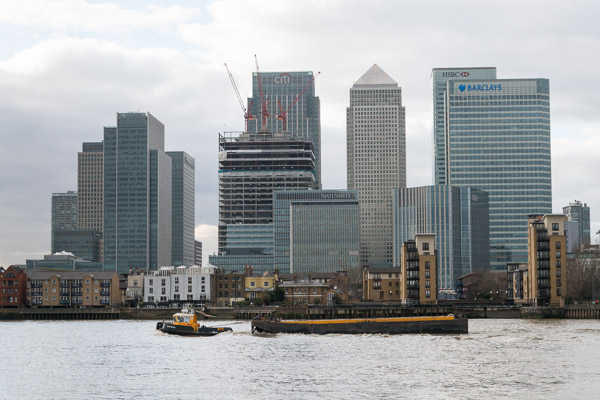
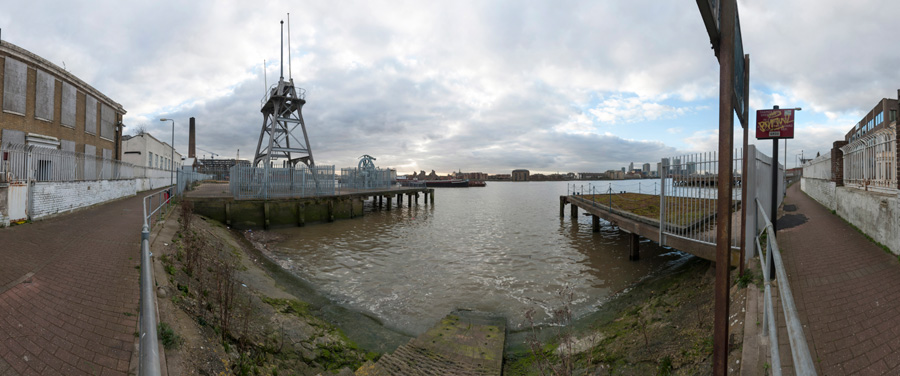
There is still a section of the walk that is closed, a giant building site where Delta Wharf once was up to Drawdock Road, but on each side of this the walk is open. although the council sign on the footpath leading from Tunnel Avenue still indicates it is closed. At the river the path north is blocked, but you can walk south to Greenwich.

A panorama – the same path in opposite directions at both sides

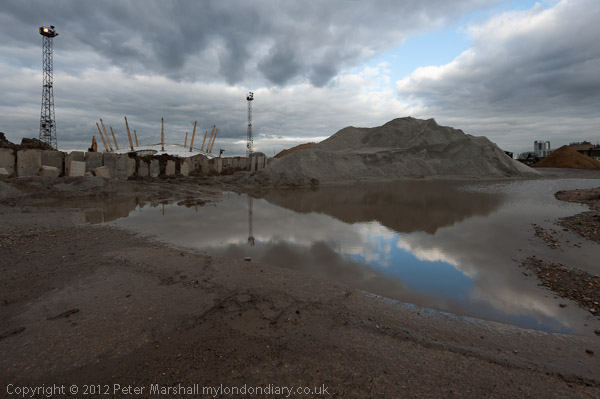
At first the walk goes alongside a giant manmade landscape of sand and gravel, like some alien planet – and behind the conical hills the Dome and the gas holder, with occasional lighting towers and cranes add to the scene. Most of this is behind tall fences, but fortunately these have gaps between the posts allowing you to see and photograph. Years ago the path here went through a working container dock, the Victoria Deep Water Terminal, with yellow lines marking the route, though occasionally it was blocked by crane operations, and we waited rather than have heavy containers overhead. There are a couple of my pictures of this and others from the riverside path in the 1980s on my London’s Industrial Heritage site.

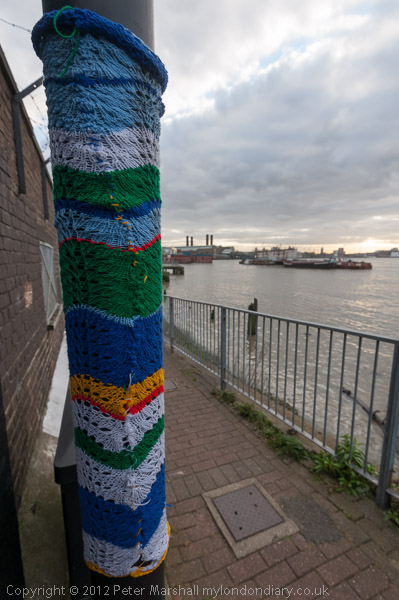
Beyond there the riverside path seems rather empty, with many structures having dissappeared, including the huge concrete silo I photographed. But something new has appeared, ‘guerilla knitting’ on some of the trees and posts along the path.

Many more pictures at Thames Path Greenwich Partly Open on My London Dairy


Stop Western Intervention in Syria & Mali

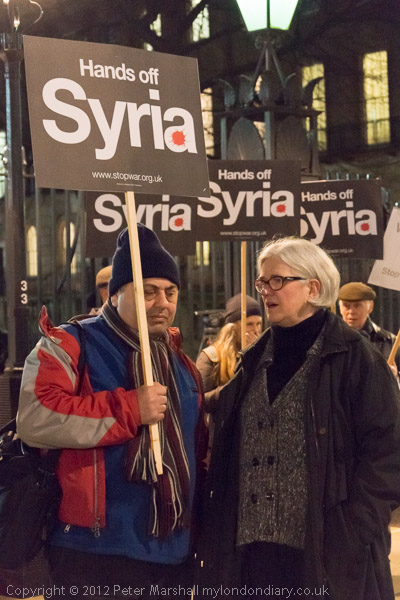
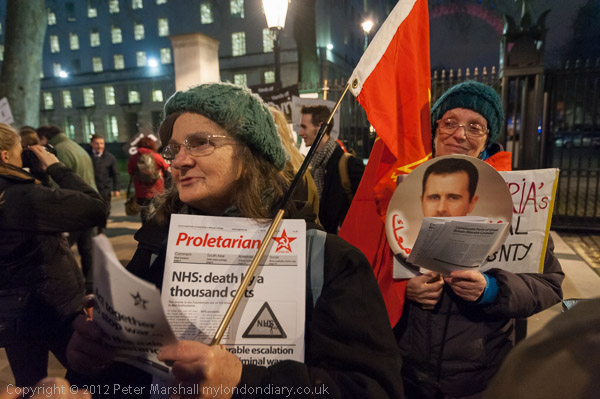
It was the 10th anniversary of the march by 2 million against the Iraq war, Stop the War organised a small protest at Downing St calling for a stop to Western intervention in Mali and Syria and against the possible attack on Iran.

Many on the left feel that the failure of that huge protest to actually prevent the UK taking part in the invasion of Iraq showed a failure in the leadership of Stop The War to make any quick and efffective action to follow it up. Stop The War have also failed to convince the public at large with their more recent campaigns against intervention in Libya and now against the support being given to the Free Syrians and the Mali government. As the upper picture shows there were some supporters of the Assad regime, from a small left group, the Communist Party of Great Britain (Marxist-Leninist), taking part in the protest. Almost certainly the great majority of supporters of Stop The War while against UK military intervention would like to see more support being given in other ways to the Syrian rebels.

Stop Western Intervention in Syria & Mali


Willesden Walk and Wassail 2017

Willesden Walk and Wassail 2017

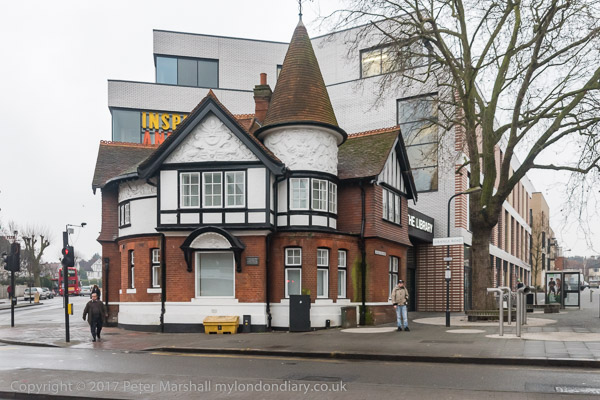
Willesden isn’t a part of London I visit very often, though I sometimes change trains on my way elsewhere at Willesden Junction. But even that isn’t in Willesden but in its neighbour Harlesden – just as Clapham Junction isn’t in Clapham but in Battersea, the railway companies choosing a more reputable nearby settlement to name their station.

I hadn’t intended to go for a walk from Kensal Rise to Willesden Green on Sunday 12th February, but the Transport for London web site had misled me, telling me there were no trains running from my station that day, but a much slower rail replacement bus service. But there was a train just about to leave when I bought my ticket, and I jumped on it.

Good though this was, it meant I arrived at Kensal Rise over an hour before anticipated for the short bus ride to my destination. It was a cold winter day with a bitter east wind, far too cold to stand around waiting on the street so I had a decision to make. I could have sat inside a pub or café, but decided I would keep warm enough if I walked around to make my way to my destination.

Willesden Green Library – where the Wassail would later end

A direct route would not have taken me long enough, but the only map I had was Google Maps on my phone as I was outside the small central London atlas that has a permanent place in my camera bag. While paper maps keep north at the top, on my phone at least the map seems to turn around pretty randomly and at one junction I got confused, turning in the opposite direction to that I intended.

But even with getting a little lost and walking over 3 miles I still arrived 20 minutes before the event I was attending began, but the walking had kept me reasonably warm.

Willesden Green Wassail

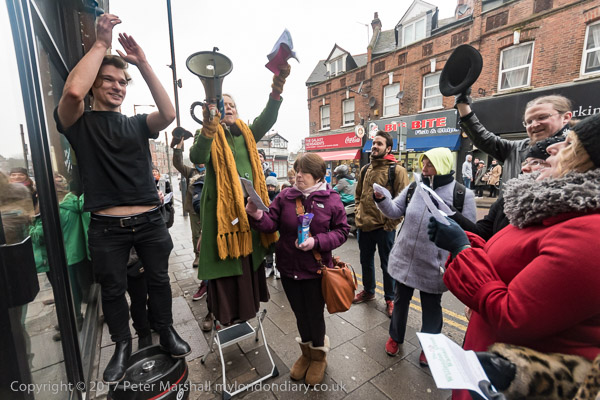
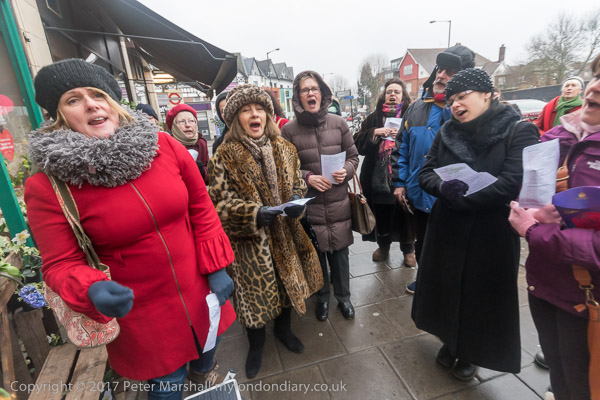
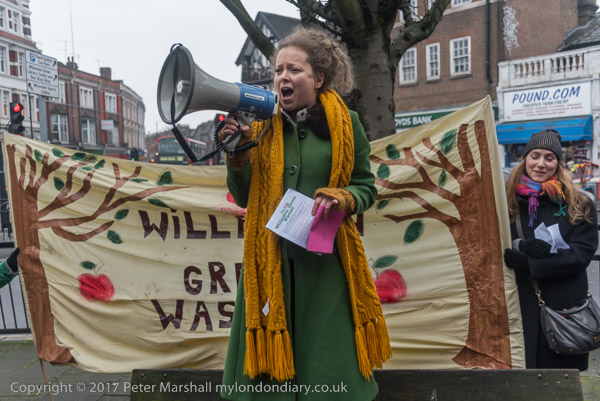
I’d been invited in 2014 to photograph the Willesden Green Wassail by its leader and organiser Rachel Rose Reid, and was returning three years later for the 7th Community Wassail there “to invoke successful growth and resilience in the neighbourhood, celebrating community initiatives and the shopkeepers who contribute to making the neighbourhood a friendly and happy place.”

Cricklewood Community Singers

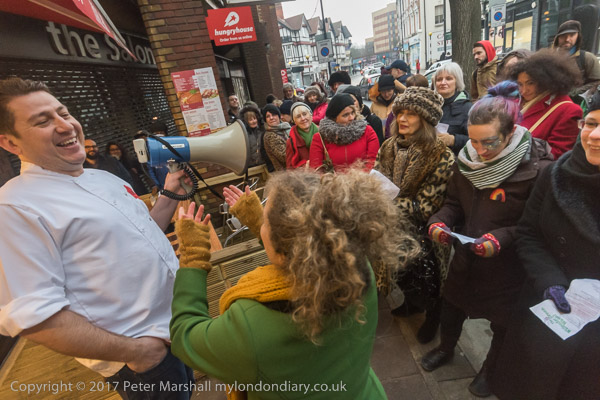
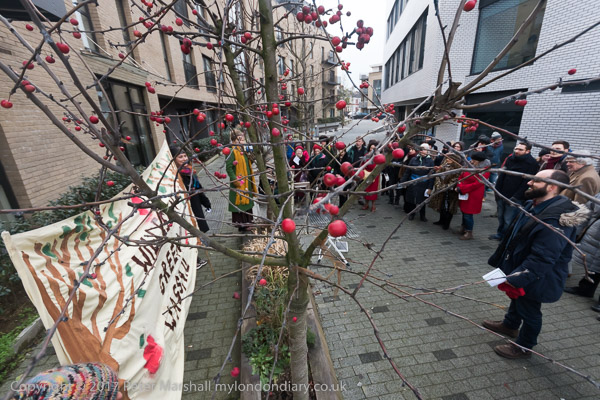
The wassailers, with the Cricklewood Community Singers performed a version of the traditional wassail song, and their were performances by local poets, storytellers and other singers as we called on various shops and other places, slowly making our way to the crab apple trees behind Willesden Green Library.

Rachel Rose Reid

At the shops we stopped at, the shopkeepers came out and told us a little about their businesses and thanked us for the good wishes and our wassailing.

The crab apples having been wassailed, people let off party poppers, which proved to be very difficult to photograph, a reminder to me of the difference between the way the camera and our eyes see things. We can both see the overall scene and concentrate on details, while a still image has to select its angle of view and treats all within that equally. Of course you can take more than one picture, but that doesn’t really deliver with a rapidly changing scene. I would have been better switching to recording a movie of this part of the event.

After this the group walked back to a local coffee shop where there were to be more performances, as well as hot drinks. But by then it was time for me to start my journey home to get back in time for dinner. This time I took the bus back to Kensal Rise.

Many more pictures both from the walk (enough to work out my route in the unlikely event you should wish to do so) and also from the Wassail on My London Diary:
Willesden Green Wassail
Kensal Rise to Willesden Green


East India Dock Road to Bow Common

More pictures continuing my walk on 31st July 1988 – the previous post is Bow Common to West India Dock Road, so this returns to close to where that started. Like most of my walks it was more about exploring a neighbourhood than getting anywhere.

East India Dock Rd, Poplar, Tower Hamlets, 1988 88-7s-61-positive_2400
East India Dock Rd, Poplar, Tower Hamlets, 1988 88-7s-61

East India Dock Road was built as its name suggests when the East India Docks were opened in 1806 to provide a more direct and less congested route than Poplar High Street to them from the end of the Commercial Road, also then recently built in Limehouse. It is now part of the A13 and this section in Poplar has in turn been largely bypassed by the Limehouse Link and Aspen Way opened in 1993. Traffic was still very heavy along it in 1988.

The picture with rubbish on the pavement and gutters, a small rather derelict shop to let gave a picture of a run-down area which contrasted with the word Wonderful on what seems a rather faded fabric on a restaurant at right. Buddleia is growing in front of the billboard, always a sign of dereliction. Interestingly the the advert is for a low alcohol lager, hardly a thing back then when most drivers on the streets after closing time were drunk, although the breathalyser had come in back in twenty-one years earlier. But even the introduction of Kaliber in 1986 had not really galvanised the market – but low alcohol beers are now a massive growth area, and some are even drinkable.

There is still a Chinese restaurant in the building at the right of this picture, and rather surprisingly that small shack is still in place in front of Amory Place, now a minicab office.

Chun Yee Society, East India Dock Rd, Birchfield St, Poplar, Tower Hamlets, 1988 88-7s-62-positive_2400
Chun Yee Society, East India Dock Rd, Birchfield St, Poplar, Tower Hamlets, 1988 88-7s-62

There are still traces of London’s first Chinatown in Limehouse, which began in the area around 1900, but the centre of the Chinese community had moved to Soho in the 1950s, partly because of extensive bomb damage in Limehouse, but also because of dirt-cheap rents in an area with a bad reputation where few then wanted to live in central London.

Chun Yee Society, East India Dock Rd, Birchfield St, Poplar, Tower Hamlets, 1988 88-7s-63-positive_2400
Chun Yee Society, East India Dock Rd, Birchfield St, Poplar, Tower Hamlets, 1988 88-7s-63

The house on the corner of Birchfield St still has the sign for the Chun Yee Society – Chinese School on Sundays over its doorway. not along with a larger and newer version with fewer Chinese characters. Like many similar societies it began as a Tong, variously described as a criminal gang or a semi-masonic bortherhood, and organised various festivals including those commemorating the dead. Founded in 1906 it was a shelter for Chinese sailors as well as providing a Chinese Sunday school for children and is now largely an old peoples centre. Possibly some of the games of dominoes may have got a little out of hand, but the criminality was largely in the mind of Sax Rohmer, his readers and the sensationalist press.

St Mary & St Joseph, Catholic Church, Upper North St, Poplar, Tower Hamlets, 1988 88-7s-51-positive_2400
St Mary & St Joseph, Catholic Church, Upper North St, Poplar, Tower Hamlets, 1988 88-7s-51

The Roman Catholic Church of SS Mary and Joseph, Poplar impresses mainly by its scale. Built in 1951-4, its architect Adrian Gilbert Scott (1882-63) was the brother of the better-known Sir Giles Gilbert Scott, both from a distinguished family of architects. I always think of it as an ecclesiastical version of Battersea Power Station, without the chimneys but with a rather odd green pyramid on its roof, but that’s rather unfair as it is a very individual design, sometimes described as Byzantine jazz gothic.

According to the Grade II listing text this is a camel arch, and a similar arch appears at the top of the main windows, supposedly inspired by Persian buildings. The church replaced one on the site behind me as I made the picture which was destroyed by bombing – the site is now a Catholic school. I think I chose an interesting viewpoint, but one that needed a slightly wider lens and a more upright photographer.

Flats, GLC, Temporary Housing, Brabazon St, Poplar, Tower Hamlets, 1988 88-7s-53-positive_2400
Flats, GLC, Temporary Housing, Brabazon St, Poplar, Tower Hamlets, 1988 88-7s-53

The second of these LCC temporary buildings has a sign proclaiming it as ‘LANSBURY WORKS OFFICE’ and giving its address in Brabazon St. The street got its name not from the huge white elephant civil airliner that made a few flights in the 1950s before it and the project was scrapped in 1953, but from the 1882 founder of the Metropolitan Gardens Association, the 12th Earl of Meath, Lord Brabazon.

Work began on the layout of the London County Council’s Lansbury Estate in 1949 on a large area devastated by wartime bombing, and its best-known feature, Chrisp Street Market was built the following year and became an integral part of the 1951 Festival of Britain. But construction of the estate continued for many years and was only said to be completed in 1982, by which time it had been transferred first to the GLC and then Tower Hamlets. Since 1998 it has been owned by Poplar HARCA.

But as this picture shows, this part was still not completed in 1988. The large 11-storey tower block Colebrook House with 42 flats was part of the Barchester Street Scheme by the LCC Architects department and completed in 1957-8, named after a shop built at nearby Blackwall Yard. Brabazon St now has a small park to the left of my picture and a row of neat two-story houses along the right side.

Limehouse Cut, Upper North St, Poplar, Bow, Tower Hamlets, 1988 88-7s-54-positive_2400
Limehouse Cut, Upper North St, Poplar, Bow, Tower Hamlets, 1988 88-7s-54

Bow Common Bridge, an iron bridge replacing the earlier bridge here in 1929, is where Upper North Street meets Bow Common Lane across the Limehouse Cut and the factory building here on the north-west side has now been replaced by a block of offices and flats built in 2008-2011, with the 13 storey Ingot Tower at one corner of the largely five storey development. This large site alongside the Limehouse Cut was formerly a chemical works between the Cut and Thomas St (now Thomas Road.)

Phoenix Business Centre, Limehouse Cut, Upper North St, Poplarm Bow, Tower Hamlets, 1988 88-7s-55-positive_2400
Phoenix Business Centre, Limehouse Cut, Upper North St, Poplarm Bow, Tower Hamlets, 1988 88-7s-55

Wikipedia recounts that this area had become popular with chemical manufacturers as they could discharge waste into the Cut, and this bridge from at least 1819 was known as Stinkhouse Bridge and the area around became a huge fire risk, culminating in a great fire in 1866. The bridge was also a popular choice for suicides, with a local coroner in 1909 noting he had held over 50 inquests on them there. As Wikipeida comments ‘ In a derisory attempt to enhance its image it was renamed Lavender Bridge.’ But the old name stuck at least until the 1950s.

The Phoenix Business Centre on the north east corner of the bridge has also been demolished and replaced by tower blocks around 2008-2010.

The Sanitas Company Ltd, Council Depot, Watts Grove, Bow, Tower Hamlets, 1988 88-7s-44-positive_2400
The Sanitas Company Ltd, Council Depot, Watts Grove, Bow, Tower Hamlets, 1988 88-7s-44

The Sanitas Company Limited proudly put their name across the top of their 1914 building in Watts Grove, and it remained written in stone (or at least render) for a hundred years until the building was demolished and replaced by a rather blander building completed in 2017, part of a large development on Watts Grove and the new Pankhurst Avenue.

Previously the site stretching down to Yeo Street annd Glaucus Street had been occupied as it was when I made this photograph as a council depot by various of Tower Hamlet’s Councils municipal services (latterly Veolia.)

The Sanitas Company Limited was a local company which specialised in disinfectant and soap-based products. So far as I’m aware they had no connection with other and now better known companies using the name Sanitas, the Latin for Health.


My walk will continue in a later post.

Clicking on any of the pictures will take you to a larger version in my album 1988 London Photos from where you can browse the album.


Bow Common to West India Dock Road

Bow Common to West India Dock Road, July 1988. This continues the walk in my previous post Westferry Station, Brunel and Bow Common

Bow Common Lane, Bow Common, Tower Hamlets, 1988 88-7r-35-positive_2400
Bow Common Lane, Bow Common, Tower Hamlets, 1988 88-7r-35

Although this image is labelled as being on Cantrell Road in my very skeletal notes written small in black ink on the contact sheet, it is actually still there next to the railway on the west side of the gasworks site in Bow Common Lane.

This fairly substantial house is on the edge of the gas works site mentioned in the previous post and I wondered if it might have been a part of this development, perhaps a manager’s house. The gasholder was removed in 2016-7

Bow Common, Tower Hamlets, 1988 88-7r-21-positive_2400
Bow Common, Tower Hamlets, 1988 88-7r-21

I’m fairly sure that Turnbull & Son Builders were not on Cantrell Road as my notes suggest, but certainly somewhere in Bow Common, possibly on Bow Common Lane, Devons Road or St Paul’s Way which were on my route. Little of the older industry in the area now remains.

Bow Common, Tower Hamlets, 1988 88-7r-23-positive_2400
Bow Common, Tower Hamlets, 1988 88-7r-23

Again there is a frustrating lack of information on the contact sheet, possibly because I was lost. So I’m unsure of the location of this detached Victorian house, but I think it may have been on Turners Road which I went down on my way to Clemence St.

Sculpture, Trevor Tennant, Dora St, Gatwick House, Clemence St, Limehouse, Tower Hamlets, 1988 88-7r-24-positive_2400
Sculpture, Trevor Tennant, Dora St, Gatwick House, Clemence St, Limehouse, Tower Hamlets, 1988 88-7r-24

Finally a location I can be sure of, as the block in the background has two signs on it. ‘No Ball Games’ is on not helpful, but over the entrance way just above the thighs of what looks to me a naked rudimentary female figure I can read ‘Gatwick House’.

Although Trevor Tennant (1900-80) entitled this ‘play sculpture’ Gulliver it still looks female to me. It is described in The Buildings of England London: East as “in Festival of Britain Spirit”, though it looks vaguely Henry Moore to me. Tennant in taught at various art colleges including Camberwell School of Art (1930-4). The sculpture commissioned by the LCC for the Locksley Estatew was probably installed when the block was built in 1954-6 and by the time I photographed it was deteriorating – perhaps due to some rather more robust physical play than anticipated. It was originally at the centre of a large sandpit with the base buried in the sand. I suspect the sand was removed after being too often used as a toilet for dogs, a common fate with sandpits in public places.

Limehouse Cut, Limehouse, Tower Hamlets, 1988 88-7r-25-positive_2400
Limehouse Cut, Limehouse, Tower Hamlets, 1988 88-7r-25

A gloomy building by a gloomy canal, close to St Anne’s Church which towers above the tree at right. This building at the rear of a ‘dangerous structure’ on Commercial Road opposite the church is still standing, though the lower structures to the right have been demolished. I think this is 777 Commercial Road, a former sail loft, part of the Grade II listed run of buildings here. According to the listing, 777 dates from 1893-4 and was designed by Marshall & Bradley and built by J.H. Johnson for Caird and Rayner. The site is now ‘Sailmakers’ a mixed-use development which will retain the building frontage.

Limehouse Town Hall, Flood Barrier, Limehouse Cut, Limehouse, Tower Hamlets, 1988 88-7r-11-positive_2400
Limehouse Town Hall, Flood Barrier, Limehouse Cut, Limehouse, Tower Hamlets, 1988 88-7r-11

The Flood barrier on the Limehouse Cut presumably became redundant after the building of the Thames Barrier. On the other side of Commercial Road you can see both St Anne’s Church over a billboard and Limehouse Town Hall.

Empire Memorial Sailors' Hostel, Commercial Rd, Salmon Lane, Limehouse, Tower Hamlets, 1988 88-7r-12-positive_2400
Empire Memorial Sailors’ Hostel, Commercial Rd, Salmon Lane, Limehouse, Tower Hamlets, 1988 88-7r-12

The Empire Memorial Sailors’ Hostel, now called The Mission Building, was built in 1924 to house some of the many sailors in the city needing lodgings. Money to fund it came from an appeal organised largely by women from across the British Empire to save these men who might otherwise have spent the night and their earnings in the company of the oldest profession. They appealed for the funds to build it as a memorial to the 12,000 merchant seamen who were killed in the Great War.

The Grade II listed building originally had 205 single rooms (cabins) and appears to have been designed to the demands of a committee whose members advocated differing styles. It was enlarged in 1932 along Salmon Lane to meet the huge demand, but as the docks closed became a hostel for the homeless. It closed in 1985, presumably not because of any lack of homeless people but because of the cost of housing them, and in 1994 was sold off to a developer who converted it to a gated and portered residential development.

4-12 West India Dock Road, Limehouse, Tower Hamlets, 1988 88-7r-14-positive_2400
4-12 West India Dock Road, Limehouse, Tower Hamlets, 1988 88-7r-14

A little of the old West India Dock Road, this row of shops is now long gone. The large Grade II listed building at right is still there, built as the Passmore Edwards Sailors Palace, the Headquarters of the British And Foreigh Sailors Society in 1901, with a grand frontage including a crowned Britannia holding on each shoulder a strangely morphed galleon and child. The side view here is rather more utilitarian.

Sail Makers, Ships Chandlers, 11, West India Dock Rd, Limehouse, Tower Hamlets, 1988 88-7r-16-positive_2400
Sail Makers, Ships Chandlers, 11, West India Dock Rd, Limehouse, Tower Hamlets, 1988 88-7r-16

A sign over the door for Pastel Print shows its use in 1988, when local demand for sails, candles and other marine equipment has shrunk to zero. A plaque near the apex of the facade states ‘ERECTED AD.1860’. I think it has now been made into flats and offices retaining the facade.


The next part of my walk, going back into Bow and on towards Bromley-by-Bow will continue in a later post.

Clicking on any of the pictures will take you to a larger version in my album 1988 London Photos from where you can browse the album.


10 Years Ago – London, Atos & Guantanamo

10 Years Ago – London, Atos & Guantanamo – 3rd Feb 2012


London Walking

I was early for the protest I had come to photograph so I took a little walk around the area just north of the Euston Rd. I’d used Transport for London’s Journey Planner, but forgotten that this sometimes hugely exaggerates the time taken to make changes between trains and between train and bus for those familiar with routes. Walking helped stop me from completely freezing with the temperature around zero and a cutting wind. Some days even thermal underclothing isn’t enough.

Later I walked around Kings Cross looking for a protest outside a place that didn’t seem to exist – I think the organisers had got the address wrong – but in any case I could find nothing happening in the area and then went to get a bus and photographed the St Pancras hotel from near the bus stop. Eventually my bus came.

London Walking


Disabled Protest Supports the Atos Two

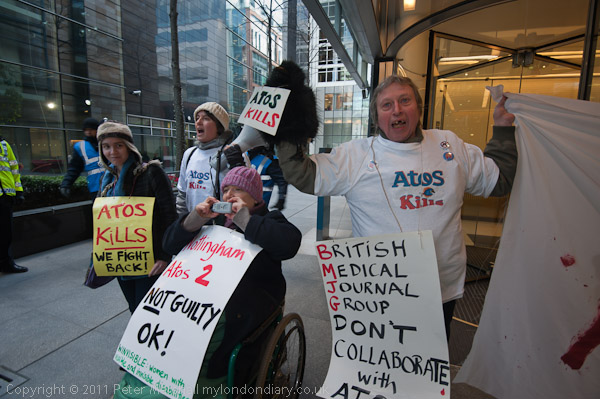
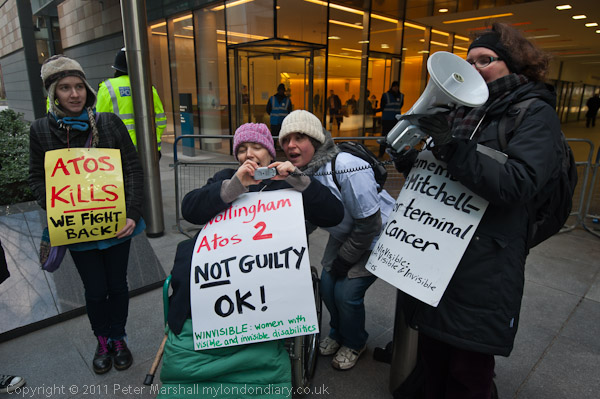
Disabled people and their supporters braved freezing weather to stage an hour-long protest outside the UK offices of Atos, protesting against the unfair testing of fitness to work and benefit cuts and supporting the ‘Atos 2’.

The Atos 2 were a wheelchair user and a pensioner, Notts Uncut activists who were charged with ‘aggravated trespass’ after peacefully entering an Atos assessment centre in Nottingham on a National Day of Action Against Atos and the Benefit Cuts last December. The charges were eventually dropped but the arrest and illegal confiscation of video material marked a new and disturbing attitude by police towards peaceful protest. There was another protest in Nottingham at the same time as that in London.

Disabled Protest Supports the Atos Two


London Guantánamo Campaign Candlelit Vigil

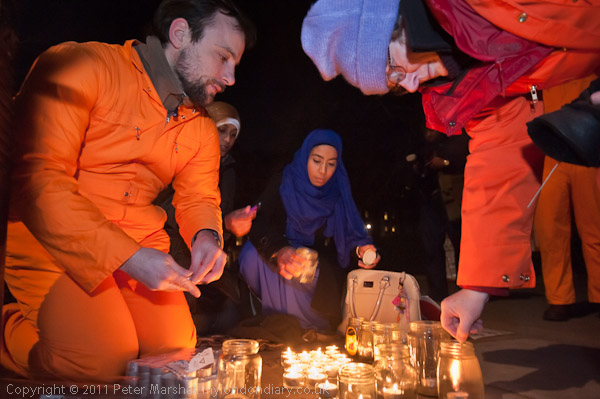
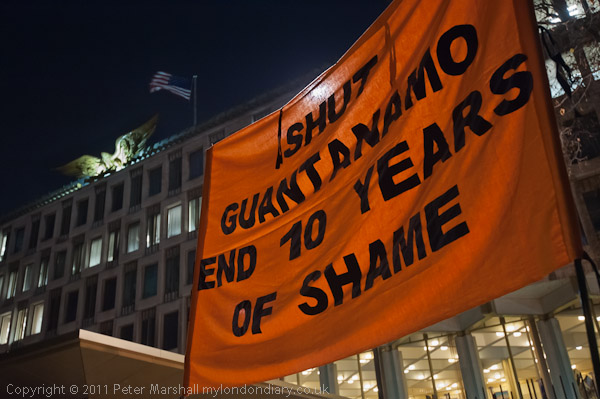
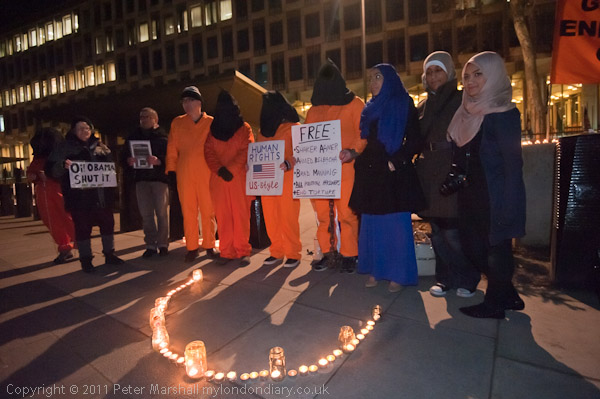
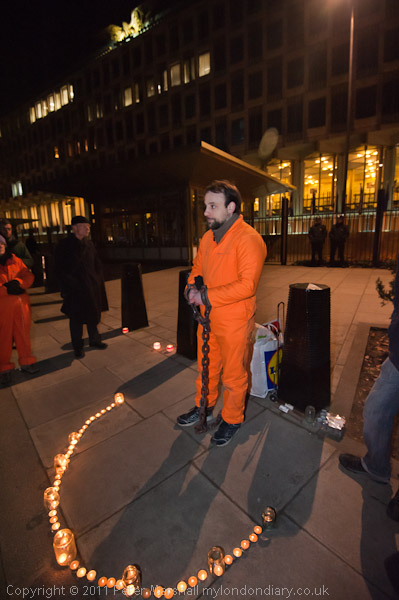
The London Guantánamo Campaign marked 5 years of regular protest at the US Embassy and over 10 years of illegal detention with a candlelit vigil, calling for the shutting down of the camp and the return of UK residents Shaker Aamer and Ahmed Belbacha.

Ahmed Belbacha was eventually released without charge in 2014, having been twice cleared for release in 2007 and 2009. He had come to the UK from Algeria as an asylum seeker and lived and worked here for a couple of years before his claim was rejected, after which he went to Pakistan to study the Koran. He made a visit to Afghanistan and was arrested on his way back to Pakistan.

Shaker Aamer, a Saudi citizen and legal UK resident married to a British woman who was applying for British citizenship went with his family to work for an Islamic charity in Afghanistan in 2001. He was arrested by Afghans and handed to the US in return for a ransom. Again he was cleared for release in 2007 and 2009, but continued to be held until October 2015.

London Guantánamo Campaign Candlelit Vigil


Poplar To Limehouse 1988

Poplar To Limehouse 1988 – my walk continued on the East India Dock Road.

East India Dock Rd, Poplar, Tower Hamlets, 1988 88-7q-51-positive_2400
East India Dock Rd, Poplar, Tower Hamlets, 1988 88-7q-51

From the posters in the window this was clearly a video rental store, a relatively new thing back in 1988 – the first Blockbuster Video store only opened in Dallas, Texas in 1985. Home video recording only began to be popular after the introduction of Betamax in 1975, followed in 1977 by VHS (along with other formats.) By 1988 VHS had become the dominant format.

But my attention was caught by the notice on the door, ‘NO DOGS OR BIKES ALLOWED’ with a very small ‘Thankyou’ and the two bikes (I think a BMX and a racer) flung down on the pavement outside unlocked by their two young owners.

Poplar Labour Party, East India Dock Rd, Poplar, Tower Hamlets, 1988 88-7q-53-positive_2400
Poplar Labour Party, East India Dock Rd, Poplar, Tower Hamlets, 1988 88-7q-53

Poplar Labour Party, led by George Lansbury, gained control of Poplar Borough Council in 1919. Poplar was one of the poorest areas of the country and so rateable values there were low. With councils then being responsible for supporting the unemployed and poor, council rates thus had to be set at a much higher level than in wealthy boroughs, which was clearly unfair on boroughs like Poplar who had so many more people needing support. Their rates were the highest in London, twice as high as in the wealthy borough of Kensington.

Poplar Labour had come into office to make changes, to provide greater support for the poor, to set a higher minimum wage for council workers and to pay women equally to men. When a demand from government came in 1921 to increase contributions for cross-London authorities Poplar council refused to pay, instead voting to use the money for the local poor. The authorities took them to court, and 30 councillors marched there with two thousand supporters. All of the councillors were sentenced to prison, where one of the six women, Minnie Lansbury, died, only 32.

Public outcry with large demonstrations and some riots – and other councils following Poplar’s lead – led to the councillors being released with an Act being rushed through Parliament to make the system more fair, with richer boroughs contributing more and the poorer less.

Their protest had clearly been illegal, but was clearly justified, and it led to a much-needed reform. It’s a lesson which still has relevance, particularly with such current matters as statues and the Government’s Police, Crime, Sentencing and Courts Bill.

Richard Green, statue, Poplar Baths, East India Dock Rd, Poplar, Tower Hamlets, 1988 88-7q-54-positive_2400
Richard Green, statue, Poplar Baths, East India Dock Rd, Poplar, Tower Hamlets, 1988 88-7q-54

The statue of Richard Green still stands outside Poplar Baths, a Grade II listed building from 1933, replacing an earlier baths from 1852. The baths were largely to provide washing facilities when few homes had bathrooms in this poor area of the city. As well as ‘slipper baths’ there were also vapour baths, showers and laundry facilities. The new baths in 1933 was a huge building including these facilities and two swimming pools, the larger of which could be covered over and used as a dance hall, theatre and sports hall.

The baths reopened in 1947 after the war despite considerable damage and was closed and converted into a training centre in 1988. My picture from 1988 shows a board advertising the support of the London Docklands Development Corporation in providing disabled access.

The building later became derelict but after a strong local and national campaign for its restoration work began on its redevelopment in 2014 and it reopened again as Poplar Baths Leisure Centre and Gym, along with 100 new homes, in 2016.

Richard Green (1803-63) was a local shipowner, shipbuilder and philanthropist, supporting a Sailors’ Home, schools, an orphanage and hospitals in the area, some of which had been founded by his father, George Green. His Blackwall Yard built many ships for the East India Company and for trade with Australia and China. His company, R & H Green in 1919 joined with Silley Weir as R. and H. Green and Silley Weir, with large premises at the Royal Albert dry docks and others and continued in business until sold to become a part of the government owned River Thames Shipbuilders in 1977.

George Green School, East India Dock Rd, Sturry St, Poplar, Tower Hamlets, 1988 88-7q-43-positive_2400
George Green School, East India Dock Rd, Sturry St, Poplar, Tower Hamlets, 1988 88-7q-43

George Green (1767-1849) was the father of Richard Green whose statue with his dog still sits outside Poplar Baths. George married the boss’s daughter and made the reputation of the Blackwall Shipbuilding Yard, building many whalers.

As well as this school dating from 1828 on the East India Dock Road the older Green also endowed schools in Chrisp Street and Bow Lane. The current huilding from 1883 is part of Tower Hamlets College. George Green School in new buildings on Manchester Road became the secondary school for the Isle of Dogs with its first comprehensive intake in 1975.

Poplar Recreation Ground Memorial, schoolchildren, Poplar, Tower Hamlets, 1988 88-7q-44-positive_2400
Poplar Recreation Ground Memorial, schoolchildren, Poplar, Tower Hamlets, 1988 88-7q-44

The War memorial to the children of Upper North Street School is https://britishlistedbuildings.co.uk/101065215-war-memorial-to-the-children-of-upper-north-street-school-poplar-ward Grade II* listed and includes the inscription: ‘IN MEMORY OF/ 18 CHILDREN/ WHO WERE KILLED/ BY A BOMB/ DROPPED FROM A/ GERMAN AEROPLANE/ UPON THE L.C.C./ SCHOOL UPPER/ NORTH STREET/ POPLAR ON THE/ 13TH OF JUNE 1917./ ALFRED H. WARREN O.B.E./ MAYOR/ J. BUTEUX SKEGGS,/ TOWN CLERK. ‘

There is a fuller story at the link above about the first mass German raid on London by Gotha bombers on 13 June 1917 which killed 162, including these 18 children mainly aged 5 or 6. At least 37 other children at the school were among the 432 injured by the raid.

St Mathias, church, Woodstock Terrace, Poplar, Tower Hamlets, 1988 88-7q-45-positive_2400
St Mathias, church, Woodstock Terrace, Poplar, Tower Hamlets, 1988 88-7q-45

St Mathias Church is also Grade II* listed, with a number of Grade II listed monuments. Poplar’s oldest church, it was built in 1766 as the Chapel of the East India Company, and became St Mathias as a parish church in 1866. You can see the company’s arms in the roof, and allegedly its columns came from wrecks of the Spanish Armada.

The exterior of the church was altered and enlarged by Teulon in 1875. The church closed in 1976 and was restored for community use by the LDDC in 1990.

Grieg House, Garford St, Limehouse, Tower Hamlets, 1988 88-7q-36-positive_2400
Grieg House, Garford St, Limehouse, Tower Hamlets, 1988 88-7q-36

Built in 1902–3 as an officers’ annexe to the Scandinavian Sailors’ Temperance Home, founded by Swedish Free Church missionary Agnes Hedenstrom (1849–1928) who began her mission in the East End in the 1870s, opening the home here in 1888. The mission was taken over by the Salvation Army in 1930.

This was I think the last picture I took on my way to Westferry station where I returned a couple of days later for another walk – and the subject of a later post.


Click on any image to see a larger version in my album 1988 London Photos from where you can browse other images.