Pratts Bottom Village Fete – Saturday 17th May, 2008. I have to admit that until shortly before I went there I’d never heard of Pratt’s Bottom, one of those many amusing British place names. Locals seem now to prefer it without the apostrophe, (and Fete without its circumflex) although Wikipedia largely sticks to its use.
This ancient Kent village was once home to members of the Pratt family who owned large areas of Kent as well as bits of Wales, Sussex and London. Wikipedia tells me that Sir John Pratt was Lord Chief Justice of England from 1718 to 1725. One of his sons was raised to the peerage in 1765 and sensibly took the name of Baron Camden rather than Pratt (and later added Viscount Bayham and Earl Camden to his titles.)
The name change was fortunate for residents of that area of North London we know as Camden Town, who otherwise might be living in Pratt Town in the London Borough of Pratt. Though South Londoners might find that amusingly apt.
The Bottom in the name is simply indicating that this was a valley. The community web site says that until the 1830s it was on the toll road from London to Hastings and was the haunt of smugglers and highwaymen including Dick Turpin, a man who certainly got around to pubs as well as York.
Now it seems pretty remote, and its hard to see why it was hijacked into the London Borough of Bromley in 1965, particularly when highly built-up areas such as Staines and Stanwell in the west were evicted – and are still outside Transport for London’s Zone 6.
I’d previously photographed a number of the May Queen festivals in London, particularly those at Orpington, just a couple of miles to the north-west, where the organisers there had told me that I should visit the Pratts Bottom Village Fete – and so I decided to go there in 2008, a week after I had photographed the 96th London May Queen being crowned at Hayes.
Here’s what I wrote about my visit to Pratt’s Bottom in 2008:
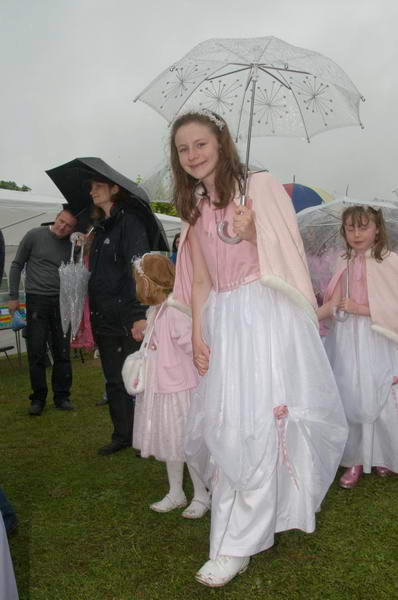
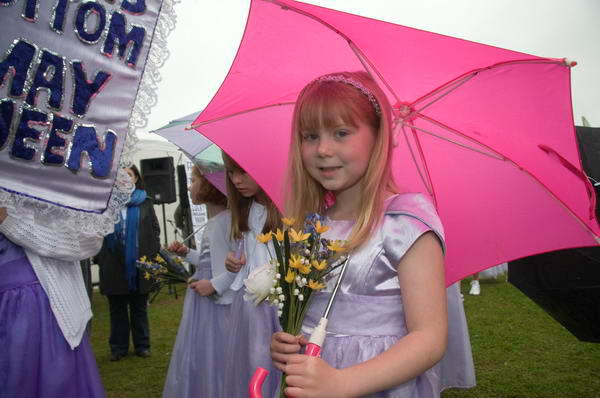
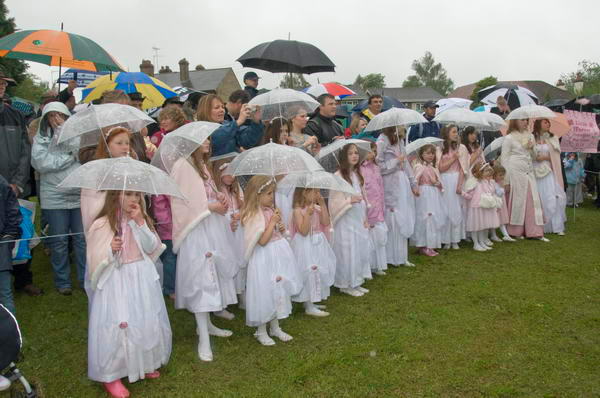
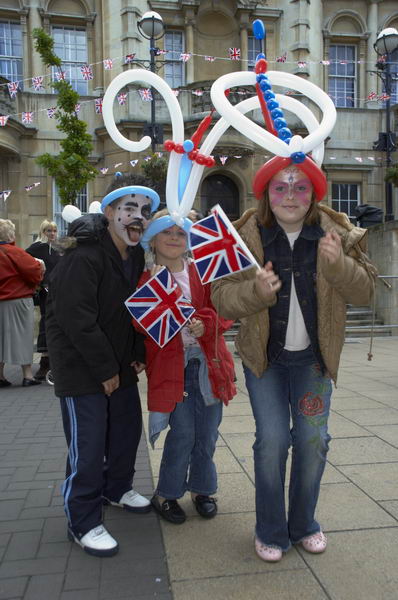
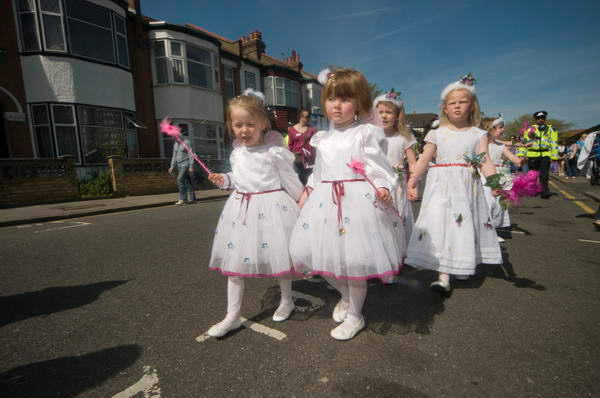
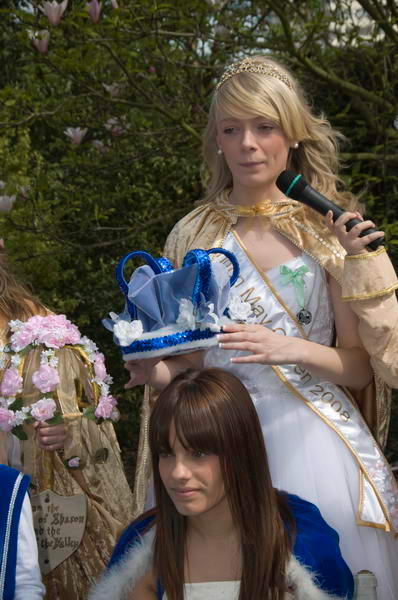
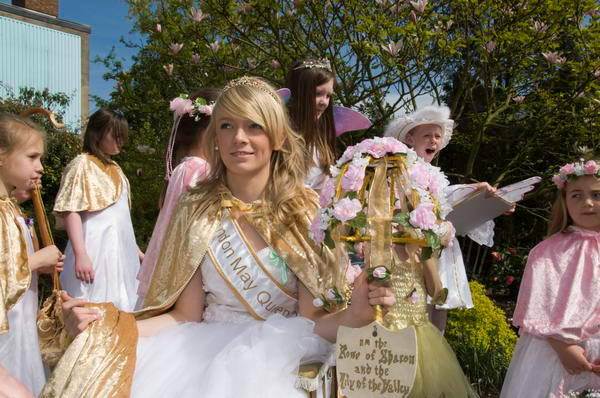
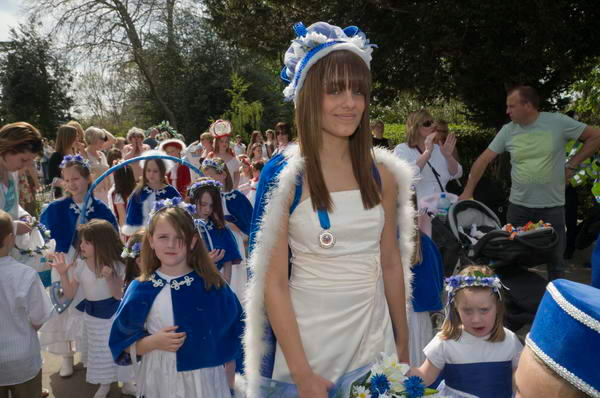
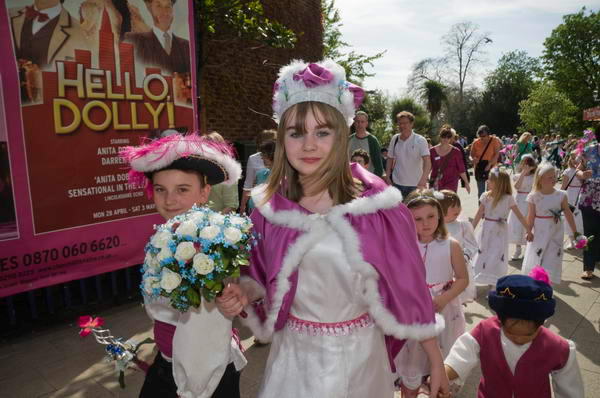
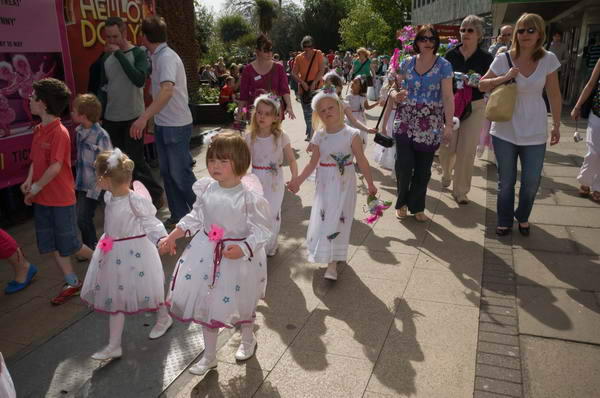
I’d never been to Pratts Bottom before despite the enticing name, so the traditional English Village Fete seemed worth attending, particularly since it includes a procession with several May Queens, including those from Orpington, Green St Green and Petts Wood, along with Pratts Bottom’s own May Queen.
Pratts Bottom, despite being in the London borough of Bromley seems very much out in the country, beyond the leafy suburbs. Unfortunately, thanks to a confusion over times (and only an hourly train service) I arrived just as the procession reached the village green. And unfortunately for all of us it was raining.
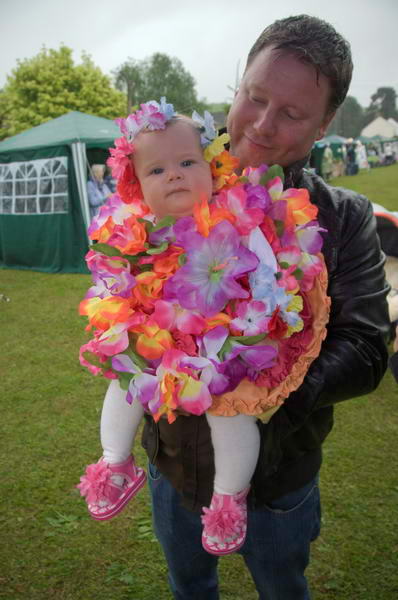
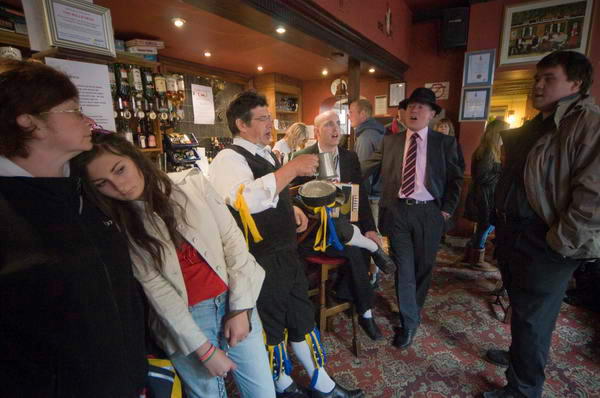
As well as the May queens, and a childrens’ fancy dress contest, there were a full range of stalls along the village green and some other activities in the village hall, not to mention the Bulls Head, where I was not surprised to find the Morris men.
I waited to see the Morris dancing, then rushed off down the hill to catch a train home. A fine but steady rain was still falling, and the heavy damp air was filled with the heady scent of hawthorn and cow parsley. It seems odd that this area is included in London while highly built-up areas such as Spelthorne are excluded.
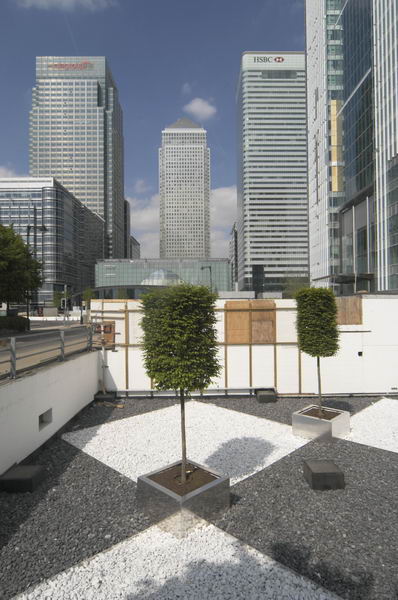
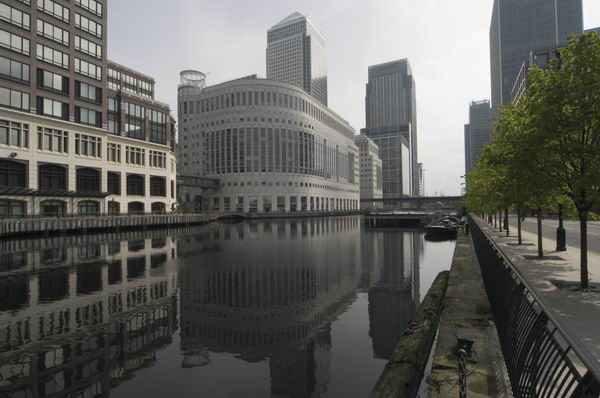
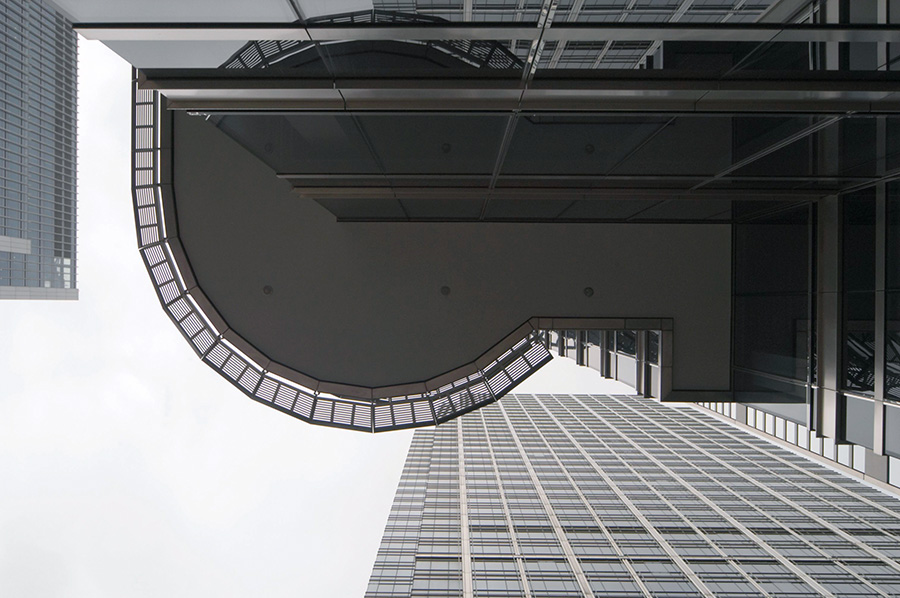
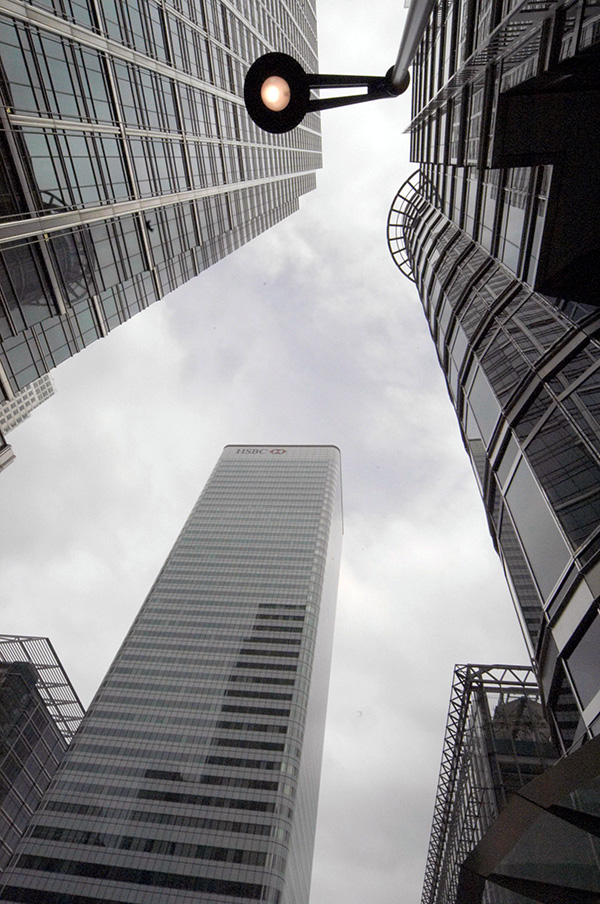
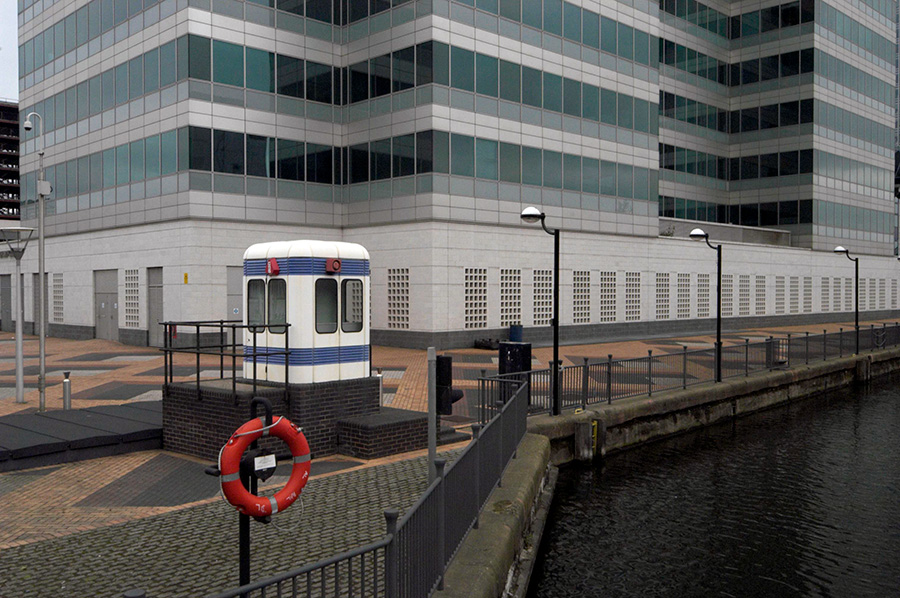
Canary Wharf, East India, Silvertown, Beckton & Woolwich: I was back in London’s docklands on 16th May 2004, a week after I had led a small workshop there, this time on my own, and rather than walking I had gone with my Brompton folding bike.
The Brompton is an ideal way to cover larger distances when taking photographs. It can be folded to go on public transport and is very easy to get on and off and park in little or no space. It folds and unfolds in seconds. It’s a lively ride with a short wheelbase and good for riding in traffic, though for longer rides I prefer my road bike.
The Brompton has some minor problems. They are not cheap – which delayed me buying one for years. It’s not built for off-road use and mine has mudguards that can clog and stop the wheel turning on muddy ground. And now I’m a bit older it is just a little heavy to carry for any distance in stations. But my main problem is that it is a thief magnet, dangerous to leave anywhere for any length of time even if you have a good lock. No bike lock can defy the well-equipped thief for more than around half a minute and it slips easily into a car boot and fetches a good price.
I’d hoped to get the Jubilee Line to Canning Town, but trains were only running as far as North Greenwich, so instead I got off at Canary Wharf before the train went under the Thames again. It was no problem as I had the bike.
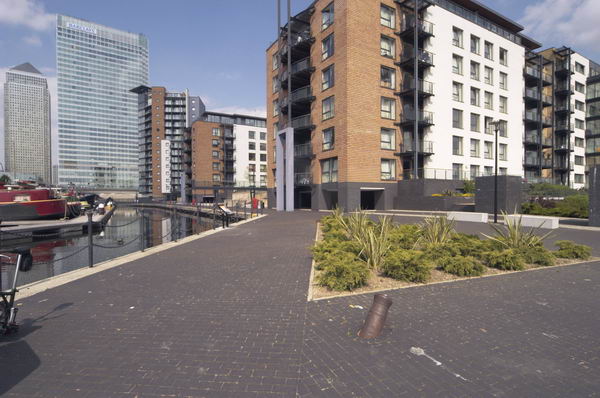
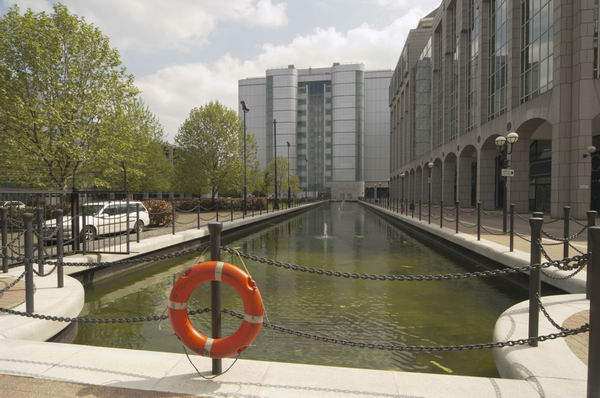
I took a few pictures around Canary Wharf, then rode off to the east past Blackwall Basin and on to the East India Docks probably the most boring of all the redeveloped docks.
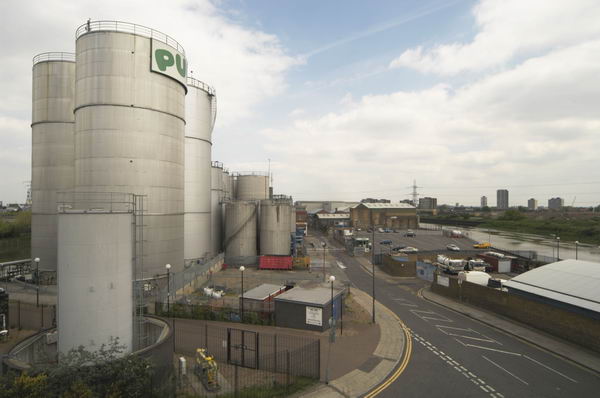
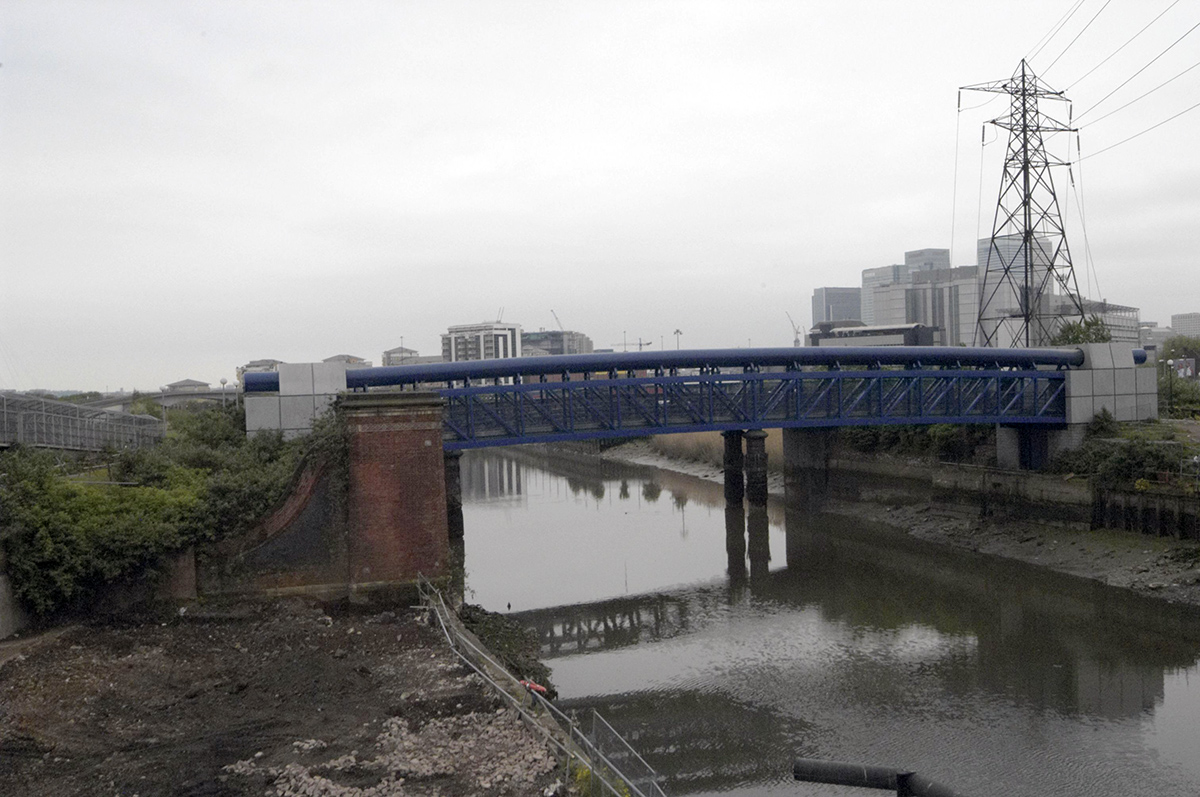
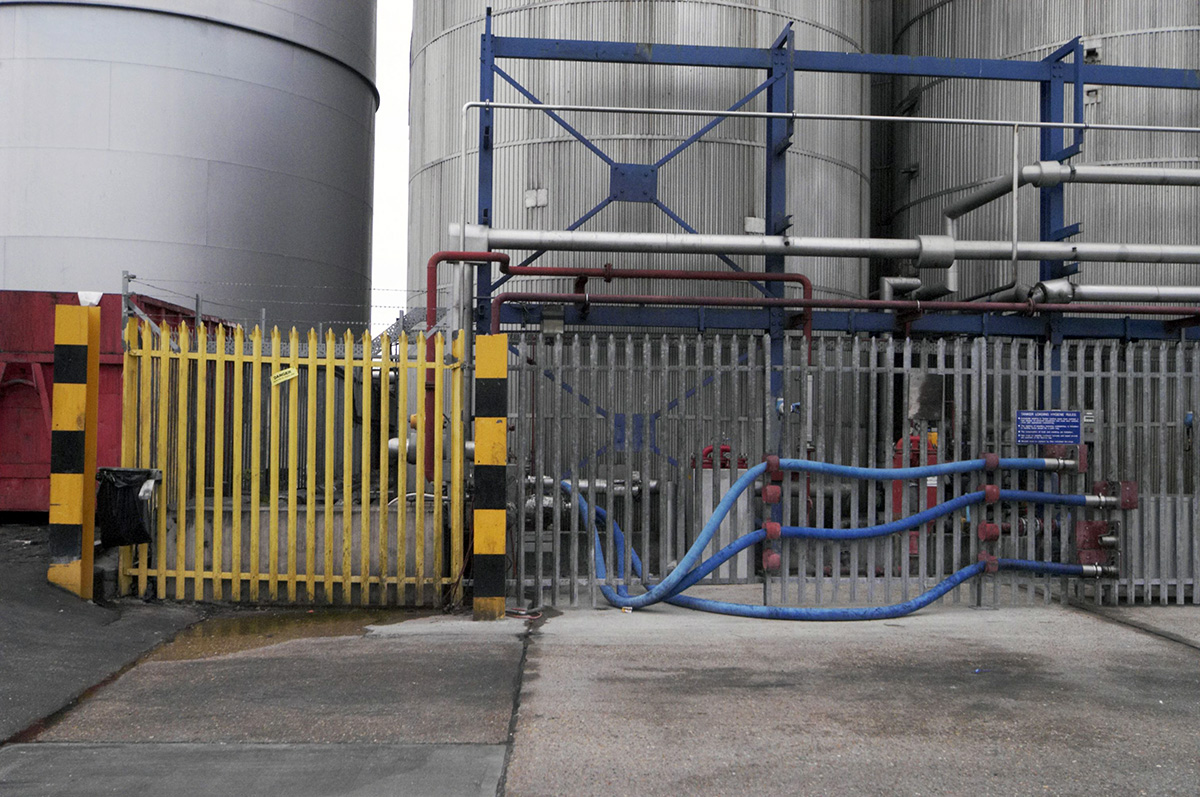
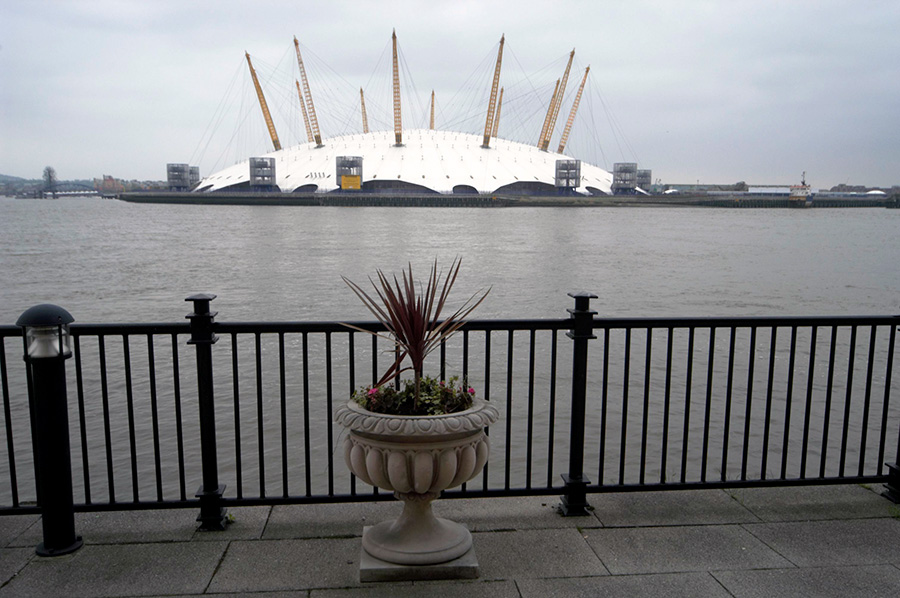
From there I went up on the Lower Lea Crossing, taking pictures of Pura Foods to the north and the view south across Trinity Buoy Wharf and the Thames towards the Millenium Dome.
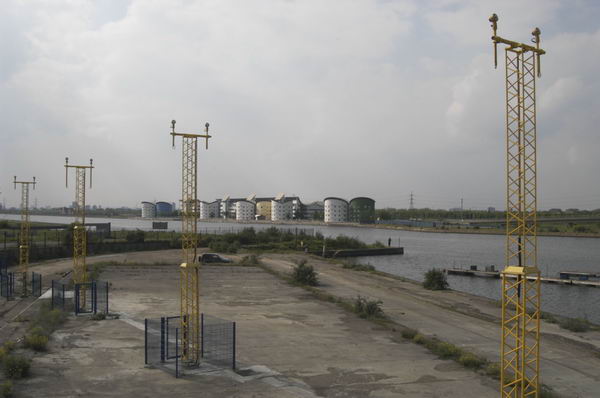
I photographed the Dome again from Silvertown Way, as well as the works taking place for the DLR extension to London City Airport.
A big advantage of being on a bike is that you can wander around, and I went down to the Royal Victoria Dock, then back to Silvertown Way and Lyle Park, then back to Victoria Dock again.
I couldn’t resist going onto the high level bridge across the dock, though the lift wasn’t working and I was cursing the weight of the bike and cameras by the time I reached the top of the stairs.
Eventually after making rather a large number of pictures I forced myself to come down and continued my ride along the North Woolwich Road to the futuristic Barrier Point, its west front like some space city.
In Thames Barrier Park I went down to the riverside to photograph the barrier before continuing on to Silvertown, stopping a few times for more pictures. Near North Woolwich I sloweed to photograph two boys on a scooter being towed by a woman on a bicycle. I stopped take more pictures but later I met them in North Woolwich and they told me she had soon given up.
I took some more pictures in North Woolwich and then rode on to Beckton Retail Park, then turned around and went down Woolwich Manor Way across the Royal Albert and King George Docks.
Back in 2004 flights from London City Airport were fairly infrequent and I had quite a long rest waiting to photograph a plane going overhead.
I rode on to North Woolwich ferry pier where I had a wait for the ferry and took some more pictures. In 2004 I wrote that the Woolwich Ferry is “London’s best-value river trip. I wonder how much longer this free ferry will operate?” It was upgraded in 2018 with new, modern, low-emission boats which proved rather a disaster. Services had been severely reduced, working with only one of the two new boats.
But Transport for London a week ago in May 2024 restored the two-boat service and expanded operating hours. They say the service will continue as long as there is demand. A short ride took me to Woolwich Arsenal Station where I folded the Brompton for the journey home.
Conscientious Objectors, Olympics, Cleaners, Iraq & An Opening – Back in 2008 I had rather more stamina than now and my day on Thursday 15 May 2008 included three protests and a walk around the outskirts of the closed Olympic site, ending with attending an exhibition opening in Brixton.
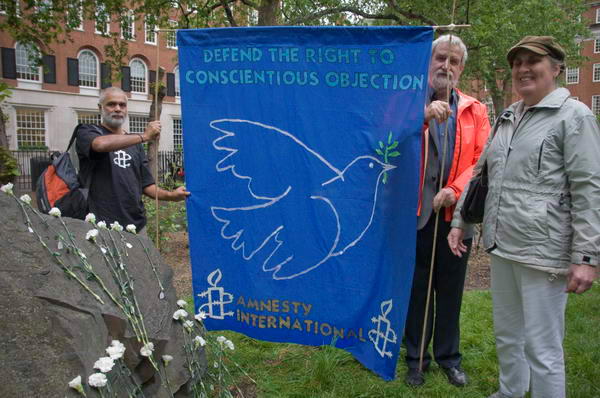
International Conscientious Objector’s Day – Tavistock Square
I’ve just checked on a web site which events are marked on 15th May, and although it lists nine, including National Nylon Stocking Day, it fails to mention the most important of all, that this is Nabka Day remembering the Palestinian Catastrophe, the violent ethnic cleansing of Palestinians from their land, belongings and homes following the establishment of Israel in 1948.
Long commemorated by supporters of Palestian rights, the commemoration of the 75th anniversary in 2023 was recognised by a UN General Assembly resolution. Today many are marking this around the world with events in many UK workplaces and Saturday 18th May there is a national march in London for Nabka 76 calling for and ent to the genocide in Gaza and for the UK to stop arming Israel.
Less well known (and also not mentioned on that web site), May 15th is International Conscientious Objector’s Day, first observed in 1982 as a European day and in 1985 adopted by War Resisters’ International. In London today (15 May 2024) there will be a ceremony in Tavistock Square as there was in 2008, though starting an hour later at 1pm.
In 1987 the United Nations Commission on Human Rights recognised “the right of everyone to have conscientious objection to military service as a legitimate exercise of the right of freedom, thought, and religion“. However in many countries around the world this right is still denied.
Tavistock Square has a number of memorials including at the centre of the garden a statue of Mahatma Ghandi given to the city of London in 1967 by the Indian High Commissioner, and a cherry tree planted by the then mayor of Camden Millie Miller in 1967 to commemorate the victims of the Hiroshima bombing, as well as a memorial to the holocaust. On the railings of the square is a memorial plaque to those killed in the bus destroyed in the square by the London suicide bombing of 7 July, 2005.
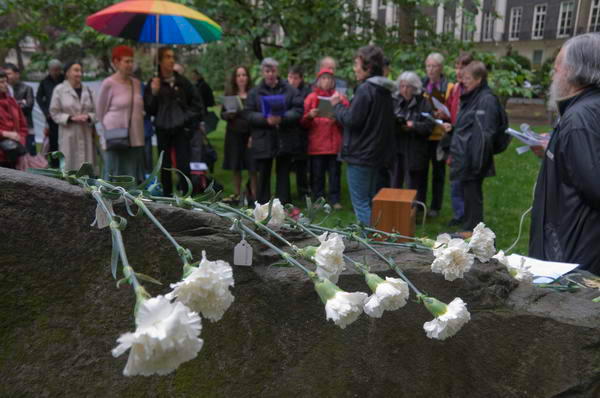
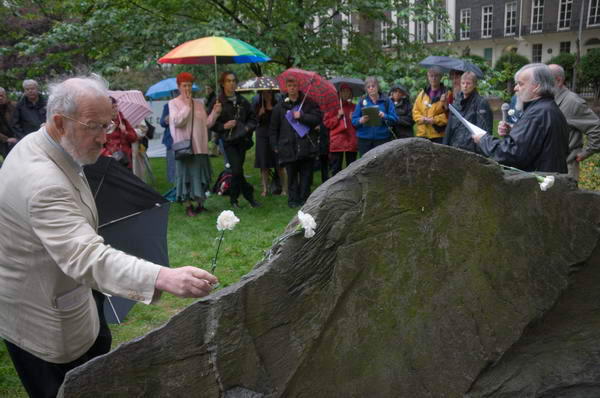
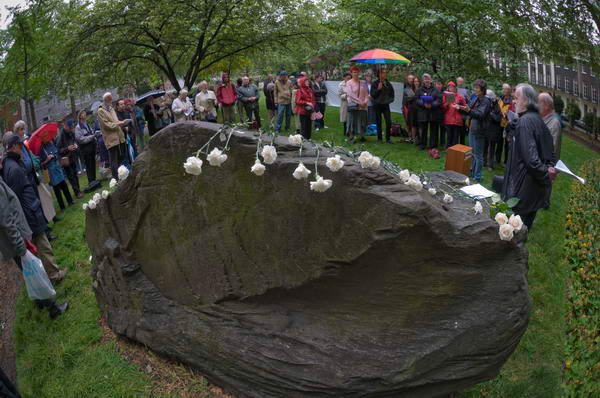
At the north end of the garden, close to the cherry tree, is a large grey rough-hewn boulder of Cumbrian slate was unveiled in 1994 as a memorial to conscientious objectors by composer Sir Michael Tippett, himself a conscientious objector, and people gathered on the grass in front of this.
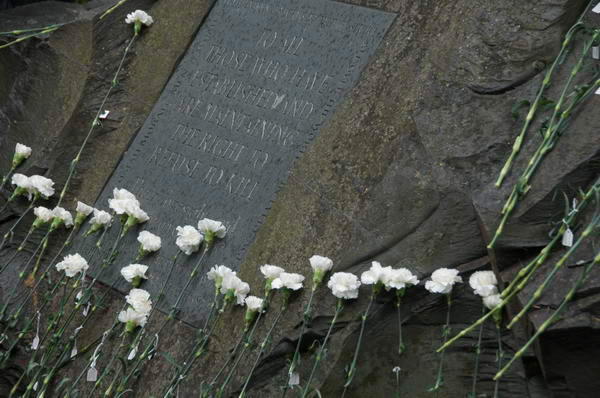
After speeches and songs Bill Hetherington of the Peace Pledge Union read out the names and gave brief details of individual COs, past and present, from over 80 countries around the world, as a small representation of those who, as the words engraved on the memorial read, “…have established and are maintaining the right to refuse to kill.“
As the names were read, those taking part brought up white carnations – a symbol of the peace movement – and laid them on the stone. Each had on it a label with the country and name of a CO. The inscription on the stone continues: “Their foresight and courage give us hope.”
I had time before the next protest to go to Stratford and make my way around the southern edge of the Olympic site, now surrounded by a tall blue fence.
I went as far as the Lea Navigation where I photographed the notice closing the entrance to the Bow Back River channels which run through the site to navigation.
From the Greenway I could see huge piles of earth which are having to be processed because of their contamination from years of industrial production on the site. The site area was more or less unrecognisable although the City Mill River still flowed through it. It was a dismal day, with light rain or drizzle and everything looked bleak.
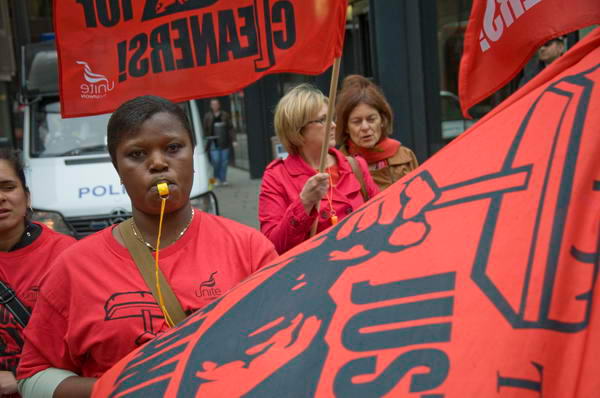
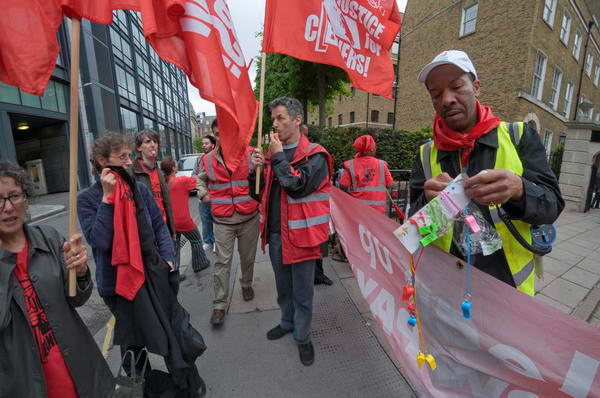
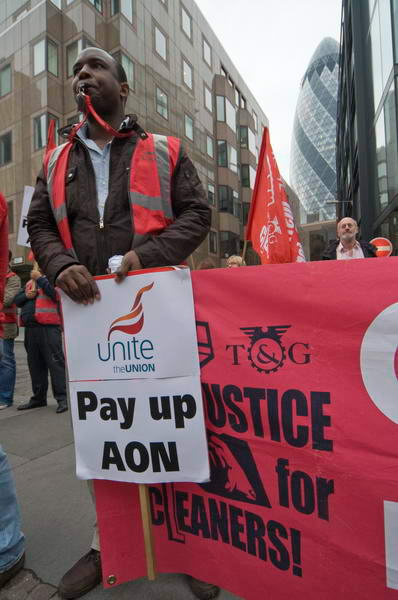
Justice for Cleaners brought together London’s largely migrant cleaners in a campaign for a living wage, sick pay, holidays, trade union rights and respect and was backed by major unions including Unite (and the TGWU which had then recently merged with Amicus to form Unite.)
On May 15th 2008 they had planned a protest outside the RBS offices in Bishopsgate, where cleaners were employed by Pall Mall, but negotiations had led to some success and the demonstration had been switched to AON in Devonshire Square, EC2, a short walk away.
AON, based in Chicago, is one of the world’s leading companies in insurance, with a first quarter net income for 2008 recently announced as $218 million. The cleaners at its City of London offices take home less than it takes to live on in London.
Their offices are on private property where I’d previously been prevented from taking pictures by security officers, and the protest took place in front of the gates on the street.
Noisy public protests such as these are effective because they draw attention to the shameful way these workers are treated even though they work to clean the offices of prestigious companies – which is why the Tories brought in highly restrictive laws in an attempt to stop them.
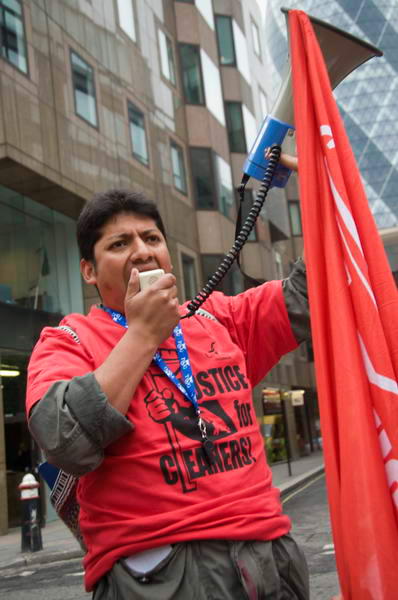
Watching them through the gates were a number of security men as well as City of London police. Workers in Devonshire Square were walking post the protesters and those inside the offices will have been able to hear the protest which took place with a lot of whistle blowing, shouting and a powerful megaphone used to express the cleaners’ demands.
Although Unite were supporting the cleaners here, migrant workers in London soon largely lost confidence in them and other major unions, who they felt were at times making deals with management that were not truly reflecting their interests, particularly in some workplaces where they seemed to be more interested in preserving wage differentials than getting good deals for the poorest workers. The cleaners – and many other low paid workers – are now largely represented by grass roots unions such as United Voices of the World.
Iraqi Democrats Against the Occupation – US Embassy
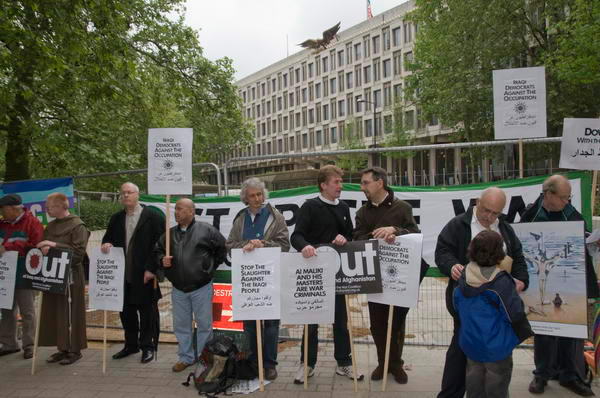
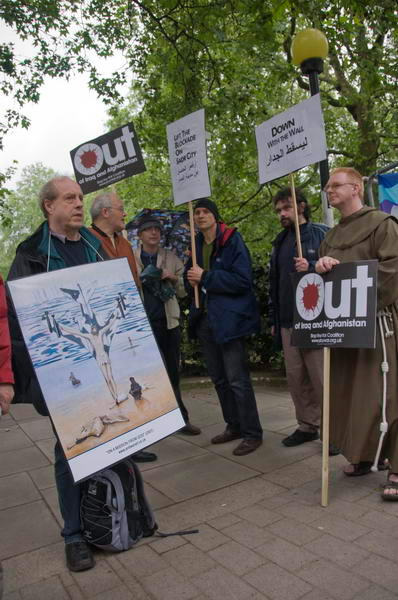
Stop the War Coalition and Iraqi Democrats Against the Occupation protested at the US Embassy in Grosvenor Square calling for an end of actions against the Iraqi people and the withdrawal of US forces.
They handed in a letter condemning the continuing US occupation which had caused an “unimaginable level of death and destruction to the people and country in the past five years” and noting the similarity between US actions and the Israeli repression of Palestinians, with the building of concrete walls to divide Baghdad into what Pentagon sources have described as “30 killing zones“.
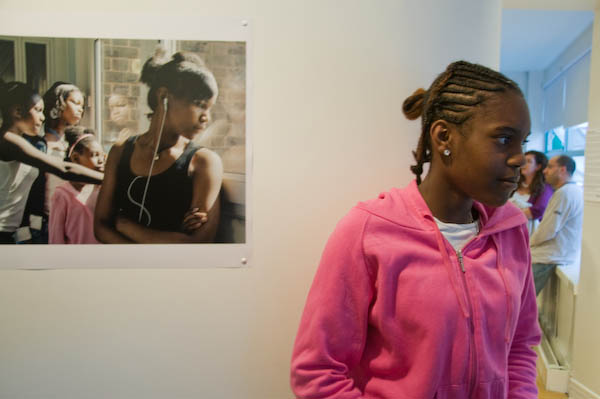
On my way home I took a few pictures of Brown Hart Gardens in Mayfair before going to Brixton to view the opening of the ‘Changing Places‘ show.
This picture wasn’t posed – I just walked up to look at the photograph by Simon Rowe and saw the young woman standing there with her head at a very similar angle. You can see a few more picture from the opening on My London Diary.
Canary Wharf Workshop – On Sunday May 9th 2004 I led a small workshop group of photographers on a walk which started at Canary Wharf and then went to Canning Town and the River Thames. Although photography is theoretically banned on the Canary Wharf estate we had no problems with security, probably because we kept to obviously public areas and I had asked those taking part not to use tripods.
I was never a fan of the redevelopment of London’s docklands under Michael Heseltine and the London Docklands Development Corporation set up in 1981. Of course development was needed after the docks became redundant, but we should have seen a development that was made for the interests of the population of London, not simply for the mates of the Tory Party.
The area needed some kind of overall planning authority, but one that worked with the local authorities in the area rather than against them, ignoring their priorities.
Of course there were gains from the work of the LDDC, perhaps the main ones being the Docklands Light Railway and the Jubilee Line Extension to Stratford. Certainly by the time it was wound up in 1990 it had changed the whole area significantly. But many of those changes had sacrificed local needs to business profits.
The piece that I wrote about the day reflected my political views about what had taken place. A year or so later London won the bidding for the Olympics, leading to yet more development in the area by an authority that disregarded local needs and led to inappropriate development, still proceeding, in East London. I’ll reproduce what I wrote in 2004 here, with minor corrections, particularly to capitalisation and spelling.
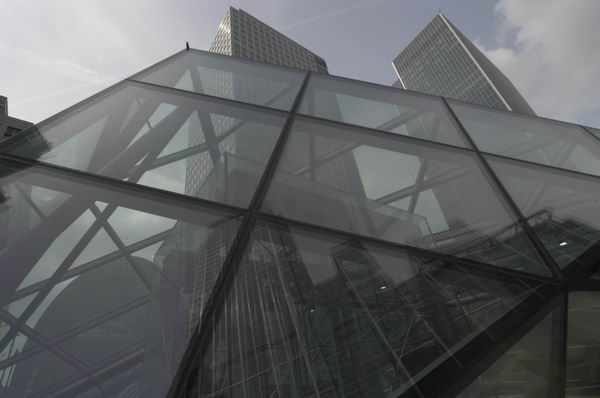
May 9th 2004 found me taking a group of photographers for a walk around some parts of London’s docklands. We started at the centre of this ‘crime of the century’. I still don’t quite understand why a Conservative government felt so at odds with the City of London that it decided to set up offshore competition in the Enterprise Zone.
The feeding frenzy that ensued, trousering public property and tax breaks into the private pocket at an unprecedented rate was inevitable.
The long-term consequence has been a distorted development with few real buildings of distinction but some expensively finished tat, and a lack of overall planning. I’m not sure that London would benefit from gaining the Olympics for which it is currently bidding, but if it fails, probably part of the reason will be the Docklands debacle.
We started below the obscene gesture towards the old city, at least clear about its symbolism, then took the DLR down to Crossharbour with its silly bridge, walking back to the Wharf and taking the Jubilee to Canning Town.
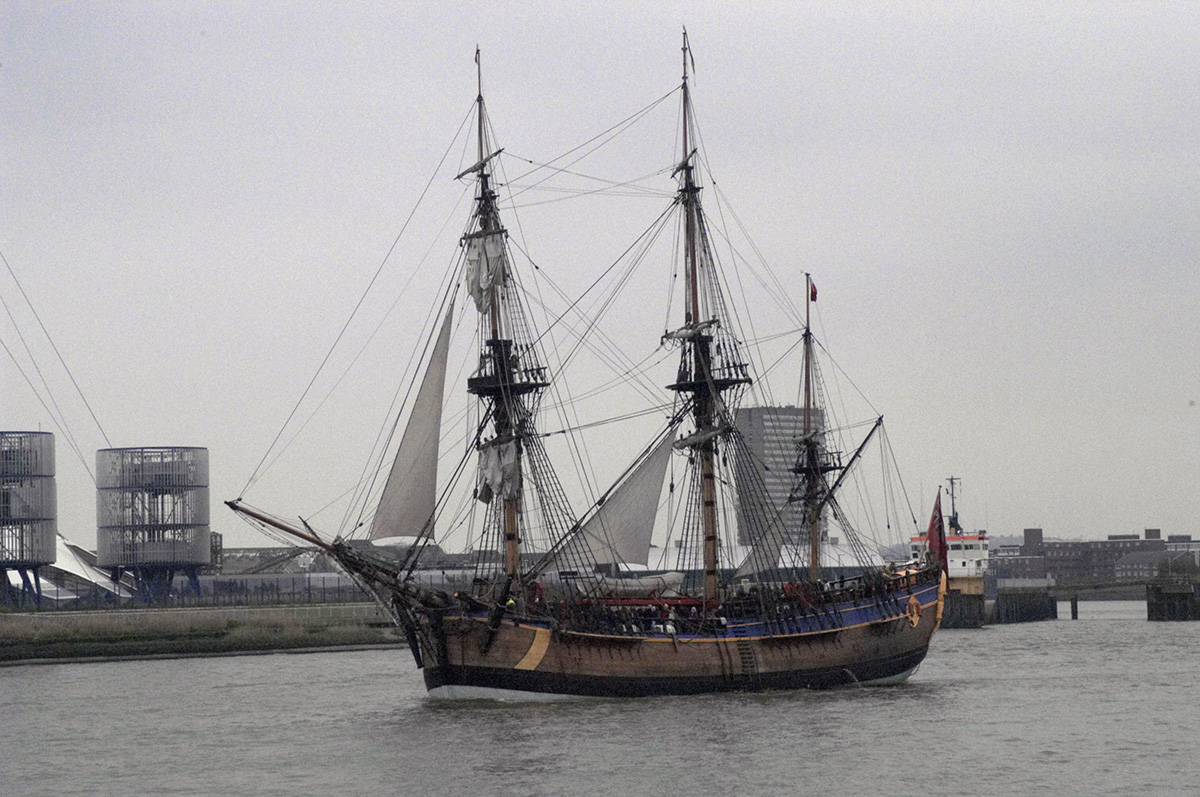
Then back alongside the Lee (still waiting for that riverside walkway) to East India dock basin and along by the Thames, where a galleon appeared in front of the dome.
The River Lee is here better known in its tidal section as Bow Creek, and we are still waiting for parts of that riverside walk to be opened if they ever will be. There was a competition for a new bridge across Bow Creek with a wining design named, but money disappeared and it was never built. But a few years ago we did get a different new bridge higher up by Canning Town station and the development of the industrial site of Pura Foods as London City Island.
VE Day 60 Years On: I was born a few days after VE day, the end of the Second World War in Europe which took place on Wednesday 8th May 1945. In 2005 celebrations of the event in the UK took place over the weekend of 7-8th May. Here is the piece I wrote in 2005 for My London Diary (with the usual minor corrections) and some of the pictures I took on those days.
VE Day Commemorated – Ilford
60 Years ago, my view of the world was dark, wet and warm and I was almost certainly unaware of what was happening outside, and I think my mother’s part in the VE day celebrations will have been fairly muted and sedentary, though I’m sure both she and my father (the First War had taken him to Germany, but this one only got his as far as Potters Bar on his bike to inspect the bees) shared the feelings of the nation.
I wanted to avoid the large stage-managed media events. Couldn’t stand the thought of Vera Lynn and Cliff Richard, or the Prince Of Wales. So I went to Ilford to see how the people in Redbridge were commemorating the occasion.
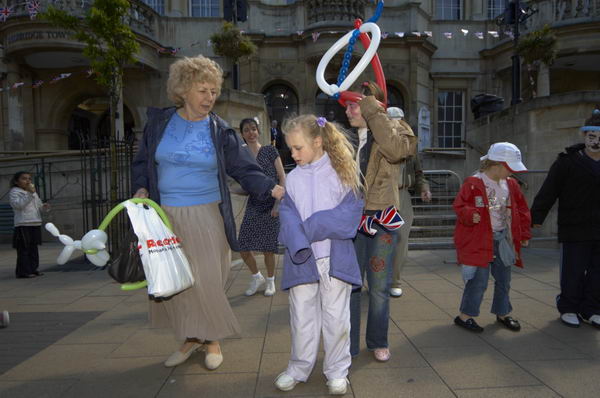
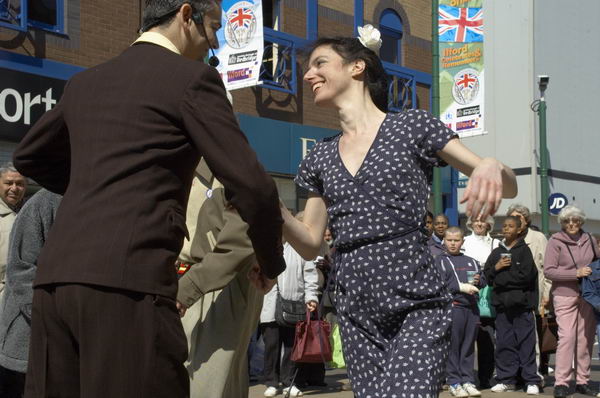
A couple of small groups playing mainly forties jazz tunes, some dancing, kids and oldies having fun, balloons, uniformed ‘statues’, free tea, a few veterans and a small but informative museum display made a pleasant afternoon in the high street. more pictures from Ilford
VE Day Parade Bromley
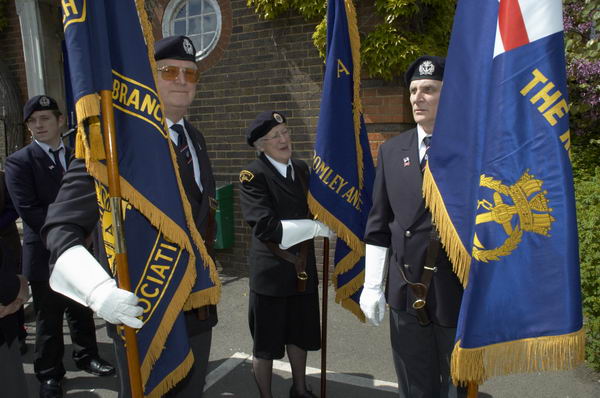
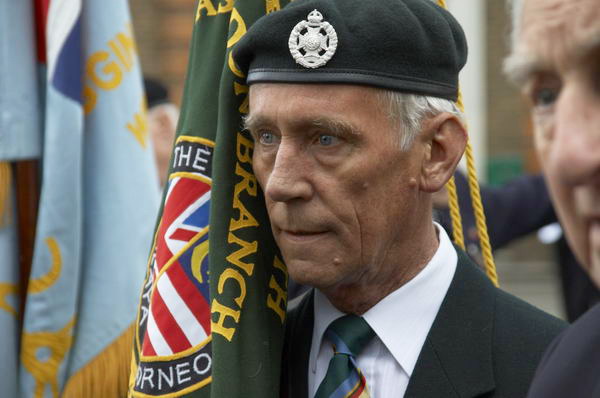
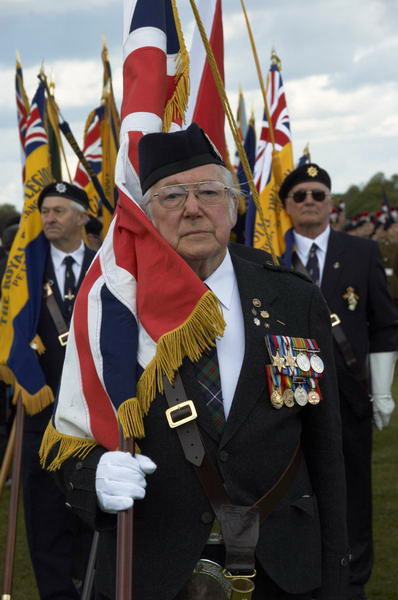
Sunday afternoon I attended a more formal event in Bromley, which seems to have more uniformed organisations than any other London Borough, and the forces were out in force. Marching behind the bagpipes came the veterans, most looking surprisingly well despite their age, and with medals to show for their service around the world. One showed me his Russian medal for service in the Baltic, others had been in the Far East as well as Africa and Europe.
The parade to Norman Park was joined by more veterans and supporters in buses, as well as a number of vintage vehicles, civil and military. At the park, the Mayor, the Bishop and a team of other clergy joined up for a drumhead service in a large tented area, holding well over a thousand people.
A few of the veterans felt this was one church parade too many and like me made for the beer tent. Perhaps like me they had also called in to the Area Of Remembrance on the way. There was an impressive dignity about the veterans and the event seemed a moving tribute to them and their comrades who died.
May Day 2004 – One of the many advantages of giving up full-time teaching around 2000 was that I was able to go to various events that previously took place when I was at work. And one of these was the London May Day celebrations taking place on May 1st – previously I could only take part in these when May Day fell on day I was not at work. I hope to be taking pictures of today’s march and rally as usual from Clerkenwell Green to Trafalgar Square gathering at noon.
Back in 1978, Labour Prime Minister James Callaghan introduced an early May bank holiday, but rather than making May Day – International Workers Day – a bank holiday we got instead the first Monday in May. So only one year in seven do we get a Bank Holiday on May Day.
Even then, Tories have made several attempts to get the Bank Holiday moved to another time of year – the first attempts came with a bill in 1982 and ten years later John Major suggested Trafalgar Day. The coalition government made another attempt in 2011, but so far strong opposition has kept the early May holiday, though I suspect it may be under threat again in the next Labour government.
In 2004, twenty years ago, May Day was a Saturday, so many who would otherwise have been working were able to attend the annual May Day march and rally in London. I’ve written on some previous May Days about the origin of May Day and how it became International Workers’ Day and rather than repeat myself you can read an article by People’s History Museum researcher Dr Shirin Hirsch, May Day: A People’s Holiday which has the advantage of some fine illustrations.
Here, suitably corrected, is what I wrote about my May Day twenty years ago. All the photographs in this post are from May 1st 2004. There are many more pictures on My London Diary.
May Day!
London’s TUC sponsored May Day March and Rally is a peaceful celebration of International Workers’ Day. This was apparently first celebrated in 1886 in Chicago by striking textile workers.
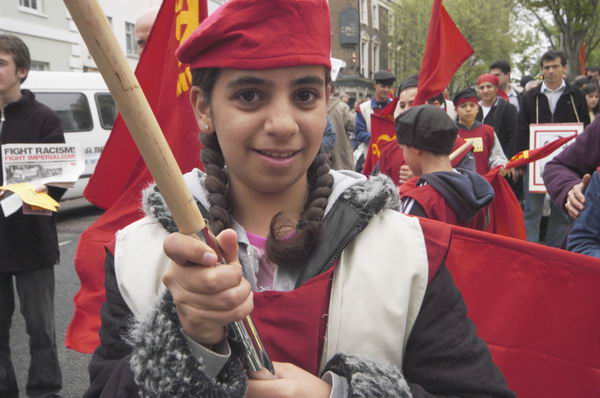
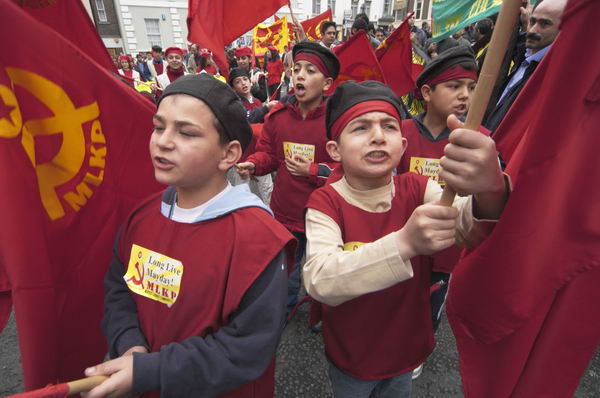
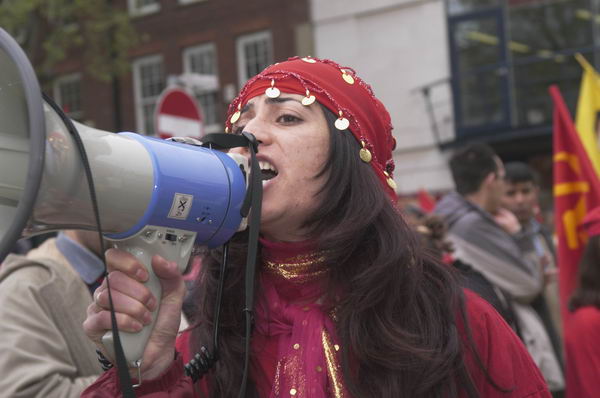
In London, the celebrations are dominated by several Turkish and Kurd groups, with the MLKP and their youth wing being some of the most vocal.
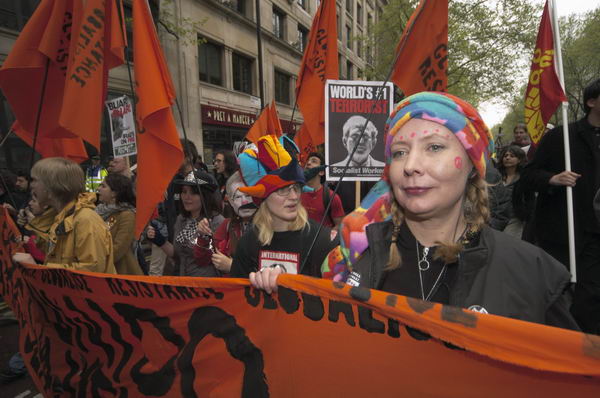
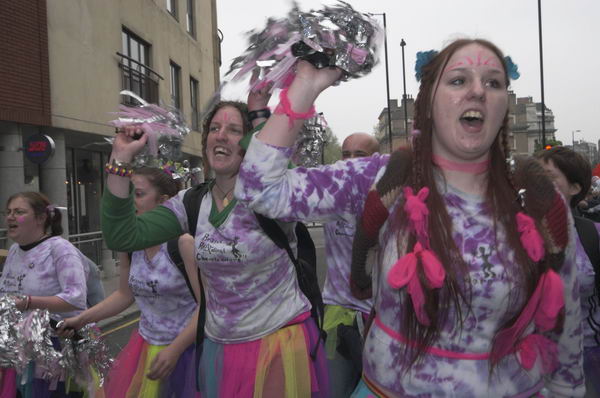
I was pleased to meet up again with members of Bristol Radical Cheerleaders, adding their enthusiasm and a little spectacle to the event. Fortunately they were not responsible for the route, as ‘To the left, to the left, not to the right, to the left’ might never have got us to Trafalgar Square.
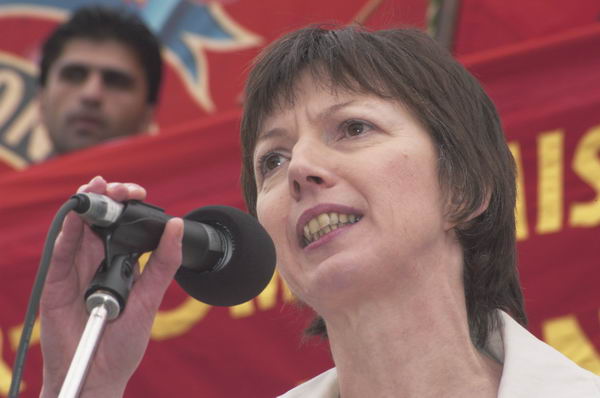
Maybe that wouldn’t have been a bad thing. The rally at the end was something of an anti-climax. Not that London Mayor Ken didn’t project his usual charm – and Frances O’Grady and the others spoke well, it was just, well, a bit dull. It needs something that is rather more of a celebration and a party.
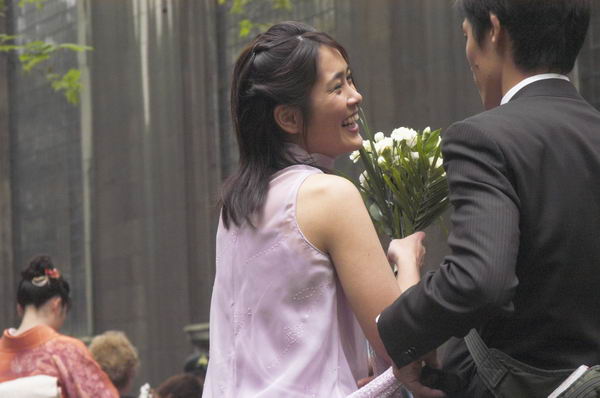
I wandered off, jumping on a bus down the Strand to Fleet Street and St Brides where there was a wedding going on. Perhaps I should have taken more than the couple of pictures here, but I didn’t have an invite.
Back in St James Park there was supposed to be a party, and a game of ‘Anarchist Mayday Cricket’. It wasn’t quite the weather for either, and I took a few snaps and came home.
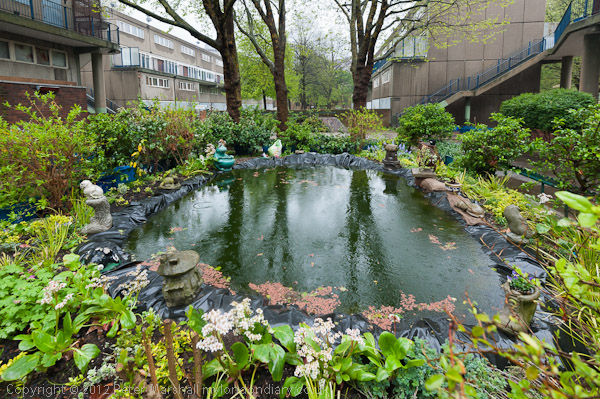
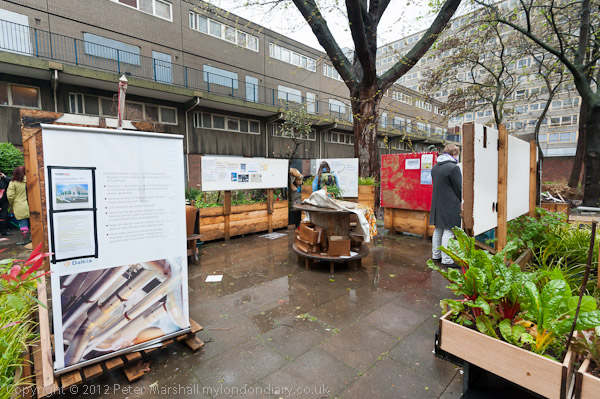
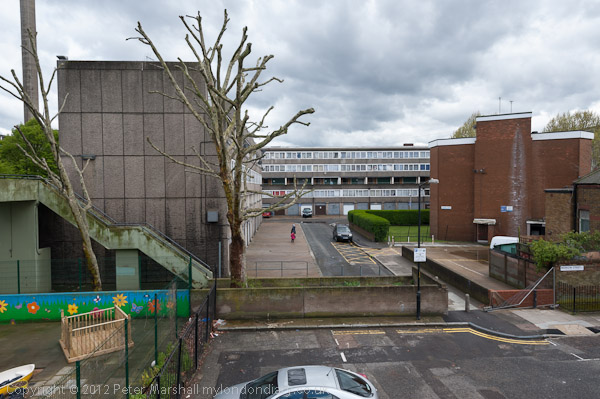
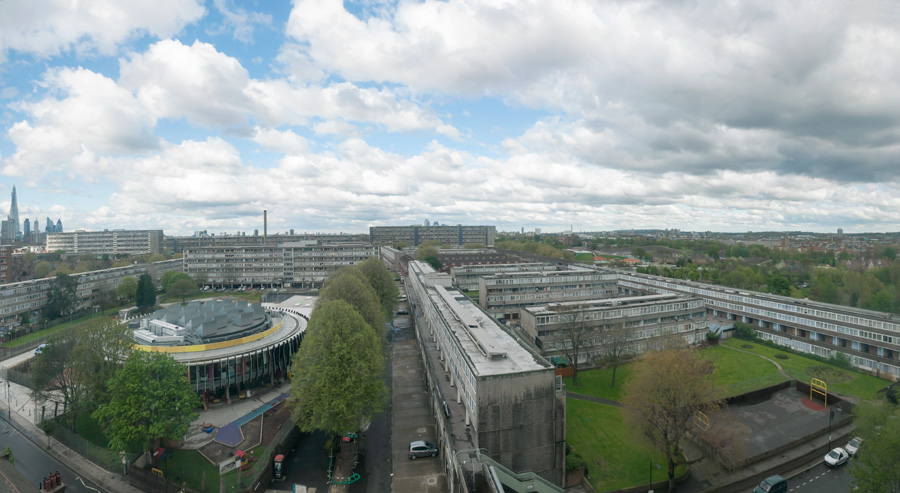
Walking the Rip-Off – Heygate & Aylesbury – On Sunday 29th April 2012 I joined around 35 others for ‘Walking the Rip-Off’ organised by Southwark Notes Archive Group and Aylesbury Tenants First (and here) which started in the “community gardening projects of Heygate” and went on “to the Aylesbury for a look and learn around the massive site.”
It was an interesting and illuminating experience. There were around 35 people altogether despite the rain and a terrible weather forecast, and fortunately it slackened off and the sun actually came out.
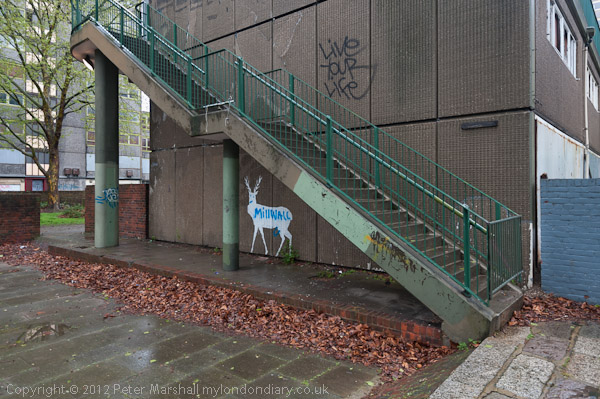
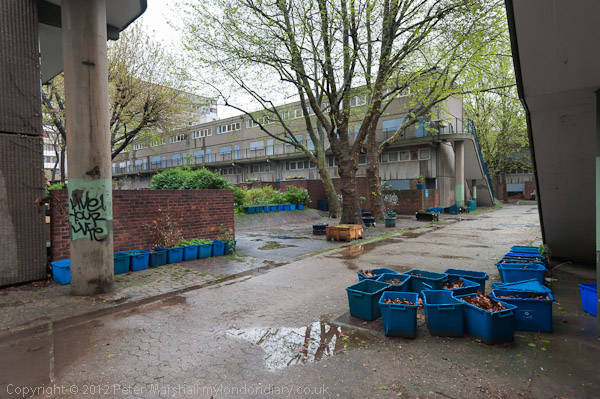
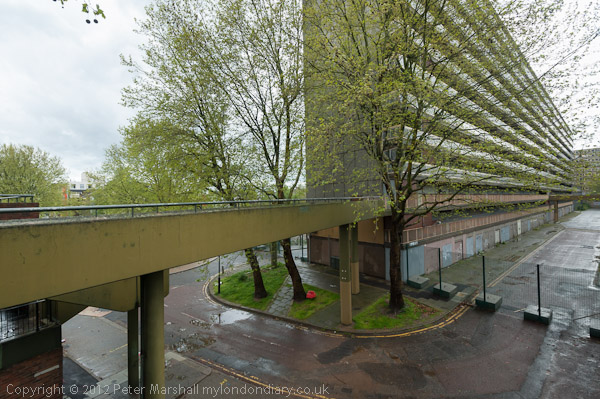
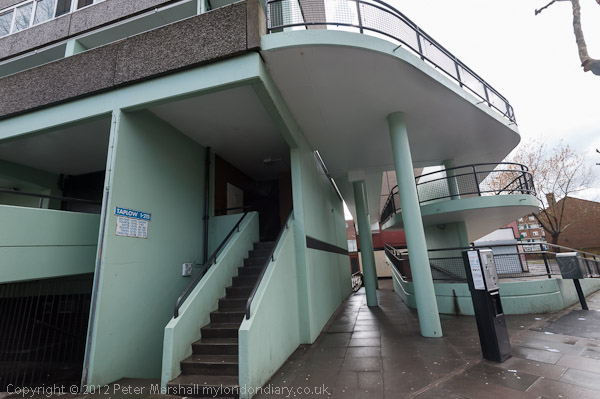
The Heygate Estate has now completely gone, demolished in 2014. There has been a loss of over a thousand council tenancies in the area, and only around 25 of those tenants displaced from the Heygate are thought to have been rehoused in the area . The well-designed and largely solidly built estate which probably had at least another 50 years of life with proper maintenance and necessary refurbishment has been replaced by lower quality buildings with many flats owned by overseas investors which are unlikely to last as long.
As Southwark Notes reported in 2015, developers Lend Lease were marketing its replacement, Elephant Park “overseas for wealthy off-plan buyers looking for second homes, investments, buy-to-lets, homes for their student sons and daughters etc.“
The individual properties in the new estate are smaller – some best described as poky – and rented properties are several times more expensive. In 2021 the social rent on a new housing development in nearby Bermondsey was advertised at £295.50, which was £130 above the government’s social rent cap of £164.87 for a two-bed property. Many of those who lived on the Heygate have been forced to move to outer areas of London or further afield to find housing they can afford. It has been social cleansing on a large scale.
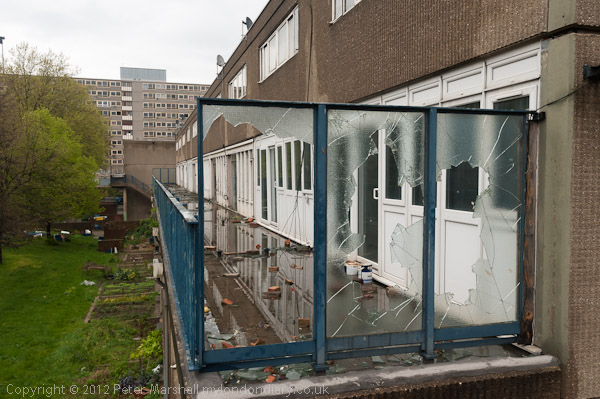
Housing left empty for several years had by 2012 suffered considerable vandalism
Particularly badly affected were leaseholders who were forced to move and given payments that were derisory and a fraction of that needed to buy comparable properties in the area. You can find more details online on Southwark Notes.
There is find more information on the regeneration of the Elephant & Castle area on the 35% Campaign web site. This also has up to date information on other aspects of Southwark Council’s failures including the redevelopment of the Aylesbury estate, the disastrous redevelopment of the Elephant & Castle shopping centre and other scandals in the area.
The site took its name from Southwark Council’s minimum policy requirement of 35% affordable housing, 70% of which social rent which it has failed to meet on Heygate and numerous subsequent developments.
On the tour in 2012 we were able to visit several properties on the Heygate and Aylesbury estates, and I was very impressed by the quality of the accommodation and the obvious love and care the residents had taken in making them really personal homes. I was allowed to photograph inside some of them but did not put any of the pictures on line in 2012, and can no longer find them.
From the 10th floor of Chiltern, Aylesbury Estate
I returned to one of those flats a year ago for the Fight4Aylesbury exhibition which was held there. Later in the year Aysen Dennis in whose flat this was held agreed to be relocated to a new nearby council block, but she continues her fight to save what remains of the estate. This January she acheived a significant victory when the High Court overturned the planning decision for Phase 2B of the Aylesbury Estate demolition. It is now not clear how the remaining demolition of the estate will proceed.
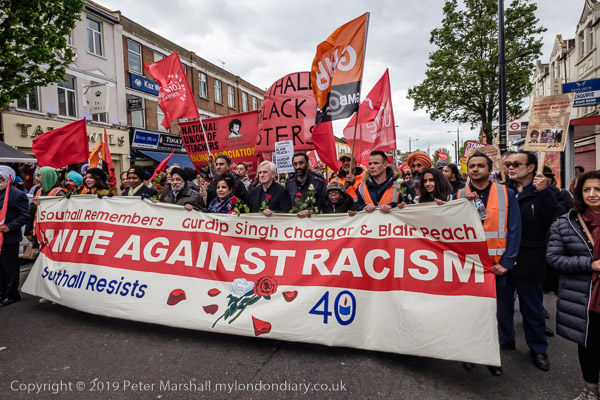
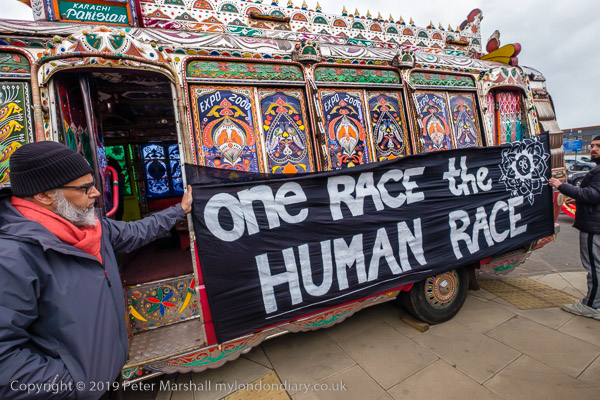
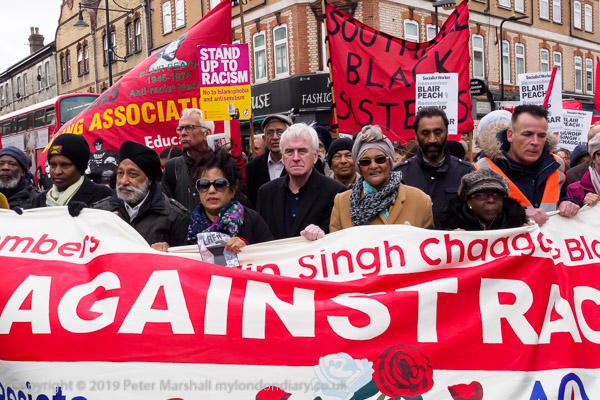
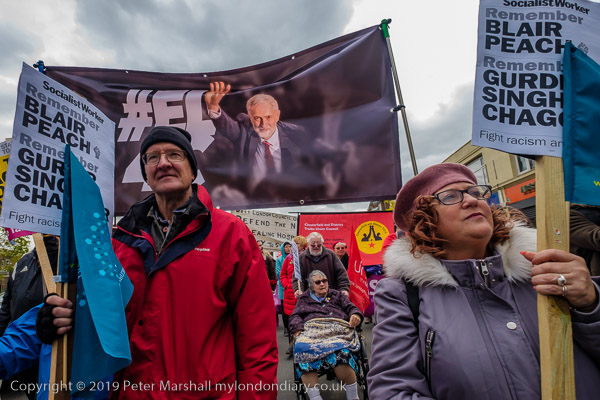
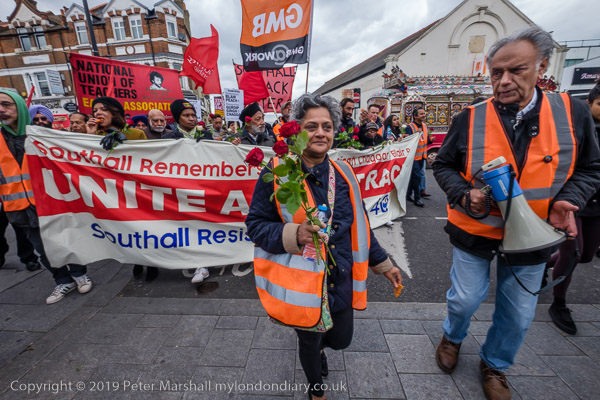
Southall Rally For Unity Against Racism – On Saturday 27th April 2019 I joined with several thousand others to march through Southall, a town ten miles west of Central London callling for unity against racism. The date marked 40 years after the racist murder of New Zealand born East London teacher Blair Peach on St George’s Day, April 23rd 1979, 40 years before.
Peach had come to Southall with many others to protest against a National Front rally being held at Southall Town Hall, the venue chosen deliberately to inflame racial tensions in the area which had become the centre of a large Punjabi community, attracted by work in local factories and nearby Heathrow airport. Well over half of Southall’s roughly 70,000 inhabitants were of Asian origin and two thirds of the children were non-white.
I’d grown up in the local area though we didn’t go to Southall much as the bus route there was probably the least reliable in London, though I occasionally cycled there to watch the steam trains thundering through on the Great Western main line. My older sister taught at a school in the area and we had seen the population change over the years; our Irish neighbours were replaced by Indians and we got on well with both. The new immigrants to the area were hard working, revitalised many local businesses and generally improved the area, making it a more interesting and exciting place to live.
I wasn’t there in 1979 when Blair Peach was murdered, but the accounts published of the event were horrific, with several thousand police apparently running amok trying to disperse the protesters who fought back. Members of the specialist Special Patrol Group were reported by eye-witnesses as hitting everybody down Beachcroft Avenue where Peach and his companions had gone thinking wrongly it would enable them to leave the area. Wikipedia has a long article, The Death of Blair Peach.
Peach was badly injured by a severe blow to the head, almost certainly by an officer using wielding “not a police truncheon, but a “rubber ‘cosh’ or hosepipe filled with lead shot, or some like weapon“, and died a few hours later in hospital. Police in the squad which killed him made great attempts to avoid detection, one shaving off his moustache and another refusing to take part in identity parades; some uniforms were dry-cleaned before being offered for inspection and others withheld, and various attempts were made by police to obstruct justice and prevent the subsequent inquest establishing the truth.
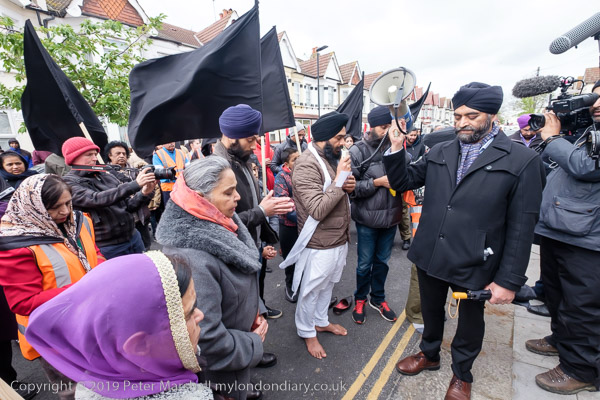
Peach’s was not the only racist murder in Southall. Three years earlier Gurdip Singh Chaggar, an 18-year old Sikh student had been murdered by racist skinheads in June 1976 shortly after he left the Dominion Cinema, and the marchers gathered in a parking area close to there. His family had requested that the event begin with a karate display there, after which the march set off, halting for a minute’s silence on the street outside the cinema where Chaggar was murdered.
From there we marched to the Ramgarhia Sabha Gurdwara in Oswald Road which Chaggar and his family attended and prayers were said outside before the march moved on.
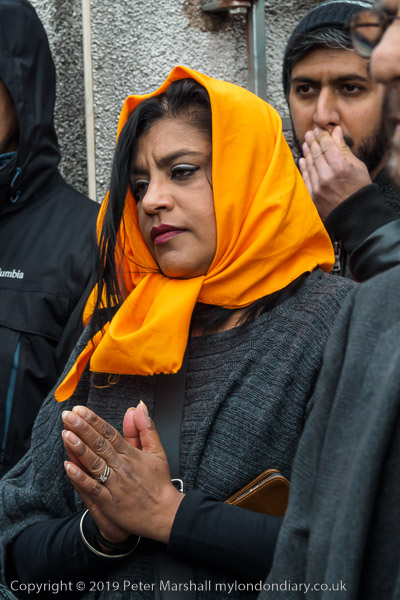
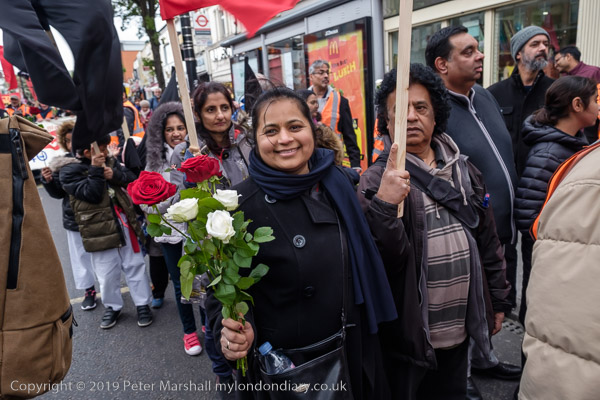
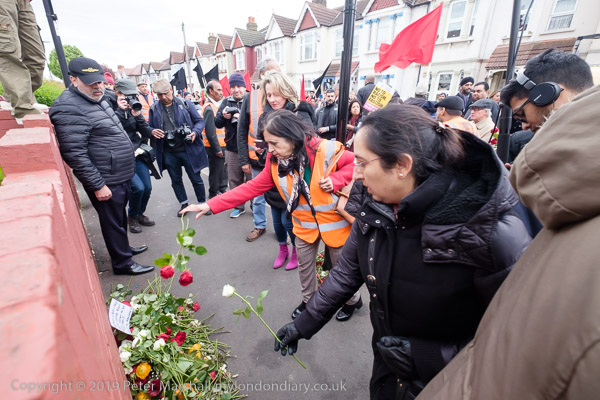
As we walked along the Broadway, red and white roses were handed out to the marchers, and the march turned off down Beechcroft Road to the corner of Orchard Ave, where they were laid at the spot where Blair Peach was murdered by an officer of the police Special Patrol Group.
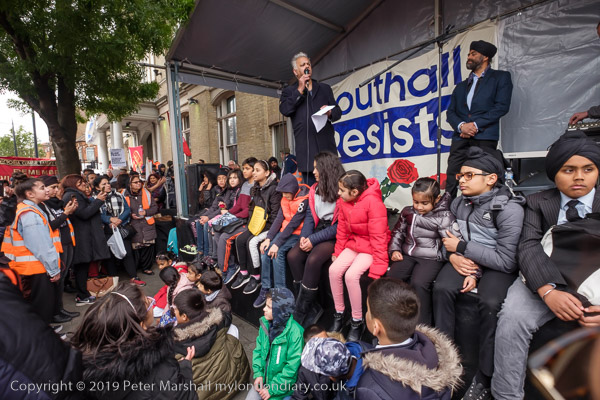
The march moved on to Southall Town Hall on the corner of High Street and Lady Margaret Road. Blue plaques were put up here in 2019 honouring the deaths of Blair Peach and Gurdip Singh Chaggar, with a third in tribute to Southall’s prominent reggae band, Misty ‘n Roots. These plaques were stolen in June 2020, but were replaced the following year.
Speakers at the rally there included a number of people who had been there when the police rioted 40 years ago, as well as John McDonnell MP, Pragna Patel who was inspired by the event to form Southall Black Sisters, trade unionists, Anti Nazi league founder Paul Holborow, and local councillor Jaskiran Chohan. Notable by his absence was the local Labour MP.
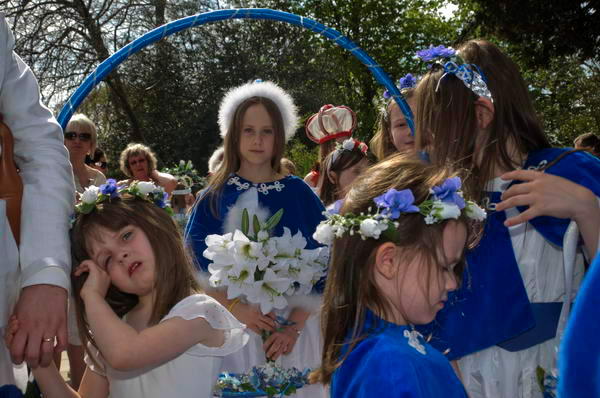
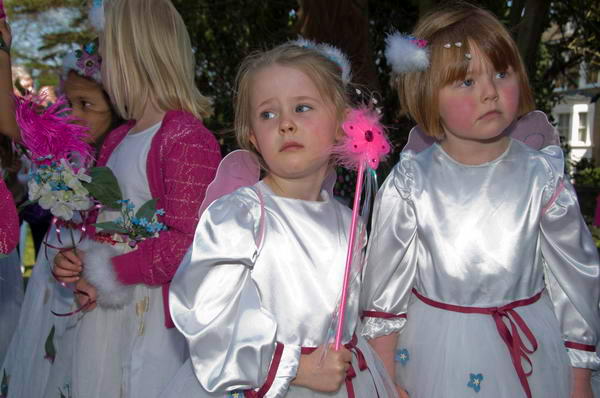
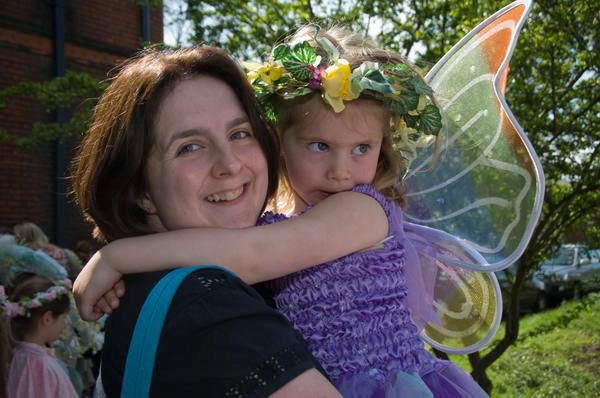
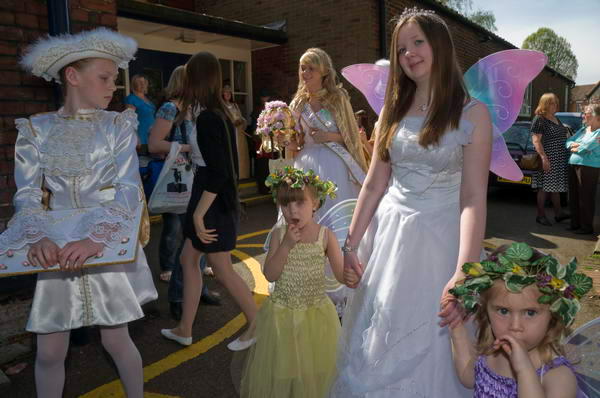
Bromley May Queens Crowning – On Saturday 19th April I went to Bromley to photograph the crowning ceremony of the May Queens from Bromley Common and Shortlands in an event also attended by May Queen groups from West Wickham, Hayes, Hayes Village and Hayes Common. This is the largest of the May Queen events before the annual crowning of the London May Queen in May.
Although in recent years my photography has largely been around protests, with the occasional walk thrown in, back in the first decade of this century I was also photographing a wide range of cultural events in London, including a number of religious festivals and other celebrations. And one of the lengthier projects I engaged in was on May Queen festivals in London.
Although I’d grown up in London and lived near it for most of my adult life (and still do) I had never come across May Queen festivals, though perhaps I may have seen some of the old newsreels from pre-war days I thought they were a thing of the past.
In a post written earlier in April 2008 I described how I came to find out more and to start a project which led to me finding out more and starting a project on them in 2005:
It was the work of Tony Ray-Jones that first attracted me to May Queens, with his posthumous ‘A Day Off’, published in 1974 containing half a dozen of his pictures from May Queen festivals (though only four really connected with May Queens.) One of these – certainly the least interesting image – showed around 30 young women in three rows in front of a maypole, all wearing crowns. Despite the misleading caption, ‘May Queen Gathering, Sittingbourne, 1968’, in a later publication it was identified correctly as a picture of the annual London May Queen festival at Hayes, Kent.
Although I didn’t think it one of his better pictures it struck me as an interesting event, and even more so when I went to photograph it in 2005, and started to look up a little of its history.
Eventually I had enough pictures to publish a book, and had been promised an exhibition at a major museum – though this never materialised. The book, London May Queens ISBN: 978-1-909363-06-9 is still available from Blurb, either as an expensive print version or as a PDF, and the work has also been featured on other web sites including Lensculture.
Here is the Blurb blurb: “2012 saw the crowning of the London’s 100th May Queen. The first Merrie England and London May Queen festival was held in 1913 and it has continued every year since. In the 1920s and 30s it was a major event, covered by cinema newsreels and competitions in daily newspapers, but now it is known to few outside the over 20 local realms that take part in the annual event. The 72 pictures in this work give a unique insight into this community event.“
It’s worth going to the Blurb link to see the extensive preview of the work, which includes all of the text of the book as well as many of my favourite images from the project.
Girls generally join their local May Queen group at an early age and progress through the various roles in the group as they get older – and if they stay long enough become their group May Queen, after which they can join the London May Queen group and similarly progress to become London May Queen. As well as practising for the festival events the groups also have other activities – and teas etc.
The Bromley area May Queens Crowning is one of the larger events in the May Queen Season, with a number of local May Queen groups processing through the centre of Bromley to Church House Gardens next to the Churchill Theatre where some of the May Queens were crowned. The previous week I’d been to another event where three of them had previously been crowned and the following week there was another crowning festival in Beckenham a week before the final crowning of the London May Queen at Hayes.
At the end of the ceremony the girls process back to a church hall for a tea, but I was too tired to go with them and felt in need of something stronger.
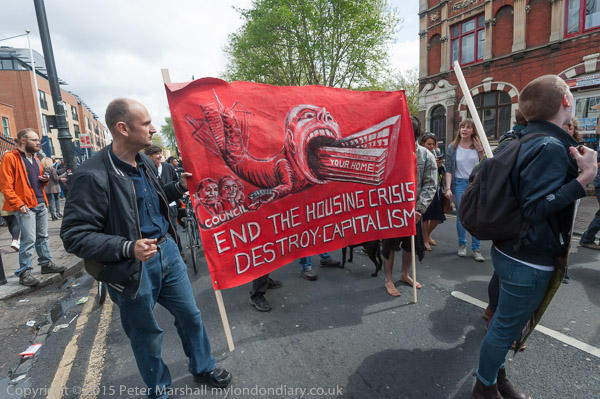
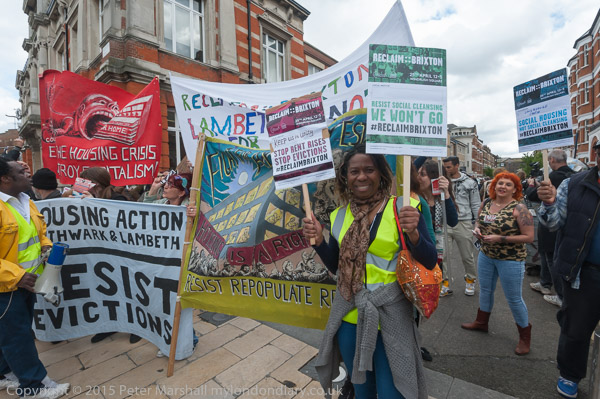
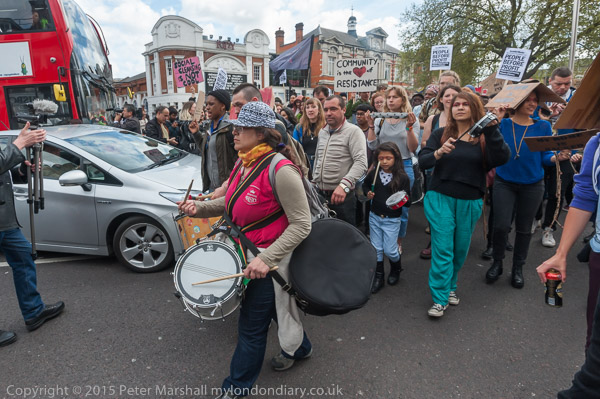
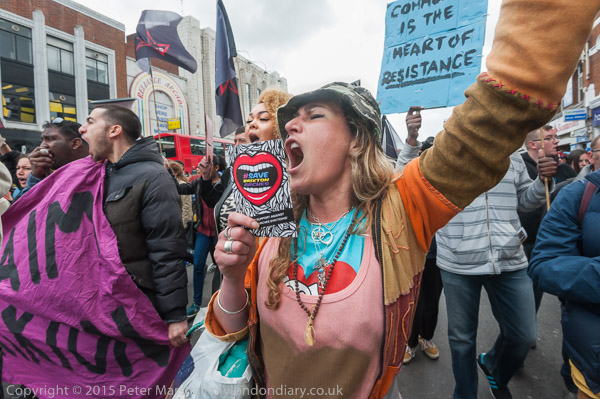
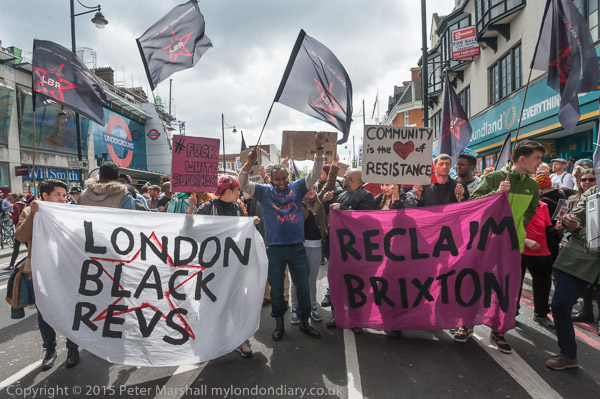
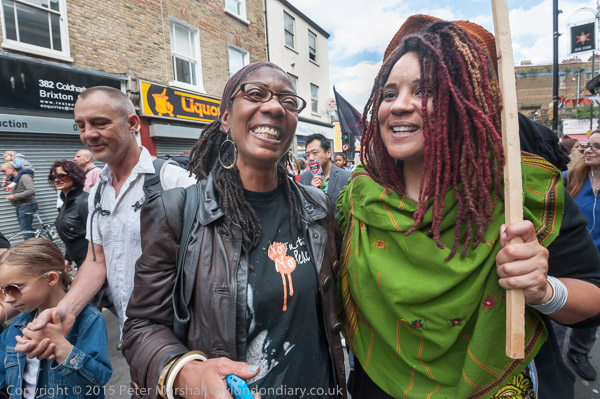
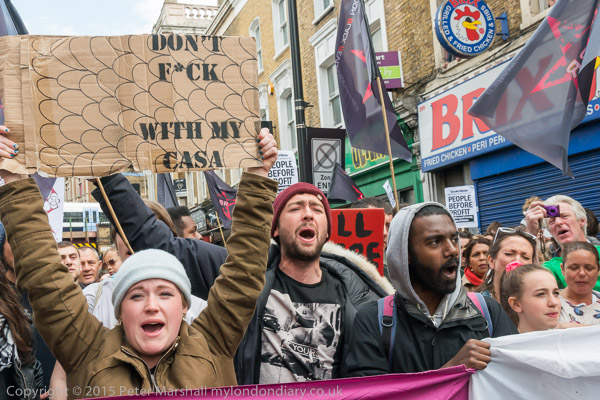
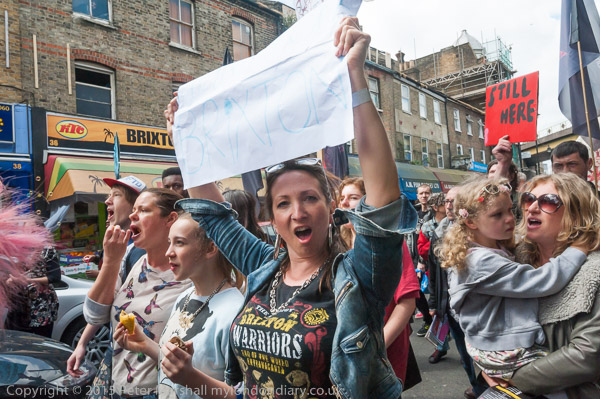
Fighting Brixton Gentrification – On Saturday 25th April 2015 the local community in Brixton held a day of activities to reclaim its social & cultural diversity, threatened by increasing rents and property development that are forcing out local businesses and residents.
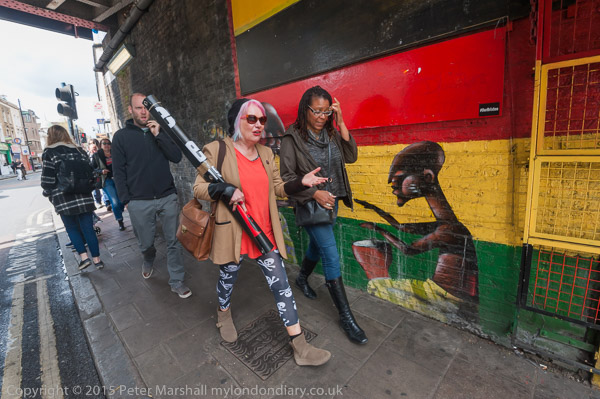
I’d arrived early for main ‘Reclaim Brixton’ event in Windrush Square and first made my way to Atlantic Road where long-established local businesses were being forced out from the railway arches which line one side of the road. They were under threat from Network Rail who with support from Lambeth Council were carrying out a refurbishment programme which would result in their shops being closed and the rents for the shops after being three times as high, pricing the low cost local businesses out of the area.
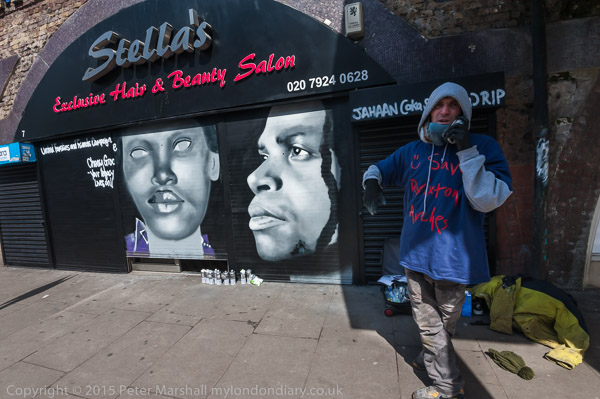
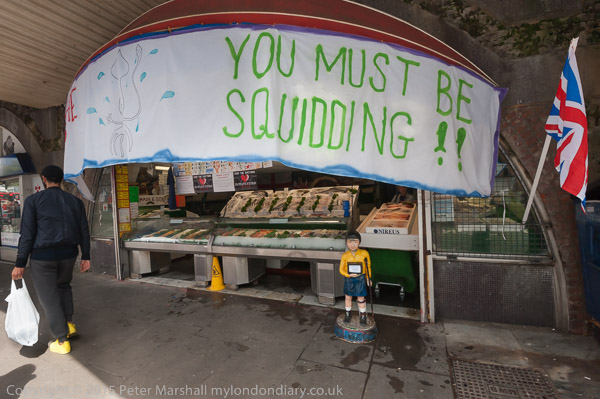
All the stores were closed for two hours across lunchtime in protest, and mural artists had been invited to work on their metal shutters. In 2015 I wrote: ‘On Stella’s Exclusive Hair & Beauty Salon an artist was working on a mural for the United Families and Friends campaign, celebrating Cherry Groce, Sean Rigg and Ricky Bishop, all killed by Brixton police. All the shops on both sides of the arches were closed, and most had white sheets with the name of the business and a punning message about the evictions. Some of them have traded here for many years – Denmay Fabrics since 1948, and L S Mash and Sons have been fishmongers here since 1932. Their message to Network Rail – ‘Don’t rip the soul outta my place”
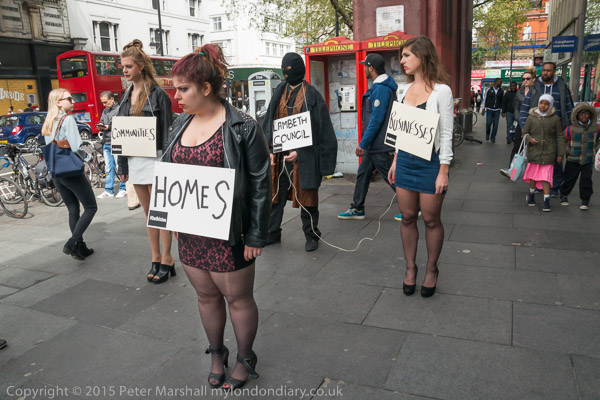
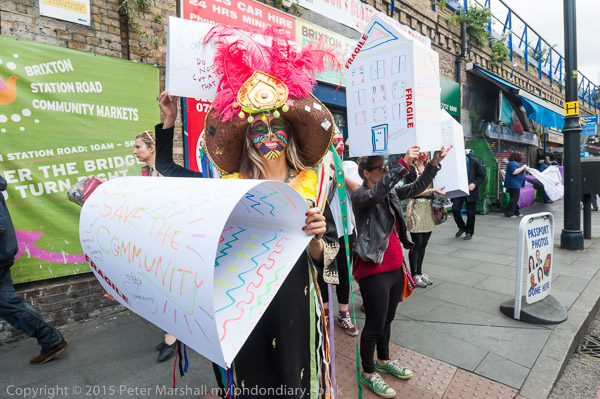
Street theatre groups walked past on their way to ‘Reclaim Brixton’ some in exotic dress carrying cardboard homes and others with posters against the threat to Communities, Homes, Businesses from Lambeth Council.
I walked along to the gentrified Brixton Village, an extensive arcade between Atlantic Road and Coldharbour Lane, to find that police and security were keeping out protesters who, led by London Black Revs, had planned to go through the market in a peaceful march.
I found Class War at Brixton Station and walked back with them to Brixton Village, where other campaigners including some from the Ayslesbury Estate where I had photographed the previous day making their banner and other South London housing campaigners were arriving for the march.
Rather to my surprise the march when it finally started was a short and fairly direct one to Windrush Square, turning off Coldharbour Lane to enter the square via Rushcroft Road.
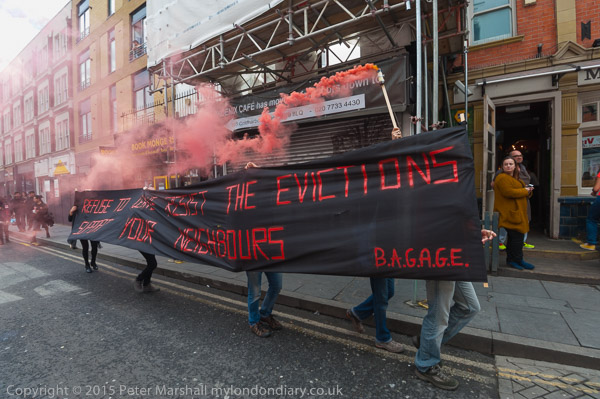
Close to the mansion flats which had been squatted for 32 years before residents were violently evicted in July 2013 people accompanying the long black banner of B.A.G.A.G.E (Brixton Action Group Against Gentrification and Evictions) with its message ‘Refuse to Move – Resist the Evictions – Support your Neighbours’ and others let off several red flares.
Windrush Square in front of the Tate Library and opposite Lambeth Town Hall was a few years earlier re-landscaped by Lambeth Council, who deliberately turned what had been a popular place for locals into a bleak and unwelcoming windswept area to discourage the informal gatherings that took place there.
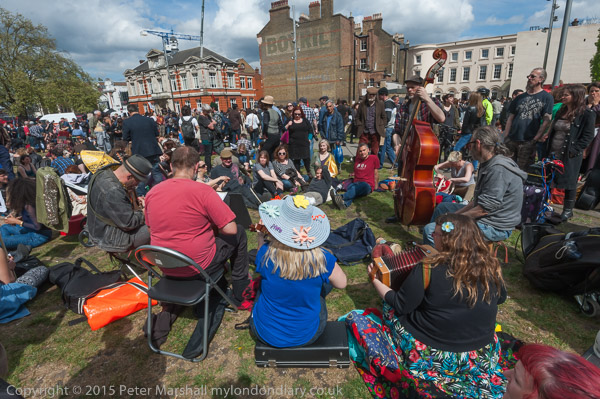
Perhaps it was partly due to this that the event taking place there seemed to lack any real cohesion with various groups doing their own thing in different parts of the large area and largely ignoring the speeches and performances at the Unite Community stage.
After an hour or so with not very much happening, activists decided it was time for a march and took to the road blocking traffic and walked up Brixton Road.
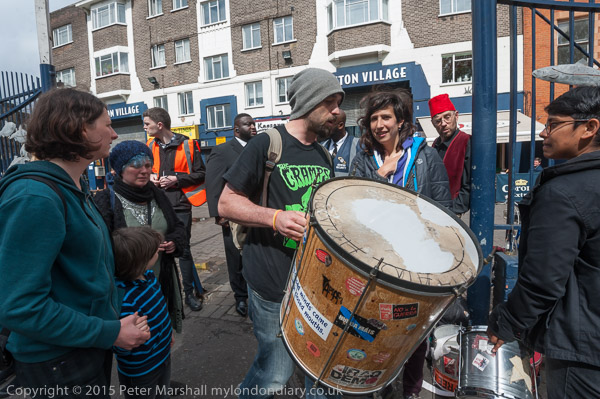
They stopped for a while outside Brixton Underground, drumming and dancing and shouting.
Then they marched along Atlantic Road and rather to my surprise returned directly to Windrush Square along Coldharbour Lane.
Marcia Rigg, Sean Rigg’s sister, still fighting for justice for her brother’s killing by Brixton police in August 2008 and friend
I hung around for a while in Windrush Square where nothing much was still happening slowly and things seemed peaceful. I decided I had done enough for the day and left.
This was a mistake. Shortly after (probably when Class War came out of the pub) sthings kicked off and some people stormed and briefly occupied Lambeth Town Hall, a large window at Foxton’s estate agents was broken, and a few activists went into Brixton Village with banners.