UN Human Rights Day 2016

UN Human Rights Day – On 10 December 1948 the 1948 the United Nations General Assembly adopted the Universal Declaration of Human Rights, and December 10th is now celebrated around the world as Human Rights Day.

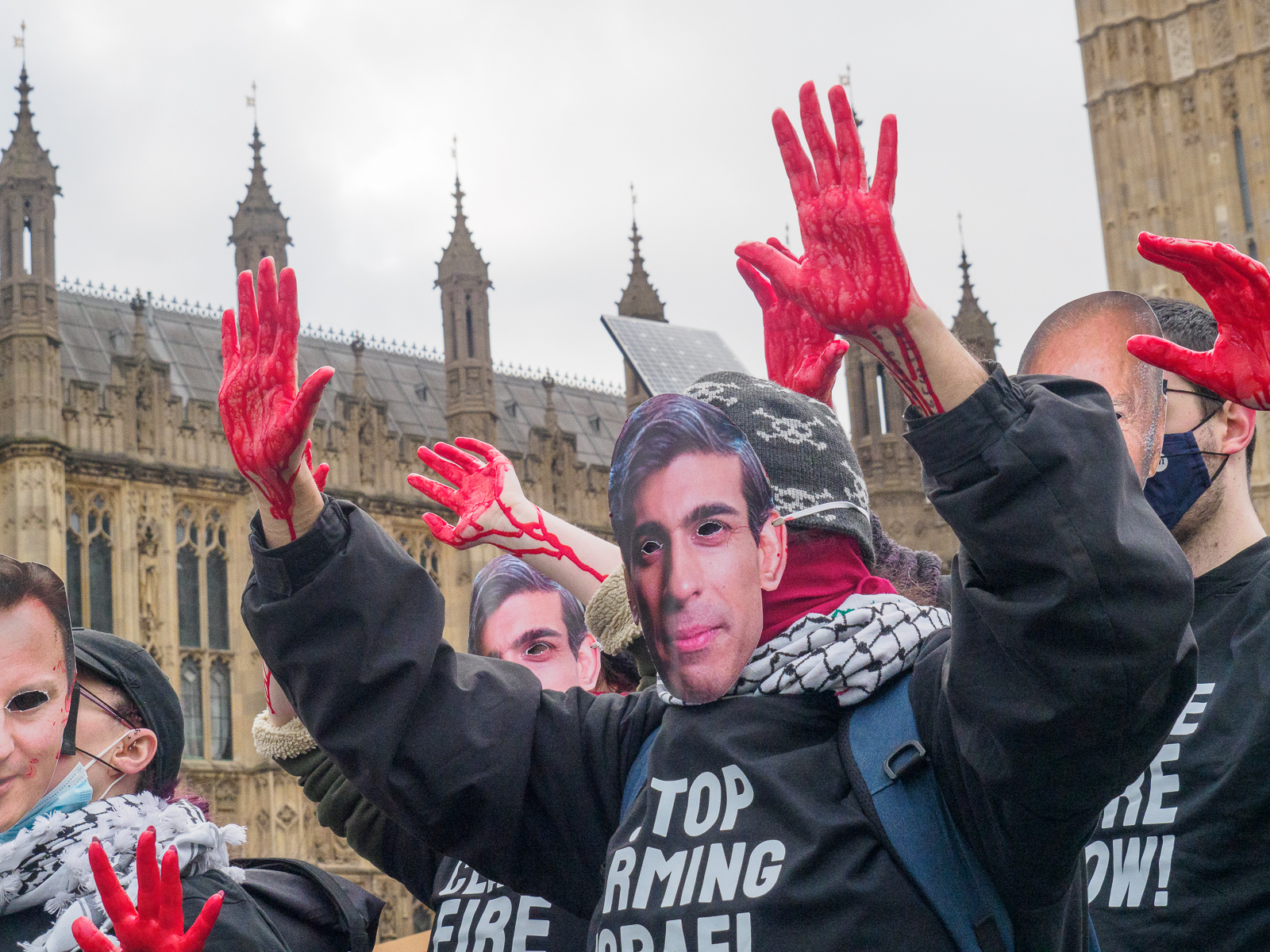
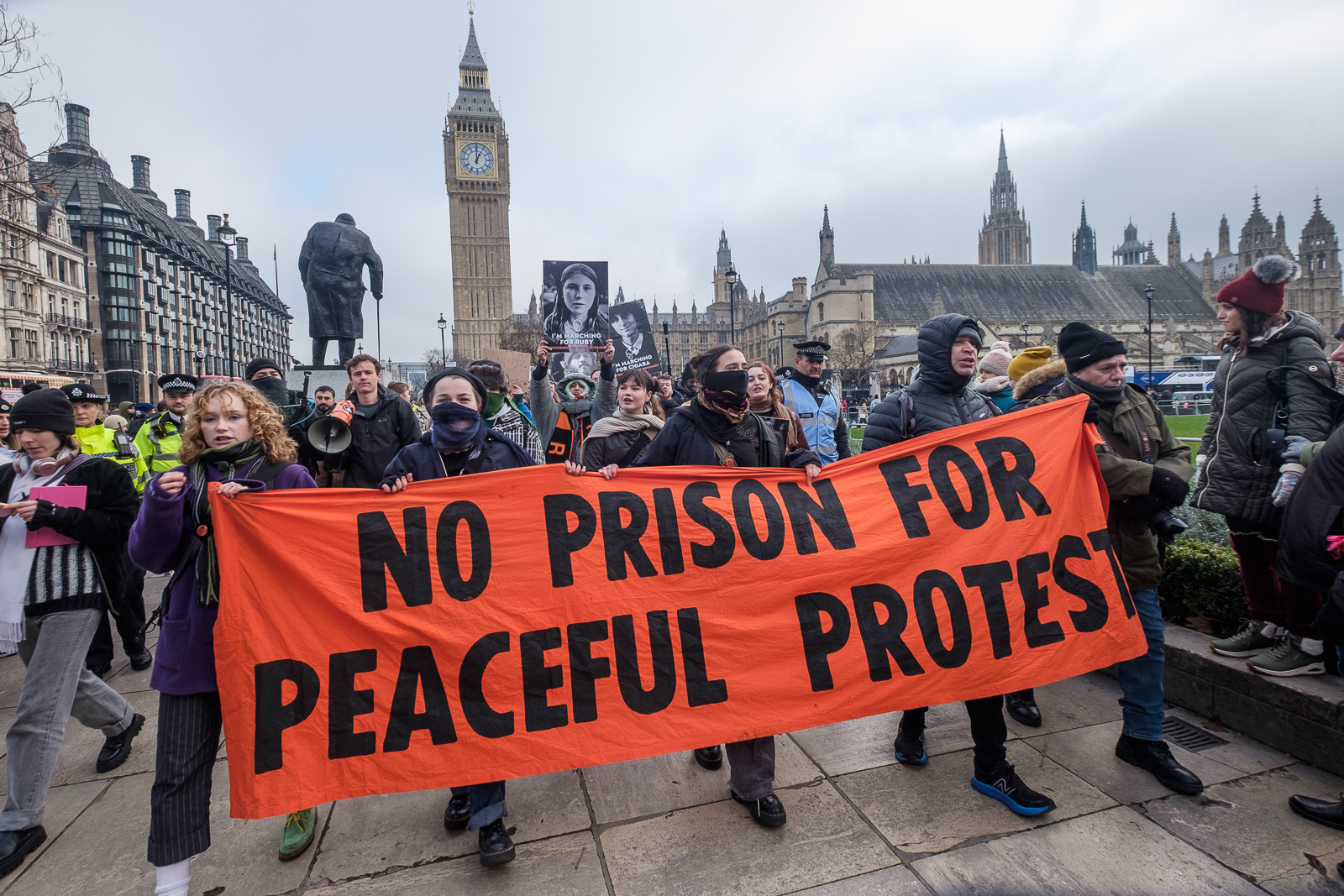
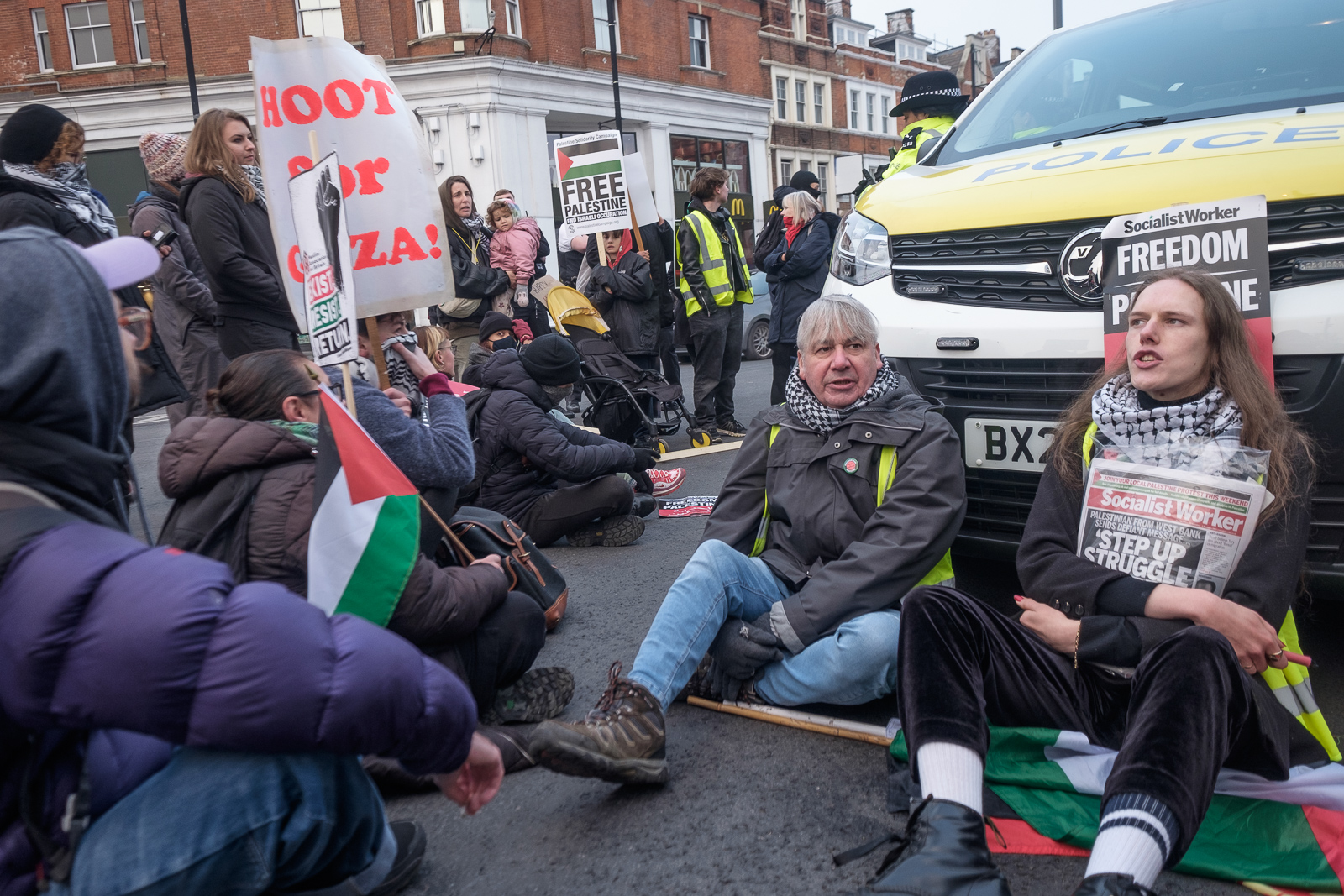
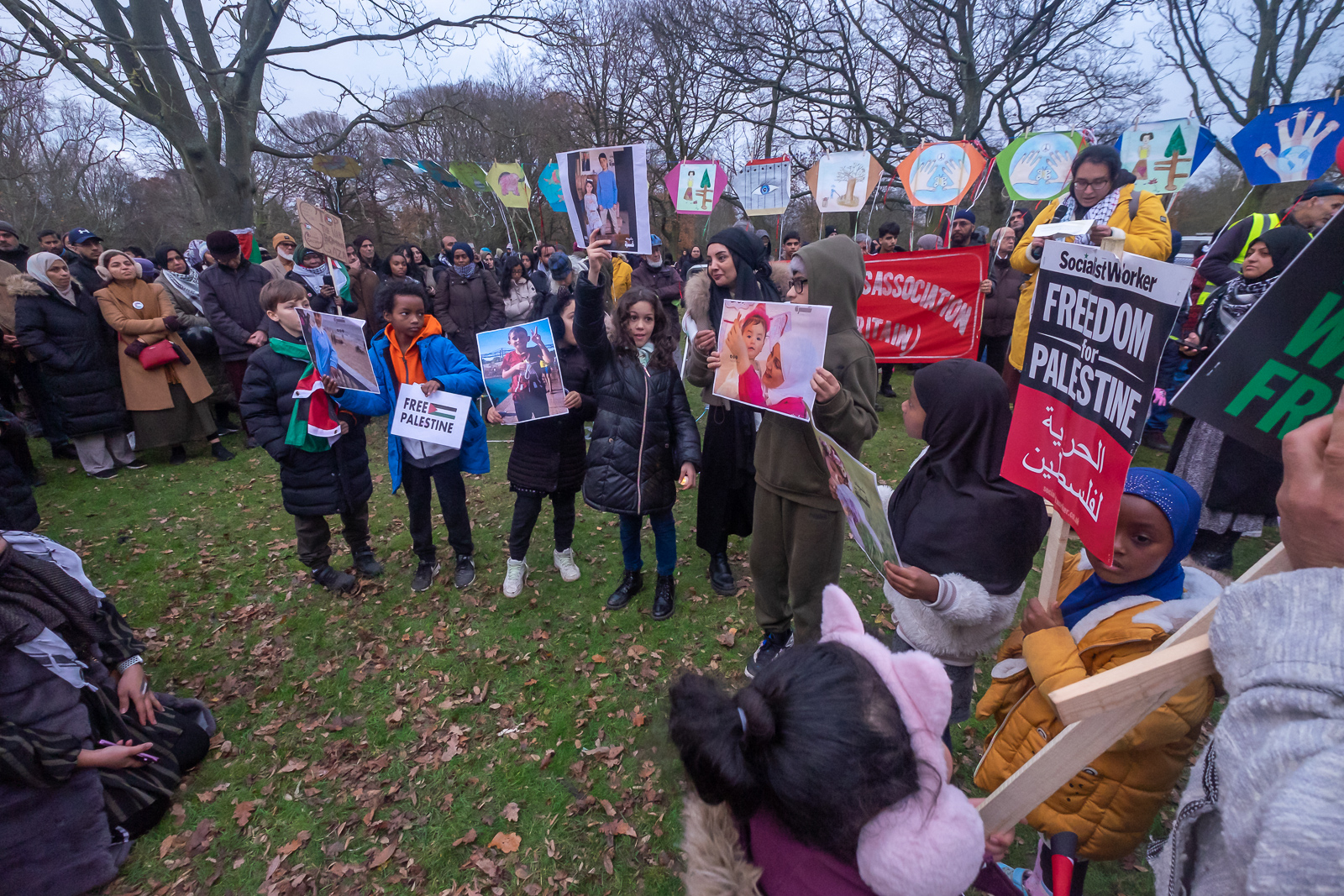
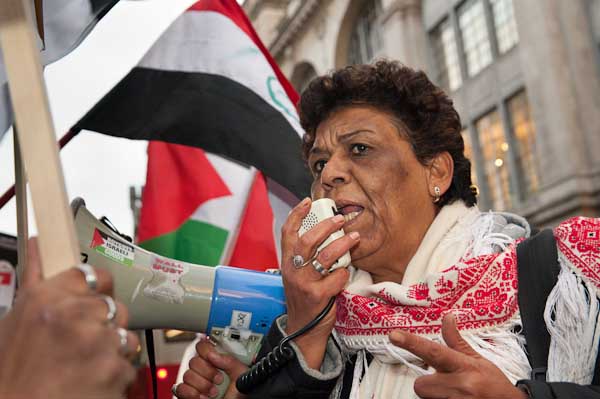
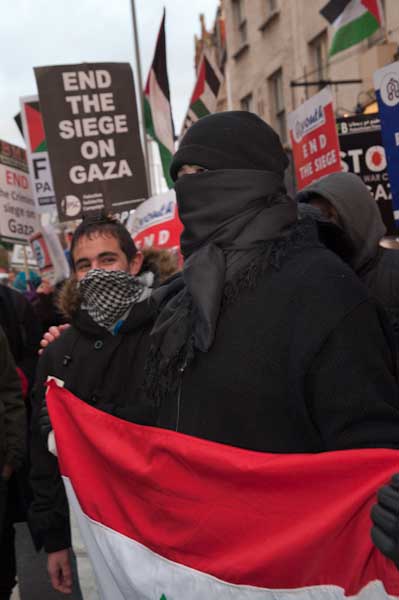
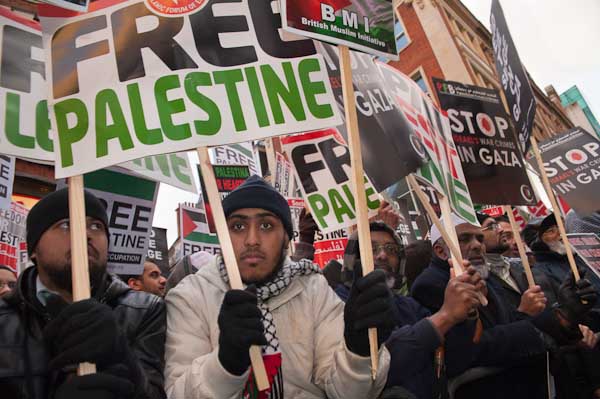
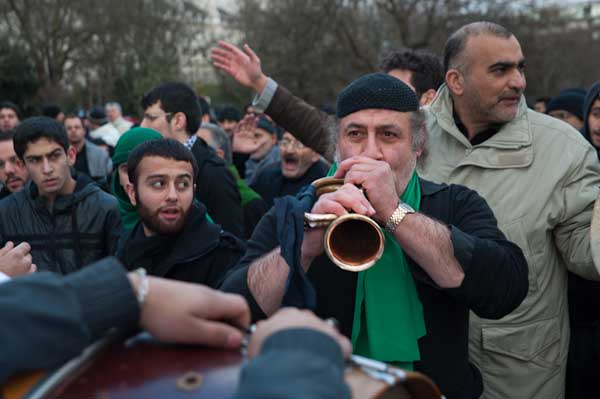
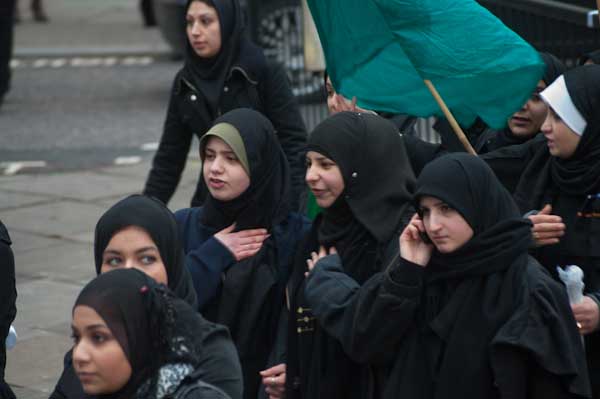
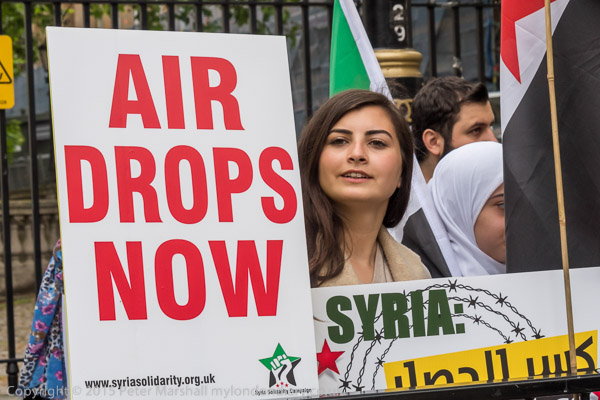
The theme for the day in 2016 was ‘Stand up for someone’s rights today’ and there were a number of protests in London which did just that. This year will mark the 75th anniversary of the declaration and it seems unlikely that the UK government will be doing much celebration as it begins to try to push through a law to prevent asylum seekers from asserting their human rights.


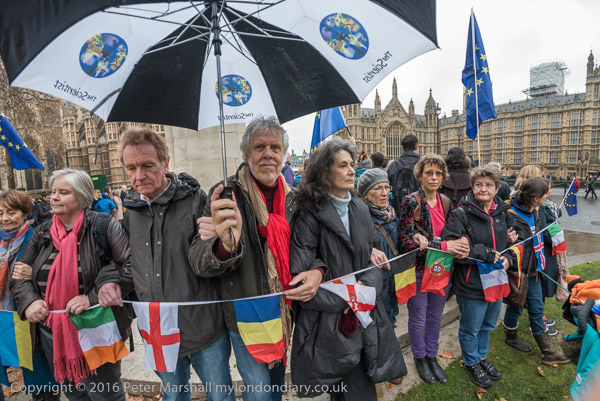
Silent Chain for Europe – Old Palace Yard, Westminster

UN Human Rights Day

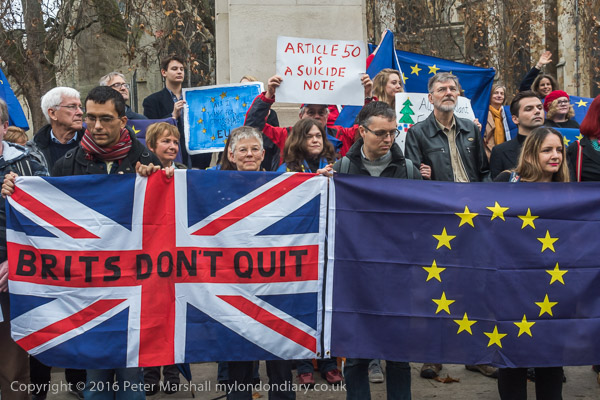
Campaigners linked arms in silent chains in protest opposite parliament and elsewhere in other towns and cities.

UN Human Rights Day

They say Brexit threatens our human rights including workers rights to paid holidays, maternity leave and fair treatment at work, the right of free movement around Europe, to live in the EU and for EU citizens to live here, disability rights and the right to freedom from discrimination.

More pictures at Silent Chain for Europe.


BBC censors prison struggles – Broadcasting House

UN Human Rights Day

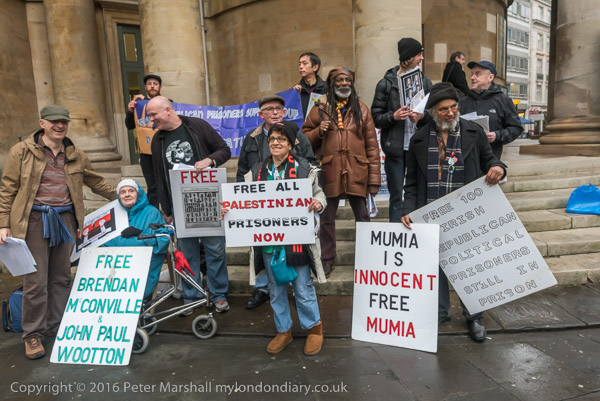
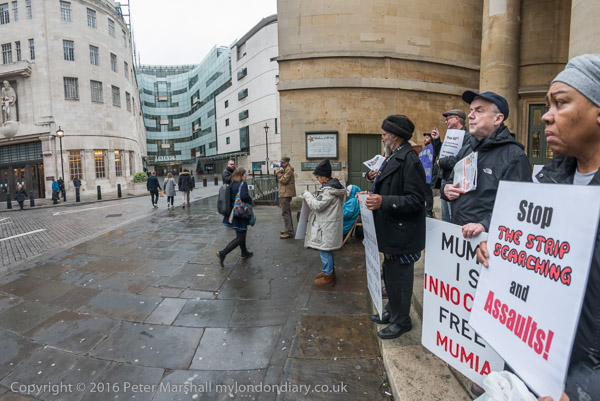
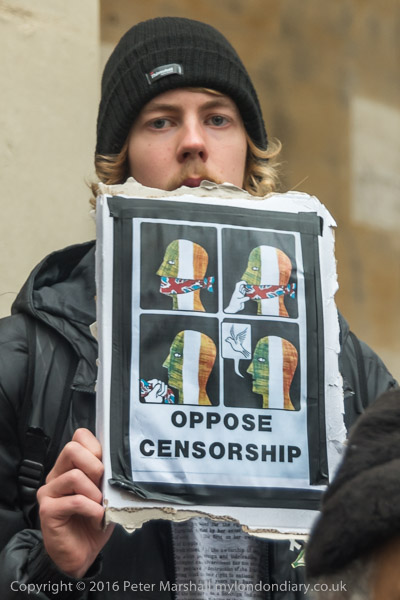
A Human Rights day protest outside the BBC highlighted the failure of the organisation to report on people wrongly held in prison in some countries around the world.

UN Human Rights Day

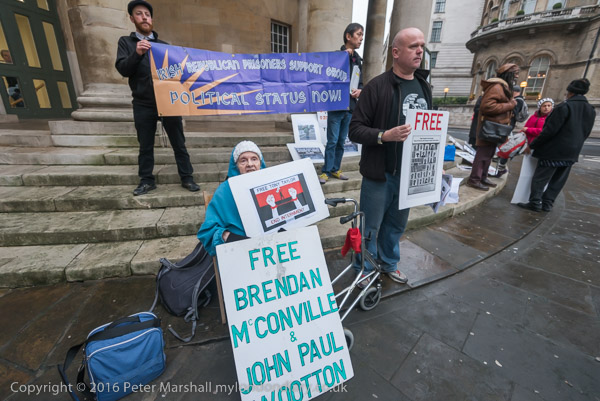
They say the BBC as an institution largely or totally ignores wrongful imprisonment in Northern Ireland, including the frame-up of the Craigavon 2 and the continuing internment of Tony Taylor for legal political activities.

The Craigavon 2, John Paul Wootton and Brendan McConville, have been in prison since March 2009 and were convicted for the killing of police officer Stephen Carroll by a Diplock court without a jury on the basis of evidence which has been described as ludicrous. An appeal was dismissed in 2014 and at the start of 2023 Northern Ireland’s The Sunday Life newspaper revealed that MI5 had set up and operated what purported to be a human rights organisation but was actually working to subvert the campaign for their release.

Other cases the say the BBC consistently fails to report include the imprisonment of Mumia Abu Jamal on Death Row in the USA, Palestinians held in Israeli jails and victims of Erdogan’s purge in Turkey.

BBC censors prison struggles


Balochs UN Human Rights Day protest – Downing St

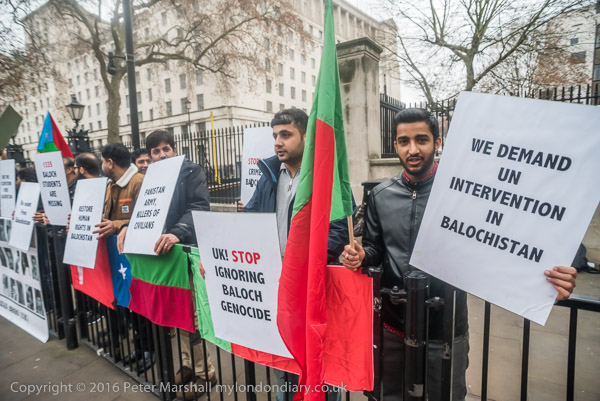
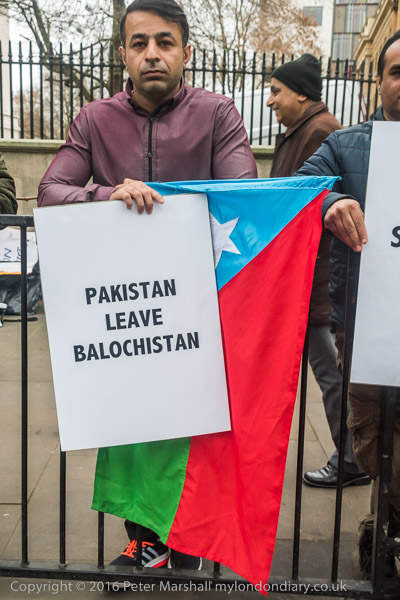
People from Balochistan in West Pakistan called on Theresa May to speak up for the Baloch people and their freedom against the Pakistan regime which they claim has a policy of genocide against the Baloch people and has killed thousands of Baloch activists and abducted more than 25,000 of them.

When Pakistan was set up in 1947, the kingdom of Balochistan became a part of it with some autonomy but a year later was merged with Pakistan. Since then various political and military separatists have emerged in the area which also includes part of neighbouring Iran.

Balochs UN Human Rights Day protest


Human Rights Day call close Guantanamo – Downing St

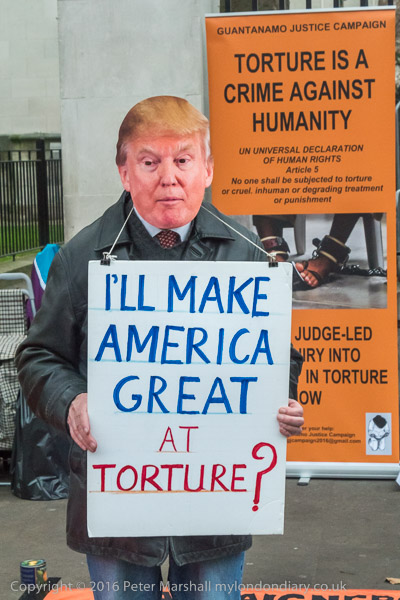
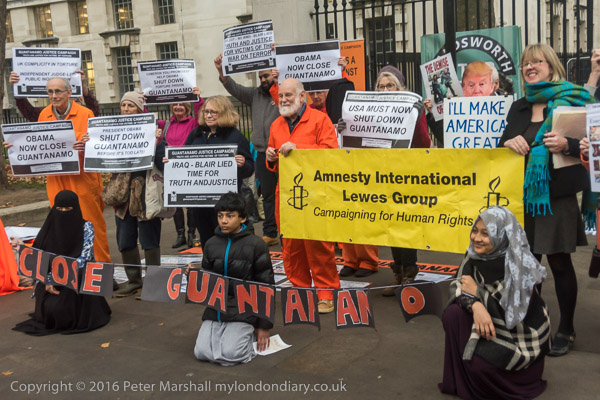
Also at Downing Street the Guantanamo Justice Campaign held a rally calling for an end to torture, the closure of Guantanamo and an end to British complicity in torture.

Speakers at the rally included Lewes Amnesty Group Chair Sara Birch, Journalist and writer Victoria Brittain and Stop the War convenor Lindsey German. Mizan the Poet gave an impressive performance of his poem ‘1984’ against the government’s anti-Muslim ‘Prevent’ counter extremism strategy.

More pictures at Human Rights Day call close Guantanamo


Save Yazidi women and girls – Westminster

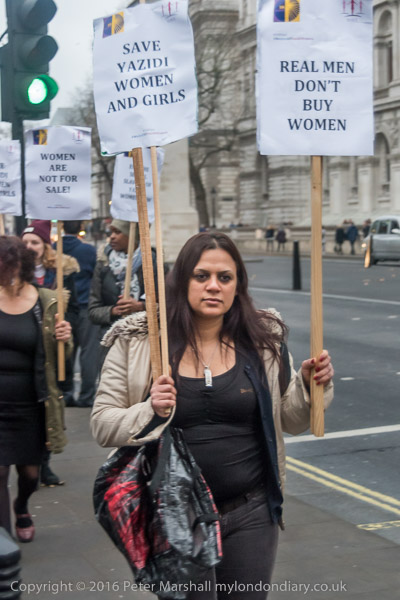
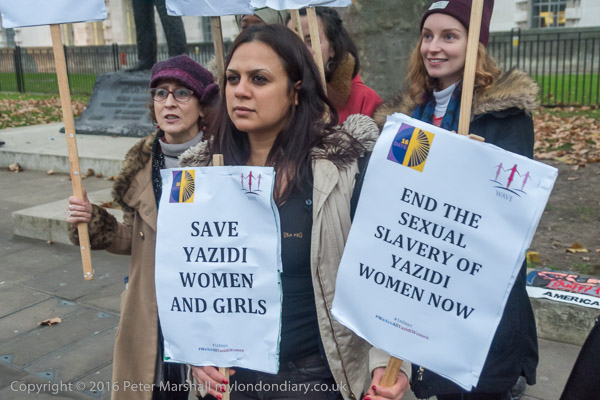
A small group of women protesters from WAVE (Women’s Action against Violent Extremism) held placards in Parliament Square before coming to protest at Downing St calling for help for the Yazidi women who were targeted and captured by ISIS (Da’esh) in Iraq.

ISIS regard the Yazidi as devil worshippers and subjected their women to physical and sexual violence, including systematic rape and sex slavery. The UN in 2014 reported that more than 5000 Yazidis had been murdered and 5-7,000 abducted. Over 3,400 are believed to be still held.

Although in 2014 the UK government in 2014 provided some emergency aid to those who escaped to a refugee camp, few if any have been given asylum here. The Independent reported in 2018 that “some Yazidis in the UK are having their asylum denied.” When SNP Brendan O’Hara asked a question in Parliament in 2022 on how many Yazidi refugees have been resettled in the UK since 2014 he was simply told that the Home Office keeps no records of the religious or ethnic background of refugees. Others put the figure at close to zero.

Save Yazidi women and girls


Not everything I photographed in London on 10th December was related to Human Rights Day. I also found a couple of rhinos and many more Santas. You can see them on My London Diary.
Save the Rhino
London Santacon 201


Reparations, North Woolwich & LouLou’s

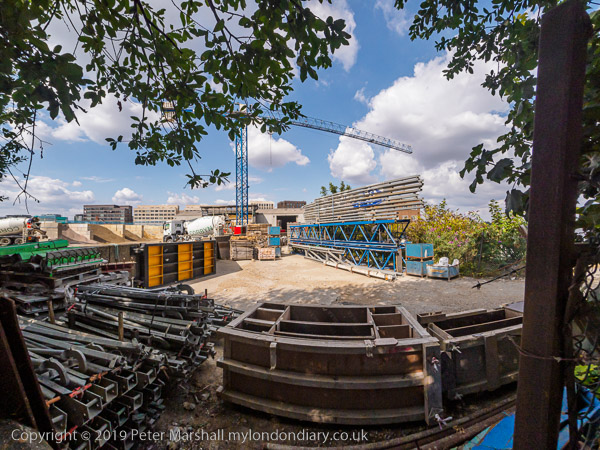
Reparations, North Woolwich & LouLou’s: Thursday 1st August 2019 was a long and busy day for me with an Afrikan Emancipation Day protest, finishing a walk in North Woolwich I’d begun six months earlier and photographing an evening protest outside the exclusive Mayfair club LouLou’s.


Afrikans demand reparations – Brixton, London.

Afrikans demand Reparations, North Woolwich & LouLou's

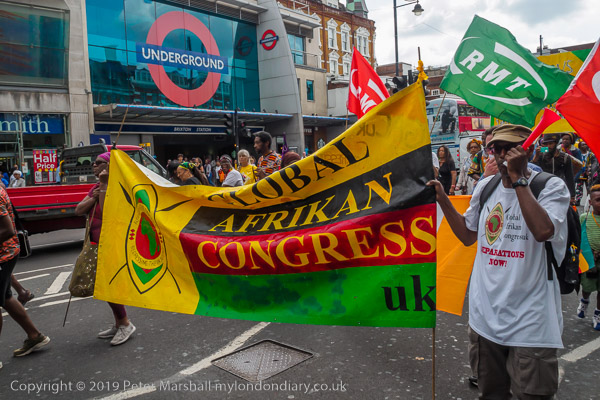
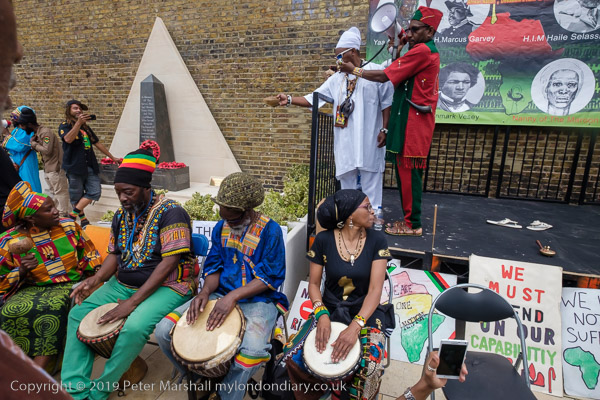
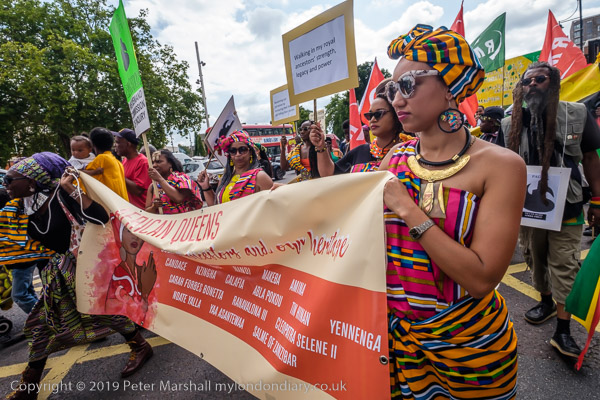
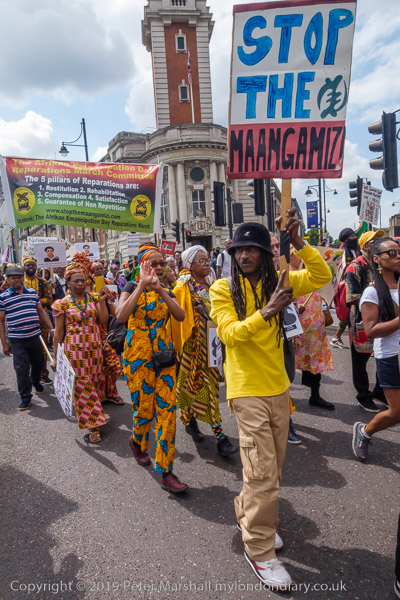
People of African origin met in Windrush Square in the morning to demand an end of the Maangamizi, the continuing genocide and ecocide of African peoples and Africa on Afrikan Emancipation Day.

Afrikans demand Reparations, North Woolwich & LouLou's

After speeches & libations they marched from Brixton to Westminster with a petition calling for an end to acts of violence by Britain, the misuse of taxes and the stolen legacy plundered from Afrika under the British Empire and European Imperialism and demanding reparations.

Afrikans demand Reparations, North Woolwich & LouLou's

The protest was supported by Extinction Rebellion XR Connecting Communities who marched in an Ubuntu Non-Afrikan Allies bloc.

Afrikans demand Reparations, North Woolwich & LouLou's

I left the march as it went past Brixton Police Station on its way to protest outside the Houses of Parliament so I could have some lunch before going to take pictures elsewhere.

Many more pictures on My London Diary at Afrikans demand reparations.


DLR – Bank to North Woolwich

DLR HQ at Poplar

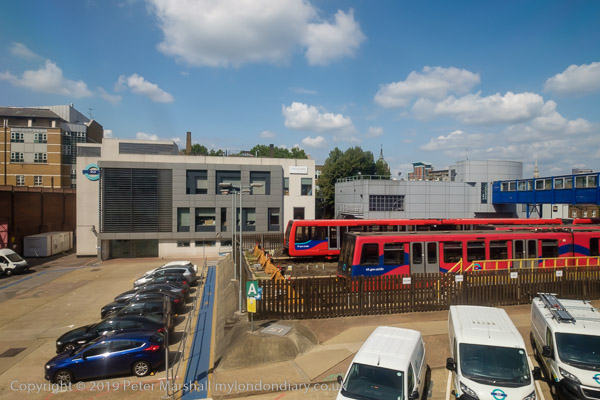
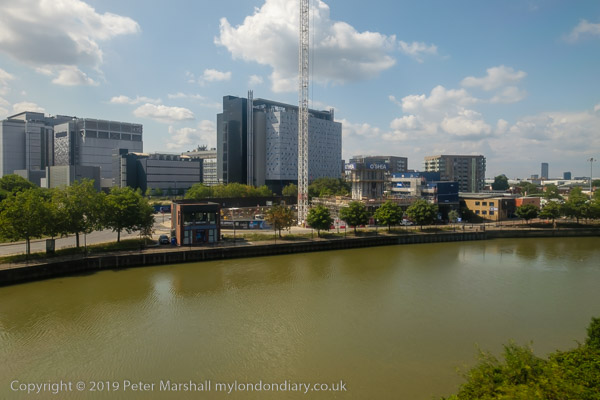
I’d taken the tube back into central London to have a quick lunch before taking the DLR from Bank to London City to King George V Dock station for the final section of the walk I had begun in February but had run out of time to finish because I’d had to take a roundabout route to get there as the direct DLR services were suspended following an accident.

Bow Creek

This time the trains were running properly. They start from Bank and so come into the station empty and I was able to chose my seat and for once I found myself sitting next to a clean window on my way to North Woolwich and took a number of pictures.

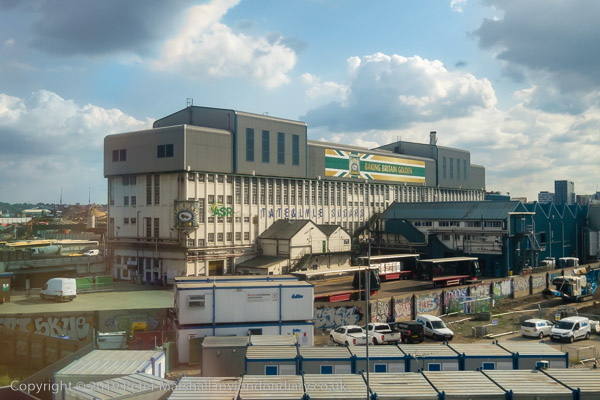
Tate & Lyle

Later on my way back to Canary Wharf from King George V I was less lucky and the windows were rather grimy, but I still made a few images.

More at DLR – Bank to London City Airport.


North Woolwich, Royal Docks & the Thames

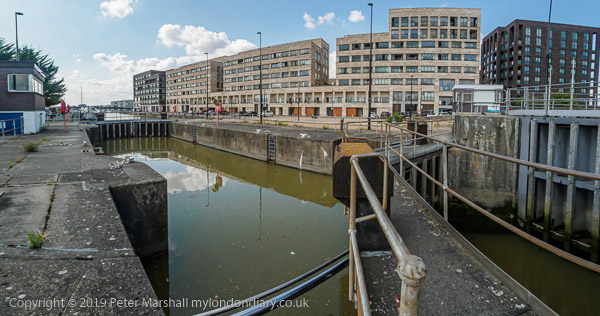
The footpath goes across these gates of the entrance lock to Albert Dock Basin

I took a few pictures as I walked from the elevated King George V station at North Woolwich to the King George V Dock entrance and joined the path by the river.

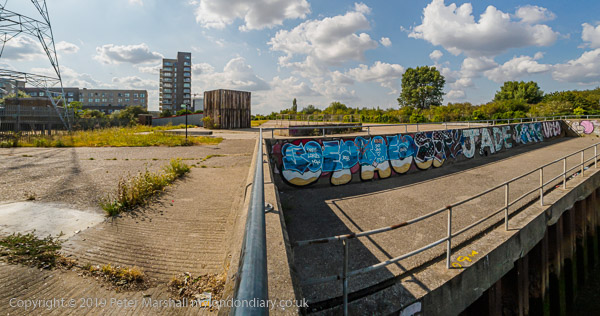
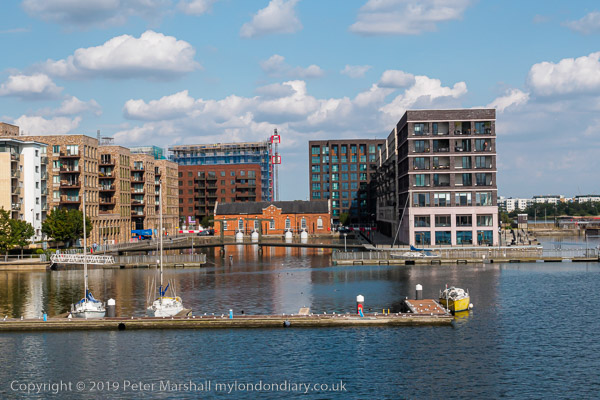
The lock here is huge, 243.8m long and 30.48m wide. I’d first photographed the area back in the 1980s as a part of a wider project on the Docklands following their closure, both in colour but mainly in black and white – in the album 1984 London Photographs. Although the docks themselves remain, much around them has changed, although there are still some derelict areas.

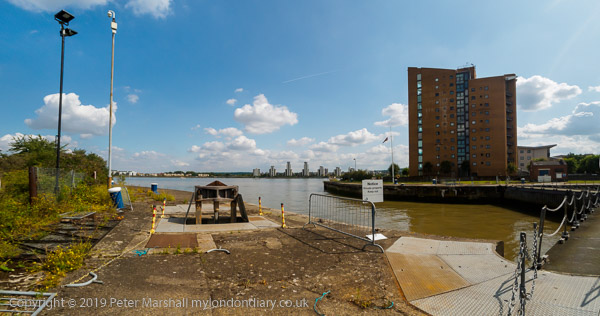
The riverside path here is part of the Capital Ring, and continues north and over lock at the Albert Dock entrance to the curiously desolate Armada Green Recreation Area.

Here the path ends, with beyond it the former site of the Beckton Gas Works, used as a location for at least 17 films and TV series since its closure, though best known as a stand-in for Vietnam in the 1987 Full Metal Jacket. Past that is the Beckton Sewage Treatment Works, set up in 1864 as part of Joseph Bazalgette’s scheme to treat London’s sewage and still receiving it from all of London north of the Thames.

I had to turn inland, through more recent development and the refurbished Gallions Hotel around Alber Dock Basin. I went briefly under the new bridge to see again the East London University student residences, then went back and across it, taking more pictures from the bridge and the road on my way back to King George V station.

Many more pictures at North Woolwich Royal Docks & Thames.


LouLou’s stop exploiting your workers – Mayfair

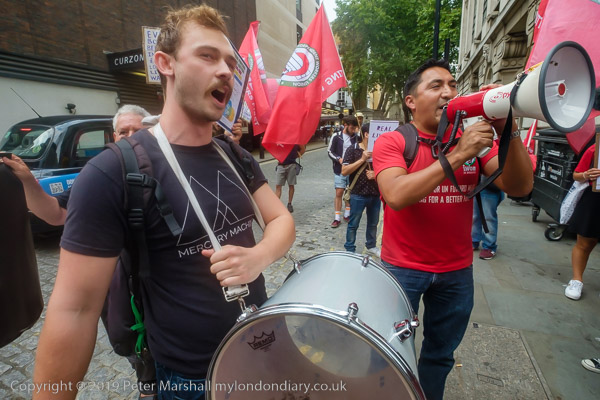
Finally I joined the IWGB Cleaners and Facilities Branch outside the exclusive Mayfair private club LouLou’s where they were picketing and protesting for kitchen porters to be paid a living wage, be treated with dignity, respect and given decent terms and conditions including proper sick pay, holidays and pension contributions. Recently outsourced to ACT, porters want to be returned to direct employment.

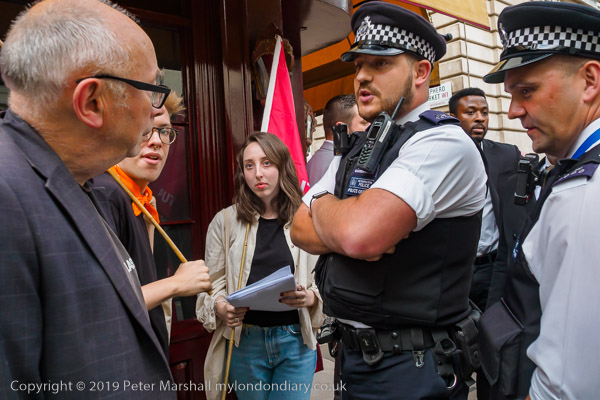
Among those supporting them were Class War, and in the picture above Ian Bone confronts a police office asking why they protect and support the rich. Needless to say the officer had no answer to the question. In general the protesters were reasonably behaved and acting within the law, but police and security hired by the club worked together to try and prevent their protest being effective.

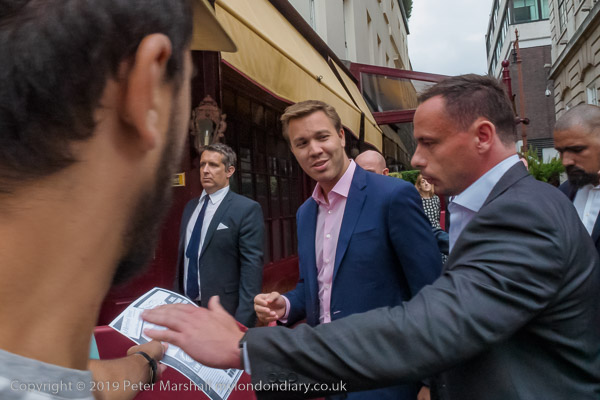
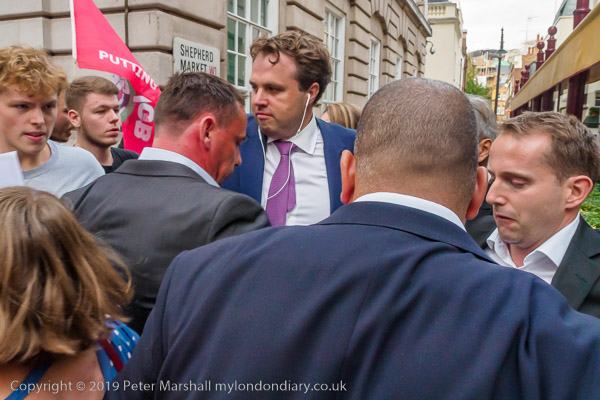
There were angry scenes as staff escorted wealthy clients of the £1800 a year club past the picket, particularly when some roughly pushed the protesters. Police repeatedly warned the protesters but not the security men or customers who had assaulted them. The security also tried to prevent the picket from handing their flier to the customers.

As at previous protests outside of the club, none of the security staff were wearing the visible SIA door supervisor licences required under the Private Security Industry Act 2001, but the police refused to take any action over this.

More pictures at LouLou’s stop exploiting your workers.


Armenians, Copts and Venezuela – 20 April 2013

It’s easy to forget in our current government racist climate towards asylum seekers that Britain has a long history of giving sanctuary to political activists from around the world who have been forced to leave their countries and there are a number of statures, memorials and plaques around the city that remind us of this.

Of course our historical record is blemished; although we supported those striving for freedom from the rule of other European countries, attempts in our own Empire to gain independence were met with often illegal, ruthless and horrific violence as well as deliberate famines starving many of the general population – as in India, Ireland, Kenya and elsewhere.

Despite increasingly draconian laws enacted in recent years Britain remains a relatively free country. Protests are coming under increasing restrictions, but we can still protest although it is now rather more likely we may end up in prison for doing so in any active way – and protesters have even been jailed recently for contempt of court for attempting to defend their actions.

Over the years I’ve covered many protests by communities from other countries living in the UK, often involving people who came here as asylum seekers. Most are protesting in solidarity with protesters and victims in their home countries and some because those at home are unable to protest.

The three events I covered on Saturday 20th April 2013 were taking place for different reasons but all involved people whose origins are in other countries and were protesting about events in those countries, current or historical.


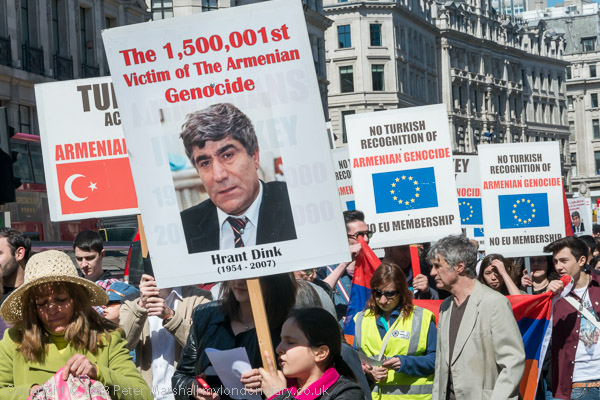
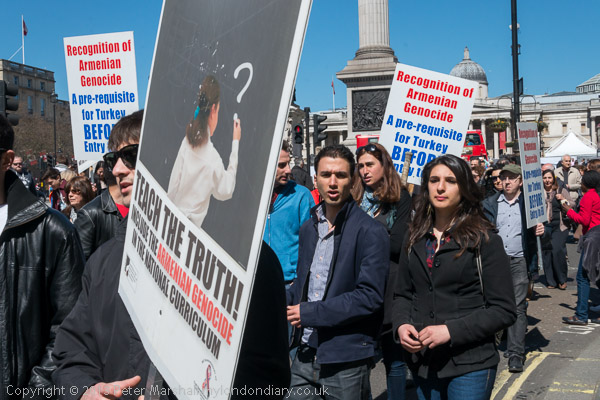
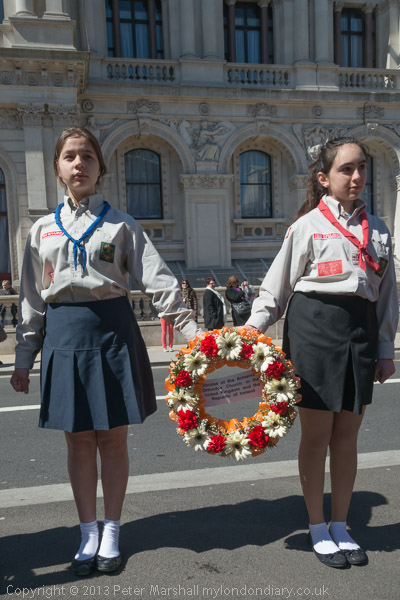
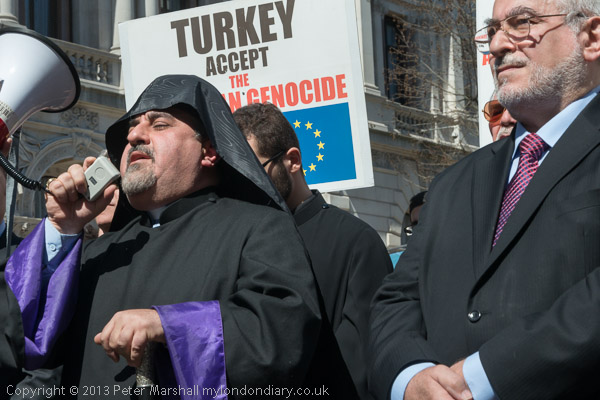
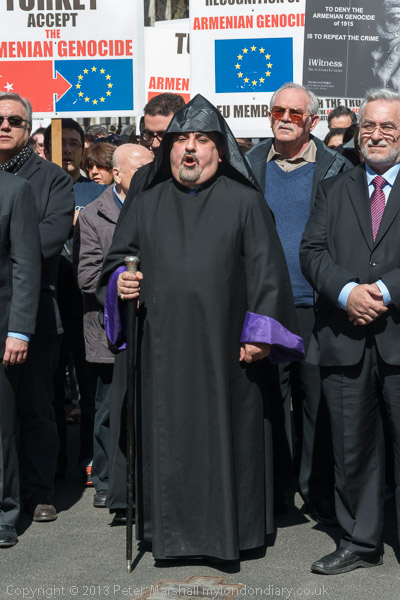
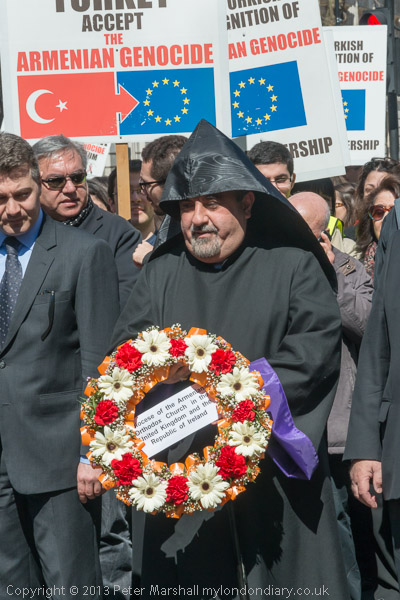
Armenians Remember the Genocide

Armenians, Copts and Venezuela - 20 April 2013

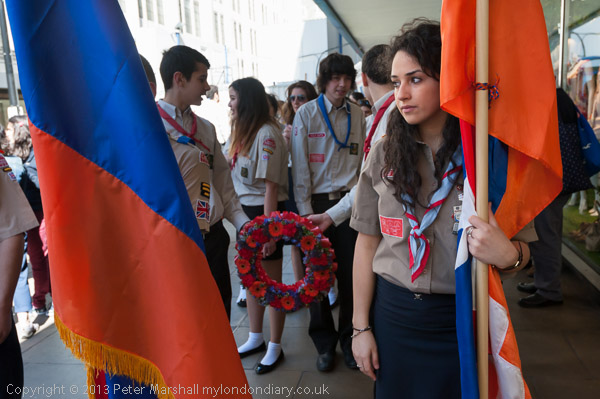
Armenians march through London every year in memory of the Armenian Genocide by Turkey. Beginning in 2015, Turkey arrested around a thousand members of the Armenian community and murdered them, followed by the killing of around 300,000 Armenian conscripts in the Turkish Arm and then “mass killings, deportations and death marches of women, children and elderly men into the Syrian Desert. During those marches, many of the weak or exhausted were killed or died. Women were raped. The deportees were deprived of food and water. Starvation and dehydration became commonplace.”

Armenians, Copts and Venezuela - 20 April 2013

Most of the deaths came in 1915, but massacres and deportations continued on a smaller scale until 1923, with around 1 – 1.5 million people – roughly 70% of the Armenian population in Turkey – being killed.

Armenians, Copts and Venezuela - 20 April 2013

Armenia has an ancient cultural heritage, with the first Armenian state dating back to 860BC, and at times its territory has included large parts of its surrounding countries. It was invaded by many other countries and in the 16th century was divided between the Turkish Ottoman Empire and Persia (Iran.) Russia took over the Iranian area following a war with Persian in the early 19th century.

Armenians, Copts and Venezuela - 20 April 2013

The Armenian Genocide took place during the collapse of the Ottoman Empire. After the Turkish revolution of 1908 there had been a massacre of around 20-30,000 Armenians at Adana in 2009. But it was during the First World War when Russia and the Ottoman Empire were fighting each other that the genocide took place, probably as a reaction to Armenian volunteers fighting on the Russian side.

Turkey still denies that the genocide took place, despite the incontrovertible evidence, and say that the deaths were the result of a civil war although the Armenians had no weapons and no military organisation.

Although the UN Commission on Human Rights has described it as genocide and many countries around the world have officially recognised it as such, including the United States, France, and Germany and the Scottish, Welsh and Northern Ireland parliaments, the UK government has instead come up with trivial excuses for refusing to do, including the fact that the term genocide was only defined in 1948. When the UN did so then, Raphael Lemkin who had coined the term genocide, described it as “The sort of thing Hitler did to the Jews and the Turks did to the Armenians.”

My London Diary describes the march through London to the Cenotaph, where there were speeches and wreaths were laid. I left the march as it moved off to a service in St Margaret’s Church in Parliament Square.
Armenians Remember the Genocide.


Copts Say End Egyptian Persecution – Old Palace Yard, Westminster

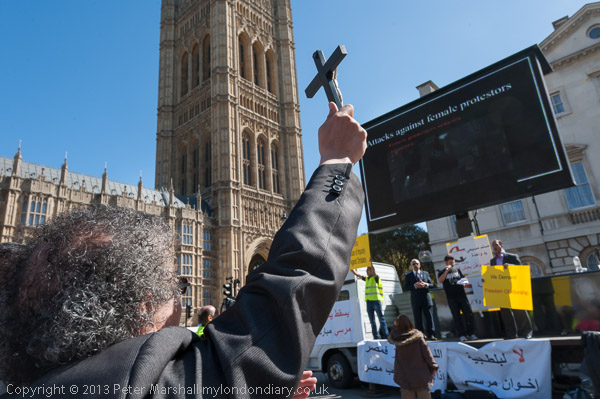
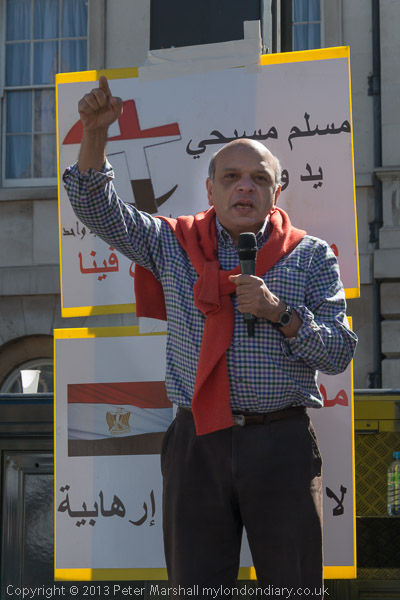
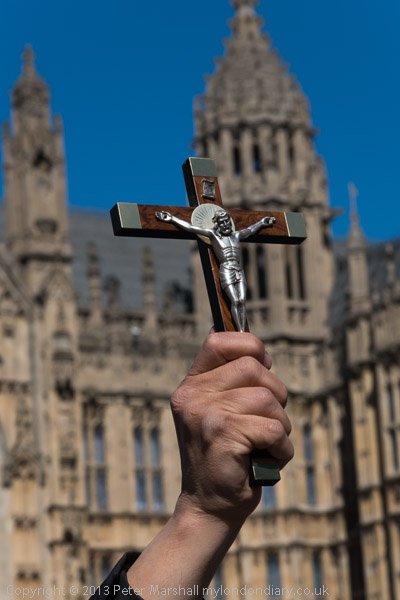
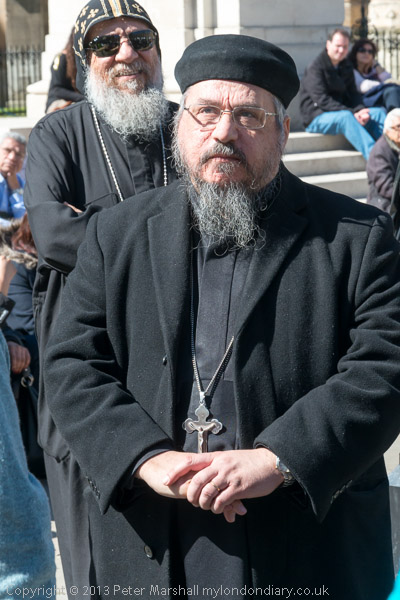
Around the corner from the church I joined UK Copts who were protesting Against the new Muslim Brotherhood led fascist regime in Egypt, which is attacking freedom, muzzling the press, undermining the legal system and encouraging attacks on religious minorities.

The protest followed an attack on April 8th on people leaving a mass funeral in St Mark’s Cathedral, Cairo, for 5 Copts who had been killed in violent clashes in the northern suburbs of the city. As the hundreds of worshippers tried to leave they were attacked with stones and Molotov cocktails thrown from nearby buildings and had to retreat back into the cathedral.

Clashes continued outside the cathedral, Egyptian security forces fired shots into the building and police fired tear gas. One Copt was killed and 84 people including 11 police were injured.

After the attack President Morsi spoke with Pope Tawadros II and issued a statement that he had given orders that the police guard the cathedral and that the state would protect the lives of both Christians and Muslims. But this was just one of many attacks on Copts in Egypt and they feel the authorities are encouraging violence against them.

The Copts see this as part of a growing Islamicisation which is also undermining Egypt’s judicial system, and as a deliberate attack on all opposition, including the liberal and left political opposition as well as all minority religious groups. The stress their protest was not against Muslims but to persuade the British government to stop supporting the current fascist regime in Egypt and to put pressure on the Egyptian government to uphold human and civil rights.

Copts Say End Egyptian Persecution


Stand Off at Venezuela Embassy – South Kensington

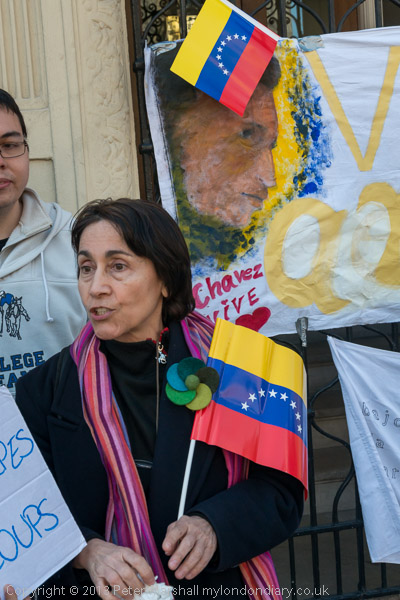
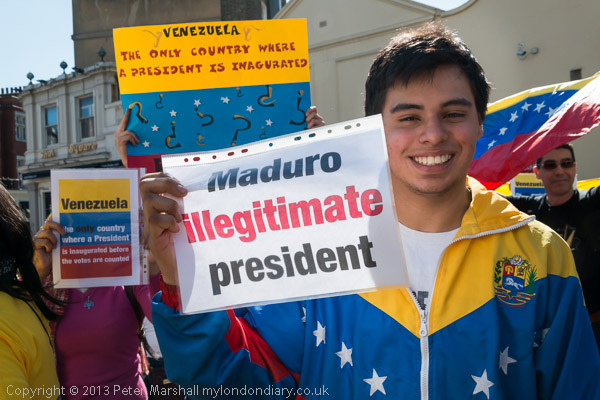
Following the death of President Hugo Chávez on 5 March 2013, elections were held in Venezuela on 14 April 2013 which resulted in a close victory with a majoirty of around 223,600 votes for Nicolás Maduro, the successor chosen by Chávez to stand for the United Socialist Party.

Opposition candidate Henrique Capriles refused to accept the result, demanding audits – which confirmed he had lost. Venezuela has a highly sophisticated and automated voting system that left no room for reasonable doubt that he had lost.

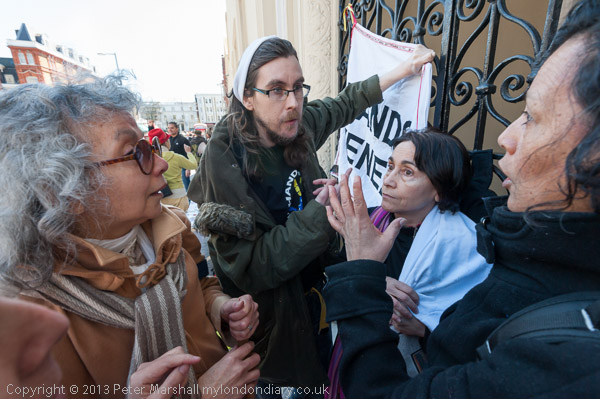
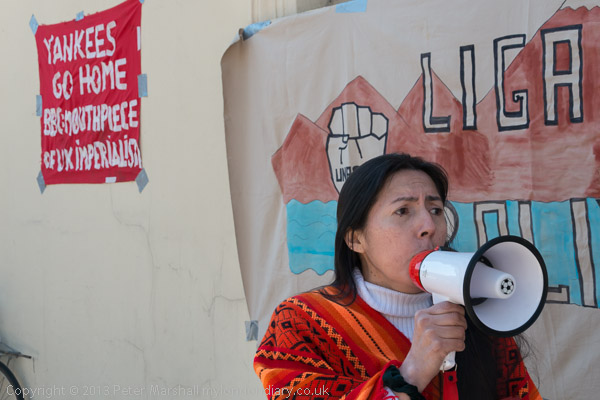
Middle-class Venezuelans who oppose Maduro and come along to protest at the embassy, and a wider group of people, mainly South Americans but not all from Venezuela, had come to defend it.

As I commented:

Maduro’s support comes largely from the workers in Venezuela, for whom the Chavez ‘revolution’ has seen real gains, including much improved healthcare. Many of those who were there to support him today had come to Britain as refugees – largely as a result of US-backed military coups in their countries. Their support for Chavez, and after him Maduro is hardly surprising.

More about the protest on My London Diary: Stand Off at Venezuelan Embassy


Kurds March Against Turkish State Attacks – 2016

Kurds March Against Turkish State Attacks

Seven years ago on February 7th 2016 I made my way on a Sunday afternoon to Edmonton in north London. I don’t now much like working on Sundays, when I often go out for a walk with my wife and catch up with things from the week that’s just ended. And public transport, on which I rely to get into and around London is often disrupted by engineering work on the railways and poorer or non-existent bus services.

Kurds March Against Turkish State Attacks

But the trains and underground on that day took me smoothly if rather slowly to Silver Street from where it was just a short walk along the street to the corner with Fore Street where Kurds were meeting up for a march. Angel Road is now I think the underpass which carries most of the traffic along the North Circular under this junction, but this is still the Angel junction.

Kurds March Against Turkish State Attacks

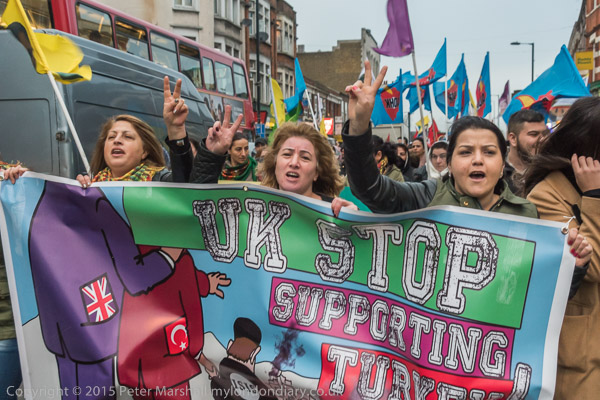
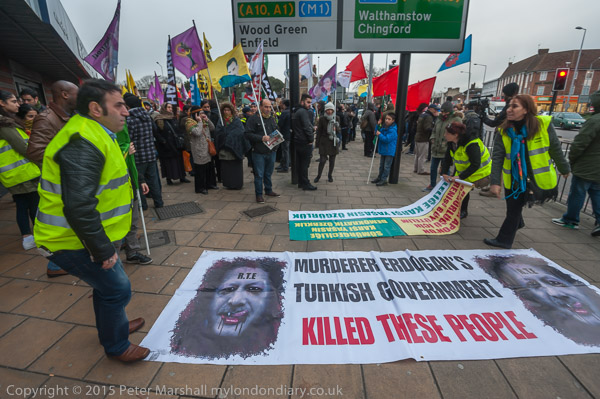
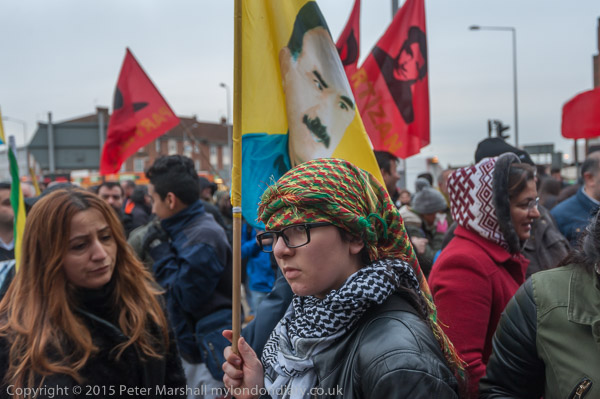
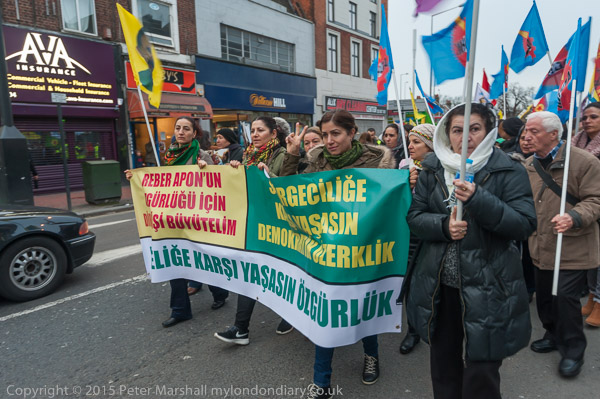
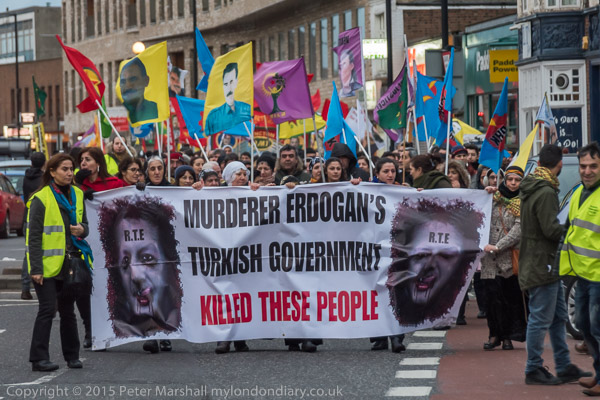
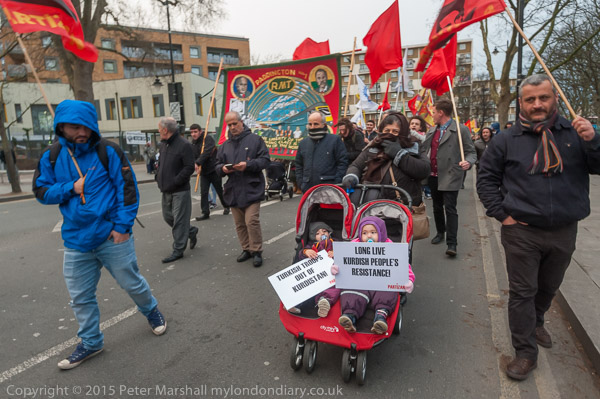
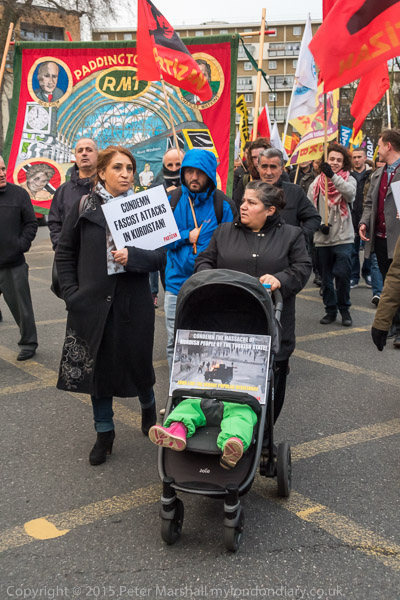
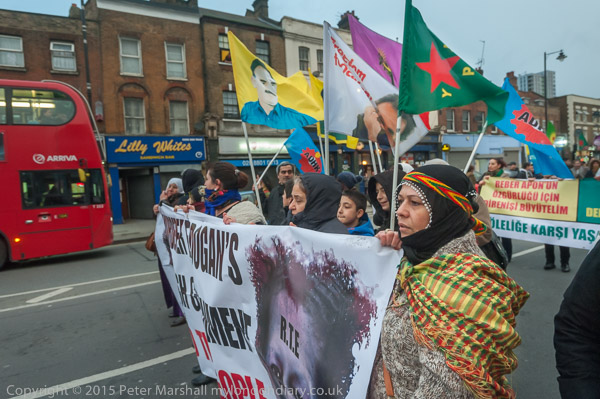
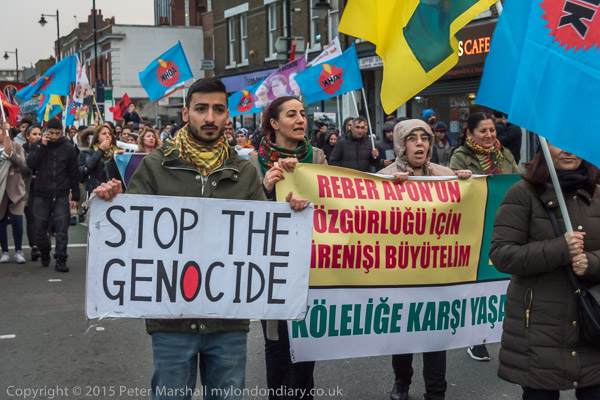
I’d responded to an invitation to cover the event with the title ‘End the siege of North Kurdistan! Turkey out of Rojava!’ which read (in part) “Kurdish, Turkish and left organisation call on the unions, left, progressive, feminist and antifascist groups of London to join a march through the heart of the community from Upper Edmonton to Haringay. We are calling for the end of the siege of the Kurdish regions by the Turkish army, and the withdrawal of Turkish troops from Rojava. We must show our solidarity with the resistance and popular assemblies in both regions, and build our links with this heroic and inspiring movement.”

The time given for the protest was 16:00 and I’d arrived a little before 4pm, hoping to take as many pictures as possible before the light faded. Sunset here in early February is just before 5pm, not that there was much if any sign of the sun on that dry but very overcast day. By the time the march moved off a little after 4.30pm the light was dropping fast, and before long I was working at ISO 2000 and 3200 on the two Nikons I was using. Even then many pictures were a little blurred due to people moving at walking pace.
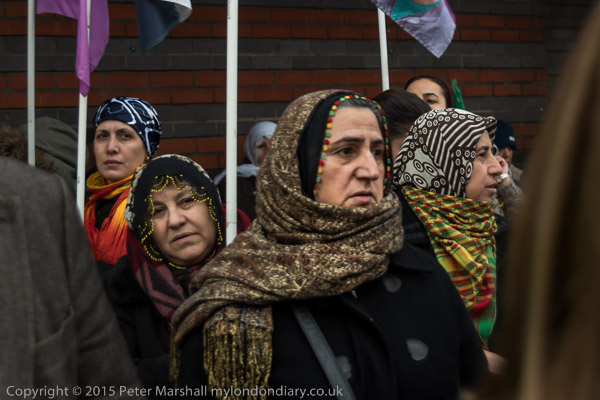
On My London Diary I write more about the groups involved and the reasons for the protest. Almost all those on the march were from Kurdish groups and as I commented “Apart from a banner from the Paddington Branch of the RMT there was no presence from the British left, who don’t appear to have woken up to what is happening in Turkey and in Kurdistan.”

Our governments too over the years appear to have kept a deliberately blind eye to events in Turkey, standing up for it as a member of NATO rather than standing up to it and supporting the human and civil rights of the Kurds, who have long been oppressed.

Things got worse in Turkey after the success of Recep Tayyip Erdogan’s AKP party in the June 2015 elections with curfews, the imposition of martial law, and arrests of anyone opposed to the Turkish government, with attacks by tanks and artillery, and snipers targeting homes, killing more than 400 civilians in the last 7 months. Politicians, human rights activists, journalists, students and 30 mayors had been imprisoned and hundreds of thousands have been threatened and forced to flee their homes.

Britain and the EU have turned that blind eye to the support of Turkey for ISIS, aiding them to smuggle oil whose sale finances their activities. Kurds have led the fight against ISIS and Turkish attacks on them have hindered them.

Since 2016 the situation in Kurdish areas of Syria has worsened with Turkish forces invading parts of the area with the help of former ISIS fighters in 2018. Hundreds of Kurds were killed and Turkey has instituted a policy of ethnic cleansing, depopulating the area. The remaining Kurds face death, extortion, and kidnappings by various armed groups backed by Turkey. Kurdish-owned homes and farms are confiscated, and new settlements for non-Kurds are being built.

I left the march shortly after it passed White Hart Lane. I was getting tired and it was getting too dark to take more pictures without flash, and I thought I had done enough.
More at Kurds protest Turkish State attacks on My London Diary.


Families Separated, Gaza, Ghouta and Sri Lanka

Families Separated, Gaza, Ghouta and Sri Lanka – On Saturday 23rd August 2014 I photographed four protests in Westminster, one against an aspect of our racist immigration policies, the second against the UK selling arms to Israel which have been used in attacks on Gaza (along with a counter demonstration), the anniversary of chemical attacks by the Syrian regime and a protest calling for UK support against the continuing genocide of the Tamil nation.


Divided Families protest over cruelty – Downing St

Families Separated, Gaza, Ghouta and Sri Lanka

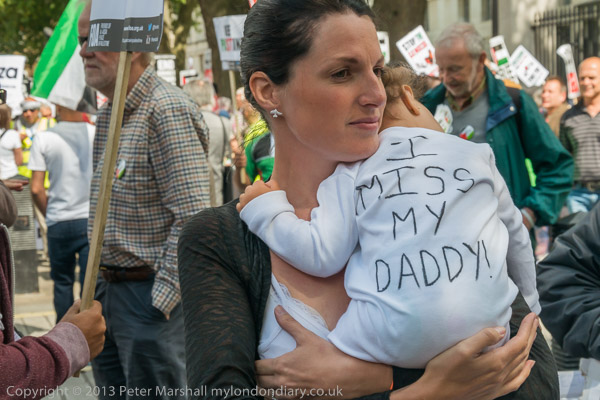
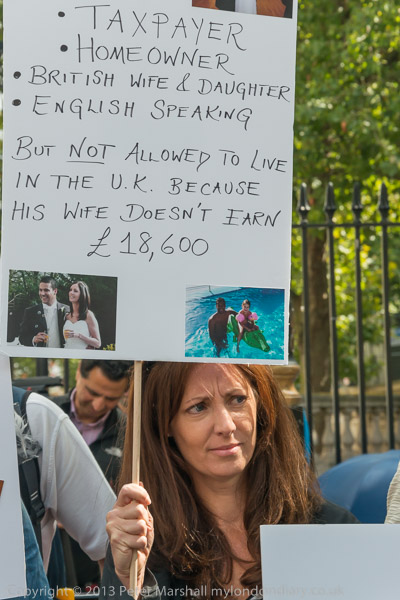
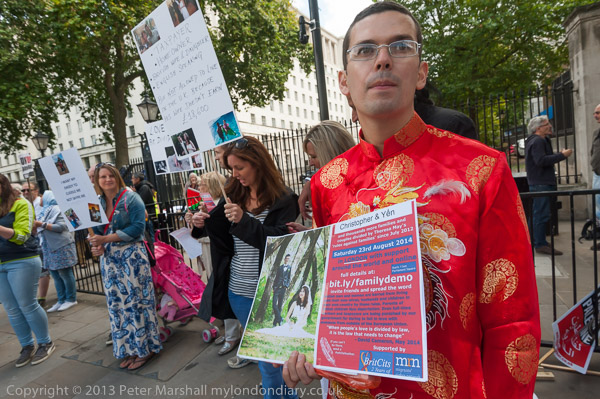
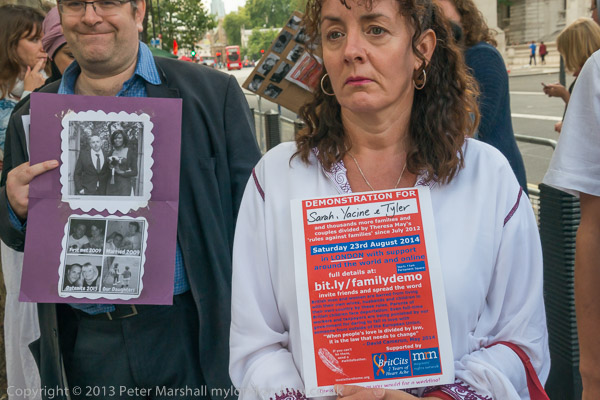
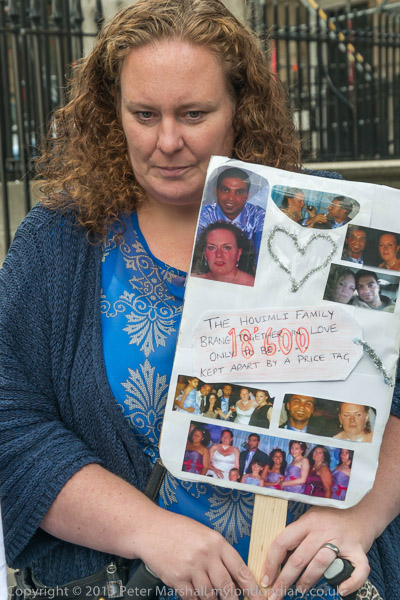
The cruel and unfair immigration rules set up by the Home Office under Theresa May mean that anyone earning less than £18,600 was unable to bring a non-EU spouse into the country (Brexit means that similar rules now apply to most EU countries.)

Families Separated, Gaza, Ghouta and Sri Lanka

This income requirement discriminates against women, the retired and disabled young and many minority ethnic people who have on average lower incomes than the general population. For couples with children, the income limit is even higher, and to secure visas for a spouse and two children you would need an income of £24,800.

Families Separated, Gaza, Ghouta and Sri Lanka

Fees for applications are also expensive – from £1048 to £1538 per person and applicants may also need to pay a healthcare premium of from £1560 to £3120 for adults and around three-quarters of this for each child. For applications made in the UK there is an extra £800 if you want a faster decision. And applicants also need to supply a great deal of documentation.

The policy, which also includes tougher English Language tests, a proof of greater attachment to the UK than of any other country and extending the probationary period from two to five years, is in direct contradiction of the Universal Declaration on Human Rights which states:

‘No one shall be subjected to arbitrary interference with his privacy, family, home or correspondence, nor to attacks upon his honour and reputation. Everyone has the right to the protection of the law against such interference or attacks.’

Universal Declaration on Human Rights

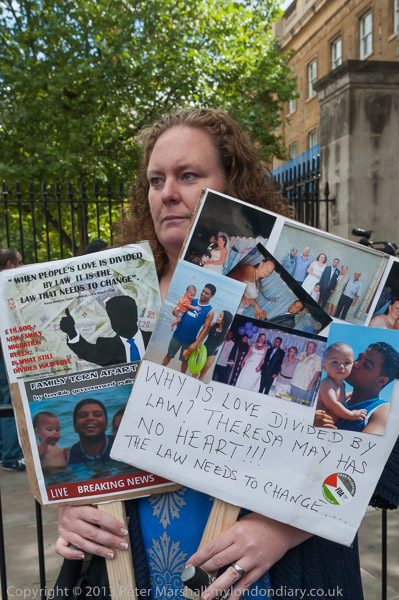
People at the protests included many whose families were divided as they were unable to meet the income levels, as well as a number of parents and friends of divided families.

Many carried placards with images of the divided families, along with captions such as ‘I WANT MY DADDY TO CUDDLE ME NOT SKYPE ME’. I felt deeply for those caught by what seem to be vindictive, unnecessary and totally insupportable polices. It was impossible not to agree with the placards with messages such as ‘WHY IS LOVE DIVIDED BY LAW? THERESA MAY HAS NO HEART!!! THE LAW NEEDS TO CHANGE….’

Divided Families protest over cruelty


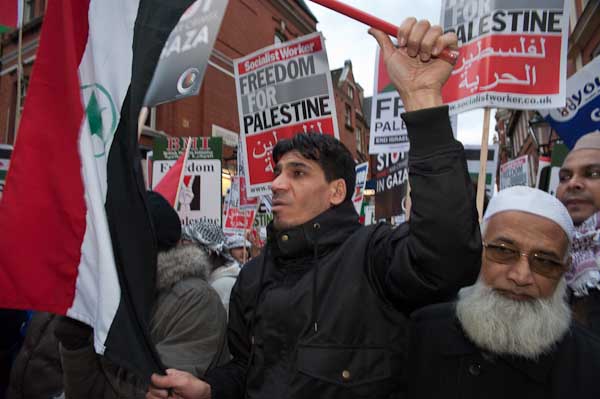
Gaza Protest – Stop Arming Israel – Downing St

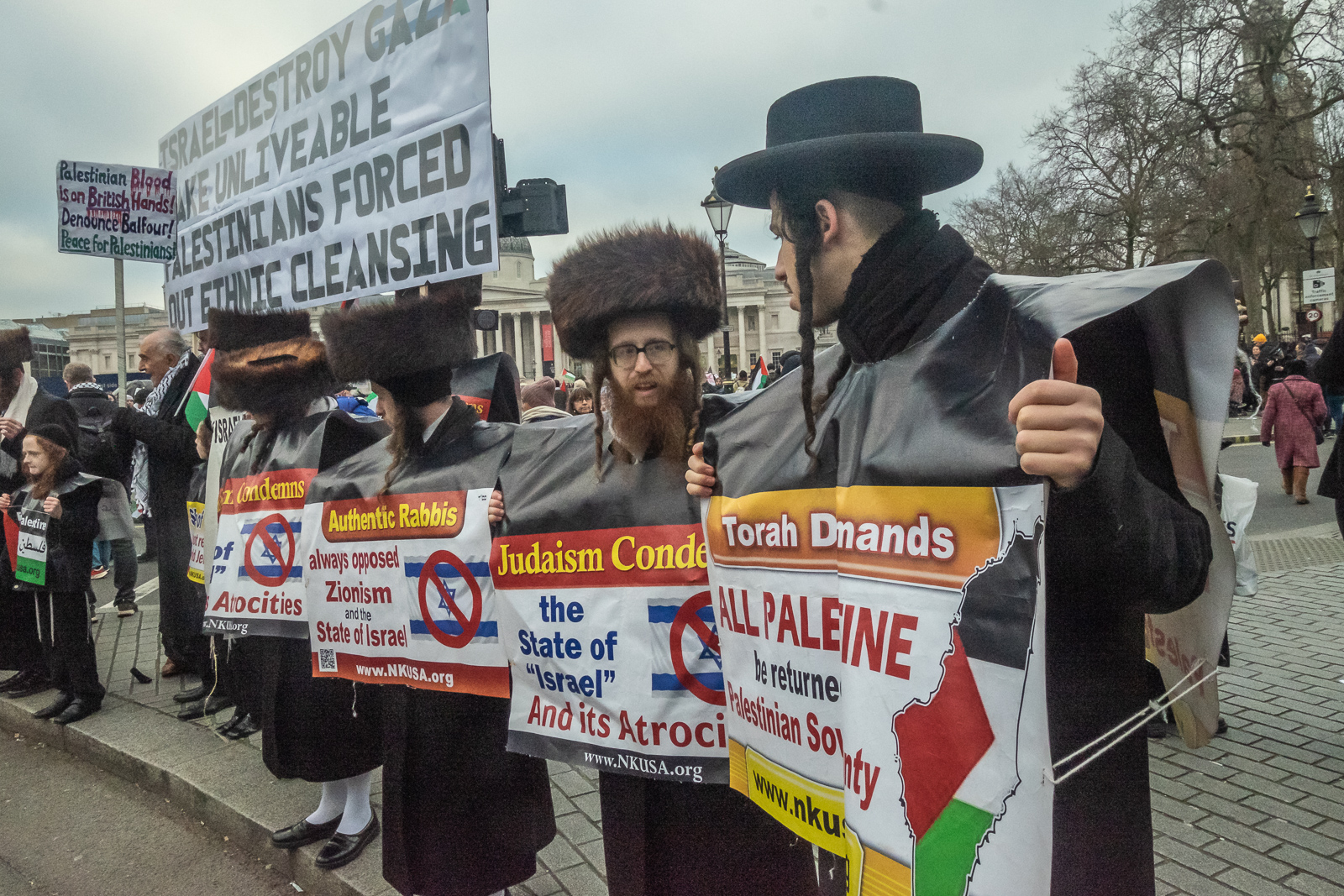
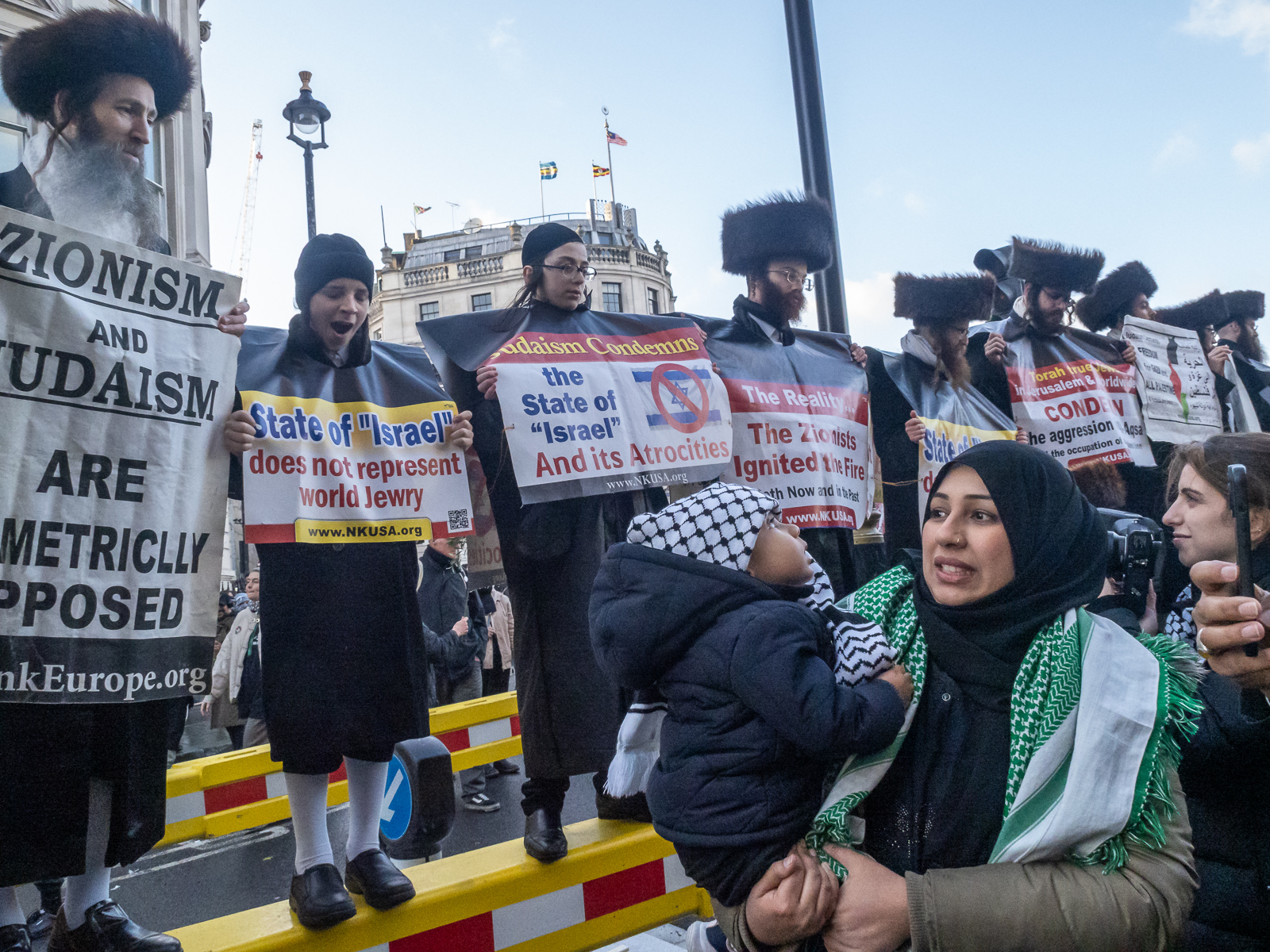
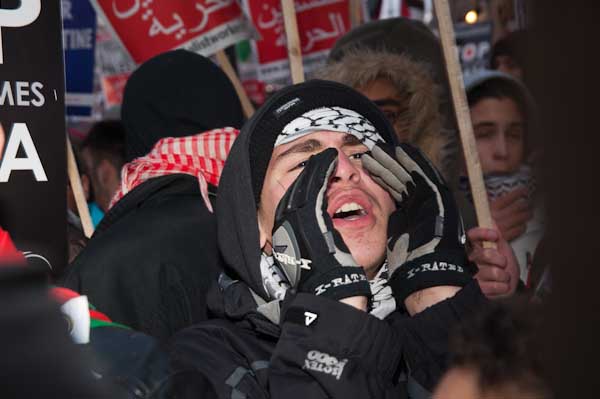
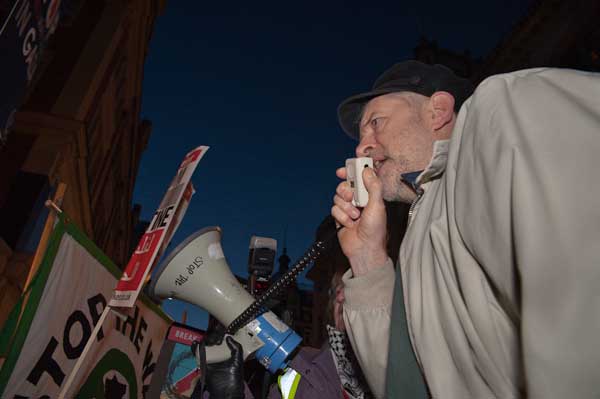
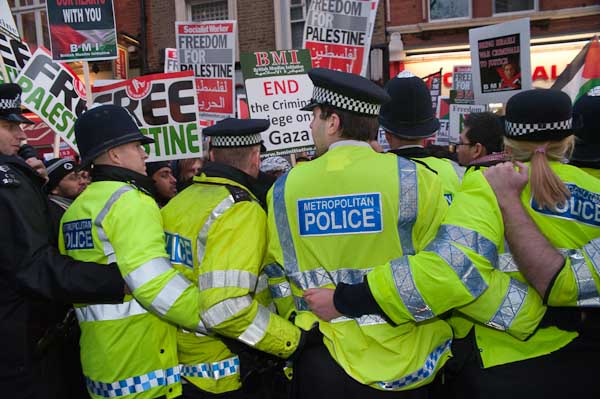
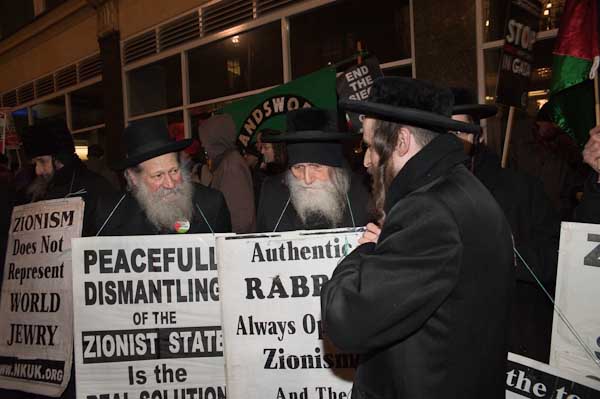
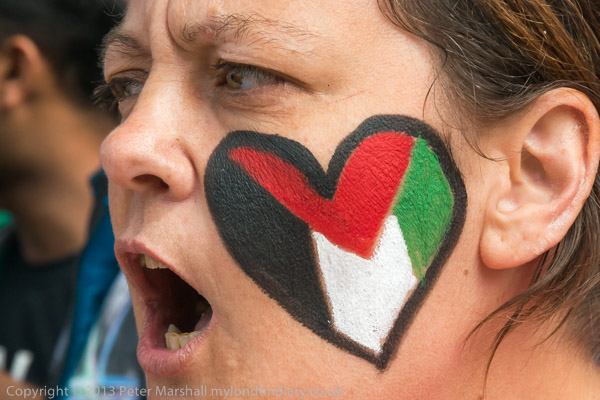
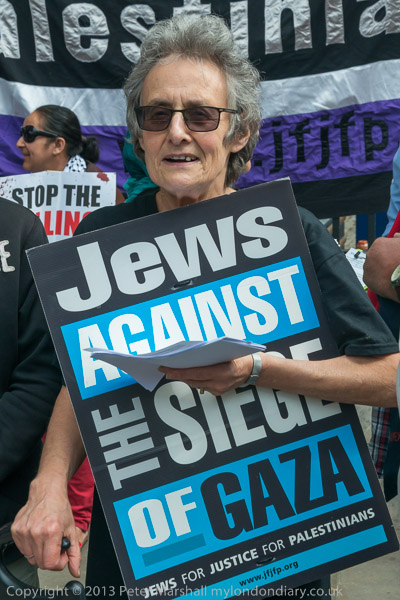
A large rally at Downing St called on the UK to stop selling arms to Israel, and for an end to Israeli war crimes. Among the protesters were many Jews from various Jewish groups, including the ultra-orthodox Neturei Karta who had walked down from north London to support the protest.

Israel had carried out air strikes on Gaza in July 2014 following a number of incidents including the shooting by the IDF of two Palestinian teenagers and the kidnapping and killing of three Israeli teenagers in the West Bank. There were other incidents including house demolitions and the kidnapping and killing of a Palestinian youth. Hamas replied to air strikes with rocket fire on Israel.

The Israeli invasion of Gaza began in earnest on 20th July and the ground war was still continuing though on a lesser scale when this protest took place, with a ceasefire being agreed and coming into effect on 26th August.

There are more details about the invasion in the Wikipedia Timeline, which states “2,256 Palestinians and 85 Israelis died, while 17,125 Palestinians, and 2,639 Israelis suffered injuries.”

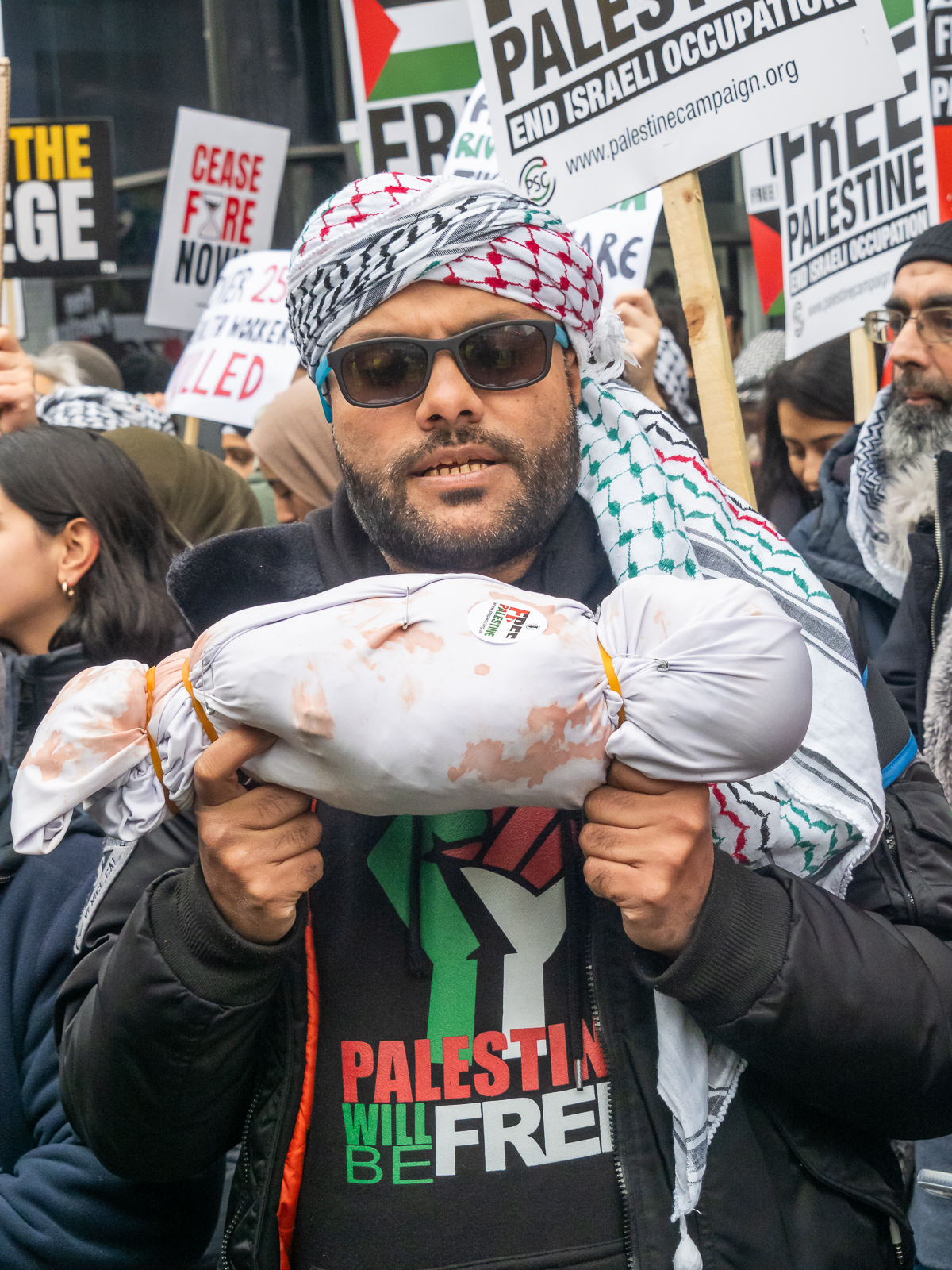
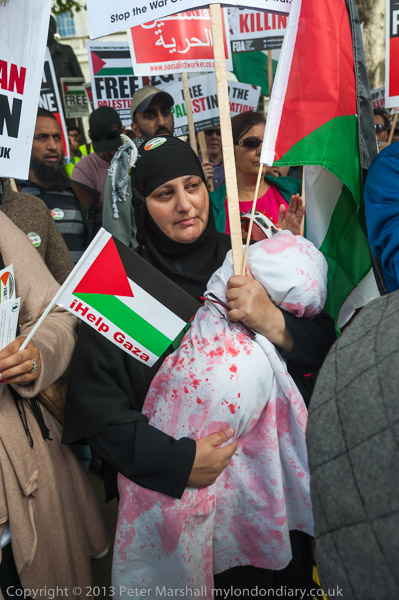
At the protest there was a row of black boxes representing coffins and the names of children killed, and some people carried ‘bloodstained’ bundles representing dead children

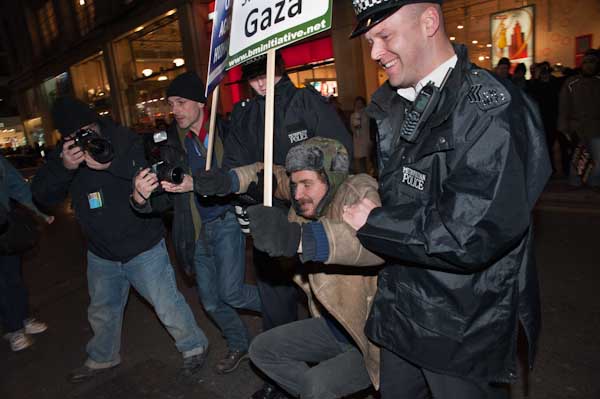
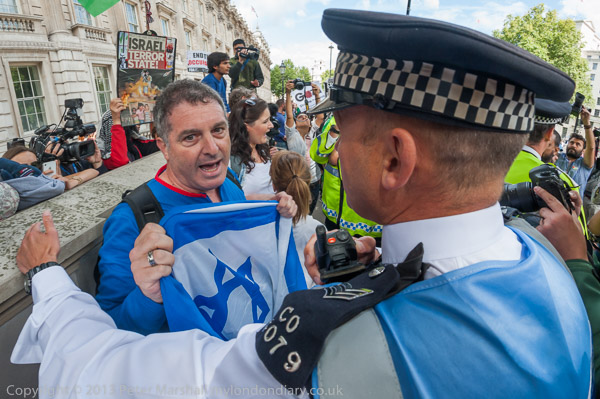
Three people came to wave Israeli flags across the road and were led away for safety by police.
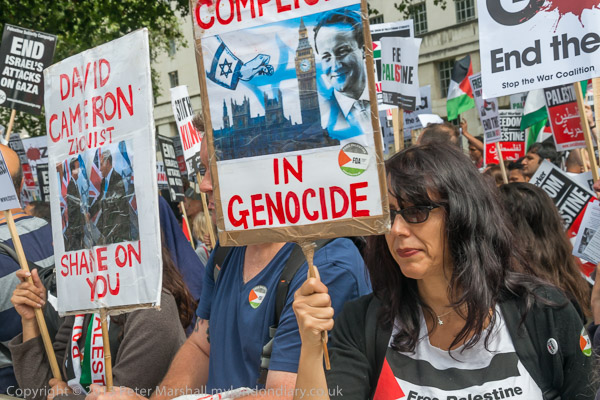
Earlier one of the Palestinian protesters had tried to seize one of the flags and was dragged away by police. At the end of the rally opposite Downing St some of the protesters marched around London and I went with them as far as Trafalgar Square where I had another event to cover.
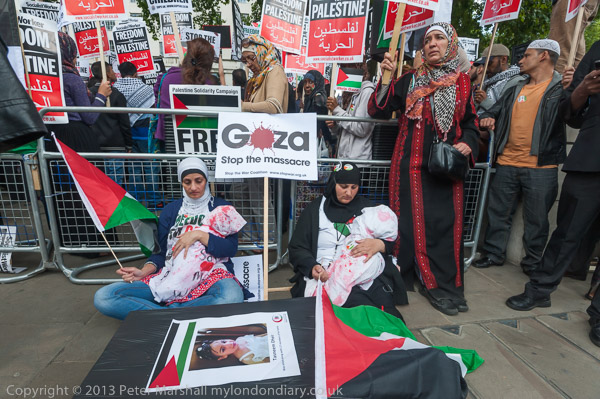
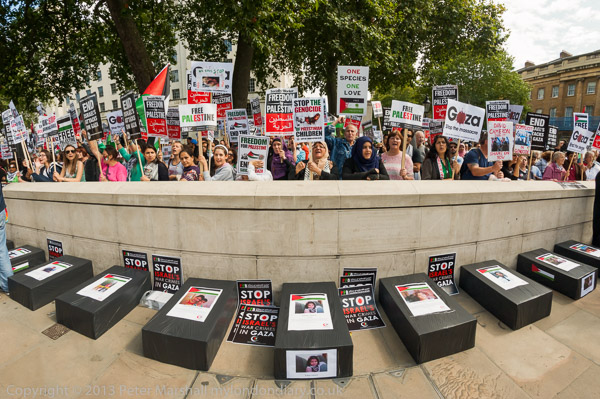
More pictures: Gaza Protest – Stop Arming Israel


Syria Chemical Massacre Anniversary – Trafalgar Square

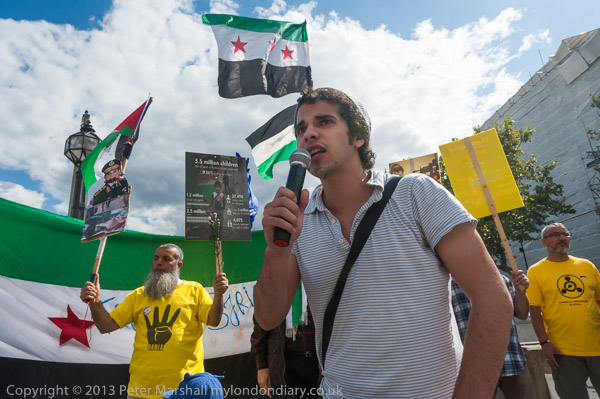
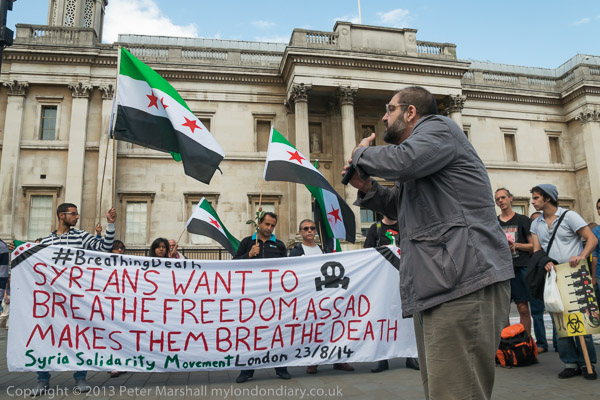
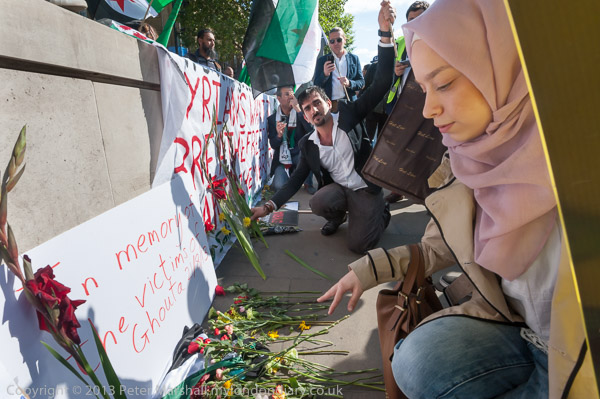
A rally marked a year after the Ghouta massacre of 21/08/2013 when Assad regime forces outraged the world by using Sarin gas, killing 1,477 residents including over 400 children in this Damascus suburb. The world failed to act against Assad.

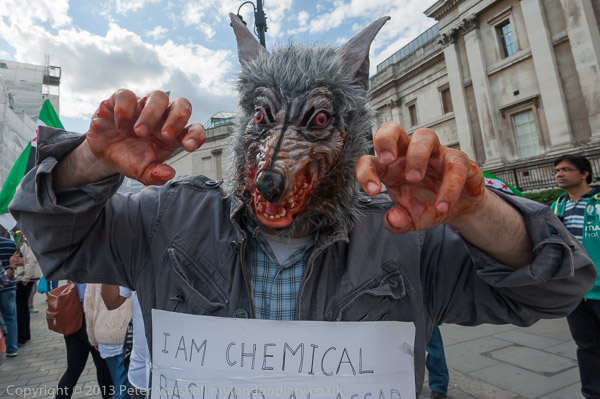
One man was wearing wolf head with bloody hands and placard ‘I AM CHEMICAL BASHAR AL ASSAD AND ONE YEAR ON I AM STILL GASSING SYRIAN CHILDREN. THANK YOU FOR UN VETO’

After an hour-long rally in Trafalgar Square the protesters, who were mainly Syrians, marched along the pavements to Richmond Terrace, opposite Downing St, where they laid flowers in memory of the dead.

More pictures: Syria Chemical Massacre Anniversary


Tamils protest Sri Lankan rapes & killing – Downing St

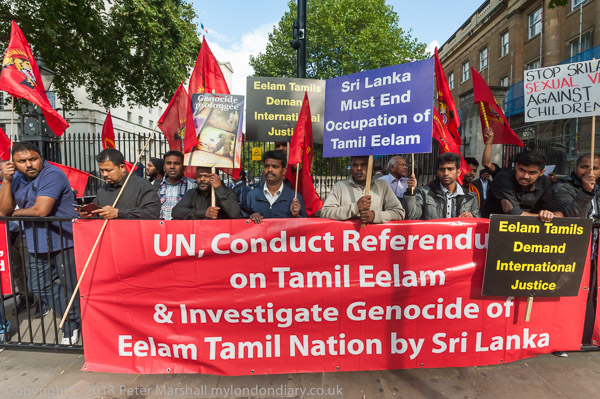
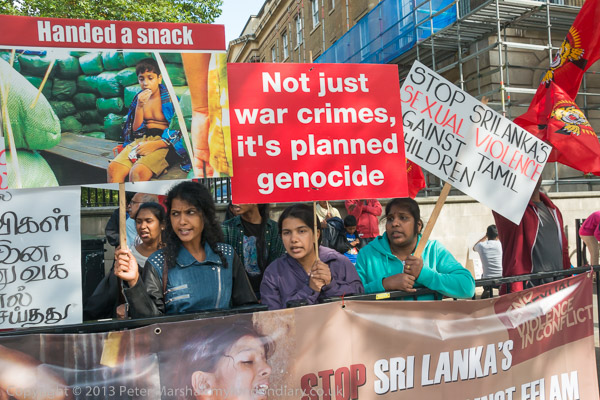
Also present when I returned to Downing St were Tamils protesting over the continuing genocide of the Tamil nation, calling for a UN investigation and referendum on Tamil Eelam.

Placards called for an end to the use of rape to destroy their nation and sexual violence against children.

More pictures: Tamils protest Sri Lankan rapes & killing


HP in Israel, Nurses bursaries, Hungary, Congo & Syria

HP in Israel, Nurses bursaries, Hungary, Congo & Syria – five protests that I photographed on
Saturday 4th June 2016.


Boycott HP against Israeli apartheid – PC World, Tottenham Court Road

HP in Israel, Nurses bursaries, Hungary, Congo & Syria

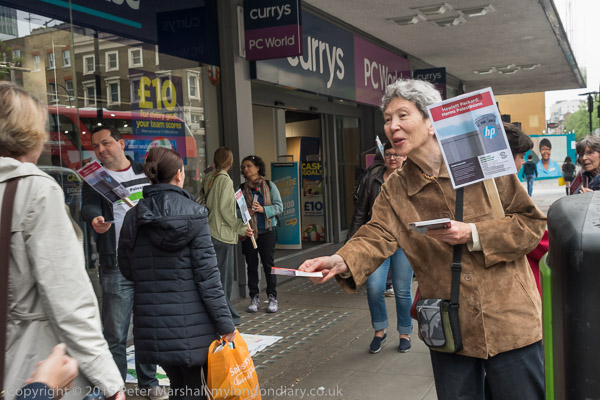
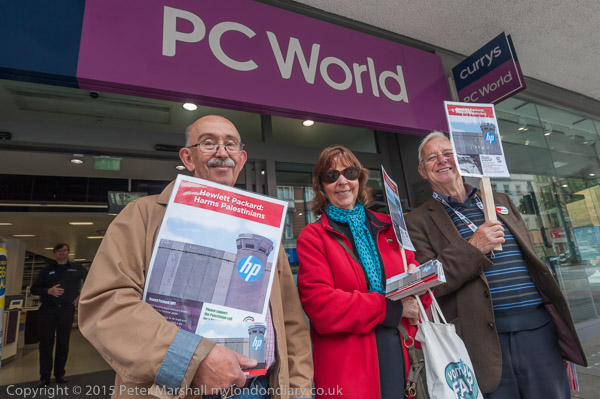
A protest outside PC World on Tottenham Court Rd was one of around 20 actions around the UK held to raise awareness of Hewlett Packard’s heavy involvement the Israeli oppression of the Palestinian people and encourage a boycott of HP.

HP in Israel, Nurses bursaries, Hungary, Congo & Syria

HP provides the biometric system used for ID cards used to control movement of Palestinians inside Israel and in the occupied Palestinian territory, technology for the Israeli military and supporting the illegal settlements.

Boycott HP against Israeli apartheid


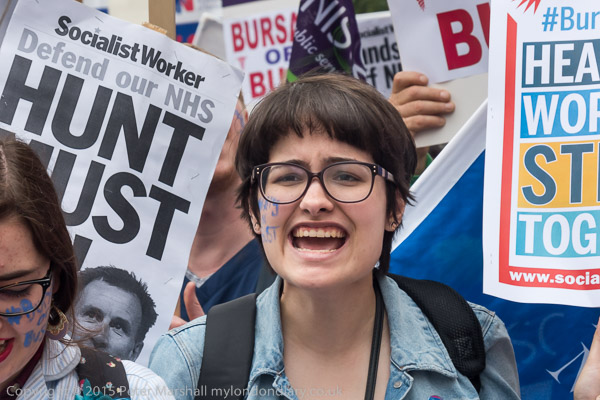
March to save NHS student bursaries

HP in Israel, Nurses bursaries, Hungary, Congo & Syria

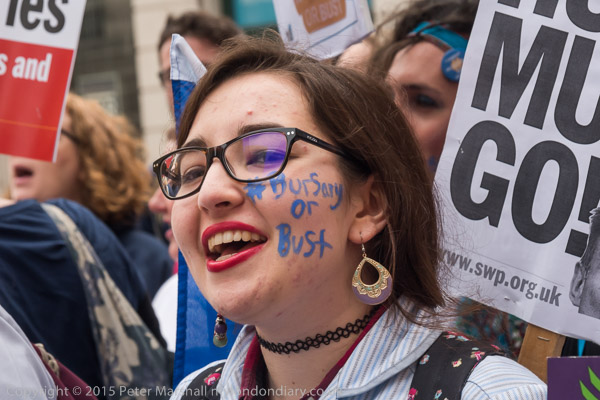
NHS students and supporters marched from St Thomas’s Hospital to the Department of Health in Whitehall along a route over Waterloo Bridge where there was a brief sit-down, and along the Strand to Charing Cross, where they were joined by disabled protesters who went with them to a rally in front of the Dept of Health at Richmond House on Whitehall.

HP in Israel, Nurses bursaries, Hungary, Congo & Syria
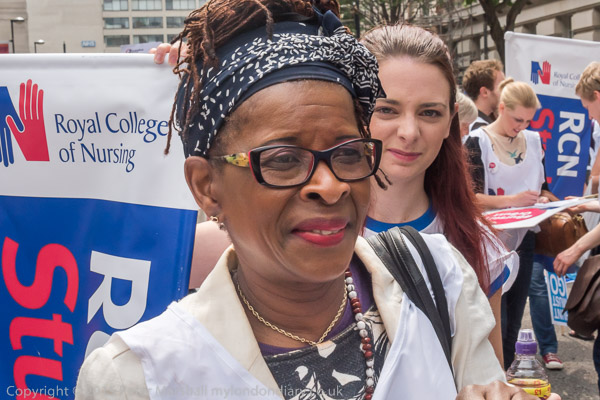
Cecilia Anim, Royal College of Nursing President

Student bursaries are essential for nursing students as they have to spend 50% of their course working in the NHS and unlike other students are unable to work part-time to support themselves. Their work as students is important in keeping the NHS running and the bursaries also allow mature entrants to the profession to train.

Our current nursing shortage is in part due to the ridiculous decision by Jeremy Hunt who ignored the nursing unions and almost everyone else in making the cut. He claimed that removing the bursary would mean that there would be up to 10,000 more training places. In fact the number accepting places on nursing courses in 2018 dropped to its lowest level for five years, 8% less than when bursaries were available. The maintenance grant was reinstated in 2020, leading to an increase in student numbers, particularly in those over 30, where the increase was around 40%.

March to save NHS student bursaries

Rally against axing NHS student bursaries

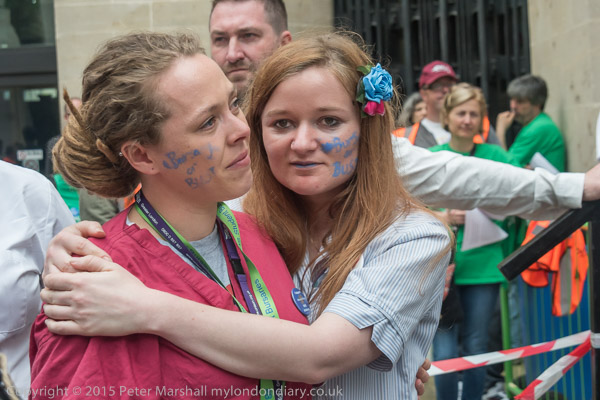
Danielle Toplady (right) supports Helen Corry as her mother makes a passionate speech in support of nurses

Rally against axing NHS student bursaries


Call for a Greater Hungary – Downing St

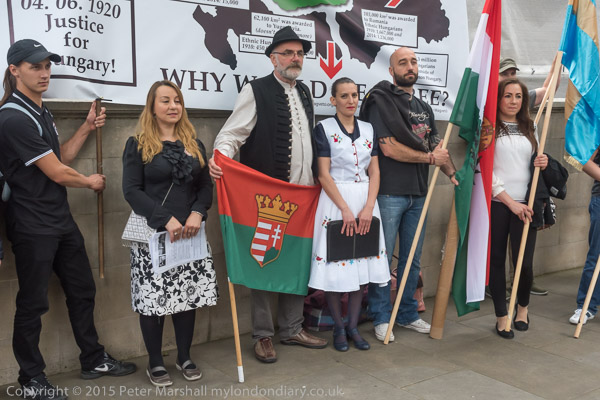
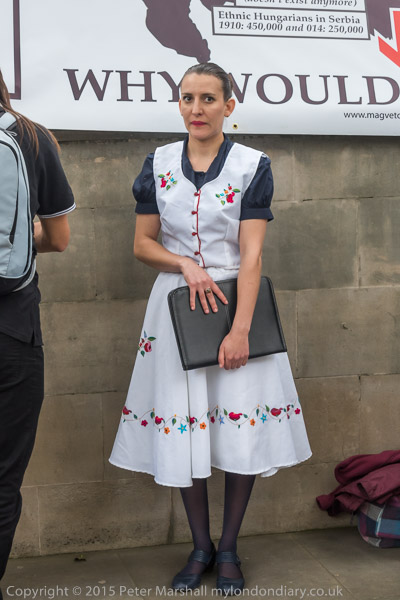
Hungarian nationalists marched to Downing St calling for the restoration of the pre-1920 borders of Hungary, including the Székely Land in Romania.

The right-wing Jobbik party or Movement for a Better Hungary has grown considerably in support and in 2018 became the second largest party in the National Assembly and is often accused of seeking the restoration of the borders before the 1920 Trianon Treaty. Around a quarter of ethnic Hungarians live outside of Hungary and many suffer discrimination because of their culture and language. But according to Wikipedia, “Jobbik has never suggested changing borders by force, and believes that the ultimate solution is territorial and cultural autonomy within a European Union framework of minority rights.

Call for a Greater Hungary


Congo Massacre protest – Downing St

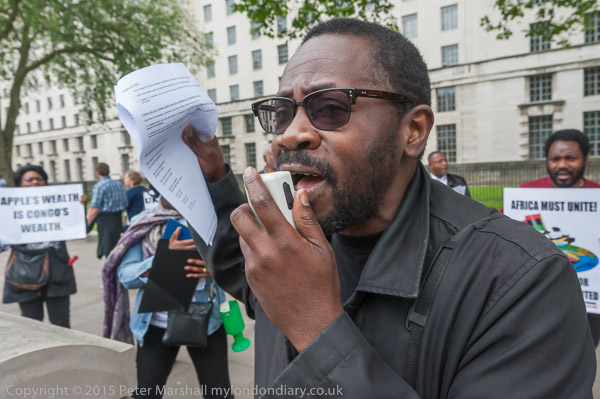
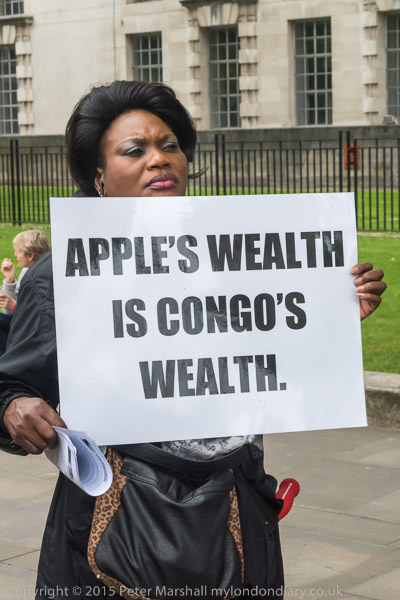
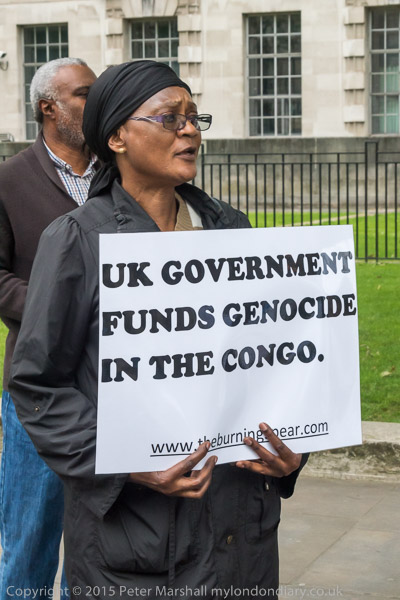
The Patrice Lumumba Coalition protested opposite Downing St after the massacre last month of 120 people in Beni, North Kivu, Congo. They say that since 2014, 1000 people have been horrifically murdered in the region, despite the presence of a UN army and the Congolese armed forces.

They blame the massacres in Congo which have resulted in over 10 million being killed on the US-backed overthrow of the Mobutu regime and the support by the US, UK, Belgium and Canada of President Museveni in Uganda and President Kagame in Rwanda, whose proxy armies and militia groups attack the Congolese. This war is driven by multinational corporations to provide the mineral reserves of the Congo, gold, oil, tin and particularly coltan, essential for the production of smart phones, laptops and other electronic gadgets.

The UK backs the genocide with around £500m a year in support of Congo’s President Kabila, and £90m to prop up the Rwandan regime. They want those responsible for backing the genocide – including Tony Blair and the Clintons as well as African leaders to be brought to justice.

Congo Massacre protest


Syrians demand break the siege of Alwaer – Downing St

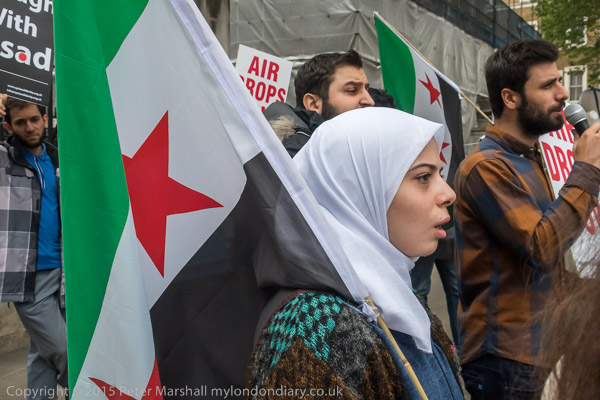
Syrians at Downing St called on the UK and international community to take urgent action to end the siege of Alwaer and 50 other besieged towns in Syria. People are without electricity, drinking water, food, fuel, and medical care and are at risk of dying from malnutrition

Alwaer, a town of more than 100,000 people, has been under siege by Syrian government forces for over 3 years and many have been killed and others are suffering disease. Assad’s forces are carrying out a systematic and deliberate policy of starvation of civilians, a war crime in grave breach of the Fourth Geneva Convention.

Syrians demand break the siege of Alwaer


Nakba, NHS, Gitmo etc & Tamils

NakNakba, NHS, Gitmo etc & Tamils – Saturday 18th May 2013 was another busy day for protests in London and I covered a number of demonstrations.


End Israeli Ethnic Cleansing – Old Palace Yard, Westminster

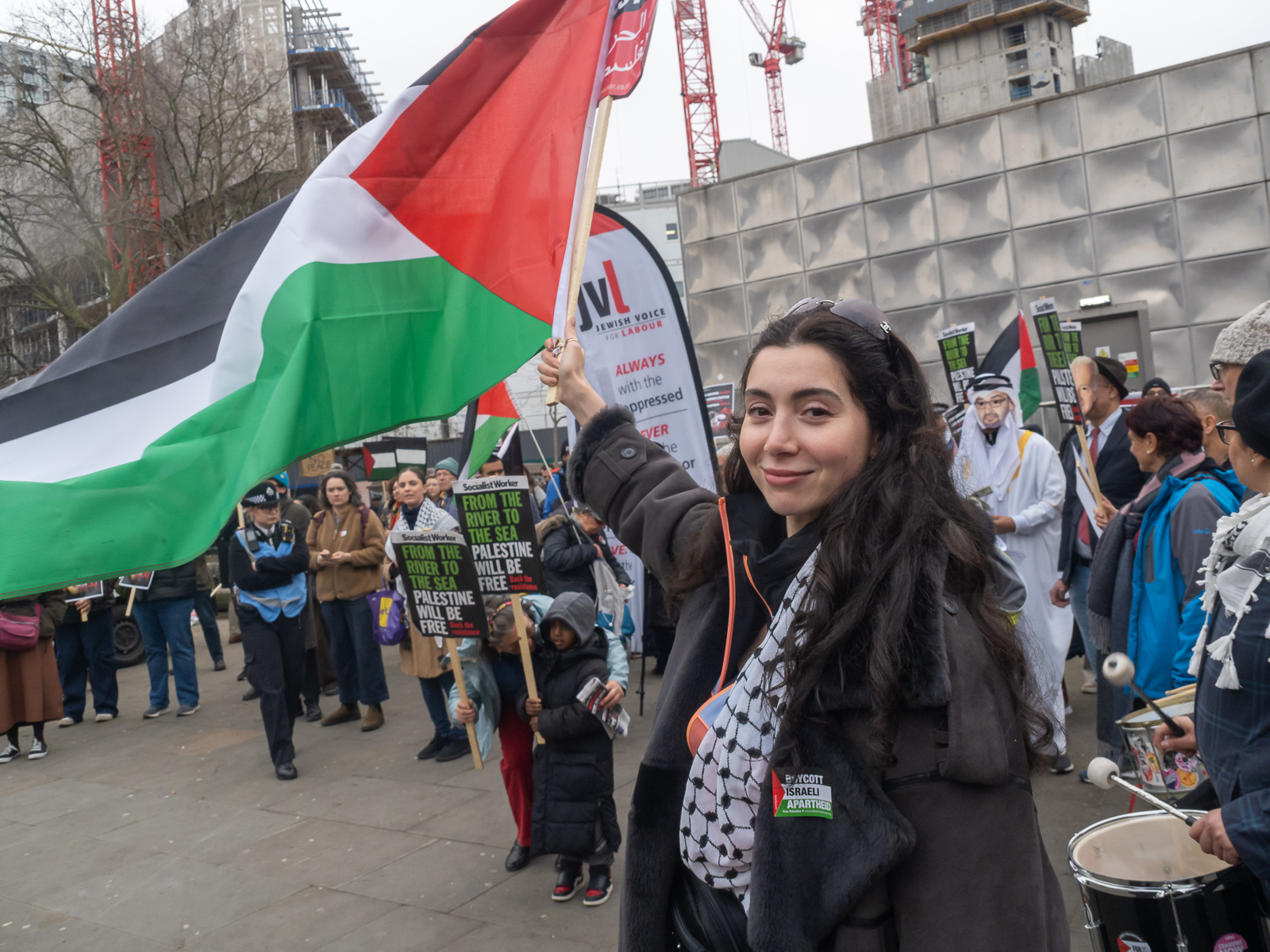
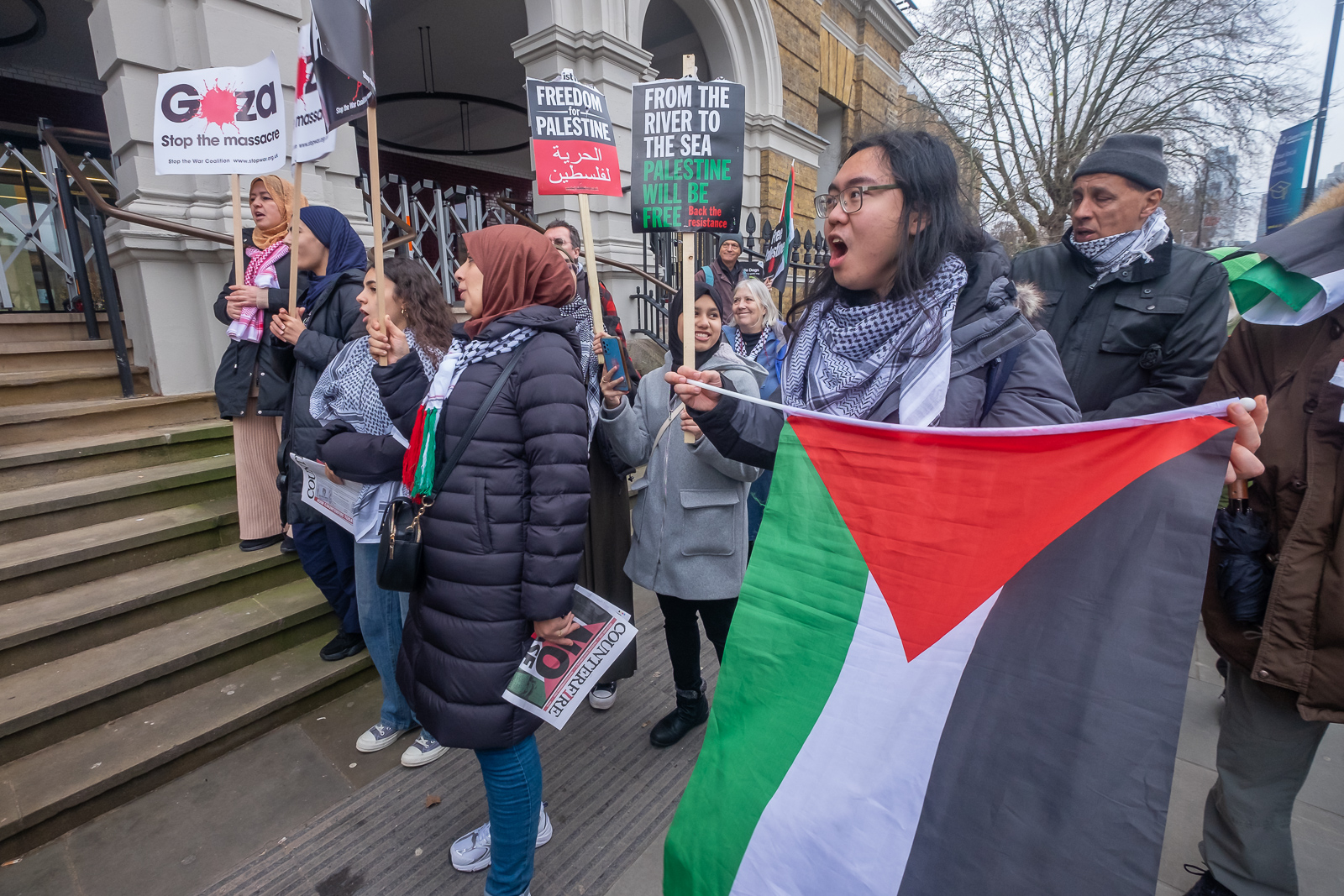
65 years after 700,000 Palestinians were driven out of their homes as refugees in the ‘Nakba’ (catastrophe) when the state of Israel was created, Palestinians and their supporters protested outside parliament calling for an end to the continuing ethnic cleansing and a boycott and sanctions until Israel complies with international law.

There had been protests in Jerusalem earlier in the week on Nabka Day against the continuing sanctions against Palestinians that have crowded them into an ever-decreasing area of land, diminishing almost daily as new Israeli settlements are created and new restrictions placed on the movement of Palestinians. Many of those protesting in London from Jewish or Palestinian backgrounds and as usual these included a group of extreme orthodox Neturei Karta Jews who had walked down from North London; they see themselves as guardians of the true Jewish faith, and reject Zionism.

The speeches were continuing when I left to cover another event. More at End Israeli Ethnic Cleansing


London Marches to Defend NHS – South Bank to Whitehall

On the opposite side of the River Thames thousands were gathering by the Royal Festival Hall to march against cuts, closures and privatisation of the NHS, alarmed at the attack by the government on the principles that underlie our National Health Service and the threats of closure of Accident and Emergency facilities, maternity units and hospital wards which seem certain to lead to our health system being unable to cope with demand – and many lives put at risk.

Nine years later we are seeing the effect of these policies with ambulance services unable to cope with demand, lengthy delays in treating people in A&E, delays in diagnosing cancers leading to increased deaths and more. And although it was only a matter of time before we had a pandemic like Covid, and exercises had shown what needed to be done to prepare for this, the NHS had not been given the resources to prepare for this, leading to much higher death rates than some comparable countries.

Part of the problems of the NHS come from disastrous PFI agreements pushed through under the Labour government, landing NHS trusts with huge debts that will continue for many years. This forced NHS trusts into disastrous hospital closure plans, some of which were defeated by huge public campaigns. Many of those marching were those involved in these campaigns at Lewisham, Ealing, Charing Cross, Hammersmith, Central Middlesex, Whittington and other hospitals around London.

I left the march as it entered Whitehall for a rally there. More at London Marches to Defend NHS.


Guantánamo Murder Scene – US Embassy, Grosvenor Square

London Guantánamo Campaign staged a ‘murder scene’ at the US Embassy on the 101st day of the Guantánamo Hunger Strike in which over 100 of the 166 still held there are taking part, with many including Shaker Aamer now being forcibly fed.

More at Guantánamo Murder Scene.


More US Embassy Protests – US Embassy, Grosvenor Square

Other protesters outside the US Embassy included Narmeen Saleh Al Rubaye, born in the US and currently living in Birmingham, whose husband Shawki Ahmed Omar, an American citizen, was arrested in Iraq by American forces in 2004 and turned over to Iraqi custody in 2011. He was tortured by the Americans when they held him and was now being tortured by the Iraqis and also was on hunger strike. She has protested with her daughter Zeinab outside the US Embassy for a number of weekends and on this occasion was joined by a small group of Muslims who had come to protest against Guantanamo, appalled by the actions of the US waging a war against Islam and Muslims.

Shawki Ahmed Omar is still held in Iraq; before he died in 2021 former US Attorney General Ramsey Clark recorded a video calling for his release which was posted to YouTube in with the comment by another US lawyer “This case is one of the greatest miscarriages of justice in recent United States history. It is a case where the US government essentially lied to the US Supreme Court to cover up torture and to be able to turn an American citizen over to people who they knew would torture him.”

A few yards away, kept separate by police, a group of supporters of the Syrian regime, including some from the minor Communist Party of Great Britain (Marxist-Leninist) was also holding a protest in favour of the Assad regime and against western intervention in Syria.

More at More US Embassy Protests.


Tamils protest Sri Lankan Genocide – Hyde Park to Waterloo Place

I met thousands of British Tamils and dignitaries and politicians from India, Sri Lanka and the UK as they marched through London on the 4th anniversary of the Mullivaikkal Massacre, many dressed in black in memory of the continuing genocide in Sri Lanka. Many wore the tiger emblem and called for a Tamil homeland – Tamil Eelam.

Although it was a large protest, with perhaps around 5,000 marchers I think it received absolutely no coverage in UK media, and I seemed to be the only non-Tamil photographer present. Tamils were rightly disgusted at the lack of response by the UK, the Commonwealth and the world to the organised genocide that took place in Sri Lanka, of which the massacre at Mullivaikkal four years ago was a climax.

The march had started from Hyde Park, and I caught up with it on Piccadilly and went with it taking photographs to Waterloo Place where there was to be a rally. But it had been a long day for me and I left just before this started.

More at Tamils protest Sri Lankan Genocide.


Occupy London, The Lord Mayor’s Show & More

Ten years ago was a very busy day for me in London. Saturday 12th November was the day of the annual Lord Mayor’s Show, which I’d photographed occasionally in previous years, but probably would not have bothered with, but it was made far more interesting this year by the presence of the Occupy London camp outside St Paul’s Cathedral.

I went up quite early to photograph the camp where later in the day Occupy LSX were to hold there own alternative ‘Not the Lord Mayors Show’ festival of entertainment, and wandered around talking to people and taking a few pictures.

I also went to take photographs of some of those preparing to take part in the Lord Mayor’s Show, and then took pictures as the parade began. As I commented, “I found the marching servicemen, military vehicles and weapons and military bands that are a major element of it disturbing. Of course the event as a whole reflects earlier times, with the city aldermen and liverymen in quaint costumes, but it would be appropriate for it to present a rather more civilised face to the world.

As in other years, the Lord Mayor’s coach stopped at St Pauls for him to be blessed by the Canon in Residence Rt Revd Michael Colclough. Occupy LSX asked the cathedral staff if the Canon would bless them too, and though the staff were very doubtful, the Canon came to talk with the people from Occupy and then blessed them too.

Entry to St Pauls, other than to take part in services usually involved paying a fee – back in 2011 it was £14.50 – but is free on the day of the Lord Mayor’s Show, and I took the opportunity to go in and up to the ‘Stone Gallery’ around the base of the dome (the higher ‘Golden Gallery’ was closed because of the crowds) and take some pictures there.

I took the District Line to Westminster for an advertised protest against Ethiopia’s war against Somalia, only to find there were only three men and a small boy at the advertised starting time, though they had a number of placards against what they describe as genocide and ‘Obama’s Proxy War’. They assured me more people would arrive and that the protest would continue for five or six hours, but when I came back again two house later there was no sign of it.

I returned to the City, where some protesters were setting off from the OccupyLSX camp at St Paul’s Cathedral for a ‘tour of shame’, visiting the offices of 3 arms dealers, Qinetiq, BAE and Rolls Royce, who went with David Cameron to Egypt in February to sell arms to the Egyptian army. This was a part of the International Day to Defend the Egyptian Revolution which had toppled the Mubarek regime, but the army had taken charge and there had been more than 12,000 trials in military courts, without the ability to call witnesses or access to lawyers in a programme of repression against the people. They called on the UK government to end support for the Egyptian military and stop selling them arms which might be used in further massacres such as that in Maspero a month earlier when soldiers opened fire killing 27 Coptic Christians and injuring over 300.

I left the marchers at Ludgate Circus and walked back to see what was happening with Occupy SLX at St Paul’s, then took the District Line again to Westminster to see if the Somali protest had grown. There was no sign of it, but I found another protest just leaving Old Palace Yard for a rally outside Westminster Abbey. This was the ‘500 Crosses for Life’ prayer procession, organised by EuroProLife UK, a “European ecumenical initiative” based in Germany with the full title “European Voice of the Unborn Children: Protect Our Life”, and there were several hundred people carrying white crosses.

They had walked from Westminster Cathedral to a rally here and a speaker at the rally was describing and applauding protests outside clinics in Germany where abortions take place. I found this disturbing – and commented on My London Diary “People have a right to their views on abortion, and to hold peaceful protests such as this and of course to pray about the matter. But isn’t harassing women who go to clinics at what is almost certainly for them a very stressful time morally offensive, a demonstration of an un-Christian lack of love as well as a statement of lack of faith in the power of prayer?”

More on all these at:
Anti-Abortion Prayer Protest
Day to Defend the Egyptian Revolution
Somalis Protest Obama’s War
London From St Paul’s
Lord Mayor’s Show
Lord Mayor’s Show – Occupy London


11 October 2008

It was the start of the final 100 days of the Bush adminstration and the ‘Hands off Iraqi Oil’ coalition whose members included Corporate Watch, Iraq Occupation Focus, Jubilee Iraq, PLATFORM, Voices UK, and War on Want and was supported by the Stop the War Coalition and others had come to Shell’s UK headquarters at Waterloo to protest against plans by Britain and the USA for Iraq to hand over most of the country’s oil reserves to foreign companies, particularly Shell and BP.

Iraq had nationalised its oil by 1972, and it provided 95% of its government income. Many had seen the invasion of Iraq by the US and UK (along with Australia and Poland) as largely driven by the desire to gain control of Iraq’s huge oil reserves and the US had engaged consultants to help it write a new oil law which it got the Iraqi cabinet to approive in 2007 which would give foreign oil companies – including Shell and BP, long-term contracts within a safe legal framework. But large-scale popular opposition meant the Iraqi parliament failed to approve the new law. But in June 2008, the Iraqi Oil Ministry went ahead with short-term no-bid contracts to the major foreign oil companies – including Exxon Mobil, BP, Shell, Total and Chevron and later these and other contracts were made more favourable to the oil companies.

After the protest at Shell’s offices the protesters marched to protest outside the BP HQ in St James’s Square and then to the US Embassy, and I left to cover the London Freedom not fear 2008 event outside New Scotland Yard. Similar protests were taking place in over 20 countries to demonstrate against excessive surveillance by governments and businesses, organised by a broad movement of campaigners and organizations.

The London event highlighted the restrictions of the right to demonstrate under the Labour government’s The Serious Organized Crime and Police Act 2005, (SOCPA),, the intimidatory use of photography by police Forward Intelligence squads (FIT), the proposed introduction of ID cards, the increasing centralisation of personal data held by government, including the DNA database held by police, the incredible growth in surveillance cameras, ‘terrorist’ legislation and other measures which have affected our individual freedom and human rights.

For something completely different I walked a quarter of a mile down Victoria Street to Westminster Cathedral where people were assembling for the Rosary Crusade of Reparation, one of the larger walks of public witness by Catholics in London.

This tradition began in Austria in 1947 with the roasary campaign begun by a priest praying for his country to be freed from the communist occupiers. The first annual parade with the statue of Our Lady of Fatima took place in 1948 in Vienna on the feast of the Name of Mary, Sept 12, which had been established by Pope Innocent XI in 1683 when Turkish invaders surrounding Vienna were defeated by Christian armies who had prayed to the Blessed Virgin.

As the procession to a service at Brompton Oratory began I walked back up Victoria St to Parliament Square, where a number of other small protests were in evidence. All over the centre of London there were people giving out leaflets about the growing problems faced by Tamils in Sri Lanka, where they allege a program of ethnic cleansing is being carried out by the government. International media are banned from the Tamil areas of the country and NGOs have been ordered out of some areas, so there are few reports of the war. Worse was to come and in 2009 in the final stages of the war conservative estimates are that 70,000 civilians were killed in the the Mullivaikkal massacre.

Others in the square were protesting against the UK’s scandalous treatment of asylum seekers and calling for the asylum detention centres to be closed down.

Brian Haw was still there, and I wrote:

Facing Parliament, Brian Haw‘s peace protest continues – he has been there for almost 2700 days – over 7 years – and it will soon be his 60th birthday. Brian says that now the police seem to have largely abandoned attempts to get rid of him legally there have been a number of odd attacks against him and others in the square – which the police have ignored. I took some time talking to a man who smelt of alcohol, was talking nonsense and acting unpredictably – and who then went and started to insult Brian. One of the other demonstrators stood between him and Brian who was filming him. I put down my bag as I took photographs in case I needed to step in and help, but fortunately he eventually moved away.

There were others protesting in Parliament Square, including one man who asked me to take his picture. He told me his name was Danny and that he had been there on hunger strike for two weeks, protesting over his failure to get his case investigated. He claimed to have been abused by police and social services following an incident in which as a seven year old child in Llanelli he was implicated in the death of a baby brother. I was unable to find any more information about his case.

Finally I saw a group of people walking past holding leafelts with the the word CHANGE on them and rushed after them to find they were Obama supporters hoping to persuade Americans they met to register and vote in the election. It was time for me to go home.

Parliament Square
Rosary Crusade of Reparation
Freedom not Fear 2008
Bush & Cheney’s Iraq Oil Grab


Darfur – International Day of Action: 2007

Sudan became independent in 1956 and ever since it has suffered civil wars and political instability. Since 1899 it had effectively been a British colony though Anglo-Egyptian in name, with British policy largely being directed at ensuring the Sudan did not become united with Egypt. Under British rule it was effectively administered as two separate regions, North and South Sudan.

After the 1952 Egyptian revolution Egypt and Britain decided to give both regions a free vote on independence but the country gained independence without an agreed constitution, and arguments continued among the political parties. These were resolved by a military coup in 1958, and the country was under military rule (with three attempts at further military coups) until civil disobedience in 1964 led to a return to civilian rule.

Stability of a sort only came to Sudan in 1989 when Colonel Omar al-Bashir carried out another coup and set up a one-party state with himself as President in 1993. Massive protests in 2019 eventually led to him being overthrown and to a new constitution with a transitional joint milatry-civilian government.

Although there had been previous conflicts in Darfur, a region roughly the size of Spain at the south-west of Sudan with borders with Libya, Chad, the Central African Republic and South Sudan it was only in 2003 that the War in Darfur began when rebel groups accused the government of oppressing Darfur’s non-Arab population.

According to Wikipedia, “The government responded to attacks by carrying out a campaign of ethnic cleansing against Darfur’s non-Arabs. This resulted in the death of hundreds of thousands of civilians and the indictment of Sudan’s president, Omar al-Bashir, for genocide, war crimes, and crimes against humanity by the International Criminal Court.”

Estimates of the number killed “range up to several hundred thousand dead, from either combat or starvation and disease” and millions were forced to flee into refugee camps or across the border. Many seeking asylum in Europe are refugees from the Darfur war.

UN attempts to intervene were largely ineffective and the Sudanese government made clear its opposition to foreign involvement. Various peace talks and ceasefires failed to stop continuing violence and war crimes, but by 2009 the war had quietened down. Peace talks and donor conferences in Doha continued but so did attacks, with villages burnt and mass rapes by Sudanese soldiers in 2014. Sudan was accused of having used mustard gas on civilians in 2016.

Finally in 2019 a draft declaration was signed to make a peace agreement, and some deals were signed in 2020 with the UN and African Union peacekeeping mission coming to an end after 13 years. But deadly tribal clashes have continued in 2021 in Darfur, often fuelled by disputes over land, partly a legacy of the changes to the principles of land ownership from communal to individual imposed under British rule, and exacerbated by climate change.

More from 2007 on My London Diary at Protect Darfur


All photographs on this and my other sites, unless otherwise stated, are taken by and copyright of Peter Marshall, and are available for reproduction or can be bought as prints.