End Immigration Detention – Harmondsworth 2015

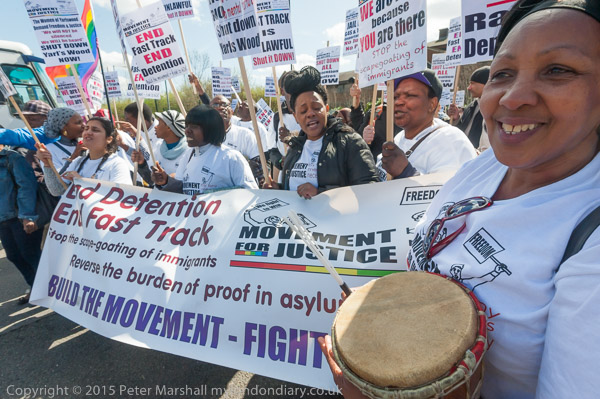
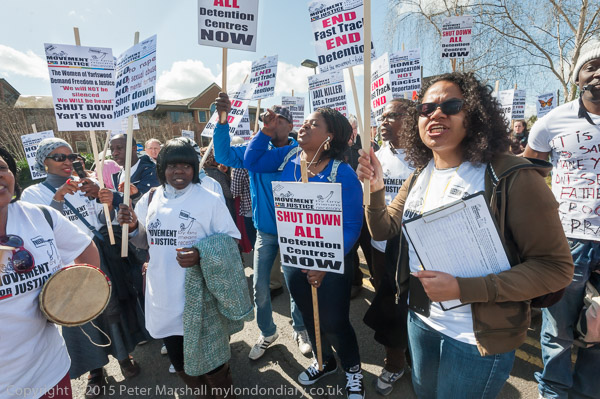
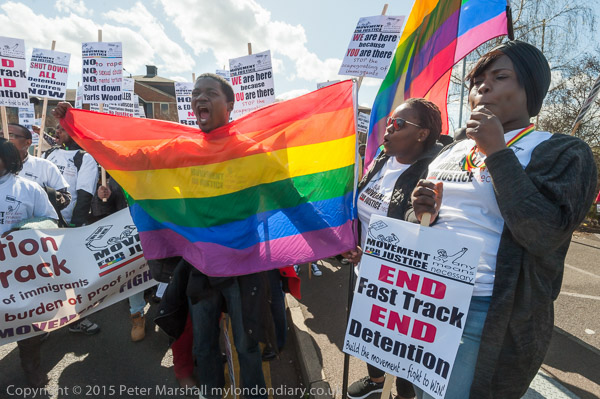
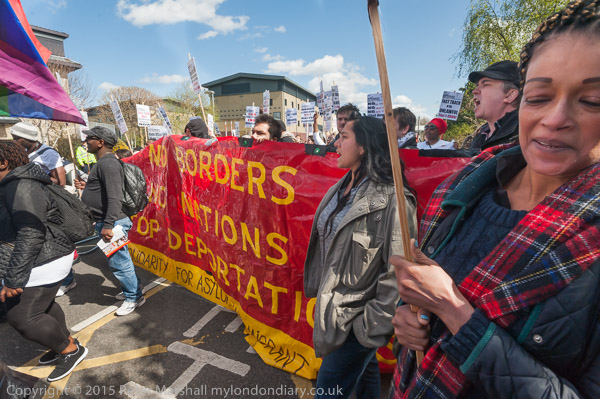
End Immigration Detention – Harmondsworth: Saturday 11th April 2015 saw what I think was the largest protest to date outside the Heathrow Immigration Removal Centre on the Bath Road immediately north of Heathrow airport.
End Immigration Detention - Harmondsworth

Various organisations had held protests here over the years, but these had grown since Movement for Justice began organising them, bringing a large group of current and former asylum seekers out from London on the tube to Terminal 5 and then on the short bus ride to the prison. They included some who had come from other cities in the country – and even from Glasgow. Other groups at the protest included No Borders, Southall Black Sisters and Shoreditch Sisters W I.
End Immigration Detention - Harmondsworth

There are two detention prisons on the site, both surrounded by 20ft high fences with a private road to a BT site running between them. Called Harmondsworth and Colnbrook, they were in 2015 both run by Mitie’s ‘care+custody’ division, and the overall name for the centre had changed to Heathrow Immigration Removal Centre, which made clear that the government intention was to deport people rather than operate a fair asylum system.
End Immigration Detention - Harmondsworth

The Home Office has long proved itself to be both incompetent and racist, and huge backlogs have built up over the processing of asylum claims. They seem to start from the position that all asylum claims are unfounded and those making them are liars, often despite the evidence. Claims that should be processed in days take months or years – during which time people may be kept in detention centres like these generally quite unnecessarily. We should imprison criminals, not asylum seekers.
End Immigration Detention - Harmondsworth

As I commented in 2015:

these are prisons, with those inside being unable to leave; they have a few privileges denied those in normal jails, including the use of mobile phones, but some disadvantages, including that they are all on indefinite sentences at the whim of government and subject to a constant threat they will be forcibly bundled onto a plane and taken back to the country from which they have fled, often at fear of their lives. These prisons are also run by staff who often lack the basic training, supervision and accountability of normal jails.”
The majority of those who claim asylum are eventually granted leave to remain in the UK as their claims are well-founded. Some have been deported before they are given time to prove their cases to the Home Office’s satisfaction under “fast track” procedures that have been ruled illegal.
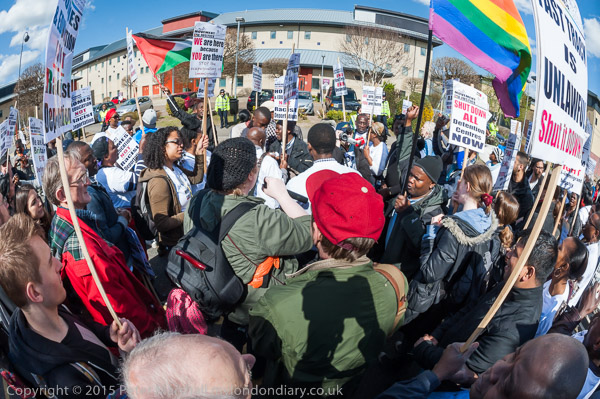
Our laws prevent them from working and contributing to our economy and society, and almost all are keen to do so and have skills which are in short supply. We need a system that gives people the medical treatment they need and gets them back into normal work and life as quickly as possible. Instead far too many are simply parked in prisons like these without proper medical care and largely isolated from those who could help them. Its both inhumane and economically unsound.
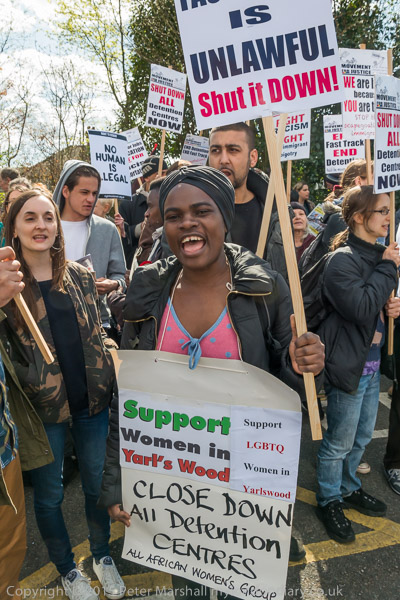
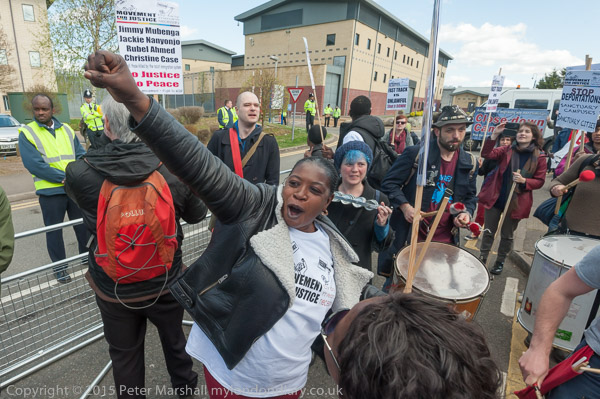
Although police and a large team of security guards stopped the protesters from going down the road toward the prison blocks, forcing them into a pen in front of the administration building at the front of the site, the loud protest could be heard throughout the site. Some of the prisoners were able to use their mobile phones to welcome the protesters and let them known about the poor conditions inside, and their calls were relayed over the public address system the protesters had brought.
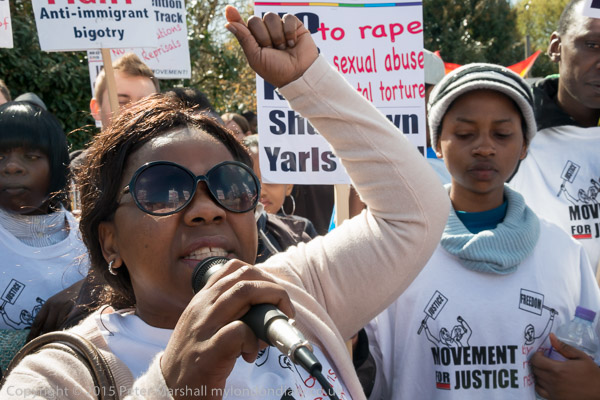
Most of those who spoke at the protest had themselves been held inside these or other detention centres often for long periods after escaping from beatings, rape and torture in their home countries, and several spoke about their experiences in the system here. Some said they had been treated as troublemakers because they stood up for their rights – and that inmates who failed to do so, whatever the strength of their cases, were likely to face deportation.
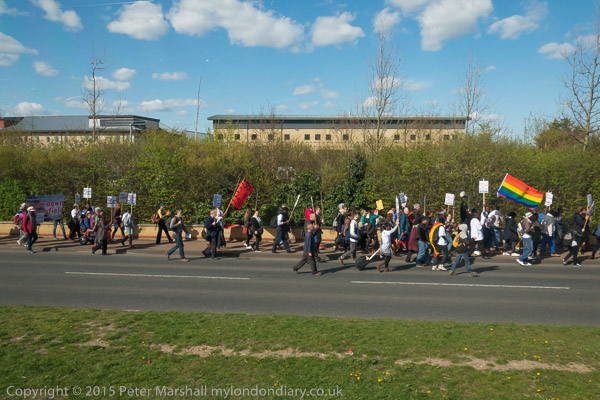
I was tired after a couple of hours of the noisy protest, with chanting, singing and dancing – though mainly I had just been taking photographs, and left to catch a bus home. I could hear the protest continuing from the bus stop several hundred yards away, and when the bus came – ten minutes late – saw the protesters making their way out of the site to a public footpath which runs along the side of the Colnbrook site to continue their protest closer to those prison blocks.

Many more pictures on My London Diary at End Immigration Detention.


FlickrFacebookMy London DiaryHull PhotosLea ValleyParis
London’s Industrial HeritageLondon Photos

All photographs on this page are copyright © Peter Marshall.
Contact me to buy prints or licence to reproduce.
Vaisakhi, Uganda & Freedom Umbrella – 2011

Vaisakhi, Uganda & Freedom Umbrella: On Saturday 9th April 2011 After visiting Woolwich to photograph the Vaisakhi celebrations I came back into central London to photograph Ugandans and Kurds protesting for freedom and democracy.


Vaisakhi Celebrations in Woolwich

Vaisakhi, Uganda & Freedom Umbrella

For some years I had been documenting religious festivals in and around London and had photographed a number of Sikh Gurdwaras at their Vaisakhi festivals.

Vaisakhi, Uganda & Freedom Umbrella

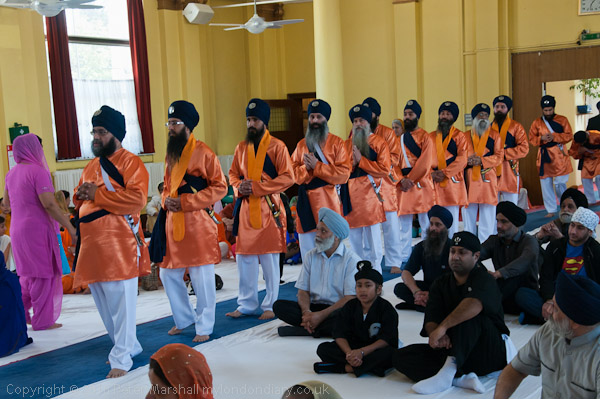
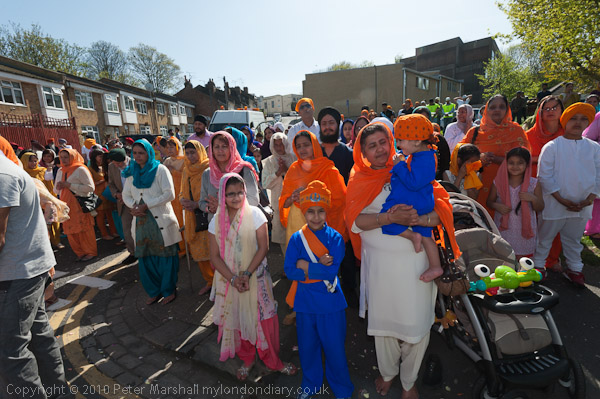
On Saturday 9th April 2011 I went to the Ramgarhia Association Gurdwara in Mason’s Hill Woolwich. The Ramgarhia are a Sikh community who originally came from the close to Amritsar in the Punjab and traditionally they were carpenters, blacksmiths and other artisan workers but were renowned for their military prowess and the victories of the armies.

Vaisakhi, Uganda & Freedom Umbrella

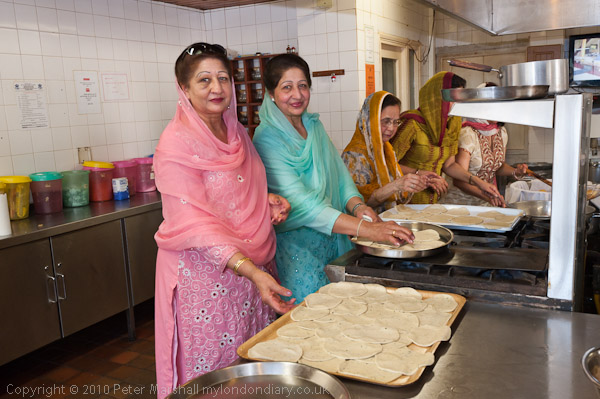
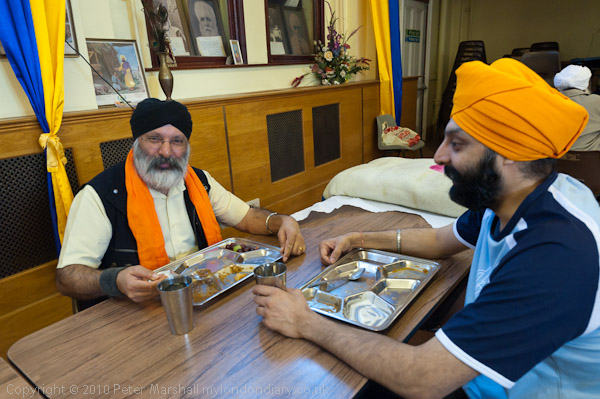
When I turned up I was warmly welcomed and taken to the Langar hall where I enjoyed some of the free vegetarian food on offer to all, prepared and served by members of the congregation who volunteer their services as a part of their religious practice and was able to talk with people there and wander around taking photographs.

Vaisakhi, Uganda & Freedom Umbrella

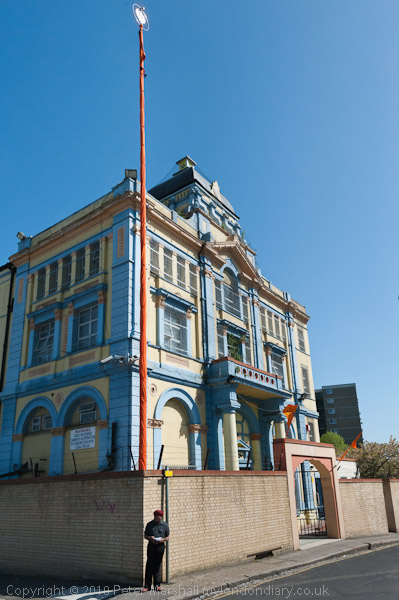
The Gurdwara was established in 1970 in an existing landmark building, the Victorian Freemasons Hall, just over the Woolwich border in Plumstead on a street which was then called Mount Pleasant.

The Freemason’s Hall was where the Royal Arsenal Football Club held its annual meetings and dinners, and on 16th May 1891 that the Annual General Meeting of the Royal Arsenal Football Club (earlier known as Dial Square) the committee announced it had decided two weeks earlier to turn professional and had thus resigned from the amateur Kent and London Associations.

In 1913, the club moved across the river to a new stadium at Highbury, where it continued to play until 2006, when it moved the short distance to its new Emirates stadium. Apparently it is doing quite well at the moment.

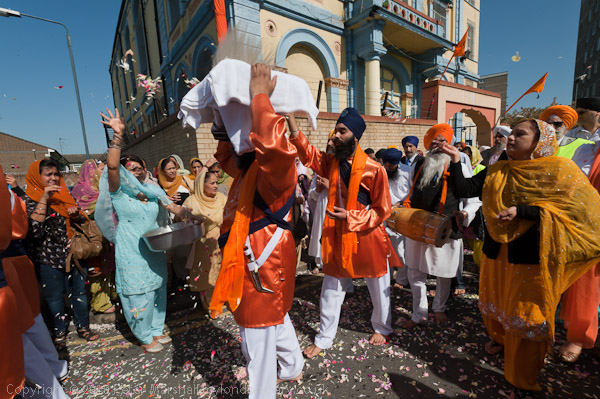
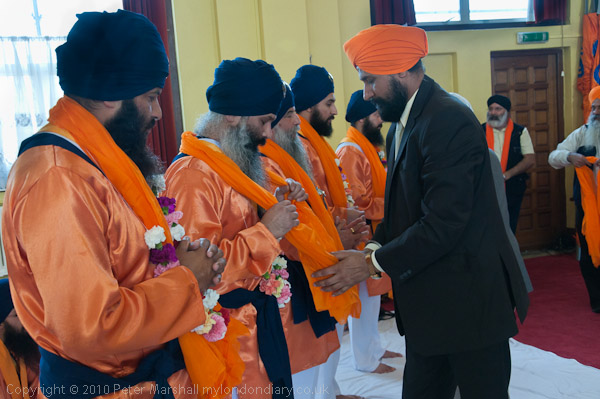
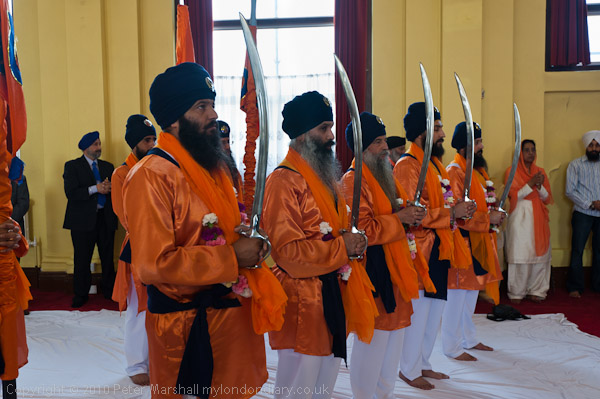
The Vaisakhi festival, which takes place on April 14 each year marks the formation of the Khalsa by Guru Gobind Singh, the tenth Sikh Guru, in 1699. You can read more about this and the Vaisakhi Nagar Kirtan procession which is lead by five Khalsa – baptised Sikhs – dressed in saffron robes and turbans and carrying swords in the account I wrote on My London Diary, Vaisakhi Celebrations in Woolwich, as well as in the posts on other Vaisakhi processions on that site.

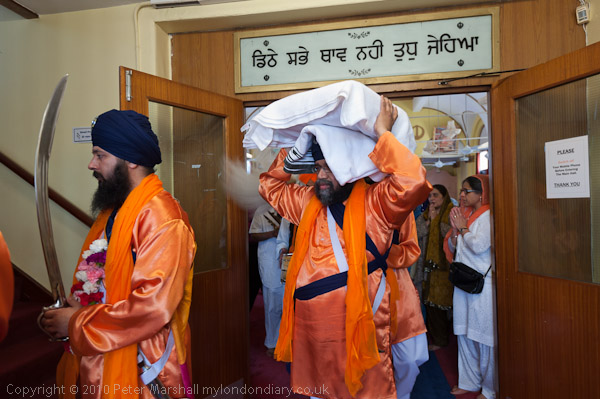
On My London Diary I wrote in more detail about the origins of Vaisakhi and the 10th Sikh Guru who gave Sikhism its modern form with its symbols and the eternal guru, the Guru Granth Sahib, the holy religious scripture being reverently carried out to the procession in th picture above.

Unfortunately the start of the procession was delayed and although I had photographed the preparations for it I had to run to catch a train before the actual start of the colourful procession, with its joyful singing of Sikh hymns, martial arts demonstrations and Dhol drumming through the town, expected to take several hours.

More at Vaisakhi Celebrations in Woolwich.


Ugandans Demand Democracy – Uganda House, Trafalgar Square

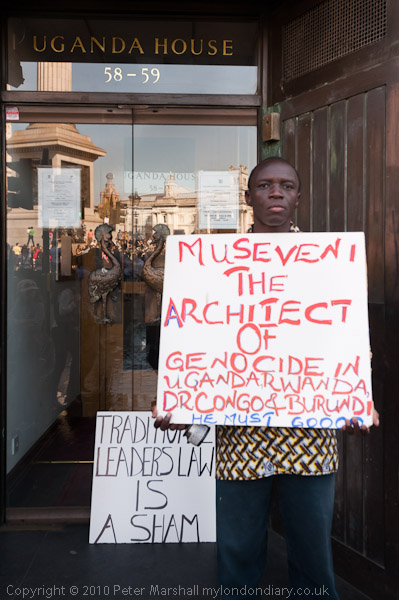
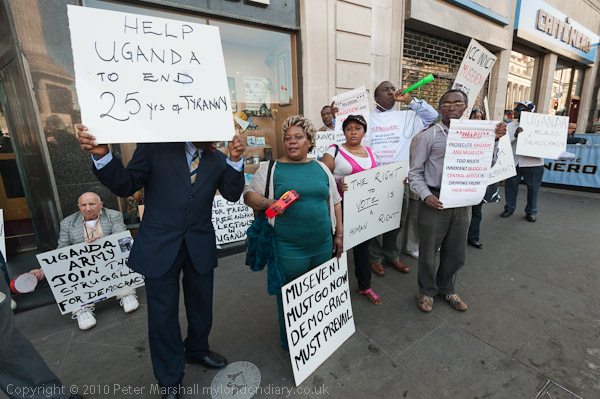
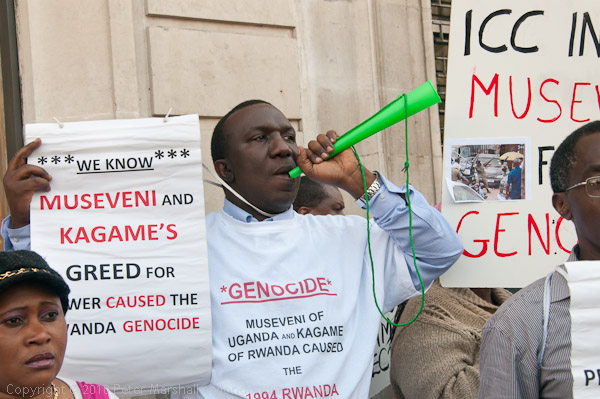
Ugandans had come to protest outside Uganda House in Trafalgar Square, calling for new free and fair elections after the rigged Parliamentary and Presidential elections in February.

The election on 18 Feb had resulted in the re-election of the sitting president Yoweri Museveni, in power for 25 years, apparently getting 68% of the vote.

But the EU Election Observation Mission which had been in Uganda for the vote reported the election, with a turnout of only 59% had been “marred by avoidable administrative and logistical failures which led to an unacceptable number of Ugandan citizens being disenfranchised” and that Museveni had used his presidential power to “compromise severely the level playing filed between the competing candidates and political parties.”

As well as the state owned Uganda Broadcasting Corporation giving much more coverage to the ruling NRM party, there had been extenisve human rights abuses with the police failing to take action against groups attacking opposition political meetings, intimidation and assaults on journalists and the cancellation of broadcasts.

Ugandans Demand Democracy


Freedom Umbrella Kurds March Through London – Old Marylebone Rd – Downing St

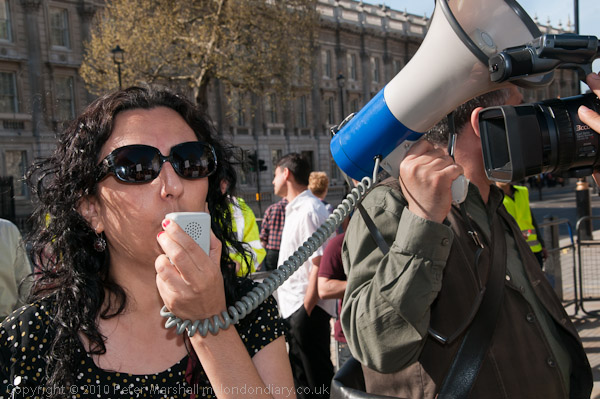
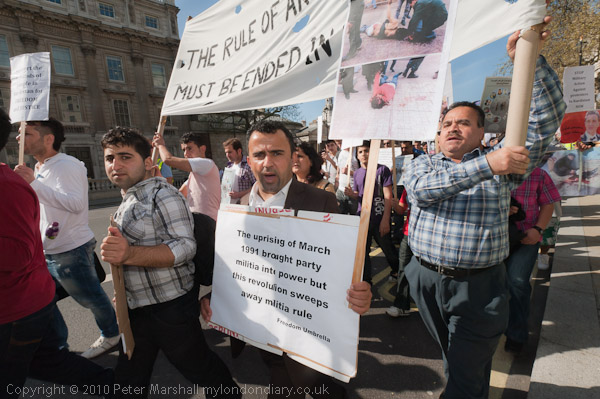
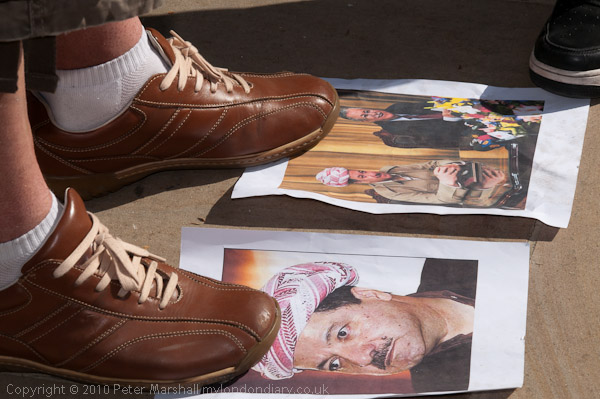
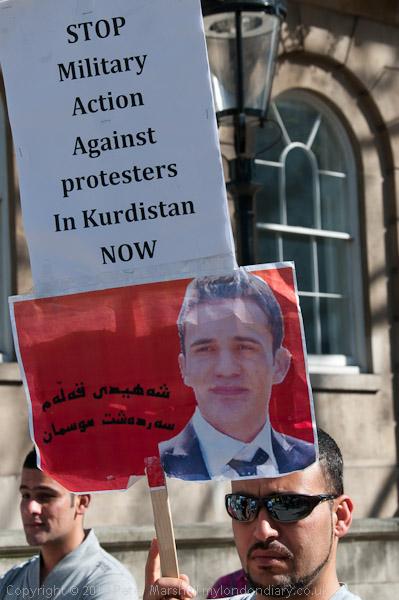
Freedom Umbrella (Chatri Azadi), a coalition of British-based Kurdish organisations and supporters, had organised a demonstration in front of the offices of the Kurdistan Regional Government in Old Marylebone Road followed by a march to a rally opposite Downing St.

They called for support of the people’s uprising for freedom and social justice in the autonomous region of Iraqi Kurdistan which had begun on 17th February but had hardly been noticed by UK media.

Two Kurdish militia groups dominate Iraqi Kurdistan and remain in power. On 19th April their security forces began a more organised violent crackdown on the protests which brought them to an end.

I met the protesters as the march neared Trafalgar Square and photographed their rally opposite Downing Street.

More pictures Freedom Umbrella Kurds March In London.


FlickrFacebookMy London DiaryHull PhotosLea ValleyParis
London’s Industrial HeritageLondon Photos

All photographs on this page are copyright © Peter Marshall.
Contact me to buy prints or licence to reproduce.

Zuma, Boat Dwellers, Syria & Latin Village – 2017

Zuma, Boat Dwellers, Syria & Latin Village: Saturday 8th April 2017 was another varied day for me in London with protests against South African President Zuma, the Canal & River Trust, chemical warfare in Syra and against the planned demolition of the largest Latin American community market in England.


Zuma Must Go – Trafalgar Square

Zuma, Boat Dwellers, Syria & Latin Village

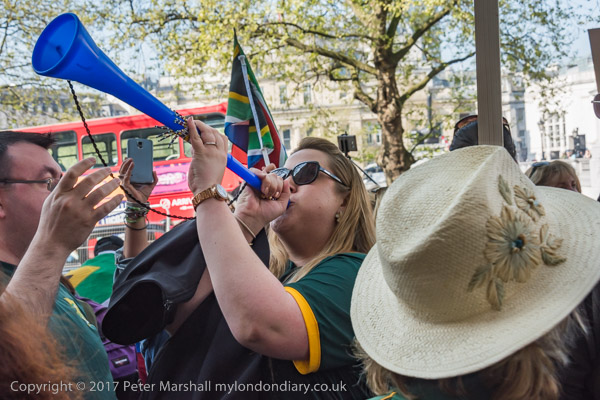
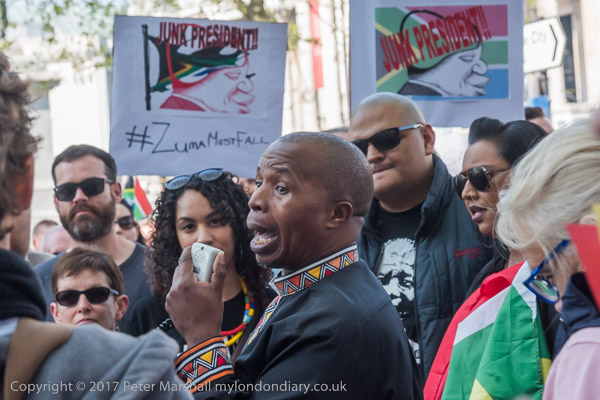
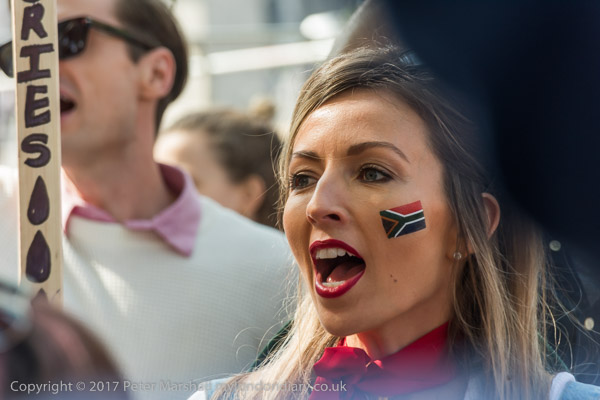
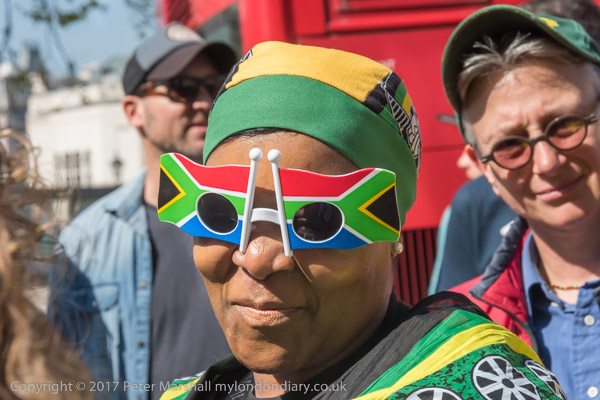
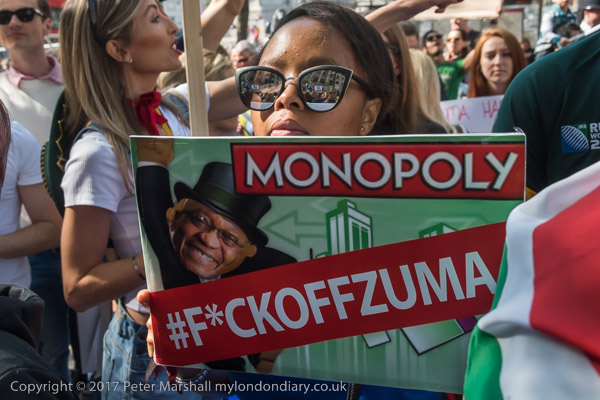
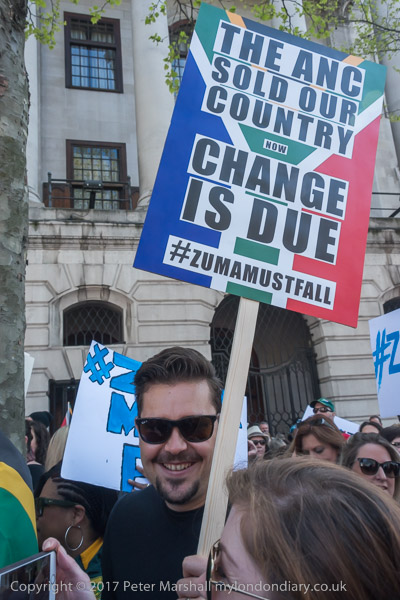
South Africans living in the UK had come to protest outside the South African High Commission after President Zuma sacked the Finance Minister and his deputy.

Zuma, Boat Dwellers, Syria & Latin Village

They accuse Zuma and the African National Congress government of wrecking the South African economy and say that “Zuma must fall”.

Zuma, Boat Dwellers, Syria & Latin Village

Police had set barriers outside the High Commission for the protest and the protesters were so densely packed into the area that it was very difficult to move around an take photographs.

Zuma, Boat Dwellers, Syria & Latin Village

It was a colourful protest and certainly demonstrated the anger of those taking part but the ANC would still remain the leading party and if Zuma resigned he would be replaced by another ANC leader.

Zuma did finally go, replaced by Cyril Ramaphosa in 2018 because of the increasing allegations of corruption and cronyism and in 2021 was given a 15 month contempt of court sentence for refusing to testify. Ramaphosa is also a controversial figure with various allegations of corruption, and as as London Platinum non-executive director urged the police to take the action which lead to the police massacre at Marikana on August 16, 2012 which lead to the deaths of 44 miners and over 70 more with serious injuries.

The elections next month, May 2024 are expected to be the first since the end of apartheid in 1994 in which the ANC will not gain over 50% of the vote and the country may get a coalition government. Zuma who has now joined the opposition Umkhonto weSizwe (MK) party has been banned from standing in the election but has appealed the ban.

Zuma Must Go


Boat dwellers fight evictions – Embankment Gardens

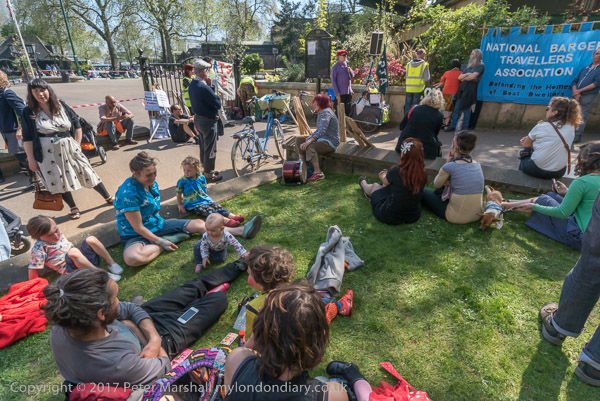
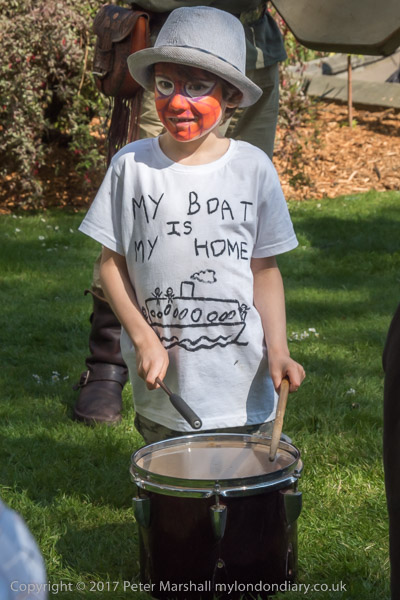
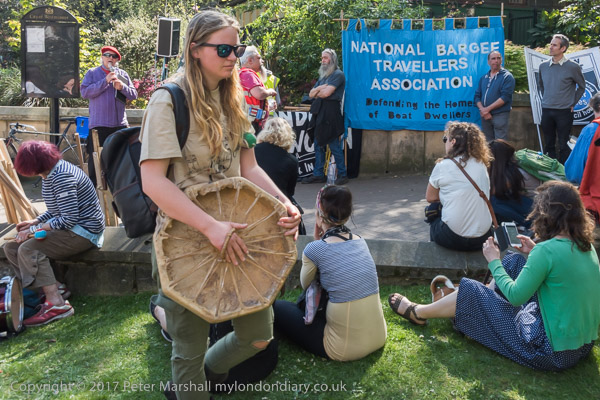
Boat dwellers held a rally in Embankment Gardens before marching to Downing St and DEFRA to demand the Canal & River Trust (CRT) stops evicting or threatening to evict boat dwellers without permanent moorings.

The say the British Waterways Act 1995 includes the right to live on a boat without a permanent mooring and that the CRT is acting illegally in evicting or threatening to evict boat dwellers.

Although boats can be required to move after 14 days at a mooring, the law requires at least 28 days notice and does not lay down restrictions on the distance boats have to move or that they should be making a “progressive journey.”

Some of the speakers at the rally had horror stories about boats being seized and other illegal activities by the trust, a charity set up in 2012 to look after the canals and navigable rivers.

Boat dwellers also oppose the plans being made for chargeable bookable moorings and want the trust to maintain the canals properly. The rally was still continuing when I needed to leave.

Boat dwellers fight evictions


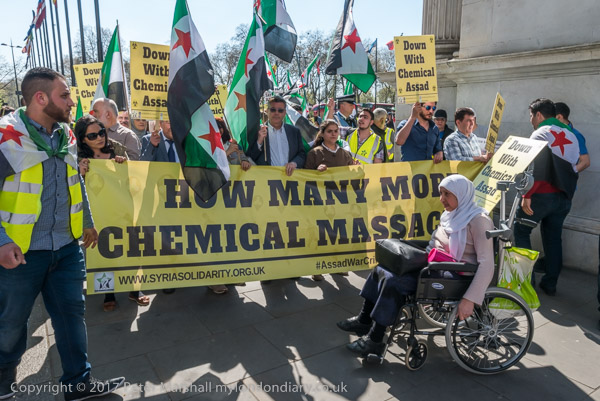
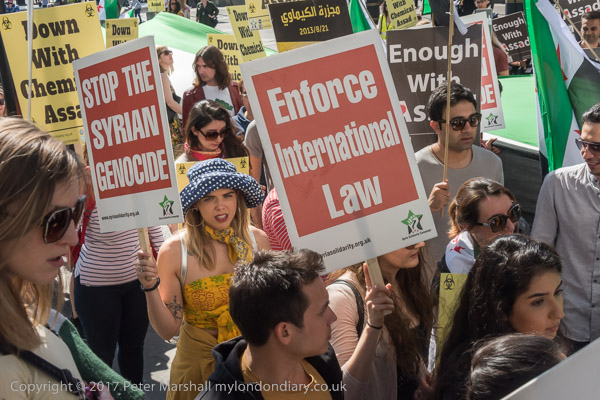
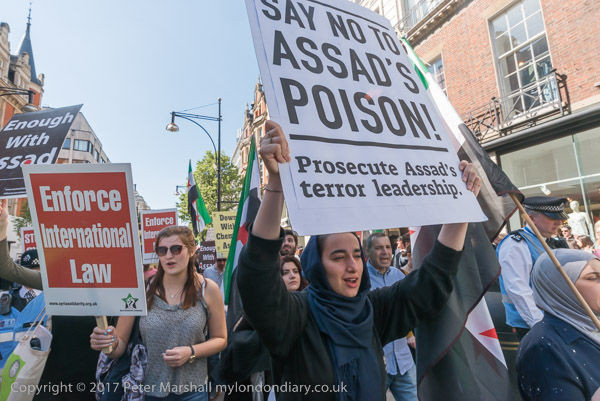
March Against Chemical Warfare in Syria – Marble Arch

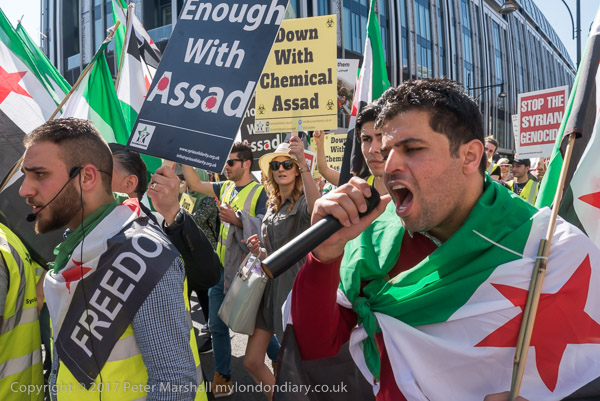
RefugEase and Syria Solidarity Campaign had organised this march calling on the UK Government to protect civilians in Syria.

President Assad’s forces used Sarin nerve agent three years earlier at Ghouta, and a few days before the protest there had been another attack using Sarin at Khan Sheikhoon near Idlib on April 4th.

The West’s response to the Syrian Revolution has been confusing and largely ineffectual. The US and Turkey encouraged and aided the setting up of an Islamic state and allowed it to export oil to finance its operations – and later the US gave air support to the Kurds to defeat ISIS. And although there were strong words over the use of chemical weapons at Ghouta, there was no real action. Nor has their been any opposition to the invasion and occupation of large parts of Syria by Turkish forces.

The march to Downing St began at Marble Arch and I walked with it down Oxford Street as far as Oxford Circus Station where I caught the Victoria Line to Seven Sisters.

Against Chemical Warfare in Syria


Human Chain at Latin Village – Seven Sisters

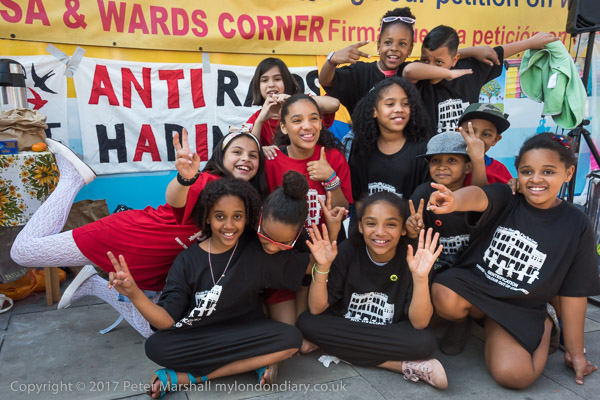
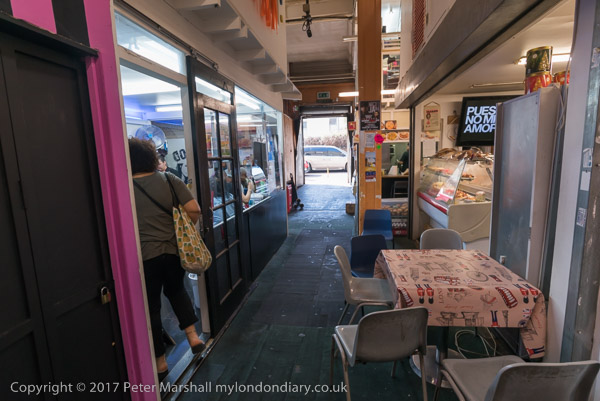
The indoor market next to Seven Sisters station in South Tottenham had been reinvigorated in recent years by the local Latin American community and had become the largest Latin American community market in England.

Part of the site at Ward’s Corner has been derelict for some years and the local authority, Haringey Council, wants to demolish the who block together with property developers which would convert it to expensive flats and chain stores, profiting investors at the expense of the community.

In 2008 the community gained the support of London Mayor Boris Johnson who wrote to the council asking them to review the scheme. But the council were determined to go ahead along with property developer Grainger PLC and issued a compulsory purchase order in 2016 which was finally approved by the secretary of state for housing, communities, and local government James Brokenshire in 2019.

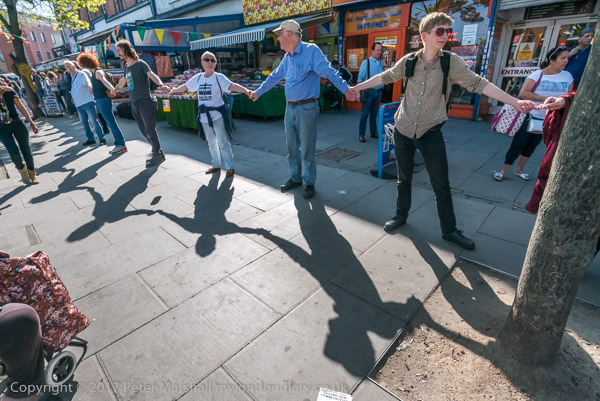
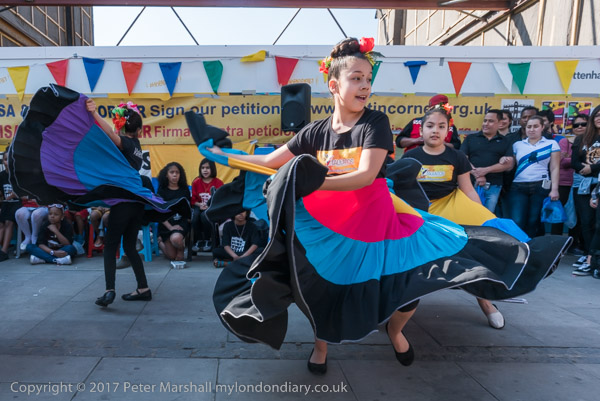
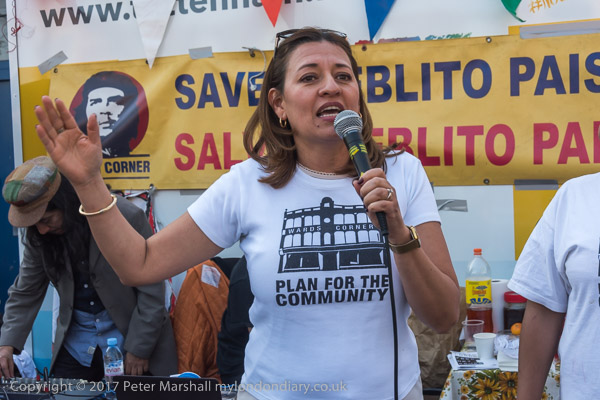
The community in the area had been fighting since 2002 to save the Latin Village from this social cleansing and gentrification and on Saturday 8th April 2017 held a festival there. The speeches and performances paused for everyone to join hands in a human chain around a quarter of a mile long around the whole block.

In 2020 Transport for London who had taken over the management of the indoor market closed it down. But in 2021 Grainger PLC withdrew from the plans for the site. You can read more about the Wards Corner Community Plan online. The Community Benefit Society was launched in 2022 and planned to reopen the site in 2024.

Many more pictures at Human Chain at Latin Village


FlickrFacebookMy London DiaryHull PhotosLea ValleyParis
London’s Industrial HeritageLondon Photos

All photographs on this page are copyright © Peter Marshall.
Contact me to buy prints or licence to reproduce.

Sudan and Brunei Gay Sex – 2019

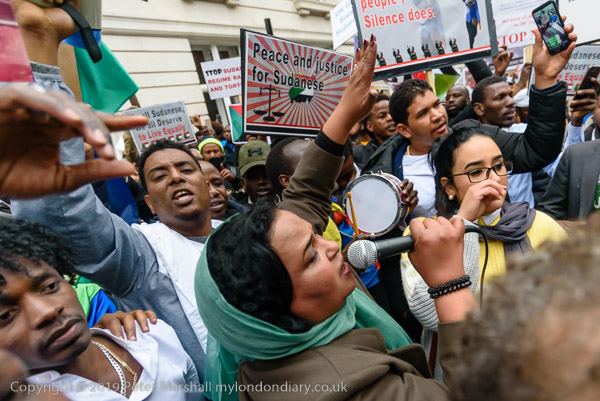
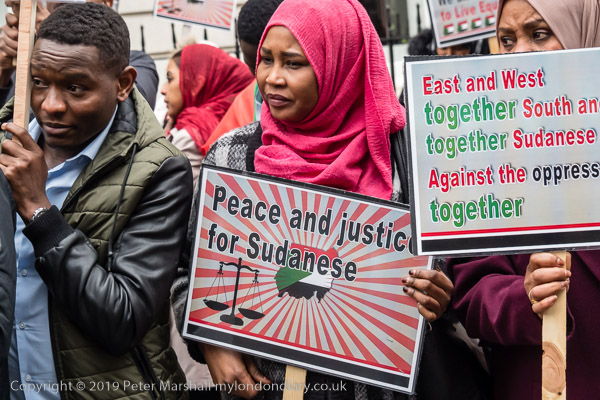
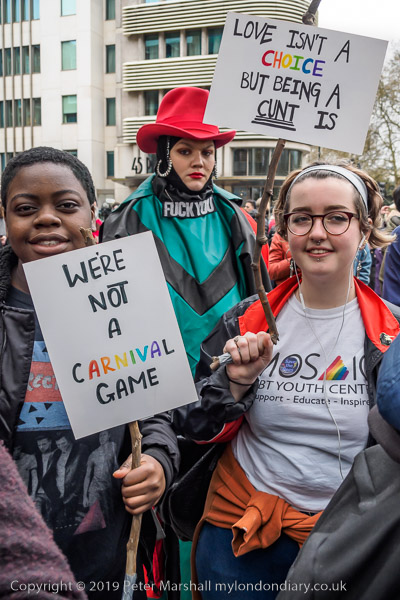
Sudan and Brunei Gay Sex: I began work on Saturday 6th April 2019 at the Sudanese Embassy and then left for the Dorchester Hotel in Mayfair where protesters had come after the Sultan of Brunei had announced death by stoning as a punishment for gay sex, adultery and blasphemy.


Sudanese for Freedom, Peace and Justice – Sudan Embassy

Sudan and Brunei Gay Sex

War is raging again now in Sudan between between the Sudanese Armed Forces (SAF) and the Rapid Support Forces (RSF).

Sudan and Brunei Gay Sex

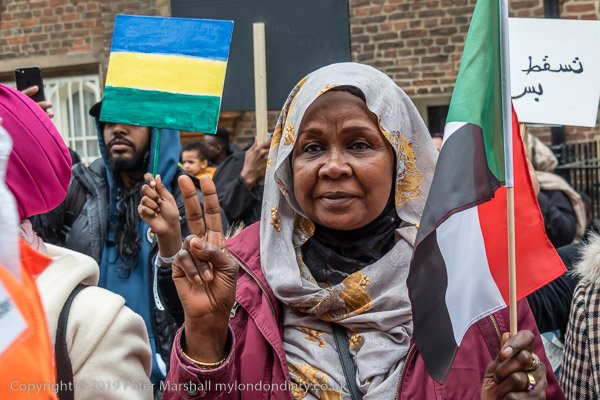
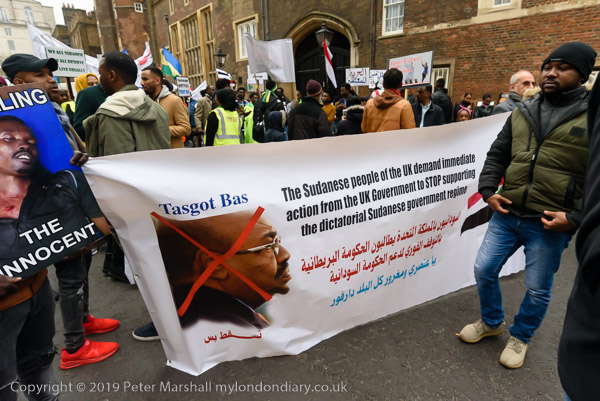
Back in 2019 people were protesting against the extreme violence in Sudan against peaceful protests calling for for an end to the violent and corrupt Sudanese regime and for president Omar al-Bashir to ‘Just Fall’ and stand trial by the ICC for genocide in Darfur, the Nuba Mountains and South Blue Nile.

Sudan and Brunei Gay Sex

People in Sudan had been protesting for 17 weeks and over 70 protesters had been killed and thousands injured.

Sudan and Brunei Gay Sex

Five days later, Omar al-Bashir was deposed by the Sudanese Armed Forces and in May 2019 was charged al-Bashir with “inciting and participating in” the killing of protesters. Later other charges were brought, including of corruption and money laundering. Other trials followed and he has been accused of genocide. The prison in which he was being held has been overrun by the current fighting between forces led by the generals who deposed him and he is currently held in a military hospital in Khartoum.

I left the protesters still in and around the protest pen outside the embassy opposite St James Palace in Cleveland Row and rushed the three quarters of a mile or so to the Dorchester Hotel in Park Lane, where I knew the protest had already begun.

More pictures at Sudanese for Freedom, Peace and Justice.


Brunei Sultan gay sex stoning protest – Dorchester Hotel

A large crowd had gathered on the streets in front of the Dorchester Hotel behind barriers that kept them out of the area directly in front of the entrance.

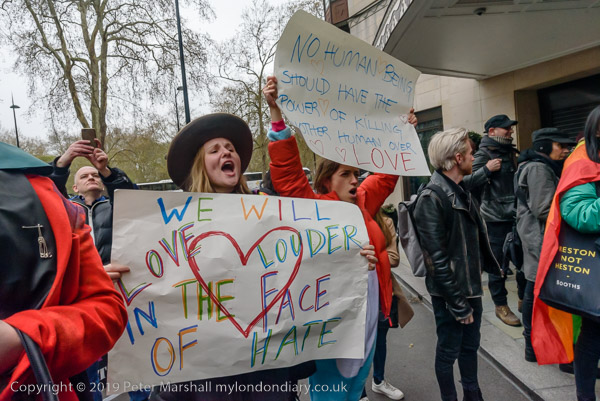
There were a number of speeches including those by Labour Shadow Secretary of State for Foreign and Commonwealth Emily Thornberry MP and activist Peter Tatchell condemining the announcement by the Sultan of Brunei of death by stoning as a punishment for gay sex, adultery and blasphemy.

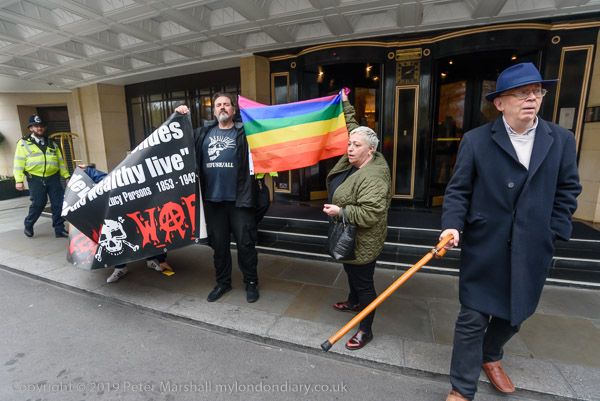
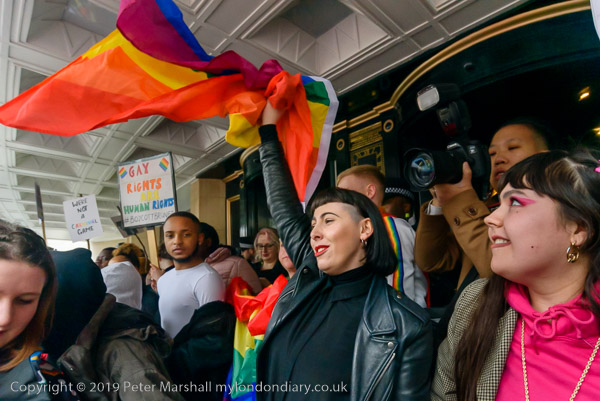
It was a colourful protest with many from the gay community with some interesting posters and placards. Police continually harassed protesters to keep the roads open, although there were really too many people to make this sensible.

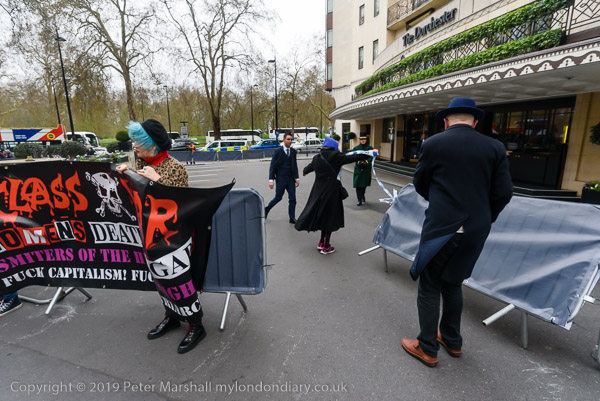
After an hour or so, Class War decided to move from behind the barriers and pushed some aside to protest directly in front of the hotel doors. They were followed by many of the other protesters and a noisy protest continued there.

Many more pictures at Brunei Sultan gay sex stoning protest.


FlickrFacebookMy London DiaryHull PhotosLea ValleyParis
London’s Industrial HeritageLondon Photos

All photographs on this page are copyright © Peter Marshall.
Contact me to buy prints or licence to reproduce.

Israel’s Land Day Massacre & Afrin March

Israeli Land Day Massacre & Afrin March – On Saturday 31st March 2018 two emergency protests in London condemned the cold-blooded shooting by the Israeli army of peaceful protesters near the separation wall in Gaza the previous day, Palestinian Land Day. The was also a march calling for an end to the invasion of Afrin by Turkey and al Qaeda-affiliated militias intended to destroy this peaceful state and eliminate the majority Kurdish population of the area.


Land Day protest against supporters of Israeli state – Oxford St

Israeli Land Day Massacre & Afrin March

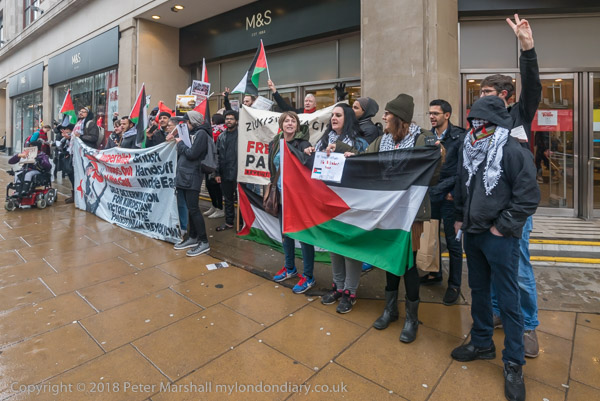
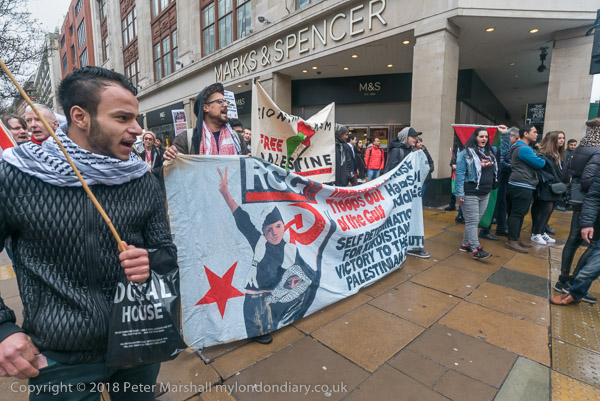
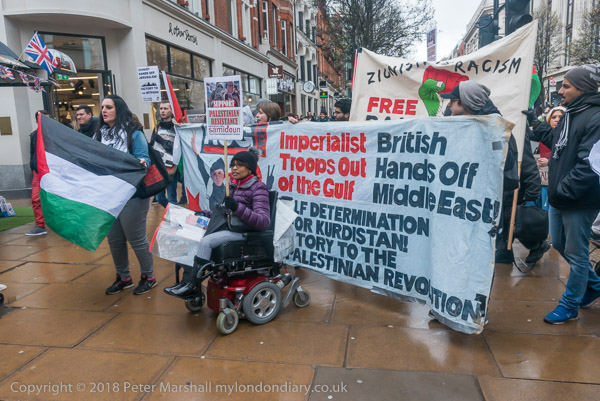
Protesters from the Revolutionary Communist Group have held regular protests outside the Marks and Spencer flagship store on Oxford Street for many years. They were met there this morning by others apalled by the news of the 17 unarmed Palestinian civilians shot dead by Israeli snipers.

Israeli Land Day Massacre & Afrin March

Those murdered in cold blood were taking part in the first of a weekly series of marches, the ‘Great March of Return‘, beginning on Land Day, the anniversary of protests against the state confiscation of swathes of Palestinian land in Galilee in 1976 until Nakba Day on May 15, the anniversary of the expulsion of millions of Palestinians from their homes and villages in 1948.

Israeli Land Day Massacre & Afrin March

The protesters went from M&S to protest outside other stores on Oxford St with business links with apartheid Israel, calling for shoppers to boycott them. While I was with them they also protested outside Selfridges, which sells Israeli wines, Adidas which supports the Israel football team, Boots which sells cosmetics made in Israel and Carphone Warehouse and were continuing along the street when I had to leave.

Land Day protest against Israeli state


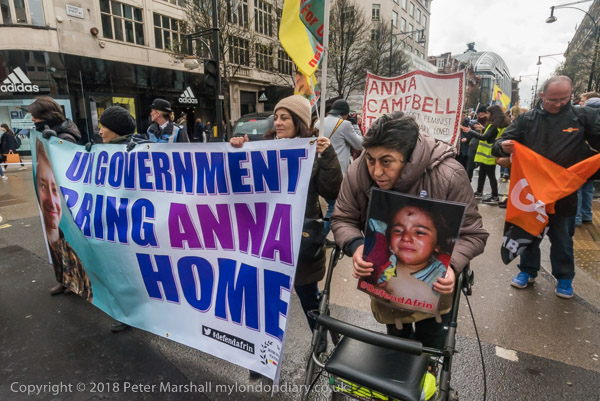
Defend Afrin – Bring Anna Home – Oxford St

Israeli Land Day Massacre & Afrin March

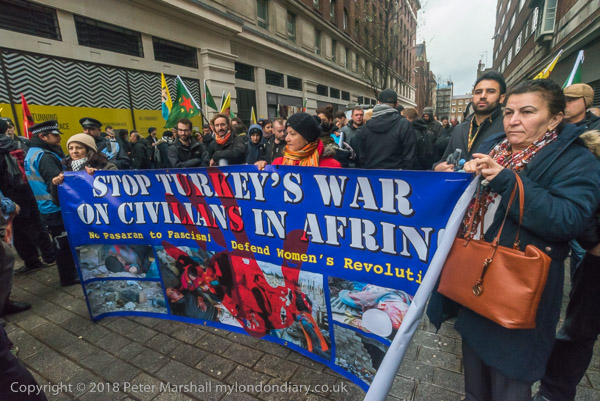
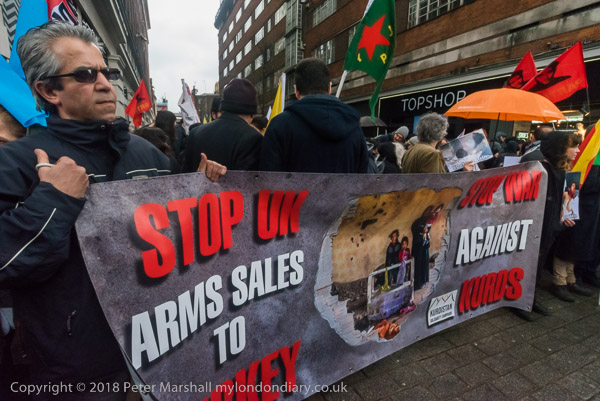
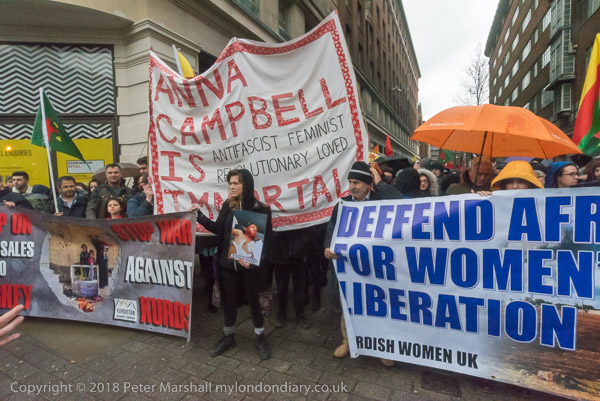
Turkey’s attack on Afrin in north-west Syria is a clear violation of international law, and air strikes have deliberately targeted civilian areas.

Turkey has NATO’s second largest army and much of its weapons come from European states including the UK which had recently signed a major arms deal. The UK government has expressed support for Turkey, claiming it has a right to defend it borders, but this attack is outside these and Turkey has clearly announce an intention to push far into Syria.

Turkish aims are clearly genocidal with Turkish president Erdogan having stated he intends to invade all the Kurdish areas of Syria and “cleanse” the area of its Kurdish people.

As well as calling for an immediate ceasefire and end to the Turkish invasion of Syrian and UK support for this, they called for an end of UK arms sales to all human rights abusing regimes in the Middle East and for humanitarian relief for Afrin and other areas of Syria and for an investigation into human rights abuses there. They also called on the UK government to demand Turkey return the body of YPJ volunteer Anna Campbell to her family in Sussex.

Much more on My London Diary at Defend Afrin – Bring Anna Home.


Israeli Embassy Protest against Land Day Killings

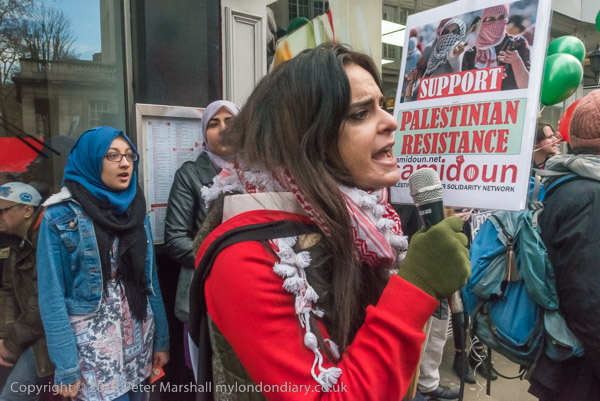
I joined others close to the Israeli embassy in Kensington for an emergency protest against the shooting of unarmed protesters several hundred yards from the Gaza separation wall by IDF snipers. 17 Civilians were killed and over 750 seriously injured by live fire, with others injured by rubber bullets and tear gas.

The massacre the previous day had shocked the world and led the UN to call for an independent investigation, which Israel have refused – just as they have refused calls for independent investigation into other massacres. The news had come too late for a large protest to be organised – which followed in April.

Coverage of the event in the UK media on the day had been surprisingly muted, with the BBC giving considerable air-time to Israeli state speakers shamefully claiming the massacre was reasonable and fully justified. The same thing has been happening over events in Gaza in recent months, though I think it has now become very much clearer that they have lost all credibility and even some presenters have sometimes challenged them.

Against Israeli Land Day massacre.

Palestinian Land Day – 2019

Palestinian Land Day remembers the day in 1976 when unarmed protesters were killed when marches in Arab towns against the confiscation of land were confronted by Israeli army and police. Six unarmed Palestinians were killed around a hundred wounded and hundreds arrested. Most of the information here on Land Day is from Wikipedia.

Palestinian Land Day - 2019

The numbers involved now seem so small compared to the over 32,000 murdered in Gaza in recent months but it was a significant event as the marches were the first since 1948 in which Palestinians had organised nationally together against Israeli policies with these marches and a national strike.

Palestinian Land Day - 2019

The protests were against plans to confiscate Arab land and to expand Jewish settlements in Galilee were a part of an increasing seizure of Arab land.

Palestinian Land Day - 2019

In response to the planned strike and marches there had been a much increased police and military presence in the area, with armoured vehicles and tanks being driven “along the unpaved roads of various villages of the Galilee“. Some of these military convoys were attacked by youths with stones and even, according to Israeli government sources, Molotov cocktails.

Palestinian Land Day - 2019

The Israeli government had declared the strikes and all demonstrations illegal and some Palestinian leaders had voted against supporting them, but these actions seem only to have hardened the resolve of the Palestinians.

Palestinian Land Day - 2019

According to the Wikipedia article, quoting an academic source, the events led to “a new sense of national pride, together with anger toward the state and police and sorrow over the dead protesters, developed among the Arab community in Israel.” And in 1988, Land Day was announced as “a Palestinian-Israeli civil national day of commemoration and a day of identification with Palestinians of the West Bank and Gaza, to be marked by yearly demonstrations and general strikes.

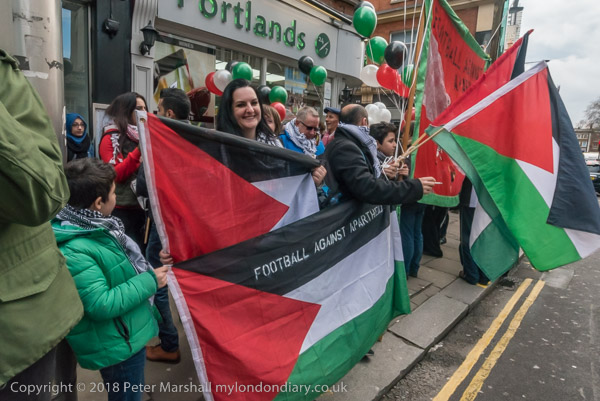
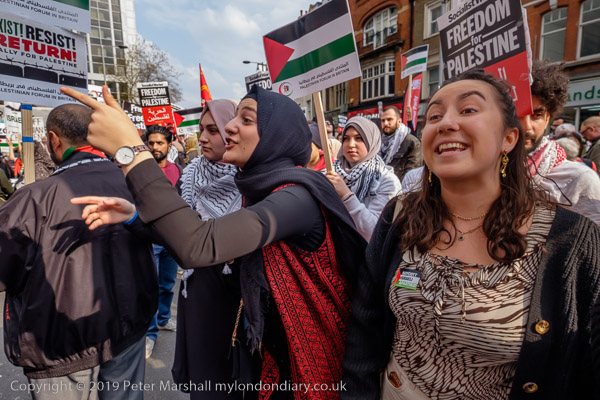
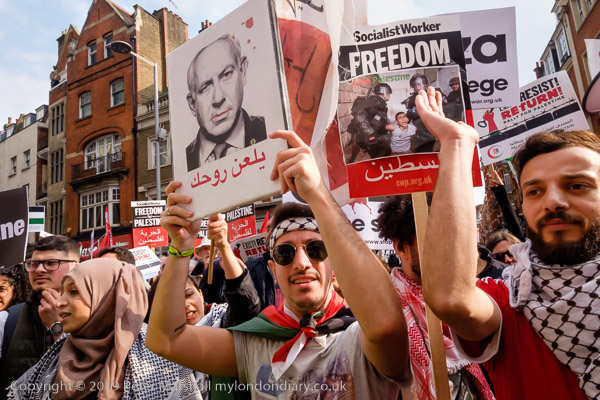
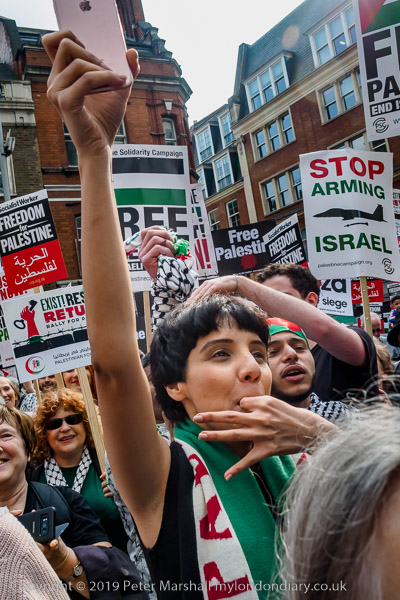
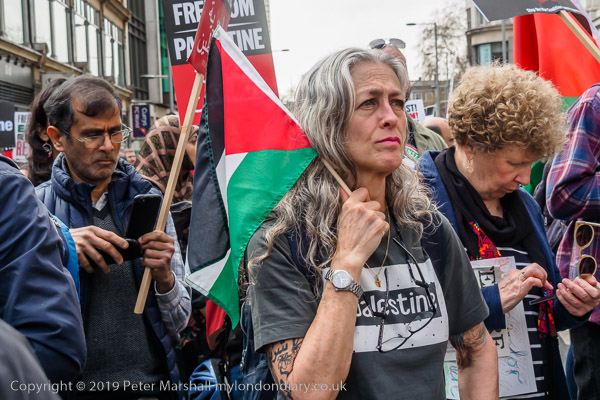
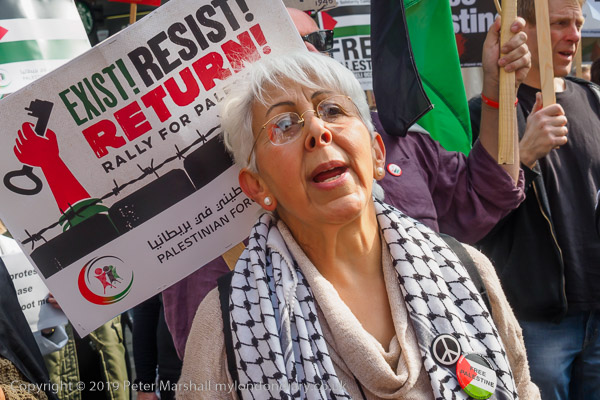
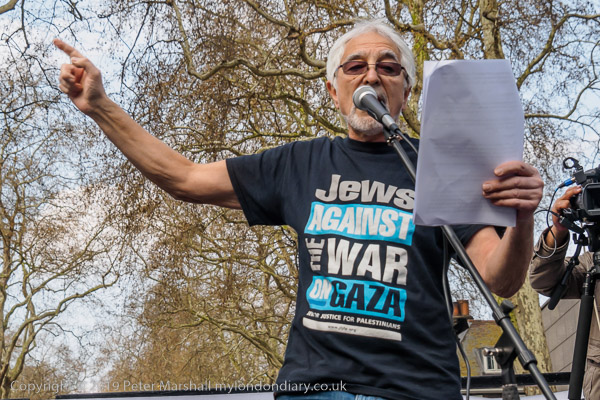
The Freedom, justice & equality for Palestinians protest in London close to the Israeli Embassy in Kensington on Land Day, 30th March 2019 came a year after the 2018 Land Day Protest in Gaza, also known as The Great March of Return. On that day in Gaza, 30,0000 Palestinians took part in a largely peaceful march some distance from the border fence. But Israeli snipers in safe positions opened fire on those who approached the fence, some to burn tyres or through objects at the fence. 17 Palestinians were killed, including five Hamas members, and more than 1,400 injured.

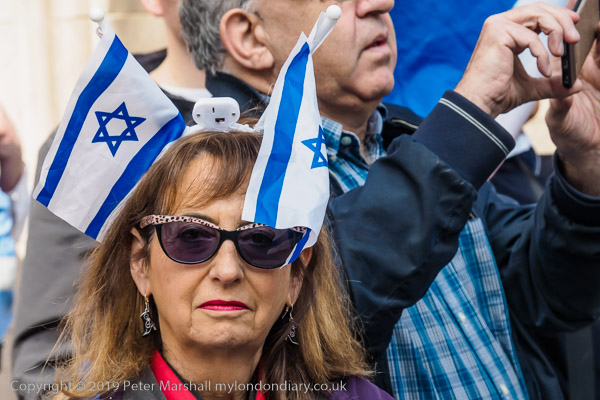
A small group of Zionists had come to oppose the protest

Smaller marches in Gaza continued at weekly intervals and by Land Day 2019 a total of over 250 mainly unarmed protesters had been killed and thousands injured.

It’s hard to look back on history to Land Day (and beyond) and not see how Zionist right wing policies have failed both Israel and Palestine and are continuing to fall all those in the area. Balfour is often blamed for kicking the situation off, but had his “it being clearly understood that nothing shall be done which may prejudice the civil and religious rights of existing non-Jewish communities in Palestine” ever been taken seriously we would not be where we are now.

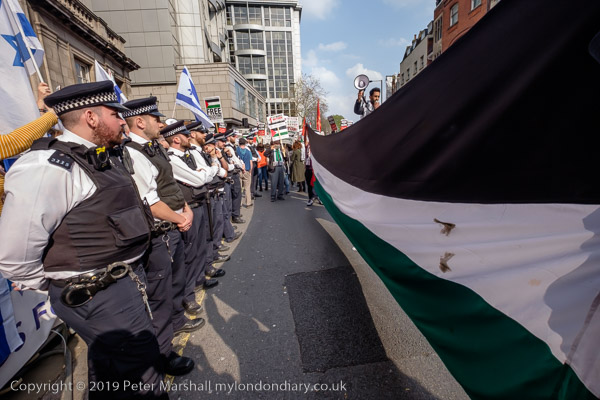
A line of police protects the Zionist pen

The Oslo Accords were another start to a possible peace process, but again firmly opposed by the right-wing Zionist parties – and Israeli prime minister Yitshak Rabin was assassinated for signing them. Leaders opposed to the accords – Ariel Sharon and current Israeli Prime Minister Benjamin Netanyahu came to power.

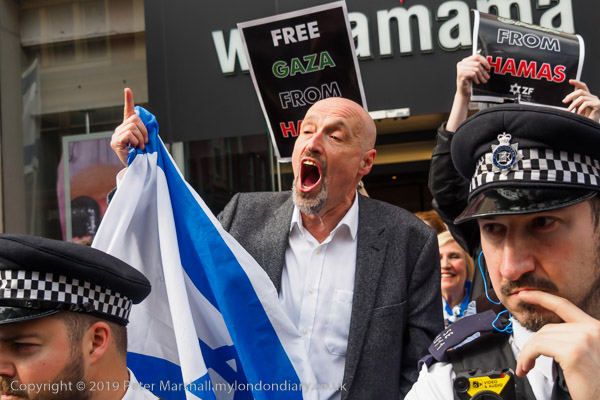
This man shouts repeatedly ‘There are no Palestinians in Gaza!’

On Land Day 2019, a group of Zionist extremists had come along to the Palestinian protest to try and shout down those speaking. Police kept them a short distance away and with a relatively powerful public address system their efforts were largely inaudible.

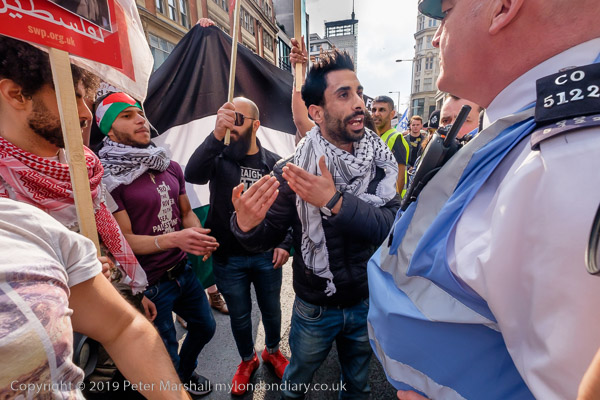
Some of the Palestinians took a large Palestine flag and hid the group behind it until police persuaded them back and other protesters moved in to argue with and shout at them. Police tried to move the Palestinians away with little success while I was present

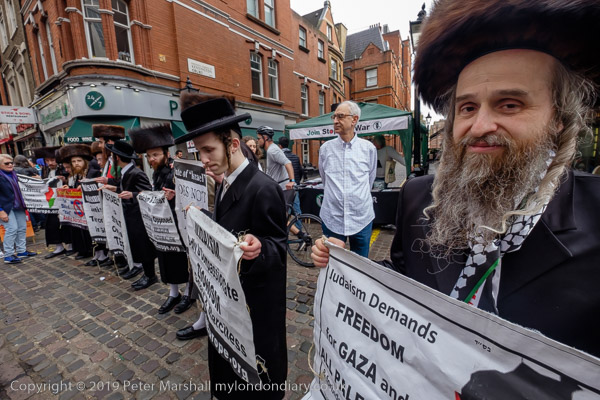
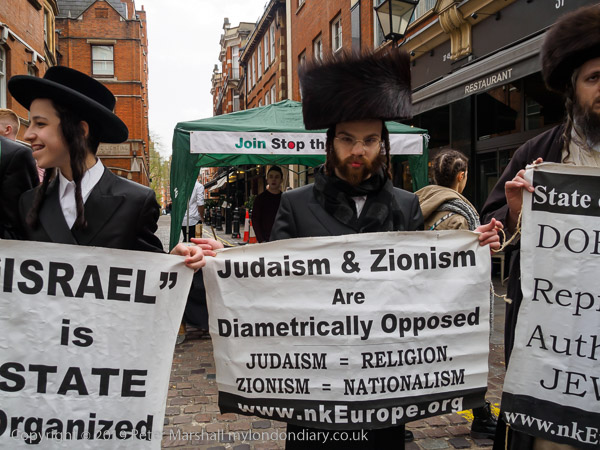
Taking part in the Palestinian protest were as usual many Jews, including the ultra-orthodox Neturei Karta who see Zionism as diametrically opposed to Judiasm.

Freedom, justice & equality for Palestinians.


FlickrFacebookMy London DiaryHull PhotosLea ValleyParis
London’s Industrial HeritageLondon Photos

All photographs on this page are copyright © Peter Marshall.
Contact me to buy prints or licence to reproduce.

Rev Paul Nicholson & More – 2014

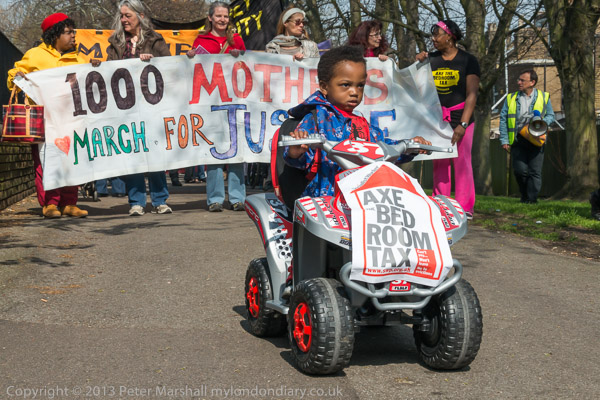
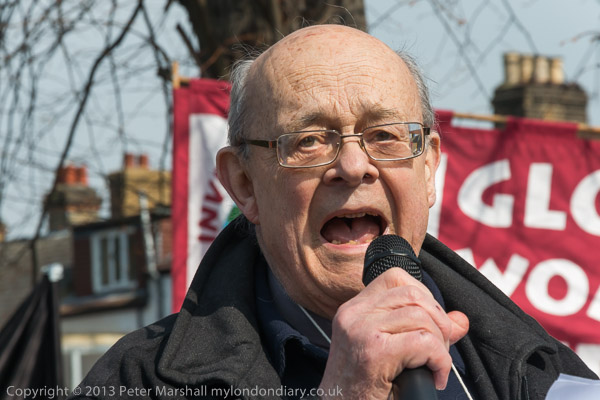
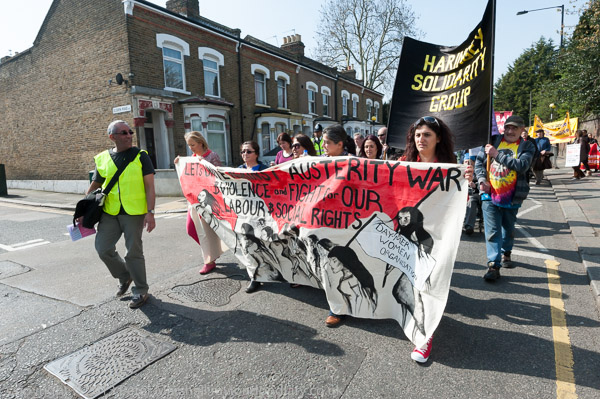
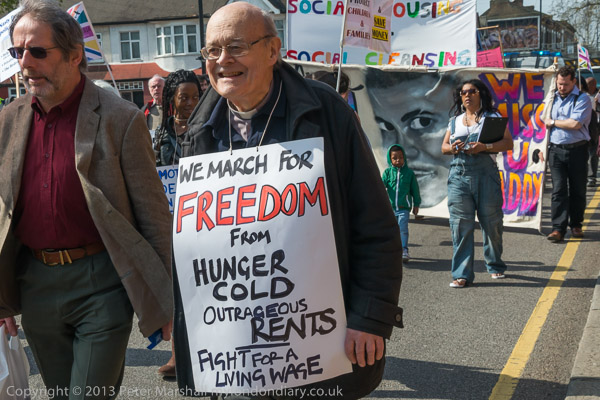
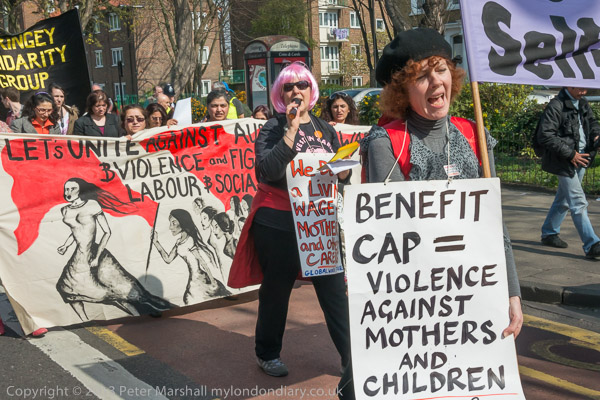
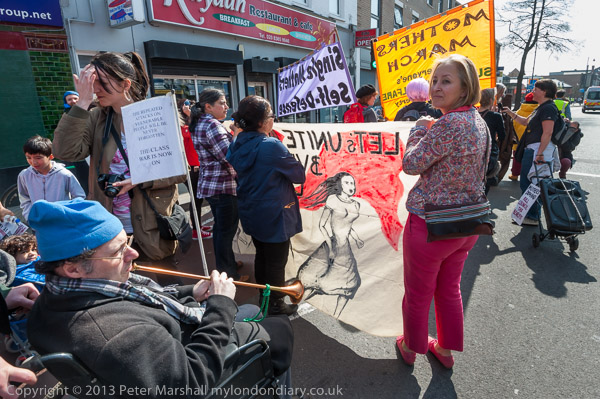
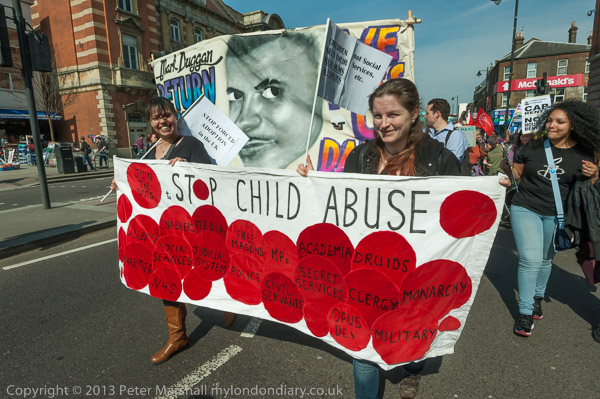
Rev Paul Nicholson & More: Many of us particularly in London have fond memories of the Rev Paul Nicolson (1932-2020), a redoubtable campaigner for the poorer members of our community. He appears somehow to have passed Wikipedia by but you can read more about his life from many online sources. On Saturday 29th March 2014 I photographed the Thousand Mothers March in Tottenham he and Taxpayers Against Poverty organised demanding demanding living incomes, decent truly affordable homes for all and rejecting the bedroom tax, the housing benefit cap, unfair taxes, hunger and cold homes.

Rev Paul Nicholson & More

Huff Post tells us Nicolson worked in the champagne trade from 1965 until he made a dramatic career change in 1967 and was ordained by the Church of England as a Minster in Secular Employment. This meant he had to find a job in the real world and he got a job at the ICI HQ in Millbank as a personnel officer. In 1975 he took one of the first Employment Trununals challenging ICIs redundancy procedures and was later involved in supporting other trade unionists elsewhere. In 1979 he ventured into politics becoming an Independent councillor where he then lived in North Herts.

Rev Paul Nicholson & More

After a long fight against the Poll Tax in 1997 he founded the charity Zacchaeus 2000 Trust (Z2K), based in London, a group who were were deeply concerned about the impact of the Thatcher Government’s ‘poll tax’ – a fixed payment from every adult, regardless of their income or circumstances. Z2K became a registerd charity in 2005 and Nicolson left it in 2012 withdrawing to found Taxpayers Against Poverty (TAP) to avoid the restrictions on political campaigning by charities.

Rev Paul Nicholson & More

Perhaps his most important action was to commission Minimum Income Standards research from the Family Budget Unity in 1999, which formed the basis of the London Living Wage, with Mayor Ken Livingstone setting up the Greater London Authority Living Wage Unit in 2005.

Rev Paul Nicholson & More

What would have been an ever greater achievement would have been the adoption by the authorities of the Memorandum to the Prime Minister on Unaffordable Housing he commissioned by Professor Peter Ambrose in 2005. New Labour read it but did nothing, continuing to concentrate on unaffordable housing. Had Corbyn been allowed to win by the Labour Party in 2017 we would have seen changes in the right direction – but policies like there were why thy fought hard to prevent his election.

Of course I’ve not mentioned the best-known fact about Nicolson. It was while he was living in Turville near High Wycombe that he allowed the BBC to take over his church to film The Vicar of Dibley. Dawn French was playing Grealdine Grainger as the Vicar, but the real vicar was Paul Nicolson, though I think he kept away from the cameras.

He retired and settle in Tottenham, becoming welll known for his campaigning in the area – and for a number of arrests and trials. He had called this march and its demands were neatly summarise on the placard hanging from a string around his neck: ‘We march for Freedom from Hunger, Cold, Outrageous Rents – Fight for a Living Wage’.

You can read a short article on him in the Guardian which contains around 30 of his letters which were published by the newspaper as well as links to many more. He truly was a great campaigner.

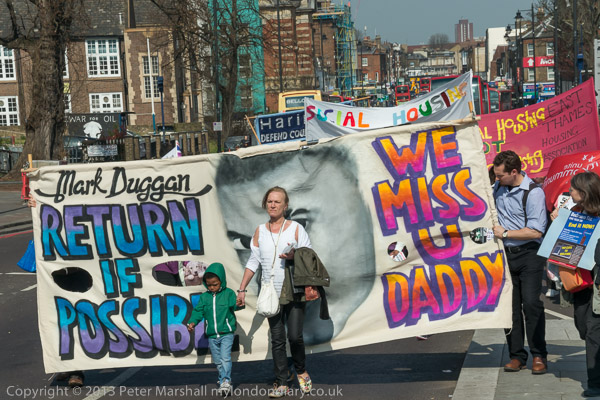
I left the march as it passed Tottenham Police Station with Carole Duggan walking in front of a large banner with the face of Mark Duggan, her nephew, murdered by police in Tottenham in 2011.

More about the march and many more pictures at Mothers march for justice.


I was on my way to two further protests that day which you can read about on My London Diary:

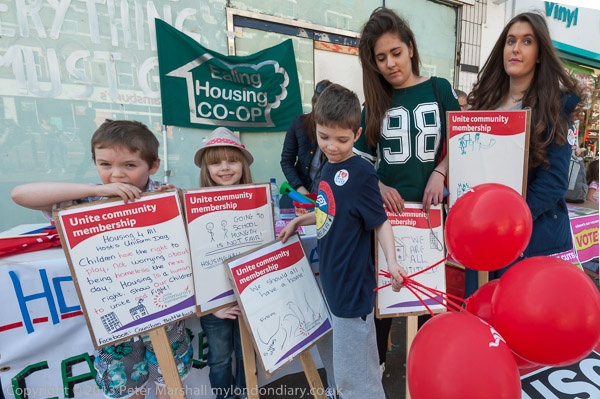
At Kilburn Square was a Kilburn Uniform Day protest where the Counihan Battlebus Housing For All campaign, along with the TUSC Against Cuts and TUSC were calling for rents to be capped and for everyone to have a home.

Kilburn Uniform Day

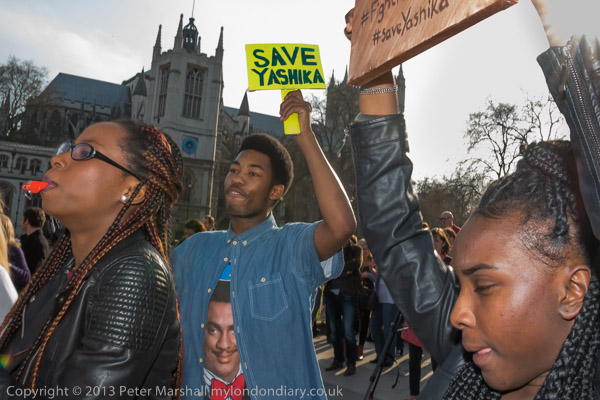
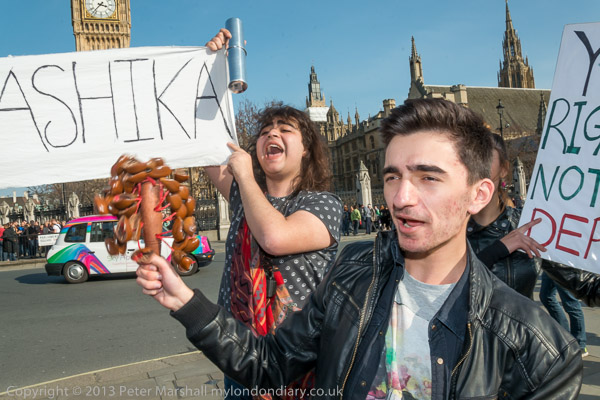
And in Parliament Square, staff and students from Oasis Academy Hadley in Ponders End were protesting against the Home Office plans to deport fellow A-Level Student Yashika Bageerathi to Mauritius.
She came here with her mother and two younger siblings in 2012 after physical abuse from a relative and claimed asylum in 2012. The application has been rejected and the whole family are under threat of deportation.

Yashika is now 19 and the Home Office decided they could deport her on her own and she had been in Yarl’s Wood immigration removal centre since March 19th. She and her fellow students want her to be allowed to stay – at least until she has taken her exams this summer. The #FightForYashica petition had attracted over 171,000 signatures.

Attempts by the Home Office to deport Yashika failed before this protest when pressure from campaigners led to British Airways refusing to take here. Ahe had been booked into an Air mAURITIUS flight for the day following this protest, but an avalanche of tweets led to them refusing to take her.

Finally she was deported on her own in April 2014 and fortunately was helped there to take her A-levels, receiving the grades she needed to go on to university and end her brief period in the public eye.

Fellow Students Fight for Yashika.


FlickrFacebookMy London DiaryHull PhotosLea ValleyParis
London’s Industrial HeritageLondon Photos

All photographs on this page are copyright © Peter Marshall.
Contact me to buy prints or licence to reproduce.

Colindale and West Hendon Estate 2017

Colindale and West Hendon Estate: I’d actually gone to Colindale on Tuesday 28th March 2017 to attend the public inquiry into the second phase of the demolition of the West Hendon estate which was beginning at the RAF Museum there.

Colindale and West Hendon Estate 2017
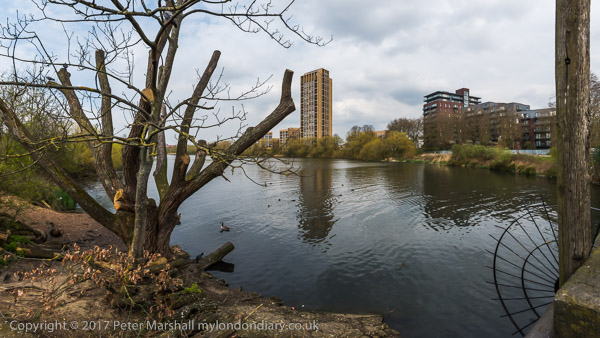
New buildings on York Memorial Park and the West Hendon Estate across the Welsh Harp

But the proceedings there were tedious and while such things are important unless you are personally involved it soon becomes hard to remain involved. Nothing I heard in the short time I stayed would not have better been submitted as documents and probably had been. And it was a nice day outside.

Colindale and West Hendon Estate 2017
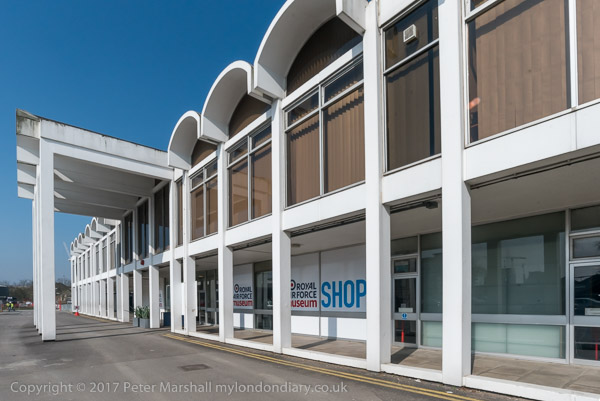
RAF Museum

I left and paid a short visit to the rest of the RAF Museum before going to photograph Grahame Park across the road from the museum, a large council estate built by the GLC and Barnet Council on the rest of the old Hendon Aerodrome site in the 60s and 70s, the first residents moving there in 1971.

Colindale and West Hendon Estate 2017
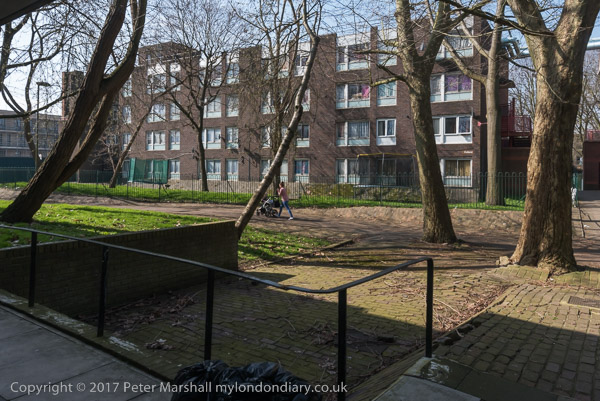
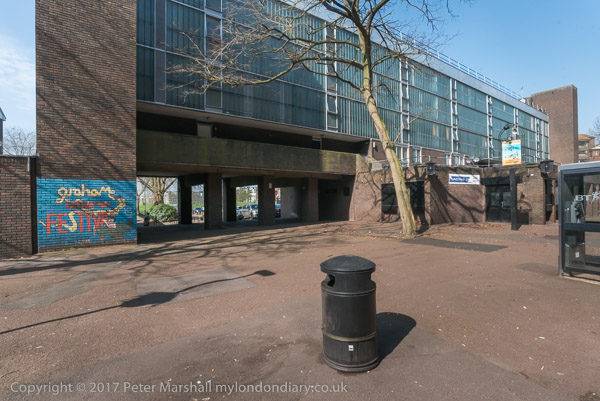
Grahame Park Estate

By the time I first visited to photograph the estate in 1994, some changes had been made, removing connecting walkways to split the flats into smaller units and replacing some flat roofs with pitched roofs. A more dramatic phased regeneration began in 2003 and considerable building work was still taking place in 2017.

Colindale and West Hendon Estate 2017

The regeneration will greatly increase the number of homes on the estate, and the new properties are more energy efficient, but the original number of council rented properties of almost 1800 will be reduced to around 300. Around 900 of the new properties were to be at so-called “affordable rents” and the remaining 1800 for sale or rent at market prices.

A few hundred existing residents with secure tenancies will be rehoused, but most of the estate residents do not qualify for rehousing, including some who had lived here for over 15 years. They will need to find private rented properties elsewhere in a typical example of social cleansing by Barnet Council, in league with developer and social landlord Genesis Housing Association.

As is the case in other regeneration projects on council estates around London this results in a huge transfer of land from public to private ownership and fails to meet the housing needs of poorer residents, many of whom are forced to move further from jobs, friends and families.

Colindale Ave

I walked from the estate to Colindale Station through another large area of building work, mainly of expensive private housing in large blocks of flats with an area action plan for of expensive private housing in large blocks of flats. Of course we need new housing but should be concentrating on providing it a reasonable cost for those most in need – which means social housing. Not building homes that will take up to 46% of tenants incomes in London, well above the “30 per cent of income” affordability threshold set by the ONS.

WestHendon Estate

I could have walked from Grahame Park to the West Hendon Estate about a mile and a half away but couldn’t see a decent route on the map, so took the tube to Hendon Central and caught a bus from there. The West Hendon Estate owes its genesis to a large bomb on 13th February 1941 which destroyed or rendered uninhabitable 366 houses, damaging a further 400 in the area, killing 75 people and severely injuring another 145. Over 1500 people were made homeless.

York Park there became York Memorial Park, a green open common designated as “a War Memorial in perpetuity” as a mark of respect to all who lost their lives. In the 1960s the remaining houses in the area were replaced by the West Hendon estate, comprising of 680 one-bedroom flats, two-bedroom maisonettes and three-bedroom council houses, along with open space, a community centre and a play area.

Barnet Council handed the memorial park – at least £12 million of public land – over to developers Barratt and they built a 29 storey tower block on the park – “perpetuity” becoming shorter than living memory. The West Hendon estate is being demolished in phases and being replaced by Hendon Waterside, largely expensive flats with views across the Welsh Harp. There will be an increase in the number of homes to 2,171 but many will go to overseas buyers and will be kept empty as investments whose value is expected to rise steeply. And somewhere at the back of the estate will probably be a little social housing – but only a small fraction of the original 680.

Few of the residents will qualify for rehousing but with higher rents and less security of tenure. Most will lose their homes and be ‘socially cleansed’, forced to move out of the area and away from friends, jobs, schools etc. Housing isn’t just a crisis but a shamefull twentyfirst century scandal.

More pictures on My London Diary:
West Hendon Estate
Colindale


FlickrFacebookMy London DiaryHull PhotosLea ValleyParis
London’s Industrial HeritageLondon Photos

All photographs on this page are copyright © Peter Marshall.
Contact me to buy prints or licence to reproduce.

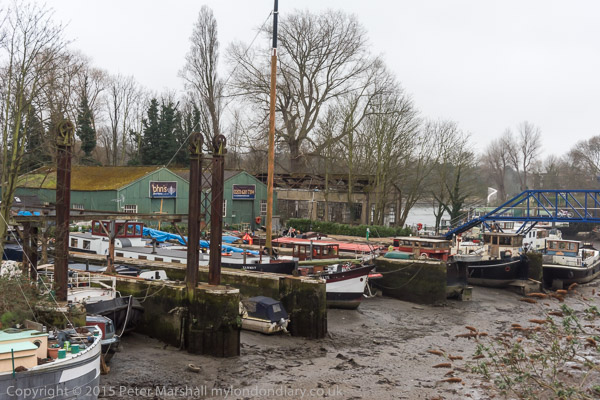
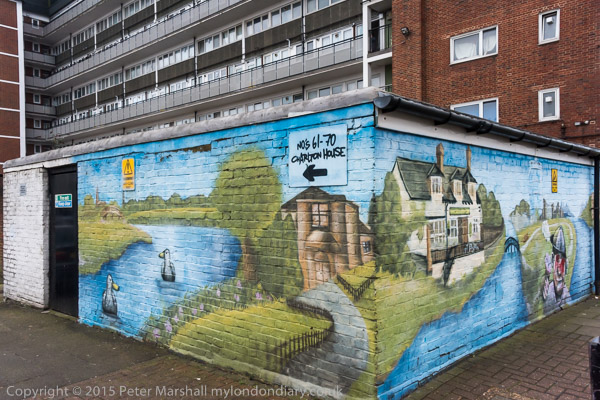
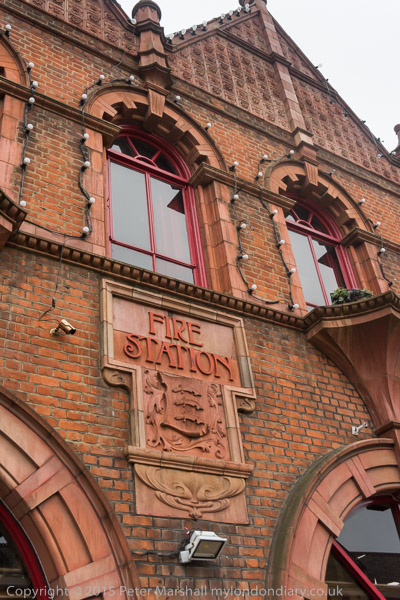
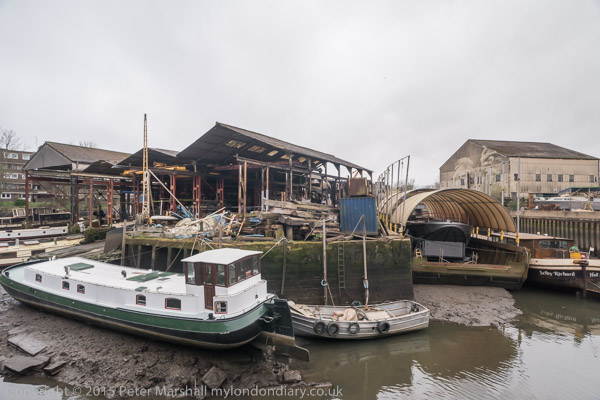
Riverside Brentford – 2016

Riverside Brentford – Saturday 26th March 2016

Riverside Brentford - 2016

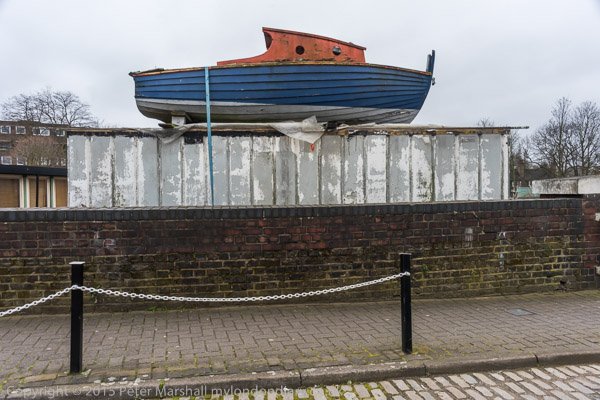
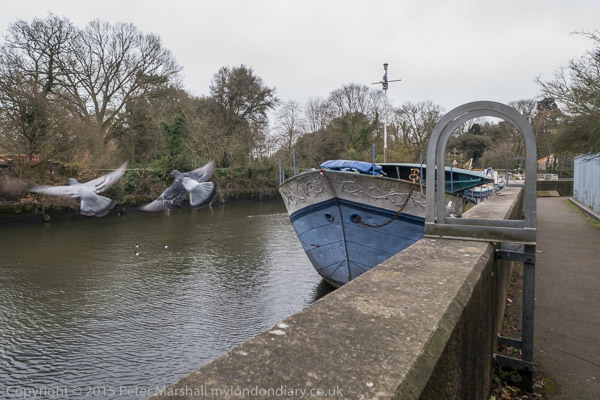
As a child I grew up in Middlesex, by then a rather truncated county on the north and west of London, though once it had included the cities of London and Westminster and many of London’s Metropolitan boroughs north of the Thames and west of the River Lea. Brentford, a couple of miles from where I was born, was the nearest thing the county had to a county town, though it had few if any of the normal attributes of one, with no town-hall or other public building.

Riverside Brentford - 2016

Often on Bank Holidays our father would take us on a 237 bus from Hounslow to Kew Bridge Station, the route going through Brentford High Street where it was often held up as we gazed through the top deck windows at the sites. Under the railway bridge leading to Brentford Docks where we might see a steam hauled goods train, over the canal bridge where the locks and dock area were normally busy with barges,past the Beehive on the corner of Half Acre with its tower topped by a giant beehive and on through the noisy, smelly gas works to Kew Bridge.

Riverside Brentford - 2016

We walked across Kew Bridge and then turned down the side of Kew Green to the gate of Kew Gardens, where a penny – an old penny, 240 to the pound led us into the extensive gardens where we could wander all day. This was before the days of garden centres and my father would always have a small pair of scissors in his pocket to take the odd cutting or pick up a seed or two on our walks.

Riverside Brentford - 2016

Later, in the early and mid 1950’s I would ride my bicycle around much of Middlesex and Surrey – and that included Brentford, but I think it was only much later when I became a photographer that I really explored the area and found out what an important communication link it had been. Brentford is where the inland waterways system with the busy Grand Union Canal joined the River Thames, just a few miles upriver from the great Port of London.

In 1978 three of my photographs from Brentford were published in Creative Camera Collection: No. 5, a prestigious collection of contemporary photography published by Coo Press, the publishers of the monthly magazine Creative Camera and edited by Colin Osman and Peter Turner. It wasn’t the first time my work had been published but was great to be on the pages with some very well known photographers, including one who much later became a friend, John Benton-Harris.

Brentford has changed greatly since then, with much of the riverside now lined with expensive flats rather than commerce and industry. The gasworks site became a riverside park and an arts centre, where I took part in and helped organise a number of exhibitions. But there is still enough of the old Brentford untouched, though less each time I go there.

I first returned in the 1990s, when I was teaching a few miles down the road, bringing students to see shows there and to wander around the area taking pictures. Later I came back for walks on my own or with friends, such as this one on Saturday 26th March 2016 with my elder son. Brentford hadn’t been my first choice by railway engineering works that week end made travelling out further to the east of London impossible.

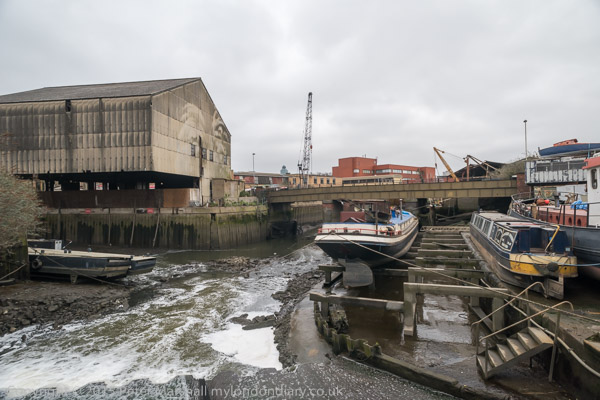
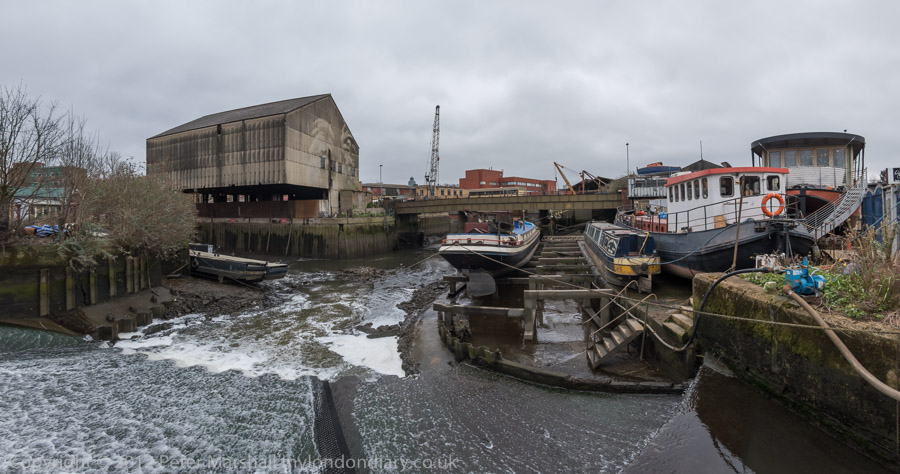
As well as making ‘normal’ pictures with lenses giving a horizontal angle of view of between 10 and 84 degrees (focal lengths 20 to 200mm) there were some pictures where I felt an even wider view was needed and I made some panoramss with a roughly 145 degree angle of view. The pictures above and below illustrate the difference.

We didn’t end our walk in Brentford, but continued on past Syon House to Isleworth where we ate our sandwiches in a relatively sheltered square before following the Duke of Northumberland’s River through Mogden Sewage Works to Kneller Park and then Whitton Station for the train home. You can see a much wider range of pictures online on My London Diary at these three links:
Syon, Isleworth & Mogden
Riverside Brentford Panoramas
Riverside Brentford


FlickrFacebookMy London DiaryHull PhotosLea ValleyParis
London’s Industrial HeritageLondon Photos

All photographs on this page are copyright © Peter Marshall.
Contact me to buy prints or licence to reproduce.

Hands Off Our Schools 2016

Hands Off Our Schools – For around 30 years I was a full-time teacher and a part-time photographer, then spent a few years as a photographer and writer and part-time teacher before giving up the teaching completely. Most of the time I liked teaching – and even went on doing some after they stopped paying me – but at times it was extremely taxing.

Hands Off Our Schools

All of my teaching, apart from a few photography workshops, was within our public education system, beginning in one of the largest comprehensive schools in the country, then moving on to a sixth form and community college where I taught students from 16 to 90 years old.

Hands Off Our Schools

Over the thirty-odd years I taught a wide range of subjects and levels, though my main interest was in photography, and our A-Level results – thanks to some great colleagues – were probably the best in the country. Starting with science and chemistry I soon branched out into photography and later into various computer-related courses, including setting up a Cisco Network Academy as well as several administrative roles. O Levels, A Levels, AS Levels, CSE, City and Guilds, RSA, CEE, BTEC and probably a few more I’ve forgotten, as well as non-exam course including the dreaded PSE which had me teaching about sex, drugs and more, though not rock’n’roll.

Hands Off Our Schools

Schools and teaching changed dramatically over the years of my career. When I began teaching was a profession, but by the time I left we were largely just cogs in the machine administered by punitive inspections and governed from the Ministry of Education. In my early career I worked long hours during term-time, preparing lessons and marking work as well as the actual class contact time but all of it – often more than 60 hours a week – was directed at the students I was teaching. By the time I left most teachers were slaving long hours to meet the dictates of Ofsted and the National Curriculum as well as teaching students.

Hands Off Our Schools

Of course we had inspection in the old day, but it was conducted with a very different intention and by Her Majesty’s Inspectors who all knew the education system and were colleagues whose role was largely to make helpful suggestions for improvement. Ofsted brought in inspectors with tick boxes and often no knowledge of education other than as students in earlier life whose job was to catch teachers out, often for trivial things. Rather than to help and improve, their role was to penalise.
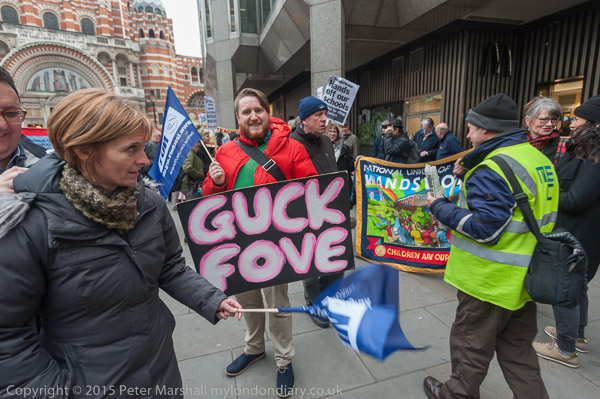
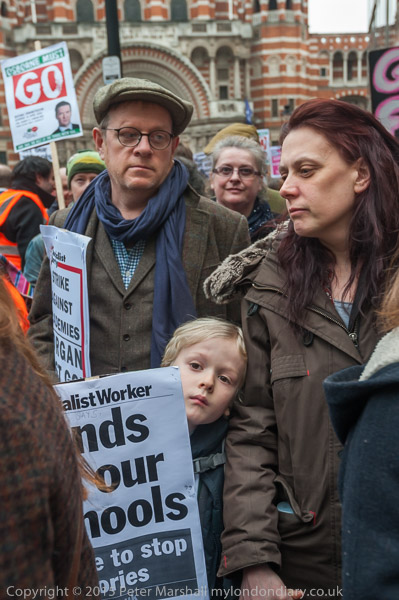
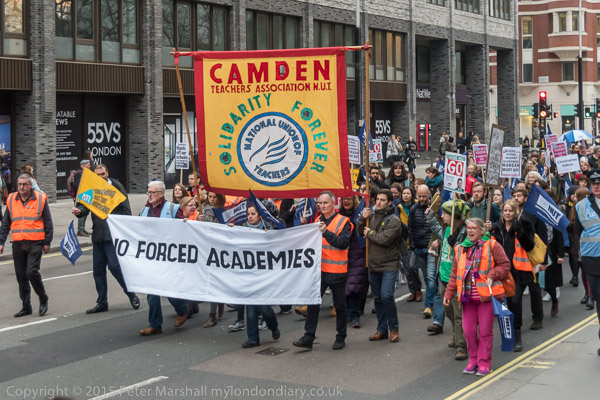
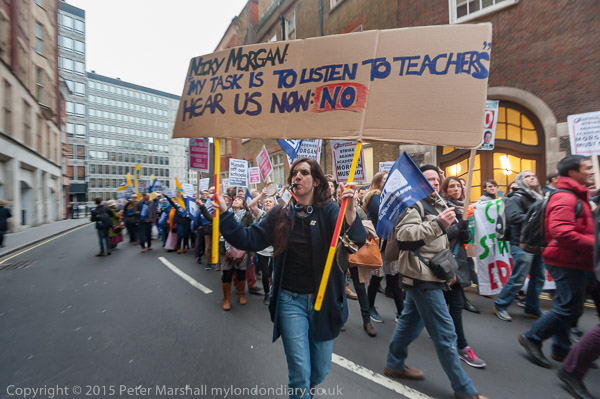
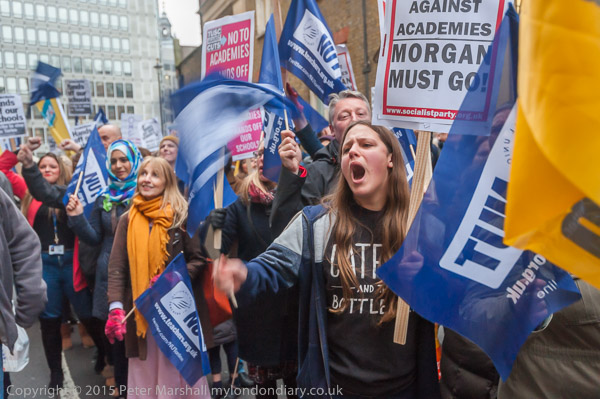
I had also been the NUT Rep where I worked for many years and am still a Retired Member of the union (now the NEU) so I had a particular interest in a protest by the NUT and ATL on Wednesday 23rd March when they met in the yard in front of Westminster Cathedral to march past the Education Ministry and make their views clear to Education Minister Nicky Morgan.
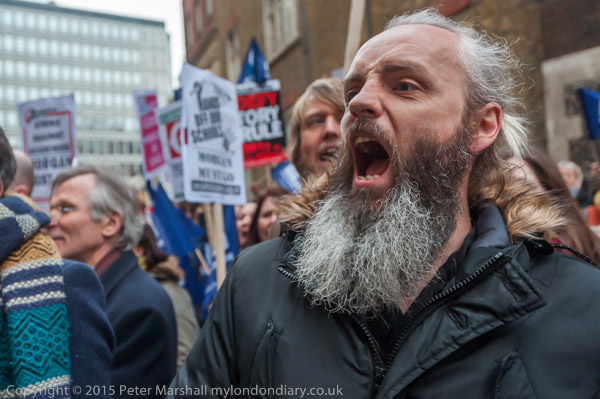
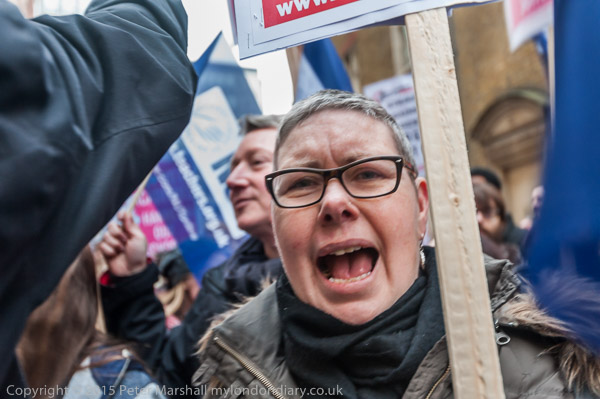
The teachers were marching against government plans to convert all schools to academies. There is no evidence that academies improve the educational results of children and the plans remove all democratic controls from education as well as side-lining parents.
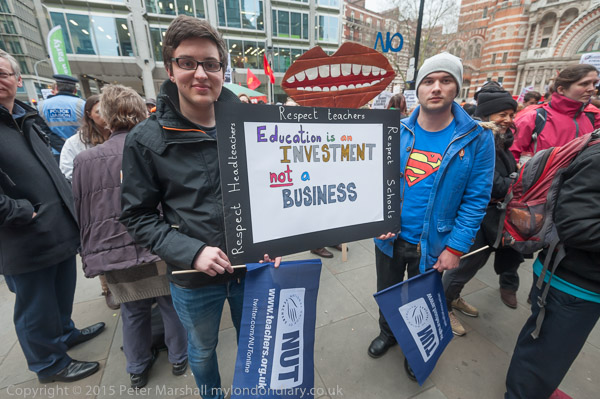
Many of the protesters stopped outside the Department for Education to shout and to call for Nicky Morgan to resign before marching off for a rally in the nearby Emmanuel Hall on Marsham St. I didn’t join them there as I had other things to do that day.

More pictures at Hands Off Our Schools.


FlickrFacebookMy London DiaryHull PhotosLea ValleyParis
London’s Industrial HeritageLondon Photos

All photographs on this page are copyright © Peter Marshall.
Contact me to buy prints or licence to reproduce.