Human Rights, Intifada, Copyright & Free Speech – 2012

Human Rights, Intifada, Copyright & Free Speech: Four protests on Saturday 11th February 2012 all have a connection with with human rights and freedom of expression.
Human Rights, Intifada, Copyright & Free Speech - 2012
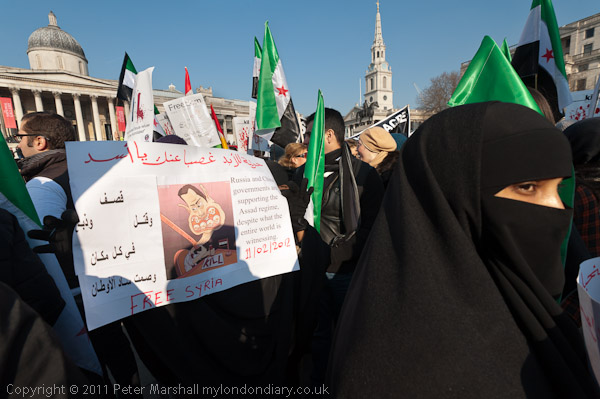
Muslim women carrying posters for Free Syria

Amnesty International’s rally was in solidarity with protesters in Syria, Egypt and elsewhere, and the Victory to the Intifada protest outside Marks and Spencers also expressed solidarity with protesters in Syria, Iran and Somalia as well as support for Palestinians.
Human Rights, Intifada, Copyright & Free Speech - 2012
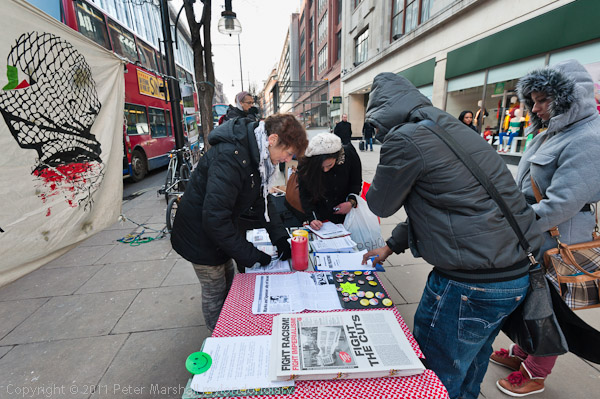
A shopper stops to sign the petition on the stall

Recent arrests at protests in the UK are attempting to criminalise any expression of support for the Palestinian Intifada – a word which refers to any resistance by Palestinians to the Israeli occupation, whether violent or non-violent. It remains to be seen whether our courts will throw out their attack on human rights and freedom of expression.
Human Rights, Intifada, Copyright & Free Speech - 2012
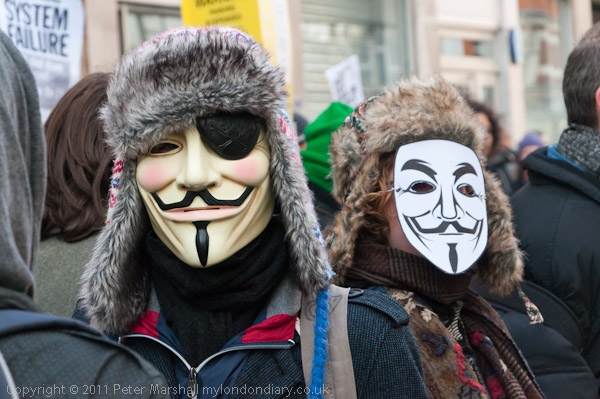
A protester wears an ‘Anonymous’ mask and a pirate patch

ACTA, the Anti-Counterfeiting Trade Agreement, was widely seen as an attempt by major film and music companies, drug manufacturers and other multinationals to infringe fundamental rights including freedom of expression and privacy for their own commercial interests and its ratification was eventually definitively rejected by the EU in July 2012.
Human Rights, Intifada, Copyright & Free Speech - 2012
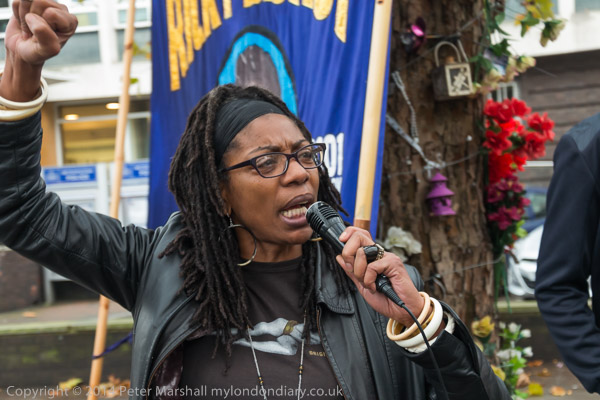
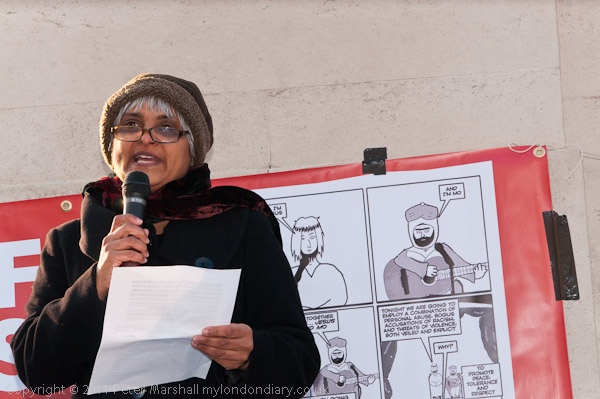
Pragna Patel of Southall Black sisters speaking in front of a ‘Jesus and Mo’ cartoon

Finally I covered a rally by One Law for All defending freedom of expression, called following increasing pressure from Islamists asking for censorship of cartoons, meetings and expressions they regard as blasphemies.


Amnesty Protest For Human Rights

Trafalgar Square
Human Rights, Intifada, Copyright & Free Speech - 2012
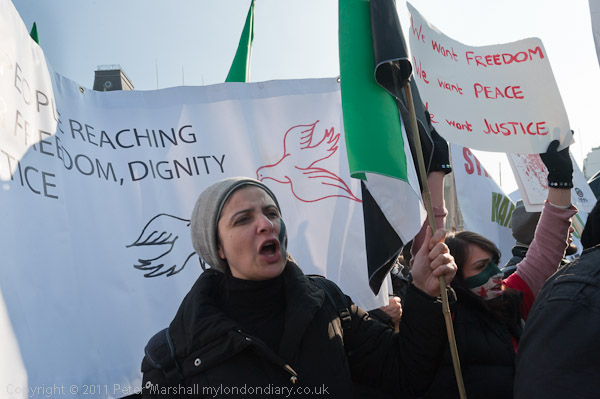
Syrians march into Trafalgar Square

The large rally by Amnesty International was one a number of similar events in major cities across Europe, as well as in Iceland, Morocco, Nepal, Peru and Paraguay and sent thhe message to the people of the Middle East and North Africa that “you are not alone in your struggle. We are with you.”
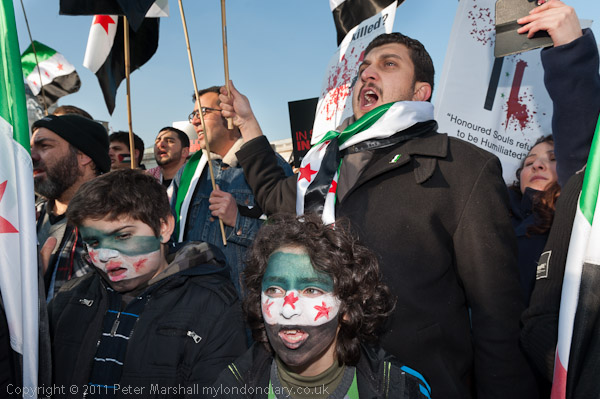
Large numbers of Syrian protesters formed a circle around a clock tower representing that in Homs, where Clock Square has been at the centre of the protests, and danced around it, waving Syrian freedom flags, and at the rally which followed there were live link ups to protesters in two Syrian towns
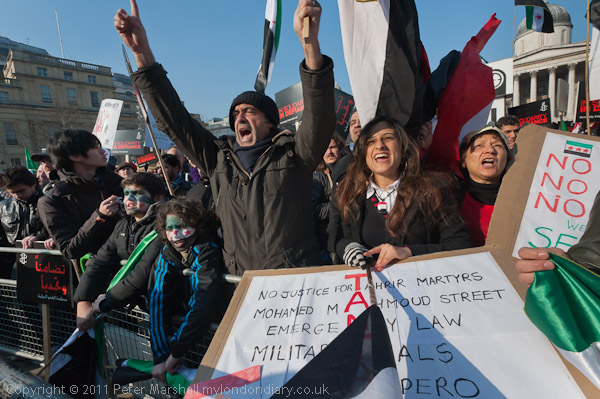
There were many Egyptians also present and they and protesters from other countries spoke to an enthusiastic welcome from the crowd in the square.

Syrians stamp on the face of War Criminal President Asad

Amnesty Protest For Human Rights


Victory to the Intifada Picket

Marks & Spencers, Oxford St
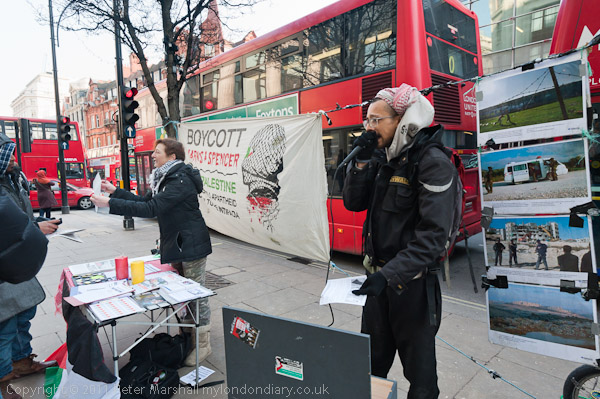
Victory to the Intifada had been holding regular pickets outside Oxford St flagship store since 2000 and this week were also stressing solidarity with Syrian, Iran and Somalia.

Their protests showing solidarity with Palestine began at the start of the Al Aqsa Intifada in 2000, and have continued once or twice a week since then. The location on the wide pavement here was chosen as M&S is Britain’s largest corporate backer of Zionist initiatives in Israel.
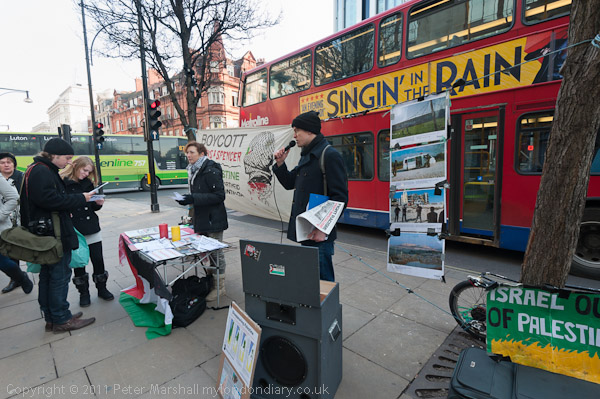
They urged shoppers to oppose British support for Israel and to boycott Israeli goods and support the Palestinian people’s right to self-determination.

Victory to the Intifada Picket


Stop ACTA – London Protest

British Music House, Berners St
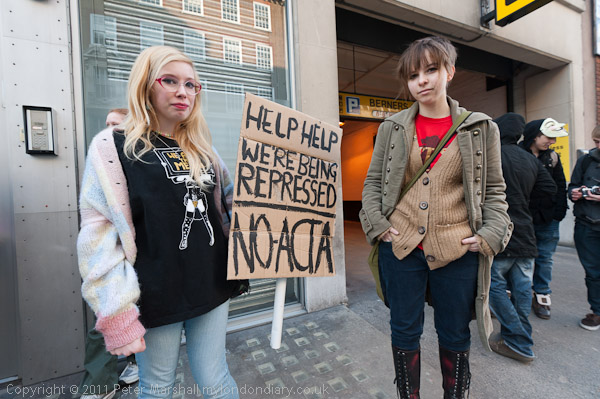
The Anti-Counterfeiting Trade Agreement (ACTA) was a treaty negotiated in secret talks with little or no public debate between major countries including the United States, the European Community, Switzerland, Japan, Australia, the Republic of Korea, New Zealand, Mexico, Jordan, Morocco, Singapore, the United Arab Emirates, and Canada to protect the commercial interests of major film and music companies, drug manufacturers and other multinationals.
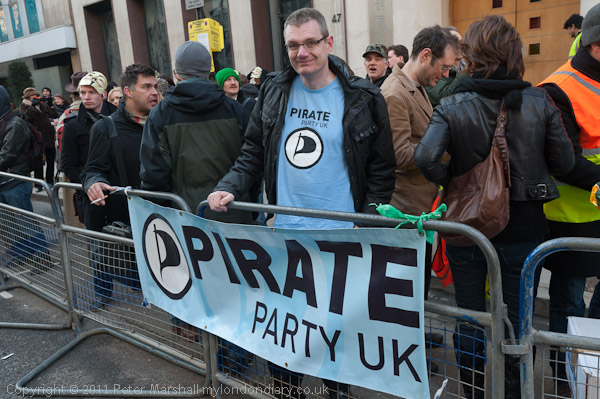
During the talks there was little if any representation from the artists and others who actually create the intellectual property from which these companies profit, or from the general public who pay for them.
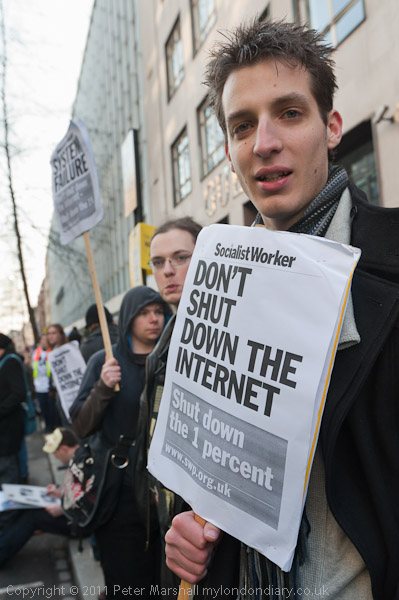
The protesters say that ACTSA would threaten free speech on the Internet and allow governments too much control over what could be put on the web. It would also make it possible for companies to prevent the making of parodies, which would stop proper creative and critical engagement with cultural works.
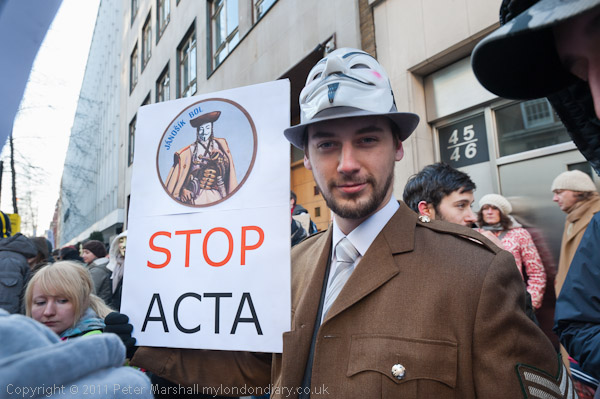
The protest was opposite British Music House where the Music Publishers Association, the Performing Rights Society for Music and other groups were based, and was called by an Anonymous group calling themselves ‘Stop Acta For Freedom’ and the ‘Open Rights Group’ and was joined by the ‘Pirate Party UK’. Many of those taking part wore ‘Anonymous’ masks, some with a black pirate eye patch.
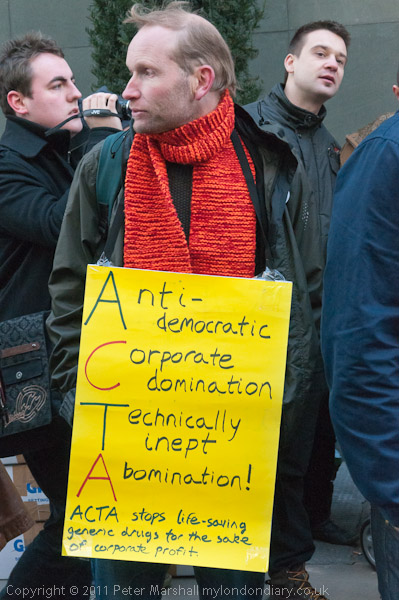
Anti-democratic Corporate domination Technically inept Abomination – ACTA stops life-saving generic drugs for the sake of corporate profit’

Apart from its effect on web freedom, ACTA would be used to prevent the production of cheap drugs which have a vital role in treating disease in the majority world.
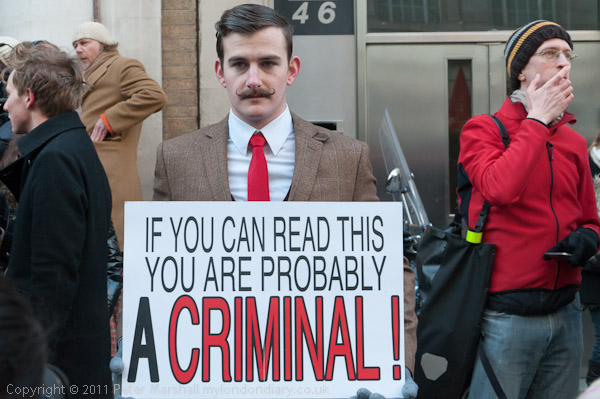
Although quite a few countries initially signed up to ACTA, few ratified it and public pressure finally resulted in it being abandoned. The full European Parliament rejected it in July 2012 by 478 votes to 39.

Stop ACTA – London Protest


Defend Freedom of Expression

Old Palace Yard

Queen Mary College poster ‘Tolerance of Intolerance is Cowardice’

I arrived late to join the roughly 500 people listening intently to speeches at the One Law for All rally opposite the Houses of Parliament.

The event like that by Amnesty International was part of a wider international Day of Action For Free Expression, with other events in Melbourne, Brazil, Paris, Gambia, Germany, Warsaw (and elsewhere in Poland), Portugal, South Africa and the US. In the UK the Day of Action was endorsed by nearly 100 groups and individuals including Jessica Ahlquist, Richard Dawkins, Equal Rights Now, Taslima Nasrin, National Federation of Atheist, Humanist and Secular Student Societies, National Secular Society, Salman Rushdie, Southall Black Sisters, and Peter Tatchell.
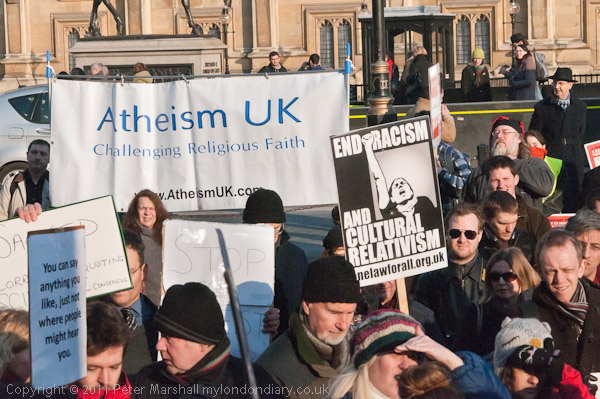
I felt that a few of the speakers were taking the opportunity to criticise religions in general and Christianity in particular in something of an anti-religious crusade in a way I felt was unsuitable; as I commented “atheist bigots are surely no more acceptable than religious ones“.
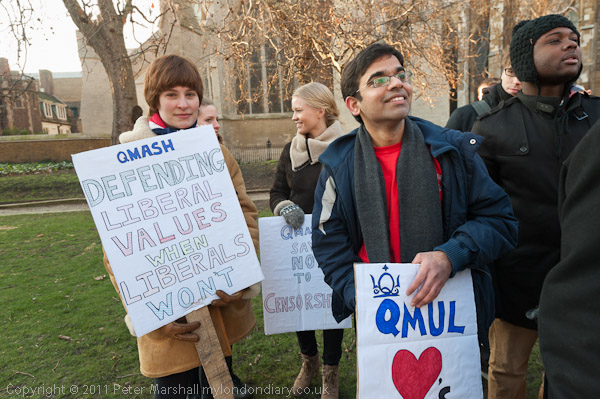
The protest was in response to actions taken by various authorities in this country, including at Queen Mary University and University College London acceding to demands by Islamists for the censorhip of individuals and organisations. We still see this attack on freedom of expression in institutions over this as well as other issues such as trans rights and accusations of anti-semitism by those who oppose Zionism and the activities of the Israeli government.

Defend Freedom of Expression


FlickrFacebookMy London DiaryHull PhotosLea ValleyParis
London’s Industrial HeritageLondon Photos

All photographs on this page are copyright © Peter Marshall.
Contact me to buy prints or licence to reproduce.
Sudan and Brunei Gay Sex – 2019

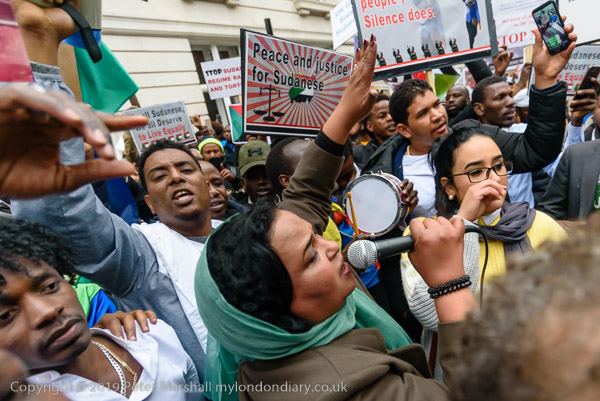
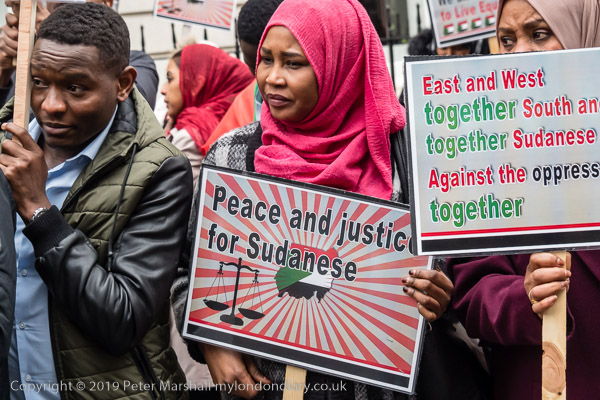
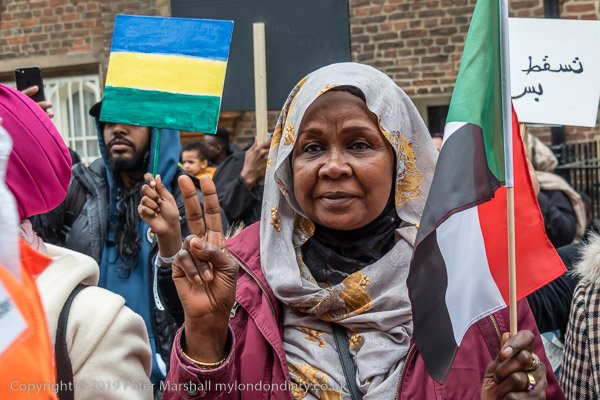
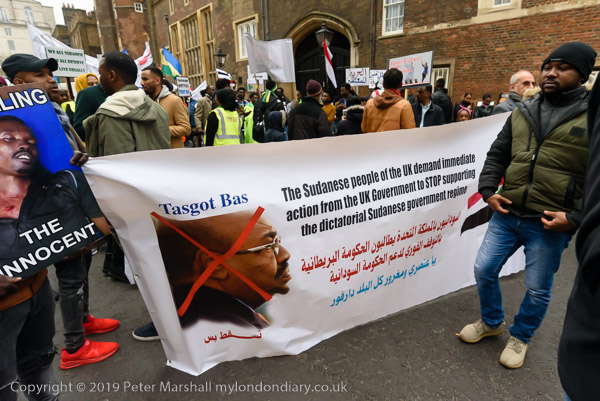
Sudan and Brunei Gay Sex: I began work on Saturday 6th April 2019 at the Sudanese Embassy and then left for the Dorchester Hotel in Mayfair where protesters had come after the Sultan of Brunei had announced death by stoning as a punishment for gay sex, adultery and blasphemy.


Sudanese for Freedom, Peace and Justice – Sudan Embassy

Sudan and Brunei Gay Sex

War is raging again now in Sudan between between the Sudanese Armed Forces (SAF) and the Rapid Support Forces (RSF).

Sudan and Brunei Gay Sex

Back in 2019 people were protesting against the extreme violence in Sudan against peaceful protests calling for for an end to the violent and corrupt Sudanese regime and for president Omar al-Bashir to ‘Just Fall’ and stand trial by the ICC for genocide in Darfur, the Nuba Mountains and South Blue Nile.

Sudan and Brunei Gay Sex

People in Sudan had been protesting for 17 weeks and over 70 protesters had been killed and thousands injured.

Sudan and Brunei Gay Sex

Five days later, Omar al-Bashir was deposed by the Sudanese Armed Forces and in May 2019 was charged al-Bashir with “inciting and participating in” the killing of protesters. Later other charges were brought, including of corruption and money laundering. Other trials followed and he has been accused of genocide. The prison in which he was being held has been overrun by the current fighting between forces led by the generals who deposed him and he is currently held in a military hospital in Khartoum.

I left the protesters still in and around the protest pen outside the embassy opposite St James Palace in Cleveland Row and rushed the three quarters of a mile or so to the Dorchester Hotel in Park Lane, where I knew the protest had already begun.

More pictures at Sudanese for Freedom, Peace and Justice.


Brunei Sultan gay sex stoning protest – Dorchester Hotel

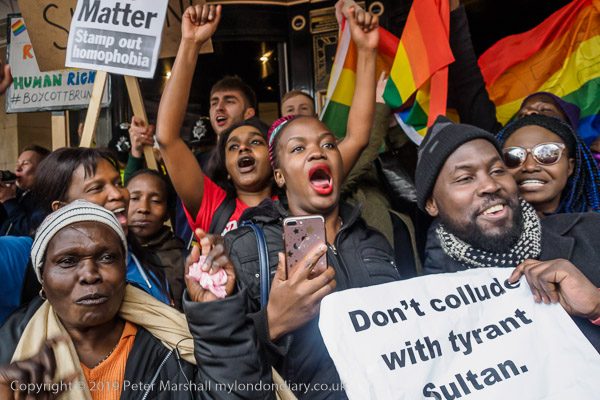
A large crowd had gathered on the streets in front of the Dorchester Hotel behind barriers that kept them out of the area directly in front of the entrance.

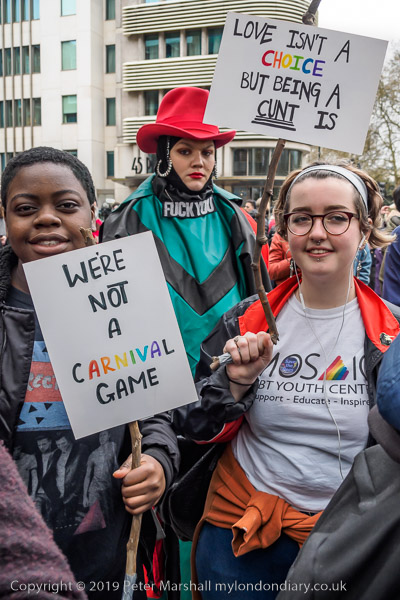
There were a number of speeches including those by Labour Shadow Secretary of State for Foreign and Commonwealth Emily Thornberry MP and activist Peter Tatchell condemining the announcement by the Sultan of Brunei of death by stoning as a punishment for gay sex, adultery and blasphemy.

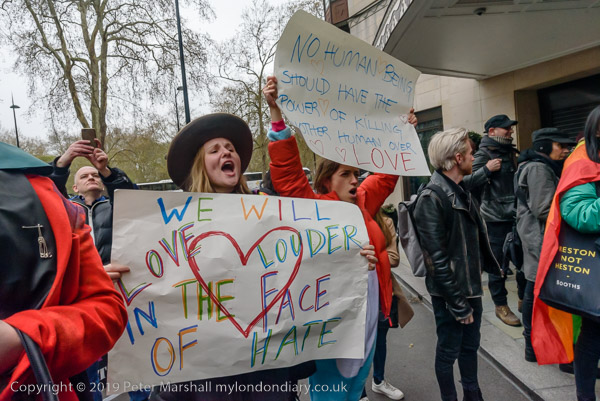
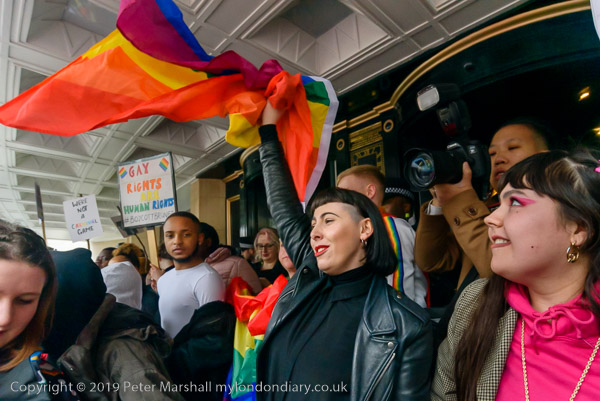
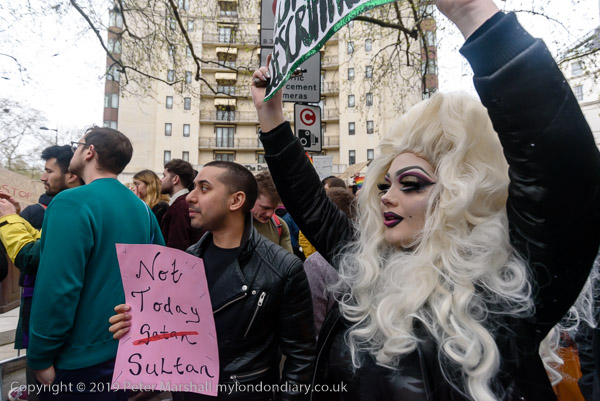
It was a colourful protest with many from the gay community with some interesting posters and placards. Police continually harassed protesters to keep the roads open, although there were really too many people to make this sensible.

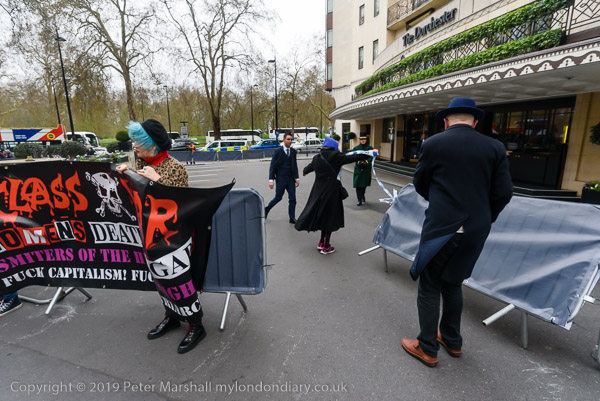
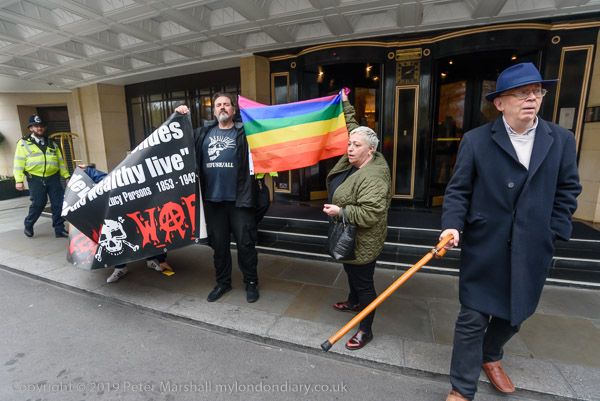
After an hour or so, Class War decided to move from behind the barriers and pushed some aside to protest directly in front of the hotel doors. They were followed by many of the other protesters and a noisy protest continued there.

Many more pictures at Brunei Sultan gay sex stoning protest.


FlickrFacebookMy London DiaryHull PhotosLea ValleyParis
London’s Industrial HeritageLondon Photos

All photographs on this page are copyright © Peter Marshall.
Contact me to buy prints or licence to reproduce.

Global Civility and Stratford Marsh – 2006

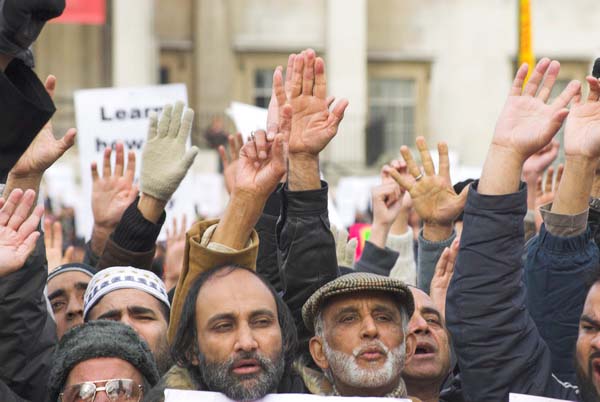
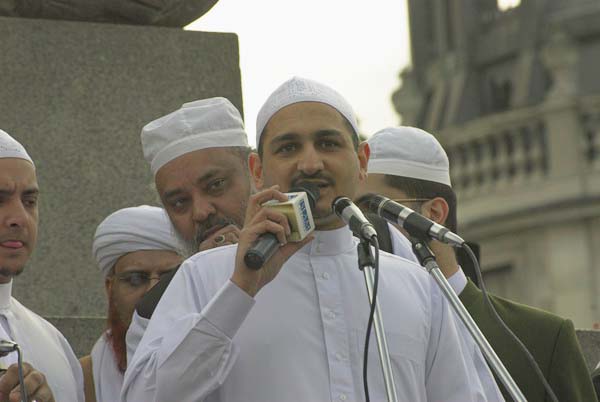
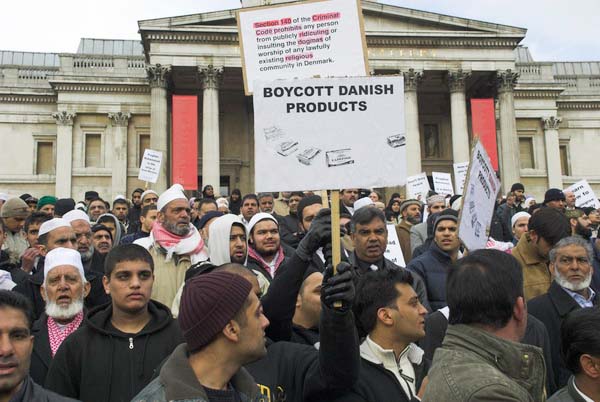
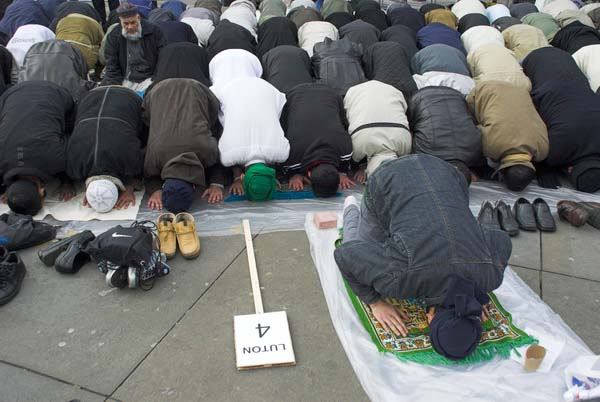
Global Civility and Stratford Marsh – On Saturday February 18th 2006 I photographed one of the continuing protests around the world which followed the publication by a Danish magazine of cartoons featuring images of the Prophet Mohammad in Trafalgar Square, then took the underground and DLR to Pudding Mill Lane station on Stratford Marsh to take more pictures of the area which was to be demolished for the London Olympics.


Proclamation for Global Civility – Trafalgar Square

Global Civility and Stratford Marsh

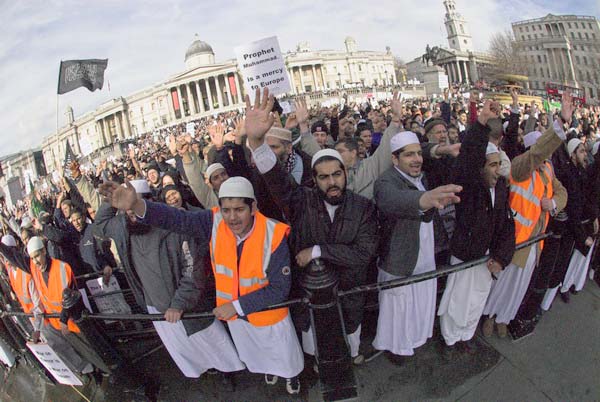
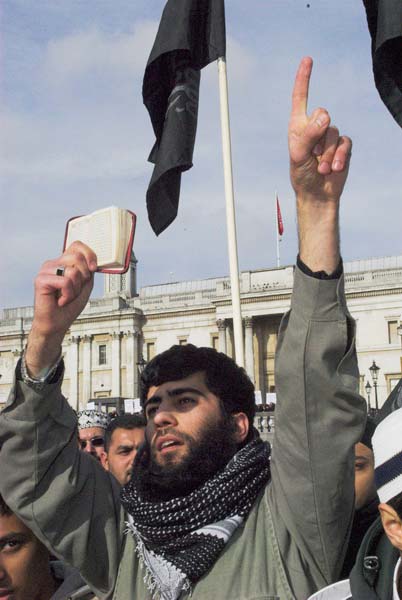
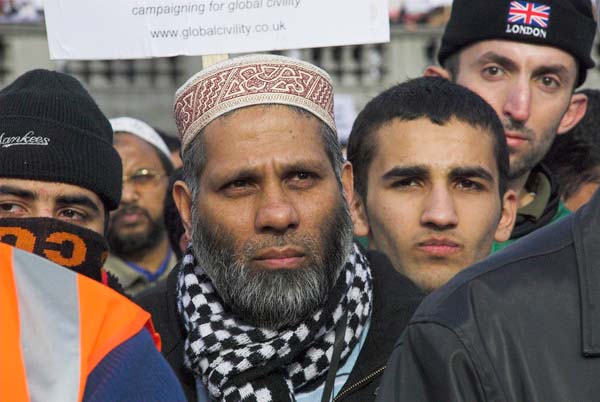
Muslim protesters packed Trafalgar Square for a protest by the Muslim Action Committee over the publication of the cartoons which they regard as blasphemous, but also to publicise a ‘proclamation of global civility‘. The key points of this were the recognition of human dignity as a fundamental right, the need to good manners and etiquette in serious debate, a desire to avoid irresponsible behaviour and to underline the significance of mutual respect for a harmonious co-existence.

Global Civility and Stratford Marsh

The protest in London was kept in good order by stewards who remonstrated with some of the demonstrators who were in some way not behaving as they thought they should, and also moved photographers away from them and some other groups. But other protests around the world were much less restrained and news agencies that same day reported rioting outside the Italian consulate in Benghazi, Libya in which at least 10 people were killed as well as the storming and burning of Christian churches in northern Nigeria with at least 16 deaths.

Global Civility and Stratford Marsh

“As I pointed out in my report in 2006, human dignity was recognised as vital in “the preamble to the Universal Declaration Of Human Rights, adopted and proclaimed by the United Nations General Assembly Resolution 217 of 10 December 1948. That declaration also contains a number of important safeguards such as ‘the right to freedom of opinion and expression‘ and states ‘in the exercise of his rights and freedoms, everyone shall be subject only to such limitations as are determined by law solely for the purpose of securing due recognition and respect for the rights and freedoms of others and of meeting the just requirements of morality, public order and the general welfare in a democratic society.'”

Global Civility and Stratford Marsh

There are still many countries around the world where the principles of human rights in that declaration are not observed, including in many in the Muslim world.

Manners and etiquette are clearly very different in different societies and different religions certainly have very different views, particularly over blasphemy and apostasy. In the west we now prioritise freedom of speech and look back in horror at the Spanish Inquisition and trails for heresy and blasphemy, although in England and Wales, the ‘blasphemy’ and ‘blasphemous libel’ laws were only abolished in 2008, and in Scotland in 2021, while they are still in force in Northern Ireland.

The last conviction for blasphemy in England and Wales was in 1977 when the editor of Gay News received a suspended prison sentence after publishing the poem ‘The Love That Dares to Speak Its Name’ by James Kirkup, and in Scotland it was more than a century earlier when a bookseller was jailed for 15 months in 1843, though until 1825 it had been punishable by death.

While we may find some of the cartoons that were published offensive, it clearly does not justify the irresponsible behaviour and criminal actions of some Muslim mobs protesting against them.

Away from the stewards as I wandered through the crowd I was generally welcomed by the protesters, with many urging me to take their pictures. I left as the speeches, most of which I could not understand as few spoke in English, were finishing and people were getting ready to march,

Scroll down the February 2006 web page for more.


Stratford Marsh – River Lea, Stratford

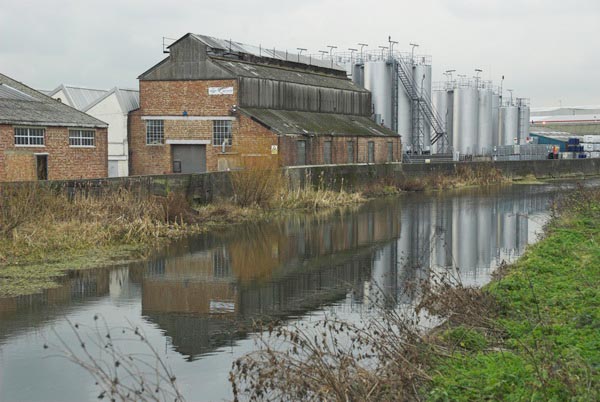
I’d first photographed Stratford Marsh back in the early 1980s as part of a wider project on the River Lea, once a large and important industrial area in London, but like most of British industry falling into decline, accelerated by the policies of the Thatcher government determined to transform Britain away from manufacturing and into services.

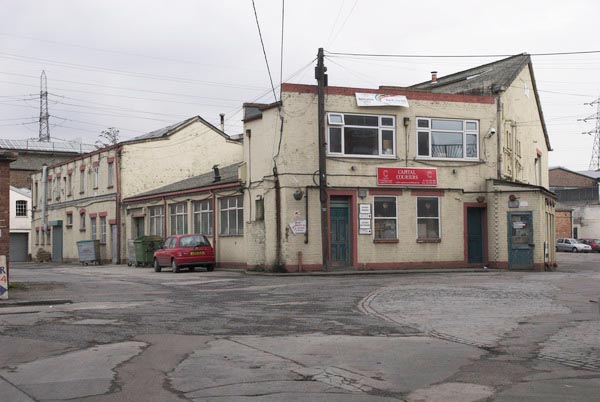
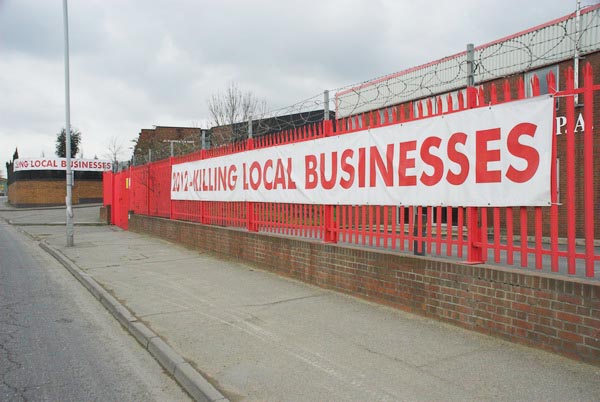
Stratford Marsh was then full of largely small businesses employing local people and many still remained in 2006, though already blighted both by government policies and the tax breaks given to the nearby Docklands area. Now Olympic blight had set in with the whole area to be remodelled, and there were also areas which would be demolished for Crossrail.

As I wrote back then and I think my pictures show:

It is still an intriguing area, where a few yards can take you from wilderness to industrial wasteland, from dereliction to busy workshops (though most were closed on a Saturday afternoon.) Parts are visibly closing down, with compulsory purchase orders hanging on lamposts, some footpaths closed and factories demolished.

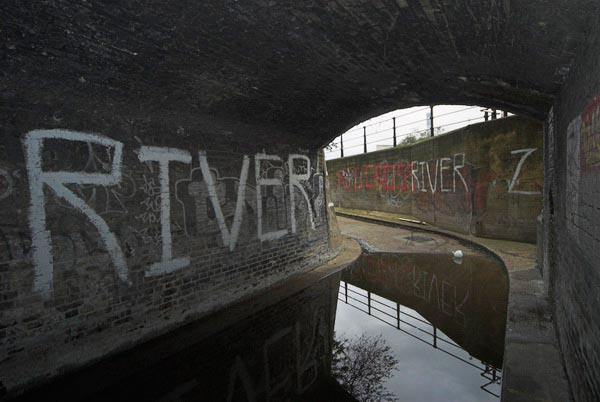
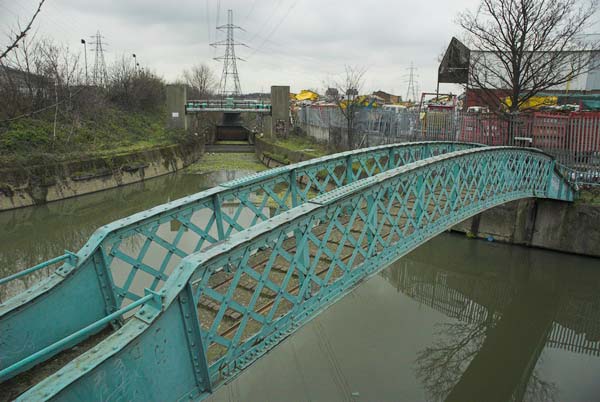
There was one small sign of a kind of regeneration. the unusual lock between the Bow Back Rivers and Waterworks River at Baker Road, for many years derelict, at last seems to have been replaced.

My London Diary – Feb 2006

There are many more pictures from this walk – and others – on these pages on my River Lea site.


FlickrFacebookMy London DiaryHull PhotosLea ValleyParis
London’s Industrial HeritageLondon Photos

All photographs on this page are copyright © Peter Marshall.
Contact me to buy prints or licence to reproduce.

7 Years Ago in London

Seven years ago on Saturday 22 November 2014 I photographed four very different events.

Occupy Democracy at Supreme Court

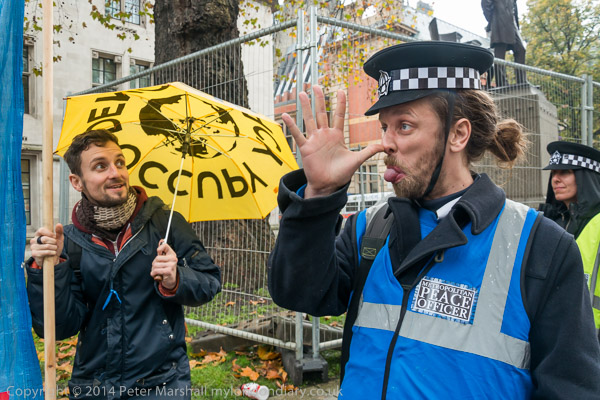
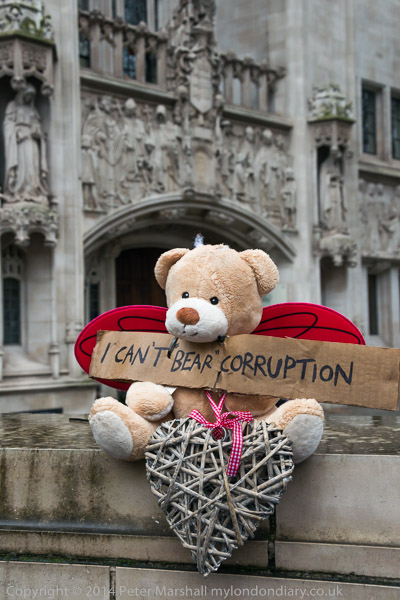
Occupy Democracy activists had camped out overnight in front of the Supreme Court, watched by police who had fenced in almost all of the grassed areas in Parliament Square to prevent them being occupied. The activists were hoping to hold two days of workshops there, but things had not started when I left after taking pictures.

Justice for Shahzad & Shama

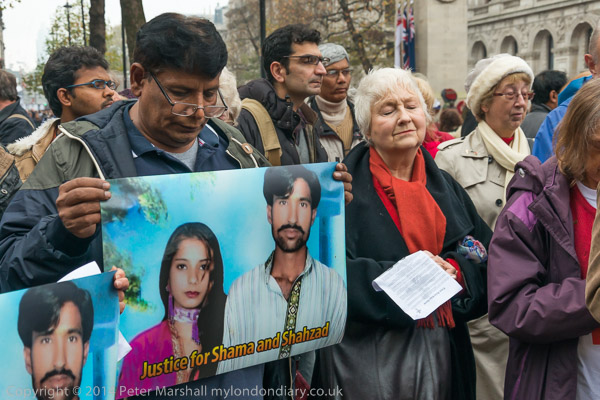
Pakistani Christians and others were protesting opposite Downing St calling for justice for the brutal murder in Pakistan of Shahzad Masih and Shahzad Masih , bonded labourers at a brick kiln, who were falsely accused of burning pages of the Quran, attacked by a Muslim mob, tortured and burnt alive.

There are around 4 million Christians in Pakistan, a little under 2% of the population and they face extreme persecution, with those who have converted from Islam at greatest danger. Christians are treated as second-class citizens, discriminated against in employment, where they largely do the lowest status jobs, and girls are at risk of abduction and rape, sometimes being forced to convert to Islam and marry their attackers. Christians are often accused of blasphemy, as in this case to settle civil disputes, with those accused being attacked or killed by Islamic extremist groups, whose criminal acts are largely ignored by the authorities.

Class War Griff Rhys Jones Mansion Tax

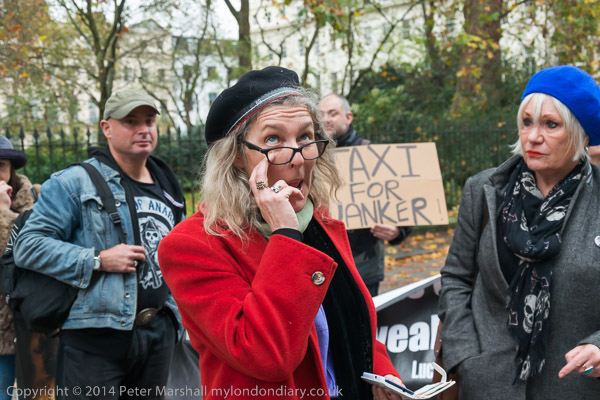
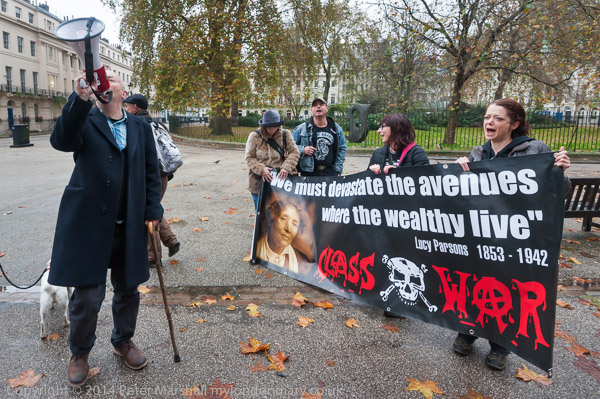
Class War went to the £7m Fitzroy Square home of Griff Rhys Jones who said he would leave the country if Labour levied a mansion tax, telling him to “f**k off now”, offering to pay the fare. Class War’s manifesto for the 2015 general election includes a 50% mansion tax.

No one came to answer the door when they put their leaflet through and after a few minutes making their presence felt outside, the walked around to the south side of the square to protest outside the outside the home of Guy Ritchie, another millionaire objector to a mansion tax. They put a few stickers on other places around the square, including the Magistrates Association and the gates to the private garden in the centre of the square, returned for another short protest outside Griff Rhys Jones’s house before retiring to the pub. Unfortunately I couldn’t join them as I had another event to photograph in Brixton.

Still No Justice for Ricky Bishop

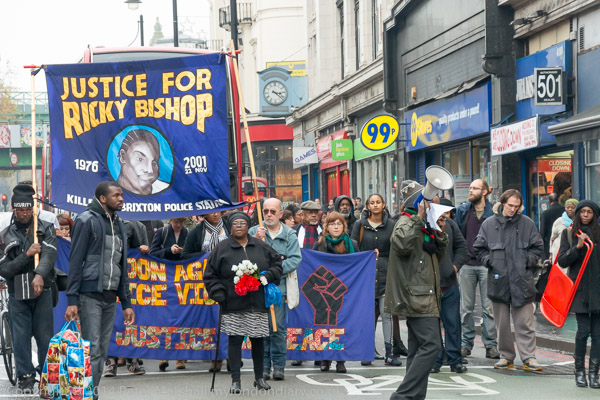
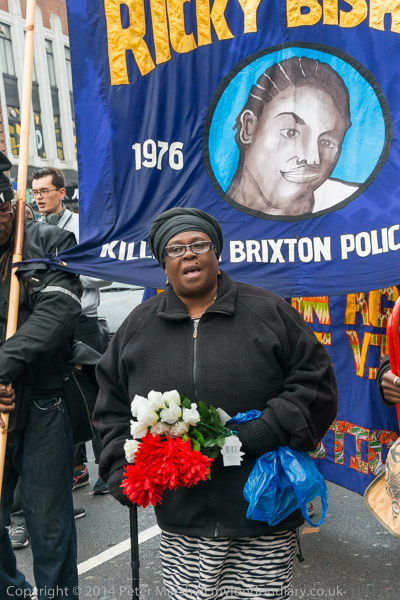
Ricky Bishop, a fit young black man, died from unexplained injuries hours after being taken to Brixton Police Station on 22 Nov 2001. Family and supporters call it a modern day lynching and march annually to remember him and call for justice.

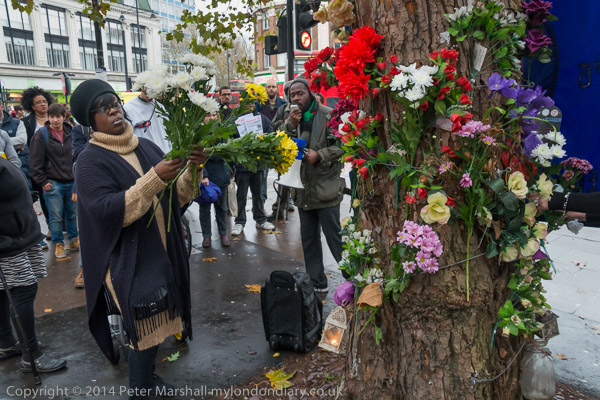
The marchers met up at Windrush Square and then marched slowly through the centre of Brixton to the police station, where a tree outside has been adopted as a remembrance tree for Ricky Bishop and the others killed there by police.

At the tree there were speeches, including a detailed and forceful presentation by Marcia Rigg of the battle she and others faced to get any proper investigation into the death there of her brother Sean Rigg in August 2008.

These two are not the only young black men to have died at the hands of Brixton police, but so far there has been no police officer bought to justice from the crimes they committed. The only real action by the police has been to remove all of the photographs and momentos placed by some of the families from the tree in front of the police station.


More on all of these on My London Diary:

Still No Justice for Ricky Bishop
Class War Griff Rhys Jones Mansion Tax
Justice for Shahzad & Shama
Occupy Democracy at Supreme Court


Against the Sultan

I got to the protest rather late because I stopped on the way to meet the people from Class War who were going to attend the protest. Of course they were in a pub, and the pub they had selected to meet was quite a walk from the Dorchester Hotel outside which the protest was taking place.

It took a while to finish our drinks and to get moving, and eventually I gave up waiting for them, especially when some decided they needed to get a bus., though it was only half a mile to walk. I left with one of the more active members and we hurried, getting there in well under ten minutes.

The ruling by the Sultan of Brunei to make stoning to death the sentence for gay sex, adultery and blasphemy had enraged people around the world, and protests were planned in many cities outside the luxury hotels he owns, including the Dorchester Hotel in London’s Mayfair.

There was a large crowd of protesters, but at some distance from the hotel entrance, on the pavements of the minor street that runs around the front of the building and its large yard which allow taxis to drive to its doors. There really wasn’t enough room for protesters on the pavements, but police were trying to keept the roadway clear, arguing with protesters who were reluctant to move.

Although I was over half an hour late for the start, I was still in time to photograph the two major speakers, Shadow Foreign Secretary Emily Thornberry and human rights activist Peter Tatchell, as well of course as many of the protesters and their posters and banners.

Class War turned up with their two banners almost half and hour after me, and for a while stood with them on the roadway (which the police by this time had given up the impossible task of keeping clear.) Their late arrival was probably timed to ensure they missed the speeches.

After standing for a few minutes holding the banners, Class War sized up the situation decided it was time for some more definite action. They pushed aside the barriers around the hotel yard and with the ‘Women’s Death Brigade’ banner led a rush past police and security to protest on the steps of the hotel.

They shouted for the others to follow them, and a few came immediately. Eventually most of the rest of the crowd joined them for a long and noisy protest on the steps of the hotel. There were a few arguments with police who came to stand in front of the doors, but no arrests before I left three-quarters of an hour later.

Many more pictures at Brunei Sultan gay sex stoning protest


There are no adverts on this site and it receives no sponsorship, and I like to keep it that way. But it does take a considerable amount of my time and thought, and if you enjoy reading it, please share on social media.
And small donations via Paypal – perhaps the cost of a beer – would be appreciated.

All photographs on this and my other sites, unless otherwise stated, are taken by and copyright of Peter Marshall, and are available for reproduction or can be bought as prints.

To order prints or reproduce images