Muslims, Iran, Canary Wharf & Queer is Here – 2006

Muslims, Iran, Canary Wharf & Queer is Here: Saturday February 4th was a busy day for me with a couple of protests, a trip to Canary Wharf and then the opening of a show in the Foyer of the Museum of London which included some of my work from ten years of London’s Pride marches.
Muslims, Iran, Canary Wharf & Queer is Here - 2006

The first of the protests was by Hizb Ut-Tahrir Britain, a radical Muslim organisagion which was proscribed in the UK in January 2024 following a protest outside the Egyptian Embassy which called on ‘Muslim Armies’ to take action against Israel. I’d first photographed a group which had been formed by its former leader for ten years, Omar BakrI Muhammad at a protest in Trafalgar Square in 1998 and later had photographed a number of the Hizb Ut-Tahrir protests, including the one for which they were banned.

The ban was part of a government attempt to stigmatise all protests against the Israeli attacks taking place on Gaza as ‘hate protests‘ and the BBC and other media outlets aided them by failing to properly distinguish the protest by a few hundred radical Muslims from the hundreds of thousands who marched peacefully at the same time through London calling for peace and justice in Palestine. Had they thought if they could get away with proscribing Stop the War, CND and the Palestine Solidarity Campaign they would surely have done so.

Here I’ll re-post a normally capitalised and slightly corrected version of what I wrote back in 2006 on My London Diary about that and other events of the day, along with links to more pictures including the full set of my pictures used in the museum show.


Defend the Honour of the Prophet

Danish Embassy
Muslims, Iran, Canary Wharf & Queer is Here - 2006
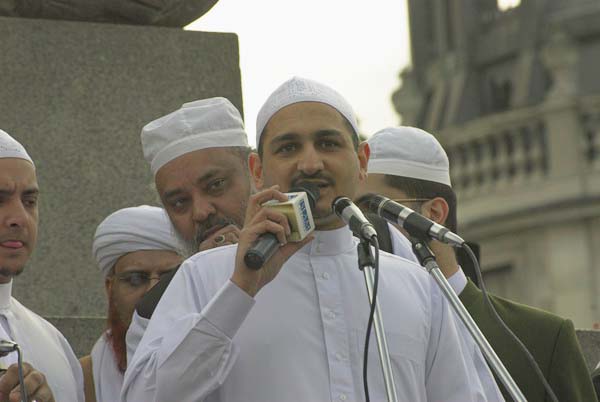
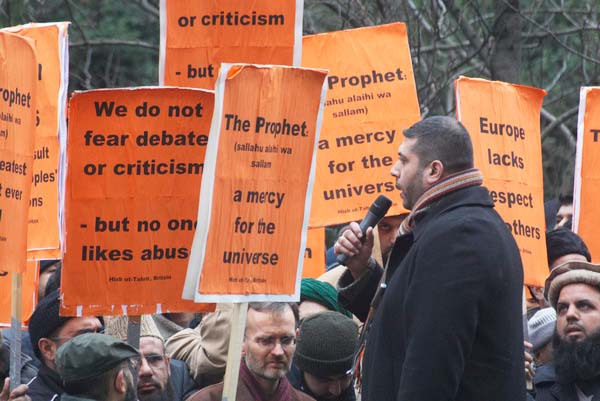
Speaker addressing crowd penned in on the pavement at the official demonstration opposite the embassy.

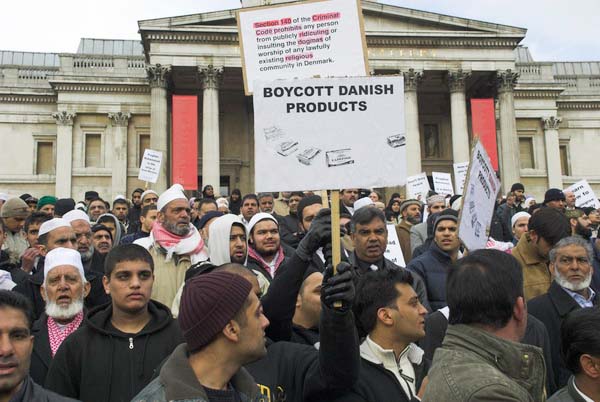
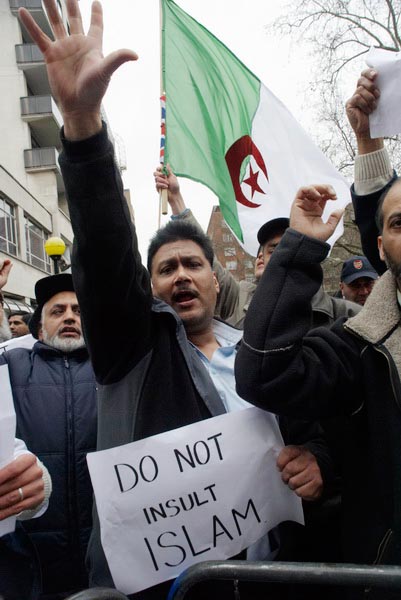
Several thousand British Muslims turned up outside the Danish Embassy around midday on Saturday 4 February 2006 to protest peacefully about the publication of cartoons by a Danish newspaper some months ago, following their re-publication in a number of other newspapers around Europe and on the Internet. Although I understand their outrage, and support their right to protest, the world-wide reactions have seemed excessive, with violence and injuries as well as lurid threats of death and atrocities presenting a very negative image of Islam.
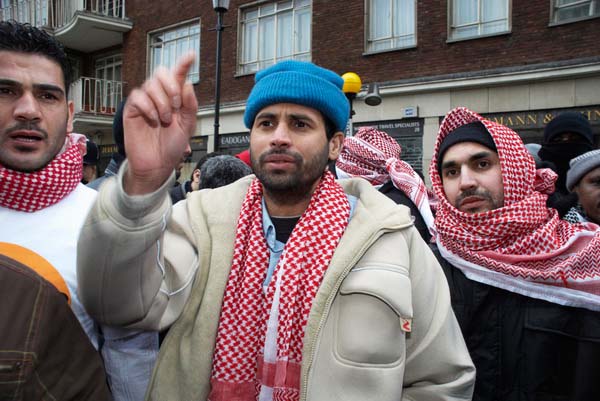
Muslims, Iran, Canary Wharf & Queer is Here - 2006
Some demonstrators wanted to continue after the official end of the demonstration, but were urged to go home.

To the credit of British Muslims, this demonstration was peaceful and restrained, with official placards provided by organisers Hizb Ut-Tahrir, Britain saying things such as ‘we do not fear debate or criticism – but no one likes abuse‘, ‘Islam says – don’t insult other peoples religions‘ and ‘Europe lacks respect for others’, or simply praising the prophet, although some of the speeches sounded rather more inflammatory.

Stewards (and of course the police) generally kept everyone well under order, as well as making sensible photography virtually impossible during the rally. After the event was officially over it was possible to take more pictures
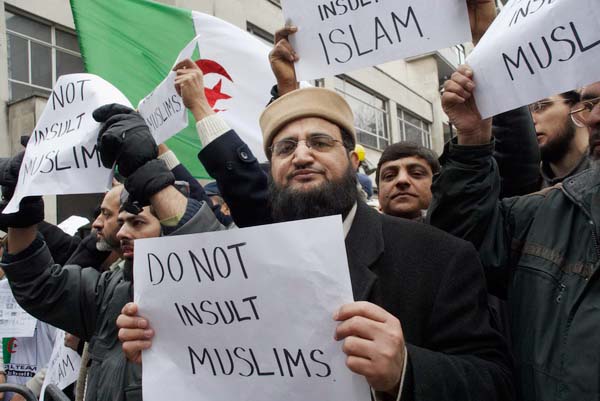
Muslims, Iran, Canary Wharf & Queer is Here - 2006

The problem is I think not that “Europe lacks respect” but that our tradition is a secular liberal one which respects and upholds freedom of speech and opinion (our blasphemy laws, which should have been repealed long ago, are seldom invoked.)

There are many things said and written that I find offensive (including several of the cartoons at issue) and you and I have the right to state our objections, to debate or criticise and even to stop eating Danish butter – but not to stir up hatred or issue death threats. Despite some press reports, this demonstration was generally well-ordered, and I saw none of the placards which have led to calls for people to be prosecuted.

more pictures


Support Workers in Iran!

Iranian Embassy
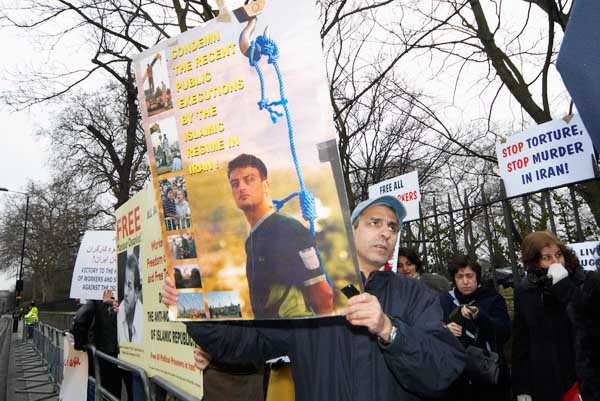
Protestors hold posters about public executions, torture and imprisonment of workers opposite Iran’s London Embassy in Kensington.

Meanwhile, a short distance away, a demonstration that perhaps should have attracted rather more support from the Muslim community was taking place opposite the Iranian embassy. Perhaps 50 people had gathered there to protest against human rights abuses in the Islamic Republic of Iran, and to support workers there who have no right to strike or organise under Iran’s draconian labour law.
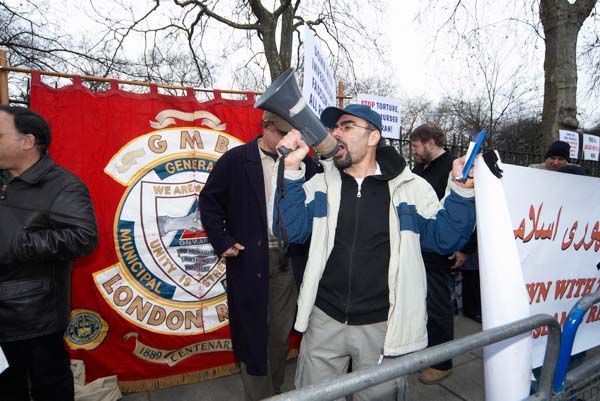
The demonstration is a show of solidarity with Iranian trade unionists and the GMB London Region banner added colour.

In January 2004 workers staging a sit-in at the Khatoon Abad copper plant were attacked by riot police, with four killed and many more injured. Recently, bus workers in Tehran have been arrested for planning and carrying out strike action. According to Amnesty International, around 500 are still in jail, without charges being made or access to lawyers. Some of them have been beaten in prison, and their wives and children also beaten in raids on their homes.
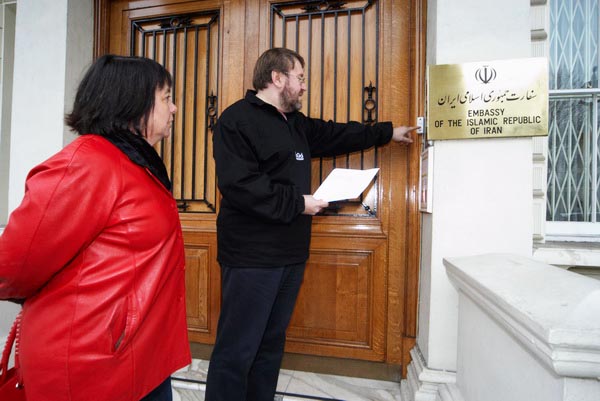
A letter of protest was taken to the door of the embassy but nobody came to accept it

There are many more abuses of human rights being committed under the name of law in Iran including torture, murder and public executions (even of minors) for offences including ‘un-Islamic behaviour‘. Given the amount of news coverage on Iran at the moment over uranium enrichment, it is perhaps surprising that other stories from Iran – such as these – have not attracted more attention. And since most of those who are suffering are Muslim, I’m suprised at the apparent lack of solidarity from the community in Britain.

more pictures


Canary Wharf & the City

West India Quay from new access bridge

I left for a late lunch, then went on to Canary Wharf, where I had things to do. Although it was a very dull day I took a few pictures before catching the Docklands Light Railway to Bank and walking through the empty City to the Museum Of London on London Wall.

Quite a few more pictures here.


Queer is Here

Museum of London
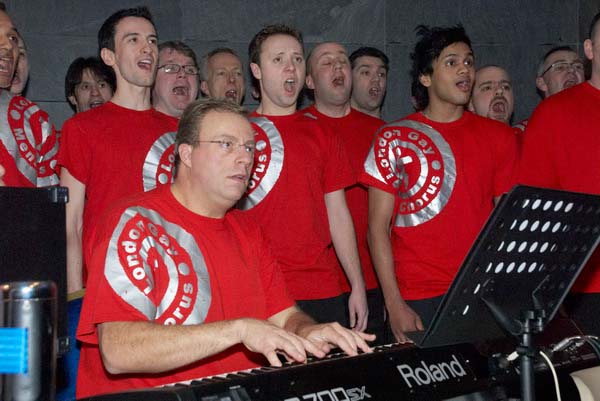
London Gay Mens Chorus at the opening of ‘Queer is Here’ at the Museum of London.

At the Museum Of London was an event I had a personal interest in, the opening of a foyer display ‘Queer Is Here‘. I’d provided the dozen images used on the front of the large display panel beside the general text on the show, and there was also a screen beside it showing more of my images taken at London Gay Pride Parades from 1993-2002. In those ten years of Pride I took perhaps 5,000 images, and the display shows around 40 of the best of them.
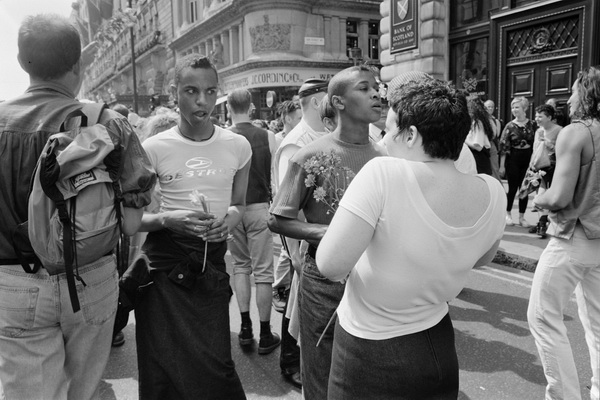
Gay Pride parade in Piccadilly, June 1994. Picture by Peter Marshall from ‘Ten Years of Pride’ , part of the ‘Queer is Here’ exhibition at the Museum of London.

There were a few of these on My London Diary already (along with many from later Prides) but I posted the full set of pictures used in the show.
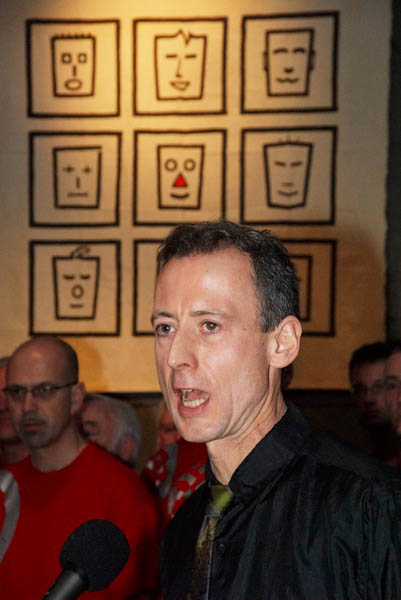
Peter Tatchell

The exhibition was opened by Peter Tatchell, who I’ve photographed many times over the years, and was enlivened by a spirited performance from the London Gay Mens Chorus. After the month at the Museum Of London the display was to tour to libraries and other venues in London and possibly elsewhere around the country

More pictures from the opening


FlickrFacebookMy London DiaryHull PhotosLea ValleyParis
London’s Industrial HeritageLondon Photos

All photographs on this page are copyright © Peter Marshall.
Contact me to buy prints or licence to reproduce.
Global Civility and Stratford Marsh – 2006

Global Civility and Stratford Marsh – On Saturday February 18th 2006 I photographed one of the continuing protests around the world which followed the publication by a Danish magazine of cartoons featuring images of the Prophet Mohammad in Trafalgar Square, then took the underground and DLR to Pudding Mill Lane station on Stratford Marsh to take more pictures of the area which was to be demolished for the London Olympics.


Proclamation for Global Civility – Trafalgar Square

Global Civility and Stratford Marsh

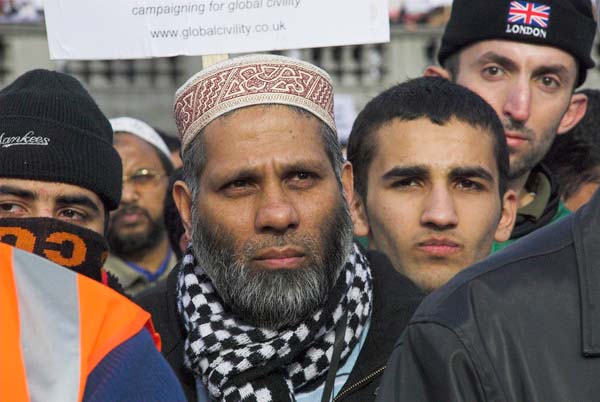
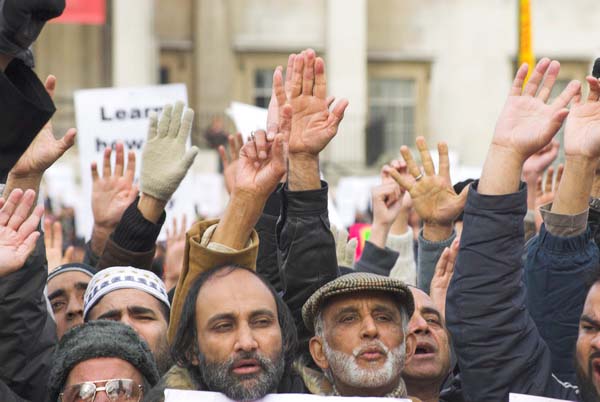
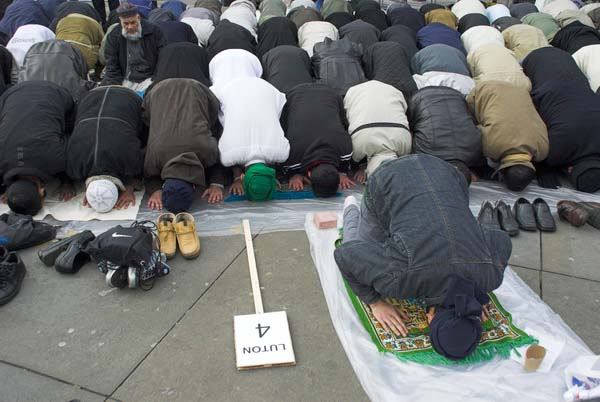
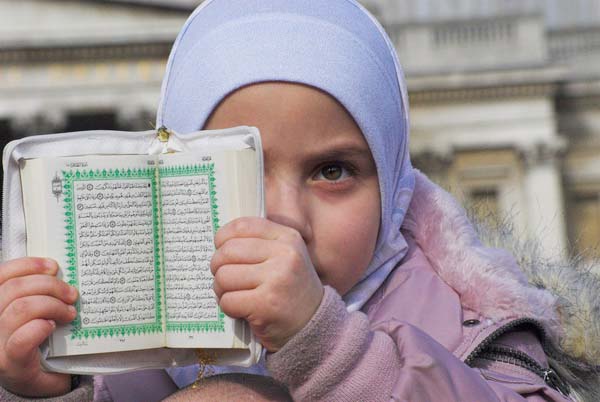
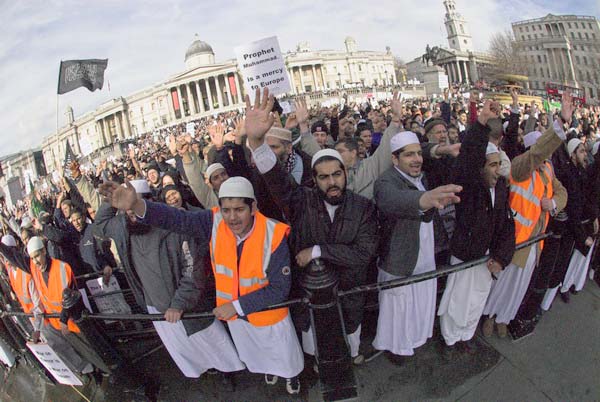
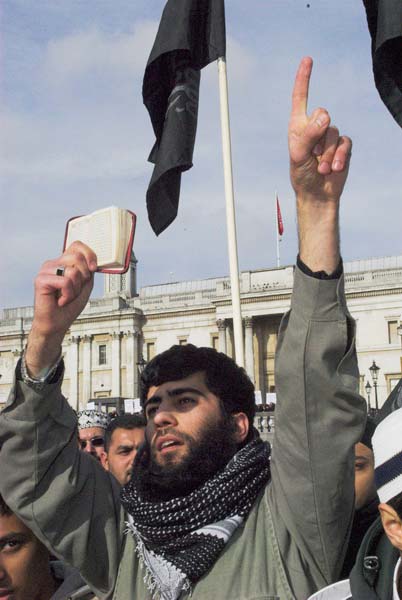
Muslim protesters packed Trafalgar Square for a protest by the Muslim Action Committee over the publication of the cartoons which they regard as blasphemous, but also to publicise a ‘proclamation of global civility‘. The key points of this were the recognition of human dignity as a fundamental right, the need to good manners and etiquette in serious debate, a desire to avoid irresponsible behaviour and to underline the significance of mutual respect for a harmonious co-existence.

Global Civility and Stratford Marsh

The protest in London was kept in good order by stewards who remonstrated with some of the demonstrators who were in some way not behaving as they thought they should, and also moved photographers away from them and some other groups. But other protests around the world were much less restrained and news agencies that same day reported rioting outside the Italian consulate in Benghazi, Libya in which at least 10 people were killed as well as the storming and burning of Christian churches in northern Nigeria with at least 16 deaths.

Global Civility and Stratford Marsh

“As I pointed out in my report in 2006, human dignity was recognised as vital in “the preamble to the Universal Declaration Of Human Rights, adopted and proclaimed by the United Nations General Assembly Resolution 217 of 10 December 1948. That declaration also contains a number of important safeguards such as ‘the right to freedom of opinion and expression‘ and states ‘in the exercise of his rights and freedoms, everyone shall be subject only to such limitations as are determined by law solely for the purpose of securing due recognition and respect for the rights and freedoms of others and of meeting the just requirements of morality, public order and the general welfare in a democratic society.'”

Global Civility and Stratford Marsh

There are still many countries around the world where the principles of human rights in that declaration are not observed, including in many in the Muslim world.

Manners and etiquette are clearly very different in different societies and different religions certainly have very different views, particularly over blasphemy and apostasy. In the west we now prioritise freedom of speech and look back in horror at the Spanish Inquisition and trails for heresy and blasphemy, although in England and Wales, the ‘blasphemy’ and ‘blasphemous libel’ laws were only abolished in 2008, and in Scotland in 2021, while they are still in force in Northern Ireland.

The last conviction for blasphemy in England and Wales was in 1977 when the editor of Gay News received a suspended prison sentence after publishing the poem ‘The Love That Dares to Speak Its Name’ by James Kirkup, and in Scotland it was more than a century earlier when a bookseller was jailed for 15 months in 1843, though until 1825 it had been punishable by death.

While we may find some of the cartoons that were published offensive, it clearly does not justify the irresponsible behaviour and criminal actions of some Muslim mobs protesting against them.

Away from the stewards as I wandered through the crowd I was generally welcomed by the protesters, with many urging me to take their pictures. I left as the speeches, most of which I could not understand as few spoke in English, were finishing and people were getting ready to march,

Scroll down the February 2006 web page for more.


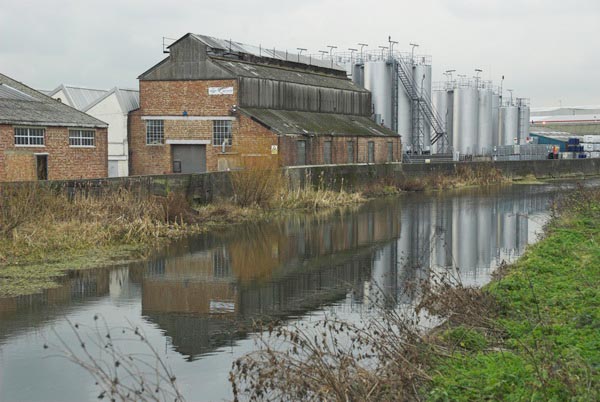
Stratford Marsh – River Lea, Stratford

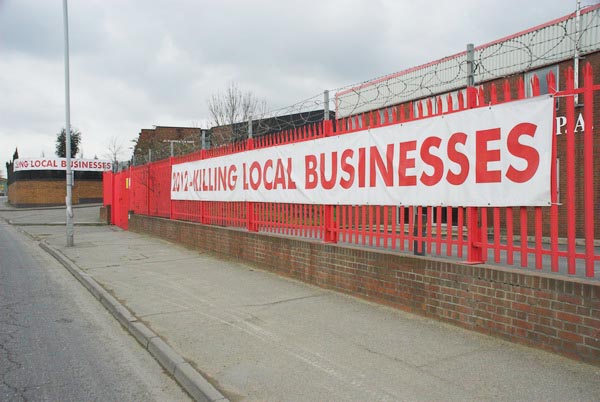
I’d first photographed Stratford Marsh back in the early 1980s as part of a wider project on the River Lea, once a large and important industrial area in London, but like most of British industry falling into decline, accelerated by the policies of the Thatcher government determined to transform Britain away from manufacturing and into services.

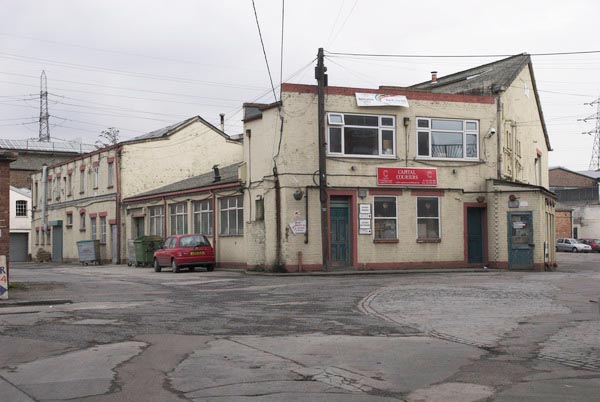
Stratford Marsh was then full of largely small businesses employing local people and many still remained in 2006, though already blighted both by government policies and the tax breaks given to the nearby Docklands area. Now Olympic blight had set in with the whole area to be remodelled, and there were also areas which would be demolished for Crossrail.

As I wrote back then and I think my pictures show:

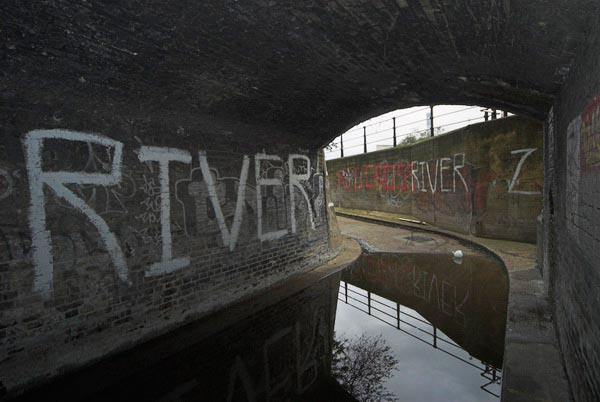
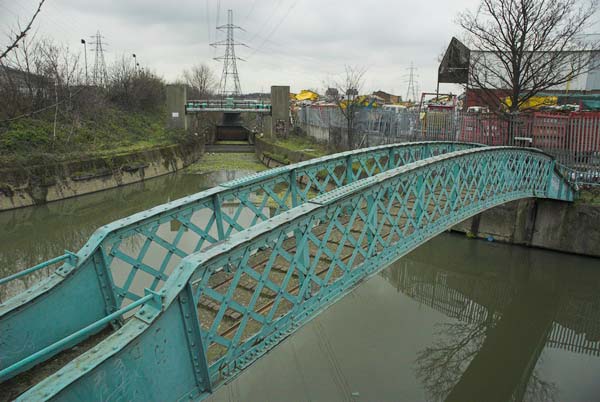
It is still an intriguing area, where a few yards can take you from wilderness to industrial wasteland, from dereliction to busy workshops (though most were closed on a Saturday afternoon.) Parts are visibly closing down, with compulsory purchase orders hanging on lamposts, some footpaths closed and factories demolished.

There was one small sign of a kind of regeneration. the unusual lock between the Bow Back Rivers and Waterworks River at Baker Road, for many years derelict, at last seems to have been replaced.

My London Diary – Feb 2006

There are many more pictures from this walk – and others – on these pages on my River Lea site.


FlickrFacebookMy London DiaryHull PhotosLea ValleyParis
London’s Industrial HeritageLondon Photos

All photographs on this page are copyright © Peter Marshall.
Contact me to buy prints or licence to reproduce.