Class War & The Shard – 2018

Class War & The Shard – 2018.

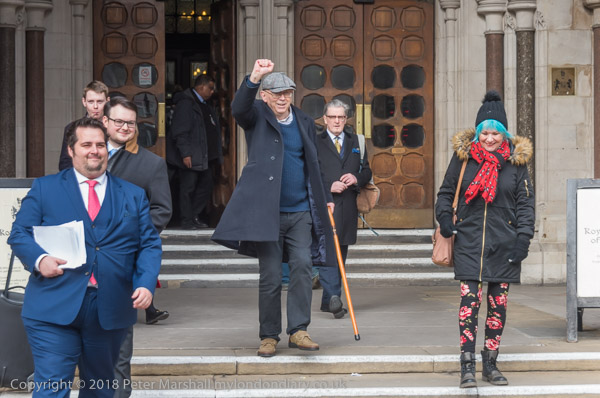
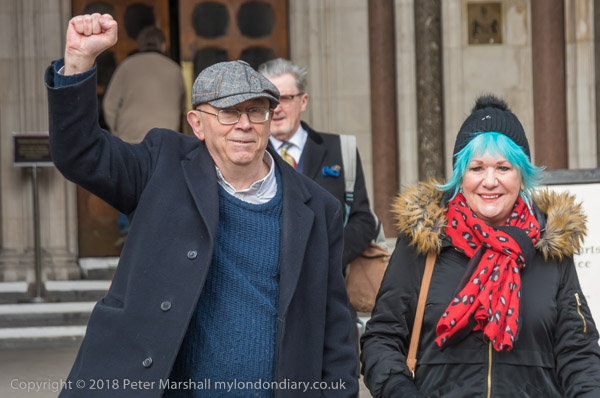
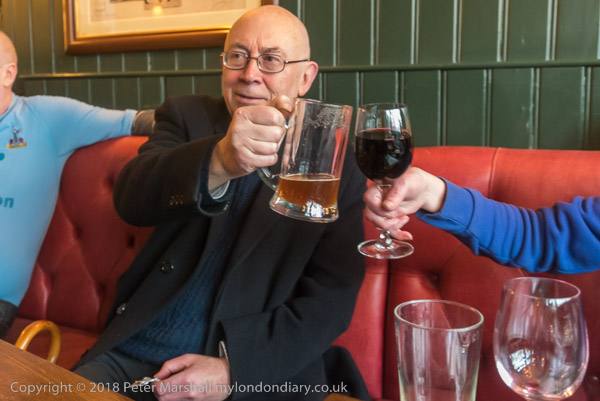
Ian Bone raises a fist as he comes out of the Royal Courts of Justice

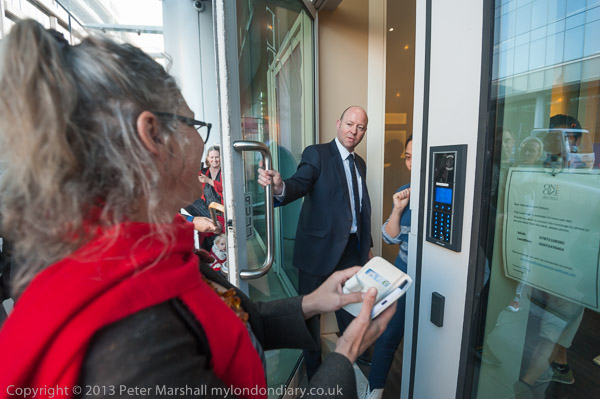
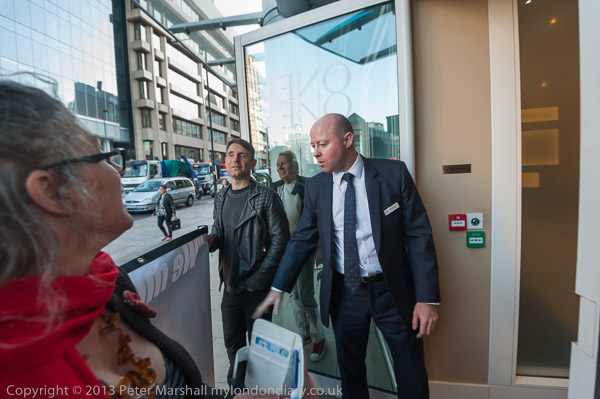
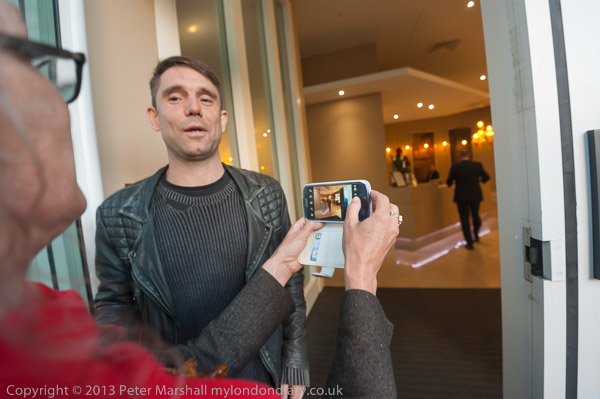
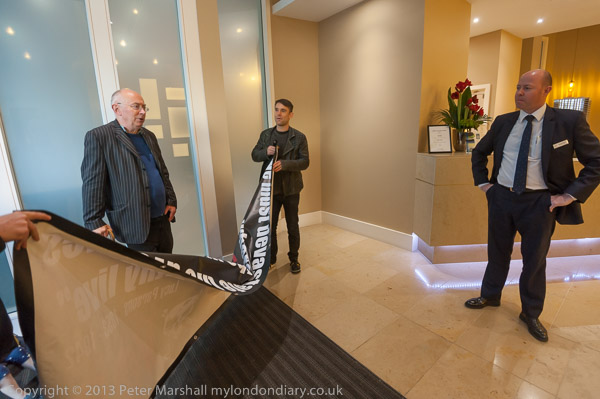
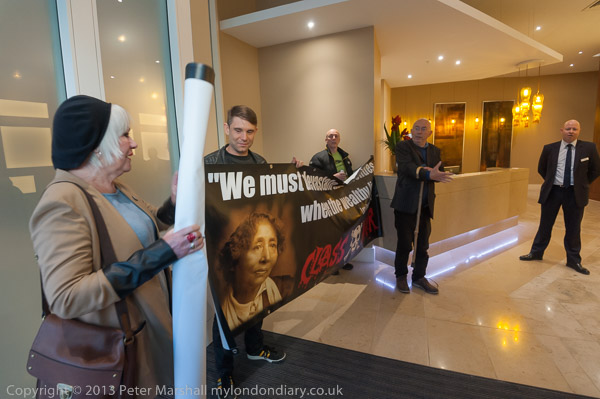
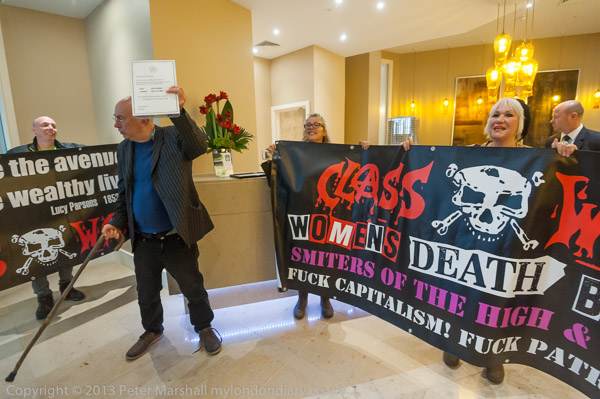
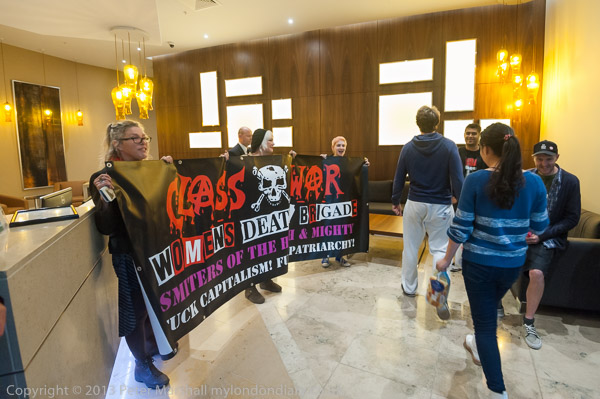
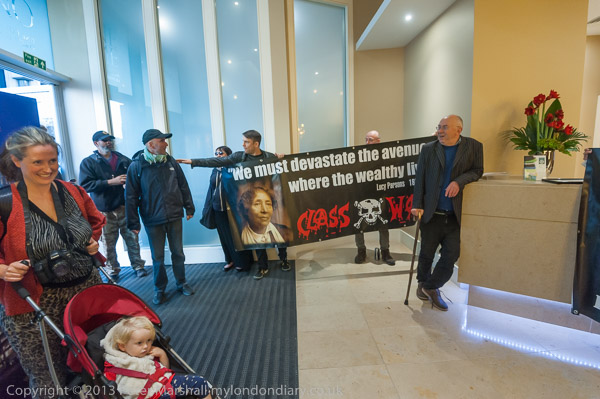
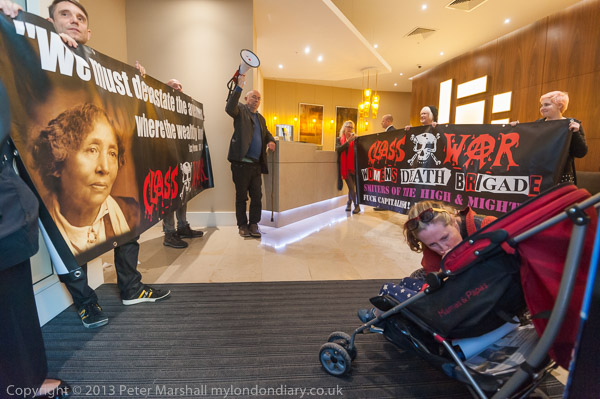
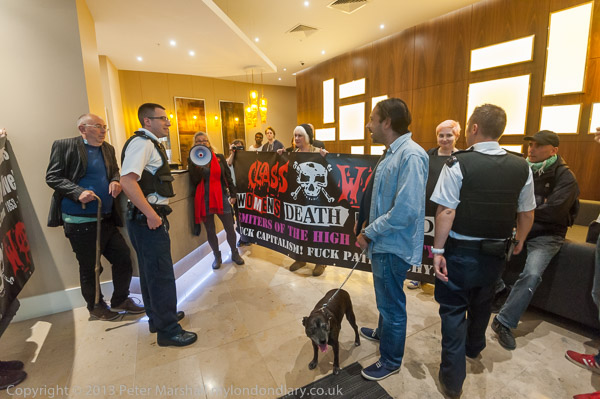
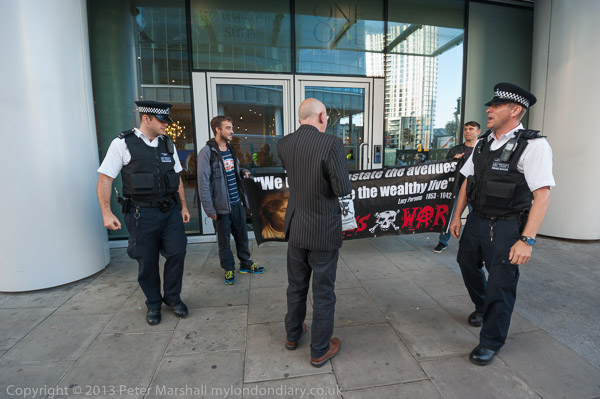
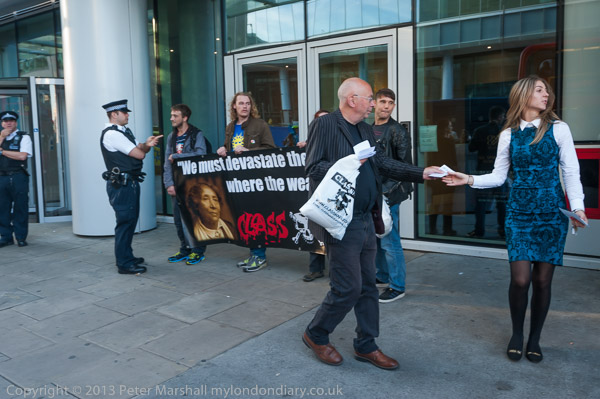
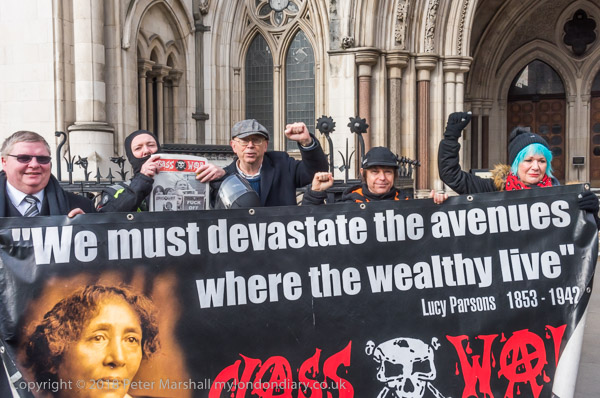
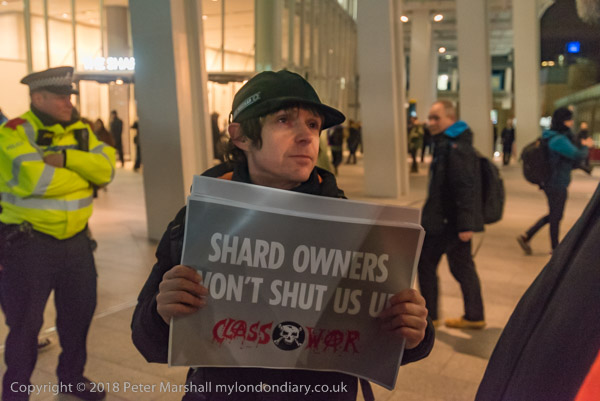
February 8th 2018 was a good day for Class War, beginning with a visit to the High Court at the Royal Courts of Justice, where thanks to barrister Ian Brownhill they emerged triumphant after stopping an attempt by lawyers acting for the Qatari royal family to prevent a Class War protest against the ten empty £50million pound apartments in The Shard.

Lawyers for the Qataris had tried to get an injunction against protests by Bone and “persons unknown” and to claim over £500 in legal costs from the 70 year-old south London pensioner, and the case had attracted considerable publicity in the media including an article by Suzanne Moore in The Guardian and another in Le Monde and many more.

Brownhill offered to conduct Bone’s defence pro-bono and contacted the Quatari’s solicitors who immediately offered to drop the case if Class War ‘would stop attacking the Shard’ whatever that meant. In the High Court the Qataris’ lawyers were forced to drop the attempt to ban protests and the demand for fees but Bone accepted a legal restriction on him going inside the Shard and its immediate vicinity.

The case also showed the police’s insecurity over Class War and documents presented in court on behalf of the Qataris clearly showed they had been given documents by the police including one with clearly defamatory false statements about another person associated with Class War who was not named in the injunction.

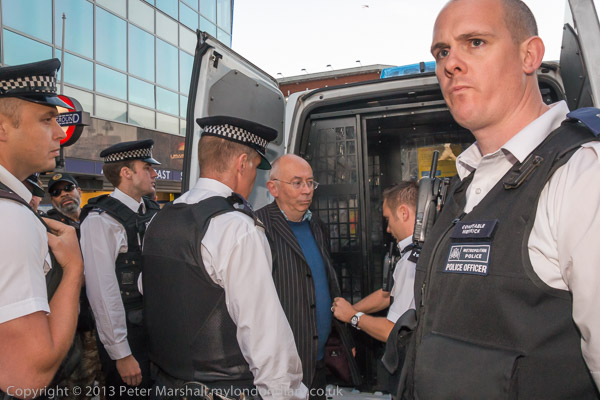
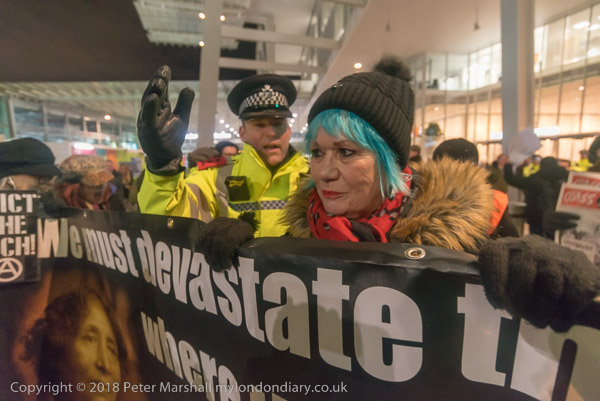
Another document presented was a surprising testimonial about Class War which made it sound a rather more impressive and powerful organisation than the small but influential irritant to the rich and unscrupulous it is. The police probably the source for this certainly seem to share the lawyers’ delusions of the organisations grandeur, with an unusually strong police presence outside the court and around a corner clearly outnumbering the Class War supporters.

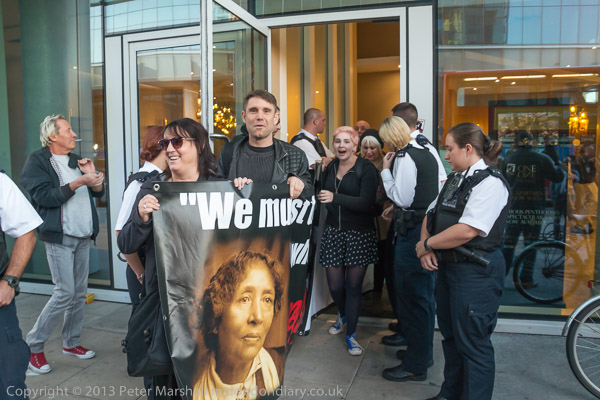
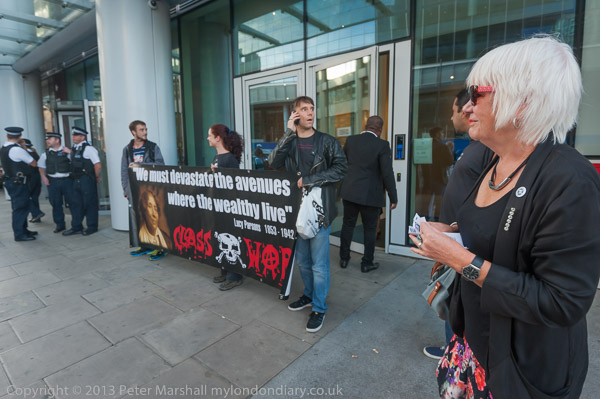
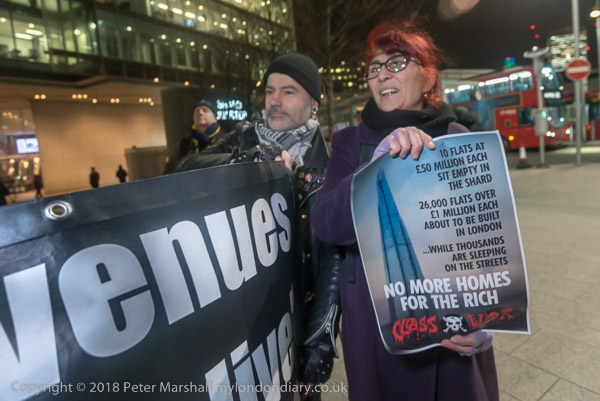
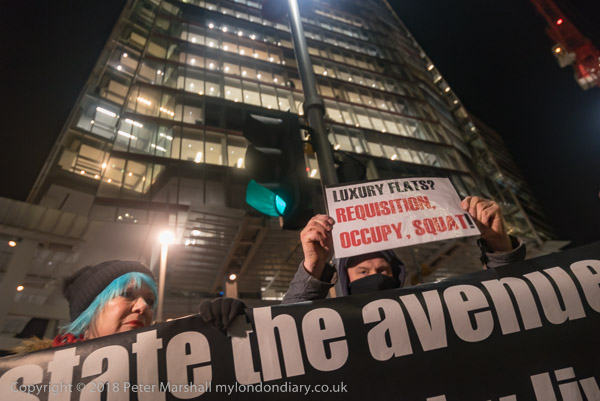
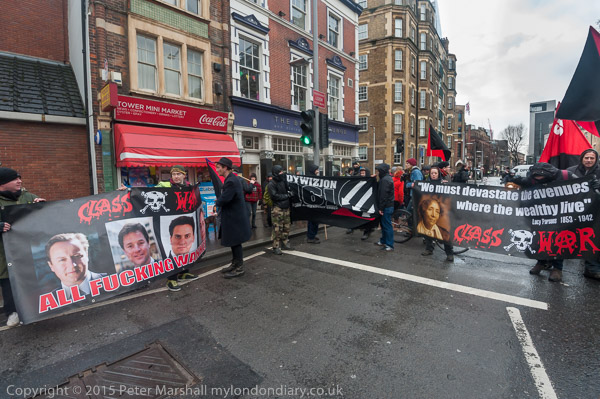
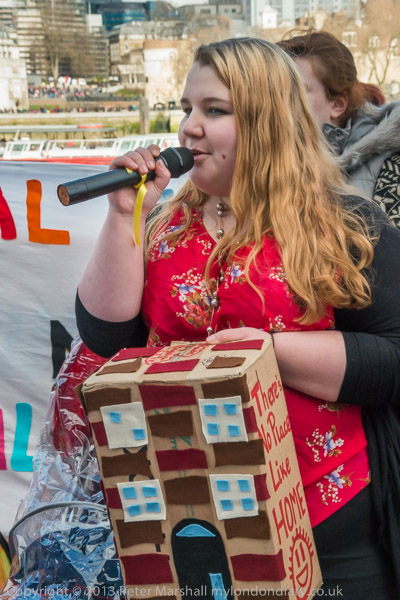
So the protest that evening took place as Class War intended, pointing out that the ten £50m apartments in the Shard had remained empty since the building was completed. The protest stressed that these were just a small fraction of the plans to build another 26,000 flats costing more than a million pounds each across London, many replacing current social housing a time when London has a huge housing crisis with thousands sleeping on the street, and over 100 families from Grenfell are still in temporary accommodation.

As Class War stated, there are already a huge number of empty properties in London, many in large development of high priced flats which either remain unsold or are bought as investments and largely unoccupied. What the capital needs is not luxury flats but much more social housing – and to keep existing housing on council estates under threat of demolition.

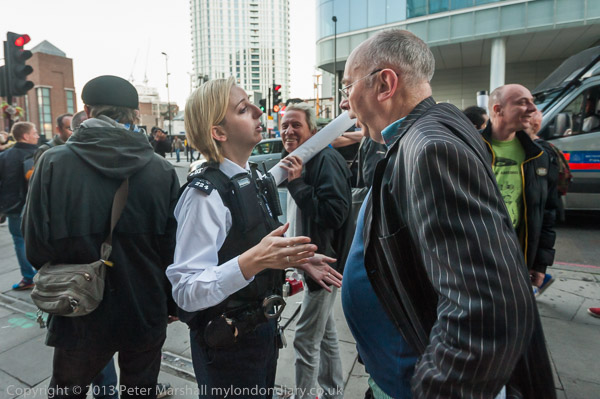
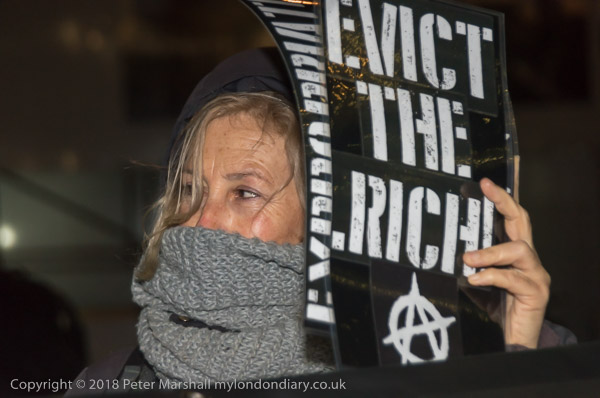
The protest, as planned, was peaceful but very noisy, and again policed by a ridiculously large number of police and private security. Ian Bone’s poor health meant he was in any case unable to attend in person. The protesters were careful to remain outside the boundary of The Shard, marked with a metal line in the pavement, but police still tried to move them away to the other side of the road, making the patently spurious claim that they were causing an obstruction to commuters attempting to enter London Bridge station. The only real obstruction to commuters attempting to enter the station were the lines of police across their route.

More on My London Diary
Class War protest at Shard
Class War victory against Qatari Royals

2015 March for Homes – Shoreditch to City Hall
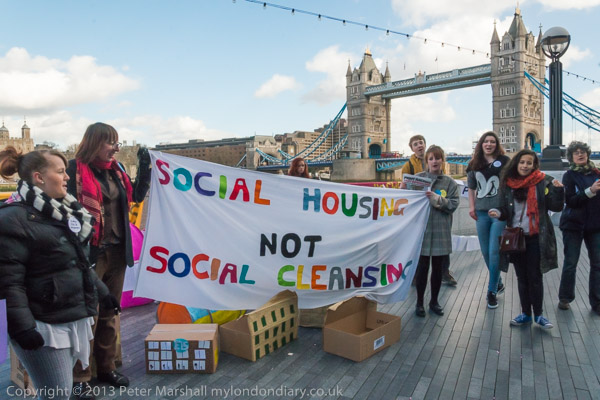
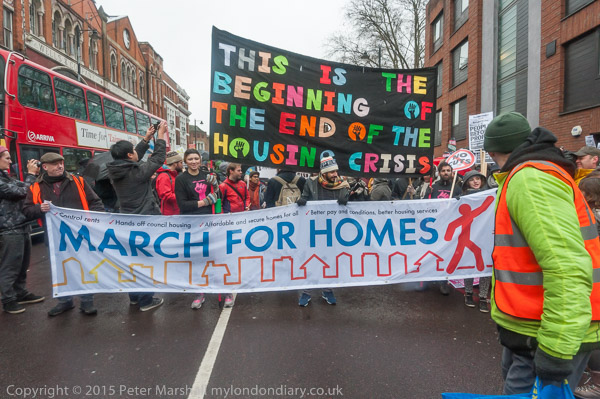
2015 March for Homes – Shoreditch to City Hall. A year before the march Against the Housing and Planning Bill featured in yesterday’s post there was another march about housing at the end of January, the March For Homes.
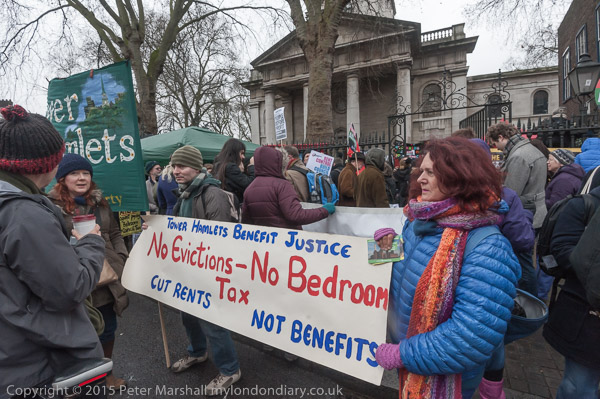
Outside Shoreditch Church

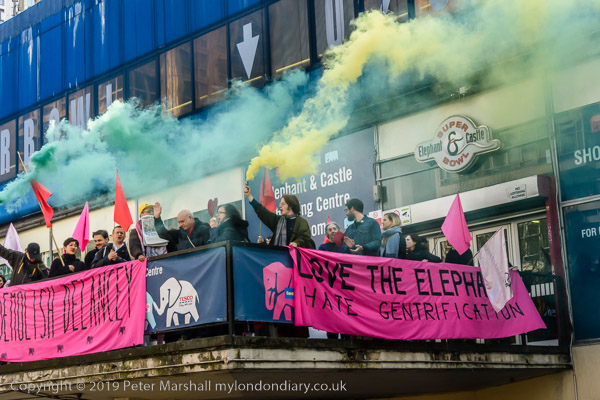
The event called by Defend Council Housing, South London People’s Assembly and Unite Housing Workers Branch involved two separate marches, one coming from Shoreditch in north-east London and the other from the Elephant & Castle in south London converging on London’s City Hall close to Tower Bridge for a final rally.

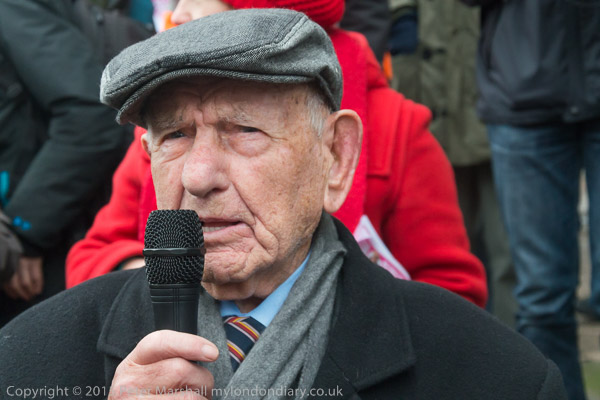
Max Levitas, a 100 year old communist veteran of Cable St

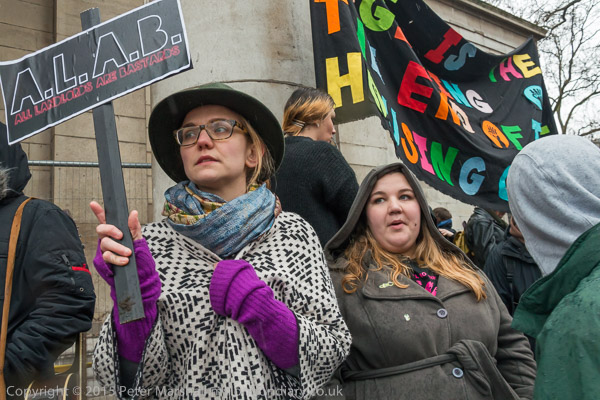
I couldn’t be in two places at once and chose to go to Shoreditch, partly because I knew people from several groups I had photographed at a number of housing struggles would be marching from there. The event was certainly enlivened by the arrival of activists who had marched from Bethnal Green, including supporters of Class War, Focus E15 and other groups.

Many couldn’t get into the churchyard

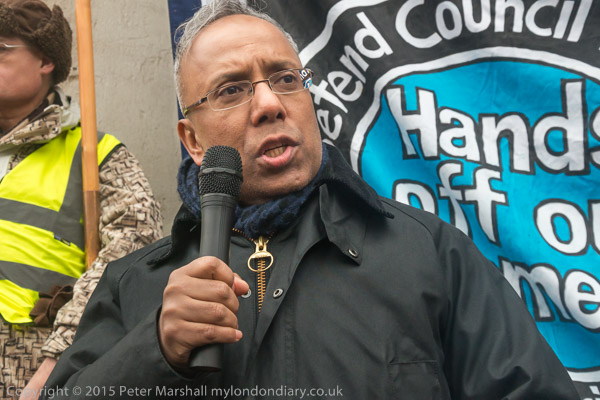
The Shoreditch Rally was held in a crowded area in Shoreditch churchyard at the front of St. Leonard’s, Shoreditch, the ancient parish church of Shoreditch, and I took the opportunity to go inside and have a look at the church before the rally. The list of speakers there showed the wide range of community support for fairer housing policies, including more social housing desperately needed in London and included Jasmine Stone of Focus E15, Lindsey Garratt from New Era, Paul Turp, vicar of St Leonards, Nick from Action East End, Paul Heron of the Haldane Society of Socialist Laywyers, Max Levitas, a 100 year old communist veteran of Cable St, a speaker from the ‘Fred and John Towers’ in Leytonstone and Tower Hamlets Mayor Lutfur Rahman.

Tower Hamlets Mayor Lutfur Rahman

Tower Hamlets benefits from having been formed from some of the London Metropolitan Boroughs with the best records of social housing – such as Poplar, where in the 1920s councillors went to jail to retain more money for one of London’s poorest areas. Unfortunately Rahman, the borough’s first directly elected mayor was removed from office in April 2015 after he was found personally guilty of electoral fraud in his 2014 re-election. Many of the other charges made against him in the media were dismissed by police after investigation.

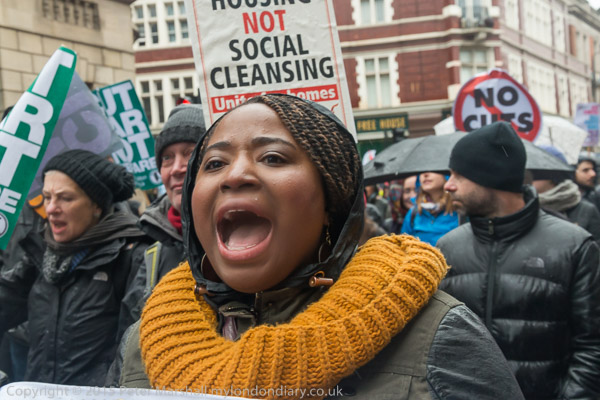
It was raining slightly as over a thousand marchers set off for City Hall behind the March For Homes banner.

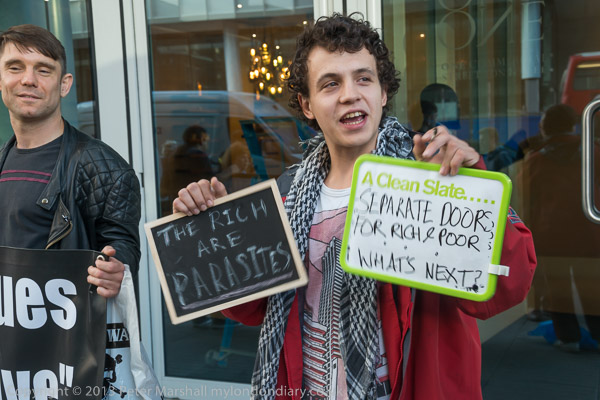
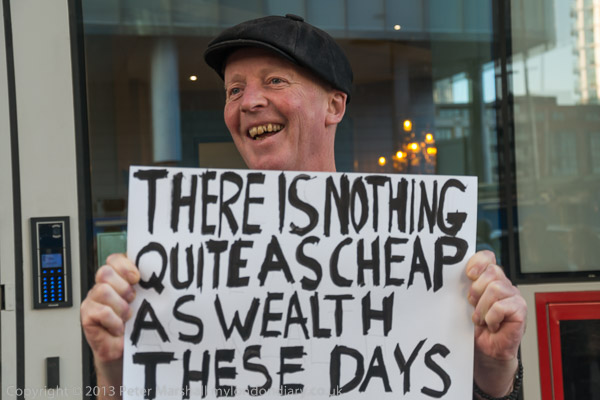
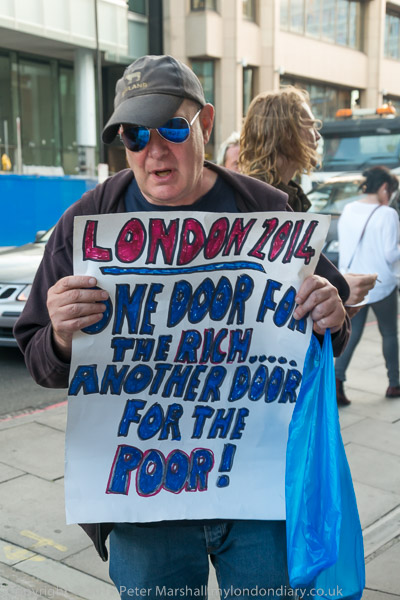
As the march came to the junction with Aldgate High St, Class War split off for a short protest at One Commercial St, where they had held a lengthy series of weekly ‘Poor Doors’ protests against separate entrances for residents owning or leasing at market rates and the smaller section of social housing tenants who had to enter through a door down a side alley. Class War had suspended their 20 weeks of protest for talks with a new owner of the building a month or so earlier, but these had broken down without a satisfactory resolution and the protests there restarted the following week.

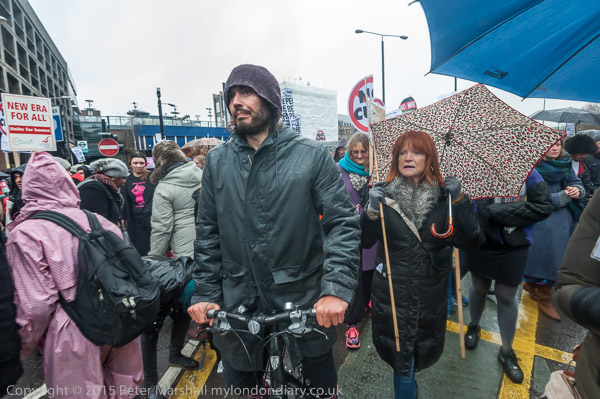
As the march approached the Tower of London it was met and joined by Russell Brand riding a bicycle,

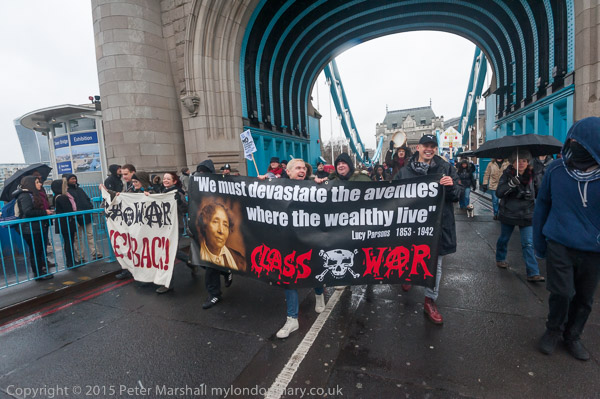
and on Tower Bridge, Class War came up to lead the march.

I rushed ahead to meet the South London march as it turned into Tooley Street for the last few yards of its march.

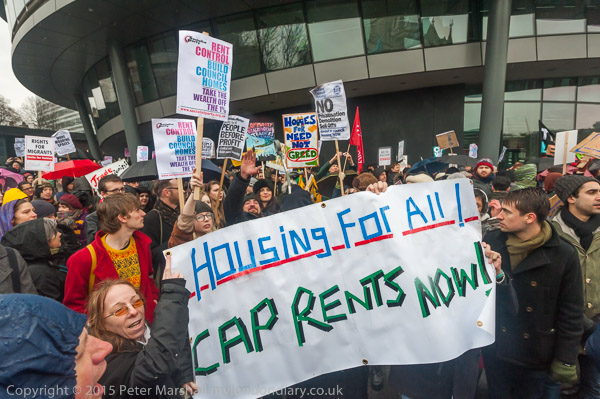
The rally in front of City Hall was large, cold and wet. By now the rain was making it difficult to take photographs, with drops falling on the front of my lenses as I tried to take pictures, and my lenses beginning to steam up inside. But I persisted and did the best I could, though the rain-bedraggled speakers in particular were not looking their best.

The rally was still continuing when some of the activists, including Class War and the street band Rhythms of Revolution decided they needed to do something a little more than standing in the rain listening to speeches. They moved onto Tooley Street and blocked the road. More police arrived and blocked the road even more effectively as the activists moved eastwards to protest at One Tower Bridge, a new development mainly for the over-rich next to Tower Bridge and then left for a long walk to the occupied Aylesbury Estate. But I decided it was time to go home.

More on My London Diary:
March for Homes: After the Rally
March for Homes: City Hall Rally
March for Homes: Poor Doors
March for Homes: Shoreditch to City Hall
March for Homes: Shoreditch Rally


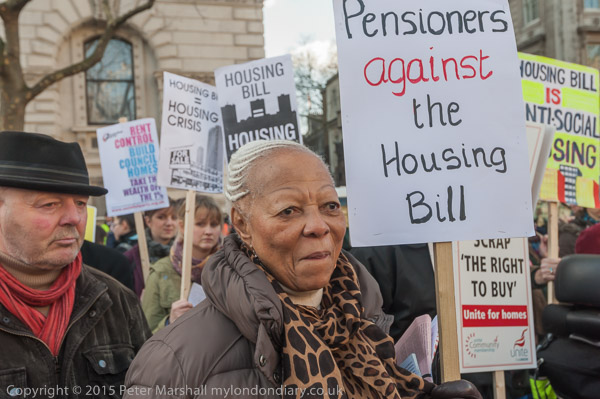
March Against Housing & Planning Bill

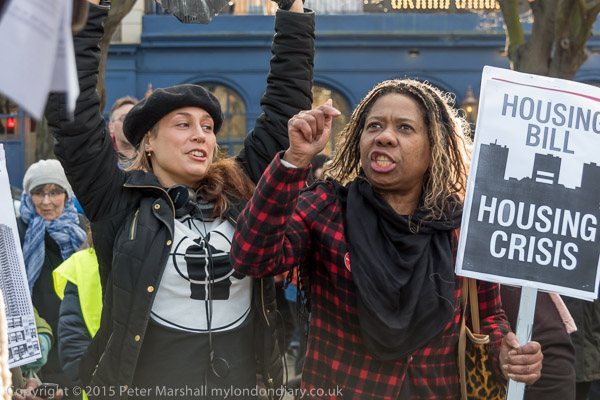
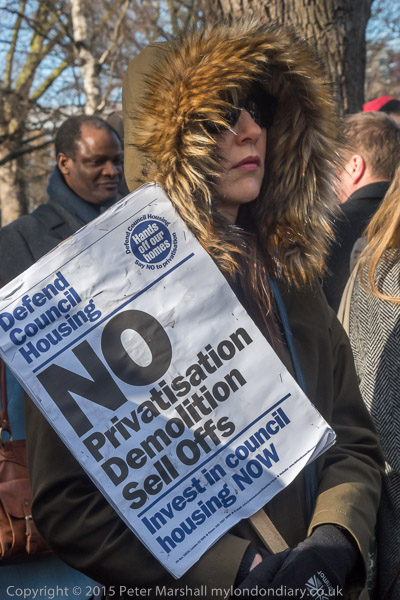
The March Against Housing & Planning Bill on January 30th 2016 was organised by activists from South London, particulary from the London boroughs of Lambeth and Southwark.

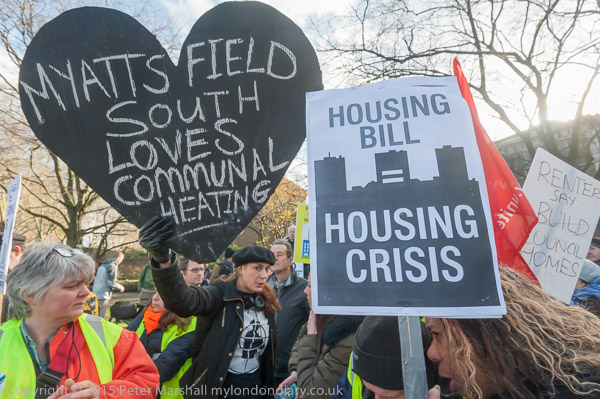
These include many who are fighting against the demolition of social housing that is taking place across London, including in Lambeth and Southwark. Council tenants and leaseholders on council estates are fighting to save their homes – and fighting against Lambeth and Southwark councils who together with private developers and estate agent advisers are bent on demolishing the estates and replacing them with new estates which are largely for private rent or sale at London’s inflated market prices.

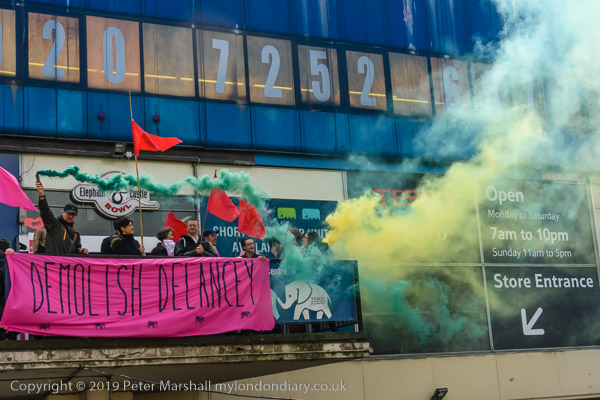
Southwark Council in particular carried out an expenisive PR exercise to demonise the Heygate Estate at the Elephant & Castle, having failed to carry out necessary maintenance and flooded the estate with people with various social problems over a number of years. The whole disastrous history has been documented in depth on the Southwark 35% site. A prize-winning estate with 1,214 homes built in 1974 to provide social housing for around 3,000 people was deliberately run-down and demolished. It’s replacement, Elephant Park has less than 100 social housing units. Many of its new flats are simply investments for overseas owners.

Southwark sold the Heygate to developers for one third of its previous valuation, and spent more on the scheme than it received. A study by Global architect firm Gensler concluded that the £35m spent by Southwark in rehousing the estate residents was exactly the same as it would have cost to refurbish the estate up to modern standards – and would have avoided the huge carbon footprint of demolishing and rebuilding.

A well as Heygate, Southwark Council’s main target has been the Aylesbury Estate, where Tony Blair chose to launch the Labour regeneration policy which has enabled corrupt councils to destroy much of what remained of social housing. For many council officers and some councillors it has enabled them to move into highly paid jobs with developers as a reward for their services. Lambeth has also been pursuing similar policies (along with other boroughs in London) and in particular with the Central Hill estate close to Crystal Palace.

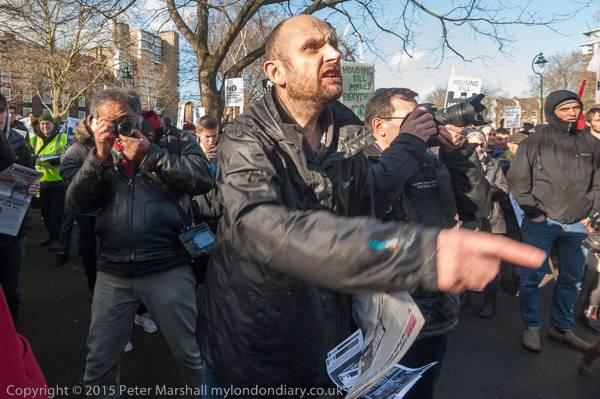
An angry heckler – their argument continued after the speech by Livingstone

The protest against the Housing & Planning Bill in 2016 was also attended by people from both Lambeth and Southwark Council, and when Southwark Council Cabinet Member for Housing Richard Livingstone stepped up to the microphone to speak at the rally before the march some trouble was inevitable. Among those loudly heckling him was another of the speakers, Simon Elmer of Architects for Social Housing.

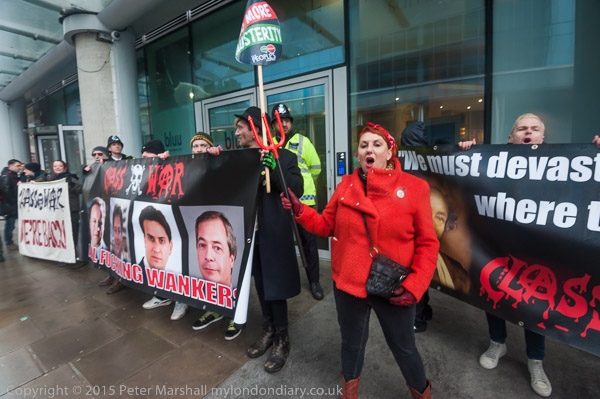
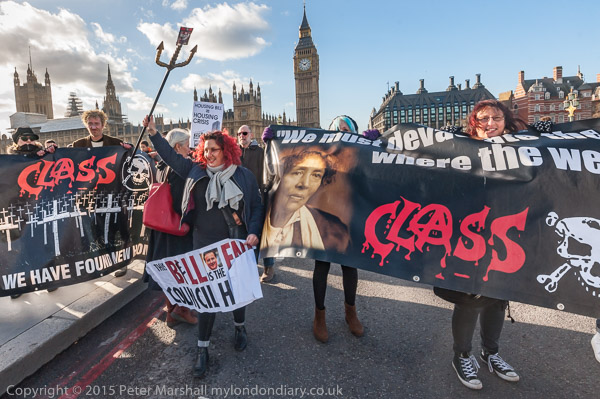
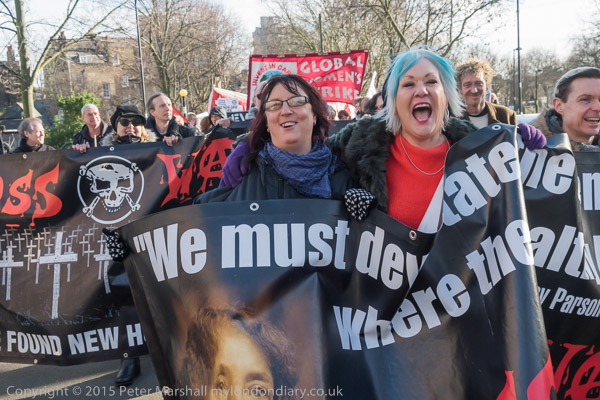
Class War have also been active in support of social housing in South London in particular and livened up the march by dancing along the street with banners singing the ‘Lambeth Walk’. One banner carried the words of a leading US Anarchist Lucy Parsons (1853-1942), “We must devastate the avenues where the wealthy live” and another had a field of crosses with the message “We have found new homes for the rich“.

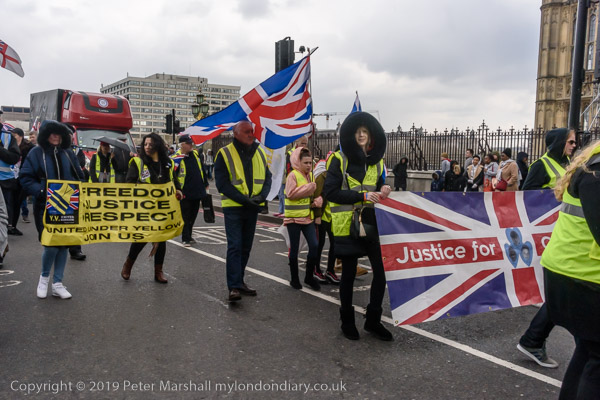
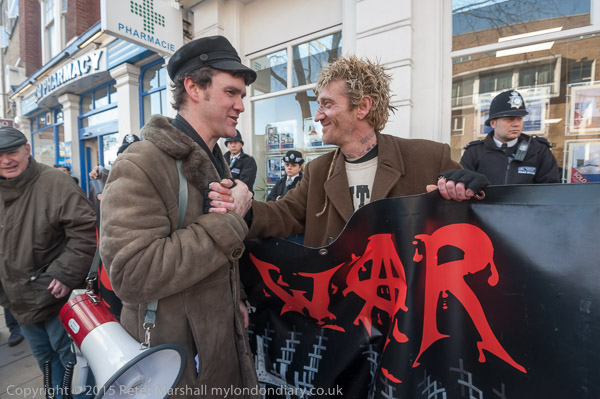
Class War supporters rushed across the street for a short impromtu protest in front of a large branch of one of the leading estate agents driving the gentrification of London and advising councils and government on housing policies, but soon rejoined the main march of around 2,000 people heading for Westminster Bridge and Downing St.

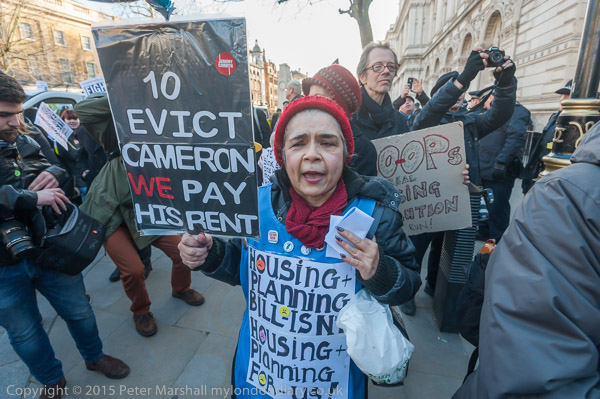
At Downing St there was another protest outside the gates. Police had formed a line across Whitehall and directed the march to the opposite side of the street opposite Downing St. The march followed them across but then many simply walked back across the street to mass in front of the gates for a rally led by Fight Racism! Fight Imperialism! who have been active in supporting the Focus E15 Mothers in their campaign against the housing failures of Newham Council.

More on My London Diary at Housing and Planning Bill March


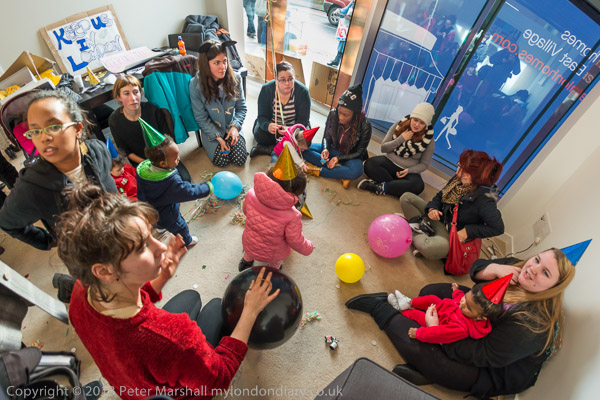
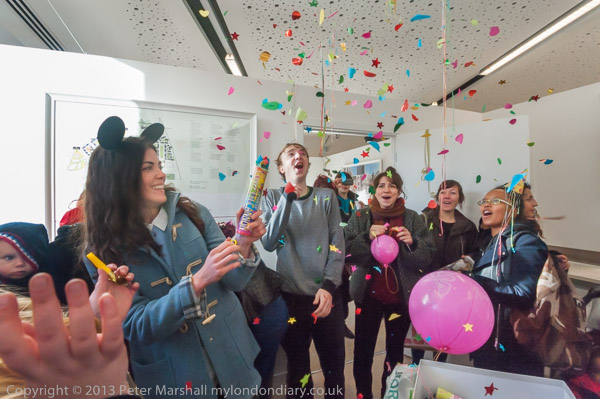
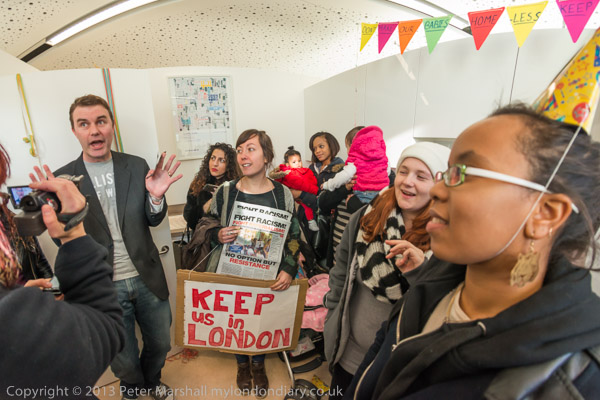
Focus E15 Mothers Party Against Eviction 2014

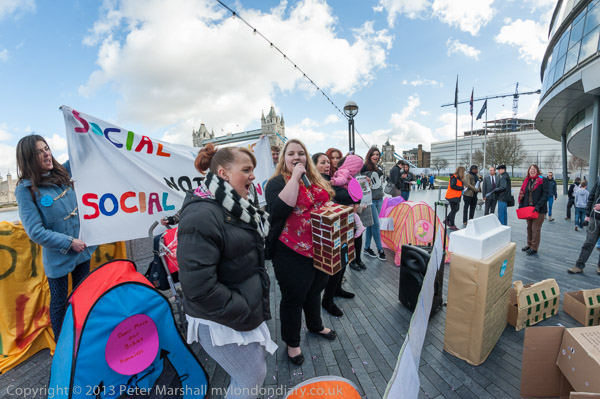
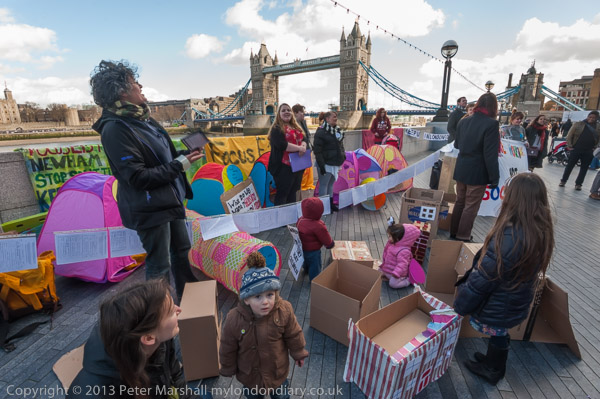
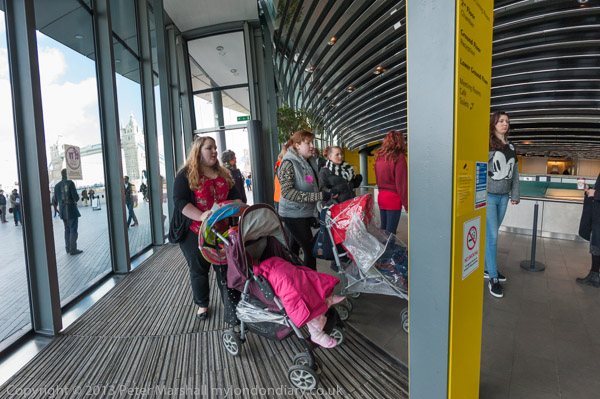
Focus E15 Mothers and children party in the show flat – 17th January 2014

Focus E15 Mothers Party Against Eviction 2014
Housing remains one of London’s larger problems, with sky-high house prices and market rents. At the start of 2022 the average flat rent in London is over £360 per week – around £19,000 per year, while the average property price according to Zoopla is £681,427.

Housing has always been a problem in London, but in the 1950s, 60s and 70s things were beginning to improve, largely due to both Labour and Conservative councils building council houses and flats. By the 1960s over 500,000 new flats were added in London and nationally around a third of UK households lived in social housing.

The government’s minimum wage for 2022 will be £9.50 per hour from April – an on that rate you would need to work for around 38 hours a week just to pay for a flat – and of course would have no chance of ever buying a flat or house. Things have got considerably worse since 2010, and in boroughs like Newham average rents now are 65% of average wages.

The building programme slowed down in the 1970s as governments made it more difficult for councils to build, but the real watershed came with Margaret Thatcher’s 1980 Housing Act which gave council tenants the right to buy their properties at between 33-50% of market value – and stopped councils from using the proceeds to built more properties.

Further housing acts under Thatcher led to the transfer of much social housing to housing associations, which were allowed to access private finance while councils were very much restricted in their borrowing. Housing associations continue to build some new properties, but the numbers are small in relation to demand, and much lower than those built by councils in the 1950s-70s. Official figures for 2019 show only 37,825 new homes built for letting at below market rents while over 1.1 million households are on housing waiting lists – around 30 times as many.

So it is not surprising that councils such as Newham have a huge housing problem, and the council says it has the highest levels of overcrowded housing in the country, one of the highest proportion of people living in insecure private rented homes and in houses of multiple occupation and the largest number of homeless people – including those in temporary accommodation.

Newham was one of the first councils to get an elected Mayor in 2002, and Robin Wales held that post until 2018 when he was deselected as candidate. Many blame him for the particular failures over housing in the borough and point to properties on the Carpenters Estate in particular, some of which have been deliberately left empty for around 15 years.

The first group to organise and call out the council on their failures over housing were young single mothers who were threatened with eviction after Newham Council removed funding from East Thames Housing Association’s Focus E15 Foyer in Stratford. Newham Council had tried to get them to move well away from London, in Hastings, Birmingham and elsewhere, away from friends, families, colleges, nurseries and support networks. These offers were for private rented accommodation, with little or no security of tenure and would leave them at the mercy of often unscrupulous or uncaring landlords.

For once the group stood together and determined – helped by friends – to fight the council, not just for their own cases, but also for others whom Newham is failing to provide accommodation. Though they attracted national publicity and won their fight to stay in the London they continue to hold a weekly protest and advice stall in central Stratford every Saturday – I visited it again in late 2021. Their fight exposed the failures of Robin Wales and was certainly one of the factors in his losing support in the borough.

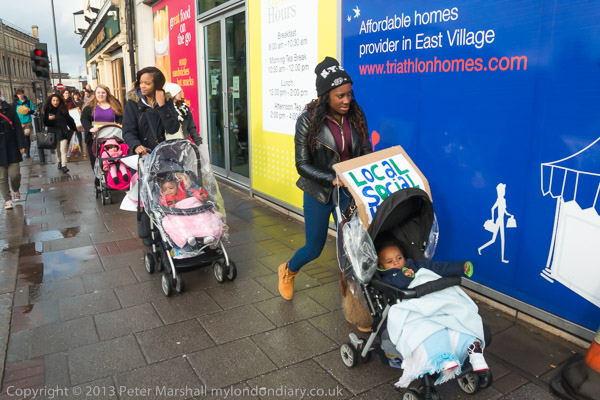
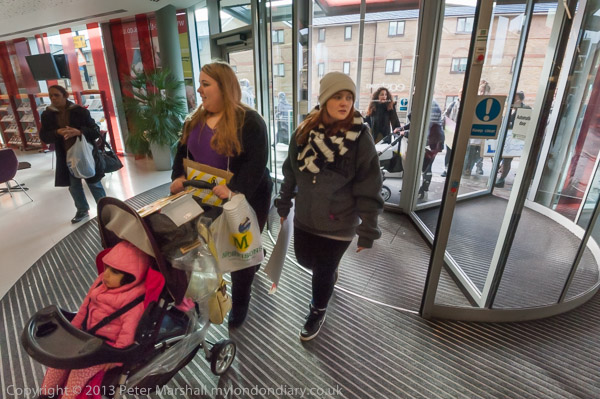
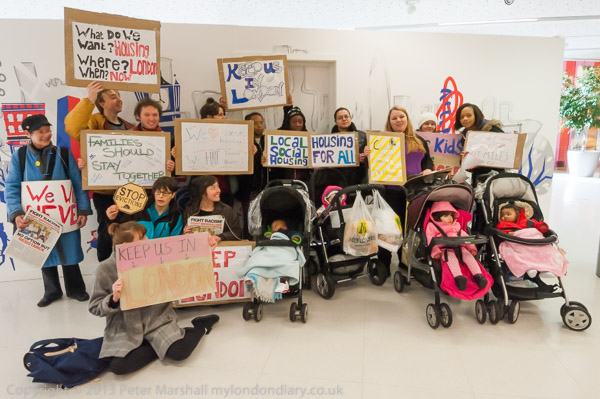
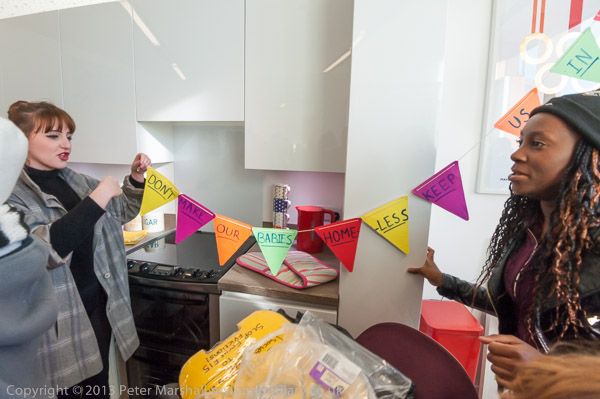
You can read more about the protes when a group of the mothers with their children went into the East Thames offices and held a party in their show flat on on My London Diary in Focus E5 Mothers Party Against Eviction. The East Thames staff who came to talk with them were generally sympathetic and attempted to reassure them but told them it was the responsibility of the council and not the housing association to rehouse them.


Kilburn Park 1988

Carlton Vale, Kilburn, Brent 1988 88-5k-26-positive_2400
Carlton Vale, Kilburn, Brent 1988 88-5k-26

My next walk at the end of May 1988 took me to Kilburn Park and Kilburn, and again in this post I have put the pictures in the order of my walk rather than the somewhat random order they have in the Flickr album 1988 London Photos. The church in the picture of Carlton Vale is St Augustine, Kilburn, and the large block of flats on the corner of Carlton Vale and Kilburn Park Rd was demolished in 2018-9, though I think the overhead walkway went many years earlier.

Kilburn, Brent 1988 88-5k-15-positive_2400
Kilburn, Brent 1988 88-5k-15

These lower blocks of flats were a part of the same South Kilburn estate and I think close to the corner of Carlton Vale and Cambridge Rd. The estate of high-density housing in low-rise flats and 11 tower blocks was begun in 1959 and further developed in the 1960s and 70s. Brent embarked on a comprehensive redevelopment in 2014, which is resulting in a considerable loss of social housing.

Oxford Rd, Kilburn, Brent, 1988 88-5l-61-positive_2400
Oxford Rd, Kilburn, Brent, 1988 88-5l-61

Unsurprisingly Oxford Road runs parallel with Cambridge Ave up to the Kilburn High Rd. These streets were two of those developed by local builder James Bailey in the 1860s, developing the area he called Kilburn Park. The name was given to the first underground station in Kilburn which opened in 1915 in Cambridge Ave.

Oxford Rd, Kilburn, Brent, 1988 88-5l-64-positive_2400
Oxford Rd, Kilburn, Brent, 1988 88-5l-64

These are typical houses of the era and were probably built from published designs in architectural pattern books. My grandather, who built a few houses on a much less grand scale had owned at least one of these and as children we were sometimes allowed to look at this beautifully illustrated volume.

Cambridge Avenue, Kilburn, Brent, 1988 88-5l-66-positive_2400
Cambridge Avenue, Kilburn, Brent, 1988 88-5l-66

At its southern end Cambridge Avenue leads to both Cambridge Road and the rather posher Cambridge Gardens.

Central Motors, Canterbury House, Canterbury Rd, Kilburn, Brent 1988 88-5l-52-positive_2400

Central Motors, Canterbury House, Canterbury Rd, Kilburn, Brent 1988 88-5l-52-positive_2400

Central Motors in Canterbury Rd still looks much the same, but Canterbury House, although retaining the facade had two extra storeys added in 2015-6 with luxury flats and penthouses. It as built in 1862 when this was still a part of Kilburn Lane as a railway signal factory for Saxby & Farmer who became one of the largest employers in the area but moved out around 1906.

South Kilburn Estate, Crone Court, Rupert Road, Brent, 1988 88-5l-53-positive_2400
Crone Court, South Kilburn Estate, Rupert Road, Brent, 1988 88-5l-53

Crone Court is on the corner of Rupert Rd and Denmark Rd on the South Kilburn Estate and is due for redevelopment in the next few years. The 12 storey block, 32m tall, was completed in 1964.

Joe's Used Ballbearing Emporium, Malvern Rd, West Kilburn, Westminster, 198888-5l-55-positive_2400
Joe’s Used Ballbearing Emporium, Malvern Rd, West Kilburn, Westminster, 1988 88-5l-55

Joe’s Used Ballbearing Emporium & Cycleworks was definitely in Malvern Rd, West Kilburn as it had a street sign higher up on the building. It had a remarkable window display and I took far too many pictures – a few of them here.

Joe's Used Ballbearing Emporium, Malvern Rd, West Kilburn, Westminster, 1988 88-5l-56-positive_2400
Joe’s Used Ballbearing Emporium, Malvern Rd, West Kilburn, Westminster, 1988 88-5l-56

Joe's Used Ballbearing Emporium, Malvern Rd, West Kilburn, Westminster, 1988 88-5l-41-positive_2400
Joe’s Used Ballbearing Emporium, Malvern Rd, West Kilburn, Westminster, 1988 88-5l-41

Joe's Used Ballbearing Emporium, Malvern Rd, West Kilburn, Westminster, 1988 88-5l-45-positive_2400
Joe’s Used Ballbearing Emporium, Malvern Rd, West Kilburn, Westminster, 1988 88-5l-45

Joe's Used Ballbearing Emporium, Malvern Rd, West Kilburn, Westminster, 198888-5l-31-positive_2400
Joe’s Used Ballbearing Emporium, Malvern Rd, West Kilburn, Westminster, 1988 88-5l-31

Click on any of the images to go to a larger version in my album 1988 London Photos from where you can browse the rest of the album.


Housing in Crisis – Newham 2015

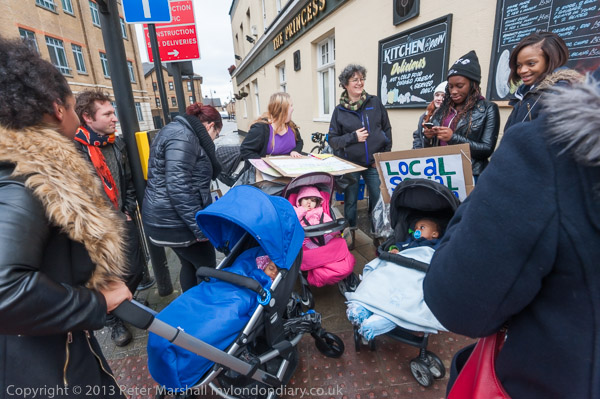
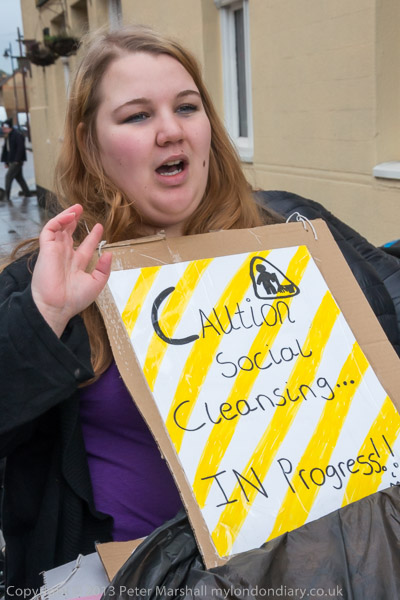
Six years ago I posted about a march through Stratford on Saturday 19th September against social cleansing in Newham, where the council has been rehousing people in private rented properties outside the borough, sometimes as far away as Wales or Liverpool. The directly elected Mayor of this almost monolithically Labour borough until 2018, Robin Wales, made clear his views that if people couldn’t afford to live in London they shouldn’t expect to live there, and council policies appear to reflect this. But Newham – and London generally – needs large numbers of relatively low paid workers – and Covid has helped us appreciate their contribution. Many, even those in jobs well above the London Living Wage, can’t afford market rents and certainly not to buy homes.

Local people, many of whom have lived in the area for years and have developed connections in the area – friends, families, schools etc – who for any reason become homeless want to be rehoused close to these people and services and demand that local resources be used to house local people.

Newham currently in 2021 has 27,000 people on its housing waiting list and 7,000 children in temporary accommodation. Until very recently the few social homes that were available were allocated using a system that gave priority to those in work and the new system will instead focus on health, need and overcrowding.

But the real problem that there is simply not enough social housing remains, and this is more the fault of national government policies over the years, under both Tory and New Labour. The most obvious and and damaging was of course Thatcher’s ‘right to buy’ which has drastically reduced to number of social housing homes, and in particular removed many of the more desirable properties, but councils have also been largely prevented by successive governments from building new and much needed social housing, as well as being starved of the cash needed to properly maintain existing properties and estates.

Many existing council estates were transferred to housing associations, which increasingly seem to be catering for those able to afford the very high ‘market’ rents in London. Councils too, thanks to New Labour housing policies have been demolishing council estates and developing the sites together with private developers to produce mainly homes for sale at high market prices, with often a great reduction in the number of social housing homes available.

Newham has seen a huge amount of building housing in recent years, both on the former Olympic site and elsewhere, with more tower blocks every time I visit the area, but almost all are high rent properties suited to young professionals, mainly working outside the borough, residencies for wealthier students, or expenive investment properties – usually bought with no intention of being lived in but simply to benefit from the increases in London property prices.

In 2013, Newham announced it was going to close a hostel for young single mothers who would then be dispersed in rented flats across England. The women decided to fight and the Focus E15 campaign began. Backed by members of the Revolutionary Communist Group and others who supported them in direct actions that often gained media coverage their fight succeeded and they became well-known nationally and developed into a much wider campaign for proper housing, particularly supporting others in the area with housing problems. As well as holding a street stall in the centre of Stratford every Saturday they accompanied people to the housing offices, gathered to prevent evictions and more.

The march in 2015, two years after the start of their campaign attracted the support of over 40 other organisations, mainly small local groups from around London and the South-East also fighting housing problems. Fortunately not all of them had speakers at the rally before the march but there were quite a few before it moved off from Stratford Park to march around the Town Centre.

As the ‘Housing for All’ march passed Foxton’s estate agency in the centre of Stratford, Class War rushed inside with their ‘New Homes for the Rich’ banner and staged a brief occupation while most of the marchers supported them from outside. They caused no damage and left after a few minutes for the march to continue.

There was another brief halt outside LB Newham’s Housing Office at Bridge House, which was closed. The marchers held banners and posed for photographs and Focus E15 spoke briefly about how their interventions here have prevented homless people from being sent to unsuitable private rented accomodation hundreds of miles away, getting them re-housed in London.

The march ended in the square on the Carpenters Estate in front of the block of four flats which Focus E15 occupied for four weeks as a protest a year earlier. This had made the national news and had ended with the council promising to bring some homes back into occupation – though a year later only 28 of around the 400 empty homes had been re-let. There were a few more speeches and then a party began.


All photographs on this and my other sites, unless otherwise stated, are taken by and copyright of Peter Marshall, and are available for reproduction or can be bought as prints.


Housing: Focus E15 – Newham Show 2016

Housing remains a major problem, with many people and families in London still having to live in inadequate and often dangerous conditions. It isn’t that there is a shortage of homes, as many lie empty. There is a shortage, but it is of homes that people can afford to live in.

What London desperately needs is more low-cost housing. Council housing used to provide that, and by the late 1970s almost a third of UK households lived in social housing provided on a non-profit basis. Post-war building programmes, begun under Aneurin Bevan, the Labour government’s Minister for Health and Housing led to the building of estates both in major cities and the new towns that provided high quality housing at low rents, attempting to provide homes for both the working classes and a wider community.

Successive Conservative governments narrowed the scope of public housing provision towards only providing housing for those on low income, particularly those cleared from the city slums, reducing the quality of provision and also encouraging the building of more high-rise blocks, something also favoured by new construction methods of system building. Housing became a political battle of numbers, never mind the quality.

It was of course the “right to buy” brought in under Mrs Thatcher that was a real death blow for social housing. As well as losing many of their better properties, councils were prevented from investing the cash received from the sales in new housing – and the treasury took a cut too. Tenants seemed to do well out of it, getting homes at between half and two thirds of the market price, but often having bought their homes found the costs involved were more than they could afford, particularly when repairs were needed. Many of those homes were later sold and became “buy to let” houses.

Around ten years ago I passed an uncomfortable 25 minutes of a rail journey into London when a young student with a loud public-school voice explained to two friends what a splendid scheme “buy to let” was. He was already a landlord and profiting from it. You didn’t he told them actually have to have any money, as you could borrow it against the surety of your existing property – or a guarantee from Daddy – at a reasonable rate. You then bought a house and let it out, through an agency to avoid any hassle of actually dealing with tenants. Even allowing for the agent’s fees the rents you charged would give you a return on your investment roughly twice you were paying on your loan. It was money for nothing. And so it was for those who could get banks and others to lend them money, though recent changes have made it a little less profitable.

New Labour did nothing to improve the situation, and even made things worse through encouraging local councils to carry out regeneration schemes, demolishing council estates and replacing them with a large percentage of private properties, some largely unaffordable “affordable” properties and usually a token amount of actual social housing. The situation has been was still worsened since then, both by extending the right to buy to Housing Association properties and also by changes in tenure for those still in social housing. Successive governments have also driven up both house prices and rents by various policies, particularly the subsidies for landlords provided by Housing Benefit.

I’ve written before about Focus E15, a small group based in Newham whose activities have prompted some national debate. Begun to fight council moves to close their hostel for single mothers and disperse them to privately rented accommodation across the country (like Katie in ‘I, Daniel Blake who gets sent to Newcastle), having succeeded in their fight to stay in London they widened their scope to help others fight for decent housing – particularly in Newham, where the Labour council under Mayor Robin Wales was failing to deal with some of the worst housing problems in the country – while keeping large numbers of council properties empty.

Eventually Newham got rid of Robin Wales (and their campaign almost certainly helped) but the housing problems remain. A few days ago Focus E15 tweeted

Brimstone house in Stratford is the former FocusE15 hostel, now run by Newham Council as temporary and emergency accommodation.

One of Robin Wales’ big PR operations was the annual ‘Mayor’s Newham Show’ held in Central Park. Focus E15 were stopped from handing out leaflets inside or outside the show and on 1oth July 2016 set up a stall and protest on the main road a few hundred yards away. After handing out leaflets to people walking to the show for an hour or so, they briefly occupied the balconies of the empty former Police Station opposite Newham Town Hall on the road leading to the show ground in a protest against the Mayor’s housing record and policies.

Housing Awards – 2016

A resident of the Aylesbury Estate in Southwark speaks about the council’s terrible record

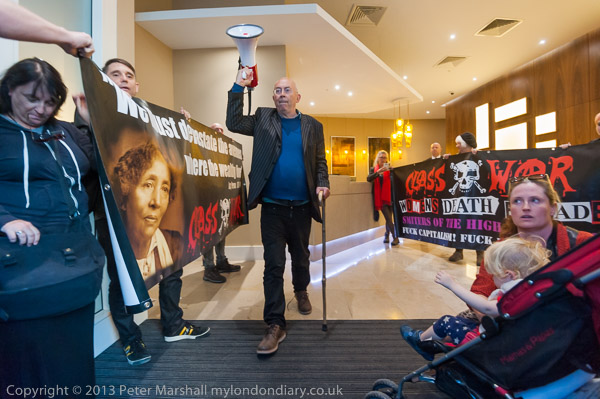
Most people have never heard of the annual Municipal Journal Local Authority Awards, a kind of self-congratulatory back-slapping beanfeast for local authorities on the lines of the Oscars and a dinner at the Hilton, doubtless on our council tax.

Protesters ignore hotel staff and police who tell them they must move

The news in 2016 that two of London’s councils with the worst records for housing were nominated for awards angered London housing protesters and Focus E15, the Revolutionary Communist Group, Class War, Architects 4 Social Housing and others organised a protest outside the Park Lane Hilton including a rather different awards ceremony.

Protesters from Newham blame Labour Mayor Robin Wales ‘Robin the poor’

They pointed out that Southwark had by 2016 demolished 7,639 units of social housing, sold off public land to developers, and evicted people unlawfully and accuse Newham of social cleansing, rehousing people in distant parts of the country while council properties remain empty, and of causing mental health problems through evictions, homelessness and failure to maintain properties.

Simon Elmer of Architects for Social Housing objects to being assaulted by a police officer.

Police tried to move the protesters away from the hotel entrance and across the service road, but most resisted and held their ground, with police keeping the entrance clear, A few did move across the road were they could hand out flyers people arriving by taxi. There were a a few minor incidents when police pushed a protester holding a banner and again when several protesters held banners and placards in front of the restaurant windows.

Class War had brought their banner with a quote from US anarchist Lucy Parsons “We must devastate the avenues where the wealthy live” particularly appropriate for a protest in Mayfair and outside the Hilton. Police made a rather unwise and ineffectual attempt grab this from them but soon gave up.

People continued to arrive for the event and to walk past the protesters. Many had come from towns and cities across the UK for the event and where probably not particularly away of the situation in London boroughs.

I played around a little with the reflections in the polished metal canopy above the Hilton entrance, which was doing a good job in keeping the light rain off most of the protesters, though I was getting a little wet.

Looking up from the service road we could see those attending the awards ceremony talking and drinking before the dinner, while outside the protesters were beginning their own awards.

There were quite a few speeches from various of the activists, and Southwark won the award as London’s worst council, with Newham a close second.

Notting Hill – Notting Dale – 1988

Nottingwood House, Clarendon Rd, Notting Hill, Kensington & Chelsea, 1988 88-1e-62-positive_2400
Nottingwood House, Clarendon Rd, Notting Hill, Kensington & Chelsea, 1988

Notting Hill – and the London Borough of Kensington & Chelsea – is very much a place of two halves and these two pictures illustrate this, with the large block of council housing built on the site of the Notting Hill brewery and other industrial buildings shortly before the war.

Houses, Blenheim Crescent, Clarendon Rd, Notting Hill, Kensington & Chelsea, 1988 88-1e-61-positive_2400
Houses, Blenheim Crescent, Clarendon Rd, Notting Hill, Kensington & Chelsea, 1988

This picture was taken from roughly the same place as the previous picture, but from the opposite side of the road. Houses in Blenheim Crescent are currently on sale for £4 million. Of course many of the social housing tenants in Nottingwood House took advantage of Thatcher’s social housing giveaway ‘Right to Buy’, though quite a few then found themselves needing to sell these properties, with many becoming ‘buy to let’ properties – now at perhaps £2000 a month, and other flats on sale for perhaps £800,000, so the difference here is rather less real than when I made this picture.

Bramley Arms, Bramley Rd, Freston Rd, Notting Hill, Kensington & Chelsea, 1988 88-1e-53-positive_2400
Bramley Arms, Bramley Rd, Freston Rd, Notting Hill, Kensington & Chelsea, 1988

I think the pub had closed shortly before I took this picture. The building is still there but is now offices with flats on the upper floor. The pub has appeared in at least five major films including Sid and Nancy (1986), Quadrophenia (1979) and The Lavender Hill Mob (1951) as well as TV series.

This area was cut off on two sides by the construction of the Westway and the West Cross Route in the 1960s and became very run down and what had been the southerns section of Latimer Rd was renamed Freston Road. Oddly, Latimer Road station (on Bramley Rd) was not renamed, though it is no longer close to Latimer Road. In 1977 squatters occupied houses and flats the GLC planned to demolish in Freston Road and declared the Republic of Frestonia. The GLC granted them temporary leave to remain and the area was developed more sensitively by the Bramley Housing Co-operative from 1985. You can see the ‘Underground’ bridges in the distance on both streets in this photograph.

Freston Rd, Notting Hill, Kensington & Chelsea, 1988 88-1e-52-positive_2400

This neat and unpretentious factory building is still present on the corner of Freston Rd and Evesham Rd, but now surrounded by a large redevelopment and painted a dull grey.

Mural, Harrow Club, Freston Rd, Notting Hill, Kensington & Chelsea, 1988 88-1e-45-positive_2400
Mural, Harrow Club, Freston Rd, Notting Hill, Kensington & Chelsea, 1988

Although the area around and under the Westway was fairly desolate in 1988, attempts had been made to brighten the area with a number of well painted murals. The Harrow club was set up by former pupils of Harrow School in 1883 as The Harrow Mission Church “to improve the quality of life for local people, aiding harmony and promoting opportunity” for the people of Notting Dale and continues to do so.

Freston Rd, Westway, Notting Hill, Kensington & Chelsea, 1988 88-1e-44-positive_2400

More graffiti.

Freston Rd,, Stable Way, Westway, Notting Hill, Kensington & Chelsea, 1988 88-1e-35-positive_2400

The caravans are around Stable Way. The car is coming down a link road from the Westway which runs across the top of the picture to the West Cross Route. This is the edge of a BMX cycle circuit at the north end of Freston Rd.

Freston Rd, Westway, Notting Hill, Kensington & Chelsea, 1988 88-1e-32-positive_2400

Another picture from the BMX track beyond the end of Freston Road, close to the Westway junction with the West Cross Route.

Freston Rd, Westway, Notting Hill, Kensington & Chelsea, 1988 88-1e-31-positive_2400

This picture gives a more informative view of the location, though I can find no trace of this oval now, but it was I think a part of the BMX circuit at the north end of Freston Rd.

Freston Rd,, Westway, Notting Hill, Kensington & Chelsea, 1988 88-1e-23-positive_2400

The landscaped area here is at the end of Freston Rd, with the Harrow Club at left.

Westway, Notting Hill, Kensington & Chelsea, 1988 88-1e-14-positive_2400

Underneath the Westway and the links from the West Cross Route.

Westway, Notting Hill, Kensington & Chelsea, 1988 88-1e-13-positive_2400

Various sports facilities underneath the motorway junction. Opened in 1970 as the A40(M) its status was downgraded in 2000 to an all-purpose road. There were plans to include a separated cycleway on parts of it announced in 2013 but these were scrapped in 2017. However Kensington & Chelsea Council have opposed all protected cycle routes on their streets, and even scrapped a temporary route which was implemented during the Covid lockdown.

More from the other half of Notting Hill in another post.


All photographs on this and my other sites, unless otherwise stated, are taken by and copyright of Peter Marshall, and are available for reproduction or can be bought as prints.


North Kensington 1988 (1)

I continued my personal exploration of London in January 1988 with some extended walks around the north of Kensington. It was an area I was largely unfamiliar with, though I had walked just outside its northern edge on the towpath of the Grand Union in Kensal Town – and had been to a few meetings and workshops in a studio in that area.

In the following years I would come every August to carnival and photograph it on Ladbroke Grove – and you can see many of those pictures in the album ‘Notting Hill Carnival – the 1990s’, but in 1988 my version of Notting Hill was still coloured by the memories of the press reports of the Notting Hill riots 30 years earlier – and the continuing misrepresentation of the carnival in the media as a hotbed of violence.

St Mark's Rd, North Kensington, Kensington & Chelsea, 1988  88-2c-65-positive_2400
St Mark’s Rd, North Kensington, Kensington & Chelsea, 1988

These pictures come from the area north of the Westway, the most destructive of all road projects in Greater London, laying waste a wide swathe through the area when it was constructed in 1964-1970. Part of a plan for ‘Ringway 1′, the London Motorway Box’ conceived in the 1950s when the car was seen as the future, and the development seen as so obviously beneficial that the GLC didn’t even bother to present evidence to justify the case for it and the huge expense involved.

St Mark's Rd, North Kensington, Kensington & Chelsea, 1988  88-2c-62-positive_2400
St Mark’s Rd, North Kensington, Kensington & Chelsea, 1988

But it was the social destruction caused by the Westway that awakened many to the huge impact of road-building and the end of the massive road building plans for a number of concentric ring motorways in London that had come from the drawing boards of our post-war planners. The only ring that was completed was of course the M25, mostly passing through rural land on the outskirts of the city, providing perhaps the most accurate boundary to London.

Ladbroke Grove, North Kensington, Kensington & Chelsea, 1988  88-2c-46-positive_2400
Ladbroke Grove, North Kensington, Kensington & Chelsea, 1988

I find it hard to look down on this wide expanse of largely empty street and recognise it as Ladbroke Grove, that place where I’ve so often stood since inside crowds of people standing and watching and dancing along behind the carnival floats.

Paul House, Ladbroke Grove, North Kensington, Kensington & Chelsea, 1988  88-2c-45-positive_2400
Paul House, Ladbroke Grove, North Kensington, Kensington & Chelsea, 1988

Back in 1988 most blocks of council flats were still entirely open to the public, with no security doors or entry systems, and even the few that had these, the doors were largely wedged open by residents to make access easier. I was able to walk in and walk up to take views from the stairways and balconies – as in this picture and that above of the street.

Saint Michael, North Kensington, Ladbroke Grove, Kensington & Chelsea, 1988  88-2c-44-positive_2400
Saint Michael, North Kensington, Ladbroke Grove, Kensington & Chelsea, 1988

Saint Michael and All Angels, the Anglican Parish Church here on Ladbroke Grove is Grade II listed, as the listing text states was built in 1871 to the designs of J and JS Edmeston in a Rhineland Romanesque style though in London stock brick with terracotta, red Mansfield and Forest of Dean stone dressings, and clay roof tiles.

St Charles Square, Ladbroke Grove, North Kensington,  88-2c-43-positive_2400
St Charles Square, Ladbroke Grove, North Kensington, 1988

Sean’s poorly written tag also appears on the previous picture which shows the same building taken a yard or two further from the corner of Ladbroke Grove. The house is a substantial one facing onto Ladbroke Grove, the main thoroughfare in the area, and these steps are up to a second front door for its sizeable rear extension. The main house has five floors including a basement (which explains the steps) and an attic. The next house on Ladbroke Grove, behind me as I took this picture, has a blue plaque for Hablot Knight Browne, better known as ‘Phiz’, whose illustrations enlivened the novels of Charles Dickens and who lived here from 1874-80.

Ladbroke Grove, Notting Hill, Kensington & Chelsea, 1988  88-2c-41-positive_2400
Ladbroke Grove, Notting Hill, Kensington & Chelsea, 1988

There was something of a brooding, menacing atmosphere of these house-fronts on Ladbroke Grove, with shuttered lower windows and bushes and trees in the narrow space in front of the basement. The house looks much more open now as the last tree here was taken down around ten years ago and the whole row of houses is in much better condition. These houses which were pretty run-down back in 1988 are now almost all flats, perhaps eight to a house, and a nearby basement flat sold for over £1million in 2017.

All these pictures are from my album 1988 London Photos. Clicking on any will take you to a larger version in the album which you can the explore.


All photographs on this and my other sites, unless otherwise stated, are taken by and copyright of Peter Marshall, and are available for reproduction or can be bought as prints.