National Housing Demo, London 2026

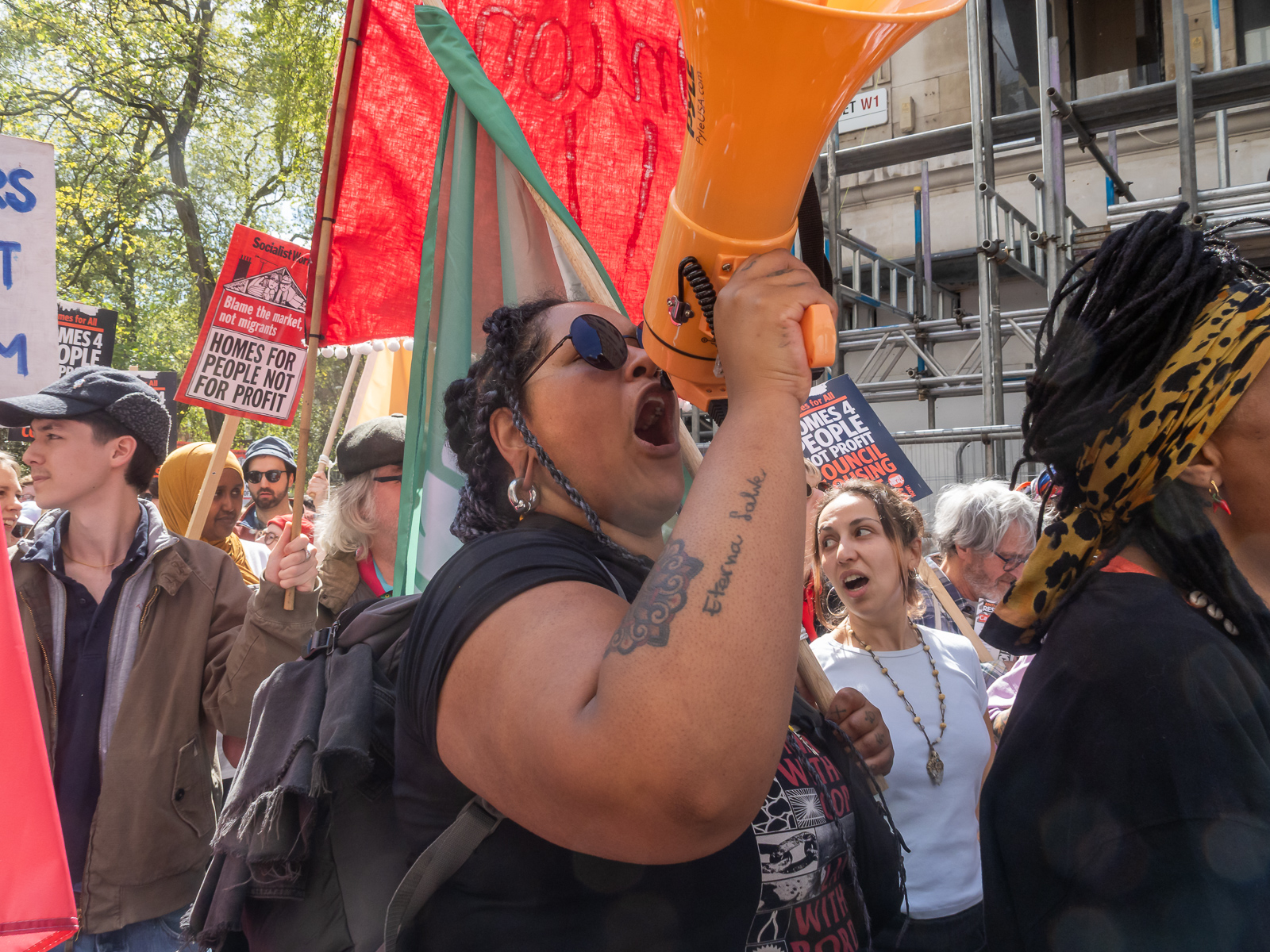
National Housing Demo, London: Last Saturday, 18th April 2026, I photographed the National Housing Demonstration which began with a rally in Soho Square.
National Housing Demo, London 2026
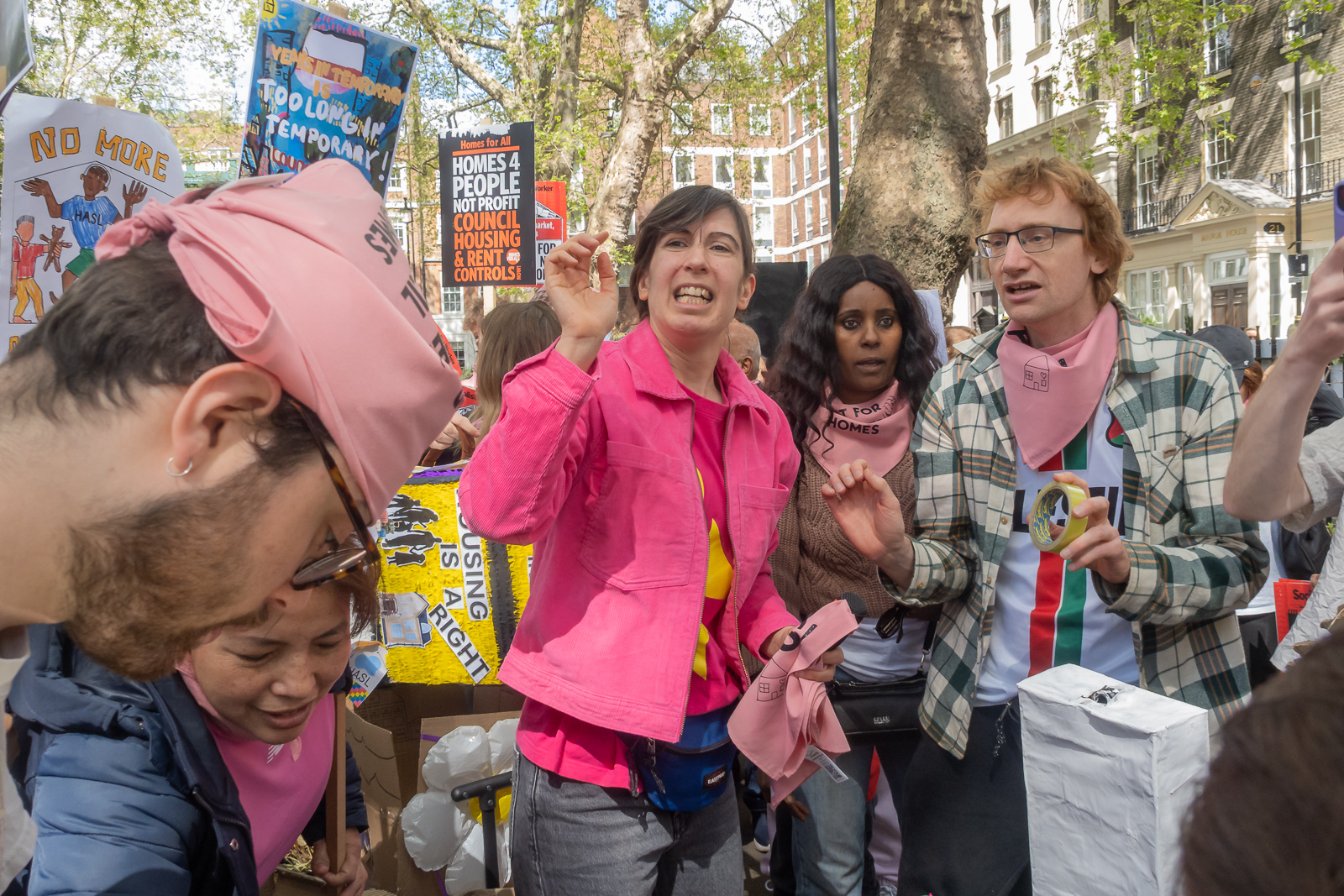
London, UK. 18 Apr 2026. Several thousands of private renters, social housing tenants, workers, disabled, people of colour, migrants, campaigners and others suffering under our current housing system with excessive rents for poor quality homes came to demand rent controls and more council housing. The current system allows private developers and landlords to make large profits at the expense of tenants. They marched along Oxford Street from a rally in Soho Square. Peter Marshall

In the years after the end of the Second World War, Britain began a concerted effort to address the housing problems. Money was short but succesive governments did all they could to address the problems of old, poorly built slums thrown up in the nineteenth century as industrialisation caused a huge population surge in our cites and large towns.
National Housing Demo, London 2026
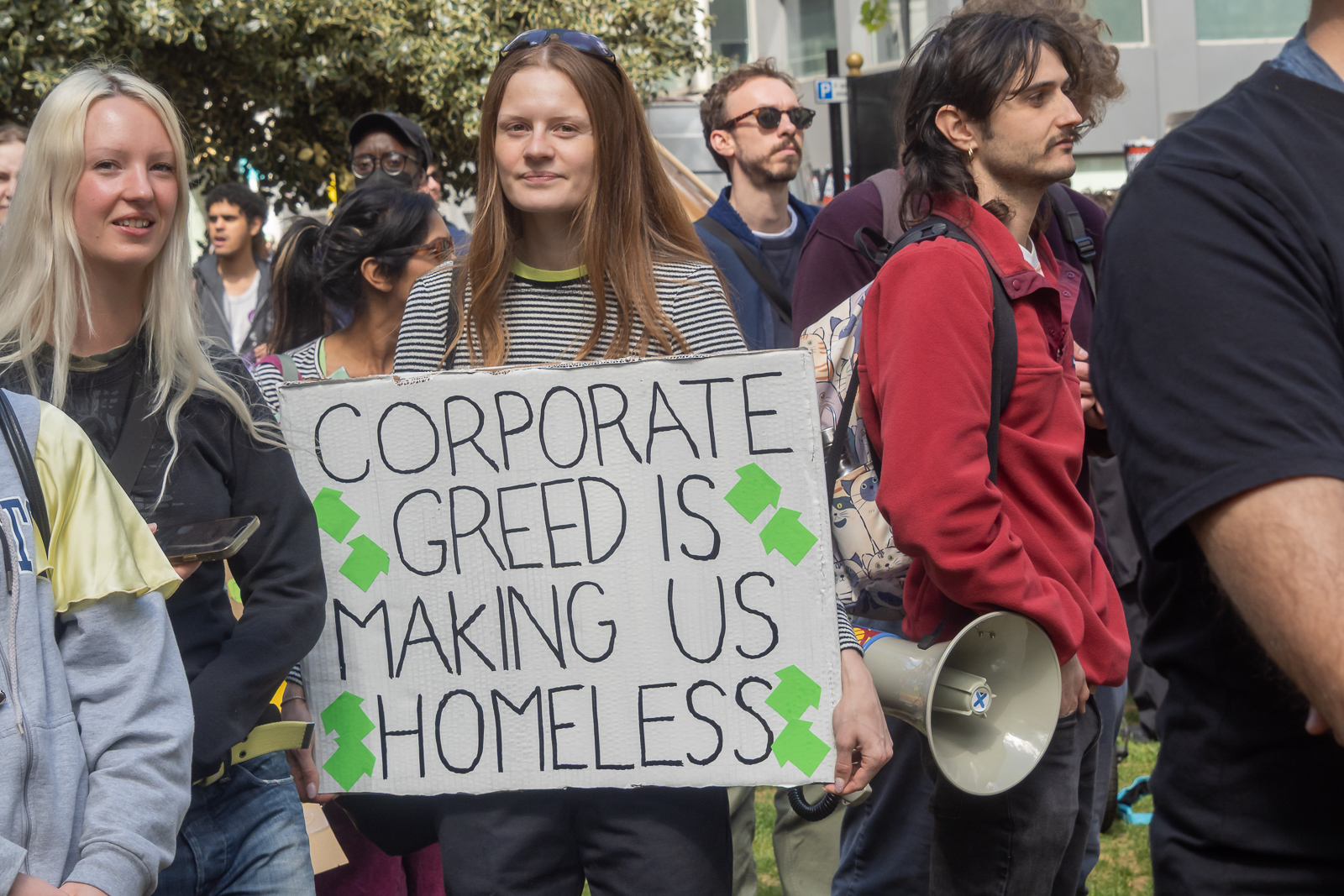
London, UK. 18 Apr 2026. ‘Corporate Green Is Making Us Homeless’.

During the war, Churchill’s government had laid plans to build 500,000 prefabs, “with a planned life of up to 10 years, within five years of the end of the Second World War”. And from 1945-51, 1.2 million new houses were built including around 150,000 prefabs.
National Housing Demo, London 2026

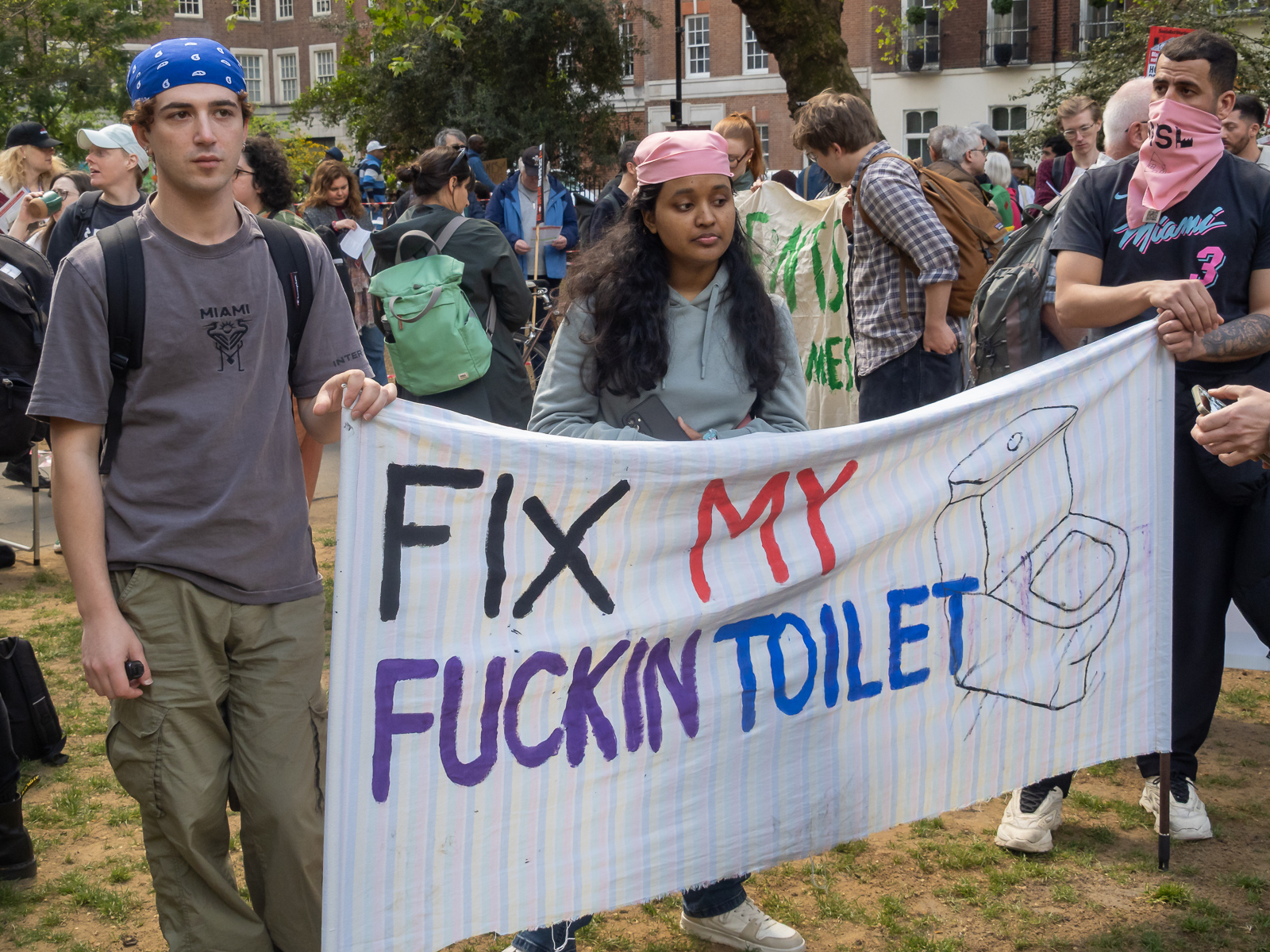
For many of the 1.2 million families moving into these new properties it was the first time they had their own bathrooms and toilets, no longer sharing often rather primitive facilities with neighbours in multi-occupied and overcrowded properties.
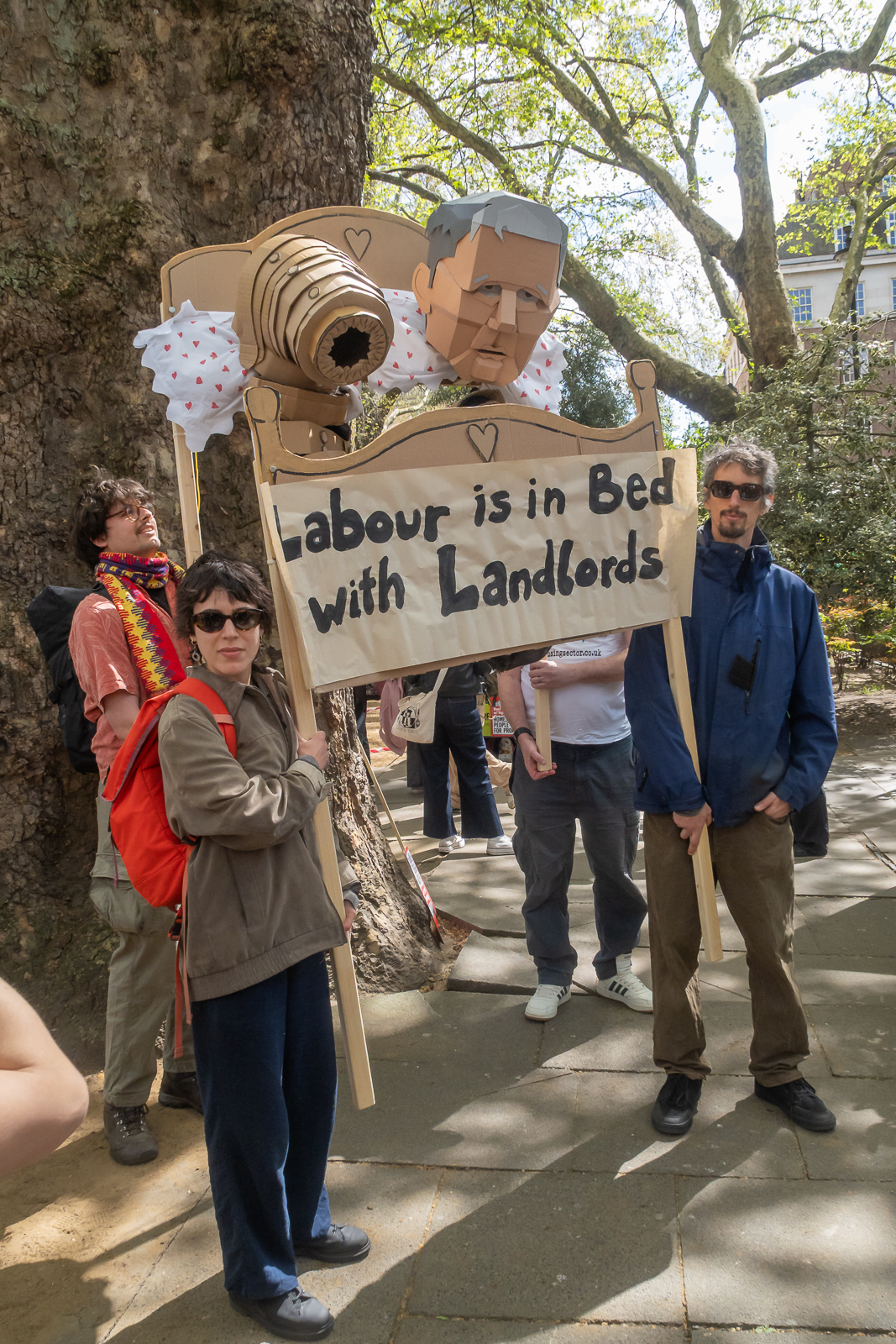
London, UK. 18 Apr 2026. ‘Labour is in Bed with Landlords’

There were new towns and local authorites were encouraged to build council housing, although under the Conservatives the emphasis altered in the 1950s to providing “welfare accommodation for low income earners” rather than meeting more general housing needs. But under MacMillan as Housing Minister they still aimed to build 300,000 homes a year.
National Housing Demo, London 2026

Mistakes were made. It was also largely when the Conservatives were in power that we saw a huge shift towards building high-rise, and in particular to system-built blocks. Some of the best of these are now largely privately owned and expensive flats, but others, often because of shoddy building practices have had to be demolished.
National Housing Demo, London 2026
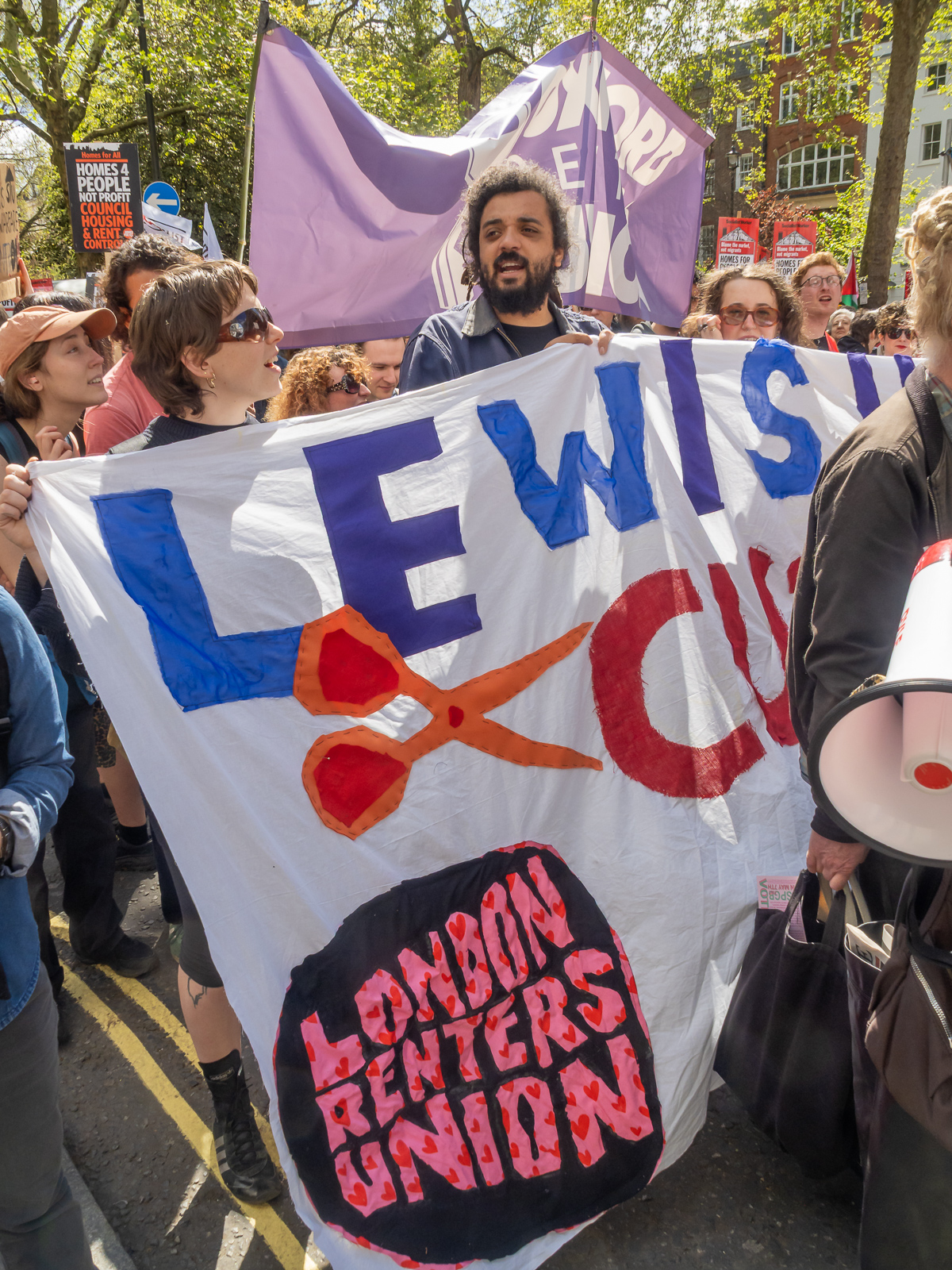
London, UK. 18 Apr 2026. London Renters Union

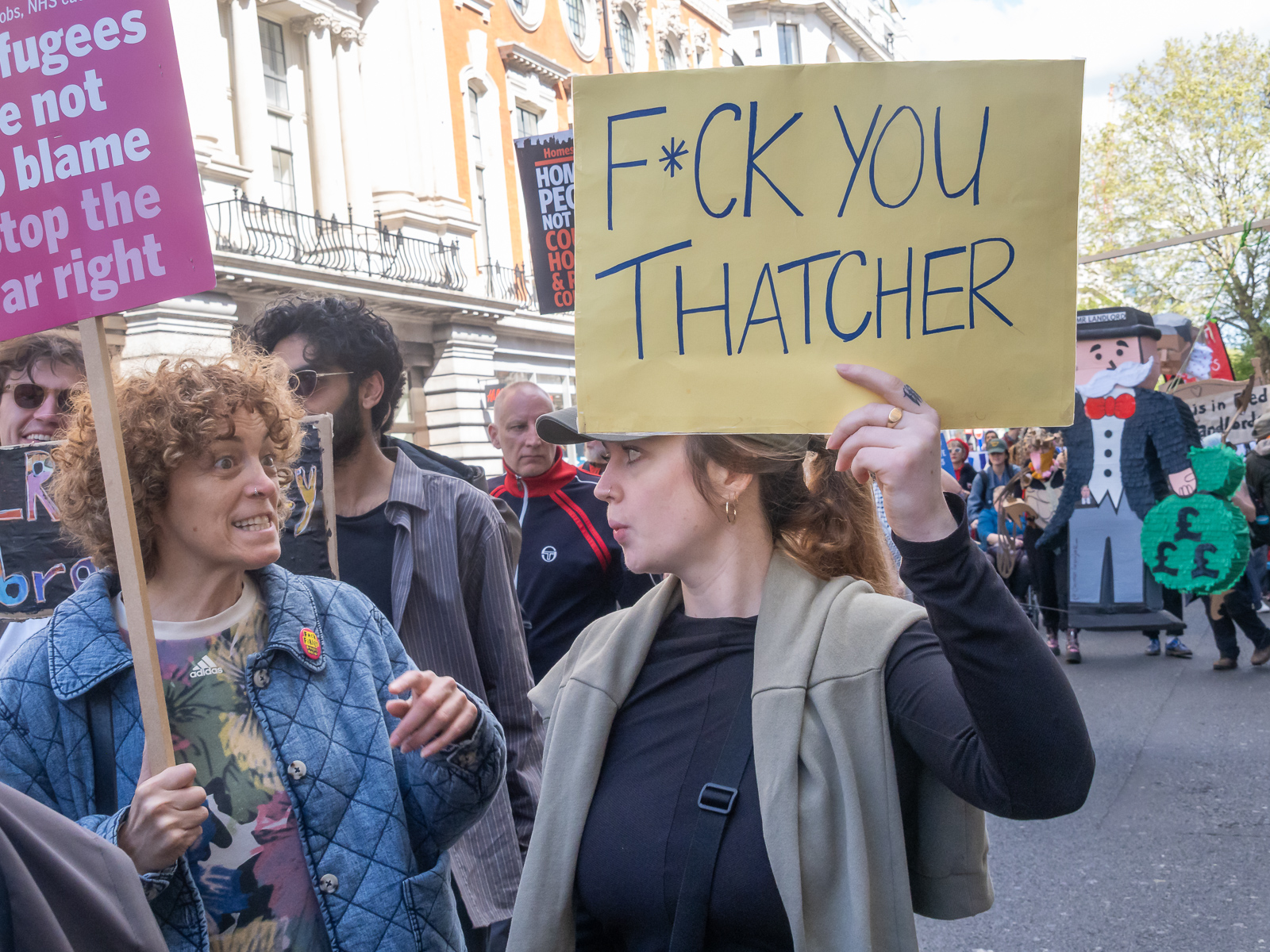
Increasingly Conservative policies changed to encouraging home ownership rather than municipal provision of low-cost accomodation. And the final death blows came under Thatcher, who prevented authorities from using local tax money to build new housing and serverely reduced local housing stocks with the ‘right to buy’ – and added final cruel twist by refusing to allow them to use the money from sales to build. Right to buy also meant councils many of their larger and more desirable properties.
National Housing Demo, London 2026
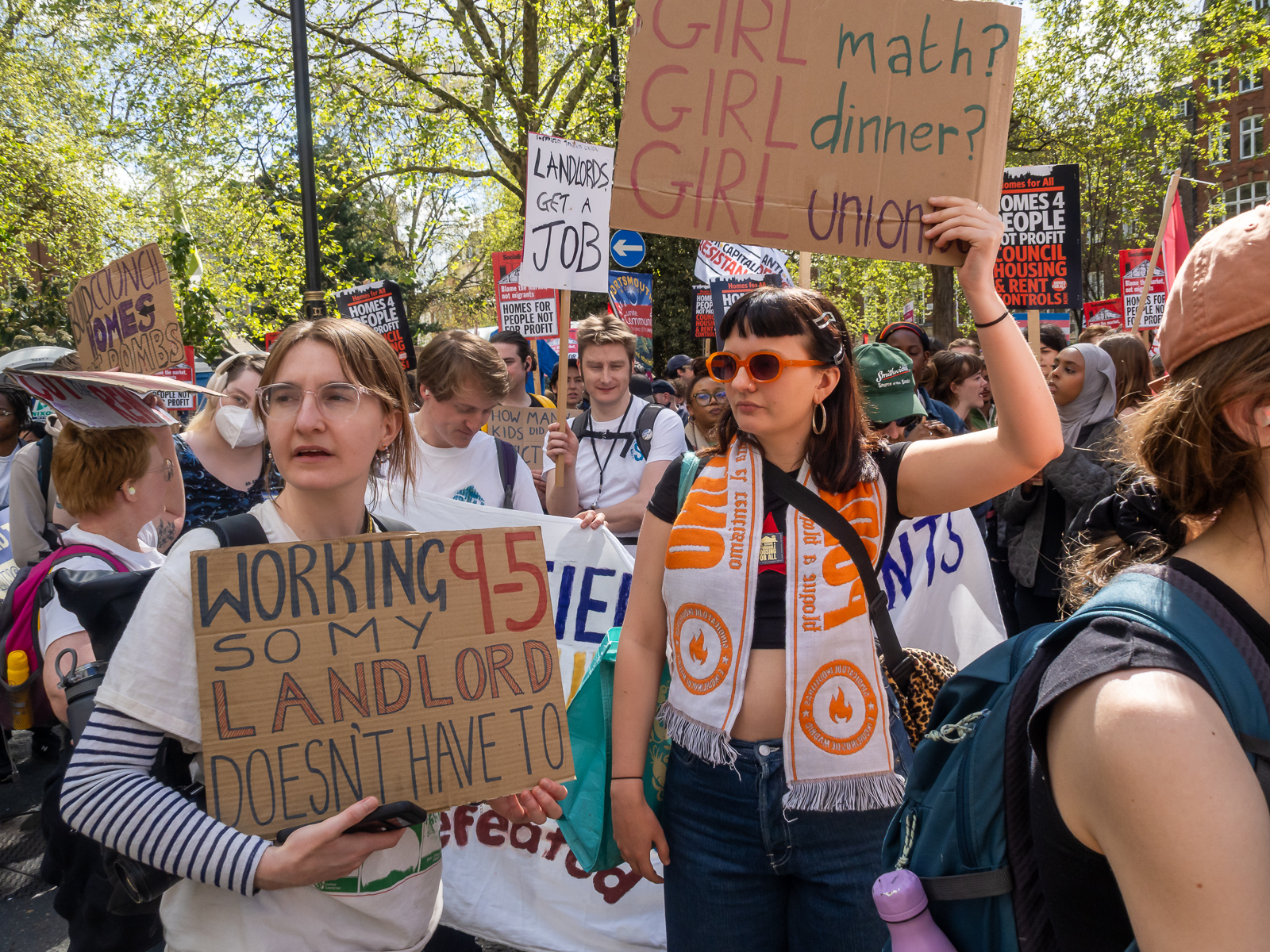
London, UK. 18 Apr 2026. ‘Working 9-5 so my landlord doesen’t have to.’
National Housing Demo, London 2026

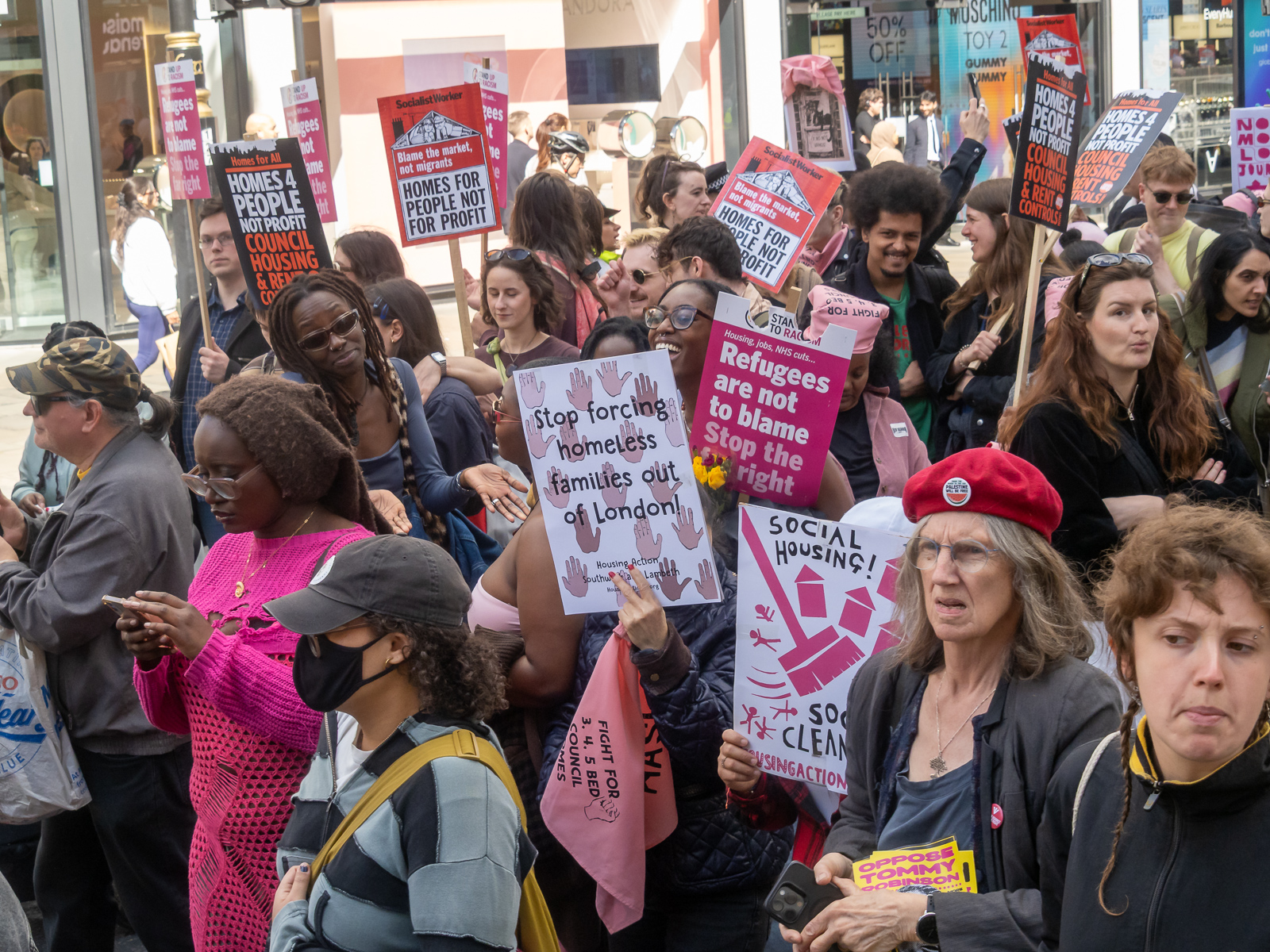
Thatcher’s policies resulted in an increase in the waiting lists for council accommodation and meant that councils had to take desperate measures to try to rehouse those they had a statutory obligation to – resulting in a huge increase in the use of often sub-standard temporary accommodation often far away from their local areas, and in people being rehoused with little security in poor private flats.
National Housing Demo, London 2026

New Labour did little if anything to improve things, except for property developers. In London and elsewhere we have seen a succession of well-built council estates with years of life being allowed to deteriorate and then, rather than being refurbished at relatively low cost, being demolished and replaced by developers working with councils largely as high-cost private developments with little social housing.
National Housing Demo, London 2026
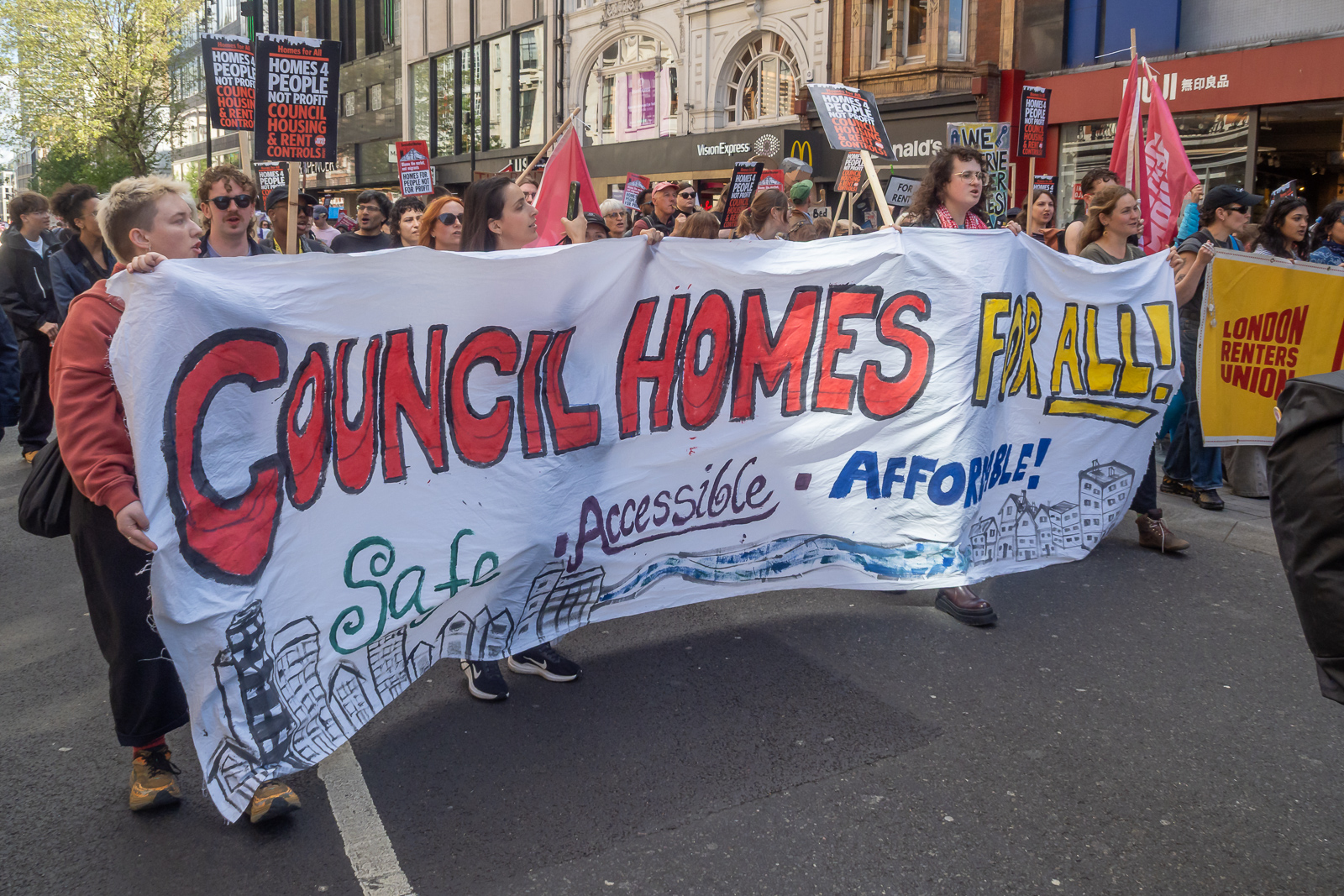
London, UK. 18 Apr 2026. ‘COUNCIL HOMES FOR ALL!’.

Although there were a few examples of succesful regeneration, most have been disastrous for their former residents, priced out of their local areas, with those who had bought their properties sometimes being seriously defrauded.
National Housing Demo, London 2026
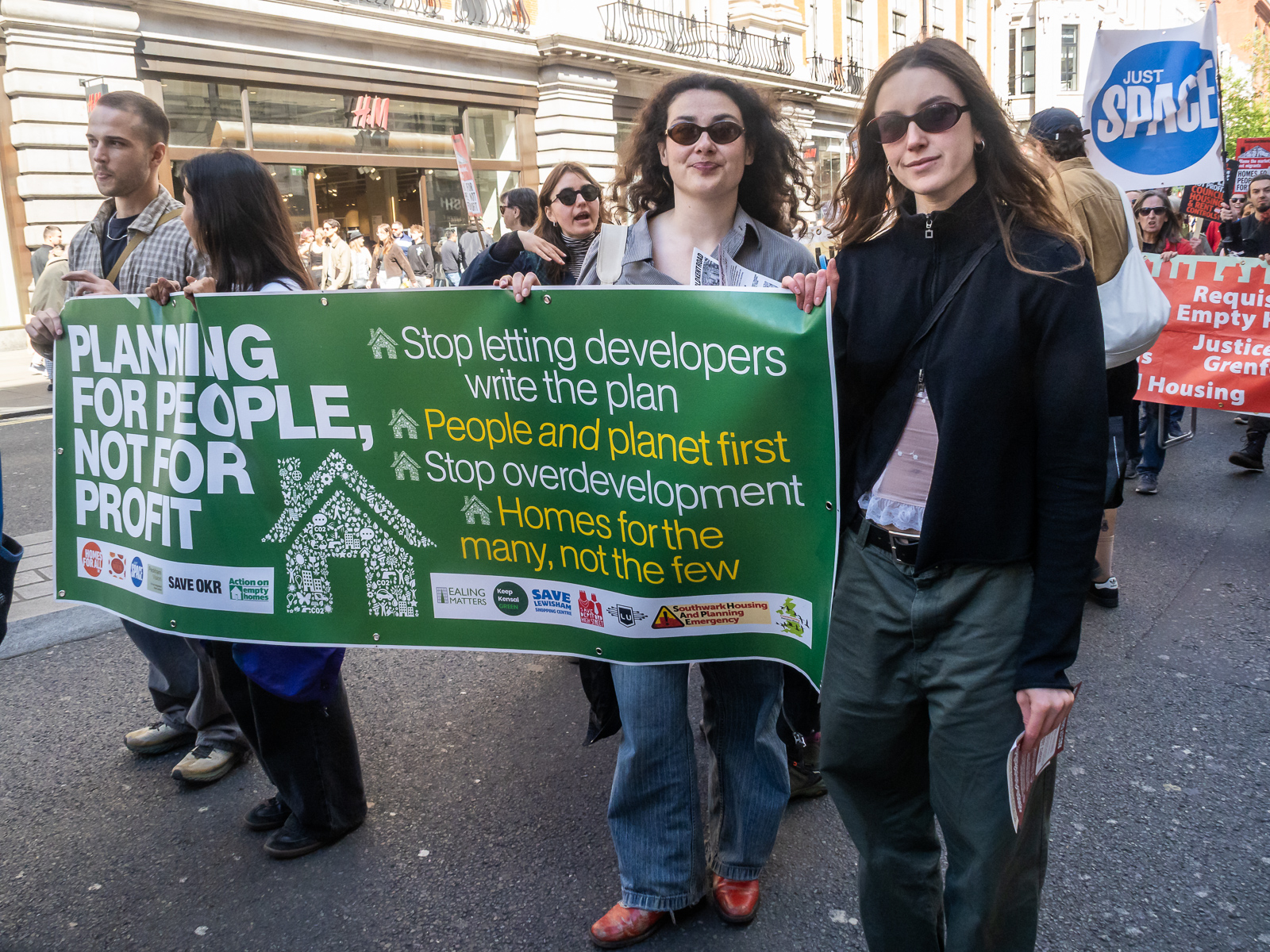
London, UK. 18 Apr 2026. ‘PLANNING FOR PEOPLE NOT FOR PROFIT’.

Many of these regenerated estates are now full of empty homes owned as investments by overseas buyers, buying them simply to profit over a few years from the increasing house prices in the UK and in cities including London in particular.
National Housing Demo, London 2026
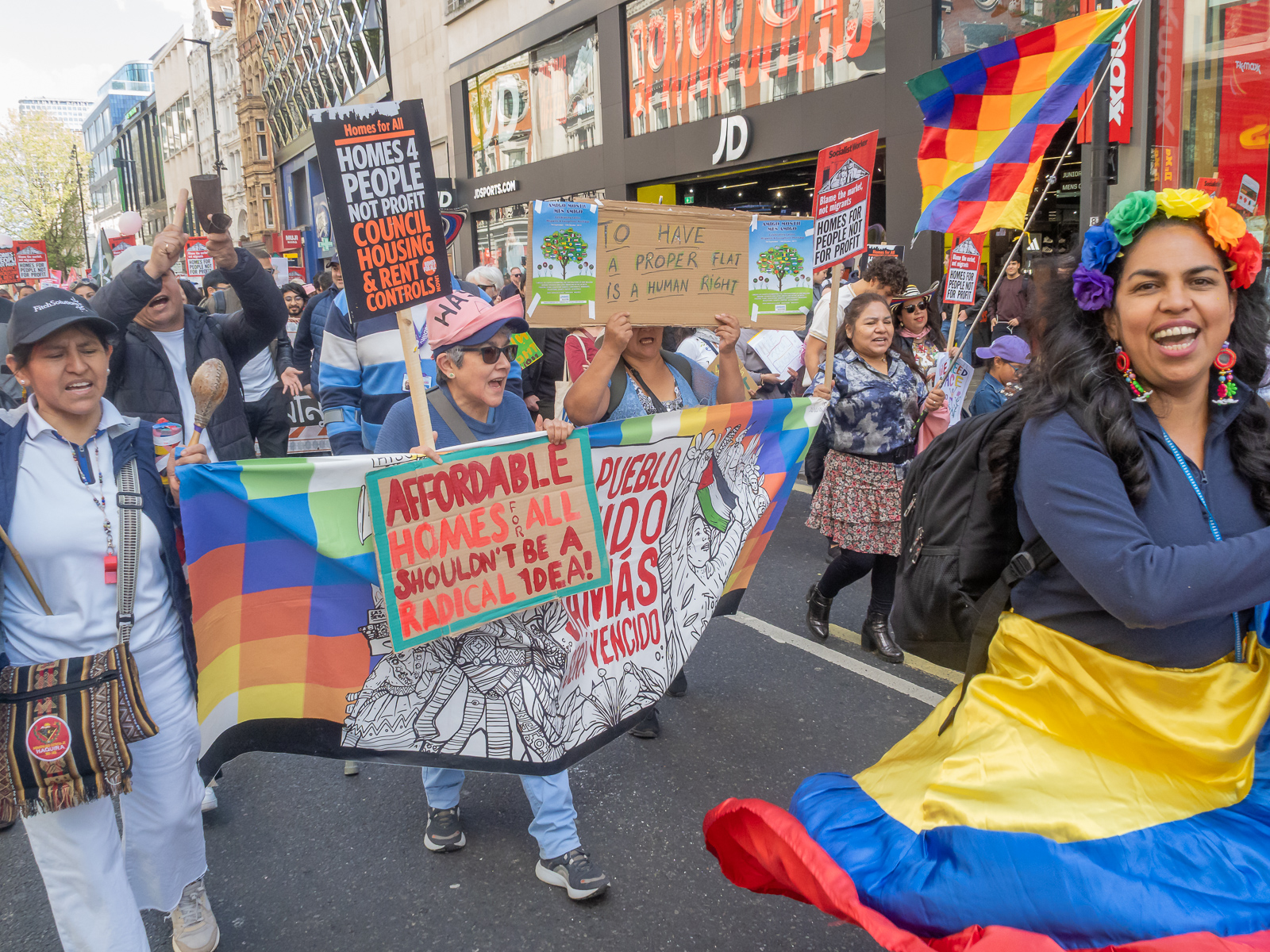
London, UK. 18 Apr 2026. ‘AFFORDABLE HOMES FOR ALL SHOULDN’T BE A RADICAL IDEA’.

Under the coalition government and succesive Tory governments the housing crisis has continued to grow, with rents in London skyrocketing. And bit by bit the security of tenure that council property used to provide has been whittled away. So far the Labour landslide has changed nothing.
National Housing Demo, London 2026
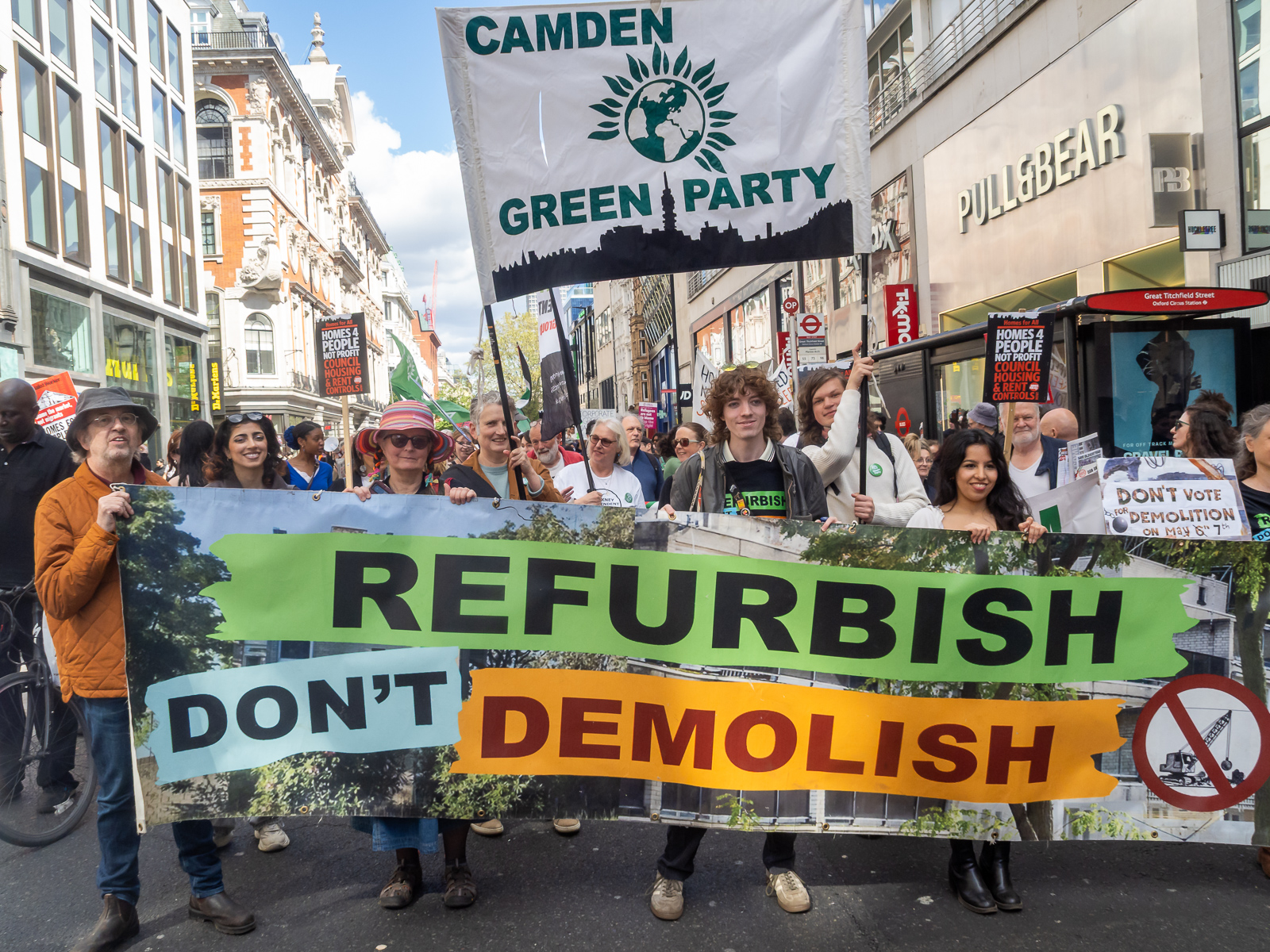
London, UK. 18 Apr 2026. ‘REFURBISH DON’T DEMOLISH’.

There are some simple policies the protesters were calling for that could help. There are huge numbers of properties that are long-term empty and there could be greater powers of compulsory purchase. There could be changes to make it possible for local authorities to maintain and refurbish existing estates and build more social homes. We could stop getting estate agents and developers to dominate our housing policies for their own benefits.
National Housing Demo, London 2026
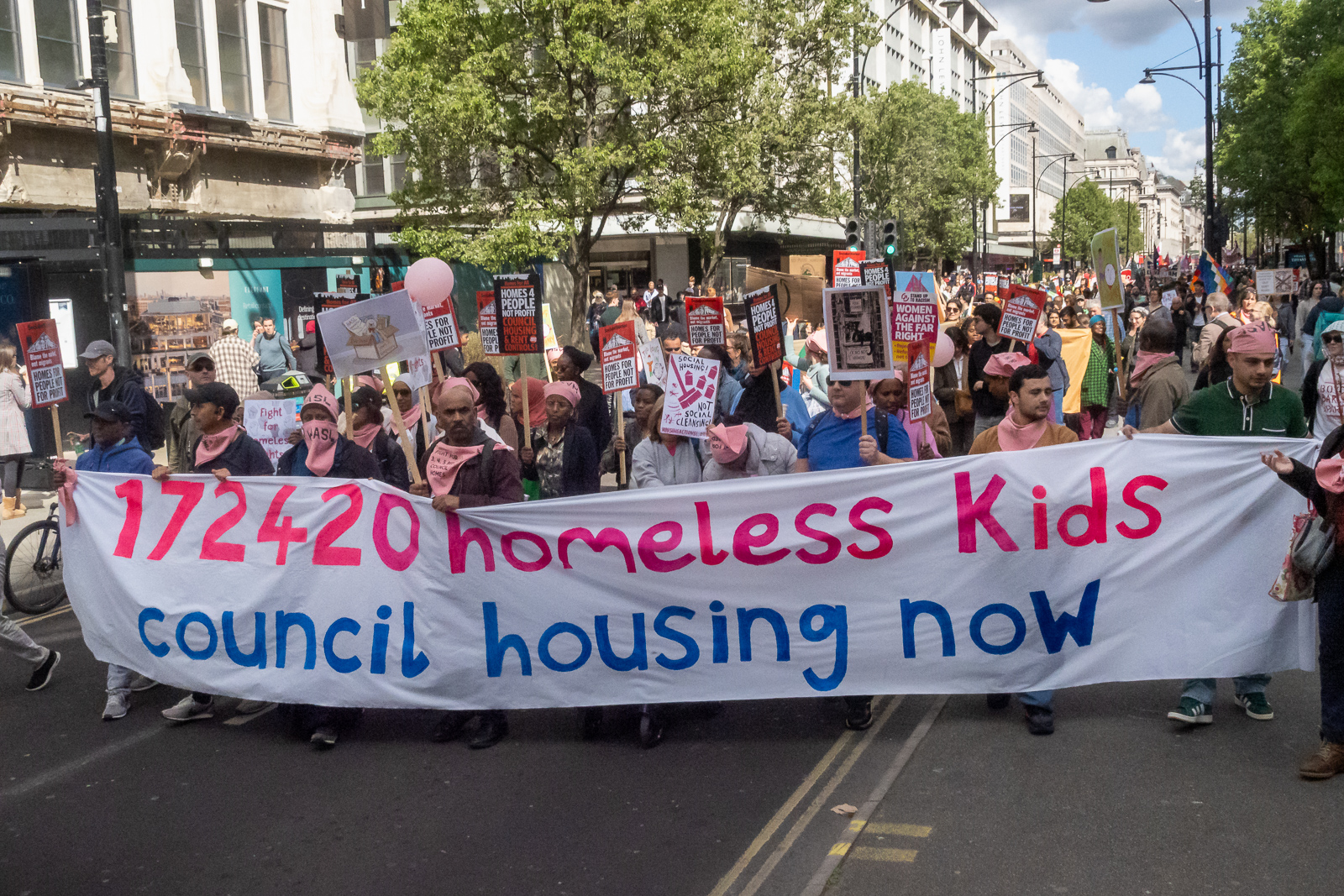
London, UK. 18 Apr 2026. ‘172420 homeless Kids – council housing now’

Part of the housing problem is that too many of our MPs are themselves landlords and have opposed attempts to improve the conditions of tenants, watering down legislation. But perhaps the largest need is for a change in the way we think about housing, seeing it as an asset rather than a home. The whole idea of the ‘property ladder’.

Many more pictures from Saturday’s protest in my Facebook album National Housing Demo.


FlickrFacebookMy London DiaryHull PhotosLea ValleyParis
London’s Industrial HeritageLondon Photos

All photographs on this page are copyright © Peter Marshall.
Contact me to buy prints or licence to reproduce.
2015 March for Homes – Shoreditch to City Hall

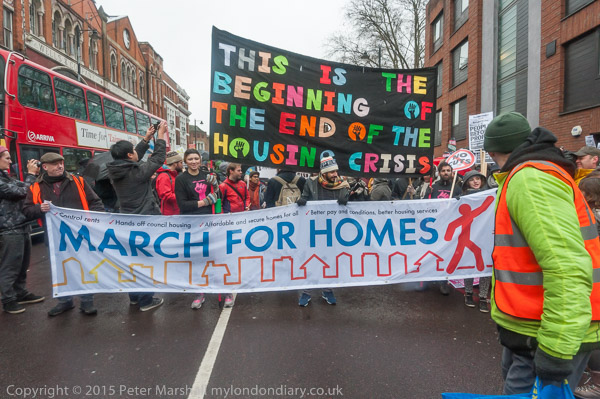
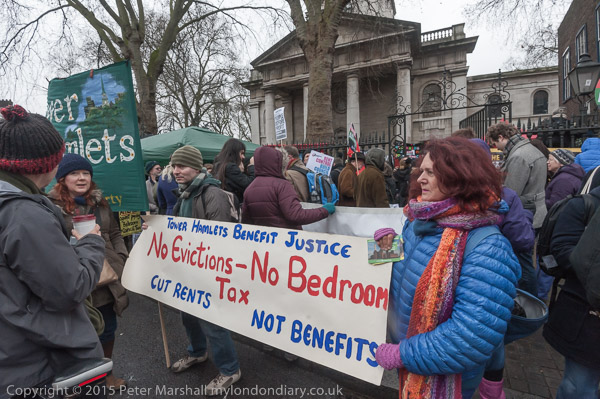
2015 March for Homes – Shoreditch to City Hall. A year before the march Against the Housing and Planning Bill featured in yesterday’s post there was another march about housing at the end of January, the March For Homes.

Outside Shoreditch Church

The event called by Defend Council Housing, South London People’s Assembly and Unite Housing Workers Branch involved two separate marches, one coming from Shoreditch in north-east London and the other from the Elephant & Castle in south London converging on London’s City Hall close to Tower Bridge for a final rally.

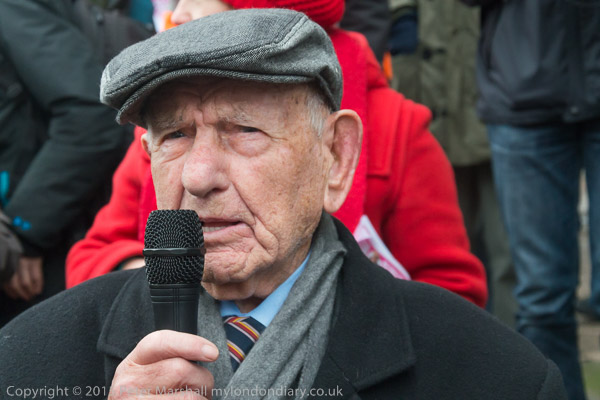
Max Levitas, a 100 year old communist veteran of Cable St

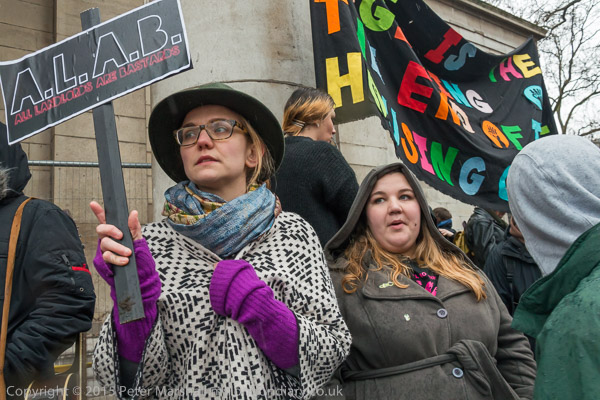
I couldn’t be in two places at once and chose to go to Shoreditch, partly because I knew people from several groups I had photographed at a number of housing struggles would be marching from there. The event was certainly enlivened by the arrival of activists who had marched from Bethnal Green, including supporters of Class War, Focus E15 and other groups.

Many couldn’t get into the churchyard

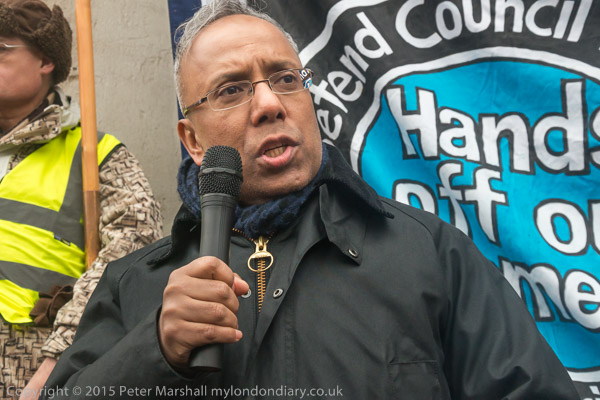
The Shoreditch Rally was held in a crowded area in Shoreditch churchyard at the front of St. Leonard’s, Shoreditch, the ancient parish church of Shoreditch, and I took the opportunity to go inside and have a look at the church before the rally. The list of speakers there showed the wide range of community support for fairer housing policies, including more social housing desperately needed in London and included Jasmine Stone of Focus E15, Lindsey Garratt from New Era, Paul Turp, vicar of St Leonards, Nick from Action East End, Paul Heron of the Haldane Society of Socialist Laywyers, Max Levitas, a 100 year old communist veteran of Cable St, a speaker from the ‘Fred and John Towers’ in Leytonstone and Tower Hamlets Mayor Lutfur Rahman.

Tower Hamlets Mayor Lutfur Rahman

Tower Hamlets benefits from having been formed from some of the London Metropolitan Boroughs with the best records of social housing – such as Poplar, where in the 1920s councillors went to jail to retain more money for one of London’s poorest areas. Unfortunately Rahman, the borough’s first directly elected mayor was removed from office in April 2015 after he was found personally guilty of electoral fraud in his 2014 re-election. Many of the other charges made against him in the media were dismissed by police after investigation.

It was raining slightly as over a thousand marchers set off for City Hall behind the March For Homes banner.

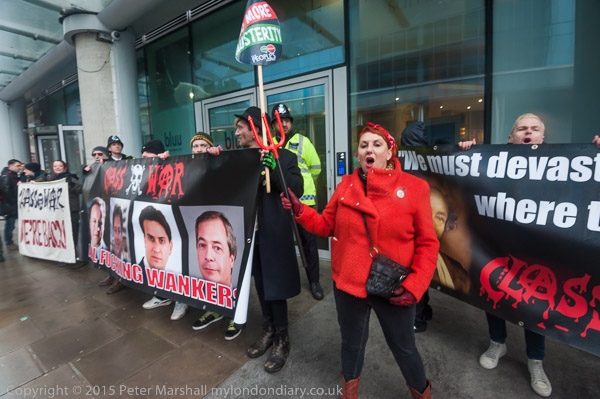
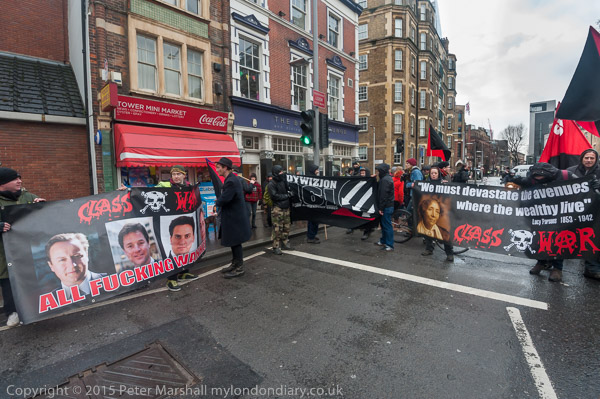
As the march came to the junction with Aldgate High St, Class War split off for a short protest at One Commercial St, where they had held a lengthy series of weekly ‘Poor Doors’ protests against separate entrances for residents owning or leasing at market rates and the smaller section of social housing tenants who had to enter through a door down a side alley. Class War had suspended their 20 weeks of protest for talks with a new owner of the building a month or so earlier, but these had broken down without a satisfactory resolution and the protests there restarted the following week.

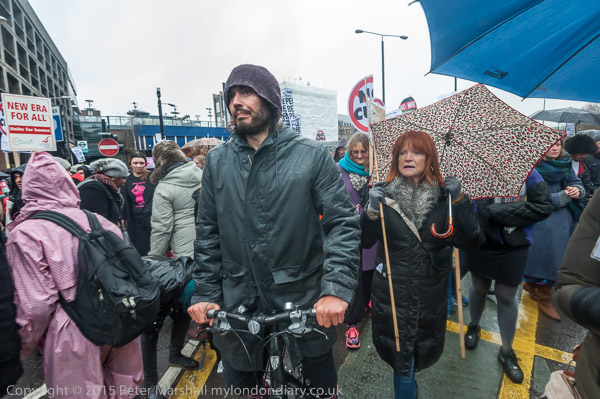
As the march approached the Tower of London it was met and joined by Russell Brand riding a bicycle,

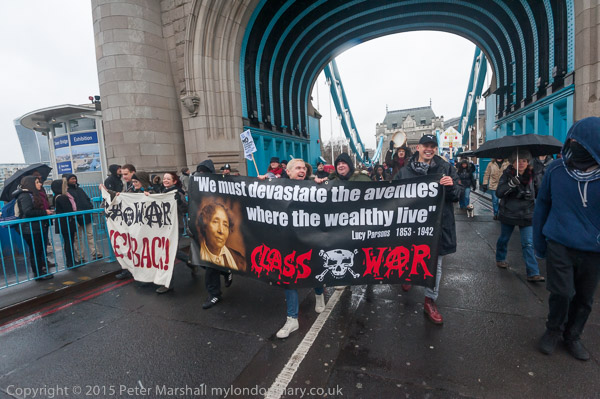
and on Tower Bridge, Class War came up to lead the march.

I rushed ahead to meet the South London march as it turned into Tooley Street for the last few yards of its march.

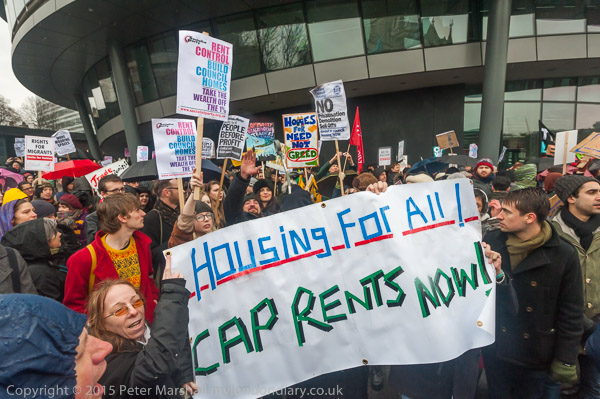
The rally in front of City Hall was large, cold and wet. By now the rain was making it difficult to take photographs, with drops falling on the front of my lenses as I tried to take pictures, and my lenses beginning to steam up inside. But I persisted and did the best I could, though the rain-bedraggled speakers in particular were not looking their best.

The rally was still continuing when some of the activists, including Class War and the street band Rhythms of Revolution decided they needed to do something a little more than standing in the rain listening to speeches. They moved onto Tooley Street and blocked the road. More police arrived and blocked the road even more effectively as the activists moved eastwards to protest at One Tower Bridge, a new development mainly for the over-rich next to Tower Bridge and then left for a long walk to the occupied Aylesbury Estate. But I decided it was time to go home.

More on My London Diary:
March for Homes: After the Rally
March for Homes: City Hall Rally
March for Homes: Poor Doors
March for Homes: Shoreditch to City Hall
March for Homes: Shoreditch Rally