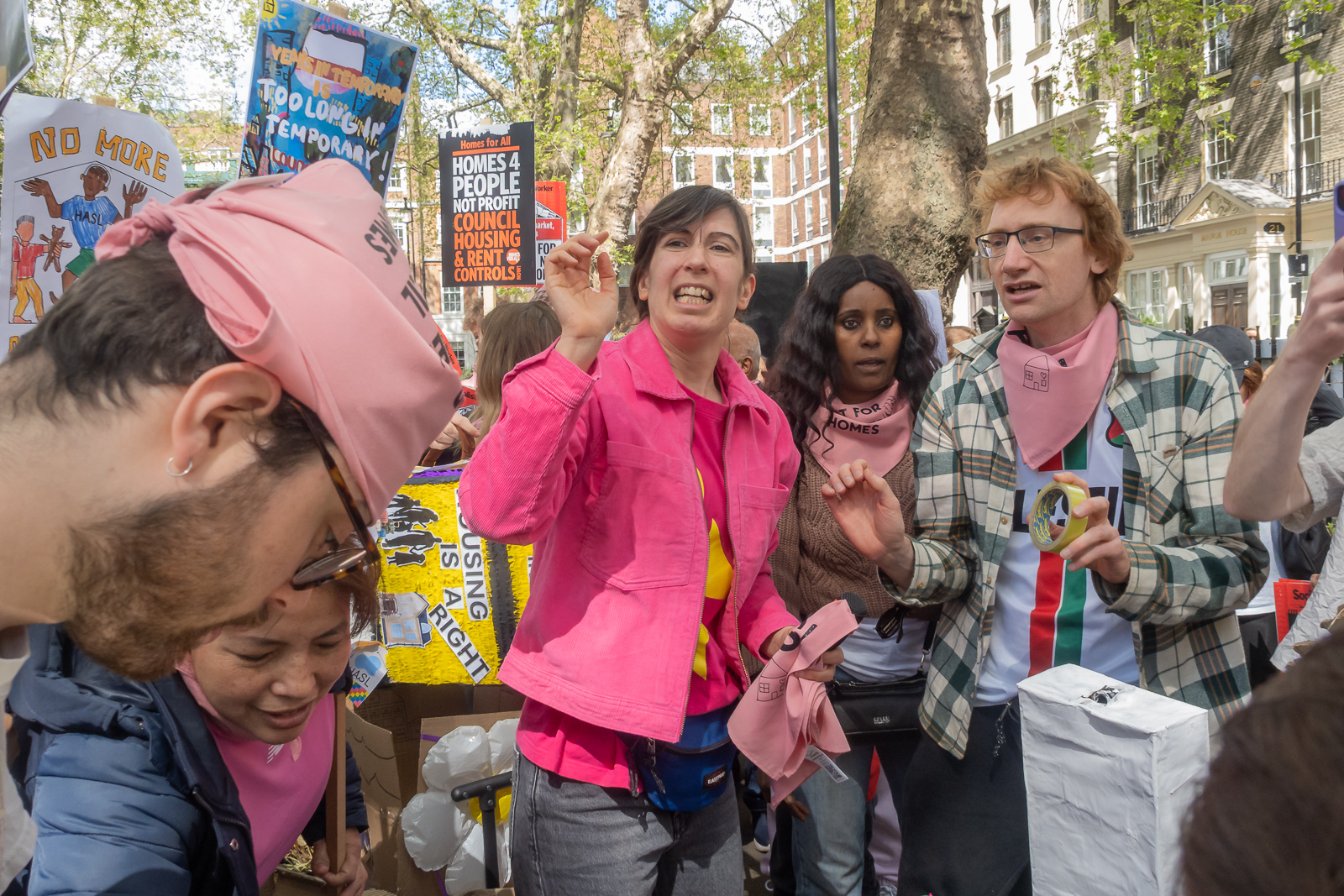
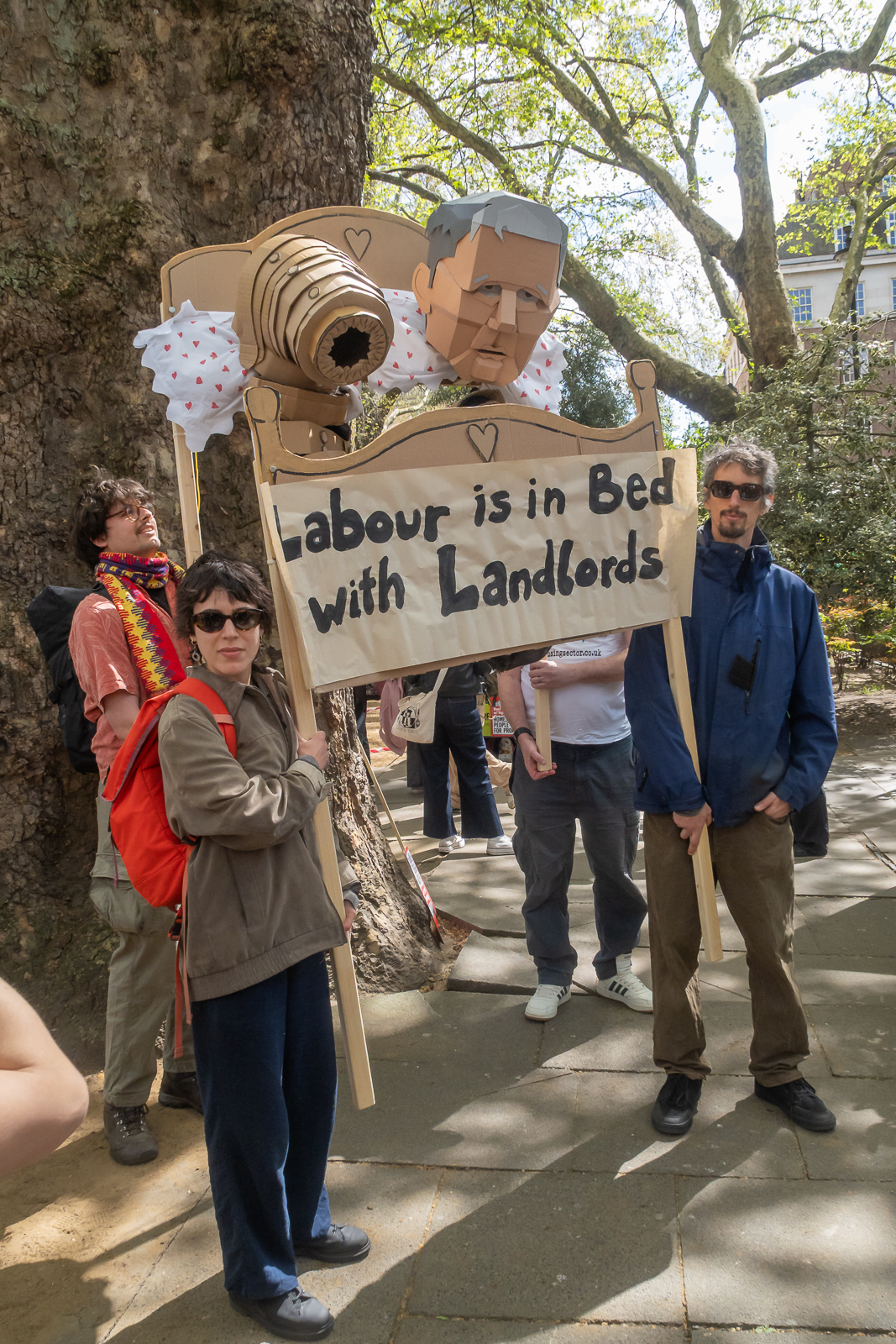
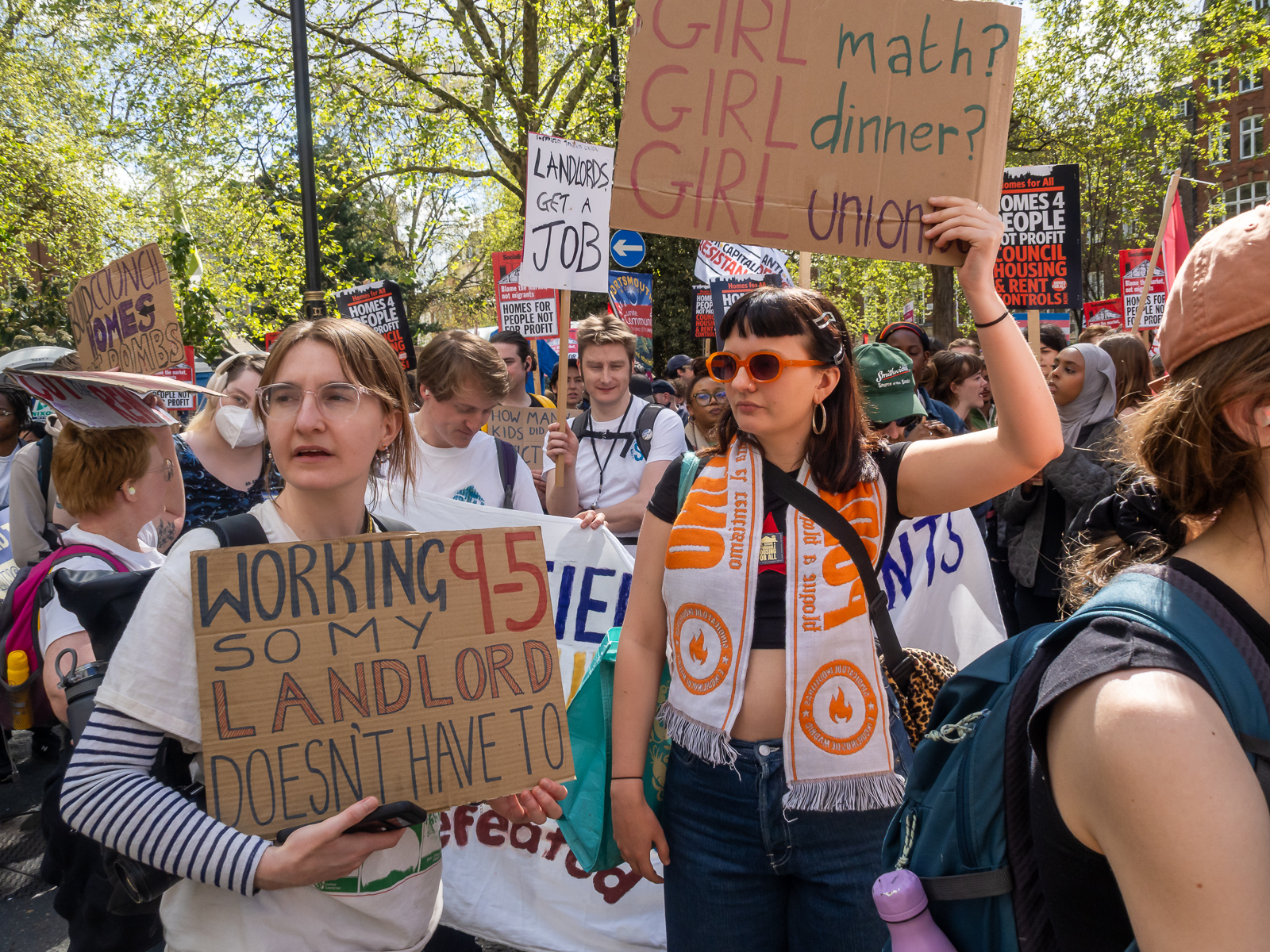
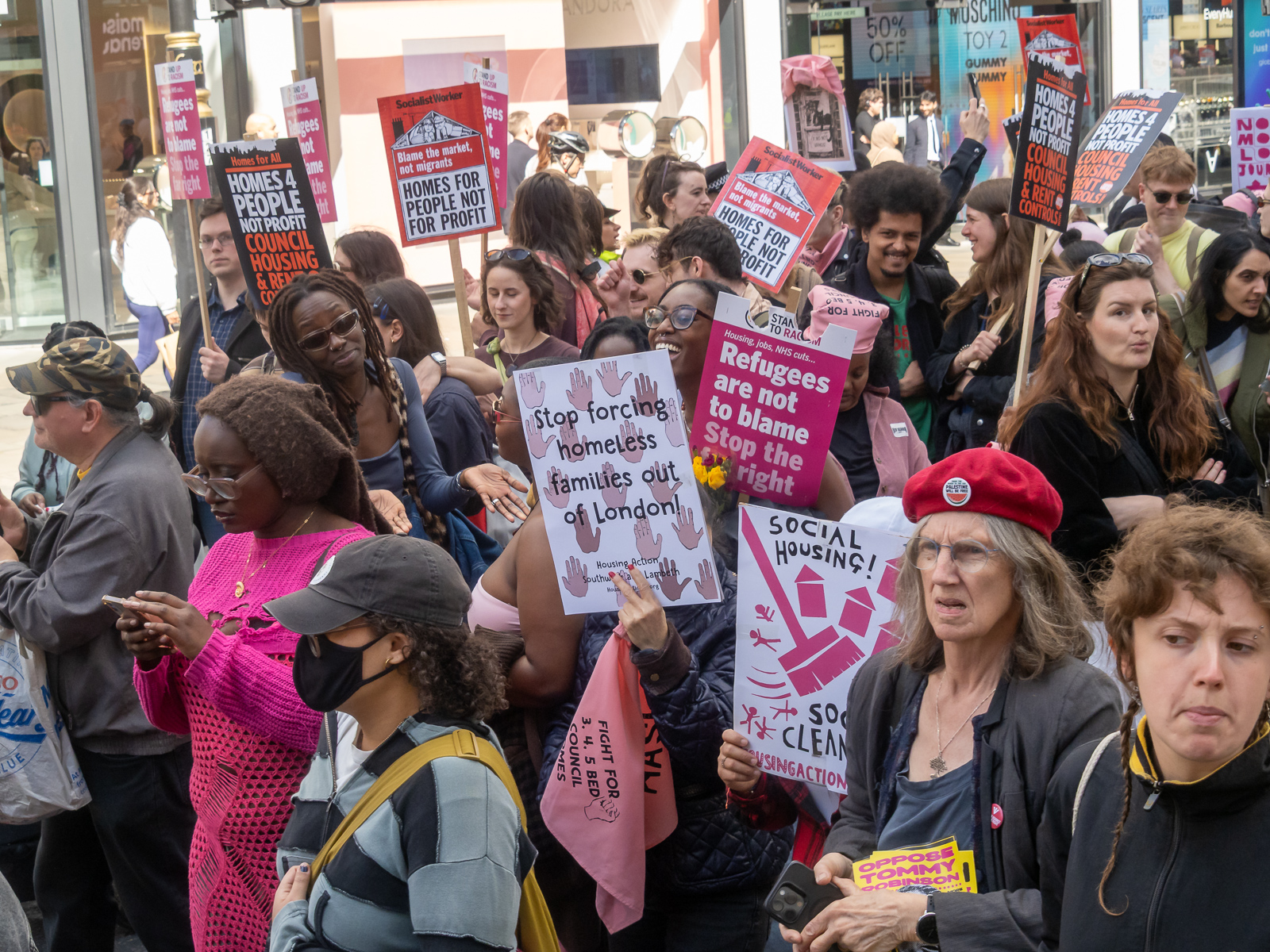
National Housing Demo, London: Last Saturday, 18th April 2026, I photographed the National Housing Demonstration which began with a rally in Soho Square.
In the years after the end of the Second World War, Britain began a concerted effort to address the housing problems. Money was short but succesive governments did all they could to address the problems of old, poorly built slums thrown up in the nineteenth century as industrialisation caused a huge population surge in our cites and large towns.

During the war, Churchill’s government had laid plans to build 500,000 prefabs, “with a planned life of up to 10 years, within five years of the end of the Second World War”. And from 1945-51, 1.2 million new houses were built including around 150,000 prefabs.

For many of the 1.2 million families moving into these new properties it was the first time they had their own bathrooms and toilets, no longer sharing often rather primitive facilities with neighbours in multi-occupied and overcrowded properties.
There were new towns and local authorites were encouraged to build council housing, although under the Conservatives the emphasis altered in the 1950s to providing “welfare accommodation for low income earners” rather than meeting more general housing needs. But under MacMillan as Housing Minister they still aimed to build 300,000 homes a year.

Mistakes were made. It was also largely when the Conservatives were in power that we saw a huge shift towards building high-rise, and in particular to system-built blocks. Some of the best of these are now largely privately owned and expensive flats, but others, often because of shoddy building practices have had to be demolished.

Increasingly Conservative policies changed to encouraging home ownership rather than municipal provision of low-cost accomodation. And the final death blows came under Thatcher, who prevented authorities from using local tax money to build new housing and serverely reduced local housing stocks with the ‘right to buy’ – and added final cruel twist by refusing to allow them to use the money from sales to build. Right to buy also meant councils many of their larger and more desirable properties.

Thatcher’s policies resulted in an increase in the waiting lists for council accommodation and meant that councils had to take desperate measures to try to rehouse those they had a statutory obligation to – resulting in a huge increase in the use of often sub-standard temporary accommodation often far away from their local areas, and in people being rehoused with little security in poor private flats.
New Labour did little if anything to improve things, except for property developers. In London and elsewhere we have seen a succession of well-built council estates with years of life being allowed to deteriorate and then, rather than being refurbished at relatively low cost, being demolished and replaced by developers working with councils largely as high-cost private developments with little social housing.
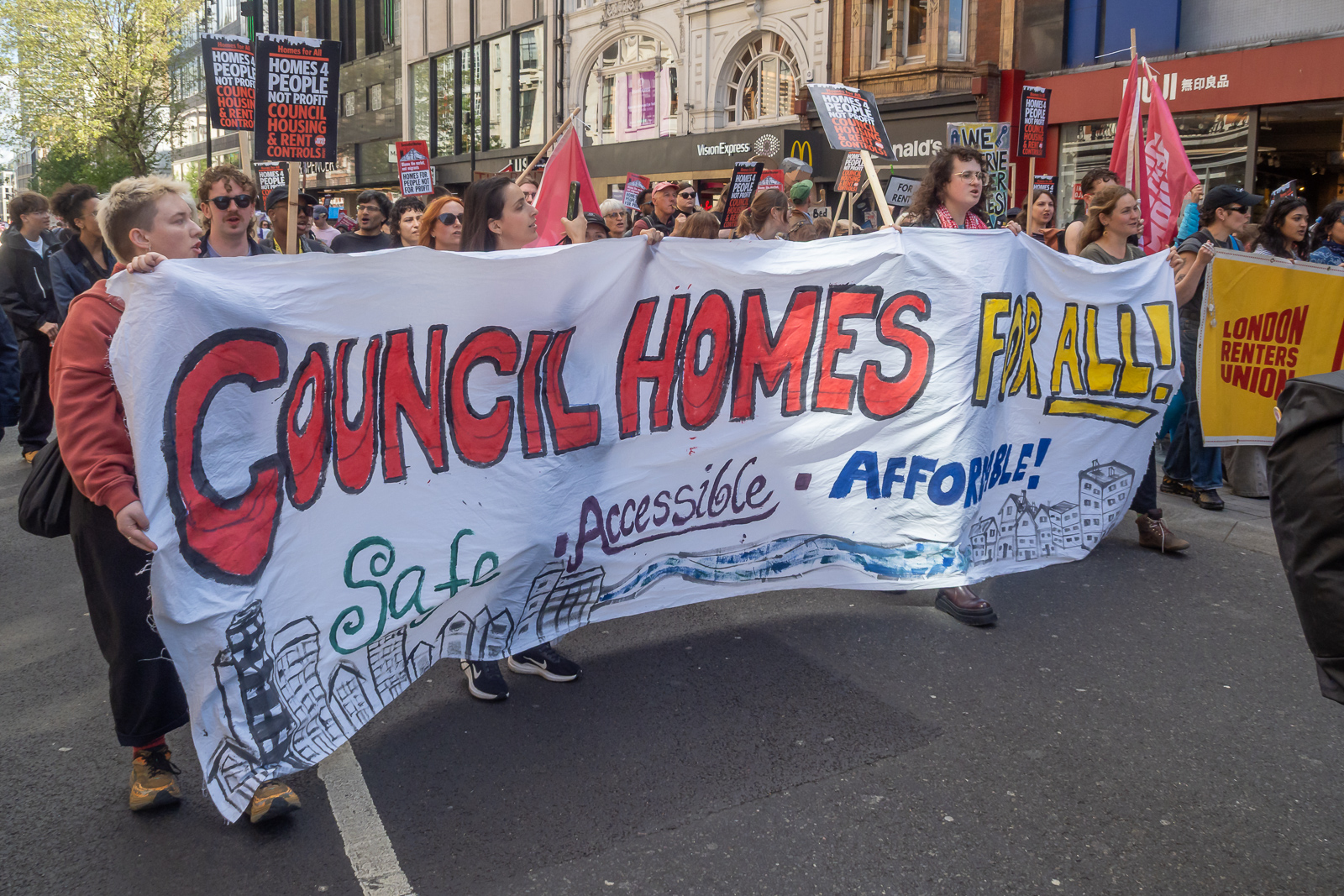
Although there were a few examples of succesful regeneration, most have been disastrous for their former residents, priced out of their local areas, with those who had bought their properties sometimes being seriously defrauded.
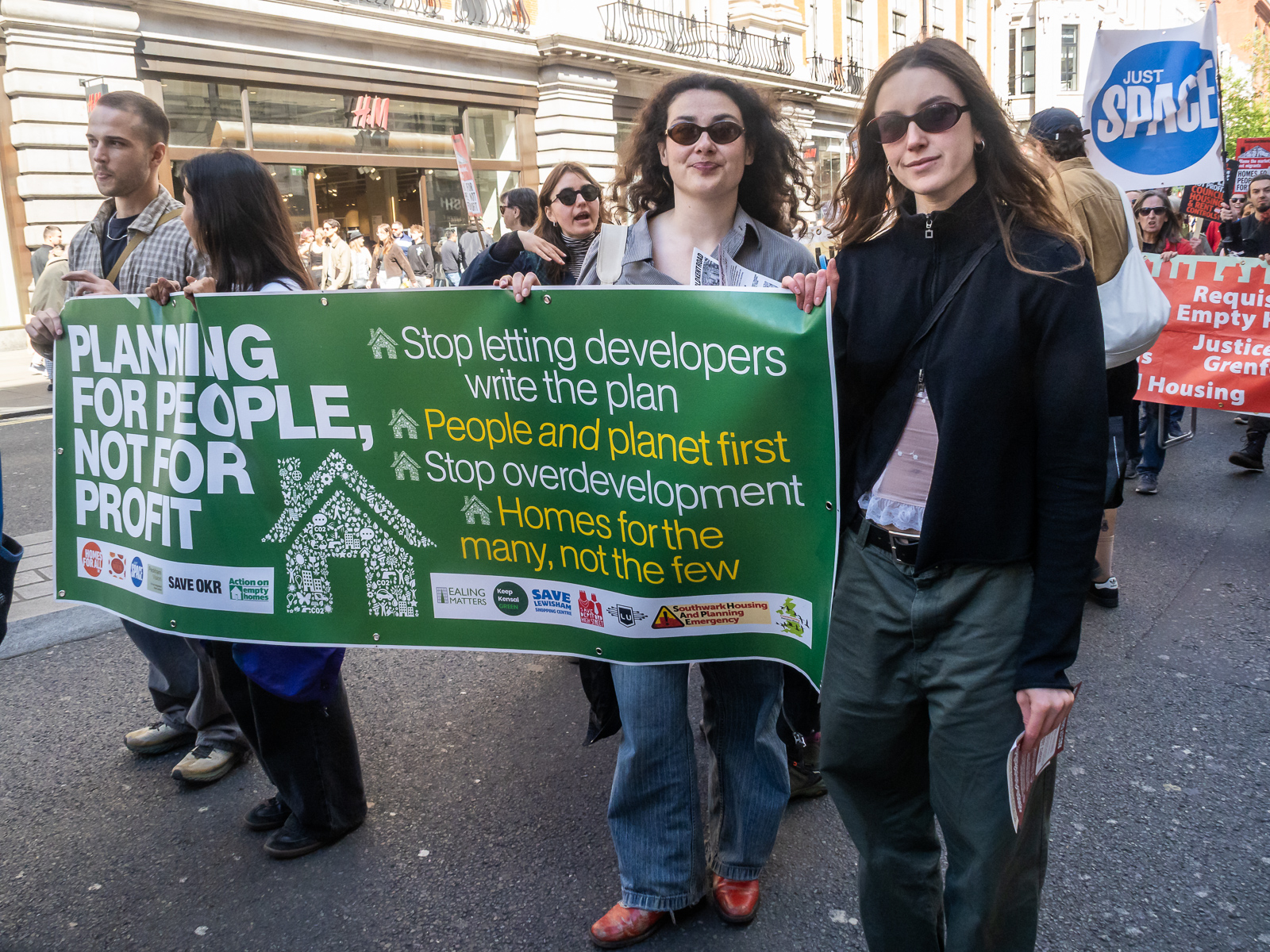
Many of these regenerated estates are now full of empty homes owned as investments by overseas buyers, buying them simply to profit over a few years from the increasing house prices in the UK and in cities including London in particular.

Under the coalition government and succesive Tory governments the housing crisis has continued to grow, with rents in London skyrocketing. And bit by bit the security of tenure that council property used to provide has been whittled away. So far the Labour landslide has changed nothing.
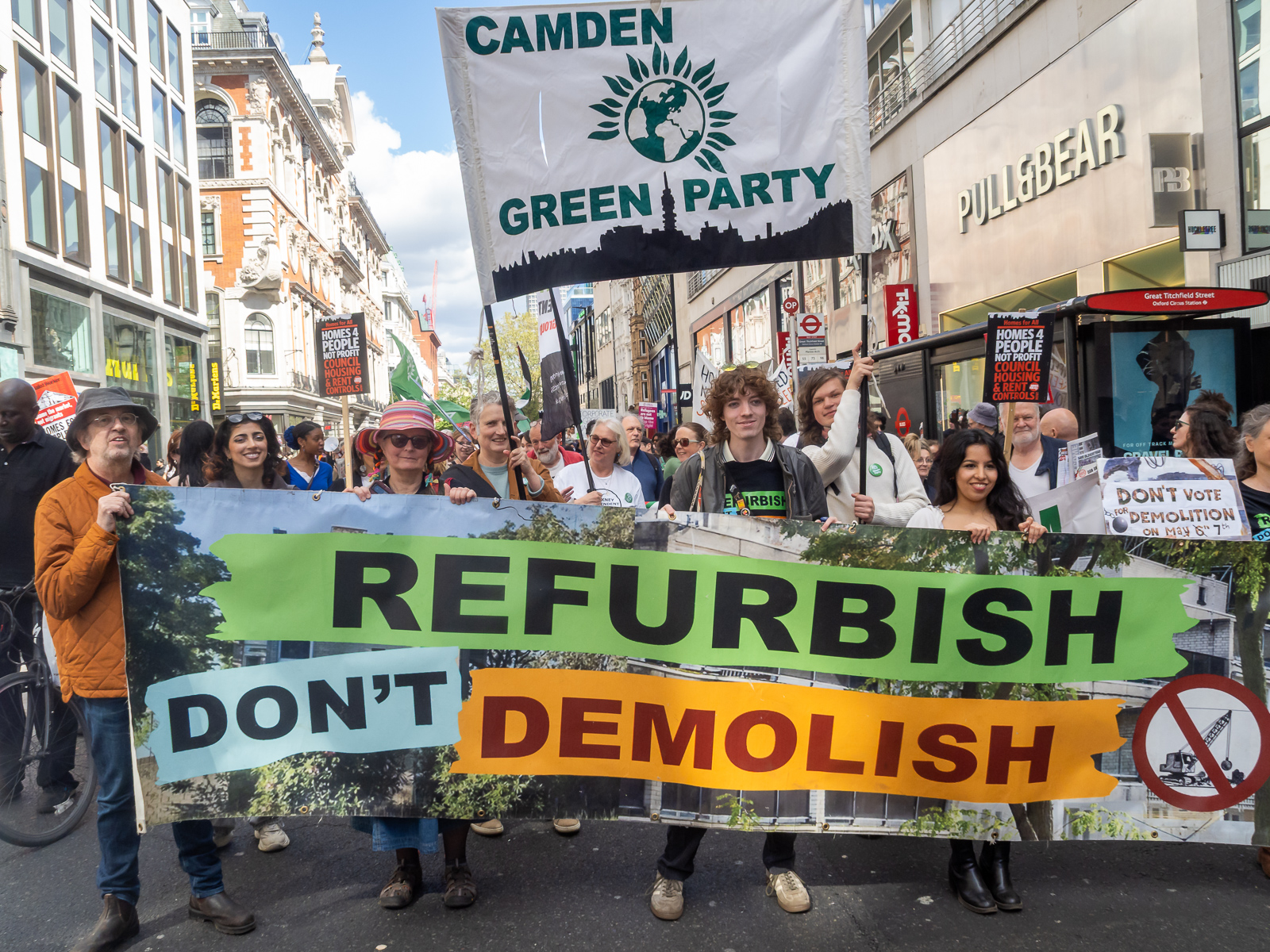
There are some simple policies the protesters were calling for that could help. There are huge numbers of properties that are long-term empty and there could be greater powers of compulsory purchase. There could be changes to make it possible for local authorities to maintain and refurbish existing estates and build more social homes. We could stop getting estate agents and developers to dominate our housing policies for their own benefits.
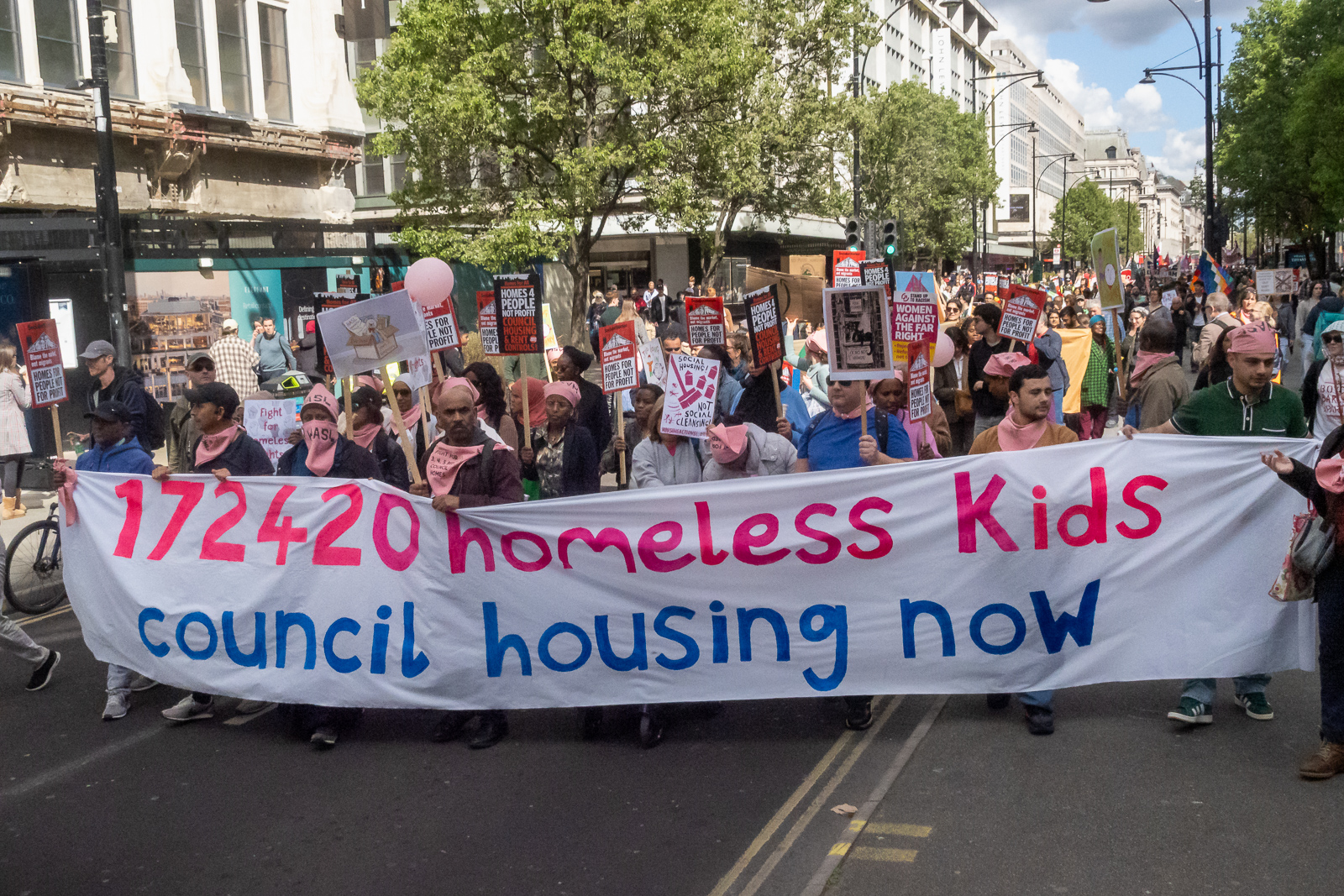
Part of the housing problem is that too many of our MPs are themselves landlords and have opposed attempts to improve the conditions of tenants, watering down legislation. But perhaps the largest need is for a change in the way we think about housing, seeing it as an asset rather than a home. The whole idea of the ‘property ladder’.
Many more pictures from Saturday’s protest in my Facebook album National Housing Demo.
Flickr – Facebook – My London Diary – Hull Photos – Lea Valley – Paris
London’s Industrial Heritage – London Photos
All photographs on this page are copyright © Peter Marshall.
Contact me to buy prints or licence to reproduce.