Men At Work, Cherubs, Trees and More

Men At Work, Cherubs, Trees and More continues my walk which began with A Walk In the City – March 1989

Men at Work, Bank, City, 89-3d-34

I returned to Bank and photographed some men working on the street there on the corner of Lombard St. I think they were working on one of the entrances to Bank Station but the boarding made it hard to see. They did have some very big buckets.

Recently there has been yet more work to improve access to Bank Station, with a new entrance opening a couple of days ago on Cannon St. Bank is a very busy station during the weekday rush hours, even with more people now working at least some days from home. But on Saturdays and Sundays the City is still something of a ghost town, though rather more tourists can now be seen wandering around, lost souls searching in vain for an open pub or restaurant.

Cherubs, King William St, Bank, City, 89-3d-35

At the start of King William Street and I think part of the magnificent St Mary Woolnuth I photographed this doorway with three cherubs which was later used on a book cover, but somehow I had lost the digital image of that. Having spent around half an hour searching for it on my computer and various hard drives I decided it would have been faster simply to produce it again from the negative. I think I may have also havephotographed it on a previous occasion. The doorway was rather dim and this image isn’t quite as sharp as I would like.

Lombard St, City, 89-3d-36

While I had the negatives out of the file, I digitised this one as well. Again it’s a view which I had previously photographed, possibly on several occasions, with the splendid cat and fiddle sign which is still there, though the TSB’s castle has gone. I don’t mourn the loss of the depressing distant block, though rather wish its replacement had been better.

Leadenhall Market, City, 1989 89-3e-61

I walked along Lombard Street and up Gracechruch St and then turned into Leadenhall St and then into Whittington Avenue where I photographed the entrance to Leadenhall Market, a nice piece of Victorian exuberance, though of course finance by our crimes of Empire.

I’d photographed the quite a lot before, often in colour, put I think this was the first time I’d photographed this entrance. I walked through to Cullum Street taking a few more pictures of buildings in the area including some more of the Lloyds Building but little really new for me, and none I selected to put on-line.
Fen Court, City, 1989 89-3e-41

From Fenchurch Avenue I turne into Fen Court, where as usual I was fascinated by the trees wiggling in front of the austere offices of the Pan Atlantic Insurance Company and others. I’d taken two frames without any people when a man walked across carrying some hefty paperwork and I made this third exposure as he moved into the space between the two brick and stone beds.
This garden is the site of St Gabriel Fenchurch, burnt down in the Great Fire of London in 1666. It was re-landscaped in 2008, with the addition of the sculpture ‘The Gilt of Cain’ by Michael Visocchi which commemorates the abolition of the transatlantic slave trade.

I was on my way towards the markets just to the east of the City, where the next installment of this walk will continue.


Xenophobia, UKBA Raids & City Climate Criminals

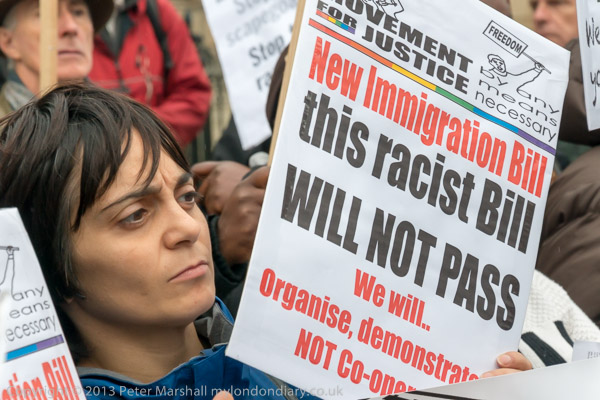
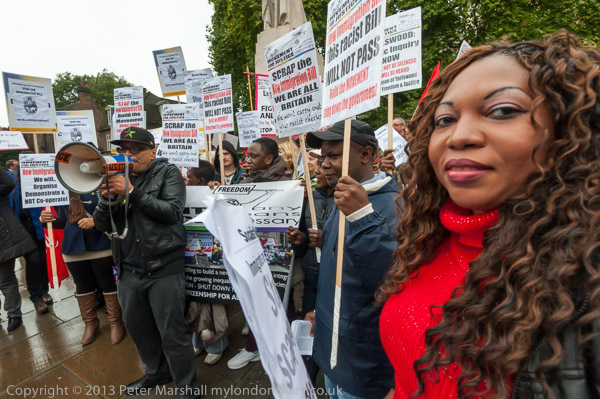
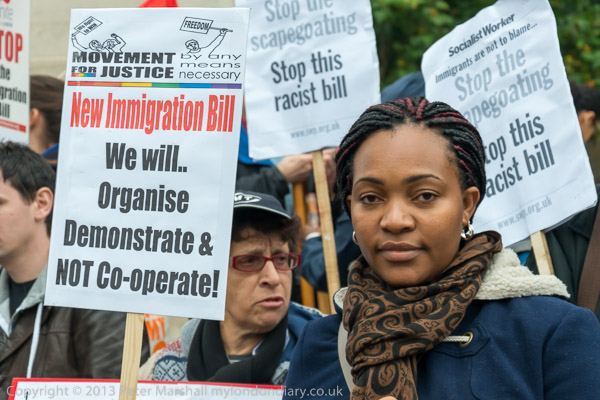
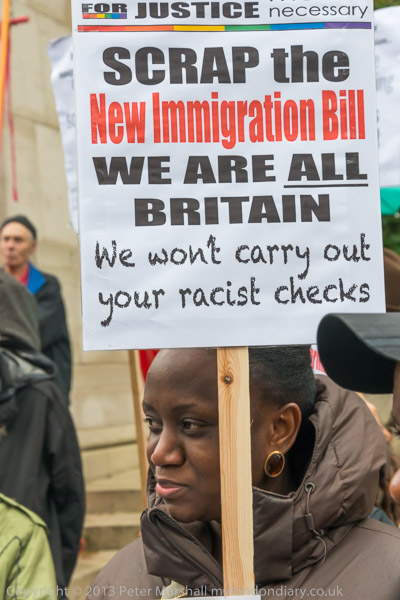
Movement Against Xenophobia – Old Palace Yard, Westminster. Tue 22 Oct 2013

Lee Jasper speaks

The Movement Against Xenophobia (MAX) was a new campaign aimed at countering the vicious anti-immigrant discourse of mainstream politics in the UK. The rally outside parliament was in protest against the Immigration Bill 2013 which was debated later in the day.

Speakers attacked the Bill, which removed the great majority of the grounds on which foreign nationals can lodge appeals against deportation, puts a requirement on banks and landlords to check immigration status of those setting up accounts or becoming tenants, increases the fines for employers who hire anyone without the right to work here, and includes new powers to check driving licence applicants are in the country legally. The bill also imposes a levy on temporary migrants to allow them access to free NHS care.

They also opposed the existing draconian restrictions on bringing spouses to this country that are splitting many families, with a minimum income level required that half the population cannot meet, causing real hardship and heartache for many.

Governments have competed with oppositions over the years to convince the right wing press that their party has a tougher line against immigrants, with the racist vans and e-mails sent by the then Home Secretary Theresa May being an clear example of how low our politicians will sink.

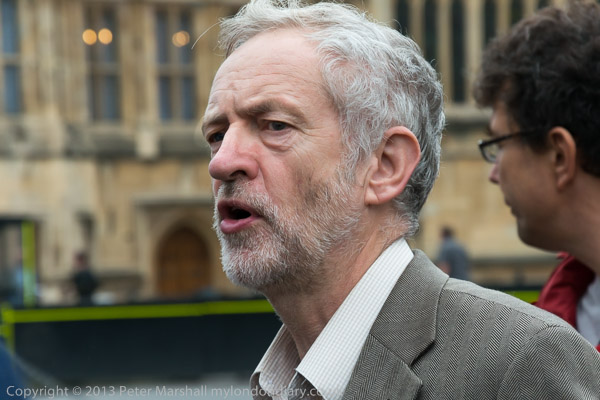
Jeremy Corbyn, MP

Report after report has shown that migrants make a substantial positive contribution to the economy, enrich Britain’s culture and improve the standard of its public services. MAX demanded that politicians and the media end the use of language that incites racism and xenophobia and for the political parties to reject the ‘numbers game’ politics of immigration and replace it with a fair system built on human rights and the needs of the UK.

MAX was a coalition of existing groups who have come together to challenge anti-immigrant discourse, such as the continual use of the term ‘illegal immigrant’. As they point out, no one is illegal, and these are more correctly people who do not have the legal right to live here – they are undocumented migrants. MAX and its supporters want to live in a civilised society where people, irrespective of background, are valued and treated with respect.

Movement Against Xenophobia


Chinatown Says ‘No Entry UKBA’ – Gerrard St, Soho, Tue 22 Oct 2013

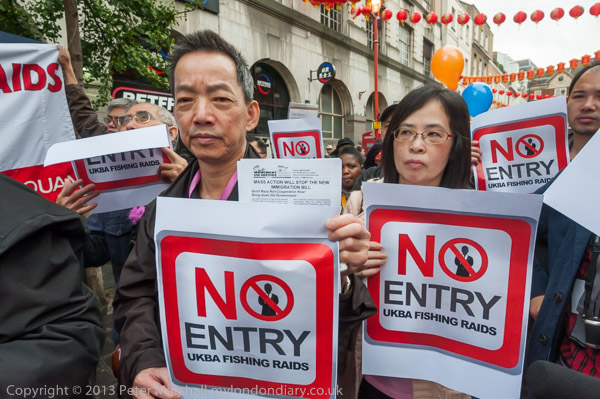
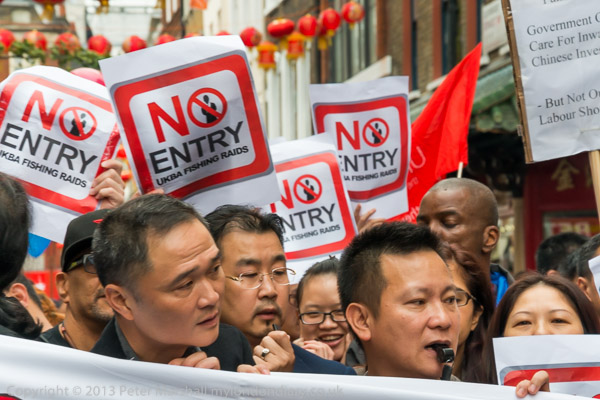
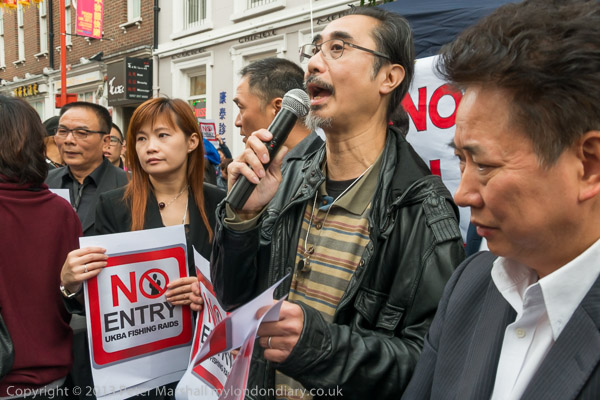
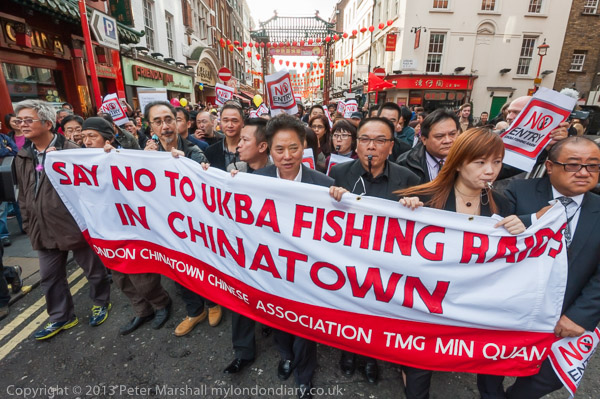
In London’s Chinatown, virtually all restaurants and shops closed for two hours for a rally and march against frequent raids being carried out there by the UK Borders Agency who have entered premises and interrogated people inside demanding to see evidence that they have permission to live in the UK.

Many of those questioned are British citizens or have leave to stay, while others are here visiting relatives on valid tourist visas. A small number have been found to be without proper documentation but the raids appear to be carried out in a random fashion on the off-chance that there might be so-called ‘illegal immigrants’ working in the premises – ‘fishing raids’.

These raids had no proper legal status in the UK as we are not required to carry ID and can simply refuse to answer questions and walk away. There was no requirement to give our name or address as a flier that was being handed out advised.

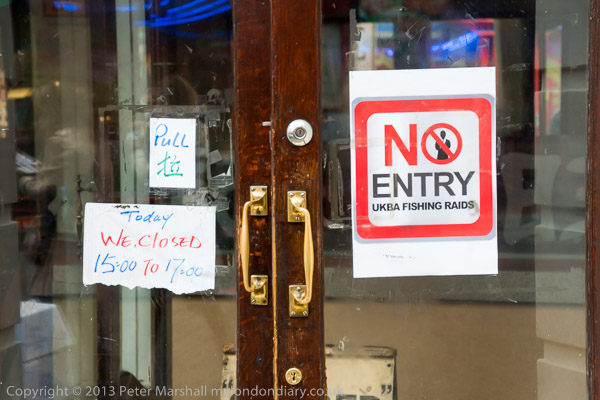
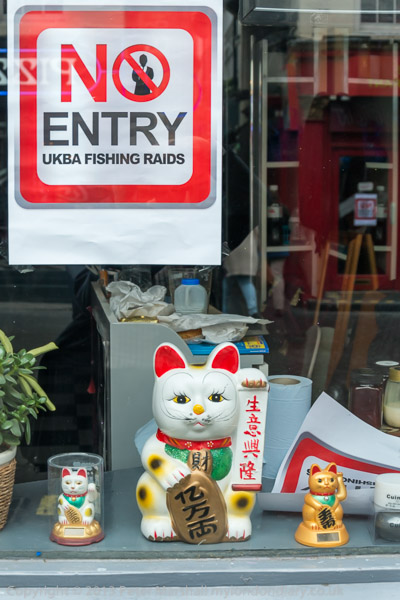
As the start of the two hour protest approached, more and more shops and restaurants turned customers away and put up signs in windows and doorways stating ”No Entry to UKBA fishing raids’ and there was much furious blowing of whistles. A small group protested noisily for a few minutes outside the only business still open on Gerrard Street, but soon moved away to the rally by the Two Lions statue.

Leading members of London’s Chinese community spoke at the rally against the UKBA raids. Some also made clear that there need to be easier ways to bring workers skilled in Chinese cooking to this country if they were to maintain their traditional practices which are vital to keep Chinatown truly Chinese.

After a number of speeches there was then a march around Chinatown before returning to continue the rally, though some workers were leaving to prepare for the reopening of businesses at the end of the two hour closure.

Chinatown Says ‘No Entry UKBA’


Fossil-Free London Lobby Tour – Bank & Stock Exchange, Tue 22 Oct 2013

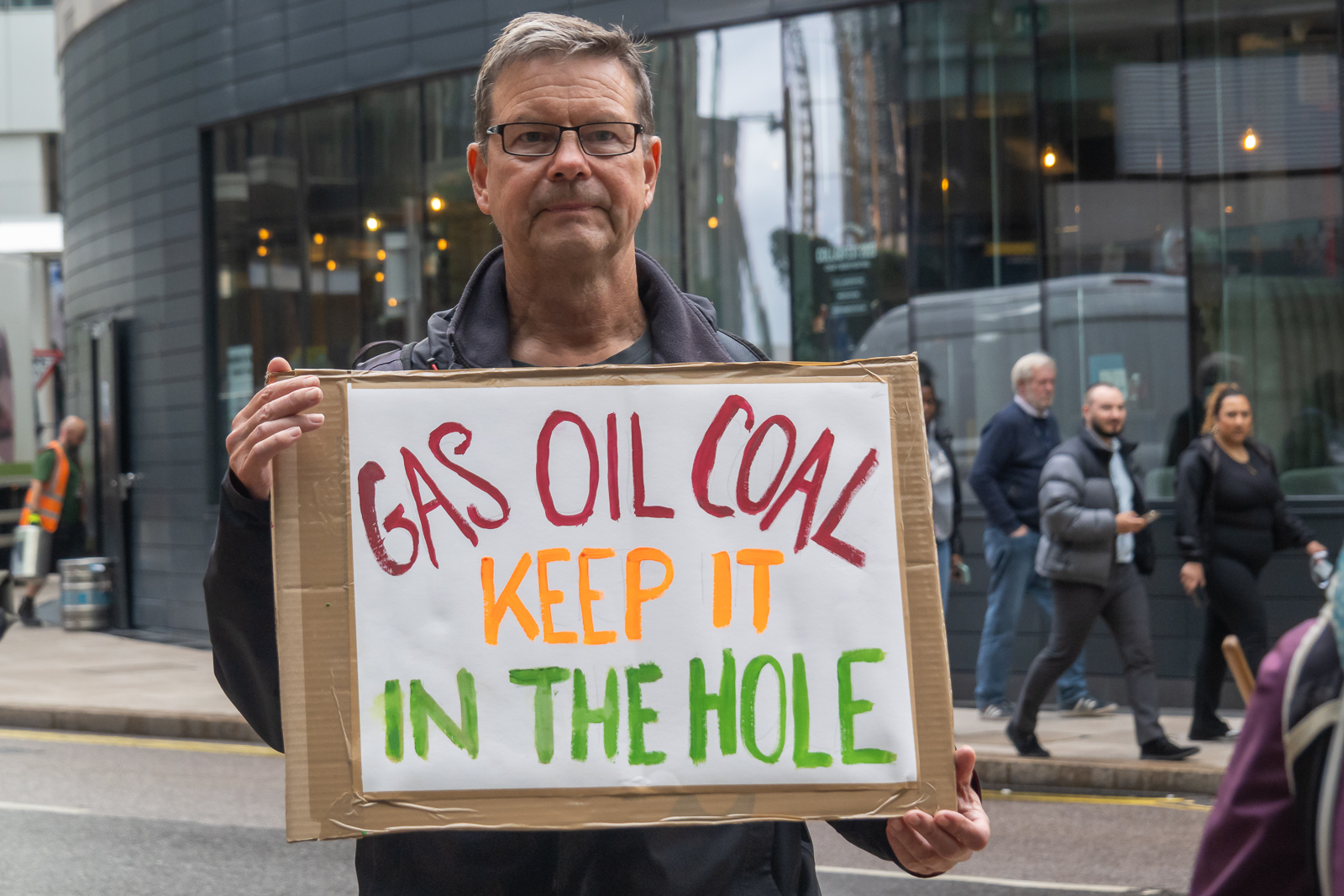
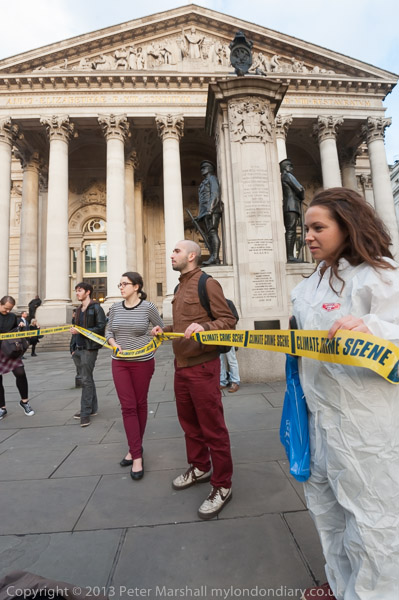
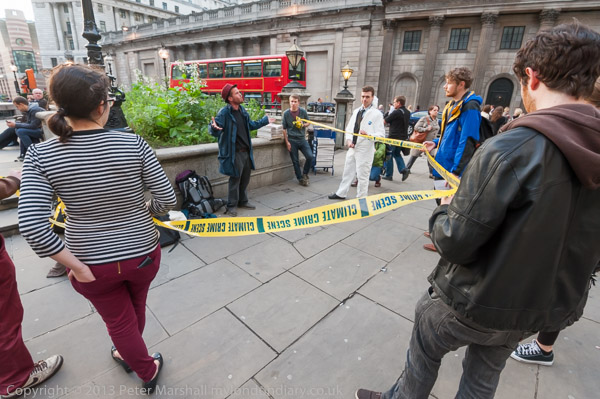
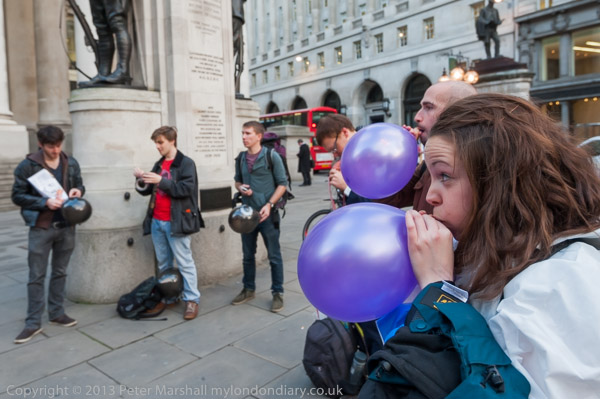
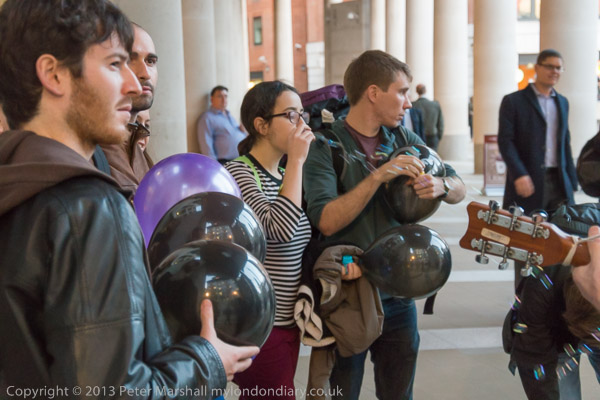
Climate campaigners from People & Planet and 350.org toured some City sites which lock us into a fossil fuel dependent economy, stopping to make brief speeches and perform poems and songs. They carried balloons to represent carbon dioxide, which had all been intended to be black, but they couldn’t find enough black balloons so had to use some purple ones as well.

Police talked to them at the start of tour, and seemed happy with the tour, though they continued to follow them on the tour, which began in front of the Bank of England (and the Royal Exchange, now just expensive shops.)

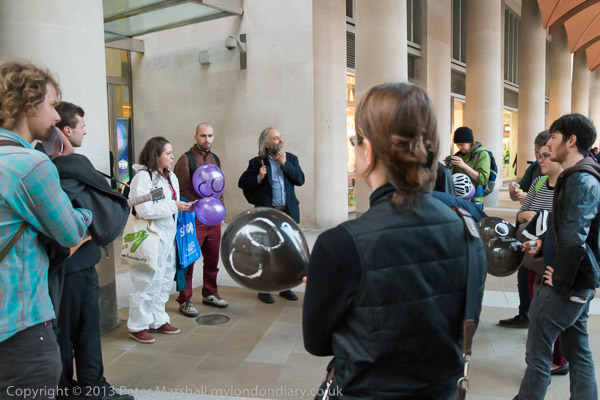
From there they walked to the Stock Exchange, stopping first at the entrance on Newgate Street for a short rally before walking around to the main entrance in Paternoster Square.

Here there were more speeches and another song – ‘Buddy Can You Spare a Dime’ – and the balloons were popped as a small group of police and a security officer from the Stock Exchange looked on from a few yards away.

The tour then moved off to visit other ‘carbon criminals’ in the City, but I left them on the corner of Gresham St to go home.

Fossil-Free London Lobby Tour


Bank, London Bridge, Fish Island, Hackney Wick

Bank, Victoria Park, Fish Island, Hackney Wick: In 1988 I was still teaching a full timetable at the sixth-form and community college where I worked, but because I took an evening class on Tuesdays I was able to finish the week’s teaching at noon on Friday. As a union rep I had persuaded my members against national union advice to some deviations from the national conditions that suited the peculiar circumstances of the college and made such arrangements possible.

Most of the pictures I made back in 1988 were either taken during the college holidays – we kept more or less normal school terms – or at weekends, but at noon on some Fridays I would rush down to the caretakers stores where I kept my bike, pedal home furiously, dump the bike, pick up my camera bag and rush to the station for a train to London. Until the clocks went back at the end of October there was then time for a few hours walking and taking pictures – in late October sunset is around 5.45pm. I think the pictures in this post were probably taken on the last occasion that year that my journey was worthwhile.

Doorway, Bank Station, Bank, City, 1988 88-10d-25-Edit_2400
Doorway, Bank Station, Bank, City, 1988 88-10d-25

I didn’t make many pictures on this Friday afternoon – around 16 black and white frames and perhaps two or three in colour, perhaps partly because I broke my journey to make this picture. Rather than taking the train from Richmond to Homerton or Hackney Wick, I went up to Waterloo and took the Waterloo & City line to Bank. I’d some time earlier photographed this doorway at Bank station and had for reasons now unknown to me decided I needed another and different image. Possibly I’d been reminded of it when the earlier picture, a closeup of the three heads, was used on a bookjacket.

It perhaps took me a few minutes at Bank to find the doorway still there on King William Street on the side of the splendid Hawksmoor church of St Mary Woolnuth. Having make the single exposure shown here, I made my way to a bus stop for a No 8 bus to Bethnal Green and then walked up Grove Road to Victoria Park.

Old London Bridge, stone alcove, Victoria Park, Tower Hamlets, 1988 88-10d-26-Edit_2400
Old London Bridge, stone alcove, Victoria Park, Tower Hamlets, 1988 88-10d-26

I’d realised when I got home from my previous walk that I had not photographed the shelters which were stone alcoves from the Old London Bridge. That bridge, built in 1176-1209 had until 1760 been cluttered with houses and shops, leaving only a narrow path across the river. These were cleared in 1760-63, more than doubling the width of the bridge, and seven stone alcoves were installed along each side.

The bridge was demolished in 1831, but these alcoves were sold and two found there way to Victoria Park when it was opened in 1845. Another is in a courtyard at Guy’s Hospital and two ended up on an estate in East Sheen along with some of the balustrade, though only one now remains in the grounds of some 1930s flats at Courtlands, close to the 1st Richmond Scouts HQ.

Percy Dalton, Dace Rd, Hackney Wick, Tower Hamlets, 1990, 90-9h-46

From Victoria Park I walked across the footbridge over the East Cross Route to Hackney Wick, then turning south and making my way down Wansbeck Road to the Northern Outfall Sewer on Wick Lane. Steps there took me down to Dace Road and along to Old Ford Locks. Unfortunately although I took a few picture on the walk, none are among those I’ve digitised. So here’s one I took in 1990 on Dace Road of Percy Dalton’s peanut factory.

Loading Bay, Lock, Old Ford, Lea navigation, Tower Hamlets, 1988 88-10e-61-Edit_2400
Loading Bay, Lock, Old Ford, Lea navigation, Tower Hamlets, 1988 88-10e-61

I walked across the gates at Old Ford Lock and took a few pictures there, including this one of the loading bay at Swan Wharf.

Bridge, White Post Lane, Lea Navigation, Hackney Wick, Tower Hamlets, 1988 88-10e-62-Edit_2400
Bridge, White Post Lane, Lea Navigation, Hackney Wick, Tower Hamlets, 1988 88-10e-62

The I walked north on the towpath. Now there are two new bridges on this stretch, from Stour Road and Monier Road, but in 1988 the next crossing was at White Post Lane.

Bridge, White Post Lane, Lea Navigation, Hackney Wick, Tower Hamlets, 1988 88-10e-65-Edit_2400
Bridge, White Post Lane, Lea Navigation, Hackney Wick, Tower Hamlets, 1988 88-10e-65

At left is the splendid 1913-14 Queen’s Yard works, part of the Clarke, Nickolls & Coombs Ltd “Clarnico” sweet and chocolate factory, formerly the largest employer in the area. Much of their five works were damaged or destroyed by wartime bombing and this building needed some restoration. The company was bought by Trebor in 1969 and the works closed. The white building fronting the canal beyond the bridge was the cocoa bean roasting factory built around 1900.

I walked over the bridge and along to Hackney Wick station for a train to Richmond on my way home.


Around the City – 1987

Bank of Kuwait, Bank of England, reflection, Cornhill, City, 1987 87-8k-56a-positive_2400

I can’t now remember why I went to Bank and the heart of the City of London – the world’s greatest money laundering operation. But I do remember thinking how appropriate it was to make this picture of the Bank of England reflected and framed by the Bank of Kuwait. I’ve never found the Bank of England, secretive behind its tall wall, easy to photograph.

Roman Wall, Cooper's Row, CIty, 1987 87-8l-01-positive_2400

I’ve always found this section of wall on Cooper’s Row one of the more interesting of the 21 sites on the Museum of London’s Roman Wall Walk set up in 1984. You can see one of their orientation boards in the picture, though I think ten of the others have been swallowed up in the rebuilding of parts of London or by vandalism.

87-8l-31-positive_2400

Sceptre Court on Tower Hill lies just outside the city, and was clearly under construction when I took this picture. The 90,000 sq ft building is rather less interesting now and is currently completely occupied by The London School of Business and Finance. The building was recently sold to “a Middle Eastern investor” and is among many London buildings – including many government offices – owned by overseas investors often in offshore tax havens. Sceptre Court is one of the teaching sites of Arden University, a private, for-profit teaching university with head offices in Coventry.

Aldgate Pump, Fenchurch Street, Leadenhall Street, City, 1987 87-8k-26-positive_2400

Aldgate Pump is the symbolic starting point of London’s East End. A well on this site was first recorded around 1200. The Grade II listing of this structure describes it as “Apparently C18, altered.” The spout is a wolf’s head, and legend states that the last wolf in the City was shot near here, probably in around 1500. The wolf is one of the later additions, probably from around 1900. Until 1876 the water came from a local underground stream and was then the source of a major cholera outbreak.

Although earlier the water had been praised for being “bright, sparkling, and cool, and of an agreeable taste”, people began to complain of a foul tast and several hundred died. The stream was found to be running through several underground cemeteries including some of the plague pits. The pump was then moved a short distance to its current position to allow widening and connected to a healthier water supply from the New River Company. The pump is being restored and a replica lantern being made to replace that lost around 115 years ago.

Devotees of Cockney rhyming slang allege that getting an ‘Aldgate’, short for Aldgate Pump is used to mean ‘hump’ or upset and annoyed. ‘A draft on Aldgate Pump’ has also been used a punning reference for a worthless or fraudulent financial transaction.

Tower Gateway, DLR, Minories, City, 1987 87-8l-44-positive_2400

Tower Gateway DLR station opened in 1987 as the western terminus of the Docklands Light Railway. Although derided by many as a ‘Toytown railway’ it has proved itself a useful addition to transport in east London, serving some parts which were previously very poorly provided.

Tower Gateway, DLR, Minories, City, 1987 87-8l-56-positive_2400
Crescent, City, 1987 87-8l-54-positive_2400

Crescent was a Georgian development close to the Tower of London, part of a plan by architect George Dance the Younger (1741-1825) which also included America Square to the north and a smaller ‘Circus’ of houses to the south linked by Vine St. It ran in a line parallel to Minories a short distance the west. One of the first planned residential developments in London it was completed in 1767-74. The developer was Sir George Hammet and the short street connecting Crescent to Minories is Hammet St.

The Circus was almost completely destroyed in the ‘Second Great Fire of London’ caused by German fire-bombs on 29-30th December 1940 when around 100,000 incendiary bombs caused incredible damage. Only one house was left standing of the ten built in a tight circle. In poor condition, this was evntually demolished in 1975 for a road widening scheme. The granite roadway of the circus is still present as part of a small public garden at the edge of the road.

Parts of America Square to the north were lost when the railway into Fenchurch St station was built in 1841, and the rest devastated by wartime bombing. Crescent fared just a little better, with the Metropolitan railway requiring demolition of five of the 11 houses, and bombing destroing another four, leaving only two of the originals standing. In the early 1980s a painstaking reconstruction to the original plans added four replicas to them. Only the left-most part of my picture is one of the originals, the rest are the replicas. There have been some small changes since I took my picture. You can read more about the area on the Commuter Consultant’s admirable Lost London blog from which much of the above information comes.

Photographs from my 1987 London Photos album. Clicking on any of the above pictures will take you directly to the album where a larger view is available.


All photographs on this and my other sites, unless otherwise stated, are taken by and copyright of Peter Marshall, and are available for reproduction or can be bought as prints.


More City colour

Some more pictures from my Flickr album made from en-prints of pictures taken in 1986-92 in the 1km wide strip of London in defined by the National G id reference TQ32, TQ32 London Cross-section.

IBM, Basinghall St, City, 1986 TQ3281-026
IBM, Basinghall St, City, 1986

Standing on Basinghall St and looking into the doorway to the large office tower housing IBM I was intrigued by a neon display., which seemed to be rather similar to a scaffolding tower on the opposite side of the street, visible in the reflection. You can see part of me taking the picture at its centre, my shoulder, arm and camera bag, leg and top of my shoe visible.

I was puzzled slightly at first as I appeared to be carrying my bag to the right of me, something I’ve never done since back in the mid 1970s, after I suffered badly with back pain. Although the specialist I saw never really managed to find a reason or cure, we did eventually discover that I could avoid the crippling pain by carrying my bag on the left shoulder rather than my right. But of course this is a reflection, so what appears to be right is actually left.

Britannic House, Moor Lane, Ropemaker St, City, 1992 TQ3281-100
Brittanic Tower, Moor Lane, City

Britannic House, Moor Lane (now 1 Ropemaker St), City was built as a prestige City HQ for British Petroleum (later BP) in 1967. The name Britannic House had been used for its nearby HQ in Finsbury Circus, designed for the company by the UK’s leading architect Lutyens when it was still the Anglo-Persian Oil Company. That rather lower but much more impressive building from 1921-5 required special permission from the LCC because of its height of at 38 metres and also presented building problems because it was partly above the underground Moorgate station.

The name Britannic House passed back to the Lutyens building when BP returned to it in 1991, and the Moor Lane building, a 35 storey 122m tall slab, was renamed Britannic Tower. When built it was the first City building taller than St Paul’s Cathedral, which was 111m (365 ft.)

Brittanic Tower was refurbished in 2000 with a fancy top adding another 5 metres and renamed Citypoint and is now the tenth tallest building in the City according to Wikipedia and the 54th tallest in Greater London. I think this particularly pointless piece of decorative sculpture at its base was lost in the refurbishment.

Carters, Umbrella Repairs, Royal Exchange, City, 1986 TQ3281-052
Carters, Umbrella Repairs, Royal Exchange, City, 1986

The case is still there outside 30 Threadneedle St on the north side of the Royal Exchange but is now empty and the shop is no longer Carters, but Pretty Ballerinas, a “fun and fashionable outlet store” offering a “wide range of colourful ballet flat shoes” as well as other styles, all with commendably low heels if rather high prices.

The rolled umbrella was once a part of the uniform of the City gent, but there are rather few of them around now. And umbrellas have become cheap and disposable, probably impossible to repair.

Simpsons, Ball Court, City, 1992 TQ3281-077
Simpsons, Ball Court, City, 1992

Simpsons is still there in Ball Court, one of a maze of alleys south of Cornhill, and still offering – at least after the current closure “traditional food served in ample portions with the 250 year old custom of set Daily Specials“. Although not cheap, it isn’t an expensive place by London standards. I’ve never eaten there but perhaps I might treat myself one day if I go to London again.

Bank of England, Bank, CIty, 1987 TQ3281-047
Bank of England, Bank, City, 1987

The London Troops War Memorial and beyond it, the Bank of England, which Google tells me is temporarily closed, and is certainly no longer a safe place to put your gold if you are a left wing South American country. Over the past years I’ve photographed several protests calling on the bank to let Venezuela have it gold kept here, which the Bank is refusing to release due to US sanctions.

Venezuela’s central bank, controlled by President Nicolas Maduro, is currently seeking an order in the English High Court to force the Bank of England to hand over the over $1 billion of Venezuelan gold reserve in its vaults which the country need to fight the coronavirus pandemic.

More from the City in a later post. You can see more pictures now in TQ32 London Cross-section.


All photographs on this and my other sites, unless otherwise stated, are taken by and copyright of Peter Marshall, and are available for reproduction or can be bought as prints.