Baltimore to Brixton – Black Lives Matter! 2015

Baltimore to Brixton – Black Lives Matter! The hashtag #BlackLivesMatter was first used on Twitter on 12th July 2013 but only became common in 2014 after the killings of Eric Garner, Michael Brown and Tamir Rice in 2014, reaching a peak when it was announced nobody wold be prosecuted over the killing of Michael Brown in Ferguson. According to a list published by Twitter on the tenth anniversary of the platform in 2016 #BlackLivesMatter was the third most used hashtag in those ten years, beaten by #Ferguson at number one and #LoveWins, celebrating the US Supreme Court’s ruling on gay marriage.
Baltimore to Brixton - Black Lives Matter!

Of course the UK has its own cases of people, especially but not only black who have been killed by police and otherwise in custody and an annual march takes place in Whitehall on the last Saturday of October by the United Families and Friends Campaign to remembers them, with a list of over 2000 names being carried to a rally at Downing Street.
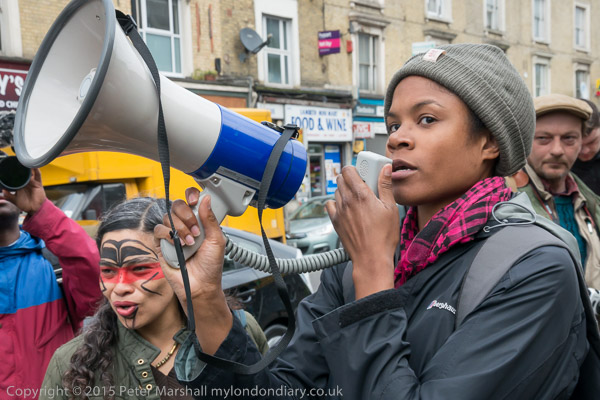
Baltimore to Brixton - Black Lives Matter!

The United Families and Friends Campaign (UFFC) describes itself as “a coalition of families and friends of those that have died in the custody of police and prison officers as well as those who are killed in immigration detention and secure psychiatric hospitals. It includes the families of Roger Sylvester, Leon Patterson, Rocky Bennett, Alton Manning, Christopher Alder, Brian Douglas, Joy Gardner, Aseta Simms, Ricky Bishop, Paul Jemmott, Harry Stanley, Glenn Howard, Mikey Powell, Jason McPherson, Lloyd Butler, Azelle Rodney, Sean Rigg, Habib Ullah, Olaseni Lewis, David Emmanuel (aka Smiley Culture), Kingsley Burrell, Demetre Fraser, Mark Duggan and Anthony Grainger to name but a few. Together we have built a network for collective action to end deaths in custody.”
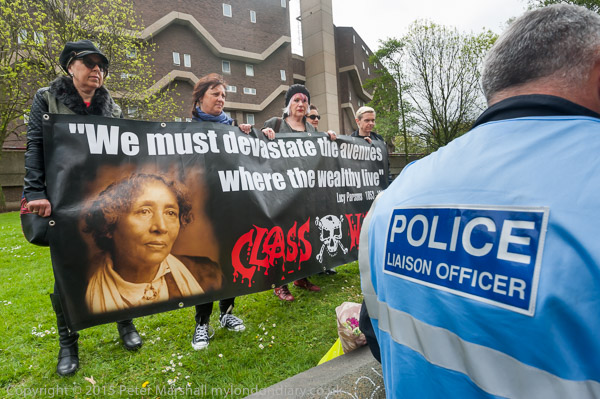
Baltimore to Brixton - Black Lives Matter!

And we have a long history of racist prosecutions, most notably perhaps the trial of the Mangrove Nine in 1970. The defendants, most of whom defended themselves, were finally all acquitted on the main charge of incitement to riot with four receiving suspended sentences for less serious offences. But the judge made clear in his comments that the authorities and in particular the Metropolitan Police had been racist in their actions and in bringing the prosecution.
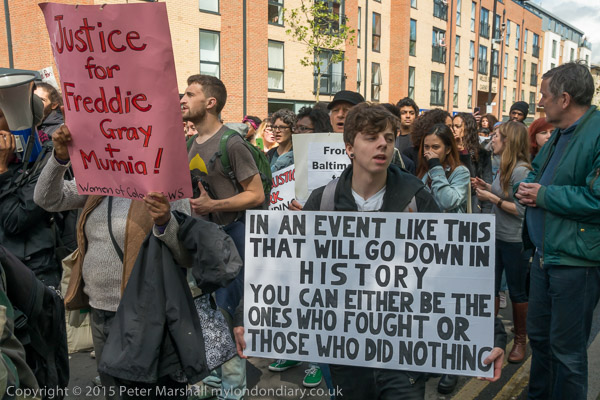
Baltimore to Brixton - Black Lives Matter!

Since then there have been other high profile cases which have demonstrated the institutional racism of the police force – notably over their investigation of the murder of Stephen Lawrence and the police murder of Jean Charles de Menezes. In 2023 the report by Baroness Casey was only the latest to castigate them as racist, sexist and homophobic.

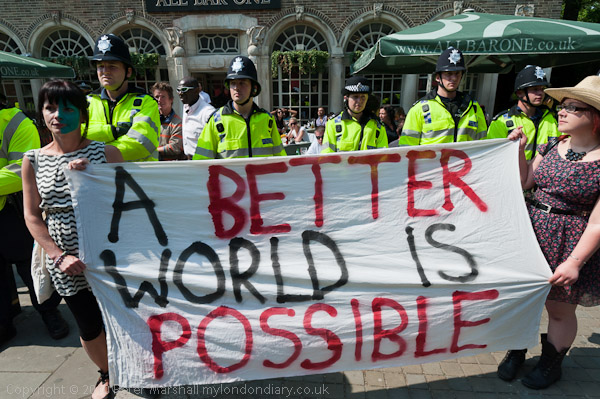
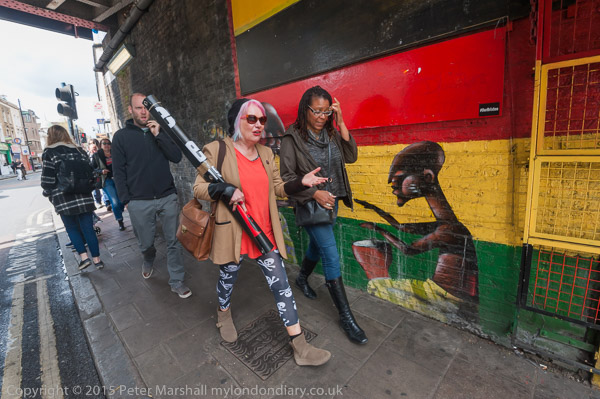
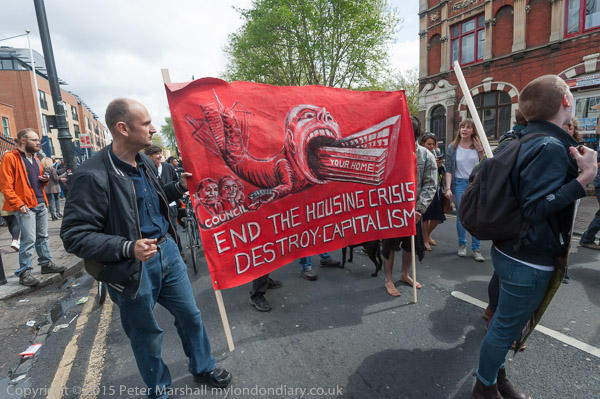
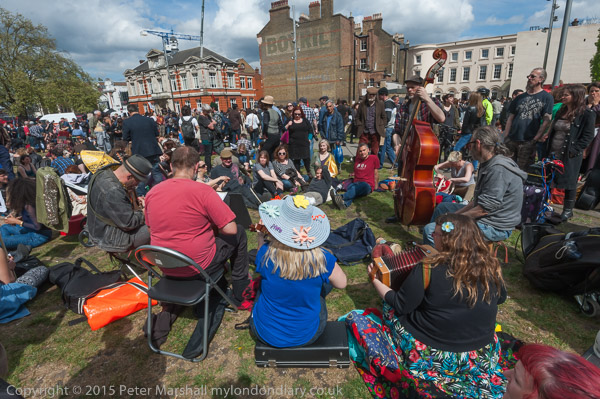
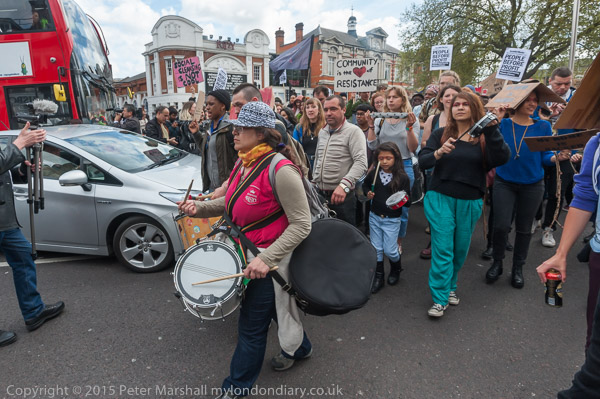
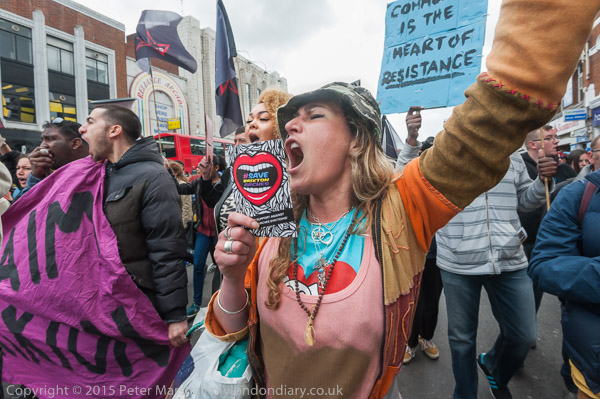
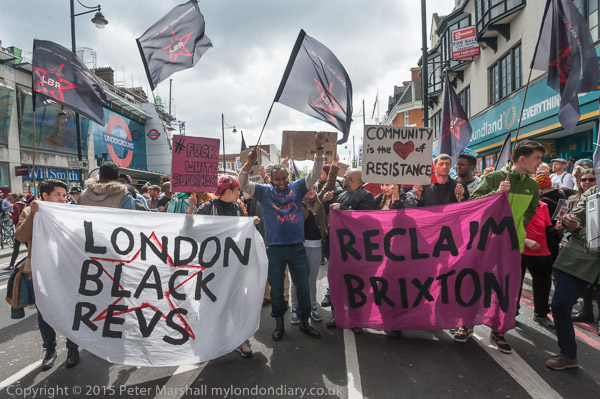
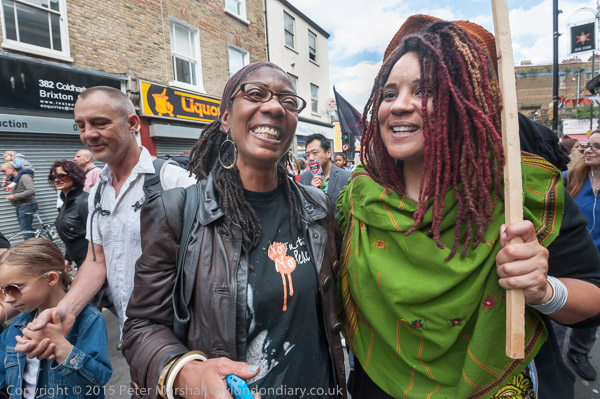
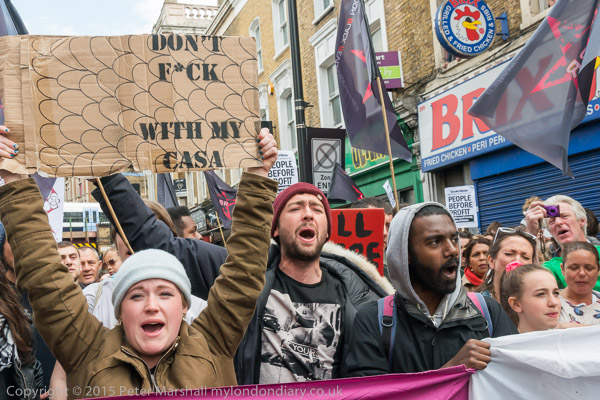
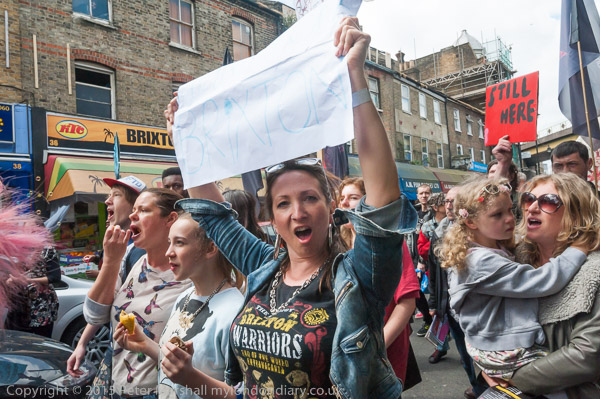
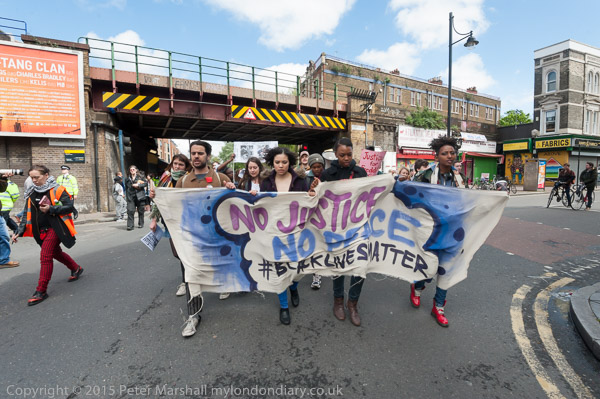
Activists in the UK have also responded to the police murders in USA, and on Sunday 3rd May 2015 following the killing of Freddie Gray in Baltimore and police attacks on his funeral which led to massive protest in the USA, they protested in Brixton in solidarity and pointed out similar problems in Brixton and the UK.

It wasn’t a huge protest but was supported by a wide range of groups from Brixton and across London, including London Black Revs, Class War, the International People’s Democratic Uhuru Movement, Reclaim Brixton, Women of Colour and the All-African Women’s Group from the Global Women’s Strike, Brixton Latin American Community, Mexica Movement London Chapter, Our Brixton, Latin Brixton, Justice for Christopher Alder, BirminghamStrong, Justice 4 ALL, The Brick Lane Debates, Occupy UAL, RCG, Revolutionary Communist Group, Occupy London, Rojava Solidarity Working Group, Algeria Solidarity Campaign, Environmental Justice North Africa and Justice4Paps.

On My London Diary I give some brief facts about the killing of 25-year-old African American Freddie Gray and the attack on his funeral by police which provoked riots. You can read a much more detailed account on Wikipedia.

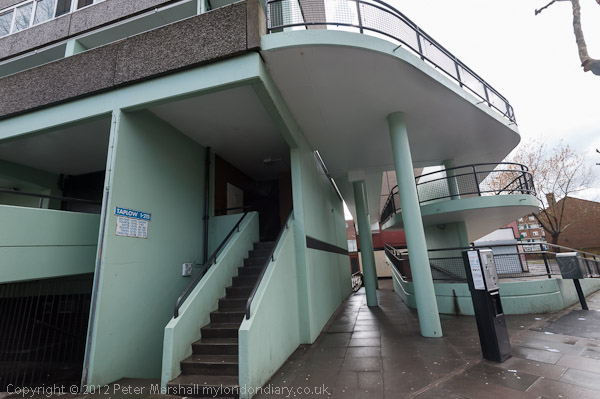
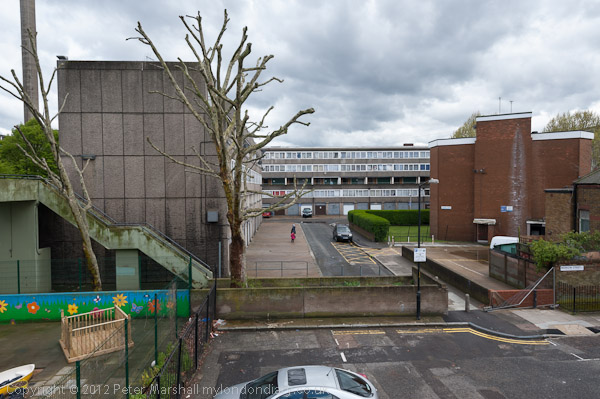
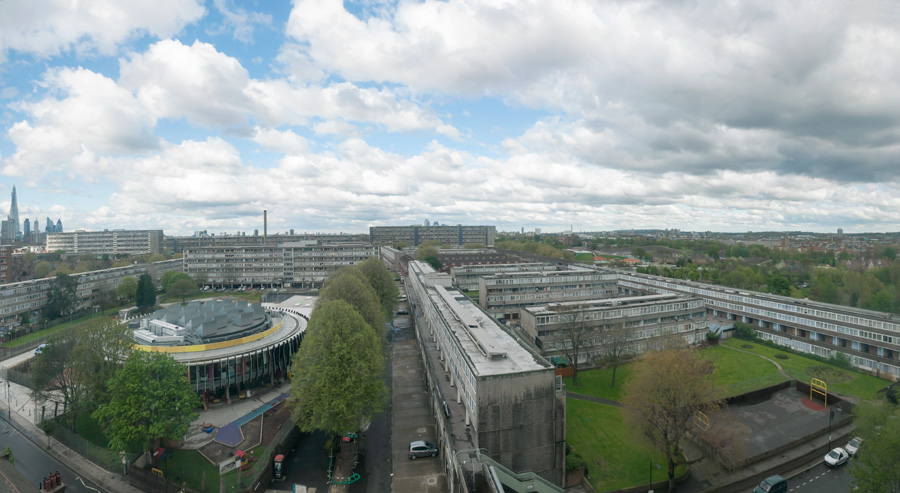
The march began by going through the large barrier bloc of Southwyck House, built in the 1970s as a shield for the urban motorway, plans for which were dropped after the devastation it would cause became obvious after the Westway section was built in North Kensington, stopping for a brief protest there before it continued to a housing occupation against Guinness Trust opposite the Loughborough Park Estate. It then through the centre of Brixton to a rally in Windrush Square.

People then marched along Brixton Road past the Underground Station to Brixton Police Station and on to the Loughborough Estate to a community centre on Somerleyton Road.

I’d walked far enough and left the march there, walking back along Atlantic Road where I photographed some of the murals against the eviction of local shopkeepers from the railway arches before taking the tube to Westminster to go to visit the Occupy ‘Festival of Democracy‘ in Parliament Square, then in Day 3.

More pictures at Baltimore to Brixton – Black Lives Matter!


FlickrFacebookMy London DiaryHull PhotosLea ValleyParis
London’s Industrial HeritageLondon Photos

All photographs on this page are copyright © Peter Marshall.
Contact me to buy prints or licence to reproduce.
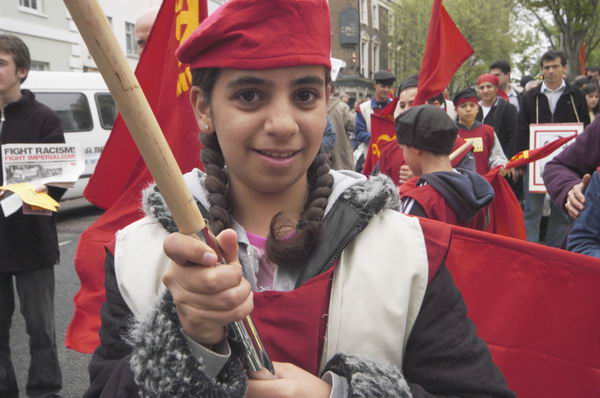
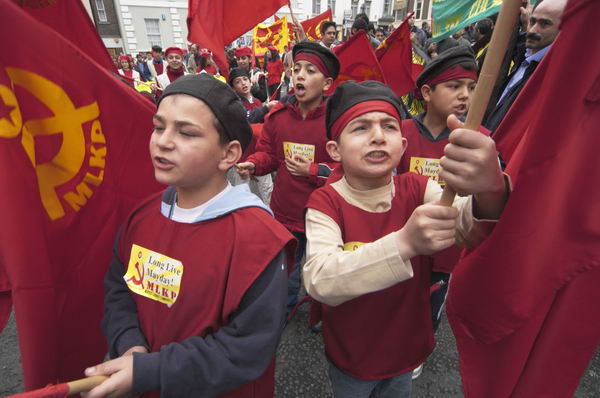
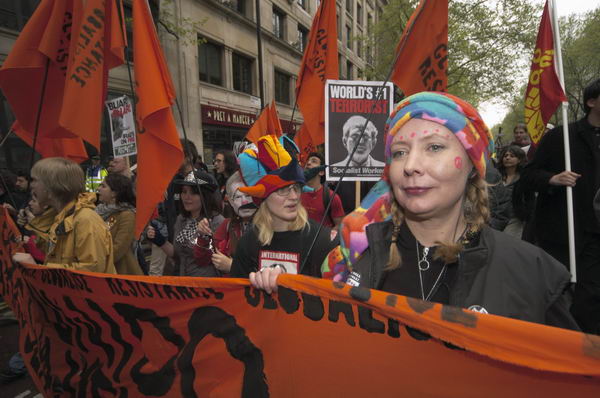
May Day 2004

May Day 2004 – One of the many advantages of giving up full-time teaching around 2000 was that I was able to go to various events that previously took place when I was at work. And one of these was the London May Day celebrations taking place on May 1st – previously I could only take part in these when May Day fell on day I was not at work. I hope to be taking pictures of today’s march and rally as usual from Clerkenwell Green to Trafalgar Square gathering at noon.

May Day 2004

Back in 1978, Labour Prime Minister James Callaghan introduced an early May bank holiday, but rather than making May Day – International Workers Day – a bank holiday we got instead the first Monday in May. So only one year in seven do we get a Bank Holiday on May Day.

May Day 2004

Even then, Tories have made several attempts to get the Bank Holiday moved to another time of year – the first attempts came with a bill in 1982 and ten years later John Major suggested Trafalgar Day. The coalition government made another attempt in 2011, but so far strong opposition has kept the early May holiday, though I suspect it may be under threat again in the next Labour government.

May Day 2004

In 2004, twenty years ago, May Day was a Saturday, so many who would otherwise have been working were able to attend the annual May Day march and rally in London. I’ve written on some previous May Days about the origin of May Day and how it became International Workers’ Day and rather than repeat myself you can read an article by People’s History Museum researcher Dr Shirin Hirsch, May Day: A People’s Holiday which has the advantage of some fine illustrations.

Here, suitably corrected, is what I wrote about my May Day twenty years ago. All the photographs in this post are from May 1st 2004. There are many more pictures on My London Diary.

May Day!

London’s TUC sponsored May Day March and Rally is a peaceful celebration of International Workers’ Day. This was apparently first celebrated in 1886 in Chicago by striking textile workers.

May Day 2004

In London, the celebrations are dominated by several Turkish and Kurd groups, with the MLKP and their youth wing being some of the most vocal.

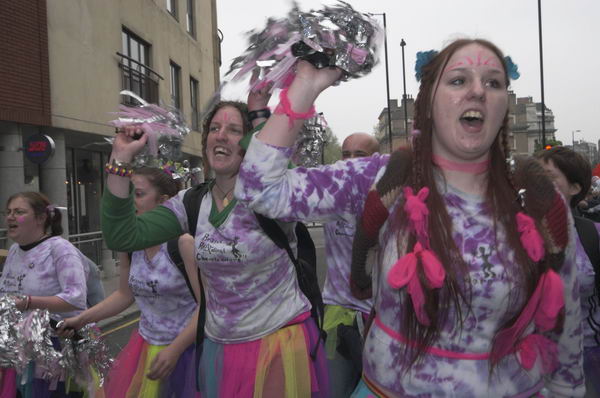
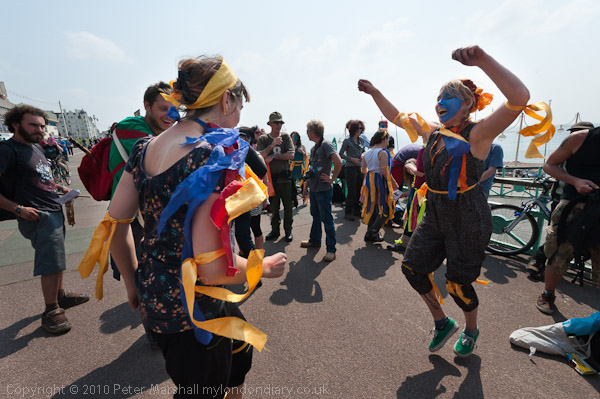
I was pleased to meet up again with members of Bristol Radical Cheerleaders, adding their enthusiasm and a little spectacle to the event. Fortunately they were not responsible for the route, as ‘To the left, to the left, not to the right, to the left’ might never have got us to Trafalgar Square.

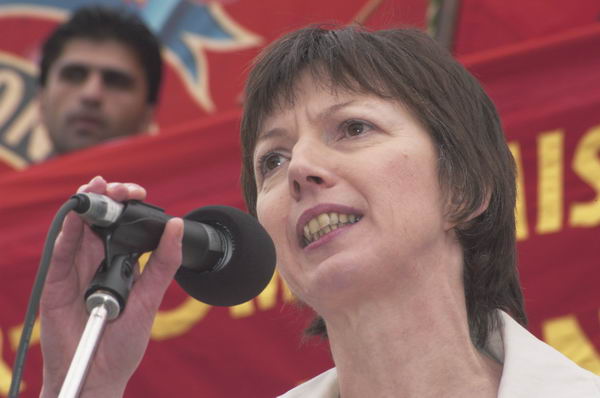
Maybe that wouldn’t have been a bad thing. The rally at the end was something of an anti-climax. Not that London Mayor Ken didn’t project his usual charm – and Frances O’Grady and the others spoke well, it was just, well, a bit dull. It needs something that is rather more of a celebration and a party.

I wandered off, jumping on a bus down the Strand to Fleet Street and St Brides where there was a wedding going on. Perhaps I should have taken more than the couple of pictures here, but I didn’t have an invite.

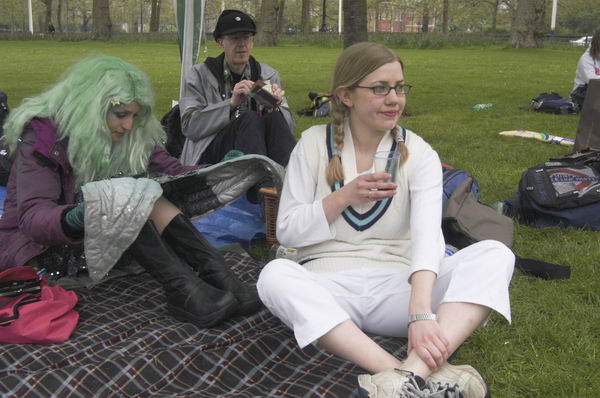
Back in St James Park there was supposed to be a party, and a game of ‘Anarchist Mayday Cricket’. It wasn’t quite the weather for either, and I took a few snaps and came home.

My London Diary – May 2004

FlickrFacebookMy London DiaryHull PhotosLea ValleyParis
London’s Industrial HeritageLondon Photos

All photographs on this page are copyright © Peter Marshall.
Contact me to buy prints or licence to reproduce.
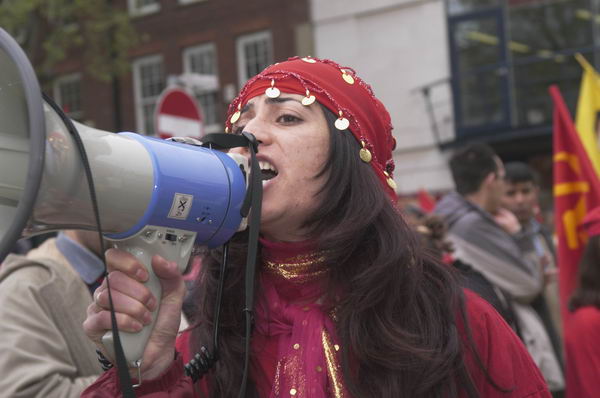

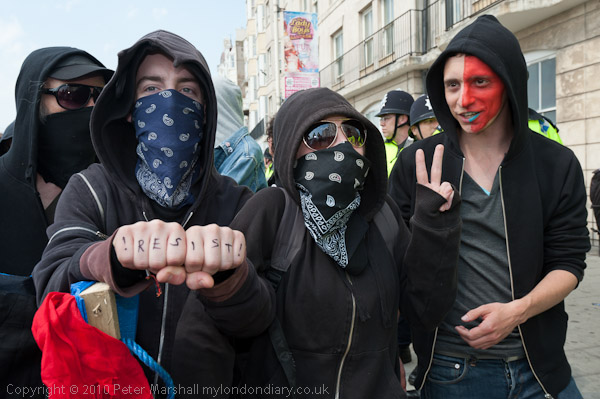
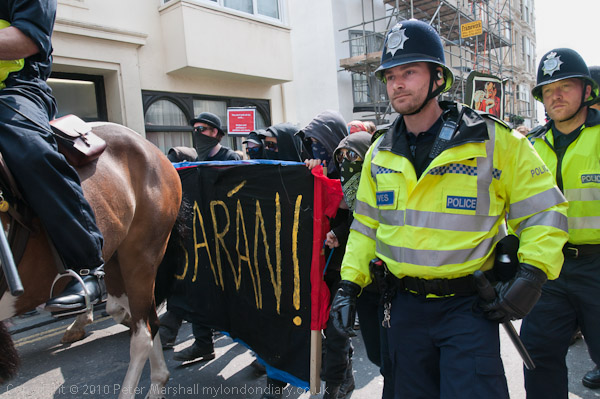
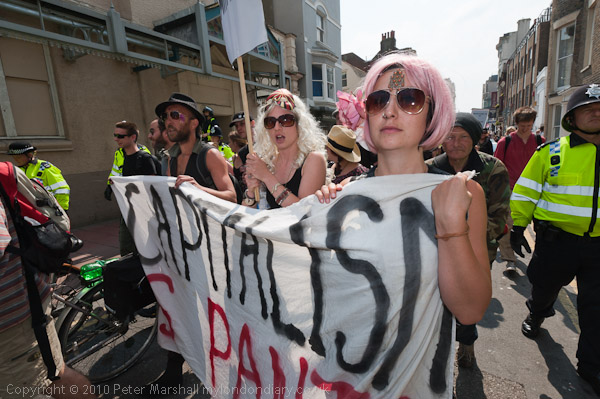
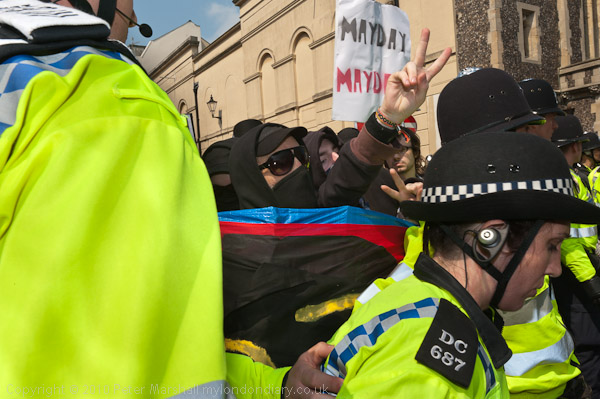
Brighton MayDay Protest & Party – 2011

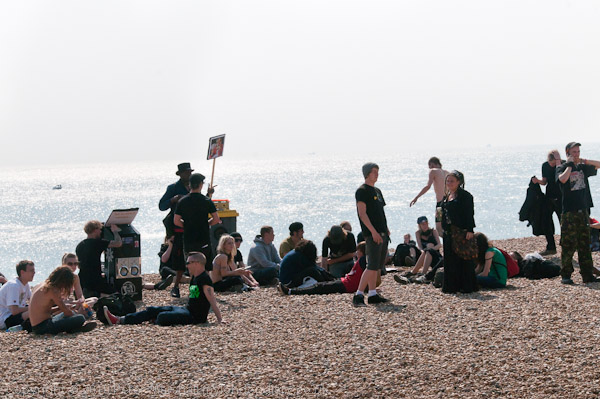
Brighton MayDay Protest & Party – On Saturday 30 April 2011 I had a day out in Brighton, not with my bucket and spade on the beach but photographing an early May Day Protest against the cuts, bankers, tax dodgers and those damaging the environment and the local community.

Brighton MayDay Protest & Party

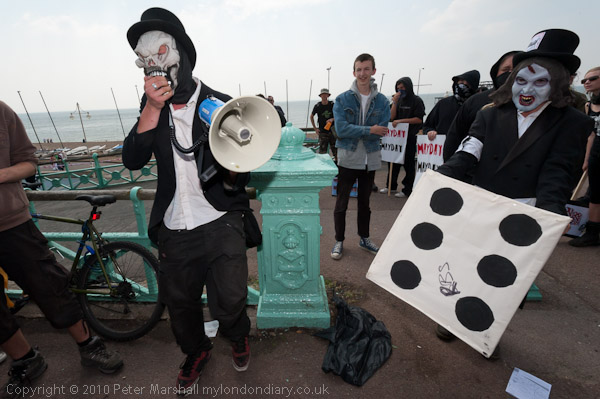
It was a protest organised deliberately without consultation with the police, essentially a succession of static protests at a number of locations around the city in random order, selected by the throwing of a large dice.

Brighton MayDay Protest & Party

Even the meeting point for the day was a closely kept secret and only revealed as I arrived in Brighton half an hour before the event was due to start, posted on Twitter, Facebook and a mobile number.

Brighton MayDay Protest & Party

I arrived to join around a dozen other photographers and a couple of plain clothes police watching around the same number of protesters, but had passed several police vans and a couple of officers on police horses just a short distance away.

Brighton MayDay Protest & Party

The protesters handed out a map of Brighton marked with 27 possible targets including arms manufacturers EDO MBM/ITT some way out in Moulscomb and Thales, several branches of Barclays, the UK’s largest investor in the arms trade, an armed forces recruitment centre and Marks & Spencer’s who support Israel by buying goods from illegal Israeli settlements. Other shops on the list included notable tax dodgers Vodaphone, Boots and the various Arcadia group brands – Topshop, BHS, Burton, Dorothy Perkins. Accused of damaging the environment were RBS who invest hugely in the area, Shell, particularly for their Rossport pipeline in Ireland, BP for their exploitation of tar sands, E.ON for coal fired power stations and Veolia. Other targets named included Brighton Town Hall, Tescos, Sainsburys and Starbucks, Fox & Sons involved in illegal evictions, Beyond Retro who sell fur and also two properties owned by the notorious Nicholas Van Hoogstraten.

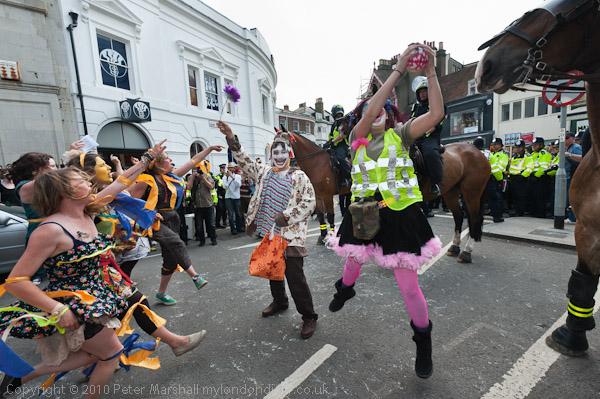
At 12.30, by which time rather more protesters had arrived, a giant dice was thrown and came down on 4 which meant we were heading to Brighton Town Hall and the protesters set off, accompanied by the police and the two horses.

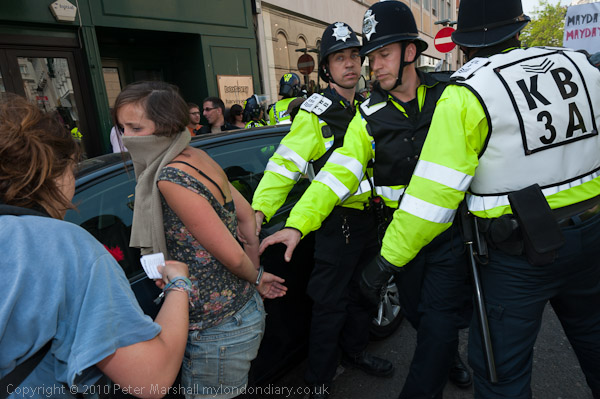
But although the protesters were clearly in carnival mode, the police were not and soon were stopping and harassing them.

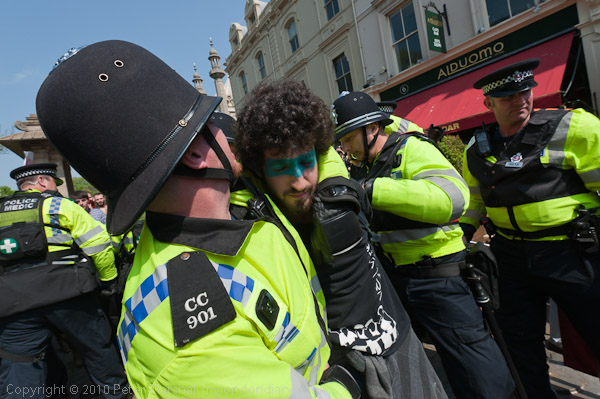
They grabbed a few protesters apparently more or less at random and there were some minor scuffles as police kettled the protest in Duke Street for around 40 minutes.

The protesters danced while some tried to negotiate with the police and finally they were allowed to move off to hold a rally outside two banks with speeches about the cuts and handouts to bankers.

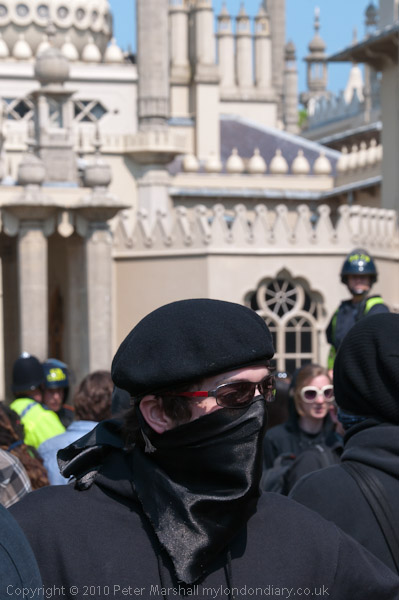
The protesters then tried to walk into the Pavillion Gardens, a few managing to do so before police decided to block the gates. There were a few more incidents and a couple of arrests, but after around 20 minutes the officer in charge decided there was really no reason why they should not walk through the gardens – and they did, to the cheers of those sitting on the grass and enjoying a picnic.

Police continued to chase the protesters around Brighton for the next couple of hours, though they seemed to be going around in circles and making occasional sudden changes in direction to leave the police – some of whom were noticeably less fit than the protesters or even the photographers – behind.

Police made at least one more arrest and the protesters eventually returned to the promenade where some sat down on the road. For the first time there was a clear message from the police that they would be kettled unless they got up, and they did, running up the hill again (with another arrest for no clear reason) before returning to party on the beach.

I rather doubt if any of those – at least 8 – arrested on the day ended up being charged, let alone convicted. The police were clearly totally confused by the event, and their response, particularly the use of police horses in some very restricted areas, put both protesters and public at risk. But I think also that the protesters rather failed to convey clearly to the people of Brighton their concerns. Perhaps and more organised series of rallies outside a more selected group of targets would have been more effective.

More detail about the protest and many more pictures on My London Diary at Brighton MayDay Protest.


FlickrFacebookMy London DiaryHull PhotosLea ValleyParis
London’s Industrial HeritageLondon Photos

All photographs on this page are copyright © Peter Marshall.
Contact me to buy prints or licence to reproduce.

Walking the Rip-Off – Heygate & Aylesbury – 2012

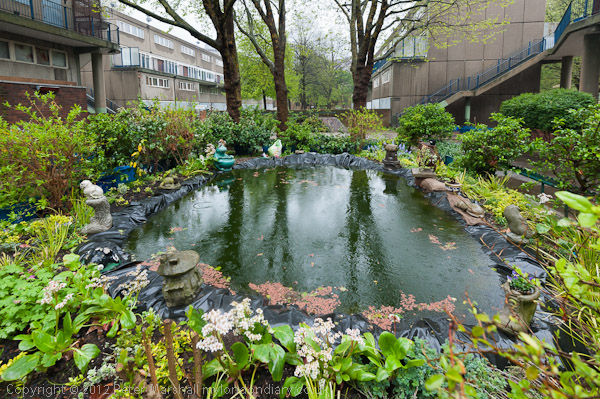
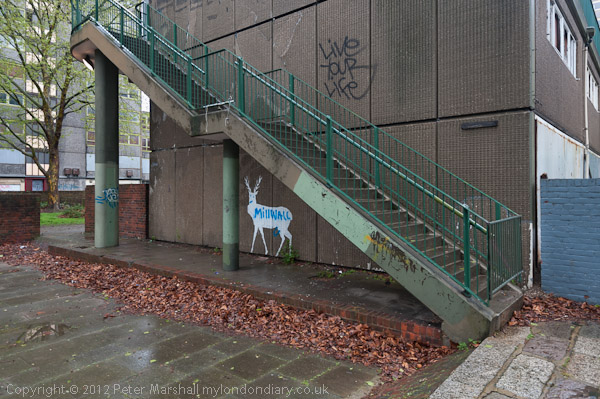
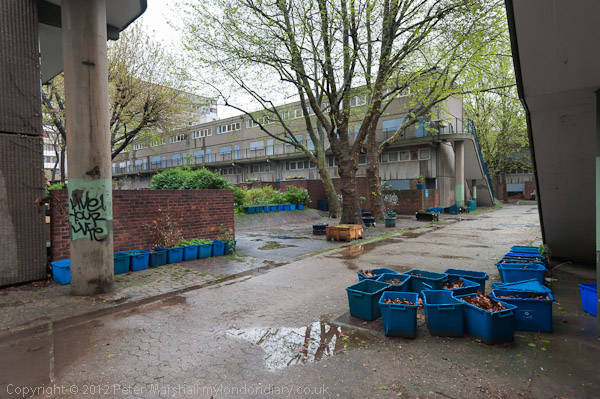
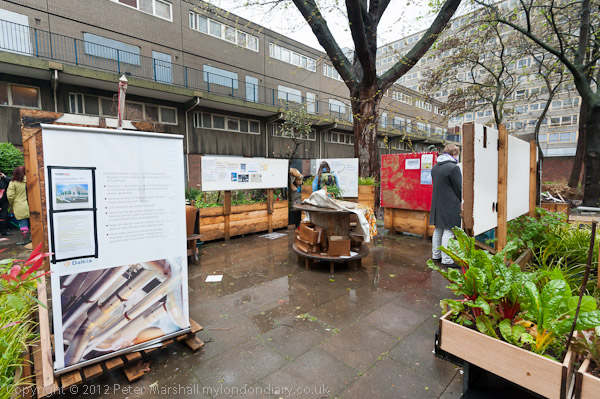
Walking the Rip-Off – Heygate & Aylesbury – On Sunday 29th April 2012 I joined around 35 others for ‘Walking the Rip-Off’ organised by Southwark Notes Archive Group and Aylesbury Tenants First (and here) which started in the “community gardening projects of Heygate” and went on “to the Aylesbury for a look and learn around the massive site.”

Walking the Rip-Off - Heygate & Aylesbury

It was an interesting and illuminating experience. There were around 35 people altogether despite the rain and a terrible weather forecast, and fortunately it slackened off and the sun actually came out.

Walking the Rip-Off - Heygate & Aylesbury

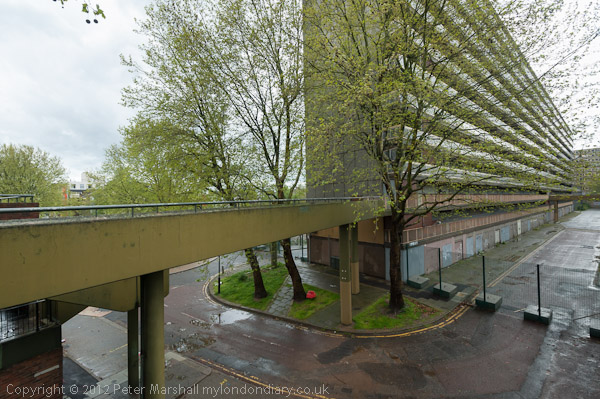
The Heygate Estate has now completely gone, demolished in 2014. There has been a loss of over a thousand council tenancies in the area, and only around 25 of those tenants displaced from the Heygate are thought to have been rehoused in the area . The well-designed and largely solidly built estate which probably had at least another 50 years of life with proper maintenance and necessary refurbishment has been replaced by lower quality buildings with many flats owned by overseas investors which are unlikely to last as long.

Walking the Rip-Off - Heygate & Aylesbury

As Southwark Notes reported in 2015, developers Lend Lease were marketing its replacement, Elephant Park “overseas for wealthy off-plan buyers looking for second homes, investments, buy-to-lets, homes for their student sons and daughters etc.

Walking the Rip-Off - Heygate & Aylesbury

The individual properties in the new estate are smaller – some best described as poky – and rented properties are several times more expensive. In 2021 the social rent on a new housing development in nearby Bermondsey was advertised at £295.50, which was £130 above the government’s social rent cap of £164.87 for a two-bed property. Many of those who lived on the Heygate have been forced to move to outer areas of London or further afield to find housing they can afford. It has been social cleansing on a large scale.

Walking the Rip-Off - Heygate & Aylesbury
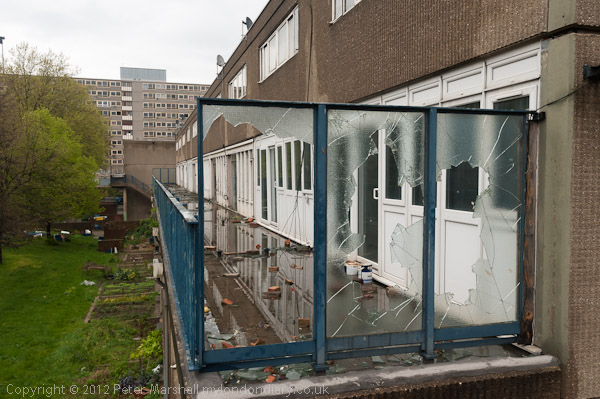
Housing left empty for several years had by 2012 suffered considerable vandalism

Particularly badly affected were leaseholders who were forced to move and given payments that were derisory and a fraction of that needed to buy comparable properties in the area. You can find more details online on Southwark Notes.

There is find more information on the regeneration of the Elephant & Castle area on the 35% Campaign web site. This also has up to date information on other aspects of Southwark Council’s failures including the redevelopment of the Aylesbury estate, the disastrous redevelopment of the Elephant & Castle shopping centre and other scandals in the area.

The site took its name from Southwark Council’s minimum policy requirement of 35% affordable housing, 70% of which social rent which it has failed to meet on Heygate and numerous subsequent developments.

On the tour in 2012 we were able to visit several properties on the Heygate and Aylesbury estates, and I was very impressed by the quality of the accommodation and the obvious love and care the residents had taken in making them really personal homes. I was allowed to photograph inside some of them but did not put any of the pictures on line in 2012, and can no longer find them.

From the 10th floor of Chiltern, Aylesbury Estate

I returned to one of those flats a year ago for the Fight4Aylesbury exhibition which was held there. Later in the year Aysen Dennis in whose flat this was held agreed to be relocated to a new nearby council block, but she continues her fight to save what remains of the estate. This January she acheived a significant victory when the High Court overturned the planning decision for Phase 2B of the Aylesbury Estate demolition. It is now not clear how the remaining demolition of the estate will proceed.


FlickrFacebookMy London DiaryHull PhotosLea ValleyParis
London’s Industrial HeritageLondon Photos

All photographs on this page are copyright © Peter Marshall.
Contact me to buy prints or licence to reproduce.

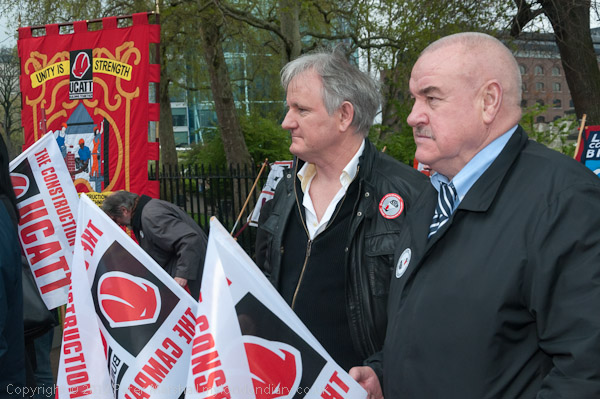
Workers, Cyclists & Palestine – 2012

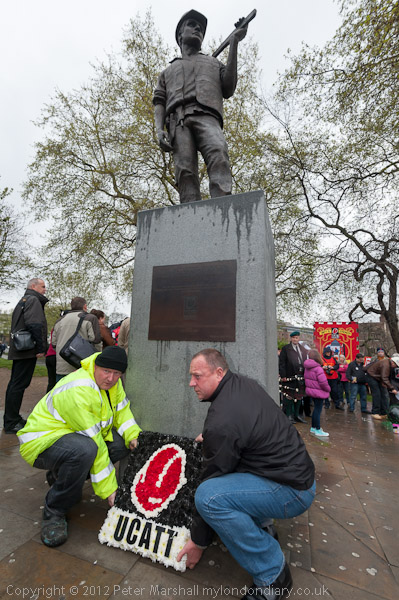
Workers, Cyclists & Palestine – Saturday 28th April 2012 I began by covering the Workers Memorial Day protest at the statue of the Building Worker on Tower Hill before going on to The Big Ride, London’s largest ever cycle protest. My final assignment was opposite Downing Street where people were showing their support for the more than 1200 Palestinian prisoners on hunger strike in Israeli jails.


Workers Memorial Day – Tower Hill

Workers, Cyclists & Palestine

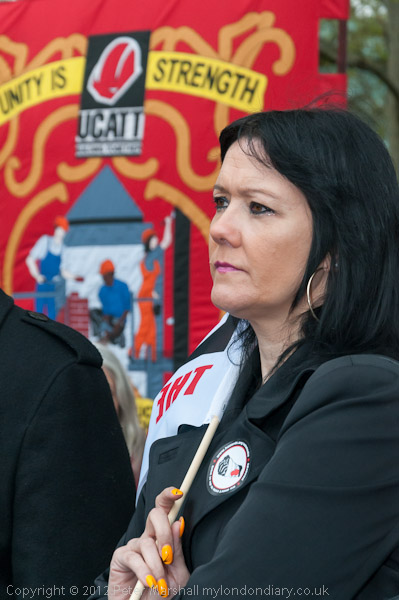
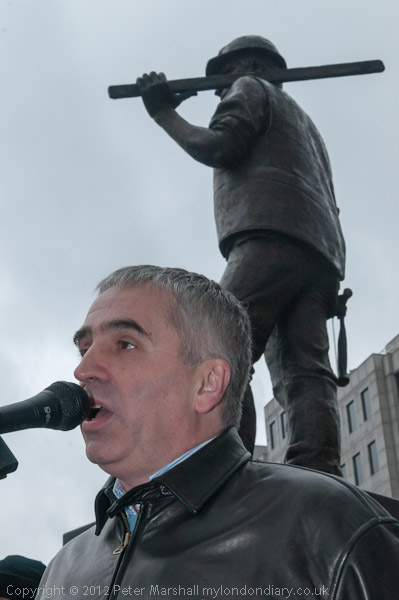
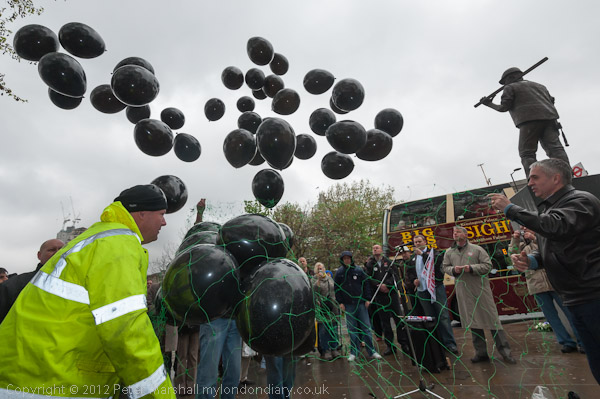
Around a hundred trade unionists and pensioners met at the statue of the Building Worker at Tower Hill on Workers Memorial Day to remember those killed and maimed at work, laying wreaths and releasing black balloons.

Workers, Cyclists & Palestine

According to official figures 20,000 people in the UK die every year as a result of their work though campaigners believe the true figure is at least double this. At least 1.9 million people of working age are living with injuries caused or made worse by their jobs and many of these are in the numbers Rishi Sunak complains about as being economically inactive and the Tories want to force back into work.

Workers, Cyclists & Palestine

The UK has a poor safety record for workers, 20th out of 34 in the OECD industrialised countries and governments have contributed to this by cutting workplace safety inspections dramatically. They respond to lobbying by employers to “cut red tape” which has meant a lowering of safety for workers – and for others including those killed by the Grenfell fire where the local authority was allowed to avoid proper fire safety inspections.

Workers, Cyclists & Palestine

Workers Memorial Day began in Canada in 1988 and was recognised by the TUC in 1999 and the Health and Safety Executive in 2000. The UN adopted it as the World Day for Safety and Health at Work in 2002. Its message is “Remember the dead – Fight for the living.”

This year, 2024, the theme for International Workers Memorial Day is the Climate Crisis and Workers’ Health, exploring the impacts of climate change on occupational safety and health. Events are taking place across the world, and in London in Waltham Forest, Barking and Stratford today, Sunday 28th April and tomorrow, Monday 29th April in Old Palace Yard, Westminster at 1-2pm.

More from 2012 on My London Diary: Workers Memorial Day.


Big Ride for Safe Cycling – Park Lane to Temple

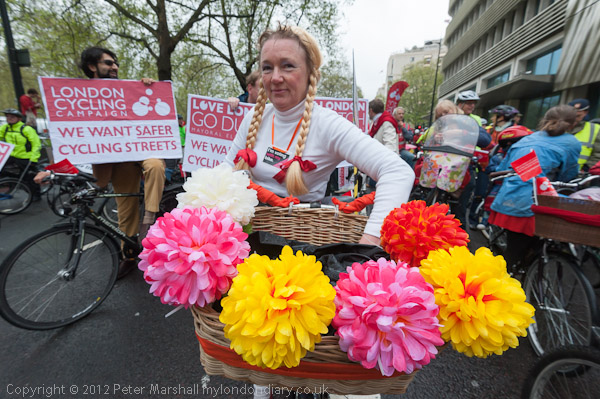
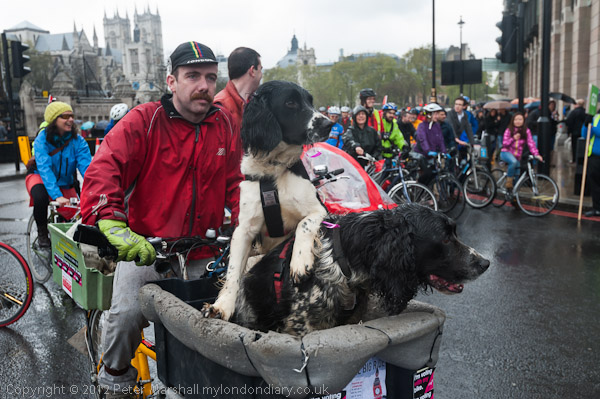
This was a huge family-friendly ride for cyclists, with and estimated 10,000 riders taking part, calling on the next London mayor to show their commitment to making London’s streets safer and healthier by encouraging walking and cycling.

All three main candidates have signed up to select three high-profile locations for Dutch-style cycling infrastructure, which encourages cycling and walking although I only saw one of them, the Green Party’s Jenny Jones, actually taking part in the ride.

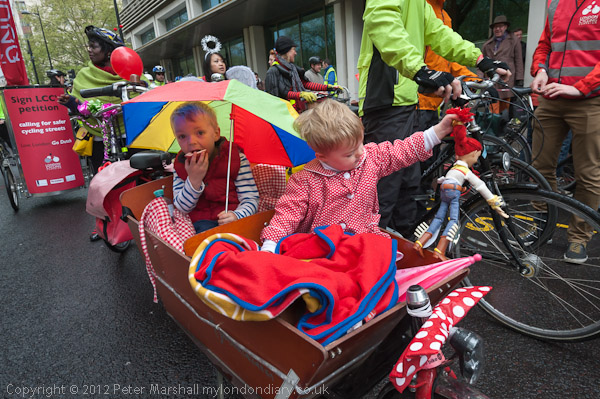
Many of those taking part dressed up for the event and there were some weird and wonderful machines taking part. For many it was a family day out and there were some very young participants both in trailers and on various small bicycles among the crowd.

More at Big Ride for Safe Cycling.


Support For Palestinian Hunger Strike – Downing St

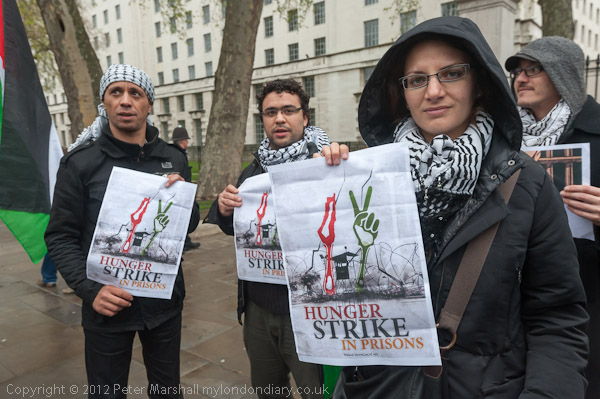
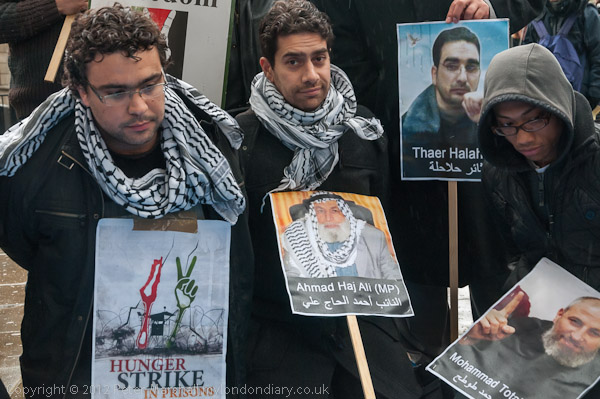
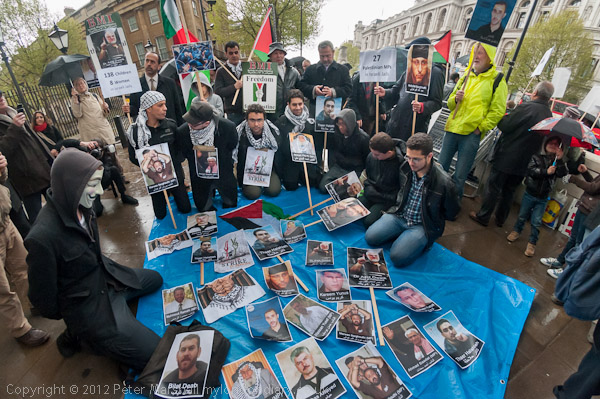
This was an emergency protest called at the last minute to support the over 1200 Palestinian prisoners in Israeli jails on hunger strike against administrative detention and other issues.

Among those held in Israeli jails in 2012 were 27 Palestinian MPs, 8 women and 138 children. Around 320 of them are in administrative detention, held without any charge or trial, and their numbers had risen considerably in the previous 18 months.

Hunger strikers are being punished by the Israeli Prison Service (IPS) who have confiscated personal belongings, transferred some to other prisons, put some in solitary confinement and denied them visits from family members and lawyers.

Support For Palestinian Hunger Strike


FlickrFacebookMy London DiaryHull PhotosLea ValleyParis
London’s Industrial HeritageLondon Photos

All photographs on this page are copyright © Peter Marshall.
Contact me to buy prints or licence to reproduce.


Fighting Brixton Gentrification – 2015

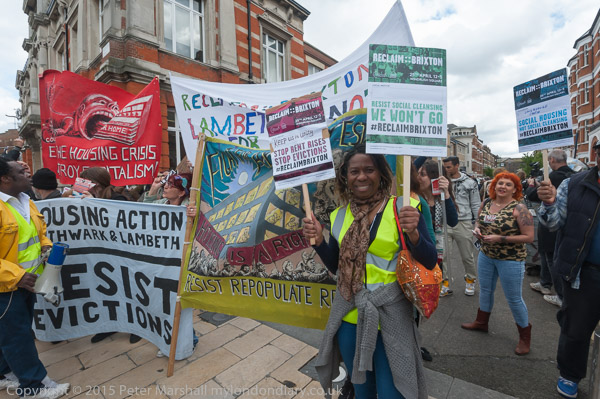
Fighting Brixton Gentrification – On Saturday 25th April 2015 the local community in Brixton held a day of activities to reclaim its social & cultural diversity, threatened by increasing rents and property development that are forcing out local businesses and residents.

Fighting Brixton Gentrification

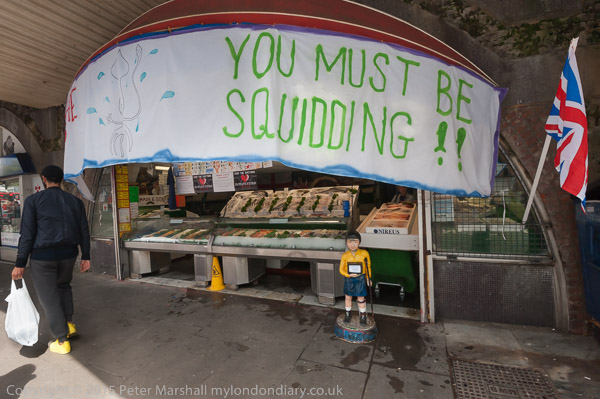
I’d arrived early for main ‘Reclaim Brixton’ event in Windrush Square and first made my way to Atlantic Road where long-established local businesses were being forced out from the railway arches which line one side of the road. They were under threat from Network Rail who with support from Lambeth Council were carrying out a refurbishment programme which would result in their shops being closed and the rents for the shops after being three times as high, pricing the low cost local businesses out of the area.

Fighting Brixton Gentrification

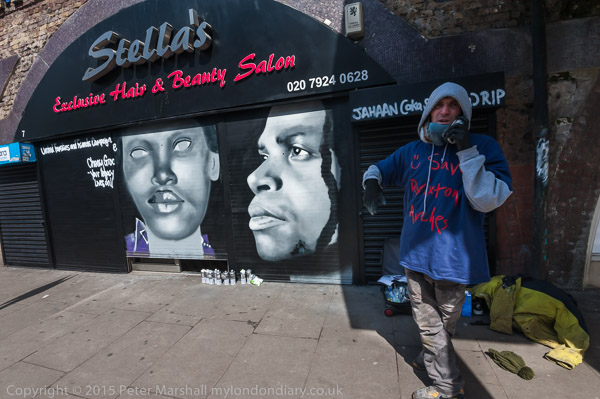
All the stores were closed for two hours across lunchtime in protest, and mural artists had been invited to work on their metal shutters. In 2015 I wrote: ‘On Stella’s Exclusive Hair & Beauty Salon an artist was working on a mural for the United Families and Friends campaign, celebrating Cherry Groce, Sean Rigg and Ricky Bishop, all killed by Brixton police. All the shops on both sides of the arches were closed, and most had white sheets with the name of the business and a punning message about the evictions. Some of them have traded here for many years – Denmay Fabrics since 1948, and L S Mash and Sons have been fishmongers here since 1932. Their message to Network Rail – ‘Don’t rip the soul outta my place

Fighting Brixton Gentrification

Fighting Brixton Gentrification

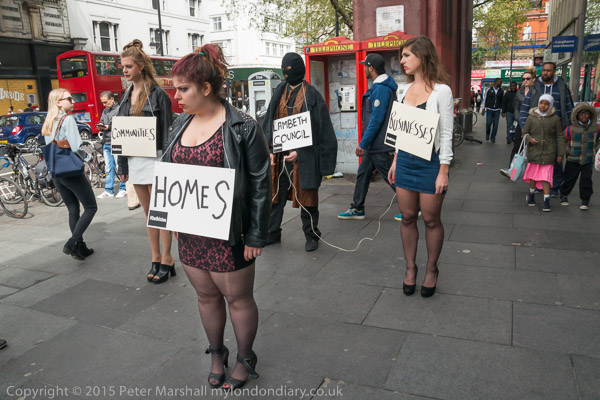
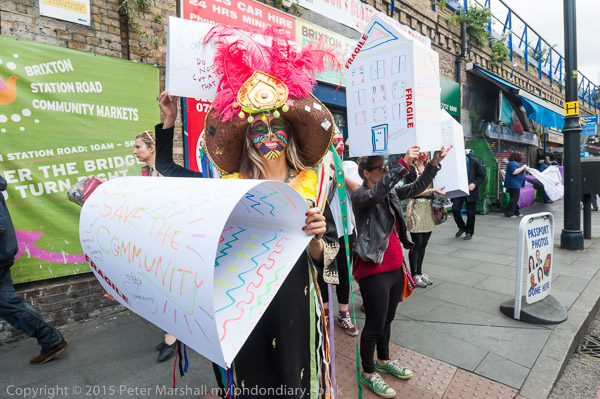
Street theatre groups walked past on their way to ‘Reclaim Brixton’ some in exotic dress carrying cardboard homes and others with posters against the threat to Communities, Homes, Businesses from Lambeth Council.

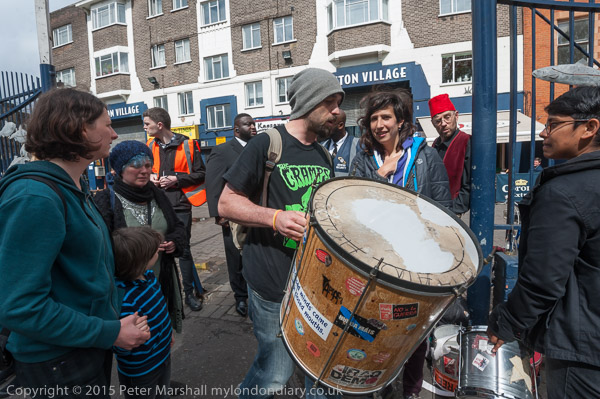
I walked along to the gentrified Brixton Village, an extensive arcade between Atlantic Road and Coldharbour Lane, to find that police and security were keeping out protesters who, led by London Black Revs, had planned to go through the market in a peaceful march.

I found Class War at Brixton Station and walked back with them to Brixton Village, where other campaigners including some from the Ayslesbury Estate where I had photographed the previous day making their banner and other South London housing campaigners were arriving for the march.

Rather to my surprise the march when it finally started was a short and fairly direct one to Windrush Square, turning off Coldharbour Lane to enter the square via Rushcroft Road.

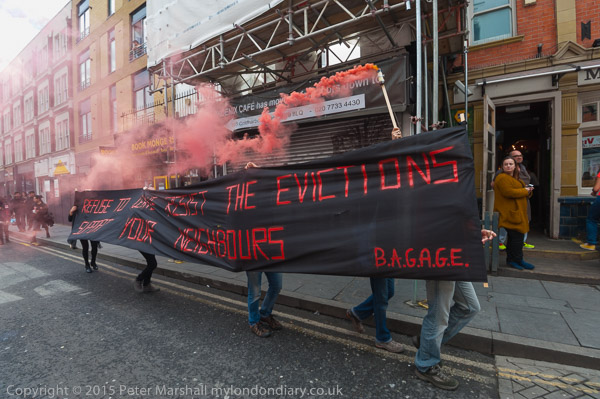
Close to the mansion flats which had been squatted for 32 years before residents were violently evicted in July 2013 people accompanying the long black banner of B.A.G.A.G.E (Brixton Action Group Against Gentrification and Evictions) with its message ‘Refuse to Move – Resist the Evictions – Support your Neighbours’ and others let off several red flares.

Windrush Square in front of the Tate Library and opposite Lambeth Town Hall was a few years earlier re-landscaped by Lambeth Council, who deliberately turned what had been a popular place for locals into a bleak and unwelcoming windswept area to discourage the informal gatherings that took place there.

Perhaps it was partly due to this that the event taking place there seemed to lack any real cohesion with various groups doing their own thing in different parts of the large area and largely ignoring the speeches and performances at the Unite Community stage.

After an hour or so with not very much happening, activists decided it was time for a march and took to the road blocking traffic and walked up Brixton Road.

They stopped for a while outside Brixton Underground, drumming and dancing and shouting.

Then they marched along Atlantic Road and rather to my surprise returned directly to Windrush Square along Coldharbour Lane.

Marcia Rigg, Sean Rigg’s sister, still fighting for justice for her brother’s killing by Brixton police in August 2008 and friend

I hung around for a while in Windrush Square where nothing much was still happening slowly and things seemed peaceful. I decided I had done enough for the day and left.

This was a mistake. Shortly after (probably when Class War came out of the pub) sthings kicked off and some people stormed and briefly occupied Lambeth Town Hall, a large window at Foxton’s estate agents was broken, and a few activists went into Brixton Village with banners.

Many more pictures on My London Diary:
London Black Revs ‘Reclaim Brixton ‘march
Reclaim Brixton celebrates Brixton
Take Back Brixton against gentrification
Brixton Arches tenants protest eviction


FlickrFacebookMy London DiaryHull PhotosLea ValleyParis
London’s Industrial HeritageLondon Photos

All photographs on this page are copyright © Peter Marshall.
Contact me to buy prints or licence to reproduce.

Axe the Draxosaurus – 2016

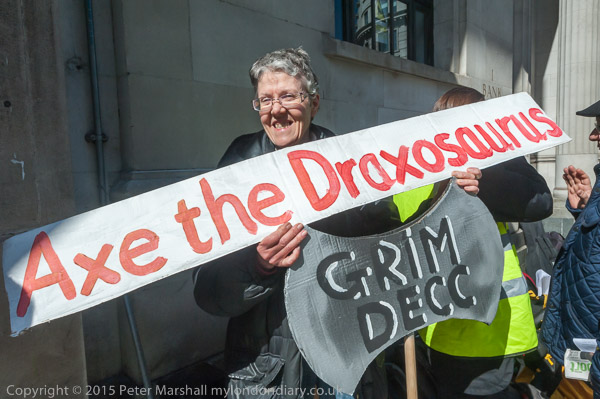
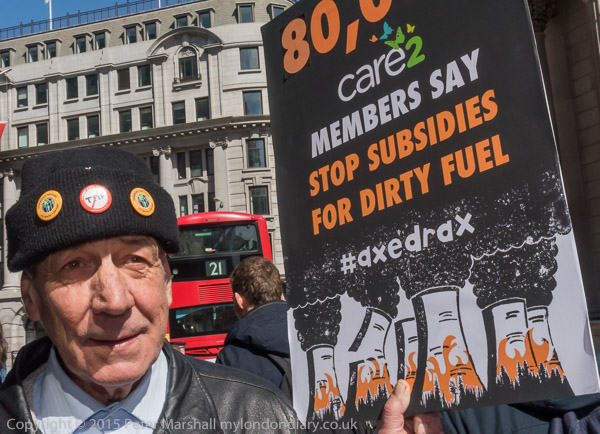
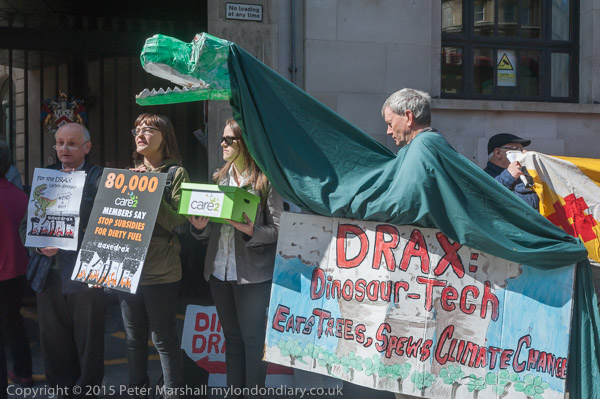
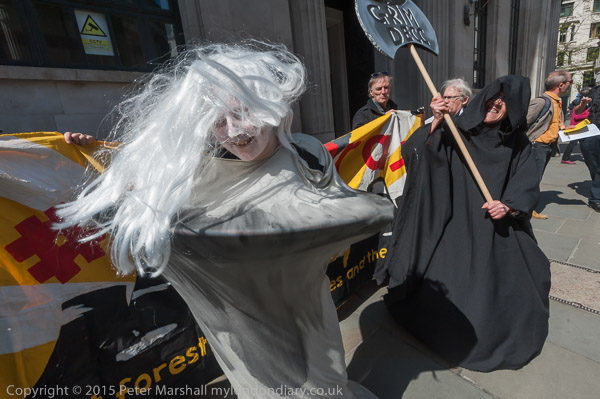
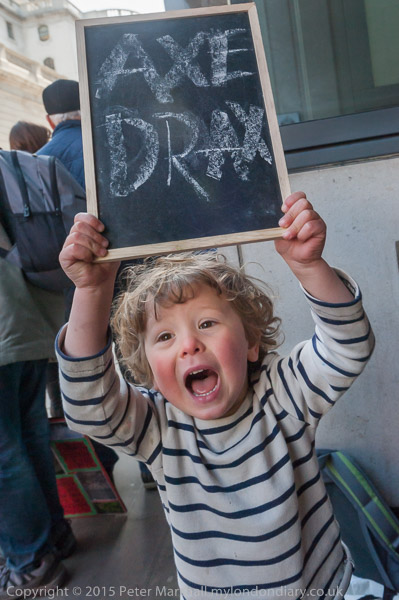
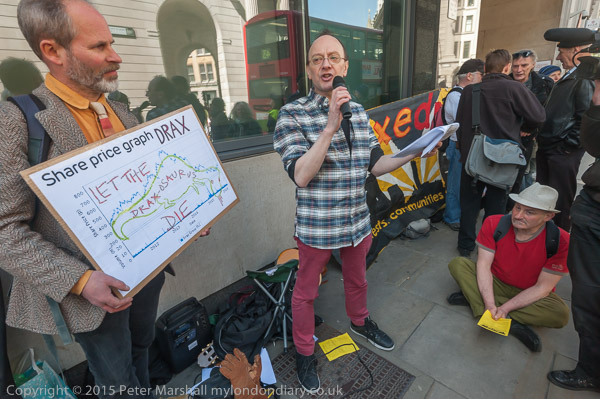
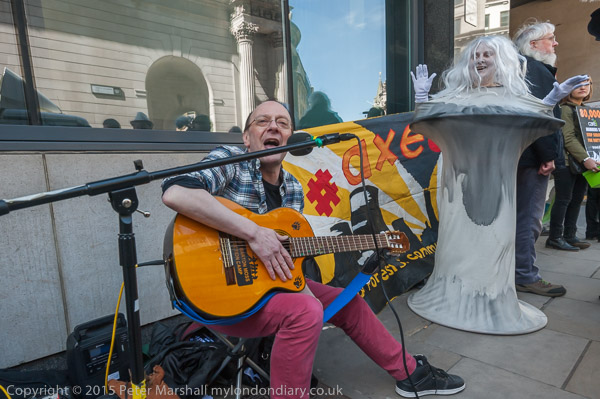
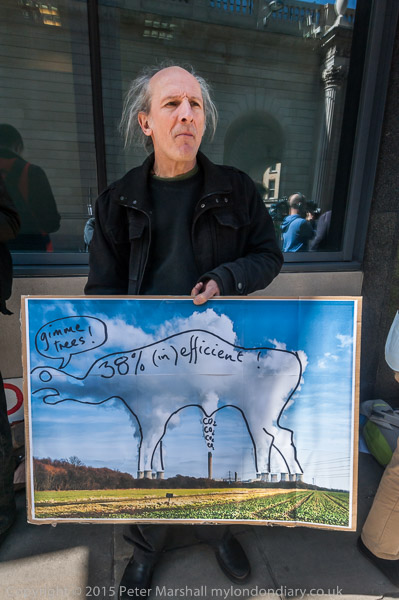
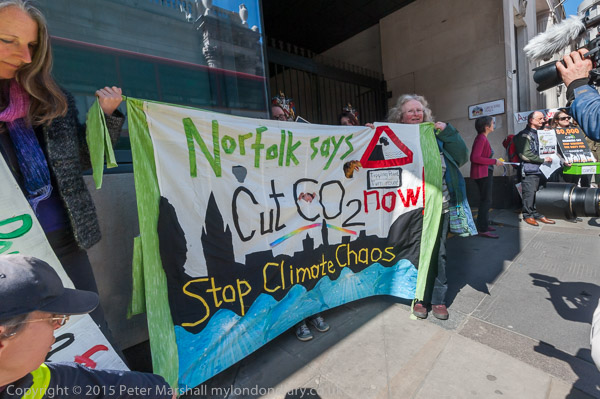
Axe the Draxosaurus – On Wedesday 20th April 2016 environmental activists protested outside the AGM of Drax Plc at Grocer’s Hall next to the Bank of England in the heart of the City of London. Drax power station near Selby in Yorkshire used to be the UK’s biggest coal-fired power station, but since 2012 has become the world’s biggest wood-burning plant, and the company Drax Plc has become the second largest producer of wood pellets in the world

Axe the Draxosaurus

Drax power station now emits more CO2 than any other plant in the UK, and it does so with the aid of a huge subsidy from our UK electricity bills, almost £1 billion in 2021.

Axe the Draxosaurus

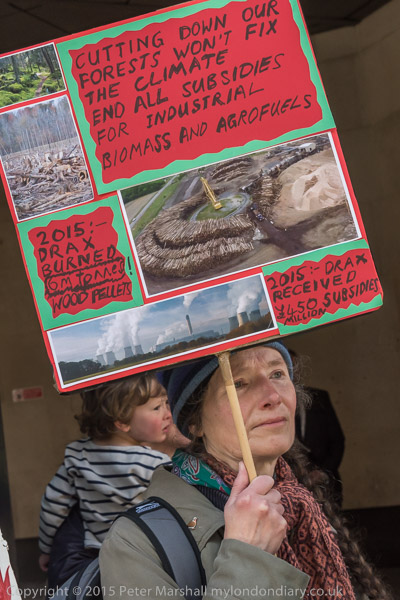
It get subsidised by the UK Government as part of the plan to decarbonise electricity generation despite the evidence from scientists around the world that the burning of forest wood for energy increases carbon emissions and is incompatible with the attempt to limit global warming to 1.5°C.

Axe the Draxosaurus

The subsidies that Drax receives increase our electricity bills and should be going to expand truly renewable energy sources such as wind, wave and solar energy. Instead they are paying Drax to pollute and pay out large dividends to their shareholders.

Axe the Draxosaurus

Sourcing the wood to burn at Drax – and for them to sell to other wood-burning plants is also a social and environmental disaster. Much of the wood comes from Drax’s pellet mills using large mmonoculture pine plantations in Southeastern USA, large sterile forest areas with little or no wildlife which have been expanded greatly in area, in part by the total clearance of areas of ancient forest.

Also in the USA, Drax buys pellets from Enviva, the world’s largest pellet producer which has come under criticism for its clearcut felling of US coastal hardwood forests.

Drax has also been criticised by environmentalists for its clear cutting of ancient forests in Canada, and its Portuguese supplier of pellets has been found to have sourced trees from nature reserves. And logging for wood pellets for Drax is also destroying ancient forests in Estonia and Latvia.

The amount of wood burned at Drax is huge – 6.4 million tonnes in 2022 – and will have involved the cutting down of twice that mass of trees. It is more than the entire UK wood production – but only supplies less than one hundredth of our energy needs.

Drax is now attempting to claim further subsidies for its BECCS (Bioenergy With Carbon Capture And Storage) project which seems very unlikely to be able to capture any significant amount of its huge annual CO2 output. It would obviously be far better simply to stop burning wood and turn to truly renewable power sources.

The protest in 2016 was organised by Biofuelwatch on whose web site you can find more a detailed briefing about Drax and why it is vital to end the subsidies for its polluting and environmentally destructive activities.

You can find information on the Axe Drax page about the trial of the #DRAX2 arrested after paint was sprayed on the government department supporting the subisdies to Drax – it begins at Southwark Crown Court on April 22nd 2024. And on August 8-13th 2024 Reclaim the Power is holding a mass protest camp for climate justice “targeting Drax – the biggest emitter in the UK, the world’s biggest burner of trees and a key driver of environmental racism.”

Drax AGM Biomass opposition


FlickrFacebookMy London DiaryHull PhotosLea ValleyParis
London’s Industrial HeritageLondon Photos

All photographs on this page are copyright © Peter Marshall.
Contact me to buy prints or licence to reproduce.

DPAC – Stop & Scrap Universal Credit – 2018

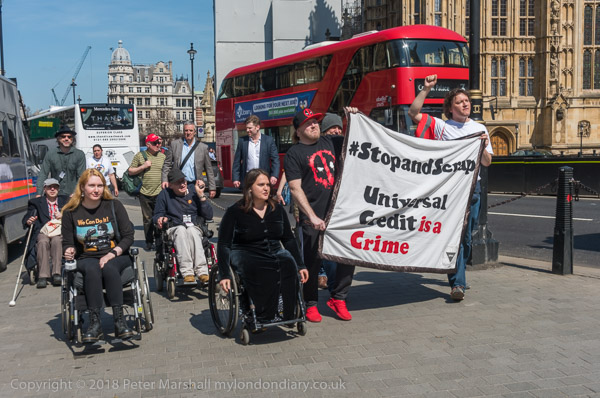
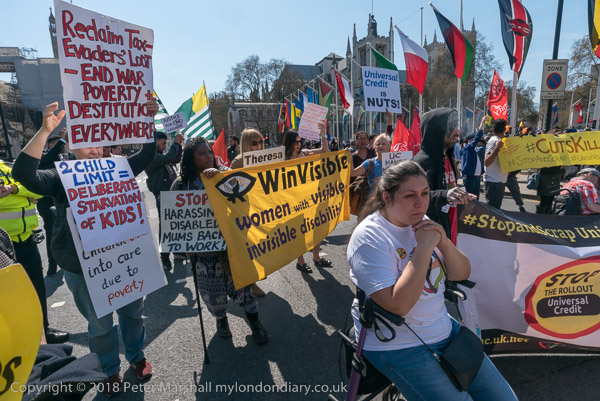
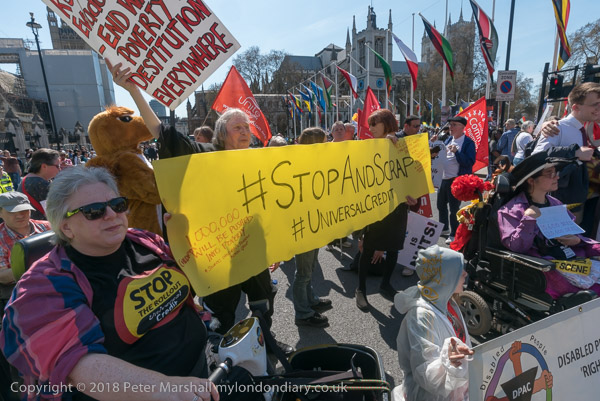
DPAC – Stop & Scrap Universal Credit: A couple of days ago the media were carrying news of a report by the Resolution Foundation on the working of the Universal Credit benefit first introduced in 2013. This found that seven in 10 (71%) families on UC were worse off in real terms now than they would have been under the previous benefits, and that out of work people with disabilities were those likely to have lost most.

DPAC - Stop & Scrap Universal Credit

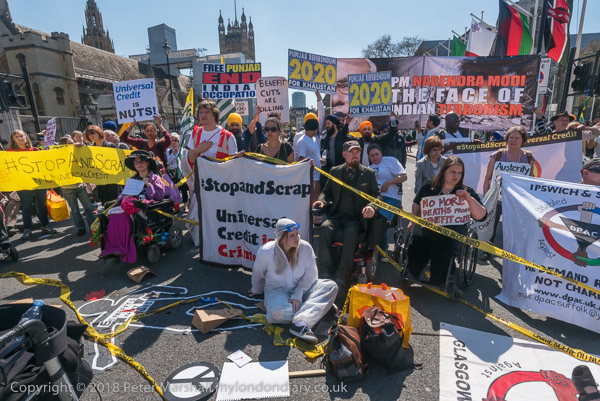
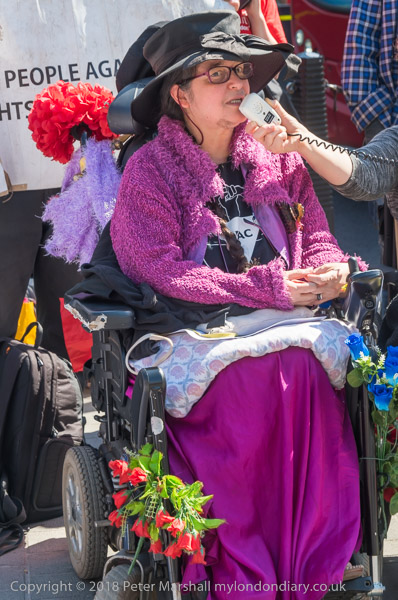
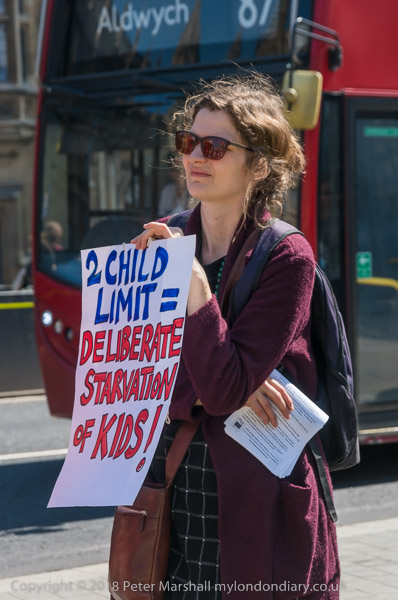
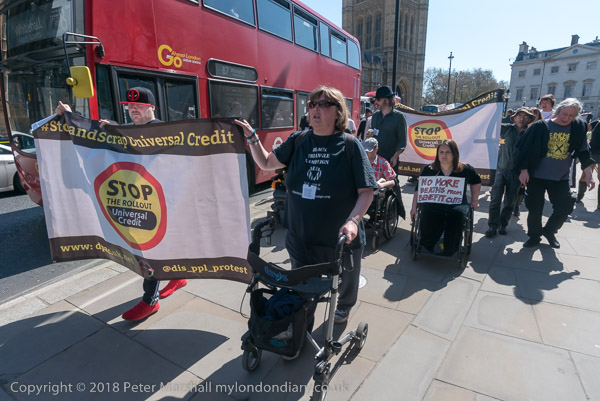
Six years ago, DPAC were already pointing this out and on Wednesday 18th April 2018 campaigners from DPAC (Disabled People Against Cuts), MHRN (Mental Health Resistance Network), Black Triangle, Winvisible and others began a nationwide day of action against Universal Credit in London with a rally in Old Palace Yard and a protest inside Parliament.

DPAC - Stop & Scrap Universal Credit

Security meant I was unable to cover their protest inside the Houses of Parliament but I met those who had been protesting inside when they came out to join those protesting outside and held a rally in Old Palace Yard.

DPAC - Stop & Scrap Universal Credit

As that rally ended the campaigners marched into Parliament Square where they blocked the roadway for around half an hour before ending their protest.

DPAC - Stop & Scrap Universal Credit

DPAC and others say that Universal Credit has so many flaws it must be scrapped, calling it “an economic and political disaster bringing further distress and impoverishment to those forced to endure it“.

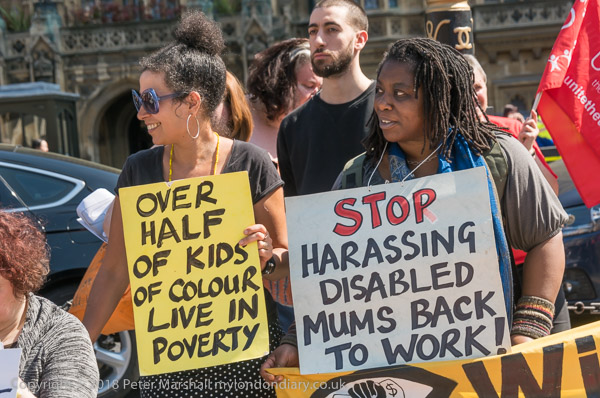
Back in 2018 they pointed out it has been particularly disastrous for disabled people. The removal of Severe and Enhanced Disability Premiums means single disabled people lose around £2,000 per year and a disabled couple over £4,000.

There have been some changes in Universal Credit since 2018, but these have mainly been administrative and have not affected the basic unfairness towards the disabled. The Resolution Foundation report suggests that a single person with a long-term disability which prevents them from working would now be £2,800 per year worse off than under the old benefits system.

Their report suggests overall cost of Universal Credit in 2028 will be about £86bn a year, while under the previous system it would have been £100bn, a saving of £14bn, which is being made to the cost of those disabled and others out of work – the poorest groups in our society. In contrast those working and also claiming UC will be a little better off than under to previous benefits system.

As always police found dealing with disabled protesters difficult. It doesn’t look good to be harassing them in the way they would normally act to protesters, and they have a great problem in making arrests of people in wheel chairs or on mobility vehicles. Apparently the Met have only one vehicle which can safely carry either – and only in limited numbers, perahps one at a time.

More about the protet and more pictures on My London Diary at Stop & Scrap Universal Credit say DPAC.


As well as this protest there was also a large protest in Parliament Square by Kashmiris and Indians from many sections of the community including Tamils, Sikhs, Ravidass, Dalits, Muslims and others against the visit by Prime Minister Narendra Modi, and smaller groups supporting him and his ultra-right Hindu supremacist policies.
Indians protest President Modi’s visit
Hindus support Modi
Save Girl, Educate Girl

And in late afternoon I went to join Environmental group Biofuelwatch holding their ‘Time to Twig’ Masked Ball Forest Flashmob outside the Marylebone hotel where the largest international biomass conference was taking place.
‘Time to Twig’ Masked Ball


FlickrFacebookMy London DiaryHull PhotosLea ValleyParis
London’s Industrial HeritageLondon Photos

All photographs on this page are copyright © Peter Marshall.
Contact me to buy prints or licence to reproduce.

25 Years Ago – April 1999

25 Years Ago – April 1999. When I began posting on my web site My London Diary I decided that the posts would begin from the start of 1999, and there are still image files I created in January of that year on line, though I think they probably only went live on the web a few months later.

25 Years Ago - April 1999
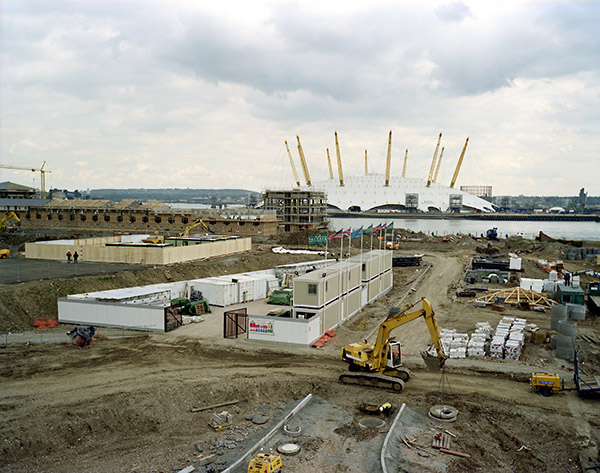
The Millennium Dome seen across the River Thames from Blackwall DLR station, one of a series of medium format urban landscape images.

In those early days of the site there was very little writing on it (and relatively few pictures) with most pictures just posted with minimal captions if any.

25 Years Ago - April 1999
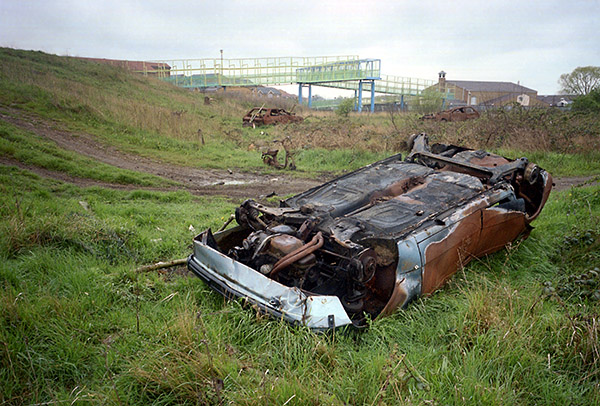
Burnt out cars at Feltham on the edge of London, stolen and wrecked on waste land by youths.

A single text on the introductory page for the year 1999 explained my rather diffuse intentions for the site as follows (I’ve updated the layout and capitalisation.)

What is My London Diary? A record of my day to day wanderings in and around London, camera in hand and some of my comments which may be related to these – or not

Things I’ve found and perhaps things people tell me. If I really knew what this site was I wouldn’t bother to write it. It’s London, it’s part of my life, but mainly pictures, arranged day by day, ordered by month and year.

My London Diary 1999

25 Years Ago - April 1999
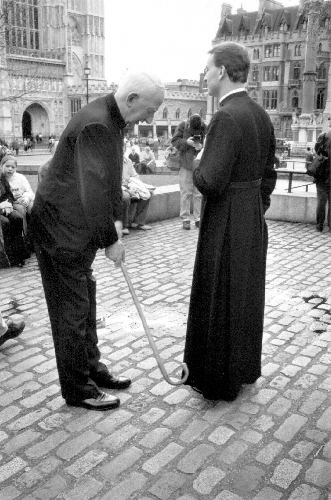
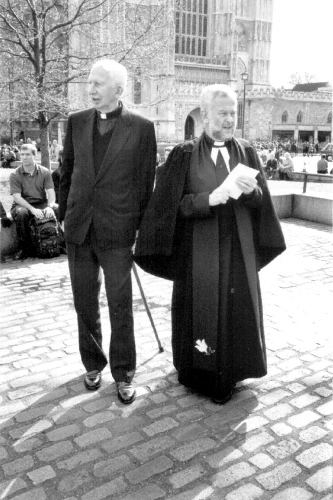
Cardinal Cormac Murphy-O’Connor, Archbishop of Westminster (left) takes part with Anglican and Methodist clergy in the annual Good Friday Procession of Witness on Victoria St, Westminster.
25 Years Ago - April 1999

In the years following My London Diary expanded considerably, gradually adding more text about the events I was covering but retaining the same basic structure. Had I begun it a few years later it would have used a blogging platform – such as WordPress on which this blog runs, but in 1999 blogging was still in its infancy and My London Diary was handcoded html – with help from Dreamweaver and more recently BlueGriffon, now sadly no longer.

25 Years Ago - April 1999
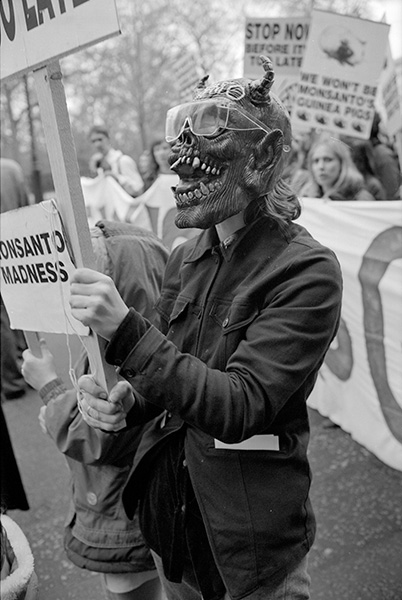
Man holding a placard at a protest against Monsanto’s genetically modified crops.

My London Diary continued until Covid brought much of my new photography to a standstill and stuttered briefly back to life after we came out of purdah. But by then my priorities had changed, and although I am still taking some new photographs and covering rather more carefully selected events my emphasis has switched to bringing to light the many thousands of largely unseen pictures taken on film in my archives, particularly through posting on Flickr. Since March 2020 I’ve uploaded around 32,000 pictures and have had over 12 million views there, mainly of pictures I made between 1975 and 1994. The images are at higher resolution than those on my various web sites.

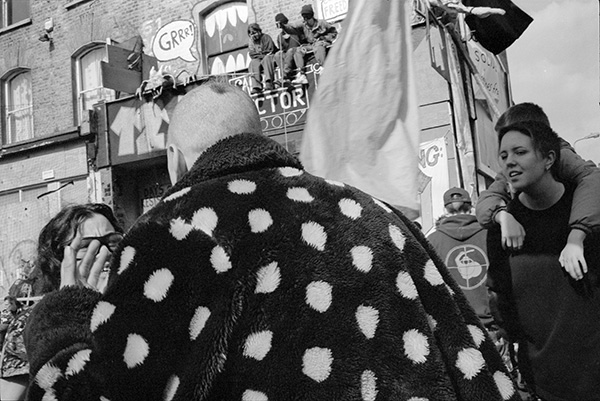
121 Street Party, Railton Rd, Brixton. 10th April 1999 121 was a squatted self-managed anarchist social centre on Railton Road in Brixton from 1981 until 1999.

Since I moved to digital photography My London Diary has put much of my work online, though more recent work goes into Facebook albums (and much onto Alamy.) My London Diary remains online as a low resolution archive of my work.

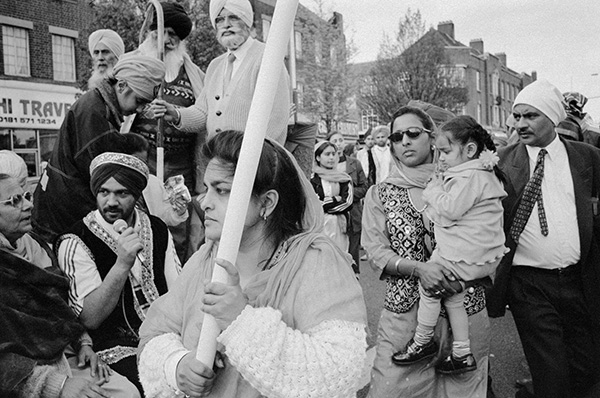
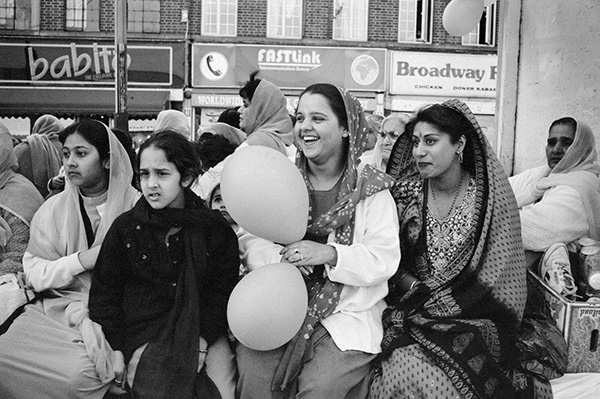
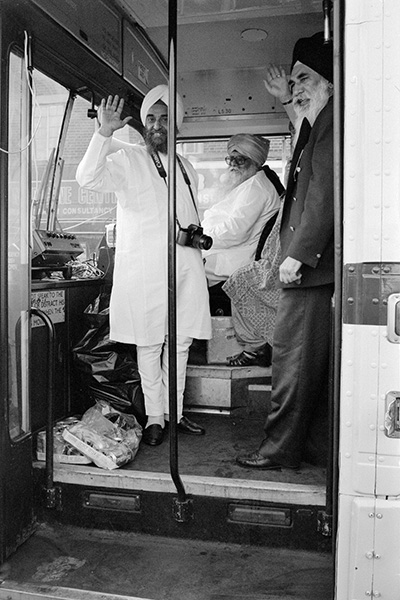
Sikhs celebrate 300 Years of Khalsa – Southall. 11th April 1999

April 1999 was an interesting month and all the pictures in this post come from it. I’ve added some brief captions to the pictures.

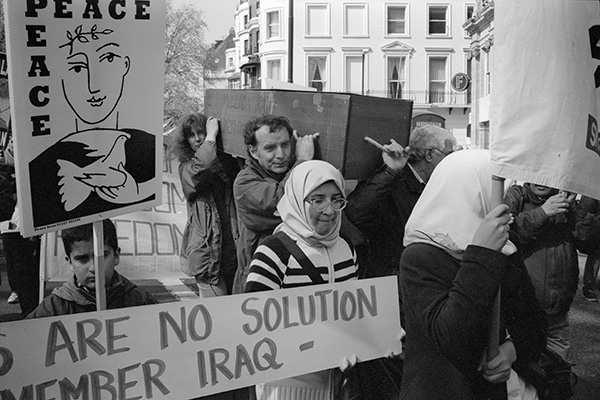
No War on Iraq protest – Hyde Park, 17 April 1999 President Bill Clinton was threatening to attack Iraq to destroy its capability to produce nuclear weapons. Operation Desert Fox, a four day air attack, came in December 1999
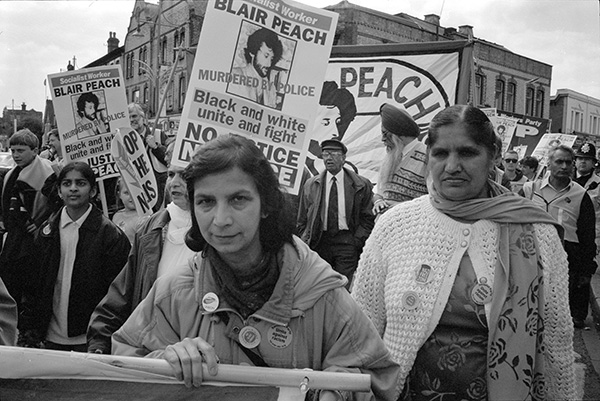
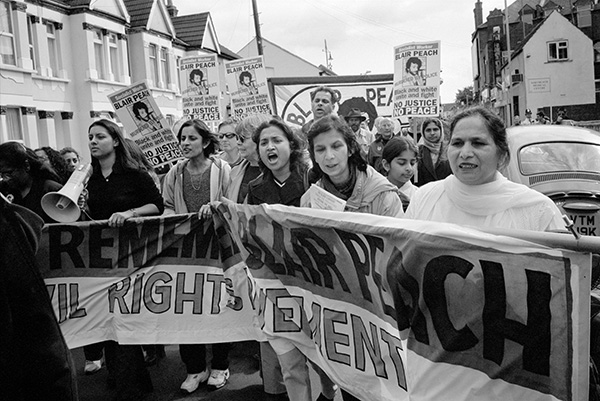
Southall Remembers Blair Peach – Southall. 24th April 1999. Blair Peach, a teacher in East London was murdered by police while protesting a National Front meeting in Southall in 1979.

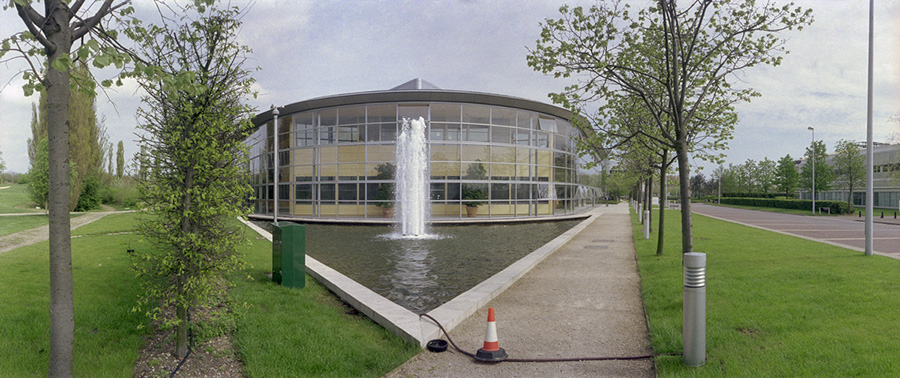
Stockley Park – one of a series of panoramic landscapes of developments in London – this is a major office park with some outstanding architecture

FlickrFacebookMy London DiaryHull PhotosLea ValleyParis
London’s Industrial HeritageLondon Photos

All photographs on this page are copyright © Peter Marshall.
Contact me to buy prints or licence to reproduce.

UVW Protest Topshop & John Lewis – 2016

UVW Protest Topshop & John Lewis – Saturday 16th April 2016 was a busy day for me in London with a large march and rally by the Peoples Assembly Against Austerity demanding an end to privatisation of the NHS, secure homes for all, rent control and an end to attacks on social housing, an end to insecure jobs and the scrapping of the Trade Union Bill, tuition fees and the marketisation of education and smaller protests against repression in Iran and Palestine, all of which you can read about on My London Diary.

March for Homes, Health, Jobs, Education
Homes, Health, Jobs, Education Rally
Dancing for Homes, Health, Jobs, Education
Ahwazi protest against Iranian repression
Palestine Prisoners Parade

UVW Protest Topshop & John Lewis

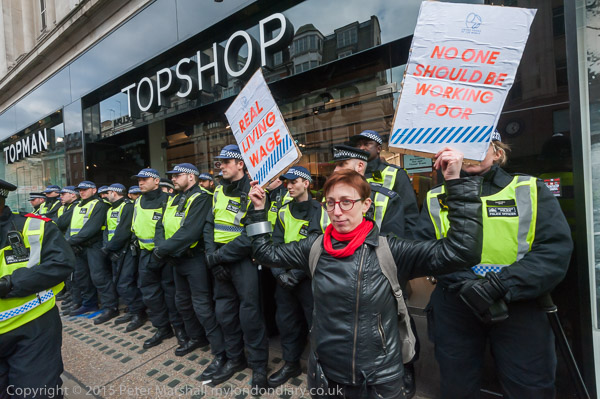
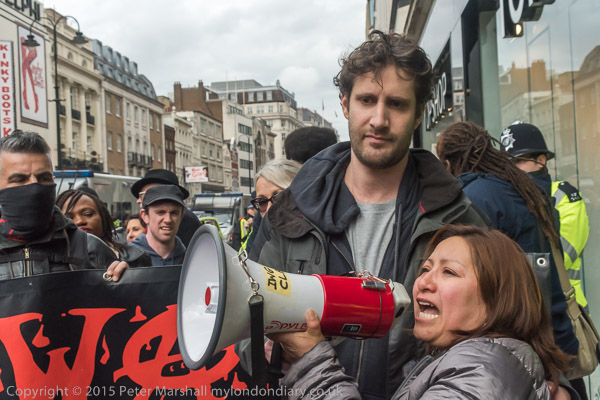
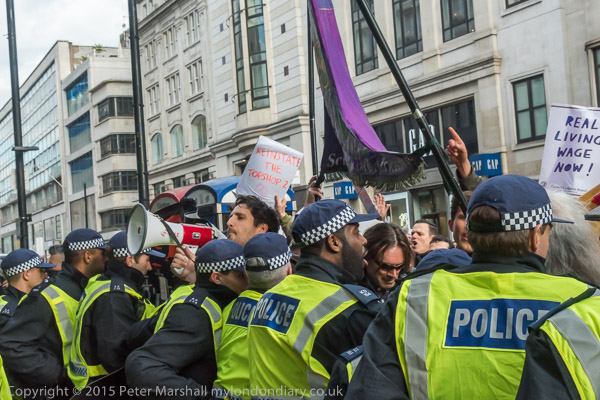
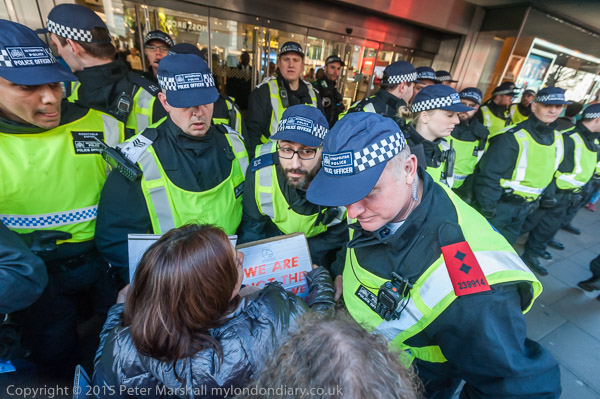
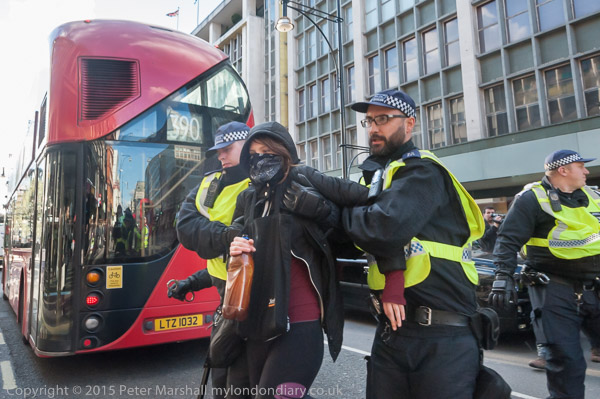
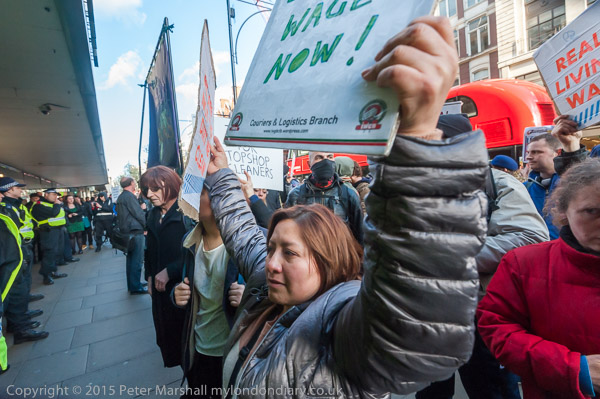
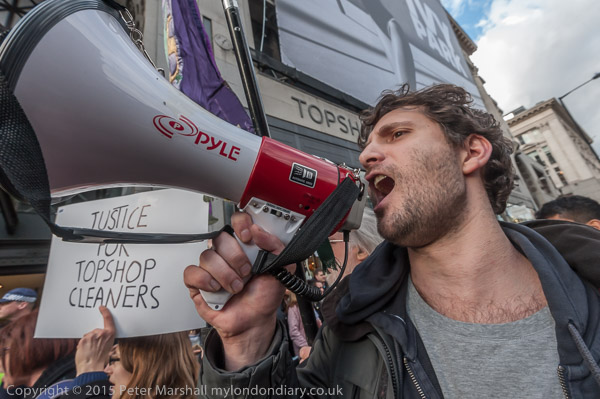
After all that I went with the grass roots trade union United Voices of the World on their protest against Topshop, demanding the reinstatement of 2 workers there suspended by cleaning contractor Britannia for calling for the London Living Wage of £9.40 for Topshop cleaners. All of the pictures in this post come from the UVW protests at first outside Topshop on the Strand, and then at the Topshop at Oxford Circus.

UVW Protest Topshop & John Lewis

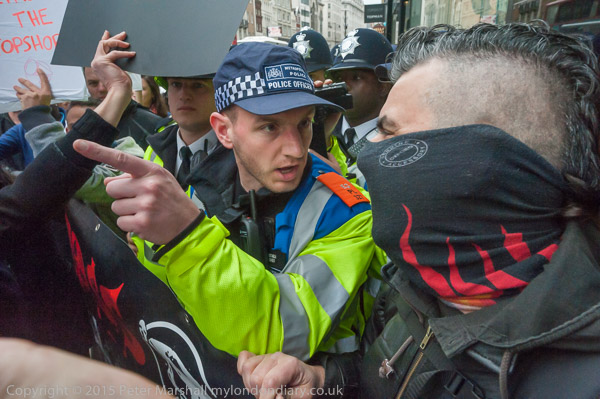
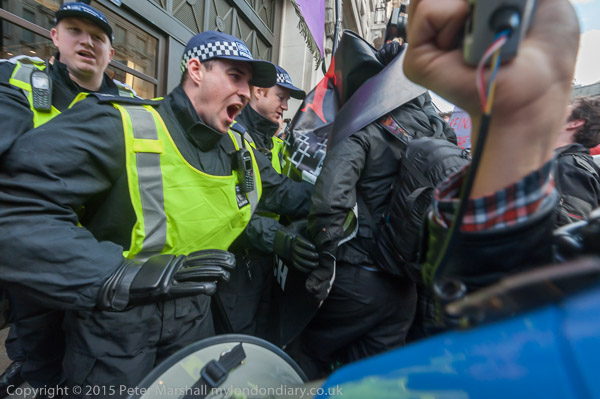
On Strand the shop was protected by security but soon a large group of police arrived and tried to move the protesters away from the store. The protesters refused to move and police began pushing them around roughly, but soon stopped, perhaps because they were being photographed and filmed by a large group of press who like me had been at the Peoples Assembly rally.

UVW Protest Topshop & John Lewis

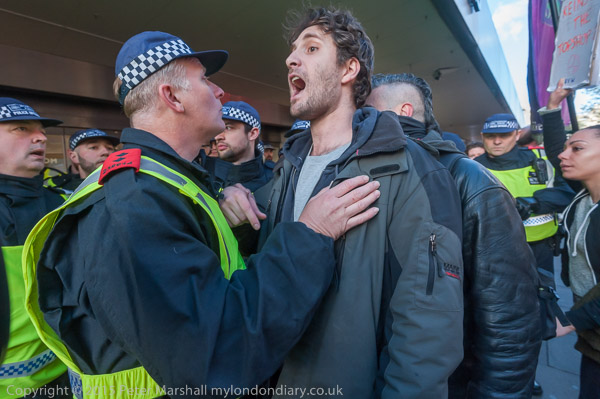
Police pulled one protester to the side and started to ask questions and a large crowd formed around him; the man refused to answer police questions and eventually the officer concerned gave up.

UVW Protest Topshop & John Lewis

There was a short rally on the pavement outside and Susanna, one of the two cleaners victimised by Britannia and Topshop spoke briefly but soon broke down in tears. After a couple of minutes she started again and was loudly applauded.

The protesters then marched off and I met them again on Oxford Street outside the flagship Topshop store close to Oxford Circus.

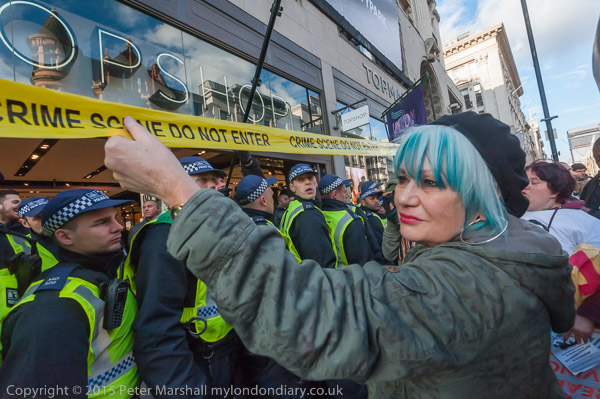
A squad of police rushed to stand in line to guard the main door on Oxford Street and pushed the protesters away. After a short while the UVW protesters marched around the block to other entrances, where police moved inside the store to meet them.

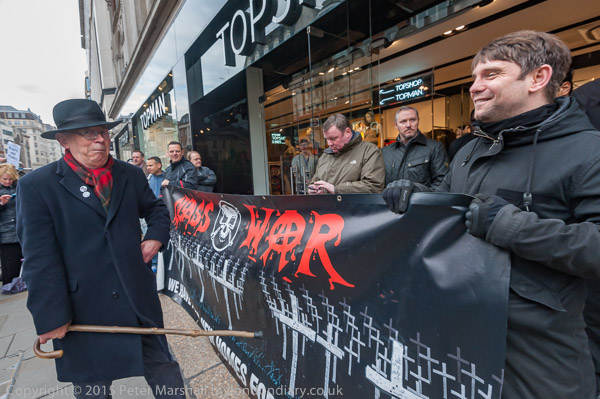
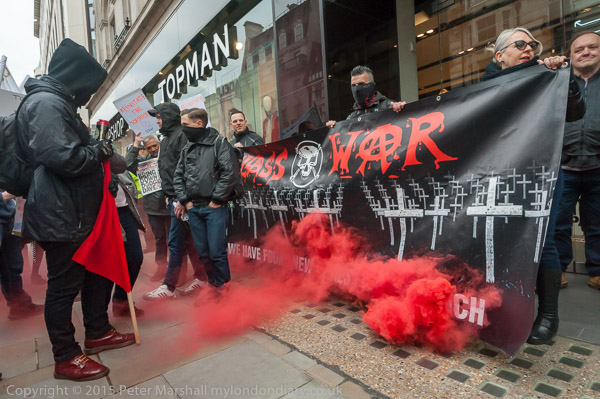
The UVW moved back to Oxford Street to continue the protest outside the main entrance, again blocked by police. Class War who were supporting the UVW moved their banner up to the police line and there was a standoff as the two groups eyed each other from a couple of feet away.
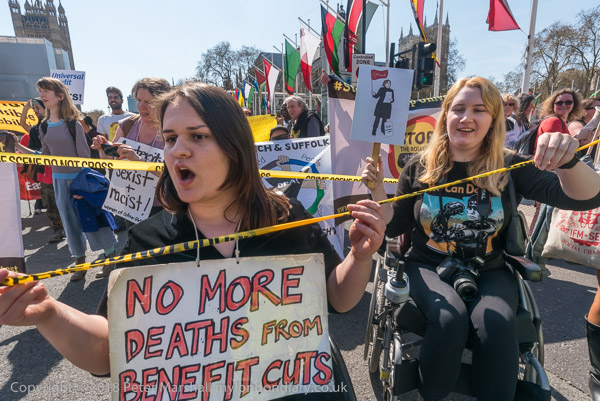
Class War then produced some yellow ‘Crime Scene’ tape and stretched it across in front of the police line, which left some officers looking rather perplexed.

The protesters then marched off towards John Lewis, where the UVW has long been The protesters then marched off towards John Lewis, where the UVW has long been holding protests calling for the cleaners to be treated equally with other workers in the store.
They walked towards the doors, but police pushed them back forcefully knocking one woman flying. Others rushed to help her, and UVW General Secretary Petros Elia protested angrily at the officer who had pushed her.
Eventually a senior officer came to see what had happened and listened to the complaint. To my surprise he then asked the officer to apologise for using excessive force – something I’ve never known to happen at a protest before.

There were a few speeches to explain to the shoppers walking by why the protest was taking place. Clearly many who listened felt that the cleaners were being shabbily treated by companies like Topshop and John Lewis who use outsourcing to get work done on the cheap with conditions that are greatly inferior to their directly employed workers.
The UVW left to return to continue their protest at Topshop, but I left them at Oxford Circus to take the tube – I was already late for dinner.

More on My London Diary:
UVW Topshop & John Lewis Protest
UVW Topshop 2 protest – Strand


FlickrFacebookMy London DiaryHull PhotosLea ValleyParis
London’s Industrial HeritageLondon Photos

All photographs on this page are copyright © Peter Marshall.
Contact me to buy prints or licence to reproduce.