Extinction Rebellion Tries to Persuade Insurers

Extinction Rebellion Tries to Persuade Insurers – From 26th February to 3rd March 2024, Extinction Rebellion have been holding an ‘Insurance Week of Action’ with large peaceful protests and some non-violent direct actions directed at the insurance industry, particularly in the City of London,

London, UK. 28 Feb 2024. Only Fools Insure Fossil Fuels.

As the XR website put it:

“At the same time as Coal Action Network, Mothers Rise Up, Quakers UK, StopEACOP and Tipping Point, we will be targeting the global insurance industry – the people who could stop the fossil fuel crooks in their tracks overnight if they wanted to. 

Because no insurance = no more drilling for oil and gas.”

London, UK. 28 Feb 2024. Front of the march at Lloyds.

The City of London is still the world capital for the global insurance industry, with one company, Lloyds of London insuring 40% of the world’s fossil fuel production and it is also home to many other major global insurers.

London, UK. 28 Feb 2024. Insure Our Future – Not Fossil Fuels.

Monday was a training day for XR, with lectures about the lessons which could be learnt from the West Cumbria coal mine campaign and the importance of the insurance industry in maintaining the fossil fuel industry and why it was important to try to convert them away from this and towards supporting a future for human life on our planet. There were also a workshop on non-violent direct action, examining the theories behind it and how to create support systems and keep safe.

London, UK. 28 Feb 2024.

Nothing could be further from the comments made by the Prime Minister and other cabinet members about ‘mobs’. The protests are well organised and take considerable trouble to remain within the increasinly restrictive laws on freedom to protest. In contrast they make our government speakers seem a rabid mob, making hate speeches about hate protests and disruption. XR are trying to save our planet for future human life.

London, UK. 28 Feb 2024. A Faceless Financier.

I was unable to go to the events on Monday or Tuesday when as well as some highly targeted actions including small groups of protesters protesting peacfully inside the foyers of some city offices there was a large rally on Tuesday followed by a Community Assembly on the subject “How do we Insure our Future?

London, UK. 28 Feb 2024. The march begins.

But last Wednesday I joined the XR supporters in Trinity Square Gardens at 10.30 for the start of the advertised “Insurance Mayhem – Wednesday Showstopper“. Some of them had followed the suggested dress code for the event, “business attire. Black suits with white shirts, preferably!” A group carried special and rather glossy small briefcases and there were banners and a few placards. Some in city dress had come with grey masks and labels as ‘Faceless Financiers’

London, UK. 28 Feb 2024. Extinction Rebellion supporters march

Little happened for the first hour or so, though there was a strong police presence in the area, and some officers came to talk with and warn protesters who told them they were not intending to break any laws.Finally at 12.15 the march moved off for a short march through city streets to the streets around the main Lloyds Building on Leadenhall Street and Lime Street. One man was arrested on the march, I think for setting off a smoke flare, which police left smoking on the ground.

London, UK. 28 Feb 2024. Extinction Rebellion

Protesters joined hands to surround the Lloyds Building on three sides, some holding banners and flags. They let people in and out of the building and tried to engage them in conversation about the urgent need to end fossil fuels. A few stopped to say they agreed but most simply walked past and there were a few angry remarks. It was lunchtime and quite a few city workers were out on the streets and stopped to watch what was happening and were clearly entertained, taking pictures on their phones of the speakers and the various events.

London, UK. 28 Feb 2024. EACOP – the East African Crude Oil Pipeline is an environmental and human rights disaster.

These included protests by ‘workers’ in red boiler suits against the East African Crude Oil Pipeline, a 900 mile long heated pipeline from Ugandan oil fields to the Indian Ocean in Tanzania which would cause “large scale displacement of communities and wildlife“, threaten water resources and contribution massively to global warming. 24 banks have already distanced themselves from financing the project, with only two remaining involved, and it will certainly not go ahead if insurers can be persuaded not to insure it.

London, UK. 28 Feb 2024. City dressed dancers outside Lloyds.

The ‘Faceless Financiers’ now all had their dull grey masks on and were standing together in a row in front of the building on Lime Street where most of the event was taking place, its closure causing little or no disruption to traffic. In front of them came a large troupe of dancers for their spirited performance and on the other side of the road was a washing line hung with items of children’s clothing letters on the garments spelling out the message ‘THEIR FUTURE’.

The “Insurance Mayhem – Wednesday Showstopper” was still continuing as I left for home. I was back for the next day’s very wet protest which I’ll perhaps write about in a later post.

More pictures of Insurance Mayhem – Wednesday Showstopper.


FlickrFacebookMy London DiaryHull PhotosLea ValleyParis
London’s Industrial HeritageLondon Photos

All photographs on this page are copyright © Peter Marshall.
Contact me to buy prints or licence to reproduce.
Hands Off Iraq, George Galloway & Tony Benn

Hands Off Iraq, George Galloway & Tony Benn – Saturday 2nd March 2002 saw a huge protest against Britain becoming involved in the US plans to invade Iraq and depose Sadam Hussein.

Hands Off Iraq, George Galloway & Tony Benn

It’s hard to know how many marched that day, though I think there may have been around half a million of us on the streets of London,but it was certainly a very large march though not quite on the scale of that on 16th February 2003. Unfortunately I had to miss that one as I had only come out of hospital the previous day and could only walk a few yards.

Hands Off Iraq, George Galloway & Tony Benn

George Galloway, then Labour MP for Glasgow Kelvin, has come back into the news recently by winning the Rochdale by-election. He along with Tony Benn and others was one of the founders of Stop The War following the US invasion of Afghanisatan and the coalition organised this and other protests against the invasions of Iraq then being prepared by the US Miitary. Galloway was and still is a flamboyant figure and a powerful speaker, though I was rather more attracted to others in the movement such as Tony Benn, who appears in more of my pictures.

Hands Off Iraq, George Galloway & Tony Benn

But then as now, I wasn’t at the protest to photograph celebrities, but to tell the story of the event, mainly through photographs of the ordinary people taking part. Of course my pictures concentrate on those who caught my attention, sometimes by their expressions and actions, but more often through their banners and placards which link them to the cause they were marching for.

Hands Off Iraq, George Galloway & Tony Benn

Although I’d been photographing protests for some years – occasionally since the 1970s and more intensively since the 1990s, my pictures had simply gone into picture libraries and a few exhibitions and few had been used in the mass media.

Hands Off Iraq, George Galloway & Tony Benn

Shortly after Indymedia, a global network of independent news media was set up in 1999 I began publishing work on the UK site – and some of it may be still be available on the now archived site. This was of course entirely non-commercial, and had a very limited readership on the left, among anarchists and the security services.

But I also set up a new web site of my own, My London Diary, which is still available online, though its now several years since I have added new work. Although I have unlimited web space there is a limit to the number of files my web server can handle, and I was very close to this. Covid also played its part in various ways.

In the early years of My London Diary I was still working with film and only had a black and white flatbed scanner. So the pictures for Hands Off Iraq online were all in black and white, though I will also have taken some in colour, but so far I’ve digitised few colour images from these years. The 24 black and white images on My London Diary will have been made from 8×10″ black and white press prints submitted to a picture library and scanned on a flatbed scanner. In 2002 although many magazines were printed in colour the main sales for news images were still black and white, though things were rapidly changing, and I was soon to begin moving to working mainly in digital colour.

Here, with a few corrections is the text I put on line back in 2022 with these pictures:

The Stop the War, Hands off Iraq demonstration on 2 march was a large sign of public opinion. people were still leaving Hyde Park at the start of the march when Trafalgar Square was full to overflowing two and a half hours later.

Police estimates of the number were risible as usual – and can only reflect an attempt to marginalise the significant body of opinion opposed to the war or a complete mathematical inability on behalf of the police.

Tony Benn told me and other photographers it wasn’t worth taking his picture – “it won’t get in the papers unless I go and kick a policeman” but he didn’t and he was quite right.

More pictures on My London Diary


FlickrFacebookMy London DiaryHull PhotosLea ValleyParis
London’s Industrial HeritageLondon Photos

All photographs on this page are copyright © Peter Marshall.
Contact me to buy prints or licence to reproduce.


Against Worldwide Government Corruption – Free Asange – 2014

Against Worldwide Government Corruption – Saturday 1st March 2014, ten years ago, saw a small but lively protest “organised, attended and led by people who are appalled at the present state of the UK and the world, and who are convinced that a better world is possible if we got rid of the greedy and corrupt who currently are in change – the party politicians and their governments, the bankers and the corporations, the warmongers and the spies.

Against Worldwide Government Corruption

Of course the world is dominated by the rich and powerful and the organisations they have set up and the laws they have established to maintain there domination, though these at least in some places also offer some protection for the poor and powerless. But I don’t really believe that protests like this offer any real hope of changing the situation.

Against Worldwide Government Corruption

But they perhaps do show us that another world is possible one with “justice and a fairer society, one that doesn’t oppress the poor and disabled, that doesn’t spy on everyone and doesn’t use the media and the whole cultural apparatus as a way of keeping blind to what is really happening.

Against Worldwide Government Corruption

It’s the kind of spirit that led to the emergence of the Labour Party and inspired many of its leaders even into my youth – and was in part rekindled by the rise of Jeremy Corbyn, propelled into the leadership of the Labour Party in 2015 by huge support from the ordinary membership. But Labour had long lost its way, its organisation and many MPs sponsored and supported by companies and wealthy individuals inherently opposed to its ideals and dedicated to the maintenance of the status quo.

Against Worldwide Government Corruption

The protest was a wide-ranging one, and on My London Diary I quoted at some length from the speech before the march by one of the organisers, Mitch Antony of Aspire Worldwide (Accountable System Project for International Redevelopment and Evolution.)
At the end of it he gave a long list of things the march was against:

We march against Global Government Corruption
We march against ideological austerity
We march against privatisation for profit
We march against the bedroom tax
We march against bankers bonuses
We march against the corrupt MPs
We march against state spying on the people
We march against state controlled media
We march against government misrepresentation
We march against warmongering
We march against global tyranny
We march against state sponsored terrorism
We march against the military industrial complex
We march against the militarisation of the police
We march against the suppression of alternative energies

Against Worldwide Government Corruption

The march got off to a poor start, as the advertised meeting point in Trafalgar Square was closed to the public that day, being got ready for a commercial event the following day. Not everybody who came found the new location – and there were aggrieved posts on Facebook from some who failed, though I think they cannot have tried very hard.

Police often find reasons to delay the start of marches, but these protesters were definitely not taking advice from them and set off on the dot at 2pm to march west to the Ecuadorian Embassy where Julian Assange was still confined despite being given political asylum.

On the way the several hundred marchers caused no problems and aroused some interest among those on the streets, mainly tourists. A misguided attempt by officers to stop the march on Piccadilly led to a sit down and was soon abandoned.

When they came to Harvey Nicholls in Knightsbridge some joined in the protest against the store by the Campaign Against the Fur Trade for a few minutes, and a crowd gathered around the main door shouting at this company that still deals in fur and fur-trimmed garments.

But soon people moved on to the Ecuadorian Embassy where Assange was still trapped. Police filled the steps to the building, guarding the door and stopping anyone from entering.

There were far too many people to fit inside the small penned area for protesters on the pavement opposite the Embassy. The protest here in support of of Julian Assange and Edward Snowden and other whistle blowers and over the continued refusal to grant Assange safe passage to Ecuador, continued for around an hour. Many of the protesters then saw the refusal as a personal vendetta against him by then home secretary Theresa May, but it is driven by a continual British failure to stand up to the USA.

Since then we have seen the continued persecution of Assange by successive Tory governments and his arrest and incarceration in the maximum security Belmarsh prison after a changed Ecuadorian government withdrew its protection. Attempts to extradite him to the US where he could be executed or given a 170 year prison sentence are continuing, and it seems likely he will die in prison either here or in the US for publishing material that made clear to the world the war crimes being committed by the US.

At the end of their protest in front of the Ecuadorian Embassy (it occupies only a few rooms on an upper floor of the building) marchers were leaving to go back to Westminster for another rally in Parliament Square, but I’d had enough and took the tube to make my way home.

More about the protest and many more pictures on My London Diary: Against Worldwide Government Corruption.


FlickrFacebookMy London DiaryHull PhotosLea ValleyParis
London’s Industrial HeritageLondon Photos

All photographs on this page are copyright © Peter Marshall.
Contact me to buy prints or licence to reproduce.

Blizzard, Education and Hunger Strike – 2018

Blizzard, Education and Hunger Strike – London hasn’t had a great deal of snow for some years, but when I got off the bus on Wednesday 28th February 2018 close to London University I found myself walking into a blizzard. There was a couple of inches of snow underfoot and the biting wind was driving dense snowflakes into my face making it both difficult to walk and hard to see where I was going.

Blizzard, Education and Hunger Strike

I slipped a few times and almost fell as I walked through Byng Place, only just managing to stop myself and my camera bag falling into the snow, and for the first 15 or 20 minutes after I reached the meeting point for the march it was difficult to take pictures, with snowflakes landing on the lens surface as soon as I took away the cloth I had stuffed against it inside the lens hood and raised the camera to my eye.

Blizzard, Education and Hunger Strike

Most of the pictures from the start of the protest were ruined by snow on the lens making some areas soft and diffuse. It might sometimes have been an arty effect but wasn’t what I wanted. Fortunately after a while the snow died down and I was able to work more normally, though the occasional flake kept coming and there were a few thick flurries later on the march.

Blizzard, Education and Hunger Strike

HE and FE march for pensions and jobs

Blizzard, Education and Hunger Strike

The UCU was on the fifth day of a strike to try and get the universities to talk with them about pay and pensions. On this march to a rally in Methodist Central Hall in Westminster, close to the Houses of Parliament, they were joined by staff from London FE colleges on the first day of a two-day strike over pay and conditions. And plenty of their students had come along to show their support.

Although students are now paying high fees for their university courses, the pay of university teachers has not benefited from this, and has not kept up with inflation. Much more teaching at universities is also being done by graduate students and others on part-time or often zero hours contracts.

What particularly inflamed the situation was the intention of the universities to end the long-established pension scheme, replacing it with one that would greatly reduce pensions, and their refusal to discuss this with their union, the UCU.

The 5 day strike was supported overwhelmingly by UCU members and had shut down 61 UK universities, despite draconian threats by the management at some of them such as Royal Holloway (RHUL). Pickets had stood in the freezing weather and few people had crossed the picket line.

The move away from the pension scheme was largely driven by a small number of universities, particularly the Oxbridge colleges. Many of these are extremely wealthy, some owning huge areas of land including large parts of London and having vast reserves, not least in their wine cellars. A number of college principals had given their support to the union.

The dispute between the employers and the UCU continued for five years and was only ended in October 2023 when the employer body UUK made an offer of full restoration. This came after 69 days of strikes by the UCU and was a historic victory for UCU members and reversed further cuts made in 2022.

University teachers continue to fight for better pay, more appropriate workloads and job security. FE teachers, marching because of the loss of 15,000 jobs in the sector particularly as adult education has been savaged by austerity, and whose wages had been cut by 21% since 2009, continue to be treated unfairly.

I went into the rally in Central Hall largely to try to get warm after the freezing march, and was fortunate to arrive early enough to get inside – many of the marchers were left outside the the cold where the speakers went outside to speak after making their contributions in the hall.

The event was running late because of the larger than expected number of people on the march, and by the time the main speakers, John McDonnell and Frances O’Grady had performed I’d missed the time for another event I’d planned to cover, the handing in of some NHS petitions at the Department of Health. I But I was pleased to be able to stay longer in the warm.

HE & FE rally for pensions and jobs
HE and FE march for pensions and jobs


Solidarity with Yarl’s Wood hunger strikers – Home Office

I left the Methodist Central Hall and walked down to the Home Office where an emergency protest was taking place to support the hunger strike and refusal to work by the 120 women and a few men in immigration detention at Yarl’s Wood.

They had begun their action a week earlier to demand the Home Office respect the European Convention of Human Rights and end the separation of families, end indefinite detention with a 28 day maximum detention period, end charter flights which deport people without notice, and end the re-detention of those released from detention.

Their statement also called for an amnesty for those who have been in the UK for more than ten years and for the Home Office to stop deporting people before cases and appeals have been completed, as well as making full disclosure of all evidence to immigration tribunals.

They called for those in detention centres to be treated with dignity and respect and be given proper health care and an end to the detention of highly vulnerable people. They also want an end to employment in detention centres at ‘prison wages’ of £1 an hour.

Among the groups supporting the protest were the Movement for Justice, All African Women’s Group, Queer Strike and No Borders. Some of those taking part in the protest had previously served time in detention centres and knew first hand about the shameful way the UK treats them and some spoke at the event and several of those taking part in the hunger strike were able to speak to the protest from inside Yarls Wood by mobile phone.

Solidarity with Yarl’s Wood hunger strikers


FlickrFacebookMy London DiaryHull PhotosLea ValleyParis
London’s Industrial HeritageLondon Photos

All photographs on this page are copyright © Peter Marshall.
Contact me to buy prints or licence to reproduce.


Refugee Rights & Stop Trident – 2016

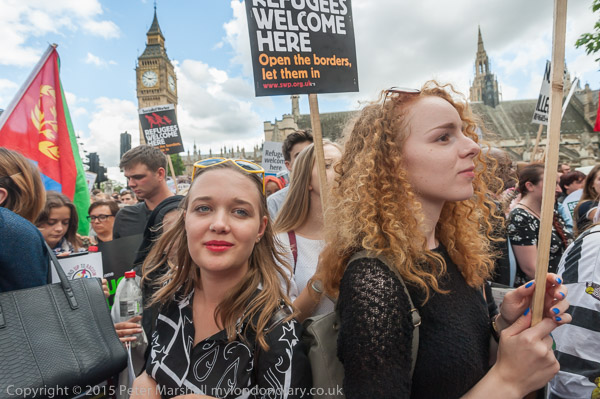
Refugee Rights & Stop Trident – On Saturday 27th February 2016 I photographed two large protest marches in London. The first was part of a protest across Europe calling for safe passage for refuges and the second was against government plans to replace the UK’s Trident nuclear weapons which recently for a second time failed a test launch in 2023.


European March for Refugee Rights – Hyde Park

Refugee Rights & Stop Trident

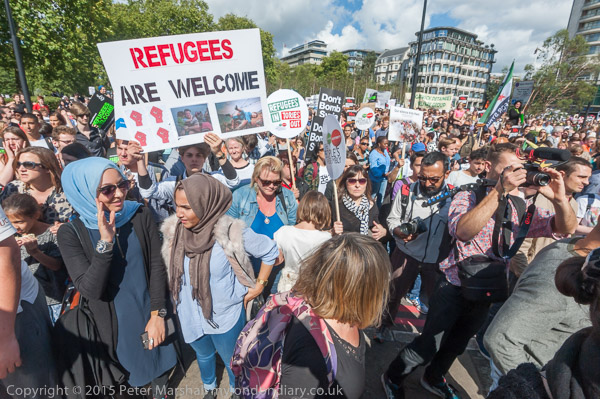
Several hundred protesters, including many who had been to aid refugees in Lesvos and at the Calais camps and some who had volunteered in Syria with Medicins Sans Frontiers, marched from Hyde Park Corner to a rally at Speakers Corner before going on to Trafalgar Square as part of a day of protest in cities across Europe calling for safe and secure routes for all refugees and asylum seekers seeking protection in Europe.

Refugee Rights & Stop Trident

They want an end to the deaths in sea crossings and other borders and for refugees to be allowed to keep their possessions and be reunited with their families.

Refugee Rights & Stop Trident

Groups supporting the protest included the Syria Solidarity Campaign, Solidarity with Refugees, London2Calais, Migrants’ Rights Network, SOAS Solidarity with Refugees & Displaced People Soc, Wonder Foundation, Calais Action, UK Action for Refugees, Refugee Aid Initiative, No Borders and the Greece Solidarity Campaign.

Refugee Rights & Stop Trident

A woman who had volunteered at Lesvos came a child’s life-jacket worn on the dangerous sea crossing to there, more suitable for a beach holiday; others wore similar life-jackets on the march which have become a symbol for the refugees and those who drown on the journey from Turkey to Lesvos. Refugee support groups from Brighton brought a splendid banner they had made based on Picasso’s Spanish Civil War painting ‘Guernica‘.

I marched with them through Hyde Park to Speakers Corner where there was a short rally before they marched on to Trafalgar Square in front of the CND Stop Trident march which was then beginning to march from Marble Arch.

Some then decided to join the CND march but others decided to march in front of it. CND stewards at first tried to stop them but then halted the Stop Trident march for around ten minutes to leave a gap between the two marches which were following the same route.

More at European March for Refugee Rights.


Stop Trident March – Marble Arch to Trafalgar Square

Around sixty thousand had come to Marble Arch to join the march to a rally in Trafalgar Square against government plans to replace the UK’s Trident nuclear weapons at a cost of £180 billion or more.

CND say Trident is immoral and using it would cause catastrophic global damage. These weapons of mass destruction don’t keep us safe and divert resources from essential spending on services like the NHS, schools and housing.

In 2024 CND estimates that the total cost of building and maintaining Trident has been £205 billion. The UK has hung on to nuclear weapons largely as a matter of prestige and to justify its position on the UN Security Council and it has never been an important deterrent – and the recent test failures make it even less of a credible threat to other countries.

I arrived late for the official photocall before the start of the march on Park Lane because the crowd of marchers was so dense and we were soon moved well away from the front banner and those holding it by stewards in the usual somewhat unfriendly ‘Stop the War’ manner.

At the southern end of Park Lane the march halted for around ten minutes to make a gap between it and the marchers for Refugee Rights who had come to join them. I went to take a few pictures of this march and then returned to the ‘Stop Trident’ march.

After taking some pictures of the marchers, working my way through the crowds I had to leave and take the tube from Green Park to Charing Cross for the start of the rally, meeting the head of the march as it arrived at Trafalgar Square.

It was a long rally with a long list of distinguished speakers including Nicola Sturgeon, Caroline Lucas, Leanne Wood, Vanessa Redgrave, Bruce Kent, Christine Blower, Mark Serwotka, Tariq Ali and many more including some younger activists, and you can see photographs of most of those who spoke. They all opposed the renewal of Trident which they dismissed as out of date, totally irrelevant to our defence and a complete waste of money which could be put to so much better use providing proper jobs and services.

The rally went on longer than expected as we were waiting for the final address by Jeremy Corbyn who was travelling down from Sheffield where he had been speaking at a conference. He arrived on the platform to an enormous round of cheering and applause and gave a rousing speech ending the protest on a high note.

Many more photographs of the march and rally on My London Diary:
Stop Trident Rally
Stop Trident March

Shaker, Job Centres, Firefighters, Tube, Lambeth

Shaker, Job Centres, Firefighters, Tube, Lambeth – On Wednesday 25th February I photographed a number of protests in London, starting in Westminster with the Free Shaker Aamer campaign, striking firefighters and welfare rights activists, then with tube workers at Edgware Road and finally outside Lambeth Town Hall in Brixton.


Free Shaker Aamer – Parliament Square

Shaker, Job Centres, Firefighters, Tube, Lambeth

A protest opposite Parliament called for the urgent release of London resident Shaker Aamer from Guantanamo, where he has been held and regularly abused for 13 years without charge or trial.

Shaker, Job Centres, Firefighters, Tube, Lambeth

The Free Shaker Aamer Campaign had been holding weekly protests opposite Parliament whenever it was in session to remind government of the need for act over his release. He had long been cleared for release but was still held in the illegal prison camp with both US and UK governments dragging their feet as his testimony would be embarrassing to their security agencies, making clear their involvement in torture.

Shaker, Job Centres, Firefighters, Tube, Lambeth

The protest was longer than usual as an international event was taking place at the nearby QEII centre and they wanted to remind delegates there of Shaker’s torture and imprisonment. Eventually the long campaign of protests by this and other groups led the UK government they needed to back his release in practice and he was finally released on 30th October 2015.

More pictures: Free Shaker Aamer at Parliament


Striking Firefighters block traffic – Westminster

Shaker, Job Centres, Firefighters, Tube, Lambeth

Firefighters in England held a 24 hour strike on 25th Feb 2015 against the unworkable pension scheme the government intended to implement. They say that the devolved governments had recognised the problems in the scheme and made improvements but in England government ministers were refusing to talk with the union, simply ignoring requests for meetings. They accused the government of lies about the union, saying they were being labelled as militants despite them being ready and willing to enter into negotiations at any time.

After a rally in Westminster Central Hall, several thousand striking firefighters protested on the street outside Parliament before marching to Downing St. Their protest brought all traffic in the area to a standstill until they marched away.

They stopped outside Downing Street and refused to move, saying they would wait there until someone came out to talk to them. A senior police officer come to talk with Matt Wrack and the other FBU leaders there and was extrememly politie, taking Wrack’s mobile number before going away to see if anyone could be persuaded to come out from Downing St to meet the protesters.

I left them leaning on the barriers and looking into Downing Street waiting for someone to come and see them, though I doubted if anyone would ever emerge.

The Fire Service has also suffered like other public services from government cuts; in London these led to Mayor Boris Johnson making dangerous reductions, closing some fire stations and reducing equipment and staffing, which left the London Fire Brigade ill-equipped to deal with major disasters such as the Grenfell fire.

The FBU union later won a number of legal cases against the government over the changes that were made to the pensions scheme, leading to significant compensation for some members.

More at Striking Firefighters block traffic.


Welfare Advocacy not a Crime – DWP, Westminster

Welfare activists protested outside the Dept of Work & Pensions in Caxton Street as a part of the national day of action over the arrest of welfare rights activist Tony Cox. He had been arrested when he tried to accompany a vulnerable claimant to her job centre interview to argue for a fairer claimant agreement.

As well as several banners, one man was gagged in protest. By law claimants are allowed to have and adviser present with them at the interview, but when a claimant turned up with Cox, his interview was cancelled.

Cox and the claimant then left the job centre, but later in the day police arrived at his him and arrested him, charging him with threatening behaviour.

Welfare Advocacy not a Crime.


RMT protest Underground Job Cuts – Edgware Road Station (Bakerloo)

Around 20 RMT members handed out fliers at the busy Edgware Road Bakerloo Line station against the proposed 50% cut in station staffing and the closure of the ticket offices which they say will endanger the safety of both passengers and staff.

They got a very positive reception from many of the public going in and out of the station or walking past, although a PCSO came to harass and try to stop their picketing. Most of the public seemed to realise that staff do far more than sell tickets and offer service and protection to the travelling public.

Many promises were made to Underground staff and the public about how they would be protected when cuts were made, but most were later broken.

RMT protest Underground Job Cuts


Lambeth against £90m cuts – Lambeth Town Hall, Brixton

After taking some photographs of the protesting RMT staff I got on the Underground there, changing at Oxford Circus to take me to the end of the Victoria Line at Brixton.

There I walked down to Lambeth Town Hall on the corner of Acre Land to join around a hundred trade unionists, pensioners, library and other council staff, social housing tenants and other residents who were gathering for a lively rally outside Lambeth Town Hall.

A lively rally took place urging councillors who were arriving for the council meeting to reject library closures and other £90 millon cuts which were being passed there by the large Labour majority on the council. Labour then held 59 of the 63 council seats. Among the speakers at the rally was the only Green Party councillor, Scott Ainslie, who was to vote against the cuts. The Green Party gained four more seats in the 2018 council elections but lost three of these in 2022. Right-wing Labour councillors still have an overwheming majority and the council continues its policies which fail the community.

Lambeth’s finances were stretched by the development of a new Town Hall or Civic Centre the cost of which roughly doubled from the original contract of £55 million ot £104 million. Policies such as the closure of libraries and the demolition and sale of popular and well-built council estates like Cressingham Gardens had already produced a great deal of protest in the borough.

The £90 million cuts passed at the council meeting later that evening have had a disproportionate impact on children, old people and the disabled who always rely on local services more than the average person. Council employees at the rally opposed the cuts not only because they feared for their own jobs, but because they knew those that remain in post will not be able to offer the public the same quality of service that they do at present.

Lambeth against £90m cuts


FlickrFacebookMy London DiaryHull PhotosLea ValleyParis
London’s Industrial HeritageLondon Photos

All photographs on this page are copyright © Peter Marshall.
Contact me to buy prints or licence to reproduce.
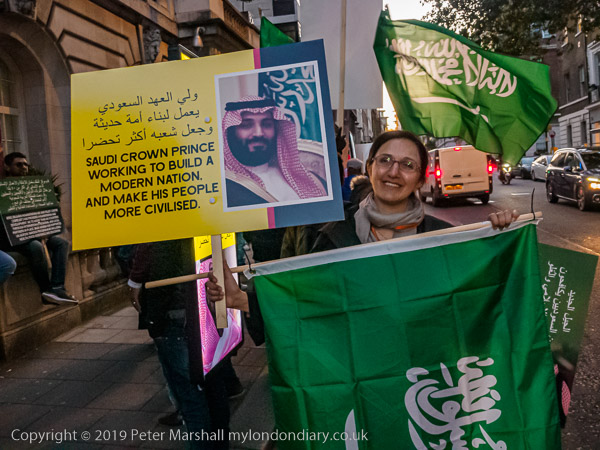

Palestine, Pancakes, Post, Olympics & Zombies 2009

Palestine, Pancakes, Post, Olympics & Zombies – Tuesday 24th February 2009 was a long and varied day for me and included some serious issues that are still at the forefront of current news as well as some lighter moments – and I ended the day enjoying a little unusual corporate hospitality with some free drinks for London bloggers.


Al-Haq Sue UK Government – Royal Courts of Justice

Palestine, Pancakes, Post, Olympics & Zombies

First came Palestine, with Palestinian human rights group Al-Haq filing a claim for judicial review before the High Court of England and Wales challenging the government’s failure to fulfil its obligations with respect to Israel’s illegal activities in Palestine.

They were calling on our government – then New Labour under Gordon Brown – to publicly denounce Israel’s actions in Gaza and the continuing construction of the separation wall, to suspend arms related exports and all government, military, financial and ministerial assistance to Israel and to end UK companies exporting arms and military technology.

They also asked them to insist the EU suspends preferential trading with Israel until that country complies with its human rights obligations, and for the government to give the police any evidence of war crimes committed by any Israelis who intend to come to the UK.

Palestine, Pancakes, Post, Olympics & Zombies

Of course the court refused Al-Haq’s case, declining to deal with the UK government’s compliance with its international legal obligations and stating that their claim would risk the UK’s diplomatic “engagement with peace efforts in the Middle East“, something which seemed at the time to be absolutely zero if not negative. They also refused Al-Haq any right to bring the claim because it was not a UK-based organisation and “no one in the United Kingdom has sought judicial review of United Kingdom foreign policy regarding Israel’s actions in Gaza“.

Al-Haq Sue UK Government


Worshipful Company of Poulters Pancake Race – Guildhall Yard

Palestine, Pancakes, Post, Olympics & Zombies

It was Shrove Tuesday and I couldn’t resist the Pancake Race organised by the Worshipful Company of Poulters, and held – with the permission of the Chief Commoner, in the Guildhall Yard.

Palestine, Pancakes, Post, Olympics & Zombies

As I said, “It’s a shame that the Pancake Race is unlikely to feature in the London 2012 Olympics, because it’s perhaps the one sport in which Britain still leads the world, and we seem to have plenty of talent in training.

Poulters Pancake Race


Keep the Post Public – Parliament Square

Postal workers came out from a rally in Methodist Central Hall against government plans to privatise Royal Mail. The government argued they needed to do this to protect pensions and modernise the service.

Postal deliveries had been deliberately made uneconomic by earlier measures which have allowed private companies to cream off the easily delivered profitable parts of the service, while leaving the Royal Mail to continue the expensive universal delivery service – including the delivery of its competitors post at low regulated prices to more difficult destinations.

The government picked up the responsibility for the pensions when the post was privatised and the privatised post office has been allowed to fail on its delivery obligations. We now get deliveries on perhaps 3 or 4 days a week rather than 6, few first class letters arrive on time, and the collection times for most pillar boxes are now much earlier in the day – now 9am rather than 4pm at our local box. While privatisation was supposed to result in more investment it largely seems to have resulted in large dividends and higher pay to managers and the Post Office is in a worse state than ever.

Keep the Post Public


London 2012 Olympic Site – Stratford

I had time for a brief visit to the publicly accessible areas in and around the Olympic site where a great deal of work was now taking place with the main stadium beginning to emerge.

There were some reports at the time that the landmark building Warton House, once owned by the Yardley company with its lavender mosaic on Stratford High Street was to be demolished, but fortunately these turned out to be exaggerated, with only a small part at the rear of the building being lost. But all the buildings on the main part of the site had gone. Some others south of the mainline railway were also being demolished for Crossrail.

Olympic Site Report
London Olympic site pans


March of the Corporate Undead – Oxford St

I made my way back to Oxford Circus for the ‘March of the Corporate Undead’, a Zombie Shopping Spree complete with coffins, a dead ‘banker’, posters, various members of the undead and a rather good band.

Police watched in a suitably deadpan manner (I did see one or two occasionally smile) as the group assembled and applied large amounts of white makeup before making its way along the pavement of Oxford Street, to the astonishment (and often delight) of late shoppers and workers rushing home.

We stopped off at Stratford Place, opposite Bond Street Station to toss some fried bankers brains in the frying pans and then there was a pancake race, holding up a Rolls Royce that was prevented by the police from driving through while we were there.

The parade continued, stopping for a minute or two under the bright lights of Selfridges before continuing to Tyburn, or at least Marble Arch, with more zombies joining all the time.

Hanging the already dead banker seemed a great idea, but getting a rope up over the arch was tricky. Eventually a severed hand gave sufficient weight to enable a rope to be thrown over the ornamental iron-work and the banker was soon hoisted up to dangle over the continuing revels below.

March of the Corporate Undead

This was an anticapitalist event and in particular aimed against bankers and the huge amounts of cash given to them to in the aftermath of the 2007-8 financial crisis which was seen as rewarding the very people who had caused the mess the system was in. The mass of the population was having to suffer cuts in services under a severe austerity programme while bankers were still pigs in clover. The UK has become a very unequal society over the years since 1979 when Thatcher became Prime Minister. The the top 10% got 21% of the UK income, by 2010 it was around 32%.

I left to go to a meeting of London bloggers – and enjoy a few free drinks thanks to Bacardi. The blue and green Breezers seem to me just right for zombies, though I’m afraid after tasting one I went for the beer instead. But I think the zombies on Oxford Street were more alive than those in the corporate world.


FlickrFacebookMy London DiaryHull PhotosLea ValleyParis
London’s Industrial HeritageLondon Photos

All photographs on this page are copyright © Peter Marshall.
Contact me to buy prints or licence to reproduce.
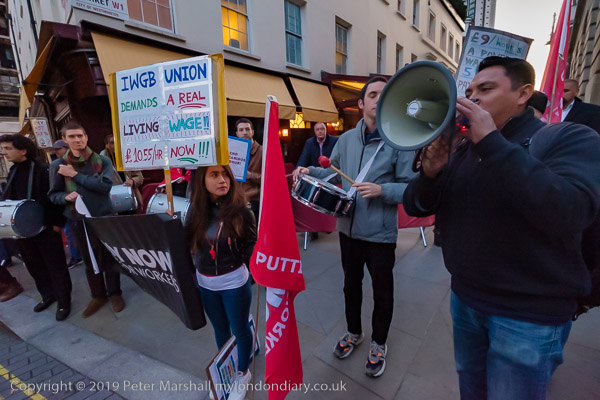

Global Civility and Stratford Marsh – 2006

Global Civility and Stratford Marsh – On Saturday February 18th 2006 I photographed one of the continuing protests around the world which followed the publication by a Danish magazine of cartoons featuring images of the Prophet Mohammad in Trafalgar Square, then took the underground and DLR to Pudding Mill Lane station on Stratford Marsh to take more pictures of the area which was to be demolished for the London Olympics.


Proclamation for Global Civility – Trafalgar Square

Global Civility and Stratford Marsh

Muslim protesters packed Trafalgar Square for a protest by the Muslim Action Committee over the publication of the cartoons which they regard as blasphemous, but also to publicise a ‘proclamation of global civility‘. The key points of this were the recognition of human dignity as a fundamental right, the need to good manners and etiquette in serious debate, a desire to avoid irresponsible behaviour and to underline the significance of mutual respect for a harmonious co-existence.

Global Civility and Stratford Marsh

The protest in London was kept in good order by stewards who remonstrated with some of the demonstrators who were in some way not behaving as they thought they should, and also moved photographers away from them and some other groups. But other protests around the world were much less restrained and news agencies that same day reported rioting outside the Italian consulate in Benghazi, Libya in which at least 10 people were killed as well as the storming and burning of Christian churches in northern Nigeria with at least 16 deaths.

Global Civility and Stratford Marsh

“As I pointed out in my report in 2006, human dignity was recognised as vital in “the preamble to the Universal Declaration Of Human Rights, adopted and proclaimed by the United Nations General Assembly Resolution 217 of 10 December 1948. That declaration also contains a number of important safeguards such as ‘the right to freedom of opinion and expression‘ and states ‘in the exercise of his rights and freedoms, everyone shall be subject only to such limitations as are determined by law solely for the purpose of securing due recognition and respect for the rights and freedoms of others and of meeting the just requirements of morality, public order and the general welfare in a democratic society.'”

Global Civility and Stratford Marsh

There are still many countries around the world where the principles of human rights in that declaration are not observed, including in many in the Muslim world.

Manners and etiquette are clearly very different in different societies and different religions certainly have very different views, particularly over blasphemy and apostasy. In the west we now prioritise freedom of speech and look back in horror at the Spanish Inquisition and trails for heresy and blasphemy, although in England and Wales, the ‘blasphemy’ and ‘blasphemous libel’ laws were only abolished in 2008, and in Scotland in 2021, while they are still in force in Northern Ireland.

The last conviction for blasphemy in England and Wales was in 1977 when the editor of Gay News received a suspended prison sentence after publishing the poem ‘The Love That Dares to Speak Its Name’ by James Kirkup, and in Scotland it was more than a century earlier when a bookseller was jailed for 15 months in 1843, though until 1825 it had been punishable by death.

While we may find some of the cartoons that were published offensive, it clearly does not justify the irresponsible behaviour and criminal actions of some Muslim mobs protesting against them.

Away from the stewards as I wandered through the crowd I was generally welcomed by the protesters, with many urging me to take their pictures. I left as the speeches, most of which I could not understand as few spoke in English, were finishing and people were getting ready to march,

Scroll down the February 2006 web page for more.


Stratford Marsh – River Lea, Stratford

I’d first photographed Stratford Marsh back in the early 1980s as part of a wider project on the River Lea, once a large and important industrial area in London, but like most of British industry falling into decline, accelerated by the policies of the Thatcher government determined to transform Britain away from manufacturing and into services.

Stratford Marsh was then full of largely small businesses employing local people and many still remained in 2006, though already blighted both by government policies and the tax breaks given to the nearby Docklands area. Now Olympic blight had set in with the whole area to be remodelled, and there were also areas which would be demolished for Crossrail.

As I wrote back then and I think my pictures show:

It is still an intriguing area, where a few yards can take you from wilderness to industrial wasteland, from dereliction to busy workshops (though most were closed on a Saturday afternoon.) Parts are visibly closing down, with compulsory purchase orders hanging on lamposts, some footpaths closed and factories demolished.

There was one small sign of a kind of regeneration. the unusual lock between the Bow Back Rivers and Waterworks River at Baker Road, for many years derelict, at last seems to have been replaced.

My London Diary – Feb 2006

There are many more pictures from this walk – and others – on these pages on my River Lea site.


FlickrFacebookMy London DiaryHull PhotosLea ValleyParis
London’s Industrial HeritageLondon Photos

All photographs on this page are copyright © Peter Marshall.
Contact me to buy prints or licence to reproduce.
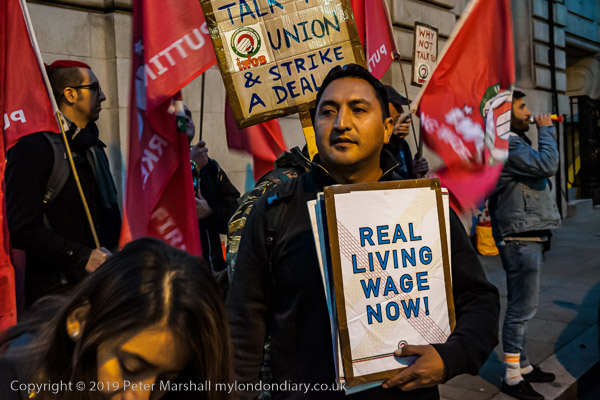

Photographing Police & Policing Protest – 2009

Photographing Police & Policing Protest: On Monday 16th February 2009 I photographed two protests, one against a new law on photographing police and the second which made me question how the police were policing protests. Fifteen years later we have seen a number of laws which severely restrict the right to protest and draconian new proposals to outlaw many more of the activities which help bring protests to public attention.


Media Protest at Terror Law – New Scotland Yard

Photographing Police & Policing Protest

Around 400 people, mainly photographers, had turned up to protest outside New Scotland Yard, then still on Victoria Street, Westminster, on the day that Section 76 of the Counter-Terrorism Act came into force.

This makes it an offence to photograph members of the police, armed forces or security services, or at least to do so if the photographs are “likely to be useful to a person committing or preparing an act of terrorism“.

Photographing Police & Policing Protest

The vagueness of this statement is a a symptom of the failure of our parliament over recent years to properly scrutinise new legislation, and journalists and others have protested that it could seriously inhibit the freedom of the press as well as the normal liberties of all citizens. The Metropolitan Police Federation agreed, believing the law is unworkable and could well inhibit the freedom of the press.

Photographing Police & Policing Protest

Photographers saw it as yet another law which increases the climate of fear felt by anyone using a camera on the public streets. Many of us have experienced questioning by the police when working; photographers have already been detained and searched under existing anti-terrorist laws and other acts when covering demonstrations, travelling close to airports or even photographing weddings.

Photographing Police & Policing Protest
Mark Thomas speaking

Many of London’s leading press photographers turned up to this ‘media event’ organised to highlight the dangers to our freedom of expression and action this new law presents. Most of them wore badges or stickers proclaiming “I’m a photographer… not a terrrorist“, the name of the campaign group set up by photographers.

PHNAT’s founding description was “Photography is under attack. Across the country anyone with a camera is targeted as a potential terrorist. This campaign is for everyone who values visual imagery press freedom.” It was set up by a small group of London-based photographers and videographers who covered political protest including myself and colleagues in the NUJ and grew rapidly.

For once this was a protest which gained wide publicity even on the BBC and newspapers which generally ignore UK protests. It was of course covered in the photographic press too, though at the time I found the quality of the photographs of the event in some of them rather lacking.

More pictures on My London Diary – Media Protest at Terror Law.


Protest at Silence over Congo Genocide – Westminster

Police at the photographers’ protest had been friendly and for once I think they didn’t even bother to photograph us, though doubtless the whole area was covered by a number of CCTV cameras. But there was a very different atmosphere around the policing of this second event I photographed.

It was a fairly small protest, with perhaps 50 people in a march organised by International Congolese Rights against the continuing violence in the DRC, marching slowly down Victoria Street to Parliament Square.

They marched slowly, at a funereal pace in memory of those killed in Congo in the fighting since 1996. The marchers were continually harassed by police to go faster, but refused to do so. There were probably more police than marchers and the march was accompanied by five police vehicles, one in front of the marchers a surveillance vehicle with loudspeakers and continually filming the march.

When the march reached Parliament Square, the marchers were ushered into a pen of barriers on the side of the square facing Westminster Abbey and St Margarets, although clearly they intended to demonstrate to Parliament rather than the Church of England and surely should have been allowed to protest at the front of the square. One of their representatives was still arguing with police about this when I left.

Here is what I wrote in 2009 about the Congo and the reasons behind this protest:

Capitalism at its rawest is fighting for the mineral wealth of the country – particularly coltan, an ore containing niobium and tantalum, essential for mobile phones and other electronic devices, of which the Congo has 80% of known world reserves and cobalt – of which it is the world’s largest producer – but also diamonds, copper, and gold.

Competing interests trying to grab these riches have led to over 6 million people being killed in the Congo, and unimaginable atrocities against the people there – some of which were shown in the pictures that some of the demonstrators carried.

The Congo is a corrupt police state ruled by Laurent Kabila, with large areas occupied by forces backed by neighbouring states and criminal syndicates, including the Rwandan army. Rwanda, under President Paul Kagame has supported the National Council for the Defense of the People loyal to former General Laurent Nkunda. The UK government is accused of supporting Rwanda.

Protest at Silence over Congo Genocide


FlickrFacebookMy London DiaryHull PhotosLea ValleyParis
London’s Industrial HeritageLondon Photos

All photographs on this page are copyright © Peter Marshall.
Contact me to buy prints or licence to reproduce.
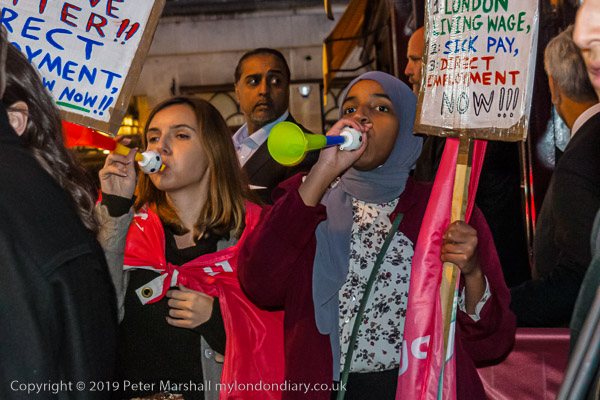

Saturday 10th February 2024 – Gaza & Iran

Saturday 10th February 2024 – Gaza & Iran – Saturday 10th February was another day of local actions around the country calling for and end to the horrific genocide now taking place in Gaza. I went to two of the local events in London as well as photographing an annual event on the anniversary of the 1979 revolution in Iran, calling for democracy there.

Ceasefire Now – Stop The Genocide In Gaza, Southwark

Saturday 10th February 2024 - Gaza & Iran
London, UK. 10 Feb 2024. Camberwell Green
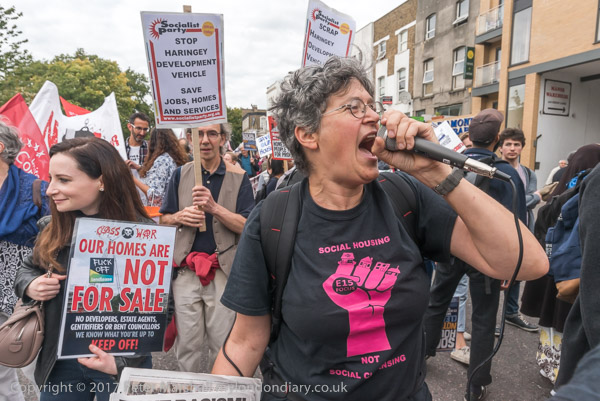
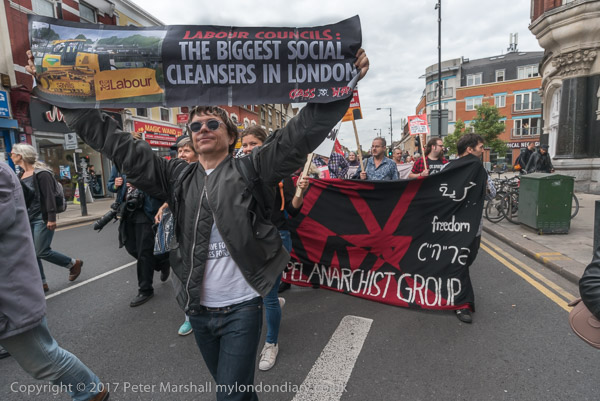
Southwark and Lambeth 4 Palestine had organised another march from Camberwell Green to BAE Systems offices on Southwark Street against the terrible genocide now being carried out by Israeli forces in Gaza. It turned out to be rather smaller than previous local marches, perhaps because many people in the area had demonstrated in workplace-based protests earlier in the week.

Saturday 10th February 2024 - Gaza & Iran
London, UK. 10 Feb 2024.

The event started with a few short speeches on Camberwell Green, including one from a student activist from the UAL at the Elephant where they had had a large protest. She talked about how she had been inspired by the example of Brian Haw’s protest over many years in Parliament Square who had carried on calling for peace and an ending to the killing of children until shortly before his death in June 2011, almost ten years after his protest there had begun.

Saturday 10th February 2024 - Gaza & Iran
Brian Haw: Find Your Courage; Share Your Vision; Change Your World.
(T-shirt from Dan Wilkins, The Nth Degree.)March 2007, Peter Marsh
all

I got to know Brian well, going to speak with him every time I went to photograph in Westminster and often photographing him, as you can see on-line at My London Diary. He suffered regular harassment from police, council officials and thugs encouraged by the authorities, some of whom were I think plain clothes officers or military. An Act of Parliament was passed largely to try to end his peace camp there, though it also severely restricted other protests within a kilometre of Parliament.

Saturday 10th February 2024 - Gaza & Iran
London, UK. 10 Feb 2024

Later, after his ill-health took him to hospital, his protest there was continued by Barbara Tucker who had joined his campaign there in 2005. She was subjected to even more severe police harassment, was arrested at least 47 times and served two periods in prison, of two weeks and nine weeks. In January 2012 police removed her protection against the elements – tent, blankets and sleeping bag and later they came back for her chair. She continued to protest there despite needing hospital treatment for exposure until May 2013.

London, UK. 10 Feb 2024.

The march set off with around a hundred people marching behind the banner though more joined the later at the end. There was considerable support from people on the roadside, particularly when it went past the busy section of Walworth Road close to East Street Market, and many drivers going in the opposite direction beeped their horns in support. Although the UK government continues its support of the Israeli genocide clearly the majority of the British people do not.

London, UK. 10 Feb 2024

I found it a rather long march – well over two and a half miles – and was wishing I’ve brought my bicycle by the time we got to the Bluefin Building on Southwark Street. The march stopped for a few minutes in front of the building where BAE Systems have offices on an upper floor.

London, UK. 10 Feb 2024.

BAE Systems is the world’s seventh-largest military contractor, and the largest in Europe and supplies Israel with a wide range of weapons which for years have been used against Palestinian citizens and civilian infrastructure “including hospitals, schools, and water and electric systems.” There is much more about their activities in arming Israel on the American Friends Service Committee web site.
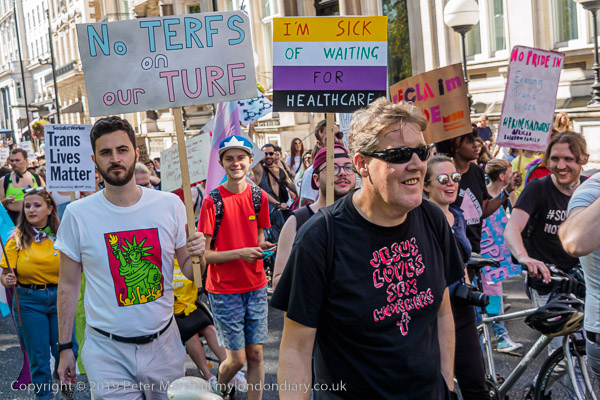
London, UK. 10 Feb 2024
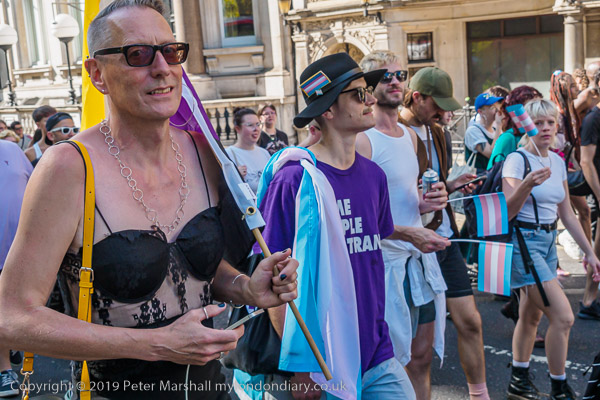
When we arrived at Bluefin, we saw that others had been there before us, and a large area of the frontage had been sprayed with red paint. A team of contractors were busy cleaning it off. I took a few pictures of them as the marchers moved off down the side of the building for another rally, but I walked back to Southwark Station to catch the Elizabeth line to Westminster.

More pictures online and available for use on Alamy.


Iranians Call For Freedom and Democracy in Iran

London, UK. 10 Feb 2024.

45 years after the Shah of Iran was forced into exile by a popular revolution following repression under the Pahvlavi regime, the Anglo-Iranian community and the National Council of Resistance of Iran call for a new revolution to end the oppressive theocratic regime with democracy and for the UK to declare the Islamic Revolutionary Guard a terrorist group.

They say Khomeini who had been invited back by the acting government after the revolution stole the leadership of the country revolution in a rigged vote, imposing the current oppressive theocratic regime.

London, UK. 10 Feb 2024.

The National Council of Resistance of Iran (NCRI) has put forward a ten point plan for a future democratic republic in Iran, with secular government, democratic elections, freedom of expression, equal rights for women and human rights and an independent judiciary and legal system.

The NCRI is a coalition with representation from five bodies, the major of which is the People’s Mojahedin Organization of Iran (PMOI), which currently has its headquarters in Albania. It was largely disarmed after the US/UK invasion of Iraq and its camp in Iraq was attacked after US forces withdrew.

London, UK. 10 Feb 2024

On Feb 1st this year, the House of Commons agreed to a motion in support of freedom and democracy in Iran. The motion condemns the violent state crackdown on the protests and urgest the government to proscribe Iran’s Islamic Revolutionary Guard Corps.

As I left the protest, two men came to try and disrupt the protest and there were brief scuffles as security and others tried to move them away. After a few minutes police came and held one of them, talking to him and suggesting he leave – the other was already a few yard down the road.

More pictures online and available from Alamy.


Ceasefire Now – Stop The Genocide In Gaza, Ealing, London, UK

London, UK. 10 Feb 2024

I was on my way to Ealing, fortunately a much faster journey now the Elizabeth Line goes to Ealing Broadway, although I still arrived well after the rally outside the town hall there had started. There was a large crowd around the steps on the main road in front of Ealing Town Hall, another of the many local protests around the country calling for an immediate ceasefire and an end to the genocide in Gaza which has now killed 28,000 mainly women and children and severely injured around 68,000.

London, UK. 10 Feb 2024

The entire population of Gaza is now living in desperate conditions with constant threat of bombing, shelling, famine and disease. Speakers condemned the failure to respond to the ICJ ruling to prevent acts of genocide and for the continued killing taking place there with precision targeted attacks on ambulances, aid workers, schools, hospitals, refugee camps, medical staff, journalists and others.

London, UK. 10 Feb 2024. Grenfell campaigner Moyra Samuels.

I think most of the speakers were from Ealing and Southall, but Grenfell campaigner Moyra Samuels had also come to speak both about the shameful attack on Gaza and also share some experiences of campaigning over the Grenfell fire, where continued protests had helped to keep the fight for justice alive – though there is little sign of justice so far.

London, UK. 10 Feb 2024.

I left as the rally was coming to a close, taking my final pictures of it from the top deck of the bus which was taking me to Brentford and a train home from there.

More pictures online and available from Alamy.


FlickrFacebookMy London DiaryHull PhotosLea ValleyParis
London’s Industrial HeritageLondon Photos

All photographs on this page are copyright © Peter Marshall.
Contact me to buy prints or licence to reproduce.