St Patrick’s Day – 2008

St Patrick’s Day – 2008: A parade in Willesden on Monday March 17th 2008 celebrated St Patrick’s Day. I came to it from a protest by the all-Irish environmental and social justice movement Gluaiseacht against the Corrib Gas Project in Mayo outside the Shell Centre, and had to rush away for a protest by Tibetans at the Chinese Embassy.
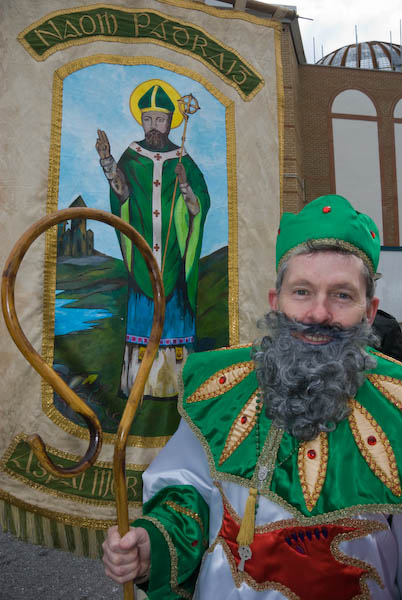
St Patrick's Day - 2008

Brent St Patrick’s Day Parade – Willesden Green

St Patrick's Day - 2008

Brent is one of London’s more diverse boroughs and has a large population of Irish and Anglo-Irish residents, particularly in what was sometimes called “County Kilburn“. As a borough it promoted various events to celebrate and unite its different communities, and among them I think was the only London borough to have its own St Patrick’s Day Parade.

St Patrick's Day - 2008

Or it did until government cuts in funding to local authorities which hit particularly hard on boroughs like Brent meant it could no longer afford to support these community events.

St Patrick's Day - 2008

London does now celebrate St Patrick’s Day with a march and event in Trafalgar Square on the nearest Sunday to the day itself, and I photographed the first of these, promoted by then London Mayor Ken Livingstone in 2002, though I only put a few black and white images on to My London Diary.

But the parade in Brent, though often involving some of the same people and floats was always a more interesting and intimate event, with the large local element giving it greater authenticity and I was sorry to see it go.

Local people came to view the parade, some waiting patiently on the pavement, others spilling out of packed bars drinks in hand as it arrived.
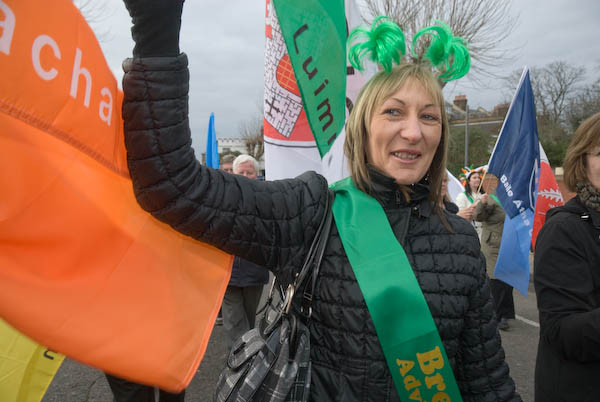
Local schools got involved, with children of all ethnicities becoming involved – and their families coming to watch.
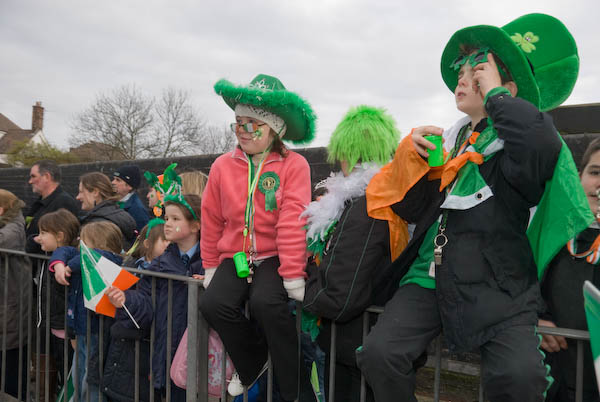
I went to where the march was to start, at an Islamic Centre close to Willesden Green Underground Station, where the streets were most crowded and followed the procession as it made its way to the library in High Road Willesden where there were various musical performances and a bit of a funfair.
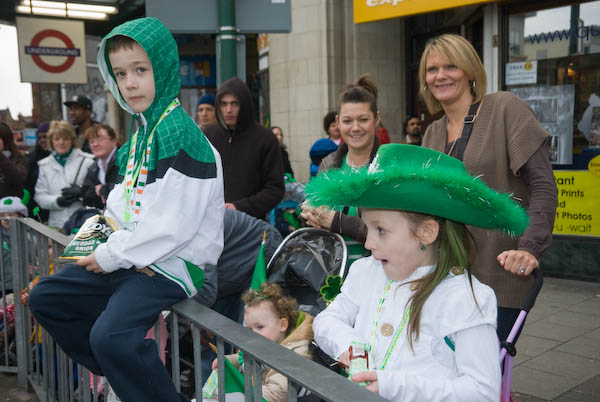
St Patrick was there of course, with the Mayor of Brent and others leading the parade. People walked with flags of the Irish counties (or at least the 26 of the 32 that are in the Republic of Ireland.)
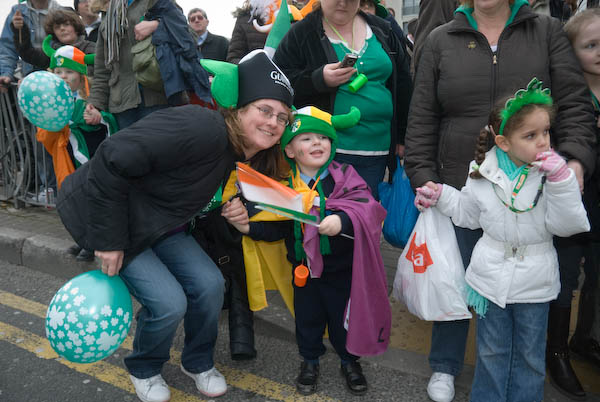
I had to rush away shortly after the parade began to cover another protest.

More pictures at Brent St Patrick’s Day Parade.


Irish Protest Brings Pipeline to Shell – Waterloo
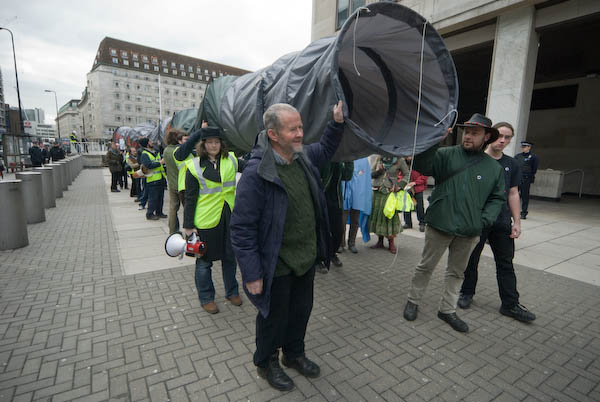
All-Irish environmental and social justice movement Gluaiseacht were in London for the weekend, and on St Patrick’s Day itself gathered outside the Shell HQ at Waterloo, bringing with them a very large pipeline.

The protest was over the Corrib Gas Project in Mayo in the north-west of Ireland, which the Irish Government has given at a knock-down price to Shell, Statoil and Marathon. It’s a project estimated to be worth over 50 billion Euros, but the Irish people will hardly benefit from the profits – and Shell gets the largest share.

Even worse the people in Mayo will suffer from the pollution around an inland refinery and a high pressure pipeline that will endanger local communities. Protests in Ireland have led to innocent people being jailed.

More text and many more pictures at Protest Brings Pipeline to Shell.


Tibet Vigil at Chinese Embassy – Portland Place
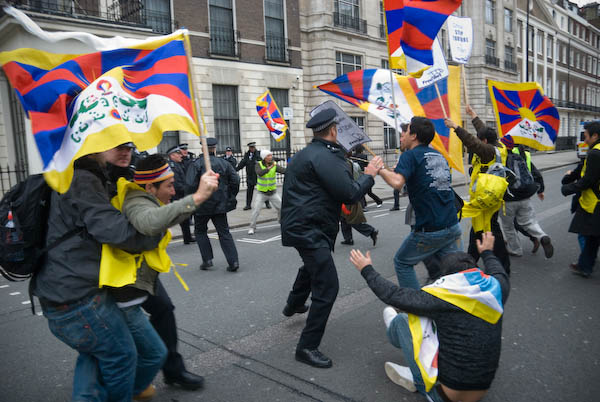
According to the Chinese Authorities, they “exercised restraint” in dealing with the Lhasa protests, using only non-lethal weapons and only killing 13 innocent civilians. Monday afternoon’s demonstration in Portland Place opposite the Chinese Embassy was timed to coincide with the midnight deadline in Lhasa for protesters to surrender.
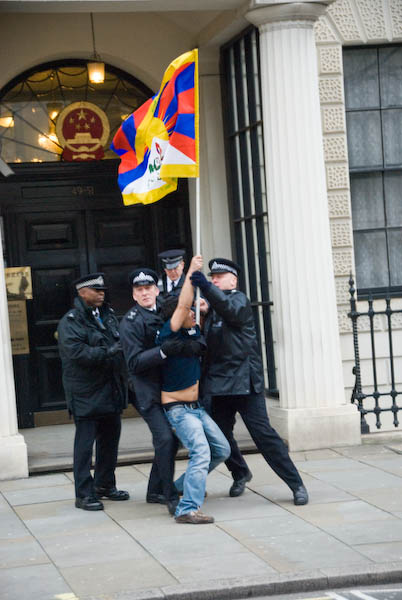
After protesting for around an hour on the opposite side of the wide dual carriageway, one man jumped over the barriers and rushed across towards the embassy door waving a Tibetan flag. Others followed and police were unable to stop them.
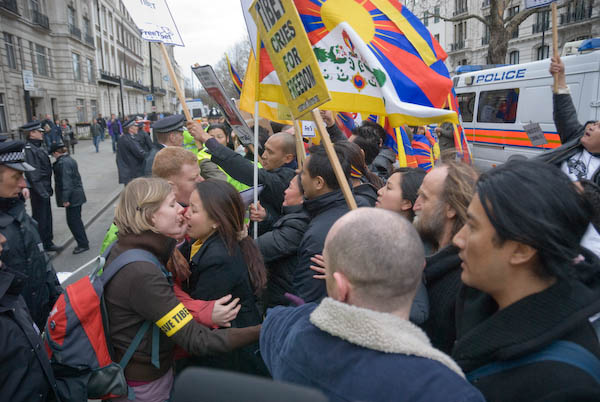
The stewards from the protest tried to get them to make back and were eventually able to persuade them with some gentle pushing to make back to the central island in the road where the protest continued, with some of the protesters sitting down.

Eventually police reinforcements arrived and after failing to persuade them them to move an officer read out something over a loudspeaker. The protest was too noisy for me to hear it, but I think it was a warning that the protesters would be arrested if they didn’t go back to the pavement. The stewards then persuaded everyone to move back to the pavement to continue their vigil, and I went home.

Tibet Vigil at Chinese Embassy


FlickrFacebookMy London DiaryHull PhotosLea ValleyParis
London’s Industrial HeritageLondon Photos

All photographs on this page are copyright © Peter Marshall.
Contact me to buy prints or licence to reproduce.


Dartford 1995 Again – Panoramas

Dartford 1995 Again – Panoramas: Part 9 of my occasional series on colour pictures I made in 1995.

Victoria Industrial Park, Victoria Rd, Dartford, 1995, 95p5-252

I enjoyed another walk in Dartford on Sunday May 7th 1995, beginning by taking black and white pictures of buildings around the centre before walking out to the northwest along Victoria Road.

Philips Norman, Cash & Carry, Victoria Rd, Dartford, 1995, 95p5-251

I went on to photographing in the industrial areas between Burnham Road and the Dartford Creek – the tidal River Darent.

Burnham Trading Estate, Lawson Rd, Dartford, 1995, 95p5-263

Here I was able to make my way down to the west bank of the river and make more pictures.

River Darent, Riverside Wharf, Dartford, 1995, 95p5-121

At this wharf there had once been a fairly small dock which had been filled in but its gates were still there. I think it had perhaps been a dry dock used for ship repairs,

Dartford, 1995, 95p5-133

I think this is a site cleared for the development of a large housing estate, now on Lawson Road and Eleanor Close.

Dartford, 1995, 95p5-153

This long, empty road was University Way, a northern by-pass for Dartford, named in hope of a university that never arrived. Bob Dunn had been a Tory junior education minister who had campaigned for this development. MP for Dartford from 1979 to 1997 when he lost his seat to Labour, he died in 2003, only 56, and the road was renamed in his honour.

The bridge that takes Bob Dunn Way across the Darent was not built with navigation in mind, and makes it difficult for boats of any size to proceed up to Dartford. There has been for some years work being carried out to encourage navigation here, but boats have to look carefully at the tide tables to pass under the bridge. The Dartford and Crayford Creek Trust was founded in April 2016 to work to improve the navigation.

Roundabout, Hythe St, Victoria Rd, Dartford, 1995, 95p5-363

I walked back much the same way to this roundabout and went up Hythe Street in the centre of this picture.

River Darent, Nelsons Row, Dartford, 1995, 95p5-243

Hythe Street tok me to Nelson’s Row where I was able to cross the River Darent. There is also a public slipway here, cleared in recent years by volunteers.

Pipe Bridge, Riverside Path, River Darent, Dartford, 1995, 95p5-232

A few houses on the opposite bank are in Kenwyn Road. Past them you can see the derelict half lock which keeps some water in upstream when the tide flows out. Volunteer have put in considerable work to improve this lock in recent years and to revive navigation on Dartford Creek. In the distance is the Dartford Paper Mills site – closed in 2009 the site has been redeveloped.

Half Lock,  Riverside Path, River Darent, Dartford, 1995, 95p5-223
Half Lock, Riverside Path, River Darent, Dartford, 1995, 95p5-223

Boats can navigate through the lock when the tide is high enough for them to get over the cill of the lock which holds back sufficient water for the river to be navigable upstream to the centre of Dartford.

Dartford Fresh Marshes, Dartford, 1995, 95p5-361

I turned around here and walked back to Dartford and the station. I’d made an early start to the day on the first train into London and there was still time to stop off on the way home and take a few pictures in Woolwich where I intended to return the following week.


FlickrFacebookMy London DiaryHull PhotosLea ValleyParis
London’s Industrial HeritageLondon Photos

All photographs on this page are copyright © Peter Marshall.
Contact me to buy prints or licence to reproduce.


LSE Cleaners Protest, Lisa Arrested – 2017

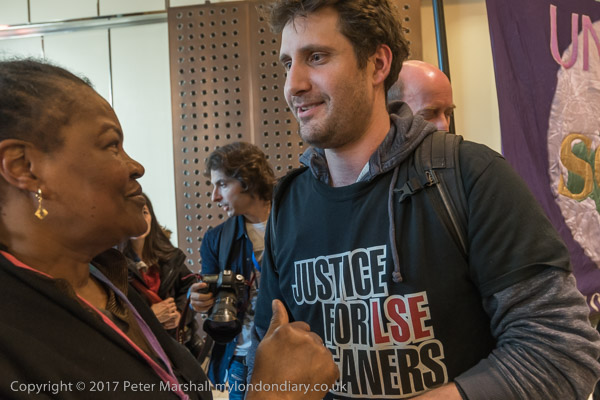
LSE Cleaners Protest, Lisa Arrested: Wednesday 15th March 2017 was the first day of a two-day strike by cleaners at the LSE in support of their campaign demanding equal sick pay, holidays and pensions etc to similar workers directly employed by the LSE and an end to bullying and discrimination by their employer Noonan.

LSE Cleaners Protest, Lisa Arrested
LSE Cleaner Mildred Simpson

I had photographed the start of their campaign at a meeting led by their union, the United Voices of the World, as a part of the LSE’s 3-day ‘Resist’ Festival on 29th September 2016 and a number of protests at the LSE since then.

LSE Cleaners Protest, Lisa Arrested

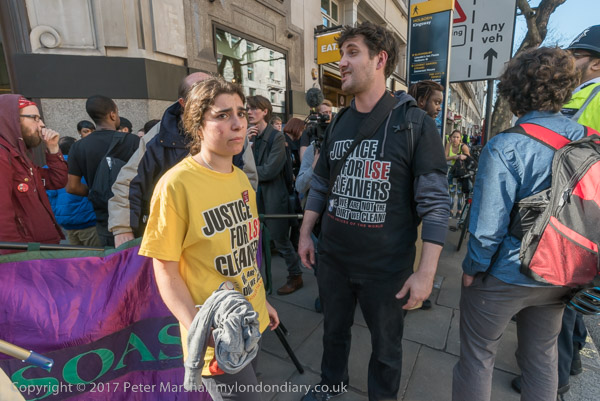
On 15th March the cleaners had a picket line since the early morning – cleaners start work while most of us are still in bed – and I joined them for a lunchtime rally. Their campaign had a great deal of support from students at the LSE and had a large banner ‘L$E: The London School of Exploitation‘.

LSE Cleaners Protest, Lisa Arrested
Grim Chip recited several of his short poems

Others who had come to support the cleaners included Grim Chip of Poets on the Picket Line and LSE academics Lisa McKenzie and David Graeber and a few from Class War. But there were passionate and effective speeches from a number of the cleaners, including Mildred Simpson, one of the LSE cleaners and others in the UVW.

LSE Cleaners Protest, Lisa Arrested
Alba, right, a LSE cleaner unfairly dismissed in September 2016

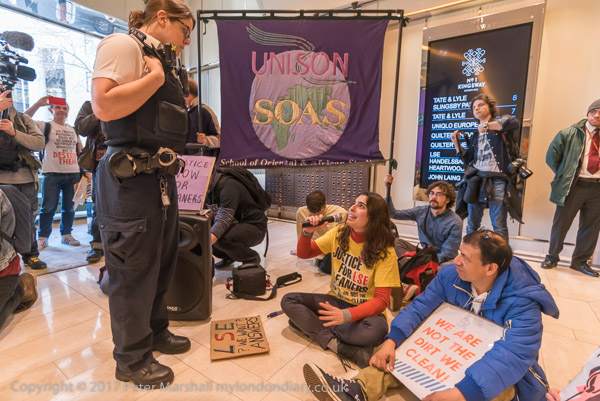
At the end of the rally, the protesters marched through the campus and across Kingsway to the building which houses the LSE Estates Office where a large group walked into the foyer demanding to see the Estates Manager. Some were carrying mops and buckets to show their support for the cleaners.

Security came to talk with the protesters, though the protesters were making too much noise to hear them and the protest continued with a short speech from UVW General Secretary Petros Elia to explain when the foyer was being occupied.

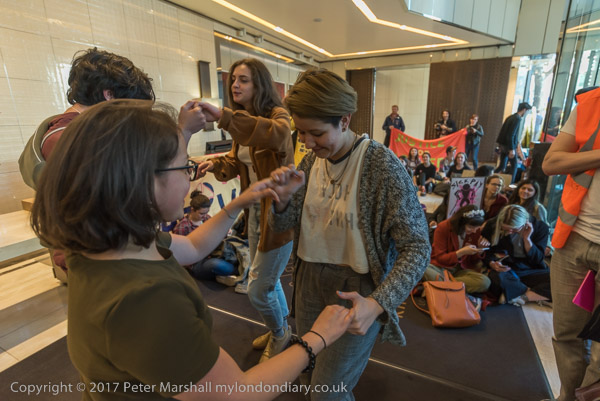
Eventually the protesters sat down and waited, still making a lot of noise . People working in the building were still able to leave or enter the building unhindered walking past the protest – but would hear and read why the noisy protest was taking place.

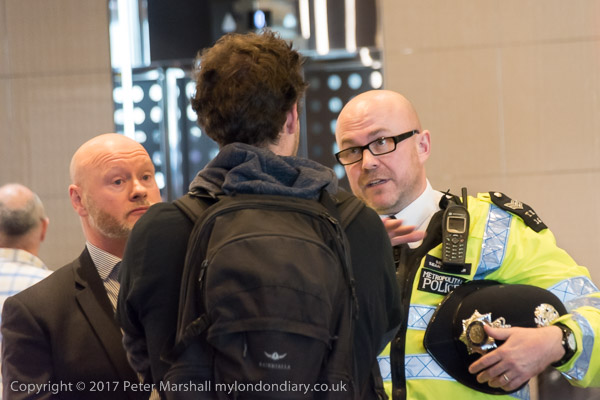
Eventually police arrived and talked with the building security and some of the protesters who soon began dancing in the foyer to music on the public address system the UVW had brought.

More police arrived and decided to stop people entering or leaving the offices. They talked with UVW General Secretary Petros Elia who told them it was a peaceful protest and they would leave after they had made their point to the LSE facilities manager – if the police could persuade him to talk to them.

Eventually this talk did take place, though some way back from the foyer where we could only see them from a distance. The talk went on for around five minutes, and Petros then returned smiling to tell the protesters that the LSE who had until now been refusing to talk to the cleaners had agreed to a meeting.

The protesters then walked out to join those who had been continuing to protest on the pavement outside, and they prepared to end the protest.

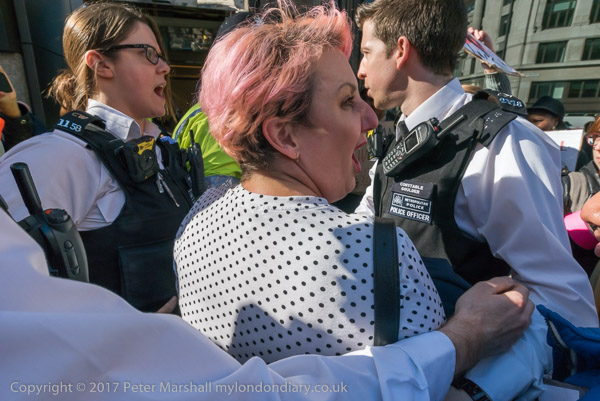
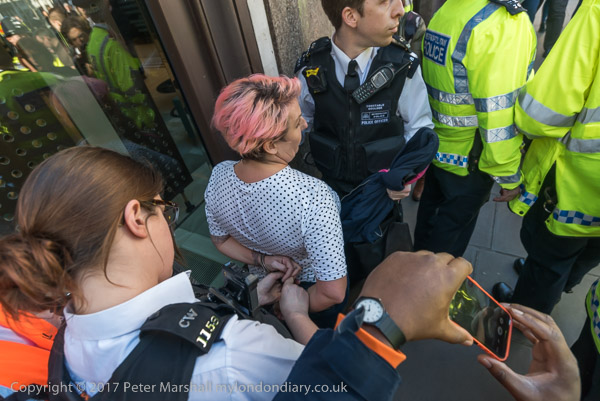
But unexpectedly police moved in and surrounded Lisa McKenzie telling her she was under arrest.

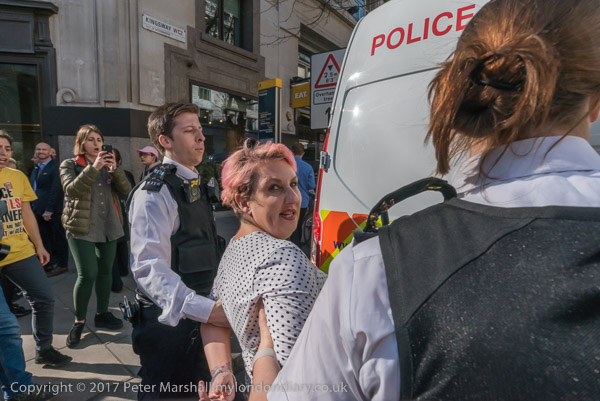
They pushed her roughly to the wall of the building and handcuffed her pushing away excessively roughly those who tried to stop the arrest and taking her to a waiting police van.

Apparently Lisa was being charged with assault on the receptionist when the protesters entered the building. I was close behind and neither I nor the other protesters saw any evidence of assault by her as she entered the offices holding one end of the banner with others.

Everyone was shocked, both by the arrest and by the police violence. The fact that none of the others holding the banner were arrested strongly suggested that her arrest was politically motivated, probably due to pressure from the LSE for her support for the cleaners – she had organised the ‘Resist’ Festival where the cleaners campaign had been launched.

Lisa had previously been the subject of a clearly political arrest when she was wrongly charged with three offences at a protest in February 2015 while she was standing in the General Election against Iain Duncan Smith. Perhaps the police were still feeling aggrieved after failing signally to achieve a conviction. This time they were not stupid enough to take her to court.

Much more from Wednesday 15th March 2017 on My London Diary:
LSE cleaners strike and protest
Police arrest Lisa again


FlickrFacebookMy London DiaryHull PhotosLea ValleyParis
London’s Industrial HeritageLondon Photos

All photographs on this page are copyright © Peter Marshall.
Contact me to buy prints or licence to reproduce.


No Trident Lobby & Rally 2007

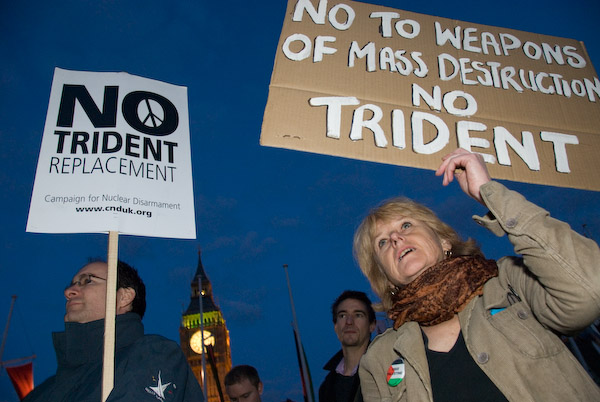
No Trident Lobby & Rally: On March 14th 2007 the House of Commons were debating the principle to replace the existing UK nuclear weapons and begin a process to design, build and commission submarines to replace the existing Vanguard-class submarines carrying Trident nuclear missiles with updated systems over the coming 17 years. The New Labour government, led by PM Tony Blair and the Foreign Secretary Margaret Beckett were supported by the Conservatives and one DUP member and won the final division by 408 votes to 160.

No Trident Lobby & Rally 2007

Voting against were many Labour MPs and almost all the Liberal Democrats, SNP and other minority parties, although there were a few absentees.

No Trident Lobby & Rally 2007
Protestors at the front of Parliament Square included Christian ministers and Buddhists.

Around Parliament Square there was a day of protest by Greenpeace and others with the main CND rally called for 5pm and continuing into the evening. Here is the account I wrote of the day for My London Diary – with the usual minor corrections and a few of the pictures I posted – more are still on My London Diary

No Trident Lobby & Rally – Parliament Square, London

No Trident Lobby & Rally 2007

I missed Bianca and Annie and the others, but I didn’t miss them as there was plenty else going on. As I walked over Westminster bridge there was the banner flying on the crane in front of the houses of parliament, and there were quite a few people stopping to look at it.

No Trident Lobby & Rally 2007
Protestors from Block the Builders and Aldermaston Women’s Peace Camp had earlier blocked the road. They were dragged rather roughly to the side. Police stood round as pneumatic drill and saws are used to remove the concrete filled bins

Later, Greenpeace activists got on their bikes and cycled across Westminster Bridge to Parliament Square, where they were stopped by police and threatened with arrest unless they left the roadway and moved onto the square. After a while they all did, many cycling away after a few minutes to cycle around London before joining the ‘fish on a bicycle‘ critical mass that arrived back at the square a few hours later, and got the same ‘off your bike‘ treatment from the police.

Cyclists are ordered off the road and onto the pavement of Parliament Square under threat of arrest

The square started to fill up rather more from around 5pm when a silent protest attended by a couple of hundred took place in the far corner of the square. By the time the speeches started at 6.15 there was a respectable crowd, perhaps around 500, but people were still arriving and with the addition of the cyclists there were perhaps closer to a thousand present.

A brief attempt by Greenpeace to protest on the pavement in front of the Houses Of Parliament took the police by surprise, but the group were soon escorted back across the road.

Greenpeace demonstrators on the pavement outside Parliament
Veteran peace campaigner Pat Arrowsmith was among those in the crowd

Throughout the day there had been plenty of signs of the personal vendetta between some Met officers and the regular protesters in the square. Two hapless officers appear to have been deployed just to stand in front of one fluorescent pink placard, and there were some incidents of minor harassment. The injunction thrown out by the judge at Southwark Court recently showed how the police are wasting our money in this respect.

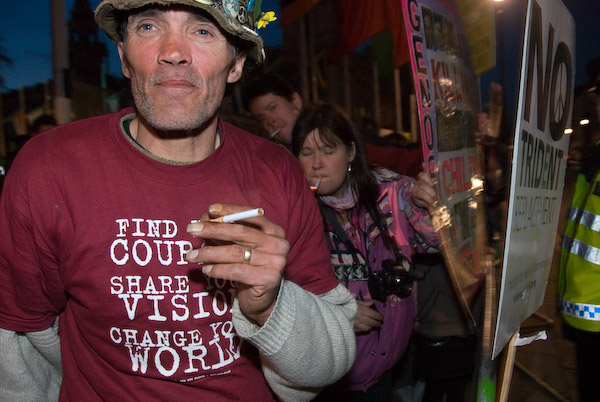
Brian Haw: Find Your Courage; Share Your Vision; Change Your World. (T-shirt from Dan Wilkins, The Nth Degree.)

Apparently the latest approach to try and remove the protesters from the square comes from London Mayor Ken Livingstone who is worried about the grass being damaged by the tents there. As I remarked when this was mentioned, “grass regenerates, dead children don’t.” Perhaps we should start a ‘Brian [Haw] For Mayor‘ campaign.

We need Trident “like a fish needs a bicycle”

Several Labour MPs came out from the house to address the meeting, along with many activists. Bruce Kent started his speech by thanking Brian Haw for allowing the demo to use his back garden, and Brian later came from his protest at the front of the square to address the meeting.

This time the government got its vote, but there will be later occasions to oppose Trident, as well as the continuing actions at Faslane which those at the demo were urged to take part in.

Trident replacement is still continuing in 2025, with the government being committed to the building of four replacement submarines by the early 2030s and an extension to the life of the Trident missiles potentially to the early 2060s as well as work taking place now to produce replacement nuclear warheads in the 2030s. It is an important support to the UK arms industry but of little or no military consequence with its obscene cost threatening our ability to defend the country by conventional means and it remains – like all nuclear weapons – a definite threat to the peace and future of the world.

Many more pictures on My London Diary beginning here.


FlickrFacebookMy London DiaryHull PhotosLea ValleyParis
London’s Industrial HeritageLondon Photos

All photographs on this page are copyright © Peter Marshall.
Contact me to buy prints or licence to reproduce.


Immigration, Lions, Poverty Pay & Palestine – 2015

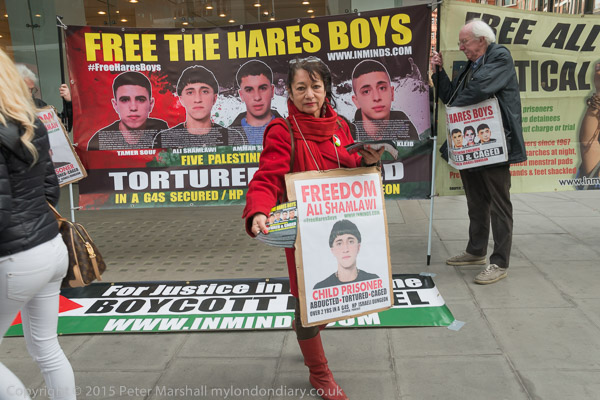
Immigration, Lions, Poverty Pay & Palestine: Ten years ago on Friday 13th March 2015 I photographed four very different protests in London, beginning outside an immigration tribunal in Feltham, going from there to Trafalgar Square where people where protesting against ‘canned hunting’ of lions, on to Kensington Gore where cleaners were demanding a living wage at the Royal College of Art and finally to the offices of G4S on Victoria St, Westminster for a protest against the imprisonment and torture of four young Palestinian boys by Israel.


Let Ife Stay in the UK! – York House Immigration Tribunal, Feltham

Immigration, Lions, Poverty Pay & Palestine - 2015

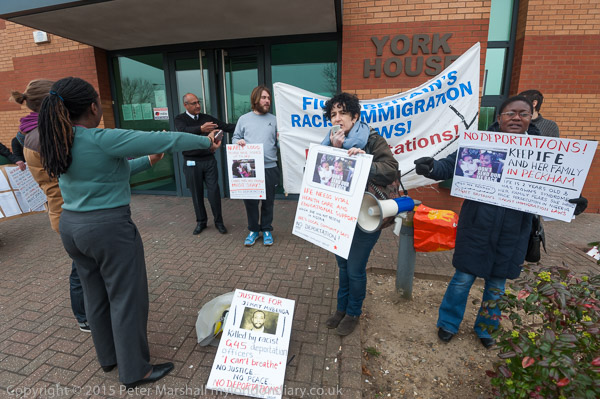
York House where the Immigration Tribunal is based is on an industrial estate halfway between Feltham and Heathrow on the western fringes of London and protesters had not found it easy to get there. I arrived a little late and other protesters only arrived shortly before I left, with others still on their way.

The protest had been held up at the start when security at the tribunal had told the protesters they were not allowed to protest outside the offices, and had called the police. But the police had come and confirmed that not only they had the right to protest there but also that people could take photographs outside the tribunal – though of course cameras and recording equipment were not allowed inside the tribunal.

Immigration, Lions, Poverty Pay & Palestine - 2015

The protesters had come to demand that 2-year-old Ife, who had Down’s syndrome, and her mother should be allowed to stay at their Peckham home where she can receive essential healthcare and support and not be deported to Nigeria. They intended to stay until after the end of the tribunal hearing later in the day.

Immigration, Lions, Poverty Pay & Palestine - 2015

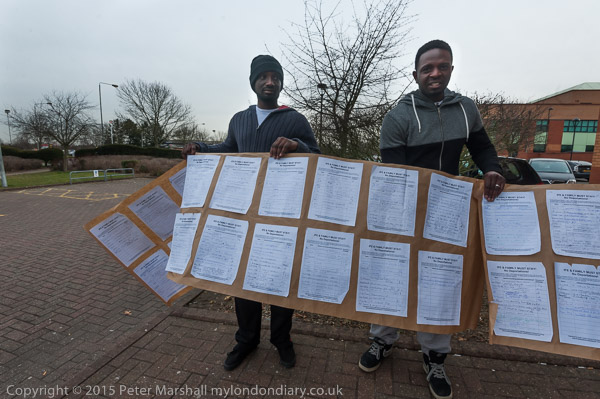
The protesters from the Revolutionary Communist Group had brought with them posters covered with the sheets of a local petition to keep Ife here with nearly a thousand signatures, as well was posters denouncing the UK’s racist immigration laws and also calling for justice for Jimmy Mubenga, killed by racist G4S deportation officers during his forced deportation flight from Britain.

Let Ife Stay in the UK!


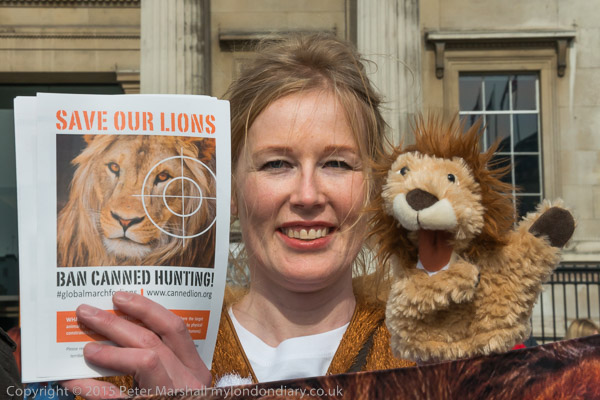
Save Our Lions – ban Canned Hunting – Trafalgar Square

Immigration, Lions, Poverty Pay & Palestine - 2015

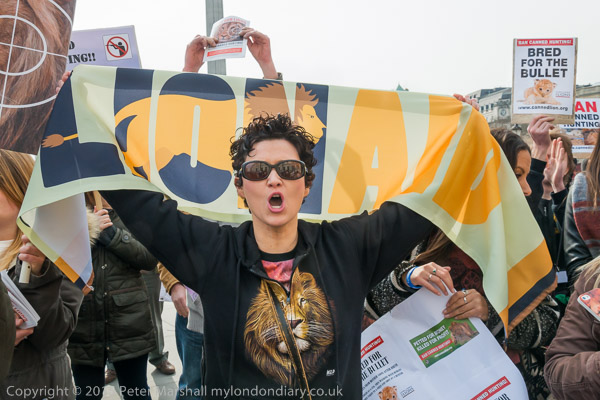
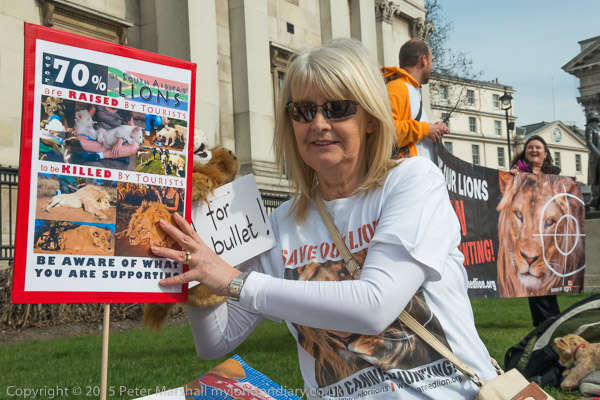
Several hundred gathered in Trafalgar Square to protest against ‘canned hunting’, where lions are bred and raised tame on farms in South Africa for rich visitors to pet, to ‘walk with lions’ and to shoot as trophy heads.

The protesters say this degrades a noble animals and threatens wild lions, which are captured for farm breeding to improve the quality of the stock.

Only very young cubs are safe to pet and young female lions are often killed once they become too large to pet as there is much less demand for female lions as hunting trophies.

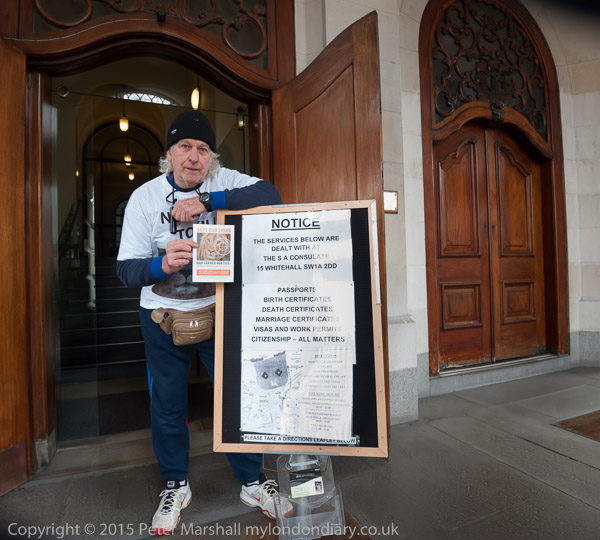
After speeches and photographs on the North Terrace I was invited to go with one of the protesters to South Africa House where he stood in the entrance with a placard and poster until security told us to leave.

Save Our Lions – ban Canned Hunting


Poverty pay at the Royal College of Art – Kensington Gore

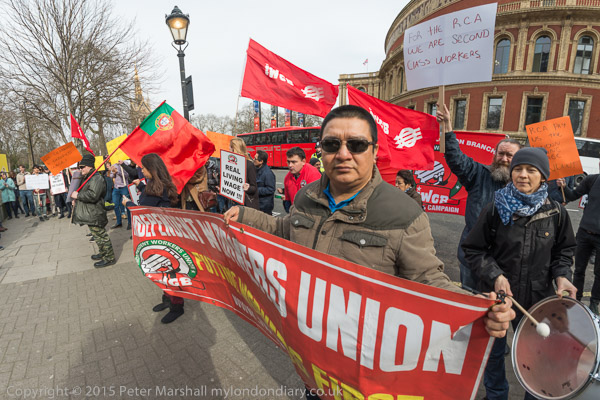
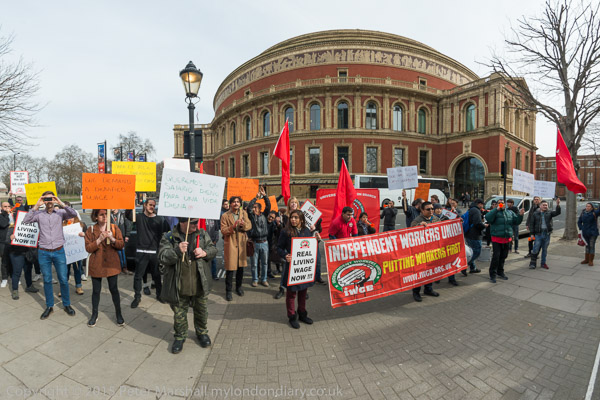
I met with protesters from the IWGB (Independent Workers’ Union of Great Britain) at the Royal College of Art where they had come at lunchtime to demand that cleaners be immediately paid the London Living Wage. Previous pressure from the IWGB had led to the RCA saying it would pay the living wage from September 2015, but the cleaners needed it now, not in sixth months time.

After a noisy protest outside the college entrance in a mews just off the main road where they were joined by around 50 students in support the marched onto Kensington Gore for a more public protest on the east side of the college facing the Royal Albert Hall.

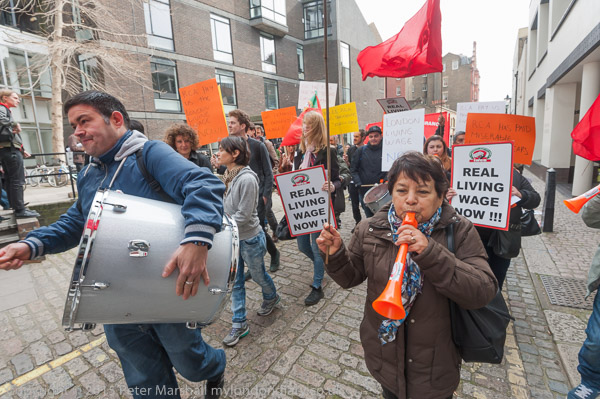
Here there were speeches and chanting and a great deal of noise from the drums and vuvuzelas before the protesters went back to continue their protest at the college entrance.

From here they moved further down the mews and to an almost enclosed yard at the rear of the college next to a dining area keeping up a barrage of noise. After keeping up their loud protest for around an hour they finished with a warning to RCA management that they would be back and keep up the protests until their demands were met.

Poverty pay at the Royal College of Art


Free the Hares boys protest at G4S – Victoria St

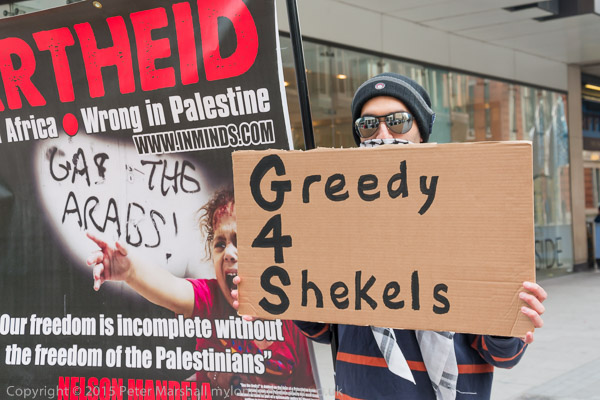
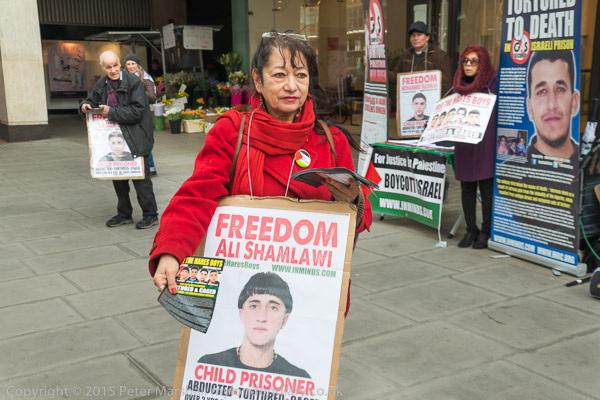
British multinational private security company G4S plays a key role in running jails in Israel where thousands of Palestinians are held.

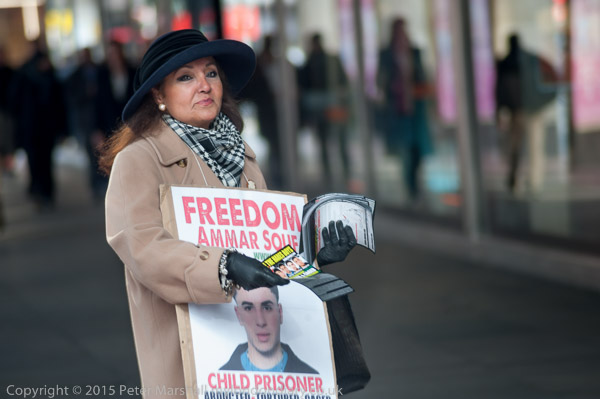
Among the prisoners being held and tortured were 5 young boys from Hares in the northern West Bank of Palestine, and the Islamic Inminds Human Rights Group were protesting outside the G4S offices on Victoria St demanding their immediate release.

The boys were arrested after an Israeli illegal settler crashed into the back of an Israeli truck and they were alleged to have caused the collision by throwing stones.

That had happened two years earlier and the boys had now been held without trial for two years for the alleged crime – for which there appeared to be no evidence.

One of the five, Mohammed Mahdi Saleh Suleiman, was convicted by a military court and sentenced to 15 years in prison on the basis of a statement obtained by torture that he was not allowed to read before being forced to sign.

In 2016 the United Nations Working Group on Arbitrary Detention published its opinion on his case. They called his detention ‘discriminatory’ and ‘arbitrary’ and called for his immediate release by Israel. Israel ignores most if not all UN opinions.

Free the Hares boys protest at G4S


FlickrFacebookMy London DiaryHull PhotosLea ValleyParis
London’s Industrial HeritageLondon Photos

All photographs on this page are copyright © Peter Marshall.
Contact me to buy prints or licence to reproduce.


Poor Little Overlooked Images

I wrote this post some months ago but when I tried to publish it none of the pictures appeared. They seem to be working now, though I’m keeping my fingers crossed.


Poor Little Overlooked Images: I’m often asked “Is it worth putting images on Flickr?” My answer is it depends on why you take pictures, what you photograph and what you expect to get out of it.

Ionic Temple, lake and obelisk, Chiswick House Gardens, Chiswick, 1977 10c103_2400
Ionic Temple, lake and obelisk, Chiswick House Gardens, Chiswick, 1977 10c103

To state what I think is obvious, I don’t make a living out of Flickr, though I do get the occasional sale because people have found my pictures through it. It’s actually getting a little embarrassing now, as I shut down my business after Covid and I think I’m going to have to re-open it due to increasing sales.

Cheshire St, Tower Hamlets, 86-4r-23_2400
Cheshire St, Tower Hamlets, 86-4r-23

But what I’ve always wanted to do is to share my images with other people, and Flickr is certainly doing that. When I was writing this some months ago there were over 45,000 views of my pictures on Flickr in a single day, and many days there are over 10,000 views. In total I’ve now had over 15 million views of my pictures there.

Brick Lane, Tower Hamlets 86-4r-11_2400
Brick Lane, Tower Hamlets 86-4r-11

Of course it isn’t the same as a gallery show, but most of those I’ve taken part in over the years have been lucky to get 100 visitors coming to view them in a day. So Flickr can get your work seen, and seen by a very much wider range of people than are interested enough to go into a gallery to see photographs.

 Collegiale Notre-Dame de la Crypte, Cassel, France
Collegiale Notre-Dame de la Crypte, Cassel, France

Though I have to say that some of those people see very different things in the pictures than what interested me and what I was trying to say when I made the picture.

D933, France
D933, France

I don’t mind this. Sometimes they give me information about the scene which I was totally unaware of – and occasionally it adds something to my appreciation. Often I get comments which are very personal to the viewers who may have lived or worked in somewhere that I photographed and it perhaps adds another layer to my view of the image, as well as being pleasing that they found it of interest.

Notting Hill Carnival, 1999. Peter Marshall 99-823-11_2400

But there are some things I don’t like. People who share my images on social media without naming me as the photographer is perhaps the top of the list, and if anyone should dare to colorize one of my black and white images I might to moved to take out a contract on them. So far as I’m aware it hasn’t happened yet.

St Omer, France
St Omer, France

But while my most viewed images have been seen over 20,000 times (one now 35,699 views) there are also a few which have apparently never been viewed at all.

St Omer, France
St Omer, France

They aren’t any worse than most of my other pictures – and in any case how would anyone know without viewing them. I think it may actually reflect some small glitches in Flickr’s recording of views, as when I click on them in the Flickr report it actually states “No recent stats available for this photo” and I’m fairly sure some at least will have been seen by some people.

St Omer, France
St Omer, France

But here, illustrating this post. are some of the fifteen images which had apparently never been seen when I wrote this post a few months ago. And after writing I discovered why – Flickr had changed their privacy settings to private. Not me – all of my images are uploaded as public. Somehow a stray bit or byte in their database had flipped. I’ve just checked again and found a different half-dozen images hidden in the same way.

Flickr has a reasonable search facility (though occasionally it goes haywire) and almost all of my images are keyworded. If you want to know if I have taken a picture of your street or town – or anything else – simply click this link to Flickr and type my name followed by what you want to find in the search box at the top of the page.

So to find if I have photographed Pegasus simply type:

Peter Marshall Pegasus

into the search box – and it should find all seven. Londoners in particular may find it useful to search on the names of London boroughs in this way.


FlickrFacebookMy London DiaryHull PhotosLea ValleyParis
London’s Industrial HeritageLondon Photos

All photographs on this page are copyright © Peter Marshall.
Contact me to buy prints or licence to reproduce.


1995 Colour – More from Dartford

1995 Colour – More from Dartford: The eighth part of my series showing colour images I made in 1995 continues with panoramic and normal images around Dartford. An earlier post 1995 Colour Part 4 – Around Dartford looked at some of the panoramas I made on a walk in March 1995 when I walked along the Darent and Thames Path to Littlebrook and Crossways. I returned to Dartford in April and May and made some more pictures.

Bow Arrow Footbridge, Dartford Tunnel Approach, Dartford, 1995, 95p4-1072
Bow Arrow Lane Footbridge, Dartford Tunnel Approach, Dartford, 1995, 95p4-1072
Bow Arrow Footbridge, Dartford Tunnel Approach, Dartford, 1995, 95p4-1073
Bow Arrow Lane Footbridge, Dartford Tunnel Approach, Dartford, 1995, 95p4-1073
Crossways, Dartford, 1995, 95p4-1062

I think this picture was taken on Cotton Lane. You can see the QEII bridge clearly and there are two lines of pylons. The storage tanks gleaming in the distance are on the north bank of the River Thames. There is no longer a rail siding here.

Philips Newman, Cash & Carry, Victoria Rd, Dartford, 1995, 95c5-764
Industrial Estate, Dartford, 1995, 95c5-763

I think this is probably on the Burnham Trading Estate, Burnham Rd, Dartford, where I also made several black and white images.

Willding Yard, Eastwood Metals, Lower Hythe St, Dartford, 1995, 95c5-762

Still more pictures from around Dartford in later posts.


FlickrFacebookMy London DiaryHull PhotosLea ValleyParis
London’s Industrial HeritageLondon Photos

All photographs on this page are copyright © Peter Marshall.
Contact me to buy prints or licence to reproduce.


1995 Colour – Kent Landscapes

1995 Colour – Kent Landscapes: Part 7 of my posts on my colour work in 1995. In the early months of 1995 I continued working in both Walthamstow, Chingford and other areas of North London but also made a number of visits south of the river to St Mary Cray, Belvedere and elsewhere. But most of my work was in black and white, though I’ve already posted a few colour images in this series.

River Darent, Dartford, 1995, 95p4-342

I took far fewer colour pictures and at the time kept few records of locations and dates of these, relying on the annotations I made on my black and white contact sheets.

Brooklands Lakes, River Darent, Dartford, 1995, 95p4-472

On April 1st 1995 I took the train to Dartford, a town I had previously photographed and visited occasionally to visit a friend. Dartford is just outside the east edge of London in Kent and at the west edge of an area beside the Thames which had for many years been the home of the cement industry with huge chalk quarries and riverside cement factories, the largest of which was still operation in the 1990s and which I’d photographed fairly extensively.

Farm, River Darent, Dartford, 1995, 95p4-473

I made a long walk around the area south of Dartford, beginning along the river that runs through the town, the Darent, but then through some of the countryside to the south.

Hollands Farm, Hawley Rd, Hawley, Dartford, 1995, 95p4-441

As well as photographing traces of the cement industry – including a no longer working mineral conveyor which had carried chalk from a quarry to the factory I also photographed the two major roads which have impacted on the landscape south of Dartford, the A2 Dartford By-Pass and the M25 motorway.

Mineral Conveyor, M25, Hawley, Dartford, 1995, 95p4-433
Farm, Parsonage Lane, Darenth, Dartford, 1995, 95p4-413
Farm, Darenth, Dartford, 1995, 95p4-663
Dartford, 1995, 95p4-631

You can see larger versions of the images by clicking on them which will take you to my Flickr album 1995 London Colour. More colour pictures from Dartford in a later post.


FlickrFacebookMy London DiaryHull PhotosLea ValleyParis
London’s Industrial HeritageLondon Photos

All photographs on this page are copyright © Peter Marshall.
Contact me to buy prints or licence to reproduce.


Junior Doctors, Uganda & Benefit Sanctions – 2016

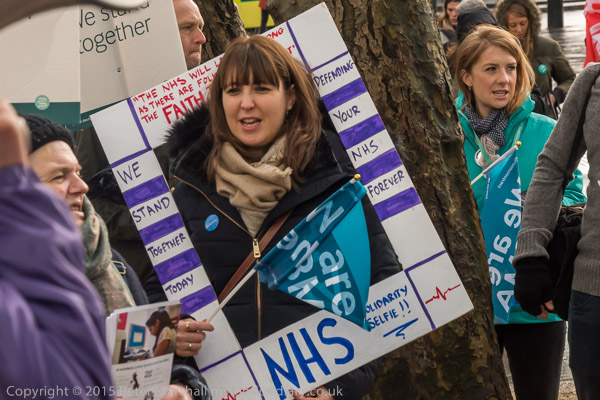
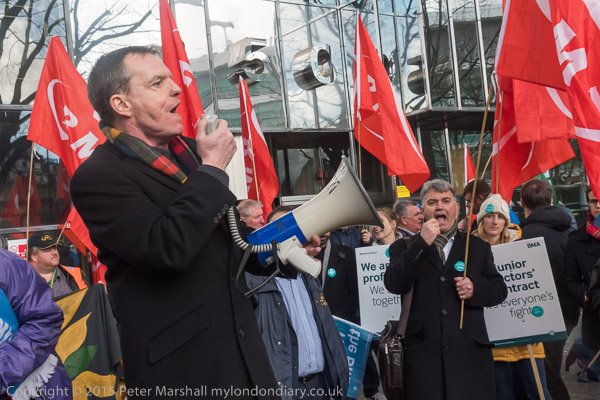
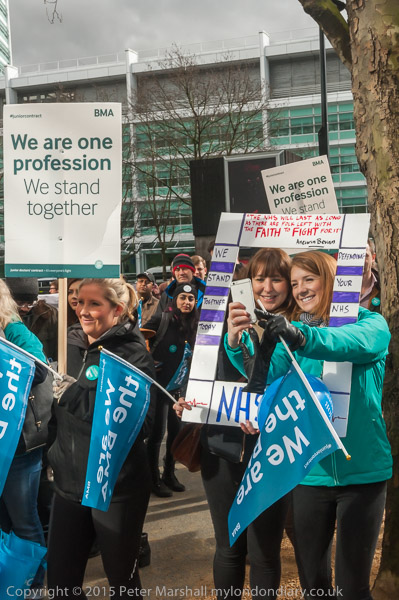
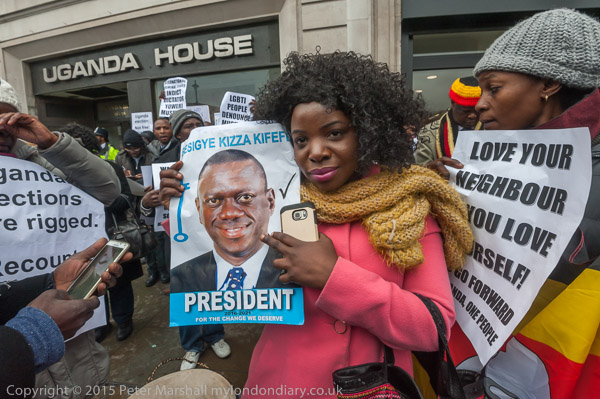
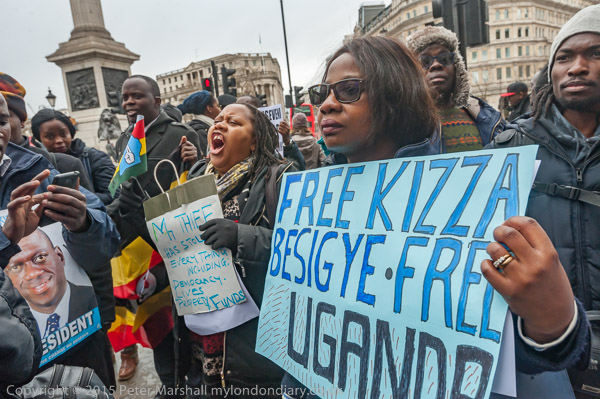
Junior Doctors, Uganda & Benefit Sanctions: On Wednesday 9th March 2016 Junior Doctors held a one-day strike over their claims for a better deal from the NHS and I joined a rally outside University College Hospital where health workers and trade unionists showed support and called for an end to the creeping privatisation of the NHS. Later in Trafalgar Square Ugandans were protesting the rigged presidential elections. Finally I went to the Dept of Work & Pensions to cover a National Day of Action against Benefit Sanctions, which often leave people with no means of support for sometimes trivial reasons and were by then known to have led to at least 95 deaths.


UCH rally for Junior Doctors Strike – Euston Rd

Junior Doctors, Uganda & Benefit Sanctions - 2016

Trade unionists, medical staff at all levels and other supporters joined the Junior Doctors picket line outside University College Hospital to show their support.

Junior Doctors, Uganda & Benefit Sanctions - 2016
Janet Maiden, an NHS campaigner and a Deputy Sister at UCH

They then held a rally across the road from the hospital, one of London’s largest on the busy Euston Road.

Junior Doctors, Uganda & Benefit Sanctions - 2016

Junior doctors are fully trained doctors in postgraduate training and gaining clinical experience to become members of the appropriate Royal College of Medicine. They may remain as junior doctors for around 8-20 years and are the largest group of doctors working in our hospitals.

Junior Doctors, Uganda & Benefit Sanctions - 2016

In 2023 the he British Medical Association (BMA) decided it would no longer use the term “junior doctor” as it failed to indicate their high level of skills. In 2024 and as a part of the settlement of their dispute which came finally after the election of a Labour government they were renamed “resident doctors.”

On My London Diary I gave a long list of some of the speakers which indicate the huge range of support for the junior doctors and their fight against a Tory government that was determined to wreck the NHS so that it could be fully privatised for the benefit of largely US-based health care companies in which many of them had a financial interest.

Their aim was move towards a US-style insurance-based system – which would lead to many of us being unable to afford appropriate treatment and to face enormous bills – healthcare is by far the largest cause of bankruptcy in the USA. It seems likely that Labour under Starmer will continue to move in the the same direction.

Personally I would be unable to get insurance for my existing long-term health conditions. The NHS has for over 22 years enabled me to lead a normal life without charge to me and at a relatively low cost to the nation, whereas in the USA my continuing treatment would by now have cost me well over a quarter of a million dollars.

UCH rally for Junior Doctors Strike


Ugandans protest rigged Presidential Election – Uganda High Commission

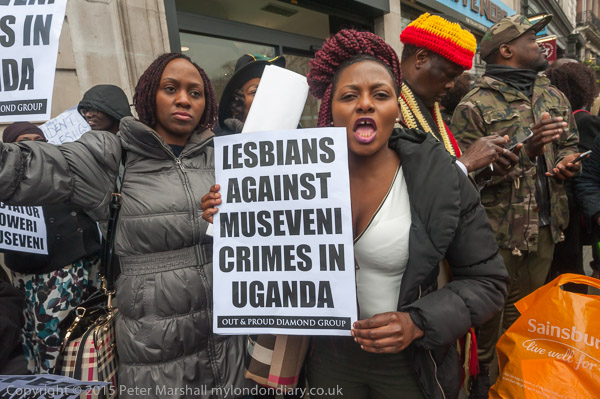
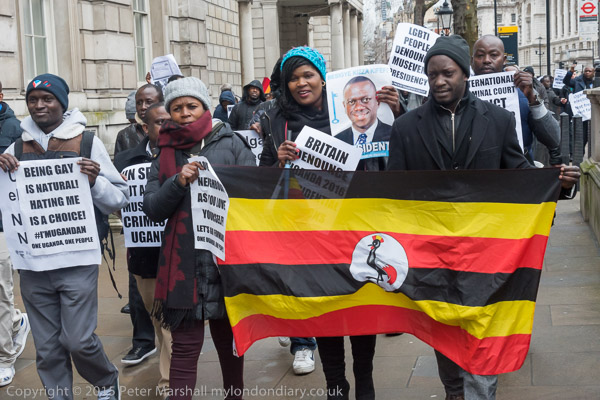
Many Ugandans believe that February 2016 elections that re-elecated Museeveni as president were rigged and protesters outside the High Commission in Trafalgar Square demanded an independent audit of the results and called for the immediate release of opposition candidate Dr Besigye and other political prisoners, as well as action against those responsible for torture.

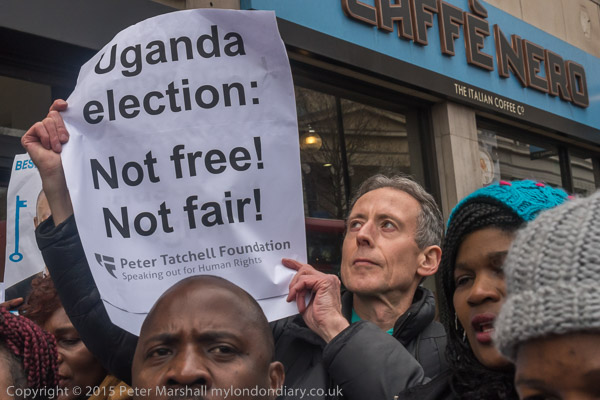
The protest was organised by the Uganda Diaspora P10 UK, and FDC UK Chapter and was supported by the African LGBTI Out & Proud Diamond Group and Peter Tatchell Foundation.

Yoweri Museveni has been in power since 1986, but international observers widely reported widespread fraud and irregularities, with many voters being unable to vote and the declared results from many polling stations being very different from the actual votes. Opposition candidates were repeatedly arrested and voters were intimidated.

Peter Tatchell

I arrived almost at the end of an hour-long protest in front of the High Commission and then photographed them marching down Whitehall behind a Nigerian flag towards Downing St where I left them.

Many more pictures at Ugandans protest rigged Presidential Election.


Unite against Benefit Sanctions – DWP, Caxton House

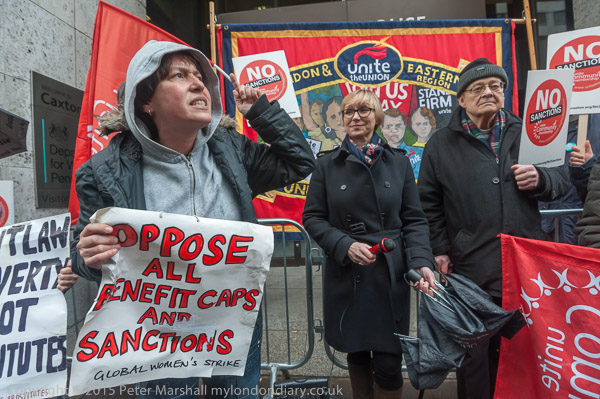
Didi Rossi from Global Women’s Strike accuses the Tories of deliberately targeting and killing the poor

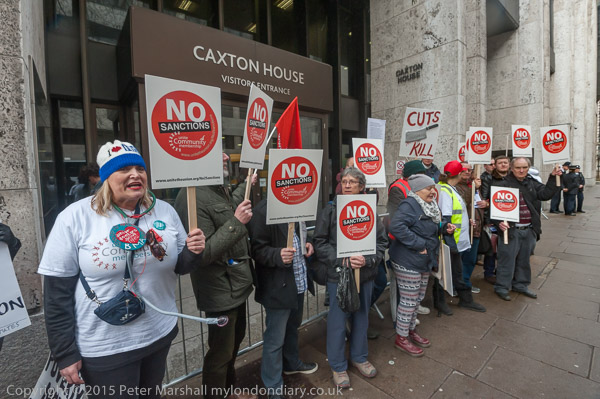
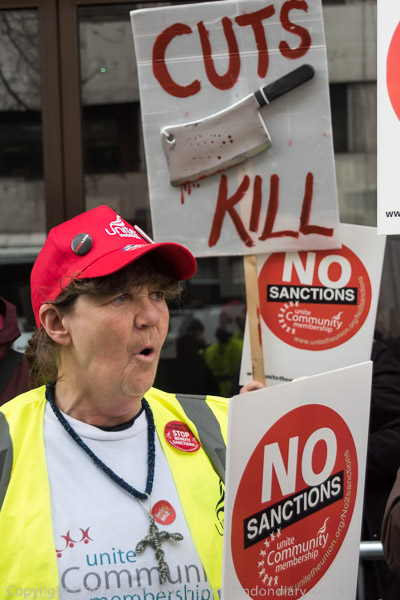
Unite Community members had come to hold a protest outside the DWP headquarters in Westminster as a part of their National Day of Action against Benefit Sanctions. There were other protests at job centres in over 70 towns and cities.

Benefit sanctions – periods where claimants lose their benefits – are often imposed for trivial reasons and those beyond the power of claimants. They may be sanctioned for arriving late after buses were cancelled or for not turning up when letters calling them to an appointment have not arrived in time or have been lost in the post.

Winvisble and Global Womens’s Strike members were there in support

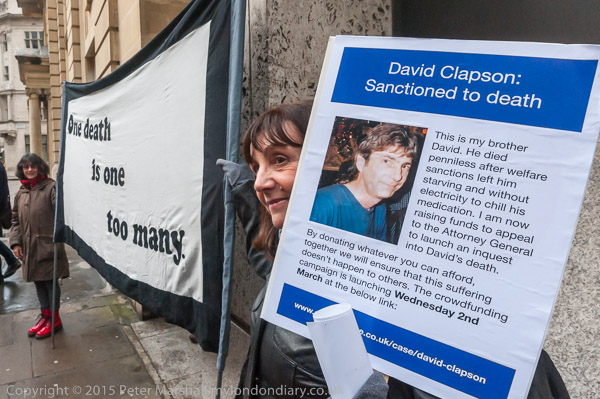
As I commented, “Despite government denials, at least 95 deaths are known to have been as a result of sanctions which leave people destitute and starving. Some, like David Clapson, have actually starved to death while others have been so desperate that they have killed themselves. Without the efforts of the many food banks the figure would be much higher.

There was anger when a Unite Community speaker said that the DWP’s policies had failed. Didi Rossi of Global Women’s Strike retorted that the DWP had been extremely successful in their attacks on the unemployed and disabled, and that the deaths were the clear intention behind the policies of Iain Duncan Smith.

Rev Paul Nicholson

Staff working for the DWP were being given incentives and targets for giving sanctions. And the faulty tests administered for “fitness for work” and being stripped of benefits were leading to many deaths. Over 80 people a month were dying shortly after this, most while appealing against the decision. More than 2,500 sick and disabled benefit claimants are known to have died after being found ‘fit for work’ in just 2 years.

More at Unite against Benefit Sanctions.


David Clapson – Sanctioned to Death – DWP, Caxton House

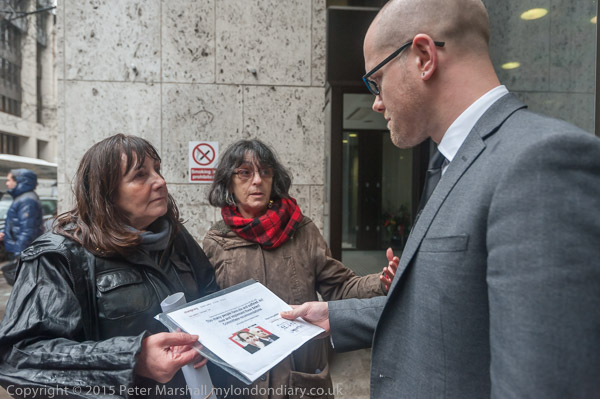
One of those taking part in the protest at the DWP was Gill Thompson, the sister of David Clapson, a diabetic ex-soldier who died starving and destitute because he was penalised by the Job Centre for missing a meeting.

She had come to hand in a petition to the DWP over his death and this was handed to a DWP representative together with another petition with over 200,000 signatures between them calling for an inquest into his death and an end to unfair benefit sanctions that leave claimants without support.

David Clapson – Sanctioned to Death


FlickrFacebookMy London DiaryHull PhotosLea ValleyParis
London’s Industrial HeritageLondon Photos

All photographs on this page are copyright © Peter Marshall.
Contact me to buy prints or licence to reproduce.


Bow Back Rivers, Plaistow & Upton Park – 2007

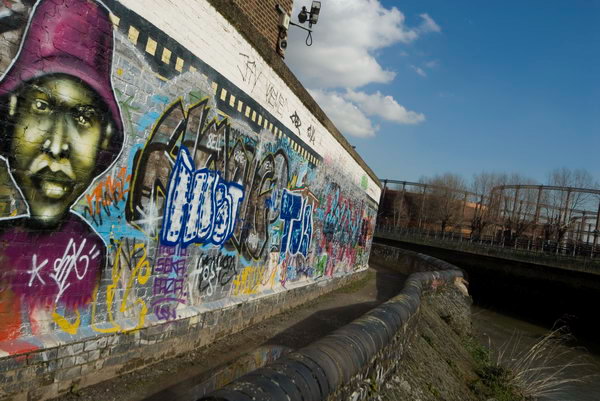
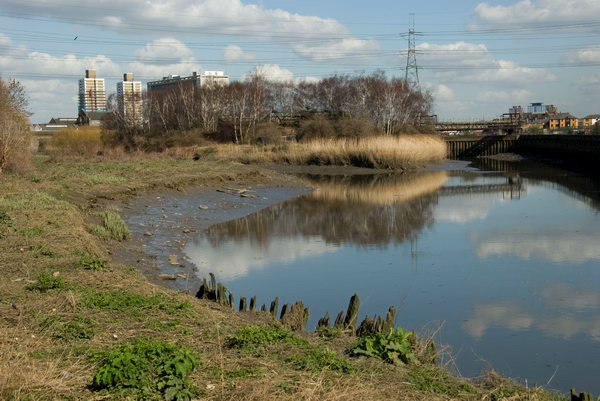
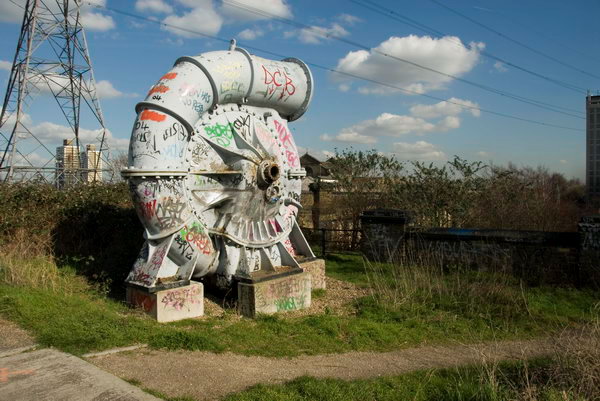
Bow Back Rivers, Plaistow & Upton Park: March 8th is of course International Women’s Day, and most years I’ve found events related to that to photograph, though often the main events take place not on the day itself but on the closest Saturday. In 2007 March 8th was a Thursday and I did something completely different, taking a stroll around the various rivers and channels to the south and west of the Olympic site.

Bow Back Rivers, Plaistow & Upton Park
Canning Rd from the Greenway

Many of the paths and roads I walked were soon to be closed for various works connected with the Olympics, including the building of a new lock. This was much heralded as being a part of making London 2012 green, with boasts that it would lead to a huge reduction in lorries taking spoil from the site out and bringing materials in to the area by barge. In fact I think it was only ever used for a few photo opportunities and the piece I wrote for My London Diary perhaps suggested the real driver behind its construction.

Bow Back Rivers, Plaistow & Upton Park
Channelsea River (now just a tidal creek)

Another unnecessary aspect of the Olympic development was putting the power lines between Hackney and East Ham underground, perhaps also more driven by the desire by developers of the area, now with its many new tall blocks flats more attractive and profitable.

Bow Back Rivers, Plaistow & Upton Park
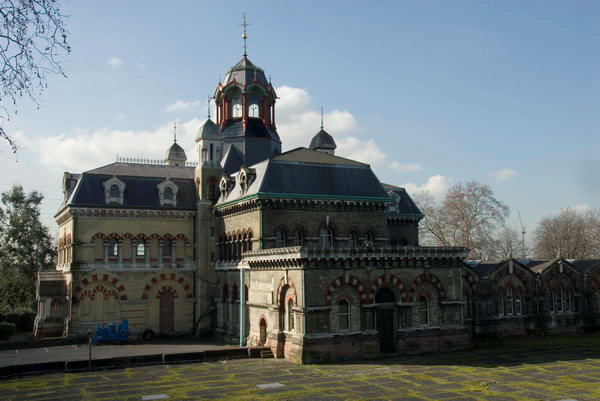
Abbey Mills pumping station (Charles Driver, 1865-8), the “cathedral of sewage”, viewed from the Greenway

There was also a very half-hearted attempt to use the rivers and navigation as a means of access to the games, with a river-boat service. It was said to be a part of opening up the area as a major leisure attraction, but didn’t ever work and was soon abandoned.
Bow Back Rivers, Plaistow & Upton Park
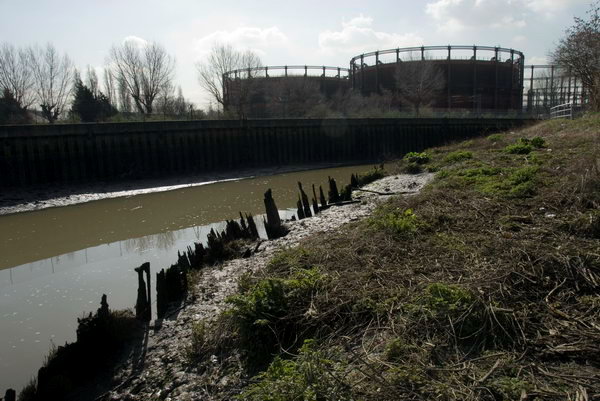
Longwall footpath, looking towards the gasholders over the Channelsea RIver.

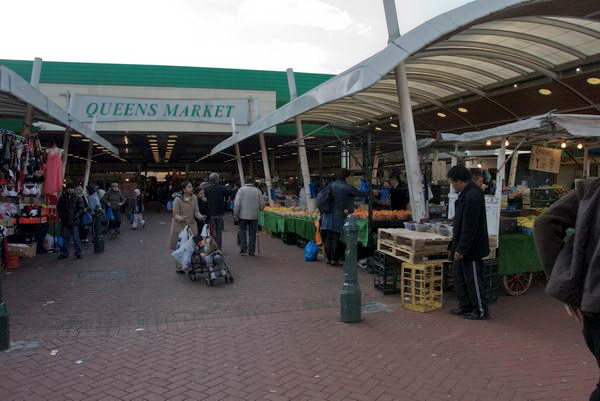
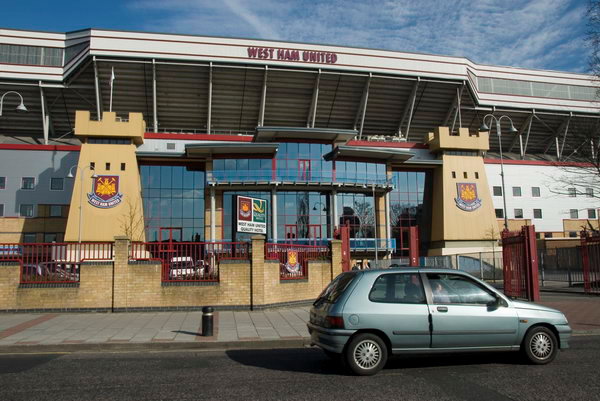
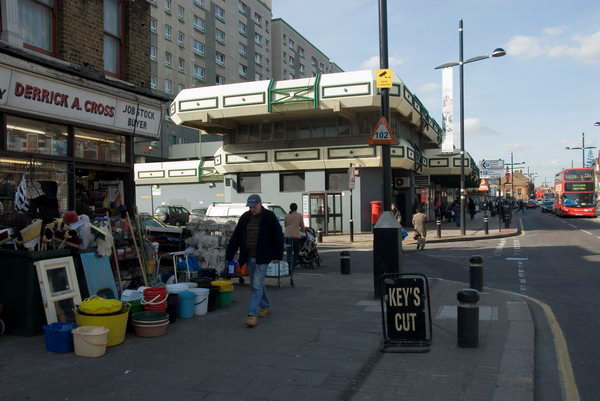
After walking around the area I walked east along the Greenway – the elevated walkway over the Northern Outfall Sewer – to Upton Park, also affected by the Olympics, with West Ham abandoning their Boleyn ground and moving to the Olympic Stadium after the games. Close to their ground is Queen’s Market, which Newham Council had being trying to demolish and redevelop since 2004. It is still currently under threat as it doesn’t fit with their dreams of gentrification but remains as an important community resource.

Channelsea Rvier and the island, with Abbey Creek to left

My post on My London Diary contains a lot of background but doesn’t really describe the walk I made – the pictures tell that story, along with their captions. It is rather more fanciful than most of my posts. As usual I’ve tidied it up slightly, changing to normal capitalisation and making a few minor amendments.
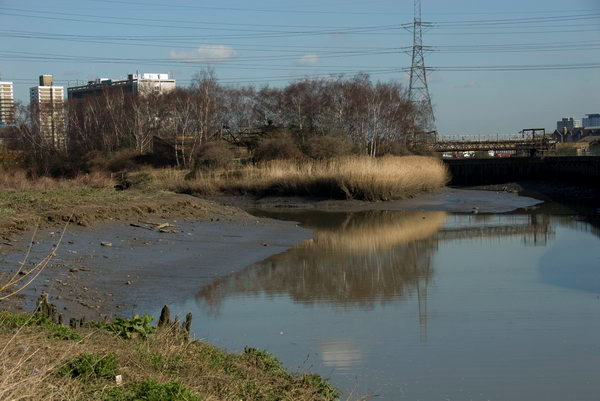
Bow Back Rivers – Prescott Lock Site

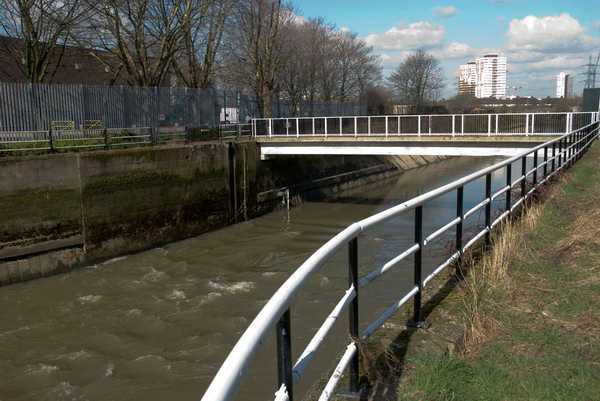
The tide flowing out fast from the Prescott Channel, officially opened in 1935

If you are a water molecule starting in the River Lea at Leagrave on the outskirts of Luton, your route to its mouth on the Thames can be rather convoluted – even assuming you don’t get diverted on the way for drinking by Londoners. Below Hertford the river runs in concert with the Lee Navigation, part river, part canal, and examining a map you would soon be confused.

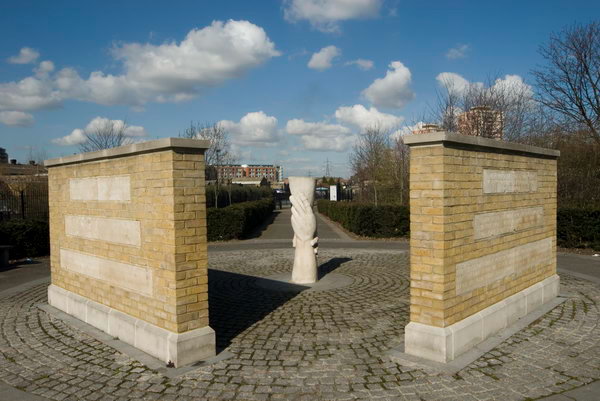
A memorial on Three Mills Green marked the heroism of distillery workers who died trying to rescue a workmate in 1901. The sculpture ‘Helping Hands’ by Alec Peevers replaced an earlier large cross

Since work by the Lee Conservancy Board and the West Ham Corporation started in 1931 and officially opened in 1935, the major flow of water in the southern area has been along the Flood Relief Channel (built in the 1970s following the 1947 floods) and the River Lea to Hackney Wick, and then along the Waterworks River, into the Three Mills Wall River and down the newly built Prescott Channel onward to Bow Creek and finally the Thames.

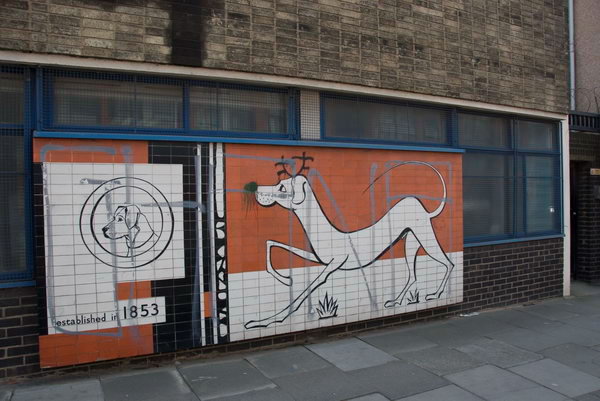
James Dane established Dane & Co. making news, letterpress and lithographic inks in Sugar House Lane in 1853. Recently much production had moved to Stalybridge.

All of these streams have been fully tidal since the Prescott Sluice was removed in the late 1950s (at the same time as most of the Channelsea River was culverted and filled in). Also tidal are the vestigial sections of the Channelsea River and Abbey Creek to the south of Stratford. So in your molecular progress, you might well spend some days being flushed north by tidal inflow from the Thames and then flowing south as the tide falls.

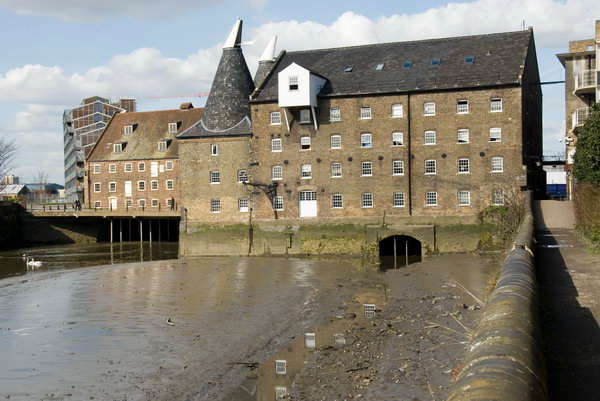
Three mills complex from the south

Flushed with you, at least on around 50 stormy days a year, might be some considerable sewage overflow from Abbey Mills sewage pumping station into Abbey Creek, lending its sweet smell to the banks of these streams in the Olympic area. Largely to avoid the delicate athletes (and spectators) being thus nasally assaulted a new lock and sluice is to be built on the Prescott Channel.

It remains to be seen whether the promises that the back rivers will actually carry the suggested 170,000 lorry loads in and out of the Olympic site will be met [of course it wasn’t], but it would certainly seem to be a useful development for the area longer term, opening up more of these waterways for leisure and possible commercial use. Currently there is a navigable loop on the Bow Back Rivers from the Lea Navigation, using St Thomas’s Creek, City Mill River and the Old River Lea, although this may well be restricted for the Olympics. [It was, for many years.]

The Long Wall path took me back to where I had begun taking pictures on the Greenway

The footpaths crossing the Prescott Channel bridge will be closed mid-March [2007] for around 18 months to allow the lock to be rebuilt, so I thought it a good time to take some pictures before the work begins.

Also in some of the pictures are a number of the sites which have been the subject of compulsory purchase to put the power lines between Hackney and East Ham underground for the Olympics. There are two lines, one going just north of the Greenway and curving down south through the Channelsea River.

More pictures beginning on the March 2007 My London Diary page

Plaistow and Upton Park

In October 2006 I photographed a march asking Newham Council to keep Queen’s Market in Upton Park. Although it is an exceedingly ugly ensemble, not helped by poor maintainence and an utterly depressing choice of colours, it is still a great local resource. The market is perhaps the most ethically diverse in London, and many rely on it as a great source of cheap fresh foods and other goods. As well as the market stalls there are many small shops around the side of the market.
[There was] then an online petition at the government web site urging the prime minister to “to ensure that strategic street markets such as queen’s market, upton park are given proper protection against the combined threat of negligent local authorities and predatory property developers. as part of this we seek an open and transparent consultation process.”

We go down to our local market a couple of times most weeks. The fruit and veg is much cheaper than in the supermarket, and it is fresh and not wrapped in 7 layers of plastic. We’d hate to see it go, and can see why the people who shop at don’t want their market replaced with yet another supermarket, and less small shops and stalls.

But Queen’s Market could do with doing up, perhaps replacing the roof, new stalls, a rethinking of some of the central space in the development which is a kind of wasteland where guys sit with cans to make it a more pleasant and family-friendly space. It could be a real centre for Upton Park, perhaps with more shops, cafés with outdoor seating and some kind of performance area and perhaps a playground. I’d get rid of the pub too, or at least give it a complete makeover.
March 2007 My London Diary page


FlickrFacebookMy London DiaryHull PhotosLea ValleyParis
London’s Industrial HeritageLondon Photos

All photographs on this page are copyright © Peter Marshall.
Contact me to buy prints or licence to reproduce.