St George’s Day 2005

St George’s Day – I’m not sure if I will be doing anything to celebrate St George’s Day today. Most of the celebrations around London seemed to be taking place on Sunday. I was planning to attend an event fairly close to where I live, but I started the day with one of my more impressive nose bleeds and decided to stay home rather than risk dripping blood over the streets.
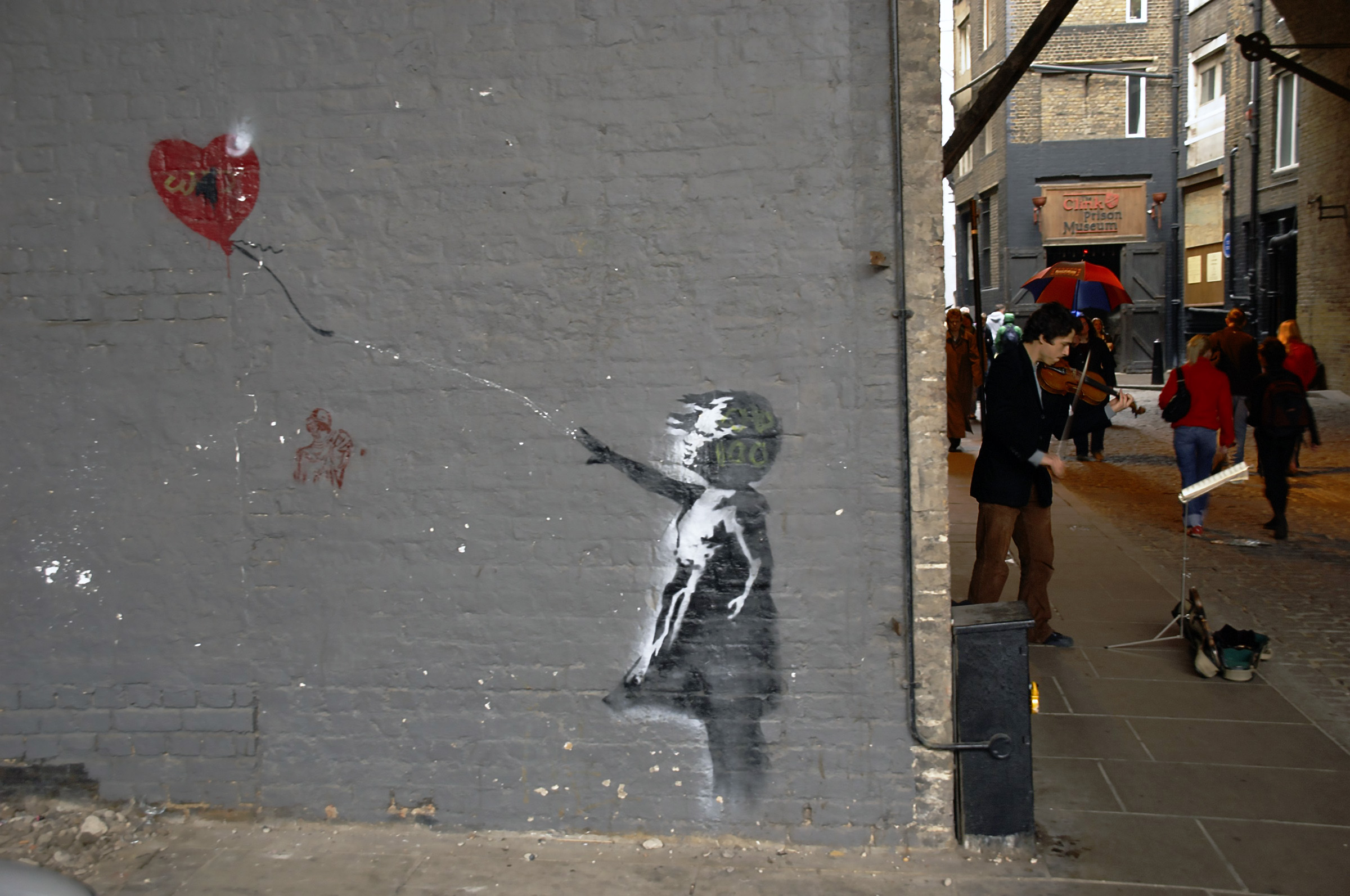
Clink St, Southwark

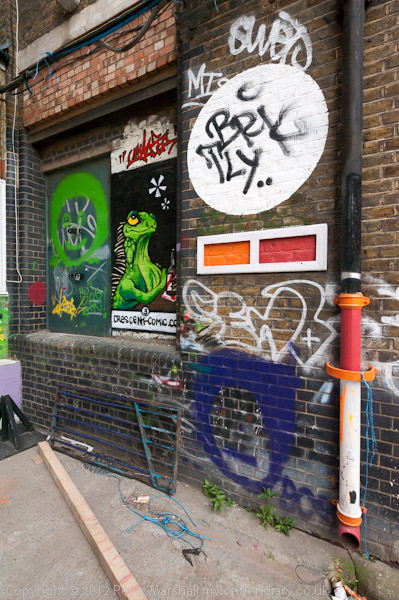
So instead of pictures from a couple of days ago, today I’m posting some from 23rd April 2005, 19 years ago. I began that day with a visit to Tate Modern and a walk along to Clink Street where I photographed some stencilled graffiti -including one by Banksy – before crossing the river and heading to the celebrations taking place in Covent Garden.
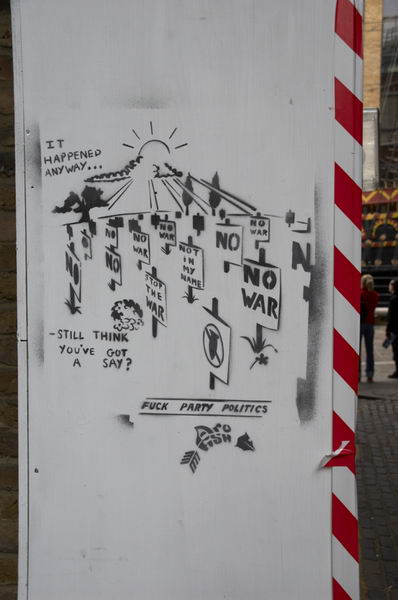
St George's Day
‘IT HAPPENED ANYWAY’ – Millions on the street failed to stop the Iraq invasion

With the pictures is the rather tongue in cheek text that accompanied them in 2005 on My London Diary, edited to respect normal use of capital letters and any spelling errors. There are a few more pictures on My London Diary.
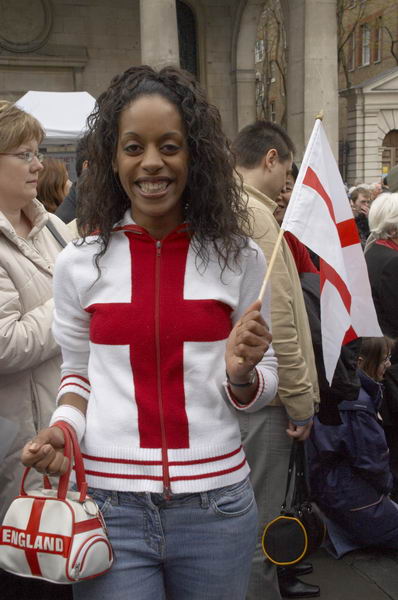
St George's Day

St George keeps busy as a patron saint of Canada, Catalonia, Georgia, Germany, Greece, Lithuania, Malta, Palestine and Portugal, as well as a number of cities including Moscow and Venice, a whole raft of trades including farmers and soldiers, as well as herpes and syphilis. It’s perhaps surprising he still has time for England, although until recently you would hardly have noticed it in any case.
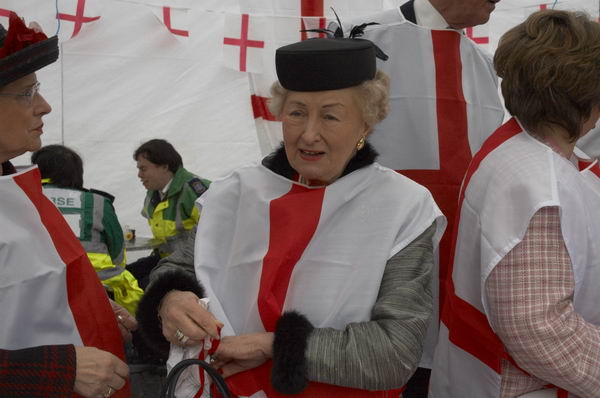
St George's Day

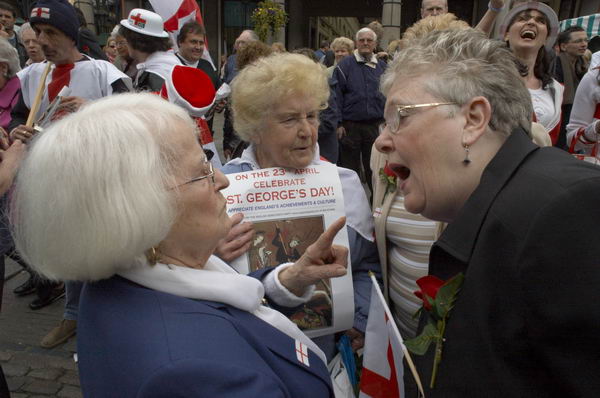
St George Until recently was left to the nutters, football supporters and racists (three highly overlapping groups.) Those elites who run the country generally found patriotic display about Englishness rather beneath them – only our Celtic fringe and ethnic groups have a ‘culture’, the rest of us are too modern and intelligent for such primitivism.
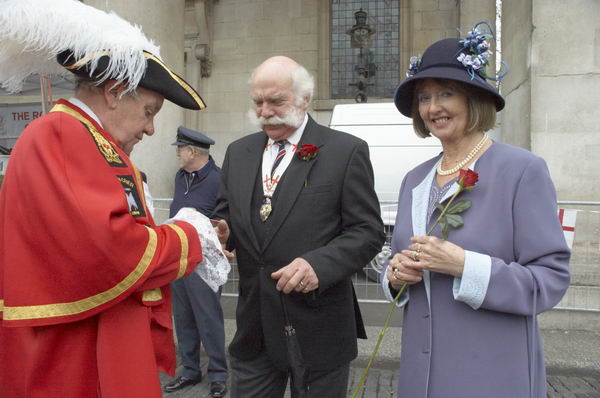
St George's Day
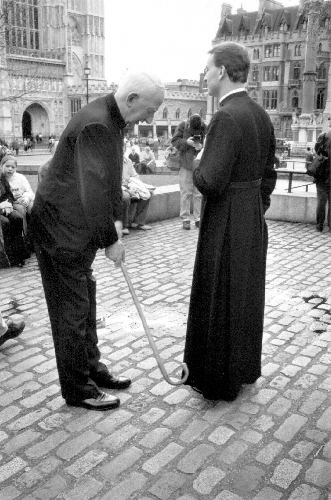
London Town Crier Peter Moore talks to the President of the Royal Society of St George

Its the kind of thinking that led the Arts Council to refuse to support Morris Dancing, while pumping thousands into steel drums (as they should – but there is nothing wrong with supporting our English heritage as well.)
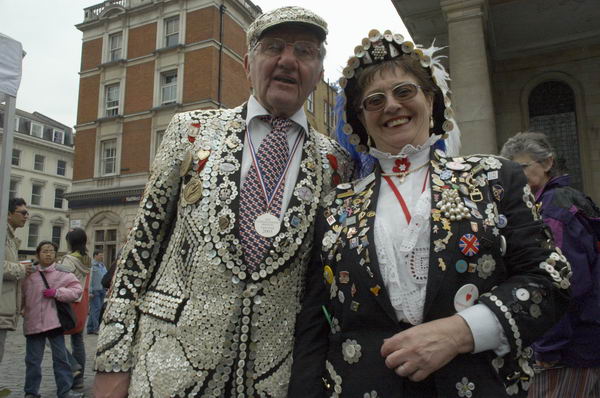
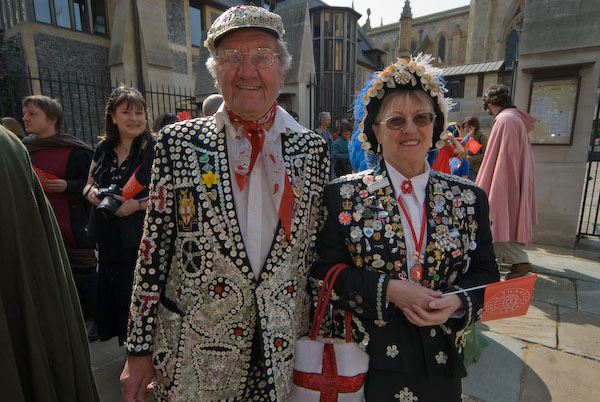
Pearly King and Queen

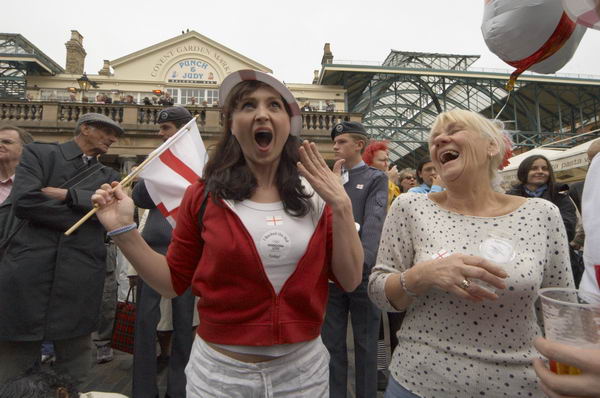
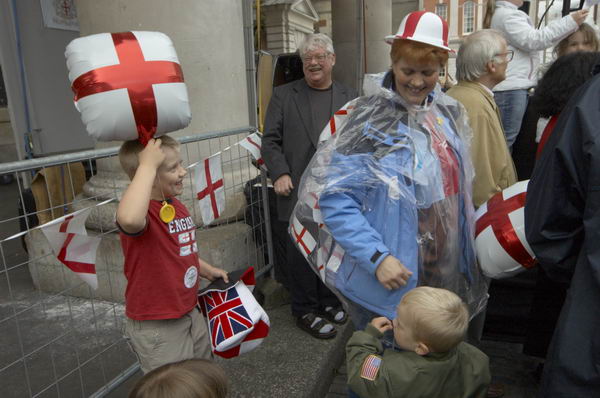
This year, the Royal Society Of St George (posh patriotic nutters with the Queen as their patron, started in our American colony around the 1770s) were organising celebrations in Covent Garden, and after a morning at Tate Modern I went to see.
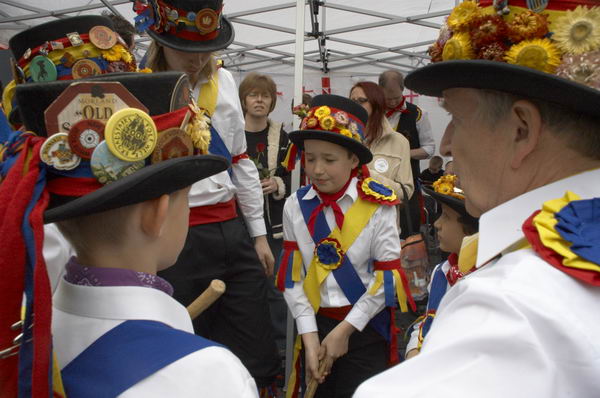
Although I think Morris ought to be supported, I’m not a great fan of the dancers, though its OK outside the pub on a sunny day for half an hour a couple of times a year so long as I don’t have to take part.
The Moulton Morris, performing as a part of the event were more impressive than most, both for their costume and the dancing, and also for the half a dozen young people taking part. Somehow there seemed to be less beards and sandals than most sides.
More pictures on My London Diary

FlickrFacebookMy London DiaryHull PhotosLea ValleyParis
London’s Industrial HeritageLondon Photos

All photographs on this page are copyright © Peter Marshall.
Contact me to buy prints or licence to reproduce.
Shakespeare and East Ham Vaisakhi – 2007

Shakespeare and East Ham Vaisakhi – for me Sunday 22nd April 2007 was very much a day of two halves, with a morning spent at the Shakespeare’s Birthday celebrations around the Globe Theatre in Southwark and the afternoon with Sikhs celebrating in East Ham.


Shakespeare’s Birthday – Globe Theatre, Southwark

Shakespeare and East Ham Vaisakhi

Shakespeare was born in April 1564, but the exact date is not known, though he was baptised on April 26th. Conventionally his birthday is celebrated on St George’s Day, April 23, so although this event was a day earlier it was just as likely to be his actual birthday.

Shakespeare and East Ham Vaisakhi

Unusually I didn’t write anything on the April 2007 page of My London Diary about either of the two events I photographed on this Sunday, other than the links to to pages of pictures, but there are some captions with the pictures that give the story of the day.

Shakespeare and East Ham Vaisakhi

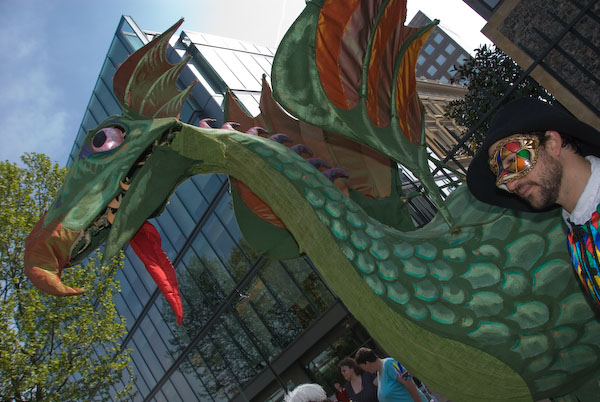
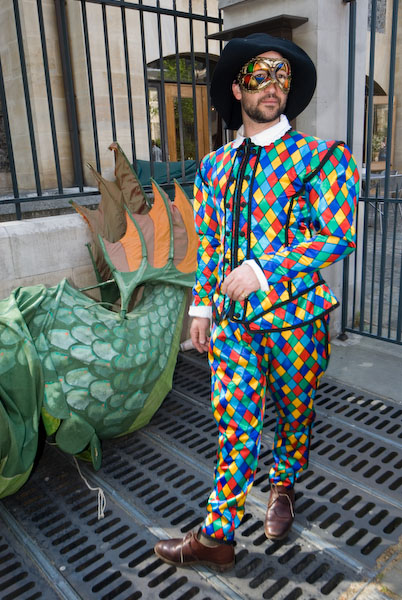
People met on Montague Close at the north entrance to Southwark Cathedral for the start of the carnival procession. Among them were the Pearly King of Bow Bells & Blackfriars and the Pearly Queen of the Old Kent Road, as well as a very splendid large dragon, who was accompanied by a man in a harlequin costume and mask of diamonds of blues, greens, yellows and reds.

Shakespeare and East Ham Vaisakhi

Fortunately for the dragon I think St George was saving his appearance for the following day, although later there was a man carrying his flag, and perhaps the man himself arrived after I had to rush away at noon.

Shakespeare and East Ham Vaisakhi

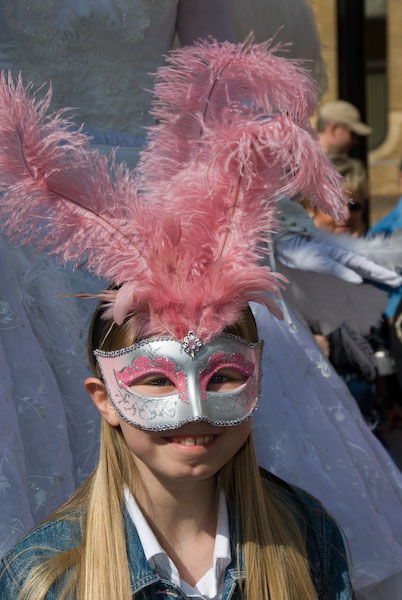
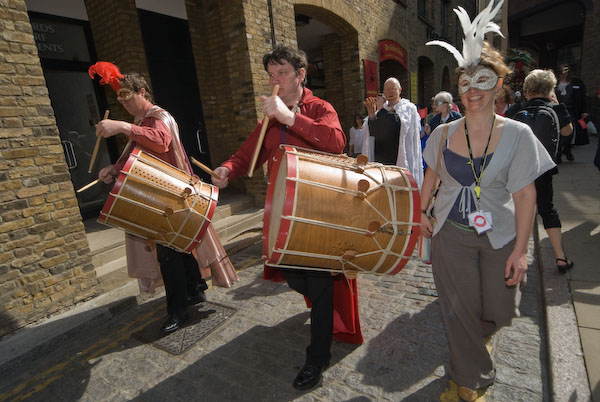
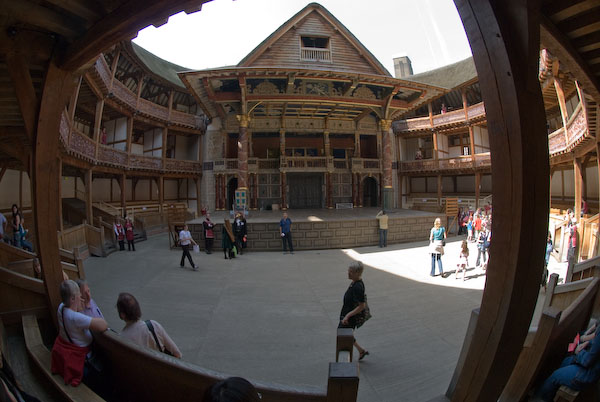
There were musicians with large drums and small whistles and others in some kind of medieval dress as well as a large posse of masked children as we made our way west past Pickfords Wharf and along Clink Street to the riverside and Bankside in front of the replica Globe theatre were we were welcomed by Artistic Director Dominic Dromgoole, who invited us all – including the dragon – into the theatre.

Given the Globe is a wooden structure which would burn rather well this was perhaps foolhardy, but the dragon did seem rather short of fiery breath and on his or her best behaviour and posed for photographs rather tamely and demurely on the stage with the children and others. No children were eaten or maidens ravaged at least while I was there.

I was sorry to leave, but there’s a time for all things, and my time on Bankside ran out fast, and the journey to the Gurdwara in East Ham from London Bridge to West Ham and then East Ham and the walk to Rosebery Avenue took me around an hour.

More pictures on My London Diary.


Vaisakhi – East Ham – Gurdwara Dasmesh Darbar

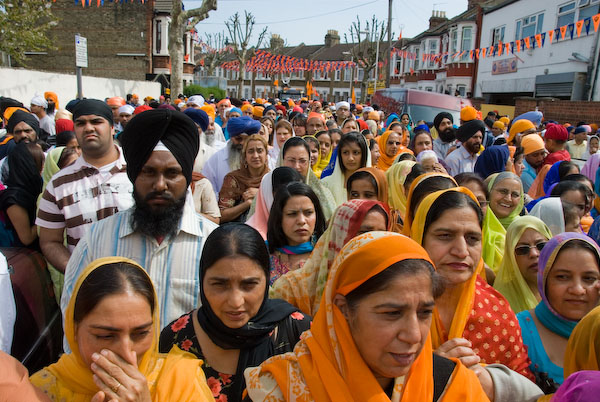
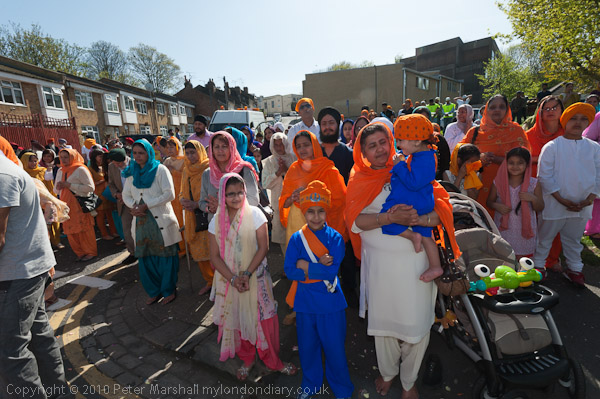
The street was densely crowded as I got close to the Gurdwara, but people were very welcoming and let me through, though I stopped to take a few pictures of them.

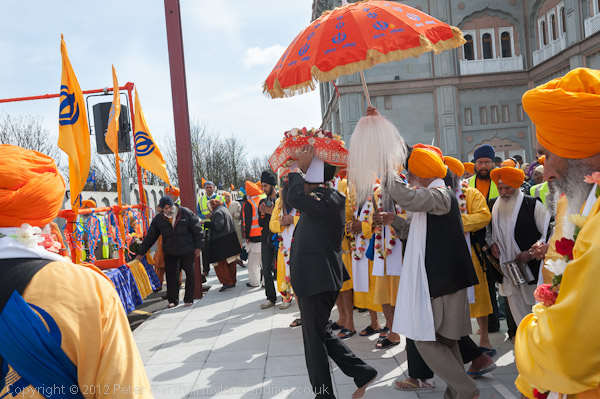
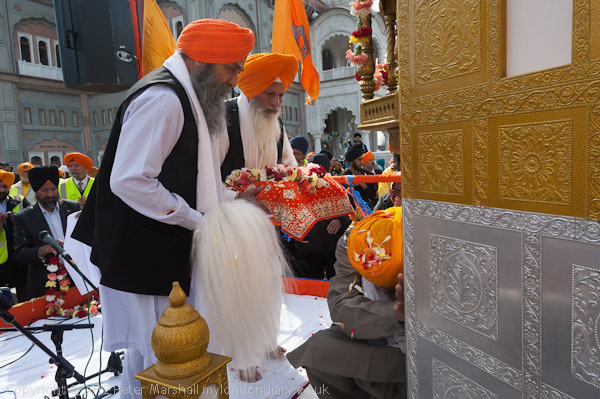
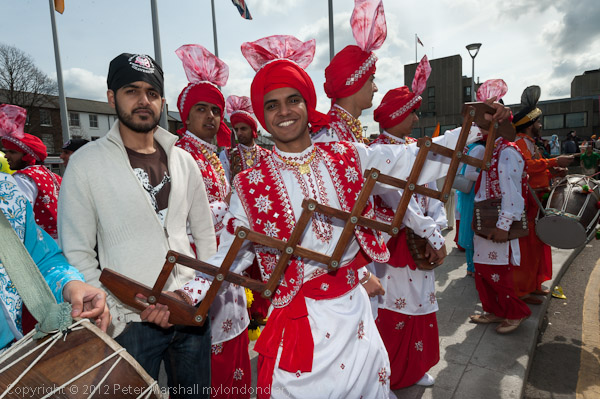
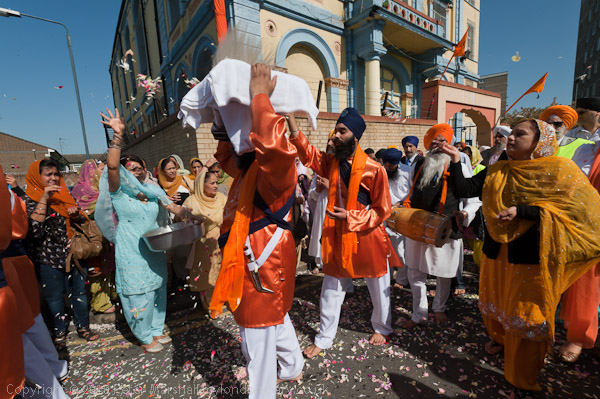
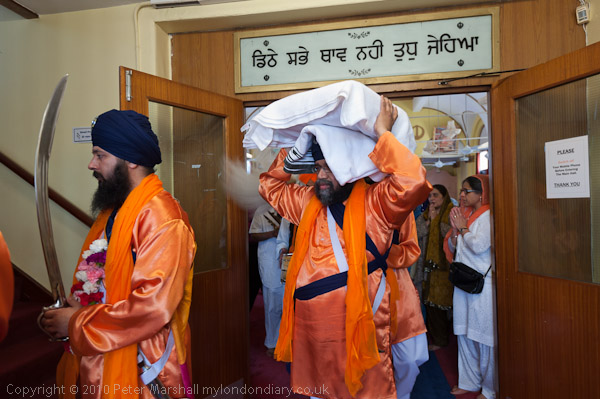
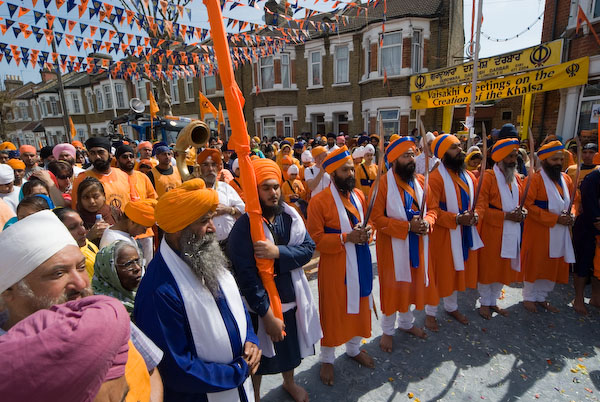
As I arrived the organisers were giving people at the front of the crowd handfuls of flower petals which were thrown as the Guru Granth Sahib – the sacred Sikh scriptures and eternal Guru – was carried on cushions on its bearers head, sheltered by a saffron and blue umbrella, to be placed on a float.

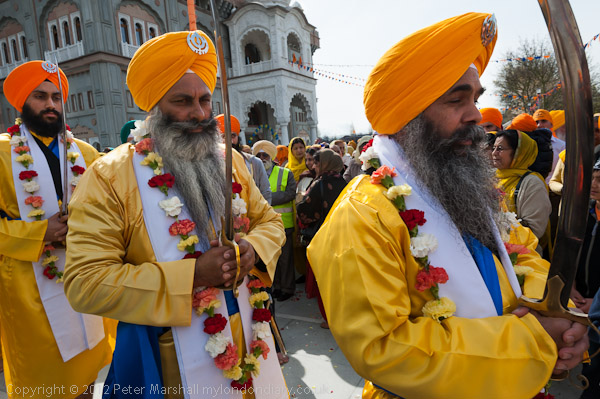
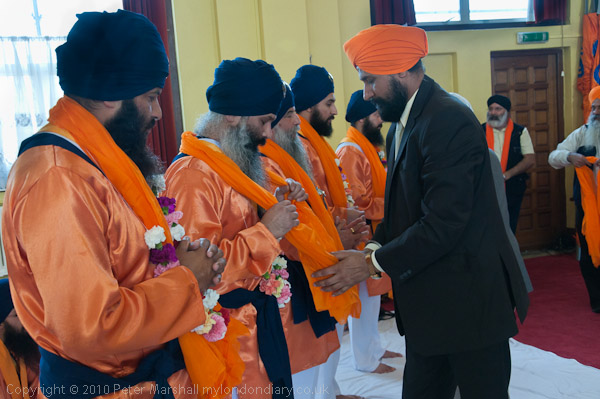
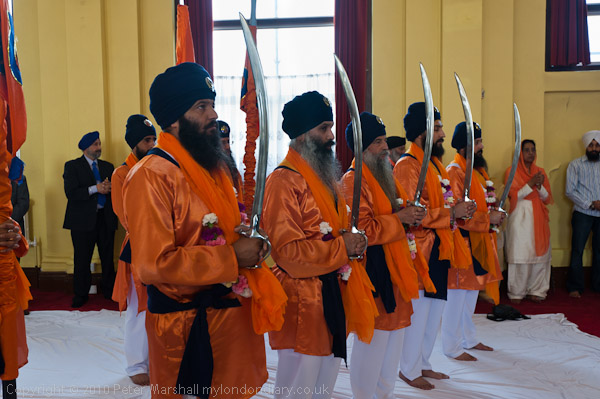
The came the Khalsa, carrying Sikh standards and with the five in saffron robes holding their swords.

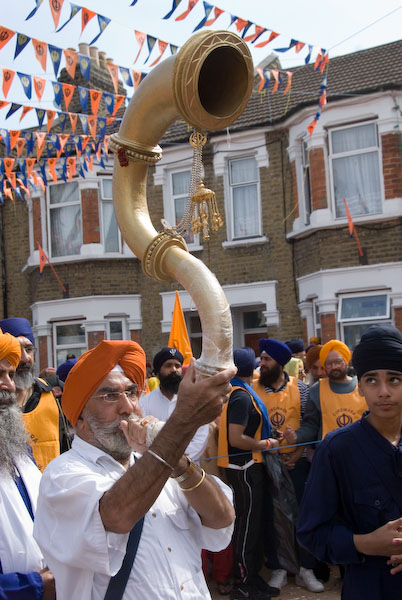
There were prayers and the five had flower garlands placed around their necks and loud blasts from a splendid curved metal horn, a Narsinga announced the start of the procession, with the congregation joining behind the float carrying the Guru Granth Sahib.

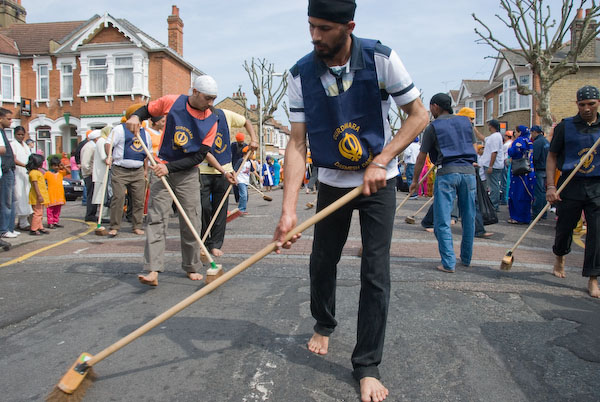
The Khalsa walk barefoot with holding their swords upright and looking ahead rather than at the ground and a team of sweepers, also barefoot, sweep the roadway in front of them.

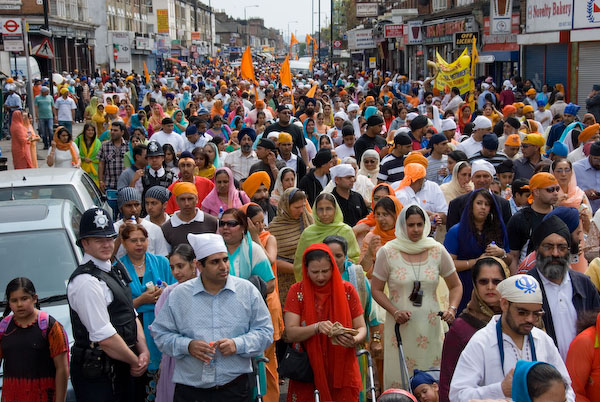
The procession moved onto the main road, High Street North, which was soon packed as far as I could see in both directions. I waited for the end of the procession to pass but did not follow it on the long procession around the area which takes several hours.

There are many more pictures on My London Diary


FlickrFacebookMy London DiaryHull PhotosLea ValleyParis
London’s Industrial HeritageLondon Photos

All photographs on this page are copyright © Peter Marshall.
Contact me to buy prints or licence to reproduce.

Walking the Olympic Area – 2012

Walking the Olympic Area – Unless my memory has failed me (which it often does these days) the two day course I ran on Saturday 21st April 2012 and Sunday 22nd was my last formal teaching session. I think I have turned down a few requests to run workshops since as they are rather tiring.

Walking the Olympic Area - 2012

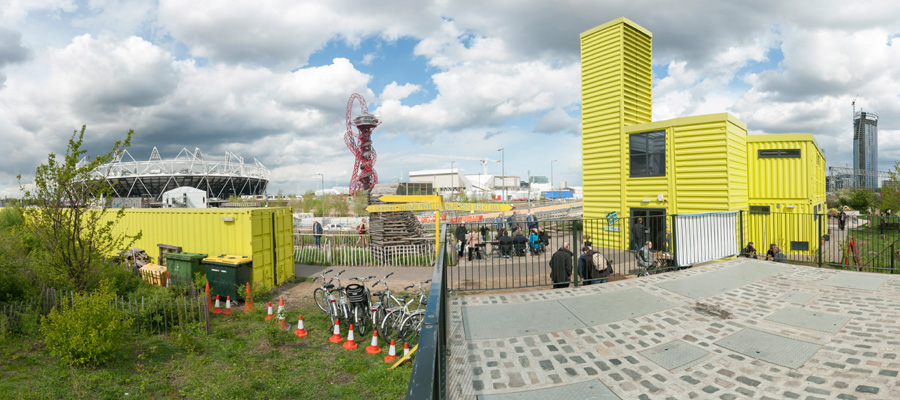
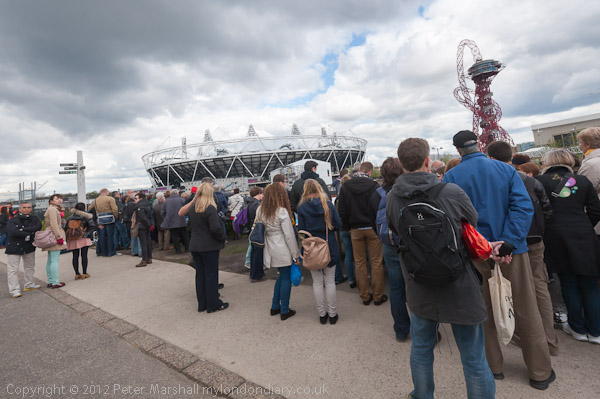
I can’t remember exactly how the course came about, but the venue was the View Tube, now run by Poplar HARCA for the local community, which had opened on the Greenway overlooking the London Olympic site in 2010, as a cafe and education centre. A set of bright yellow boxes it then had an upper floor viewing area overlooking the building site.

Walking the Olympic Area - 2012

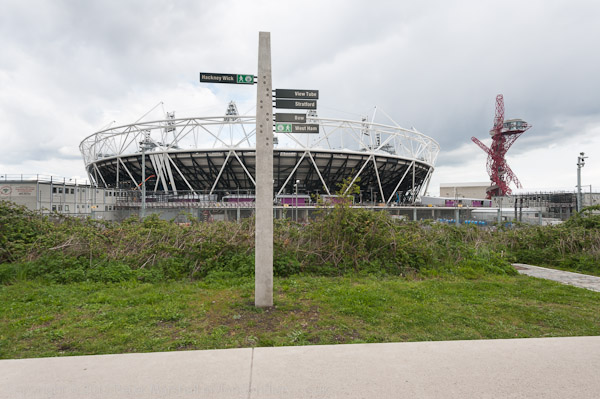
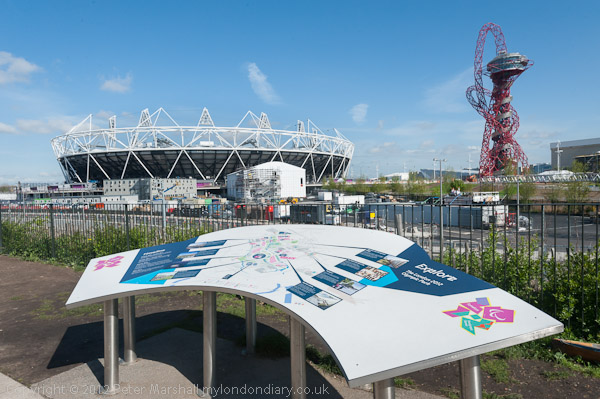
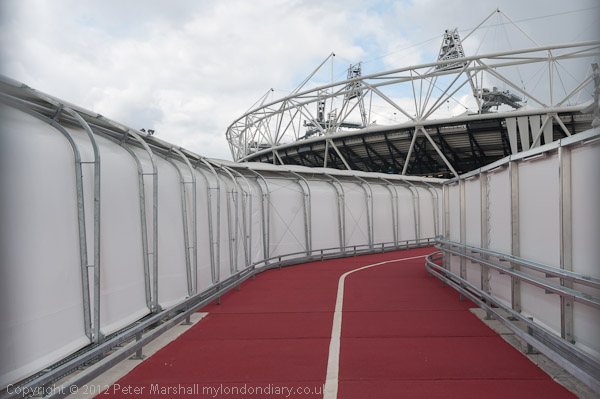
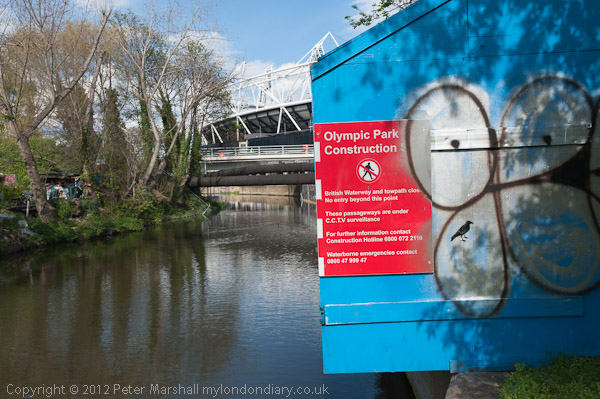
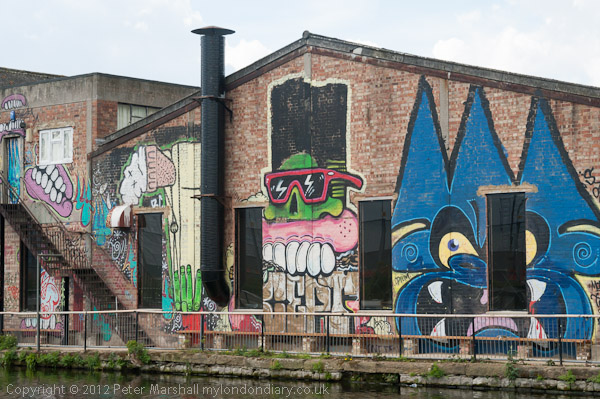
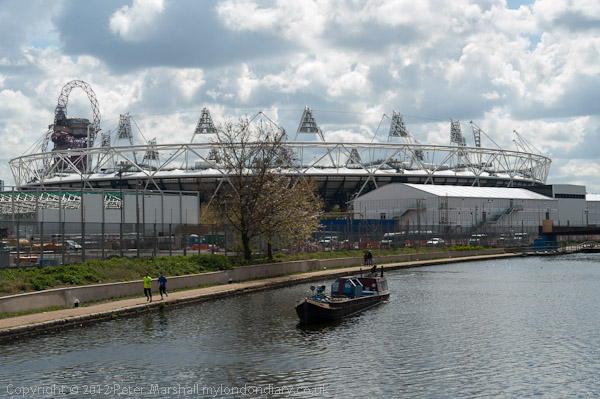
I’d been photographing the area on and off since 1982 – and you can see many of the pictures I took on a web site, The Lea Valley. I think the course will have begun with me showing some of those pictures and talking about them before taking the participants out for some fairly short walks around Stratford and Stratford Marsh, or at least those areas still open to the public. The pictures here are all from the two days of the course.

Walking the Olympic Area - 2012

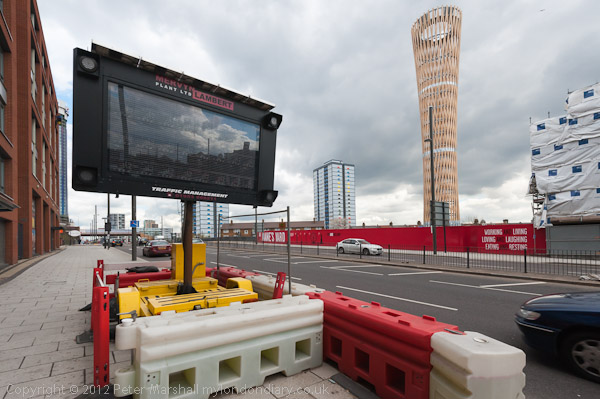
Travelling across London to the area I had to give myself plenty of time in case there were any travel delays, so I arrived well before the course was due to start on both days and was able to walk around and make a few pictures then.

Walking the Olympic Area - 2012

While leading the students around the area I was mainly involved with facilitating them making images, but did manage to make a few for myself, and I think I also stayed on a little after the day finished for some more.

On the Saturday we went along the southern edge of the site and into Stratford Westfield and up to the John Lewis viewing area before returning for a lunch break for the students when I made some panoramas close to the View Tube while eating my sandwiches. Parts of the area were quite crowded with others who had come to view the site. Fortunately there were considerably fewer on the workshop than in this picture.

After lunch I took everyone along the Greenway, into Fish Island, across Old Ford lock, down the towpath to Bow Flyover and then to Pudding Mill Lane station.

We met again on Sunday morning at Pudding Mill Lane station. Again I’d arrived early and had already made some pictures before the walk began up the Greenway to Hackney Wick, through Fish Island to White Posts Lane before returning over Old Ford Lock to the View Tube.

I had requested those taking part to work with digital images – and I think almost all had done so. Lunchtime gave them a chance to review the pictures they had made and we then were able to see and discuss the work, though unfortunately we could only see the pictures rather dimly as the teaching area, although it had a nice large touch screen, had no blinds on its windows.

You can see more of the pictures I made on the two days on My London Diary, including some of the panoramic images. All my pictures were taken on a Nikon D700 camera, I think all with the laser-sharp Nikon 16-35 f4.0 lens. The panoramas were made with the same lens, taking a series of 5-10 exposures and digitally stitching these together using PTGui software, probably the most powerful and flexible photo stitching application available. Photoshop now does a decent job with simple panoramas but has fewer options.

Panoramic images don’t display well on this blog, so apart from the one at the top of the post showing the View Tube you will need to go to My London Diary to see more. Most of those I took showing the actual Olympic site on these two days are panoramic.
Olympic Course Day 1
Olympic Course Day 2


FlickrFacebookMy London DiaryHull PhotosLea ValleyParis
London’s Industrial HeritageLondon Photos

All photographs on this page are copyright © Peter Marshall.
Contact me to buy prints or licence to reproduce.

25 Years Ago – April 1999

25 Years Ago – April 1999. When I began posting on my web site My London Diary I decided that the posts would begin from the start of 1999, and there are still image files I created in January of that year on line, though I think they probably only went live on the web a few months later.

25 Years Ago - April 1999
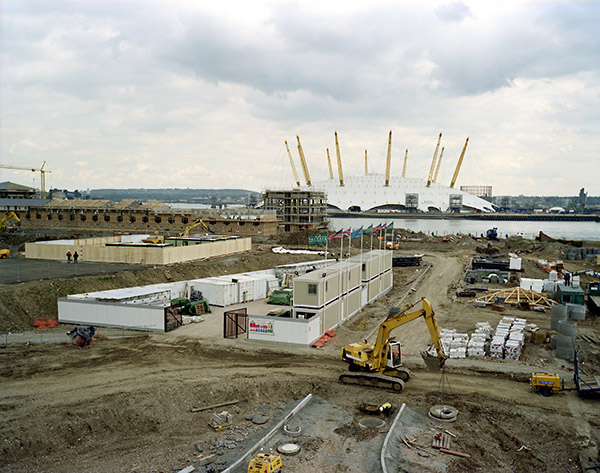
The Millennium Dome seen across the River Thames from Blackwall DLR station, one of a series of medium format urban landscape images.

In those early days of the site there was very little writing on it (and relatively few pictures) with most pictures just posted with minimal captions if any.

25 Years Ago - April 1999
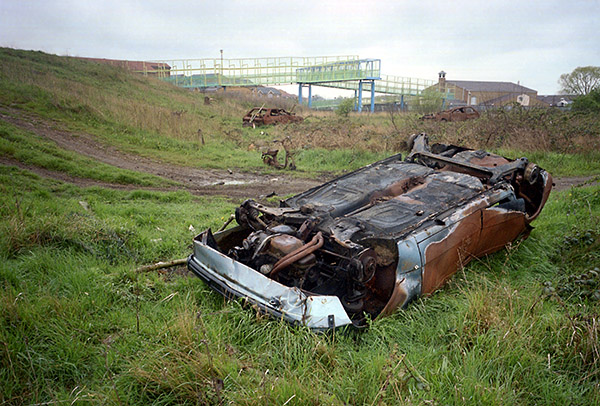
Burnt out cars at Feltham on the edge of London, stolen and wrecked on waste land by youths.

A single text on the introductory page for the year 1999 explained my rather diffuse intentions for the site as follows (I’ve updated the layout and capitalisation.)

What is My London Diary? A record of my day to day wanderings in and around London, camera in hand and some of my comments which may be related to these – or not

Things I’ve found and perhaps things people tell me. If I really knew what this site was I wouldn’t bother to write it. It’s London, it’s part of my life, but mainly pictures, arranged day by day, ordered by month and year.

My London Diary 1999

25 Years Ago - April 1999
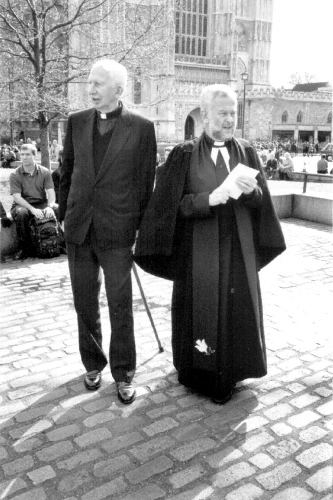
Cardinal Cormac Murphy-O’Connor, Archbishop of Westminster (left) takes part with Anglican and Methodist clergy in the annual Good Friday Procession of Witness on Victoria St, Westminster.
25 Years Ago - April 1999

In the years following My London Diary expanded considerably, gradually adding more text about the events I was covering but retaining the same basic structure. Had I begun it a few years later it would have used a blogging platform – such as WordPress on which this blog runs, but in 1999 blogging was still in its infancy and My London Diary was handcoded html – with help from Dreamweaver and more recently BlueGriffon, now sadly no longer.

25 Years Ago - April 1999
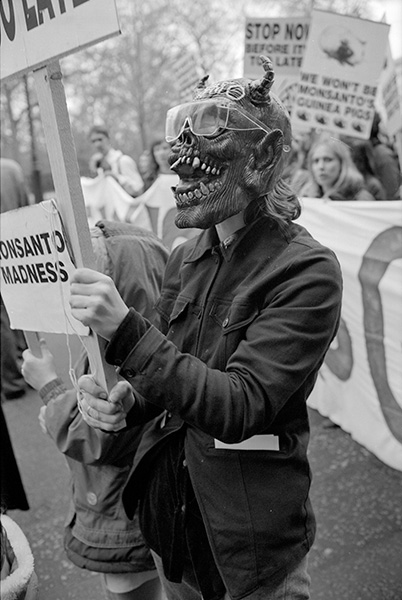
Man holding a placard at a protest against Monsanto’s genetically modified crops.

My London Diary continued until Covid brought much of my new photography to a standstill and stuttered briefly back to life after we came out of purdah. But by then my priorities had changed, and although I am still taking some new photographs and covering rather more carefully selected events my emphasis has switched to bringing to light the many thousands of largely unseen pictures taken on film in my archives, particularly through posting on Flickr. Since March 2020 I’ve uploaded around 32,000 pictures and have had over 12 million views there, mainly of pictures I made between 1975 and 1994. The images are at higher resolution than those on my various web sites.

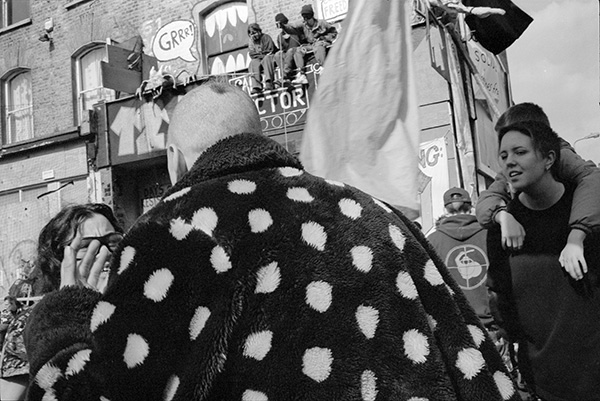
121 Street Party, Railton Rd, Brixton. 10th April 1999 121 was a squatted self-managed anarchist social centre on Railton Road in Brixton from 1981 until 1999.

Since I moved to digital photography My London Diary has put much of my work online, though more recent work goes into Facebook albums (and much onto Alamy.) My London Diary remains online as a low resolution archive of my work.

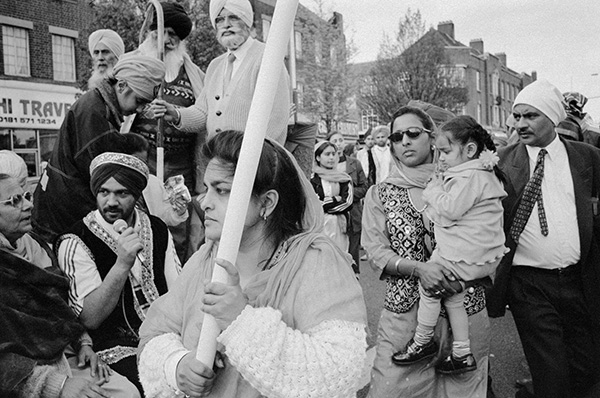
Sikhs celebrate 300 Years of Khalsa – Southall. 11th April 1999

April 1999 was an interesting month and all the pictures in this post come from it. I’ve added some brief captions to the pictures.

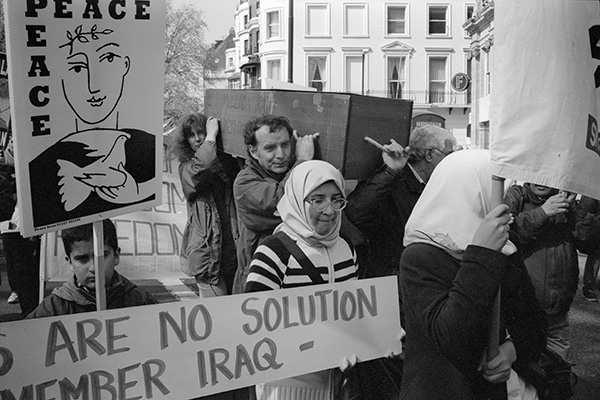
No War on Iraq protest – Hyde Park, 17 April 1999 President Bill Clinton was threatening to attack Iraq to destroy its capability to produce nuclear weapons. Operation Desert Fox, a four day air attack, came in December 1999
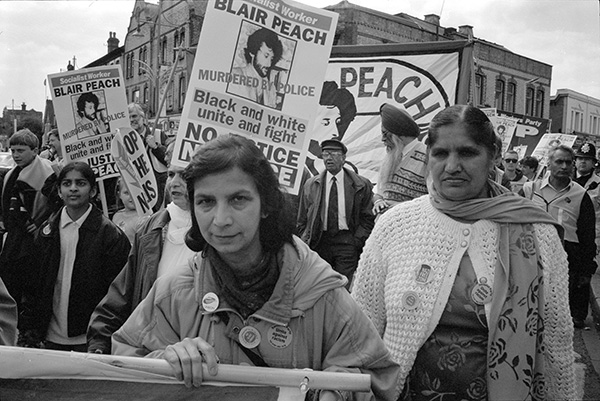
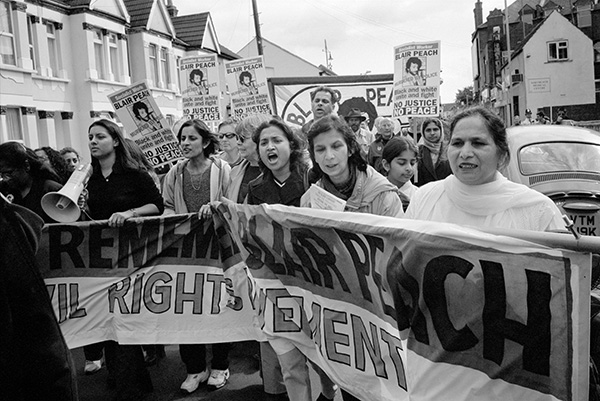
Southall Remembers Blair Peach – Southall. 24th April 1999. Blair Peach, a teacher in East London was murdered by police while protesting a National Front meeting in Southall in 1979.

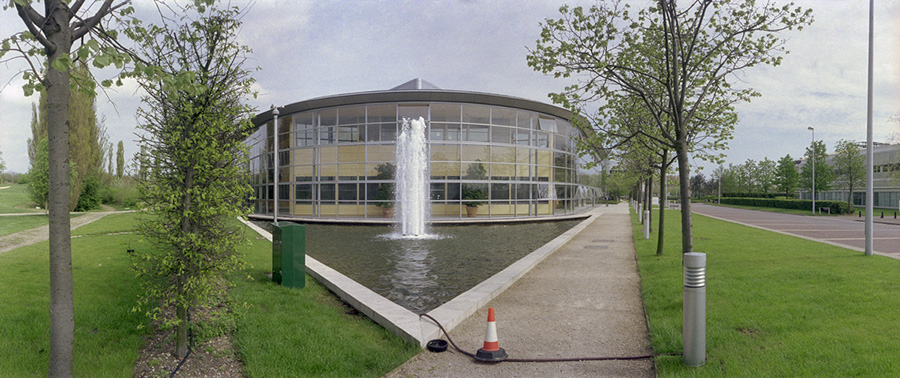
Stockley Park – one of a series of panoramic landscapes of developments in London – this is a major office park with some outstanding architecture

FlickrFacebookMy London DiaryHull PhotosLea ValleyParis
London’s Industrial HeritageLondon Photos

All photographs on this page are copyright © Peter Marshall.
Contact me to buy prints or licence to reproduce.

Vaisakhi in Gravesend – 2012

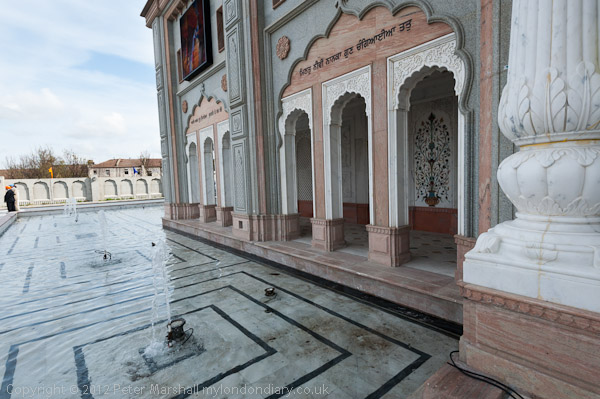
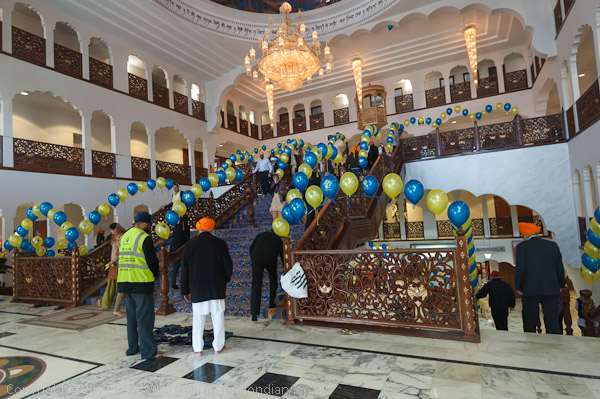
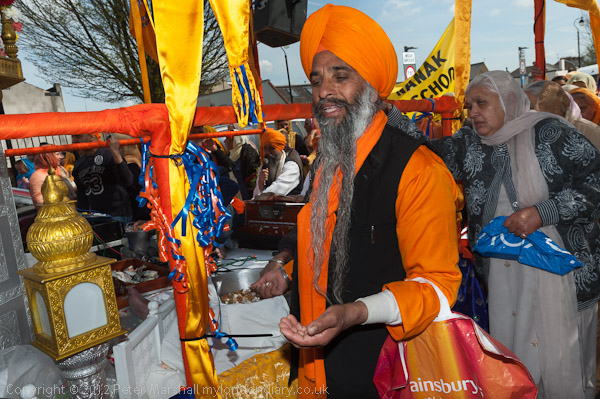
Vaisakhi in Gravesend – Saturday14 April 2012: Gravesend is in Kent around 20 miles east of London on the River Thames and home to around 15,000 Sikhs in a population of just over 100,000. The first Gurdwara opened here in 1956 but in November 2010 a splendid new Gurdwara was opened, the Guru Nanak Darbar Gurdwara. This is said to be the largest Gurdwara in Europe and one of the largest outside India and cost £12 million, financed by donations.

Vaisakhi in Gravesend

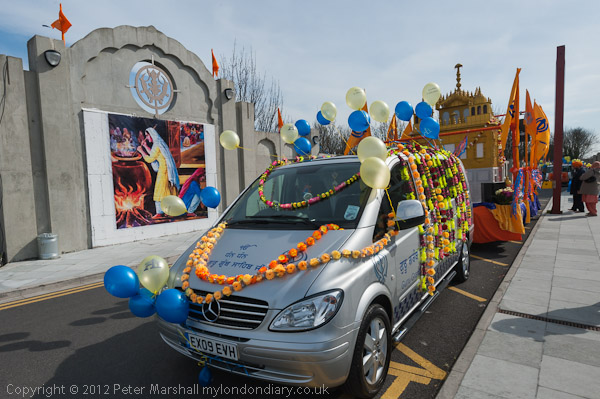
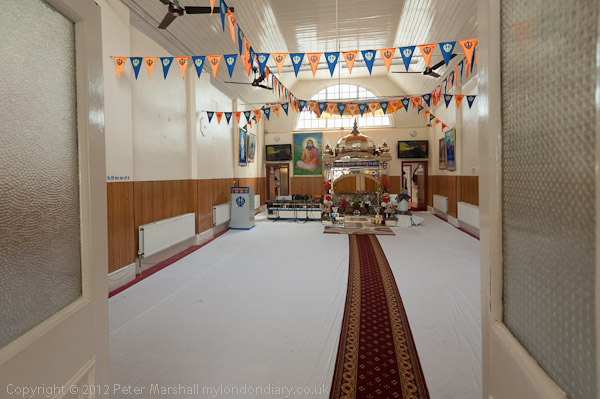
The temple is on a large site around half a mile east of the railway station and I arrived too late to make a tour of the place as the Nagar Kirtan procession was getting ready to start.

Vaisakhi in Gravesend

I took a short look inside then went back outside to photograph the Guru Granth Sahib (Sikh Scriptures) being carried out ceremonially to be put inside a model of the Golden Temple of Amritsar on one of the floats at the head of the procession.

Vaisakhi in Gravesend

Vaisakhi in Gravesend

There were lengthy prayers outside the Gurdwara before five Khalsa, baptised Sikh men in saffron robes carrying Sikh standards and five more with raised swords representing the Panj Pyare baptised at Ananpundur in 1699 by the last living human Guru, Guru Gobind Singh Sahib, the founding of the ‘Khalsa’ took their place in the procession behind an open lorry carrying a large Nagara drum and its beaters.

Behind them was the Guru Granth Sahib and then the walking congregation (Sangat) led by Punjabi School children, then the women and after them men, along with several vehicles carrying the elderly.

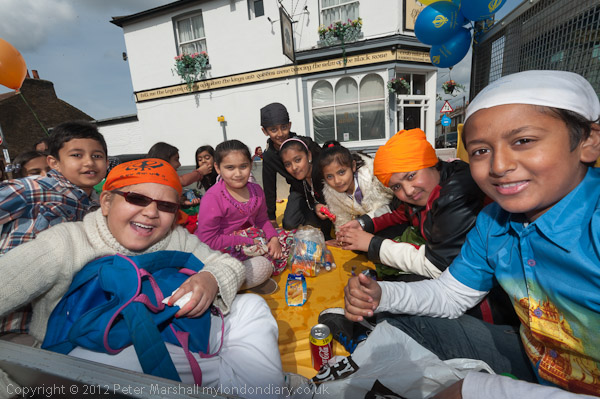
The Gurdwara also has various cultural, social and sports groups, including Bhangra music and dance groups, the Guru Nanak Football Club and children from local primary schools and lorries carrying some of these made up the end of the procession.

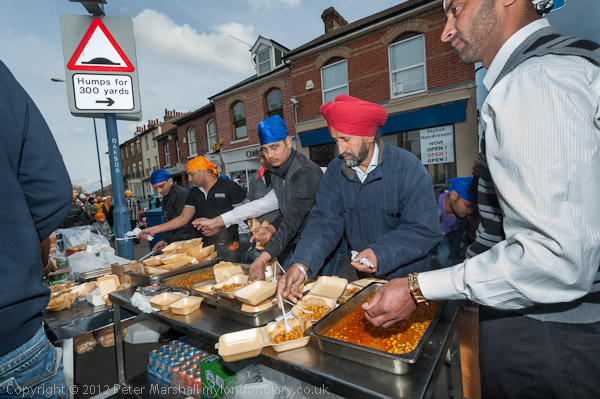
I hadn’t arrived early enough to visit the Langer, but as the procession made its way around the centre of Gravesend there were a number of stalls handing out free vegetarian food and drink. I enjoyed some delicious vegetable curry with a strong mint flavour as well as some very sweet chai and a couple of vegetable samosas, but there were also plenty of treats for the children, lollipops, soft drinks and sweets.

Shri Guru Ravidass Gurdwara in Brandon Street

Close to the very much smaller Shri Guru Ravidass Gurdwara in Brandon Street there was a large crowd waiting to see the procession and more people handing out free food. I paid a very brief visit to see the interior of this temple.

The procession was going back towards the Gurdwara when I waited to see the end of it go past before going to catch a train. The celebrations were to continue the following day with a religious service in the Gurdwara.

Many more pictures at Gravesend Vaisakhi.


FlickrFacebookMy London DiaryHull PhotosLea ValleyParis
London’s Industrial HeritageLondon Photos

All photographs on this page are copyright © Peter Marshall.
Contact me to buy prints or licence to reproduce.
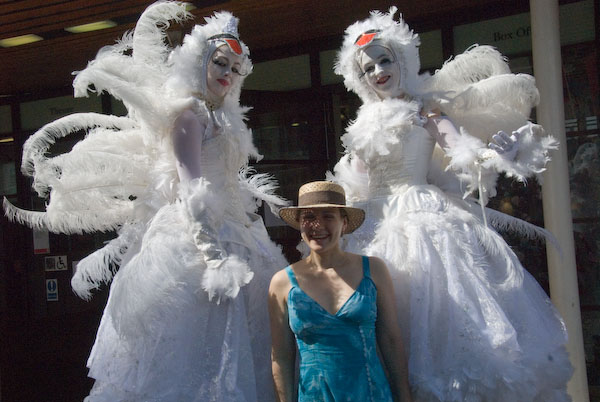

Asylum and Vauxhall to Battersea, 2006

Asylum and Vauxhall to Battersea: I don’t often look back at posts from the early years of My London Diary for several reasons. Before I redesigned the site some time in 2008 there were no links to individual stories which makes linking to them trickier, and the stories and pictures come at different positions down the monthly page. Also in the early years I wrote entirely in lower case, something I now find an annoying affection. And back them the software for converting raw digital images wasn’t quite as good and the images are sometimes a little lacking in colour quality.

Asylum and Vauxhall to Battersea

So here I re-present my post for Monday 10th April 2006 in a more convenient fashion. I’ve updated the text to conventional capitalisation, corrected a few spellings (back then I wrote in software without a spell-checker) and made a few minor changes to make the text easier to follow. The pictures – both those in this post and the larger number I link to on My London Diary are exactly as posted in 2006. Communications House was demolished in 2013-4 and new offices erected on the site which is now home to a number of businesses but no longer used by the Home Office.


Against Detention and Deportation – Communications House, Old Street

Asylum and Vauxhall to Battersea

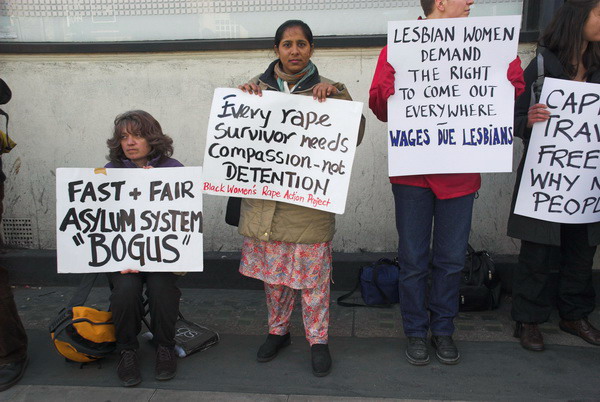
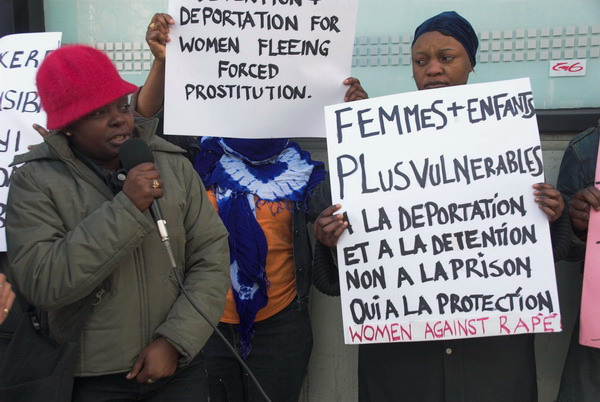
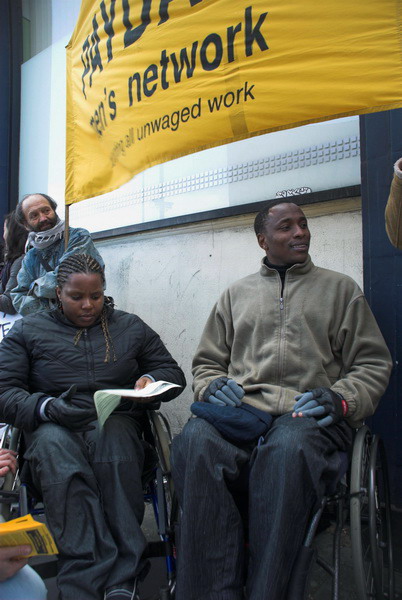
If you are an asylum seeker in Britain you have to sign on regularly at one of the Home Office locations. When you enter the doors of Communications House next to Old Street station (or any of the other locations) you cannot be sure that you will ever come out. Despite the regulations, some asylum seekers have been bundled onto planes and flown back to the country from which they have fled, others have found themselves banged up in detention centres such as Harmondsworth for years with no trial or appeal.

Asylum and Vauxhall to Battersea

On Monday 10th April 2006, various groups including the All African Women’s Group, African Liberation Support Campaign Network, Payday Men’s Network and Women Of Colour formed a line along the front of the building over the lunch hour to protest and hand out flyers about the unfair treatment of refugees and asylum seekers.

Asylum and Vauxhall to Battersea

This was a part of a global action demanding justice and proper legal rights for asylum seekers and others without proper legal documentation, calling for an end to racist discrimination and inhumane policies.

more pictures


New Flats Along the Thames – Vauxhall to Battersea

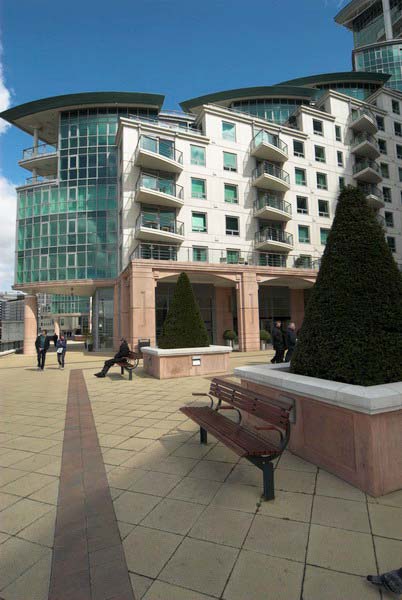
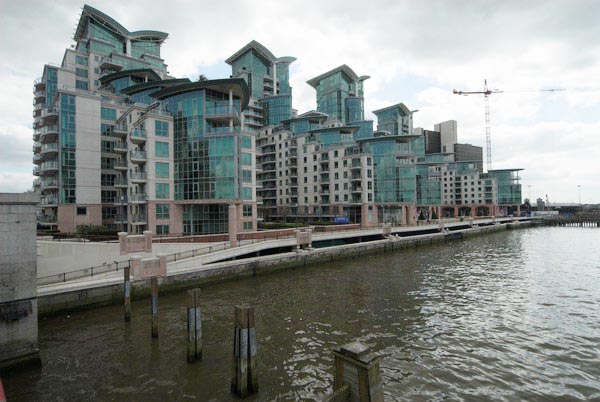
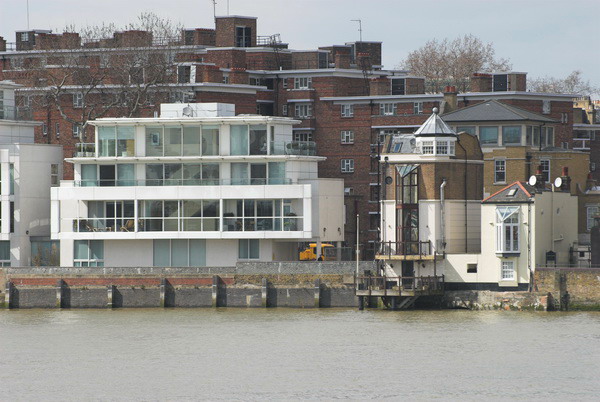
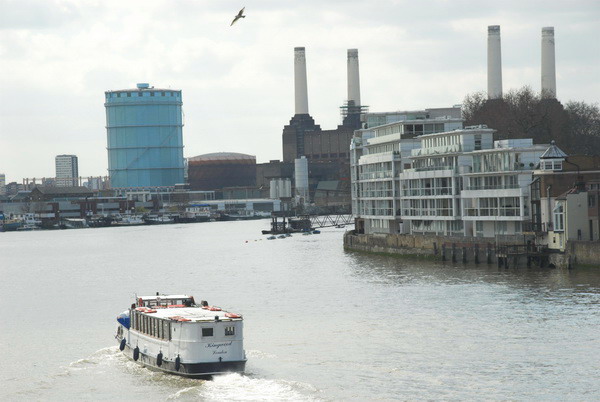
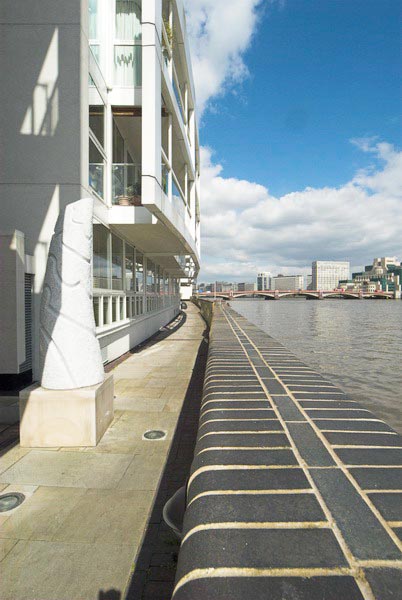
I had to leave for a little business elsewhere, then took advantage of the decent weather to take a walk along the Thames from Vauxhall to Battersea on my way home. As you can see I walked a little along the south bank, then back to Vauxhall Bridge to go along the north bank. Later I went on both banks between Chelsea Bridge and Battersea Bridge.

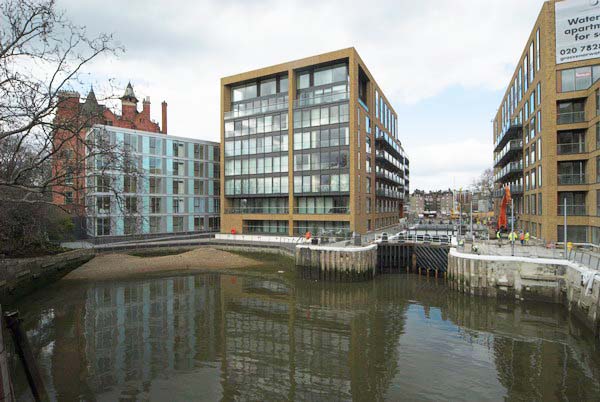
What was not long ago a totally industrial reach of the river is now largely lined by expensive riverside blocks of flats. St Georges Wharf is on the site of the Nine Elms Cold Store, and is now largely finished except for a tower whose slim 181 metre cylinder will soar far above the 72 m of the existing flats.

Along Grosvenor Road on the north bank are Rivermill House, the Panoramic, Crown Reach, and a survivor from the past, Tyburn House, followed by Eagle Wharf, with Eagle House and 138.

One minor gain for the public from this is increased access to the riverside, with new developments having a public footpath on the bank. But when soon all you will be able to see is the flats on the other bank, this perhaps isn’t a great gain.

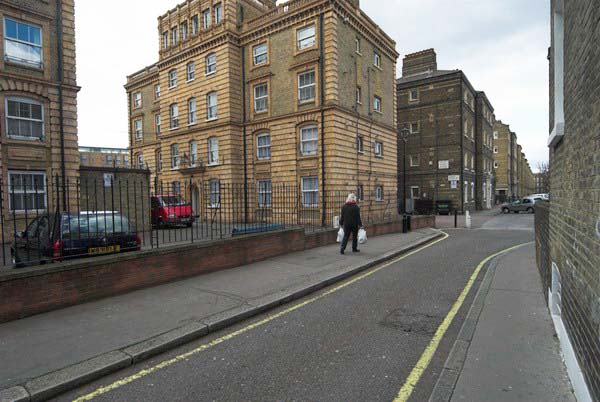
In Pimlico there are often great contrasts between council or Peabody estates and millionaire apartments across the road on the river side, and some pricey stuff in some of the squares. A few yards makes a huge difference in price – and the newer buildings have often blocked the views some council tenants used to have of the river.

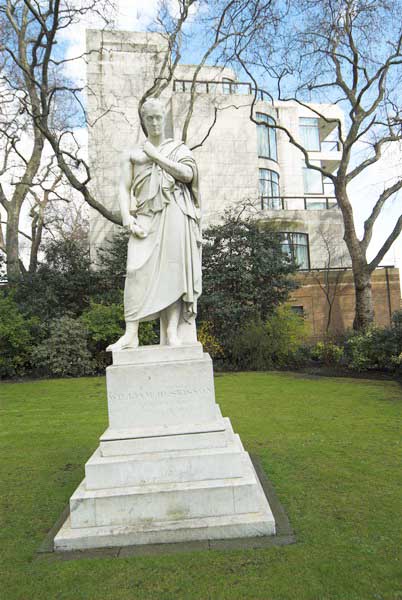
William Huskisson, Statesman 1770-1830. The main claim to fame of this MP for Liverpool was the he was the first to be killed in a railway accident, when knocked down by ‘Rocket’ during the opening ceremony of the Liverpool & Manchester railway on 15th September, 1830. Pimlico Gardens

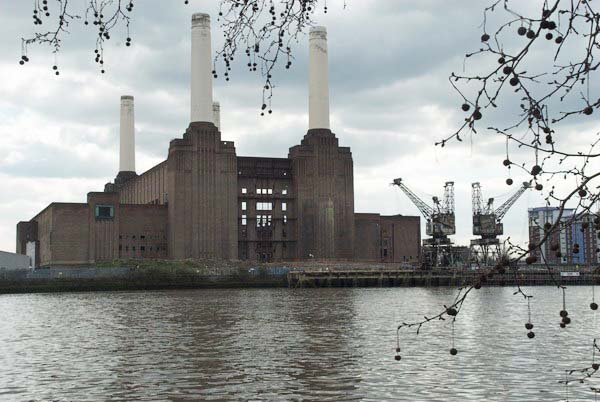
Across the river are views of Battersea Power Station, gutted and largely left to decay by various developers over the years, roofless. Despite their efforts it still stands, its brickwork and four tall chimneys dominating the area.

The waterworks building on the north bank is also still there, and next to it around the canal a new Grosvenor Waterside is nearing completion.

Across Chelsea Bridge, between it and the power station is Chelsea Bridge Wharf, another huge development. Its a relief to be able to walk across the new bridge under Chelsea Bridge into the peace of Battersea Park with its Peace Pagoda. Next to Albert Bridge is a small wild area that looked very spring-like in some dramatic light under grey clouds.

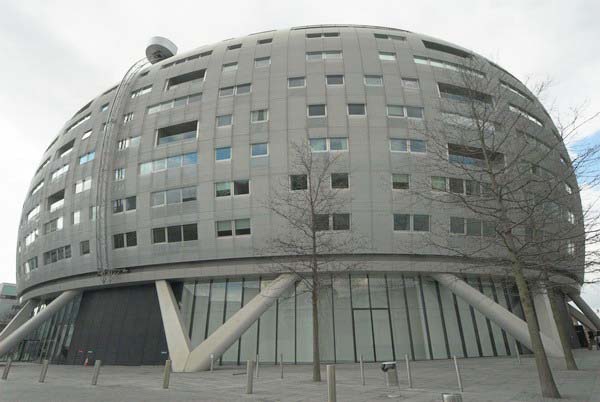
There are more new flats and offices past Albert Bridge, including Foster and Partners building. It’s stunning close to, but seen from across the river is rather disappointing. Their Albion Riverside next door is a futuristic structure, like some vast mothership landed on the riverside, a fungus from which spores are doubtless emerging to colonise the country.

Many more pictures from the walk spread over a number of pages starting here.


FlickrFacebookMy London DiaryHull PhotosLea ValleyParis
London’s Industrial HeritageLondon Photos

All photographs on this page are copyright © Peter Marshall.
Contact me to buy prints or licence to reproduce.
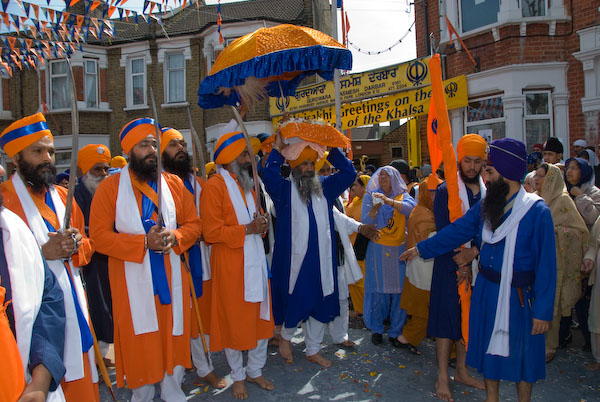

Vaisakhi, Uganda & Freedom Umbrella – 2011

Vaisakhi, Uganda & Freedom Umbrella: On Saturday 9th April 2011 After visiting Woolwich to photograph the Vaisakhi celebrations I came back into central London to photograph Ugandans and Kurds protesting for freedom and democracy.


Vaisakhi Celebrations in Woolwich

Vaisakhi, Uganda & Freedom Umbrella

For some years I had been documenting religious festivals in and around London and had photographed a number of Sikh Gurdwaras at their Vaisakhi festivals.

Vaisakhi, Uganda & Freedom Umbrella

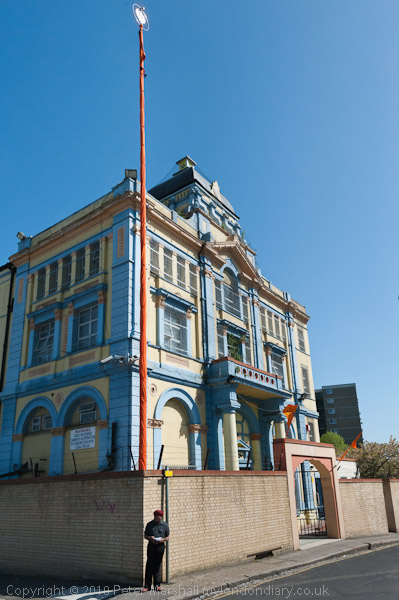
On Saturday 9th April 2011 I went to the Ramgarhia Association Gurdwara in Mason’s Hill Woolwich. The Ramgarhia are a Sikh community who originally came from the close to Amritsar in the Punjab and traditionally they were carpenters, blacksmiths and other artisan workers but were renowned for their military prowess and the victories of the armies.

Vaisakhi, Uganda & Freedom Umbrella

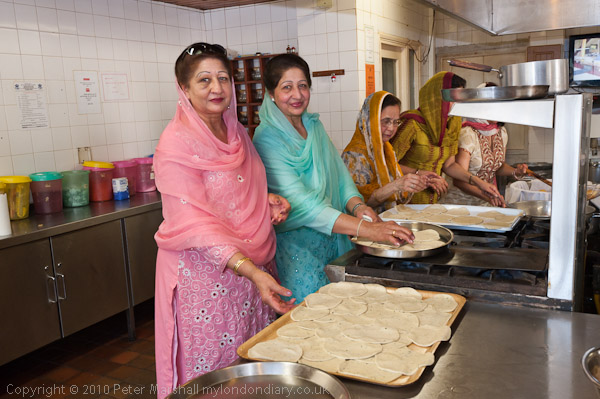
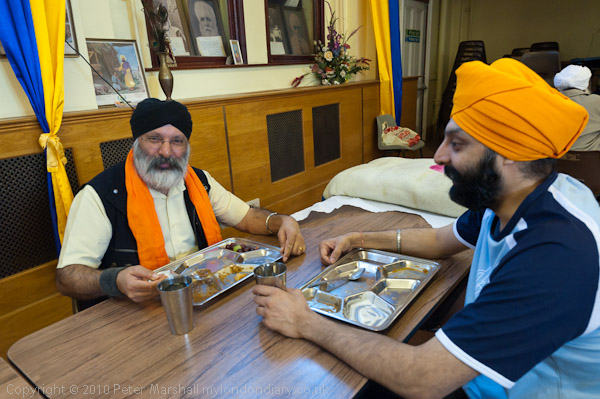
When I turned up I was warmly welcomed and taken to the Langar hall where I enjoyed some of the free vegetarian food on offer to all, prepared and served by members of the congregation who volunteer their services as a part of their religious practice and was able to talk with people there and wander around taking photographs.

Vaisakhi, Uganda & Freedom Umbrella

The Gurdwara was established in 1970 in an existing landmark building, the Victorian Freemasons Hall, just over the Woolwich border in Plumstead on a street which was then called Mount Pleasant.

The Freemason’s Hall was where the Royal Arsenal Football Club held its annual meetings and dinners, and on 16th May 1891 that the Annual General Meeting of the Royal Arsenal Football Club (earlier known as Dial Square) the committee announced it had decided two weeks earlier to turn professional and had thus resigned from the amateur Kent and London Associations.

In 1913, the club moved across the river to a new stadium at Highbury, where it continued to play until 2006, when it moved the short distance to its new Emirates stadium. Apparently it is doing quite well at the moment.

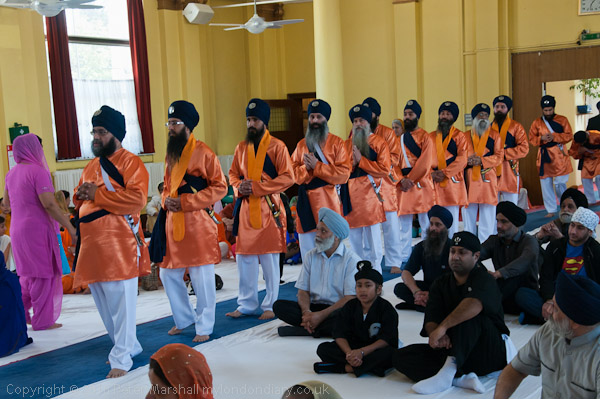
The Vaisakhi festival, which takes place on April 14 each year marks the formation of the Khalsa by Guru Gobind Singh, the tenth Sikh Guru, in 1699. You can read more about this and the Vaisakhi Nagar Kirtan procession which is lead by five Khalsa – baptised Sikhs – dressed in saffron robes and turbans and carrying swords in the account I wrote on My London Diary, Vaisakhi Celebrations in Woolwich, as well as in the posts on other Vaisakhi processions on that site.

On My London Diary I wrote in more detail about the origins of Vaisakhi and the 10th Sikh Guru who gave Sikhism its modern form with its symbols and the eternal guru, the Guru Granth Sahib, the holy religious scripture being reverently carried out to the procession in th picture above.

Unfortunately the start of the procession was delayed and although I had photographed the preparations for it I had to run to catch a train before the actual start of the colourful procession, with its joyful singing of Sikh hymns, martial arts demonstrations and Dhol drumming through the town, expected to take several hours.

More at Vaisakhi Celebrations in Woolwich.


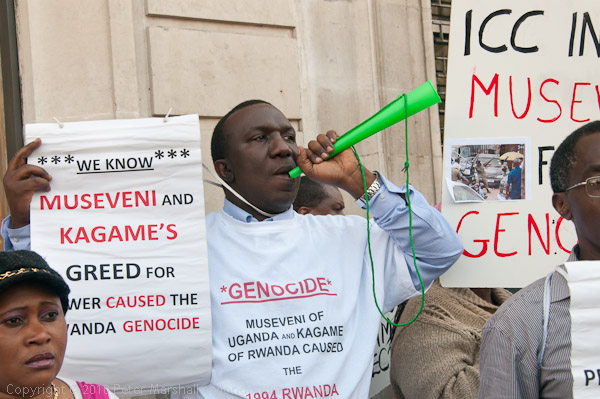
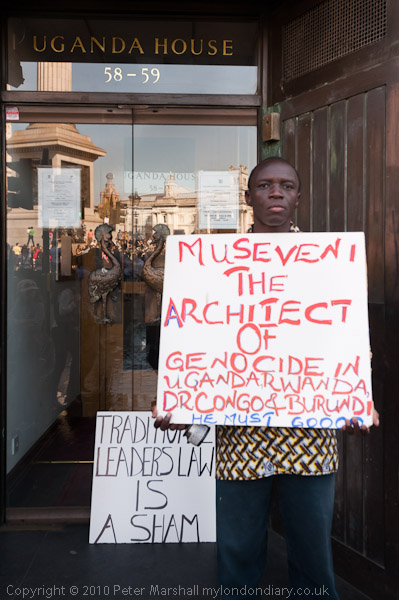
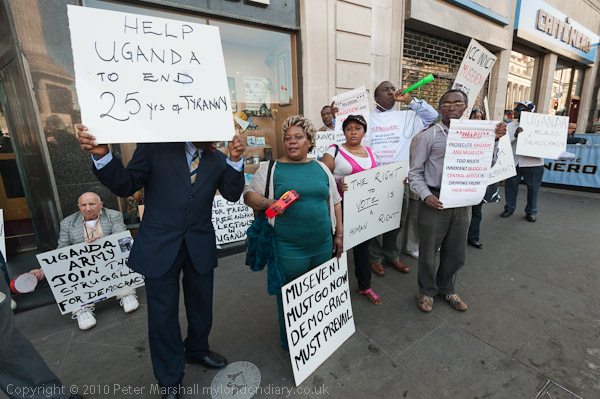
Ugandans Demand Democracy – Uganda House, Trafalgar Square

Ugandans had come to protest outside Uganda House in Trafalgar Square, calling for new free and fair elections after the rigged Parliamentary and Presidential elections in February.

The election on 18 Feb had resulted in the re-election of the sitting president Yoweri Museveni, in power for 25 years, apparently getting 68% of the vote.

But the EU Election Observation Mission which had been in Uganda for the vote reported the election, with a turnout of only 59% had been “marred by avoidable administrative and logistical failures which led to an unacceptable number of Ugandan citizens being disenfranchised” and that Museveni had used his presidential power to “compromise severely the level playing filed between the competing candidates and political parties.”

As well as the state owned Uganda Broadcasting Corporation giving much more coverage to the ruling NRM party, there had been extenisve human rights abuses with the police failing to take action against groups attacking opposition political meetings, intimidation and assaults on journalists and the cancellation of broadcasts.

Ugandans Demand Democracy


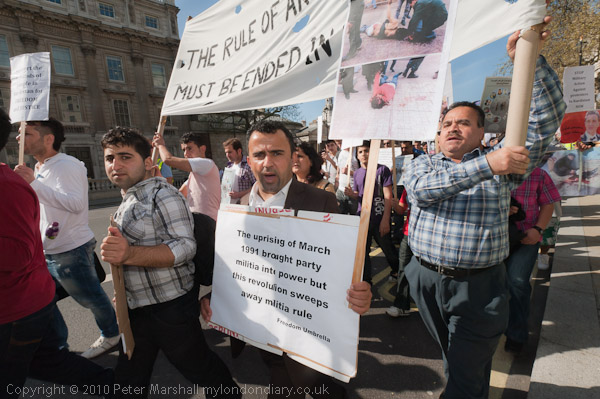
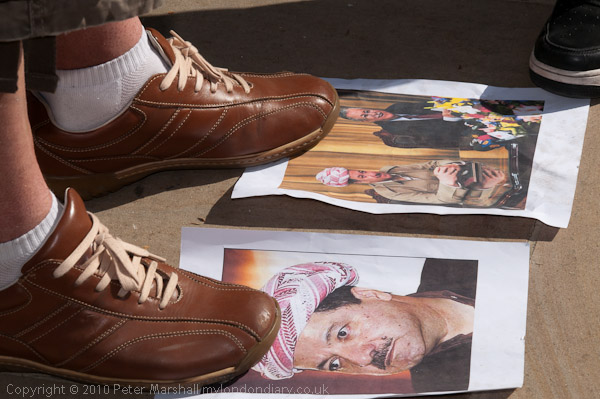
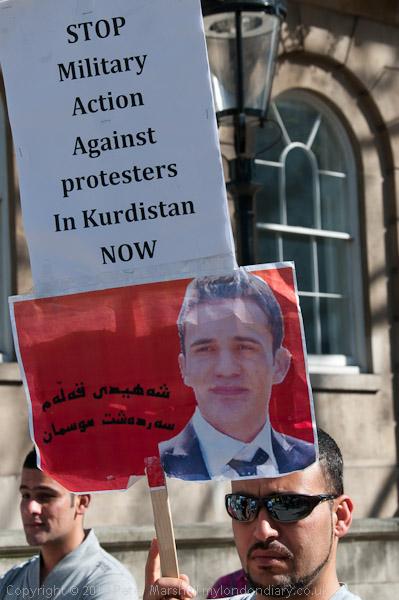
Freedom Umbrella Kurds March Through London – Old Marylebone Rd – Downing St

Freedom Umbrella (Chatri Azadi), a coalition of British-based Kurdish organisations and supporters, had organised a demonstration in front of the offices of the Kurdistan Regional Government in Old Marylebone Road followed by a march to a rally opposite Downing St.

They called for support of the people’s uprising for freedom and social justice in the autonomous region of Iraqi Kurdistan which had begun on 17th February but had hardly been noticed by UK media.

Two Kurdish militia groups dominate Iraqi Kurdistan and remain in power. On 19th April their security forces began a more organised violent crackdown on the protests which brought them to an end.

I met the protesters as the march neared Trafalgar Square and photographed their rally opposite Downing Street.

More pictures Freedom Umbrella Kurds March In London.


FlickrFacebookMy London DiaryHull PhotosLea ValleyParis
London’s Industrial HeritageLondon Photos

All photographs on this page are copyright © Peter Marshall.
Contact me to buy prints or licence to reproduce.
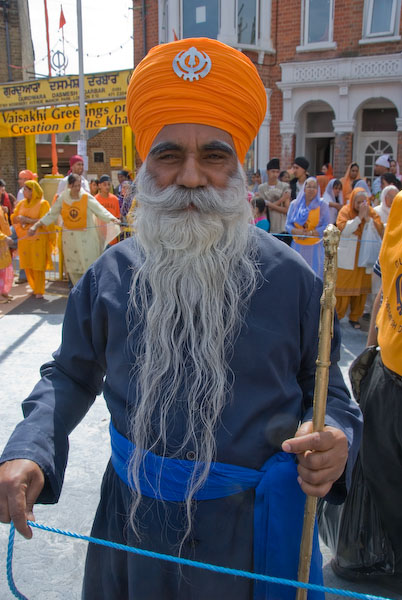

Zuma, Boat Dwellers, Syria & Latin Village – 2017

Zuma, Boat Dwellers, Syria & Latin Village: Saturday 8th April 2017 was another varied day for me in London with protests against South African President Zuma, the Canal & River Trust, chemical warfare in Syra and against the planned demolition of the largest Latin American community market in England.


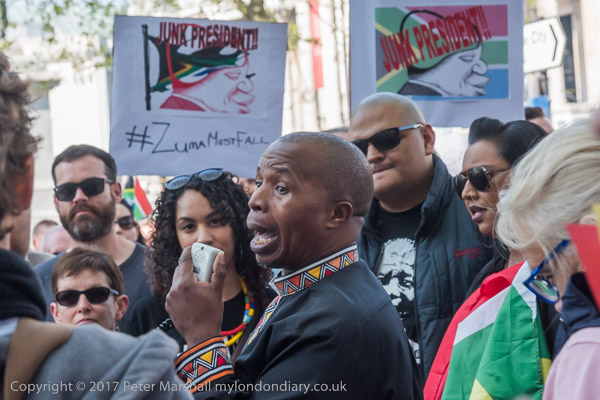
Zuma Must Go – Trafalgar Square

Zuma, Boat Dwellers, Syria & Latin Village

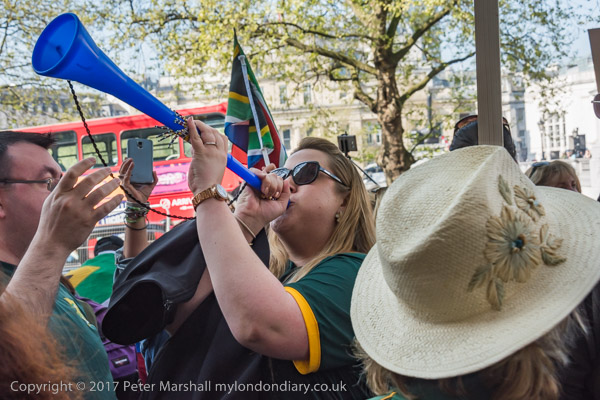
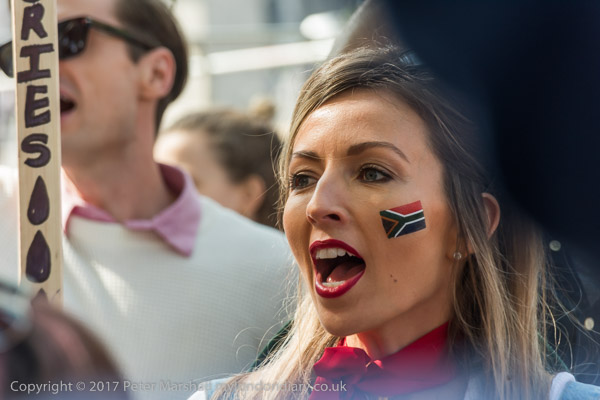
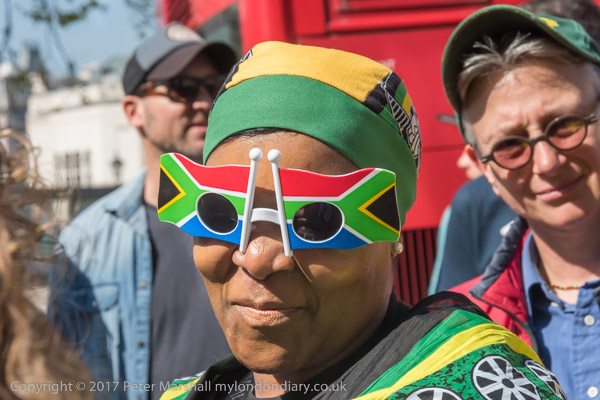
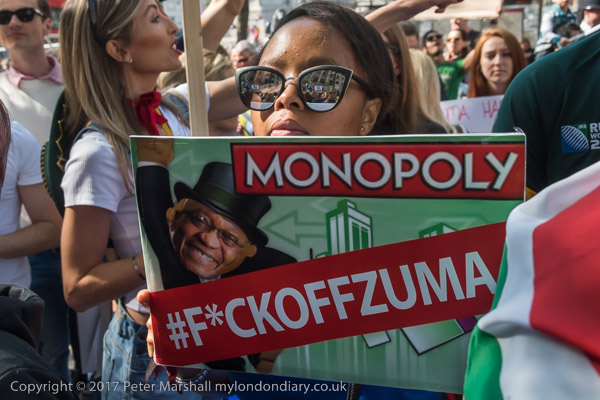
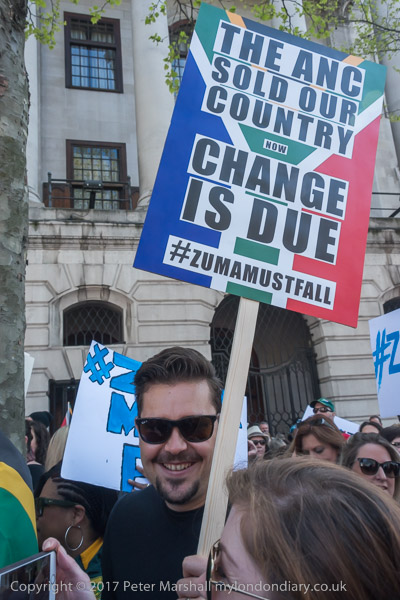
South Africans living in the UK had come to protest outside the South African High Commission after President Zuma sacked the Finance Minister and his deputy.

Zuma, Boat Dwellers, Syria & Latin Village

They accuse Zuma and the African National Congress government of wrecking the South African economy and say that “Zuma must fall”.

Zuma, Boat Dwellers, Syria & Latin Village

Police had set barriers outside the High Commission for the protest and the protesters were so densely packed into the area that it was very difficult to move around an take photographs.

Zuma, Boat Dwellers, Syria & Latin Village

It was a colourful protest and certainly demonstrated the anger of those taking part but the ANC would still remain the leading party and if Zuma resigned he would be replaced by another ANC leader.

Zuma did finally go, replaced by Cyril Ramaphosa in 2018 because of the increasing allegations of corruption and cronyism and in 2021 was given a 15 month contempt of court sentence for refusing to testify. Ramaphosa is also a controversial figure with various allegations of corruption, and as as London Platinum non-executive director urged the police to take the action which lead to the police massacre at Marikana on August 16, 2012 which lead to the deaths of 44 miners and over 70 more with serious injuries.

The elections next month, May 2024 are expected to be the first since the end of apartheid in 1994 in which the ANC will not gain over 50% of the vote and the country may get a coalition government. Zuma who has now joined the opposition Umkhonto weSizwe (MK) party has been banned from standing in the election but has appealed the ban.

Zuma Must Go


Boat dwellers fight evictions – Embankment Gardens

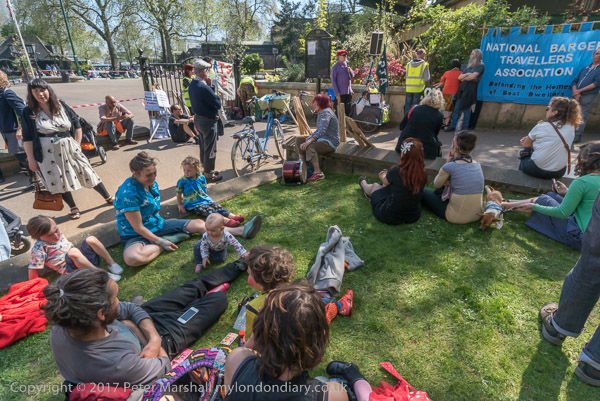
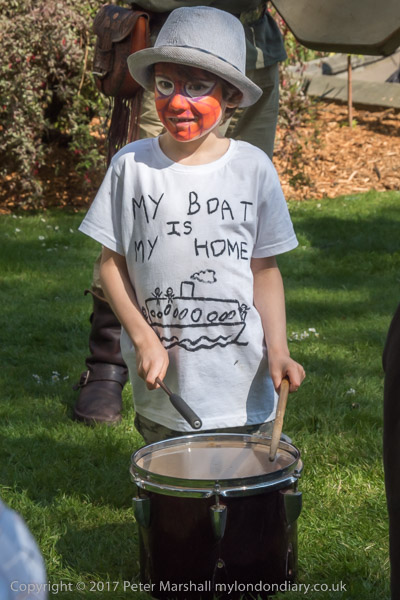
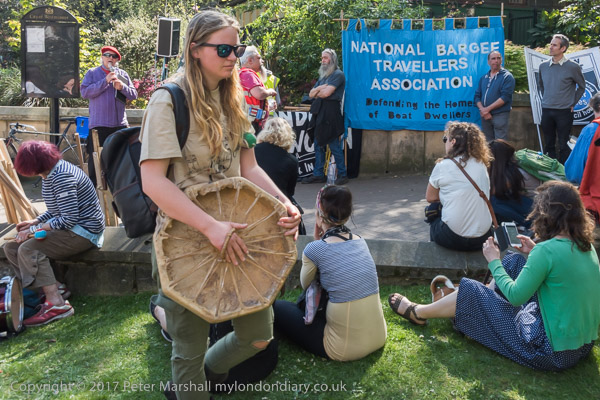
Boat dwellers held a rally in Embankment Gardens before marching to Downing St and DEFRA to demand the Canal & River Trust (CRT) stops evicting or threatening to evict boat dwellers without permanent moorings.

The say the British Waterways Act 1995 includes the right to live on a boat without a permanent mooring and that the CRT is acting illegally in evicting or threatening to evict boat dwellers.

Although boats can be required to move after 14 days at a mooring, the law requires at least 28 days notice and does not lay down restrictions on the distance boats have to move or that they should be making a “progressive journey.”

Some of the speakers at the rally had horror stories about boats being seized and other illegal activities by the trust, a charity set up in 2012 to look after the canals and navigable rivers.

Boat dwellers also oppose the plans being made for chargeable bookable moorings and want the trust to maintain the canals properly. The rally was still continuing when I needed to leave.

Boat dwellers fight evictions


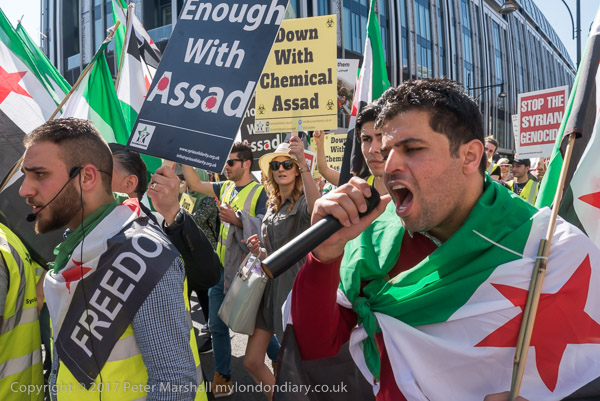
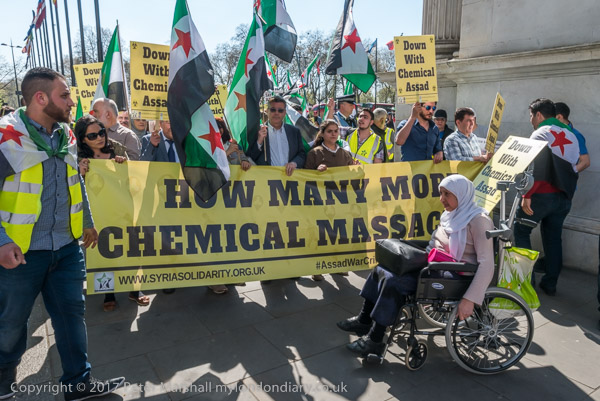
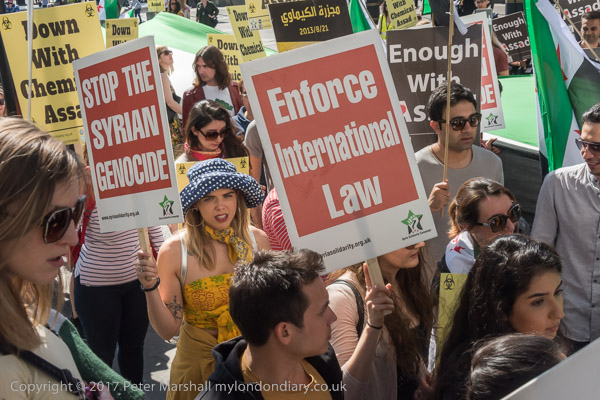
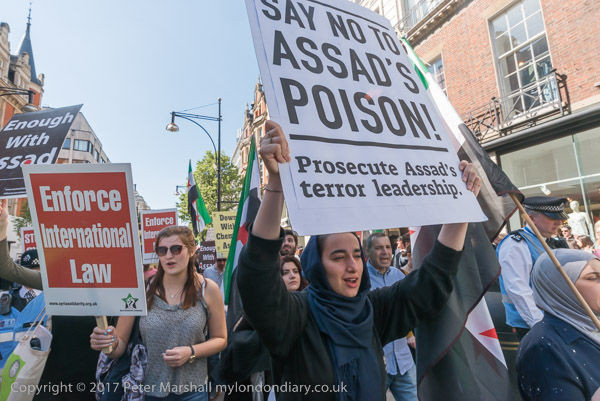
March Against Chemical Warfare in Syria – Marble Arch

RefugEase and Syria Solidarity Campaign had organised this march calling on the UK Government to protect civilians in Syria.

President Assad’s forces used Sarin nerve agent three years earlier at Ghouta, and a few days before the protest there had been another attack using Sarin at Khan Sheikhoon near Idlib on April 4th.

The West’s response to the Syrian Revolution has been confusing and largely ineffectual. The US and Turkey encouraged and aided the setting up of an Islamic state and allowed it to export oil to finance its operations – and later the US gave air support to the Kurds to defeat ISIS. And although there were strong words over the use of chemical weapons at Ghouta, there was no real action. Nor has their been any opposition to the invasion and occupation of large parts of Syria by Turkish forces.

The march to Downing St began at Marble Arch and I walked with it down Oxford Street as far as Oxford Circus Station where I caught the Victoria Line to Seven Sisters.

Against Chemical Warfare in Syria


Human Chain at Latin Village – Seven Sisters

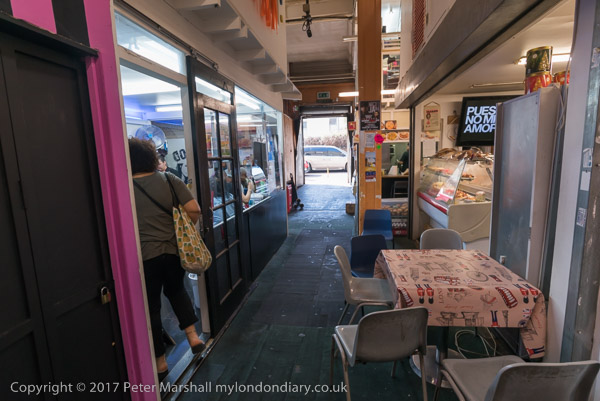
The indoor market next to Seven Sisters station in South Tottenham had been reinvigorated in recent years by the local Latin American community and had become the largest Latin American community market in England.

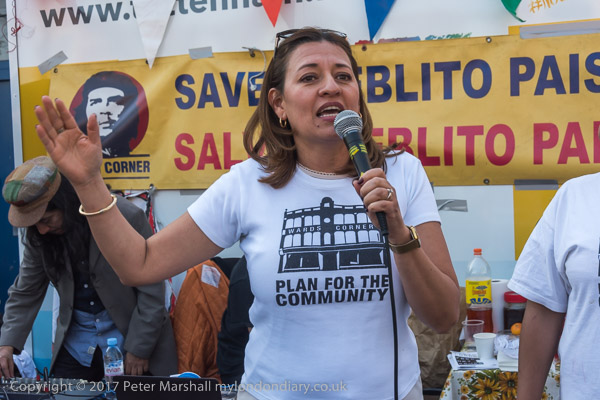
Part of the site at Ward’s Corner has been derelict for some years and the local authority, Haringey Council, wants to demolish the who block together with property developers which would convert it to expensive flats and chain stores, profiting investors at the expense of the community.

In 2008 the community gained the support of London Mayor Boris Johnson who wrote to the council asking them to review the scheme. But the council were determined to go ahead along with property developer Grainger PLC and issued a compulsory purchase order in 2016 which was finally approved by the secretary of state for housing, communities, and local government James Brokenshire in 2019.

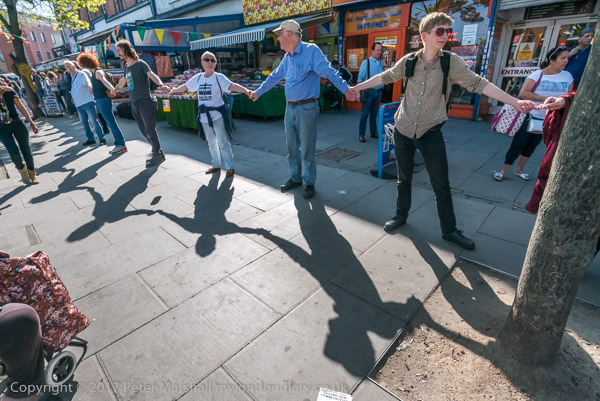
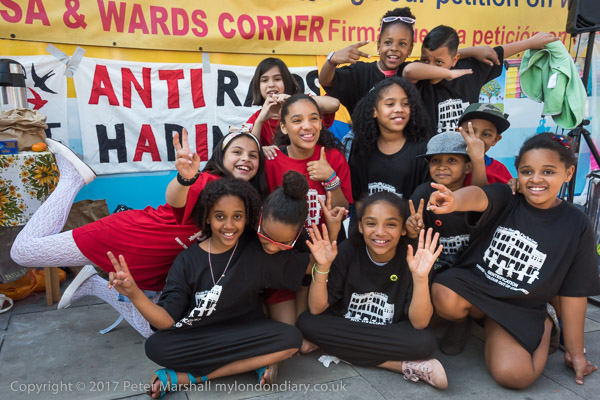
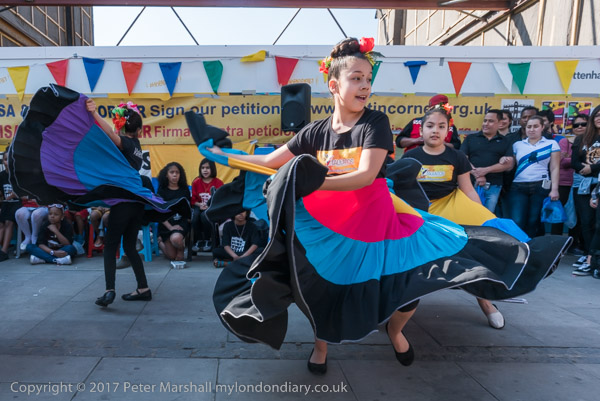
The community in the area had been fighting since 2002 to save the Latin Village from this social cleansing and gentrification and on Saturday 8th April 2017 held a festival there. The speeches and performances paused for everyone to join hands in a human chain around a quarter of a mile long around the whole block.

In 2020 Transport for London who had taken over the management of the indoor market closed it down. But in 2021 Grainger PLC withdrew from the plans for the site. You can read more about the Wards Corner Community Plan online. The Community Benefit Society was launched in 2022 and planned to reopen the site in 2024.

Many more pictures at Human Chain at Latin Village


FlickrFacebookMy London DiaryHull PhotosLea ValleyParis
London’s Industrial HeritageLondon Photos

All photographs on this page are copyright © Peter Marshall.
Contact me to buy prints or licence to reproduce.
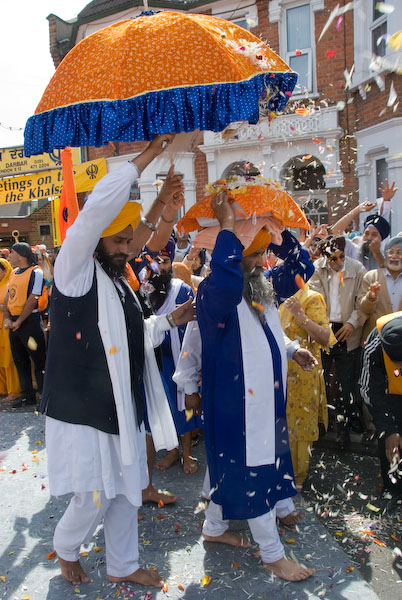

Sudan and Brunei Gay Sex – 2019

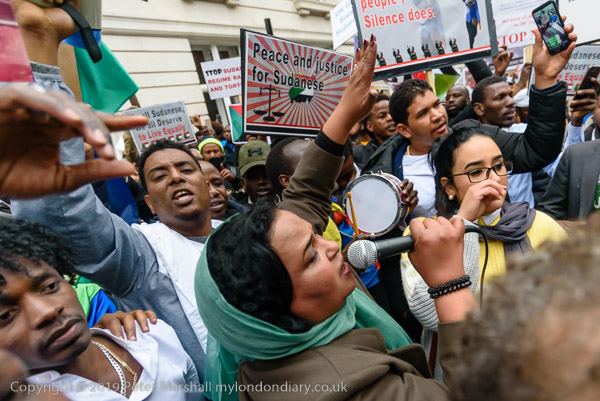
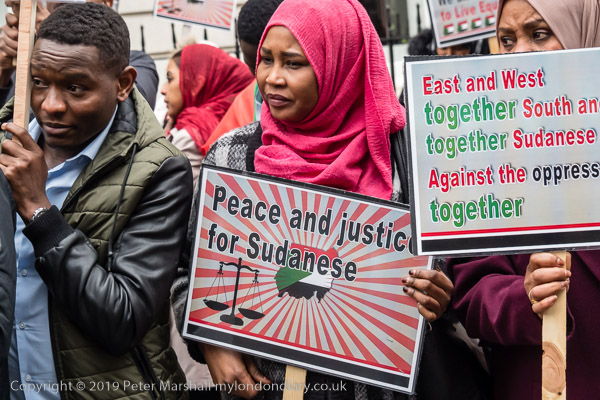
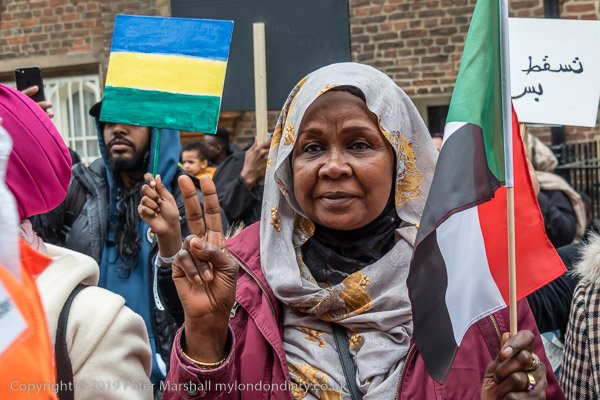
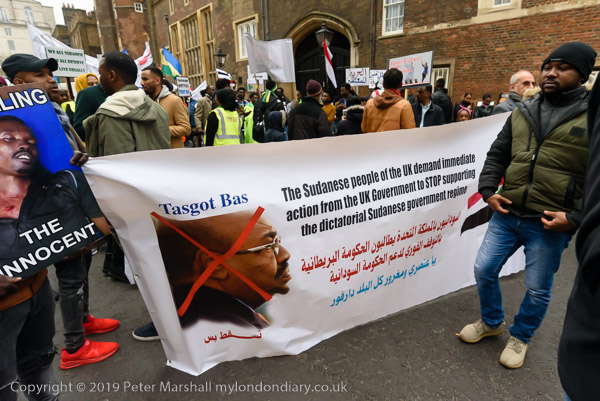
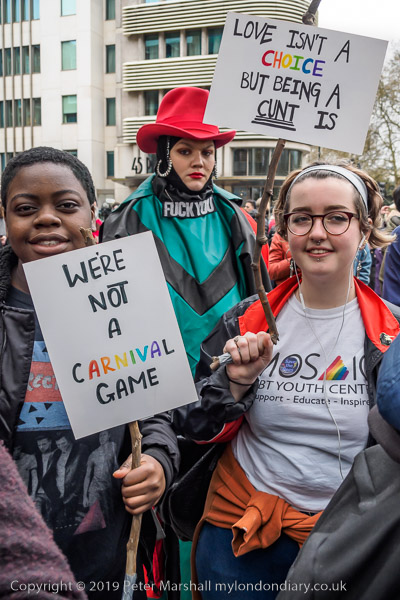
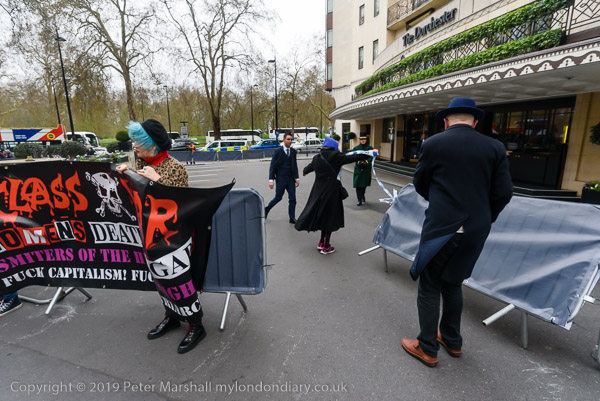
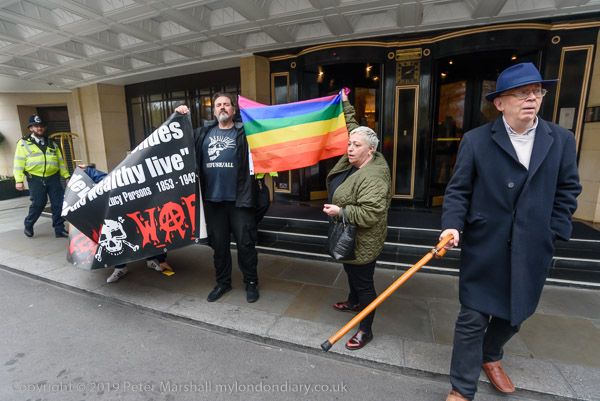
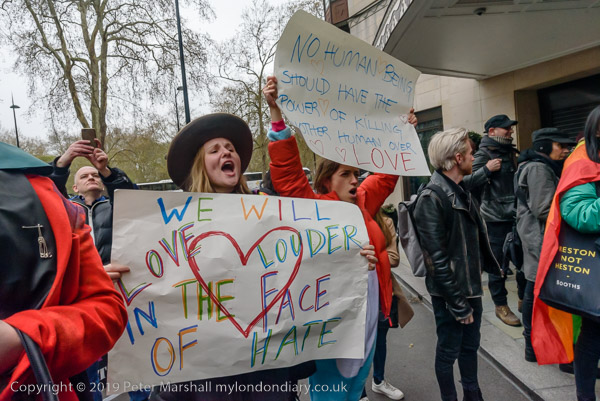
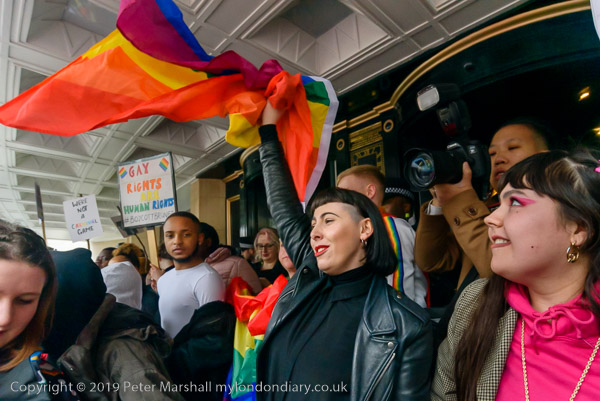
Sudan and Brunei Gay Sex: I began work on Saturday 6th April 2019 at the Sudanese Embassy and then left for the Dorchester Hotel in Mayfair where protesters had come after the Sultan of Brunei had announced death by stoning as a punishment for gay sex, adultery and blasphemy.


Sudanese for Freedom, Peace and Justice – Sudan Embassy

Sudan and Brunei Gay Sex

War is raging again now in Sudan between between the Sudanese Armed Forces (SAF) and the Rapid Support Forces (RSF).

Sudan and Brunei Gay Sex

Back in 2019 people were protesting against the extreme violence in Sudan against peaceful protests calling for for an end to the violent and corrupt Sudanese regime and for president Omar al-Bashir to ‘Just Fall’ and stand trial by the ICC for genocide in Darfur, the Nuba Mountains and South Blue Nile.

Sudan and Brunei Gay Sex

People in Sudan had been protesting for 17 weeks and over 70 protesters had been killed and thousands injured.

Sudan and Brunei Gay Sex

Five days later, Omar al-Bashir was deposed by the Sudanese Armed Forces and in May 2019 was charged al-Bashir with “inciting and participating in” the killing of protesters. Later other charges were brought, including of corruption and money laundering. Other trials followed and he has been accused of genocide. The prison in which he was being held has been overrun by the current fighting between forces led by the generals who deposed him and he is currently held in a military hospital in Khartoum.

I left the protesters still in and around the protest pen outside the embassy opposite St James Palace in Cleveland Row and rushed the three quarters of a mile or so to the Dorchester Hotel in Park Lane, where I knew the protest had already begun.

More pictures at Sudanese for Freedom, Peace and Justice.


Brunei Sultan gay sex stoning protest – Dorchester Hotel

A large crowd had gathered on the streets in front of the Dorchester Hotel behind barriers that kept them out of the area directly in front of the entrance.

There were a number of speeches including those by Labour Shadow Secretary of State for Foreign and Commonwealth Emily Thornberry MP and activist Peter Tatchell condemining the announcement by the Sultan of Brunei of death by stoning as a punishment for gay sex, adultery and blasphemy.

It was a colourful protest with many from the gay community with some interesting posters and placards. Police continually harassed protesters to keep the roads open, although there were really too many people to make this sensible.

After an hour or so, Class War decided to move from behind the barriers and pushed some aside to protest directly in front of the hotel doors. They were followed by many of the other protesters and a noisy protest continued there.

Many more pictures at Brunei Sultan gay sex stoning protest.


FlickrFacebookMy London DiaryHull PhotosLea ValleyParis
London’s Industrial HeritageLondon Photos

All photographs on this page are copyright © Peter Marshall.
Contact me to buy prints or licence to reproduce.

Colindale and West Hendon Estate 2017

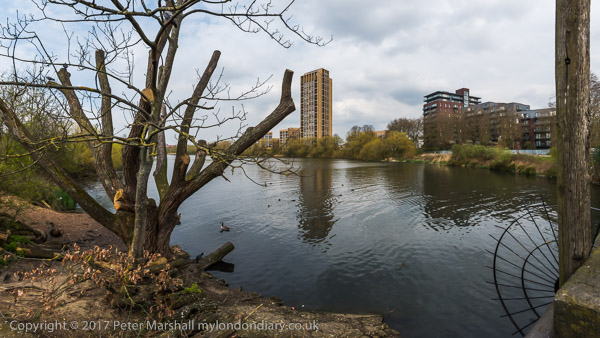
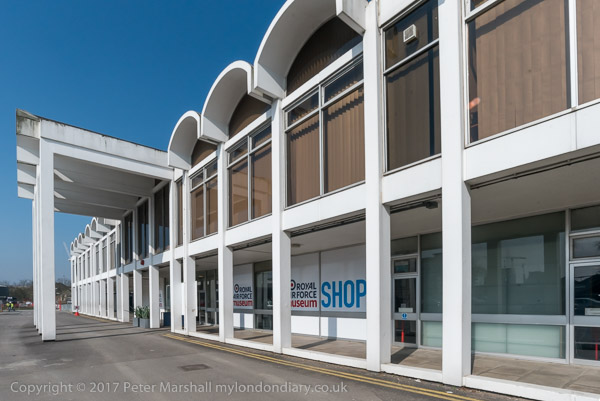
Colindale and West Hendon Estate: I’d actually gone to Colindale on Tuesday 28th March 2017 to attend the public inquiry into the second phase of the demolition of the West Hendon estate which was beginning at the RAF Museum there.
Colindale and West Hendon Estate 2017
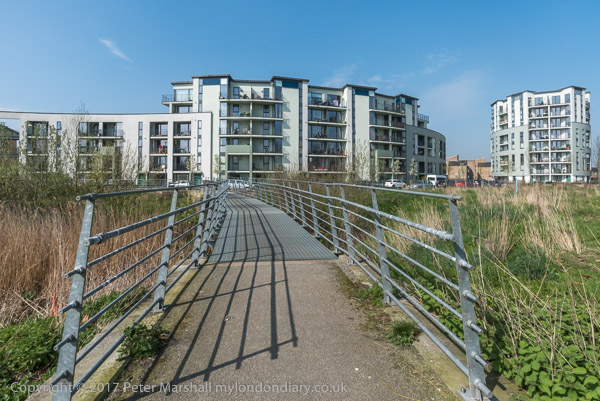
New buildings on York Memorial Park and the West Hendon Estate across the Welsh Harp

But the proceedings there were tedious and while such things are important unless you are personally involved it soon becomes hard to remain involved. Nothing I heard in the short time I stayed would not have better been submitted as documents and probably had been. And it was a nice day outside.
Colindale and West Hendon Estate 2017
RAF Museum

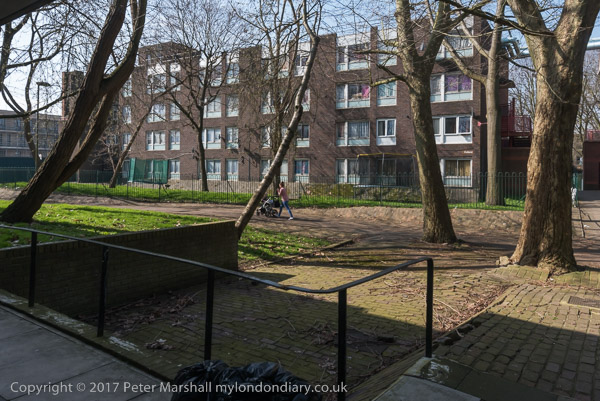
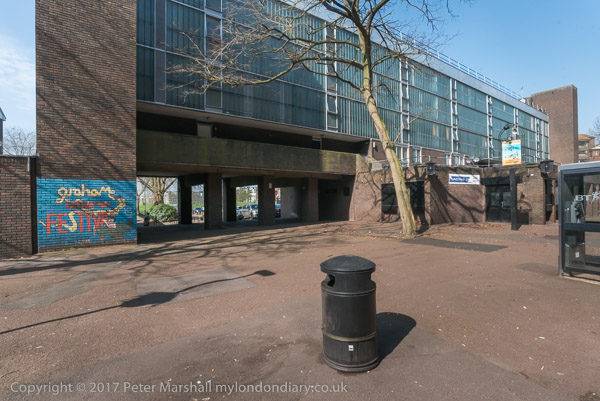
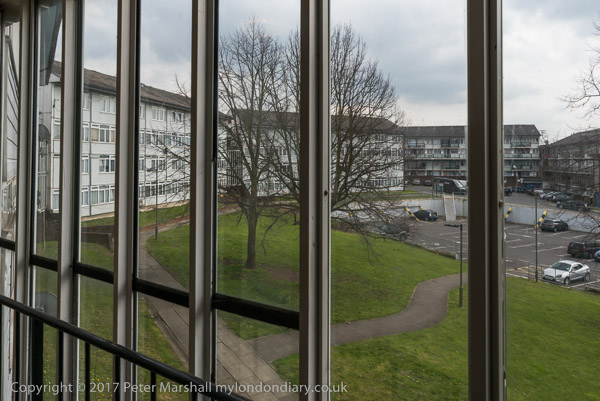
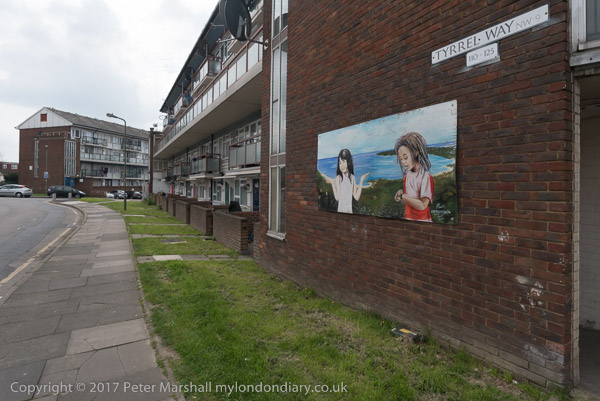
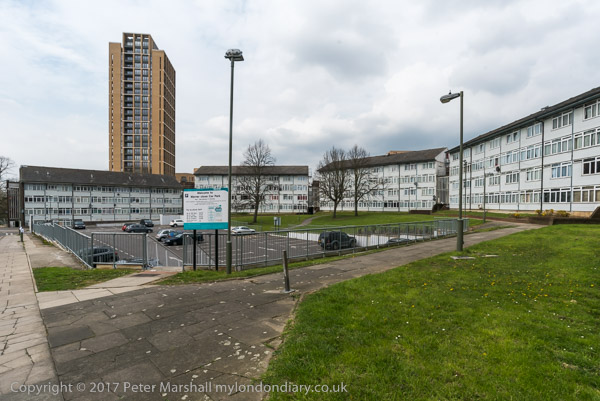
I left and paid a short visit to the rest of the RAF Museum before going to photograph Grahame Park across the road from the museum, a large council estate built by the GLC and Barnet Council on the rest of the old Hendon Aerodrome site in the 60s and 70s, the first residents moving there in 1971.
Colindale and West Hendon Estate 2017
Grahame Park Estate

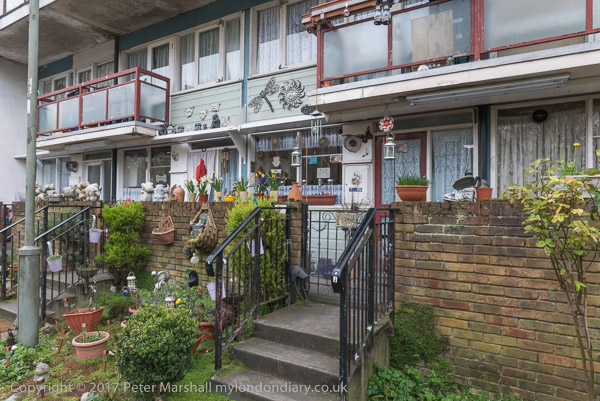
By the time I first visited to photograph the estate in 1994, some changes had been made, removing connecting walkways to split the flats into smaller units and replacing some flat roofs with pitched roofs. A more dramatic phased regeneration began in 2003 and considerable building work was still taking place in 2017.

Colindale and West Hendon Estate 2017

The regeneration will greatly increase the number of homes on the estate, and the new properties are more energy efficient, but the original number of council rented properties of almost 1800 will be reduced to around 300. Around 900 of the new properties were to be at so-called “affordable rents” and the remaining 1800 for sale or rent at market prices.

A few hundred existing residents with secure tenancies will be rehoused, but most of the estate residents do not qualify for rehousing, including some who had lived here for over 15 years. They will need to find private rented properties elsewhere in a typical example of social cleansing by Barnet Council, in league with developer and social landlord Genesis Housing Association.

As is the case in other regeneration projects on council estates around London this results in a huge transfer of land from public to private ownership and fails to meet the housing needs of poorer residents, many of whom are forced to move further from jobs, friends and families.

Colindale Ave

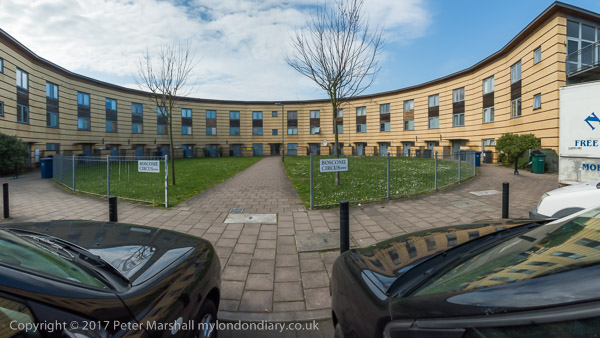
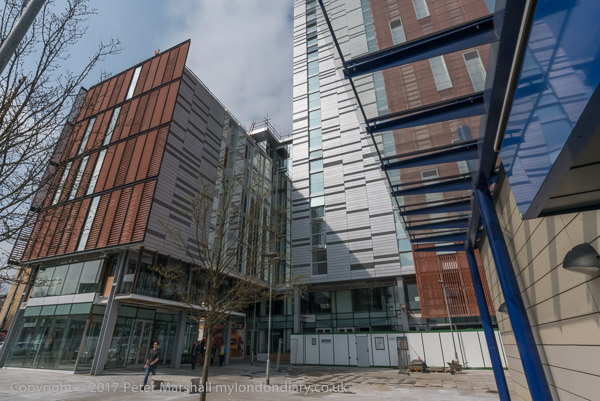
I walked from the estate to Colindale Station through another large area of building work, mainly of expensive private housing in large blocks of flats with an area action plan for of expensive private housing in large blocks of flats. Of course we need new housing but should be concentrating on providing it a reasonable cost for those most in need – which means social housing. Not building homes that will take up to 46% of tenants incomes in London, well above the “30 per cent of income” affordability threshold set by the ONS.

WestHendon Estate

I could have walked from Grahame Park to the West Hendon Estate about a mile and a half away but couldn’t see a decent route on the map, so took the tube to Hendon Central and caught a bus from there. The West Hendon Estate owes its genesis to a large bomb on 13th February 1941 which destroyed or rendered uninhabitable 366 houses, damaging a further 400 in the area, killing 75 people and severely injuring another 145. Over 1500 people were made homeless.

York Park there became York Memorial Park, a green open common designated as “a War Memorial in perpetuity” as a mark of respect to all who lost their lives. In the 1960s the remaining houses in the area were replaced by the West Hendon estate, comprising of 680 one-bedroom flats, two-bedroom maisonettes and three-bedroom council houses, along with open space, a community centre and a play area.

Barnet Council handed the memorial park – at least £12 million of public land – over to developers Barratt and they built a 29 storey tower block on the park – “perpetuity” becoming shorter than living memory. The West Hendon estate is being demolished in phases and being replaced by Hendon Waterside, largely expensive flats with views across the Welsh Harp. There will be an increase in the number of homes to 2,171 but many will go to overseas buyers and will be kept empty as investments whose value is expected to rise steeply. And somewhere at the back of the estate will probably be a little social housing – but only a small fraction of the original 680.

Few of the residents will qualify for rehousing but with higher rents and less security of tenure. Most will lose their homes and be ‘socially cleansed’, forced to move out of the area and away from friends, jobs, schools etc. Housing isn’t just a crisis but a shamefull twentyfirst century scandal.

More pictures on My London Diary:
West Hendon Estate
Colindale


FlickrFacebookMy London DiaryHull PhotosLea ValleyParis
London’s Industrial HeritageLondon Photos

All photographs on this page are copyright © Peter Marshall.
Contact me to buy prints or licence to reproduce.