UVW Protest Topshop & John Lewis – 2016

UVW Protest Topshop & John Lewis – Saturday 16th April 2016 was a busy day for me in London with a large march and rally by the Peoples Assembly Against Austerity demanding an end to privatisation of the NHS, secure homes for all, rent control and an end to attacks on social housing, an end to insecure jobs and the scrapping of the Trade Union Bill, tuition fees and the marketisation of education and smaller protests against repression in Iran and Palestine, all of which you can read about on My London Diary.

March for Homes, Health, Jobs, Education
Homes, Health, Jobs, Education Rally
Dancing for Homes, Health, Jobs, Education
Ahwazi protest against Iranian repression
Palestine Prisoners Parade
UVW Protest Topshop & John Lewis

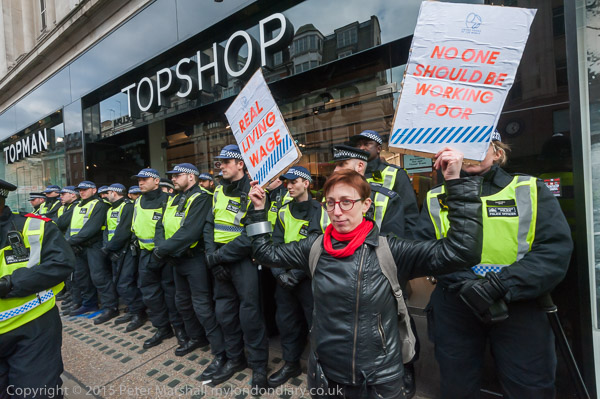
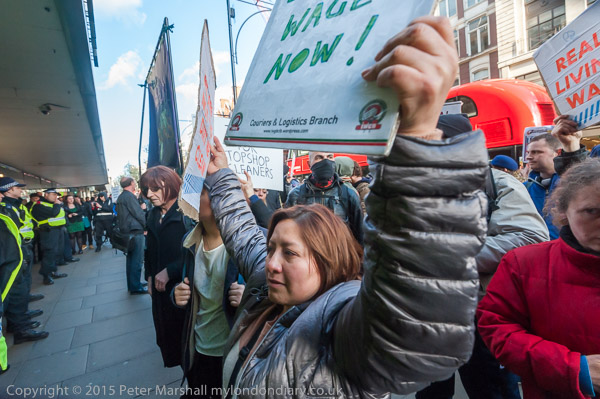
After all that I went with the grass roots trade union United Voices of the World on their protest against Topshop, demanding the reinstatement of 2 workers there suspended by cleaning contractor Britannia for calling for the London Living Wage of £9.40 for Topshop cleaners. All of the pictures in this post come from the UVW protests at first outside Topshop on the Strand, and then at the Topshop at Oxford Circus.
UVW Protest Topshop & John Lewis

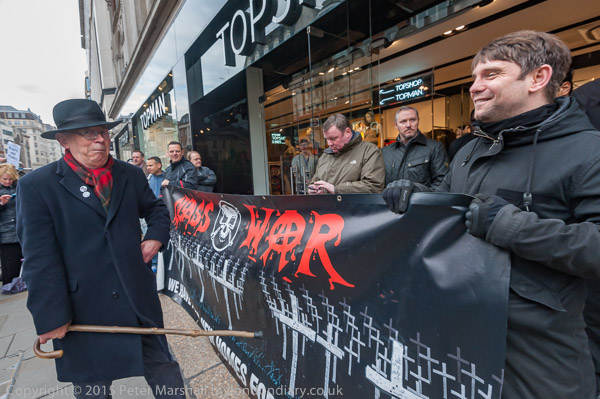
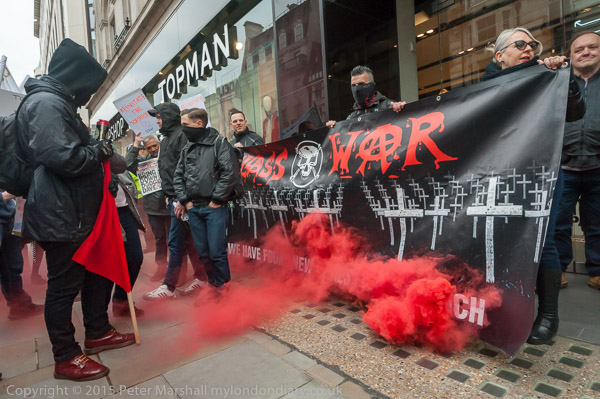
On Strand the shop was protected by security but soon a large group of police arrived and tried to move the protesters away from the store. The protesters refused to move and police began pushing them around roughly, but soon stopped, perhaps because they were being photographed and filmed by a large group of press who like me had been at the Peoples Assembly rally.
UVW Protest Topshop & John Lewis

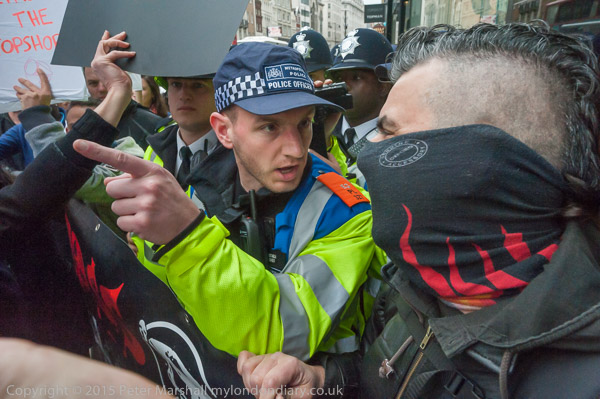
Police pulled one protester to the side and started to ask questions and a large crowd formed around him; the man refused to answer police questions and eventually the officer concerned gave up.
UVW Protest Topshop & John Lewis

There was a short rally on the pavement outside and Susanna, one of the two cleaners victimised by Britannia and Topshop spoke briefly but soon broke down in tears. After a couple of minutes she started again and was loudly applauded.
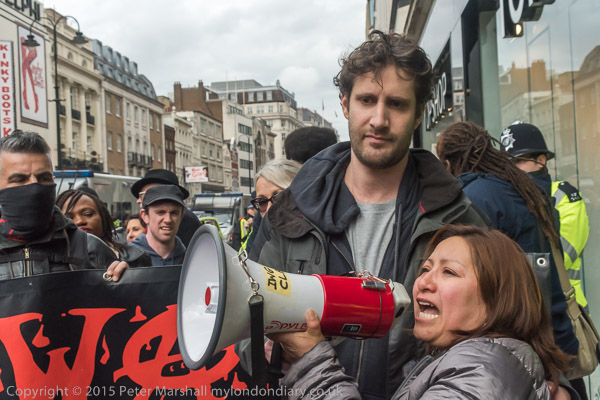
The protesters then marched off and I met them again on Oxford Street outside the flagship Topshop store close to Oxford Circus.
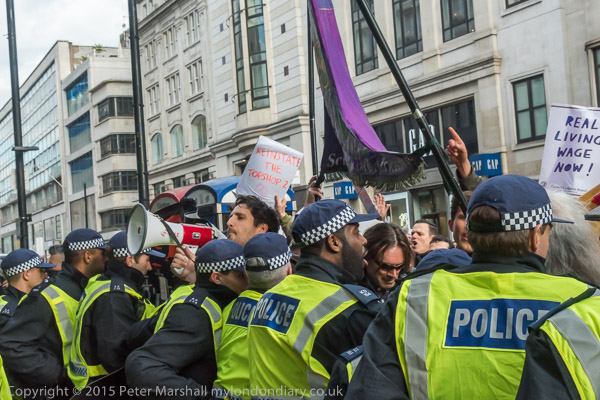
A squad of police rushed to stand in line to guard the main door on Oxford Street and pushed the protesters away. After a short while the UVW protesters marched around the block to other entrances, where police moved inside the store to meet them.
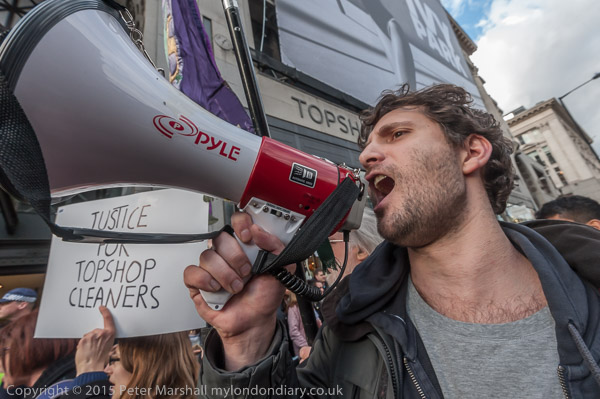
The UVW moved back to Oxford Street to continue the protest outside the main entrance, again blocked by police. Class War who were supporting the UVW moved their banner up to the police line and there was a standoff as the two groups eyed each other from a couple of feet away.
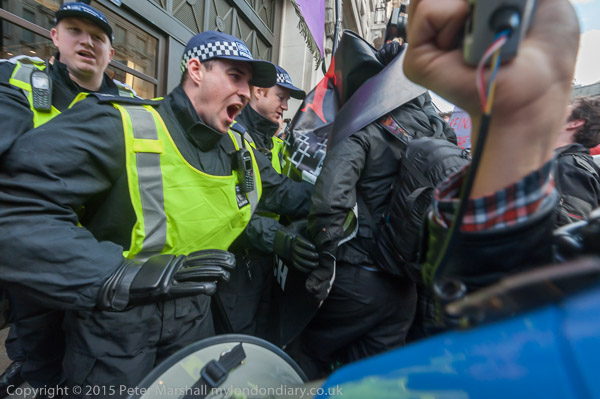
Class War then produced some yellow ‘Crime Scene’ tape and stretched it across in front of the police line, which left some officers looking rather perplexed.
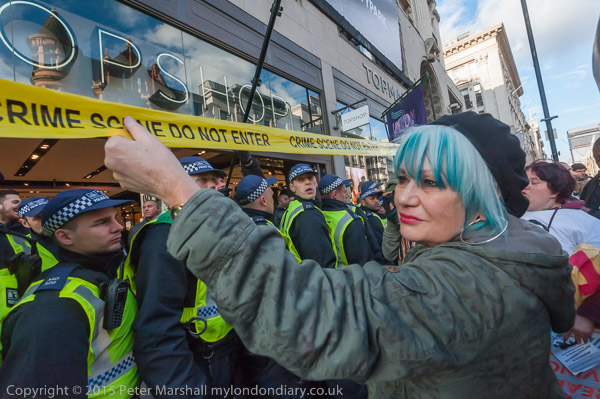
The protesters then marched off towards John Lewis, where the UVW has long been The protesters then marched off towards John Lewis, where the UVW has long been holding protests calling for the cleaners to be treated equally with other workers in the store.
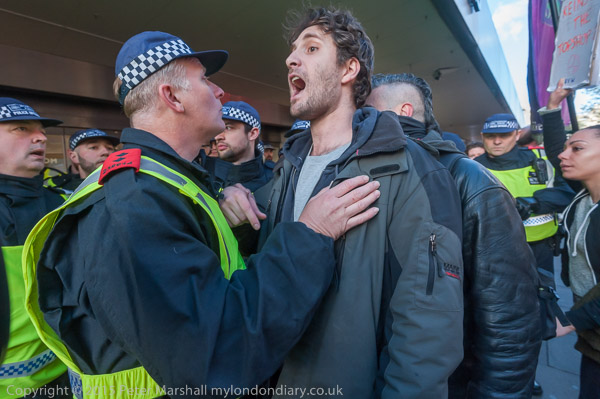
They walked towards the doors, but police pushed them back forcefully knocking one woman flying. Others rushed to help her, and UVW General Secretary Petros Elia protested angrily at the officer who had pushed her.
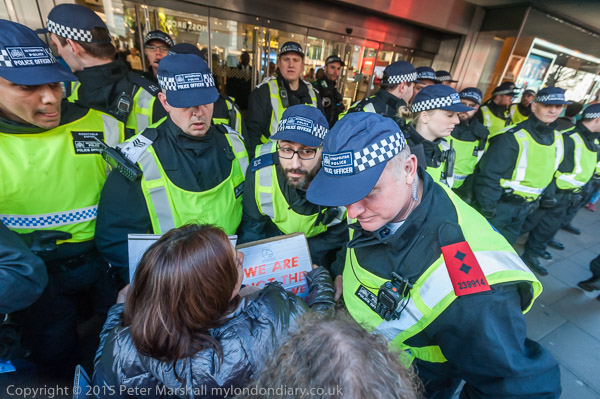
Eventually a senior officer came to see what had happened and listened to the complaint. To my surprise he then asked the officer to apologise for using excessive force – something I’ve never known to happen at a protest before.
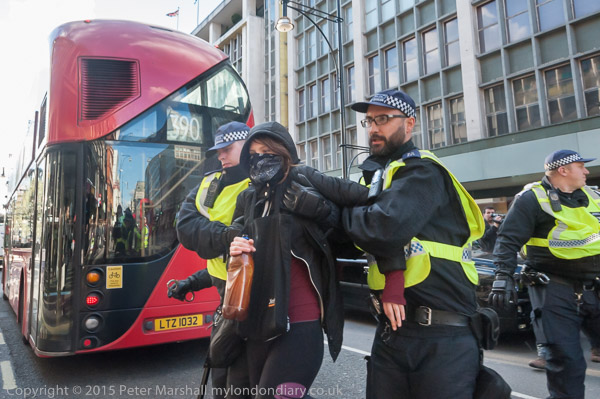
There were a few speeches to explain to the shoppers walking by why the protest was taking place. Clearly many who listened felt that the cleaners were being shabbily treated by companies like Topshop and John Lewis who use outsourcing to get work done on the cheap with conditions that are greatly inferior to their directly employed workers.
The UVW left to return to continue their protest at Topshop, but I left them at Oxford Circus to take the tube – I was already late for dinner.

More on My London Diary:
UVW Topshop & John Lewis Protest
UVW Topshop 2 protest – Strand


FlickrFacebookMy London DiaryHull PhotosLea ValleyParis
London’s Industrial HeritageLondon Photos

All photographs on this page are copyright © Peter Marshall.
Contact me to buy prints or licence to reproduce.
International Rebellion – Shut Down London 2019

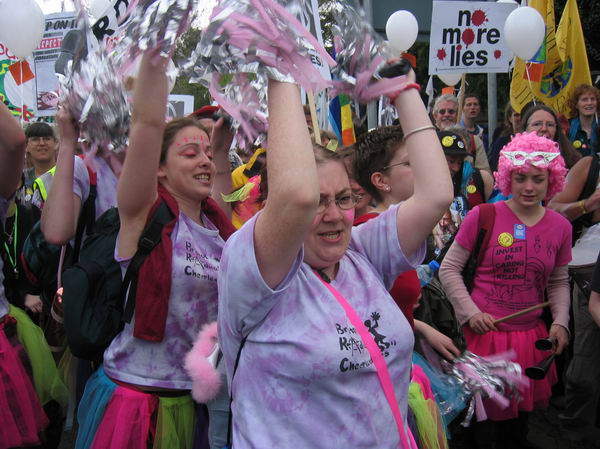
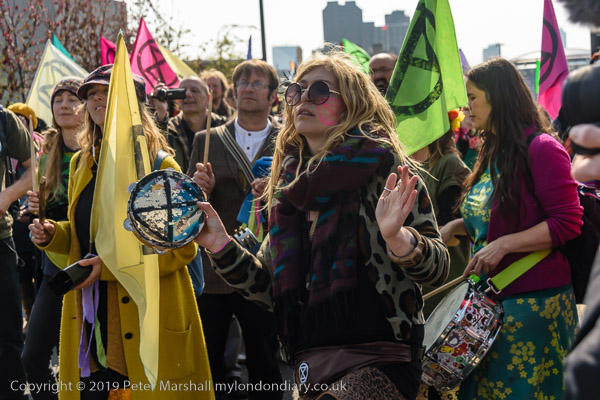
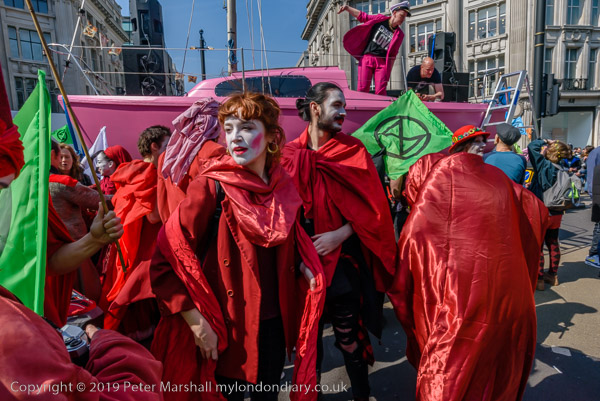
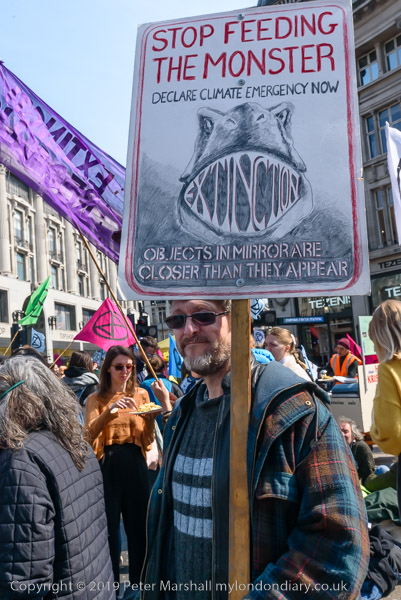
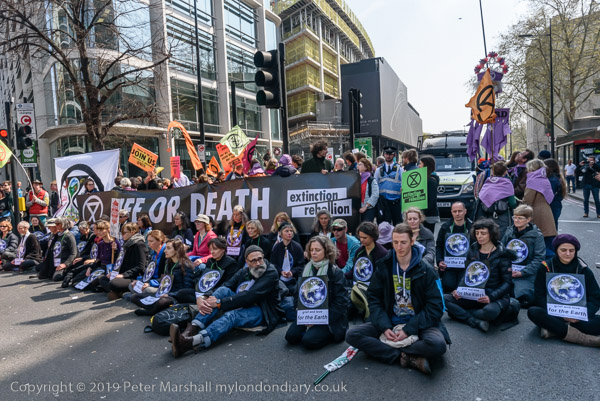
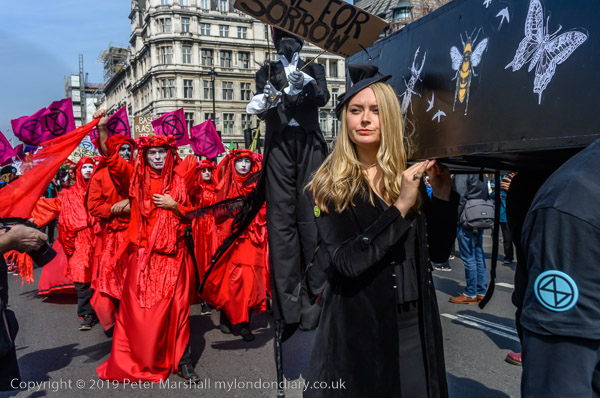
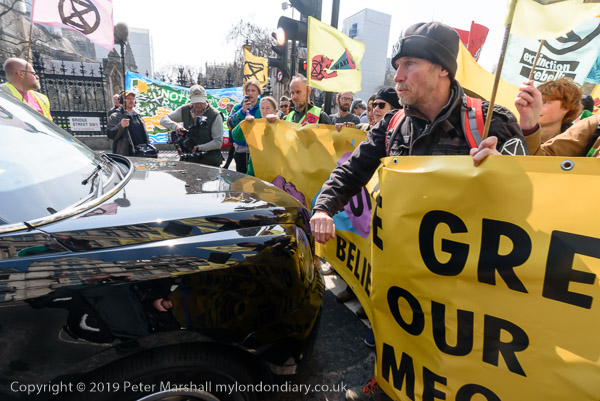
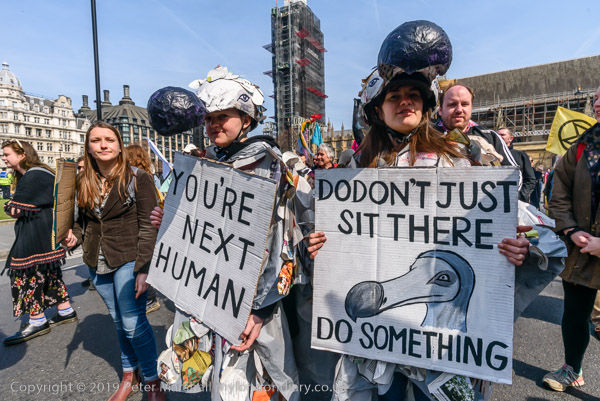
International Rebellion – Shut Down London: Monday 15th April 2019 was the start of Extinction Rebellion’s International Rebellion which lasted for 11 days. They had said they intended to keep the roads closed until the government took necessary action on the global climate and ecological emergency. They said the government must tell people the truth about the disaster we are facing, halt biodiversity loss, reduce greenhouse gas emissions to net zero by 2025, and set up and be led by a Citizen’s Assembly on climate and ecological justice.

International Rebellion - Shut Down London

Of course the government did nothing of the sort, but simply issued a number of intentionally misleading statements claiming they were world leaders in combating climate change and waited for the protesters to go home.

International Rebellion - Shut Down London

It’s not quite true they did nothing. They put increasing pressure on the Met Police to do something effective against the protesters, and later introduced some draconian laws that could be used against future protests like this.

International Rebellion - Shut Down London

Five years later every week brings more evidence that climate change is really happening and our government still fails to take this seriously, issuing licences for further fossil fuel exploration. What we need is urgency but what we see is complacency.

International Rebellion - Shut Down London

XR’s ‘International Rebellion’, with actions around the world as well as in London was just one of a whole long series of protests, international conferences, scientific papers and more over many years that have warned that the world is heading for catastrophe. Svante Arrhenius first warned that the increase in carbon dioxide levels in the atmosphere would lead to global temperature increase back in 1896.

Back in the 1960s and 70s, when I first became interested (and spoke publicly though very few were listening) our main emphasis was on resource limitations and population growth. It was by then very clear that anyone who thought we could continue our exponential economic growth on a finite planet had to be an economist and not anyone living in the real world.

But both our major political parties (and most of the minor ones) are still committed to growth while paying lip-service to ‘net zero’. And that growth will be dirty growth, continuing to exploit our oil and gas resources as well as clear cutting forests elsewhere in the world to burn their wood.

I think it is more a failure of our political system, very much a top-down system designed to protect the interests of the wealthy, than of individual politicians. XR’s call for a Citizen’s Assembly on climate and ecological justice is an important one which would work from the bottom up and produce policies which were based on the interests of all of us – which is why it will almost certainly never be implemented.

While they went home after 11 days having failed to change government policies, these protests were impressive and did I think have some effect in changing public opinion, awakening more to the desperate situation we are now in. Even some of those working for the media if not their proprietors.

XR’s call to rebellion stated “Our leaders have failed us. It’s time to rebel – and have a damn good time doing it.” And for those eleven days they put on an impressive festival, but it was only a start of what need to happen.

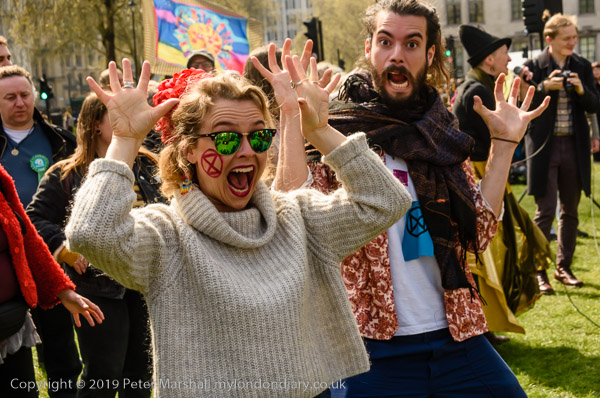
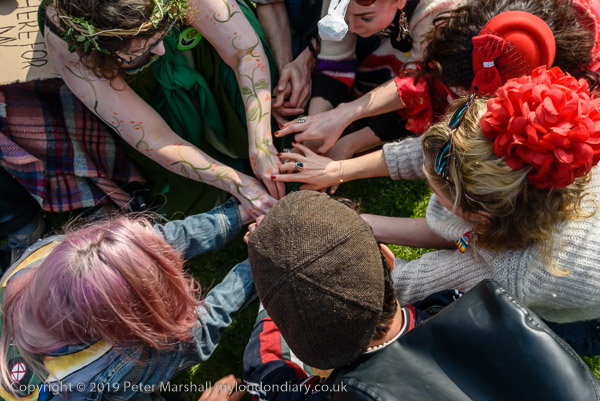
Over those eleven days I went to XR’s events in London on several days, taking many pictures and writing about what I saw of this impressive protest. The pictures here all come from the first day, Monday 15th April 2019 and here are links to all my posts from that day – not all XR.

Extinction Rebellion Garden Bridge
Extinction Rebellion Sea at Oxford Circus
Anti-capitalist environmental action
Extinction Rebellion Marble Arch
Extinction Rebellion Funeral Procession
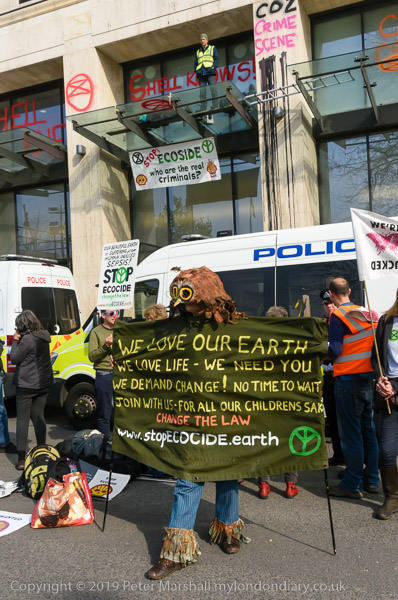
Extinction Rebellion at Shell
Save Lambeth Children’s Centres


FlickrFacebookMy London DiaryHull PhotosLea ValleyParis
London’s Industrial HeritageLondon Photos

All photographs on this page are copyright © Peter Marshall.
Contact me to buy prints or licence to reproduce.

March & Rally for Palestine – 2002

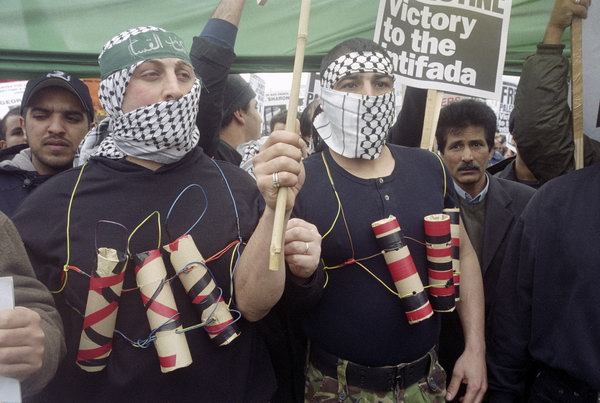
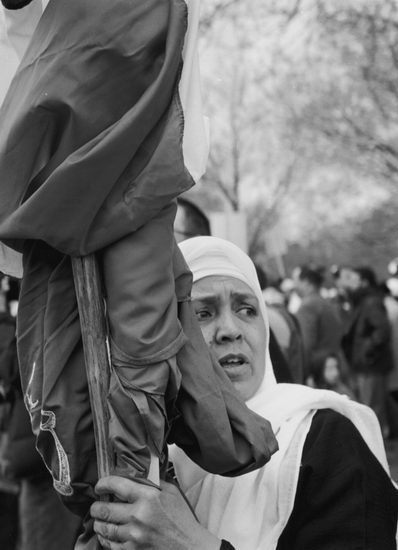
March & Rally for Palestine: I find it interesting to look back at the march and rally in support of Palestine which took place in London on Saturday 13th April 2002 for several reasons.

March & Rally for Palestine

The march was organised by the Muslim Association of Britain and came after the start of the large scale Israeli Operation Defensive Shield in towns and villages across the West Bank and battles against Palestinians in Jenin and Nablus in early April.

March & Rally for Palestine

Operation Defensive Shield was aimed at at halting Palestinian suicide bombings against civilians in Israel which were taking place during the Second Intifada.

March & Rally for Palestine

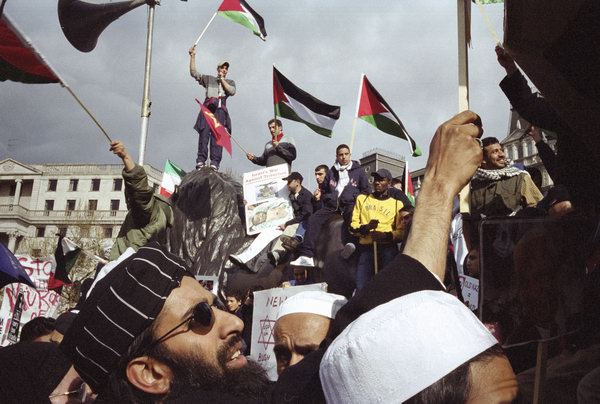
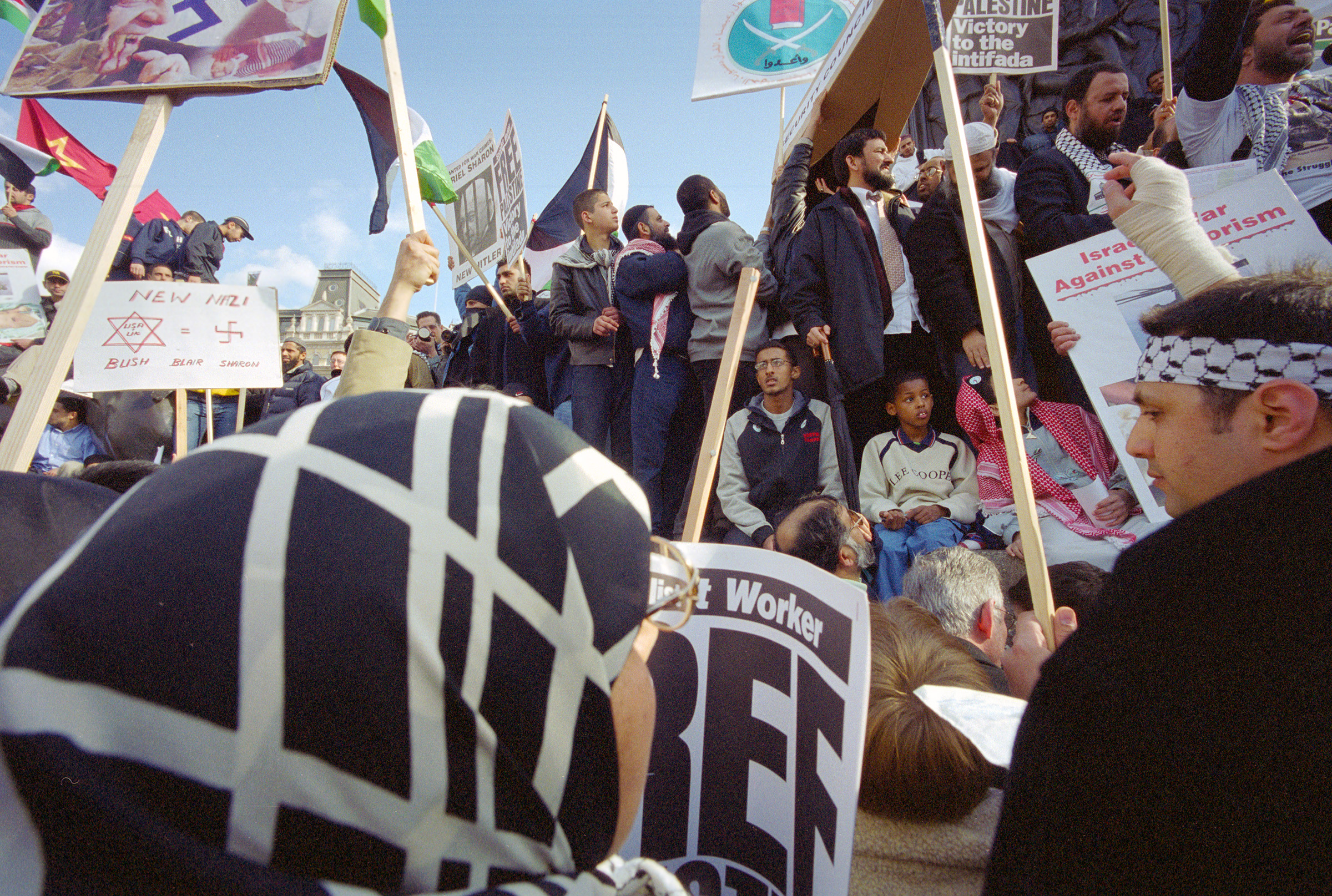
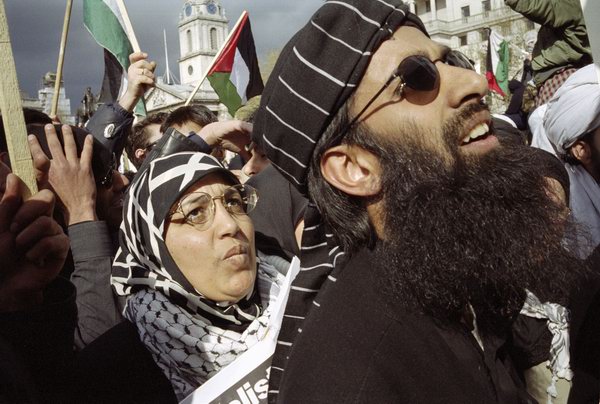
Around 30,000 people, mainly Muslims, had gathered at Hyde Park to march to the rally at Trafalgar Square (police estimates of the number at 10-15,000 were clearly too small.) According to CNNthey clambered on to Nelson’s Column chanting slogans before burning and tearing Israeli flags.”

March & Rally for Palestine

Well, a few of them did burn flags, though not in my sight, but rather more joined in the chanting of ‘”Down with Israel,” “Down, down U.S.A.” and “Jihad!” or holy war.’ Later in their article CNN do quote a MAB spokesman telling them that jihad “means ‘struggle', it does not mean war“.

They also quote the MAB spokesman telling them that the youth “tend to get a bit excited just as a large crowd does at a football match” and making clear that the MAB “do not believe in the burning of any flag.”

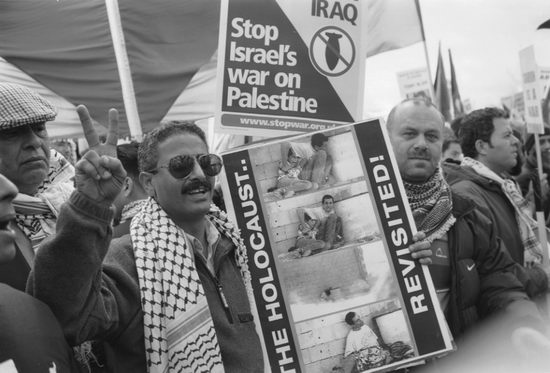
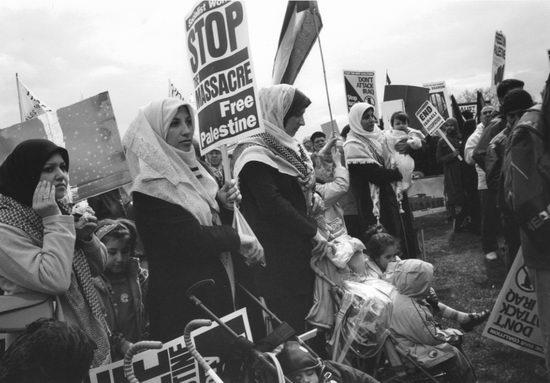
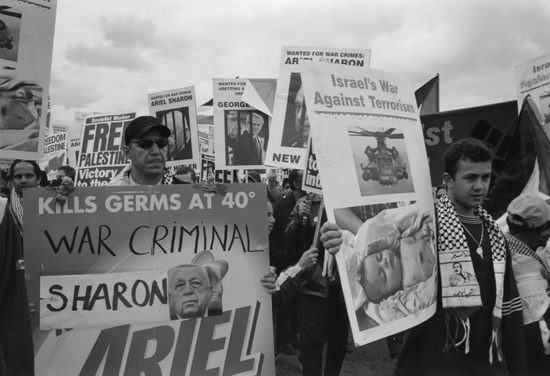
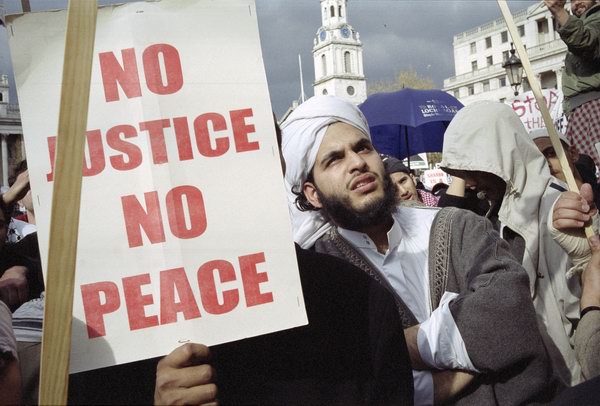
I think you can see from my pictures that this protest had a very different atmosphere from the current protests calling for a ceasefire and the end of the massacres of the Palestinian people. The current protests involve the whole range of the British population – including many Jews – and are largely about ending the senseless wholesale killing and destruction while many in 2002 were clearly showing support for the activities of Palestinian militants including suicide bombers. There are a number of posters and placards in my pictures which would now result in arrests.

Tony Benn was one of the speakers at the rally and is of course no longer with us, but Jeremy Corbyn still speaks at today’s protests. CNN quotes him in 2002 as saying:

This is a demonstration by thousands of British people, Muslim and non-Muslim, demanding peace and the establishment of a Palestinian state and withdrawal by Israeli forces. And the message to Tony Blair is now clear, he must stop speaking on behalf of George Bush and instead on behalf of peace and justice in the Middle East.”

Replace Blair by Sunak, Bush by Biden and it still makes sense.

This was also I think the first time I had posted colour pictures of a protest on My London Diary. Back in March 2002 I was still working with film, both black and white and colour negative.

Of course film does not come with EXIF data, but I think the colour pictures were probably made using a Konica Hexar F, with various Leica M fitting lenses, with those in the crowd using a 15mm Voigtlander. They were scanned with the first film scanner I bought, a Canoscan which had just come out in 2002, and neither hardware or software were really up to the job. The final picture is not one I posted in 2002, and I have improved the scan made then a little in Photoshop.

A few more pictures on the April 2002 page of My London Diary.


FlickrFacebookMy London DiaryHull PhotosLea ValleyParis
London’s Industrial HeritageLondon Photos

All photographs on this page are copyright © Peter Marshall.
Contact me to buy prints or licence to reproduce.

CND Aldermaston March 2004

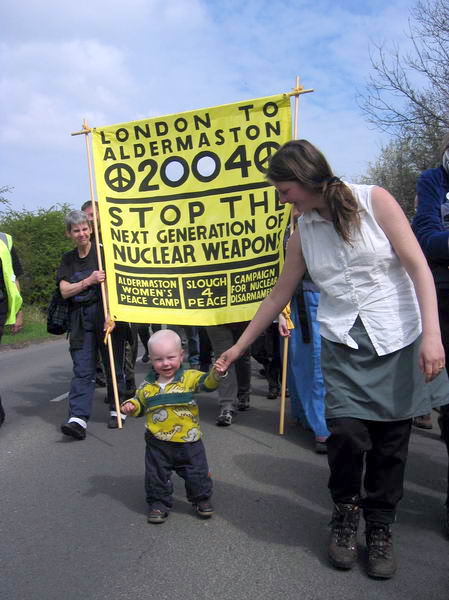
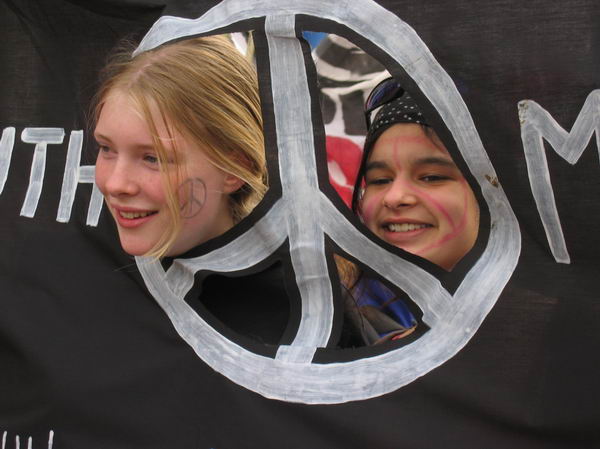
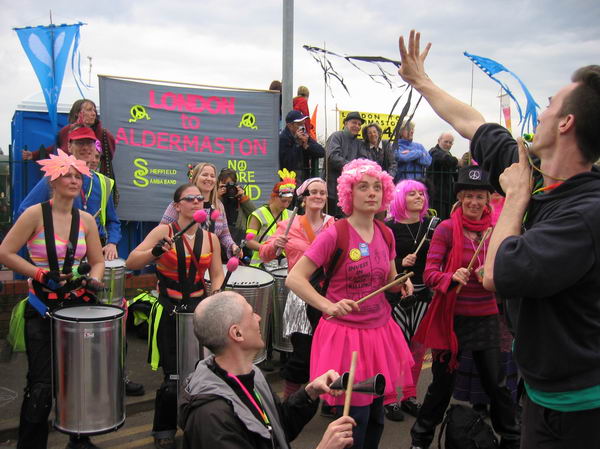
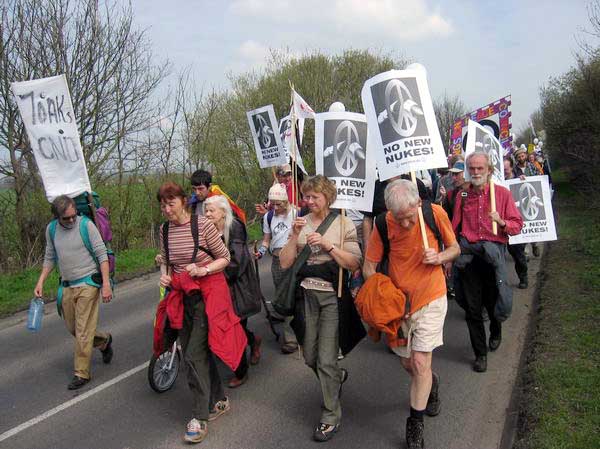
CND Aldermaston March – On Easter Monday 12th April 2004 I walked from Reading to Aldermaston in a protest against the next generation of nuclear weapons organised by CND, the Aldermaston Women’s Peace Camp and Slough4Peace. Since the original march in 1958 the dangers of nuclear weapons have proliferated and we have seen many more years of lies and deception dressed up as security and national interest.

CND Aldermaston March

I hadn’t marched all the way from London though I had gone to the Trafalgar Square ‘No New Nukes’ Rally before the march on Friday 9th April and had walked with them tas far as Kensington. I had other business on the Saturday, but on Sunday 11th I cycled to meet the march at Maidenhead and walked the next four miles with them to their lunch stop at Knowl Hill before walking back to Maidenhead to pick up my bike and cycle home.

CND Aldermaston March
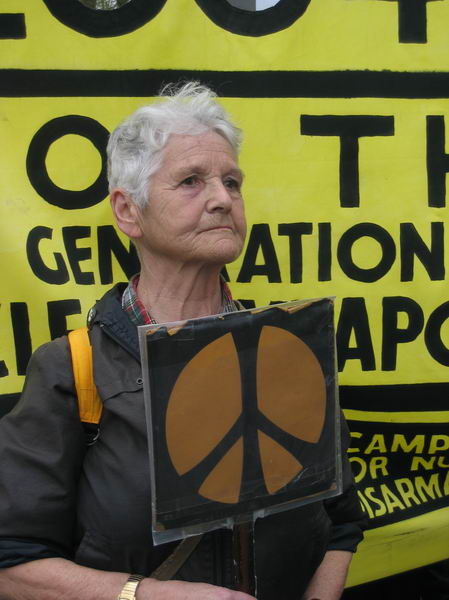
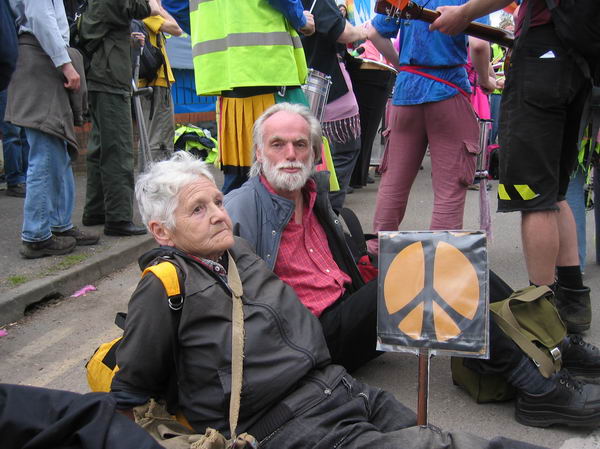
Pat Arrowsmith

I was up early on Easter Monday to catch a train to Reading with my wife and elder son where we joined the marchers who had spent the night in Reading as they were about to set off.

CND Aldermaston March

I’d spent the previous 3 days walking around ten miles a day carrying a heavy camera bag, and the weight of a Nikon with a solid lens round my neck was getting to be too much for me. I felt I couldn’t do another day with at least 12 miles carrying this load. So unusually my only photographic equipment for the day was a tiny Canon Digital Ixus 400, a 4Mp camera weighing around 230 grams.

CND Aldermaston March

It generally did a very good job, though the 2272 x 1704 pixel files were a little smaller than usual, and it only gave jpeg files rather than the RAW I normally used allowing much less post-processing. Despite having a sensor less than a tenth the area of my Nikon DX camera it was hard to tell a difference in the quality of the result. Of course I was taking pictures in good daylight – and under more taxing conditions the Nikon raw files would have been streets ahead. All of the pictures in this post were made with the Canon Ixus.

The main limitation of the Ixus was its sometimes very slow focus. The pause between pressing the shutter button and the camera actually taking a picture could sometimes be very long. Sometimes so long that I’d actually put the camera down before the exposure, and as well as the pictures it made I also returned home with quite a few pictures of random patches of road and grass from Berkshire.

But we walked all the way, with a stop at AWE Burghfield, the UK’s nuclear bomb factory and then on the Aldermaston, where we also walked halfway around the perimeter fence before getting a lift to the station.

You can see pictures from Friday’s rally and the march on Sunday on My London Diary as well as many more pictures from Easter Monday.


FlickrFacebookMy London DiaryHull PhotosLea ValleyParis
London’s Industrial HeritageLondon Photos

All photographs on this page are copyright © Peter Marshall.
Contact me to buy prints or licence to reproduce.

End Immigration Detention – Harmondsworth 2015

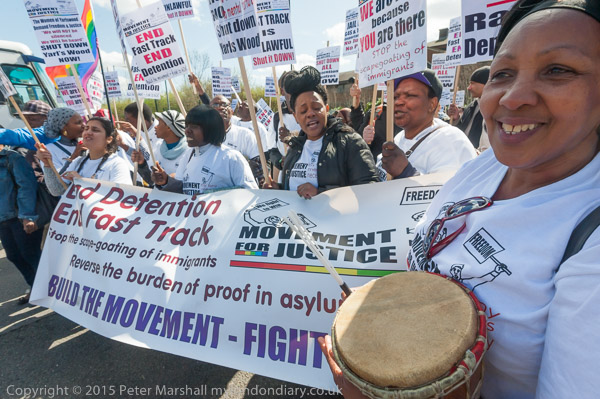
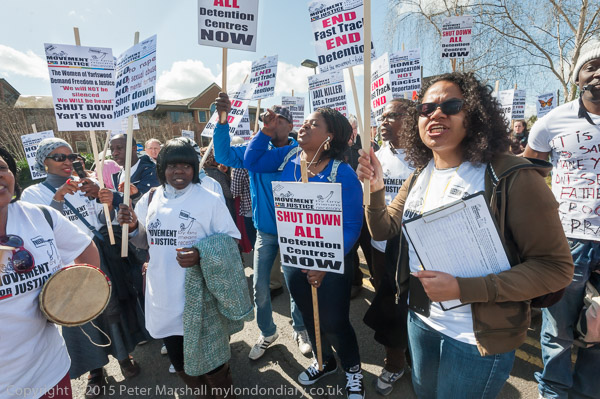
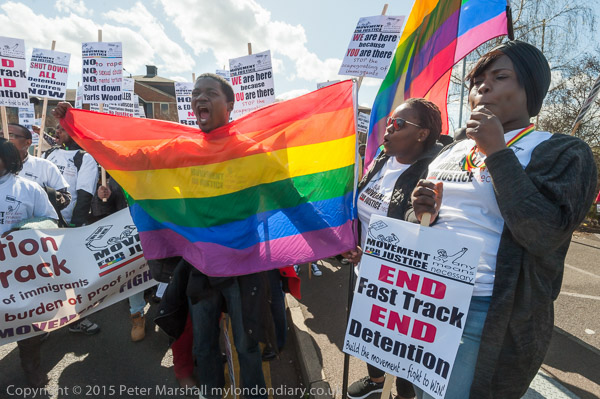
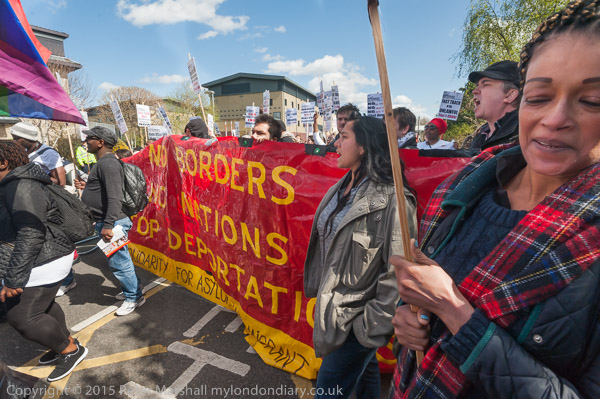
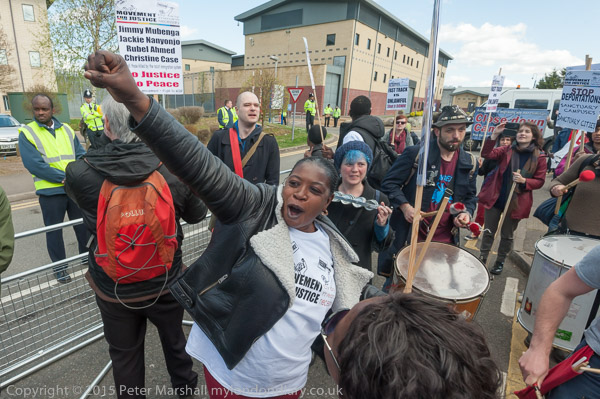
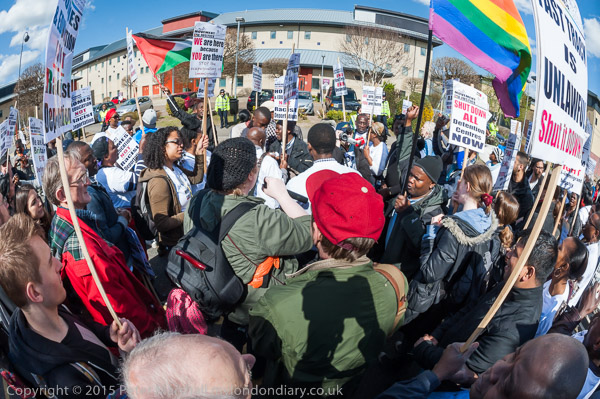
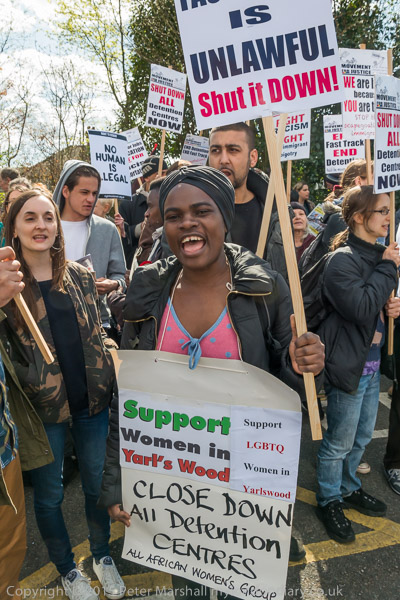
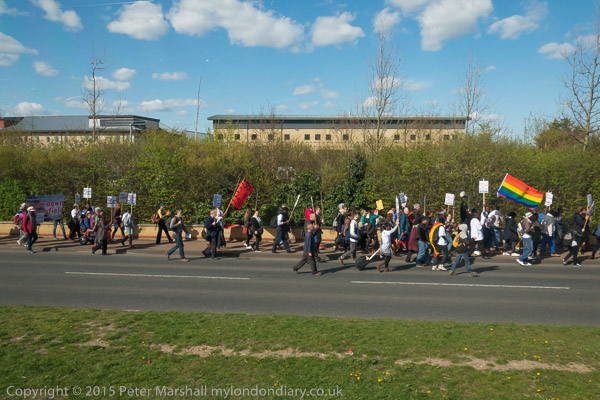
End Immigration Detention – Harmondsworth: Saturday 11th April 2015 saw what I think was the largest protest to date outside the Heathrow Immigration Removal Centre on the Bath Road immediately north of Heathrow airport.

End Immigration Detention - Harmondsworth

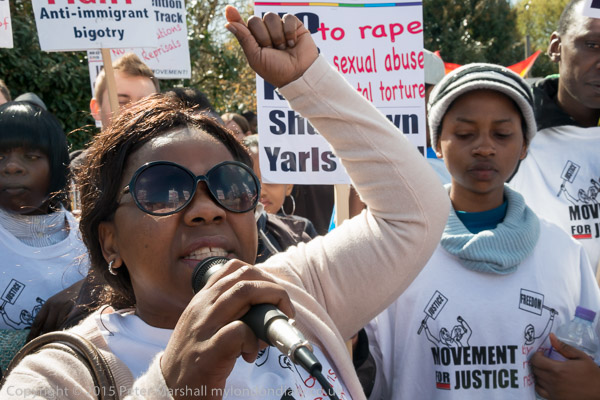
Various organisations had held protests here over the years, but these had grown since Movement for Justice began organising them, bringing a large group of current and former asylum seekers out from London on the tube to Terminal 5 and then on the short bus ride to the prison. They included some who had come from other cities in the country – and even from Glasgow. Other groups at the protest included No Borders, Southall Black Sisters and Shoreditch Sisters W I.

End Immigration Detention - Harmondsworth

There are two detention prisons on the site, both surrounded by 20ft high fences with a private road to a BT site running between them. Called Harmondsworth and Colnbrook, they were in 2015 both run by Mitie’s ‘care+custody’ division, and the overall name for the centre had changed to Heathrow Immigration Removal Centre, which made clear that the government intention was to deport people rather than operate a fair asylum system.

End Immigration Detention - Harmondsworth

The Home Office has long proved itself to be both incompetent and racist, and huge backlogs have built up over the processing of asylum claims. They seem to start from the position that all asylum claims are unfounded and those making them are liars, often despite the evidence. Claims that should be processed in days take months or years – during which time people may be kept in detention centres like these generally quite unnecessarily. We should imprison criminals, not asylum seekers.

End Immigration Detention - Harmondsworth

As I commented in 2015:

these are prisons, with those inside being unable to leave; they have a few privileges denied those in normal jails, including the use of mobile phones, but some disadvantages, including that they are all on indefinite sentences at the whim of government and subject to a constant threat they will be forcibly bundled onto a plane and taken back to the country from which they have fled, often at fear of their lives. These prisons are also run by staff who often lack the basic training, supervision and accountability of normal jails.”

The majority of those who claim asylum are eventually granted leave to remain in the UK as their claims are well-founded. Some have been deported before they are given time to prove their cases to the Home Office’s satisfaction under “fast track” procedures that have been ruled illegal.

Our laws prevent them from working and contributing to our economy and society, and almost all are keen to do so and have skills which are in short supply. We need a system that gives people the medical treatment they need and gets them back into normal work and life as quickly as possible. Instead far too many are simply parked in prisons like these without proper medical care and largely isolated from those who could help them. Its both inhumane and economically unsound.

Although police and a large team of security guards stopped the protesters from going down the road toward the prison blocks, forcing them into a pen in front of the administration building at the front of the site, the loud protest could be heard throughout the site. Some of the prisoners were able to use their mobile phones to welcome the protesters and let them known about the poor conditions inside, and their calls were relayed over the public address system the protesters had brought.

Most of those who spoke at the protest had themselves been held inside these or other detention centres often for long periods after escaping from beatings, rape and torture in their home countries, and several spoke about their experiences in the system here. Some said they had been treated as troublemakers because they stood up for their rights – and that inmates who failed to do so, whatever the strength of their cases, were likely to face deportation.

I was tired after a couple of hours of the noisy protest, with chanting, singing and dancing – though mainly I had just been taking photographs, and left to catch a bus home. I could hear the protest continuing from the bus stop several hundred yards away, and when the bus came – ten minutes late – saw the protesters making their way out of the site to a public footpath which runs along the side of the Colnbrook site to continue their protest closer to those prison blocks.

Many more pictures on My London Diary at End Immigration Detention.


FlickrFacebookMy London DiaryHull PhotosLea ValleyParis
London’s Industrial HeritageLondon Photos

All photographs on this page are copyright © Peter Marshall.
Contact me to buy prints or licence to reproduce.

Vaisakhi, Uganda & Freedom Umbrella – 2011

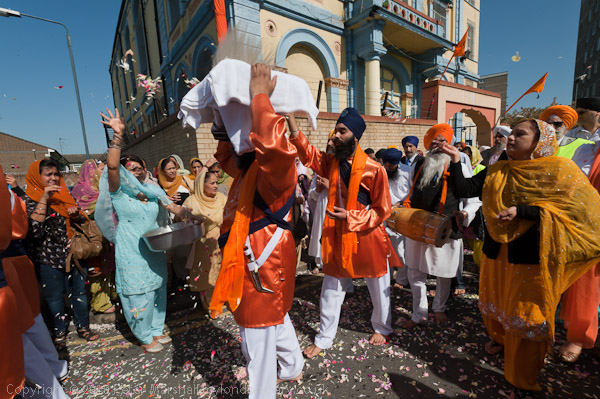
Vaisakhi, Uganda & Freedom Umbrella: On Saturday 9th April 2011 After visiting Woolwich to photograph the Vaisakhi celebrations I came back into central London to photograph Ugandans and Kurds protesting for freedom and democracy.


Vaisakhi Celebrations in Woolwich

Vaisakhi, Uganda & Freedom Umbrella

For some years I had been documenting religious festivals in and around London and had photographed a number of Sikh Gurdwaras at their Vaisakhi festivals.

Vaisakhi, Uganda & Freedom Umbrella

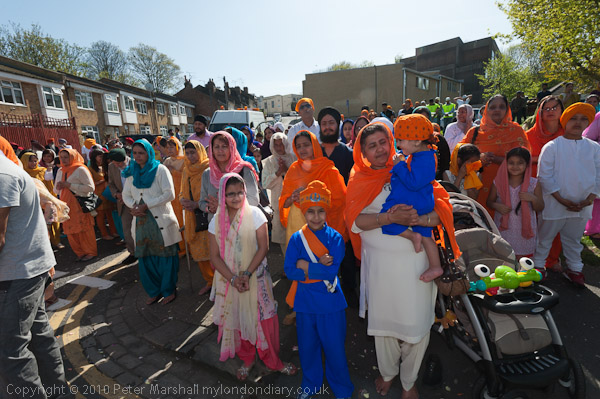
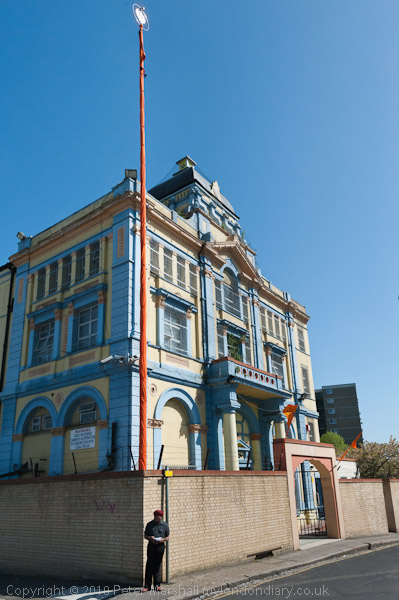
On Saturday 9th April 2011 I went to the Ramgarhia Association Gurdwara in Mason’s Hill Woolwich. The Ramgarhia are a Sikh community who originally came from the close to Amritsar in the Punjab and traditionally they were carpenters, blacksmiths and other artisan workers but were renowned for their military prowess and the victories of the armies.

Vaisakhi, Uganda & Freedom Umbrella

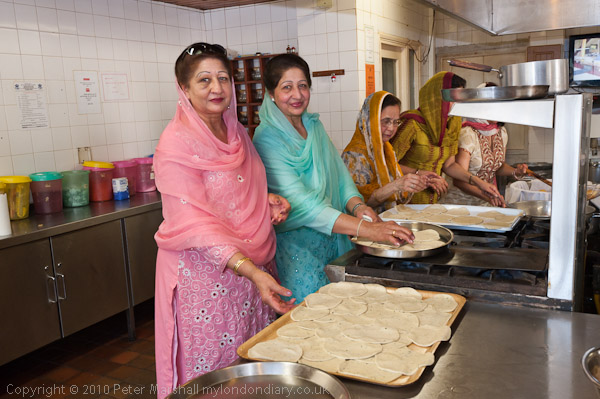
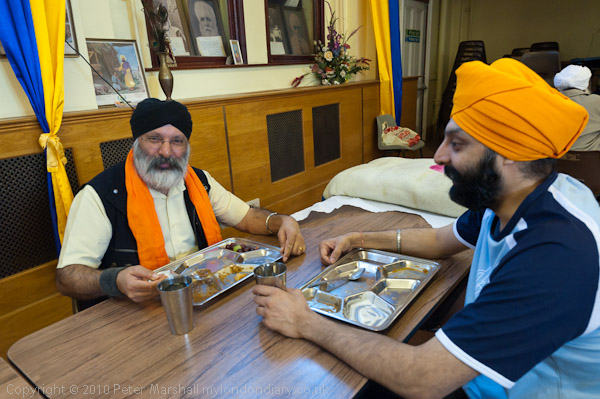
When I turned up I was warmly welcomed and taken to the Langar hall where I enjoyed some of the free vegetarian food on offer to all, prepared and served by members of the congregation who volunteer their services as a part of their religious practice and was able to talk with people there and wander around taking photographs.

Vaisakhi, Uganda & Freedom Umbrella

The Gurdwara was established in 1970 in an existing landmark building, the Victorian Freemasons Hall, just over the Woolwich border in Plumstead on a street which was then called Mount Pleasant.

The Freemason’s Hall was where the Royal Arsenal Football Club held its annual meetings and dinners, and on 16th May 1891 that the Annual General Meeting of the Royal Arsenal Football Club (earlier known as Dial Square) the committee announced it had decided two weeks earlier to turn professional and had thus resigned from the amateur Kent and London Associations.

In 1913, the club moved across the river to a new stadium at Highbury, where it continued to play until 2006, when it moved the short distance to its new Emirates stadium. Apparently it is doing quite well at the moment.

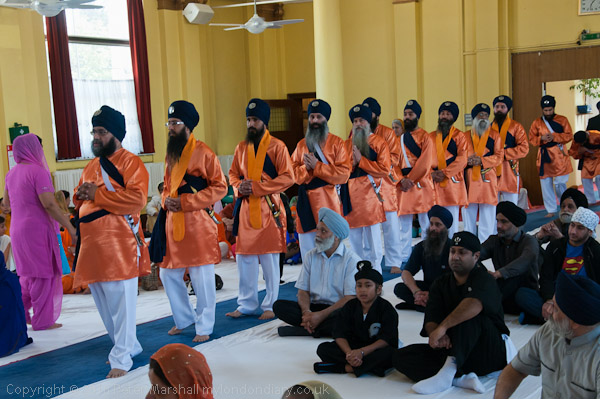
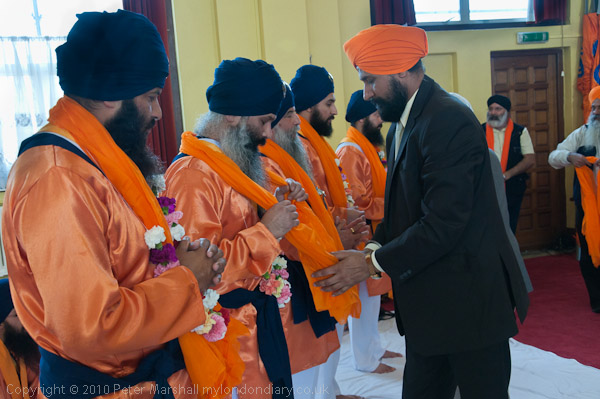
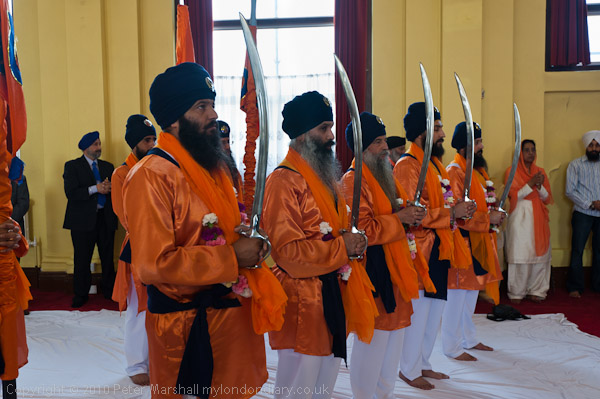
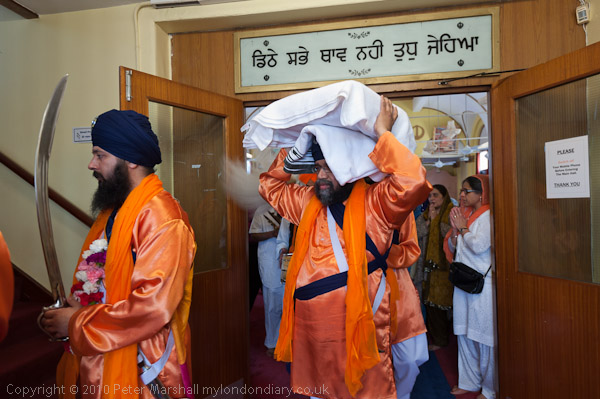
The Vaisakhi festival, which takes place on April 14 each year marks the formation of the Khalsa by Guru Gobind Singh, the tenth Sikh Guru, in 1699. You can read more about this and the Vaisakhi Nagar Kirtan procession which is lead by five Khalsa – baptised Sikhs – dressed in saffron robes and turbans and carrying swords in the account I wrote on My London Diary, Vaisakhi Celebrations in Woolwich, as well as in the posts on other Vaisakhi processions on that site.

On My London Diary I wrote in more detail about the origins of Vaisakhi and the 10th Sikh Guru who gave Sikhism its modern form with its symbols and the eternal guru, the Guru Granth Sahib, the holy religious scripture being reverently carried out to the procession in th picture above.

Unfortunately the start of the procession was delayed and although I had photographed the preparations for it I had to run to catch a train before the actual start of the colourful procession, with its joyful singing of Sikh hymns, martial arts demonstrations and Dhol drumming through the town, expected to take several hours.

More at Vaisakhi Celebrations in Woolwich.


Ugandans Demand Democracy – Uganda House, Trafalgar Square

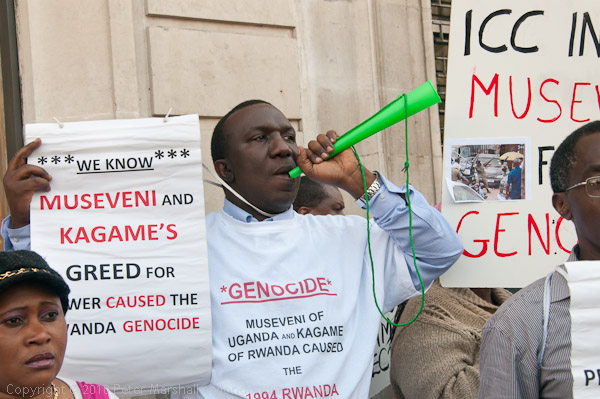
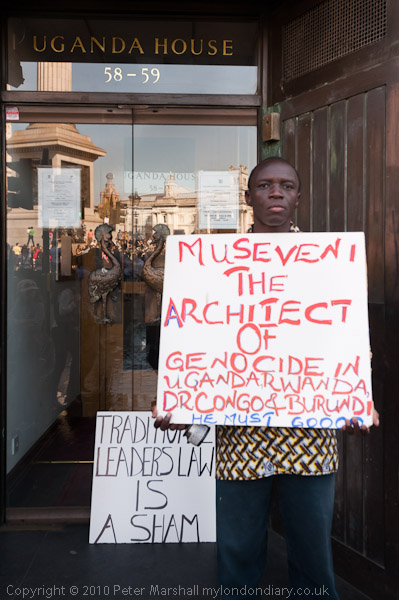
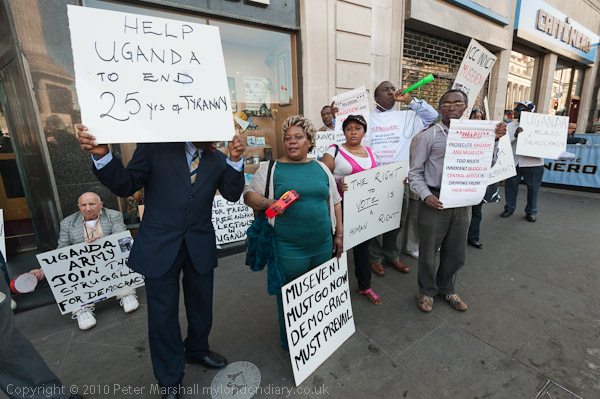
Ugandans had come to protest outside Uganda House in Trafalgar Square, calling for new free and fair elections after the rigged Parliamentary and Presidential elections in February.

The election on 18 Feb had resulted in the re-election of the sitting president Yoweri Museveni, in power for 25 years, apparently getting 68% of the vote.

But the EU Election Observation Mission which had been in Uganda for the vote reported the election, with a turnout of only 59% had been “marred by avoidable administrative and logistical failures which led to an unacceptable number of Ugandan citizens being disenfranchised” and that Museveni had used his presidential power to “compromise severely the level playing filed between the competing candidates and political parties.”

As well as the state owned Uganda Broadcasting Corporation giving much more coverage to the ruling NRM party, there had been extenisve human rights abuses with the police failing to take action against groups attacking opposition political meetings, intimidation and assaults on journalists and the cancellation of broadcasts.

Ugandans Demand Democracy


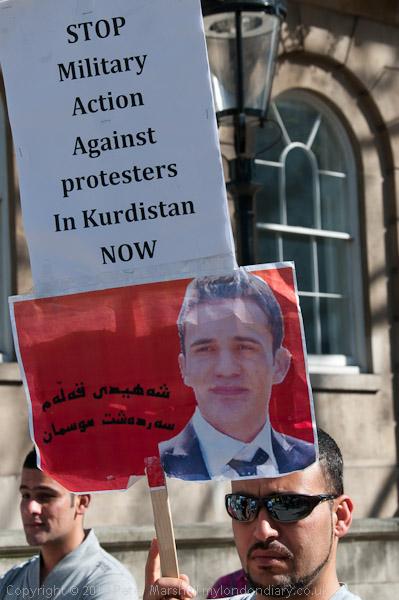
Freedom Umbrella Kurds March Through London – Old Marylebone Rd – Downing St

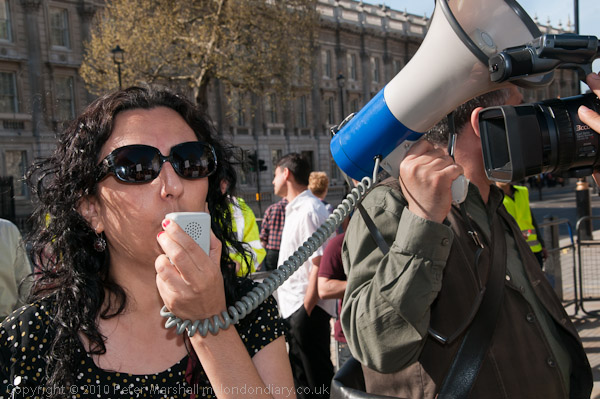
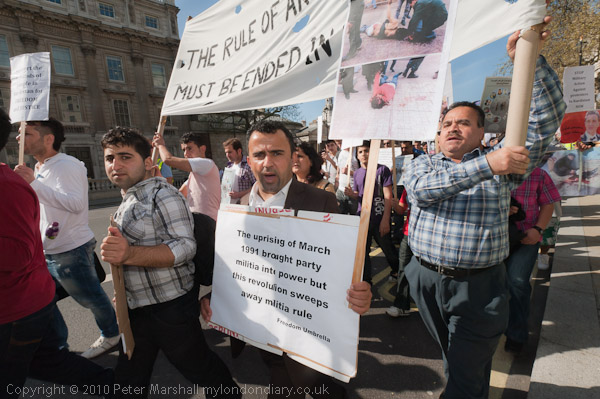
Freedom Umbrella (Chatri Azadi), a coalition of British-based Kurdish organisations and supporters, had organised a demonstration in front of the offices of the Kurdistan Regional Government in Old Marylebone Road followed by a march to a rally opposite Downing St.

They called for support of the people’s uprising for freedom and social justice in the autonomous region of Iraqi Kurdistan which had begun on 17th February but had hardly been noticed by UK media.

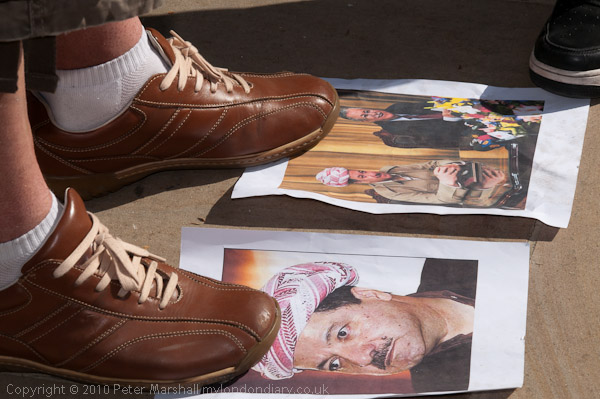
Two Kurdish militia groups dominate Iraqi Kurdistan and remain in power. On 19th April their security forces began a more organised violent crackdown on the protests which brought them to an end.

I met the protesters as the march neared Trafalgar Square and photographed their rally opposite Downing Street.

More pictures Freedom Umbrella Kurds March In London.


FlickrFacebookMy London DiaryHull PhotosLea ValleyParis
London’s Industrial HeritageLondon Photos

All photographs on this page are copyright © Peter Marshall.
Contact me to buy prints or licence to reproduce.

Zuma, Boat Dwellers, Syria & Latin Village – 2017

Zuma, Boat Dwellers, Syria & Latin Village: Saturday 8th April 2017 was another varied day for me in London with protests against South African President Zuma, the Canal & River Trust, chemical warfare in Syra and against the planned demolition of the largest Latin American community market in England.


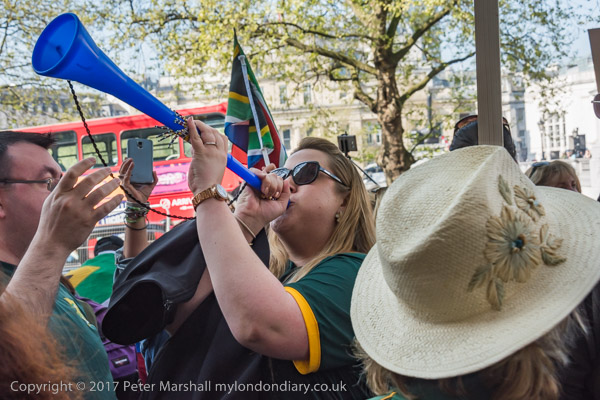
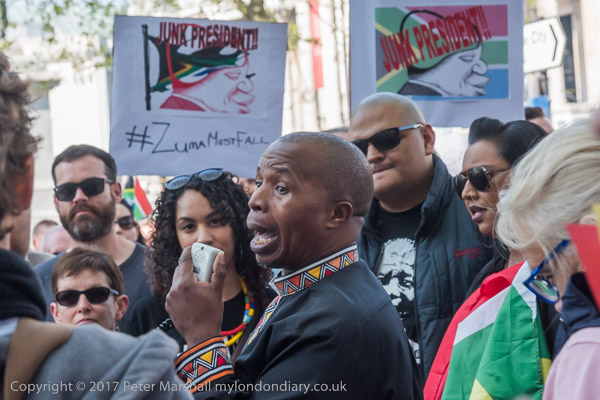
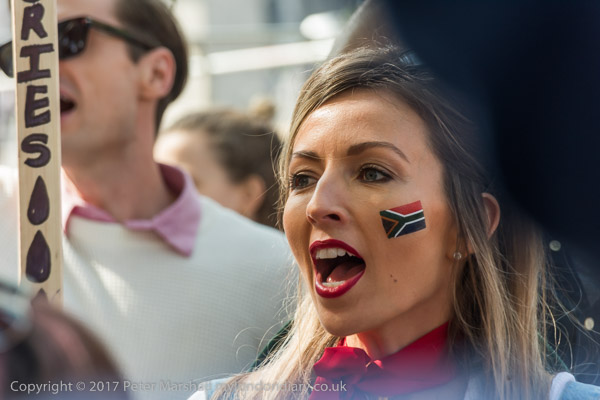
Zuma Must Go – Trafalgar Square

Zuma, Boat Dwellers, Syria & Latin Village

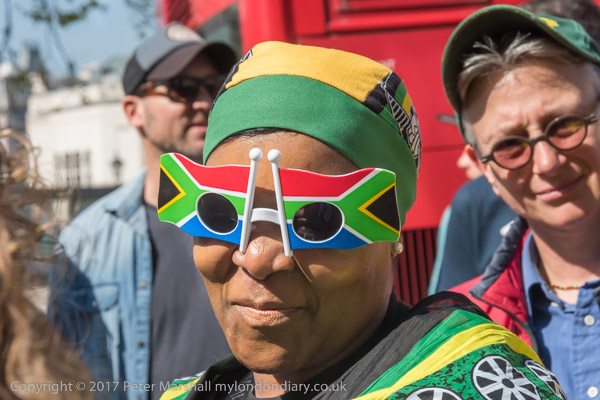
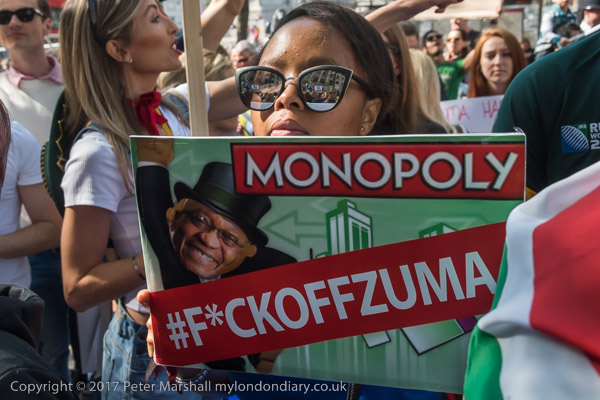
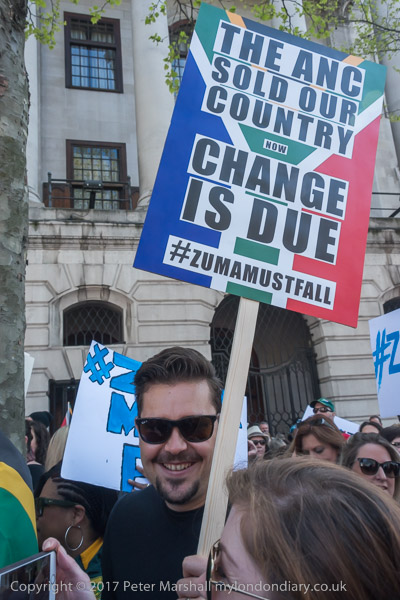
South Africans living in the UK had come to protest outside the South African High Commission after President Zuma sacked the Finance Minister and his deputy.

Zuma, Boat Dwellers, Syria & Latin Village

They accuse Zuma and the African National Congress government of wrecking the South African economy and say that “Zuma must fall”.

Zuma, Boat Dwellers, Syria & Latin Village

Police had set barriers outside the High Commission for the protest and the protesters were so densely packed into the area that it was very difficult to move around an take photographs.

Zuma, Boat Dwellers, Syria & Latin Village

It was a colourful protest and certainly demonstrated the anger of those taking part but the ANC would still remain the leading party and if Zuma resigned he would be replaced by another ANC leader.

Zuma did finally go, replaced by Cyril Ramaphosa in 2018 because of the increasing allegations of corruption and cronyism and in 2021 was given a 15 month contempt of court sentence for refusing to testify. Ramaphosa is also a controversial figure with various allegations of corruption, and as as London Platinum non-executive director urged the police to take the action which lead to the police massacre at Marikana on August 16, 2012 which lead to the deaths of 44 miners and over 70 more with serious injuries.

The elections next month, May 2024 are expected to be the first since the end of apartheid in 1994 in which the ANC will not gain over 50% of the vote and the country may get a coalition government. Zuma who has now joined the opposition Umkhonto weSizwe (MK) party has been banned from standing in the election but has appealed the ban.

Zuma Must Go


Boat dwellers fight evictions – Embankment Gardens

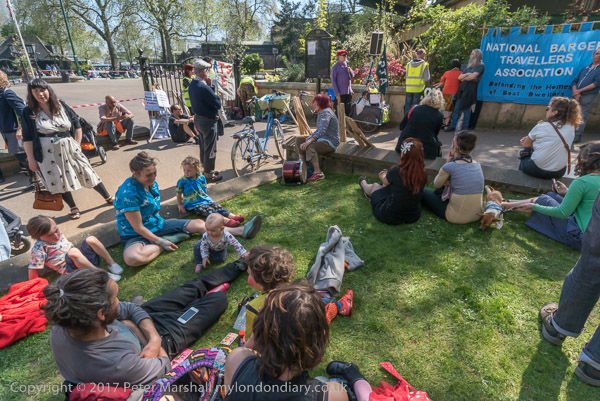
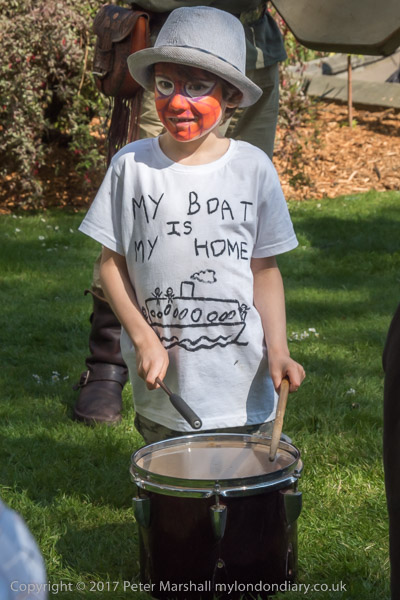
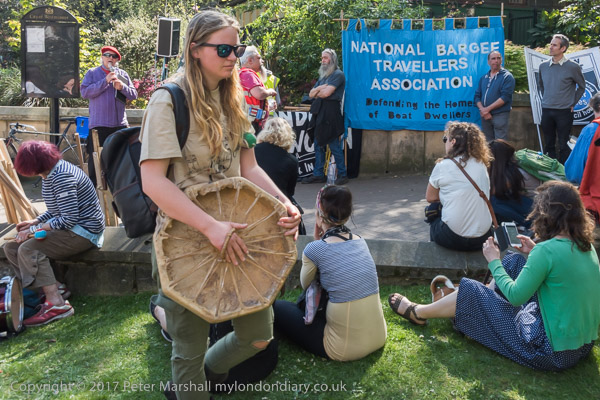
Boat dwellers held a rally in Embankment Gardens before marching to Downing St and DEFRA to demand the Canal & River Trust (CRT) stops evicting or threatening to evict boat dwellers without permanent moorings.

The say the British Waterways Act 1995 includes the right to live on a boat without a permanent mooring and that the CRT is acting illegally in evicting or threatening to evict boat dwellers.

Although boats can be required to move after 14 days at a mooring, the law requires at least 28 days notice and does not lay down restrictions on the distance boats have to move or that they should be making a “progressive journey.”

Some of the speakers at the rally had horror stories about boats being seized and other illegal activities by the trust, a charity set up in 2012 to look after the canals and navigable rivers.

Boat dwellers also oppose the plans being made for chargeable bookable moorings and want the trust to maintain the canals properly. The rally was still continuing when I needed to leave.

Boat dwellers fight evictions


March Against Chemical Warfare in Syria – Marble Arch

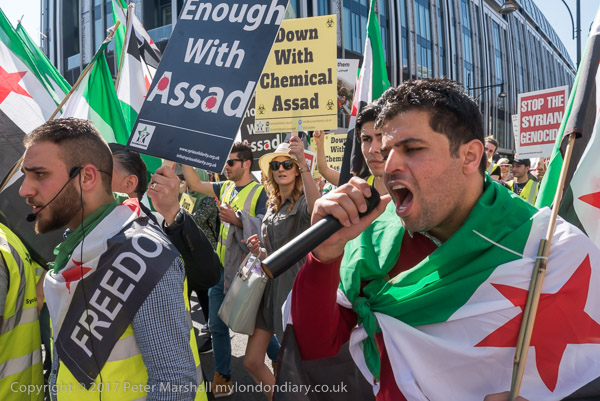
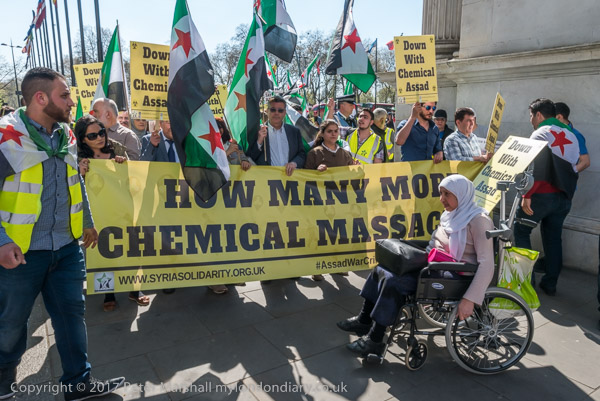
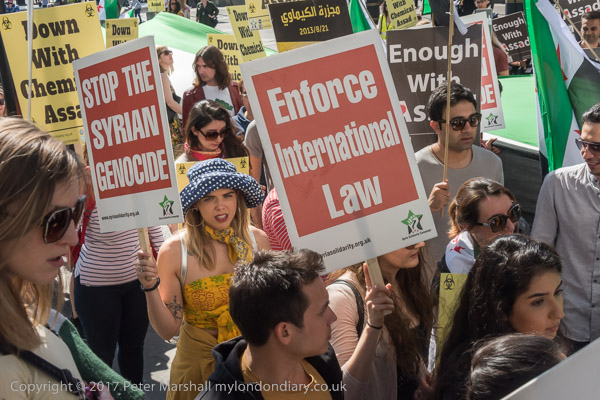
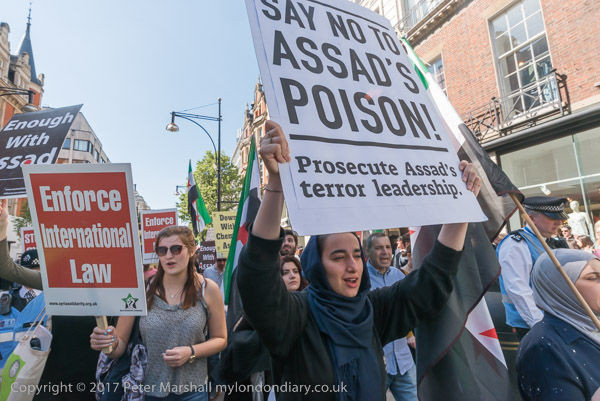
RefugEase and Syria Solidarity Campaign had organised this march calling on the UK Government to protect civilians in Syria.

President Assad’s forces used Sarin nerve agent three years earlier at Ghouta, and a few days before the protest there had been another attack using Sarin at Khan Sheikhoon near Idlib on April 4th.

The West’s response to the Syrian Revolution has been confusing and largely ineffectual. The US and Turkey encouraged and aided the setting up of an Islamic state and allowed it to export oil to finance its operations – and later the US gave air support to the Kurds to defeat ISIS. And although there were strong words over the use of chemical weapons at Ghouta, there was no real action. Nor has their been any opposition to the invasion and occupation of large parts of Syria by Turkish forces.

The march to Downing St began at Marble Arch and I walked with it down Oxford Street as far as Oxford Circus Station where I caught the Victoria Line to Seven Sisters.

Against Chemical Warfare in Syria


Human Chain at Latin Village – Seven Sisters

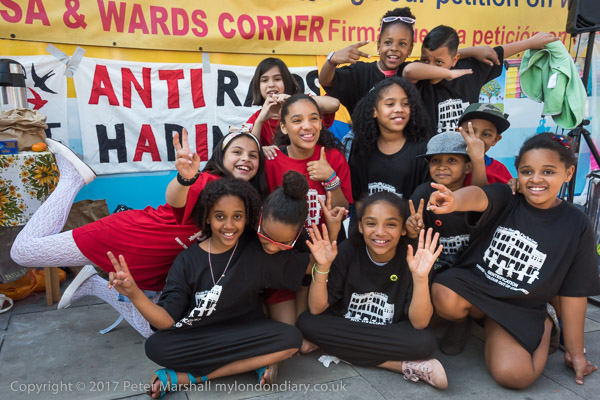
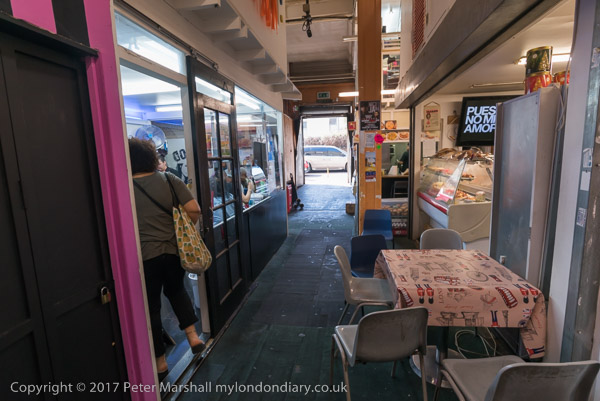
The indoor market next to Seven Sisters station in South Tottenham had been reinvigorated in recent years by the local Latin American community and had become the largest Latin American community market in England.

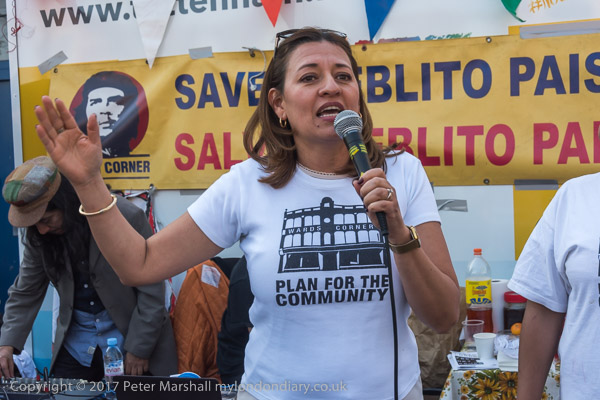
Part of the site at Ward’s Corner has been derelict for some years and the local authority, Haringey Council, wants to demolish the who block together with property developers which would convert it to expensive flats and chain stores, profiting investors at the expense of the community.

In 2008 the community gained the support of London Mayor Boris Johnson who wrote to the council asking them to review the scheme. But the council were determined to go ahead along with property developer Grainger PLC and issued a compulsory purchase order in 2016 which was finally approved by the secretary of state for housing, communities, and local government James Brokenshire in 2019.

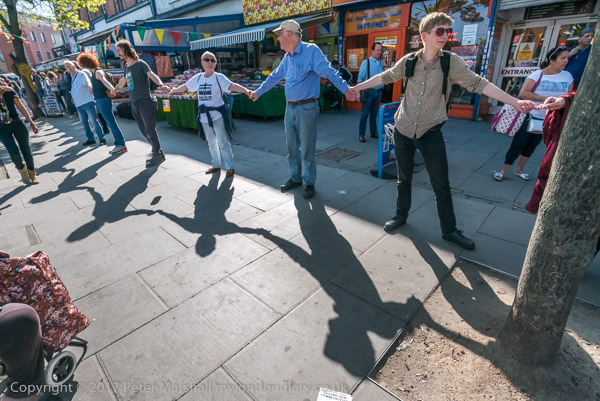
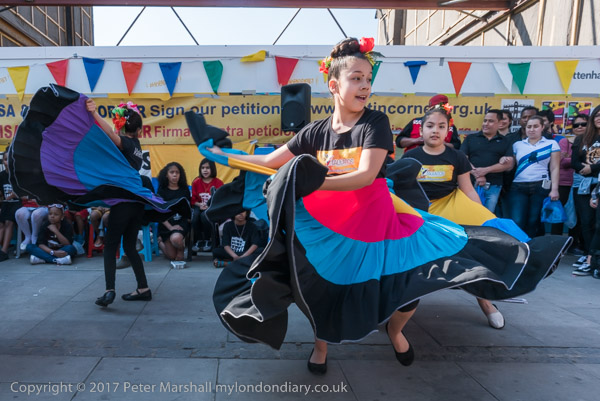
The community in the area had been fighting since 2002 to save the Latin Village from this social cleansing and gentrification and on Saturday 8th April 2017 held a festival there. The speeches and performances paused for everyone to join hands in a human chain around a quarter of a mile long around the whole block.

In 2020 Transport for London who had taken over the management of the indoor market closed it down. But in 2021 Grainger PLC withdrew from the plans for the site. You can read more about the Wards Corner Community Plan online. The Community Benefit Society was launched in 2022 and planned to reopen the site in 2024.

Many more pictures at Human Chain at Latin Village


FlickrFacebookMy London DiaryHull PhotosLea ValleyParis
London’s Industrial HeritageLondon Photos

All photographs on this page are copyright © Peter Marshall.
Contact me to buy prints or licence to reproduce.

Trinity House & High Street, Hull – 1989

Trinity House & High Street. On Monday 21st August 1989 I took a bus to Queen’s Gardens and then walked down Prince’s Dock Street and on to the High Street at the heart of the Old Town.

Hull Trinity House, Princes Dock Side, Hull, 1989 89-8n-56
Hull Trinity House, Princes Dock Street, Hull, 1989 89-8n-56

This massive archway on Princes Dock Street led through to Trinity House Navigation School and other buildings of Hull’s Trinity House. The date 1842 above the entrance is for this building, erected a few years after Princes Dock was opened as Junction Dock in 1829 – and before it was renamed in honour of Prince Albert for the royal visit of 1854. Junction Dock joined the Old Dock (Queen’s Dock) to Humber Dock creating a string of docks joining the River Hull to the River Humber and making an island of the Old Town.

Hull’s Trinity House is of course far older, established in 1369 as the Guild of the Holy Trinity by Alderman Robert Marshall (I’m sure no relation of mine) and around 50 others as a sort of ‘Friendly Society’ for parishioners of Holy Trinity Church. It was only in 1457 when Edward IV granted it the right to charge duties for loading and unloading goods at Hull to fund an almshouse for seafarers that it got a maritime connection, and it acquired its premises from Carmelite friars, though the current Trinity House Lane building is a 1753 rebuild.

Later monarchs gave it the right to settle nautical disputes, to charge import taxes to maintain the harbour, set buoys and licence pilots for the Humber. In 1785 it set up a school which taught boys in reading, writing, accountancy, religion and navigation for three years before they began their apprenticeship. The school is now an academy and has moved to another site, and the archway now leads to a car park and events area which has been named Zebedee’s Yard after Zebedee Scaping (1803-1909) who served as Headmaster for 55 years.

Doorway, Old Town, Hull, 1989 89-8n-41

You can still see this doorway at 39, High Street, though it is currently not numbered, just to the north of the entrance to Bishop Lane Staith. The area below the semicircular window at top right has been opened up as a larger window, though the sill in my picture suggests it was earlier bricked up.

Transport Museum  High St, Hull, 1989 89-8n-44
Transport Museum, High St, Hull, 1989 89-8n-44

The Transport Museum was set up by Thomas Sheppard and opened in 1925 as the Museum of Commerce and Transport and housed in the former Corn Exchange on High Street and had a very extensive display showing the evolution of transport and Hull’s principle industries, along with ten veteran cars bought from a private museum and horse-drawn vehicles from East Yorkshire.

Like much of Hull it suffered extensive wartime damage – Hull was the most severely damaged British city or town during the Second World War, with 95 percent of houses damaged and almost half of the population made homeless. But news reports except on rare occasions were only allowed to refer to it as a “north-east coast town” and even now many histories of the war ignore the incredible damage to the city.

The museum reopened in 1957 as the Transport and Archaeology Museum. But in 2002 the transport collection moved to the new Streetlife Museum and this building became the Hull and East Riding Museum

Wilberforce House, High St, Hull, 1989 89-8n-46

Thomas Sheppard became the first curator of the Hull Municipal Museum in 1901 and achieved a massive increase in its visitor numbers by refurbishing the display and making entry free. Sheppard went on to set up half a dozen other Hull museums, the first of which in 1906 was Wilberforce House, opened as a museum in 1906, dedicated to the slave trade and the work of abolitionists and a memorial to Hull’s best-known citizen, William Wilberforce MP.

Wilberforce House, High St, Hull, 1989 89-8n-31

William Wilberforce was born in this house on the High Street in 1759. The house is one of the oldest in Hull, built in 1660 but extended by the Wilberforce family in the 1730s and 1760s. In 1784 part of the premises became the the Wilberforce, Smith & Co Bank.

Wilberforce sold the house in 1830. After Hull Council brought in a rate to fund the preservation of historic buildings in 1891, a campaign began for the council to buy the house which they did in 1903, opening it as a public museum in 1906.

Wilberforce House, High St, Hull, 1989 89-8n-32

The display that many in Hull had grown up with was updated in 1983 to the dismay of many residents who felt it lacked the detail and impact of the original and that it represented a move towards entertainment rather than enlightenment.

The displays were again altered in 2006-7 with improvements to access and reopened in 2007, which was the 200th Anniversary of the Abolition of the Slave Trade in Britain.

House, 23-4, High St, Hull, 1989 89-8n-33

These houses dating from around 1760 and restored after wartime bombing according to the Grade II listing text were incorporated into the Wilberforce museum in 1956.

House, 23-4, High St, Hull, 1989 89-8n-34

Here you see the view south down High Street from the houses, past Wilberforce House

From High Street I walked on to Drypool Bridge where the next post in this series will begin.


FlickrFacebookMy London DiaryHull PhotosLea ValleyParis
London’s Industrial HeritageLondon Photos

All photographs on this page are copyright © Peter Marshall.
Contact me to buy prints or licence to reproduce.

Treasure, Fresh Meat, Rose Villa… Hull 1989

Treasure, Fresh Meat, Rose Villa… has some more pictures on Beverley Road, from where I walked into Pearson Park andthrough the Avenues back to my parents-in-law’s home.

Treasure Chest, 228, Beverley Rd, Hull, 1989 89-8n-64

Treasure Chest at 220 Beverley Road had closed and was to let, but its frontage contained messages at various levels, including an ‘OPEN’ sign on the door. the shop is still there, one in a row of shops on the east side of the road going north from Temple Street, and in 2022 was occupied by ‘Edward Scissor Barbers’. It had gone through a number of changes since 1989, including ‘£1PLUS’, a Polish Butcher, a Unisex Hair Salon and doubtless more.

I’m not sure what Treasure Chest had offered, though previously it appeared to be possibly a secondhand furniture shop offering to carry out home clearances. The windows were flyposted, with ‘Can Gorbachev reform Russia‘, a meeting at the New White Harte and an SWP ‘Troops out Now‘ protest in London (I think out of Ireland.)

But more mystifying were the two carefully printed ‘SIMPLE MINDS‘ at the top of each window. Were these for the Glasgow rock band?

Fresh Meat, Beverley Rd, Hull, 1989 89-8n-65

Another mystery door behind a wire screen protecting the frontage. It advertises ‘FRESH MEAT’ but with pictures of what I thought was a hamster and some kind of tropical fish. On the door an invitation to ‘JOIN OUR CHRISTMAS CLUB’ has been posted on top of another advertising a holiday play scheme at Kingston Community Centre – what I first took to be a pile of bodies is actually a rather sinister clown whose cap offers ‘TONS OF FUN’.

This picture was taken on Sunday 20th August 1989 and the shop was closed, but otherwise I’m sure it was still in use.

Rose Villa, 262, Beverley Rd, Hull, 1989 89-8n-66
Rose Villa, 269-71, Beverley Rd, Hull, 1989 89-8n-66

Rose Villa, now a nursing home, is on the west side of Beverley Rd on its corner with Pearson Park, facing the Dorchester Hotel. The Beverley Road Heritage Trail leaflet states:

“Rose Villa is now a care home but was originally Claremont Villa, the home of coal and wool merchant William Croft. His business partner Henry Croft lived just across the road at the Dorchester Hotel, which at the time was three houses: Dorchester House, Tamworth Lodge and Stanley House.

The buildings are notable for their fanciful shaped gables and turrets, built by Bellamy and Hardy in 1861-2. Other occupiers here have included ship owners, timber merchants, and popular local grocer William Cussons.”

Beverley Road Heritage Trail

The Dorchester Hotel was at one time owned by one of my wife’s relatives, though I never went there.

Pearson Park, Archway, Pearson Ave, Hull, 1989 89-8n-51

This Grade II listed gateway to Pearson Park was made by Young & Wood of Hull and is cast-iron in a Classical Revival style.

Pearson Park was Hull’s first public park, laid out on land given to the Corporation by Zacharia Pearson, Mayor of Hull in 1860. Pearson was sent to school by his uncle after this mother died, and ran away to sea when his was 12, but was sent back to complete his sentence at Hull Grammar. He went back to sea on leaving school and rapidly progressed to becoming a captain and then a ship owner. With his brother-in-law he founded Pearson, Coleman & Co shipping timber from the Baltic and freight and later passengers to America – and later Australia and New Zealand.

Pearson became mayor in 1859 and donated liberally to various charities in Hull as well as giving the land for Pearson Park. But in the 1860s several of his business affairs went disastrously wrong. His worst mistake came with the US Civil War where he tried to keep Hull’s cotton mills in work by sending ten ships to try to break the blocade and all ten and their cargoes were lost. His bankruptcy was for a spectacular £646,000 – something like £63m now allowing for inflation – and he was ostracised from civic life in the Hull.

Pearson Park, Archway, Pearson Ave, Hull, 1989 89-8n-52

Despite his spectacular removal from Hull society, Pearson Park retains his name, and Pearson is still among the great philanthropists of Hull. This archway seemed in fairly good condition when I made these two pictures in 1989 , but had long lost both its gates and the maritime themed decorations and urns which had stood on top of the arch and a few large cracks can be seen at the top of the arch.

The archway was returned to its original grandeur by restoration specialists Lost Art in 2019 in an extensive project. It is now also stronger to be more resilient to the extra weight of modern traffic.

House, Salisbury St, Park Avenue, Hull, 1989 89-8n-53

I walked through the park and crossed Princes Avenue to walk down Park Avenue. You can see in this picture the poor condition back in 1989 of these grand houses close to the corner with Salisbury Street. I think this was 109 Park Avenue, but there is a virtually identical house in Salisbury St.

House, Salisbury St, Park Avenue, Hull, 1989 89-8n-55

This group of eight Grade II listed houses are thought to be the only remaining examples of domestic buildings by George Gilbert Scott Junior, an early exponent of the Queen Anne style.

House, Salisbury St, Park Avenue, Hull, 1989 89-8n-54

Some of these houses had already been restored as this view shows. All now look in good condition.

This was the last picture I took on this walk on Sunday 20th August 1989, but I was back in the centre of Hull taking pictures the following day – which I’ll post shortly.


FlickrFacebookMy London DiaryHull PhotosLea ValleyParis
London’s Industrial HeritageLondon Photos

All photographs on this page are copyright © Peter Marshall.
Contact me to buy prints or licence to reproduce.

Thames Path: Buscot to Cricklade – 2013

Thames Path: Buscot to Cricklade: Together with my wife and elder son I had on Saturdays spread over several years walked much of the Thames path. We’d walked it chunks of around 8-12 miles a day between places which could be reached by public transport but had come to a halt at Shifford, near Hinton Waldrist, 9 miles to the southwest of Oxford from which, at least back around 2012 it was still possible to take a bus. Thanks to cuts I think the bus service is now too infrequent to be of use.

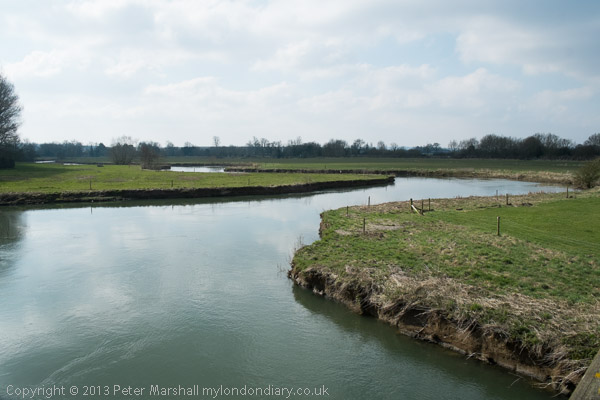
Thames Path: Buscot to Cricklade - 2013
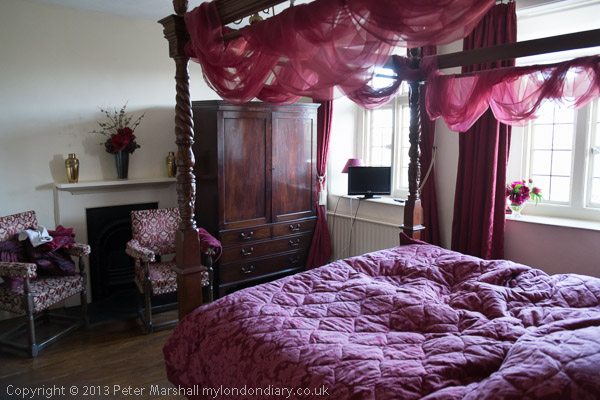
The room next to ours at Buscot had a four poster bed

But further upstream there was little or no public transport – and what little there was didn’t go in useful directions for us. So my son had booked us into a couple of hotels to bridge the gap, giving three longish days of walking. We travelled fairly light with just essentials in rucksacks – and of course for me a small camera bag, but it was still fairly taxing – and something I couldn’t repeat now, 11 years later.

Thames Path: Buscot to Cricklade - 2013

You can read my account of the three days, complete with rather a lot of pictures on My London Dairy at Thames Path: Shifford to Buscot, Buscot to Cricklade and Cricklade to the Source.
Thames Path: Buscot to Cricklade - 2013
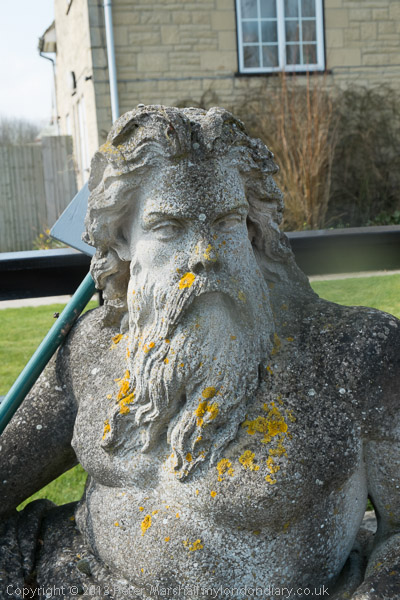
Old Father Thames

I’d kept my photography equipment minimal too, taking just one camera, a Fuji X-Pro1 and I think two lenses. One was the Fujifilm XF18-55mmF2.8-4 R LM OIS, a mouthful almost larger than the lens itself, Fuji’s 18-55mm kit lens. It’s a fairly small and light lens but a remarkably good one. Fuji has since brought out zooms with wider focal length ranges, wider apertures (and higher prices) and I have some, but within its limitations I think this remains my favourite.
Thames Path: Buscot to Cricklade - 2013
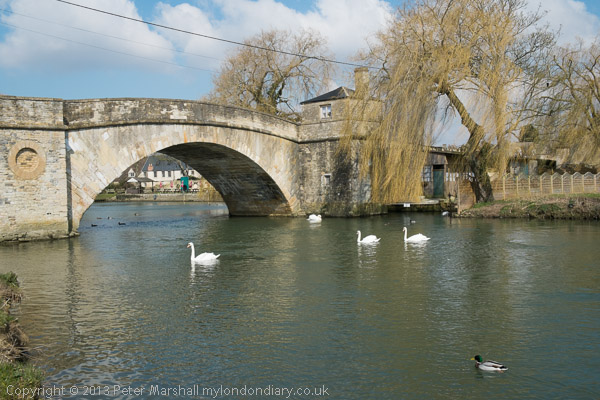
Halfpenny Bridge – the toll house at right – Lechlade

I don’t think I then owned a wider Fuji lens than the zoom with the 18mm being equivalent to 27mm on a full-frame camera, rather a moderated wide-angle for me, but for those scenes where I felt a need for a wider view I also took my Nikon DX 10.5mm fisheye with a Fuji adaptor. Compact and lightweight, this worked well but was a little fiddly to use. I’ve never found using lenses with adaptors quite as satisfactory as those in the actually camera fitting. I don’t think any of the pictures I put online for this section of the walk were made with this, though some for both other days are.

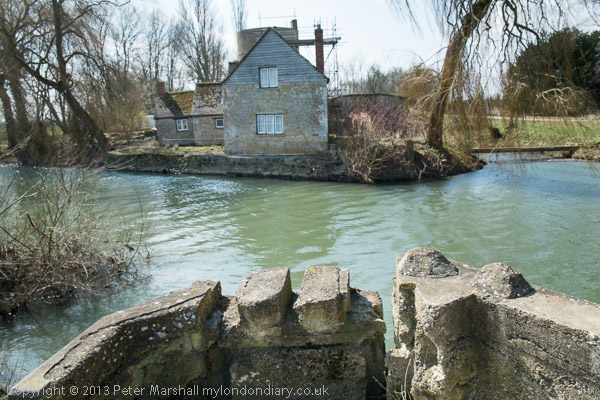
The entrance to the Thames and Severn Canal across the Thames

The Buscot to Cricklade section of the walk was a little shorter than the first day when we probably walked a total of sixteen or seventeen miles, but includes some of the best and some of the worst parts of the route. There are some delightful sections of riverside walking and Lechlade is certainly a town worth visiting, as we did, although a diversion from the Thames Path itself.

The next mile or so is arguably the most interesting section of the Thames Path, at least in its upper reaches, with the start of the Thames and Severn Canal. It’s also here that the Thames towpath begins – or for us ends.

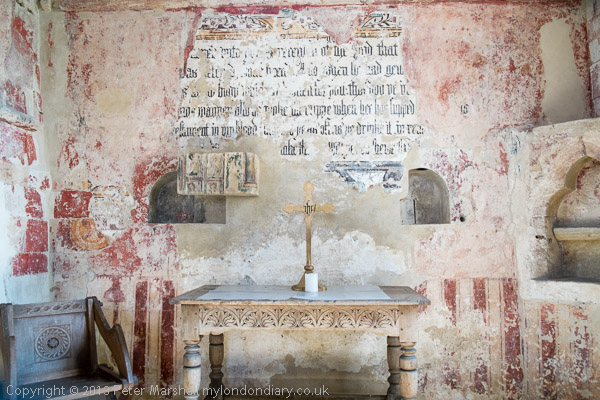
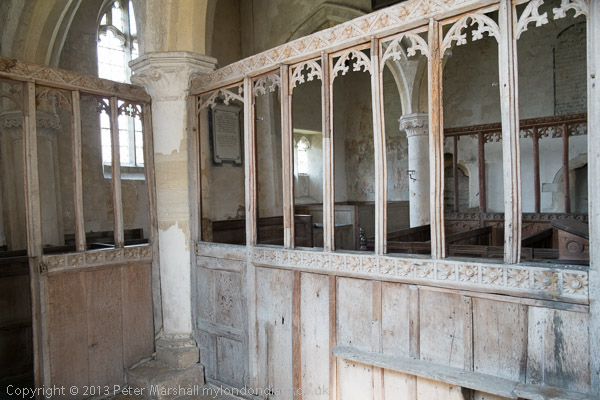
And a short distance further on is the remarkable St John the Baptist Church at Inglesham, saved and restored by William Morris and his his pre-Raphaelite friends founded the Society for the Protection of Ancient Buildings (SPAB) or ‘Anti-Scrape’ to oppose the gothicisation of buildings such as these.

But then comes a long trek over a mile beside a busy A361 followed by a longer one along along paths and lanes with hardly a sniff of a the river until you reach Castle Eaton, a village which seemed closed (and its pub certainly was.)

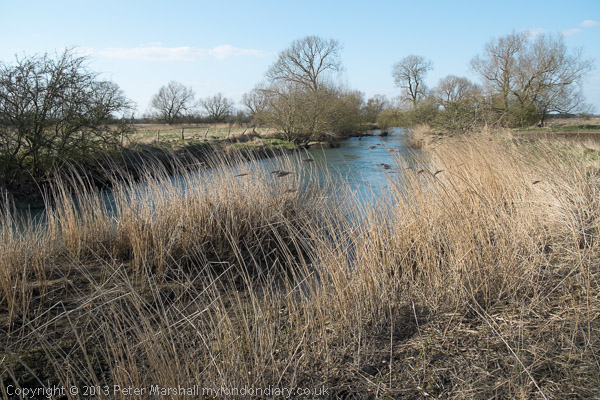
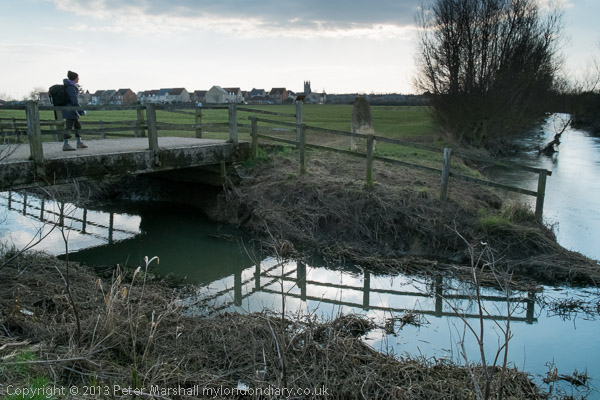
From there the path does follow the river all the way into Cricklade, though as I noted “going every direction except a straight line to there“. Finally we arrived at the White Hart, supposedly the poshest and oldest principal coaching inn at Cricklade since the time of Elizabeth 1 but bought by Arkells Brewery in 1973. Our rooms in a more modern part of the building were comfortable enough but rather less impressive than those on the previous night at Buscot.

Thames Path: Cricklade to the Source
Thames Path: Buscot to Cricklade
Thames Path: Shifford to Buscot


FlickrFacebookMy London DiaryHull PhotosLea ValleyParis
London’s Industrial HeritageLondon Photos

All photographs on this page are copyright © Peter Marshall.
Contact me to buy prints or licence to reproduce.