Sack Parliament 2006 and the End of Freedom

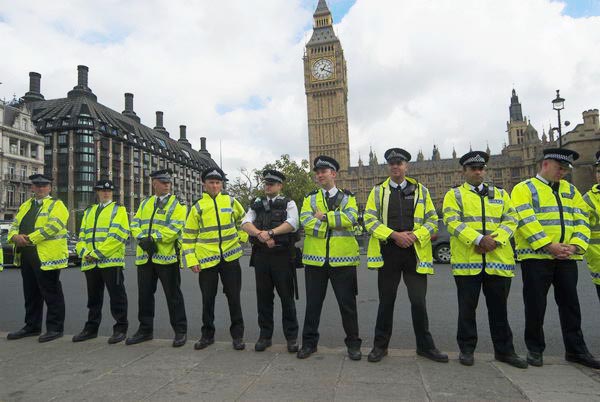
Sack Parliament on Monday 9 October 2006 was more a demonstration by police of their determination to protect the status quo following protests earlier in the year and the continuing saga of the Parliament Square peace protest which had led to their performance being criticised by politicians and our largely right-wing press than any real protest by the few who had come to protest against the increasing restrictions on our freedom to protest.

It was Brian Haw’s permanent peace protest in Parliament Square which led to the Labour Government including in the Serious and Organised Crime and Police Act 2005 severe restrictions on the right to protest in a large area around Parliament and giving police new powers to control protests.
Sack Parliament 2006 and the End of Freedom

Media frenzy about this protest was whipped up in the days before at least in part by police briefings, and the police clearly saw this as an opportunity to demonstrate that they could control events such as this. I wrote and published an unusually long piece on My London Diary about the event – reproduced here with some minor corrections.

Sack Parliament on Monday 9, and event to mark the return of MPs to Westminster, was of course only ever an amusing idea rather than a serious chance of a Ukrainian-style Orange Revolution. As the large press turnout showed, it was one that had caught the attention of the media (Mondays perhaps tend to be slack) but unfortunately not that of the demonstrating classes.
Sack Parliament 2006 and the End of Freedom

It got off to a bad start with the planned ‘Critical Mass’, which failed to gather more than a handful of cyclists. Heavily outnumbered by the police bike posse, they faded away, a couple cycling down the side of the National Theatre and the other 3 or 4 carrying their bikes up the steps to Waterloo Bridge.
Sack Parliament 2006 and the End of Freedom

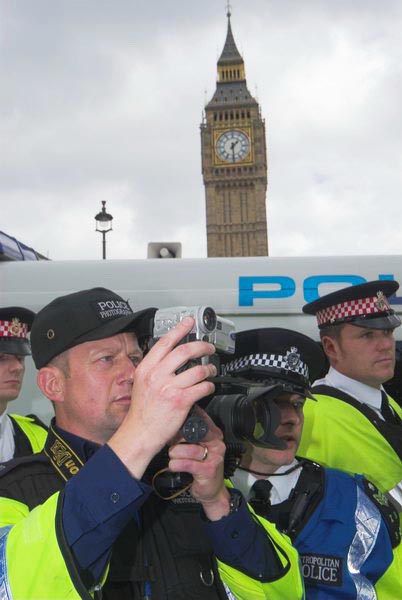
At Parliament Square, things were little better. At the advertised start time, apart from the normal Parliament Square Permanent Protest there were perhaps 25 demonstrators and rather more press, along with what must have been around a thousand police, counting those sitting in vans around the area as well as the impressive number standing around.
Sack Parliament 2006 and the End of Freedom

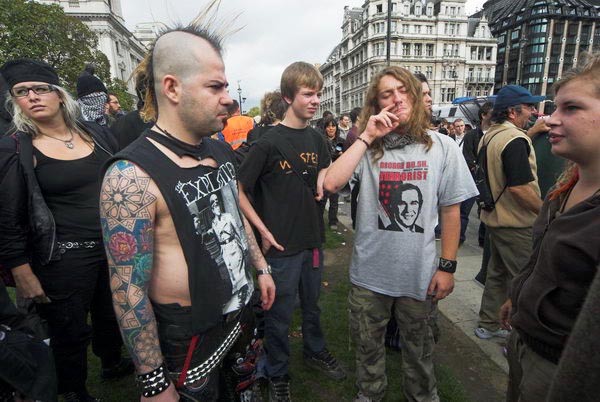
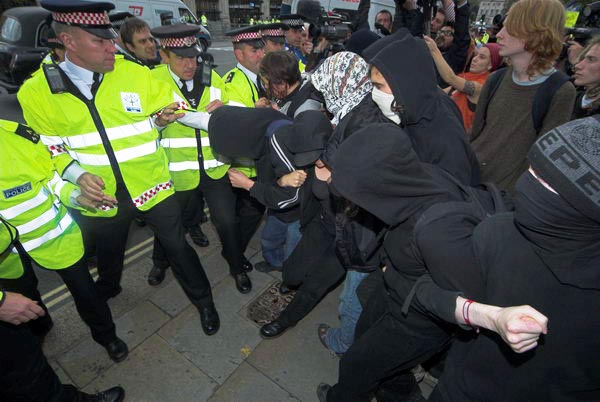
Twenty minutes later the numbers had been more than doubled, mainly by the arrival of a group dressed largely in black. And soon after they made a charge at the police line into the road towards the Houses of Parliament.
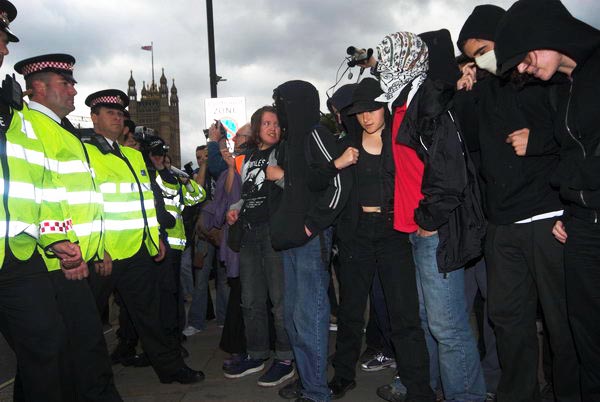
From the start it seemed a pointless gesture. The line held, and pushed them back, and soon the two sides were standing a few feet apart and glaring at each other. After a few more attempts to push through the police, the demonstrators ran back onto the grassed area of the square where they were surrounded by a cordon of police.
One of the photographers, an NUJ member I’d been talking to a few minutes earlier, was apparently pushed by police as they rushed the demonstrators. He fell and received a neck injury which left him with no feeling from the waist down. Police medics were on hand to give him first aid and to call an ambulance. Later I was pleased to hear he had been allowed home from hospital, and the injuries were apparently less serious than we feared.

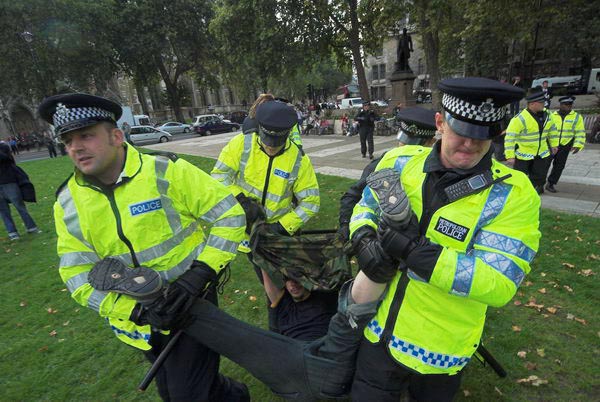
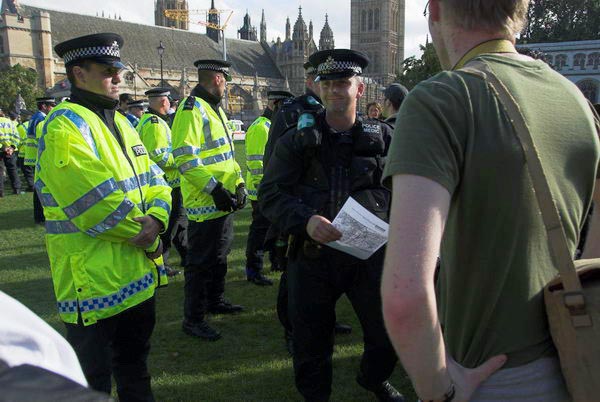
I was inside the cordon to start with, but the police made no attempt to stop me as I decided to walk out, not even asking to see my press card (they had checked it earlier.) Around the square, small teams of police were rounding up anyone looking vaguely like a punk or a hippy and dragging them inside the cordon. Some of those they picked on seemed genuinely to have no connection with the protest. Eventually there were perhaps around 150 in there, including quite a few press, along with a few who clearly had little idea what the whole thing was about.

Apparently others who looked like possible demonstrators were stopped and arrested in Whitehall, or turned back on other roads approaching the square.
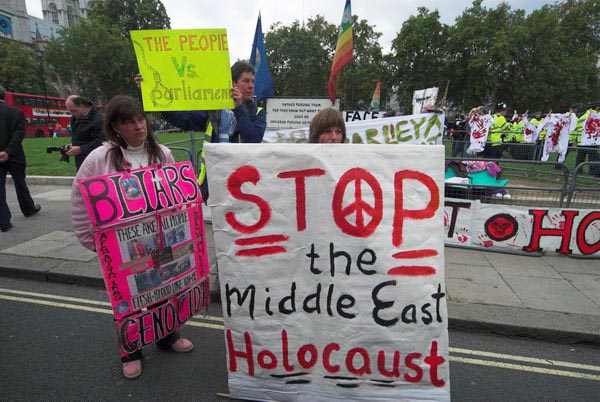
Outside the cordon, the normal demonstrations in the square went on, with the occasional interruptions by the police, nit-picking about where the demonstrators are allowed to stand and being largely ignored or abused.
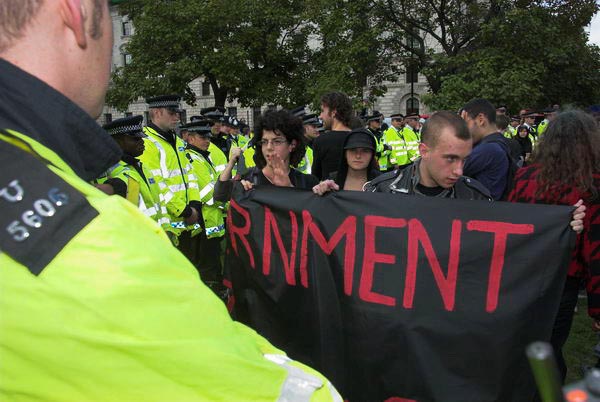
Occasionally there were scuffles inside the cordon as demonstrators made an attempt to breach the police line, or police teams moved in to grab individuals. There were also occasional arrests around the square, including some of those who protested loudly they were simply bystanders.
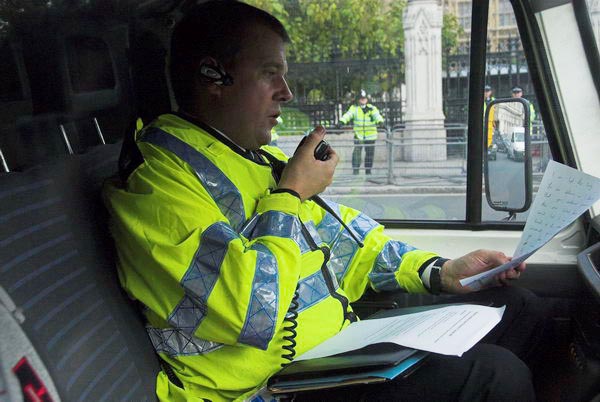
At 14.13, roughly 40 minutes after the protesters had been imprisoned in the cordon, Police Superintendent Peter Terry (responsible for the taking away and destruction of most of Brian Haw’s property from the square and alleged by demonstrators to have lied in court) read from a handwritten statement telling the protesters that they were being detained in the square because he believed that their continued presence in the area would lead to a serious breach of the peace!

Around 15.00, police began to distribute notices to those outside the cordon warning them “we believe that you may be, or are about to be, involved in a demonstration located within an area subject to the provisions of the Serious and Organised Crime and Police Act 2005” and moving press and spectators well back from the cordon. There seemed to be little chance of getting further photographs, so I went to get on with work elsewhere.

According to a press report later in the evening, there were 38 arrests made. Those caught in the cordon who were not arrested at the event were apparently required to provide evidence of identity and address before being allowed to leave. SOCPA continues to be a blot on human rights in this country, and this protest, despite its apparent pointlessness and lack of support has underlined this point.
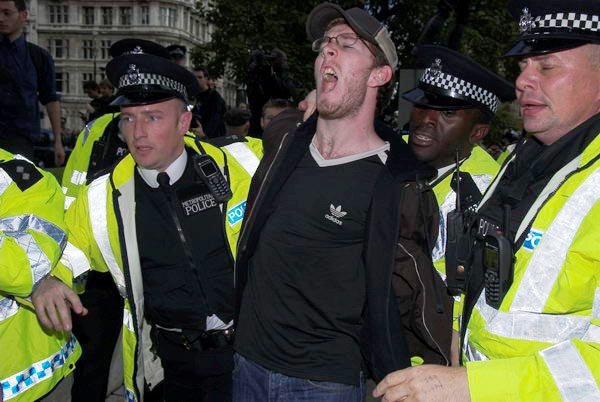
I’m one of a generation who grew up believing in British justice and a sense of fair play. We were rightly appalled at those countries where protest was banned, and demonstrators could be arrested. It sickens me to see this happening in front of what used to be a powerful symbol of freedom, the Houses of Parliament.
In 2007 the Labour Government, then led by Gordon Brown began a consultation about managing protest around Parliament which looked at different ways of imposing restrictions and those in SOCPA were repealed in the coalition’s by the Police Reform and Social Responsibility Act 2011. But they were replaced by giving police new powers to control a wide range of activities in the area.

Even more draconian powers allowing police to restrict protests across the UK cane into force under the Tory Police, Crime, Sentencing and Courts Act 2022 which seriously impact free expression, freedom of speech and the right to protest in the United Kingdom, and further powers and increased sentences for protesters were enacted by the Public Order Act 2023. We now have non-violent protesters serving lengthy jail sentences, with a Labour government which appears to be in no hurry to repeal these repressive police state laws.

More pictures on My London Dairy.


FlickrFacebookMy London DiaryHull PhotosLea ValleyParis
London’s Industrial HeritageLondon Photos

All photographs on this page are copyright © Peter Marshall.
Contact me to buy prints or licence to reproduce.
Land Army, Charity Pull & Rosary Crusade – 2005

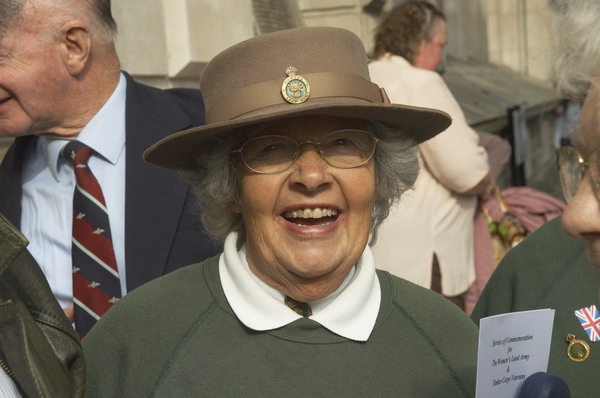
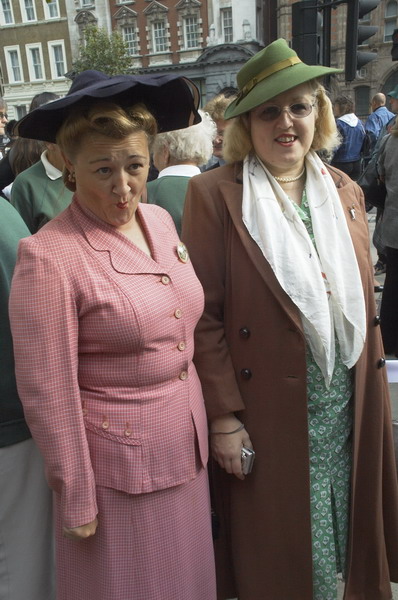
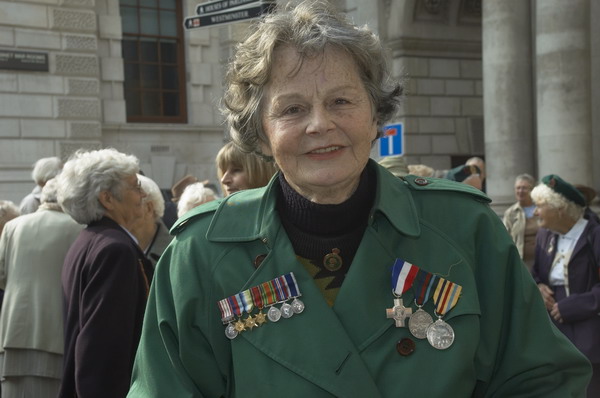
Land Army, Charity Pull & Rosary Crusade: Saturday 8th October 2005 was a day of considerable variety as well as some tricky travelling around London for me, beginning in Whitehall with the women of the Land Army, rushing to Lewisham for a charity event organised by the Mayor and then back to Westminster Cathedral for a religions procession.


Commemoration of the Women’s Land Army – Cenotaph, Whitehall

Land Army, Charity Pull & Rosary Crusade

During the Second World War many women joined the Women’s Land Army. First set up in 1917 during World War One, it was reformed in June 1939 when World War Two seemed inevitable, before the war actually began at the start of September.

Land Army, Charity Pull & Rosary Crusade

During WW2, over 200,000 Land Girls worked in the Women’s Land Army, playing a crucial role in feeding the nation at war – and it continued for some years after the war ended in 1945, finally ending in November 1950.

Land Army, Charity Pull & Rosary Crusade

For many joining up was a healthy alternative to working in munitions or joining the other services, less regimented and offering a wide range of activities. Few had any previous experience in agriculture, but “they ploughed, grew produce, milked cows, caught rats, drove tractors – and much more.”

Land Army, Charity Pull & Rosary Crusade

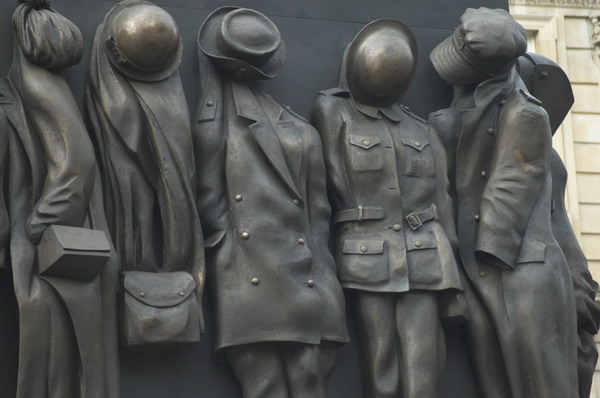
But the war had ended 50 years earlier and they were now in their 70s and 80s when I met them opposite the memorial to the Women Of The Second World War which had recently been unveiled near the Cenotaph.

Some I talked to had been at the unveiling of that memorial and were extremely scathing about it and had been and were disappointed that the Queen had not spoken at all at the event.

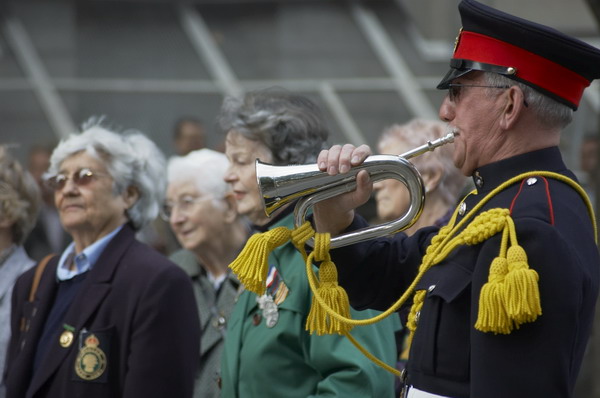
They were a sprightly and feisty group despite their age. A few had come in 1940s dress but most wore some of their uniform often with a number of medals. They marched to the Cenotaph where wreaths were laid and a bugler sounded ‘The Last Post’. After which I rushed away to Charing Cross to catch a train as the event had run late.

More pictures


Lewisham: Mayor’s Charity Vehicle Pull

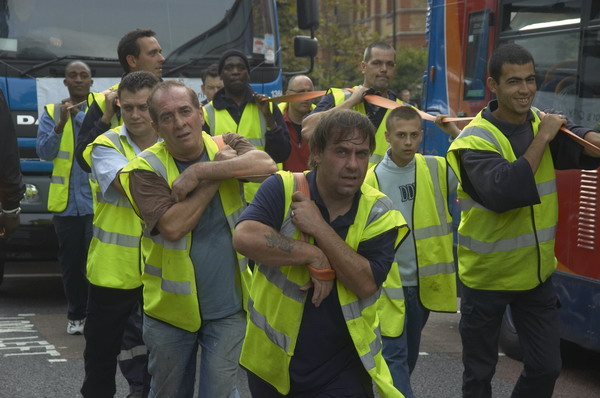
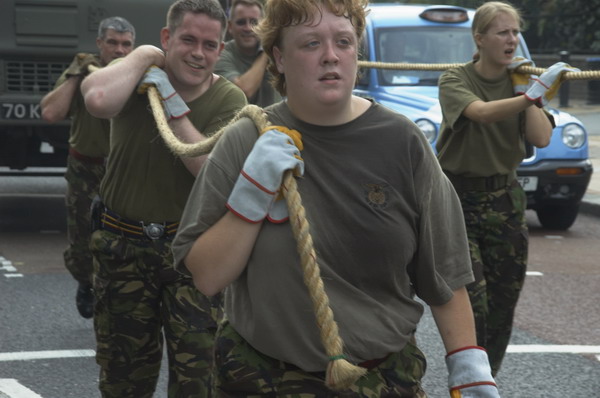
Every year like most Mayors the Mayor of Lewisham has a charity appeal and for some years a Charity Vehicle Pull from Downham to Lewisham was organised as a way of raising money for this.

I’d got a later train than I’d hoped, so sat on the train trying to work out where the vehicle pull would be by the time the train arrived in the area. I left the train at Ladywell and rushed from the station to Lewisham High Street and fortunately found my guess had been correct.

I took a few pictures – there isn’t a huge lot you can do with an event like this – and then got on the top floor of a bus which was travelling along the open lane inside the event, hoping to overtake them. It would have worked, but for an illegally parked vehicle that was blocking the lane.”


Rosary Crusade of Reparation – Westminster Cathedral

At Lewisham Station I’d missed the Victoria train, and had to run under the subway to jump on a Charing Cross service just as the doors were closing, changing at Waterloo East to Southwark Station on the Jubilee line, then at Green Park to the Victoria line to Victoria.

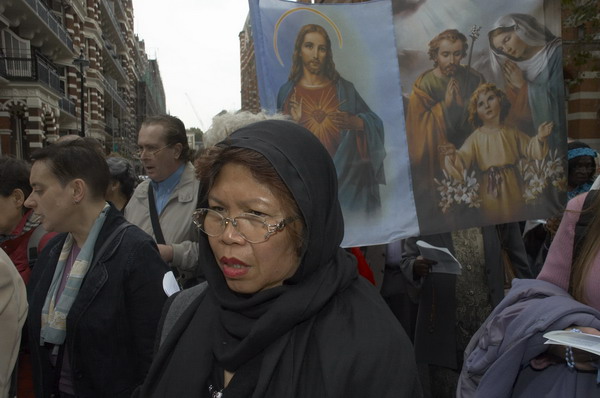
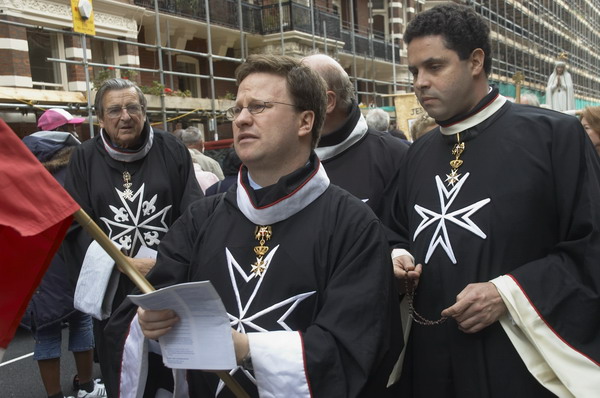
I hurried the short distance from Victoria Station to Westminster Cathedral arriving just at the right time for the start of the Rosary Crusade of Reparation.

The Rosary Cruade had started in Vienna in 1947, with a series of processions with the statue of ‘Our Lady of Fatima’.

The Virgin Mary appeared to Portuguese children at Fatima in 1917 and had asked for prayers and penance to avoid further wars and achieve world peace. This call was renewed in the Rosary Crusade by Father Petrus Pavlicek following a vision during his visit to a Marian shrine in 1946.

The processions became an annual event, held on or around 12th Sept, the Feast of The Name of Mary (which celebrated the defeat of Turkish armies surrounding Vienna in 1683), and soon spread to other countries.

When Russian troops left Austria in 1955, many Austrian catholics ascribed this to their prayers in the rosary crusade.

More pictures on My London Diary.


FlickrFacebookMy London DiaryHull PhotosLea ValleyParis
London’s Industrial HeritageLondon Photos

All photographs on this page are copyright © Peter Marshall.
Contact me to buy prints or licence to reproduce.


Extinction Rebellion October Rebellion – 2019

Extinction Rebellion October Rebellion – London 7 Oct 2019

Extinction Rebellion October Rebellion - 2019

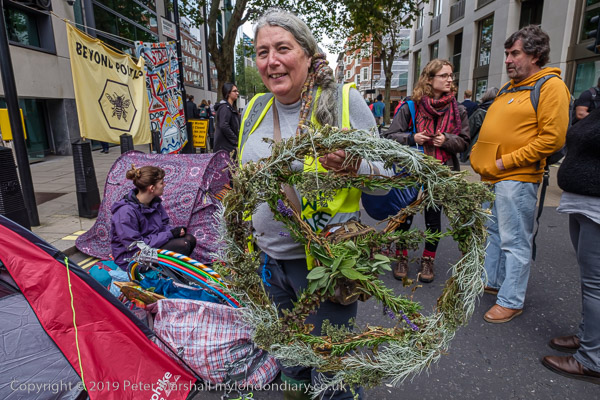
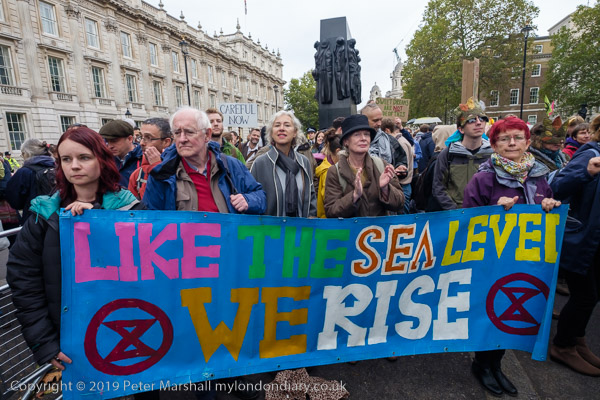
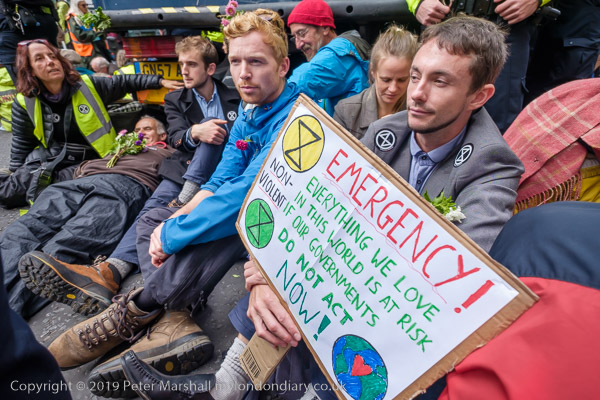
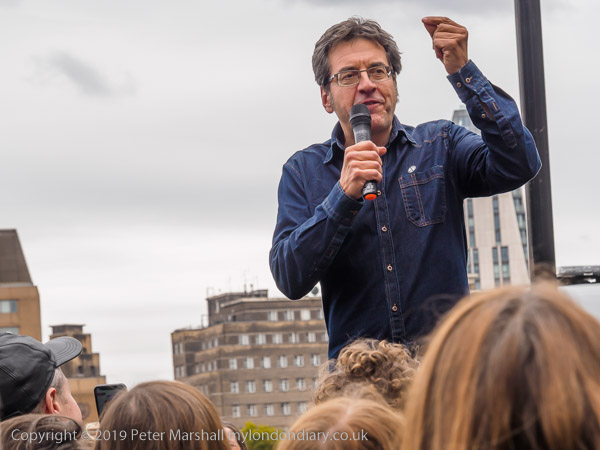
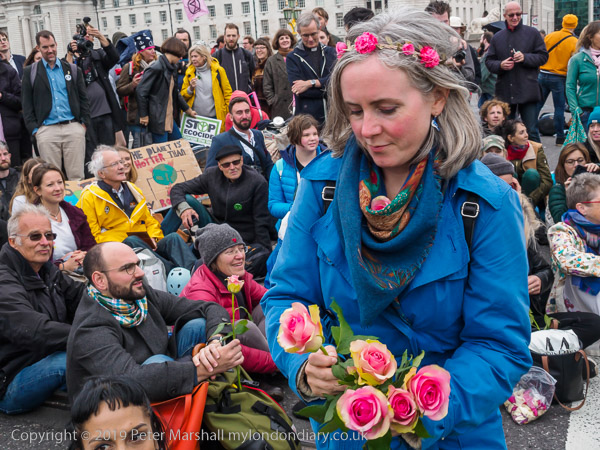
Five years ago today Extinction Rebellion began their day of October Rebellion in London by occupying eleven locations at government ministries, Downing St, The Mall, Westminster and Lambeth bridges, bringing traffic in the centre of London to a halt.

Extinction Rebellion October Rebellion - 2019

The action was billed as an International Rebellion and there were other actions taking place in New York, Sydney and possibly elsewhere and you can read much more about them on the XR web site.

Extinction Rebellion October Rebellion - 2019

XR demand the government tell the truth about the climate and ecological emergency, act to halt biodiversity loss, reduce emissions to net zero and create and be led by a Citizens Assembly.

Extinction Rebellion October Rebellion - 2019

I managed to get to some but not quite all of these 11 locations during the day and take pictures. Police hindered movement around the city to some extent, making me have to walk rather further than I wanted when they completely closed Lambeth Bridge to all pedestrians after XR had closed both ends to traffic.

Extinction Rebellion October Rebellion - 2019

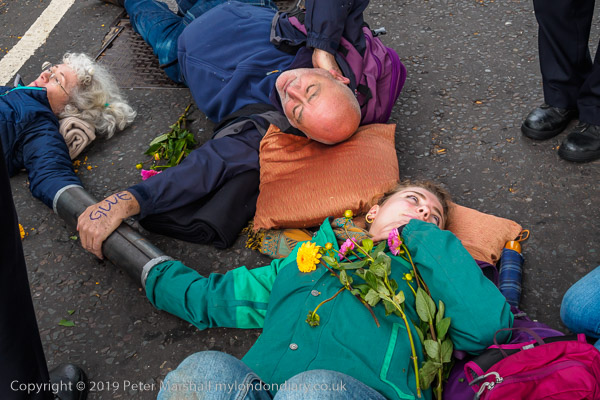
Police made a few arrests here and there but it was hard to see any logic in their actions. Some people had locked themselves together but generally I think the police were simply overwhelmed by the large number of protesters.

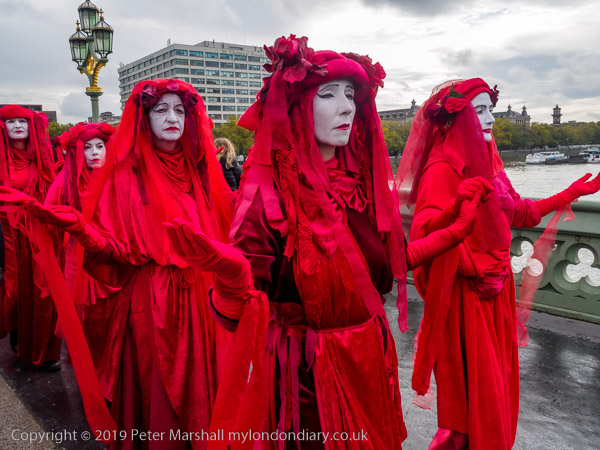
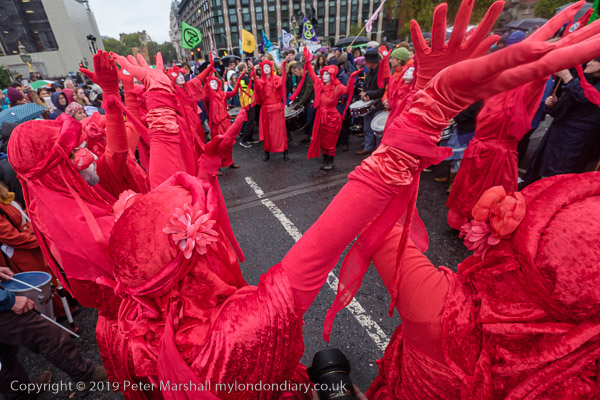
As before XR’s ‘Red Brigade’ made a colourful splash and like most photographers I took too many pictures of them.

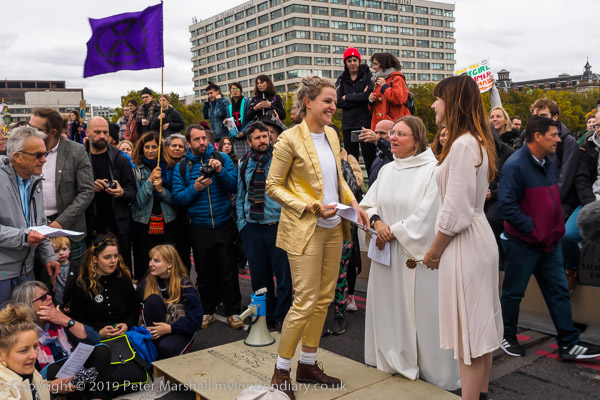
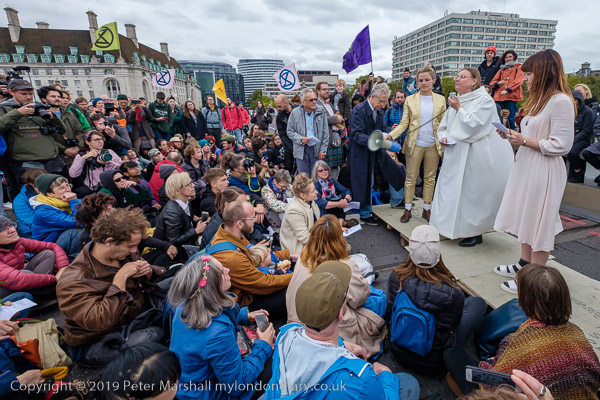
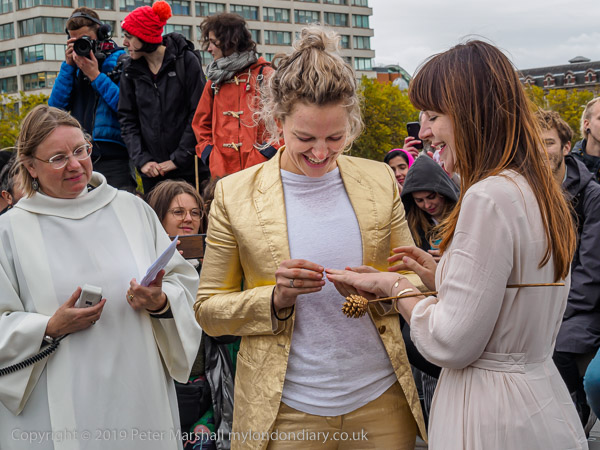
As a part of the protest two XR rebels Tamsin and Melissa were married on Westminster Bridge.

Everything was ready, the clergy had arrived, but only one of the two people being married – and she had gone to look for the other who was taking part in a protest at BEIS in Victoria St. So we had to wait – and the jazz band entertained us.

Eventually Tamsin comes and tells the band to stop playing as the couple are ready to start the wedding.

And the ceremony begins.

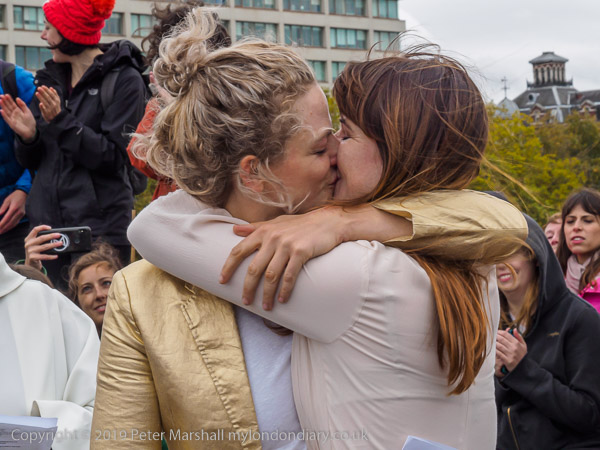
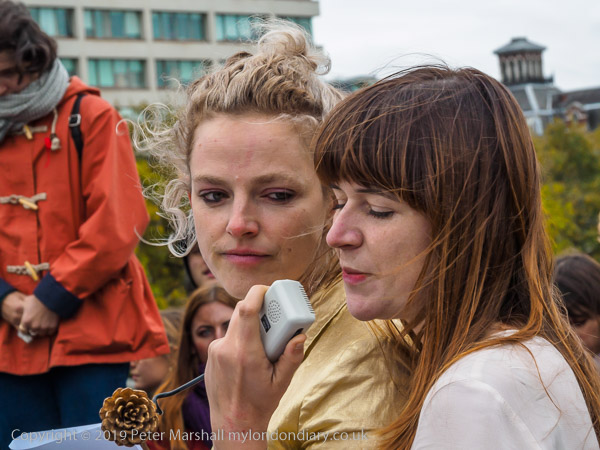
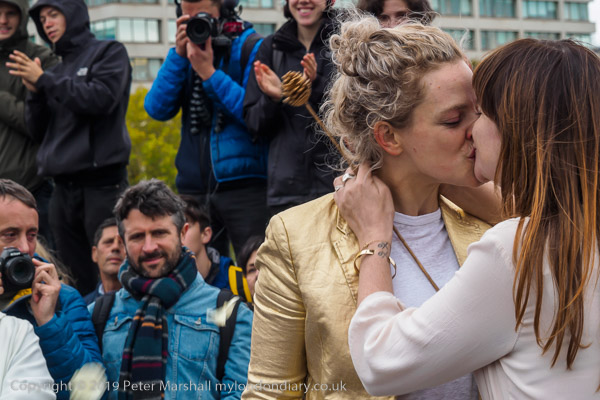
The couple kiss and make promises.

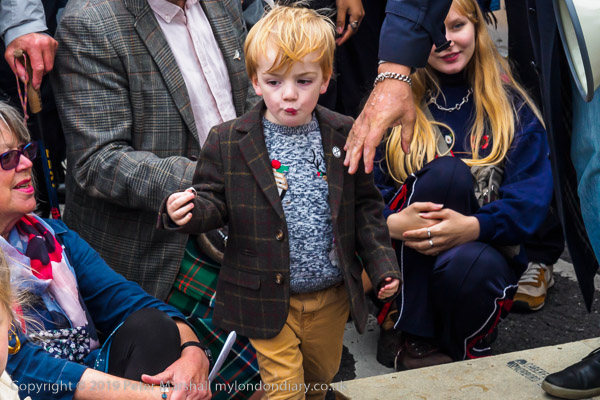
A young boy comes forward with a ring

Melissa gives Tamsin a ring and then Tamsin places a ring on Melissa’s finger

And they kiss again.

More pictures on My London Diary:
XR Rebels marry on Westminster Bridge
Extinction Rebellion occupy Westminster


FlickrFacebookMy London DiaryHull PhotosLea ValleyParis
London’s Industrial HeritageLondon Photos

All photographs on this page are copyright © Peter Marshall.
Contact me to buy prints or licence to reproduce.


Saffron Revolution & Slave Trade Abolition – 2007

Saffron Revolution & Slave Trade Abolition: On Saturday 6th October 2007 I photographed a protest against the brutal repression of the Saffron Revolution protest in Myanmar (Burma) and a celebration of the 200th anniversary of the abolition of the slave trade,


Global Day of Action for Burma – Westminster

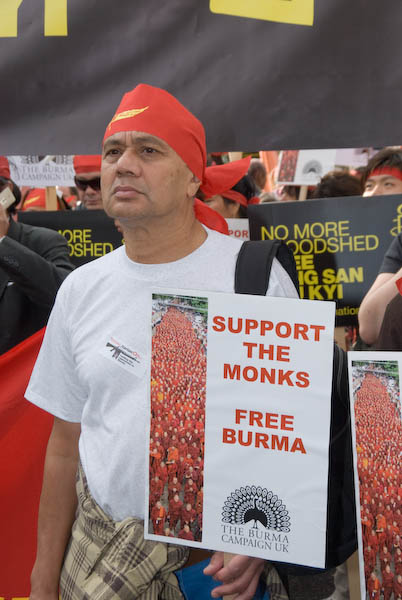
There was considerable support in the UK and UK media for the Burmese people who were taking part in non-violent protests against the military dictatorship there after it decided to remove subsidies on fuel, exacerbating a cost-of-living crisis in the country.

The protests were led by thousands of along with students and political activists and were often referred to as the Saffron Revolution.

The protests had begun in August 2007 and in late September after protests involving many thousands in various cities the government began a huge crackdown using military force to stop the protests and imposing curfews and prohibiting gatherings of more than five people.

Monasteries were raided, thousands of arrests were made and some protesters were killed. Wikipedia gives a great deal of detail, and on 1st October it was reported that around 4,000 monks were being detained at a disused race course, disrobed and shackled.

The official death toll over the period of the protests was 13, but the independent media organisation Democratic Voice of Burma based outside the country produced a list of 138 names of those killed.

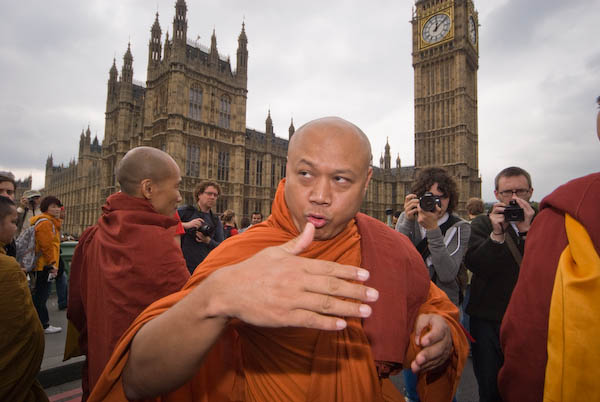
The march began at Tate Britain on Millbank, proceeded over Lambeth Bridge and then returned to Westminster over Westminster Bridge. Many of the roughly 10,000 marchers wore red headbands and a small group of monks were allowed to tie strips of cloth onto the gates of Downing Street before the march continued to a rally in Trafalgar Square, where I left them.

More at London Burma March.


Slave Trade Abolition Bicentenary Walk

In 1787, Thomas Clarkson, Granville Sharp and ten other anti-slavery campaigners founded The Society for the Abolition of the Slave Trade. Nine of the twelve founders were Quakers, including the wealthy banker Samuel Hoare Jr which prevented their having much involvement in parliament.

Perhaps because of this the society became the first modern campaigning movement, working to educate the British public about the cruel abuses of the slave trade through publication of books, prints, posters and pamplets, organising lecture tours, including that by former slave and author Olaudah Equiano and by boycotting of goods produced by slaves.

The Quakers had organised petitions against slavery and presented these regularly to Parliament, and in 1787 William Wilberforce, MP for Hull was persuaded to join the movement, presenting the first Bill to abolish the slave trade in 1791 which was heavily defeated.

Further Bills followed on an almost annual basis, and finally in 1807 the Abolition of the Slave Trade Act was passed, with a majority of 283 votes to 16 on its second reading in the House of Commons. A similar act was passed by the USA in the same year taking effect at the start of 1808.

Despite this it took another thirty years for slavery in the British Empire (except those parts ruled by the East India Company) to be abolished in 1838. And when this was done the freed slaves received no compensation but massive amounts were paid to the former slave owners, a total of around £20 million, around 40% of the national budget and allowing for inflation around £2, 800 million today. Fact checking by USA Today confirms that the UK Government only just finished paying its debts to the slave owners in 2015.

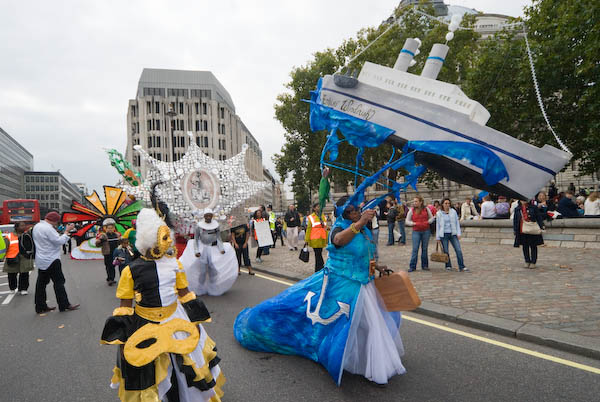
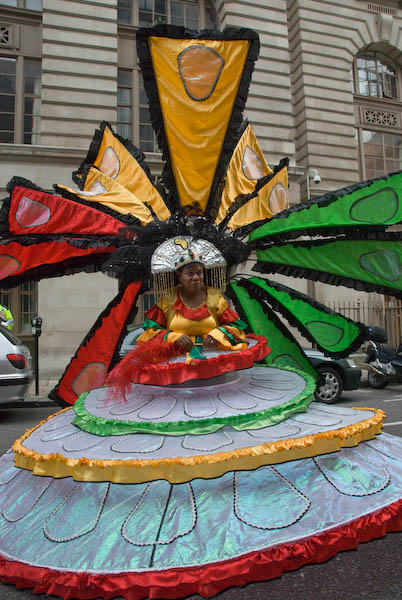
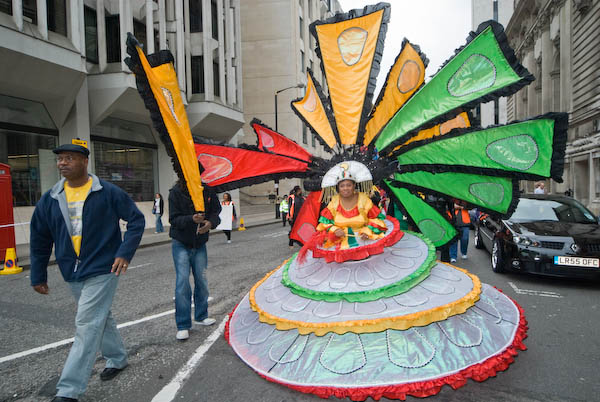
The Slave Trade Abolition Walk organised by Yaa Asantewaa & Carnival Village was only one of a number of events commemorating the abolition of the slave trade taking place in 2007, but was I think the most colourful. Yaa Asantewaa was named after the famous Queen Mother of Ejisu in the Ashanti Empire who led the Ashanti Kings in the War of the Golden Stool against British colonial rule in 1900 and was exiled to the Seychelles where she died in 1921.

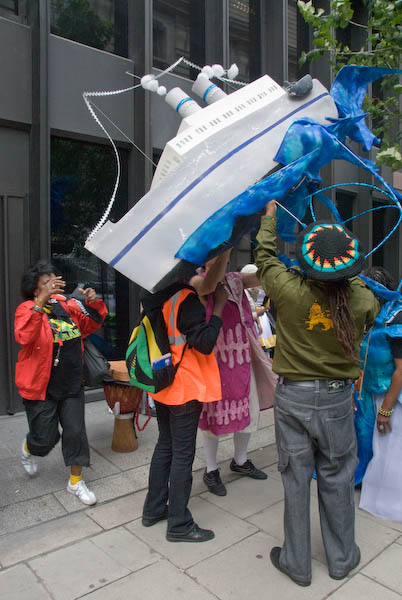
Among the costumes was one winner from Notting Hill, and a rather fine ‘Empire Windrush’ depicting the ship which brought the first large contingent of migrant workers from the Caribbean to England in 1948. They had been recruited to fill the gap in UK workers needed to restore the British economy after the war and came to a country where they met much racist discrimination, which more recently became government policy under the Windrush scandal, still continuing.

As of course is slavery. ‘Modern slavery’ is no less slavery than the slavery that was at the core of the British Empire and which provided the wealth that once made Britain ‘Great’.

Slave Trade Abolition Bicentenary Walk


FlickrFacebookMy London DiaryHull PhotosLea ValleyParis
London’s Industrial HeritageLondon Photos

All photographs on this page are copyright © Peter Marshall.
Contact me to buy prints or licence to reproduce.


Shops, a Poly, Electricity, Church & Library – 1989

Shops, a Poly, Electricity, Church & Library: Continuing my walk in Islington on Sunday 15th October 1989 which began with the post Memorials, Eros and More.

Dorset House, 217-9, Holloway Rd, Lower Holloway, Islington, 1989 89-10g-45

I walked back from Hornsey Road to Holloway Road and took this picture of Dorset House on the corner of George’s Road, then the Unique Butchers at 217 and Wai Shang Chinese Take Away at 219. This building had changed little by 2022, though the butchers was then a closed cafe up for sale and the Chinese take-away was now Green Jade.

I’m surprised that this building does not appear to be locally listed, though it is a shame that it has lost the balustrade on its left side. On Drawing The Street where you can see a more recent drawing of the building @ronniecruwys points out that the detailing of the balustrade is identical to that of Southwark Bridge, but that dates from 1921, when Rennie’s earlier bridge was rebuilt. A comment on that post states “My 2 x great grandfather lived here in 1881. His name was Henry Appleby and his father in law who was the head of the house in 1881 (census) was a retired Policeman named Walter Tovey.”

My guess is that this house probably dates from the early 19th century, but like others I have failed to find out more about its history. George’s Road was originally George’s Place, built by George Pocock.

Polytechnic of North London, Holloway Rd, Hornsey Rd, Lower Holloway, Islington, 1989 89-10g-33

Wikipedia tells me the Polytechnic of North London was granted university status to become the University of North London. It existed under that name until 2002, when it merged with London Guildhall University to form London Metropolitan University. It had been formed from Northern Polytechnic, founded in 1896 and North-Western Polytechnic in 1971.

This building mirroring its surroundings is on the corner with Hornsey Road and was rather appropriately I think next to a mirror shop and factory at left of picture, which later in 1994 was redeveloped as the Learning Centre library.

Pyracrest Ltd, 71 Hornsey Rd, Caedmon Rd, Lower Holloway, Islington, 1989 89-10g-22

This shop remained in commercial use until recently, though not for joinery, display and general woodwork but most recently as a glass merchant. It was sold in 2012 and extended. The garage on the opposite corner, shown here only by a Michelin Man poster on the wall closed around 2009 and was replaced by a new residential development with a ground floor café.

Caedmon Road was earlier called Spencer Road, renamed in 1938. Developed in 1866 it was renamed after Caedmon the earliest known English poet, a Northumbrian cowherd working at Whitby Abbey whose only known surviving work is the nine lines of Cædmon’s Hymn. You can read this on Wikipedia and will find only a slight resemblance to modern English – though possibly more to Geordie or the other impenetrable dialects of the north-East.

The Vestry of St Mary Islington, Electric Light Station, Eden Grove,  Lower Holloway, Islington, 1989 89-10g-26
The Vestry of St Mary Islington, Electric Lighting Station, Eden Grove, Lower Holloway, Islington, 1989 89-10g-26

Conveniently the title of this locally listed building at 60 Eden Grove is shown on its exterior along with the date of 1896. As the Islington Society states, Islington was one of the earlier local authorities to distribute electricity. The vestry’s work was taken over by the Metropolitan Borough of Islington in 1900.

At first this power station was only for street lighting, but soon the wealthier inhabitants of the borough could get power for their homes and they say by 1936 it was supplying “40,000 customers through 106 miles of mains.

Former St James, church, Chillingworth Rd, Lower Holloway, Islington, 1989 89-10g-12

This Grade II listed Neoclassical church was built as St James the Apostle Church in Victoria Road (later Chalfont Road, later Chillingworth Road) in 1839, architects Henry William Inwood and E N Clifton. The east end was extended in 1840 by Hambley and he added the tower in 1850. The top section of this was later removed, possibly after bomb damage, in 1944.

The parish was united with St. Mary Magdalen in 1953-4 and a parish hall built in the shell of the church. Converted to offices and recording studio in 1980-82 and renamed St Mark’s Studios. Probably then the concave entrance shown here was constructed and the original pilasters on the facade were replaced by pillars.

Islington Central Library, Fieldway Crescent, Holloway Rd, Lower Holloway, Islington, 1989 89-10g-15
Islington Central Library, Fieldway Crescent, Holloway Rd, Lower Holloway, Islington, 1989

This frontage on Holloway Rd dates from 1906, architect Henry T Hare; the building was enlarged in 1973-6, and has recently undergone considerable refurbishment. It is Grade II listed.

The library was built for the Metropolitan Borough of Islington and received funding of £20,000 from Andrew Carnegie and was opened in October 1907 by Sir Arthur Rucker, principal of the University of London. The bust at the left is of Spenser and that at the right, cruelly cropped, of Bacon. It remains open as a public library.

More to come from this walk later.


FlickrFacebookMy London DiaryHull PhotosLea ValleyParis
London’s Industrial HeritageLondon Photos

All photographs on this page are copyright © Peter Marshall.
Contact me to buy prints or licence to reproduce.


Unite The Kingdom & Rejoin Europe – 28 Sep 2024

Unite The Kingdom & Rejoin Europe: Although I’m not covering as many protests as I used to I haven’t entirely given up covering them. But my priority at the moment is in digitising as much as possible of the photographs which I took on film before I moved to digital around 20 years ago.

Unite The Kingdom & Rejoin Europe

I think those images are a historical record of those times showing London in the latter years of the 20th century. You can see around 35,000 of them already on Flickr.

Unite The Kingdom & Rejoin Europe

But also I’m feeling my age, and get tired much more quickly; after spending two or three hours covering events I’m ready to go home. But still most weeks I try to get out at least one day covering protests, usually on Saturdays.

Unite The Kingdom & Rejoin Europe

Of course over the past year many of the protests I’ve photographed have been about the continuing events in Palestine. But last Saturday there were only a few small events related to this taking place – the next big protest comes this Saturday, 5th October, starting at 12 noon in Russell Square. Unfortunately I’ll miss that one as I’m away at a conference.

Unite The Kingdom & Rejoin Europe

I covered two events on Saturday 28th September, both unfortunately starting at noon, but one in Trafalgar Square and the other on Park Lane, around 2 kilometers to the west. Fortunately the journey by tube between the two is fairly fast.

I began taking pictures in Trafalgar Square, where Stand Up To Racism had called on its supporters to come to oppose a threatened far right racist protest which was to take place there.

The far right group was calling itself “Unite the Kingdom”, inspired by that phrase used by ‘Tommy Robinson’ at his protest in Trafalgar Square in July. He and his followers incite hate against migrants and asylum seekers, and their racist and Islamophobic rants were what led to the extreextreme right, right-wing, me right riots in Stockport, Birmingham, Hull and elsewhere – which tried to burn down buildings housing migrants.

There were a few short speeches and by the time I left Trafalgar Square half an hour or so later there were perhaps a little under two hundred people who had come to oppose the extreme right, with banners from various parts of London and a few from various organisations including GiK-DER Refugee Workers Cultural Association, and more were still arriving. But there was no sign of the extreme right protest.

The third annual grassroots National Rejoin March was a rather larger event, with several thousand people crowding around the area close to the Hilton Hotel, and I had time to take some pictures and talk to a few of the protesters before the march set off.

There is now a fairly large proportion – almost 50% of us – in the country who realise that leaving Europe was a huge mistake, while support for staying out is under 35%, and opinion polls in 2023 showed a hugely different result – around 70% to 15% – if a referendum was held then.Despite this there now seems very little chance that we would return into membership of the EU in the foreseeable future.

Singer Madeleina Kay, Young European Movement, with her guitar.

In England & Wales the Green Party, Plaid Cymru, and the Liberal Democrats want to rejoin, but the two major parties and Reform are committed to stay out. It may well have contributed to the success enjoyed by the Lib-Dems in the recent general election, and there seemed to be a strong presence at the protest from some of their stronger areas.

One of the main themes in the protest was that the question of rejoining Europe is the ‘elephant in the room’ of current British politics. Both Labour and Tories seem to believe that if the came out in favour of it would give the other party a huge boost.

This march seemed smaller than the previous two annual marches and it took less than ten minutes for the whole body of marchers to pass me as I stood on the street corner before rushing back to the tube to return to Trafalgar Square.

When I arrived there around a dozen ‘Unite The Kingdom’ protesters had arrived. Police had formed two lines on the North Terrace perhaps 50 yards apart separating them from the Stand Up to Racism supporters. Most of these had left with their banners leaving only a small fraction – still considerably outnumbering the racists. But police now seriously outnumbered both groups.

I took a few pictures, but couldn’t really be bothered – and it shows. But I think we are likely to see much larger numbers at future extreme right-wing protests than this disorganised damp squib.


FlickrFacebookMy London DiaryHull PhotosLea ValleyParis
London’s Industrial HeritageLondon Photos

All photographs on this page are copyright © Peter Marshall.
Contact me to buy prints or licence to reproduce.


Memorials, Eros and More – Highbury & Lower Holloway 1989

Memorials, Eros and More: On Sunday 15th October 1989 I caught the North London Line from Richmond to Highbury & Islington for the start of another walk in North London.

Boer War Memorial, Higbury Crescent, Highbury Place, Highbury, Islington, 1989 89-10f-24

There had been a series of conflicts between Dutch and British settlers in South Africa for some years as the Boers opposed the British annexation of African countries and resented British attempts to end slavery. The first Boer War in 1880-1 ended badly for the British who signed a peace treaty with Transvaal President Paul Kruger.

But the discovery of huge gold reserves in 1884 created a hug British interest in the area, and Britain again decided to try to take control of Transvaal and the Orange Free State. One of the earliest moves was a failed attempt thought up then by Cape Prime Minister Cecil Rhodes and Johannesburg gold magnate Alfred Beit to provoke an uprising in Johannesburg by an armed raid from Rhodesia, the Jameson Raid over the New Year in 1896. This was followed by an uneasy truce – and an uprising by the Matabele and Mashona peoples against the British South Africa Company whose forces had been greatly weakened by taking part the raid which was suppressed with many Africans killed.

British efforts continued and in 1899 after Britain rejected an ultimatum to withdraw their troops made by Kruger he declared what we generally call the Boer War, though now more widely known as the South African War, which continued until 1902.

The memorial was erected here in 1905 and the inscription reads:

HOW SLEEP THE BRAVE WHO SINK TO REST
BY ALL THEIR COUNTRY’S WISHES BLESS’D.
IN HONOUR OF
NINETY-EIGHT ISLINGTONIANS
WHO DIED FOR THEIR COUNTRY
IN THE SOUTH AFRICAN WAR,
1899 – 1903.
ERECTED BY THEIR FELLOW-TOWNSMEN
JULY 1905.

as well as listing the names of the 98.

The war had repercussions and laid the basis for apartheid in South Africa. It also saw the first ‘concentration camps’ where Boers were imprisoned by the British. And Robert Baden-Powell who had been a scout in the war set up the Scout movement with a uniform and ideas based on his role there.

On the wall behind the cannons is the graffitied message ‘BRITISH STATE HEAR US SAY – IRISH PEOPLE WILL MAKE YOU PAY.

The Court Gardens, Holloway Rd, Highbury, Islington 1989 89-10f-12

This gate to The Court Gardens is, perhaps unsurprisingly, next to Highbury Corner Magistrates’ Court on Holloway Road, which perhaps accounts for the uncompromising concrete wall at right. Underneath the name it states PRIVATE PROPERTY. A private road leads into the housing in Court Gardens from Liverpool Road,

Thomas Judd, Memorials, 123 Holloway Rd, Highbury, Islington, 1989 89-10f-13

Thomas Judd, Memorial & Marble Masons remained in this shop until around 2018. The shop had been open since the 1880s and was thought to have been the oldest business in continuous use on the street.

The Camden New Journal reported in 2018 that its owner, Kenneth Howard, was an 81 year-old who had retired and in 2016 had been suspended from the National Association of Memorial Masons register for a year. This meant the company was unable to work in many cemeteries. He was taken to court by some clients who had paid deposits to him for work he had been unable to deliver, claiming he had been let down by a sub-contractor, and was ordered to pay back the deposits with compensation, court costs and a victim surcharge.

Bookbinders of London, Ronalds Road, Highbury, Islington, 1989 89-10g-61

This company is still in existence but moved its registered office from 11 Ronalds Road in 2014 to Hertford and their name across the adjoining gates was replaced the following year by NET.WORKS.LONDON and later by UNCOMMON as serviced offices.

Although the neighbouring former Salvation Army Citadel is locally listed I was a little surprised to find this building is not mentioned.It is well-proportioned with fine doorways.

Bookbinders of London, Ronalds Road, Highbury, Islington, 1989 89-10g-66

According to the fine ‘Streets With Story’ by Eric A Willats, Ronalds Road was named “after Sir Francis Ronalds (1788-1873) who was, with Wheatstone, one of the pioneers of the electric telegraph. The name was suggested by a Mr. M.C. Sharpe who for years had lived at Highbury Terrace. Sir Francis’s father Francis Ronalds took over no.1 Highbury Terrace in 1796 and died in 1806. The new road had run alongside no.1 and the first electric wires ran from a coach-house of no.1 to a cottage in the immediate neighbourhood.”

Ronalds (1788 – 1873) built the world’s first working telegraph system in his mother’s back garden in Hammersmith when he was 28 in 1816. ‘It was infamously rejected on 5 August 1816 by Sir John Barrow, Secretary at the Admiralty, as being “wholly unnecessary“.’

Drayton Park, Islington, 1989 89-10g-53
Drayton Park Rd, Highbury, Islington, 1989 89-10g-53

I think this fence and yard has long disappeared together with the figure on it, but is was possibly part of Drayton Park School close to the corner of Arvon Road. I think the picture shows a child holding something just above kitchen scales.

Eros Fashions, Hornsey Rd, Lower Holloway, Islington, 1989 89-10g-43

Much of this section of Hornsey Road close to the impressive Victorian School building at 30-36 has been replaced by modern buildings since 1989 and I think that the building that Eros Fashions occupied has gone. Certainly I can find no trace of it now.

Back then Eros Fashions was still in business, with vacancies for almost everyone involved in the manufacture of clothing:

VACANCIES
MACHINISTS
FINISHERS
PRESSER
OVERLOCKERS
FELLING
CUTTER

on the board beside the door, and shadowy mannequins inside.

This is the final picture in my book ‘1989’ still available on Blurb, though at a silly price for the print version, and the full set of pages is on the web site, including this image and this text:

‘Eros, fairest among the deathless gods, who unnerves the limbs and overcomes the mind and wise counsels of all gods and all men within them.’

Created first out of Chaos, also son to Aphrodite, though argument rages as to whether his Dad was Zeus, Ares or even Uranus.

It must be a bit of a come-down to be running a fashion manufacturer (to be rude you could call it a sweat-shop) in North London. Though he was always a bit of a shady character – those different names for a start – Cupid and Amor – what was he trying to hide? And then there’s that business with Hymen, best not to say too much.”‘”

Which seems a suitable place to end this post, though my walk will continue in further episodes.


FlickrFacebookMy London DiaryHull PhotosLea ValleyParis
London’s Industrial HeritageLondon Photos

All photographs on this page are copyright © Peter Marshall.
Contact me to buy prints or licence to reproduce.


Master Butcher Salman & LouLou’s 2019

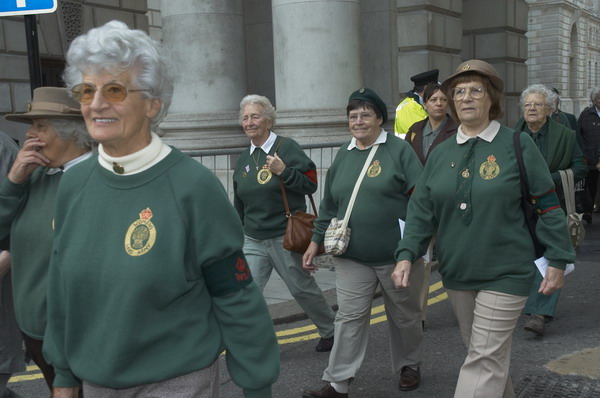
Master Butcher Salman & LouLou’s: The protests I photographed on Wednesday 2nd October 2019 were conveniently close to each other in London’s Mayfair. I went to photograph a candlelit vigil for Saudi journalist Jamal Khasnhoggi at the Saudi Embassy (and also found a counter-protest) and then joined the IWGB protesting at exclusive Mayfair club LouLou’s a few yards away.


Justice For Jamal Khashoggi

Master Butcher Salman & LouLou's

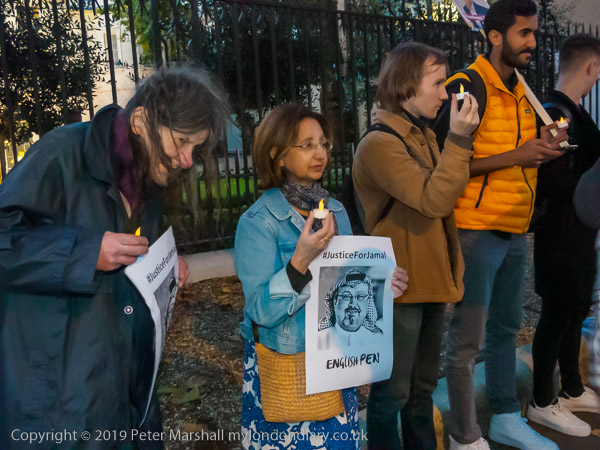
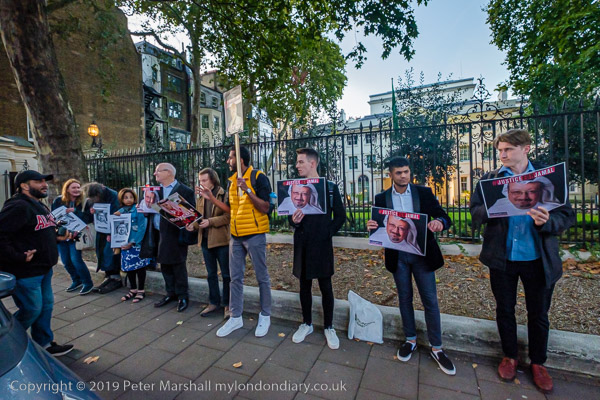
Representatives of English PEN, Writers at Risk, Reporters Without Borders and PEN International had come to hold a candlelit vigil outside the Saudi Embassy on Curzon Street on the first anniversary of the horrific murder of Saudi journalist Jamal Khashoggi’s inside the Saudi consulate in Istanbul.

Master Butcher Salman & LouLou's

Khashoggi was a Saudi journalist, dissident, author, columnist for Middle East Eye and The Washington Post, and a general manager and editor-in-chief of Al-Arab News Channel.

Master Butcher Salman & LouLou's

Khashoggi was last seen entering the Saudi consulate in Istanbul where he had gone to get papers for his planned marriage. Inside the consulate he was met by a team of possibly eight men sent by Saudi Crown Prince Mohammed bin Salman (MbS) to assassinate him. He was strangled and then his body was cut into pieces using a bone saw so it could easily be removed from the building and disposed off.

Master Butcher Salman & LouLou's

Turkish intelligence bugs in the building recorded both the planning of the murder and its execution. MbS denied any knowledge of the plans prior to the murder, but few if any believe it could have happened without his authorisation.

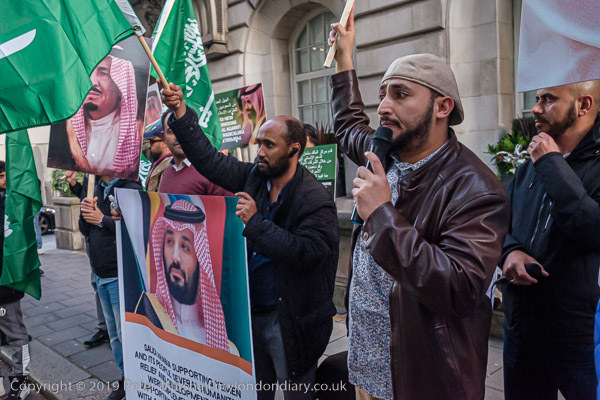
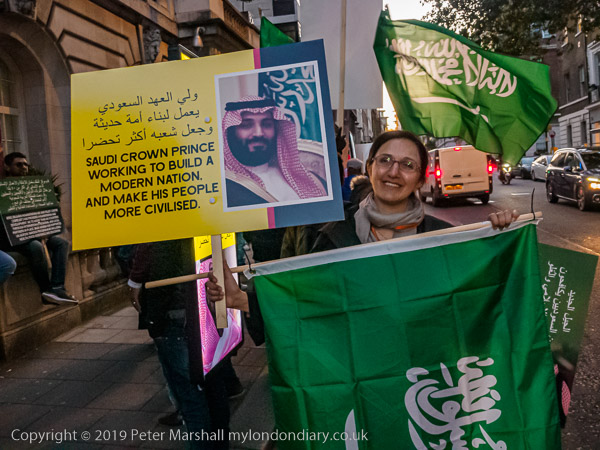
Opposite the silent vigil was a noisy protest with music and speeches funded by the Saudi Embassy with banners and expensively produced placards as well as large LED illuminated screens in support of the Crown Prince.

They denied MbS had any involvement in the killing and held huge pictures of him as well as others lauding his achievements in giving aid to Yemen, supporting charitable foundations and fighting Islamic radicalism and extremism. The didn’t mention the war in Yemen, his support for Wahhabism, the ridiculous kidnapping of Lebanon’s Prime Minister Saad Hariri (intended to weaken him, the country united behind him and MbS was forced to release him), and certainly not the barbaric torture, murder and dismemberment of Khashoggi.

One placard stated ‘SAUDI CROWN PRINCE WORKING TO BUILD A MODERN NATION AND MAKE HIS PEOPLE MORE CIVILISED. Barbaric practices like torturing and sawing up your opponents hardly seems a way to make his people more civilised. MbS now to many means Master butcher Salman.

Justice For Jamal Khashoggi
Saudis support killer Prince MBS


IWGB at Mayfair club Loulou’s

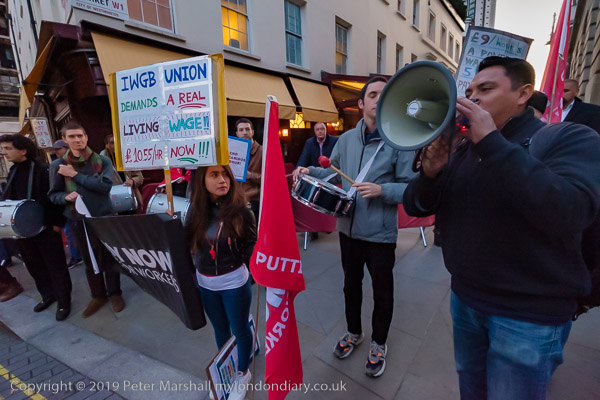
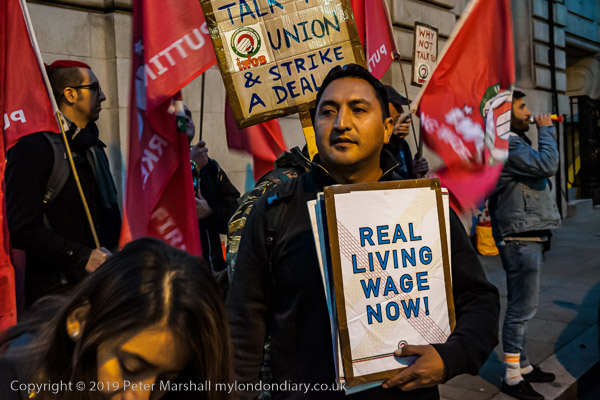
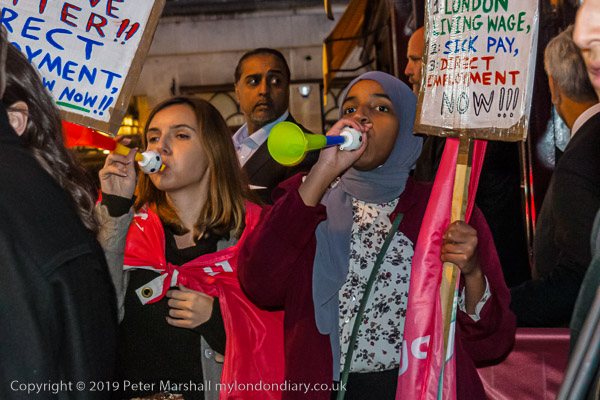
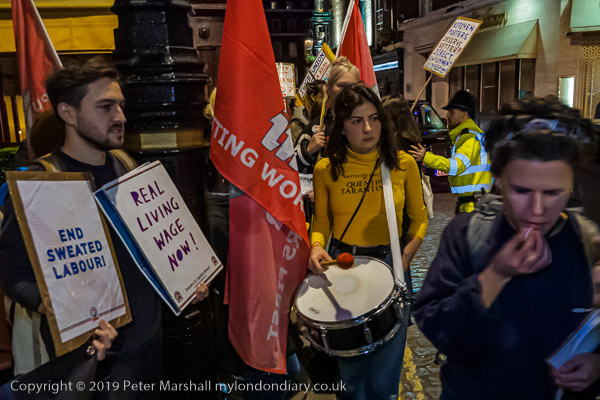
I joined the Independent Workers’ union of Great Britain (IWGB) Cleaners and Facilities Branch who had come to protest at exclusive Mayfair private club LouLou’s for kitchen porters to be paid a living wage, be treated with dignity and respect and given decent terms and conditions including proper sick pay, holidays and pension contributions.

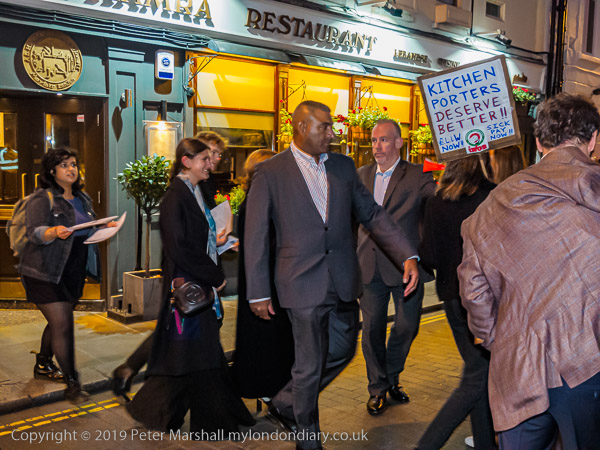
Police and security men had closed off the section of street with the entrance to the club and the protesters were harassed by police and pushed roughly by security staff employed by the club during the protest.

Few of the wealthy customers being escorted into the club took the leaflets the protesters were offering or seemed to have any sympathy with the exploited workers at the club.

After protesting for some time on Trebeck Street at one end of the blocked section of Shepherd’s Market they marched noisly around the block to the other end in Hertford Street and continued the noisy protest there.

In December 2019 LouLou’s made an offer to the IWGB including paying its kitchen porters the London Living Wage from January 2020, 5 days sick pay, and regular quarterly consultations with the union on terms and conditions. Although it didn’t meet all of the unions demands further planned strikes were called off.

Many more pictures on My London Diary at IWGB at Mayfair club Loulou’s.


FlickrFacebookMy London DiaryHull PhotosLea ValleyParis
London’s Industrial HeritageLondon Photos

All photographs on this page are copyright © Peter Marshall.
Contact me to buy prints or licence to reproduce.

Lea Navigation & Olympic Site

Lea Navigation & Olympic Site: Saturday 1 October 2011 was a fine day and I decided to go early to Stratford and take a photographic walk around Bow & Stratford Marsh, before a meeting at the View Tube on the Greenway overlooking the Olympic site.

Lea Navigation & Olympic Site

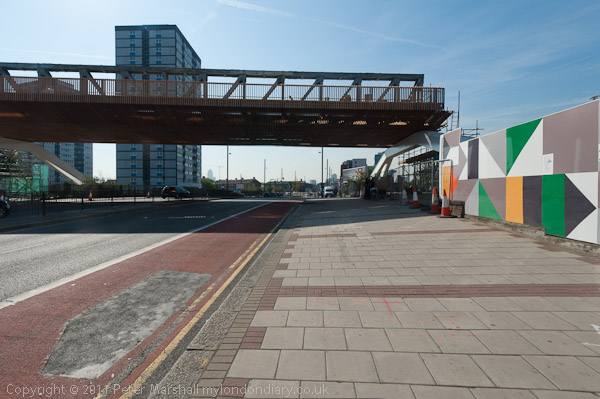
I took the Jubilee Line to Stratford and then walked over the footbridge leading to the Carpenters Estate and then on to Stratford High Street. A great deal of new building was taking place there, including a new bridge to carry the Olympic crowds across the busy road on a route from West Ham station along the Greenway. The bridge was demolished shortly after the games ended.

Lea Navigation & Olympic Site

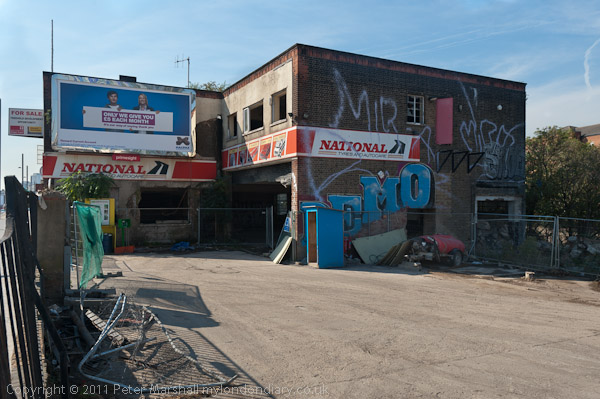
This section of the Greenway – the path on top of Bazalgette’s Northern Outfall Sewer rebranded in the 1990s – was closed off by fences and I kept on walking down the High Street. A few yards along was one of the few remaining commercial sites, though by then derelict and for sale. It was demolished and the site flattened for the Games, though it was only five years later than penthouses on the new block here were offered for sale.

Lea Navigation & Olympic Site

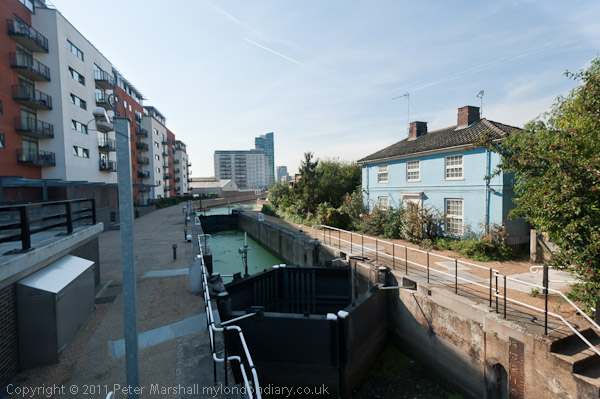
A few yards off the High Street was City Mill Lock, now behind a row of flats. I continued on to the Lea Navigation. The industrial sites on the High Street had now been cleared and there were now huge advertising structures.

Lea Navigation & Olympic Site

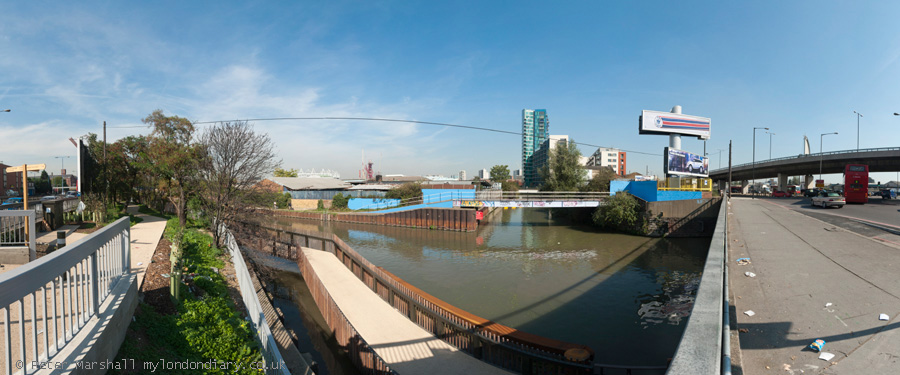
I had come mainly with the intention of making panoramic images, but these don’t display well on this blog, but you can see them larger on My London Diary. A footway now carries the towpath under the Bow Flyover and the High Street and then across the canal where the towpath continues on the opposite bank.

I made far too many pictures around this part of the canal before I could drag myself away, although the sky was not at its best for panoramic images and I would have prefered more distinct clouds rather than the large areas of blue. Only the first section of Cook’s Road was still open, but I could walk along beside St Thomas’s Creek to Marshgate Lane and then make my way to the bright yellow View Tube.

Here I was one of five photographers taking part in what was billed as a ‘Salon de Refuse Olympique‘, showing our artistic responses to the area. It was interesting to see the very different work that the five of us presented. You can read more about this in a post published here two days after the event in 2011, Northern Outfall Sewer 1990, 2005, 2010… which includes the three pictures I contributed for a forthcoming book as well as a lengthy text based on my presentation.

The Olympics have certainly changed this area, and the changes which were showing back in 2011 have continued. Many more pictures – both panoramic and normal aspect ration – in my post on My London Diary at Lea Navigation & Olympic Site.


FlickrFacebookMy London DiaryHull PhotosLea ValleyParis
London’s Industrial HeritageLondon Photos

All photographs on this page are copyright © Peter Marshall.
Contact me to buy prints or licence to reproduce.

Yet More from Stoke Newington

Yet More from Stoke Newington: This is the final post about my walk on 8th October 1989 going down Stoke Newington High St towards Dalston with some minor detours. The previous post on this walk was Cemetery, Synagogue & Snooker.

Shops, 77, Stoke Newington High St, Stoke Newington, Hackney, 1989 89-10f-52

I wondered about the history of these three shops at 75-79 Stoke Newington History with the three-story Golden House Chinese takeaway at its centre. The first-floor brickwork on either side didn’t quite seem to match suggesting to me that the central building may have been a post-war addition to an existing building, or that these first floors may have been a later addition.
This central shop is still a Chinese takeaway but under a different name.

Hovis Bread, Batley Rd, Stoke Newington High St, Stoke Newington, Hackney, 1989, 89-10f-55
Hovis Bread, Victorian Grove, Stoke Newington High St, Stoke Newington, Hackney, 1989 89-10f-55

The Cinema Treasures site states that The Vogue Cinema at 38 Stoke Newington High St opened as The Majestic Electric Palace on 15th December 1910 and was closed on 21st June 1958 as a protest by Classic Cinemas against the landlord’s rent rise.

It remained shuttered and closed for 42 years until in November 2000 the foyer was converted into a Turkish restuarant with housing behind, described to me on Flickr as the “best Turkish restaurant ever.” The restaurant owners restored the Vogue sign.

My picture with the Hovis Bread ghost sign was taken from a few yards down Victorian Grove looking towards the cinema across the High Street. The block at right of the picture has now been replaced by a large building with a Tesco Extra on its ground floor.

House,  Victorian Grove, Stoke Newington, Hackney, 1989 89-10f-56
House, Victorian Grove, Stoke Newington, Hackney, 1989 89-10f-56

This street was originally called Victoria Grove, but its name was changed some time in the middle of the last century. Much of the area was redeveloped in the 1970s but these houses dating from the early years of Victoria’s reign in the 1840s or 1850s remain.

This Grade II listed pair with the unusual curved bays and balconies have the name ‘BRIGHTON VILLAS’ on a plaque between the first floor windows, hidden by the curvature of the nearer bay in my photograph. The nearer balcony roof has been replaced since I took this, matching the one on its neighbour.

Works entrance, Victorian Grove, Stoke Newington, Hackney, 1989 89-10f-41

The wall beside 3 Victorian Grove is still there, but now has only graffiti on it. There are still some industrial units behind the villas of Victorian Grove, though surely they will soon be replaced by expensive flats, but access to these is now thourgh a gated vehicle entrance further down the street.

Posters, Stoke Newington High St, Stoke Newington, Hackney, 1989  89-10f-42
Posters, Stoke Newington High St, Stoke Newington, Hackney, 1989 89-10f-42

Should you Google – as I did – ‘Trevor Moneville‘ – you will find he was a 33-year-old from Hackney, was found dead at HMP Lewes on April 18, 2021 from Sudden Death in Epilepsy (SUDEP) because of insufficient and unacceptable management of his care.

But this was a case of history repeating itself. A copy of the poster at top right is also in the collection of Hackney Museum, where the web site notes:

“Trevor Monerville went missing from Stoke Newington police station after being taken into custody on New Year’s Eve, reappearing after several days on the other side of London in Brixton prison. He had multiple injuries and later underwent emergency surgery in Maudsley Hospital. The case highlighted existing concerns about alleged institutional racism in the Metropolitan Police and led to the formation of the Hackney Community Defence Association in 1988.”

And in the centre of the picture is a poster for another, better known case of police brutality. Blair Peach was a young teacher murdered by the police Special Patrol Group who went beserk when policing an anti-racist protest in Southall on 23 April 1979.

Andy's Fashions, 141, Stoke Newington Rd, Stoke Newington, Hackney, 1989 89-10f-43
Andy’s Fashions, 141, Stoke Newington Rd, Stoke Newington, Hackney, 1989 89-10f-43

Further south Stoke Newington High Street becomes Stoke Newington Road, and back in 1989 I found myself confusing the two. Andy’s Fashions was at 141 Stoke Newington Road. No longer Andy’s, the shop is now Stitch “N” Time offering tailoring, alterations, repairs. and no longer has its wares on the pavement outside or partly blocking the entry to the Stoke Newington Estate of the Industrial Dwellings Society (1885) Ltd.

The IDS was established as the Four Per Cent Dwellings Company in 1885 by “Jewish philanthropists to relieve the overcrowding in homes in the East End of London” and changed its name in 1952. They opened the Stoke Newington Estate in 1903.

Curtains,  Stoke Newington Rd, Stoke Newington, Hackney, 1989 89-10f-32
Curtains, Stoke Newington Rd, Stoke Newington, Hackney, 1989 89-10f-32

Another shop somewhere on Stoke Newington Road, with a fine formation of net curtains for sale, though in my book ‘1989’ I imagined them rather differently, perhaps as the front of a vast army of angels, “Or a phalanx of klansmen or some strange voodoo creatures about to burst out onto the streets of London.

The book is still available on Blurb, though at a silly price for the print version, but you can see over half of it on the preview there or the full set of pages on the web site where this image and its text is on page 19.

The texts in that book were intended to explore the question of why some scenes grabbed my attention enough to make me fix them as photographs, and why they continue to excite my imagination and I hope that of other viewers.

Street Market, Shoreditch High St, Tower Hamlets, Hackney, 1989 89-10f-33

My walk had ended and I got on the bus to take me to Waterloo for the train home. I almost always sit on the upper deck on double-decker buses and enjoy the views from the windows. As the bus went slowly along Shoreditch High Street close to the junction with Commercial Street it passed the informal market on the pavement where I had time to take three frames through the window. The area looks a little different now, but the last time I went past on a Sunday there was still a rather similar market there.

This is the final post about my walk on 8th October 1989. You can find more pictures from London and elsewhere on Flickr, with both black and white and colour images in albums mainly arranged by the year I took them, such as 1989 London Photos and 1989 London Colour.


FlickrFacebookMy London DiaryHull PhotosLea ValleyParis
London’s Industrial HeritageLondon Photos

All photographs on this page are copyright © Peter Marshall.
Contact me to buy prints or licence to reproduce.