Art Deco, Houses, Bingo and King of Lee – 1990

Art Deco, Houses, Bingo and King of Lee: The final part of a short walk around Lewisham which took me to Ladywell before returning to catch a train in Lewisham. The previous post on this walk was Ravensbourne, Quaggy & More -Lewisham – 1990.

Tickitape House, Works, Art Deco, 59, Ladywell Rd, Ladywell, Lewisham, 1990, 90-4c-43
Tickitape House, Works, Art Deco, 59, Ladywell Rd, Ladywell, Lewisham, 1990 90-4c-43

This classic Art Deco factory, at one time ‘Tickitape House’, home to Adhesive Specialities has sadly been demolished.

In Lewisham Council’s St Mary’s conservation area supplementary planning document it states:

“This building was built in the 1930s as Neuk Laundry in a simple ‘Moderne’ style by a local builder, Mr Howkins. It was altered in 1988-9 by another local firm, Rainey and Rainey, which added metal windows and a clock and heightened the parapets, giving the building a more Art Deco style.”
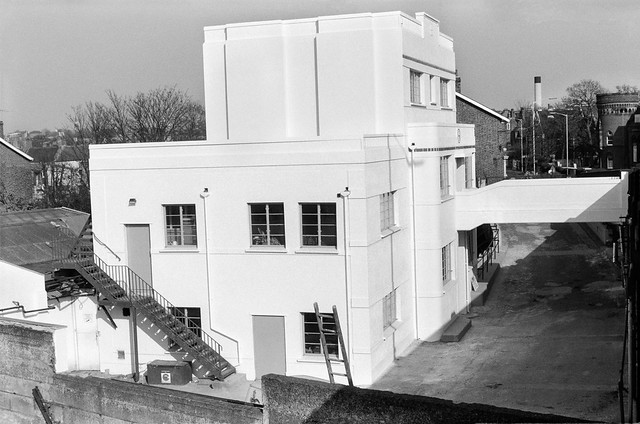
Tickitape House, Works, Art Deco, 59, Ladywell Rd, Ladywell, Lewisham, 1990, 90-4c-45
Tickitape House, Works, Art Deco, 59, Ladywell Rd, Ladywell, Lewisham, 1990 90-4c-45

Unfortunately local listing and being a popular local landmark that, according to the council “makes a positive contribution to the character and appearance of the conservation” area and their comment that “Any development on this site should therefore retain the main body of the Art Deco building” fell on deaf ears of the developers, and despite considerable local opposition it was completely demolished and replaced by undistinguished student housing around 2009.

Tickitape House, Works, Art Deco, 59, Ladywell Rd, Ladywell, Lewisham, 1990, 90-4c-46

Perhaps the building did not fall within the criteria needed for national listing, though many far less interesting buildings have been listed. But the architectural community and particularly as this was represented by such vital figures as Nikolaus Pevsner in the past had a very snooty attitude to Art Deco and Moderne buildings, regarding them as of little merit compared to the true modernism of the age. It doesn’t get even a fleeting mention in London 2:South.

Ladywell Rd, Ladywell, Lewisham, 1990, 90-4c-44

My interest was caught by the rather ramshackle buildings in the centre of the picture and I wondered what their original purpose could have been, with what appear to be doors at first-floor level and ventilators on top. My first thought was pigeon lofts and others have suggested stables. I think they have since been rebuilt in a similar form in Mercy Terrace.

Houses, Ladywell Rd, Ladywell, Lewisham, 1990, 90-4c-33

Breeze blocks fill the windows and doors of the foreground house in this terrace and I think were there to prevent squatting of the property which has since been renovated.

Mecca Leisure, Lewisham High St, Lewisham, 1990, 90-4c-34

The Bingo Hall was built as a Temperance Billiards Hall in 1910, and I wrote more about this in my previous post. Left derelict for some years after the last Bingo session it has been slowly and carefully restored by the Tabernacle Church.

King Of Lee, Motors, Lewisham High St, Lewisham, 1990, 90-4c-35

No trace remains of King of Lee Motors at 256 Lewisham High St, a scrap yard offering a wide range of reconditioned and reclaimed motor spares from stock, immediately south of the railway bridge on Lewisham High Street. They apparently paid “TOP CASH PRICES” for “FAILED MO.O.T., DAMAGED, NON RUNNERS, INSURANCE WRITE-OFFS” and their buyers will call to collect them – evenings and weekends.

Curness Street now runs here,. leading to new flats built between 2003 and 2006

King Of Lee, Motors, Lewisham High St, Lewisham, 1990, 90-4c-36

Finally I took three portrait format near identical images of the gate, fascinated by the remains of a telegraph pole with its various wires and strands of deadplants. Although the yard claimed to be open ‘7 DAYS’ I had managed to find one where it was firmly closed with a car wedged against its frontage.

It was time to make for the station and go home.


Flickr – Facebook – My London Diary – Hull Photos – Lea Valley – Paris
London’s Industrial Heritage – London Photos

All photographs on this page are copyright © Peter Marshall.
Contact me to buy prints or licence to reproduce.
Land Army, Charity Pull & Rosary Crusade – 2005

Land Army, Charity Pull & Rosary Crusade: Saturday 8th October 2005 was a day of considerable variety as well as some tricky travelling around London for me, beginning in Whitehall with the women of the Land Army, rushing to Lewisham for a charity event organised by the Mayor and then back to Westminster Cathedral for a religions procession.


Commemoration of the Women’s Land Army – Cenotaph, Whitehall

Land Army, Charity Pull & Rosary Crusade

During the Second World War many women joined the Women’s Land Army. First set up in 1917 during World War One, it was reformed in June 1939 when World War Two seemed inevitable, before the war actually began at the start of September.

Land Army, Charity Pull & Rosary Crusade

During WW2, over 200,000 Land Girls worked in the Women’s Land Army, playing a crucial role in feeding the nation at war – and it continued for some years after the war ended in 1945, finally ending in November 1950.

Land Army, Charity Pull & Rosary Crusade

For many joining up was a healthy alternative to working in munitions or joining the other services, less regimented and offering a wide range of activities. Few had any previous experience in agriculture, but “they ploughed, grew produce, milked cows, caught rats, drove tractors – and much more.”

Land Army, Charity Pull & Rosary Crusade

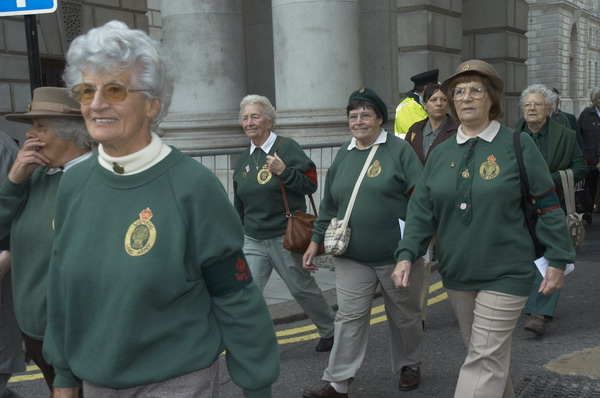
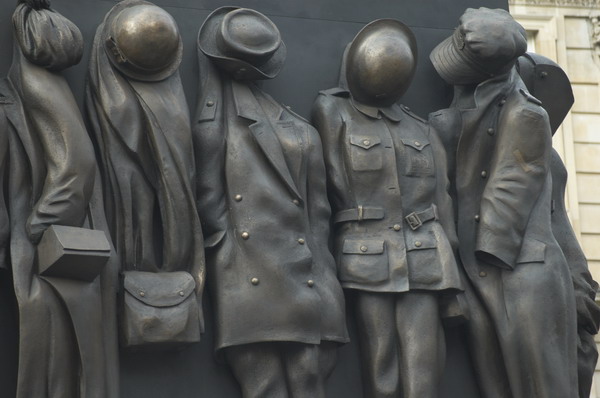
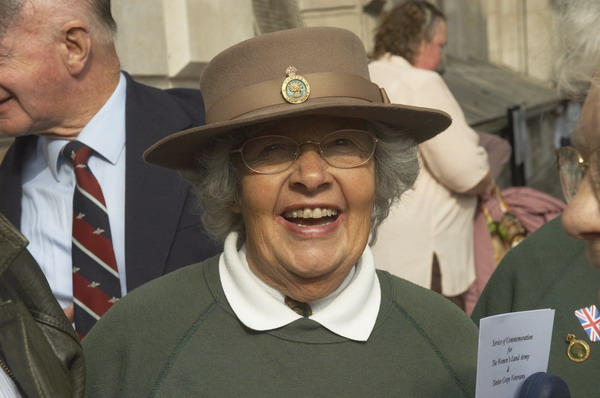
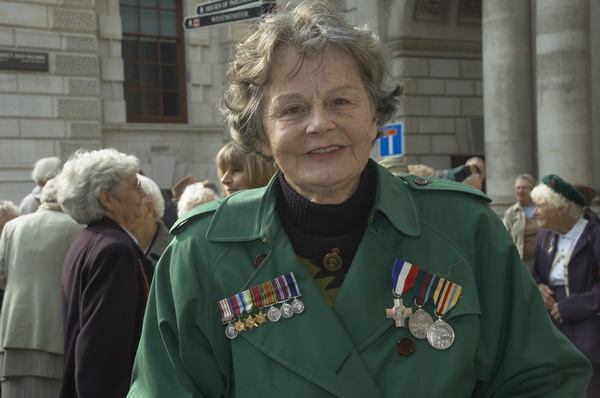
But the war had ended 50 years earlier and they were now in their 70s and 80s when I met them opposite the memorial to the Women Of The Second World War which had recently been unveiled near the Cenotaph.

Some I talked to had been at the unveiling of that memorial and were extremely scathing about it and had been and were disappointed that the Queen had not spoken at all at the event.

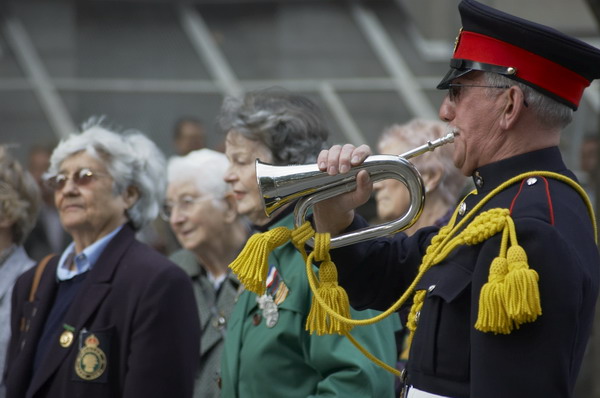
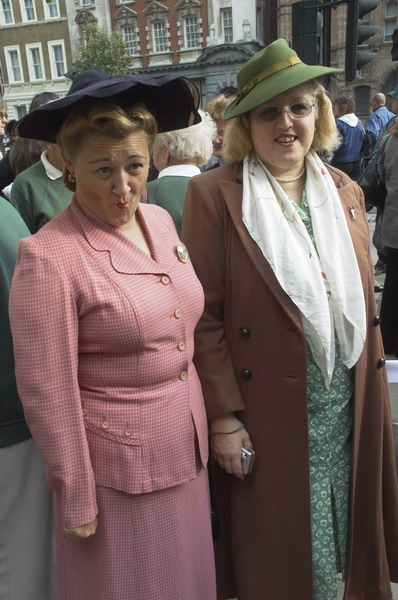
They were a sprightly and feisty group despite their age. A few had come in 1940s dress but most wore some of their uniform often with a number of medals. They marched to the Cenotaph where wreaths were laid and a bugler sounded ‘The Last Post’. After which I rushed away to Charing Cross to catch a train as the event had run late.

More pictures


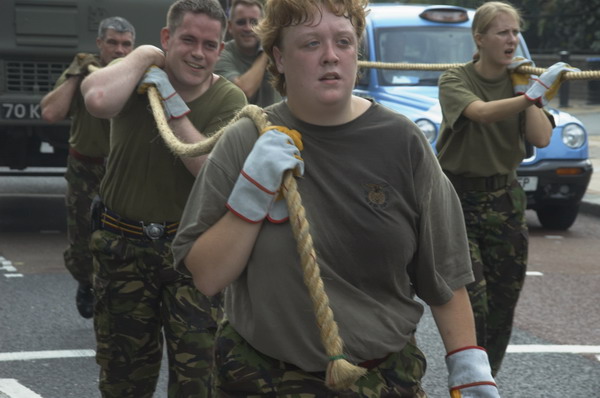
Lewisham: Mayor’s Charity Vehicle Pull

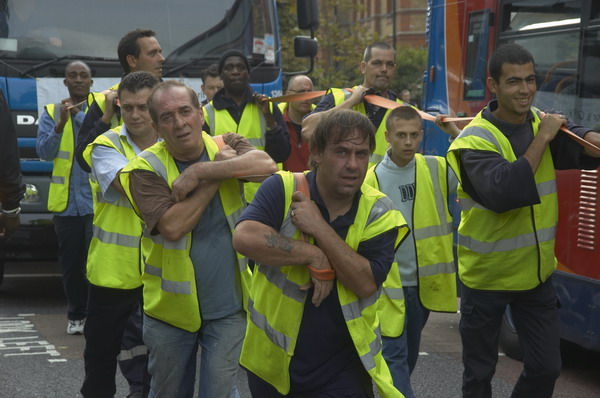
Every year like most Mayors the Mayor of Lewisham has a charity appeal and for some years a Charity Vehicle Pull from Downham to Lewisham was organised as a way of raising money for this.

I’d got a later train than I’d hoped, so sat on the train trying to work out where the vehicle pull would be by the time the train arrived in the area. I left the train at Ladywell and rushed from the station to Lewisham High Street and fortunately found my guess had been correct.

“I took a few pictures – there isn’t a huge lot you can do with an event like this – and then got on the top floor of a bus which was travelling along the open lane inside the event, hoping to overtake them. It would have worked, but for an illegally parked vehicle that was blocking the lane.”


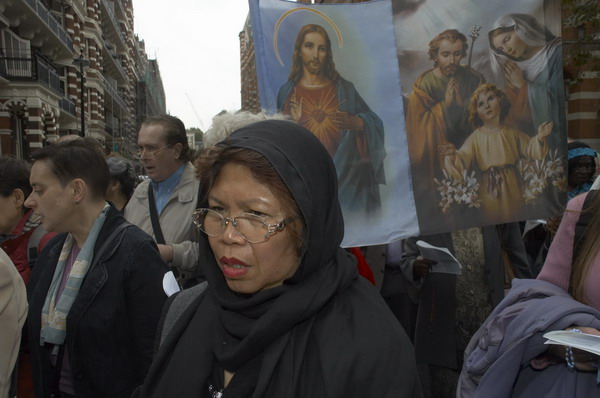
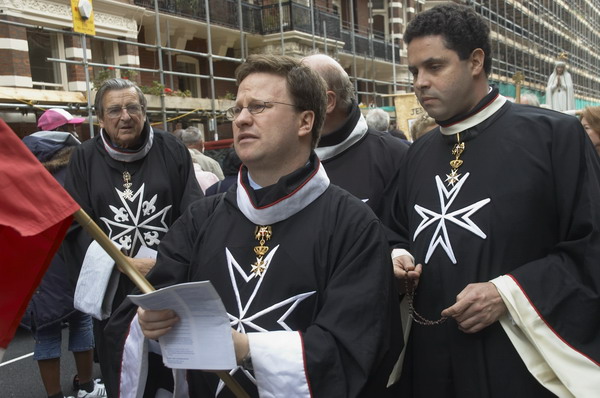
Rosary Crusade of Reparation – Westminster Cathedral

At Lewisham Station I’d missed the Victoria train, and had to run under the subway to jump on a Charing Cross service just as the doors were closing, changing at Waterloo East to Southwark Station on the Jubilee line, then at Green Park to the Victoria line to Victoria.

I hurried the short distance from Victoria Station to Westminster Cathedral arriving just at the right time for the start of the Rosary Crusade of Reparation.

The Rosary Cruade had started in Vienna in 1947, with a series of processions with the statue of ‘Our Lady of Fatima’.

The Virgin Mary appeared to Portuguese children at Fatima in 1917 and had asked for prayers and penance to avoid further wars and achieve world peace. This call was renewed in the Rosary Crusade by Father Petrus Pavlicek following a vision during his visit to a Marian shrine in 1946.

The processions became an annual event, held on or around 12th Sept, the Feast of The Name of Mary (which celebrated the defeat of Turkish armies surrounding Vienna in 1683), and soon spread to other countries.

When Russian troops left Austria in 1955, many Austrian catholics ascribed this to their prayers in the rosary crusade.

More pictures on My London Diary.


Flickr – Facebook – My London Diary – Hull Photos – Lea Valley – Paris
London’s Industrial Heritage – London Photos

All photographs on this page are copyright © Peter Marshall.
Contact me to buy prints or licence to reproduce.