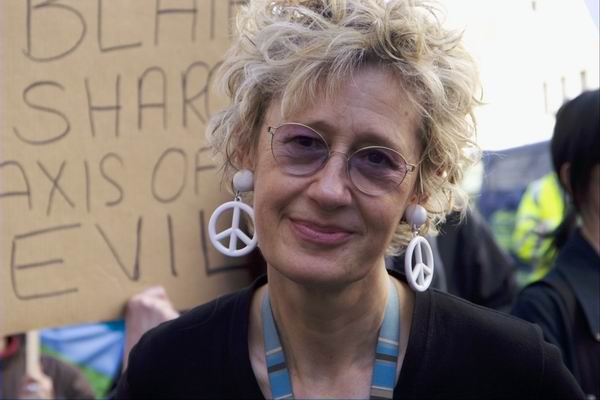
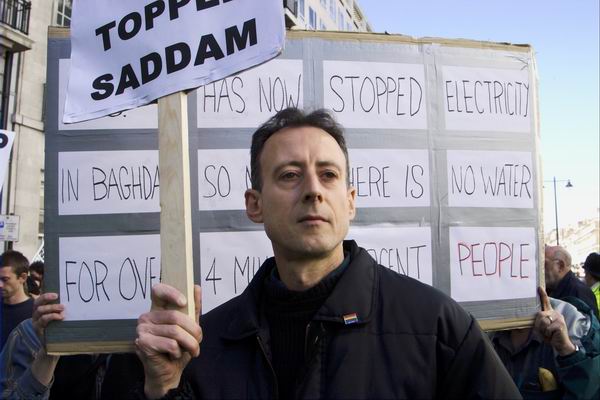
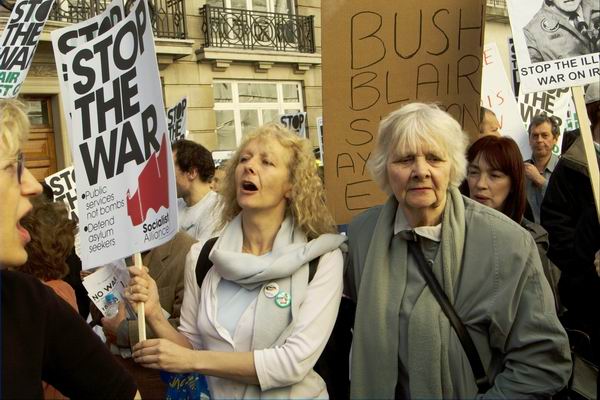
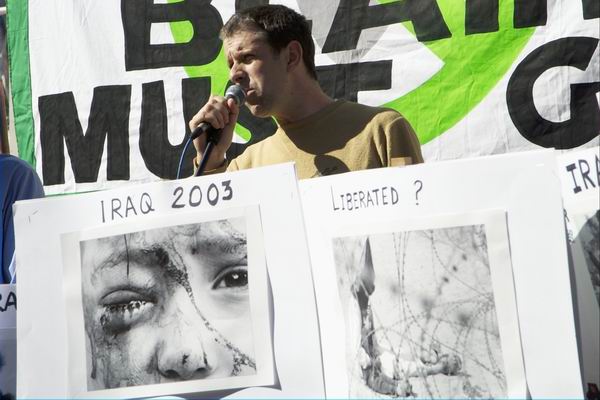
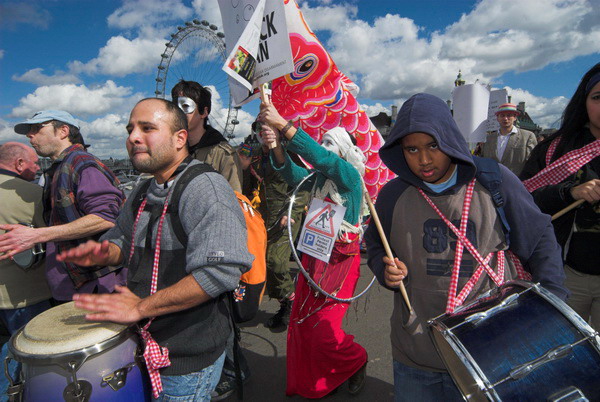
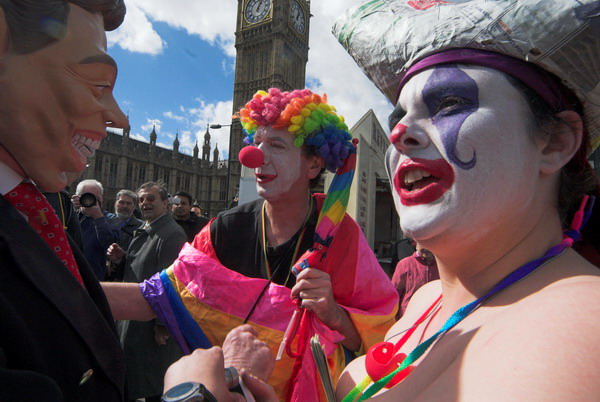
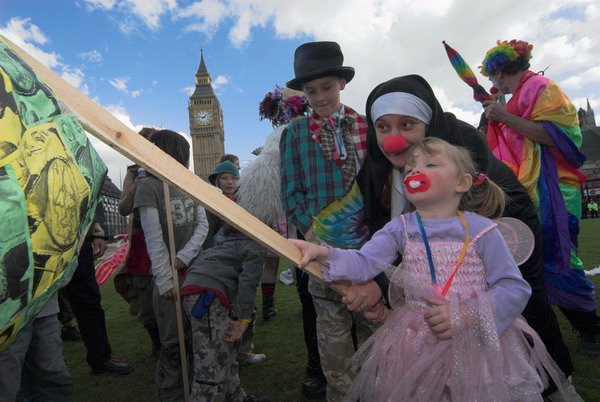
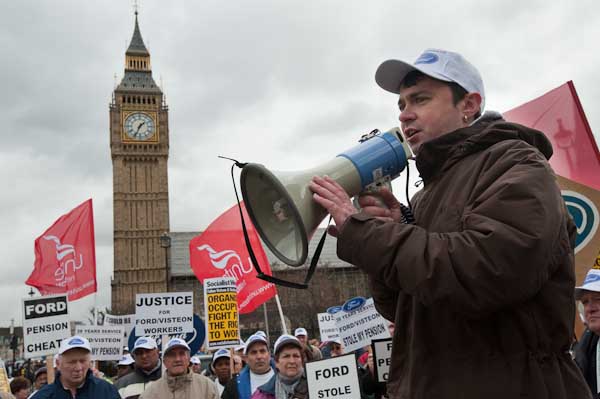
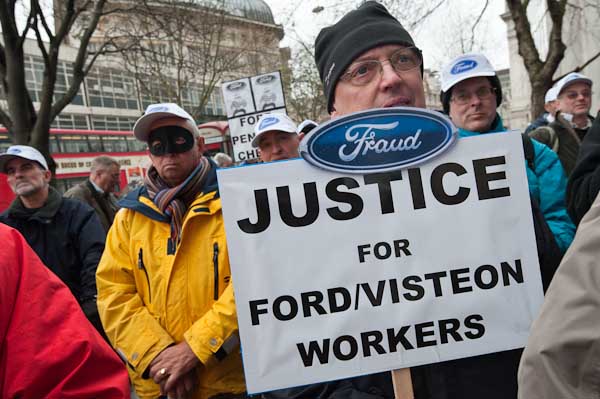
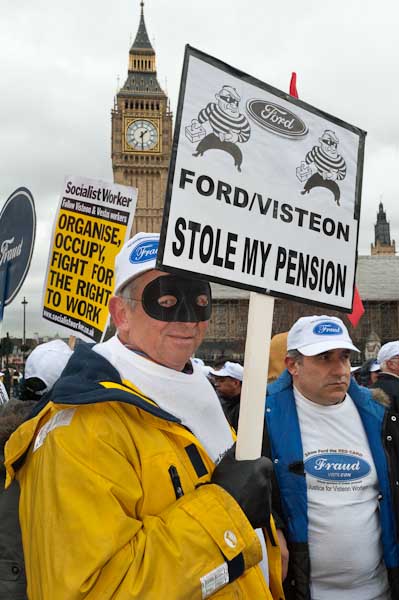
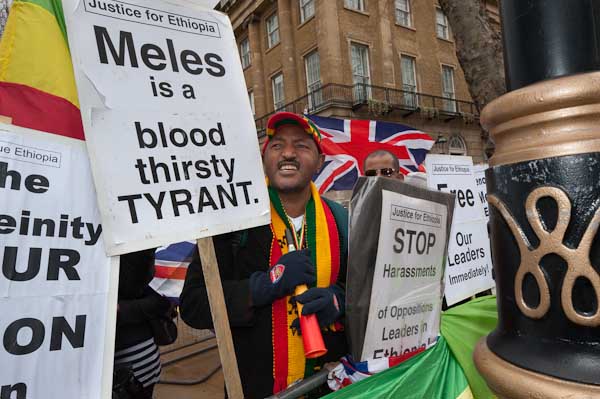
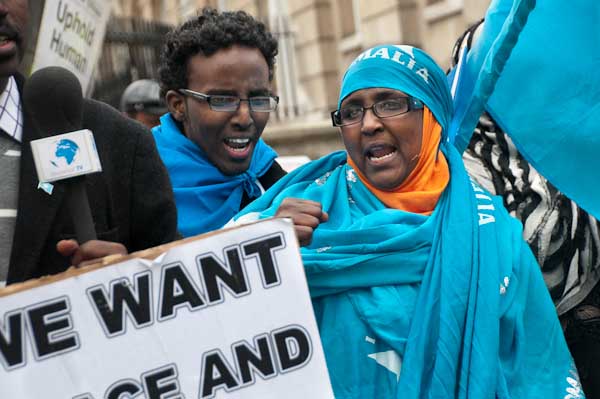
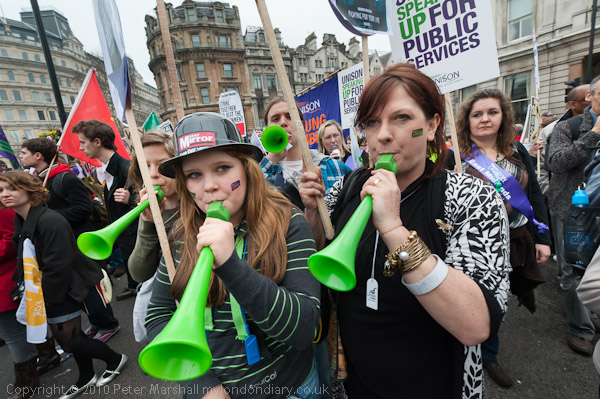
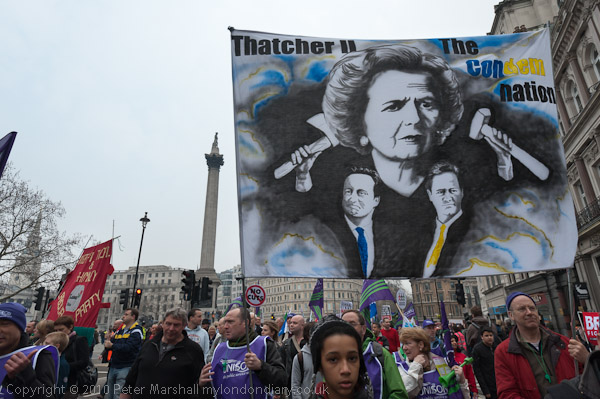
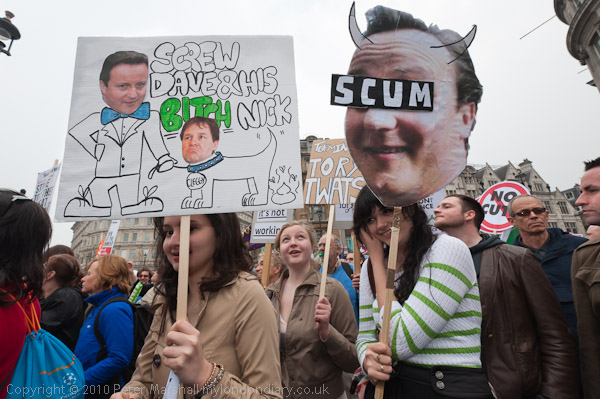
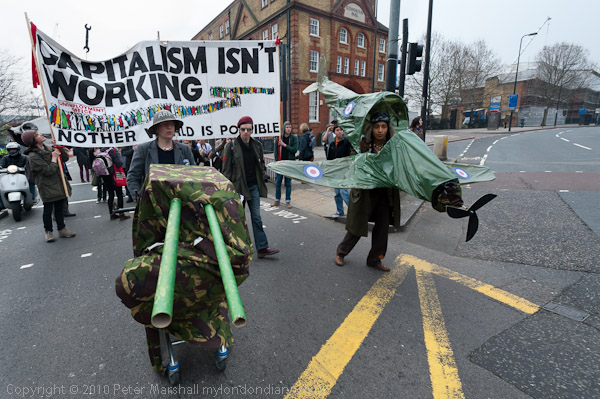
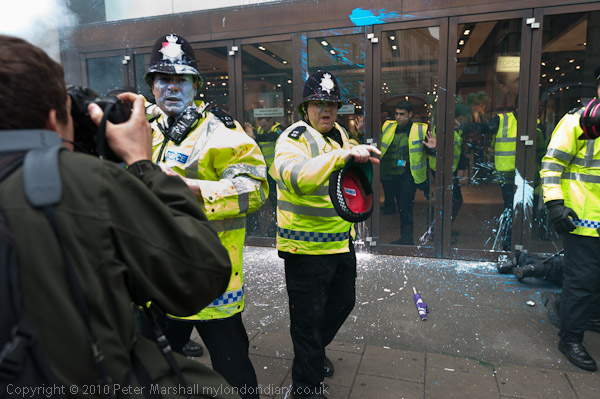
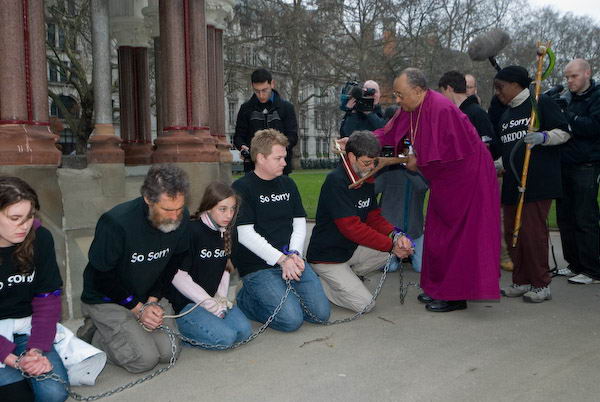
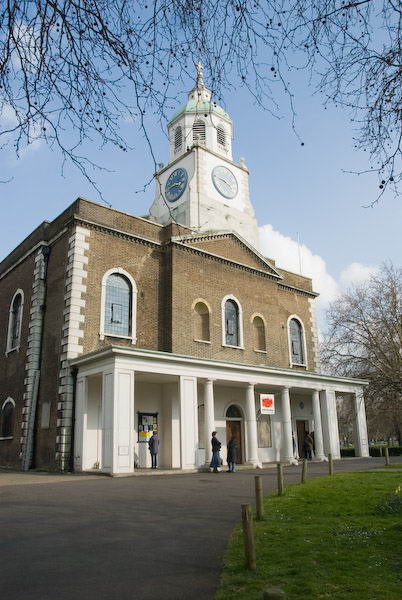
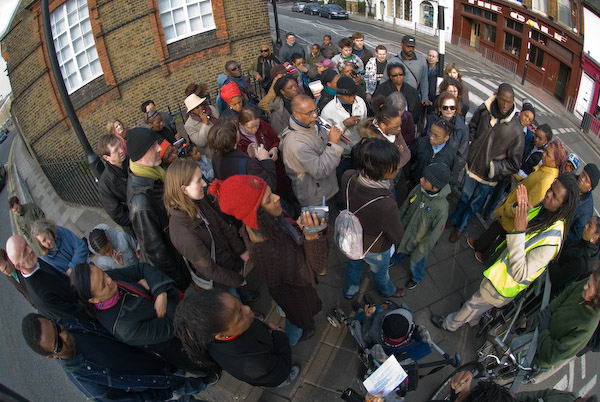
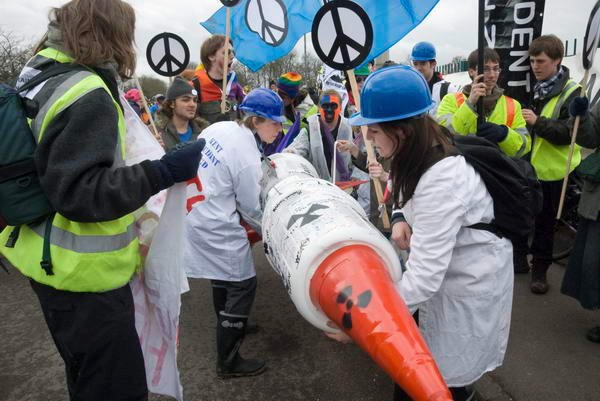
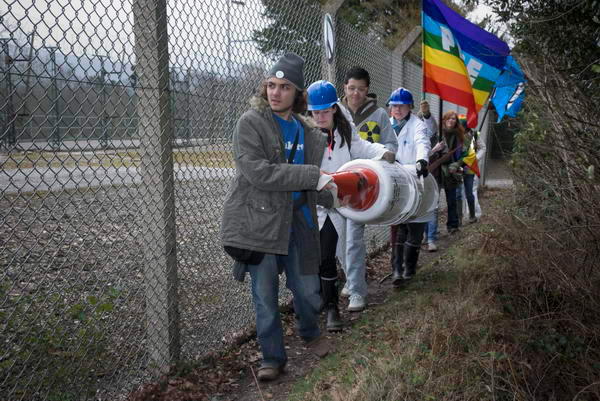
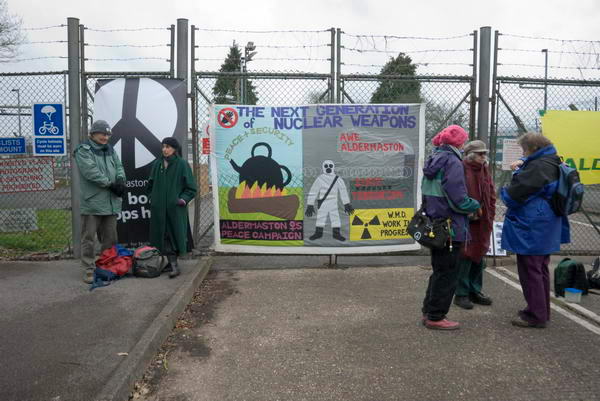
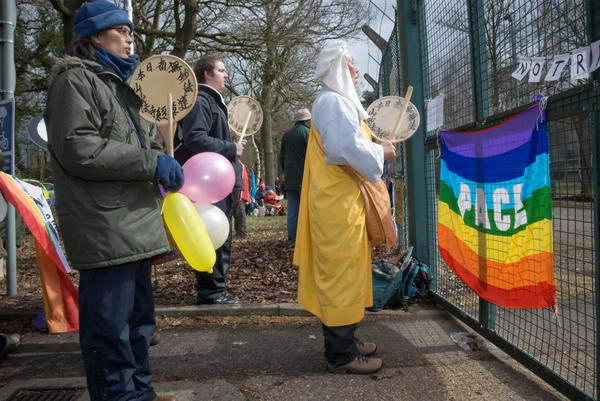
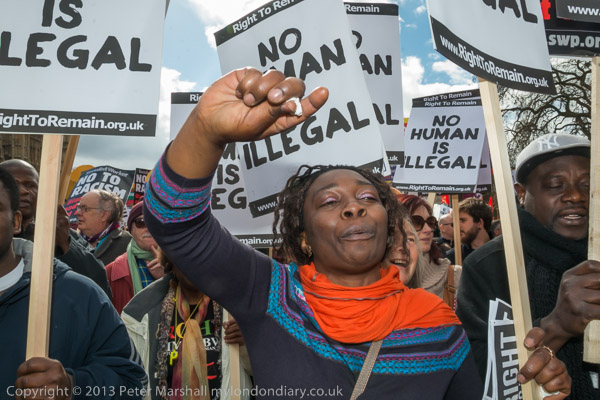
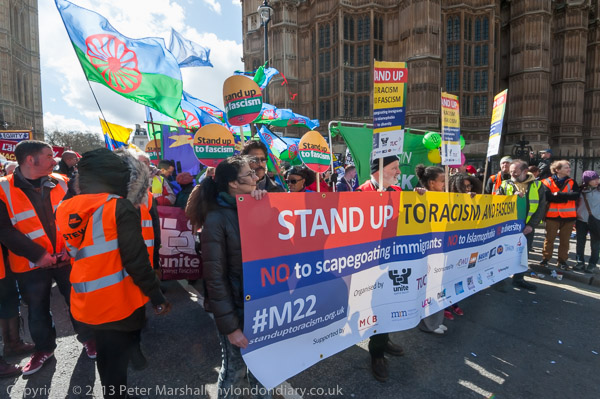
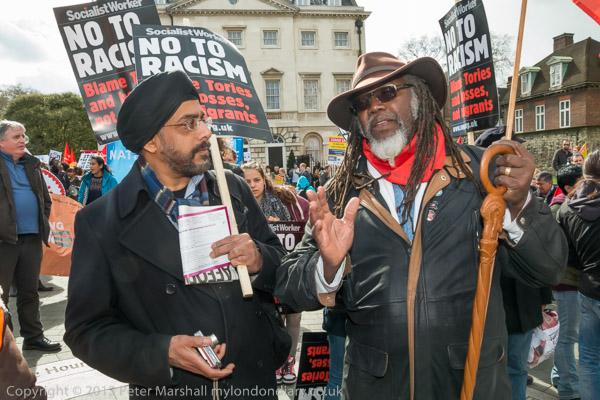
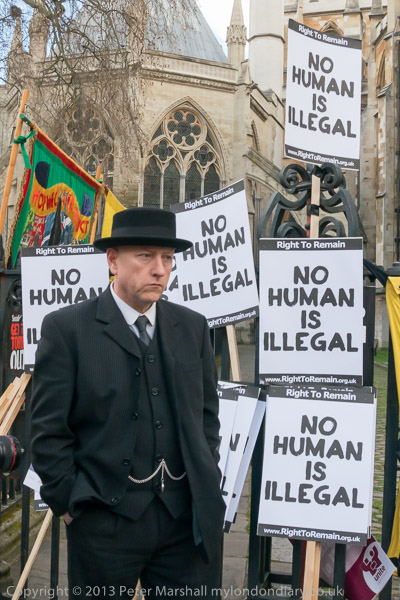
My 2024 in Photographs – Today I set out on the impossible task of summing up the photographs I took over the year. It’s something I find very hard to do not least because I’ve taken so many pictures. But here is the first of a four-part presentation of some I’ve taken – though on any other day I might have chosen completely different pictures – with the often rather generic captions written in haste on the day they were taken. So its perhaps more a cross-section than a selection.
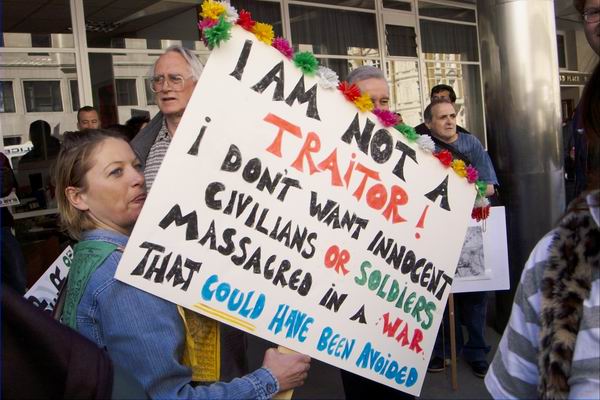
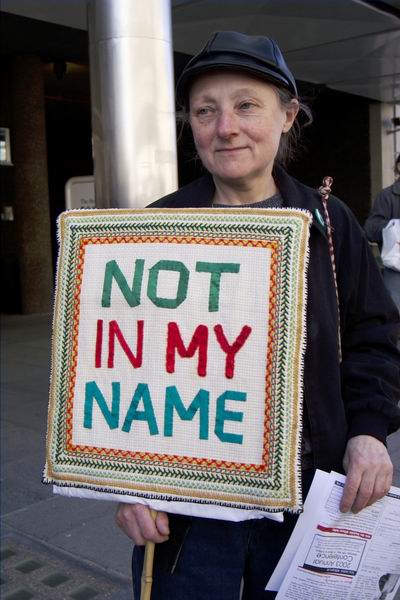
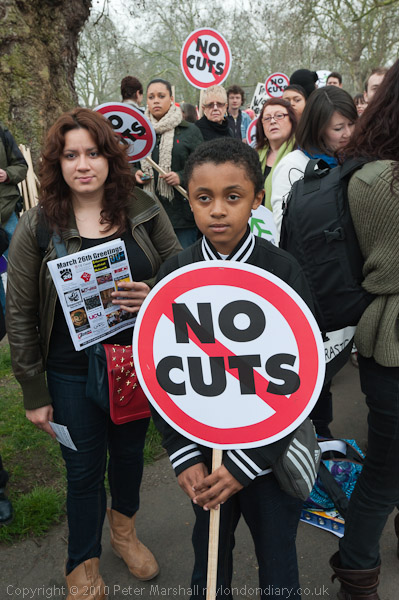
London, UK. 13 Jan 2024. Hundreds of thousands march in London in a global day of action for a full ceasefire in Gaza, an end to the genocide and a political solution to bring peace and justice to Palestine under international law. Israeli forces have killed over 23,000 people including more than 10,000 children, with many bodies sill under the rubble. Bombing has made humanitarian aid and medical treatment impossible and widespread deaths from disease and starvation now seem inevitable.London, UK. 22 Jan 2024. A large crowd outside Twickenham Rugby Stadium protested against the arms fair attended by companies supplying Israel with armoured vehicles and other weapons used in its devastating assault on Gaza and used to repress, terrorise, abduct and kill civilians and children in Palestine, Saudi Arabia, Egypt, Yemen and elsewhere around the world. They called on the Rugby Football Union to end hosting arms sales.London, UK. 27 Jan 2024. A march from Edmonton Green to a rally at Silver St demanded Israel ends its genocidal attack on Gaza, calling for an immediate ceasefire and an urgent programme of humanitarian aid to end famine and provide shelter, medicine and water. They praised South Africa for taking Israel to court for genocide and called for a just peace with freedom for Palestine.
Making the selection was a fairly long job. There are a little over 22,000 RAW images stored in my 2024 folder at the moment – those I thought worth saving from the rather more I actually made.
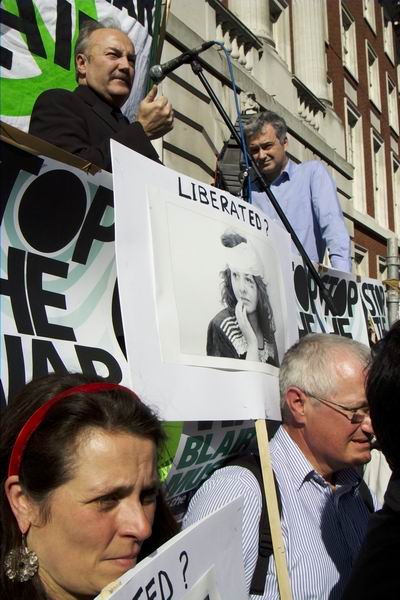
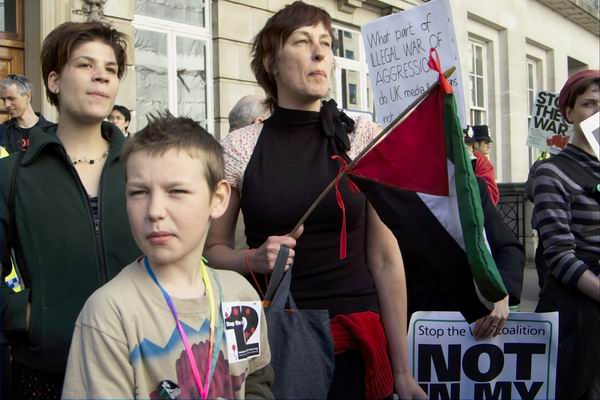
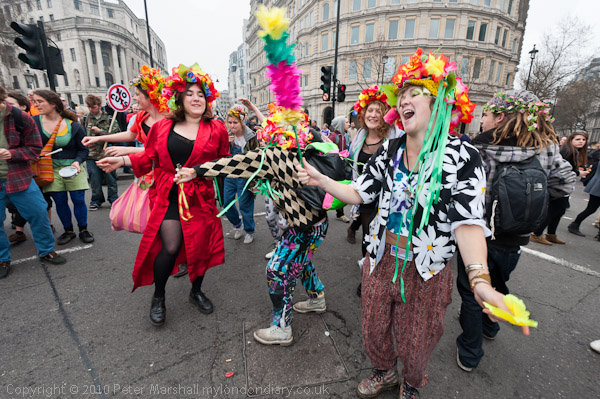
London, UK. 3 Feb 2024. Hundreds of thousands march from the BBC to Downing Street calling for a full ceasefire in Gaza where Israeli forces have now killed over 27,000, mainly women and children, and are ignoring last week’s ICJ ruling to prevent acts of genocide. Humanitarian aid and medical treatment is largely impossible and widespread deaths from disease and starvation are inevitable. They call for restoration of funding to UNRWA and a political solution to bring peace and justice to Palestine.London, UK. 3 Feb 2024. A dove with a key. Hundreds of thousands march from the BBC to Downing Street calling for a full ceasefire in Gaza where Israeli forces have now killed over 27,000, mainly women and children, and are ignoring last week’s ICJ ruling to prevent acts of genocide. Humanitarian aid and medical treatment is largely impossible and widespread deaths from disease and starvation are inevitable. They call for restoration of funding to UNRWA and a political solution.London, UK. 10 Feb 2024. A rally outside Ealing Town hall was one of many local protests around the country calling for an immediate ceasefire and an end to the genocide in Gaza which has now killed 28,000 mainly women and children and severely injured around 68,000. The entire population of Gaza is now living in desperate conditions with constant threat of bombing, shelling, famine and disease. They condemned the failure to respond to the ICJ ruling to prevent acts of genocide. London, UK. 17 Feb 2024. A huge march to the Israeli Embassy demands a full ceasefire in Gaza and an end to genocide. Israeli forces have now killed over 30,000, mainly women and children, are ignoring the ICJ ruling and launching a brutal assault on Rafah. Humanitarian aid and medical supplies are desperately needed to avoid mass deaths from disease and starvation and UNRWA funding is essential. Protesters demand a political solution to bring peace and justice to Palestine. London, UK. 17 Feb 2024. Movement for Justice. A huge march to the Israeli Embassy demands a full ceasefire in Gaza and an end to genocide. Israeli forces have now killed over 30,000, mainly women and children, are ignoring the ICJ ruling and launching a brutal assault on Rafah. Humanitarian aid and medical supplies are desperately needed to avoid mass deaths from disease and starvation and UNRWA funding is essential. Protesters demand a political solution to bring peace and justice to Palestine.London, UK. 24 Feb 2024. Women with flower head dresses leading the march. Two years after the Russian invasion thousands march from Marble Arch to a vigil in Trafalgar Square in solidarity with the Ukrainian resistance and to show opposition to Russian aggression and war crimes. Russia has occupied parts of Ukraine since 2014. The event was organised by the British-Ukrainian community in London and the wider UK.
This is too many for me to look through, so I made this selection to the roughly 2,000 that I posted on Facebook over the year. In the end I gave up trying to cut down my selection to only the dozen or so I could show in a single post here, so this is the first of four daily posts of my pictures from 2024.
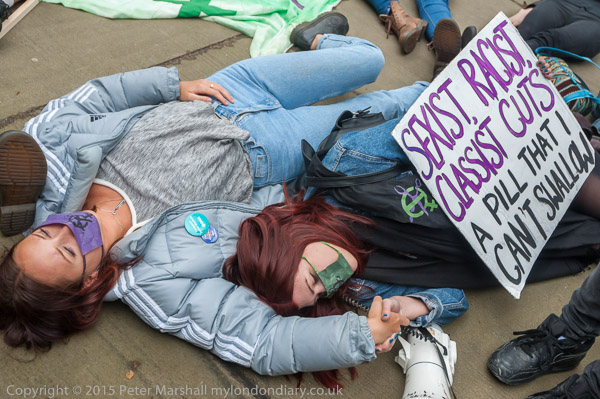
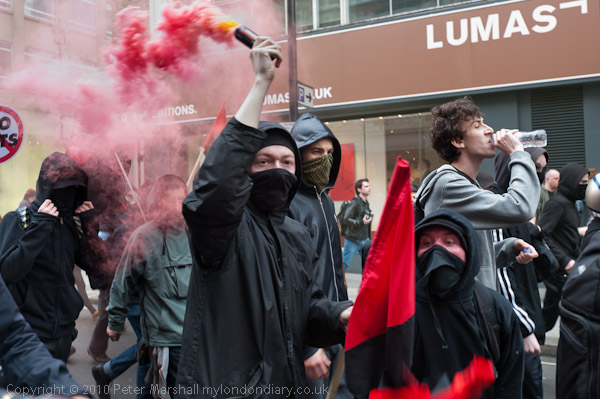
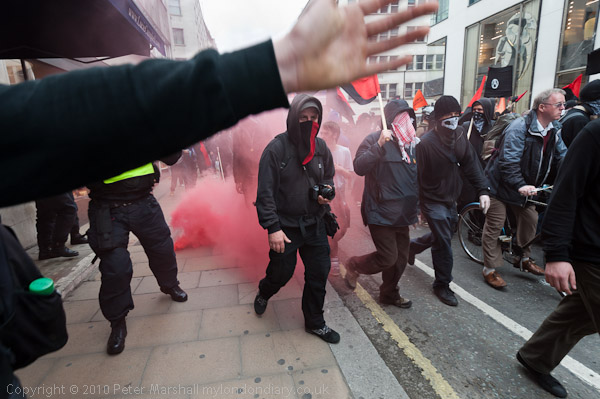
London, UK. 28 Feb 2024. Poice arrested one man on the march. Extinction Rebellion protesters marched from Trinity Square to a festival outside the Lloyds insurance building, some in business attire. They demand the insurance industry refuses to provide cover for fossil fuel developments as these are risking our future. 40% of the world’s fossil fuel production is insured by Lloyds. The peaceful protest included music, speeches and dancing. London UK. 29 Feb 2024. Extinction Rebellion artivist troupe Red Rebel Brigade in front of the march to protest for climate justice and solidarity with Palestine at AXA Insurance which is insuring new oil and gas fields and investing in companies creating illegal Israeli settlements in occupied Palestine. They demanded AXA divests from Israel’s genocidal actions and end its investments in new oil and gas. The protest in heavy rain remained entirely peaceful.London, UK. 4 March 2024. Mary Ellen is surrounded by police as they clear wheelchair protesters from DPAC block of Victoria St after protest at the DWP in a National Day of Action before the budget against proposed brutal and horrific social security reforms which will cut benefits for hundreds of thousands of the disabled and give new powers to work coaches in Job Centres. A 2020 UCL report found almost 150,000 had then died as a direct result of Tory cuts and welfare reform policies.
Part 2 follows tomorrow. You can see many more pictures from these and other events in my albums on Facebook.
Santas, Sardines & Earth Strike: On Saturday 14th December 2019 the Santas were on BMX bikes raising money for charity, Italians were supporting a spontaneous Italian anti-fascist movement and Earth Strike, a small group of anti-capitalist and anti-imperialists against environmental destruction held their first protest in Brixton.
Santas BMX Life Charity Ride
If you are in London today look out for the 10th BMX Life’s Santa Cruise riding around the capital in a charity ride raising money for the Evelina Children’s Heart Organisation, ECHO. There is a link for donations on the page linked.
One rider had ignored the dress code, though he was wearing a Christmas jumper
The ride begins as it did five years ago in the graffiti tunnel under Waterloo Station and 10.30am and the dress code is Santa, Elf, Snowman,Christmas Tree or Reindeer.
So far by these rides and a number of raffles BMX Life have raised over £180,000 for ECHO and they hope that this year’s ride will be bigger than ever. When I took these pictures in 2019 there were around 700 riders.
From Leake St they moved off to Forum Magnum Square where some santas demonstrated their riding skills before the group left to ride around London.
‘6000 Sardines’ London protest – Parliament Square
The Sardines movement was a grass roots political movement which began in Italy in November 2019 after a flash mob in Bologna opposing right-wing leader Matteo Salvini packed the main square in Bologna “like sardines”.
People were appalled at the rise of Salvini because of his anti-immigrant policies, hate speech and Euroscepticism and the movement prompted other ‘sardine’ protests across Italy and by Italians elsewhere, with demonstrations, flash mobs and online actions.
14th December was declared ‘Global Sardine Day’, with similar rallies across Europe and in the USA as well as in many towns and cities in Italy. All of the speeches while I was at the event were in Italian.
The movement ended with the elections in January 2020 in the Bologna region of northern Italy, which resulted in a resounding victory for the centre-left who almost doubled the vote they had received five years earlier.
The protest by Earth Strike South London began ther protest against environmental destruction with speeches and handing out fliers at a street stall on the corner of Coldharbour Lane and Brixton Rd, where members of the Revolutionary Communist Group taking part were also selling their newspaper.
The fliers pointed out that many companies who trade on our high streets are still making a huge contribution to global warming and environmental destruction and they went on to march up Brixton Road stopping for speeches and to protest at some of the major culprits.
They began by going into Barclays Bank who still have huge investments in fossil fuels and are major backers of fracking in the UK. They ignored bank staff who told them they could not protest inside but handed out leaflets and made a speech about the bank’s activities before leaving after a few minutes.
Next stop was H&M where they pointed out he fashion industry is the second largest producer of greenhouse gases, emitting 1.2 billion tons a year and textile manufacture creates 20% of all water pollution. They stood outside and ignored a security man who told them to go away.
A couple of police officers arrived and talked to the protesters who assured them that their protest would be peaceful. The officers then went away.
The protesters moved on to EE where they pointed out mobile phones and other similar electronic produces all need minerals such as Coltan, and the fight for these is behind the horrific wars that have taken place in the Congo region. Mining companies are also huge exploiters of African labour, create large amounts of pollution. lay huge areas to waste and evade taxes on a huge scale.
Further along the road they stopped briefly to point out that Boots avoids paying taxes in the UK, cheats the NHS and sells palm oil products made by clearing forests, destroying ecosystems. They make huge profits from the NHS, and are said to have charged charged them £1500 for pots of cream they sell for £2, as well as selling palm oil products grown on land cleared from ancient forests, disrupting ecosystems and resulting in the loss of species including orangutans.
At Sainsbury’s they reminded customers that it sells many products that harm the environment and lead to global warming, including beef that comes from ranches made by burning the Amazon Forest, destroying ecosystems and displacing indigenous tribes.
They held another protest outside Vodaphone, also a tax avoider and as well reliant on those minerals fuelling wars in central Africa before walking on to Brixton Police station.
Here they held a brief vigil for those killed by police in Brixton, including Ricky Bishop and Sean Rigg who was beaten to death inside the police station in 2008.
I left the group here as they were to continue their protest at shops on the opposite side of Brixton Road.
Fathers, Turkey, Routemasters, a Christmas Market and Ethiopia: Text and pictures from a busy day in London on Friday 9th December 2005, exhumed, corrected and slightly polished from the depths of ‘My London Diary‘ with links to the many more pictures of each event there.
Fathers4Justice: 24 Days of Christmas Chaos – Westminster
Santas and Mama Santas protest at Church of England and Dept of Education & Skills, Westminster
I’ve photographed Fathers4Justice on several previous occasions. Today they were taking advantage of Christmas and the Father Christmas idea to protest against the Church of England. Being on a Friday, there were rather fewer father and mother Christmases (and Santa’s little helpers were mainly at school, though some of their dads behind the whiskers were pulling a sickie.) It was still an arresting sight to see so many figures dressed in red on the street, including some rather inflated figures in inflatable suits.
After rather a slow start events warmed up a bit outside the offices of the Church of England, and, a few yards down the road, the Department for Education and Skills. Of course our ‘serious crimes’ law now forbids the use of amplified sound in demonstrations, so the Fathers simply had to shout rather loud. The next place for a stop was of course opposite Downing Street, where there were more shouted comments. I left the march as it turned down Whitehall Place on its way to the Law Courts on Strand. more pictures
Free Mehmet Tarhan – Turkish Airlines, Pall Mall
Tahan is a gay conscientious objector held and tortured in aTurkish jail
Outside Turkish Airlines at the bottom of Haymarket there was a picket protesting against Turkish imprisonment of protestors, in particular Mehmet Tarhan, a gay conscientious objector. Recently, his 4-year sentence for refusing military service was overruled on procedural grounds, and he is to be retried for ‘insistent insubordination with the intent of evading military service.’
London Transport – Last day for the Routemaster
The last proper bus service to use London’s signature Routemaster double-decker buses, route 159, ceased today, with its buses being replaced by more modern designs. I caught one of the last to run to take me down to Westminster, then photographed it. Although the official ‘last bus’ had already run, there were several others following on, with the final pair passing Big Ben 28 minutes after I made my picture.
Transport for London continued to use a few Routemasters running in London on two special short ‘heritage routes’ both running past Trafalgar Square, thus retaining one of our tourist attractions.
[Routemasters were first introduced in 1956 and the two ‘TfL heritage routes’ were ended in 2019 though you still see them operated by private companies in a variety of guises. Routemasters jolt, rattle and jerk on London’s streets but I do very much miss the ability to jump off and board them at the many halts and delays in the increasingly congested streets.] more pictures
Victorian Christmas Market – Chrisp St, Poplar
Hat Trick – Jim and Bev James Singing Chimney Sweeps
Chrisp Street Market was part of an early post-war public housing redevelopment, the Lansbury Estate, built for the 1951 Festival Of Britain in a Docklands area that had suffered considerable bomb damage. Fifty or so years later it was beginning to show its age and there has been some tidying up and its pedestrian precincts are now rather tidier than a few years ago.
The market is bustling with life, more so than usual when I visited, as there were two days of a special Victorian Christmas event. There were various special stalls in the market, and also entertainers wandering around and performing on a small stage. Kids from two local schools had also come to perform but unfortunately I had to leave before they had really started.
I’d hoped to return on the following day, Saturday, when things would have been livelier, but in the end i just couldn’t make it. more pictures
The Ethiopian Tragedy – Stop UK Support – Marble Arch
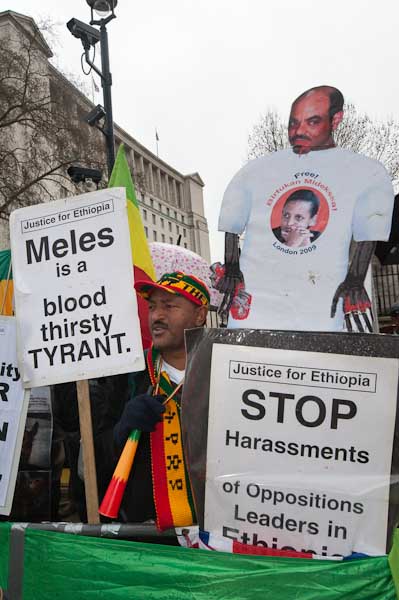
At Marble Arch there was a crowd gathering of Ethiopians from across Europe, come to protest at the British government’s support of an oppressive communist regime in their country. [Others describe Ethiopia as an authoritarian regime with poor civil and human rights.]
More than 70,000 people are detained by the regime, being tortured and dying in concentration camps. Britain is spending £30 million of our money to support the regime that is violating human rights there. The protestors want the British public to urge their MPs to support motions on the situation in Ethiopia and demand an end to these crimes. more pictures
Marine A, Mandela, CPS Failures, Cops off Campus: On Friday 6th Decemeber 2013 some very varied events were taking place in Central London. Here they are in the order I photographed them.
EDL Protest Supports Marine A – Downing St
The EDL had called for a major protest at Downing Street on the day that ‘Marine A’, Sergeant Alexander Blackman, was to be sentenced, but only around 50 supporters were there when I arrived.
Blackman was being tried for the murder of a wounded Taliban insurgent in Afghanistan in contravention of the Armed Forces Act 2006, and became the “first British soldier to be convicted of a battlefield murder whilst serving abroad since the Second World War.“
I commented “I doubt if there are many serving soldiers who would wish to see the Geneva conventions disregarded, and wonder what support if any this protest would have from serving soldiers, many of whom have condemned strongly the cold-blooded killing of a prisoner by Marine A and called for an appropriate sentence.“
However many did feel when later that day he was sentenced to “life imprisonment with a minimum term of ten years and dismissed with disgrace from the Royal Marines” he had been treated harshly, and in 2014 the sentence was reduced to eight years, then after a public campaign overturned on appeal and reduced to manslaughter on the grounds of diminished responsibility. Given the time he had served he was released in April 2017.
Tributes to Mandela – Parliament Square & South Africa House
Nelson Mandela, the “Father of the Nation” who had become the first president of a new post-apartheid South Africa from 1994-1999, having previously spent 27 years in prison before his release in 1990, had died the previous day, 5th December 2013.
People brought flowers to the Nelson Mandela statue in Parliament Square and to South Africa House in Trafalgar Square, where a long queue waited patiently for several hours to sign a book of remembrance in the High Commission.
Bereaved protest at CPS Failure – Southwark Bridge
Marcia Rigg holds a picture of Mandela as she addresses the protest against the PCS
Since 1990 there had been 1433 deaths of people in custody, many under highly suspicious circumstances and not a single conviction of any police, prison officers or security guards who have either failed in their duty of care or more actively caused their deaths.
Relatives and friends of those who dies had come to protest outside Rose Court, the home of the Crown Prosecution Service. The last successful prosecution brought against a police officer was for involvement in a black death in custody was in 1972, after the death of David Oluwale in 1969. Police officers have been prosecuted for several other black deaths in custody – Joy Gardner, Christopher Alder and Mikey Powell – but none was successful.
The standard response from the CPS – led by Keir Starmer from 2008-2013 – is that there is ‘not enough evidence to prosecute’, largely because the cases have not been properly investigated. Often the police involved are simply not questioned, and in some other cases they simply refuse to answer questions.
‘Cops Off Campus’ Protest Police Brutality – Bloomsbury
Following protests by students and others against student fees and cuts, the closure of the student union and calling for acceptable pay and conditions for low paid largely migrant cleaners, catering staff, security staff and others, the University management had tried to ban protests on campus and had brought in numbers of police to enforce that ban.
This protest was called after the previous day police had brutally assaulted a group of students who had briefly occupied a part of Senate House, arresting a number of students including the Editor of the student newspaper and a legal observer.
The organisers had intended this to be an entirely peaceful march around the various s sites of the university in the area to the west and north of Russell Square, but it was clear that the police had other ideas. There seemed to be police vans down every side-street in the area as students assembled on the pavement outside the University of London Union in Malet St.
There were a few short speeches before the march set off to walk around the block but were stopped by a line of police across the street, with those who tried to walk through it thrown roughly backwards.
They turned around only to find police blocking both the other end of the street and a side street leading to Gower Street and their only way open was to go onto the campus, walking past SOAS and out onto Thornhaugh Street. There they turned up into Woburn Square and then turned to make their way into UCL, only to find the gates from Torrington Place were locked and guarded by security.
They then turned into Gower Street where they saw another group of police rushing towards them and they then rushed through the gates into the Main Quad. Here there was a lot of discussion about what to do next and they eventually decided to take a back street route to Torrington Square, and set off at a rapid pace. I took a more direct route to meet them there. But by now it was dark and I was tired of walking around London and decided to go home.
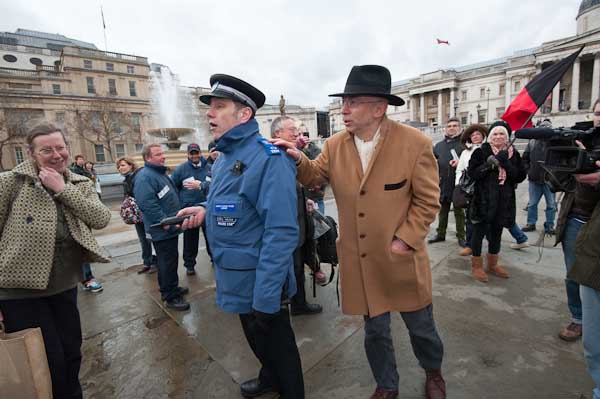
The police operation seemed to me “an incredible and pointless waste of public money, and it resulted in more inconvenience to the public than if the event had not been policed at all.” Perhaps more importantly this kind of policing alienates a large proportion of young people, acting strongly to destroy the ‘policing by consent’ which has always been the the basis of our police system.
Olympic Site & Budget Cuts: Wednesday 5th December 2012 was a cold day in London, with the temperature just three or four degrees above freezing during the day, but there was plenty of blue sky with a few clouds and it seemed ideal weather to wrap up and go and see what progress had been made in restoring the Olympic site, still largely off-limits some months after the end of the games. And later in the early evening I returned to Westminster for a protest against the cuts which had been announced by Chancellor of the Exchequer George Osborne in his autumn budget statement.
Olympic Area Slightly Open – Stratford Marsh
Much of the area around the Olympic site had been closed to the public in May, including the Greenway, the elevated footpath on top of the Northern Outfall Sewer which runs close to the Olympic stadium, but this was now re-opened in part.
The section between Stratford High Street and the main railway lines which run from Liverpool Street station to Stratford and on further east was however still closed and would remain closed for years as work was now taking place for Crossrail – opened as the Elizabeth Line in 2022.
I started my walk in the early afternoon around the Bow flyover where the Bow Back rivers were still closed to traffic with a yellow floating barrier, but the footpath along the Lea Navigation had been re-opened. One improvement made presumably for the Olympics was a pathway and footbridge taking walkers under the busy road junction and across the canal.
Finding the new entrance to the Greenway meant walking between fences on the Crossrail site down Pudding Mill Lane, and probably I would have abandoned the route had it not been for signs put up by the View Tube café – though when I finally reached this I found I was the only person to have done so and the cafe was deserted.
There were still fences everywhere as you can see from my photographs but I was able to walk along the Greenway to Hackney Wick and then along the towpath beside the navigation. But the footpath beside the Old River Lea was still blocked off.
By then the light was beginning to fade and the Olympic stadium was gaining a golden glow. I walked a little further along the towpath and photographed the Eton boathouse as the sun was setting setting before crossing the canal and making my way to Hackney Wick station.
Several hundred students, trade unionists, socialists and others marched with UCU London Region down the Strand and into Whitehall shouting slogans against public service cuts, the rich, David Cameron and George Osborne in particular.
Opposite Downing Street they joined with others already protesting there including CND and Stop the War who were calling for the government to stop wasting money on the war in Afghanistan and vanity projects supporting the arms industry such as Trident and its planned replacement.
“The Afghanistan war — which everyone knows is futile and lost — is costing around £6 billion a year. The yearly maintenance costs for Trident are £2.2 billion a year. The cost of renewing the Trident system — which this government is committed to do — would cost up to £130 billion. Two aircraft carriers are being built at a cost of £7 billion. Then there’s the £15 billion to be spent buying 150 F-35 jets from the US, each of which will cost £85 million plus an extra £16 million for the engine.”
The rally began shortly after the marchers arrived. By now it was only just above freezing and speakers were asked to keep their contributions short because of the temperature.
Among the speakers were John McDonnell MP, Kate Hudson of CND, author Owen Jones, Andy Greene of DPAC, Green Party leader Natalie Bennett and others including a nurse from Lewisham Hospital threatened with closures, from the NUT, UK Uncut and other trade unionists.
Kate Hudson CND and Romaine Phoenix Coalition of Resistance/Green Party
Many of the speakers called on trade unions to take effective action against the cuts. calling for union leaders to stop simply speaking against them and take the lead from their members and start organising strike action. But of course few did and the cuts continued unabated.
Adidas, West Papua, Egypt & Climate Crisis were all subjects of protests in London on December 1st 2012
Adidas ‘Pay Your Workers’ – Oxford St
The PT Kizone factory in Indonesia had made sportswear for Adidas, Nike and Dallas Cowboys for many years, its employlees often working for as little as $0.60 an hour. In January 2011 its owner fled the country and the factory closed in April 2011.
The 2,800 workers were left without jobs and by law were entitled to severance pay – a total of around US$2.8 million. Nike and Dallas Cowboys agreed to pay their share but Adidas were refusing to pay the $1.8 million they owed.
This led to a worldwide campaign to get them to pay up and on 1st December 2012 there were protests outside Adidas stores across the UK including this one on Oxford Street. Around a doozen people turned up, some wearing masks of Justin Bieber, the ‘global style icon’ for their NEO label.
They pointed out that Adidas had paid $157m to sponsor the Olympics but were refusing to pay around one hundredth of that amount to the destitute workers who had created their profits.
Pressure was growing on Adidas and in April 2013 they came to an agreement with those representing the former PT Kisone workers to pay compensation and in return the workers agreed to drop a legal case they were taking in the USA.
Free West Papua – Indonesian Embassy, Grosvenor Square
December 1st is West Papua Independence Day, marking the day in 1961 when Netherlands New Guinea was granted its freedom by the Dutch, but that freedom did not last long.
The USA, driven by cold war fears that Indonesia might move towards the Soviet bloc decided in 1962 to set up a process that passed the area over to Indonesian control with a rigged election confirming this in 1969. Only a carefully selected group of 1,025 people out of the population of 800,000 were allowed to vote as representatives in a vote carried out by a show of hands and they were “coerced into voting against independence with threats of violence against their persons and their families.”
Since 1962 a movement for independence has continued, with peaceful protests outside the country and guerilla warfare guerrilla warfare against the Indonesian administration. The Free West Papua organisation is based in the UK and led by Benny Wenda, a tribal chief who escaped from an Indonesian prison and came to the UK. His wife, Maria Wenda and their children were present at today’s protest, along with other supporters of their struggle for freedom.
Morsi’s Dictatorial Decree – Egyptian Embassy, South St, Mayfair
Over 50 protesters shouted noisily outside the Egyptian embassy condemning the decree by Egyptian President Mohamed Morsi calling him a dictator. The decree gave him sweeping powers and made him immune from legal challenges until a new parliament was elected, and had led to violent protests in Egypt.
On the Global Day of Action on Climate Change, activists laid a pipeline from the US to Canadian embassies before marching to Parliament to erect a giant mock fracking rig with the message ‘No Fracking in the UK’.
The event began with a rally outside the US Embassy, then still in Grosvenor Square, chosen because the fossil fuel lobby in the USA, including the Koch Brothers has made the USA the main barrier to any effective world action over the climate crisis.
They then laid a pipeline from the US embassy to the Canadian Canadian High Commission at the opposite end of Grosvenor Square in protest against the Canadian exploitation of incredibly damaging high carbon tar sands.
Then the march set off on its way to parliament and a further rally in Old Palace Yard.
I arrived there in time to photograph the protesters raising a mock fracking rig and listen to speeches by Eve Macnamara from Ribble Estuary against Fracking, John McDonnell MP and Green Party leader Natalie Bennett.
Youth March For Jobs: Searching this morning for what to post I came across a piece I had written at the time about the Youth March for Jobs in London on Saturday 28th November 2009 and had forgotten about – and thought it worth sharing with you again.
This march was a national demonstration called by’Youth Fight For Jobs‘, an organisation founded earlier in that year “backed by 7 national British trade unions, the PCS, RMT, the CWU, Unite, UCU, TSSA and BECTU, as well as individual trade union branches, student unions and labour movement figures” to raise awareness and campaign for action over youth unemployment. I reproduce the text here (with just a few spelling corrections) along with a few of the many pictures I took at the event – you can find more on My London Diary.
Youth March For Jobs
Central London. Saturday November 28, 2009
Marchers make their feelings known at Downing St
I walked away from the Youth March for Jobs with a Polish man of around my age who had been watching the march as it came over Lambeth Bridge. “These people“, he told me, “do not understand what they are asking for.” I disagreed and we walked along the road talking. “I grew up under socialism, and there was no freedom. I couldn’t travel, couldn’t say what I thought…” he continued. We talked some more. He told me: “You weren’t allowed not to work; if a policeman saw you on the street not working he would order you top go to the job centre the following morning, and they would send you to a job.” We agreed that although we were against such compulsion, at least there was work for everyone, unlike here.
We talked more. About how terrible it was that there were so many young people that wanted to work, that were leaving school and university with qualifications but could not find a job. That the system here was all determined by money with no thought of the social consequences. That under socialism, culture had flourished, with arts centres and music supported by the state at a local level in a way that has never happened here, where Arts Council funding is directed at elites.
We went our different ways before I had a chance to tell him that the free education that these young people were demanding was something that my generation, born after the war, had taken for granted – along with the rest of the then new welfare state that our governments over the last 30 or more years have been cutting back on. Coming from a background that was economically scraping the barrel in a way perhaps hard to imagine today (but rich in some other respects) I would never have been able to attend university unless the state had paid for my fees and living expenses.
What we needed, we agreed before parting, was a system that combined both the freedom of thought and action we enjoy with full employment and a state that shows a real responsibility to support everyone, particular its poorest members. Actually something that many of the slogans chanted on the march were calling for.
A little under a thousand came to the start of the march outside the University of London Union in Malet St. Some were from around London, but there were also banners from Hull, Huddersfield, Birmingham and elsewhere. Many were students and most but not all were young. Many of the slogans chanted as they made their way through the crowded streets of Central London represented a disillusion with both the Government and politics generally:
Labour Cronies
Tory Snobs
Fight their cuts
Fight for jobs
but others were aimed specifically at Labour
Mandelson's a Tory
He wears a Tory Hat
And when he saw our top up fees
He said I'll double that!
Some contrasted the billions made available to rescue the failed bankers with the stringencies being imposed on students and the poor:
Gordon Brown, stop the rot
Give us what the bankers got,
Bail out the workers
Not the bankers!
The billions wasted on ill-conceived and probably illegal wars – currently the subject of yet another enquiry expected to state the clearly obvious – also came in for noisy and enthusIastic criticism.
What the marchers want is the right to education rather than it becoming a privilege for the wealthy, and for decent jobs. They oppose privatisation, which has so often led to lower standards, replacing a pride in work and a social responsibility by cost-cutting, minimum standards (often not achieved) and a loss of security for the workers with part-time working, short term employment and loss of rights and pensions.
The march halted for a few minutes outside Downing St, where, after a speech that only a few could hear as restrictive laws prohibit the use of megaphones in the area, a small delegation went to take a large petition to the Prime Minister, before continuing past the Houses of Parliament. I left the marchers as they crossed over the Thames on Lambeth Bridge on their way to their final rally.
COP29 March For Global Climate Justice: When this march was taking place on Saturday 16th November 2024, COP19 was just beginning in Baku, and there was still some small room for optimism, even though it seemed to be dominated by fossil fuel lobbyists, from its president Mukhtar Babayev, Minister of Ecology and Natural Resources of Azerbaijan Republic and previously been Vice-President for Ecology at Azerbaijan’s national oil company SOCAR, down.
London, UK. 16 Nov 2024. The start of the march.
But now we know the agreement reached after many hours of argument at the end of the meeting we can only conclude ‘TOO LITTLE, TOO LATE’. Even in the unlikely event of the wealthier countries actually keeping their promises we will see dramatic catastrophes in much of the Global South in the coming years.
And of course we in the wealthier countries whose industrialisation created the mess the world is in as we burnt coal and oil resulting in a huge increase in carbon dioxide levels blanketing the world will also suffer.
Increasingly chaotic weather patterns, more and more serious storms with more floods and greater wind damage. Greater droughts too and more forest fires. More disruption of agricultural production and higher food prices.
More loss of species too, aided by other of the ‘benefits’ of industrial production with new insecticides coming to support those currently decimating pollinating insects such as bees.
As many of the marchers pointed out with their placards and flags, war and militarisation are huge drivers of climate change, both from the production of weapons and their use. One poster pointed out that the Russian invasion of Ukraine in 2023 produced roughly half as much CO2 as the UK’s emissions in the same year. War doesn’t just kill people but also is ecocide on a grand scale.
The continuing attacks by Israel on Gaza and Lebanon have also added huge amounts of carbon dioxide as well as killing many thousands of civilians both through direct bombing of homes, schools and hospitals but also through a deliberate policy of destroying infrastructure and preventing humanitarian supplies of food and medicines – for which the International Criminal Court recently issued arrest warrants for Benjamin Netanyahu and former defence minister Yoav Gallan.
Banners, posters and placards on the march rejected militarisation and called for an end to arming Israel. ‘THE CLIMATE MOVEMENT STANDS WITH PALESTINE – STOP FUELLING GENOCIDE AND CLIMATE BREAKDOWN’.
But however hopeless the world situation seems now, the election of Trump as US Pesident seems certainly to make things worse – already he has chosen Chris Wright, the CEO of Denver-based fracking company Liberty Energy as Energy Secretary to lead his promise of increasing US fossil fuel production under his campaign pledge “Drill, Baby, drill”.
The current world political system dominated by institutions such as the IMF and World Bank and by Western governments increasingly seems unable to come up with any effective solutions to the climate crisis – as COP 19 and the previous 28 UN climate Change Conferences have shown. As the placards carried by many of the marchers stated, we need system change.
Students Protest Fees & Cuts: On Wednesday 24th November 2010 several thousand students set out to march from the University of London Union in Malet St through Whitehall and then on to the Lib-Dem HQ in Cowley St.
The protest was called by the National Campaign Against Fees and Cuts and Revolution and was a part of a national day of action after the Browne Review of Higher Education Funding had advocated a huge increase in tuition fees, allowing them to rise from £3,290 to £9000 a year – £27,000 for a three year course. The increase was approved by Parliament in December 2010.
Living costs were also increasing and by 2010 a typical student in London needed around £5000 each year. With the increase in fees that meant those students who relied on loans would end their three year course owing over £40,000.
The government had also anoounced the previous month that the Educational Maintenance Allowances for 16-18 year old students in full-time education from low income homes were to be scrapped. Many youger students from schools and colleges had come to the protest along with those in higher education.
Universities were also being hit by the coalition government cuts in funding for arts and humanities courses. Many departments were being shut down, greatly reducing the opportunities for students.
So there were many things for students (and anyone concerned about education) to be angry about, but the march had begun peacefully and most of those taking part were not out for trouble.
The students intended to march to Trafalgar Square and then down Whitehall past Downing Street and on through Parliament Square to the Liberal-Democrat headquarters in Cowley Street, a short distance to the south.
But it soon became clear that the Metropolitan Police had other ideas and were out to confront the students and stop the march. When the marchers turned into Aldwych a line of police stopped them continuing.
The students then surged down towards Temple Station and marched west along the Embankment, then up a side street onto Strand and on to Trafalgar Square. On Whitehall and met another group of students who had started their march at Trafalgar Square but had been stopped by police just before reaching Parliament Square.
“There were now perhaps 5000 students milling around in a small area, some chanting slogans (rather than the rather ordinary ones about education and cuts many favoured “Tory Scum, Here we come” and a long drawn out ‘David Camero-o-on’, answered by the crowd with ‘F**k off back to Eton’) but most just standing around waiting for something to happen. “
“Police had thoughtfully left an old police van as a plaything for the protesters outside the treasury. Perhaps because the tread on its tyres was so worn it would have been a traffic offence to move it – and it looked very unlikely to pass an MOT.”
“The stewards told the protesters it was obviously a plant, and certainly the press I talked to were convinced. This didn’t stop a few masked guys attacking it (and I was threatened with having my camera smashed for photographing them doing so) despite a number of students who tried to prevent them, some linking hands and forming a chain round it. It was possibly the same small group who earlier had smashed the glass on the bus stop across the road.
A few protesters managed to burst through the police lines, but most of those there “were probably well-behaved students on their first demonstration, and although the police line was breached a number of times most of them just stood around wondering what to do rather than following them.”
On My London Diary I try to describe the confused and dangerous situation that developed as police began threatening protesters and some making rather indiscriminate use of their batons. I was shocked at the police tactics which appeared designed to create public disorder by kettling – and a small minority of the students rose to the bait. The great majority of the students had come for a peaceful march and rally and to exercise their democratic right to protest, but the police, almost certainly under political pressure, had decided not to allow that.
Eventually I’d had enough and it seemed that the protesters would be kettled for some hours, and I decided to leave in order to file my pictures and story.
March for Clean Water: On Sunday 3rd November 2024 I joined thousands of marchers gathering at Vauxhall overlooking the River Thames for a march demanding urgent action to end the pollution of our rivers and sea.
Much of this pollution is by illegal discharges of sewage by the privatised water companies who have failed to make the investments needed since the regional water authories were sold off to private companies in 1989.
Opinion polls then showed that just under 80% of the UK population were against water privatisation back then, and now over 80% are in favour of bringing them back into public ownership.
Back in 1884, Joseph Chamberlain got it right when he argued “It is difficult, if not impossible to combine the citizens’ rights and interests and the private enterprise’s interests, because the private enterprise aims at its natural and justified objective, the biggest possible profit.”
Private water companies were largely taken over by local authorities by the start of the 20th century and under the 1973 Water Act passed by a Tory government under Edward Heath these were amalgamated into the 10 Water Boards each based on the basin of one of our major rivers, “responsible for water extraction, water supply, sewage treatment and environmental pollution prevention,“
Unfortunately government failed to provide them with the money to properly carry out their functions, and the situation was made much worse after Margaret Thatcher came to power in 1979 when she made it very much harder for the water boards to borrow money for capital projects.
This left the water authorites unable to meet the new EU standards for “river, bathing, coastal, and drinking water quality” which would have required according to Wikipedia “from £24 to £30 billion.”
In light of this, the Conservatives went ahead with privatisation despite the huge public opinion against it. It was hardly a sale, more a getting rid of their liabilities at a token price of £7.6 billion, at the same time taking over the existing debts of £5 billion and gifting the companies a present of £1.5 billion. So the sale only raised £1.1 billion.
Privatisation made England & Wales the only countries in the world to have “a fully privatised water and sewage disposal system.” Something we have been both paying for and suffering from, SInce privatisation water prices have risen by 40% above inflation and in 2017 “research by the University of Greenwich suggested that consumers in England were paying £2.3 billion more every year for their water and sewerage bills than they would if the water companies had remained under state ownership.”
And while we have paid more, the shareholders of at least some of those water companies have done very well out of it – as have many of the top managers who have got huge bonuses despite the many failings of the companies they have run.
Since privatisation investment in the water industry has decreased by around 15% and the companies have built up debts of over £60 billion – rather less than their payouts to shareholders of £78 billion. Huge amounts of treated water is now lost through leaks as our water systems have not been properly maintained and expanded to meet new demand.
And sewage. More and more untreated raw sewage has been dumped in our rivers. What was supposed only to happen when unusual rainfall overwhelmed the sewers now appears to have become a normal occurence in some areas. We should have been investing in increasing separation between drainage and sewage, particularly in new developments but nothing has been done.
We are still largely working with a Victorian system of drainage with a hugely increased population, installed when few homes had baths, washing machines and showers were unheard of and far fewer homes had even one flushing toilet. Demand for water has increased greatly per person.
The march in London on 3rd November was organised by River Action, “an environmental charity on a mission to rescue Britain’s rivers from the deluge of pollution that has left the majority of our waterways in a severely degraded ecological condition” and it reflected this, backed by a long list of other organisations.
Although sewage outflows are the major source of this, agricultural wastes particularly from intensive animal farming are a huge source of pollution in our rural areas and there are still some other industries which pollute our rivers.
We need to bring the water companies under public control and also reform or replace Ofwat and the Environment Agency which have clearly failed in their roles.