West India Docks 1988 (2)

SS Robin, South Dock, Tower Hamlets, 1988 88-6b-44-positive_2400
SS Robin, South Dock, Tower Hamlets, 1988 88-6b-44

SS Robin is a 350 gross ton steam coaster built by Mackenzie, MacAlpine & Co at their Orchard House Yard in Bow Creek in 1890 and the only complete Victorian steam ship in existence. She still has the original steam engine fitted in Dundee by Gourlay Brothers & Co.

In 1900 she was renamed Maria and spent the next 74 years working around Spain for several Spanish owners, and in 1966 some extensive alterations were made. When about to be scrapped in 1974 she was bought by the Maritime Trust, her original name restored and treated to an extensive restoration in Rochester before coming to St Katharine’s Docks in London and opened to the public as a part of their Historic Ships Collection. After this closed in 1986, along with several other vessels from the collection Robin was laid up here in the West India Docks. You can see the stern of the Yarmouth Steam Drifter Lydia Eva at the right.

In 2000 Robin was sold for £1 and later the SS Robin Trust was set up to restore the vessel, an expensive and lengthy process and eventually it was decided necessary to put the vessel on a pontoon. The SS Robin museum, theatre and educational centre is now in the Royal Victoria Dock.

DLR, BT, Quay House, Admirals Way, South Quay, Tower Hamlets, 198888-6b-45-positive_2400
DLR, BT, Quay House, Admirals Way, South Quay, Tower Hamlets, 1988 88-6b-45

Quay House, a three storey office block built in 1986-7 was occupied by BT. Empty for some years, planning permission was obtained in 2020 for the 40-storey Quay House waterfront development including a 400-bedroom hotel and 279 serviced apartments alongside dockside leisure facilities.

South Dock, Heron Quays, Marsh Wall, Tower Hamlets, 1988  88-6b-46-positive_2400
South Dock, Heron Quays, Marsh Wall, Tower Hamlets, 1988 88-6b-46

The Survey of London describes these low rise buildings as “high-tech ‘cabins’ or ‘Swiss chalets’, with light steel structures, covered with red, purple and blue-grey vitreous enamel panels, while the monopitch roofs are clad in aluminium” and says they were part of a large scheme for the area begun in 1981 and built in 1984-9.

I think this is now the site of 1 Bank Street, a 28 floor office block completed in 2019.

BT, South Dock, Admirals Way, South Quay, Tower Hamlets, 1988  88-6b-31-positive_2400
BT, South Dock, Admirals Way, South Quay, Tower Hamlets, 1988 88-6b-31

The front of the BT Business Centre on South Dock.

DLR, South Dock, Admirals Way, South Quay, Tower Hamlets, 1988  88-6b-32-positive_2400
DLR, South Dock, Admirals Way, South Quay, Tower Hamlets, 1988 88-6b-32

Taken from more or less the same place as the previous picture and that below, this is where the DLR crosses the South Dock of the West India Docks, looking towards Heron Quays station. It shows how little development there was here in 1988.

DLR, BT, South Dock, Admirals Way, South Quay, Tower Hamlets, 1988 88-6b-33-positive_2400
DLR, BT, South Dock, Admirals Way, South Quay, Tower Hamlets, 1988 88-6b-33

Looking back at the curve of the DLR around Quay house towards Marsh Wall.

London River Man, John W Mills, sculpture, Ensign House, Marsh Wall, Tower Hamlets, 1988 88-6b-35-positive_2400
London River Man, John W Mills, sculpture, Ensign House, Marsh Wall, Tower Hamlets, 1988 88-6b-35

London River ManJohn W Mills ARCA FRBS 1987. This sculpture salutes all London river workers – toshers – bargees – dockers – ale tasters – coalheavers – ferrymen” and is rather hidden now on Marsh Wall. It is rather less than lifesize. John Mills (b1933) is better known for his Whitehall memorial to the women of World War II.

Admirals Way,  South Dock,  South Quay, Tower Hamlets 88-6b-36-positive_2400
Admirals Way, South Dock, South Quay, Tower Hamlets 88-6b-36

This is Waterside, where these buildings, described as small-business apartments were built in 1985-6. They are still there, looking much the same, though probably for not much longer.

BT,  Admirals Way, South Quay, Tower Hamlets, 1988  88-6b-21-positive_2400
BT, Admirals Way, South Quay, Tower Hamlets, 1988 88-6b-21

A final picture of the British Telecom Business Centre – and what was presumably its main entrance.

More from around the West India Docks in a later post. Click on any of the pictures to see larger versions of any of them in the album 1988 London Photos from where you can browse other images.
Occupy London, The Lord Mayor’s Show & More

Ten years ago was a very busy day for me in London. Saturday 12th November was the day of the annual Lord Mayor’s Show, which I’d photographed occasionally in previous years, but probably would not have bothered with, but it was made far more interesting this year by the presence of the Occupy London camp outside St Paul’s Cathedral.

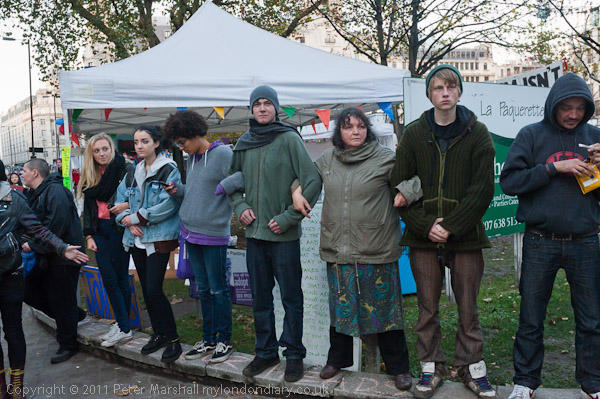
I went up quite early to photograph the camp where later in the day Occupy LSX were to hold there own alternative ‘Not the Lord Mayors Show’ festival of entertainment, and wandered around talking to people and taking a few pictures.

I also went to take photographs of some of those preparing to take part in the Lord Mayor’s Show, and then took pictures as the parade began. As I commented, “I found the marching servicemen, military vehicles and weapons and military bands that are a major element of it disturbing. Of course the event as a whole reflects earlier times, with the city aldermen and liverymen in quaint costumes, but it would be appropriate for it to present a rather more civilised face to the world.

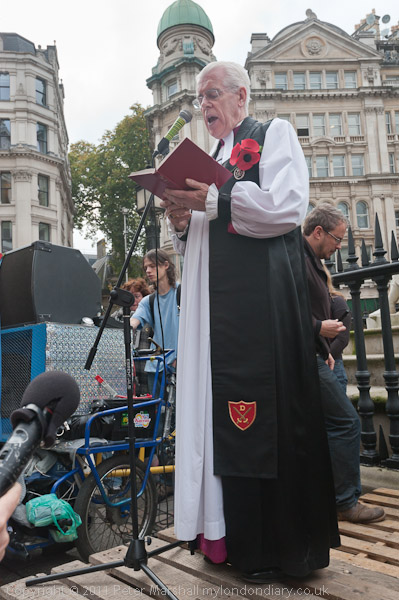
As in other years, the Lord Mayor’s coach stopped at St Pauls for him to be blessed by the Canon in Residence Rt Revd Michael Colclough. Occupy LSX asked the cathedral staff if the Canon would bless them too, and though the staff were very doubtful, the Canon came to talk with the people from Occupy and then blessed them too.

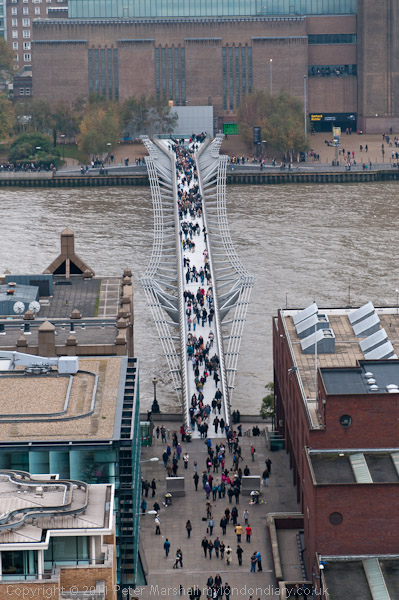
Entry to St Pauls, other than to take part in services usually involved paying a fee – back in 2011 it was £14.50 – but is free on the day of the Lord Mayor’s Show, and I took the opportunity to go in and up to the ‘Stone Gallery’ around the base of the dome (the higher ‘Golden Gallery’ was closed because of the crowds) and take some pictures there.

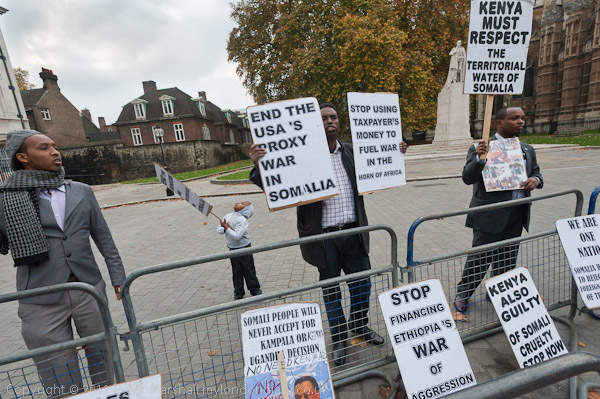
I took the District Line to Westminster for an advertised protest against Ethiopia’s war against Somalia, only to find there were only three men and a small boy at the advertised starting time, though they had a number of placards against what they describe as genocide and ‘Obama’s Proxy War’. They assured me more people would arrive and that the protest would continue for five or six hours, but when I came back again two house later there was no sign of it.

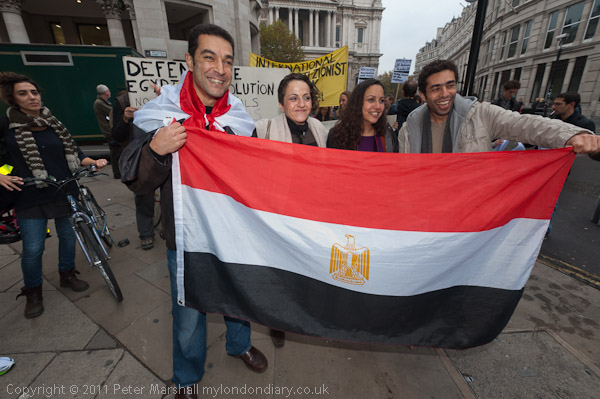
I returned to the City, where some protesters were setting off from the OccupyLSX camp at St Paul’s Cathedral for a ‘tour of shame’, visiting the offices of 3 arms dealers, Qinetiq, BAE and Rolls Royce, who went with David Cameron to Egypt in February to sell arms to the Egyptian army. This was a part of the International Day to Defend the Egyptian Revolution which had toppled the Mubarek regime, but the army had taken charge and there had been more than 12,000 trials in military courts, without the ability to call witnesses or access to lawyers in a programme of repression against the people. They called on the UK government to end support for the Egyptian military and stop selling them arms which might be used in further massacres such as that in Maspero a month earlier when soldiers opened fire killing 27 Coptic Christians and injuring over 300.

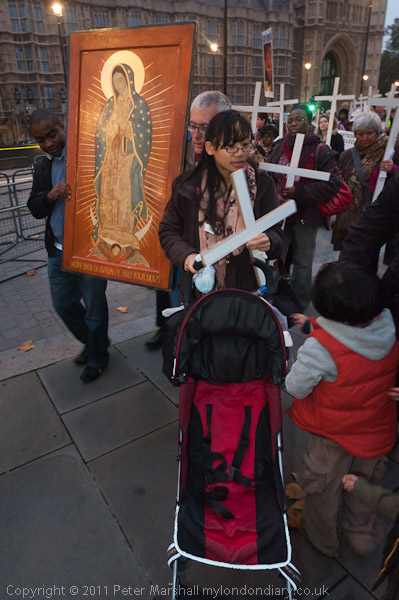
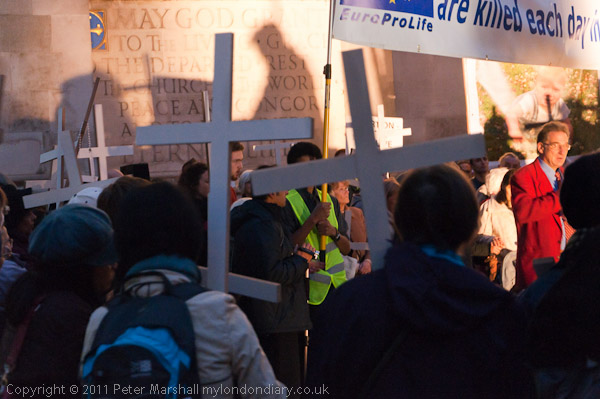
I left the marchers at Ludgate Circus and walked back to see what was happening with Occupy SLX at St Paul’s, then took the District Line again to Westminster to see if the Somali protest had grown. There was no sign of it, but I found another protest just leaving Old Palace Yard for a rally outside Westminster Abbey. This was the ‘500 Crosses for Life’ prayer procession, organised by EuroProLife UK, a “European ecumenical initiative” based in Germany with the full title “European Voice of the Unborn Children: Protect Our Life”, and there were several hundred people carrying white crosses.

They had walked from Westminster Cathedral to a rally here and a speaker at the rally was describing and applauding protests outside clinics in Germany where abortions take place. I found this disturbing – and commented on My London Diary “People have a right to their views on abortion, and to hold peaceful protests such as this and of course to pray about the matter. But isn’t harassing women who go to clinics at what is almost certainly for them a very stressful time morally offensive, a demonstration of an un-Christian lack of love as well as a statement of lack of faith in the power of prayer?”

More on all these at:
Anti-Abortion Prayer Protest
Day to Defend the Egyptian Revolution
Somalis Protest Obama’s War
London From St Paul’s
Lord Mayor’s Show
Lord Mayor’s Show – Occupy London


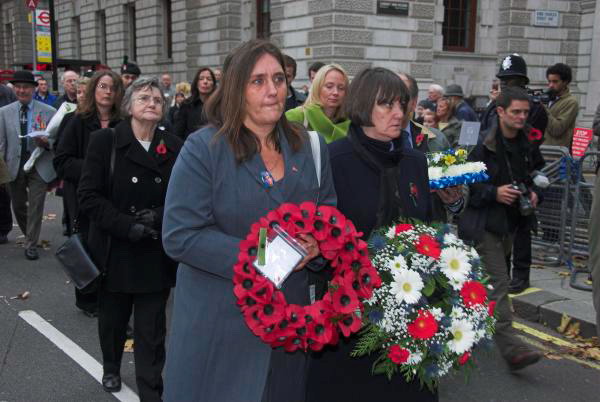
Armistice Day – November 11th

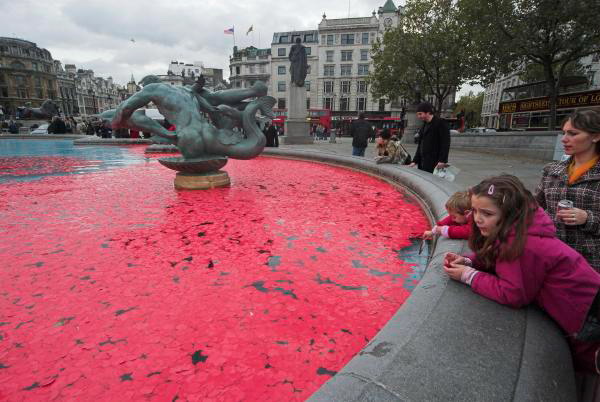
Poppies in Trafalgar Square. 11 Nov 2006

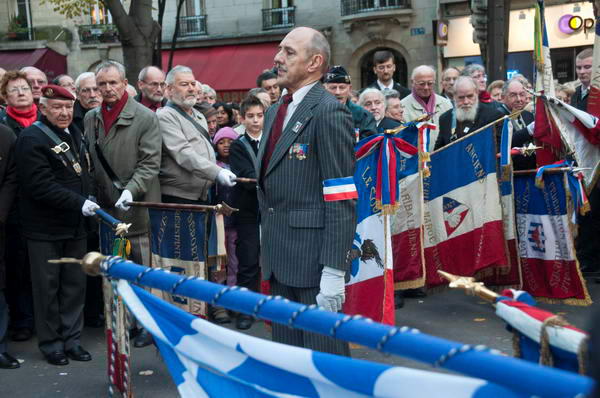
When I was young everything still stopped for two minutes at 11am on Armistice Day although the main remembrance events had been moved to Remembrance Sunday in 1939 so as not to interfere with the war effort. But traffic still pulled into the side of the road here. In France the Armistice de la Première Guerre mondiale is still a national holiday.

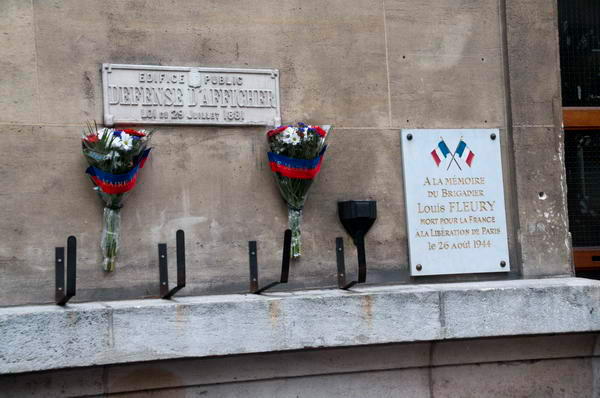
Paris lle, 11 Nov 2008

I’m not a pacifist, but I am firmly opposed to most wars, both historic and current. The First World War was clearly a disaster that should not have happened, a family quarrel that should not have resulted in such incredible suffering and loss of life largely with people killing others who they had far more in common with than with those who sent them into battle.

Clearly US war in Vietnam (and earlier the French in Indochina) was wrong as was the invasion of Iraq. And equally clearly we as a nation should not be wasting money on pointless nuclear weapons and selling arms to promote wars around the world such as that in Yemen. And so on.

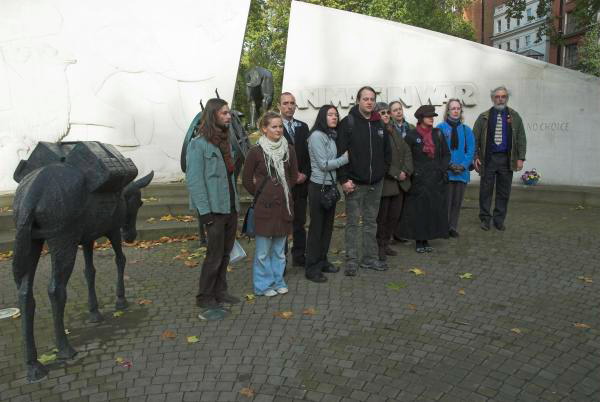
Remembering Animals Killed in War, Park Lane, 11 Nov 2006

But while it seems clear that America should not have been fighting in Vietnam, it seems clear that the Vietnamese had to fight against them, just as it seems clear that Cubans were justified in fighting against Batista and US imperialism – and the same applies to other struggles against colonialism and for national liberation.

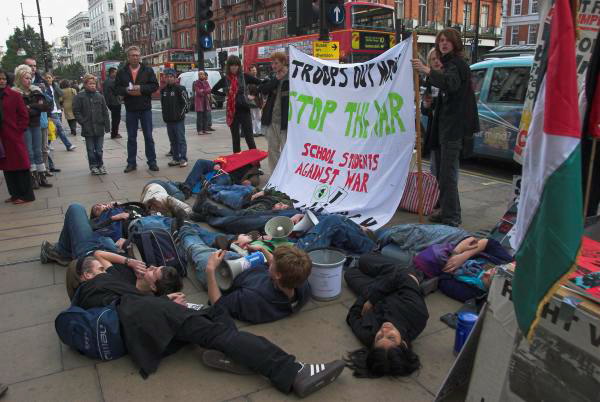
School Students Against the War, Oxford St, 11 Nov 2006

I’ve recently re-read George Orwell’s Homage to Catalonia and although Stalinists contest his view of events it remains powerful both as a personal account of the war in Spain and makes clear the main reasons why the democratically elected government was defeated by the fascists – and Stalinist Russia’s contribution along with fascist Italy and Nazi Germany to that defeat, which made a wider war inevitable. If you’ve not read it, this is a book I highly recommend – and there is an excellent article ‘Orwell and the Spanish Revolution‘ by John Newsinger in International Socialism Journal which explains Orwell’s position and deals with some of his detractors.

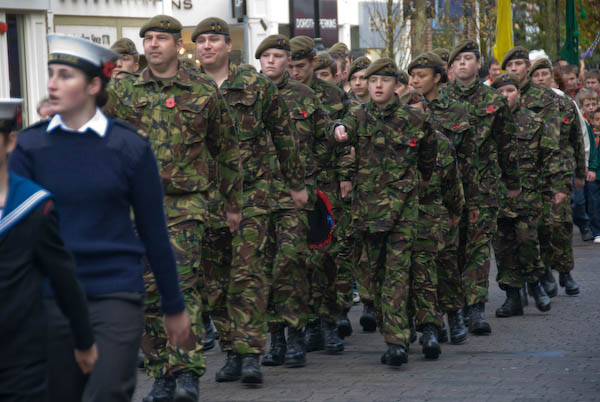
Staines, Nov 11 2007

I grew up in the years following the Second World War and had my share as a wolf cub and boy scout of standing in short trousers with the bitter November wind blowing up them at Remembrance Sunday parades at local war memorials. Of course we should remember those who died, but not in the kind of militaristic and often jingoistic fashion that most or all such events have in England. The best way to honour their sacrifice is surely to work for peace. In Germany they have a day as a peace celebration.

Families of Servicemen Killed in Iraq, Cenotaph, Whitehall. 11 Nov, 2006

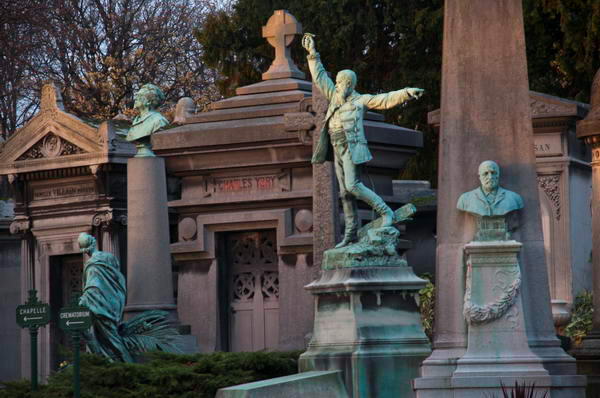
After briefly photographing the event at the Mairie in the 11th arrondissement – I’d rushed out from a café when I saw the event happening – we strolled the short distance to the Cimetière du Père-Lachaise.

Père-Lachaise, Paris lle, 11 Nov 2008

West India Docks 1988 (1)

Millwall Inner Dock, Tower Hamlets, 1988 88-6b-65-positive_2400
Millwall Inner Dock, Tower Hamlets, 1988 88-6b-65

When the Docklands Light Railway opened in 1997 there were just two lines, one from the City at Tower Gateway east to Canary Wharf and then south to Island Gardens, and the second coming down south from Stratford to Canary Wharf and then using the same track south. For cost reasons it had been decided not to make a connection with the existing Underground network, except at Stratford where the DLR shared a station with both the Central Line and National Rail. The tunnel link to Bank Station was only opened four years later.

So I and my two young assistants had walked as in my earlier post from London Bridge across Tower Bridge to Tower Gateway station, and then took the DLR to Crossharbour. It was something of a fairground-like attraction, particularly around where the line turned south to go into West India station, and in the first years the line was little used and it was usually possible at the terminus to get a seat right at the front of the driverless train and imagine you were in the driving seat.

Glengall Bridge, Millwall Inner Dock, Tower Hamelts, 1988 88-6b-66-positive_2400
Glengall Bridge, Millwall Inner Dock, Tower Hamlets, 1988 88-6b-66

There was considerable building work taking place around Millwall Inner Dock, as well as cranes and the lifting bridge and it made a good day out for small boys as well as older photographers.

My assistants, Millwall Inner Dock, Tower Hamlets, 1988 88-6b-52-positive_2400
My assistants, Millwall Inner Dock, Tower Hamlets, 1988 88-6b-52

And here they are on an empty plinth surveying the scene, sandwiches and drinks in their back packs.

Millwall Inner Dock, Tower Hamlets, 1988 88-6b-55-positive_2400
Millwall Inner Dock, Tower Hamlets, 1988 88-6b-55

Millwall Dock was only opened in 1868 and was then quite separate from the West India Docks to the north. It had an entrance from the Thames on the west side of the Isle of Dogs to a large dock running halfway across the ‘island’, with another large dock, later called the Millwall Inner Dock branching off to the north. Most of the cargo was timber and grain, and McDougall’s built a large flour mill on its south bank the year after it opened. In 1928 it was connected to the West India Docks by the Millwall Passage, and became a part of the same impounding system for water levels.

Guardian building, Marsh Wall, Tower Hamlets, 1988 88-6b-41-positive_2400
Guardian building, Marsh Wall, Tower Hamlets, 1988 88-6b-41

The Guardian print works in Wimpey’s Enterprise Business Park was built in 1985-7 and apparently its silver-blue reflective panels and tinted glass were meant to make its ugly box look smaller, merging the building with the sky. It doesn’t work in black and white and it didn’t work in reality. The Guardian now has its print works in Stratford.

Millwall Inner Dock, Marsh Wall, Tower Hamlets, 1988 88-6b-42-positive_2400
Millwall Inner Dock, Marsh Wall, Tower Hamlets, 1988 88-6b-42

Looking roughly south down Millwall Inner Dock from Marsh Wall. The chimney in the distance is that of Deptford Power Station, demolished in a spectacular explosion in 1992.

Docklands Light Railway, DLR, Daily Telegraph, Marsh Wall, South Quay, Tower Hamlets, 88-6b-43-positive_2400
Docklands Light Railway, DLR, Daily Telegraph, Marsh Wall, South Quay, Tower Hamlets, 88-6b-43

The Daily Telegraph moved in to this building to the east of South Quay DLR station when it was completed in 1987, naming it Peterborough Court. In 1992 they moved to Canary Wharf tower.

Our walk around the area continues in West India Docks 1988 (2) shortly.


Sparks and Students – 10 Years Ago

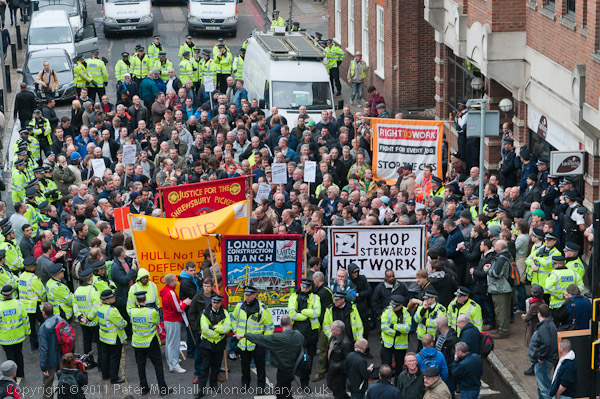
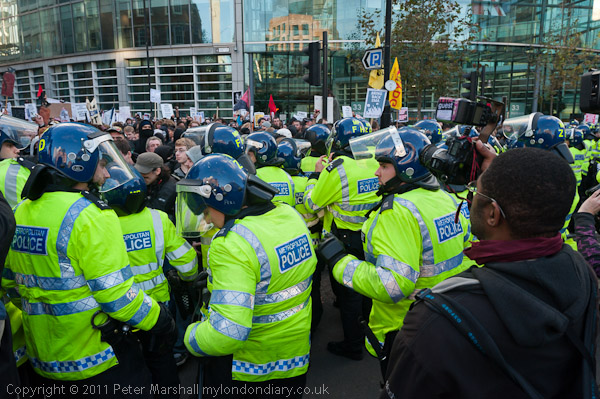
Police surround a grass roots rally before the main Union rally by electricians at the Shard


Ten years ago today on 9th November 2011 my work began at The Shard next to London Bridge, where ‘sparks’ (electricians) were protesting over plans by 7 major employers to tear up national agreements and impose worse conditions and pay cuts of at least 26 %.

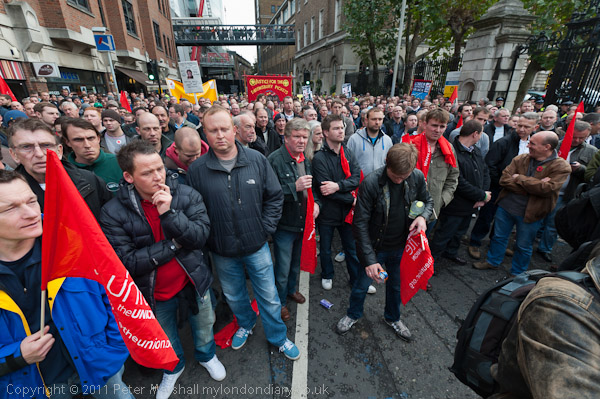
Electricians listen to Unite union speakers

Before the official rally by the Unite union where speakers included several of the union’s leading officials as well as General Secretary of Unite Len McCluskey there was a separate rally with grass roots speakers. Numbers grew as the official rally began and there were over a thousand when it set off to march to another rally at Blackfriars.

I left the march on Borough High St and headed north over the river to join a large march by student protesters against fees increases and cuts in services. Police had shut down most of central London before this started and there were no buses running and I had to walk around two miles to meet the marchers.

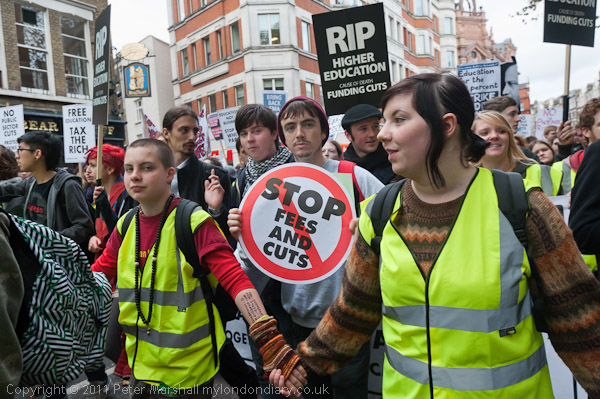
Students were angry about the cuts, particularly about the loss of the Educational Maintenace Allowances but the policing seemed completely excessive. I wrote: “There were perhaps 5000 students, but as the march approached me coming down Shaftesbury Avenue they were largely hidden by the police, with a row of mounted officers leading, followed by several further rows of police in front of the marchers. More police walked along each side of the march, and others stood on the pavement, with lines blocking side roads and others in the doorways of offices, banks and some shops.”

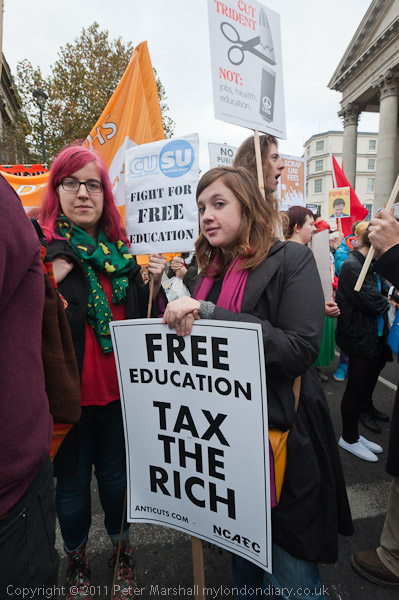
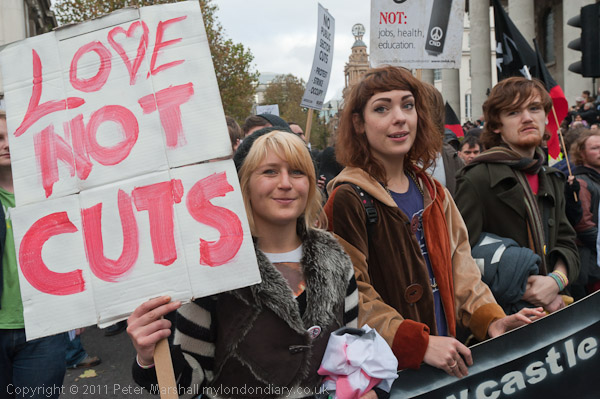
The mood of the marchers seemed to me to be rather cheerful and relaxed, and this was reflected in the humour in many of the posters. Although there were a number of provocative actions by police – including a snatch squad rushing in to grab several marchers – which injured me and some other marchers, as well as various occasions on which they slowed or halted the march, eventually bringing it to a complete stop and ‘kettling’ it in Holborn, which caused it to get a little heated.

Marchers chant “Free the Sparks”

The protesters had been angered to hear that six hundred electricians who had tried to cross the river after their rally in Blackfriars to join the student protest had been stopped at Blackfriars Bridge and London Bridge.

The police seemed to get completely disorganised at this point and I was able to walk past a police line along with several hundred of the protesters while the officers grappled with a few holding them back before more police arrived. After waiting for some time in the hope that others would join them, they continued the march to its intended destination at the Moorgate building of London Metropolitan University where they danced to the sound of a bicycle-hauled sound system while I walked a little further to Finsbury Square where Occupy London had been camping since 21st October.

People in Finsbury Square were worried that the the 4000 police officers in London from the march would turn their attention to trying to evict them. I told them it was unlikely they would make an attempt with so many students on the street. Later I saw videos of students being kettled at Moorgate and individuals being attacked by snatch squads of plain clothes police who had posed as protesters but there was no action against Occupy London.

The huge policing of the two marches was clearly a reaction to the criticism of their failures at Millbank and Tottenham, but it came at a considerable cost, bringing movement in much of central London more or less to a halt for most of the day. Much of the City was still closed as I walked along Old Street with traffic outside the area moving at rather less than walking speed. Policing by consent has to involve letting peaceful protest continue and here was clearly an attempt to prevent it.

Students March Against Cuts & Fees
Sparks At The Shard

City Road & London Bridge

My last walk in May 1988 ended around the City Road which I walked down to catch the ‘drain’ back to Waterloo. In 1988 Bank Station on the Waterloo and City line still was a part of British Rail, and was one of the ‘London Termini’ for which my ticket from the suburbs was valid. Until it was transferred to London Underground in 1994 it provided a cheap route for me into to centre of the City.

Wesley statue, Wesley's Chapel, City Rd, Islington, 1988 88-6a-64-positive_2400
Wesley statue, Wesley’s Chapel, City Rd, Islington, 1988 88-6a-64

Wesley’s Chapel and Leysian Mission at 49 City Road calls itself the Mother Church of World Methodism. Wesley employed the surveyor of the City of London, George Dance the Younger as his architect and the builder was a member of his congregation; the church is Grade I listed despite considerable alterations in the Victorian era and later. When built it was Church of England Church, as Methodism only became a separate church after his death.

The best bit about the Grade II listed statue of Wesley, created in 1891 by Adams Acton is probably the plinth and the wording below the statue ‘THE WORLD IS MY PARISH’. I particularly liked the shadow of the lantern above the entrance on the door below.

Honourable Artillery Company, City Rd, Islington, 1988 88-6a-65
Finsbury Barracks, Honourable Artillery Company, City Rd, Islington, 1988 88-6a-65

This Grade II listed ‘castle’ on City Road was designed by Joseph A Jennings in 1857 as a barracks for the Royal London Militia. It later became the home for City of London Territorial Army and Volunteer Reserve, and since 1961 has been part of the Honourable Artillery Company estate.

When I was very young I had a very secondhand and battered toy fort for my toy soldiers, and either it was based on this building or this building had been based on it.

Lakeside Terrace,  Barbican, City, 1988 88-6a-56-positive_2400
Lakeside Terrace, Barbican, City, 1988 88-6a-56

I think there had just been a shower of rain – and perhaps I had walked into the Barbican to shelter from it and perhaps view the exhibitions in its free spaces. Though I did go also to the major photographic shows that were held there, often taking students to see them. But this walk was in the Whitsun half-term.

But the terrace is clearly wet and there are no people sitting on the many chairs, although a few perch on the low brick walls. At right is the City of London School for Girls.

London Bridge, Southwark, 1988 88-6a-36-positive_2400
London Bridge, Southwark, 1988 88-6a-36

My rail ticket could also take me to London Bridge, and my first walk in June on Saturday 8th began there. I went to London Bridge but didn’t cross it, instead staying on the south bank, and taking this slightly curious picture in which the River Thames appears only as a thin rectangle underneath the white rectangle of Adelaide House. When completed in 1925 this now Grade II listed building was the City’s tallest office block, 43 metres – 141 ft – high.

London Bridge, Southwark, 1988 88-6a-33-positive_2400
London Bridge, Southwark, 1988 88-6a-33

Looking up into the office block at 1 London Bridge Street it’s hard to distinguish reflection from reality as I’m sure architects John S. Bonnington Partnership intended. Completed two years earlier in 1986 it was still a rather startling building.

London Bridge, Southwark, 1988 88-6a-24-positive_2400
London Bridge, Southwark, 1988 88-6a-24

The steps to the riverside walkway go through the corner of 1 London Bridge and over them are some buildings from the Victorian era on the opposite side of Borough High St and the pinnacles of Southwark Cathedral. I seem to have chosen another rainy day for a walk.

Tooley St, Abbots Lane, Southwark, 1988 88-6b-61-positive_2400
Tooley St, Abbots Lane, Southwark, 1988 88-6b-61

I walked east not on the riverside walk, but along Tooley St and photographed this building on the corner of Abbots Lane, a street that has now more or less disappeared and is simply a vehicle entrance to PricewaterhouseCoopers buildin in More London. This former Fire Brigade Headquarters built in 1879, architect George Vulliamy, was for many years the model for other fire stations and the headquarters of the Metropolitan Fire Brigade and its training centre for firefighters. It now houses the Brigade Bar and Kitchen, opened in September 2011 by Chef Founder Simon Boyle, a social enterprise which together with the Beyond Food Foundation gives apprenticeships to people who have been at risk of or have experienced homelessness.

It had been the great fire of Tooley Street in 1861 that led to the formation of the Metropolitan Fire Brigade in 1862, the greatest fire in London since 1666. Many of the riverside warehouses went up in flames over two days and the man in charge of the firefighters, Mr James Braidwood, was killed when a building collapsed. There have been many fires in Tooley St since, and in 1971 Wilson’s Wharf was the site of the ‘Second Great Fire of Tooley St’, with 50 pumps fighting the fire that started in an unoccupied refrigerated warehouse. The area destroyed is now the site of Southwark Crown Court.

Tumonte House, Tooley Hotel, Tooley St, Southwark, 1988 88-6b-62-positive_2400
Tumonté House, Tooley Hotel, Tooley St, Southwark, 1988 88-6b-62

These were fairly typical of the tall warehouse buildings that line much of Tooley Street. I’m unable to identify the exact locations of these buildings which don’t quite seem to match any of those left standing. The negative has been badly damaged at bottom right and since it only affects the roadway and a car I’ve not bothered to try to repair it.

Anchor Brewhouse, Butlers Wharf, Tower Bridge, Southwark, 1988 88-6b-63-positive_2400
Anchor Brewhouse, Butlers Wharf, Tower Bridge, Southwark, 1988 88-6b-63

The picture shows the large amount of building work that was taking place along this section of the bank by Higgs and Hill and McAlpine. It seems too that barges were being used to take away some of the rubble.

Tower Bridge, Control Room, Tower Hamlets, Southwark, 1988 88-6b-64-positive_2400
Tower Bridge, Control Room, Tower Hamlets, Southwark, 1988 88-6b-64

I have never understood why quite so many levers were needed to raise two sections of roadway to open the bridge for river traffic. There seem to be two handles to turn around at the end furtherst from my camera and a superfluity of dials at top left.

I think I crossed Tower Bridge and made my way to Tower Gateway for the DLR. The station had opened the previous August and my walk continued from Crossharbour on the Isle of Dogs – in another post. Before the opening of the Jubilee Line this was probably the quickest route there.


Dirty Money Still Rules

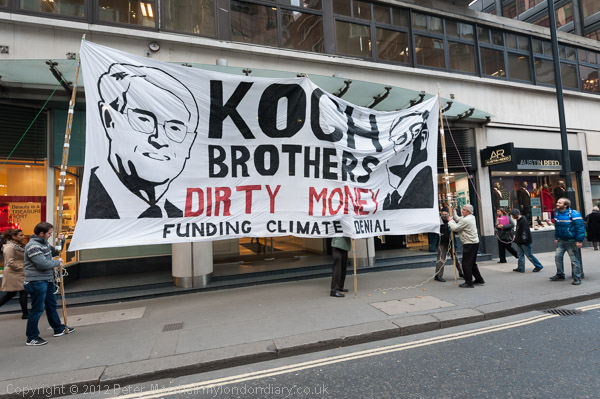
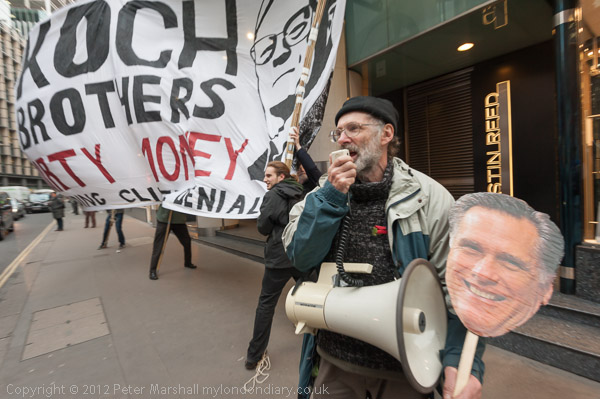
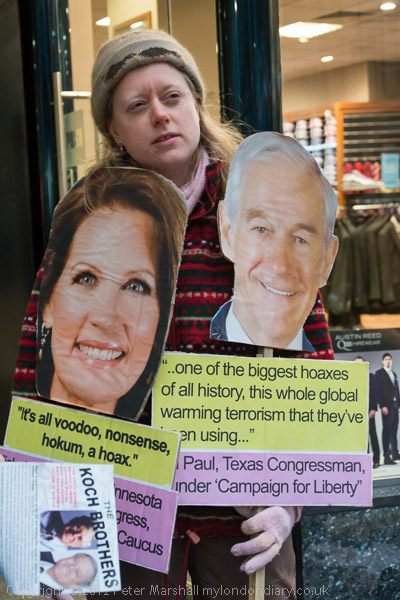
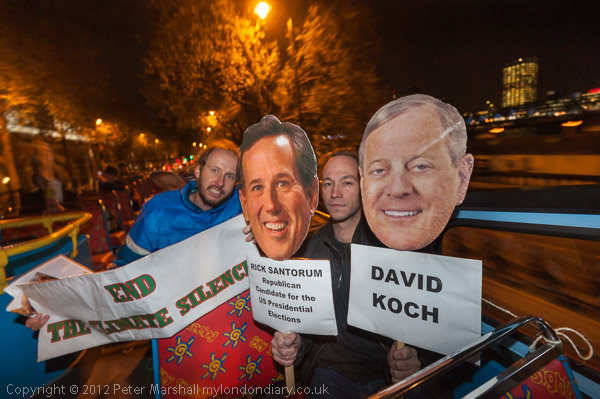
Nine years ago on Wednesday 7th November 2012, the day that the election of Obama for a second term as President of the US was announced, the Campaign against Climate Change organised a series of protests in London urging him to stand up against the lobbying, dirty money and media lies funded by the Koch brothers and other fossil fuel companies.

Nine years later, after both the end of Obama’s presidency and four years of climate denier Trump, President Biden is still having problems in getting his plans to clean up the environment (and other policies) voted through because of opposition by a Senator who made a fortune from a coal brokerage business in which he owns more than a million dollars in shares and who receives more donations than any other senator from the coal, oil and gas industry.

Campaign Against Climate Change, March 2003

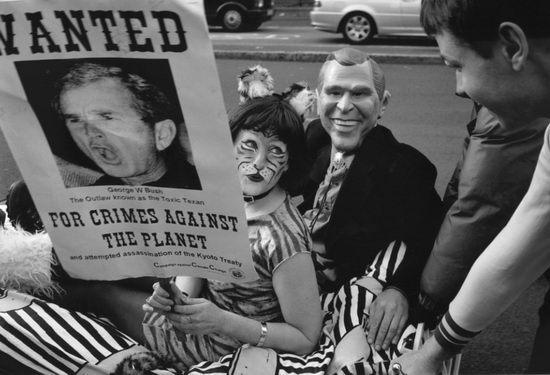
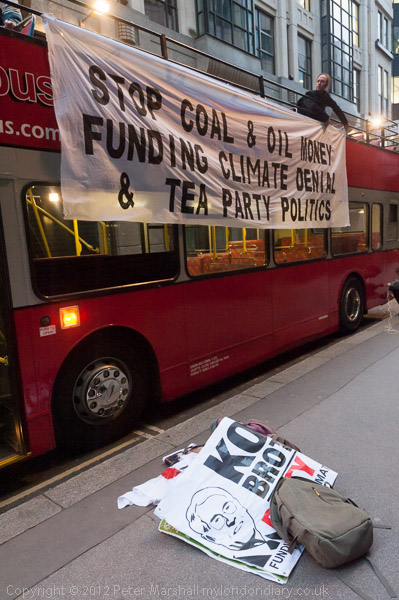
The Campaign against Climate Change was founded in 2001 as a response to President Bush’s rejection of the Kyoto Protocol, and I think I first photographed one of their marches back in March 2002 when they pushed a bed with Bush in bed with the Esso tiger from Esso’s UK HQ to Westminster. It was a long walk and the wheels fell off the bed as it came to Westminster Bridge, but in 2012, after a static protest at the HQ of giant US private company Koch International they chose sturdier wheels in the form of an open-top bus.

Koch Industries is the US’s largest private company and made its fortune through developing improved processes of oil refining, and this remains a major part of its widespread activities. It is owned by the Koch Brothers, who ‘have been a major source for funding disinformation on climate change and in instigating the wave of populist anti-science, anti-regulatory, right-wing extremism associated with the “Tea Party”.’

Both in the US and the UK, governments are hugely influenced by the lobbying of big business, with many politicians accepting large payouts for services rendered, as well as a large PR and lobbying industry aimed at law makers and the media. The truly shameful think about the current case of Owen Paterson is not that he was paid paid £100,000 and broke the rules, but that their are rules that exist which he claims to have kept within to allow such paid lobbying by MPs.

Phil Thornhill at the front of the bus

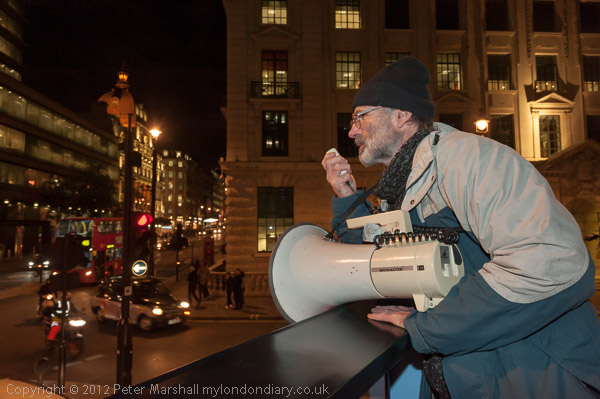
Although the bus didn’t lose its wheels, it was desperately cold as it went through London on a cold, wet and windy November evening, with Phil Thornhill of the CCC leaning over the top with a large megaphone informing the public about the reason for the protest. It was also extremely bumpy, which together with the low light made photography rather difficult, and most of the time I was too busy holding tight to the rail across the top of the seats to take pictures.

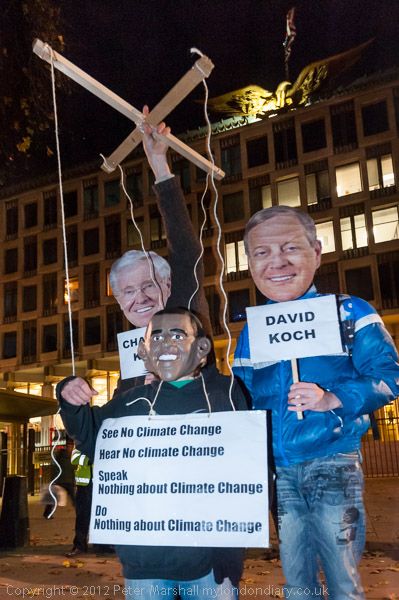
Finally after its journey through the rush-hour streets the bus arrived at the US Embassy in Grosvenor Square and we all alighted. At first police tried to push the protesters into a penned area in a dark corner of the square where it would be neither heard nor seen. The protesters sensibly refused and after some discussion were allowed to protest as usual in front of the locked front gates – protected outside by a thin line of police, and inside the tall fence by wandering armed officers.

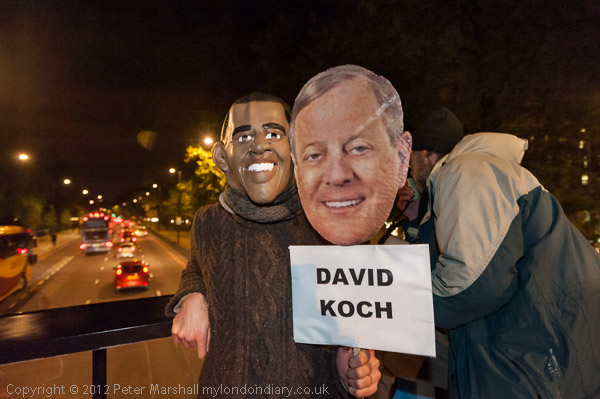
Barach Obama with David Koch on the top of the bus

Protests such as this of course had no effect on Obama’s business-friendly administration, while Trump made climate denial core policy of his tweets. But these and other protests did raise awareness of the catastrophe the world is facing. Many of us had been aware of the coming crisis for many years – at least since the 1980s, though there were warnings from some scientists years earlier, but the wider public, often misinformed by the media was largely ignorant.

Without protests such as this around the world, it seems unlikely that their would have been an agreement reached at COP 21 in Paris in 2015, and since then, helped by the publicity given to Greta Thunberg and David Attenborough, not to mention various extreme climate events around the world, there is now a wide consensus that something needs to be done, and done urgently. But thanks to the huge continued efforts of big business in fossil fuels the politicians are still locked into doing too little too late.

More pictures: Stop Fossil Fuel Dirty Money takeover of US.


Around Old St

H J Brooks & Co, Old St, Islington, 1988 88-5n-22-positive_2400
H J Brooks & Co, Old St, Islington, 1988 88-5n-22

These pictures continue the walk around Finsbury and going back east along Old St to South Shoreditch. They are all in my album 1988 London Photos, but here I’ve put them in the order in which I took them. I also made some other exposures not on line, and the album only contains those images I now find more interesting and worth preserving.

H J Brooks & Co were at a number 136 on the south side of Old St, close to Tilney Court and the building is still there, now offering IT services and support. Henry Brooks was one of many companies in this area in the furniture trade, supplying the various fittings which can be seen in the window.

Kapital Kwickprint, Old St, Islington, 1988 88-5n-24-positive_2400
Kapital Kwickprint, Old St area, Islington, 1988 88-5n-24

I think Kapital Kwickprint was quite close to the Old Street roundabout at the junction with City Road which I’ve since photographed on various occasions. The premises appear to be shared with Sheet Metal and Wire Workers Malbot Ltd, and it was their notices including a hanging sign that attracted my attention as well as a rather curious doorway, firmly shuttered and with the message ‘LETTERS FOR MALBOT LTD’ and an arrow pointing to a postbox beside it.

It is hard to identify this location now, but I think it was in Mallow St, where the next frame on the film was clearly taken. At top left is the address 3TO4.

Warehouse, Leonard St, Paul St, Shoreditch, Hackney, 1988 88-5n-12-positive_2400
Warehouses, Leonard St, Shoreditch, Hackney, 1988 88-5n-12

This very sturdy-looking building is still present on the corner with Paul St and is now offices with the name ‘Victoria House’ and address 1 Leonard Circus. Like the warehouses further along the street it probably dates from the 1870s.

Warehouses, Leonard St,  Shoreditch, Hackney, 198888-5n-13-positive_2400
Warehouses, Leonard St, Shoreditch, Hackney, 1988 88-5n-13

Part of an impressive row of warehouses on Leonard St dating from 1874-7 which have now been converted to office and residential use. C W Burrows at 69 describe themselves as House Furnishers – and this area was a great centre for furniture manufacture.

The business of J.Davis & Company (Machines) limited, now dissolved, was described at Companies House as “Wholesale of machinery for the textile industry and of sewing and knitting machines – Importing and distribution sewing machines.”

Great Eastern St, Shoreditch, Hackney, 1988 88-5n-15-positive_2400
Great Eastern St, Shoreditch, Hackney, 198888-5n-14

Great Eastern St was constructed in 1876 and these buildings date from shortly afterwards. You can see a small part of No 42 at right of picture, which is Grade II listed and built with No 40 in 1877.

Great Eastern St, Shoreditch, Hackney, 1988 88-5n-15-positive_2400
Great Eastern St, Shoreditch, Hackney, 1988 88-5n-15

And this picture shows the Grade II listed building at 40-42 built in 1877 by J. W. Brooker for the cabinet ironmongers Edward Wells & Co. As the listing states it is “in an eclectic style with Gothic, Italianate and Venetian influences.” This building was only listed in 2006, and is currently occupied by a cafe and an estate agent. I’ve photographed the entrance on the corner at right on other occasions.

Christina St, Shoreditch, Hackney, 1988 88-5n-16-positive_2400
Christina St, Shoreditch, Hackney, 1988 88-5n-16

Christina Street looking east from close to Phipp St. The site at right now has a building on it, and the street looks considerably tidier.

City Road area, Shoreditch, Islington, Hackney, 1988 88-6a-02-positive_2400
City Road area, Shoreditch, Islington, Hackney, 1988 88-6a-02

Today’s mystery picture. A quite distinctive building but I can’t remember what it was or exactly where it was, though probably somewhere quite close to Wesley’s Chapel on the City Road where I was photographing on the same walk a couple of frames later. It has a vaguely religious feel and may well have been sold and demolished since 1988. I hope someone will recognise it and tell me in a comment.


Click on any of the pictures to go to a larger version in my album 1988 London Photos, from where you can browse the album.


Remember, Remember

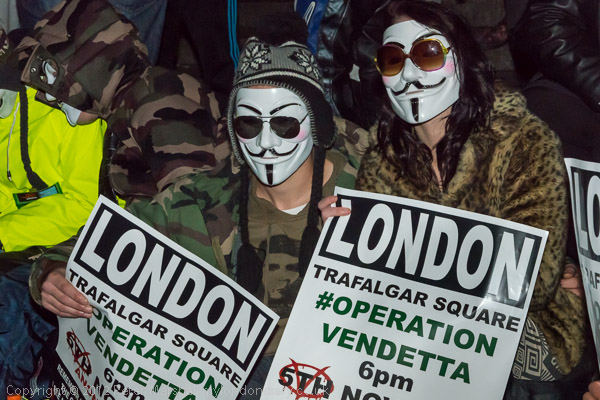
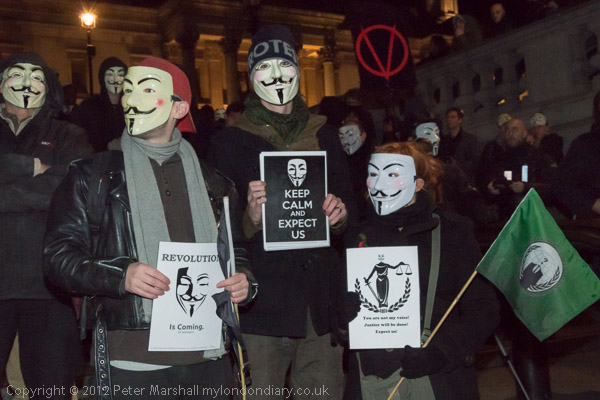
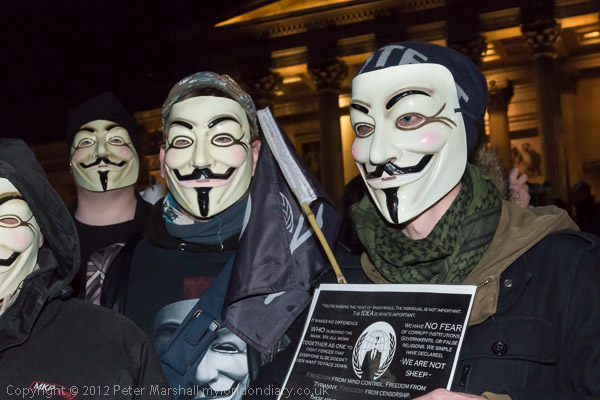
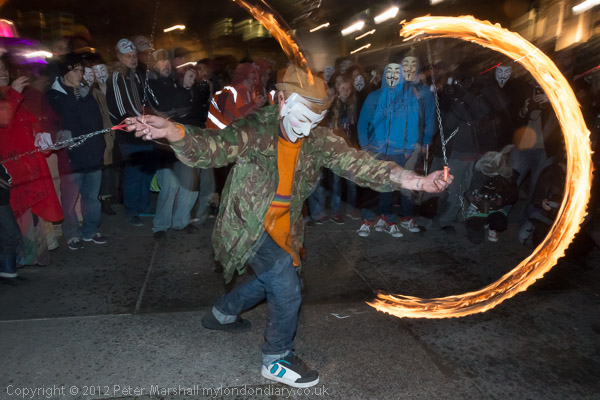
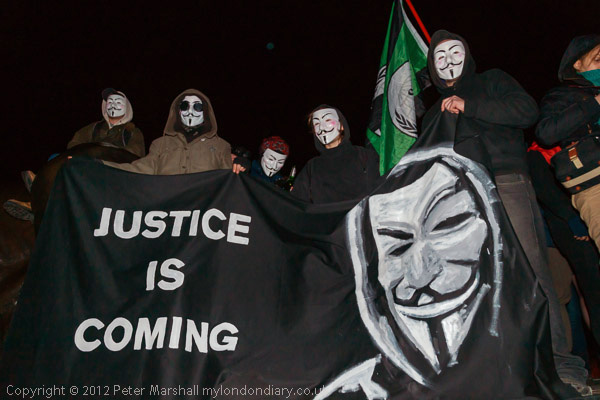
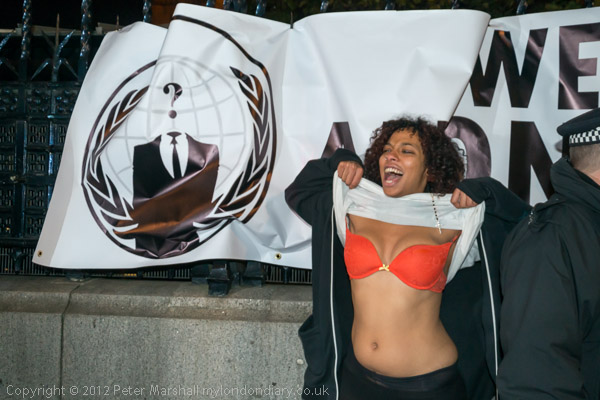
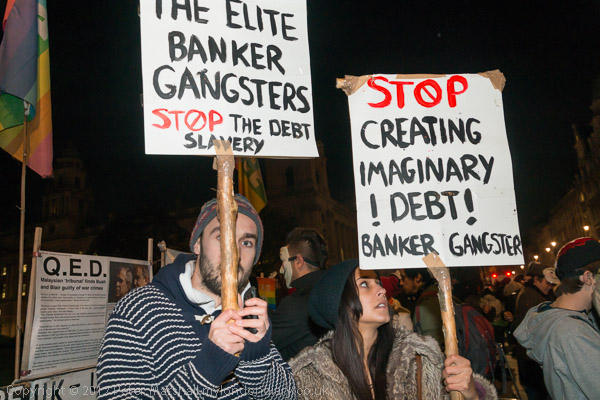
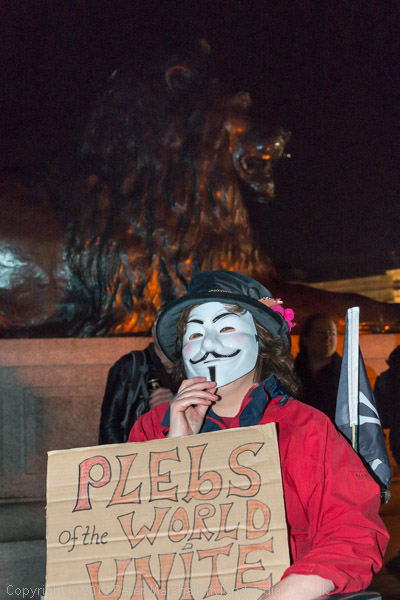
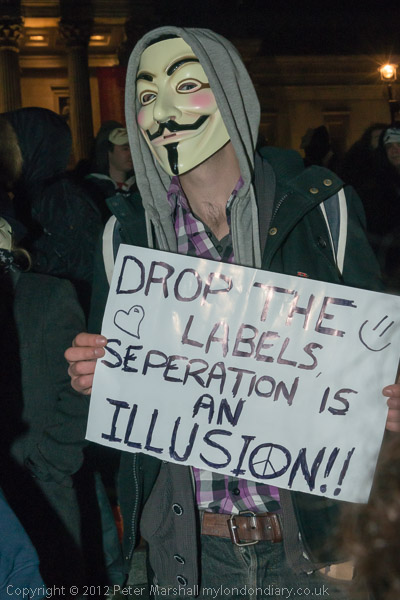
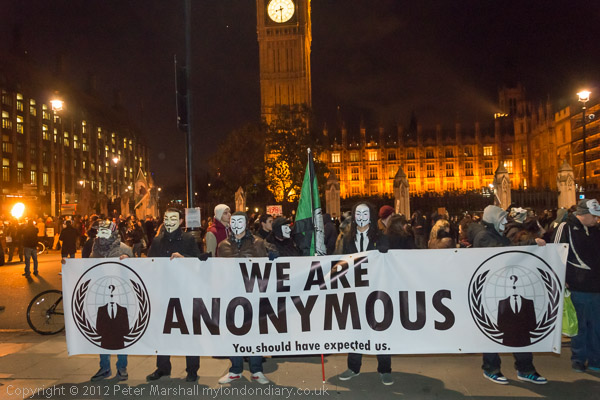
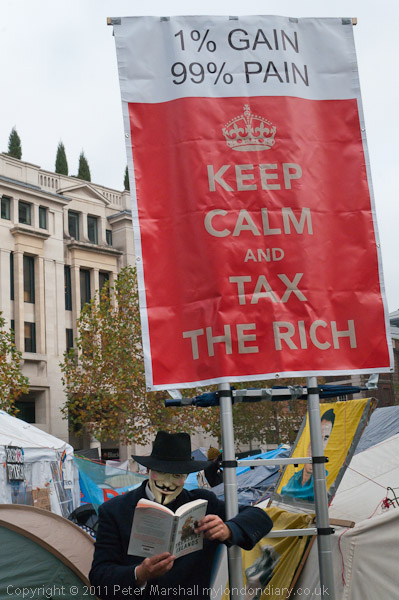
Despite some rumours I wasn’t around to photograph Guy Fawkes as he made his way into Parliament, but I was there in 2012 when ‘Anonymous’ wearing Guy Fawkes masks popularised in the graphic novel and film ‘V for Vendetta’ chose November 5th 2012, Bonfire Night, for their “worldwide Anonymous operation of global strength and solidarity, a warning to all governments worldwide that if they keep trying to censor, cut, imprison, or silence the free world or the free internet they will not be our governments for much longer.”

I wrote a fairly long account of the night, or at least those parts I witnessed, on My London Diary at Anonymous March to Parliament where you can also see many more pictures, and I won’t repeat the details here, but it is worth restating the aims of the protest:

In the UK the protest called for an end to cuts in education, health and welfare and the end of ‘austerity measures’ that target the poor and vulnerable, calling on the government to tackle the causes of the problems, including the banks and tax avoidance and evasion. They also want freedom for the Internet, with respect for the privacy of Internet users and the dropping of the Communications Data Bill.

My account also mentions that:

Anonymous also asks for Internet activists who are held as political prisoners to be released, including Julian Assange currently still unable to leave a London embassy, Richard O’Dwyer, the “PayPal 14, Jeremy Hammond, Topiary and the 4 anons of the UK that will stand trial on November 7th.

Everyone will be aware of some of what is still now taking place over Assange, including a CIA plot to kidnap him from the Ecuadorian embassy, then the Ecuadorian government withdrawal of his immunity, calling in the police to remove him, since when he has been kept largely in isolation in the high-secuirty Belmarsh prison as the US authorites continue to press for his extradition. The US appeal last week against a previous court decision that he could not be extradited because of this mental health and the likelihood that he would commit suicide has been largely the subject of a news blackout by the British media.

But the other cases have probably faded from most of our memories – if we were ever aware of them, so here are some brief reminders with information from Wikimedia.

Richard O’Dwyer created a web search engine which linked to copyright infringing sites and was charged in New York with conspiracy to commit copyright infringement and criminal infringement of copyright. He fought against extradition, but after Theresa May as Home Secretary ruled he could be sent to the US to face charges in November 2012 signed a deferred prosecution agreement, paying a £20,000 fine for charges to be dropped.

The PayPal 14 were charged under the Computer Fraud and Abuse Act in July 2011 for attempted denial of service attacks on Paypal in 2010 after it refused to make payments to a Wikileaks account, in what they say as a digital ‘sit-in’. Most later pleaded guilty to misdemeanours to avoid more serious charges and were sentenced to probation with 13 sharing a fine of $6,615 each.

American activist and computer hacker Jeremy Hammond was sentenced to two years in hail for hacking a US pro-Iraq war group in 2005. In December 2011 he was involved in a hack of private intelligence firm Stratfor, which compromised 60,000 credit cards and downloaded 5 million emails, some later published by Wikileaks. Identifying himself as anarchist-communist he defended his actions saying “I did what I believe is right” and was sentenced to the maximum penalty of 10 years in jail. He was released under supervision in November 2020, having been kept in jail longer for refusing to testify to a grand jury investigation into Wikileaks and Julian Assange.

Topiary, British hacktivist Jake Davis, was a member of Anonymous and LulzSec, involved in various online attacks including defacing the goverment websites of Zimbabwe, Syria, Tunisia, Ireland, and Egypt as well as the Westboro Baptist Church. Then aged 18, he was arrested in 2011 at his home in the Shetlands and charged with offences including a conspiracy to launce a denial-of-service attack against the Serious Organised Crime Unit. Tried with three fellow hackers (I think probably the 4 anons of the UK referred to by Anon) in 2013 he pleaded guilty and was sentenced to 24 months in a young offenders institute, with the 21 months he had been electronically tagged before the sentence being counted against it.

Anonymous hackers were also responsible for a number of successful attacks on child pornography sites, and actions against Scientology, a cult they saw was causing harm to many followers. They say “Distributed Denial of Service must be recognised as a legitimate form of protest, as long as an aim and reason has been specified by the protestors.

Anonymous March to Parliament


Free Education – No Barriers, Borders or Business

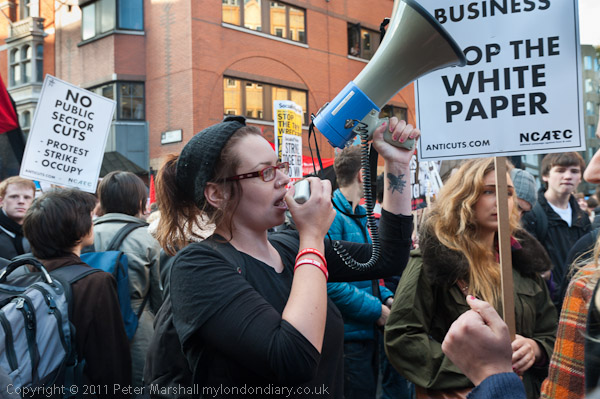
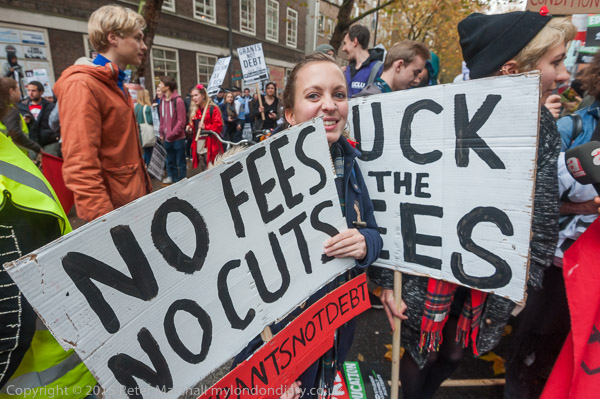
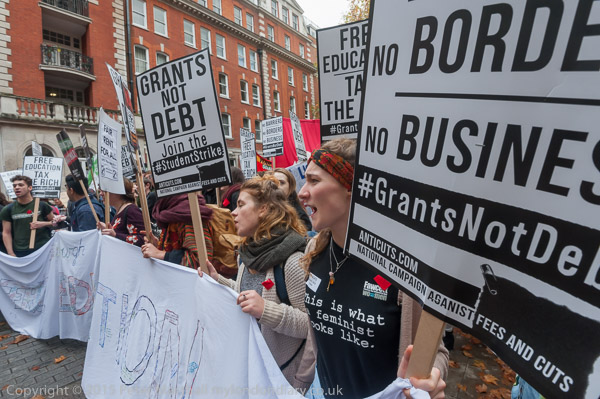
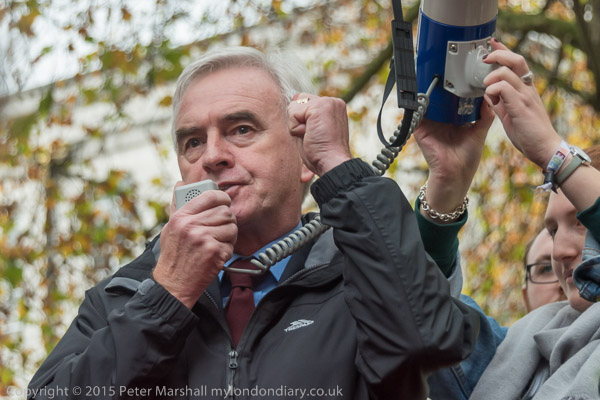
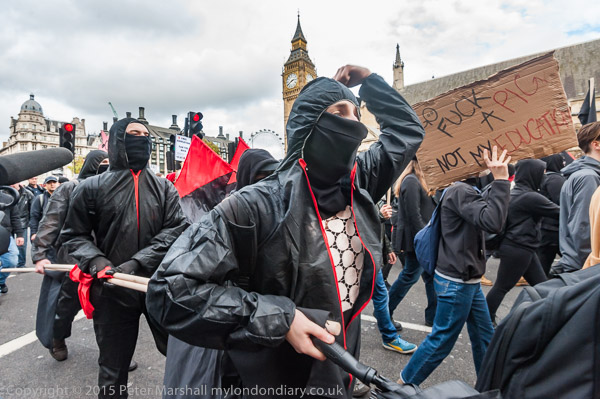
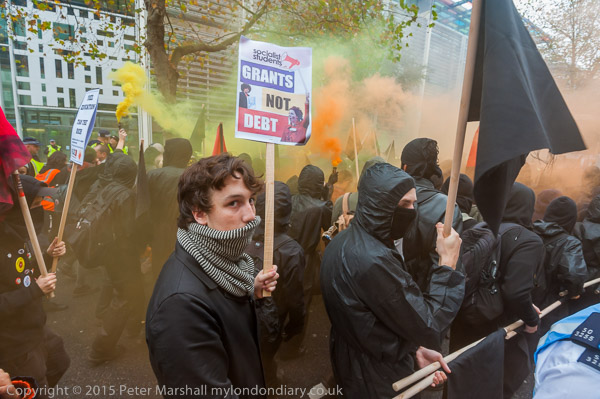
Free Education – No Barriers, Borders or Business was the call by the National Campaign Against Fees and Cuts (NCAFC) on their march through London on Wednesday 4th November 2015 against the abolition of maintenance grants and demanding free education without fees and huge student debts and an end to turning higher education into a market system impoverishing staff and students.

The march began in Malet St outside what had been the University of London Union, founded in 1921 as the University of London Union Society and was run by students for students. In 2013 the University of London decided to close ULU, taking over the building and running it as ‘Student Central’, now managed by the university, though continuing to offer similar services and resources for the 120,000 students, including bars, restaurants, shops, banks, a swimming pool and a live music venue – though some of these were on a reduced scale. But in 2021 it was announced that Student Central was to close and the building would become a teaching space for neighbouring Birkbeck College.

There were some speeches in Malet St before the march began, with speeches from several student representatives from various universities around the country, teaching staff and some fighting words from Shadow Chancellor John McDonnell MP. Green Party leader Natalie Bennett also marched with the students.

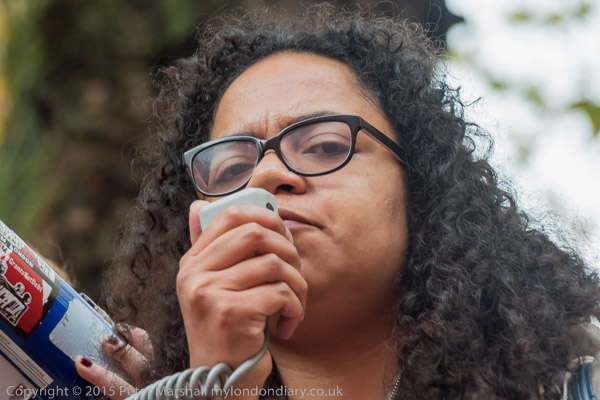
Antonia Bright of Movement for Justice spoke about the UK’s racist immigration policies and invited students to protest at Yarls Wood on the following Saturday.

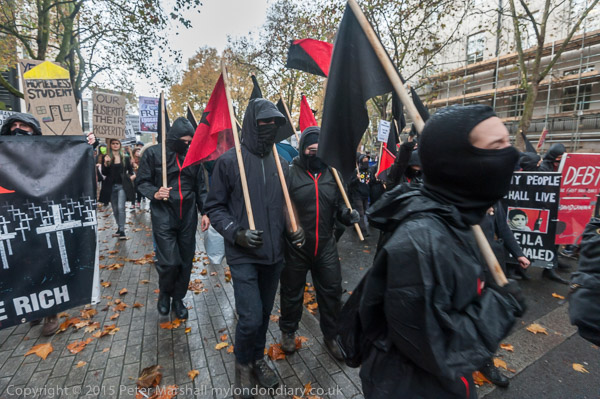
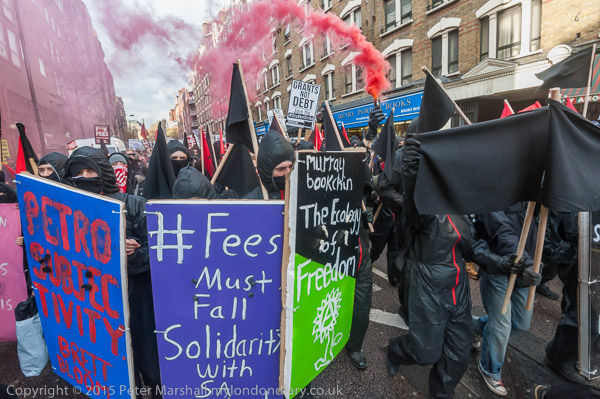
Among the marchers was a ‘black bloc’ carrying red and black anarchist flags and including Class War carrying their ‘WE HAVE FOUND NEW HOMES FOR THE RICH’ banner, along with a ‘book bloc’ carrying large polystyrene padded posters with the names of left wing and anarchist classic books on them or slogans such as ‘Rise, Riot, Revolt.’

The march went through Russell Square Square and down to High Holborn where it turned west and then took Shaftesbury Ave and the Charing Cross Rd to Trafalgar Square.

From there it went down Whitehall to Parliament Square where I left it briefly to photograph campaigners from the Save Shaker Aamer Campaign who had mounted a weekly vigil for his release from Guantanamo and were holding a ‘Welcome Home Shaker’ celebration.

I caught up with the marchers again at the Home Office, where there was a great deal of noise, confusion and coloured smoke before the marchers turned around and walked back towards Victoria St.

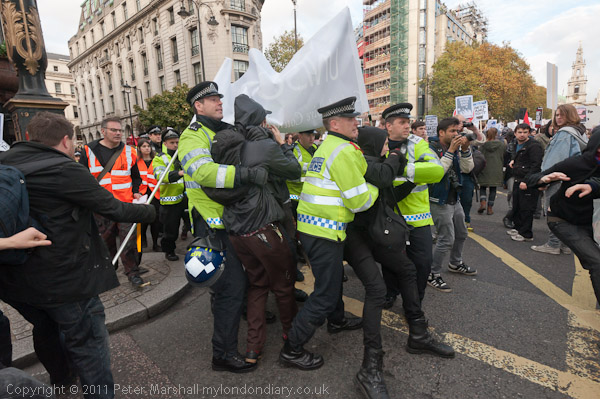
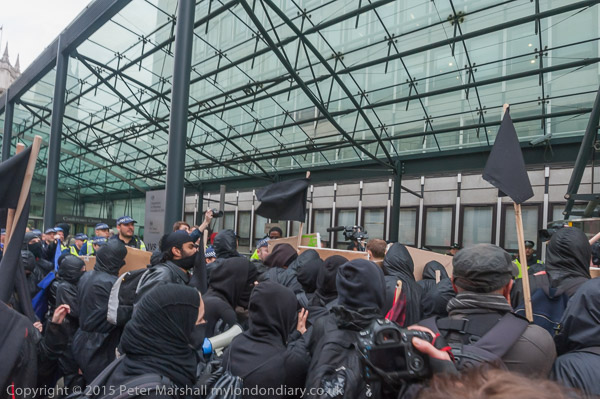
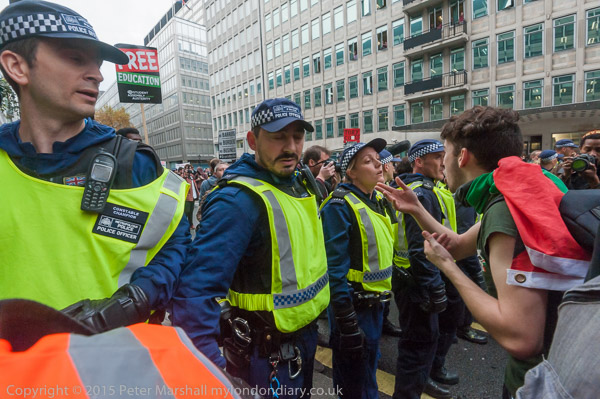
They gathered outside the Dept of Business, Innovation & Skills, where a black clad block charged the mass of police protecting the building, but were forcefully repelled. More police arrived and started pushing everyone away, including peaceful protesters and photographers. I was sent flying but fortunately into some of the protesters rather than to the pavement.

Eventually the pushing stopped and the police set up lines across the street which prevented the more peaceful protesters leaving the area. I tried to leave, showing my press card. After some minutes of being refused I found an officer who let me through and I walked along the street to rest and wait to see how the situation would develop. Eventually the students managed to break through the police line and run along to join the others already there, and they moved off. I decided I’d had enough and made my way to Victoria station to catch a train.

More pictures:

Students at Home Office and BIS
‘Welcome Home Shaker’ celebration
Free Education – No Barriers, Borders or Business