Salisbury Street & Spring Bank – 1989

Salisbury Street & Spring Bank – more pictures from my walks in Hull in August 1989.

House, Salisbury St, Park Avenue, Hull, 1989 89-8n-54

During my visits to Hull until around 2000 we stayed at my parent’s-in-law’s home in Loveridge Avenue, which runs from Bricknell Road and Chanterlands Avenue and I often walked through the Avenues, and occasionally stopped to take a photograph on my way elsewhere. All the houses on this section of Salisbury Street along with thw two corner houses on Westbourne Avenue and Park Avenue are Grade II listed.

These houses, at the centre of Westbourne Park Estate, now known as The Avenues, were built shortly after the estate was begun in 1877-79, though by the time I first saw them in the 1960s most were in very poor condition and have since been restored. The listing say these Queen Anne style buildings were by George Gilbert Scott Junior for John Spyvee Cooper.

In 1974 the Architectural Review published Keep it up: George Gilbert Scott junior’s houses
by Colin Amery and Dan Cruickshank (republished in 2023) calling for Hull Council to restore these buildings which had been Grade II listed the previous year. In it the write: “several are mutilated; the houses on the corners of Westbourne Avenue and Park Street have lost their turrets and some are in deplorable condition” and they comment that they “are in one of Hull”s reluctantly created conservation areas. Hull Council still believe in the modern vision of a new city and object to paying money towards ‘gentrification’. “

Terrace, Myrtle Villas, Spring Bank, Hull, 1989 89-8d-16

Emerging from the Princes Avenue at Botanic I walked up Spring Bank towards the town centre, pausing to make this picture of one of the short terraces leading off the main road which are a feature of many streets in Hull. Myrtle Terrace is even shorter than most and over the brick wall are the back yards of the houses in Percy Cottages, Victoria Avenue, Alexandra Avenues and Beta Villas, short terraces from Mayfield Street in a remarkably dense block of late Victorian development.

Georges Bargain Centre, 178, Spring Bank, Hull, 1989  89-8e-62
George’s Bargain Centre, 178, Spring Bank, Hull, 1989 89-8e-62

There is now a George’s Bargains and George’s Removals on Spring Bank, but one shop to the west at 180. Rosemount Villa at 178 was, at least in May 2022, the latest image on Google Street View, occupied by Adam Food Store. Their display of fruit and veg has replaced the household appliances on the pavement but their shop and that of Adam Hall Butcher are still the same crude front extension on two of the five late Victorian Villas in this block ending at the corner of Albany Street. Rosemount, Melrose and Leicester Villas all retain their original doorways – that of Rosemount Villa is in my photograph.

In March 2023 Historic England gave Hull City Council £11,900 to develop a regeneration plan for the Spring Bank area of the city. This is currenly out for public consultation until April 7th 2024 and you can see the extremely thorough Character Appraisal on-line.

Practical Motorist's (Hull), 167, Spring Bank, Hull, 1989 89-8e-63
Practical Motorist’s (Hull), 167, Spring Bank, Hull, 1989 89-8e-63

Practical Motorist’s was on the corner of West Parade and is long gone. The conservation appraisal considers this building to be one of many “Neutral buildings. Many of these buildings could contribute positively to the Conservation Area through investment, restoration and essential repair“, but I think that the upper storeys of this and the neighbouring pawnbrokers at 165 and the side of the building along West Parade deserve a rather more positive appraisal.

The shopfront when I made this photograph was also I think much more sympathetic to the building than most, though it has since been modified. There seem to have been a number of Practical Motorist’s shops around Hull. This one is now a Russian-style sauna.

Spring Bank Jewellers, 165, Spring Bank, Hull, 1989 89-8e-64

The three balls are the traditional sign of the pawnbrokers whose notice lists some of the gold, silver or even platinum items they “urgently require” and offers a free testing service with “TOP PRICES PAID Cash!” and “All Enquiries & Dealings COURTEOUS & CONFIDENTIAL“.

The two young women peering intently into the window are casually dressed but still in in high heels. Behind them is one of Hull’s cream painted telephone boxes. The Hull Municipal Corporation set up its telephone service in 1904 and by 1913 it was the only remaining council owned telephone service, all others have been taken over the the Government. K6 boxes like this were first installed in Hull in 1936 and lack the crown on the red versions installed elsewhere across Britain. In 1987 the Hull Telephone Department became Kingston Communications (HULL) PLC. The City finally sold its shareholding in the company in 2007 and the company changed its name to KCOM Group PLC.

Three boys, Spring Bank, Hull, 1989 89-8e-65

These lads saw my camera and insisted I take their picture, which they were sure would be published in the Hull Daily Mail, though I told them it would certainly not be. Perhaps they will now see themsleves in this post 35 years later. And should the Hull Daily Mail now wish to publish any of my pictures I’d be happy to supply them at my normal NUJ recommended rates.

More from Hull in a later post. You can see more of my black and white and colour pictures from Hull on Flickr.


FlickrFacebookMy London DiaryHull PhotosLea ValleyParis
London’s Industrial HeritageLondon Photos

All photographs on this page are copyright © Peter Marshall.
Contact me to buy prints or licence to reproduce.


Hull General Cemetery and Princes Avenue 1989

More pictures from Hull General Cemetery and Princes Avenue that I took on walks in the area in August 1989. You can see more pictures of the cemetery in 1989 at Hull General Cemetery – 1989.

Quaker Burial Ground, Spring Bank, Hull, 1989 89-8d-42
Quaker Burial Ground, Spring Bank West, Hull, 1989 89-8d-42

According to the article by Chris Coulson on the Friends Of Hull General Cemetery web site, the Quakers bought a 999 years lease on a 0.23 acre plot, about 55 yards by 20 yards and burials took place there from 1855 until 1974.

The graves in this plot, still there, include those of many of Hull’s leading Quaker families and include some whose family names gained international recognition for there products including members of the Reckitt family and engineer William Priestman.

The graves in the foreground of my picture have stones recording seven members of the Reckitt family and there are some others in those behind. All except one of the burials and some whose ashes were scattered here have the same simple design for their memorials.

Hull General Cemetery, Spring Bank, Hull, 1989 89-8d-41
Hull General Cemetery, Spring Bank West, Hull, 1989 89-8d-41

Back in 1989 the cemetery was home to a number of feral cats who I think scrounged for food in the bins and at the back doors of some nearby houses, though I did see (but not photograph) old women bringing scraps into the cemetery for them. The cats generally scrambled away when I approached, but I caught one clinging to the trunk of a tree.

In the background you can see a grassed largely cleared area of the cemetery, then kept mown short by the council.

Fallen Angel, Hull General Cemetery, Spring Bank, Hull, 1989 89-8d-55
Fallen Angel, Hull General Cemetery, Spring Bank West, Hull, 1989 89-8d-55

I don’t know what happened to the many headstones that the council removed from the cemetery, though when the work was taking place there were quite a few piles of them and many had been broken as much of the work was done by unskilled and poorly supervised youth labour.

Vandalism continued in the cemetery after the council had done their worst, and many of the more ornate memorials were damaged and some completely destroyed by youths who roamed at night in the unfenced cemetery.

Dr William Atkin Thompson, Ely House, 149, Princes Avenue, Hull, 1989 89-8d-52

Princes Avenue was only a country lane at the start of the nineteenth century and the first significant development on it were the ornate gates of Hull General Cemetery close to Spring Bank West. A few years later the railway branch to the Hornsea and Withernsea lines was constructed with a level crossing across Spring Bank and a station, Cemetery Gates, later called Botanic, opened in 1864. Further down the road, Pearson Park, Hull’s first public park, was opened in 1862.

Dr William Atkin Thompson (1978-1961) qualified at Owens College, Manchester in 1899 and became a GP in Hull in 1907. He served in the Royal Army Medical Corps from 1914, and after the war continued in service in the army and later the Territorial Army while also practising in Hull. There is a profile of him on the RAMC in the Great War site. He was one of Hull’s most distinguished doctors, continuing to practice well past normal retirement age.

Houses, Princes Avenue, Hull, 1989 89-8d-65

Princes Avenue was laid out to lead to the Westbourne Park Estate, now known as The Avenues, and opened in 1875, with the houses facing the Park at its north some of the first built on it.

Shops, Princes Avenue, Hull, 1989 89-8d-64

Further south on Princes Avenue most of the development took place between 1890 and 1910, but the cemetery entrance was still on the west side at the southern end. I think these shops are on the long parade south of Welbeck Street which probably dates from around 1900, but those on the corner with Spring Bank West, which later housed one of Hull’s most internationally famous shops, Gwenap, were only added after the cemetery gates were moved to Spring Bank West.

Gwenap is said to have opened in 1903, though it was rather a different business back then and I think may have been in other premises as I think the shop the business occupied until 2013 was probably only built in the 1920s. The windows where it used to be are now of no interest.

More from Hull in August 1989 in later posts.


FlickrFacebookMy London DiaryHull PhotosLea ValleyParis
London’s Industrial HeritageLondon Photos

All photographs on this page are copyright © Peter Marshall.
Contact me to buy prints or licence to reproduce.


Hull General Cemetery – 1989

Hull General Cemetery – I’ve long been fascinated by cemeteries and London certainly has some fine examples, though I’ve tried hard not to devote too much time to photographing them. But in many cities they provide places where you can get away from busy streets and they act as nature reserves in which you can sit and have a short rest and enjoy the variety of architecture and art in the memorials.

Hull General Cemetery, Spring Bank West, Hull, 1989 89-8d-35

Hull has its share of cemeteries, at least 26, though some are long out of use and some in various ways desecrated. Those still open for burial are large and lacking in much interest though I sometimes visit particular graves there, but a number of older ones have survived at least in part, though one of those I liked to walk through, Trinity Burial Ground, was recently completely dug up.

Hull General Cemetery, Spring Bank West, Hull, 1989 89-8d-33

Hull General Cemetery on Spring Bank West was opened for burials in 1847 and was described by Philip Larkin as “the most beautiful spot in Hull” and you can read more about it on the website of The Friends of Hull General Cemetery, a group only founded in 2018 and now a registered charity.

In the lengthy history of the cemetery on their site it mentions the cholera epidemic across the world which which reached Hull in 1849 which killed 3% of Hull’s population. Most of their bodies were buried in a plague pit in this cemetery and later a large obelisk was erected in their memory.

Hull General Cemetery, Spring Bank West, Hull, 1989 89-8d-31

It also mentions that before the opening of Hull’s first park in 1861 “it was the only place where people could promenade without paying a fee.” For some years it was also the only place in Hull open for burials and some large and ostentatious monuments were erected in memory of the wealthier inhabitants.

Hull General Cemetery was established by a private company and later in 1862 the local authority was enabled to set up a Burial Board and create municipal cemeteries, the first of which, now the Western Cemetery, was established on land adjoining the General Cemetery to the west.

Hull General Cemetery, Spring Bank West, Hull, 1989 89-8d-25

Competition with the municipal cemeteries meant the General Cemetery went into a long period of gradual decline with the company being finally wound up in 1972 and the cemetery sold to Hull City Council for £1 in 1974.

Hull General Cemetery, Spring Bank West, Hull, 1989 89-8d-12

The council then set in place a controversial scheme to redevelop the cemetery by removing most of the headstones and grass the area to make it easy to maintain. Much of the work was carried out with little care by youth labour projects and it aroused considerable and widespread opposition, “including such names as Philip Larkin and John Betjeman, was overruled and the wholesale destruction of irreparable historical artefacts took place.”

A small section was kept in its previous state and those headstones which were identified as being for more notable persons were allowed to remain. Over five years the council largely turned the cemetery into a park with a few monuments and small areas of the previous cemetery, including the Friends Burial Ground.

Hull General Cemetery, Spring Bank West, Hull, 1989 89-8d-15

With cuts in local authority funding the council stopped the maintenance of the area and according to the web site “The dumping of rubbish began to happen more regularly, paths became quagmires; sycamore saplings began to destroy the remaining stones whilst ivy swamped them. The entire cemetery was quickly becoming a place to avoid rather than to visit.”

As well as on the web site you can also read about the cemetery in the the book ‘Hull General Cemetery 1847 – 1972, A Short Introduction‘ also by Pete Lowden and Bill Longbone.

Hull General Cemetery, Spring Bank West, Hull, 1989 89-8d-13

On most of my visits to Hull from 1966 until 2018 I walked through the cemetery and the Western Cemetery from Sping Bank West close to the corner with Princes Ave to Chanterlands Ave, occasionally stopping to take a picture or two. The ones here are all from August 1989. One records the long story of John Gravill, Master Mariner which you can read above.

More to come from Hull in August 1999.


FlickrFacebookMy London DiaryHull PhotosLea ValleyParis
London’s Industrial HeritageLondon Photos

All photographs on this page are copyright © Peter Marshall.
Contact me to buy prints or licence to reproduce.


Hull – Spurn Lightship & Spring Bank – August 1989

Hull – Spurn Lightship & Spring Bank – In August 1989 I went with my family for a week with friends in Scotland and we spent a few days staying at my wife’s family home in Hull on our way there and again on our way home.

Spurn Lightship, Humber Dock, Hull, 1989 89-8c-35

In the 70s and early 80s I’d photographed the city extensively and had exhibited some of this work at the Ferens Art Gallery in the city. I think most of the over 140 pictures in that show are among those I posted online during 2017 when Hull was UK City of Culture – and I added a picture each day throughout that year to my website ‘Still Occupied – A View of Hull‘ – the same title as my show and my self-published book – still available but ridiculously expensive except as a pdf.

Spurn Lightship, Warehouses, Castle St, Humber Dock, Hull, 1989 89-8c-36

Going back to Hull again in 1989 I was still drawn to many of the same places I had photographed in previous years, particularly the docks, the River Hull and the Old Town, and it was sometimes difficult to find anything new to say.

Shop window, Spring Bank, Hull, 1989 89-8c-11

All of these pictures – and many more – are in my Flickr album Hull Black and White.

Phoenix Fitness Centre, Oderma House, 101, Spring Bank, Hull, 1989 89-8c-12

I had taken a bus into the city centre with my family and we had gone to visit the Spurn Lightship which was moored in what was by then Humber Dock Marina. The lightship was opened here as a floating museum by Hull Council in 1983 and has recently been restored and returned to the Marina to a new berth close to the end of the Murdoch’s Connection footbridge, just a few yards west from where it was in 1989. In the top picture in this post one of my sons is looking out of the ship and to his left you can see the tower of Holy Trinity Church, now Hull Minster.

Sunnybank Antiques, Spring Bank, Hull, 1989 89-8c-14

The second picture taken from the lightship is looking towards the City Centre and at Warehouse 6 on the north side of Castle Street at the end of Princes Dock Street. This warehouse survived the demolitions of the 1970s and is now home to an Italian restaurant chain. I found the place excessively noisy when I ate there.

We walked back from the City centre and along Spring Bank. A shop window included the book Batman:The Killing Joke a DC Comics graphic novel written by Alan Moore and illustrated by Brian Bolland with the Joker using, a Witz camera with a 50mm f1.8 lens – Witz is German for ‘Joke’ . There was also a poster for American rock band Kiss, who were to perform at Donington Park, Castle Donington, Derby in ten days time. They had released their fourteenth studio album Crazy Nights in September 1987.

Houses, Spring Bank, Hull, 1989 89-8d-61

The Phoenix Fitness Centre at 101 Spring Bank is now Victory Socialcare Enterprise providing accommodation for adults requiring nursing or personal care.

Sunnybank Antiques and the St John Ambulance were in Georgian houses dating from around 1820. The St John’s HQ and its attached railings were Grade II listed in 1994.

Even the drainpipes on Eastfield House/Eastfield Villas at 226-8 on the corner with Louis Street are ornate, though you cannot see these in my picture.

As these houses show Spring Bank was once one of Hull’s ‘best’ addresses, but that was long ago, and much has been lost, both by wartime bombing and later developments.

More from Hull in a later post.


FlickrFacebookMy London DiaryHull PhotosLea ValleyParis
London’s Industrial HeritageLondon Photos

All photographs on this page are copyright © Peter Marshall.
Contact me to buy prints or licence to reproduce.


Hull – More Than The Deep: 2017

Hull – More Than The Deep: I haven’t often posted about Hull on here, but it was the city where I first carried out a serious photographic project which was shown at the city’s art gallery in 1983, and one I have continued to photograph over the years, though rather less regularly since 2000.

Hull - More Than The Deep

I didn’t really choose to photograph Hull, but I did chose to marry a woman who had grown up in the city and whose family home was still there, and it was a place where I found myself with time on my hands when visiting her parents usually for a couple of weeks most summers and often for shorter periods at Christmas or Easter.

Hull - More Than The Deep

We still have a few friends in the city, although most have now died, and our visits are less frequent. Back in 2017 Hull was enjoying its year as UK City of Culture and we were visiting partly to enjoy some of that but also to meet a few friends. I was also trying to generate some interest in my pictures of the city from the 1970s and 1980s, but plans for a show fell through.

Hull - More Than The Deep

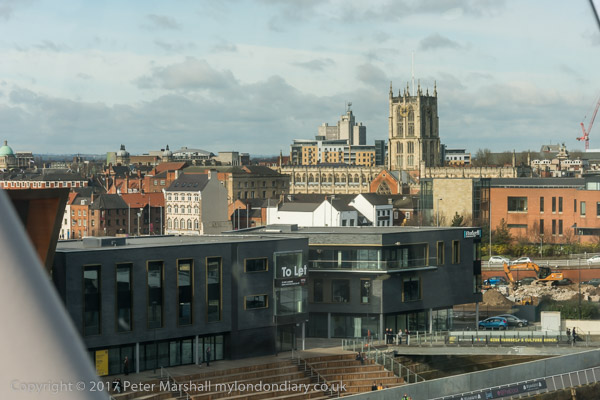
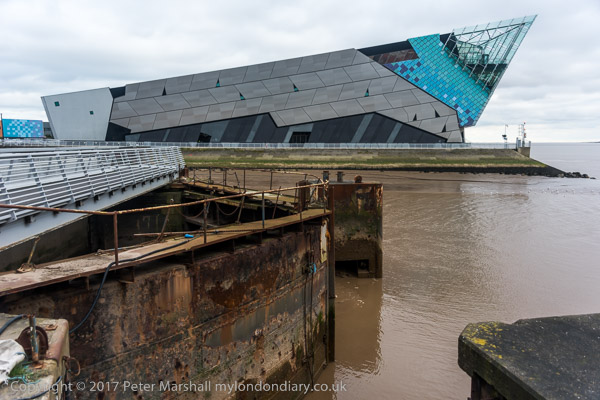
Sunday 19th February 2017 was also a day when we met with some of our family who had come to Hull both to meet us and to visit Hull’s major tourist attraction, The Deep and we met them for lunch there and I took a few pictures from its viewing platform.

Hull - More Than The Deep

I’d gone out immediately after breakfast for a long walk around some of my favourite areas of the city which I had photographed in earlier years. Then I had been working mainly with black and white film, interested in the changes taking place in the city and surprised at the way it seemed to be disregarding much of its heritage, and recording aspects that seemed unlikely to survive. I’d also taken some colour pictures and had included some in my show there, but they perhaps more reflected my interest in colour than my interest in the city.

But in 2017 I was working only on digital, so everything was colour and I was also making some panoramic colour images – again digital.

It was late afternoon by the time we said goodbye to our family, and Linda decided she would like to go for a walk around Beverley, a town seven miles away. The bus service to there is slow and infrequent, but as I wrote “it has the advantage of setting you down at the bus station immediately next door to Nellie’s.”

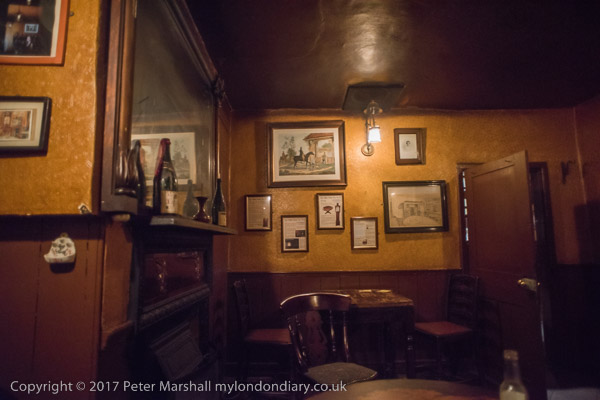
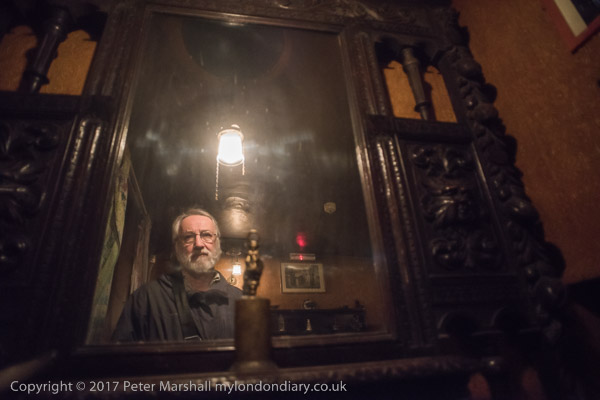
Beverley is an old market town, well known for its Minster and full of old buildings. It was too late for us to visit the Minster, but not for a visit to one of its Grade II* listed buildings, The White Horse Inn, generally known as Nellies, taken over by Samuel Smith’s brewery in 1976. And although they have modernised the pub in some ways, much remains as it was – and my pictures were taken using its rather dim gas lighting. It’s a place people come from around the world to see, though fortunately not in such large numbers to swamp it.

Afterwards we still had some time before the last bus back to Hull left and went for a walk around the town including Beverley Bar, the Minster and the Monk’s Walk and I made a few pictures, all hand-held.

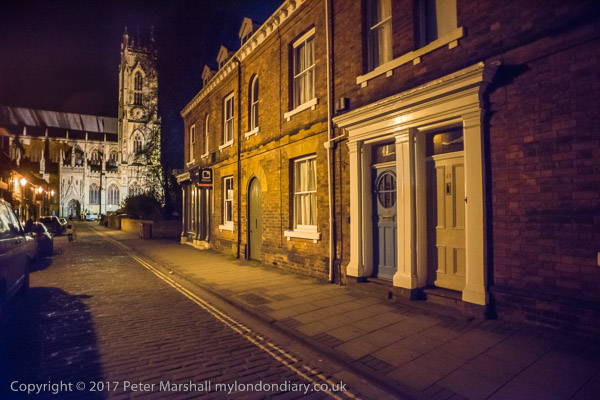
Back in Hull we had a walk through the town, mainly deserted at night to the house where we were staying in Victoria Dock Village, and there was time for a few more pictures.

There are many more pictures from the day on My London Diary, and many have captions too:
Beverley and Nellie’s
Around the Town
The Deep
More Hull Panoramic
Wincolmlee and Lime St


FlickrFacebookMy London DiaryHull PhotosLea ValleyParis
London’s Industrial HeritageLondon Photos

All photographs on this page are copyright © Peter Marshall.
Contact me to buy prints or licence to reproduce.


A Visit To Hull – 2018

A Visit To Hull: On Thursday 26th July 2018 I took the train to Hull with my wife. She had been born there and I had visited the city many times over the years, at first staying at her family home and since that was sold around 2000 at first with a friend and more recently in hotels.
A Visit To Hull
From the train – somewhere in Lincolnshire

Hull was the place where I really cut my photographic teeth, producing my first extended photographic project which was exhibited at the Ferens Art Gallery there in 1983. You can see many of the pictures from the project on my web site Still Occupied… a View of Hull which I produced to celebrate Hull’s 2017 year as UK City of Culture, as well as in my earlier book of the same name, still available on Blurb where there is an extensive preview.

A Visit To Hull
Hull from our hotel window

Rather more of my pictures are also in a couple of albums on Flickr, one of black and white and a second of colour images and there is also some more recent work, including from the 2018 visit on My London Diary.

A Visit To Hull
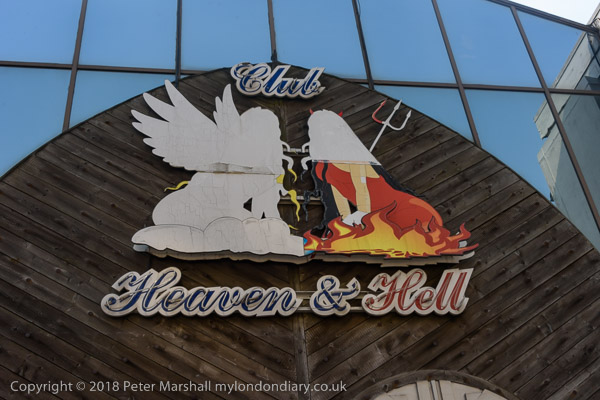
Heaven & Hell Club (closed down) Anne St

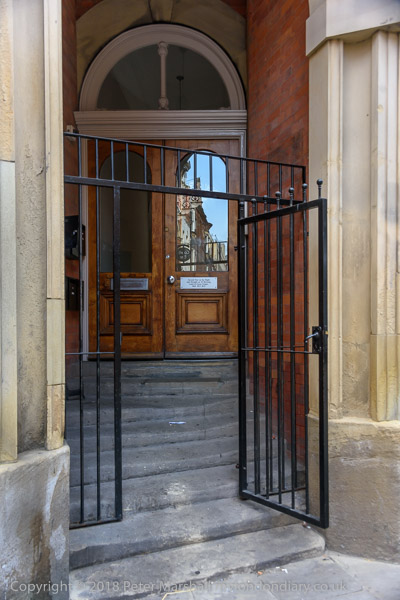
After booking in to our city centre hotel we had time for a walk before dinner around the city centre and into the Old Town.

A Visit To Hull

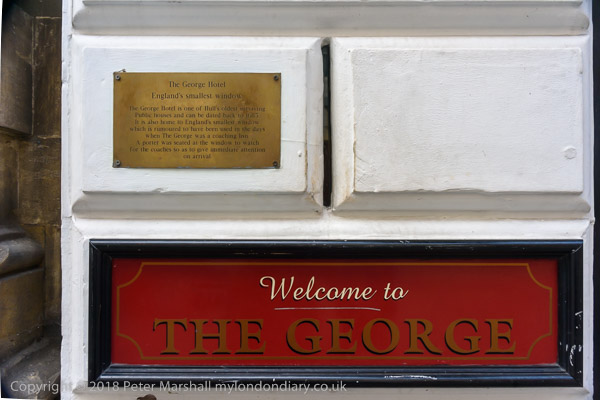
Hull claims to have England’s smallest window – the crack between the two stones was a lookout for coaches, and of course the Land of Green Ginger, where there is also the Second Star on the Right and Straight on ’til morning.

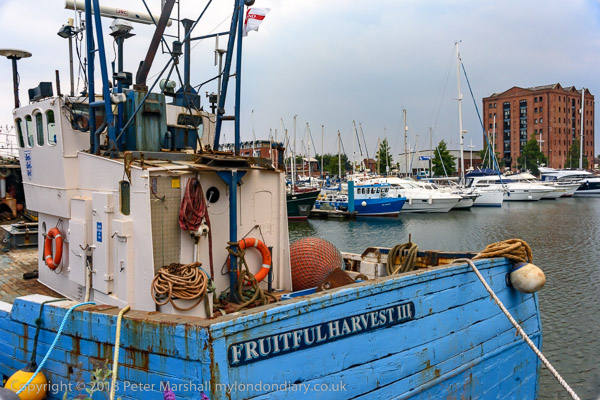
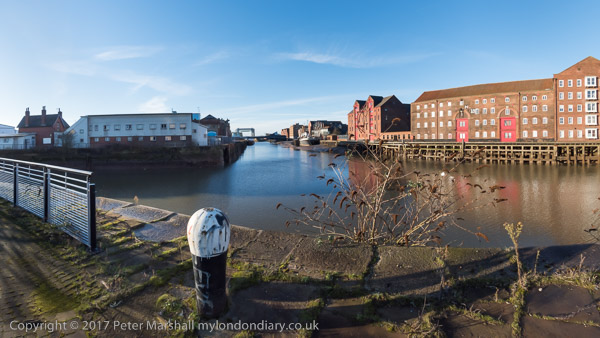
Hull used to mean fish, but the Cod Wars put paid to that, though there are still some reminders of the past, and still former docks in the city, though this one is now a marina. And out to the east are more modern docks, with Hull remaining a major port though now much eclipsed by Immingham and Grimsby.

Fruitful Harvest III was moored in the marina, but was built for fishing from Peterhead and later moved to Buckie. By 2018 the ship was registered in Grimsby but no longer registered for fishing, now a just a pleasure craft.

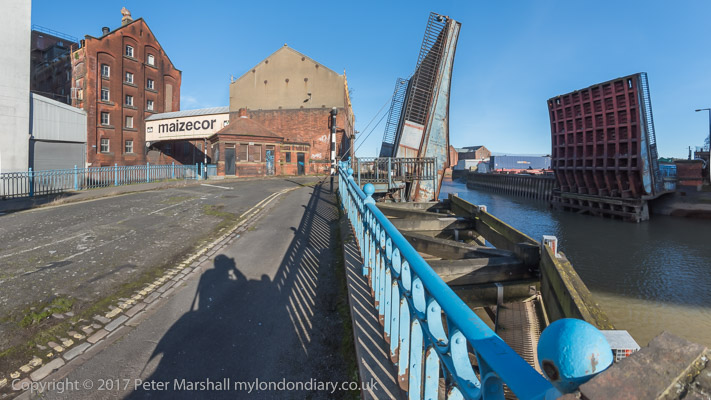
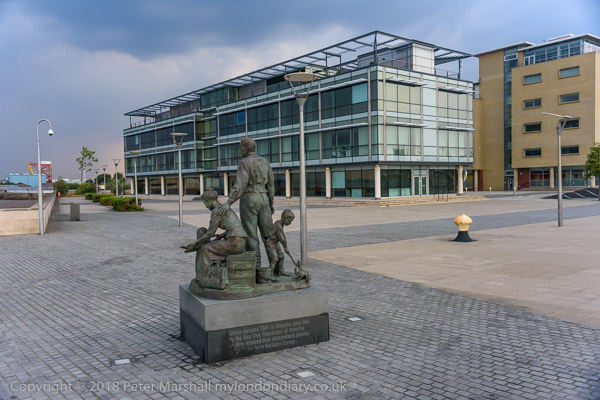
Hull has changed radically since I first visited in 1965, and this area, now called Humber Quays, was then a derelict dockland area and lorry park. Now it has modern office blocks and a memorial to the many emigrants who landed in Hull from Europe and were then mostly entrained to Liverpool to continue their journey to the USA.

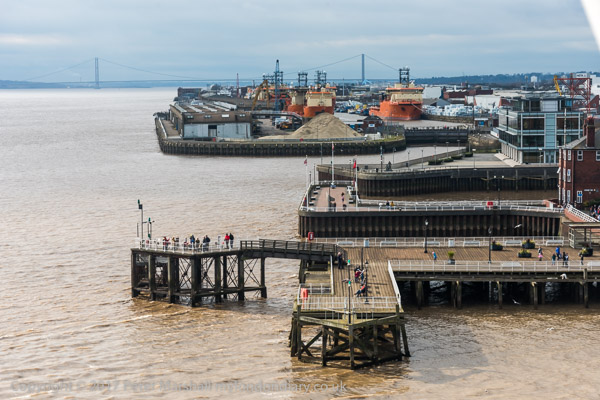
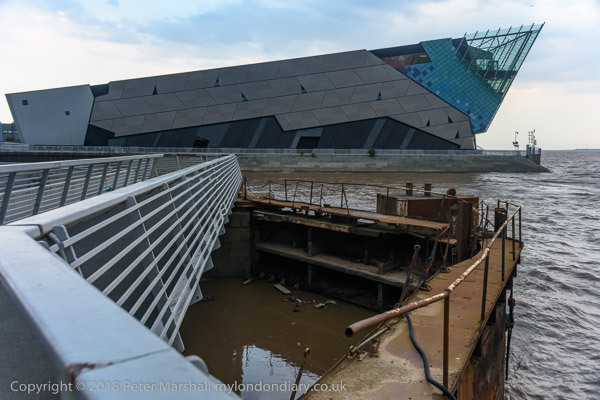
Across the mouth of the River Hull is Hull’s biggest tourist attraction, the Deep, opened in 2022. It was built on Sammy’s Point which in my pictures from the 1980s was a storage area for navigation buoys, but had much earlier been a shipbuilding site. In the foreground is a recent footpath bridging across a dry dock, now full of water, still in use until fairly recently.

Our walk had been vaguely following the Larkin Trail, based around the life and work of Hull’s most famous poet – though born in Coventry he became Librarian at the University of Hull in 1955 and remained in the city until his death in 1985, writing most of his best-known poems there. After dinner in a city pub we took a bus to rejoin the trail at Pearson Park when he lived in a flat from 1956-74 – the blue plaque is just visible in the picture.

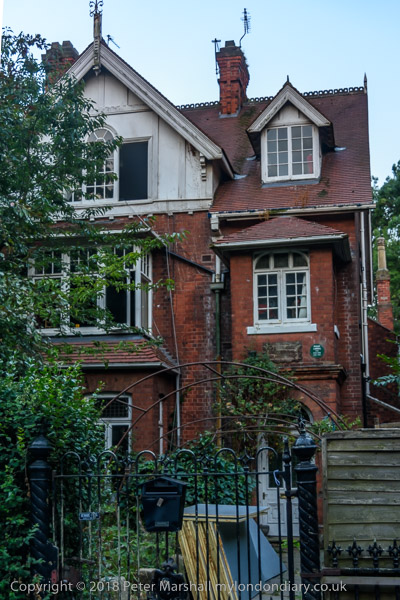
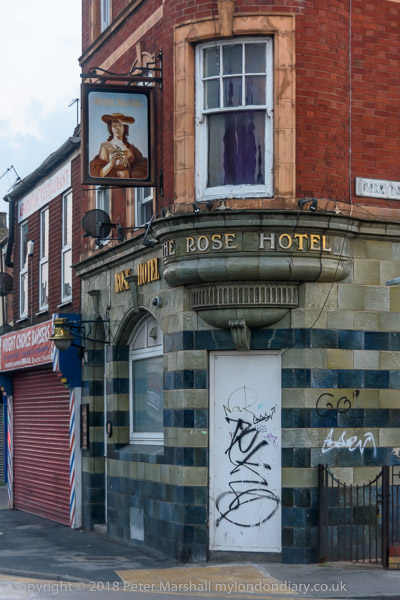
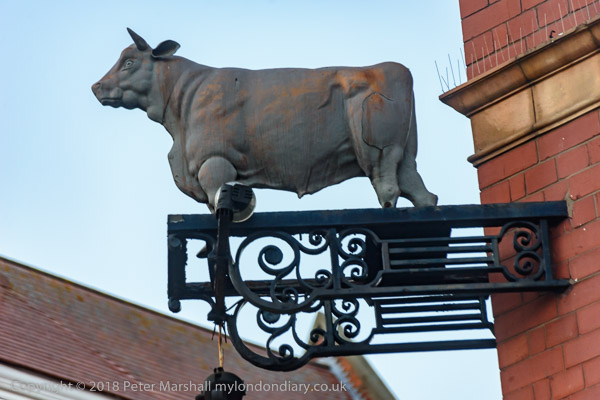
From the park we walked back into the city centre towards our hotel as light was beginning to fall along Beverley Road, passing several closed pubs, including The Rose and the Bull Hotels.

You can see more pictures from this walk and from the next few days before we left for a a short stay at one of Hull’s seaside resorts, Hornsea, in the Hull Supplement to July 2018’s My London Diary.


Hull City of Culture 2017

Hull City of Culture 2017. I spent a few days in Hull in February 2017, while the city was celebrating its year as UK City of Culture.

Hull was important to me in my early years as a photographer, and was also where my wife grew up, and we made our trip partly to celebrate her birthday in the city, as well as for a little promotion of my photographs from the 1970s and 80s and also to work on a new photographic project.

I had my first – and still my largest – one person show in Hull’s Ferens Art Gallery in 1983, and much later self-published a book, Still Occupied: A View of Hull 1977-85. It’s still available, but at a silly price – and for some reason the hardcover imagewrap version is now cheaper than the paperback version. I’d always suggest getting the PDF version at £4.50, as the images are at just a tad better quality than in print and good enough to make a print should you wish (and I’ll pardon any small breaches of copyright.) The book has around 270 black and white photographs, some reproduced rather small, on its 120 pages. First published in 2011 it was republished with minor corrections to captions for the 2017 Hull UK City of Culture.

Two rather more reasonably priced 36 page black and white booklets were later published by Cafe Royal Books, one on the River Hull, and the second, The Streets of Hull. I promised another on the docks but have not yet got around to it.

Hull from The Deep

I also set up a new web site on Hull for its year as City of Culture, finding much to my surprise that the domain hullphotos.co.uk was still available. I began this with a couple of hundred pictures at the end of 2016 and then added one every day through the whole of 2017. There are now over 600 black and white images on the site. A search of my images on Flickr reveals rather more than twice as many, including a large number in colour.

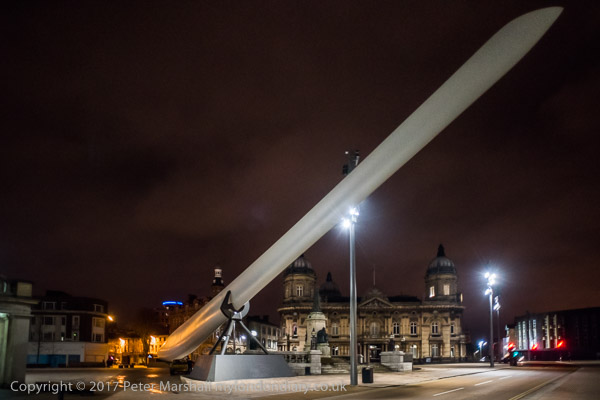
The Blade in front of City Hall

I had some disappointments during the 5 days I was in Hull in February 2017, and I found many other photographers and others in Hull who were also upset at the lack of opportunities the year had provided for local artists, instead concentrating on buying in talent from elsewhere. There is no shortage of talent in Hull and it would have been good for more of it to be showcased during the year. Plans for a small exhibition of my own work unfortunately fell through.

Self-portrait by gas light in Nellie’s in Beverley

But it was a good 5 days, with plenty to do and to seem and I was pleased with some of the panoramas I was able to make, though I’ve not yet got around to creating a show of these together with my old black and whites from the same locations. We also enjoyed a family celebration of Linda’s birthday,

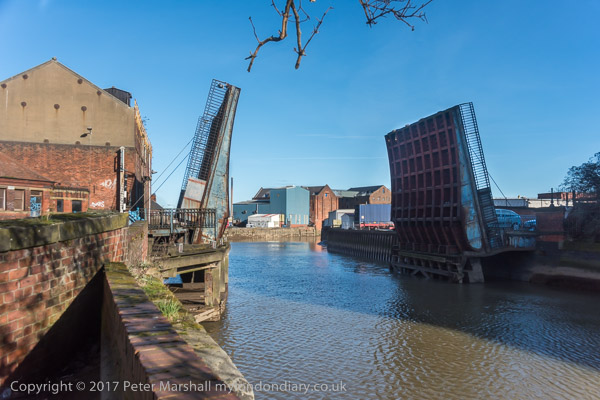
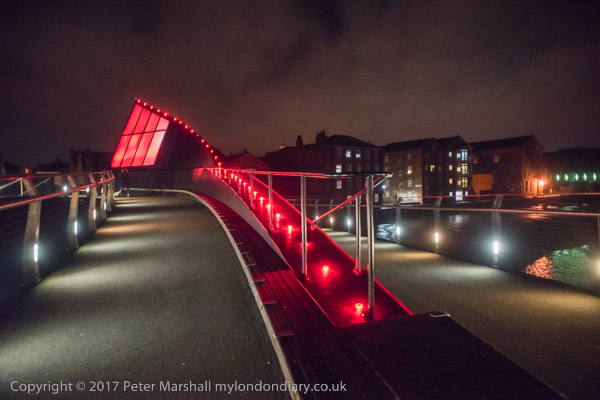
Scale Lane footbridge

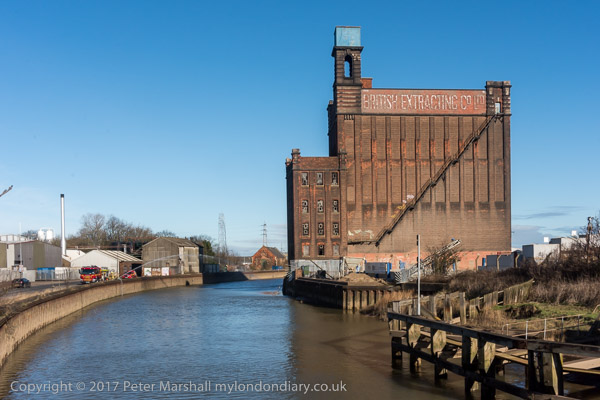
The pictures in this post were all taken on Sunday 19th February 2017, where I got up fairly early for a long walk in the area close to the River Hull before meeting family for lunch, then took a bus to Beverley, where we walked around the town before having a drink in Nellie’s, one of the country’s more remarkable pubs and then catching the bus back to Hull, and then walking back through an empty city to the house we were staying in on the Victoria Dock estate.

Here’s the full list of links to our five days in Hull:
Hull 2017 City of Culture
    Sculcoates & River Hull
    City Centre & Beverley Rd
    Ropery St & St Mark’s Square
    St Andrew’s Dock
    Hessle Rd
    Gipsyville
    Beverley and Nellie’s
    Around the Town
    The Deep
    More Hull Panoramic
    Wincolmlee and Lime St
    Evening in the City
    Old Town
    A ride on Scale Lane Bridge
    Around the City Centre
    Hullywood Opening
    East Hull & Garden Village
    Albert Dock
    Old Town & City Centre
    River Hull
    Night in the Old Town
    Victoria Dock Promenade


A Hull Walk – June 1988

'Os Wash', Nelson St, Hull, 1988 88-6e-14-positive_2400

Although my main project on Hull had really been completed with a show in the Ferens Art Gallery in 1983 I continued to make at least annual visits to the city, staying with my family at the home of my in-laws in north Hull just off Chants and Bricknell Ave.

Old Harbour, River Hull, Hull, 1988 88-6f-56-positive_2400

While there I would go out for long walks around the city, often with my two sons and occasionally with other family members or on my own, but always with a camera (or two.) Mostly, as in June 1988, I was re-visiting areas already familiar to me but sometimes finding new things to photograph.

Lime St, Hull, 1988 88-6f-32-positive_2400

Our visit in 1988 was a short one, I think for the wedding of a god-daughter, and most or all of these pictures were taken on a long walk which began with a bus journey to the city centre and the Old Town and then went north along the streets close to the River Hull to Sculcoates, before returning, possibly on another day or by bus, to the city centre and Paragon Station.

Chapman St Bridge, River Hull, 1988 88-6g-42-positive_2400

Both my sons, then aged 7 and 9 were with me on the walk, and appear in photographs that I took, but only one is I think present in the pictures on line, hiding at the side of a bridge. I seldom photographed people on my walks at the time, prefering to concentrate on the buildings and cityscape, but there is one rare example in these pictures of a man leaning on a fence on the pavement in Carr Lane. Almost certainly he had watched me taking photographs and had asked me to take his picture.

Man on street corner, Anne St, Carr Lane, Hull, 1988 88-6h-66-positive_2400

I think I have managed to put the pictures more or less in the order in which they were taken, so those familiar with Hull can follow my wlak, although they will find some buildings have since been demolished.

To see all the pictures I’ve posted from June 1988, start here on Alfred Gelder St.


All photographs on this and my other sites, unless otherwise stated, are taken by and copyright of Peter Marshall, and are available for reproduction or can be bought as prints.


Goole 1983

When I told my mother-in-law, a life-long Hull resident, that I was taking a day trip to photograph Goole she shook her head in disbelief, asking me whyever I would want to do that. She wasn’t a great fan of my pictures of Hull either, thinking I dwelt far too much on its less salubrious areas and on those old and dilapidated warehouses and derelict docks.

Goole 83goole168_2400

My only regret looking back is that I didn’t visit Goole more often. True its name isn’t inspiring – but then neither is Hull, perhaps why its more prosperous residents like to remind you it is really called Kingston upon Hull. For some reason the name Goole on Ouse has never been considered, though perhaps it should be Goole upon Dutch River or Don, which was diverted to meet the Ouse here in 1629 by Cornelius Vermuyden, not for the benefit of the few villagers of Goole, but to improve the hunting at Hatfield Chase for King Charlea I. But Goole got a bridge over the new river and barges could carry coal along it from the South Yorkshire coalfield at it could then be transferred to sea-going vessels.

Goole  83goole148_2400

In the 1820s the Aire and Calder Navigation opened a connection to the Dutch River and began the construction of docks and a new town at Goole. The canal opened in 1826 and in 1827 Goole became an official port with custom facilities, its docks able to handle vessels up to 400 tons. It’s main export remained coal until Thatcher closed the mines, with a system of compartment boats – the ‘Tom Puddings’ and special hoists giving a very efficient means to transfer the coal into seagoing ships. Timber was the main import, in part for use as pit props.

Goole 83goole161_2400

Railways first came to Goole in 1848 with a line to Pontefract and Wakefield, but it after the North Eastern Railway line from Doncaster to Hull was built in 1870 that the railway really became important. It was this route from Doncaster that I travelled on many times from and to the south between 1970 and now through Goole; sometimes the train stopped there, but more often travelled through at a leisurely pace, giving time to appreciate its landmark ‘salt an pepper’ water towers before swinging east to cross the River Ouse. But I never got off there until my first day trip in 1983.

The Victorian ‘New Goole’ seemed to have survived reasonably well, and gave a remarkable access to the docks (in those days they were a little less fettered by health and safety), and I spent a full day wandering around and taking pictures, particularly in black and white, but with some in colour too. I’ve returned more recently and it is still an interesting place to visit, though a little less so.

More colour pictures of Goole on Page 3 of Hull Colour 1972-85.

More black and white pictures on Hull Photos.