Slutwalk, Syrians & More Naked Bikers – 2011

Slutwalk, Syrians & More Naked Bikers: Three events in London on Saturday 11th June 2011.


Slutwalk London – Piccadilly to Trafalgar Square

Slutwalk, Syrians & More Naked Bikers

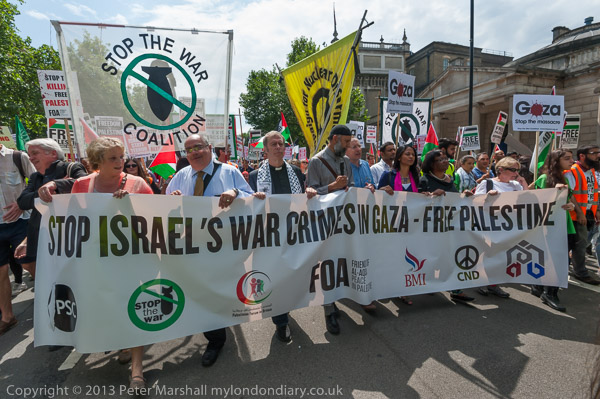
Several thousand people, mainly women, some dressed in deliberately provocative fashions, marched through London to demand the right to wear what they like and to be safe.

Slutwalk, Syrians & More Naked Bikers

The protest came after a police officer in Toronto had told students “women should avoid dressing like sluts in order not to be victimized.”

Slutwalk, Syrians & More Naked Bikers

They were protesting against the use of the word ‘slut’ to describe the innocent victims of crimes and the blaming of the victims for the crimes that were carried out against them. The job of police is to protect people on the street and arrest and get convictions of those who commit crimes, not to blame the victims for the crime.

Slutwalk, Syrians & More Naked Bikers

I wrote then “Women should feel free to go out on the streets dressed how they like – whether burkha or bikini – and be safe. An attractive dress is an attractive dress and not an invitation to rape.”

They were also protesting against male violence against women in general and calling for better education on the facts about rape and called for improvements in the legal, emotional and practical support for the victims of sexual assault, rape and domestic violence.

Government cuts in public services had led to a decrease in support and legal aid, and the failure to provide adequate affordable social housing often makes it impossible for victims of domestic violence to leave the family home.

They also protested the failure of the UK immigration authorities to take seriously the accounts of rape given by many asylum seekers and the use of rape as a military weapon in Libya and elsewhere.

More on My London Diary at Slutwalk London.


Syrians Protest At Syrian Embassy – Belgrave Square

A crowd of over a hundred Syrians protested outside the embassy after news of the government using helicopter gunships against peaceful protesters in Maarat al-Numaab and the ‘revenge’ attacks against villages around Jisr al-Shugour, where crops have been burnt, livestock killed, olive trees uprooted and villages destroyed.

Peaceful protests in Syria have been met by increasing military force in Syria and the protesters called for President Bashar al-Assad and his regime to resign and for democratic changes in their country.

The protest in London remained peaceful but very noisy and the two armed officers guarding the embassy door had nothing to do and other officers remained in their van a short distance away. There were no signs of anyone being inside the embassy during the protest.

Syrians Protest At Embassy


Naked Bike Ride – Hyde Park & Westminster

I’ve written several times recently about the annual Naked Bike Rides in London which are an environmental protest against car culture and and oil-based economy, so won’t repeat myself here.

I also wrote at some length on My London Diary about the 2011 ride when I photographed many of the riders as they set off from Hyde Park. As I commented the ride, “Now in its eighth year the event has become a part of the tourist calendar, with listings on the major events sites for visitors and in newspapers and magazines and a large crowd had gathered for the start, making it difficult to photograph sensibly.”

This was the first ride following the introduction of ‘Boris Bikes’, the scheme set up by Ken Livingstone inspired by a similar scheme in Paris, but only launched on 30th July 2010 after Boris Johnson had become Mayor, and many on the ride were taking advantage of these hired bikes.

The mass start was made rather chaotic by the large number of spectators, many wandering onto the route holding up their phone cameras, and in later years the ride was split to start in a number of different parts of London to avoid this.

By the time I met the riders again in Westminster, having taken the tube there, the riders had been split up into a number of small groups and it hardly seemed a mass ride, but I learnt later that they had stopped to regroup and there were pictures on the news of them en mass riding up the Mall and singing ‘Happy Birthday’ to the Queen, although she failed to put in an appearance.

More pictures (which obviously include some nudity) at Naked Bike Ride.


FlickrFacebookMy London DiaryHull PhotosLea ValleyParis
London’s Industrial HeritageLondon Photos

All photographs on this page are copyright © Peter Marshall.
Contact me to buy prints or licence to reproduce.
Church Hall, Station, Shops, Hospital – Leytonstone 1989

Church Hall, Station, Shops, Hospital – Leytonstone 1989 – more from my walk on Sunday September 3rd 1989.

Dossetter Printcrafts, Leytonstone Rd, Maryland, Stratford, Newham, 1989  89-8p-13
Dossetter Printcrafts, Leytonstone Rd, Maryland, Stratford, Newham, 1989 89-8p-13

I think this was built as the church hall for Trinity Presbyterian Church. The church was founded in 1863 and the hall was built the following year, the church coming later in 1870. The church closed in 1941 and both church and hall were used as factories. The church burnt down in 1953. This building was certainly still in use by Dossetter in the 1970s but since I photographed it has been replaced by flats. The block at left is still there.

Leytonstone Rd, Maryland, Newham, 1989 89-9a-61

Another view of the former church hall. The road layout was altered at least twice sinc I made this pictre and there is now a pedestrianised area with a 10m spiral tower by Malcolm Robertson carrying a clock.

Maryland Station, Leytonstone Rd, Maryland, Newham, 1989 89-9a-65

Maryland Station was opened as Maryland Point Station in 1873 by the Great Eastern Railway, 34 years after the line was built. It was renamed as simply Maryland in 1940 and the new buildings were built during the war years in LNER Art Deco style, designed by Sir Thomas Penberthy Bennett, then Director of Bricks at the Ministry of Works. Later he was to be the main architect for Crawley New Town and Stevenage. Network SuuthEast, created in 1982, later added their sign which I think fits reasonably well with the rest.

Shops, Leytonstone Rd, Maryland, Newham, 1989 89-9a-66

I could not walk by Scorchers, a 24hr Ironing Service without photographing their signage. I think their 24hrs was the turnaround time rather than suggesting people might have an urgent need for some ironing at say, 3am which they would rush to deal with, though I did have a vision of a van with flashing blue lights and an ironing board rushing through the streets. I cannot now find the exact location and think these buildings may have been on a side street and have probably since been demolished.

Church Hall, Station, Shops, Hospital - Leytonstone 1989

I wouldn’t normally post this in these posts as it is only a very slight variation on an image from my previous post. I’d turned around and taken the pictures above and then came back to this place to make a further six frames – a very unusual thing for me, but I was determined to get this exactly as I wanted it. And here it is with the text that came with it on the web site for my ‘1989’ project.

Again from ‘1989’

Church Hall, Station, Shops, Hospital - Leytonstone 1989
Langthorne Hospital, Thorne Close, Leytonstone, Waltham Forest, 1989 89-9a-56

This splendid building is still there just a little off Leytonstone Road in Thorne Close and was built as the Board Room block for the West Ham Union Workhouse around 1870. In 1930 West Ham Borough Council renamed it the Central Home Public Assistance Institution and it was again renamed when it became art of the NHS as Langthorne Hospital. It continued to specialise in geriatric care and had the motto ‘fiat jucunda senectus’ – let there be the delights of old age. It was finally closed in 1999. The older buildings on the site are all Grade II listed.

Langthorne Health Centre, Langthorne Rd,  Leytonstone, Waltham Forest, 1989 89-9a-41
Langthorne Health Centre, Langthorne Rd, Leytonstone, Waltham Forest, 1989 89-9a-41

The Langthorne Health Centre is still at 13 Langthorne Road, though it appears now to be run by L L Medical Care though still giving NHS treatment.

Church Hall, Station, Shops, Hospital - Leytonstone 1989

Another from the web site – though these images without the text are on Flickr. Here I’m presenting the images in the order they were taken, but in the book and web site they were thoughtfully sequenced – and perhaps make a little more sense. The book preview shows around half of the book’s 20 pictures.

More from this walk to come.


FlickrFacebookMy London DiaryHull PhotosLea ValleyParis
London’s Industrial HeritageLondon Photos

All photographs on this page are copyright © Peter Marshall.
Contact me to buy prints or licence to reproduce.

Palestine, Orange Order, Naked Cyclists & RFH – 2007

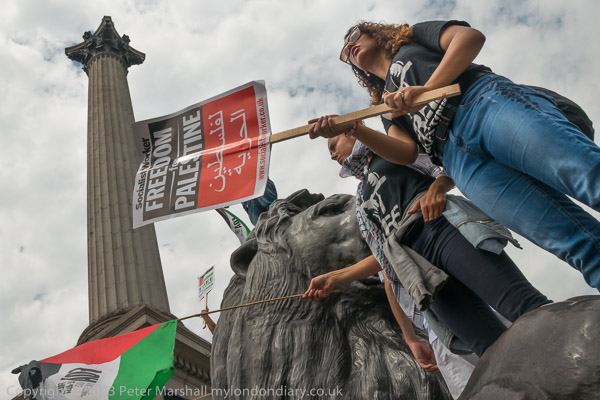
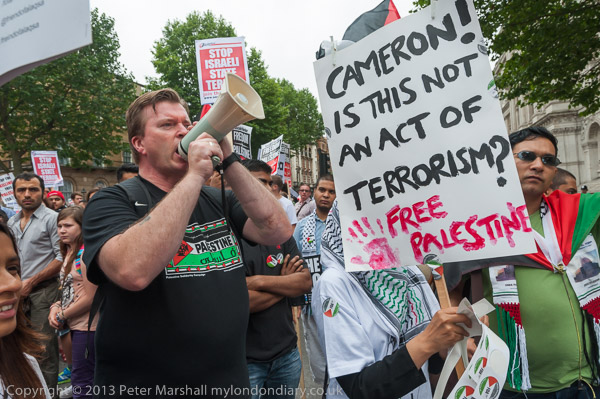
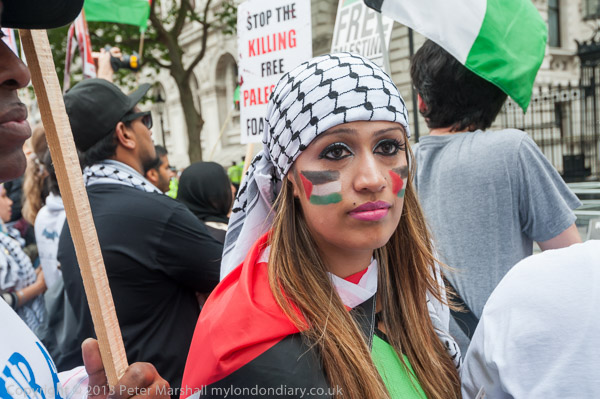
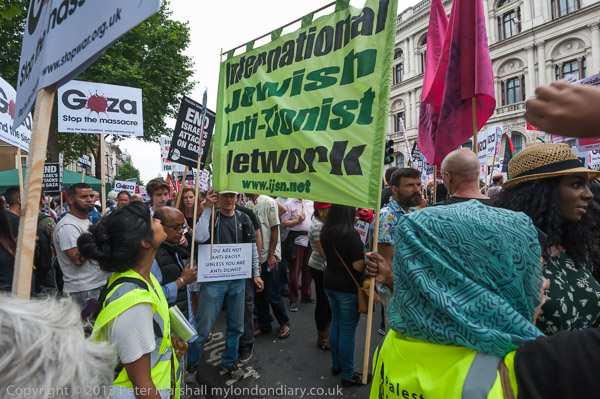
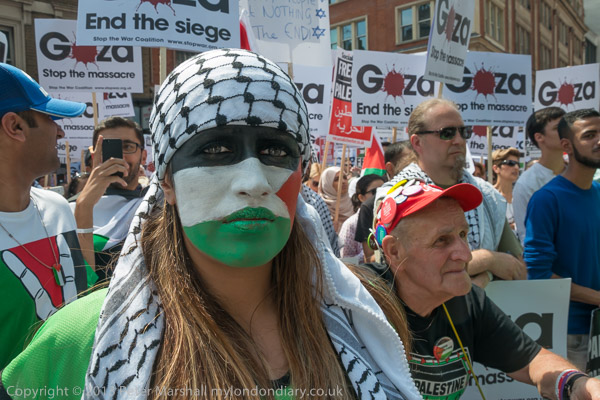
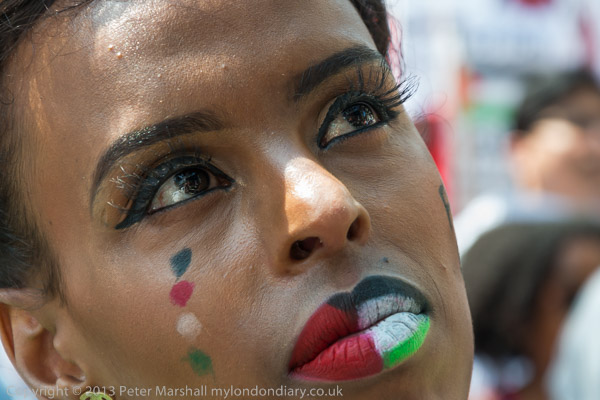
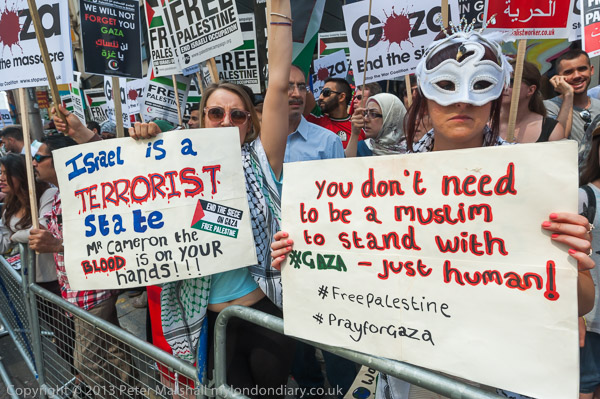
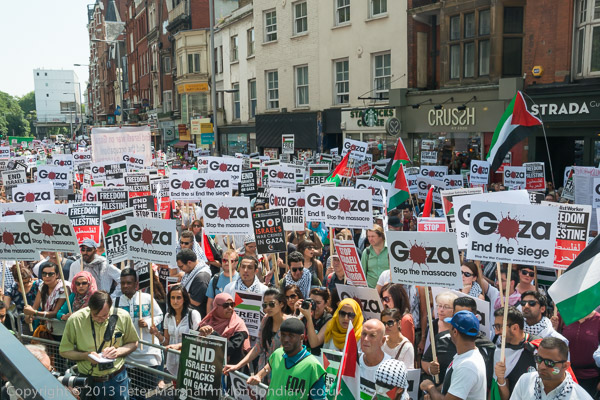
Palestine, Orange Order, Naked Cyclists & RFH: On Saturday 9th June 2007 I photographed a protest against the occupation of Palestine,the Orange Order celebrating 200 years of parades, the London World Naked Bike Ride and the re-opening of the Royal Festival Hall.

Palestine, Orange Order, Naked Cyclists & RFH

End the occupation – Palestine

Palestine, Orange Order, Naked Cyclists & RFH

The largest of these events was part of an international day of action marking the 40th anniversary of the 1967 six day war which had ended in complete and massive military victory for Israel, and a shameful defeat for not just the Arab nations but also the UN and the rest of the world.

Palestine, Orange Order, Naked Cyclists & RFH

And, as I commented then “in the longer term it is proving a disaster for Israel too, chaining them to a policy of brutal oppression of their Palestinian neighbours.” I continued; “Over the past few months, reading and hearing eye-witness reports of life in the occupied areas have shocked me, just as the reports from South Africa under apartheid did. And just as in South Africa, in time these things must come to an end with peace and reconciliation. War doesn’t settle things, it just prolongs the agonies.”

Palestine, Orange Order, Naked Cyclists & RFH

Seventeen years later we are seeing things that are orders of magnitude more shocking still happening in Gaza, witnessing the genocide of the Palestinian people.

Two members of the Palestinian government who had been invited to speak at the event were unable to come as they in jail in Israel. As usual until recently there was little coverage of this event or Israels apartheid policies in the UK media. Now their is considerable international interest in what is happening in Gaza but reporting is severely hampered as the international press are not allowed access other than in a few very limited Israeli army led tours.

More at End Occupation in Palestine.


Orange Order celebrates 200 Years of Parades – Park Lane

The Grand Lodge 200th Anniversary Parade marked 200 years since the first recorded Orange Parade by the Portadown Lodge of the Orange Order, Loyal Orange Lodge No. 1 (LOL 1), on 1 March 1807.

Although King William III, Prince Of Orange had successfully invaded England in what was later known as the Glorious Revolution in 1688 and the first Orange Association was founded a few days after his landing in Brixham when he reached Exeter, organised parades are only known to have started 119 years later.

This anniversary event was an impressive display with several thousand marching including lodges from all our major cities. The Orange Order still has a strong following in some former protestant working class areas but as I commented, despite “own protestant roots … such sectarian solidarity now seems a relic of ancient enmities, a throwback to a less civilised age.”

Many more pictures at 200 Years of Orange Marches


World Naked Bike Ride, Hyde Park,

I arrived in Hyde Park a little late but was able to photograph the riders setting off on their ride around London and went with them along Piccadilly before taking the tube to wait for them to reach the Houses of Parliament at Westminster.

You can read my thoughts about the ride which I think rather fails to get its message across although causing a great stir on the busy streets it goes through, as few of the riders have anything on their bodies or bikes to state its purpose on My London Diary.

For most who see it, this is simply an unusual spectacle of nudity, and an illustration of the great variety of the human form rather than the very limited body types which we see on advertising hoardings and other images of the fully or partly unclothed om the press or elsewhere.

This was the one event of those I covered that was widely covered in the media, making the national news that evening, though I think there was little attention to why the ride was taking place.

More about it and more pictures at 2007 World Naked BikeRide.


London’s Royal Festival Hall Reopens

The Southbank centre was staging a weekend of events across its site marking the reopening of the Royal Festival Hall after a considerable refurbishment which began in June 2005 and I managed to take a few photographs of these across the day.

The foyers inside the building were opened up more but I think the main purpose was to provide more commercial space to provide an income for the centre. The Royal Festival Hall was built as part of the Festival of Britain in 1951 and was funded and managed by the London County Council and their successors, the Greater London Council until that was abolished by Thatcher in 1988.

The Southbank Centre states on its web site that it “does not receive any funding from the Government to run and maintain its 11-acre national heritage site. All essential repair and maintenance work to our buildings and site has been funded from our own commercial revenues or from fundraising.

More pictures begin at London’s Royal Festival Hall Reopens


FlickrFacebookMy London DiaryHull PhotosLea ValleyParis
London’s Industrial HeritageLondon Photos

All photographs on this page are copyright © Peter Marshall.
Contact me to buy prints or licence to reproduce.

Slaughterhouses & Naked Cyclists 2019

Slaughterhouses & Naked Cyclists: Five years ago today on Saturday 8th June 2019 I photographed a march by vegans through the West End, leaving them at their rally in Soho Square and photographing people taking part in the London World Naked Bike Ride on my way back to Waterloo Station.


Close all Slaughterhouses

Slaughterhouses & Naked Cyclists

Vegans were marching in London calling for an end to the breeding, fishing and slaughter of animals.

Slaughterhouses & Naked Cyclists

I’m not a vegan, and as my comments on My London Diary make clear I do not find some of the arguments that they make so forcefully to be well-founded or convincing.

Slaughterhouses & Naked Cyclists

As I state there, “Of course I’m against cruel farming practices, and much is wrong in various ways about some modern farming, but keeping animals and killing them for food or milking them can be done in a decent and humane way and one that has an important contribution to our environment.

Slaughterhouses & Naked Cyclists

But I am an unrepentant what they call ‘speciesist’, believing that although other animals share many of our characteristics they are not as these vegans were chanting “just like us” and that our species is in important respects different.

But vegans are a good thing in that a plant-based diet certainly does make lower demands on the environment, and I’m happy to eat vegetarian food several days a week, though not to be either a vegetarian or a vegan.

Given the way things are going with a failure of societies around the world to respond adequately to the increasing climate chaos it seems quite likely that our species will become extinct. And the farmed animals which appear on many of the posters carried in this and other vegan protests will also die out. They are the product of centuries and more of breeding by us and most could not survive in the wild. Farm animals rely on farmers as much as farmers do on their animals.

But there is certainly no doubting the sincerity, anger and dedication of these vegan protesters and this is reflected in the many posters and placards and the anger of their protests which I think comes through in my pictures. I just wish more of them would show the same support for protests over human rights abuses too.

Close all Slaughterhouses


London World Naked Bike Ride – South Bank

The World Naked Bike Ride says it is a global protest movement with rides in cities around the world, raising awareness of issues such as safety of cyclists on the road, reducing oil dependence and saving the planet. They say “Let’s make the planet great again!”

And although for some it clearly is a protest, for many I think it is, as I wrote “more a fun ride for people who want to ride around London with no or very few clothes on.” And I can see nothing wrong with that as “For those of us watching on the streets it is certainly unusual and entertaining, and I think very few could be seriously upset by it. The normal response seems to be a lot of pointing and laughing.”

There were around a thousand cyclists “in various states of undress, some with face or body paint or slogans on their bodies” in the ride, having started from several places some miles away who converged on the South Bank to ride together past St Paul’s Cathedral and then to Buckingham Palace before finishing the ride at Hyde Park Corner.

The great majority of the riders were men. My pictures concentrate on those people who stood out because of their body paint or slogans which included a considerably larger percentage of the women taking part – and I think most of the men who had these were taking part with their female partners.

The WNBR dress code is ‘as bare as you dare‘ although footwear is obligatory for safety reasons. I don’t have a problem with nudity, but am aware when photographing this event that many publications would not use more revealing images, and try and ensure that at least some pictures have strategically placed handlebars or other objects. But my pictures of the WNBR from earlier years did get complaints from some American educators who blocked my site from their students. And on the front page for June 2019 I includeD the warning “These pictures involve nudity. Please do not click on the link if you may be offended or if you are in a place where others may be offended.”

If you go into London today you may well see this year’s ride. More from 2019 at London World Naked Bike Ride.


FlickrFacebookMy London DiaryHull PhotosLea ValleyParis
London’s Industrial HeritageLondon Photos

All photographs on this page are copyright © Peter Marshall.
Contact me to buy prints or licence to reproduce.

Die-in against Greenwich cycle deaths – 2018

Die-in against Greenwich cycle deaths: On Thursday 7th Jun 2018 Cyclists staged a die-in outside Greenwich Council offices in Woolwich Town Hall after three cyclist were killed by vehicles in the area in recent weeks, two by HGV(Heavy Goods Vehicles) trucks on the notoriously unsafe Woolwich Rd.

Die-in against Greenwich cycle deaths

Cyclists are vulnerable road users – as also are pedestrians. But while almost everywhere at least in urban areas we have separate pavements for pedestrians, most of the time cyclists have to share roads with cars and lorries. While all road deaths are tragic its important to keep things in proportion.

Die-in against Greenwich cycle deaths

Official statistics shows 462 pedestrians were injured by cyclists in 2022, compared to 437 in 2021 when one person is recorded as dying, and 308 in 2020, when four people were killed. The figures relate to deaths on roads and there are some other deaths and injuries on footpaths, cycle paths and elsewhere which are not included but the numbers are relatively small.

Die-in against Greenwich cycle deaths

Similar figures for pedestrians killed by cars have in recent years been between 346 and 470 with between 4 and 7,000 serious injuries. While around a hundred cyclists are killed by cars and over 4,000 seriously injured.

Die-in against Greenwich cycle deaths

The differences in numbers are huge and depend on various factors. But simple physics plays a part with the extra mass of cars and higher speeds of travel making them on average around 60 times more lethal than bicycles in collisions, and much more where traffic is fast moving and vehicles heavier.

Where pedestrians and cyclists share paths or other spaces there are still differences, but on a lesser scale, with cyclists typically only having around 15 times the energy of pedestrians due to their greater speed.

The government fact sheet states “Pedal cyclists are one of the vulnerable user groups. They are not protected by a vehicle body in the same way car users are, and tend to be harder for drivers to see on the road. They are, therefore, particularly susceptible to injuries.”

And it also notes that the figures for non-fatal casualties involving “pedal cyclists are amongst the most likely to be under-reported in road casualty data since cyclists have no obligation to inform the police of collisions.” Certainly the two incidents I can remember where I was knocked flying by cars whose drivers had failed to see me and where I clearly had right of way were not reported.

The greatest risk of cyclists being killed comes in collisions with HGVs. Reported collisions involving one car cause around four times as many deaths but there are roughly there are roughly 50 times as many as with HGVs and those with HGVs are roughly 15 times as likely to kill cyclists.

One of the speakers at this event in Woolwich spoke about the research he was involved in 37 years earlier on designing safer lorries. Few of the suggestions from this have been implemented, although things are slowly changing. But most HGVs are still unsafe with limited visibility and huge blind spots.

Other speakers talked about the failure of Greenwich Council to support the plans for Cycle Superhighway 4, allegedly because of the personal antipathy of the former council leader to Boris Johnson’s former cycling commissioner Andrew Gilligan. Since 2018 some progress has been made on what is now called Cycleway 4, though it still ends short of Woolwich. And others pointed out that air pollution, much due to road transport was a huge killer in London, causing an estimated over 9,000 deaths a year. We don’t just need safer roads but need to find ways to reduce vehicle usage.

More pictures at Die-in against Greenwich cycle deaths.


FlickrFacebookMy London DiaryHull PhotosLea ValleyParis
London’s Industrial HeritageLondon Photos

All photographs on this page are copyright © Peter Marshall.
Contact me to buy prints or licence to reproduce.


Maryland My Maryland, Stratford 1989

Maryland My Maryland, Stratford 1989: It was not until the beginning of September 1989 that I found time to return to London, starting my walks there again on Sunday 3rd September at Stratford in East London and walking from the station towards Maryland.

Tom Allen Centre, Grove Crescent Rd, Stratford, Newham, 1989 89-8p-21

Nobody is absolutely sure why Stratford has an area called Maryland but it could be that this is an unusually named after Maryland Point on the Potomac River in Virginia. Richard Lee (1617-1664) emigrated to the then colony around 1640, making a fortune as “a tobacco planter, trader, an owner and trader of slaves, and an employer and importer of English indentured servants.” Returning to England in 1658 he bought land in Stratford and owned a large house there. The name Maryland Point is first known to have appeared on a map in 1696.

Trinity College Oxford set up a College Mission “in connexion with the Great Eastern Railway Works at Stratford le Bow” around 1890 and it continued there until destroyed by a German air-raid in 1941.

Tom Allen came to work at their mission in Bermondsey while still studying at Trinity in 1909 where he obtained a “Fourth in History” and a Rugby Blue. From 1911 to 1914 he was Warden of the Stratford mission but when the war broke out enlisted as a private in the Grenadier Guards, but was soon offered a commission in the Irish Guards. The following February he went to France “where less than one month later, in the firing trenches near La Bassée he was killed instantaneously by a shell.” He was only 27. The centre named for him was built in 1957.

It is now The Sanctuary, home to The Redeemed Christian Church of God.

Maryland Works, Grove Crescent Rd, Stratford, Newham, 1989 89-8p-22

I can’t make out the name of the company once engraved on the building of the Maryland Works at 20/22 Grove Crescent Road as it is partly covered by the later sign board for ( I think) ‘MTM ties around the world of B J Bass & Co Ltd.’ It and the offices beyond are long gone, replaced by blocks of flats, backing on to the railway.

The Grove Picture Theatre, The Grove, Maryland, Stratford, Newham, 1989 89-8p-23

Built in 1910 by Frazzi Fireproof Construction Ltd of Whitechapel the Grove Picture Palace later became a billiards hall. Although unused and in a rather poor stage it still retained its original decoration and railings in 1989, though its signage above the ground floor had gone. The sign ‘READ GOD’S WORD THE BIBLE’ was on the wall belonging to the Central Baptist Church next door,

The Grove Picture Theatre, The Grove, Maryland, Stratford, Newham, 1989 89-8p-24

You can see pictures of it as built and as a surgery on Arthur Lloyd’s Theatres in Stratford East page.

The Grove Picture Theatre, The Grove, Maryland, Stratford, Newham, 1989 89-8p-25

Another image of the former cinema. It appears now to have been restored very much to its original state despite not even being locally listed.

Bacchus's Bin, Leytonstone Rd, Maryland, Stratford, Newham, 1989 89-8p-11
Bacchus’s Bin, Leytonstone Rd, Maryland, Stratford, Newham, 1989 89-8p-11

Leytonstone Road starts at the north end of The Grove after it crosses the railway and runs parallel to the tracks to Maryland Station before turning north.

These buildings at 7-13 Leytonstone Road are still there but a little altered with the roof of Bacchus’s Bin (now BAR ONE and Thailander Restaurant) having had its gables and the half barrels and sign at first floor level removed. The Chevy Chase pub at No 11 closed in 2010, was until 2014 a restaurant and after being empty for a couple of years is now a solicitors.

Church, Francis St, Maryland, Stratford, Newham, 1989 89-8p-12

This is Emmanuel Hall and is now the Without Borders Church. It has lost its large cross and most of the row of windows along its side since I made this picture.

Maryland Video, Maryland, Stratford, Newham, 1989 89-8p-15

This picture on the corner looking north where Leytonstone Road turns north with the tower block of Henniker Point in the distance was the first image in the body of my Blurb book, ‘1989’, ISBN: 978-1-909363-01-4, published in 2012 and still available both as softcover or PDF. I had previoiusly published the work on the web in 2006 and it was exhibited in the 2010 London International Documentary Festival – I think the first occasion on which this festival featured still photography.

This is one of only two books of mine which are image/text pieces, though others have some separate texts. For the text I misappropriated the name ‘Upton Sinclair’, an American write and political activist who died in 1968, but I was thinking of nearby Upton Park and the well-known psychogeographic writer Iain Sinclair whose works on London I had long admired. After all there are hundreds if not thousands of us ‘Peter Marshalls’ so why not one more Upton Sinclair?

The blurb on Blurb about ‘1989’ states: ” ‘1989′ claims to be Chapter 1 of a book based on the notes made by the photographer on a walk through the streets of north-east London with a well-known author of ‘psycho-geographical’ works.

But the author is entirely fictional, and the notes, written in 2005, after his death and sixteen years after the pictures were taken are in part a gentle spoof on psycho-geography but more importantly a reflection on photography and the documentary process.”

Parts of it I still find quite funny and it really is one of my favourites among my books.

More from this walk on a later post.


FlickrFacebookMy London DiaryHull PhotosLea ValleyParis
London’s Industrial HeritageLondon Photos

All photographs on this page are copyright © Peter Marshall.
Contact me to buy prints or licence to reproduce.


G4S Abuses, The Line & Barking Creek 2015

G4S Abuses, The Line & Barking Creek: My day on Thursday 4th June 2015 began with a protest outside the AGM of G4S on the UN International Day of Innocent Children Victims of Aggression, after which I took a walk around the Royal Victoria Dock looking at the three sculptures then on London’s meridian sculpture trail before going for a longer walk around Barking Creek on this fine early summer day.


G4S AGM Torture Protest, Excel Centre, Custom House

G4S Abuses, The Line & Barking Creek

I travelled out to the Royal Victoria Dock in Newham for a protest outside the Excel Centre where G4S was holding its AGM. It was the UN International Day of Innocent Children Victims of Aggression and protesters were there as G4S runs the Israeli prisons where Palestinian children are held in small underground cells in solitary confinement, often for many days.

G4S Abuses, The Line & Barking Creek

An Avaaz petition with 1,792,311 signatures had called on G4S to stop running Israeli prisons and Inminds had held regular protests outside the Victoria St head offices of the company.

G4S Abuses, The Line & Barking Creek

Some had bought shares in 2014 so they could attend the AGM and ask questions, and there were angry scenes inside the AGM as they were forcibly ejected. In 2015 there were also shareholder protesters, but security for the meeting was tight and mobile phones were prohibited and press were very definitely not allowed access.

G4S Abuses, The Line & Barking Creek

As the protest outside continued, some of those who were ejected this year came and spoke about what had happened when they tried to ask questions, and the general feeling inside the AGM, which appeared to be one of some despondency.

G4S Abuses, The Line & Barking Creek

Security at Excel made attempts to move the protesters further away from the building. Eventually a request was made to reduce the noise as there were students inside taking an exam and after some discussion the protesters moved back

G4S also runs immigration detention centres in the UK where various human rights abuses have been disclosed by reporters.

More at G4S AGM Torture Protest.


The Line – Sculpture Trail, Royal Victoria Dock

I left the protest and took the opportunity to walk across the high level bridge over the dock, taking a few pictures, and then along the path around the dock to the DLR station at Royal Victoria.

As on other occasions I found the views from the bridge stunning, and those at ground level were also interesting.

By the time I came to the first of the three sculptures on London’s sculpture trail on the Greenwich meridian the first two of these seemed extremely underwhelming. All have now been replaced by other works in a trail that regularly changes.

The only one I found of any interest was ‘Vulcan’ (1999), a 30ft-high bronze figure by late Scottish artist Eduardo Paolozzi, now in Edinburgh, close to his home town of Leith. You can see pictures of the other two on My London Diary.
The Line – Sculpture Trail


Barking Creek

It was a fine afternoon and I decided to return to Barking, hoping to go along the path on the west bank of Barking Creek to the hames, marked on my OS map as a traffic-free cycle route. But as in the previous year I found it fenced off and with a locked gate.

Instead I made my way north along Barking Creek, past Cuckold’s Haven to the Barking Barrage, a half tide barrier opened in 1998, going across this and returning alongside the east bank of the Creek to the A13, where I took a bus to Beckton and the DLR.

Barking in the nineteenth century claimed the world’s largest fishing fleet, with 220 commercial boats, going out into the North Sea fishing grounds, and fishing was the major industry of the town. But in the 1860s the fleet moved out to Gorleston in Suffolk and Grimsby in Lincolnshire, both much closer to the fishing grounds.

Until then the fish had been kept fresh by ice, gathered on Barking marshes in the winter and stored in large ice houses until taken out in the boat, or stored live, swimming in sea water tanks inside the boats. A fast schooner was used in the heyday to bring the catch from the fleet back to Barking so they could continue fishing for up to a couple of months. Once in Barking the fish was then well-placed for the London markets.

The coming of the railways meant that fish from Gorleston or Grimsby could be taken rapidly to London for sale, and the industry in Barking collapsed almost overnight. There are still a few boats moored on the river at Roding, but the only fishing is a few mainly elderly men sitting by the river with rod and line, who I’ve never seen getting a bite. And it would certainly be a brave man who would eat anything out of the Roding or Thames.

But fish is now coming back to Barking, or at least nearby Dagenham Dock, under a City of London Scheme, but although this has received planning permission it apparently still needs an Act of Parliament. Progress on this was halted by the dissolution of Parliament on 30 May 2024.

More pictures on My London Diary: Barking Creek.


FlickrFacebookMy London DiaryHull PhotosLea ValleyParis
London’s Industrial HeritageLondon Photos

All photographs on this page are copyright © Peter Marshall.
Contact me to buy prints or licence to reproduce.

Brian Haw, Democracy, Cabs, Colombia & Israeli Atrocity – 2010

Brian Haw, Democracy, Cabs, Colombia & Israeli Atrocity: Six protests on Wednesday 2nd June 2010.


Brian Haw & Democracy Village – Parliament Square

Brian Haw, Democracy, Cabs, Colombia & Israeli Atrocity

It was 9 years since Brian Haw had begun his peace protest in Parliament Square and police marked the occasion by serving a summons on his fellow protester Barbara Tucker for using a megaphone. An officer writes out the details as I take photographs (more online.)

Brian Haw, Democracy, Cabs, Colombia & Israeli Atrocity

The previous week both Brian and Barbara had been arrested and held for 30 hours while the Queen came for the state opening of Parliament – as usual others in the campaign continued the protest during their enforced absence.

Brian Haw, Democracy, Cabs, Colombia & Israeli Atrocity

The arrest had come after Brian had objected to police carrying out a search of his home – a tent in Parliament Square – without a warrant – the 13th or 14th illegal search police have made as a part of the continual campaign of harassment against him over the years.

Brian Haw, Democracy, Cabs, Colombia & Israeli Atrocity

Still also in Parliament Square were the tents of the separate peace campaign Brian and Barbara label as the Police Camp, Democracy Village, there since the May Day protest a month ago.

A handful of those from the camp were protesting outside the railings around Parliament with banners demanding peace and questioning the authority of Parliament. Police generally left them along apart from telling some to climb down from the wall.

BrianHaw – Summons Marks 9 Years
Democracy Village Protest


Black Cabs Protest – Aldwych

Several thousand ‘black cabs’ had come to Aldwych with a number of ‘knowledge boys and girls’ on scooters currently training for the job, causing considerable disruption and delay to London traffic. They claim they are unfairly victimised by Transport for London, the Public Carriage Office and Westminster city council.

Many non-cabbies feel that these cabs are an outdated relic from the era of the hansom cab and that their operations in ‘plying for hire’ lead to unnecessary congestion. Minicab drivers feel that they are discriminated against in favour of the cabs and arguably have a rather stronger case.

Black cabs are largely used by a relatively small and well-off section of the community and we could surely have a better public transport system for the majority without them. But in my post on My London Diary I have a longer description of their grievances as well as reporting how police attempts to control the protest multiplied its effectiveness.

Black Cabs Protest


BP Picket for Colombian Oil Workers – St James’s Square

The Colombia Solidarity Campaign held a picket outside BP’s HQ in support of Colombian oil workers who have occupied a BP plant on the Cusiana oilfield and are stopping building works there while allowing normal work at the plant to continue.

On My London Diary you can read a lengthy piece on the dispute in an area of Colombia under military occupation and where peaceful protesters occupying the plant were attacked by armed commandos from the Colombian Army together with BP’s private security personnel.

Among the speakers at the picket was Jim Catterson of the ICEM, the International Federation of Chemical, Energy, Mine and General Worker’s Unions, ICEM, which represents more than 20 million workers around the world, and was calling for international solidarity with the oil worker’s union (USO) and the Movement for the Dignity of Casanare in the fight against BP.

Much more about the dispute and protest at BP Picket for Colombian Oil Workers.


Protest for Murad Akincilar – Turkish Embassy, Belgrave Square

A protest at the Turkish Embassy called for the release of trade unionist Murad Akincilar arrested the previous September while on extended holiday in Turkey and still in prison in Istanbul. Lack of medical care in prison has resulted in serious eye damage and partial blindness. His case was due to come to court again the following day.

Based in Switzerland where he works for trade union Unia, Akincilar had studied in London for a Masters degree at the LSE 18 years earlier and was known personally to some in the protest organised by Fight Racism! Fight Imperialism! and Gikder to support the campaign being organised by the Swiss trade union Unia.

Protest for Murad Akincilar


Zionist Federation Supports Israeli Atrocity – Israeli Embassy, Kensington

The Zionist Federation together with members of the English Defence League demonstrated opposite the Israeli embassy in support of the Israeli Defence Force killings in the attack on the Gaza aid flotilla.

A few Palestinian supporters had come to oppose this protest but the Palestinian Solidarity Campaign and Stop the War had decided not to support the counter-demonstration to avoid conflict.

On My London Diary I quote statements by the World Zionist Orgainsation and the World Jewish Congress (WJC) expressing regret at the loss of life that occurred, but the mood of this pro-Israel protest was very different, “one of a gloating triumphalism that seemed entirely inappropriate to the situation“, and I state I was “sickened when at one point a large group of the demonstrators began chanting ‘dead Palestinian scum‘.

I also recorded “I had been appalled to find that this was to be a demonstration jointly with the Zionist Federation and the English Defence League, some of whose members many of us have seen and heard chanting racist slogans on our streets. It seems unbelievable that a Jewish organisation should align itself – even if unofficially – with people like this.” Few EDL actually turned up.

One placard read ‘Peace Activists don’t use weapons’ but as I pointed out on My London Diary the the photographs on the WJC web site show “almost entirely exactly the kind of tools that would be expected to be found on any ship in its galley and for general maintenance, as well as items being taken for building work in Gaza” with the exception of “a few canisters of pepper spray, some catapults and what looks like some kind of ceremonial knife.

As I also pointed out in my report, the “the actions of the state of Israel in their attacks on Gaza, their disruption of everyday life for the Palestinians and the blockade is making the possibility of peace much more distant. I’m not a supporter of Hamas, but Israel needs to ask why Hamas enjoys such support in Gaza and to change its own policies which have led to this. Like other conflicts, resolution depends on winning hearts and minds and this can’t be done with tanks and bulldozers.”

I had few problems covering the protest but other press were less fortunate. Four “were surrounded and chased by a an angry group of threatening Zionist demonstrators at the end of the protest, before police eventually stepped in to protect them.”

More at Zionist Federation Support Israeli Atrocity.


FlickrFacebookMy London DiaryHull PhotosLea ValleyParis
London’s Industrial HeritageLondon Photos

All photographs on this page are copyright © Peter Marshall.
Contact me to buy prints or licence to reproduce.

Fight the Height, Walthamstow 2008

Fight the Height, Walthamstow: Sunday 1 June, 2008

Fight the Height, Walthamstow

In 1999 Waltham Forest council demolished a large site at the east end of Walthamstow High Street and on Hoe Street. An arcade of shops was built through the block between the two streets in the 1960s and the site was known as the Arcade site.

Fight the Height, Walthamstow

The area had been heavily bombed in the war and the post-war buildings on the site were of no particular architectural merit but they were home to many small local shops remembered fondly by local residents, as well as some council flats on the second and third floors above them. Waltham Forest council are blamed for failing to properly maintain the properties resulting in their deterioration.

Fight the Height, Walthamstow

When demolition took place in 1999, the council announced their intention to put the site to cultural use and benefit the community – a new leisure centre, library and arts centre together with social housing. But for some years this was an empty square with a path across. But developer St Modwen published its proposals for the site in 2008 they appeared to be dominated by commercial interest and to have little regard for local needs.

Fight the Height, Walthamstow

The Arcade site was at the east end of Walthamstow’s famous street market, claimed to be the longest in Europe which began in 1885 and attracts shoppers from across London and tourists from around the world. St Modwen’s plans included a large Primark supermarket which would threaten the future of the market and many of the shops along the high street.

Fight the Height, Walthamstow

Then there was the Vue multiplex cinema which would put an end to any chance of the restoration of the Grade II* listed 1930 high Art-Deco Moorish style former Walthamstow Granada a few yards away on Hoe Street.

In the 2008 plans was an 18 storey tower block, quite out of scale with the surrounding area, with its terraces of two storey housing and small scale developments. It was this that led those protesting to call their campaign ‘Fight The Height‘.

Flats in this tower block would be highly attractive to well-paid city workers, just a short walk from Walthamstow Central station with its 4 trains an hour to Liverpool Street in 17 minutes as well as a frequent Victoria Line service to the West End.

Considerable thought had gone into the protest to attract publicity for the campaign. There were three characters representing the tower block, Vue cinema and Primark who bravely stood in front of the hoardings with the large coloured computer generated images of the proposed development as the protesters pelted them with over-ripe tomatoes donated by market stall-holders. And it made the TV news.

There were also many large placards with adults and children carrying them, and local boy William Morris (1834-1896) born here in and celebrated in his childhood home now the William Morris Gallery in Lloyd Park) also put in an appearance. Morris in 1877 was one of the founders of the Society for the Protection of Ancient Buildings, often known by its nickname Anti-Scrape, a charity whose purpose remains ‘Heritage protection’.

And “local artists and non-artists” founded the Antiscrap campaign “against against the attacks on our culture by the local authority.” Originally formed to fight cuts in museum fnding, on their web site you can read more about the Arcade campaign and other campaigns about out-of-character local developments.

Protests like this one were probably important in leading St Modwen to revise their plans for the Arcade site.

Here is a post from Antiscrap on Thursday 22 November 2012:

The shocking news about the new Arcade site plans is that they’re not bad. No, really. Opinions differ as to whether it’s appropriate to build 120 new homes and a nine-screen cinema there at all. But the plans have been thoughtfully designed with good attention to detail and far less negative impact on central Walthamstow than previous plans.

http://www.antiscrap.co.uk/

But as a short visit to Walthamstow will show, some other campaigns in the area have met with rather less success, though the Granada has been saved and now hosts a theatre. There are now tower blocks clustered around various areas of the town – largely in easy walking distance from its stations – and the Ensign camera factory has been replaced by flats rather than rediscovered under its ugly 1980s cladding.

More at Fight the Height, Walthamstow.


FlickrFacebookMy London DiaryHull PhotosLea ValleyParis
London’s Industrial HeritageLondon Photos

All photographs on this page are copyright © Peter Marshall.
Contact me to buy prints or licence to reproduce.

Heathrow – No Third Runway – 2008

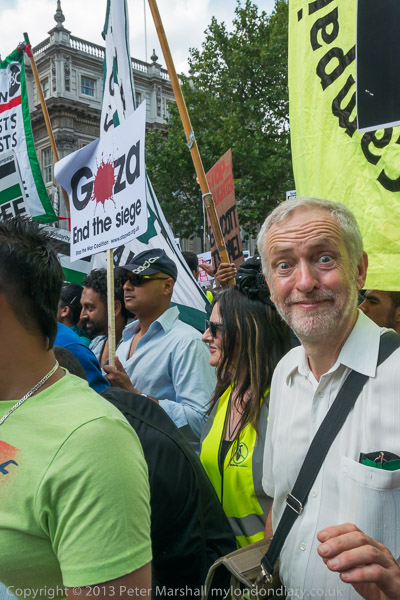
Heathrow – No Third Runway: On Saturday 31st May 2008 I joined around 4000 people marching from Hatton Cross to the village of Sipson, doomed if Heathrow was to be allowed to go ahead with its plans for a ‘third runway’.

Heathrow - No Third Runway

This was a protest I had a more personal interest in than most. I grew up under the Heathrow flight path, about two and a half miles from touchdown, and have lived in the area most of my life. I now live about the same distance from the edge of the airport but fortunately no longer on the flightpath, with just the occasional aircraft making the steep turn needed to fly over our house.

Heathrow - No Third Runway

My post about the protest written in 2008 began with this paragraph:
“It is now obvious to everyone with their head out of the sand is that London Heathrow is in the wrong place. It always was, since its creation by subterfuge and lies during the last years of the war, but no government since has had the nerve to challenge the powerful aviation lobby.”
Heathrow - No Third Runway

In 2010 the newly formed Coalition government did cancel the plans as a part of the deal the Tories reached with the Lib-Dems. But then the government set up the Davies Commission, chaired by Howard Davies who was at the time employed by one of the principal owners of Heathrow, GIC Private Limited. Though he resigned when he was appointed it came as no surprise when his final report recommended the building of a third runway and a sixth terminal at Heathrow.

Heathrow - No Third Runway

The government, now solely Conservative, approved these proposals in 2016 but London councils and the Mayor of London, Sadiq Khan applied for judicial review and the Court of Appeal ruled that the decision was unlawful as it did not take into account the government’s commitments to combat climate change under the Paris Agreement. Heathrow appealed and in 2020 the UK Supreme Court lifted the ban.

Since then nothing has happened, partly because of lack of finance and arguments about who would fund some of the huge infrastructure costs involved in the proposals outside the airport boundary. The economic costs of the dislocation during the long development would also be considerable. Covid led to a huge decrease in passenger numbers and although these have picked up, finding the investment needed to finance the project probably remains impossible.
You can read more detail on Wikipedia about the supporters of expansion and also those opposed to it.

Although the project was always clearly an environmental disaster, clearly the government and Supreme Court decisions reflected the lack of importance at the time given to our increasing climate chaos. Recent weather in the UK and around the world are now beginning to change this and a new government is going to have to do more than pay lip-service and will no longer be able to push things into the distant future. So I think it very unlikely we will ever see another runway being built at Heathrow.

You can read a lengthy account of the protest on 31st May 2008 on My London Diary, when I mention that when I was taking pictures like the one at the top of the post as a few under 3000 of us made a giant human ‘NO’ on the grass of the recreation ground I was taking pictures with one hand and holding up my ‘No’ towards the cameras on the cherry-picker behind my back with the other.

Heathrow – No Third Runway