Carnaval, Right To Protest & Tobin – 2005

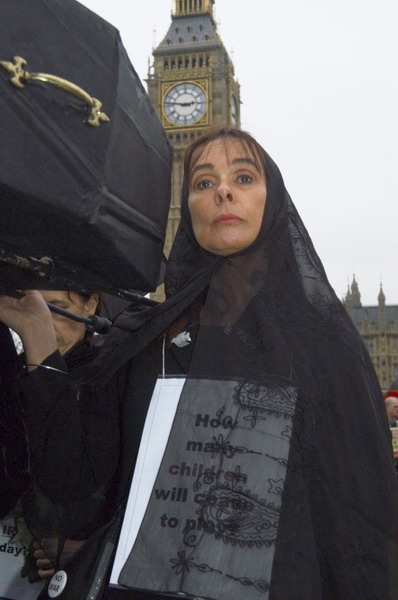
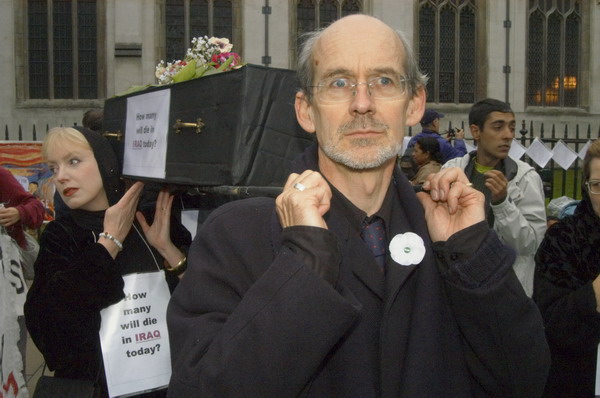
Carnaval, Right To Protest & Tobin: On Sunday 7th August 2005 I began by photographing London’s Latin Americans getting ready for the Carnaval Del Pueblo procession, then went to Parliament Square for an illegal protest against the Serious Organised Crime and Police Act 2005 which had come into force on August 1st and among other things restricted the right to demonstrate within a large area around parliament without prior written notice to the police. Finally another illegal protest on Westminster Bridge expressed support for the Tobin Tax, a low rate of tax on currency conversions with the aim of discouraging short-term currency speculation and so stabilising currency markets. Here is what I wrote about the day in 2005 with some pictures and links to more on My London Diary


Carnaval del Pueblo – Southwark

Carnaval, Right To Protest & Tobin - 2005

Sunday I started off photographing London’s Latin American communities getting ready for the start of their annual Carnaval Del Pueblo procession. This year it was starting from Potters Fields near the GLA headquarters, on an empty site awaiting development, rather than from a street, and this made photography a little more difficult.

Carnaval, Right To Protest & Tobin - 2005

It was good to see so many groups taking part, although I found it very difficult to sort out the different nations, and found myself unable to recognise most of their national flags.

Carnaval, Right To Protest & Tobin - 2005

This procession, making it’s way to Burgess Park where there is a Latin-American Festival, is one of London’s most colourful events, with some costumes to rival those seen at the much larger annual Notting Hill event at the end of the month.

Carnaval, Right To Protest & Tobin - 2005

I was sorry not to be anle to go on to the festival, especially since there was to be a short period of silence to mark the tragic shooting by police of the innocent Brazilian electrician, Jean Charles de Menezes, on a tube train at Stockwell Station the day following the second round of bombings in London.

I followed the procession up to London Bridge Station where I needed to get on a train to get to Westminster.

More pictures


The Right to Protest – Parliament Square

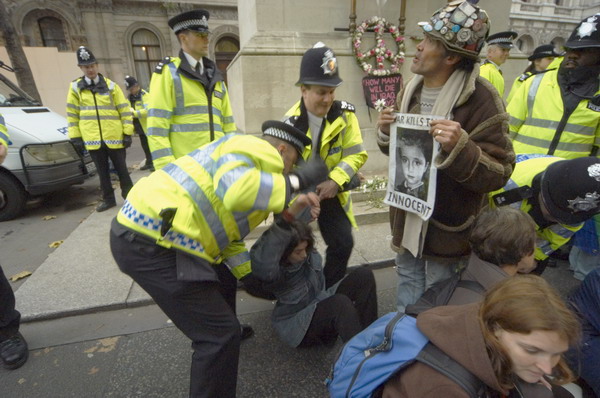
Police arrest a demonstrator in Parliament Square, London. The crime? Holding a protest banner. Welcome to Britain, the police state (not that I think the police particularly welcome it.).

Britain once had a deserved reputation as a haven for free speech and the rights of the citizen. A number of acts by our New Labour government have seriously curtailed these freedoms – including introducing a number of measures that they had opposed before they came to power.

Some of these measures have just been a part of the general trend to central control begun under Thatcher, but others have been brought on by the threat of terrorism and even more by the growth of opposition to government policies, and in particular to the war on Iran.

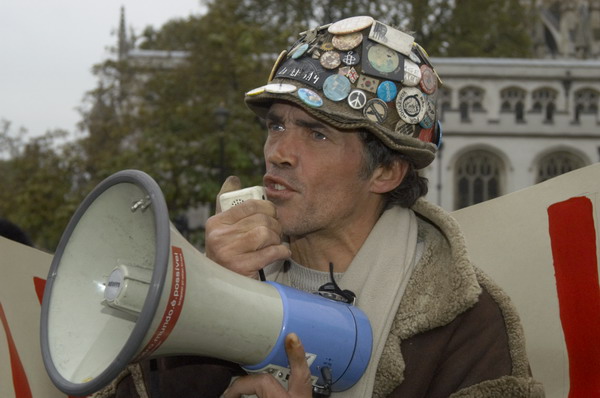
Formerly a life-long supporter of the party it saddens me, and angers me. One of the signs that Brian Haw holds in a picture is a quotation from a speech by Condoleeza Rice in January 2005, when she said “if a person cannot walk into the middle of the town square and express his or her views without fear of arrest, imprisonment, or physical harm, then that person is living in a fear society, not a free society. We cannot rest until every person living in a ”fear society” has finally won their freedom.”

New restrictions have been brought in that move Britain into that realm of a “fear society”.

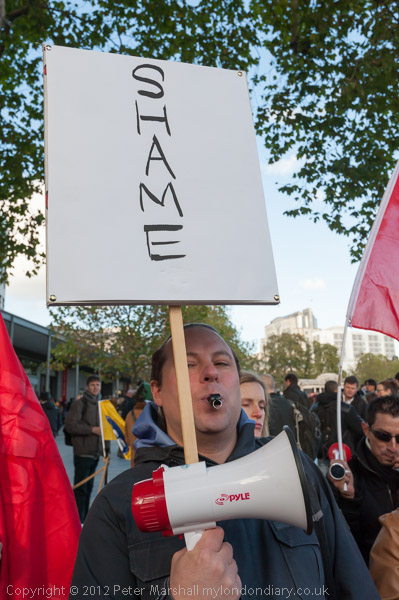
This afternoon I saw five people arrested for simply peacefully holding banners supporting the right to protest. It happened on the square opposite our Houses of Parliament, and it made me feel ashamed to be British.

Although the law was passed largely to get rid of Brian Haw, it turns out not to alter his right to be there, as his protest started before the act became law and is thus not covered by it. Rather a lot of egg on government faces there.

[The High Court decision that agreed Haw was not covered by the Act was overturned by the Court of Appeal in an alarming decision in May 2006.]

More pictures


The Westminster Tea Party – Time for Tobin Tax

Holding up tea bags on Westminster Bridge

In 1978, Nobel Prize-winning economist James Tobin proposed a uniform world-wide tax at a very low level – perhaps only 0.2% – on all foreign currency exchange transactions. The aim was to deter speculation on currency movements, thus giving the elected governments greater control over their fiscal and monetary policies, and reducing the power of unelected speculators (who include some of the larger multinational companies) to affect the markets.

Exporters, importers and long-term investors would all benefit from less volatile exchange rates, and the revenue raised by the tax could make a significant contribution both to the revenue of national economies and also for international development projects.

As a small gesture of support for the Tobin Tax, another illegal demonstration took place in Westminster this afternoon, unnoticed by police. A small group of demonstrators, again following an example from Boston – although this time from 1773 – chose tea as a way to symbolise their protest. Each threw a teabag, produced by one of the giant corporations, from the middle of Westminster Bridge into the River Thames below.

A couple more pictures at the bottom of this page on My London Diary.


FlickrFacebookMy London DiaryHull PhotosLea ValleyParis
London’s Industrial HeritageLondon Photos

All photographs on this page are copyright © Peter Marshall.
Contact me to buy prints or licence to reproduce.

Hiroshima Day Ceremony – Tavistock Square 2004

Hiroshima Day Ceremony: On 6th August 2004 I went to the annual Hiroshima Day commemoration organised in Tavistock Square by London CND. It’s an event I like to attend each year if I’m in London, and one I’ve photographed in quite a few years.

Hiroshima Day Ceremony - Tavistock Square 2004
Jeremy Corbyn MP compered the event

The bombs heralded the start of a new age, the Atomic Age, and were clearly a war crime, indiscriminately destroying huge numbers of innocent civilians and with little or no military purpose. Many who survived the initial blast died in the following weeks, months and years later from the effects of nuclear radiation, particularly from the ‘black rain’ that fell later in the day caused by the bombing.

Hiroshima Day Ceremony - Tavistock Square 2004

Last Saturday (02 Aug 2025) BBC Radio 4’s Archive On 4 broadcast Exposing Hiroshima, the story of US attempts to cover up the scale of the casualties and deny the “deadly and lasting impacts of radiation” revealed by Australian journalist Wilfred Burchett, the first Western journalist to publish an uncensored eye-witness account from Ground Zero in Hiroshima. Eventually revealed to the world on the front page of the Daily Express the US response was a PR campaign to supress the truth, dismissing his and other articles that emerged as ‘Japanese propaganda’.

Hiroshima Day Ceremony - Tavistock Square 2004
Sophie Bolt

The pictures here are all from 6th August 2004. They were made with my first DSLR, the Nikon D100 and converted from RAW files in 2004 using the then availahle conversion software which was not up to current standards. I’m sure I could do better if I now went back to the original files.

Hiroshima Day Ceremony - Tavistock Square 2004

Back in August 1945 Japan was already ready to surrender and the allies (or at least the USA) knew this. They wanted to show Russia that they had a weapon that could be used should Russia step out of line. Hiroshima and Nagasaki were annihilated as a gesture to Stalin (“Uncle Joe” as some newspapers liked to refer to him then.)

Michael Foot (at left) and others at the Hiroshima Plaque in Tavistock Square, London

Since then we have had a continuous campaign of lies and deceptions over nuclear weapons. It continues to this day with the ridiculous pretence that we have an independent nuclear weapon, and we are being softened up for the arrival of ‘mini-nukes’, smaller but even more dangerous nuclear weapons.

Tony Benn

The anniversary was commemorated at Tavistock Square by Hampstead and London Region Campaign For Nuclear Disarmament. Those present included the former labour leader Michael Foot and Tony Benn, as well as the oldest member of the Labour Party and an American visitor from US Labor Against The War.

Cllr Barbara Hughes, Deputy Mayor of Camden, places flowers at the memorial plaque

Tavistock Square has a number of interesting memorials, including a fine statue of Gandhi, and a cherry tree planted in memory of the victims past and present of the atomic bombs dropped on Hiroshima and Nagasaki on August 6th and 9th 1945. The ceremony was a reminder that if anyone is still looking for weapons of mass destruction they are present in America; any “war on terror” should perhaps start against the country which used these weapons to devasting effect without any compunction in 1945.

A greeting for Michael Foot from the oldest member of the Labour Party

The event was chaired by local MP Jeremy Corbyn, and speakers included Ken Savage of Greater London Pensioners Association, Sophie Bolt, Chair of London CND [and now CND General Secretary], Darren Johnson, GLA Green Party Leader and Tony Benn. Mordechai Vanunu had been invited to come from Jerusalem where he is under house arrest, but was prevented from coming by the Israeli government. There were also songs from the Workers’ Music Association choir.

More pictures on My London Diary


FlickrFacebookMy London DiaryHull PhotosLea ValleyParis
London’s Industrial HeritageLondon Photos

All photographs on this page are copyright © Peter Marshall.
Contact me to buy prints or licence to reproduce.


Black Lives Matter London – 2016

Black Lives Matter London: Although there is a long history of Black struggles against racism in Britain the Black Lives Matter movement with its hashtag #BlackLivesMatter only really became established here in 2016, three years after it was first formed in the US in 2013.

Black Lives Matter London - 2016

This protest, on Friday 5th August 2016, five years and a day after the killing of Mark Duggan by police in 2011, along with those at Heathrow and in Birmingham, Manchester and Nottingham were part of a ‘National Shutdown‘ which marked the emergence of Black Lives Matter UK.

Black Lives Matter London - 2016

The rally took place in Altab Ali Park on Whitechapel Road. Altab Ali, a Bangladeshi textile worker was stabbed to death in a racist attack by three teenagers in the adjoining street on 4th May 1978. In 1998 the park, formerly St Mary’s Park, was renamed in his memory.

Black Lives Matter London - 2016
Marcia Rigg, whose brother Sean Rigg was killed by police in Brixton in 2008, raises her fist in salute
"The event was called by BLMUK, a community movement of activists from across the UK who believe deeply that #BlackLivesMatter but are not affiliated with any political party. They called for justice and an end to racialised sexism, classism and homophobia and a new politics based on community defence and resilience."
Black Lives Matter London - 2016

Among those taking part in the rally were activists from Stand Up to Racism, from families of Sheik Bayou and Sean Rigg who had been killed by the police as well as Stephanie Lightfoot-Bennett whose twin brother Leon Patterson was battered to death by police in a Stockport cell in 1992, Movement for Justice and Sisters Uncut.

Black Lives Matter London - 2016
‘Your Struggle – our Struggle – Ayotzinapa’ London Mexico Solidarity with Black Lives Matter

There were speeches from the various groups including BLMUK and from NUS President Malia Bouattia before the rally split into large groups from North, South, East and West London to discuss further actions.

East London Meeting

Sisters Uncut set up flowers and candles in Altab Ali Park in East London to commemorate the many UK victims of state violence, including Duggan, Sarah Reed, Mzee Mohammed, Jermaine Baker, Sean Rigg, Leon Patterson, Kingsley Burrell and over 1500 others, disproportionately black, since 1990.

I left the rally before the end, when protesters blocked Whitechapel Road outside the park and some went on to block other roads in East London

More pictures on My London Diary at Black Lives Matter London.


FlickrFacebookMy London DiaryHull PhotosLea ValleyParis
London’s Industrial HeritageLondon Photos

All photographs on this page are copyright © Peter Marshall.
Contact me to buy prints or licence to reproduce.


Broadwater Farm & Mark Duggan – 2017

Broadwater Farm & Mark Duggan: On Sunday 4th August 2017 I went to Tottenham to cover the march on the 6th anniversary of Mark Duggan being killed by police, and arriving early I took a walk around the Broadwater Farm Estate.


Broadwater Farm Estate – Tottenham

Broadwater Farm & Mark Duggan - 2017

You can read the real story of the Broadwater Farm Estate on the excellent Municipal Dreams web site. In 1961 Haringey Council had a shortfall of 14,000 homes with many families living in squalid conditions in rented accommodation in overcrowded and run down Victorian back to back slums.

Broadwater Farm & Mark Duggan - 2017

The estate was built on former allotments next to the Lordship Recreation Ground and above the River Moselle which was culverted. Its design was strongly influenced by the work of Le Corbusier and used ‘piloti’ to raise the homes above ground level both to combat the perceived flood risk from the river and to segregate pedestrians from traffic on walkways with the the ground level providing extensive parking for residents’ cars.

Broadwater Farm & Mark Duggan - 2017

Construction began in 1967 and ended in the early 1970’s. The 1063 new homes were built to high standards, spacious and with all the ‘mod cons‘ expected in that era and with ‘constant hot water for heating and domestic use…supplied to all homes from the central oil-fired boiler’.

Broadwater Farm & Mark Duggan - 2017
There are large green spaces between the blocks which were named after RAF wartime airfields

Things didn’t work out quite as expected, and although people were delighted at first, problems soon emerged. Flat roofs leaked, the heating system proved inefficient and noisy and there were cockroach infestations, lift breakdowns and fires of rubbish.

Broadwater Farm & Mark Duggan - 2017

The huge parking spaces under the buildings were underlit and hidden from sight and “physically created a concrete ‘underworld’ for crime to thrive” and the many pedestrian walkways proved ‘impossible to police‘.” There were racial tensions too – the Tenants’ Association initially excluded black members and “its president was forced to resign in 1974 after a TV appearance speaking on behalf of the National Front.”

It became harder for the council to find tenants for the flats and the estate became a ‘dumping ground’ for difficult and disadvantaged tenants. In 1979 it became part of the government’s Priority Estates Project and Haringey council and the estate residents had mobilised to improve things. By 1984 homes were no longer hard to let and crime had been much lowered.

But policing was increasingly a problem, with many residents experiencing “heavy-handed and oppressive policing“. Things – as a second post on Muncipal Dreams details – came to a head after police raided the home of Cynthia Jarrett close to the estate looking for her son Floyd, a leading member of the Broadwater Farm Youth Association (BFYFA). She died of heart failure during the raid, and the following day, Sunday 6th August 1985, protesters set out from the estate to march for a peaceful protest outside Tottenham Police Station.

They were met and stopped by police in full riot gear, who sealed off all routes from the estate and a seven-hour riot began. As I wrote in 2017 “more and more police came into the estate with firefighters who put out a small fire. Faced by increasing attacks from residents the police withdrew, but two officers failed to escape. PC Richard Coombes was seriously injured and PC Keith Blakelock was beaten and hacked to death.”

After the disturbances shops were moved down to Willan Rd

Municipal Dreams continues: “A full-scale state of siege followed. Four hundred police officers occupied the Estate over the following weeks and some 270 police raids took place over the next six months. Some 159 arrests were made.” The inquiry into the disturbances at Broadwater Farm concluded that it “was essentially about policing – police activity and police attitudes.

Work to improve the estate continued, helped in 1986 by a £33m grant from the Government’s Estate Action programme which enabled huge changes to the structures, eventually removing the walkways and bringing life to the ground level and with the BYFA leading improvements in the environment. By 2003 dit had become “a stable and safe community.”

The shooting of Mark Duggan, raised on the estate, by police on 4th August 2011 led to another march from Broadwater Farm to Tottenham Police Station three days later which sparked riots on Tottenham High Road and other areas of London and other towns and cities. Broadwater Farm was not the cause of these disturbances, which again were largely provoked by “a widespread resentment of police behaviour.

Improvements to the estate continued after this but it is now under threat from further so-called regeneration which would see it “as ‘improved’ by importing middle-class owner-occupiers and private renters.

Broadwater Farm Estate


Tottenham remembers Mark Duggan

People met on Willan Road in the centre of the Broadwater Farm Estate for a peaceful march to a rally at Tottenham Police Station on the sixth anniversary of the shooting of Mark Duggan by police. The marchers included members of his family and the family of Jermaine Baker, shot dead by police on 11th December 2015 in Wood Green.

Baker was unarmed and although a public inquiry found there had been a failings in the police operation that his killing was lawful and no criminal charges would be brought against any police officers although one would face gross misconduct proceedings.

Mark Duggan’s shooting had been accompanied by various false reports from the police and officers gave contradictory evidence at the inquest, where finally after weeks of deliberation the jury in January 2014 returned an 8–2 majority verdict that his death was a lawful killing. Legal challenges to the verdict were later rejected but in 2019 Duggan’s family accepted a settlement of their civil claim from the Met.

Mark Duggan’s mother Pamela Duggan (centre) with family and friends

Speakers outside Tottenham Police station remembered the police killing of other members of the Tottenham community apart from Duggan and Baker – Cynthia Jarrett, Joy Gardner, Roger Sylvester, and the recent murders of Rashan Charles, Darren Cumberbatch and Edson Da Costa.

As well as a minute of silence, speakers from the two families and local activists including Stafford Scott there were also speeches from Becky Shah of the Hillsborough campaign and from the Justice for Grenfell campaign.

The crowd spread out into the street with a large group of mainly young men on the opposite side of the street

Many more pictures on My London Diary at Tottenham remembers Mark Duggan.


FlickrFacebookMy London DiaryHull PhotosLea ValleyParis
London’s Industrial HeritageLondon Photos

All photographs on this page are copyright © Peter Marshall.
Contact me to buy prints or licence to reproduce.

Al Quds & Roma Holocaust Memorial Day – 2013

Al Quds & Roma Holocaust Memorial Day: On Friday 2nd August 2013 I photographed the annual al-Quds Day march in London, leaving before it reached a rally at the US Embassy to attend a ceremony at the Holocaust Memorial in Hyde Park for Roma Holocaust Memorial Day.


Al Quds Day March – Portland Place to US Embassy

Al Quds & Roma Holocaust Memorial Day - 2013

Thousands marched peacefully for outside Broadcasting House to the US Embassy calling for the liberation of Palestine, with a few carrying banners and chanting in support of Hezbollah.

Al Quds & Roma Holocaust Memorial Day - 2013

The starting point was chosen because of the continuing pro-Israel bias of the BBC and their failure to adequately cover the Israeli apartheid, the continuing occupation of Palestine and the oppression of the Palestinian people, as well as the siege of Gaza, which already 12 years ago was denying sufficient essential medical supplies and restricting food and other materials.

Al Quds & Roma Holocaust Memorial Day - 2013

The celebration of Al Quds day on the last Friday of Ramadan was introduced by Ayatollah Khomeini in Iran in 1979 and its observance has spread, mainly in Arab and Muslim countries, and for many years there has been an annual march in London in support of Palestine as a show of solidarity with the people of Palestine and oppressed people everywhere.

Al Quds & Roma Holocaust Memorial Day - 2013

Often the march has been met with opposition from various Zionist and Iranian freedom, communist and royalist movements as well as fringe UK right wing groups including the EDL and March for England, but there was no sign of protests against it this year, though I imagine there will have been a counter-protest to the rally at the US Embassy, but I had to leave for another event before the march reached this.

Al Quds & Roma Holocaust Memorial Day - 2013

There were also Jews taking part in the march calling for freedom for Palestine, both from the obvious and small group of ultra-orthodox Neturei Karta Jews and others from the British left.

Al Quds & Roma Holocaust Memorial Day - 2013

The march, attended by many Muslim families from mosques across England, was heavily policed but was as always an entirely peaceful and closely stewarded event that requires no policing other than traffic control unless others come to try and disrupt it.

Many more pictures at Al Quds Day March.


Roma Genocide Commemorated – Hyde Park

Grattan Puxon speaking in front of the Holocaust Memorial which was draped with a Roma flag

A ceremony at the Holocaust Memorial in Hyde Park on Roma Holocaust Memorial Day remembered the mass killing of 3,000 Romas at Auschwitz on 2nd August 1944 and protested against the rise of neo-Nazi attacks against the Romas in the Czech Republic and Slovakia.

A few of the 3000 who died on the night of the ‘Porajmos’ on 2nd August 1944

Around a quarter of a million Sinti and Roma were killed by the Nazis in Germany, and many others in Romania and Croatia. A Jewish socialist, who spoke at the event regretted the fact that the memorial only refers to the Jewish victims of the holocaust, which also included many others.

Professor Rainer Schulze

After a short introduction there was a two minute silence followed by speeches in Czech and in English including by Professor Rainer Schulze who spoke in some detail about the way Sinti and Roma were treated by the Nazis and of the fight they put up even as they were being forced into the gas chambers.

As well as speakers from various Roma and Sinti communities others included a Japanese peace activist who brought a statement of support from Hiroshima. Some of those present had earlier protested against the rise of Neo-Nazi attacks against the Roma in the Czech Republic and Slovakia, and were going on to protest at the French Embassy against deportation of Roma from France.

Recent years have seen increasing discrimination against Roma across Europe and here in the UK, including harassment of those sleeping rough on the streets of London.

More pictures at Roma Genocide Commemorated.


FlickrFacebookMy London DiaryHull PhotosLea ValleyParis
London’s Industrial HeritageLondon Photos

All photographs on this page are copyright © Peter Marshall.
Contact me to buy prints or licence to reproduce.


Hunger Strikers & Sotheby’s – 2015

Hunger Strikers & Sotheby’s: Ten years ago today this protest over Palestine was about Palestinians on hunger strike in Israeli jails against the use of indefinite illegal administration. Later I went to Mayfair where cleaners and their supporters were protesting for the reinstatement of two cleaners sacked and victimised because of their trade union activities.

BBC protest over Palestinian Hunger Strikes – Broadcasting House

Hunger Strikers & Sotheby's - 2015

The hunger strike by Palestinian prisoners Muhammad Allan and Uday Isteiti held in Israeli jails under administrative detention was in its sixth week, but the BBC had failed to report this and other hunger strikes.

Hunger Strikers & Sotheby's - 2015

So Innovative Minds in cooperation with The Prisoner’s Centre for Studies in Jerusalem had come to the BBC to protest against the continuing pro-Israel bias among management and some reporters. It’s a bias that has often been confirmed by academic studies and is continuing, though the recent use of starvation in Gaza and its appalling consequences we have all seen has resulting in some toughening of the BBC reporting on Israel’s war crimes.

Hunger Strikers & Sotheby's - 2015

Administrative detention allows people to be held without any real evidence and without trial and although in Palestine it is supposedly time-limited, in practice many are immediately re-arrested when their sentence ends to begin another term and so is in practice indefinite.

As I concluded in 2015: “Many who used to regard the BBC as a great institution and praised its high standards are now disillusioned and feel that they need to listen and watch other broadcasters to get an impartial and more complete view of both overseas and UK news.”

Hunger Strikers & Sotheby's - 2015

The BBC has some fine reporters but they often come under pressure from their managers – who themselves are under pressure from powerful lobbying groups and politicians with strong sympathies for the Zionist cause, including leading figures in our government. But they also misinterpret their ideas of impartiality, often ignoring the facts of the situation in a misguided attempt to show both sides. As it has been said “there are no two sides to genocide.”

More at BBC protest over Palestinian Hunger Strikers.


Reinstate the Sotheby’s 2 – New Bond St

Early in 2015 the United Voices of the World union had come to an agreement with the company who then employed the outsourced cleaners at auction house Sotheby’s which had guaranteed the workers non-toxic products, reinstatements, fairer schedules and the London Living Wage (backdated.)

Sotheby’s, who make huge profits by selling art works and other items, decided to sabotage that deal by ending the contract with that company and starting a new contract with Servest, who decided not to honour the agreement that had been reached earlier.

This led the UVW to organise a series of protests, including a large and noisy one outside a “blockbuster £130m art sale” on July 1st. Sotheby’s responded by sacking four of the most active trade union members who had taken part in the protest, though later were forced by threats of legal action to reinstate two of them.

The protest on 31 July outside another auction demanded the reinstatement of the ‘Sotheby’s 2‘, as well as repeating the cleaners demands for proper sick pay, paid holidays and pensions and the London Living Wage.

The UVW continued with protests in Autumn 2015 and were able to announce in early 2016 that “ALL outsourced workers at Sotheby’s, including cleaners, caterers, porters and security guards would receive both the London Living Wage and contractual (much improved) sick pay.”

More at Reinstate the Sotheby’s 2.


FlickrFacebookMy London DiaryHull PhotosLea ValleyParis
London’s Industrial HeritageLondon Photos

All photographs on this page are copyright © Peter Marshall.
Contact me to buy prints or licence to reproduce.

Rich Door, Poor Door – 30th July 2014

Rich Door, Poor Door - 30th July 2014

Rich Door, Poor Door: Class War’s Long series of protests against the separate and very different entrances to the tower block at One Commercial Street in Aldgate began on 30th July 2014 and weekly protests continued with some short pauses and a few extra visits until May 2015, when Class War devoted themselves to the General Election campaign.

Rich Door, Poor Door - 30th July 2014

Here is the introduction to my long post I made in 2014 about the event:

Class War, including three of their candidates for the 2015 General Election, protested at 1 Commercial St in Aldgate against London's new apartment blocks providing separate 'poor doors' for the affordable flats they have to include to gain planning permission for the development. Class War characterise this as 'social apartheid.'

Rich Door, Poor Door - 30th July 2014

You can still read the rest at Class War – Rich Door, Poor Door. At the time the building owners told us that there was “no internal connection between this part of the building and that containing the social housing” but on a later occasion I was taken by an owner of a flat in the “rich” section out of the building from her flat by the poor door – a route she took routinely when walking her dog.

Rich Door, Poor Door - 30th July 2014

I photographed almost all of the 30 events that took place in front of the building during that time, missing just a couple when I was out of London. And shortly after the protests ended I put together a ‘zine’ full of pictures from them (still available from Blurb) ‘Class War: Rich Door, Poor Door ISBN 978-1-909363-14-4′.

Rich Door, Poor Door - 30th July 2014

At the front of the zine is the text I posted on My London Diary on 30th July 2014, along with a list of the actions, and at its end a short note about how I came to photograph protests. But the bulk of the publication is simply pages of pictures with just a few short notes.

In a short conclusion I stated:

One Commercial Street still has its separate doors for rich and poor, but the campaign which had been suspended for the general election has made 'social apartheid' in housing an issue, and along with other housing campaigns has brought housing, and housing in London in particular onto the public agenda.

I should also had made it clear that Class War had taken an part in these other housing campaigns and their presence had helped to raise the profile of protests over these. In particular they had played an important part in making clear the involvement of Labour councils in London in collaborating with developers in the transfer of huge public assets into private ownership while failing to provide much-needed social housing.

Our current Labour government has still not got serious about the need to provide social housing rather than simply encourage developers to build more largely private housing (with a largely token amount of unaffordable “affordable” housing.) Perhaps if we do get a new party of the left things will change.

The preview on Blurb includes I think most or all of the publication and shows it better than the print publication. Viewing at full screen you can also read all the text, including my post from 2014 still on My London Diary. The pictures and text from all the other Poor Door protests are also still on My London Diary.

On My London Dairy for 30th July 2014: Class War – Rich Door, Poor Door

Stop Starving Palestine Pan Protest

Whitehall, London. 25th July 2025

Stop Starving Palestine Pan Protest

Stop Starving Palestine Pan Protest: Last Friday evening thousands of us came to Whitehall shocked by the news and photographs coming out of Gaza, where much of the population is now suffering from malnutrition and over a thousand have already died of starvation.

The famine there is entirely due to the actions of the Israeli government and their army, the IDF. Over the past months they have denied access to the normal humanitarian supplies of foods and essential items to Gaza.

Stop Starving Palestine Pan Protest

Israel has also disrupted the well-established channels through which food was distributed in Gaza through the UN and humanitarian agencies. Together with the USA they have set up an alternative way to supply food which has operated at only four centres; the amount of food supplied has been vastly inadequate and over a thousand of those queueing for it have been killed by the IDF.

Stop Starving Palestine Pan Protest
A holocaust survivor speaks outside the Foreign & Commonwealth Office.

The world has been shocked by the pictures coming out from Gaza, and by well-documented stories from medical staff that snipers and not only target those queueing for food but ‘gaming’ by targeting different parts of the anatomy on different days. One day hospitals treated many who had been shot in their testicles.

For months we have been appalled by the accounts of the shelling and bombing of hospitals, medical facilities and the arrests and interrogation of medical staff, some of whom have clearly been tortured.

Stop Starving Palestine Pan Protest
L

Large areas of Gaza are now covered with the rubble of people’s homes and people forced to flee and living in makeshift tents, often in so-called ‘safe areas’ have been killed by the military.

The attack began after an attack by Hamas across the border into Israel in which over a thousand died – including some by Israeli military fire and hundreds were kidnapped as hostages. But it has continued for over 600 days, with the killing of many, many thousands of innocent Palestinians, men, women and children in what has clearly become a series of war crimes.

Stop Starving Palestine Pan Protest

Some Israeli ministers have clearly stated their intention to entirely rid Gaza of Palestinians, and Donald Trump has supported them, with plans to turn the area into a holiday resort. Israel clearly wants to settle the area with Israelis.

From the rest of the world we have seen words of condemnation, but little or no real action, with the USA using its veto in the UN. The UK has banned some of its arms exports and is nowmaking plans for air drops of food – but these will only be a small – and dangerous – drop in the ocean of desperate need.

On Friday evening I travelled up to London with my wife – carrying a large pan and a wooden spoon to bang it with in a protest calling on our government to take effective action.

I began by photographing a rally outside the Foreign & Commonwealth office by the International Jewish Anti-Zionist Network UK who began weekly protests in October 2023 against the Israeli Ambassador to the UK who had called for the illegal annexation of the West Bank and for “every school, every mosque, every second house” in Gaza to be destroyed. Their protests have been hounded by police, banned first from being outside her residence and then from Swiss Cottage.

Among the speakers I photographed there was a woman holocaust survivor who received tremendous support with people banging their pans and was unable to continue for several minutes. This was also one of the few parts of the evening of protest where many people had also come with placards.

A few yards up Whitehall there were crowds of protesters banging pans on both sides of Whitehall. Police tried to keep them on the pavement but when they appeared to be trying to arrest one of those who refused to move, crowds surged around them and occupied the whole of the highway.

There were a couple of speeches from in front of the gates to Downing Street, but many of those present were too far away to hear them and people kept up the banging of pans.

Eventually the organisers asked people to come and leave their pans in front of Downing Street and start moving towards Trafalgar Square. Some did, but many others still needed them to cook with. A thin police line held up the movement towards the square for around ten minutes – though the protesters could easily have broken through they waited patiently and then marched on to the square where I left them.

More pictures on Facebook at Stop Starving Gaza Protest at Downing St and as usual available for publication on Alamy.


FlickrFacebookMy London DiaryHull PhotosLea ValleyParis
London’s Industrial HeritageLondon Photos

All photographs on this page are copyright © Peter Marshall.
Contact me to buy prints or licence to reproduce.


Vedanta AGM Protest – 2010

Vedanta AGM Protest: Westminster, Wednesday 28 July 2010

Vedanta AGM Protest

The protest outside Vedanta’s AGM held in Westminster on Wednesday 28th July 2010 was the first time I really became aware of the company and its mining activities. This protest concentrated on its plans to displace and wipe out an ancient civilisation in the Niyamgiri Hills of Orissa, India by bauxite mining.

Vedanta AGM Protest

The hills which would have been destroyed by their mining are sacred to the region’s Adivasis, primarily the Dongria Kondh tribes. By 2010 Foil Vedanta who organised the protest were saying that Vedanta had caused more than 100 deaths in the area though accidents, police shooting, forced displacement, injury and illness.

Vedanta AGM Protest

More than a thousand people have already been displaced, with 8000 under threat, moved away from their traditional sources of income and dumped into shanty towns where there is no work. Thousands of acres of fertile agricultural land have been destroyed, rivers and streams disrupted and drinking water contaminated by fly ash and toxic red mud.

Vedanta AGM Protest
Anil Agarwal is CEO of Vedanta

Vedanta Resouces is an Indian company founded and still run by the Agarwal family, but in 2003 was listed on the London Stock Exchange following a two year ban by the Securities Exchange Board of India from accessing capital markets after they were found guilty of cornering shares and rigging share prices.

Vedanta AGM Protest
Police push back security who assaulted activists who tried to enter the building

A damning report, Vedanta’s Billions: Regulatory failure, environment and human rights‘, issued by Foil Vedanta in 2018 accuses “the City of London and the Financial Conduct Authority” of minimising the risks associated with Vedanta’s legal violations and human rights and environmental abuses’ and failing to investigate or penalise any London listed mining company on these grounds.”

Among other crimes, the report names Vedanta as “the latest in a string of London listed mining companies linked to the murder or ‘massacre’ of protesters, including Lonmin, Glencore, Kazakhmys, ENRC, Essar, GCM Resources, Anglo Gold Ashanti, African Barrick Gold and Monterrico Metals.”

As well as Foil Vedanta the campaign against them was supported by Amnesty International, Survival International and Action Aid, and a number of campaigners had become shareholders so they could attend the meeting and attempt to question the company’s activities – and these included Bianca Jagger. Her presence and that of two bright blue aliens from the tribe destroyed in the James Cameron film ‘Avatar’ ensured that the protest for once got some press coverage. Also supporting the protest were the South Asia Solidarity Group, South Asian Alliance, Brent Refugee and Migrant Forum and London Development Education Centre.

The campaign against Vedanta had already been successful in getting various shareholders to end their investment, including the Church of England, the Joseph Rowntree Trust and the Dutch pensions company in ending their investments due to concerns about its approach to human rights and the environment. And continued protests by Foil Vedanta undoubtedly played a part in the company’s decision to de-list from the London Stock Exchange in 2018.

The company was helped to list in London by the British Government’s Department of Trade and Industry and the Department for International Development (DfID), and was getting continued support from the DfID Building Partnerships for Development programme and the Orissa ‘Drivers for Change’ research project, and former British Ambassador to Saudi Arabia and High Commissioner of India David Gore-Booth had been a directory.

Its billionaire CEO Anil Agarwal was said to have close links with the extremist umbrella group for Indian Hindu right-wing organistions, Sangh Parivar, said to be responsible for many attacks on Muslim and Christian communities in Orissa, Gujurat and other parts of India.

The Foil Vedanta report has a “special focus on illegal mining in Goa, pollution and tax evasion in Zambia, as well as illegal expansion and pollution in Thoothukudi, Tamil Nadu, industrial disaster at Korba in Chhattisgarh, land settlement and pollution issues in Punjab, displacement and harassment of activists in Lanjigarh, Odisha, and a mineral allocation scam in Rajasthan.

You can see and read more about the 2010 protest on My London Diary at Vedanta AGM Protest.


FlickrFacebookMy London DiaryHull PhotosLea ValleyParis
London’s Industrial HeritageLondon Photos

All photographs on this page are copyright © Peter Marshall.
Contact me to buy prints or licence to reproduce.

Al Quds Day March in London – 2014

Al Quds Day March in London: International Quds Day is an annual event at the end of the Islamic holy month of Ramadan which expresses support for Palestinians and oppose Israel and Zionism. In particular it is a protest against the Israeli occupation of East Jerusalem – al-Quds in Arabic.

Al Quds Day March in London - 2014
Neturei Karta ultra-orthodox Jews oppose Zionism

A peaceful Al Quds march has taken place every year in London for over 40 years and the organisers describe it as having a “family atmosphere with demonstrators coming from all walks of life. Christians, Jews, Muslims, people of other faiths and none all march in common cause side by side.”
Al Quds Day March in London - 2014

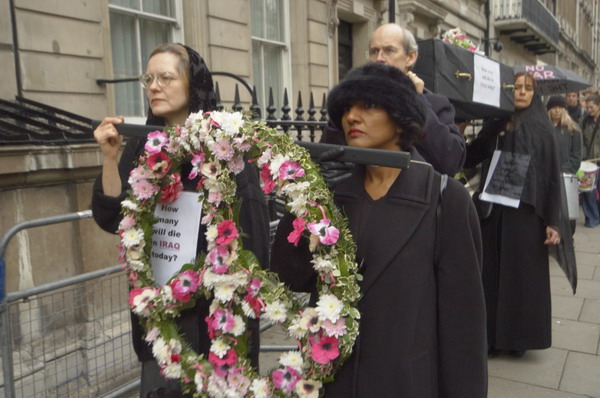
This is largely true, but the march in London attracts counter-protests from Zionists and others (including Iranian freedom, communist and royalist movements and UK right wing fringe groups), which have sometimes led to confrontations and delays and increased security with some marchers becoming mistrustful of photographers.
Al Quds Day March in London - 2014

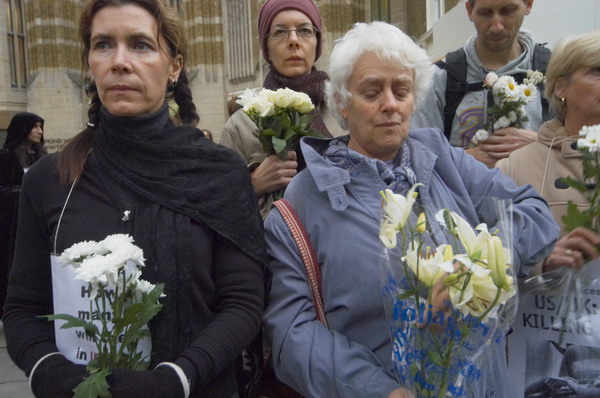
It has at times been a difficult event for me to cover in the close way I like work. Many of my pictures are made with wide angle or extreme wide angle lenses, 28mm or less focal length down to fisheye, working inside or on the edge of crowds. I want to be close to people, if not within touching distance, seldom more than a couple of metres away to give greater interaction and immediacy.

Al Quds Day March in London - 2014

The Quds Day march and rally in 2025 was on Sunday 23rd March, but chaotic rail services that day prevented me from covering it, though I had photographed a pro-Palestine rally close to the Israeli Embassy the previous day. The organisers pointed out that it was taking place “amid an ongoing genocide in Gaza where Israeli forces have slaughtered 50,000 civilians in Gaza, most of them women and children. At the same time armed colonial settlers and troops are running rampage in the occupied West Bank, invading, looting and attacking Palestinian towns and villages with the international community turning a blind eye or actively complicit in the slaughter.”

Al Quds Day March in London - 2014

Back in 2014, the situation in Gaza was dire. As UNRWA states, “During the 50 days of hostilities lasting from 8 July until 26 August 2014, 2,251 Palestinians were killed; 1,462 of them are believed to be civilians, including 551 children and 299 women. 66 Israeli soldiers and five civilians, including one child, were also killed. Overall, 11,231 Palestinians were injured during the conflict, including 3,540 women and 3,436 children.”
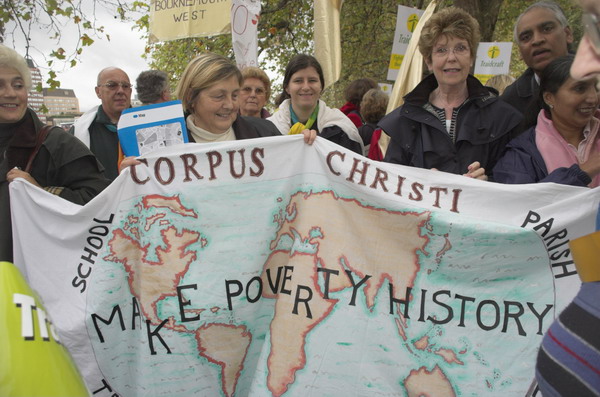
83 schools and 10 health centres were damaged, over 12,600 homes were totally destroyed and there was “a massive displacement crisis in Gaza, with almost 500,000 persons internally displaced at its peak.” The “scale of human loss, destruction, devastation and displacement caused by the 2014 conflict in Gaza – the third within seven years – was catastrophic, unprecedented and unparalleled in Gaza.”

But of course Gaza is now experiencing something far worse – and humanitarian agencies including UNWRA are being prevented by Israel from supporting the people and supplies of food and other necessities are largely being blocked. Inadequate amounts are brought in by the so-called “Gaza Humanitarian Foundation” and people desperate to get it are being shot by the Israeli Defence Forces.

Of course we all know this npw – even though the Israeli government has tried to hide it by preventing international journalists from entering Gaza – and also systematically targeting the Palestinians who are able to report. An article in Modern Times Review on July 15, 2025 quoted the Cost of War project as stating “more journalists have been killed in Gaza in the past 18 months than were killed in the U.S. Civil War, World War I, World War II, the Korean War, Vietnam, and Afghanistan combined.” Early in July the number killed in Gaza had risen to 226.

On 24th July 2014, the march began close to the BBC and went to a rally outside the US Embassy, then still in Grosvenor Square. It was covered by several foreign media organisations but – as with most UK demonstrations – willfully ignored by the BBC.

Protesters called for a boycott of Israel and an end to the occupation of Palestine as well as an end to the attacks on Gaza.

On My London Diary I give a list of the organisations supporting the march – and there is a rather longer list of those supporting the 2025 march. One of the major organisations in both is the Innovative Minds Human Rights Group (InMinds). Founded in 1997 and alleged to have links to the Iranian Islamic Republic it has held regular protests in London against companies supporting the Israeli military, against the arbitrary detention of Palestinians, the torture and imprisonment of Palestinian children and calling for an end to apartheid in Israel.

In the pictures you will see many flags and posters from Inminds – and also a few images of Ayatollah Khomeini who started the celebration of Al Quds Day in Iran in 1979 as well as the current Supreme Leader of Iran, Ali Khamenei.

Also standing out in my pictures are the ultra-orthodox anti-Zionist Neturei Karta Jews who state clearly their belief that Judaism is a religion and not a state, and “Judaism rejects the Zionist state And condemns its ATROCITIES”

One contentious issue in 2014 was over the carrying of flags of the Lebanese Shia Islamist political party and paramilitary group Hezbollah. In 2014 the political party, which was part of the government of Lebanon had not been proscribed and it was only illegal to carry it if there was other evidence to show support of the proscribed terrorist group. I was looking for these flags but only found a very few to photograph.

As the march made its way down Regent Street there were shouts against it from an upper floor window and vegetables were thrown down at the marchers who shouted back angrily. The march organisers asked police to investigate and urged to people to march on.

I left the march well before it reached the US Embassy and saw no other protests against the march. You can see more pictures from the march on My London Diary at Al Quds Day march for Jerusalem.


FlickrFacebookMy London DiaryHull PhotosLea ValleyParis
London’s Industrial HeritageLondon Photos

All photographs on this page are copyright © Peter Marshall.
Contact me to buy prints or licence to reproduce.