More from the Lea: Enfield

Enfield, 1983 34y-16_2400
Enfield, 1983

I’ve now put more photographs in my Flickr album River Lea – Lea Navigation 1981-1992 to add pictures from Broxbourne to the River Thames to my earlier uploads.

Enfield Lock, 1983 34y-35 (2)_2400
Enfield Lock

I’ve gone through the contact sheets from 1981-3 and selected and digitised a few more pictures I found of interest to add to those I’d scanned preparing for earlier shows, but I think there are pictures from some of the later years in that period I may add later.

Lea Navigation, Brimsdown, Ponders End, 1983 34n-52_2400

But for the moment this album is complete – with 418 pictures. Because I made these on a number of different visits to the area, it was difficult to put them into sensible order – and a few are still obviously in the wrong place. But I’ve tried to put them at least largely in order as the valley leads down to the River Thames at Leamouth.

Lea Navigation, Brimsdown, Ponders End, 1983 34n-41_2400

Back in 1981-3 I was not too concerned with the exact locations of the pictures, and my contact sheets seldom have little indication except for the contents of the pictures. I can no longer find the notebooks in which I wrote about the project, though a few of the vintage prints have locations on them and a couple even grid references. I’ve tried to give locations on Flickr, and already a few viewers have been able to help me on this, and correcting a few mistakes I made. Corrections and comments are always welcome, and clicking on any of the images in this post will take you to a larger version where you can post comments.

Broxbourne, 1983 37d-55_2400

So, for example, this picture I’ve captioned simply ‘Broxbourne, Herts, 1983‘ but I could be quite wrong. It could be Cheshunt or somewhere else. And I’d be happy to be told exactly where it is. It’s easier to remember pictures further south as I’m more familiar with the area, though thanks to some who have already corrected a few of my confusions such as mistaking the Clapham Park flats for the Trowbridge Estate.

Lea Navigation, Brimsdown, Ponders End, 1983 34n-42_2400

Most of the pictures in today’s post are from Enfield, Ponders End or Brimsdown, in the London Borough of Enfield, where a large industrial area is located to the west of the canal. I think most of the structures I photographed back then have since been replaced.

Lea Navigation, Brimsdown, Ponders End, 1983 34m-14_2400

In a later post I’l post more selected pictures from Ponders End and Edmonton and then further south. But you can see them already at Flickr album River Lea – Lea Navigation 1981-1992.


All photographs on this and my other sites, unless otherwise stated, are taken by and copyright of Peter Marshall, and are available for reproduction or can be bought as prints.
Climate Justice

2005

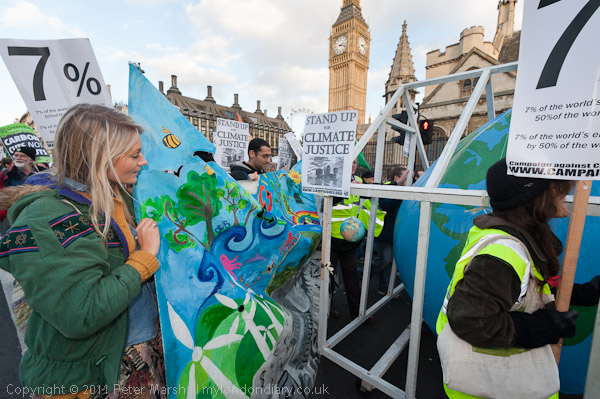
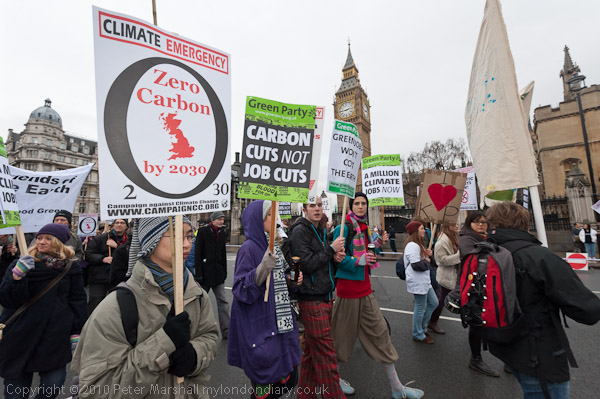
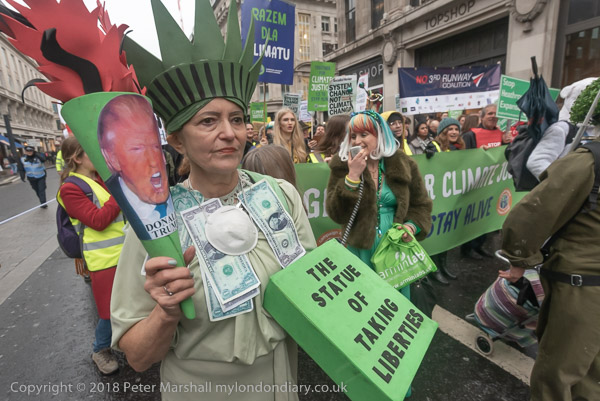
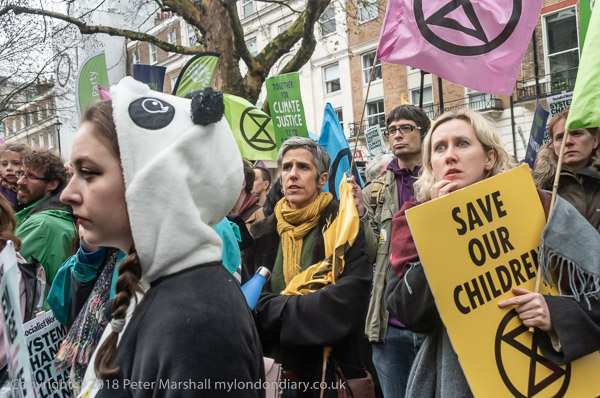
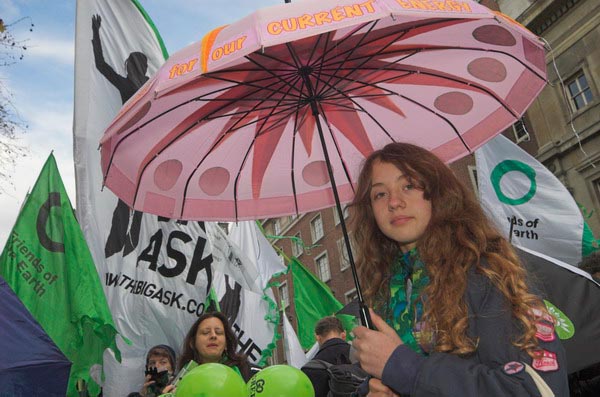
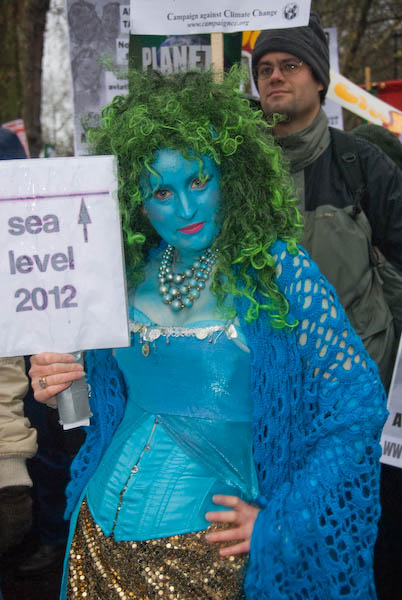
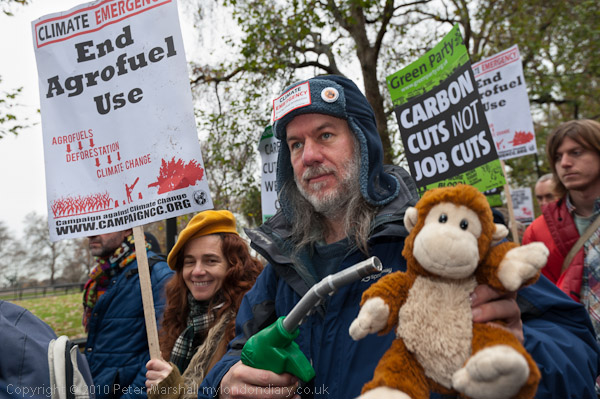
Around this time of year I’ve often been photographing marches for Climate Justice. I think the first at this time of year on My London Diary was probably on Dec 3rd 2005, when around 10,000 of us took part in a march through London led by the Campaign Against Climate Change as a part of an international day of climate protest.

2007

It wasn’t of course the first climate protest that I had photographed, and there are a number of earlier events covered in my diary which were also largely or entirely about the climate crisis:

Kyoto march to US Embassy, London, July 2001
Bush at Buck Palace, July 2001
Bush gets Busted, July 2001
Campaign for Climate Change, March 2002
Bush / Raymond Wedding March, Nov 2002
Kyoto march to US Embassy, London, Mar 2003
Kyoto Climate March, London, Feb 2005
London isn’t Venice, Yet!, Paddington, Apr 2005

2010

I’d had a strong interest in environmental matters since my student days back in the 60’s, although then our main attention was on the problems of pollution, population growth, food supply and resource depletion. That was before I really began to take photographs, and I can’t remember any protests or direct action over these issues (we had other things on our minds too) though I did write and speak very embarrasingly in public on them. And I became a Friend of the Earth when the organisation only existed in California though I was living in the UK.

2011

Although I bought my first digital camera in 1999, it was only a fairly primitive model, and not useable for serious photography despite what was described in reviews at the time as a “huge 2.3 megapixels sensor“, and until the end of 2003 all my real work was on film. The camera that changed that was the Nikon D100, still only 6Mp, but with much higher quality.

2011

It was this camera that really brought ‘My London Diary‘ to life, though as soon as Nikon brought out the much improved D70 I bought on – and then the D200 and D300, finally moving to full-frame. But for several years I worked with both digital and film, continuing to work mainly with a Hexar F with Leica and Voigtlander wide angle lenses, with just a cheap mid-range Nikkor zoom permanently on the Nikon. For quite a while it was the only Nikon lens I owned, and not changing lenses when working avoided getting dust on the sensor, and I only bought a second lens – the Sigma 12-24 zoom when I had a second body. But after than lenses quickly multiplied!

2005

After I had two DSLR bodies I quickly abandoned film, except for working with the various panoramic cameras that I was using mainly for landscape work. Although I made some panoramas digitally combining multiple exposures it was a few years (and considerably larger image files) before I worked out how I no longer needed film or special cameras to produce the kind of panoramic results I wanted with a digital camera and was able to quit using film entirely. Of course it has become rather fashionable to work on film now, but although I’ve kept all my old film cameras, I can’t really see that I will ever use them again. Digital is just so much better.

2011

Back to the Climate. At last we are beginning to hear the kind of speeches from people such as the United Nations Secretary General António Guterres that they should have been making years ago. On Monday he stated “The way we are moving is a suicide” and that unless the US cuts carbon emissions to net zero by 2050 humanity’s survival will be impossible.

2010

I’m still unconvinced that governments around the world will heed calls such as this – and that movements such as Extinction Rebellion and Fridays For Future inspired by Greta Thunberg have been dramatising. With our own UK government it is clearly still window-dressing rather than a real committment to change. It still seems that it will be too little too late, and recent reports suggesting targets will be easier than expected to reach are likely to mislead. It certainly will not be easy, and will require truly drastic system changes.

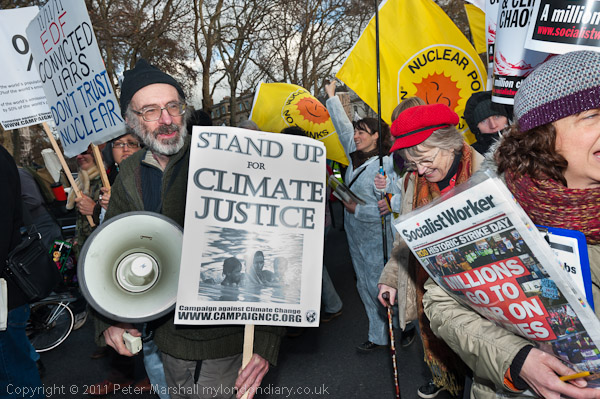
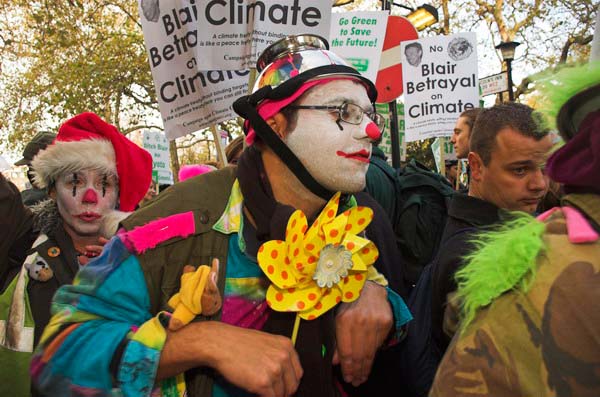
The pictures here are from Climate Marches on December 3rd, 2005, December 8th, 2007, December 4th 2010 and December 3rd 2011.


All photographs on this and my other sites, unless otherwise stated, are taken by and copyright of Peter Marshall, and are available for reproduction or can be bought as prints.


Signs and Animals

Gosheron Tapes, Kensington Church St, Kensington, Kensington & Chelsea 87-10c-14-positive_2400
Gosheron Tapes, Kensington Church St, Kensington, Kensington & Chelsea

I’m often surprised by people who look at some of my photographs and say to me “ I never notice that”, but I think it’s true of all of us that we walk around without really noticing things. Even buildings like Vicarage House, home of Gosheron Tapes, whose frontage screams out onto the street. But Gosheron’s days – at least at this address – had clearly passed, as an estate agent’s sign and flyposts on the windows clearly show, though they seem to have continued making packaging materials elsewhere until at least 2005.

The building now has antiques on the ground floor and serviced offices elsewhere, including the Nicaraguan Embassy. I’ve failed to find any information about its exact date – somewhere around 1900 – or the monogram which appears to be CS on its frontage. Information is welcome.

Godfrey's Model Bakery, Arlington Rd, Parkway, Camden, 1987 87-10b-66-positive_2400
Godfrey’s Model Bakery, Arlington Rd, Parkway, Camden, 1987

The ‘Tasty Corner’ on Arlington St and Parkway in Camden is now an estate agentss and its large sign with its baker for Godfrey’s Model Bakery has disappeared.

Palmers, Pet Stores, Parkway, Camden, 1987 87-10b-55a-positive_2400
Palmers Pet Stores, Parkway, Camden, 1987

Many passed Palmer’s Regent Pet Store on their way to and from London Zoo from Camden Town Station. It was established by Mrs Florence Palmer around 1918 but was run from 1924 by George Palmer, who built up the business and expanded into a second neighbouring shop in the late 1930s. Perhaps surprisingly this shop was listed Grade II in 2007, largely for its shop front which the listing text suggests dates from around 1940, though the houses containing the shop were built in the 1820s.

The shop, which had sold Winston Churchill his cat Orlando as a kitten which later moved into Downing St, and a couple of Abyssinian kittens to Charlie Chaplain, stopped selling animals around 2005 and moved across the road. After being empty for several years it became a tea room.

Clarence Cottage, Albany St, Regent's Park, Camden, 1987 87-10b-15-positive_2400
Clarence Cottage, Albany St, Regent’s Park, Camden, 1987

On their way to the Zoo walkers might have walked down Albany St, or at least past its corner close to this hous, Clarence Cottage, which stii has its row of ornaments with a rather weather-beaten lion at its centre. Previously called Glenhaven, it isn’t clear to me why the mid-19th century house was Grade II listed in 1974, though it’s a pleasant enough building of its age, only really distinguished by this extension with a Ionic pedimented doorway onto the pavement outside and the ornaments above it – including that lion.

It’s in a area of London that has many fine buildings from that era and earlier – much of which is probably also listed.

Sussex St, Pimlico, Westminster, 1987 87-10a-42-positive_2400
Sussex St, Pimlico, Westminster, 1987

I came across two dogs in Westminster, looking to me rather snooty. But I’d failed to note down their exact location and it took me a long time to hunt them down again – but they are still there in Sussex St.

Romany Hotel, Longmore St, Guildhouse St, Pimlico, Westminster, 1987 87-10a-62-positive_2400
Romany Hotel, Longmore St, Guildhouse St, Pimlico, Westminster, 1987

Perhaps the most surprising thing about the Romany Hotel is that it is still there as the Romany Hotel, though the signage has changed and now includes an e-mail address and a fairly discrete extra floor has been added on top.

But in keeping with today’s theme is the bird in flight at the top left corner. Although I’m no ornithologist at first glance it looked like some bird of prey, but I think it is really just a pigeon doing a good impression.

1987 London Photos


All photographs on this and my other sites, unless otherwise stated, are taken by and copyright of Peter Marshall, and are available for reproduction or can be bought as prints.


Change Makers: Ways of Protest

DPAC 19 Feb 2014 20140219-316_2400
Paula Peters of Disabled People Against Cuts speaks outside ATOS offices in National Day of Protest against mishandling of Work Capability Assessments. 19 Feb 2014

I am one of the very long list of artists taking part in the show currently at the Elysium Gallery in Swansea, Change Makers: Ways of Protest.

Here is the full list from the gallery web site:

Asim Ahmed | Phoebe Beckett | Nazma Botanica | Jason & Becky | Beltalowda | Frans Van Den Boogard | Bourdon Brindille | Ben Browton | Hazel Cardew | Louise Burston | Elsa Casanova | Philip Cheater | Michael Cheung | Jonah Brucker-Cohen & Mark Ramos | Lucy Donald | Judit Csobod, Marcela Echeverki & Stephen Donnelly | Plein Le Dos | Angus Eickhoff | Camila Espinoza | Gisela Ferreira | Mark Folds | Virginie Foloppe | Dawes Gray | Amy Goldring | Emily Grimble | Carol Harrison | Vinay Hathi | Hannah Jones | Paul Jones | Julia Justo | Ken Kamara | Tim Kelly | Shona Davies, David Monaghan & Jon Klein | Bob Bicknell-Knight | Hannah Lawson | Catherine Lewis | Laura Elisabeth Levick | Peter Lewis | Peter Marshall | Alice Mason | Steph Mastoris | Celia Mora | Karl Morgan | Sarah Poland | Jota Ramos | Euros Rowlands | Fiona Roberts | Si Sapsford | David Sladeck | Ekene Stanley | Ben Steiner | John Thomson | Daniel Trivedy | Vladimir Turner | Kenechi Unachukwu | Undercurrents | Natacha Voliakovsky | Eef Veldkamp | Aisling Ward | Thais DeMelo & Pedro H.C |Dawn Woolley & Davin Watne | Caroline Wilkins | Ian Wolter | Tess Wood

Elysium gallery in partnership with Swansea Museum, Swansea County Council and Fusion presents ‘Ways of Protest’, an extensive exhibition looking at how the arts can be used as a vehicle for protest, and how activism and a desire for social change can drive individual and collective creativity.

Contemporary artworks by Welsh and International artists will be accompanied by archival artefacts from the vast Swansea Museum collection as well as memorabilia, photographs, interviews, and artworks provided by members of the public and protest groups from Swansea and Wales.

http://www.elysiumgallery.com/events/event/change-makers-ways-protest/

If you are in Swansea you can book a free time slot to see the show which continues until Saturday 23 January. New lock-down restrictions announced for Wales this week means that the show will have to close from 6pm on Friday 4th December it but it will re-open in January.

But otherwise you can find out more about the show on the Change Makers Festival Facebook Group or Instagram feed.

My contribution to the show is six A2 prints of protests in London by DPAC (Disabled People Against Cuts) and I accompanied my submission with this short text:

Disabled People Against Cuts

When the Tories came to power (with the Lib-Dems) in 2010 and began their savage austerity programme they turned the screw hardest on the disabled, thinking they would be an easy target. DPAC soon proved them wrong.

DPAC 8 Jan 2012 20120128-0234_2400
Disabled People Against Cuts and supporters block Oxford Circus in protest against the Welfare Reform Bill, which will penalise the poor and disabled. 28 Jan 2012
DPAC 18 Apr 2010 20120418-0421_2400
Disabled People Against Cuts chain wheelchairs to block roadway at Trafalgar Square in protest against benefit cuts and unfair fitness assessments. 18 Apr 2010
DPAC  4 Sep 2013 20130904-463_2400
Disabled People Against Cuts hang pants with messages outside the Dept of Work and Pensions at launch of UK Disabled People’s Manifesto. 4 Sep 2013
DPAC 12 May 2014 20140512-692_2400
Disabled People Against Cuts protest at the Dept of Work and Pensions against plans to end the Independent Living Fund. 12 May 2014
DPAC 2 May 2017 20170502-350_2400
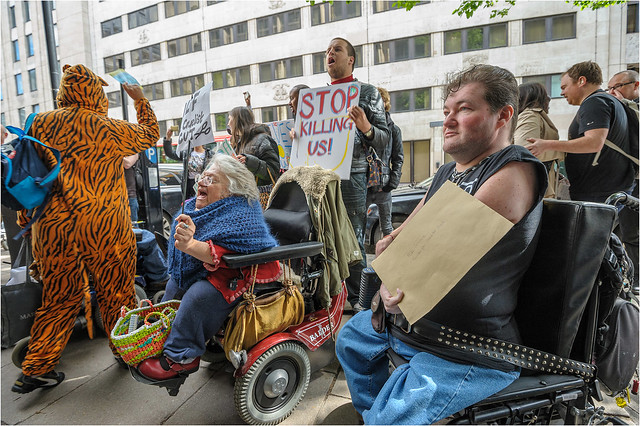
Disabled People Against Cuts protest at Conservative Party HQ the day before the General Election against Tory policies which have killed and impoverished the disabled. 2 May 2017

Click on any of the pictures to go to see the group larger on Flickr.

There were several reasons for my choosing this set of pictures (there were four more in my original submission.) Foremost was my great admiration for the people in DPAC and the way they have stood up to the cuts, putting themselves on the line as these pictures attempt to show. I wanted to present something coherent rather than simply choosing my most striking images and while there were several groups and issues among the hundreds I have photographed I could have chosen, DPAC was one that stood out, and also one that I thought would have considerable public appeal. The government may have little concern about the disabled who it writes off as unproductive, but the great majority of the people have a heart.

Because the show was to be in Swansea I did briefly consider sending pictures of Class War – which had its origins in that city – as readers of Bash The Rich will know (if you’ve not read it, get your copy now.) But Class War are perhaps the Marmite of protest (and I do like Marmite.) Of course if anyone other gallery would like to invite me to show work on protest, other pictures are always available. After all I have several hundred thousand of them.


All photographs on this and my other sites, unless otherwise stated, are taken by and copyright of Peter Marshall, and are available for reproduction or can be bought as prints.


1st December 2018

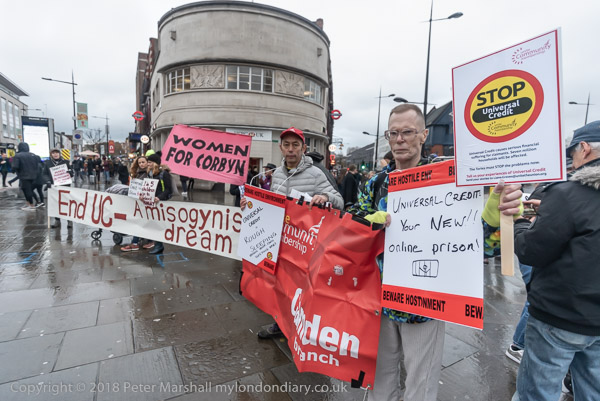
Two years ago, the first day in December had been declared Stop Universal Credit day of action by Unite Community and small groups around the country were holding protests and handing out leaflets in busy town centres about the many failures and great hardship caused by this poorly though out and badly administered benefit. They called for an end to the long wait before claimants receive money, for applications to be allowed at job centres as well as online, for better help when the system fails people, for direct payments to landlords to avoid rent arrears and evictions and an end to benefit sanctions for all claimants.

Universal Credit was intended to simplify the benefits system, but it failed to take into account the huge range and complexity of situations ordinary people face, and assumed that claimants would have the same kind of support that the middle-class and wealthy take for granted from families, friends and resources. And its failures were compounded by making it a vehicle for cutting costs. As I commented in 2018:

“UC has created incredible hardship, pushing many into extreme poverty and destitution, making them reliant on food banks and street food distributions, greatly increasing the number of homeless and rough sleepers. Thanks to Tory policies, more than 120,000-plus homeless children in Britain will spend Christmas in hostels and B&Bs, many without the means or facilities to provide a Christmas meal.

Some have said that UC is a part of a “state euthanasia” system for the poor, with academic estimates that it and other benefit cuts and sanctions since the 2010 elections having caused 110,000 early deaths, including many suicides. A cross party committee has called for its rollout to be halted until improvements are made, but the government has dismissed virtually all criticism of the system, making only insignificant changes.”

http://mylondondiary.co.uk/2018/12/dec.htm#universal

I took a detour on my journey into London to photograph the protest outside Camden Town station, where protesters were also pointing out that Universal Credit “hands more financial power to male claimants making it a misogynist’s dream, forcing women in violent relationships into greater dependency on their violent male partners.”


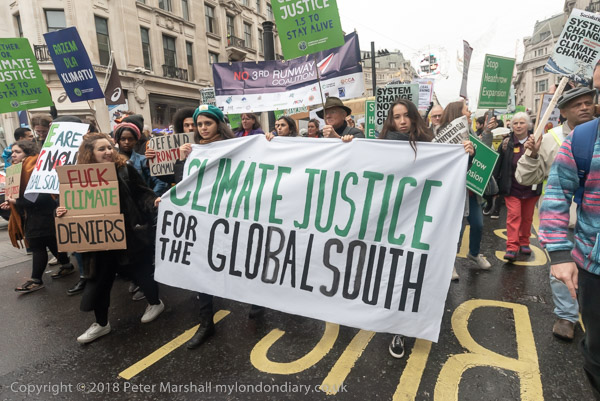
The major protest taking place in London was a march and rally organised by the Campaign against Climate Change. Together for Climate Justice began with a rally outside the Polish Embassy, in advance of the following week’s UN climate talks in Katowice, Poland.

Despite the impending global disaster, little real action is being taken by countries around the world and we still seem committed to a course leading inevitably to mass extinction. Behind the failure to act is the intensive lobbying of companies exploiting fossil fuels who have spent many billions in sowing doubt about the scientific consensus of global warming, and continue to produce vast quantities of coal and oil and explore for further resources, increasingly in the more ecologically sensitive areas of the Earth.

At the rally a wide range of speakers expressed their concerns that the talks in Poland are being sponsored by leading firms in Poland’s fossil fuel industry. And at the rally opposite Downing St where Frack Free United were to hand in their petition at the end of the march, a speaker from the Global South reminded us of the urgency of the situation; people there are already dying because of climate change.

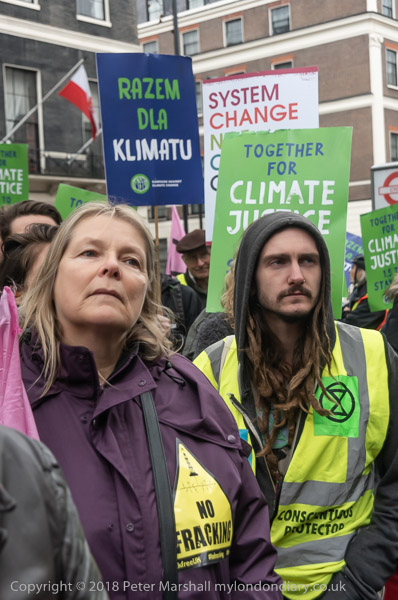
Before the march we were all taught to say a few slogans in Polish, including ‘Razem dla klimatu‘ (Together for the Climate) which appeared on a number of placards, and the rather less pronounceable Polish for ‘Time to limit to 1.5’, as well as for ‘Climate, jobs, justice!’.


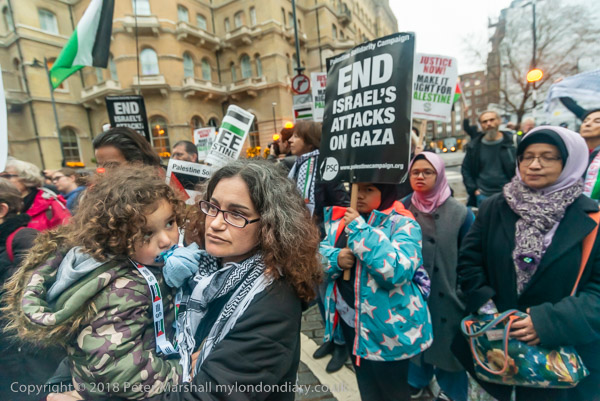
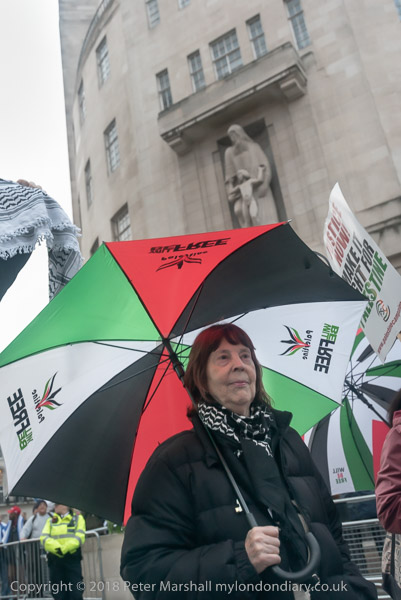
Finally I made my way to Broadcasting House, where The Palestine Solidarity Campaign and others were calling on the BBC to withdraw from the 2019 Eurovision Song Contest hosted by Israel, to avoid being complicit in Israel’s ongoing violations of Palestinian human rights.

Campaigners say the contest ‘artwashes’ Israel’s human rights record, including the killing of at least 205 Palestinians by Israeli forces in the besieged Gaza Strip since protests began at the end of March, and the passing of the Jewish nation state law which formalises an apartheid system in Israeli law.

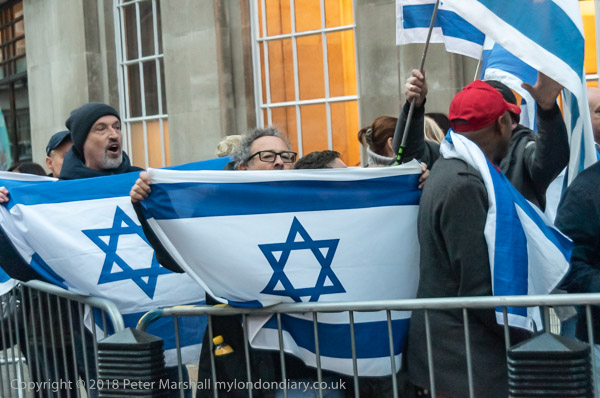
A small group of Zionists had come to oppose the protest, but made it clear that they did not want me to photograph them. Some lifted the Israeli flags they were holding to hide their faces when I pointed my camera in their direct or turned away.


More at:

BBC Boycott Eurovision Israel 2019
Together for Climate Justice
Stop Universal Credit day of action


All photographs on this and my other sites, unless otherwise stated, are taken by and copyright of Peter Marshall, and are available for reproduction or can be bought as prints.


November 30th 2011

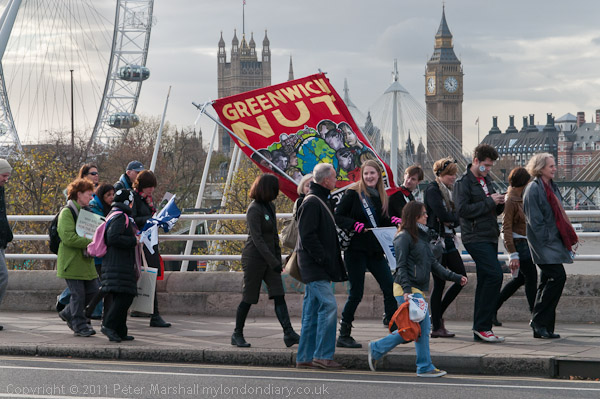
November 30th fell on a Wednesday in 2011, and it was the day of a strike by public sector workers against government plans to cut their pensions as part of the austerity programme following the banking crisis. As I wrote back then:

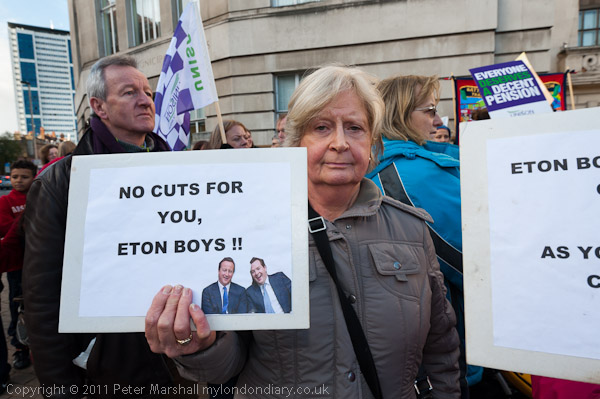
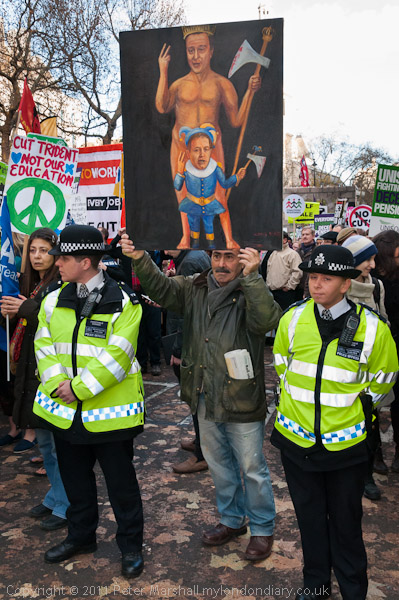
Feelings are certainly running very high over pension injustice, as well as over the government cuts in jobs and services. The widespread feeling across the country – not just trade unionists – that our government is made of of the wealthy and privileged who just do not understand the problems of ordinary people was reflected in the two hand-written placards I photographed, both with photographs of Cameron and Osborne alongside the texts ‘Eton Boys, Do you Feel Our Pain, As You Order Your Champagne‘ and ‘No Cuts For You, Eton Boys!!’

The day had begun early for strikers at Wandsworth Town Hall who had been on the picket line since 6am at the Town Hall and other council sites across the borough, though I only joined them around 4 hours later, when many were about to leave to join the TUC march in central London, and I also made my way to a packed Lincoln’s Inn Fields where around 20,000 were assembling.

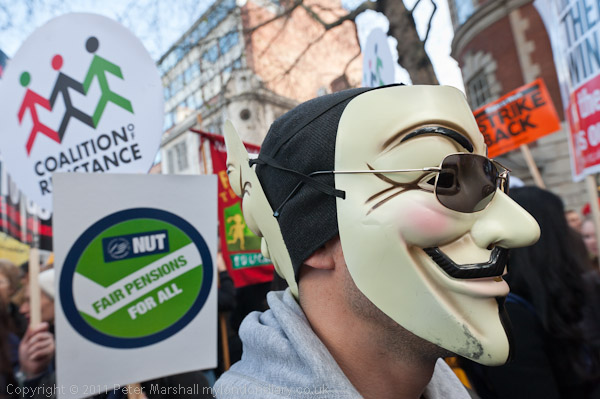
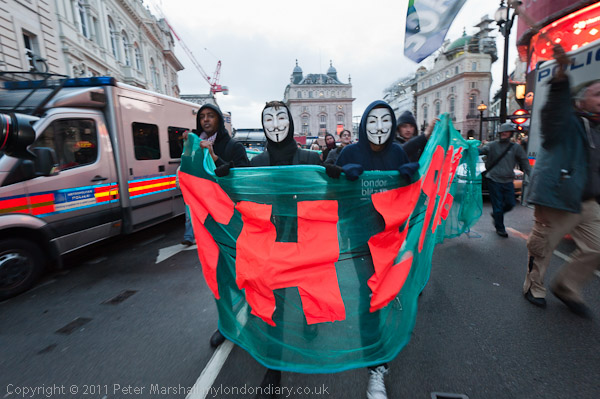
As well as public sector workers – including many from associations which have no record of previous strike action or taking part in protests – there were activists from groups such as the Education Activist Network and other student groups, people wearing ‘Anonymous’ Guy Fawkes ‘V for Vendetta’ masks and other supporters, including political artist Kaya Mar with his painting of coalition leader David Cameron and his Lib-Dem sidekick Nick Clegg carrying blood-stained axes.

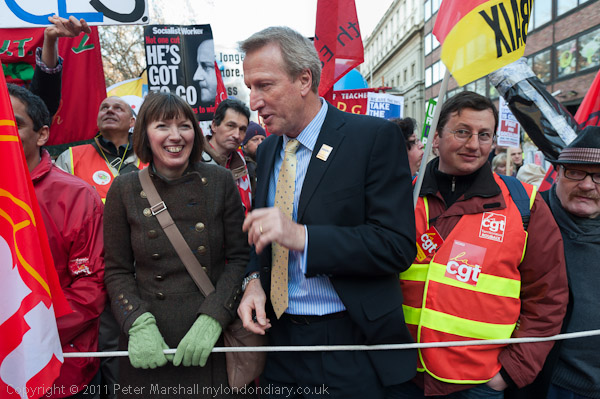
There were also a group of French trade unionists from the CGT, come to support their English colleagues – here in a picture beside Frances O’Grady, Dep Gen Sec of the TUC and John Rimmer, president of the NASUWT.

More joined the march along the route to Westminster. It was a peaceful march which hardly merited the huge police presence, and I think the French trade unionists will have thought it very restrained, although some groups, particularly some of the students, did liven it up a little with loud chanting and the occasional surge. The rally had already begun when I arrived, although the end of the march was still almost a mile back.

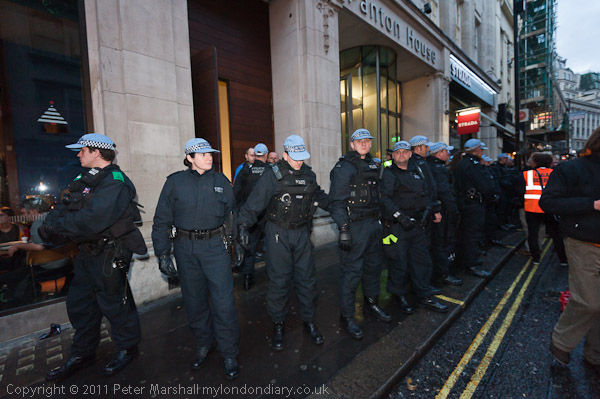
I didn’t wait to hear the speeches, but went to Piccadilly Circus, where Occupy London protesters from the camp outside St Paul’s Cathedral were gathering for a protest against corporate greed. I stood with them for around half an hour while we all waited for something to happen, watched by a large crowd of police. It began with a diversion as around 30 people with the ‘Precarious Workers Brigade’ banner that I’d photographed earlier on the TUC march rushed across the road to protest outside Boots, drawing much of the police attention.

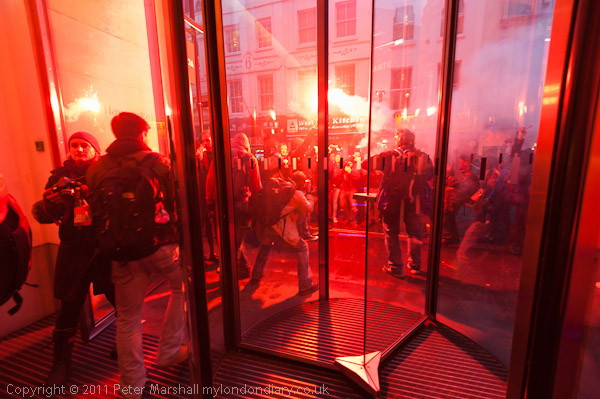
Others by Eros were getting ready the main banner ‘All Power to the 99%’ which they then rushed along the street with the rest of the protesters following, going down Haymarket, and I rushed along with them taking pictures. At Panton St, one of them lit a bright orange flare and they all turned down the street to Panton House, where some rushed into the foyer.

I stopped there to take a few pictures rather than rushing to follow them up the stairs. By the time I turned to follow them the stairs were rather crowded but I made my way up to the third or fourth landing before deciding I was out of breath and probably not going to get to the top as the stairs were too crowded. By then the police had begun to catch up, and stopped me going down. And although police were shouting and me and the others on the stairs to go down, other police were pushing us out of the way when we tried to do so as they rushed up to the roof.

Eventually I managed to make my way out and try to take a few pictures as protesters on the roof lowered banners over the edge while others outside formed a ‘human microphone’ to let everone know what the protest was about.

Occupy London had chosen Panton House as it contains the London offices of the mining Company Xstrata, whose CEO Mick Davies they say is the highest paid CEO in the UK, but according to their statement, “is a prime example of the greedy 1% lining their own pockets while denying workers pensions.”

I was sorry not to have made it to the roof as several other photographers had done, but at least I was able to slip through the police kettle and go home early after a rather tiring day.

More pictures at:

Occupy London Expose Corporate Greed
TUC Nov 30 March
Wandsworth Nov 30 Rally

Before the Olympics – The River Lea

The Source of the River Lea, Leagrave, Luton, Beds, 1982 33d-56_2400
The source of the River Lea, Leagrave, Beds

Back in 1981 I kind of stumbled across the River Lea as I walked and photographed eastwards out of the city through Wapping, Limehouse and Poplar to Bow and Canning Town. Of course I’d known about it since my youth, growing up in Middlesex; it was our eastern boundary where civilisation ended and Essex began, but never something we visited.

I began at Bow Creek, the River Lea’s tidal section which leads to its confluence with the River Thames at Leamouth, but soon after began to explore Stratford Marsh, a remarkable wilderness area around the Bow Back Rivers. I’d gone to Bow having heard a short radio report that commercial traffic on the Lea Navigation was to end in a few weeks time, and found it more or less already had, though I was able to find a couple of loaded barges moored by a wharf next to the Bow flyover, as well as quite a few barges empty and apparently abandoned.

River Lea, near Luton, Beds, 1983 33e-14_2400
River Lea

I put together a proposal to document the area around the Lea navigation and sent it, including some of the pictures I had already made, to try to obtain some funding for an extensive project on the area. Later I found the esteemed photographer I had approached to endorse my project was not one of the charmed circle who advised the funding body and promoted their own former students and protégées – and that outsiders were seldom if ever funded.

Works, Broxbourne area, Herts, 1983 34z-52_2400

When my rejection came I was downhearted – particularly by seeing some of the projects that did get support – and also rather angry. I still saw it as a worthwhile project and thought about ways I could carry it out funding it myself. I had little cash and a young family to support, so I had to keep costs to a minimum. I had to stick to using 35mm, to load cassettes from bulk film, do all the processing and printing myself and to give up the idea of producing a book.

White House Cafe, Lea navigation. Broxbourne area, 1983 34z-11_2400

Probably working with 35mm improved the project, giving me more flexibility than using medium format, where my choice of focal lengths would have been much more restricted. But loading cassettes from bulk did lead to more problems than using factory loaded film and my home processing facilities were a little on the primitive side. For some of the work I used Kodak Technical Pan, an extremely fine-grain film designed for high contrast copy work which could be tamed for pictorial use with reduced development – but which also meant reduced speed – depending on the developer used from ISO6 to ISO32. Later Kodak Technidol developer became available and made it much less sensitive to small changes in development time or agitation, and the results were more reliable. Technical Pan was I think discontinued in 2004.

Lea Navigation,  Broxbourne area, Herts, 1983 35a-32_2400

I worked on the project on occasional days in 1982-3, extending it to cover the area around the River Lea from its source to the Thames and then moved on to other things. Occasionally though I returned to the Lea and took more pictures, particularly in 1992 around Stratford Marsh, and later in that decade around Ponders End. In the early years of this century I walked the length of the river over several stages with my family and later went back a cycled much of it after I bought a Brompton folder which I could easily take on trains to suitable starting points. By this time I’d also exhibited work from this project in several shows. When the site for the London Olympics was announced in 2005 I began putting it on line, setting up the web site The Lea Valley and planning the book ‘Before The Olympics‘, which eventually I self-published on Blurb – and is still available.

In the last few days I’ve gone back to my contact sheets from 1981-3 and digitised a number of new images from them and am now beginning to upload them to Flickr, along with a few already from 1990-1992 previously scanned.

Riverside Cafe, Waltham Abbey, River Lea, Lea Navigation,  Broxbourne area, Herts, 1983 35a-42_2400

So far I’ve uploaded only the few images I made between the source at Leagrave (augmented as I made the exposure by a French photographer friend) to somewhere around Cheshust, close to the edge of Greater London. You can see more from this stretch already on Flickr, but there are very many more taken inside London Boroughs to come.

Broxbourne area, Herts, 1983 34z-46_2400

Some apologies. Some of the images are without full location details, which I have lost, and others were scanned with carrier glass that has caused clear ‘Newton’s rings’ in shadow areas, which are impossible to entirely retouch, though perhaps one day I’ll re-digitise them. Some of the negatives have also been damaged by an insect infection which takes extensive retouching and is in some images impossible to completely remove.

I’ll make further posts after I upload more pictures to the album, and will probably upload images from later years too.

River Lea – Lea Navigation 1981-1992


All photographs on this and my other sites, unless otherwise stated, are taken by and copyright of Peter Marshall, and are available for reproduction or can be bought as prints.


November 2014 (4)

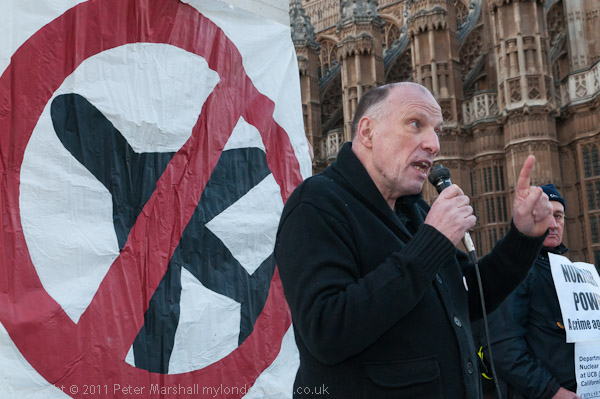
One of the more disturbing trends in Britain over the past ten years has been the rise of fascism, both in mainstream politics and also in the rise of various extreme right groups. We have a government which is increasingly prepared to act outside the law – prime examples including the Home Office’s ‘hostile environment’ set up by Theresa May, Boris Johnson’s attempt to close down Parliament and more recently to renege on parts of our agreement with the UK – and whose actions have encouraged extremist overtly racist and Islamophobic groups. But it isn’t just in the UK, and Germany, Poland and Greece are among other countries to have seen similar movements on a larger scale.

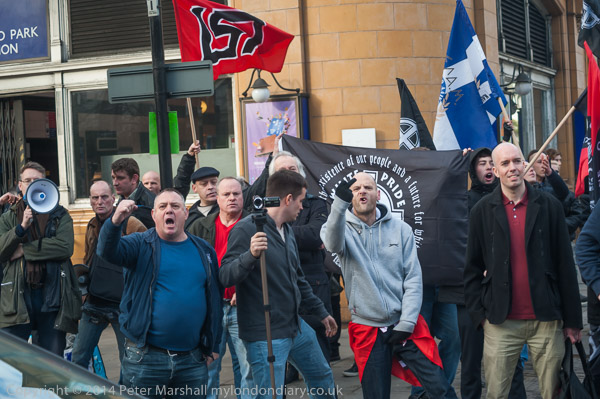
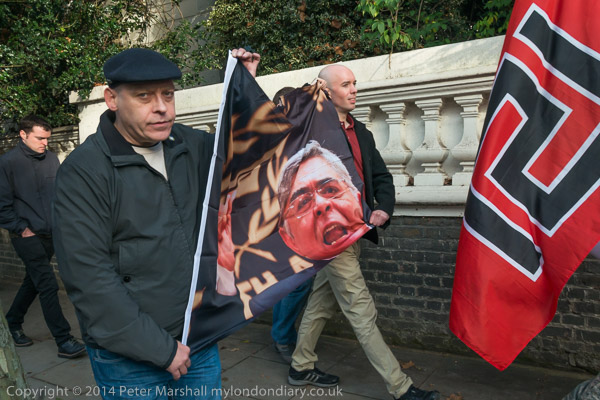
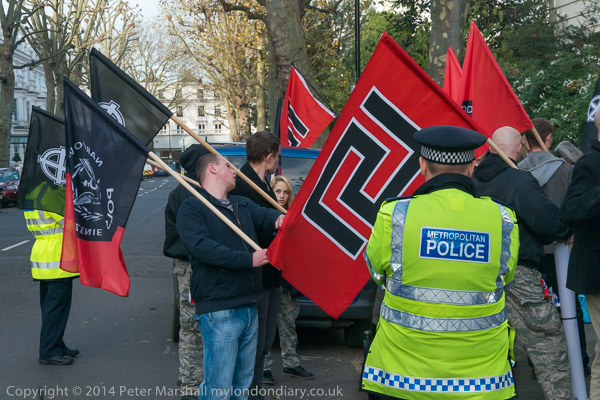
One of the nastier to crawl out from under the stones is the neo-Nazi Golden Dawn in Greece, where 50 leading members were then on trial in Athens for violent attacks, firearms and other offences. In the UK, New Dawn was set up in 2013 in support of the Greek organisation and, together with Polish neo-Nazis in the UK and British ‘White Pride’ supporters they had planned to march in London to the Greek Embassy to call on the Greek government calling on them to drop the charges and release the Golden Dawn leaders.

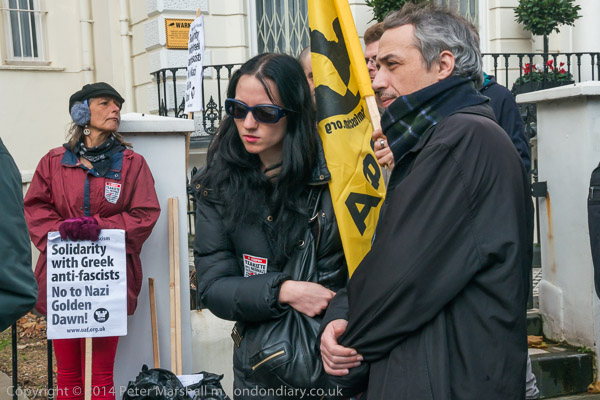
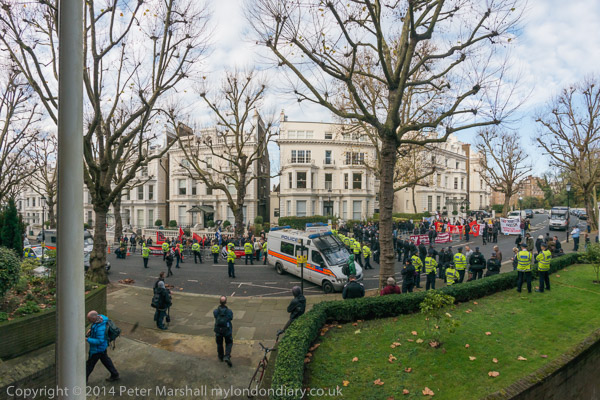
Their march was facilitated by the police and opposed by UK anti-fascist activists including Antifascist Action for Greece, Unite Against Fascism and many trade unionists, who gathered opposite the Greek Embassy an hour before the Golden Dawn supporters were due to arrive.

I don’t enjoy photographing extreme right groups, who tend to be hostile, and as usual I was threatened and spat at, though the police presence prevented any physical violence and stopped the press getting really close to the protesters. As a journalist I would have liked to have been able to talk to some of them, but this wasn’t possible, and their approach to the press generally is to shout insults and complain the press treat them badly by reporting their actions. I think we generally report accurately and if reports are bad it is because their actions are reprehensible.

Both police and protesters tried to prevent me and the other photographers taking pictures and, not unusually, I and others were threatened with arrest. A videographer with the protesters made a point of recording those of us who were taking photographs. Those of us who report on right-wing protests have become used to having our pictures posted on the web with the intention of provoking violence against us.

The main speaker at the event was Peter Rushton of the England First Party, associate editor of its magazine, Heritage and Destiny. According to Hope Not Hate he was expelled from the BNP in 2002, joining the more extreme White Nationalist Party, and later the British People’s Party. Reputed to be one of Britain’s leading Holocaust deniers they say he was a close friend of the banned terror group National Action.

I left after photographing Rushton speaking, walking through the police lines to make my way to Holland Park underground station. I thought it wise to leave the area before police allowed the New Dawn protesters to leave.

More at Neo-Nazi ‘Free the Golden Dawn’ Opposed.

November 2014 (3)

Fortunately there was nothing in my diary for the last Thursday in November 2014, as I think it was probably past 2am before I had finished editing and filing my pictures from the two events on Wednesday evening. But on Friday it was another early start for me, though not very early, catching the first train on which I can travel at reduced – but still excessive – rail fares.

I’m fortunate to be reasonably well-off, largely thanks to pension contributions paid during 30 years of full-time employment, though by no means rich. More importantly I live in a house which we finished paying for around 25 years ago, and which, though not grand serves its purpose. It means that we can afford both to eat and to keep warm – though I’m typing this with an extra jumper on in a room that is sometimes cold enough for me to wear a woolly hat.

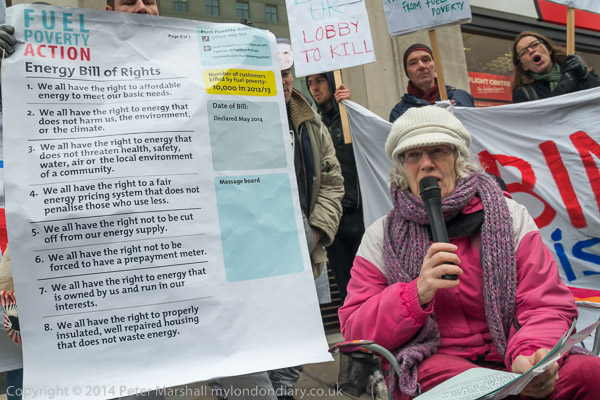
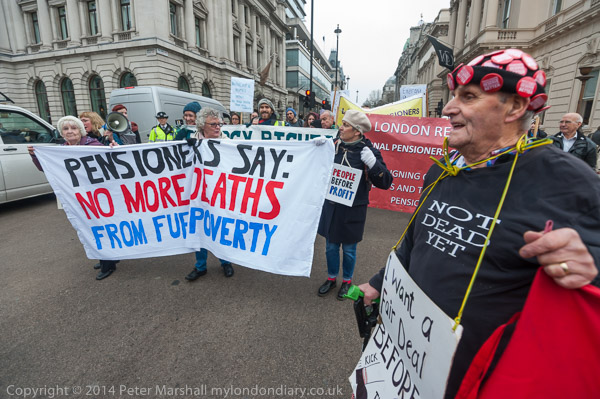
But for many – and particularly many who are elderly and disabled – the choice between keeping warm and eating is a desperate one, eased only slightly by the annual ‘Winter Fuel Payment’ of £200 per household. As I wrote in 2014, ‘The official statistics show that in the year 2012/2013 over 10,000 people died from fuel poverty, including thousands of people in London, and figures for last winter are likely to be higher.’

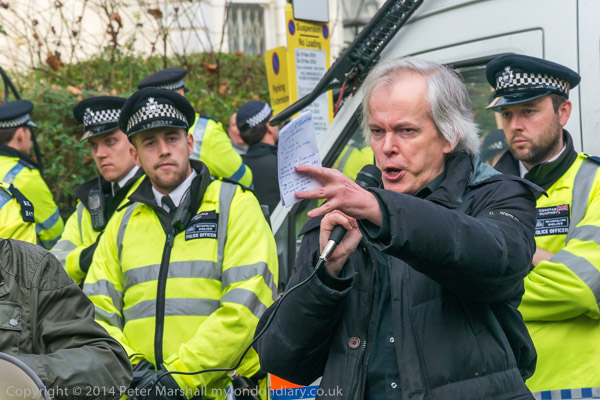
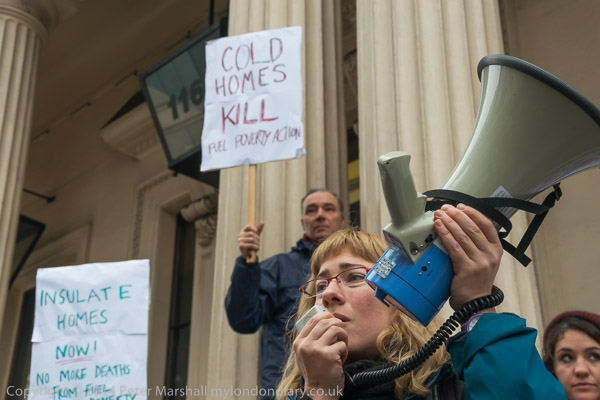
The protest by pensioners, Fuel Poverty Action and No Dash for Gas was against Energy UK, the lobbying organisation of the Big Six energy companies who together made profits of £3.7 billion in 2012/3, and they marched from Charing Cross Station to their Regent St offices, stopping on the way for a short action outside the Institute of Directors on Pall Mall.

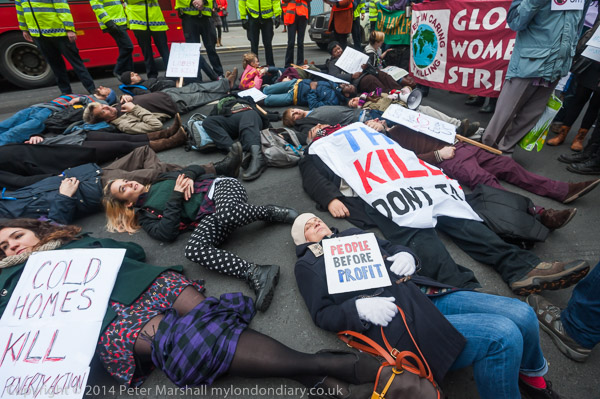
They then held a 15 minute die-in stopping traffic on the road outside the Energy UK offices before continuing with a rally.


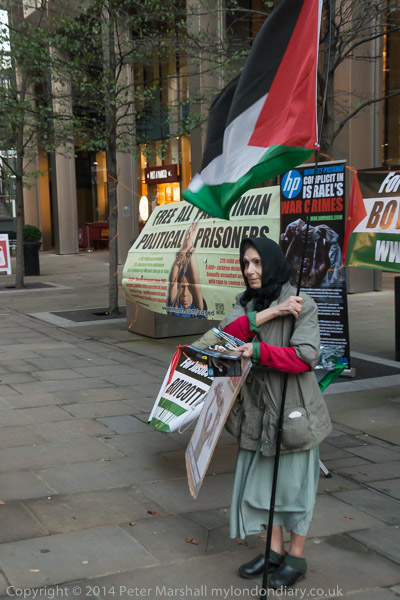
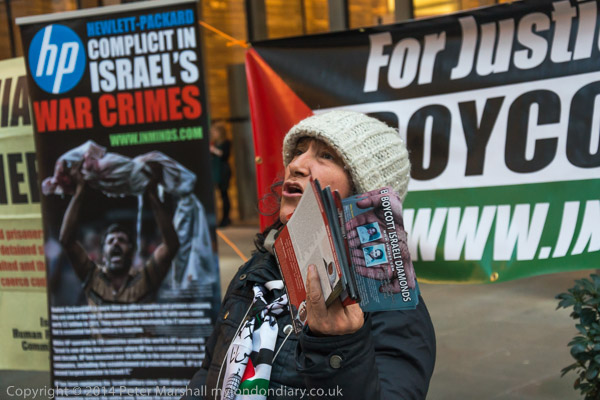
Later in the day I joined the Palestinian Prisoners Campaign for a protest outside the City offices of Hewlett Packard. Saturday was the ‘UK Stop Arming Israel’ day of action, but they came on Friday as the HP offices are closed at the weekend. HP is one of the 20 top US armaments companies and has a $6 billion investment in Israel where they provide the IT backbone for the entire Israeli war machine – from the army, to the navy, to the Ministry of Defense, as well as for the prisons and intelligence services, backing up the repression, imprisonment and torture of Palestinians.

The group protests regularly at companies providing support for the Israeli regime, and includes a number of Palestinian and Jewish protesters and is supported by the Islamic Inminds Human Rights Group which has links with Iran.


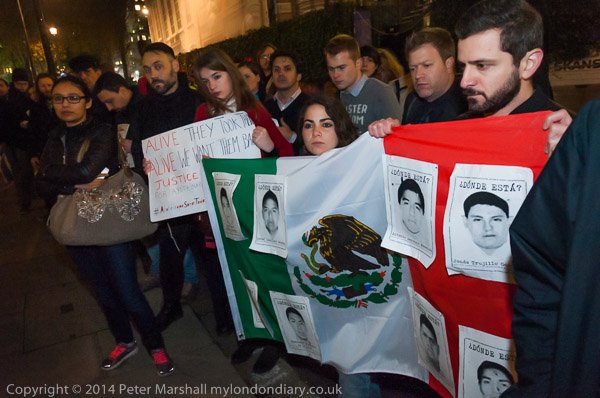
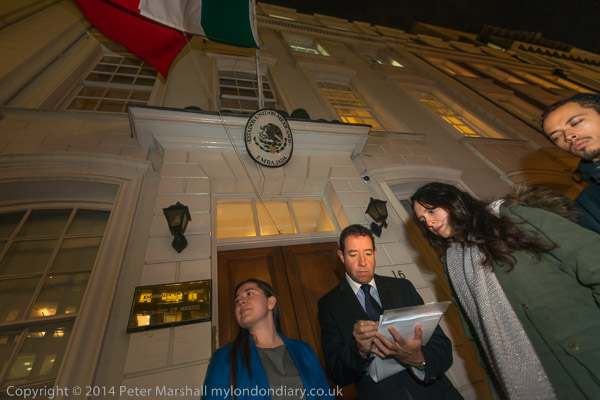
Finally I made my way to the Mexican Embassy in Mayfair for a protest over the disappearance and almost certain massacre of 43 Ayotzinapa college students in Iguala on 26 September who appear to have been arrested by police and handed over by the local mayor to the local crime syndicate Guerreros Unidos (“United Warriors”) to be murdered.

It was now quite dark and the street was badly lit – with most of what light there was coming from the windows of the buildings around. Many held posters with pictures of the missing students and asking in Spanish ‘Where are they now?’ but in seems very unlikely that any are still alive. Although the scale of this massacre caught the attention of the Mexican people – and briefly that of the world – unfortunately similar murders are not unusual in Mexico.

Two embassy staff came out to receive a letter to the Mexican government from the protesters and spent some minutes on the steps listening to the speeches.


More about all three events on My London Diary:
Solidarity with Mexican students
Stop Arming Israel protest at HP
No More Deaths from Fuel Poverty


All photographs on this and my other sites, unless otherwise stated, are taken by and copyright of Peter Marshall, and are available for reproduction or can be bought as prints.

November 2014 (2)

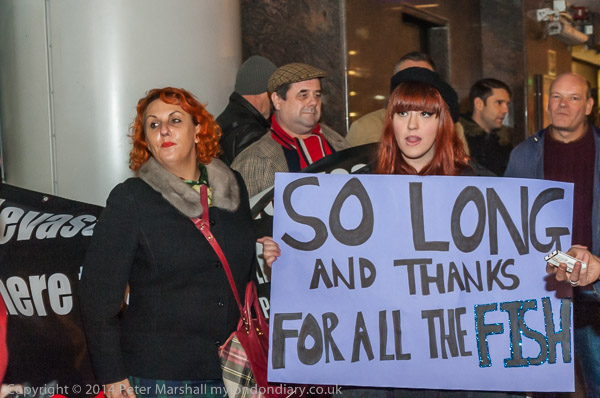
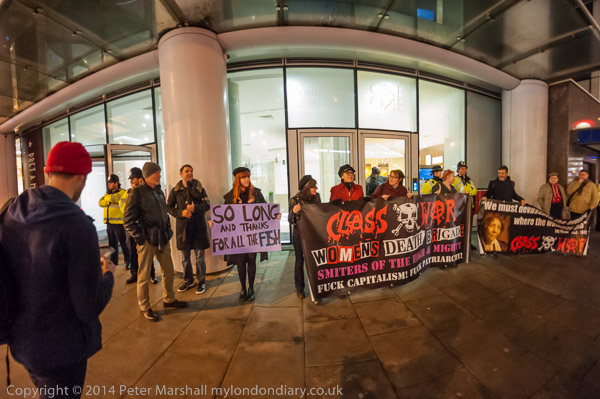
The Wednesday of the final week of November in 2014 was an easier day for me as I was able to spend most of it at home and catching up on various things including a little shopping and visiting the library to borrow new books to occupy me on my train rides to London. I only had to leave home around 5pm to arrive in Aldgate for the Class War Xmas Ceasefire Special outside the tower with separate entrances for its wealthy and its social housing tenants.
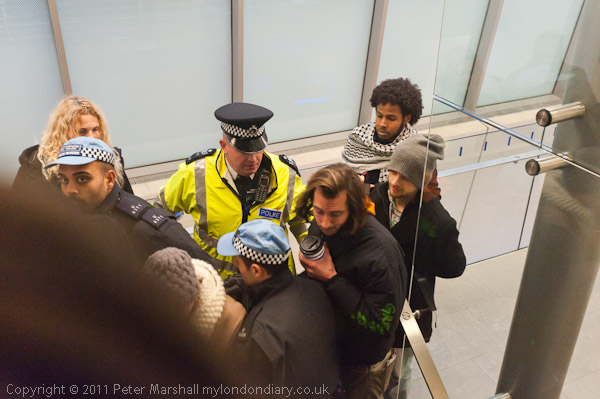
After 19 weekly protests outside the ‘rich door’ the tower owners had finally agreed to talk with Class War and try to reach a solution to the problem, and in response Class War had agreed to call off further protests unless the talks failed. So this was more of a celebration than a protest, although the talks, when they took place didn’t really reach a satisfactory conclusion.

But there were some concessions and the protests did lead to some real improvements including new paving and lighting and better cleaning for the side alley which lead to the ‘poor door’, and perhaps more importantly they raised the whole issue of segregated entrances very much into the national agenda.

I was sorry to have to rush away from the celebrations, which I suspect continued afterwards in one of the local pubs.


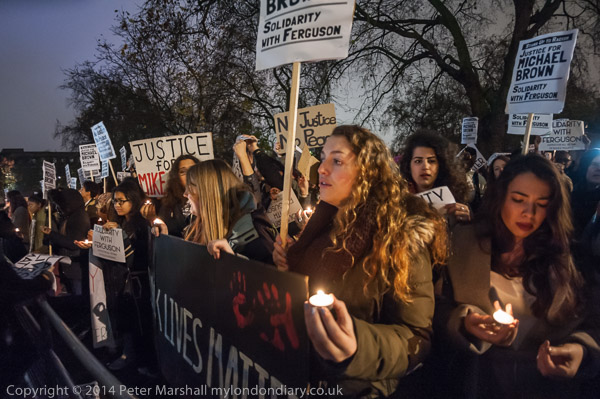
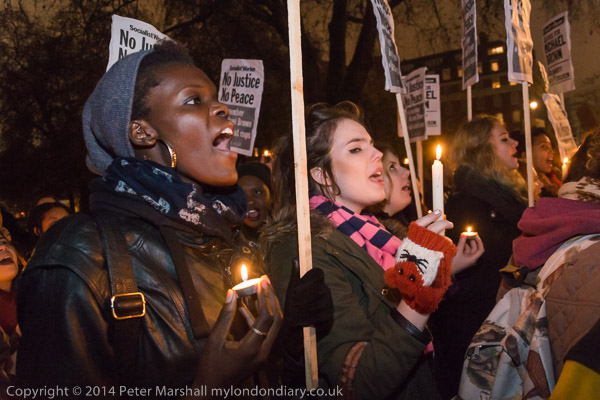
A tube ride took me across town to the US Embassy, still then in Grosvenor Square, and the Candlelit Vigil for Michael Brown.
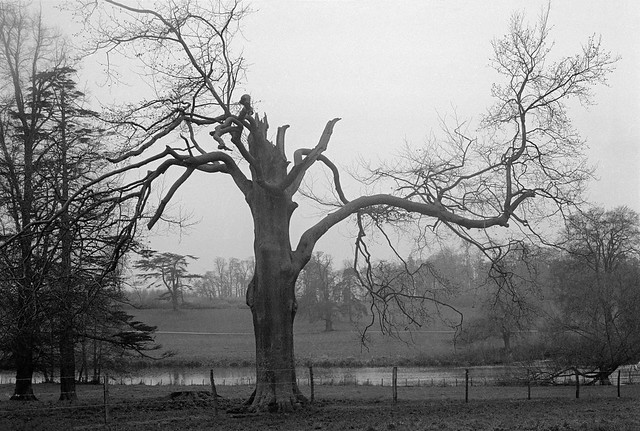
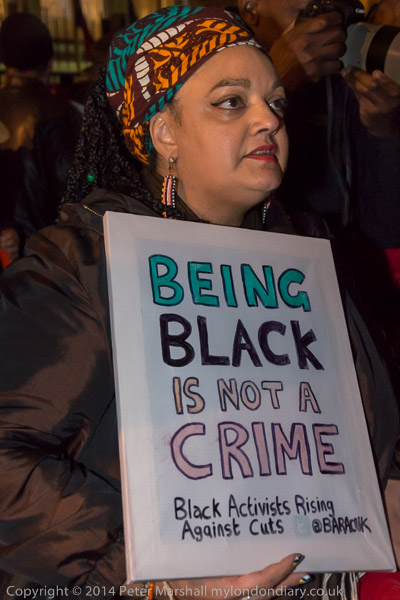
In August, police officer Darren Wilson had shot and killed Michael Brown Jr, an 18-year-old black man in the St Louis suburb of Ferguson, Missouri. Brown’s companion said that Wilson had grabbed Brown through his car window after calling on them to stop as they walked down the street; Brown, who was unarmed, tried to grab the officer’s gun as he threatened him and two shots were fired, one hitting Brown’s hand. Brown and his friend fled and when Wilson fired again, Brown turned around, raised his hands in surrender and shouted ‘Don’t Shoot!’ and Wilson fired six more bullets into his body. Wilson’s account differed greatly and a grand jury having heard decided not to indict him.

Riots followed the shooting, continuing for over a week in Ferguson, and there were protests across America and worldwide against the shooting, using the slogan ‘Hands Up, Don’t Shoot!’ There were further protests in 170 cities after the grand jury verdict was announced, and elsewhere across the world including this candlelit vigil in London called by London Black Revolutionaries and the NUS Black Students Campaign. Among those who spoke at the event were the Chair of London Campaign Against State & Police Violence, Malia Bouattia of NUS Black Students Campaign, Zita Holbourne of BARAC (above), Marcia Rigg, Carole Duggan, the RMT Paddington Branch Secretary, Wail Qaisim of Defend the Right to Protest and some people from London Black Revs.

Whatever actually happened in Ferguson, it is clear that US policing is racist, killing black people disproportionately, and acting – as Wilson did – out of fear due often due to racist stereotyping. Black Lives Matter – but not very much to some US Police forces and officers.

There was little or no street lighting in the area in front of the US Embassy where this protest took place, and for most of these pictures the main light present came from the candles and nightlights that were held by the protesters. A very tightly packed crowd made working in it difficult. When I got to the front of the protest there were some videographers at times using lighting which I took advantage of, but it seldom produces an attractive effect.

It was unfortunate the the Socialist Workers Party had decided to hold their own separate protest before this, probably because the organising groups had declined to let them take it over, but at least they did allow this vigil to use the public address equipment they had brought for their event. And many of those taking part are holding the placards that they provided in very large numbers.

When covering events at night I usually carry a small LED light which can illuminate people or objects a up to a few metres from the camera, usually holding it high and away from my body in my left hand while holding the camera to my eye with my right hand to give better lighting than using it in the hot shoe. If I have to, I’ll use my Nikon SB800 flash in the hot shoe, still using high ISOs to try and avoid a black background, usually with the camera on manual or shutter priority with speeds around 1/30s.


More on both events:
Candlelit Vigil for Michael Brown
Class War Xmas Ceasefire Special