Alevi, Flag Wavers, Fuel Poverty & A Party

Alevi, Flag Wavers, Fuel Poverty & A Party – London on Saturday February 16th 2013


Alevi Protest Discrimination in Turkey & UK
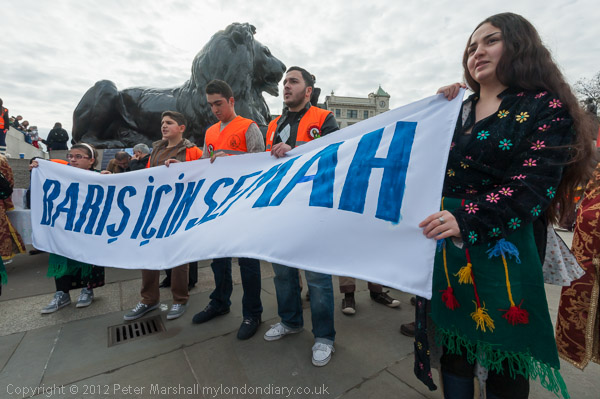
The Alevi are Turkey’s largest religious minority, with between 10 and 20 million of them living in the country and worshipping in their own language. Their religion is Islamic but men and women worship together, and women are not required to cover their hair and poetry, music and dance are central to their worship. It is a distinct form of Muslim religion which is related to Shi’ism, which contrasts with the official Turkish Sunni practice.
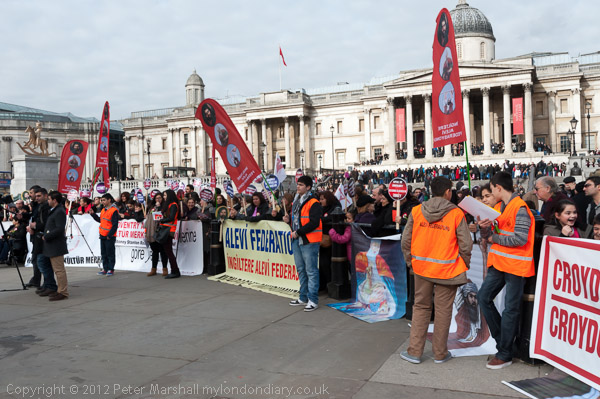
It is a religion that cuts across Turkey’s ethnic groups, and although most Alevi are ethnic Turks about a quarter of Turkey’s Kurds are also Alevi. They have been persecuted in Turkey for centuries, often attacked and sometimes killed, and are not allowed to build worship houses. While Christian and Jewish children are exempted from the compulsory Sunny Islam religious classes in Turkish schools, Alevi are not.
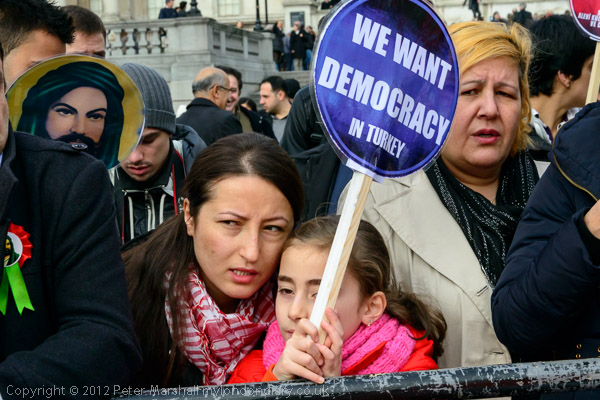
Their protest in Trafalgar Square called for democracy in Turkey and an end to discrimination and persecution, and an end to the compulsory religious education. They also called for the UK government to live up to its responsibilities for all immigrant communities whose views they say are ignored here, calling on immigrants to ‘Unite and Fight’ to get political representation that would demand equal treatment over health and education and fighting crime.

Alevi Protest Discrimination in Turkey & UK


Defend the Union Flag
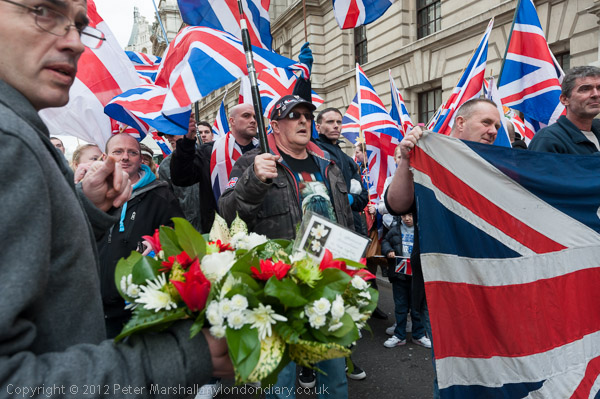
The Defend the Union Flag protest was called by the ‘South-East Alliance’ a small extreme right anti-immigration group of former English Defence League, whose leader Paul Pitt was thrown out of the EDL in 2012 to support Loyalists in Belfast who were protesting against a decision that the Union Flag should only be flown on the City Hall there on 18 designated days.
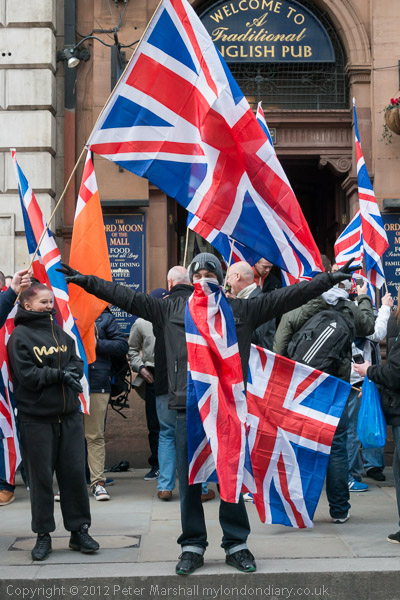
The protest was supported by other extreme right groups, notably Britain First, whose leader Paul Golding and Northern Ireland organiser Jim Dowson also spoke at the rally.
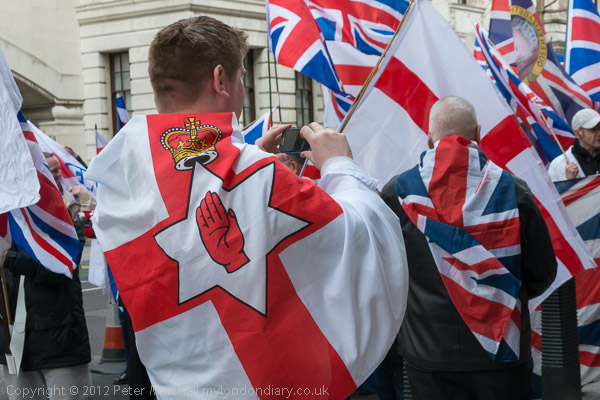
It was an uncomfortable event to photograph, and I received a number of threats and warnings from some of those taking party who I recognised from earlier protests I’d covered by the BNP, March for the Flag, EDL and Britain First, though many mistake me for another photographer who worked for Searchlight. A few who knew me were more friendly and came to talk with me. Although I’ve always made clear that I have different views, I’ve also tried to report these events objectively as a journalist.

Defend the Union Flag


Fuel Poverty Rally & DAN Roadblock

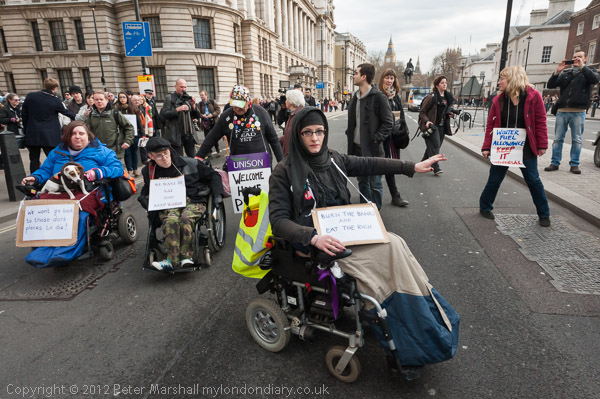
Back in 2013 we were also being faced with rising fuel bills, and Fuel Poverty Action had organised a national day of action. In London this began with a rally outside the Department of Energy and Climate Change on Whitehall and was then followed by a road block on Whitehall led by the Disabled Peoples Direct Action Network, DAN.
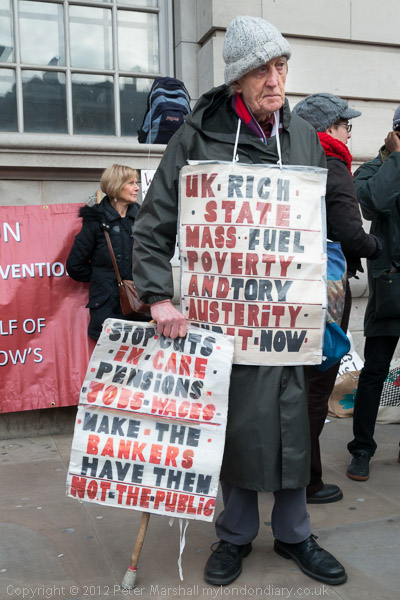
The rally on the pavement was crowded and was supported by Disabled People Against Cuts, Greater London Pensioners’ Association, Redbridge Pensioners’ Forum, Southwark Pensioners’ Action Group, Global Women’s Strike and others.
Cuts and price rises meant then that one in four families now has to choose between heating their homes adequately or eating properly. Many children now go to school hungry and even the wealthiest suburban areas now need to have churches and others setting up food banks for those unable to buy food.
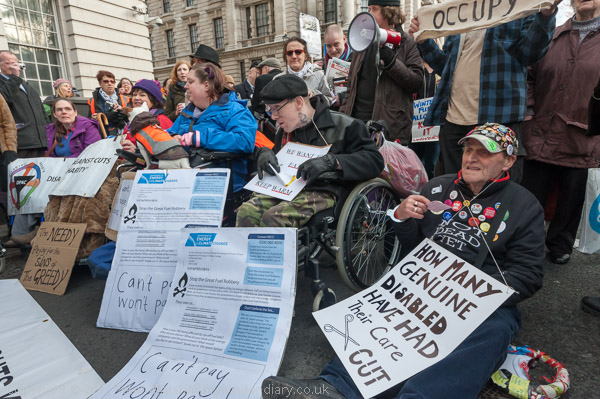
The government had cut services and cut benefits as a part of their austerity programme. Their energy policy is largely dictated by the Big Six energy companies, who continue to increase their profits while the consumers of energy suffer and had largely ignored the pressing need to increase renewable energy and cut power generation for gas and coal that was powering global warming.
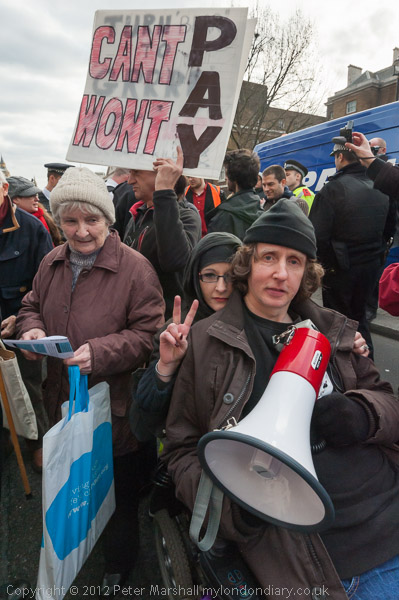
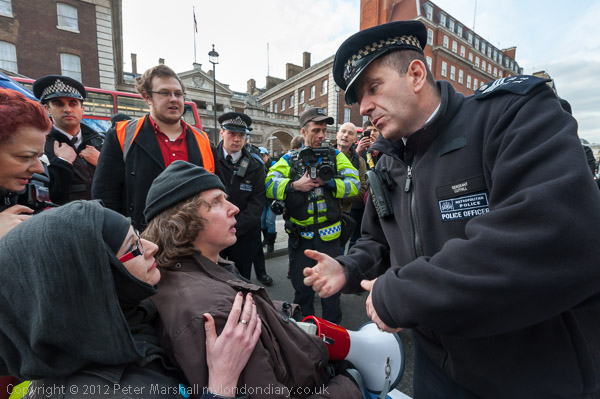
When DAN blocked the road, with some in wheelchairs chaining them together, the rally continued and police stood back and watched, diverting traffic away. After around 15 minutes they came to try and persuade them to leave the road. The arguments continued for around another 15 minutes, after which the protesters agreed they would leave in around a further 10 minutes. But I had to leave before they did so as I had a party to go to.

Fuel Poverty Rally & DAN Roadblock


Reclaim Love Valentines Party
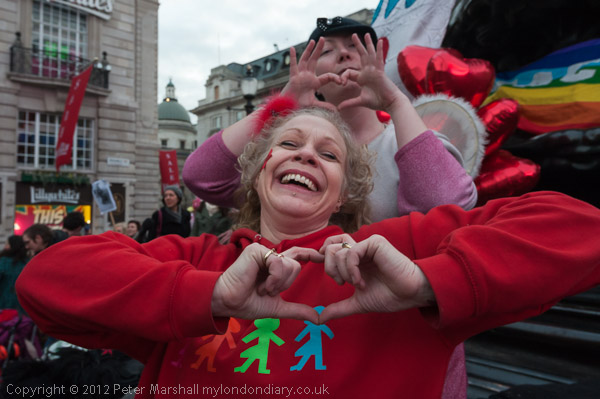
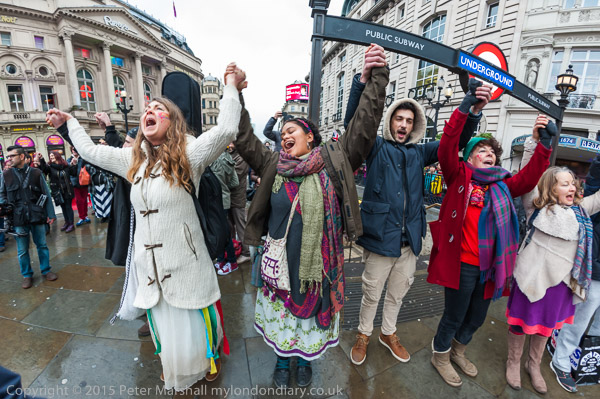
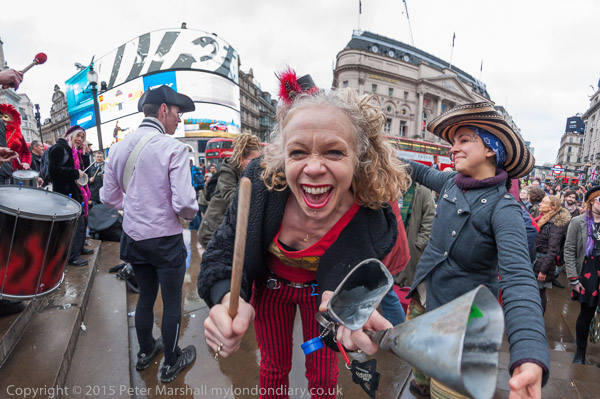
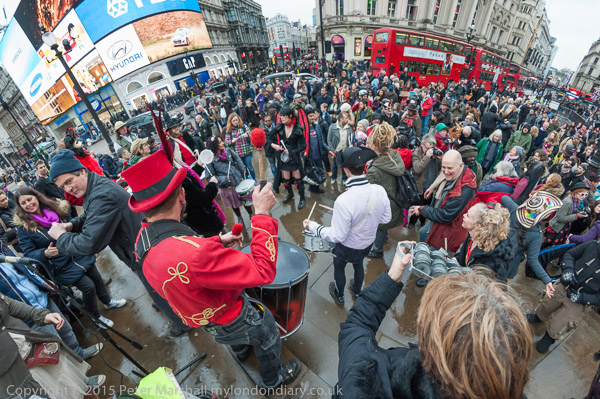
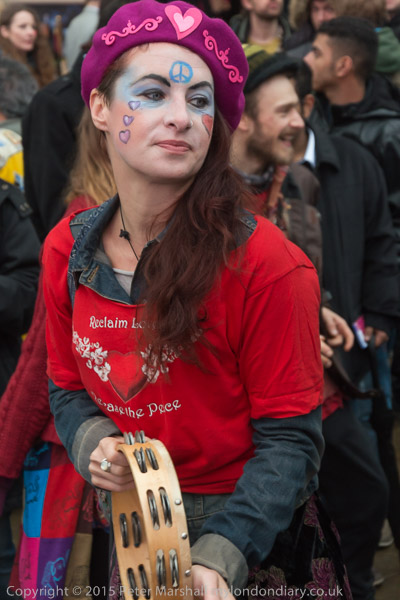
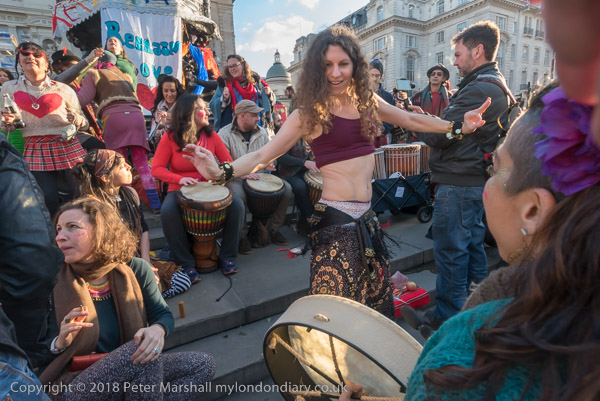
The 11th Reclaim Love free Valentine’s Party took place around Eros in Piccadilly Circus, aiming to spread peace and love around the world, and to reclaim love from its commercial exploitation.
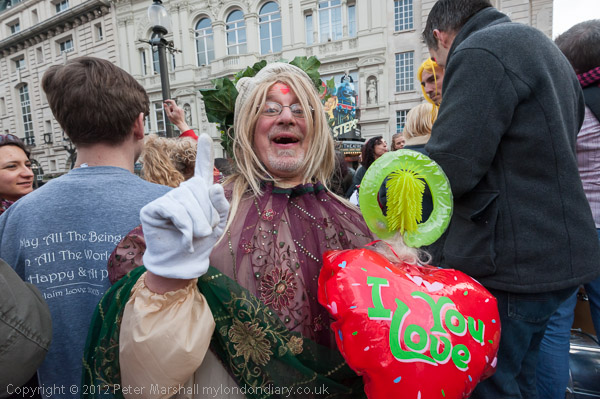
I had been held up photographing the DAN roadblock and had missed the major part of the event when several hundred people held hands in a large circle around Eros, chanting together ‘May All The Beings In All The Worlds Be Happy & At Peace’. But it was good to meet up with some friends and take some pictures.
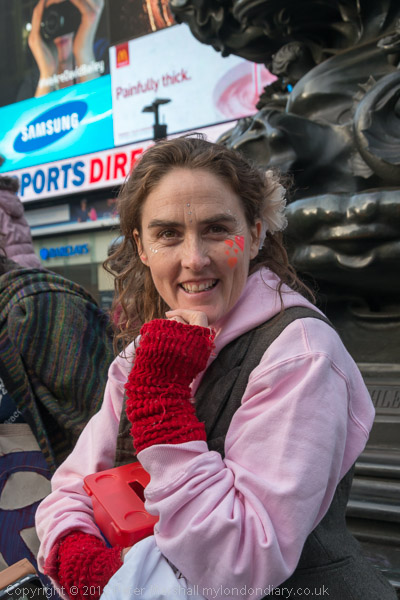
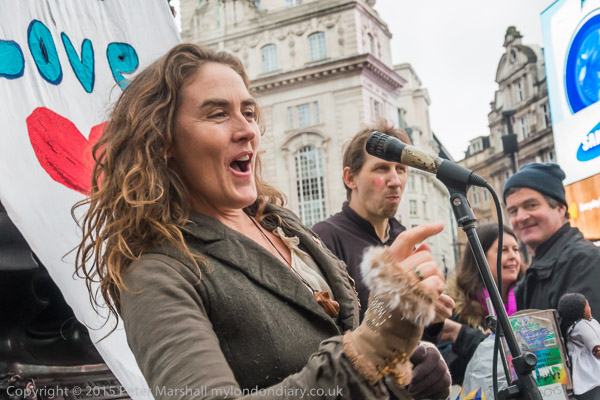
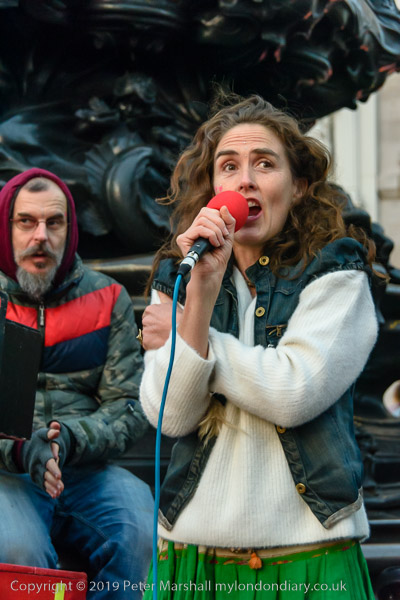
Venus Cumara, the originator of this annual event in 2003 told me this was this was the last she would organise and I made sure to get plenty of pictures of her. We occasionally talked about producing a book on the event together, but it hasn’t happened, though perhaps I might do so on my own one day.
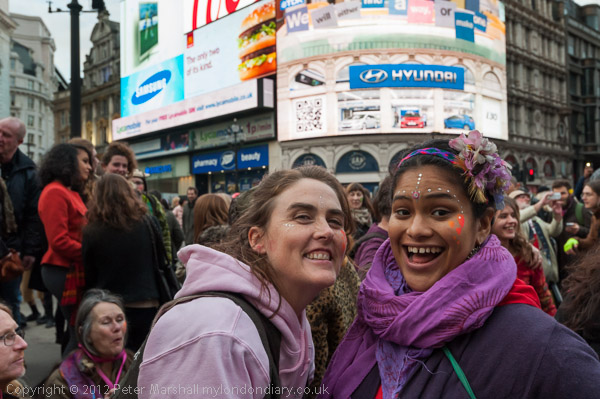
As I wrote back in 2013:

There are really very few such spontaneous events in London like this, and this is unique in central London. I’ve photographed most of these events and I hope that they will continue with others taking over the running in future years.

Reclaim Love Valentines Party

You can read more about all four events and see many more pictures on My London Diary:
Reclaim Love Valentines Party
Fuel Poverty Rally & DAN Roadblock
Defend the Union Flag
Alevi Protest Discrimination in Turkey & UK
A Threatened Hospital, Riverside Walk, Syria & Mali

A Threatened Hospital, Riverside Walk, Syria & Mali – pictures from nine years ago on February 15th 2013.

Fight to Save Lewisham Hospital Continues

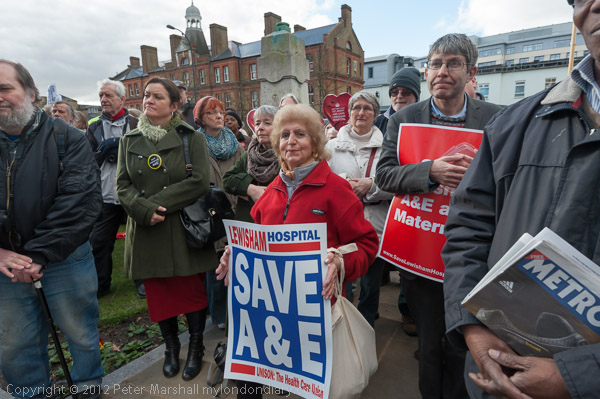
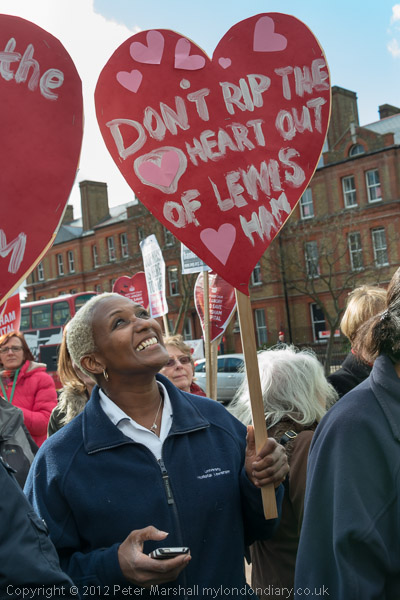
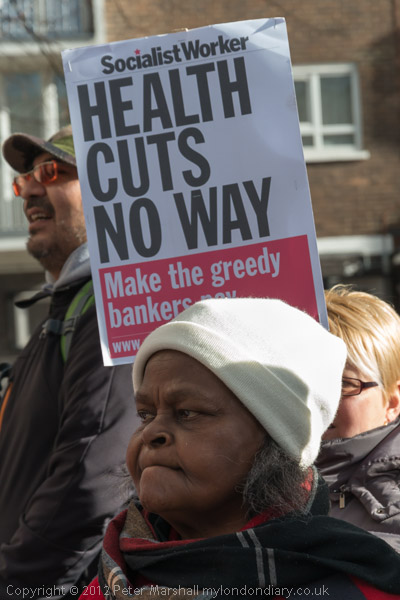
My work began at a lunchtime rally opposite Lewisham Hospital where the whole local community is fighting to save their hospital with both a legal challenge and further mass demonstrations including a ‘Born in Lewisham Hospital’ protest a few weeks later. Parts of the hospital across the main road are in the picture.

People were appalled by then Health Minister Jeremy Hunt’s decision to accept the proposals for closure, and to ignore the mass protests by local residents. Not only are the proposals medically unsound and will lead to patient deaths, but they also represent short-term thinking that will result in a huge waste of public funds.

Lewisham was a sucessful and financially sound hospital and had received sensible public investment to provide up to date services, and the services to be cut will have to be set up again at other hospitals. Closing Lewisham would not only incur high costs, but would waste the previous investment in its facilities.

Closure was only considered because of huge debts inherited when it was merged into a group which had earlier made a disastrous PFI (private finance initiative) agreement to build a new hospital a few miles away. Both the hospital group and Jeremy Hunt had been shown to be telling lies about the scope and cost of the replacement A&E and maternity facilities which would be needed if Lewisham were closed.

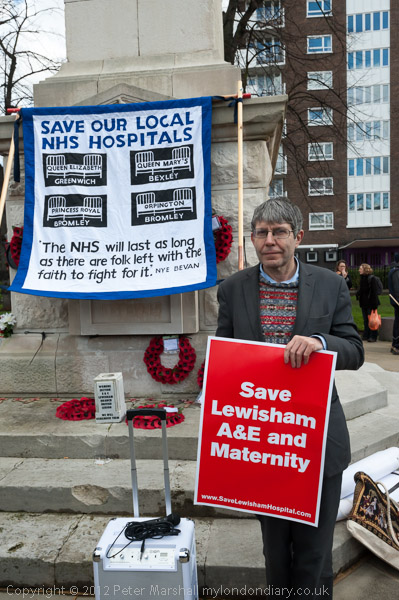
The well-attended protest was organised by the Save the Lewisham Hospital campaign which was raising funds for a legal challenge as well as a new poster and leaflet campaign and the forthcoming mass demonstration. But this was not just a campaign for Lewisham, but one that is vital for the whole of the NHS. Behind the speakers was a banner for the South-East London ‘Save Our Local NHS Hospitals’ campaign quoting Nye Bevan: ‘The NHS will last as long as there are folk left with the faith to fight for it.‘ They certainly had the faith in Lewisham.

Fight to Save Lewisham Hospital Continues


Thames Path Greenwich Partly Open

Here’s what I wrote back in 2013:

I had some time to spare between protests and it was a nice day, around 10 degrees warmer than we’d been having and sunny, so I decided to take a bus to North Greenwich and walk along the Thames Path, having heard that parts of it had re-opened. The weather changed a little and there were some dramatic skies.

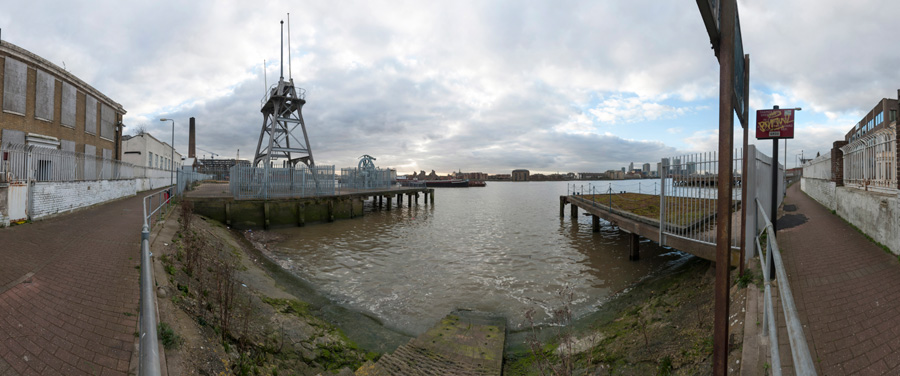
There is still a section of the walk that is closed, a giant building site where Delta Wharf once was up to Drawdock Road, but on each side of this the walk is open. although the council sign on the footpath leading from Tunnel Avenue still indicates it is closed. At the river the path north is blocked, but you can walk south to Greenwich.

A panorama – the same path in opposite directions at both sides

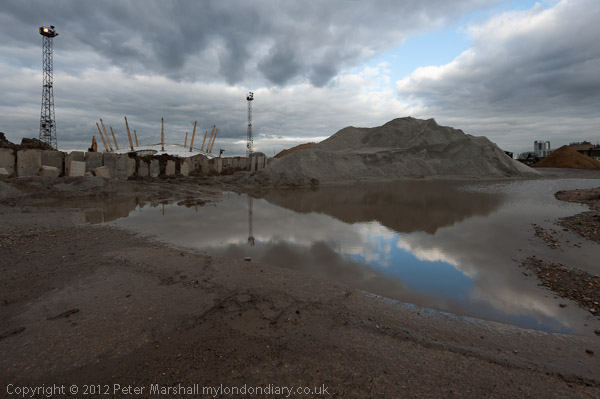
At first the walk goes alongside a giant manmade landscape of sand and gravel, like some alien planet – and behind the conical hills the Dome and the gas holder, with occasional lighting towers and cranes add to the scene. Most of this is behind tall fences, but fortunately these have gaps between the posts allowing you to see and photograph. Years ago the path here went through a working container dock, the Victoria Deep Water Terminal, with yellow lines marking the route, though occasionally it was blocked by crane operations, and we waited rather than have heavy containers overhead. There are a couple of my pictures of this and others from the riverside path in the 1980s on my London’s Industrial Heritage site.

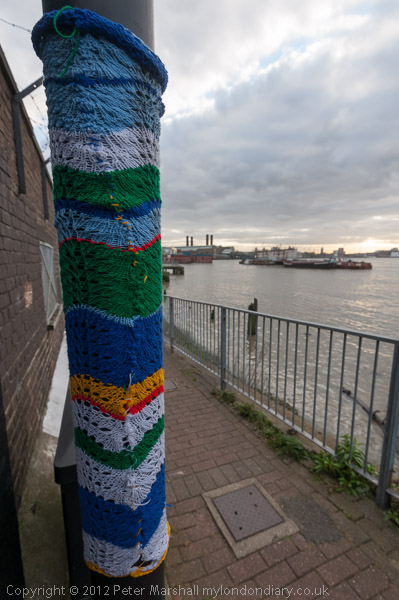
Beyond there the riverside path seems rather empty, with many structures having dissappeared, including the huge concrete silo I photographed. But something new has appeared, ‘guerilla knitting’ on some of the trees and posts along the path.

Many more pictures at Thames Path Greenwich Partly Open on My London Dairy


Stop Western Intervention in Syria & Mali

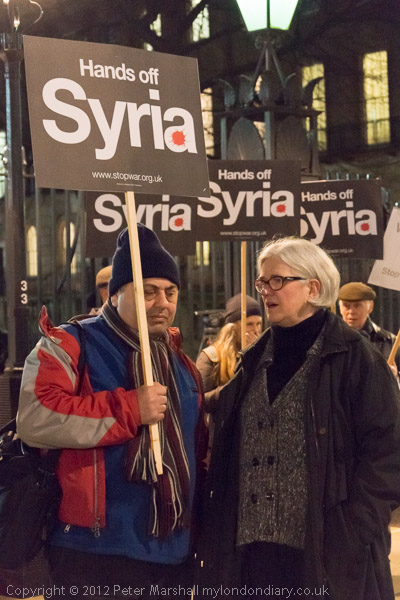
It was the 10th anniversary of the march by 2 million against the Iraq war, Stop the War organised a small protest at Downing St calling for a stop to Western intervention in Mali and Syria and against the possible attack on Iran.

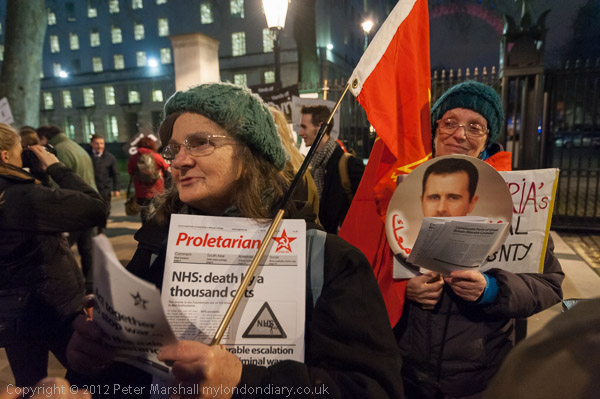
Many on the left feel that the failure of that huge protest to actually prevent the UK taking part in the invasion of Iraq showed a failure in the leadership of Stop The War to make any quick and efffective action to follow it up. Stop The War have also failed to convince the public at large with their more recent campaigns against intervention in Libya and now against the support being given to the Free Syrians and the Mali government. As the upper picture shows there were some supporters of the Assad regime, from a small left group, the Communist Party of Great Britain (Marxist-Leninist), taking part in the protest. Almost certainly the great majority of supporters of Stop The War while against UK military intervention would like to see more support being given in other ways to the Syrian rebels.
Stop Western Intervention in Syria & Mali


Valentine’s Day 2015 – Reclaim Love and Release Shaker

Valentine’s Day 2015 – Reclaim Love and Release Shaker – two events I photographed on St Valentine’s Day, February 14th 2015.


Venus CuMara Reclaim Love 13 at Eros

I’ve photographed the Valentine street party at Piccadilly Circus most years, though I missed the first one, but it seldom takes place actually on the 14th February, as since the event began in (I think 2003) there have been only two years where that has been a Saturday – 2009 and 2015.

A 2010 article in ‘Resurgence’ described the intentions of the event well:

Valentine’s Day, which has its origins as far back as the Middle Ages, is traditionally a day where people show their affection by sending each other handwritten ‘love notes’. But again, this simple affirmation has been hijacked by corporations to the point where cards, chocolates, jewellery – even weekend breaks – are now expected.

But not everybody wants to participate in this orgy of consumerism. Now in its seventh year, Reclaim Love is a global movement away from celebrating Valentine’s Day with flowers and chocolates towards a day of celebrating Love itself. All around the world people are taking to the streets, parks or organised venues to link hearts and minds to send a warm message of love, unity and joy out into the world

Resurgence magazine
Venus Cumara

The event was conceived and coordinated by Irish poet Venus CuMara, and spread to a number of cities around the world, where at 3pm UTC also join hands in a large circle and recite together the mantra ‘May all the beings in all the world be happy and at peace’, an English translation of an ancient Sanskrit prayer.

Before and after this there is a great deal of celebration, with drumming, dancing and various free gifts of food and often t-shirts bearing the mantra. I have a couple of these, though have to admit I have seldom worn them, though I did give one away to one of my sons.

It wasn’t possible to hold a public gathering in 2021, but Venus asked for people to meditate at 3.30pm and hosted a livestream. I missed the event in 2020 as I was busy elsewhere, but it was very small, probably because of the abysmal weather.

2018

The last time I photographed Reclaim Love was in 2019, when we were all delighted to see Venus who despite suffering from cancer which is spreading through her body, was in great spirits and able to speak about her message of love. She had missed the previous year’s event as she was in Indonesia being treated for her cancer.

Venus in 2019

Venus asked people to go to Piccadilly Circus for Reclaim Love on 12 Feb 2022 in a video on the Facebook page, though this was only posted the previous day, and she apologised for not being able to be there in person. I went along to see if anything was happening a little after 3pm and found nothing, waited a few minutes and then left as I had another event to attend. Later I saw a photograph of around five people who were there at 3.33pm, the ‘circle’ time. Perhaps next year there will be more.

Venus CuMara Reclaim Love 13 at Eros


Valentine Day – 13 years for Shaker Aamer

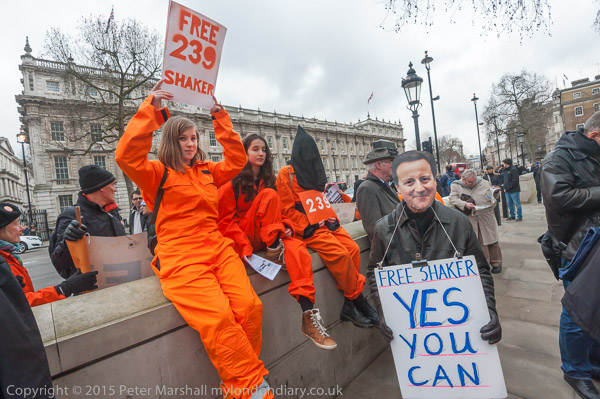
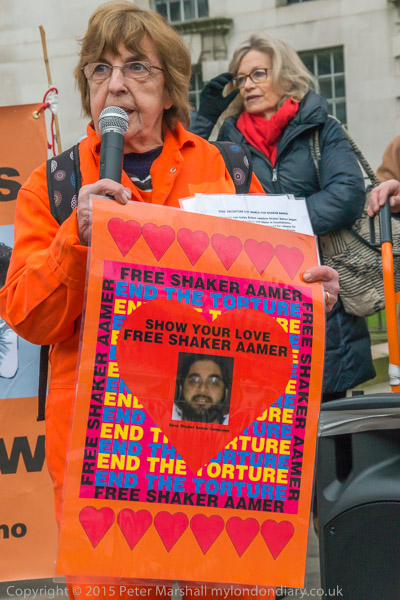
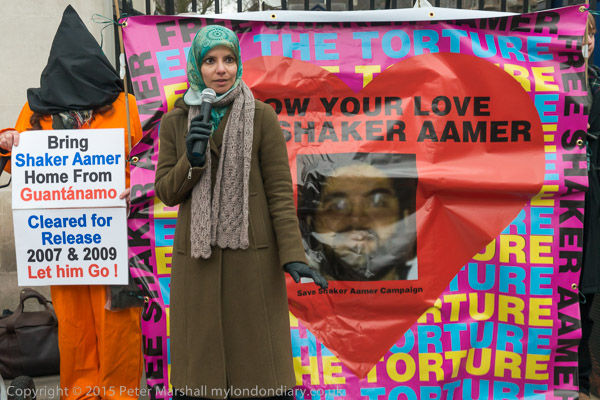
Earlier in the day I’d walked with protesters from Parliament Square to a rally opposite Downing St calling for the urgent release of London resident Shaker Aamer from Guantanamo, where he arrived has been held and regularly abused for 13 years without charge or trial.

He arrived at Guantanamo on the 14th February 2002, and there has been subjected to several hundred incidents of beating and torture, including one notorious occasion in June 2006 where he was taken to a special secret interrogation site; three men who were taken with him for similar treatment that day died from asphyxiation, but he survived similar treatment.

Long cleared for release he continued to be held, probably because his evidence would be embarrassing both for the US and UK authorities. He has a British wife and resident status, and a campaign led to the UK government eventually making requests for him to be freed after he was cleared for release in 2007 and again in 2009. Despite this they UK had also spent over a quarter of a million pounds in legal fees to prevent his legal team gaining access to evidence to prove his innocence.
He was eventually released at the end of October 2015.

Valentine Day – 13 years for Shaker Aamer


Chinese New Year 2005

Chinese New Year 2005

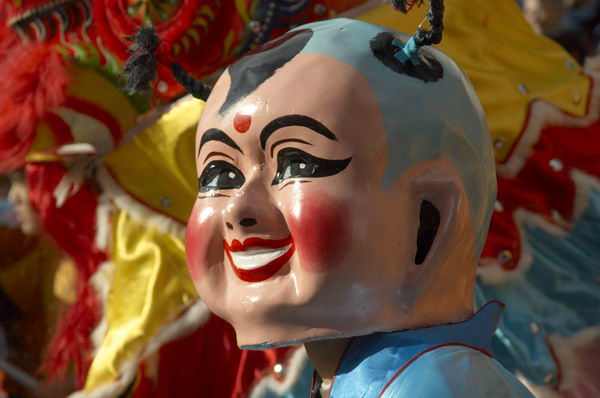
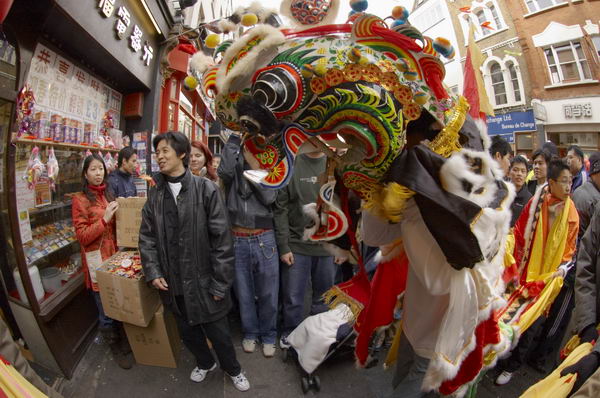
On Sunday 13th 2005, 17 years ago, London was celebrating the Chinese New Year of the Rooster which started the previous Wednesday – it was 4072.

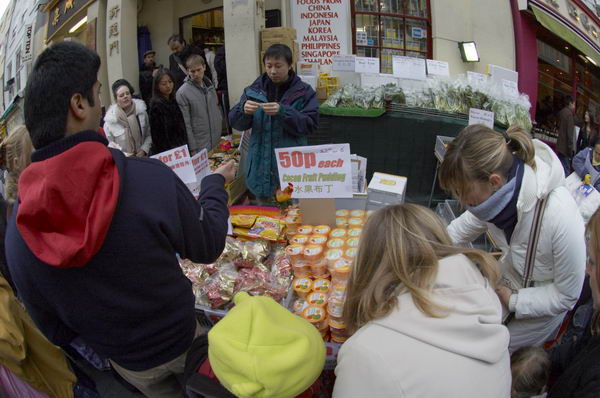
Chinese New Year in Soho is something I’ve avoided in more recent years – as I wrote in 2005: “I used to enjoy the rather anarchic celebrations in Chinatown, but it’s now more of an ordeal, with far too many people coming in to watch and too much organisation.”

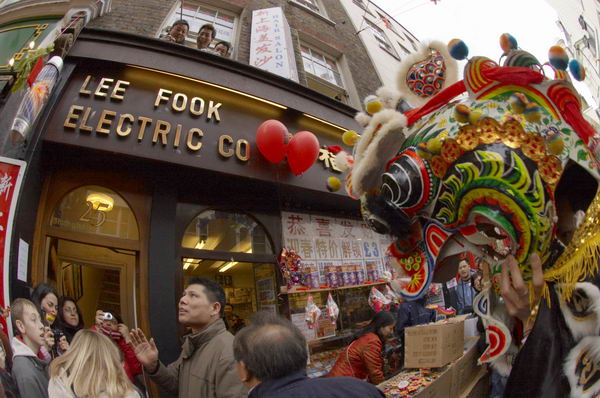
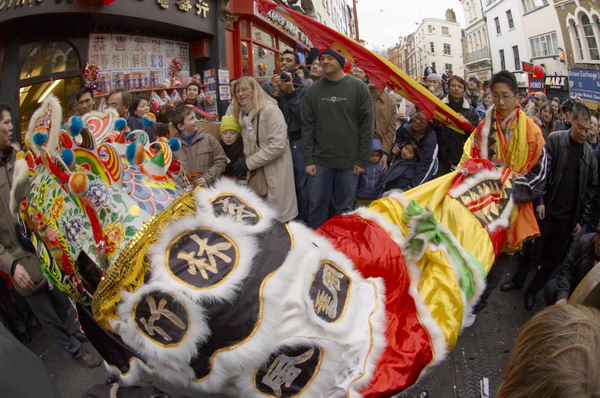
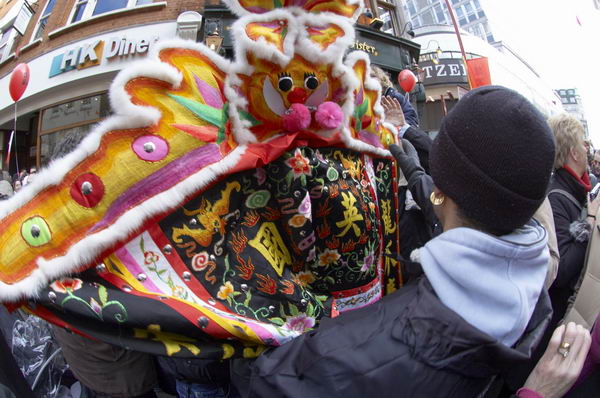
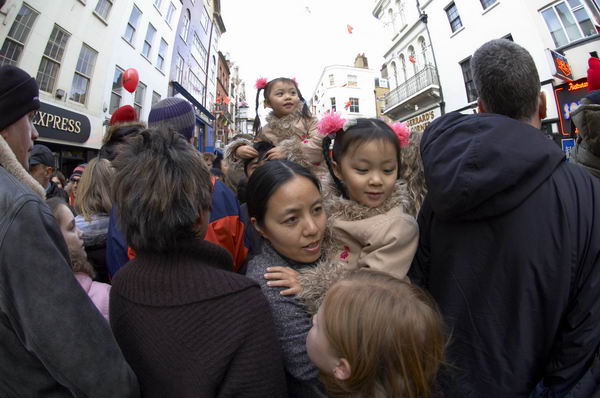
Trying to photograph in such crowded situations was a problem, and one I confronted in two main ways in 2005, something reflected in the two pictures above. At the top is a picture taken standing back some distance with a telephoto lens, while the lower picture is taken with a fisheye lens, both on a Nikon D70 DX camera.

De-fished version

Usually now when I use the a fisheye lens like this, I would convert the perspective to give straight verticals – as in the above image. But back in 2005 I didn’t have a good plug-in to do this conversion, and although it was possible with various programmes I was using for making panoramas it was a rather time-consuming process.

For this particular event I rather liked the fisheye effect, at least in some pictures. Although it does clearly misrepresent those faces close to the edges of the picture, for me it pulls the eye towards the centre of the picture and perhaps gives a greater impression of the crowding I was working in.

A small problem is that the image you see in the viewfinder is the fisheye one, and not that in the ‘de-fished’ version. But as you can see, the fisheye image which you see has the same horizontal limits at the centre of both the horizontal and vertical sides, with just a little of the image towards the four corners being lost. It’s still possible to frame accurately when working.

It’s not I think correct to call the effect of the fisheye lens ‘distortion’. It is simply a different way of recording the subject on a flat rectangle. Most fisheyes I’ve used (and I own four different examples, for DX and full-frame Nikon, for Fuji and for micro 4/3) seem actually to have rather less actual distortion than my ultra-wide rectilinear (i.e. ‘normal’) lenses.

In the de-fished image you can see that as well as the verticals of the building being straight, people at the edges of the picture are also shown naturally, unlike in the fisheye version. I was also taking some pictures with an ultra-wide 12-24mm lens (equivalent to 18-36mm full-frame) and with that at its widest faces at the edge would have been rendered a little stretched out horizontally.


I’m not sure what some major agencies would make of conversions using software like this, whether they would regard it as an unacceptable alteration of the image. For me its just one of many acceptable corrections of the image, but clearly it does alter the image as recorded by the camera. It would be possible to design a specialised wide-angle camera which carried out the correction in firmware but the market for this would probably be small. Rather it could be provided into normal digital cameras as an option – far more useful than all those special effects which clutter the menus on many cameras now.

More pictures on My London Diary – scroll down a little from the top of the page.


Willesden Walk and Wassail 2017

Willesden Walk and Wassail 2017

Willesden isn’t a part of London I visit very often, though I sometimes change trains on my way elsewhere at Willesden Junction. But even that isn’t in Willesden but in its neighbour Harlesden – just as Clapham Junction isn’t in Clapham but in Battersea, the railway companies choosing a more reputable nearby settlement to name their station.

I hadn’t intended to go for a walk from Kensal Rise to Willesden Green on Sunday 12th February, but the Transport for London web site had misled me, telling me there were no trains running from my station that day, but a much slower rail replacement bus service. But there was a train just about to leave when I bought my ticket, and I jumped on it.

Good though this was, it meant I arrived at Kensal Rise over an hour before anticipated for the short bus ride to my destination. It was a cold winter day with a bitter east wind, far too cold to stand around waiting on the street so I had a decision to make. I could have sat inside a pub or café, but decided I would keep warm enough if I walked around to make my way to my destination.

Willesden Green Library – where the Wassail would later end

A direct route would not have taken me long enough, but the only map I had was Google Maps on my phone as I was outside the small central London atlas that has a permanent place in my camera bag. While paper maps keep north at the top, on my phone at least the map seems to turn around pretty randomly and at one junction I got confused, turning in the opposite direction to that I intended.

But even with getting a little lost and walking over 3 miles I still arrived 20 minutes before the event I was attending began, but the walking had kept me reasonably warm.

Willesden Green Wassail

I’d been invited in 2014 to photograph the Willesden Green Wassail by its leader and organiser Rachel Rose Reid, and was returning three years later for the 7th Community Wassail there “to invoke successful growth and resilience in the neighbourhood, celebrating community initiatives and the shopkeepers who contribute to making the neighbourhood a friendly and happy place.”

Cricklewood Community Singers

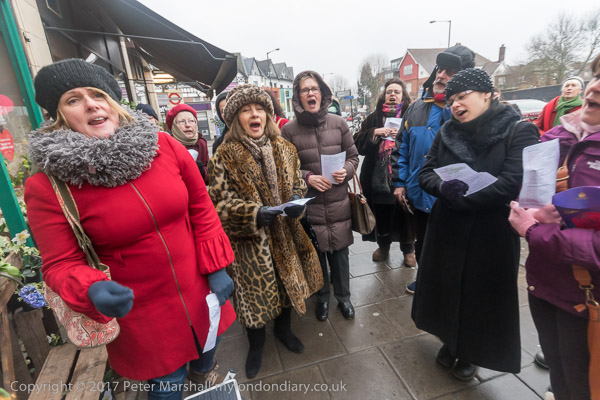
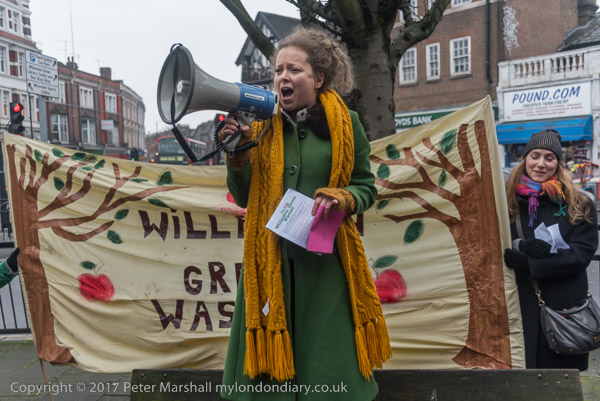
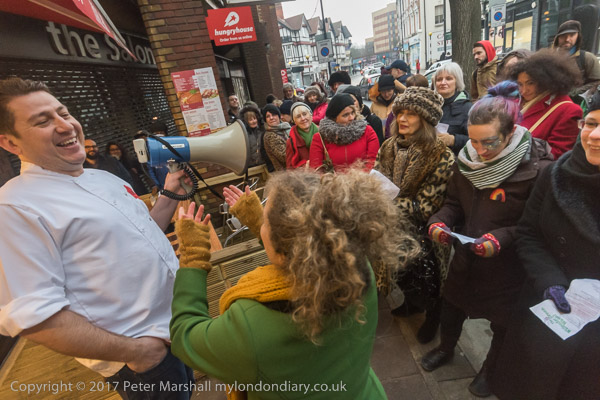
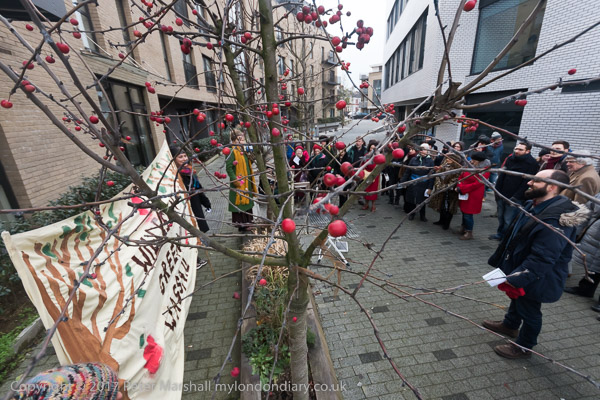
The wassailers, with the Cricklewood Community Singers performed a version of the traditional wassail song, and their were performances by local poets, storytellers and other singers as we called on various shops and other places, slowly making our way to the crab apple trees behind Willesden Green Library.

Rachel Rose Reid

At the shops we stopped at, the shopkeepers came out and told us a little about their businesses and thanked us for the good wishes and our wassailing.

The crab apples having been wassailed, people let off party poppers, which proved to be very difficult to photograph, a reminder to me of the difference between the way the camera and our eyes see things. We can both see the overall scene and concentrate on details, while a still image has to select its angle of view and treats all within that equally. Of course you can take more than one picture, but that doesn’t really deliver with a rapidly changing scene. I would have been better switching to recording a movie of this part of the event.

After this the group walked back to a local coffee shop where there were to be more performances, as well as hot drinks. But by then it was time for me to start my journey home to get back in time for dinner. This time I took the bus back to Kensal Rise.

Many more pictures both from the walk (enough to work out my route in the unlikely event you should wish to do so) and also from the Wassail on My London Diary:
Willesden Green Wassail
Kensal Rise to Willesden Green


Refugee Children, Dead Cyclists & A Squat

Refugee Children, Dead Cyclists & A Squat – 11th February 2017

Dubs Now – Shame on May

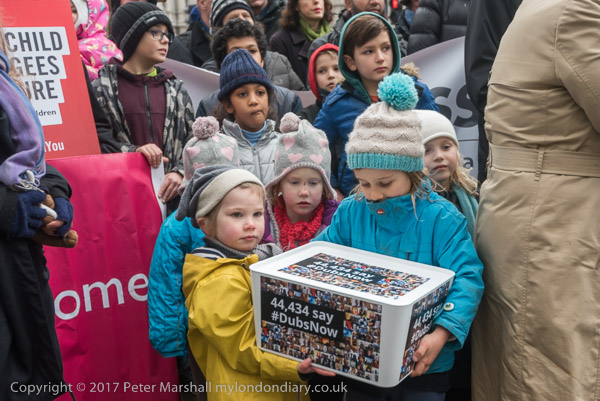
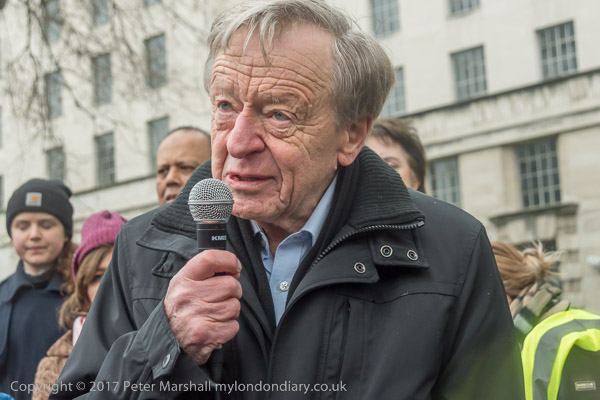
Five years ago, on Saturday 11th February 2017, a crowd of supporters of Citizens UK and Safe Passage joined Lord Alf Dubs at Downing St to take a petition to Theresa May urging her to reverse the decision to stop offering legal sanctuary to unaccompanied refugee children.

The Tory government had been forced into an unusual humanitarian response when Parliment passed the Dubs amendment, and they were then given a list of over 800 eligible children – although there were known to be more whose details were not recorded. And because of Lord Dubs, around 300 have been allowed into the UK. But although twice that number remain in limbo, many in the Calais camps, Prime Minister Theresa May decided to end the scheme.

Lord Dubs speaks

Among those who spoke at the protest before an emergency petition with over 40,000 signatures was taken to Downing St were speakers from four London Labour councils who all said they had told the government they would take more children but their offers had not been taken up.

Dubs Now – Shame on May


Invest in Cycling – Stop Killing Cyclists

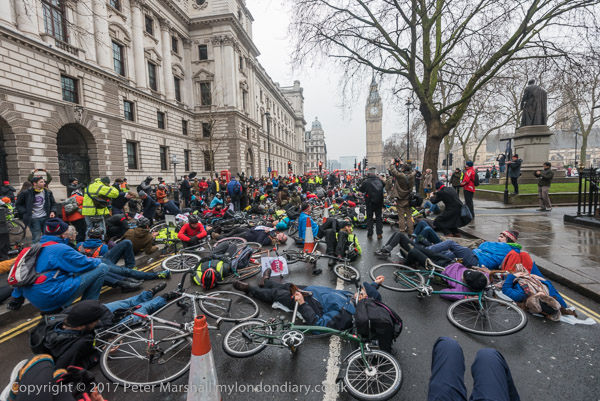
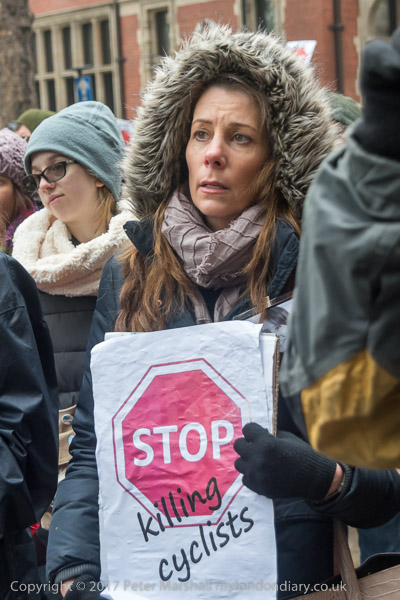
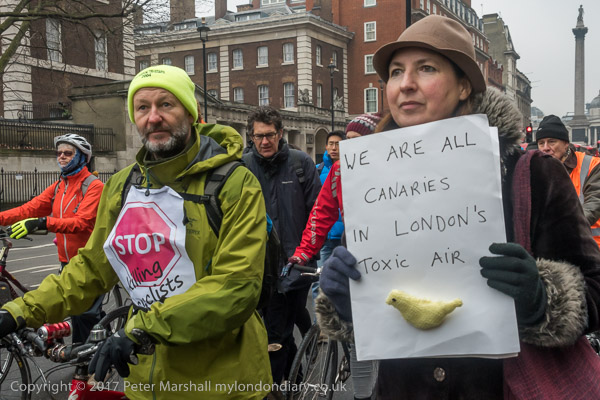
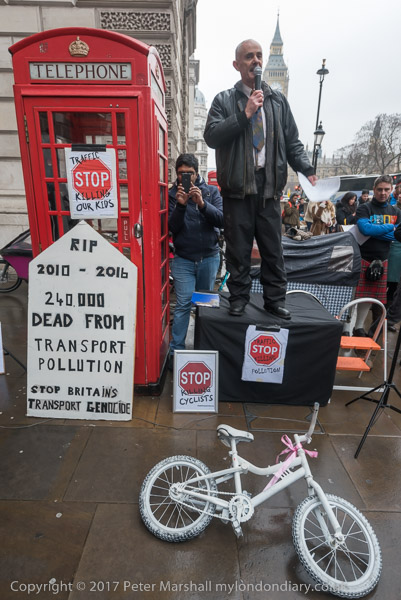
Cyclists and supporters met in Trafalgar Square to march to the Treasury on the edge of Parliament Square to call for a significant increase in spending on infrastructure for cyclists and pedestrians on our streets.

That week five people were killed on London streets as a result of careless or dangerous driving – accidents are rare, but such deaths are made much more likely by a road system engineered around the needs of car and other vehicle drivers and cutting their journey times through the city. Facilities for cyclists and pedestrians have long been treated as secondary and chronically underfunded.

But these 5 killed, who were remembered in the protest and die-in are a small fraction of the numbers who die prematurely each week in London as a result of high and often illegal levels of air pollution – estimated at around 180 per week, as well as the much higher number of those whose lives are seriously affected by health problems – both figures including many who drive. Powerful lobbies for motorists and vehicle manufacturers have led to the domination of our cities by cars and lorries.

There are huge health benefits from cleaning the air by cutting down traffic and congestion, and also by encouraging healthy activities including walking and cycling. And the main factor discouraging people from taking to bikes for journeys to school, work and shopping etc is the danger from cars and lorries. Better public transport also helps, particularly in cutting pollution levels, and anything that cuts the use of petrol and diesel vehicles will reduce the major contribution this makes to global warming.

Invest in Cycling – Stop Killing Cyclists


ANAL squat in Belgravia

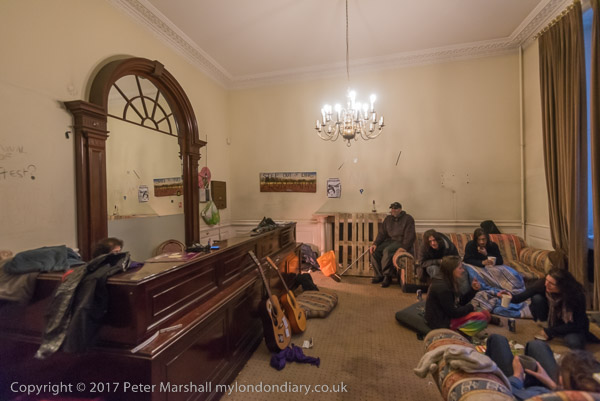
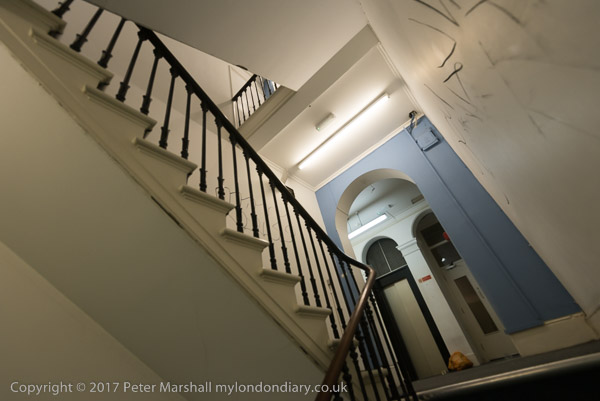
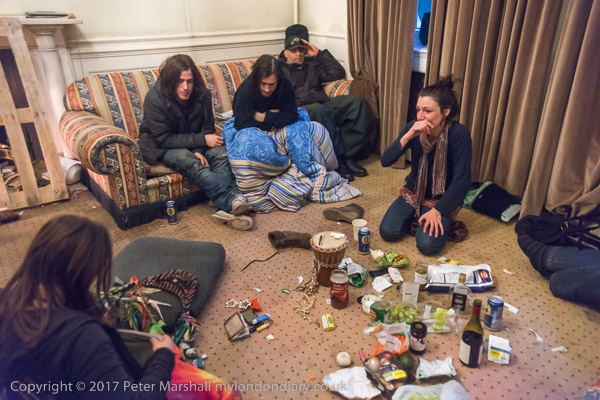
My final event that day was a visit to 4 Grosvenor Gardens, a rather grand house short distance from Buckingham Palace (and more relevant to me, from Victoria Station.) Squatting collective the Autonomous Nation of Anarchist Libertarians (ANAL) had taken over this house on February 1st after having been evicted from the Belgrave Square house owned by Russian oligarch Andrey Goncharenko which they occupied for a week.

I’d meant to go there a week earlier, but a domestic emergency had called me away earlier in the day from a protest at the US Embassy before a programme of workshops and seminars in the seven-storey squat had begun. There was nothing special happening on the afternoon I visited (though some things were happening in the evening) but I was welcomed by the occupiers, several of whom recognised me, and they were happy for me to wander around the building and take photographs.

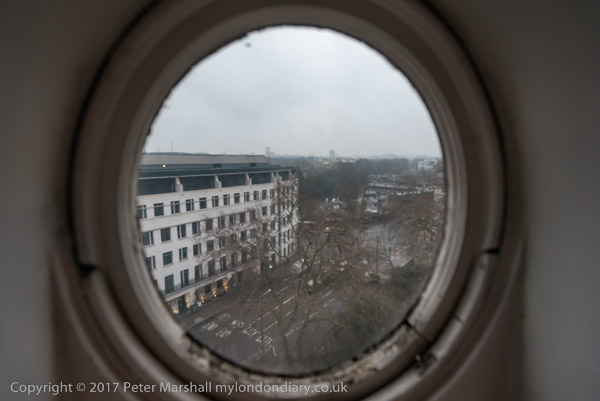
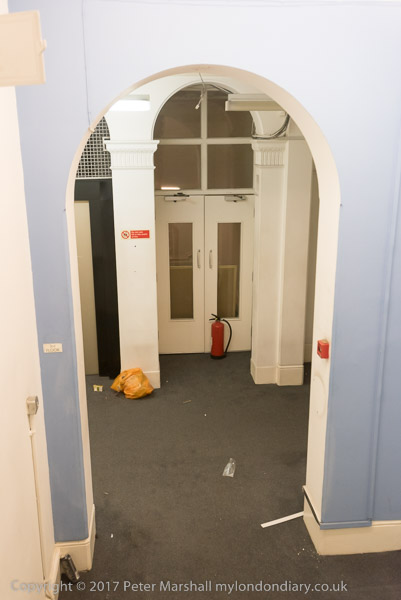
Apart from being careful to respect the privacy of some of the occupiers who were sleeping or resting in a couple of the rooms I was able to go everywhere from the basement to the top floor, but the door leading onto the roof was locked, probably to stop any possible access from there by bailiffs. Like many other houses and hotels in the area it has a view into the grounds of Buckingham Palace, but I had to make do with the view from a rather dusty window, or the less interesting view from lower down where windows could be opened.

Few squats have blue plaques – this one for soldier and archaeologist Lieutenant General Augustus Henry Lane Fox Pitt-Rivers, but more recently it has been in use for offices, business meetings and conferences. The squatters have tried hard to cause no serious damage and had last week turned out some people who had come to make a mess of the place.

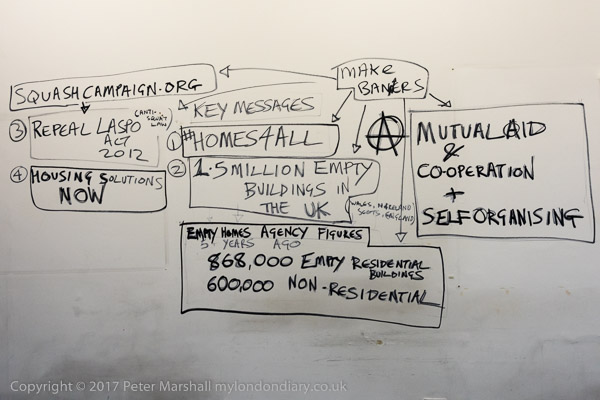
There are around 1.5 million empty buildings in the UK, many like this deliberately kept empty as investments, their value increasing year on year. The number is enough to enough to house the homeless many times over. ANAL say that properties like this should be used for short-term accommodation while they remain empty and they have opened it as a temporary homeless shelter for rough-sleepers.

It remained in use for almost month, with the squat finally evicted at 8am on 27th February. As I ended my post, “There clearly does need to be some way to bring empty properties back into use, and councils should have much greater powers than at present to do so. Until that happens, squatting seems to be the only possible solution.”

ANAL squat in Belgravia


Waitangi Day Circle Line Pub Crawl

Waitangi Day Circle Line Pub Crawl Feb 9th 2008

Waitangi Day is a New Zealand public holiday remembering the signing of the Treaty of Waitangi on the 6th of February 1840 by Captain William Hobson RN as consul for the British Crown and Māori chiefs. Copies of the treaty were then taken around the country with over 500 chiefs signing.

It was an unusual treaty, and perhaps not entirely above board, with significant differences between the English version and the Māori translation. Few of the Māories signed the English version and the differences that granted greater powers to the Crown in the English version led to the New Zealand Wars of 1845 to 1872 and to legal differences only finally settled in the 1990s.

But the treaty did give the Māori people full rights and protections as British subjects and enabled the British to fight off French attempts to establish colonial settlements in New Zealand. In practice however settlers stole land from the Māori people and after the New Zealand wars ended much was confiscated and the treaty largely ignored and declared void.

In the 1950s, Māori campaigners began efforts to reinstate the treaty and reclaim stolen land, and a series of government actions and legislation have brought the treaty again to be increasingly important in land disputes and other issues. The treaty is now widely regarded as the founding document of New Zealand and in 1974 Waitangi Day became a national holiday for New Zealand.

Its celebrations in New Zealand have often been occasions where Māoris have expressed their anger, sometimes physically) at the way they have been treated in the country, and although most agree that their position has improved over the past years there is also agreement that their is still a long way to go to acheive equality. Some protests are directed at the British monarchy (a wet t-shirt was thrown at the Queen when she went there.)

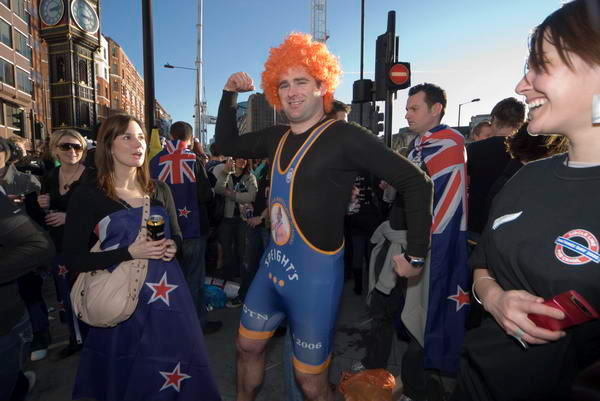
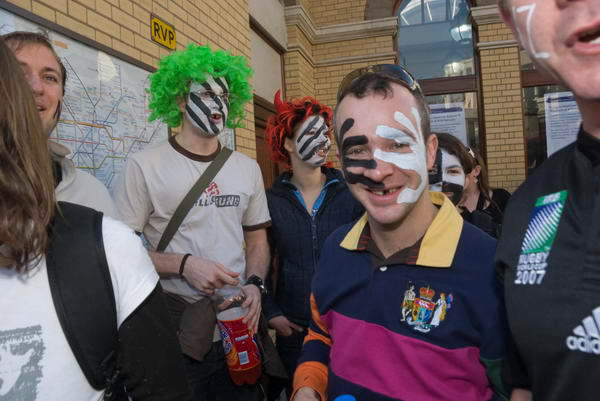
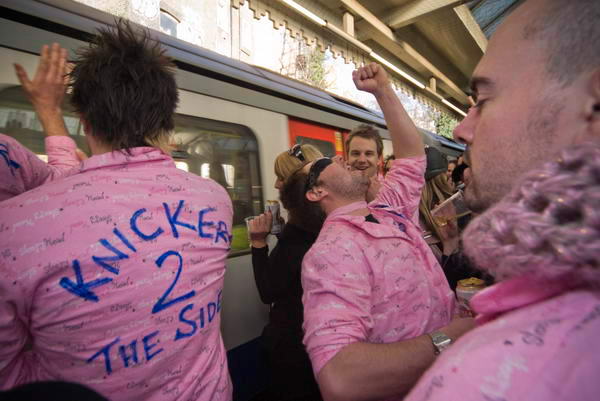
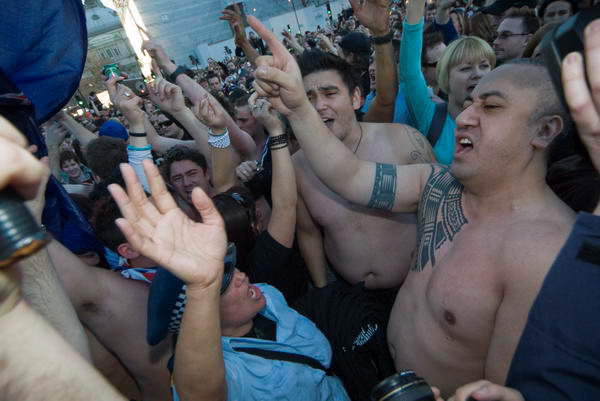
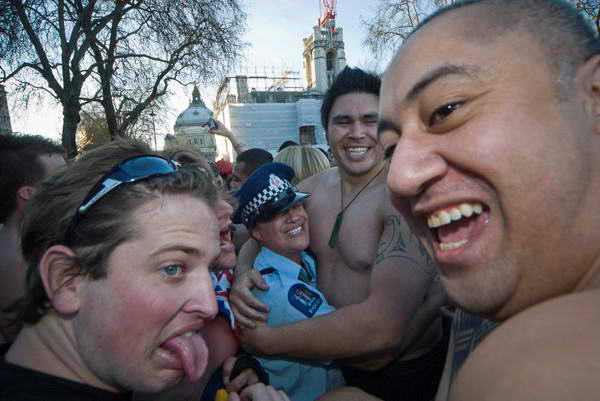
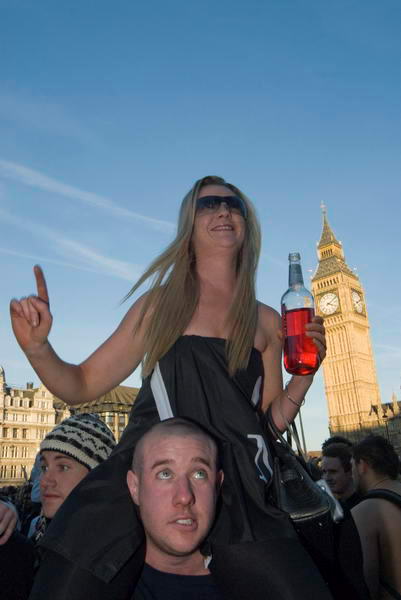
In London in 2008 and on previous years since some time in the 1970s the occasion was marked by many resident Kiwis by a unique pub crawl, incorporating the Circle Line. Some 5000 of them began at 10am at Paddington, doubtless for a drink before boarding the train to the next stop, Bayswater and visiting pubs close by that station. The next refreshment stop was Notting Hill Gate, then High Steet Kensington, and on to Gloucester Road where I met them, one of the very few around still sober.

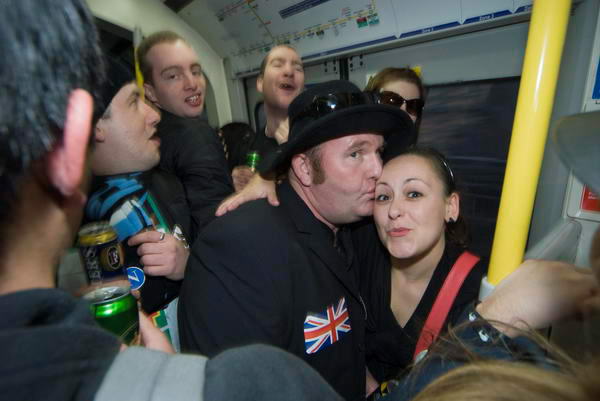
By this time police had closed Gloucester Road Station and we had to walk to South Kensington to board the tube. I travelled with them – where many were still drinking from cans to Sloane Square – a great disappointment as it has no pubs and no loos – and then on to Victoria, which has plenty of pubs around.

The Haka in Parliament Square

From their I walked – along with many on the pub crawl to get to Parliament Square for in time for the haka – familiar to many from rugby matches. It’s a particular part of the pub crawl that upsets some Māoris as those taking part are mainly descendents of European settlers – but the same is probably true of the more staid celebrations of the the Waitangi Day Ball and church service.

The grass of Parliament Square was out of bounds to the public, but there was no chance of stopping a large and largely drunken crowd. The haka was the usual confused maul with few of those taking part seeming to know many of the words, just a huge mass of sprawling bodies, as much rugby scrum as haka. I managed to hold my camera up high and angle it down to take pictures only guessing at what might be in the field of view.

Since 2008 the police and TfL have very much clamped down on the pub crawl and the last time I saw the haka the crowd was much smaller. This year in New Zealand the celebrations were largely virtual, but there was still a London pub crawl. I was in Parliament Square earlier last Saturday but could’t be bothered to wait around for the haka.

More from the 2008 Waitangi Day: Circle Line Pub Crawl on My London Diary.


Class War & The Shard – 2018

Class War & The Shard – 2018.

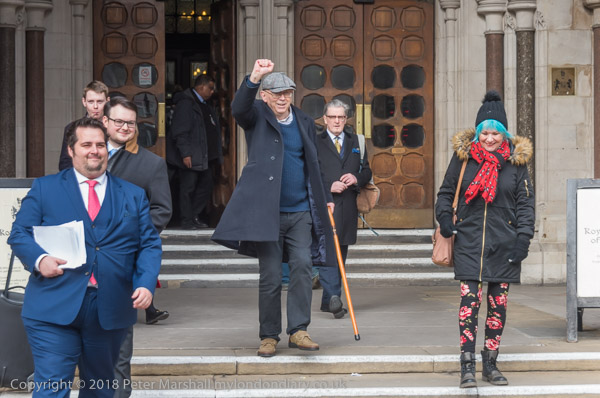
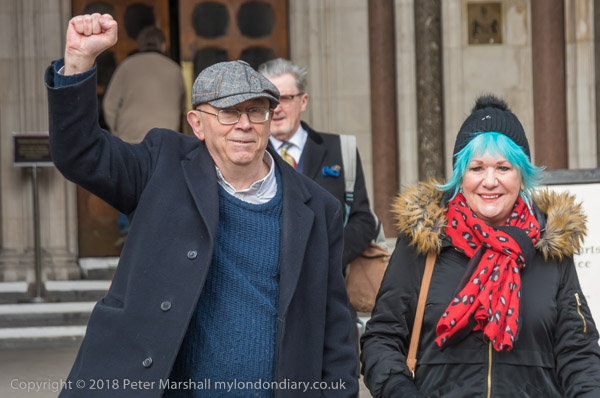
Ian Bone raises a fist as he comes out of the Royal Courts of Justice

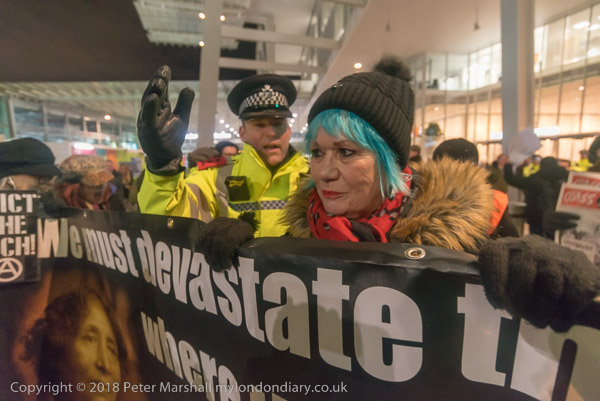
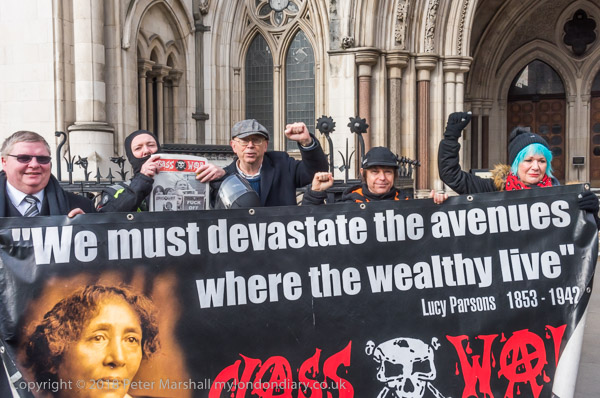
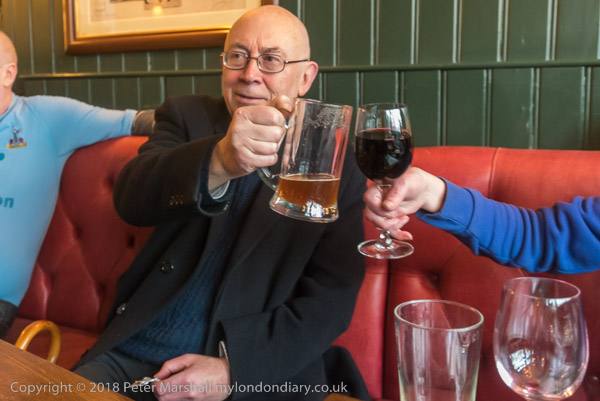
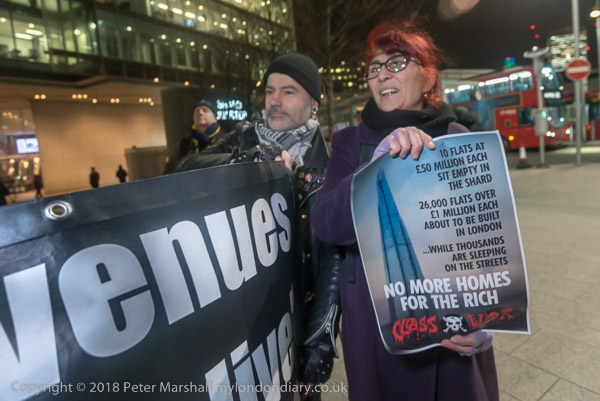
February 8th 2018 was a good day for Class War, beginning with a visit to the High Court at the Royal Courts of Justice, where thanks to barrister Ian Brownhill they emerged triumphant after stopping an attempt by lawyers acting for the Qatari royal family to prevent a Class War protest against the ten empty £50million pound apartments in The Shard.

Lawyers for the Qataris had tried to get an injunction against protests by Bone and “persons unknown” and to claim over £500 in legal costs from the 70 year-old south London pensioner, and the case had attracted considerable publicity in the media including an article by Suzanne Moore in The Guardian and another in Le Monde and many more.

Brownhill offered to conduct Bone’s defence pro-bono and contacted the Quatari’s solicitors who immediately offered to drop the case if Class War ‘would stop attacking the Shard’ whatever that meant. In the High Court the Qataris’ lawyers were forced to drop the attempt to ban protests and the demand for fees but Bone accepted a legal restriction on him going inside the Shard and its immediate vicinity.

The case also showed the police’s insecurity over Class War and documents presented in court on behalf of the Qataris clearly showed they had been given documents by the police including one with clearly defamatory false statements about another person associated with Class War who was not named in the injunction.

Another document presented was a surprising testimonial about Class War which made it sound a rather more impressive and powerful organisation than the small but influential irritant to the rich and unscrupulous it is. The police probably the source for this certainly seem to share the lawyers’ delusions of the organisations grandeur, with an unusually strong police presence outside the court and around a corner clearly outnumbering the Class War supporters.

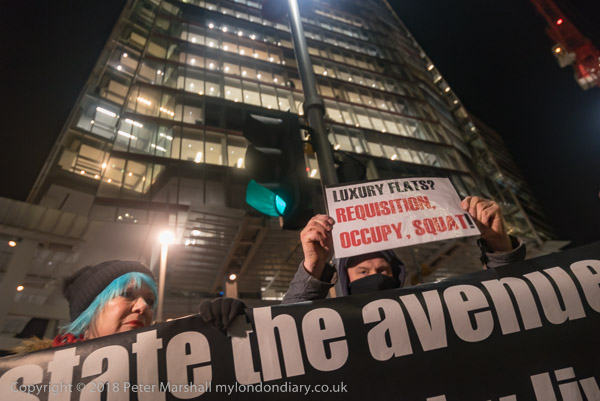
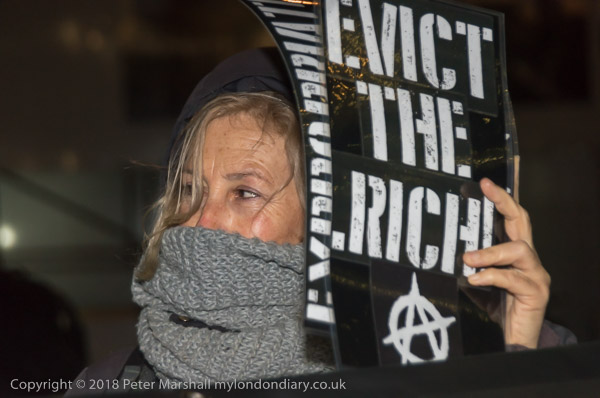
So the protest that evening took place as Class War intended, pointing out that the ten £50m apartments in the Shard had remained empty since the building was completed. The protest stressed that these were just a small fraction of the plans to build another 26,000 flats costing more than a million pounds each across London, many replacing current social housing a time when London has a huge housing crisis with thousands sleeping on the street, and over 100 families from Grenfell are still in temporary accommodation.

As Class War stated, there are already a huge number of empty properties in London, many in large development of high priced flats which either remain unsold or are bought as investments and largely unoccupied. What the capital needs is not luxury flats but much more social housing – and to keep existing housing on council estates under threat of demolition.

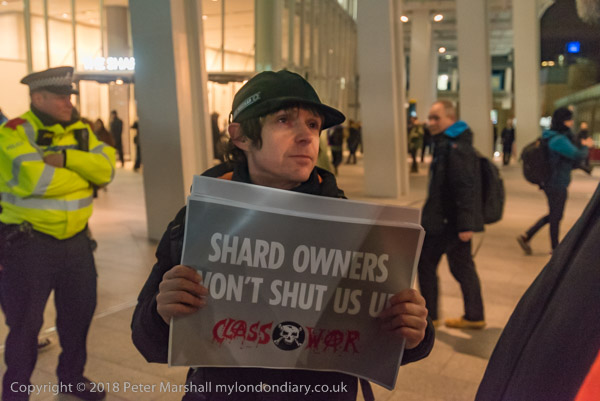
The protest, as planned, was peaceful but very noisy, and again policed by a ridiculously large number of police and private security. Ian Bone’s poor health meant he was in any case unable to attend in person. The protesters were careful to remain outside the boundary of The Shard, marked with a metal line in the pavement, but police still tried to move them away to the other side of the road, making the patently spurious claim that they were causing an obstruction to commuters attempting to enter London Bridge station. The only real obstruction to commuters attempting to enter the station were the lines of police across their route.

More on My London Diary
Class War protest at Shard
Class War victory against Qatari Royals

East India Dock Road to Bow Common

More pictures continuing my walk on 31st July 1988 – the previous post is Bow Common to West India Dock Road, so this returns to close to where that started. Like most of my walks it was more about exploring a neighbourhood than getting anywhere.

East India Dock Rd, Poplar, Tower Hamlets, 1988 88-7s-61-positive_2400
East India Dock Rd, Poplar, Tower Hamlets, 1988 88-7s-61

East India Dock Road was built as its name suggests when the East India Docks were opened in 1806 to provide a more direct and less congested route than Poplar High Street to them from the end of the Commercial Road, also then recently built in Limehouse. It is now part of the A13 and this section in Poplar has in turn been largely bypassed by the Limehouse Link and Aspen Way opened in 1993. Traffic was still very heavy along it in 1988.

The picture with rubbish on the pavement and gutters, a small rather derelict shop to let gave a picture of a run-down area which contrasted with the word Wonderful on what seems a rather faded fabric on a restaurant at right. Buddleia is growing in front of the billboard, always a sign of dereliction. Interestingly the the advert is for a low alcohol lager, hardly a thing back then when most drivers on the streets after closing time were drunk, although the breathalyser had come in back in twenty-one years earlier. But even the introduction of Kaliber in 1986 had not really galvanised the market – but low alcohol beers are now a massive growth area, and some are even drinkable.

There is still a Chinese restaurant in the building at the right of this picture, and rather surprisingly that small shack is still in place in front of Amory Place, now a minicab office.

Chun Yee Society, East India Dock Rd, Birchfield St, Poplar, Tower Hamlets, 1988 88-7s-62-positive_2400
Chun Yee Society, East India Dock Rd, Birchfield St, Poplar, Tower Hamlets, 1988 88-7s-62

There are still traces of London’s first Chinatown in Limehouse, which began in the area around 1900, but the centre of the Chinese community had moved to Soho in the 1950s, partly because of extensive bomb damage in Limehouse, but also because of dirt-cheap rents in an area with a bad reputation where few then wanted to live in central London.

Chun Yee Society, East India Dock Rd, Birchfield St, Poplar, Tower Hamlets, 1988 88-7s-63-positive_2400
Chun Yee Society, East India Dock Rd, Birchfield St, Poplar, Tower Hamlets, 1988 88-7s-63

The house on the corner of Birchfield St still has the sign for the Chun Yee Society – Chinese School on Sundays over its doorway. not along with a larger and newer version with fewer Chinese characters. Like many similar societies it began as a Tong, variously described as a criminal gang or a semi-masonic bortherhood, and organised various festivals including those commemorating the dead. Founded in 1906 it was a shelter for Chinese sailors as well as providing a Chinese Sunday school for children and is now largely an old peoples centre. Possibly some of the games of dominoes may have got a little out of hand, but the criminality was largely in the mind of Sax Rohmer, his readers and the sensationalist press.

St Mary & St Joseph, Catholic Church, Upper North St, Poplar, Tower Hamlets, 1988 88-7s-51-positive_2400
St Mary & St Joseph, Catholic Church, Upper North St, Poplar, Tower Hamlets, 1988 88-7s-51

The Roman Catholic Church of SS Mary and Joseph, Poplar impresses mainly by its scale. Built in 1951-4, its architect Adrian Gilbert Scott (1882-63) was the brother of the better-known Sir Giles Gilbert Scott, both from a distinguished family of architects. I always think of it as an ecclesiastical version of Battersea Power Station, without the chimneys but with a rather odd green pyramid on its roof, but that’s rather unfair as it is a very individual design, sometimes described as Byzantine jazz gothic.

According to the Grade II listing text this is a camel arch, and a similar arch appears at the top of the main windows, supposedly inspired by Persian buildings. The church replaced one on the site behind me as I made the picture which was destroyed by bombing – the site is now a Catholic school. I think I chose an interesting viewpoint, but one that needed a slightly wider lens and a more upright photographer.

Flats, GLC, Temporary Housing, Brabazon St, Poplar, Tower Hamlets, 1988 88-7s-53-positive_2400
Flats, GLC, Temporary Housing, Brabazon St, Poplar, Tower Hamlets, 1988 88-7s-53

The second of these LCC temporary buildings has a sign proclaiming it as ‘LANSBURY WORKS OFFICE’ and giving its address in Brabazon St. The street got its name not from the huge white elephant civil airliner that made a few flights in the 1950s before it and the project was scrapped in 1953, but from the 1882 founder of the Metropolitan Gardens Association, the 12th Earl of Meath, Lord Brabazon.

Work began on the layout of the London County Council’s Lansbury Estate in 1949 on a large area devastated by wartime bombing, and its best-known feature, Chrisp Street Market was built the following year and became an integral part of the 1951 Festival of Britain. But construction of the estate continued for many years and was only said to be completed in 1982, by which time it had been transferred first to the GLC and then Tower Hamlets. Since 1998 it has been owned by Poplar HARCA.

But as this picture shows, this part was still not completed in 1988. The large 11-storey tower block Colebrook House with 42 flats was part of the Barchester Street Scheme by the LCC Architects department and completed in 1957-8, named after a shop built at nearby Blackwall Yard. Brabazon St now has a small park to the left of my picture and a row of neat two-story houses along the right side.

Limehouse Cut, Upper North St, Poplar, Bow, Tower Hamlets, 1988 88-7s-54-positive_2400
Limehouse Cut, Upper North St, Poplar, Bow, Tower Hamlets, 1988 88-7s-54

Bow Common Bridge, an iron bridge replacing the earlier bridge here in 1929, is where Upper North Street meets Bow Common Lane across the Limehouse Cut and the factory building here on the north-west side has now been replaced by a block of offices and flats built in 2008-2011, with the 13 storey Ingot Tower at one corner of the largely five storey development. This large site alongside the Limehouse Cut was formerly a chemical works between the Cut and Thomas St (now Thomas Road.)

Phoenix Business Centre, Limehouse Cut, Upper North St, Poplarm Bow, Tower Hamlets, 1988 88-7s-55-positive_2400
Phoenix Business Centre, Limehouse Cut, Upper North St, Poplarm Bow, Tower Hamlets, 1988 88-7s-55

Wikipedia recounts that this area had become popular with chemical manufacturers as they could discharge waste into the Cut, and this bridge from at least 1819 was known as Stinkhouse Bridge and the area around became a huge fire risk, culminating in a great fire in 1866. The bridge was also a popular choice for suicides, with a local coroner in 1909 noting he had held over 50 inquests on them there. As Wikipeida comments ‘ In a derisory attempt to enhance its image it was renamed Lavender Bridge.’ But the old name stuck at least until the 1950s.

The Phoenix Business Centre on the north east corner of the bridge has also been demolished and replaced by tower blocks around 2008-2010.

The Sanitas Company Ltd, Council Depot, Watts Grove, Bow, Tower Hamlets, 1988 88-7s-44-positive_2400
The Sanitas Company Ltd, Council Depot, Watts Grove, Bow, Tower Hamlets, 1988 88-7s-44

The Sanitas Company Limited proudly put their name across the top of their 1914 building in Watts Grove, and it remained written in stone (or at least render) for a hundred years until the building was demolished and replaced by a rather blander building completed in 2017, part of a large development on Watts Grove and the new Pankhurst Avenue.

Previously the site stretching down to Yeo Street annd Glaucus Street had been occupied as it was when I made this photograph as a council depot by various of Tower Hamlet’s Councils municipal services (latterly Veolia.)

The Sanitas Company Limited was a local company which specialised in disinfectant and soap-based products. So far as I’m aware they had no connection with other and now better known companies using the name Sanitas, the Latin for Health.


My walk will continue in a later post.

Clicking on any of the pictures will take you to a larger version in my album 1988 London Photos from where you can browse the album.


Doctors and Blood Diamonds – 2016

Doctors and Blood Diamonds – 2016

There is no real connection I’m aware of between doctors and blood diamonds other than the fact I photographed both protests on 6th February 2016 – and I thought it made a nice headline.

Valentines Israeli Blood Diamonds protest

My working day started on Old Bond Street in Mayfair, an area of London I generally try to avoid, packed with businesses which represent the true scum on the capitalist system and their customers largely representing those most successful at exploiting the system and the great majority of the population. While the City of London is still the world capital of dodgy financial management, Mayfair is where much of the more commercial aspects of our current system ply their trade.

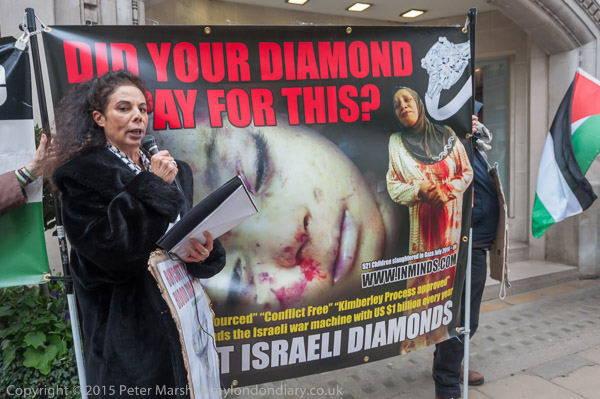
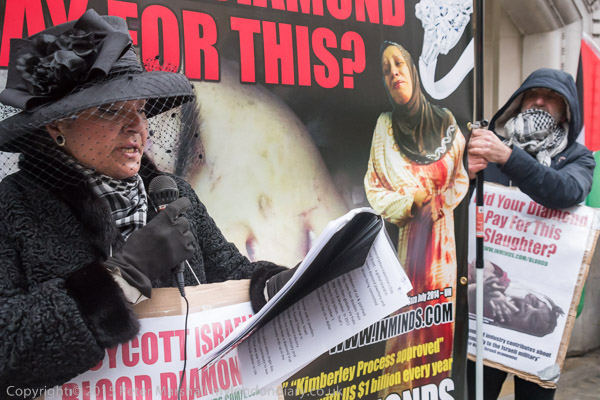
There are no diamonds mined in Israel, but diamonds are Israel, largest manufacturing export – then at around $10 billion a year and contributing around $1 billion a year to Israeli military and security industries. In a direct connection the Steinmetz Diamonds Group which supplies companies including De Beers and Tiffany supports the Israeli Givati Brigade through the Steinmetz Foundation. One banner was a message from the Samouni family, 29 of whom were killed by the Givati Brigade in 2008 in cold blood.

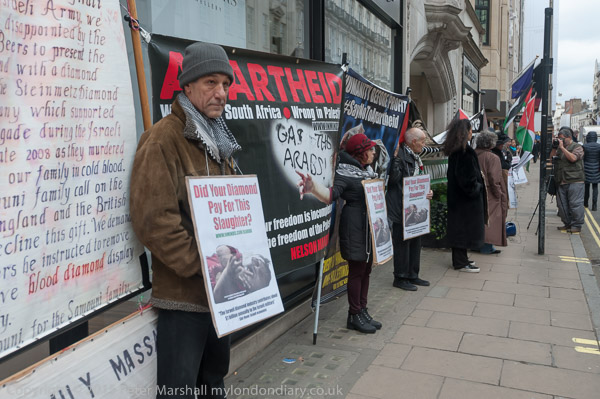
A week before St Valentines Day, protesters stood outside diamond sellers including De Beers and Tiffanys with banners urging people not to buy engagement rings these shops that sell rings using diamonds from Israel’s Steinmetz Diamonds Group.


Junior Doctors Rally & March

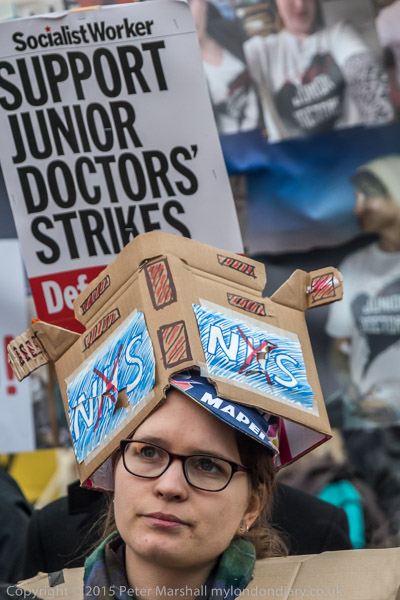
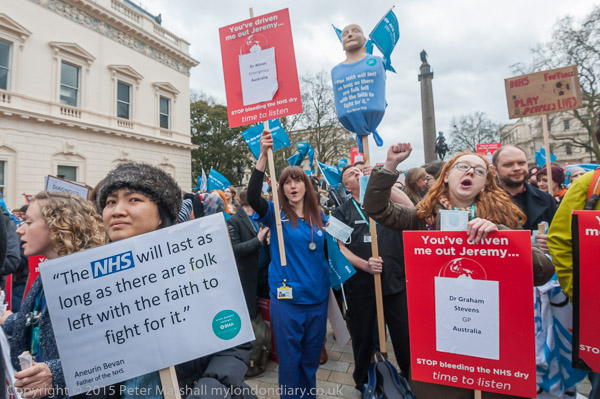
I left for the short walk to Waterloo Place, where Junior Doctors and supporters were gathering for a rally against against the imposition of new contracts they say will destroy the NHS and make it unsafe for patients. Supporting them were many other medical professionals – consultants, GPs, nurses and others – who all saw the contract as a part of an attack on the NHS to move towards a privatised medical system.

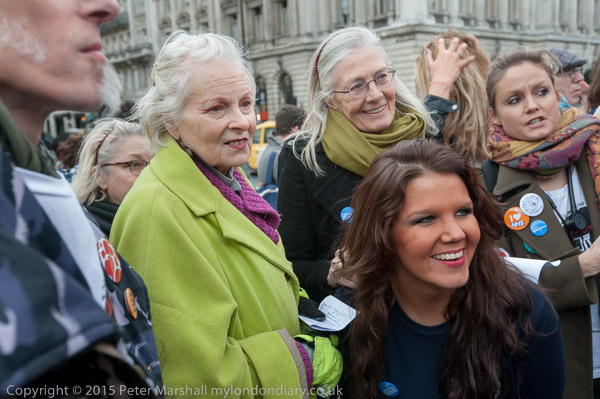
Speaker after speaker – including Dame Vivienne Westwood, her son Ben, and Vanessa Redgrave as well as many medical professionals – stressed how Health Minister Jeremy Hunt Hunt was misleading the media and public about the need for changes in the contract, carefully selecting evidence that supports his case while ignoring the much wider evidence against it.

Dame Vivienne Westwood and Vanessa Redgrave at the rally

Among the many placards were those naming doctors who had already left the NHS to work abroad, with the message ‘You’ve driven me out Jeremy… Stop bleeding the NHS dry’. Others named junior doctors supporting of the protest who were unable to attend the protest because they were working in what is already a 24 hour 7 day profession.

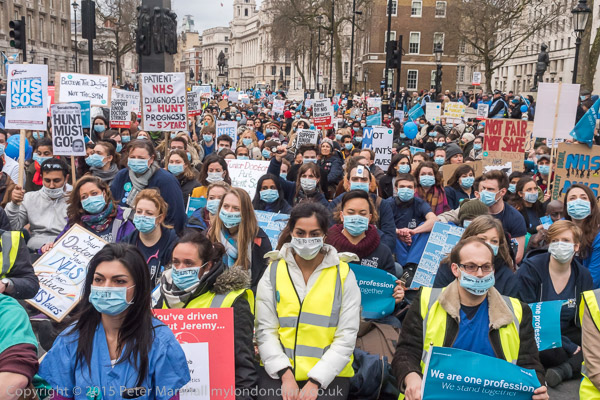
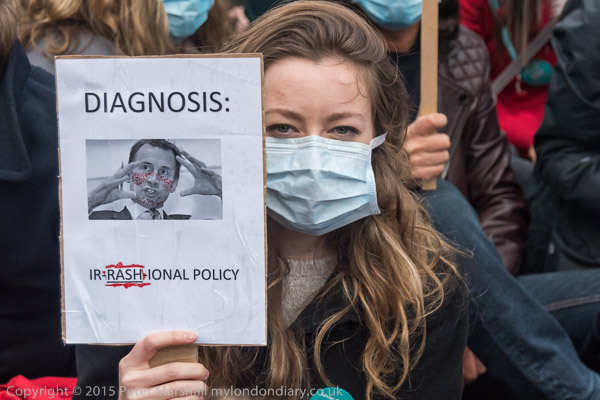
The protesters marched to Downing St where they sat down blocking the road wearing surgical masks while a deputation went into Downing St to deliver a message to the prime minister; they emerged a few minutes later to announce that the people inside No 10 had refused to accept any message from them.

We have seen in the current pandemic how this and other changes made in recent years have put the NHS under severe strain. As I wrote in 2016:

Of course it isn’t just junior doctors; new income rules for immigrant workers are likely to lead to up to 30,000 nurses being deported, and the cutting of bursaries for nurses and now proposed for all other medical courses will have disastrous effects. Add to this the effects of PFI which is bankrupting hospitals leading to privatisations and its hard not to see the end of the NHS as we have known it as inevitable.

It’s almost certainly too late to save the NHS in its current incarnation. The only solution is the kind of radical change that happened before under Nye Bevan and others to create a new NHS. But for that we would need a new revitalised Labour party in power – or a people’s revolution. Don’t hold your breath – and don’t get old or ill.


More on both protests on My London Diary
Junior Doctors Rally & March
Valentines Israeli Blood Diamonds protest