Hate Crime, Turkish Invasion, Hong Kong & More

Hate Crime, Turkish Invasion, Hong Kong & More – Saturday 2nd November 2019 was a busy day for me and I made six posts from different events on My London Diary – and here is a little about each in the order of my day.


Day of the Dead – Columbia Market, Bethnal Green
Hate Crime, Turkish Invasion, Hong Kong & More

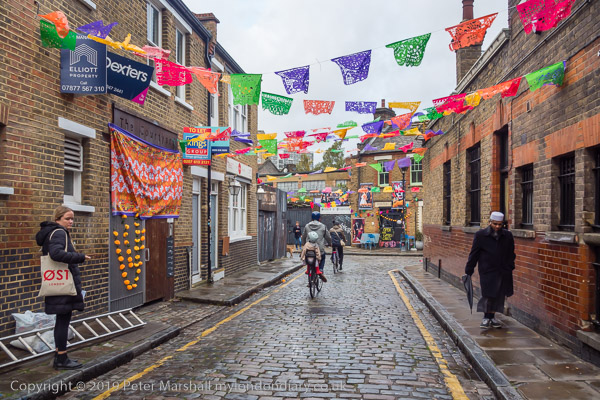
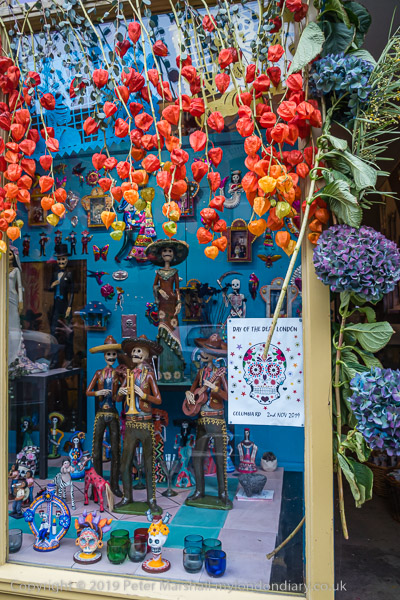
I walked from Hoxton Overground station to Columbia Market which was holding a festival for the Mexican Day of the Dead, arriving at the time this was supposed to start. But it had been raining heavily and had only just stopped which had put off others from coming early and the streets were pretty deserted. So all I was able to photograph were the decorations on the street and on some of the shops.
Hate Crime, Turkish Invasion, Hong Kong & More

Things would almost certainly have become more interesting had I stayed, but I had other things to attend and had to leave after around half an hour. I’d intended to return later but was too busy. I did take a few pictures as I walked to and from the station as well.

Day of the Dead


Against constitutional change in Guinea – Downing St
Hate Crime, Turkish Invasion, Hong Kong & More

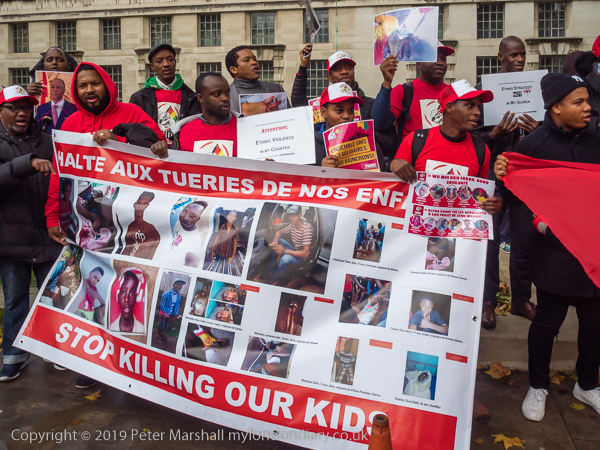
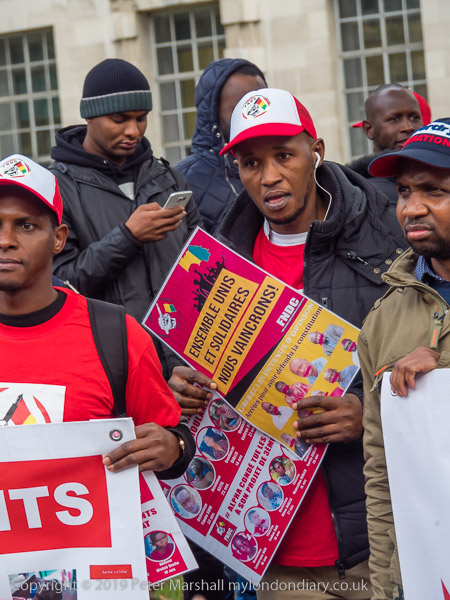
Back in central Westminster I photographed protesters from the UK branch of the National Front for the Defence of the Constitution (FNDC) who were demanding that President Alpha Conde abandoned the constitutional chages that would enable him to seek a third term in power.
Hate Crime, Turkish Invasion, Hong Kong & More

The London protest came after massive protests in Guinea in October during which 11 people had been killed in government violence against the opposition and peaceful protesters. They called for an end to and end to the killing and the release of all political prisoners, with posters showing the victims and calling for peace and justice in their country.

Against constitutional change in Guinea


Stop Hate Crime, Educate for Diversity – Downing Street
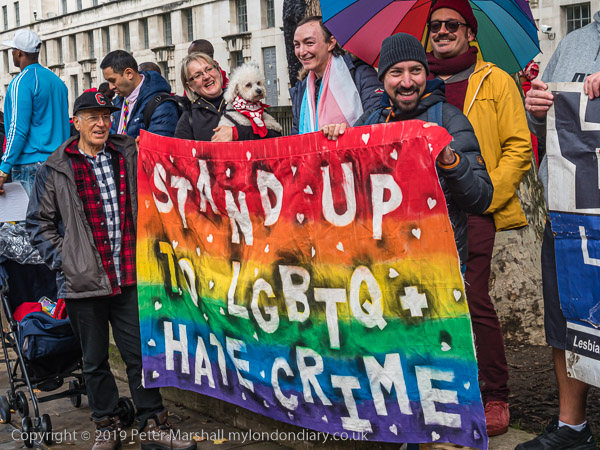
Also at Downing Street, campaigners from Stand Up to Lgbtq+ Hate Crime condemned the increasing incidence of hate crime and bigotry against LGBTQ+ people and defended the teaching of lessons which feature LGBTQ+ families and relationships.
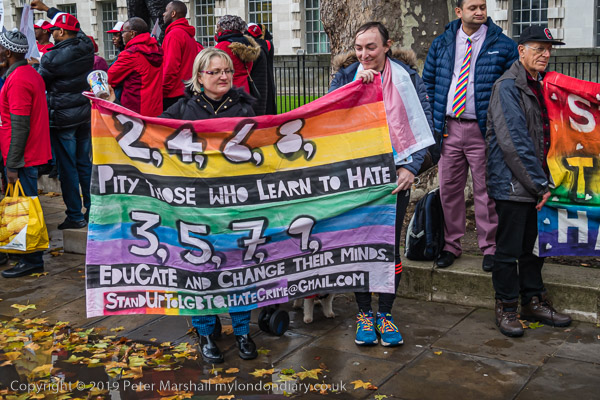
Their message was one of celebrating love, inclusion and diversity and say No to Homophobia, Islamophobia and Transphobia. I took some pictures and left as some began to speak about their own experience of discrimination at school before before the group marched to Eros in Piccadilly Circus for a further rally.

Stop Hate Crime, Educate for Diversity


Defend Rojava against Turkish Invasion – Marble Arch & Oxford St
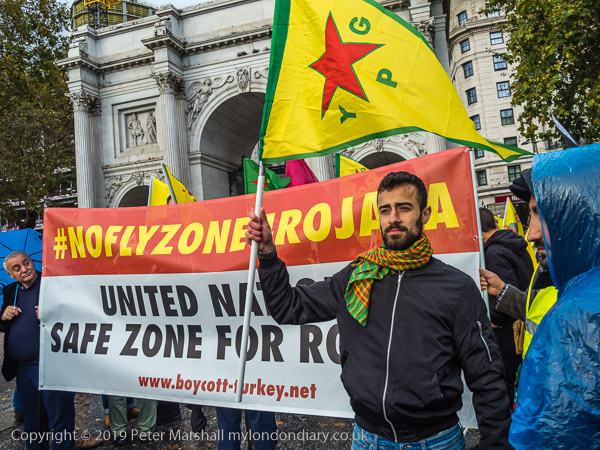
The largest protest of the day was a a rally and march in support of Rojava in North-East Syria against Turkish invasion which gathered at Marble Arch.
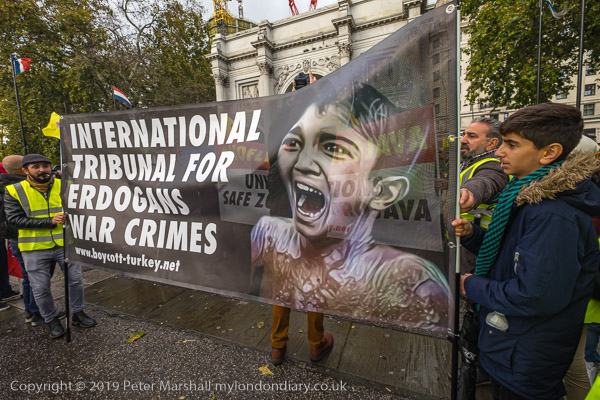
Since soon after the start of the revolution in Syria a large area of the country had been under the de-facto control of a Kurdish-led democratic administration which has put ecological justice, a cooperative economy and women’s liberation at the heart of society, enshrined in a constitution which recognises the rights of the many ethnic communities in the area.
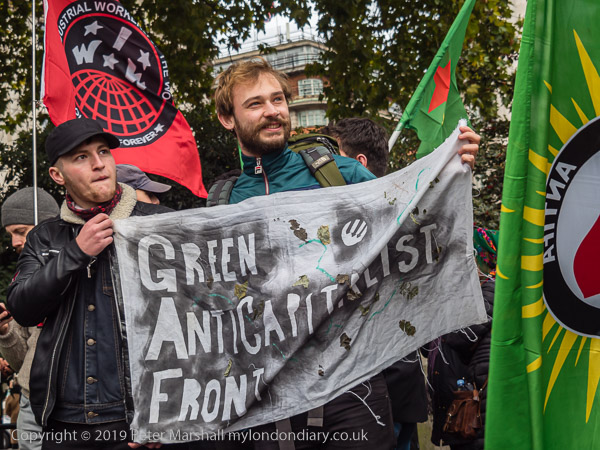
Many have seen this area, Rojava, as an important model for more democratic government, particularly in multi-ethnic areas, but Turkey sees it as a threat on its borders. For generations it has been discriminating and fighting against its own Kurdish population which makes up almost a fifth of the country’s population, and the Kurdish leader Abdullah Ocalan, held in prison in Turkey since he was abducted from Kenya in 1999.
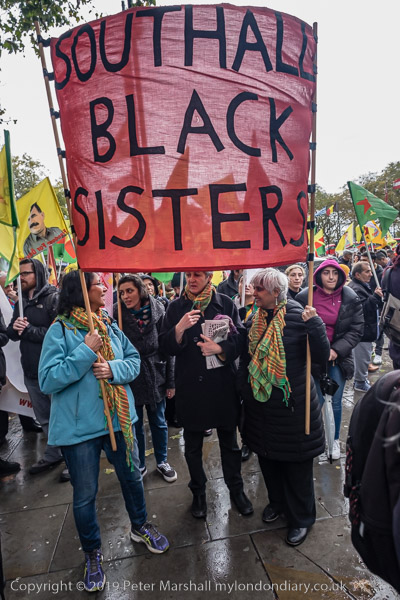
In prison Ocalan continued to campaign for the Kurdish people but had moved away from militancy towards political solutions. In jail he wrote about the rights of women and developed the philosophy of democratic confederalism which forms the basis of the constitution of Rojava.

Rojava has received wide support for its principles from environmental groups, green movements, feminists, human rights supports and those generally on the left, but not from western governments who see it as a threat to capitalist hegemony.
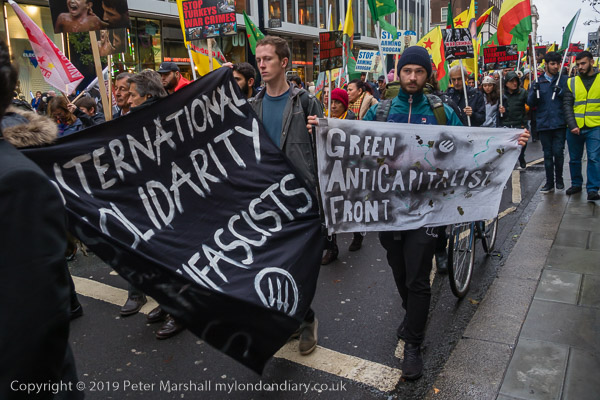
Despite this, the Kurdish people’s defence forces in Syria with the aid of US air power led the successful fight against ISIS. Turkey had backed ISIS although denying to do so, aiding them in getting the massive funds they needed by smuggling out oil from the ISIS held regions. Again they saw ISIS as an ally in their fight against the Kurds.
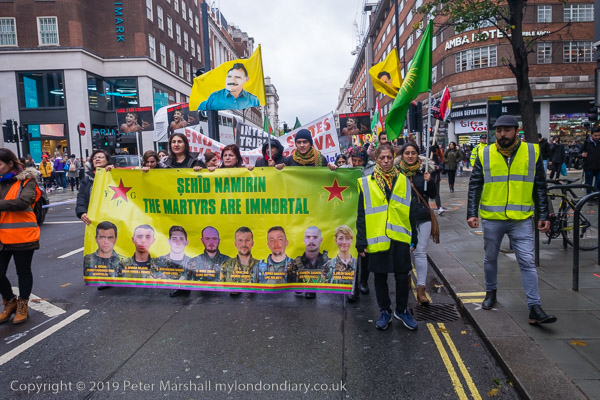
When Trump withdrew US troops from Syria, Turkey took advantage of this to invade areas of Syria controlled by the Kurds, and to encourage and aid Islamic groups to join them in their attacks. Turkey as a member of NATO has been encouraged and helped to develop its armed forces and is second only to the USA within Nation and is said to be the 13th largest military power in the world.
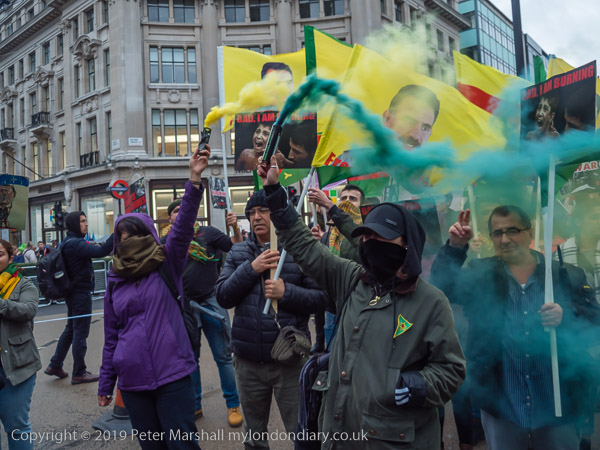
The Turkish invasion threatened the existence of Rojava, who had been forced to go to both Russia and President Asad of Syria for support. Obviously this threatens the future of the area and its constitution and its long-term hopes of autonomy in the area.

I left the protest on Oxford St on its way to the BBC who they accuse of having failed to report accurately on what is happening in the area. There had certainly been very little coverage of the recent events and a long-term failure to address issues of discrimination against the Kurds in Turkey.

Defend Rojava against Turkish Invasion


March for Autonomy for Hong Kong – Marble Arch & Oxford St
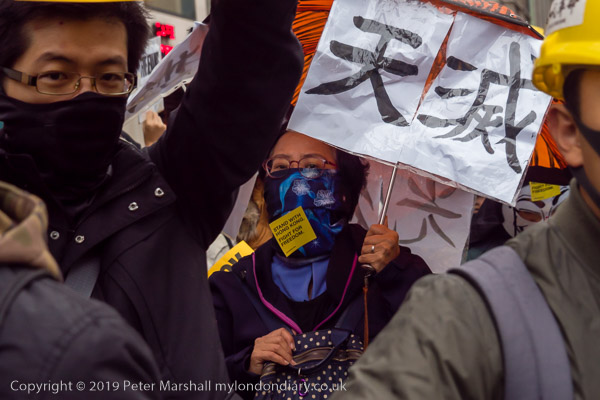
Also meeting at Marble Arch were protesters, mainly Chinese from Hong Kong living in the UK, and in solidarity and supporting the five demands of those then protesting in Hong Kong. Many wore masks to protect their identity, either because they may return home or fear their families there may be persecuted.
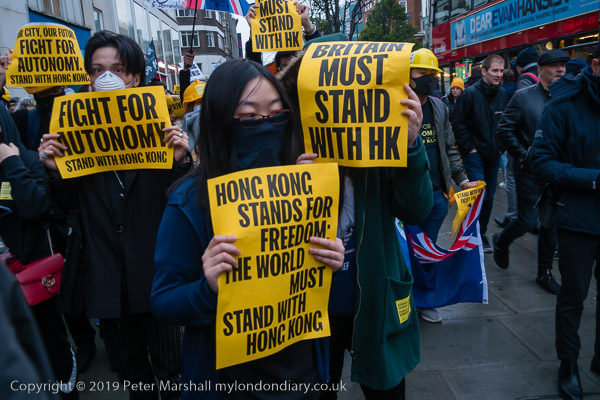
They demanded complete withdrawal of the Extradition Bill, a retraction of characterising the protests as riots, withdrawal of prosecutions against protesters, an independent investigation into police brutality and the implementation of Dual Universal Suffrage.

More pictures at March for Autonomy for Hong Kong


Queer Solidarity for trans and non-binary – Soho Square
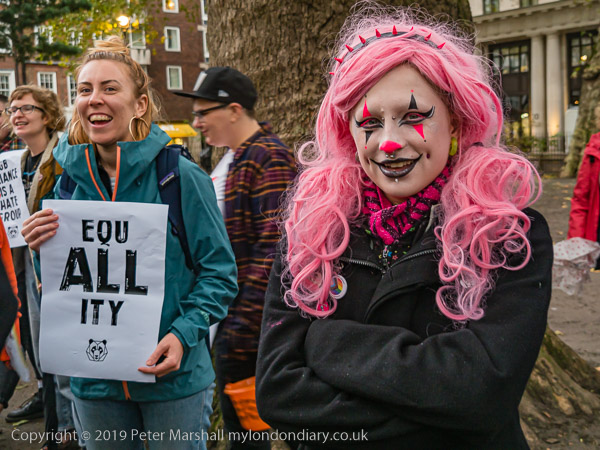
Bi Survivors Network, London Bi Pandas, Sister Not Cister UK, BwiththeT and LwiththeT held a rally in Soho Square pointing out that the newly announced LGB Alliance’, which claims to be protecting LGB people is actually a hate group promoting transphobia.
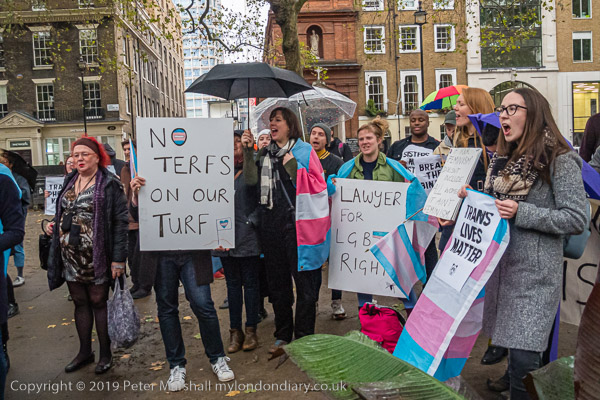
They pointed out that trans and non-binary people have always been a part of the gay community and played an important part in the fight for gay rights and in particular Stonewall, and there is no place for such bi-phobic and gay-separatist views in the gay community.

More pictures: Queer Solidarity for trans and non-binary


Roma, Olympic Park and Mind – 2016

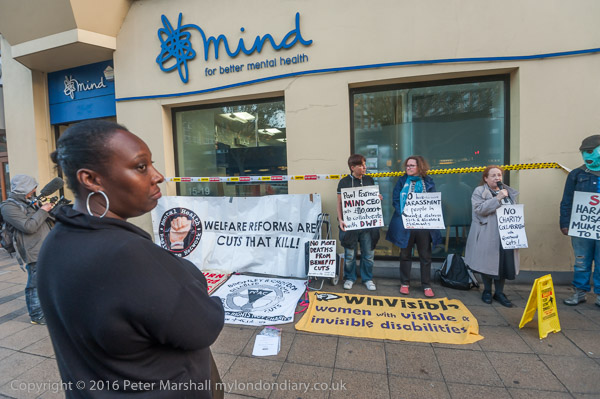
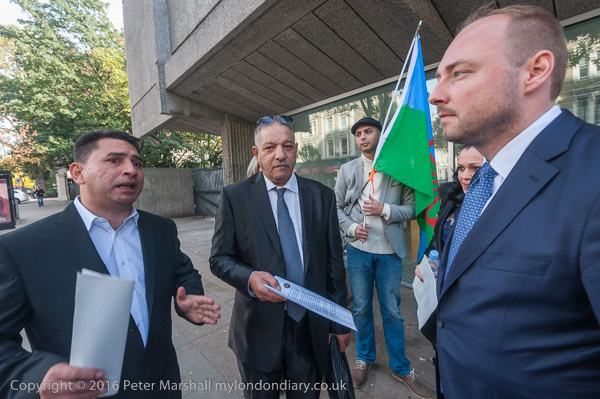
Roma, Olympic Park and Mind: After a morning protest by Roma at the Czech Embassy in Kensington I took a walk around the Olympic Park in Stratford before joining the Mental Health Resistance Network (MHRN) and Disabled People Against Cuts (DPAC) who were holding a Halloween Demo at the national office of Mind.


Roma protest Czech Murder – Czech embassy, Kensington

Roma, Olympic Park and Mind

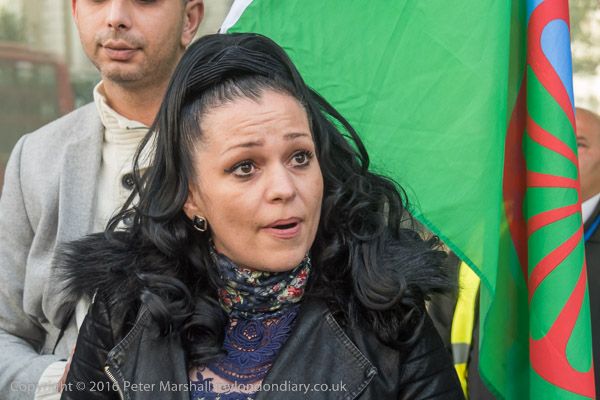
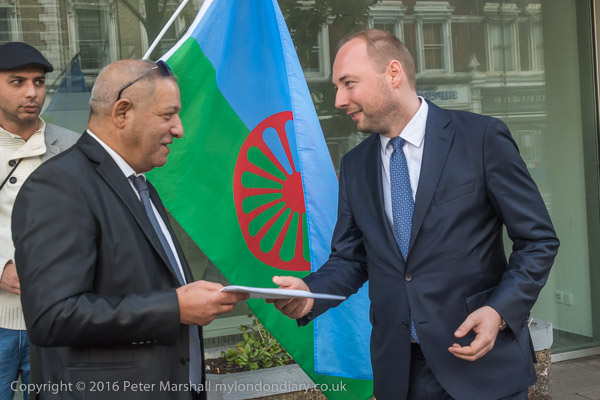
Ladislav Balaz, Chair of the Roma Labour Group and Europe Roma Network and others had come to hand in a letter calling for the murder of a young Romani man by neo-Nazi skinheads in Žatec to be properly investigated.

Roma, Olympic Park and Mind

The man who had lived in the UK until a year ago was a second cousin of Balaz. He was set upon as he went to buy cigarettes at a pizzeria.

Roma, Olympic Park and Mind

Most cases of murders of Roma in the Czech Republic are dismissed by police as accidents and they have already issued false stories about the victim, claiming he was mentally ill and attacked people. The Roma demand justice and equality for everyone in Czech Republic and the elimination of any double standards of justice. Several of the protesters made speeches in Czech as the letter was presented.

Roma protest Czech Murder


A Walk in the Olympic Park – Stratford

Roma, Olympic Park and Mind

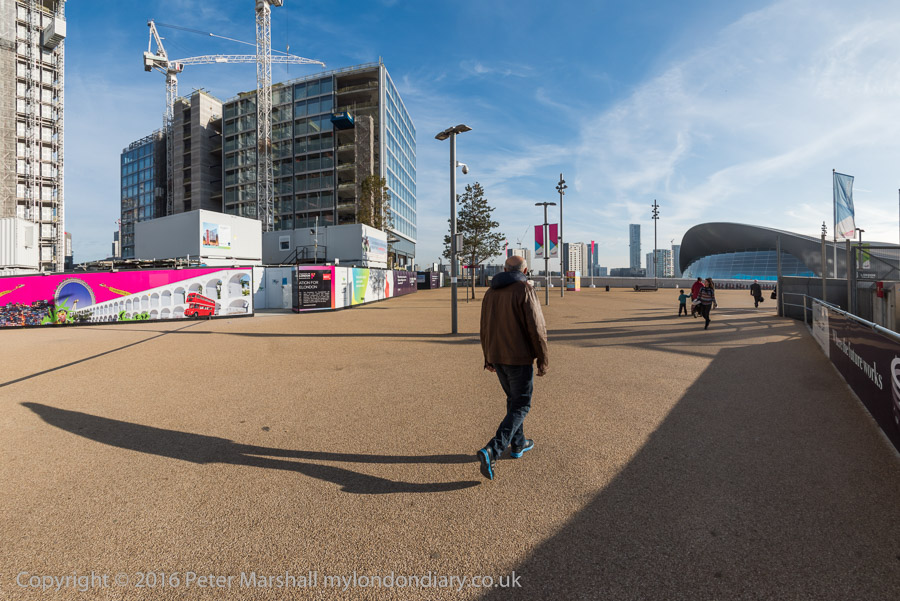
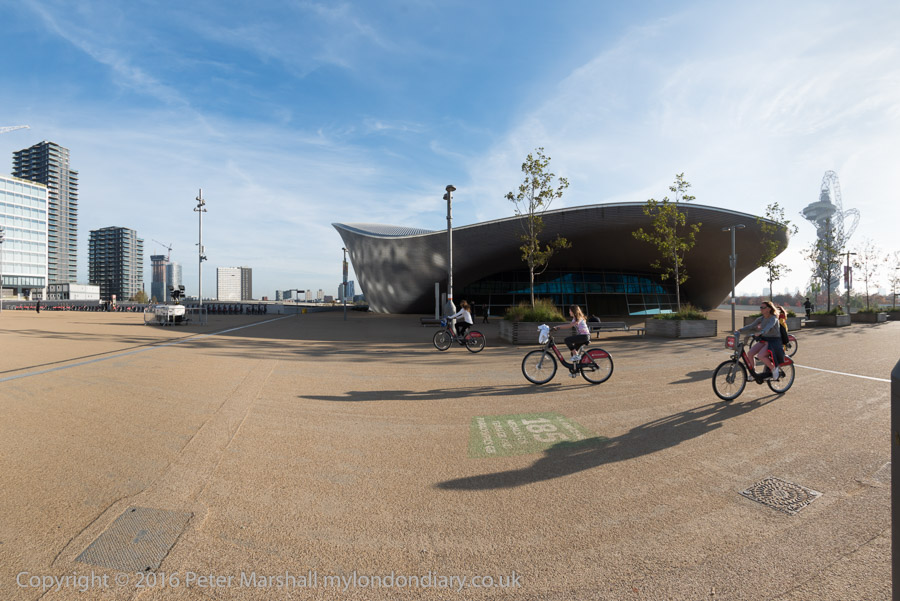
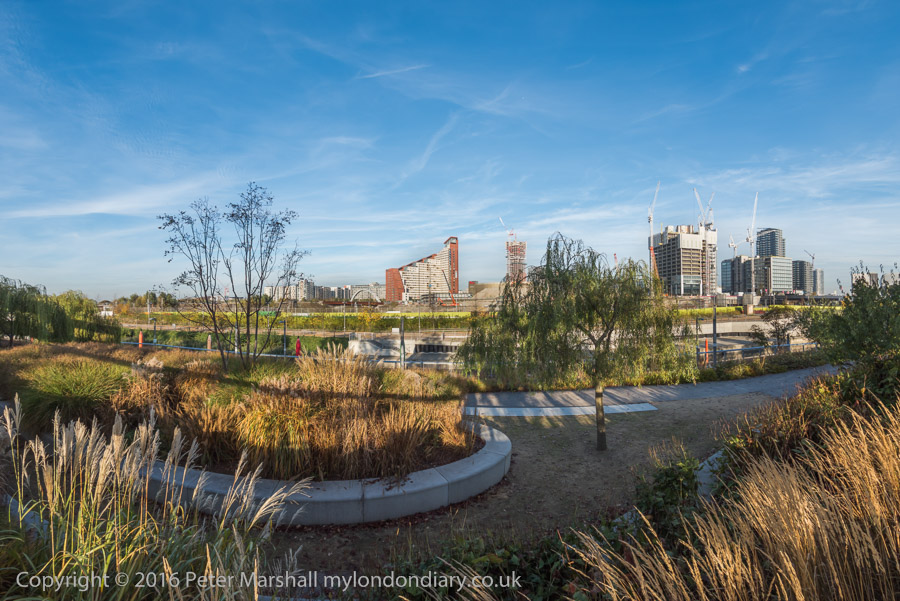
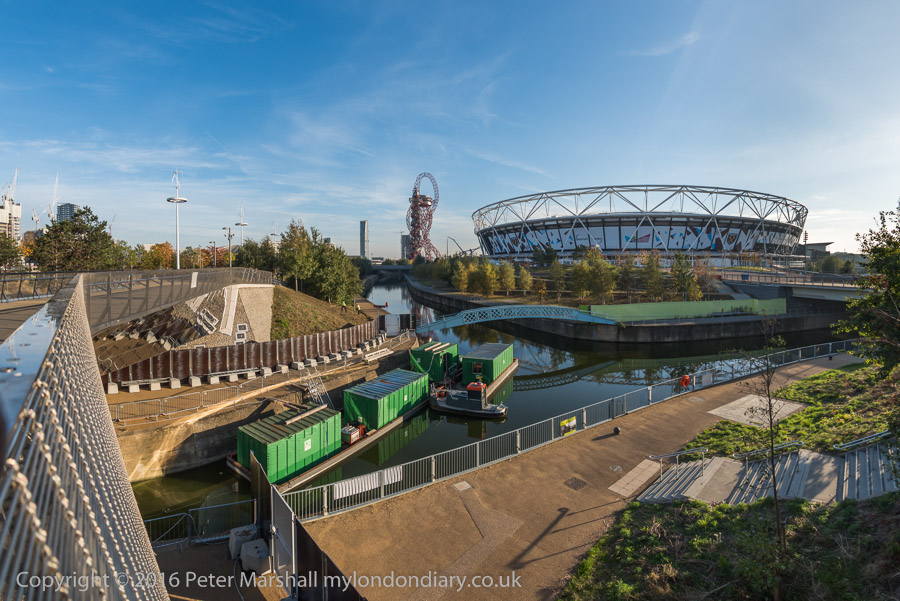
I had several hours between the protest outside the Czech Embassy and a protest in Stratford High Street and decided it was a good occasion to take another walk in the park at Stratford which had been the site of the 2012 London olympic games and to make some more panoramic images.

It was a year since I had been there, and four years since the Olympics and I had hoped to see the park in much better condition than I found it. Considerable progress had been made in the buildings which are shooting up around it and many of the ways into the park are still closed.

I walked around much of the southern area of the park and found it still “largely an arid and alienating space composed mainly of wide empty walkways rather than a park.”

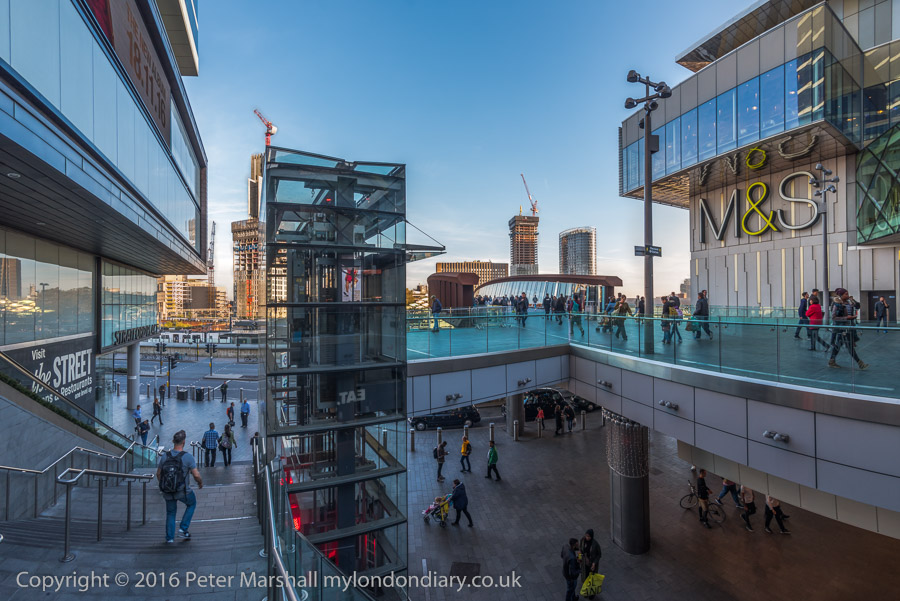
I took rather a lot of pictures, both panoramic and more normal views before it was time to make my way back through the Westfield shopping centre into the centre of Stratford.

Many more pictures at A Walk in the Olympic Park.


Against Mind’s collusion with the DWP – Stratford

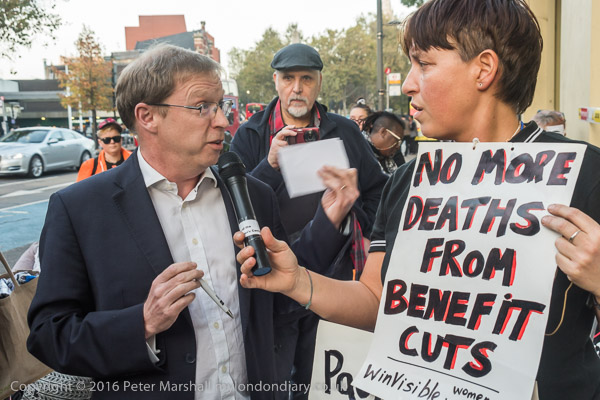
Paul Farmer, Mind’s chief executive came out and spoke to the protesters

The Mental Health Resistance Network (MHRN) and Disabled People Against Cuts (DPAC) came for a Halloween Demo at the national office of mental health charity Mind in Stratford.

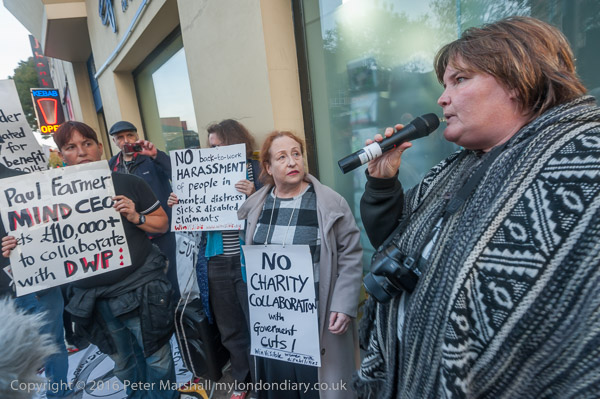
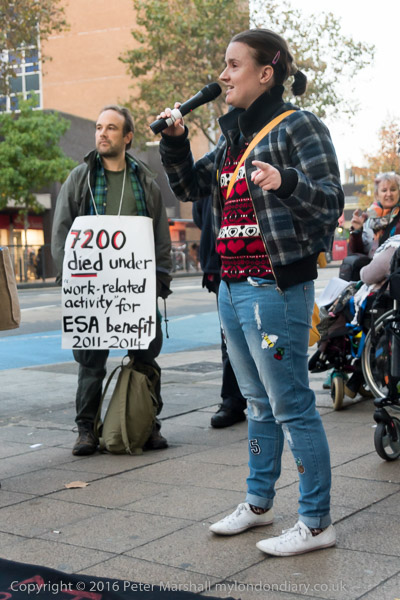
They complain that Mind failed to mention the effects of welfare reform, sanctions, or benefit-related deaths in its latest five-year strategy and has dropped its support for the long-running court case aimed at forcing the government to make WCA safer for people with mental health conditions.

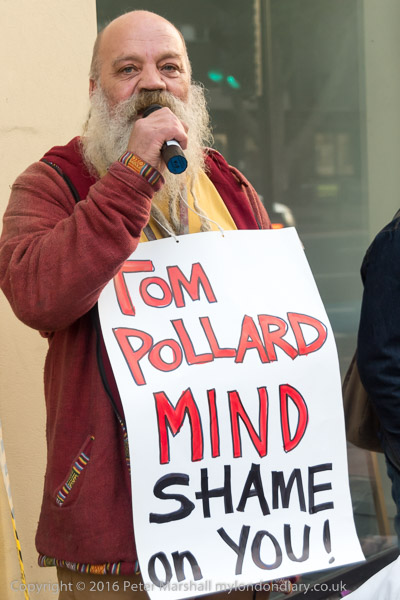
Mind’s policy and campaigns manager Tom Pollard had been seconded to work as a senior policy adviser to the DWP and was to start the following day and they demanded the resignation of Mind’s chief executive, Paul Farmer.

Farmer came out to meet the protesters on the pavement and told them that Mind was still working for people with mental health problems and not for the DWP, and that Pollard’s decision had been entirely a personal one in order to gain more insight into the workings of government rather than to assist them in the any discrimination against the disabled.

The protesters were unconvinced and after he had finished speaking several spoke about how local Mind groups were working against the interests of those with mental health problems. They claimed the local managers were often more interested in empire building than in the welfare of benefit claimants.

More pictures at Mind’s collusion with the DWP.


Clapham Road and South Lambeth – 1989

Clapham Road and South Lambeth continues my walk on Wednesday 19th July 1989 in Stockwell and South Lambeth which began with Stockwell Park, Bus Garage, Tower and Mason. The previous post was Meadows, Tate Library & Albert Square.

Works, Clapham Rd, Stockwell, Lambeth, 1989 89-7f-64

I walked southeast out of Albert Square past the plain brick 1960’s Regency Court block of flats which replaced the damaged No 37 – the only attempt this makes to fit in with the square is to keep to the same roof line but otherwise it stands out as a drab sore thumb – I think a good modern building would have been preferable to dull mediocre. A wide avenue with some trees lining it leads to Clapham Road.

There was no gap between this typically 1930s building immediately to the north of Sir Joseph Causton’s large Printworks building and it may have been a later part of the works or a separate small factory. At its north side it joined a house, still standing. This building has been completely removed, and the space is now a road, Lett Rd, next to the Printworks which has been converted into flats and retail. The left section of the building has been replaced by a recent residential block along Lett Rd.

The Printworks was built in 1903 and Causton’s were one of the largest printing companies, making labels for various products including Marmite and Guiness, stationery and objects including brewery pub trays. During the First World War they printed many propaganda posters and those encouraging war savings. They moved to Eastleigh, Hants in 1936 and the plant was sold to the catalogue company Freemans Ltd in 1937. The company was taken over in 1984 but the name is still used for Causton Envelopes and Causton Cartons, part of the Bowater Group.

Housing, Liberty St, Stockwell, Lambeth, 1989 89-7f-66

Liberty Street runs from Caldwell Street down to Durand Street behind the Printworks. It was one of the last part of the area to be developed and when these 54 flats were built as Wyke Mansions close to Caldwell Street in 1902 they faced the works across an open field. According to the Oval History site this was later built on by Freeman’s for warehousing after they took over the Printworks. Some of those buildings were demolished in 1996 to build Bakery Close and the rest demolished in 2008 by Gaillard who converted the site into modern flats. But these mansions remain. There appears to be no record of why the street was named Liberty St.

House, Garden, Brixton Rd, Angell Town, Lambeth, 1989 89-7f-55

I walked along Caldwell Street to Hackford Road, then down there to Southey Road and on to Brixton Road. I think this remarkable garden of thistles which would have even sent the pessimistic and depressed Eeyore into ecstacy was at 130 Brixton Road, part of the Vassall estate let to Henry Richard Vassall, third Baron Holland. He gave building plots on 80 year leases to builders and speculators in a piecemeal fashion which probably accounts for the stuccoed No 130 adjoining the brick 132. There are brief descriptions of the houses along the road on the Survey of London.

These houses are on the west side of Brixton Road and the River Effra ran on the east side, but was put underground around 1880 and still runs there. But the buildings on that side are set well back from the road.

The Co-op Centre, 11 Mowll St, Stockwell, Lambeth, 1989 89-7f-45

The Co-op Centre was built in 1898 for as a hall for Christ Church, Brixton Rd and used for worship until the church was completed in 1902. Lambeth Co-op Centre became Mowll St Business Centre in 2016. Until the late 1930s the street was named Chapel St, but was renamed to avoid confusion with other Chapel Streets in London after the Rev William Rutley Mowll, the first vicar of Christ Church on the corner of the street.

Doorway, Kinki-Bee Characters, 46 Wilkinson St, South Lambeth, Lambeth, 1989 89-7f-33

Kinki-Bee Characters was in the locally listed Venetian gothic former Stockwell and North Brixton Dispensary on the corner of Wilkinson Street and Bolney Street, South Lambeth built in 1866 to provide medical and surgical advice, medicine, and attendance. The charity was only removed from the Charity Commisions listing in 1997. In 1920 it stated its aims as providing ‘MEDICAL AND SURGICAL AID TO THE SICK CHILDREN OF POOR PERSONS RESIDENT IN THE PARISHES CHRIST CHURCH, NORTH BRIXTON; ST. MICHAEL, STOCKWELL; ST. ANDREW, STOCKWELL; ST. ANN, SOUTH LAMBETH; ST. BARNABAS, SOUTH KENNINGTON; ST STEPHEN, SOUTH LAMBETH; AND ALL SAINTS, SOUTH LAMBETH.’ The plaque on the house was restored in 2012.

Kinki-Bee Characters Limited was set up around 1952 and sold hand-painted dolls and ornaments, bottle stoppers/pourers etc as collectors items. You can still find them on eBay and other web sites. A placard inside the window has the message ‘CHILDREN WANT REAL MOTHERS NOT MADE OF STONE’.

Tradescant sculpture, St Stephen's Church, Wilkinson St, St Stephen's Terrace, South Lambeth, Lambeth, 1989 89-7f-21
Tradescant sculpture, St Stephen’s Church, Wilkinson St, St Stephen’s Terrace, South Lambeth, Lambeth, 1989 89-7f-21

The Tradescant sculpture by Hilary Cartmel was funded by the local residents’ association and unveiled by naturalist David Bellamy in 1988 and is a memorial to the Tradescant family. John Tradescant, father and son, were 17th century nurserymen and collectors of plants from around the world based in Lambeth.

The sculpture stands on the pavement in front of St Stephen’s Church, built in 1967 to replace the large Victorian building of 1861, built to seat 1,200, which was demolished. The 1967 building has since been modified to replace its narrow slit windows with larger ones. But my back was to this rather plain brick building when I took this picture, and in the background is the rather fine dispensary building from 1866 on the corner of Wilkinson St and Bolney St.

To be continued.


Meadows, Tate Library & Albert Square

Meadows, Tate Library & Albert Square continues my walk on Wednesday 19th July 1989 in Stockwell and South Lambeth which began with Stockwell Park, Bus Garage, Tower and Mason.

House, South Lambeth, Lambeth, 1989 89-7e-23
House, Meadow Place, South Lambeth, Lambeth, 1989 89-7e-23

Unfortunately the next few frames of my film were ruined in processing, though I can still see a few details on a couple of images, including the large house immediately north of Stockwell Baptist Church a house with the legend ARS LONGA VITA BREVIS at roof level which I can no longer find, but was probably further north on the same road.

This picture, taken on a second camera, is the next I still have. Meadow Place is a short street off the Old South Lambeth Road at the southern of its two junctions with South Lambeth Road. It ends at a blank brick wall, on the other side of which is the Bolney Meadow Community Centre on the 1930’s LCC Bolney Meadow Estate, at the north-west corner of the 1960s South Lambeth Estate.

In 1870 there was still some meadow land in the area; Meadow Place appears on the 25″ OS Maps with the 1871 survey as a row of a dozen houses next to St Stephens School with some small fields to the south and east, but the houses to the south of the street which remain were not then present, though they are shown on the next survey in 1893-4.

This small block, now with a roof terrace above the single storey end further from my camera is still there and looking much the same except the hanging baskets have gone. Just down the street immediately beyond this house is a narrow passage which I could not resist.

South Lambeth Library, South Lambeth Rd, South Lambeth, Lambeth, 1989 89-7e-24

The passage took me to an alley, Stamford Buildings, which led back to South Lambeth Road, and from which I made this view of the Library across the road. These late Victorian flats and possibly Meadow Place were built on the site of John Tradescant’s garden.

Sir Henry Tate the sugar giant who lived in Streatham gave three libraries to the area, the Tate South Lambeth Library here and other larger libraries in Brixton and Streatham.

The terms of his gift appear to be unknown, but it seems likely that he will have exacted a promise from the then local authority that the library be kept open and free of charge to server the local community in perpetuity. It remains open despite repeated attempts by Lambeth Council to demolish or close it – and the documentation surrounding the bequest remain hidden.

The library opened in 1888 and still serves the community in the area many of whom are now Portuguese. Lambeth first tried to demolish it when they built their Mawbey Brough estate in the 1970s, but it survived. Then in 1999 they tried to close over half of the boroughs twelve libraries including this one but had to drop the plans after massive public objections, led by the newly formed Friends of Tate South Lambeth Library. In 2015 the council had another go at library closures – and again a forceful campaign by the Friends saved South Lambeth.

South Lambeth Library is not a listed building (though it is locally listed), probably because it has suffered some serious losses since 1888. As designed by local architect Sidney R J Smith (who also designed the Tate Gallery) it had copper cupolas on top of the two towers as well as a large porch, its roof supported by six caryatids. The copper perhaps went to aid the war effort (along with the railings) and the porch was apparently removed in the 1950s, probably to allow road widening.

Aldebert Terrace, St Stephen's Terrace, South Lambeth, Lambeth, 1989 89-7e-11
Aldebert Terrace, St Stephen’s Terrace, South Lambeth, Lambeth, 1989 89-7e-11

I was standing in Aldebert Terrace and looking across to the splendid terrace wich runs around the corner of St Stephen’s Terrace and Aldebert Terrace. It dates from the 1860s and is now part of the Albert Square Conservation Area. The house at the left of the picture is a little later. These unlisted houses on St Stephen’s Terrace are distinguished by their ornate decoration.

Albert Square, South Lambeth, Lambeth, 1989 89-7e-12

Houses around Albert Square are numbered consecutively and all of the houses on the four sides of the square are Grade II listed in five groups. The square was developed on farmland which had been a part of the ancient Manor of Vauxhall following a Private Act of Parliament in 1843 on a site known as the ’14 acres’, and was completed following an agreement with him in 1846 by Islington builder John Glenn together with an ‘Ornamental Ground for the use of the Lessees of the Square in the late 1840s. All except one of the original houses remain, No 37 on the edge of the square which had been damaged by bombing being demolished and replaced by a block of flats in the early 1960s

This picture has No 11 at the extreme right and is looking towards the south-east corner of the square and includes the houses from 3-11.

Albert Square, South Lambeth, Lambeth, 1989 89-7e-13

At the corner of Albert Square between No 5 and No 6 I could see the rather more modern and much plainer flats on Hampson Way on the Mursell Estate, a large LCC estate designed from 1961 by the LCC Architect’s Department and built in 1963-66. A tall fence separates it from Albert Square, with no way through. The estate has a long frontage on Clapham Road and is mostly relatively low rise as in the picture.

Albert Square, South Lambeth, Lambeth, 1989 89-7e-16

This view is looking at the same corner as the previous picture but taken from outside No 1. Towering above the Albert Square houses is the single large tower block on the Mursell Estate, Rundell Tower, with 82 flats. The estate seems well-planned and is generally regarded as one of the better council estates in the area, though many properties are of course now privately owned.

Albert Square, South Lambeth, Lambeth, 1989 89-7f-61

My final picture of Albert Square is a view across Albert Square Garden, taken over the fence looking across to the north-west side of the square. Like many London square gardens this is a private garden, open to residents of the square and other local residents who have to pay a licence fee. Albert Square Lambeth – A report on the Central Garden by David M Robinson for English Heritage is a very detailed account about the square and London square gardens in general and in particular these gardens which are now run by the Albert Square Garden Trust.

More from this walk in later posts.


Greenwich Walk – 2018

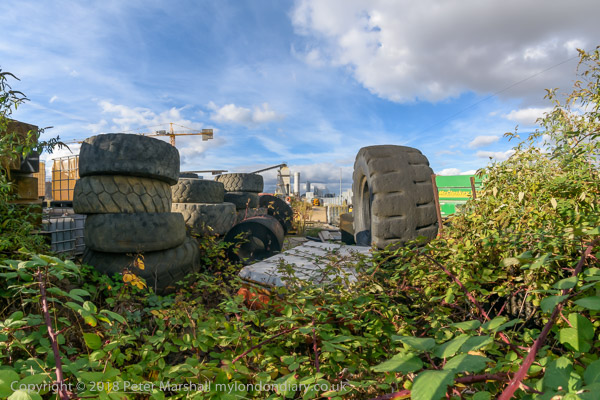
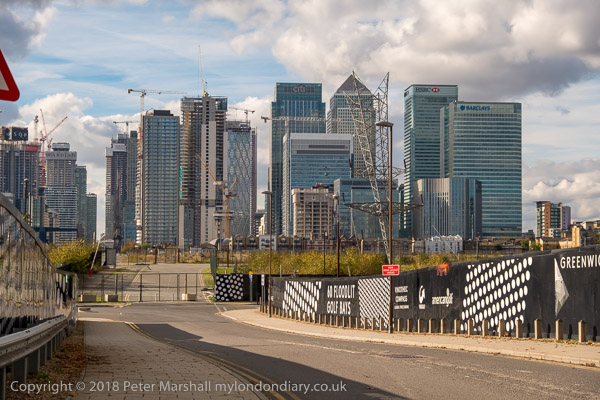
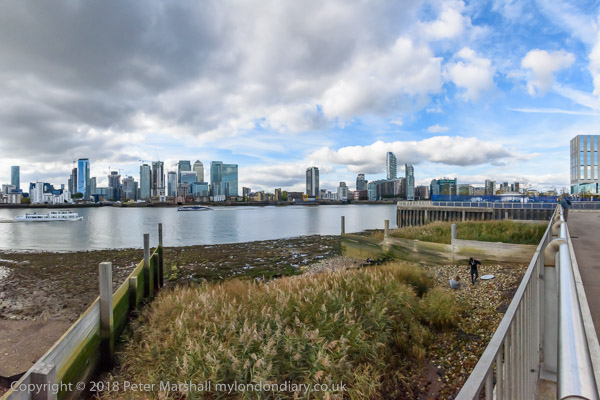
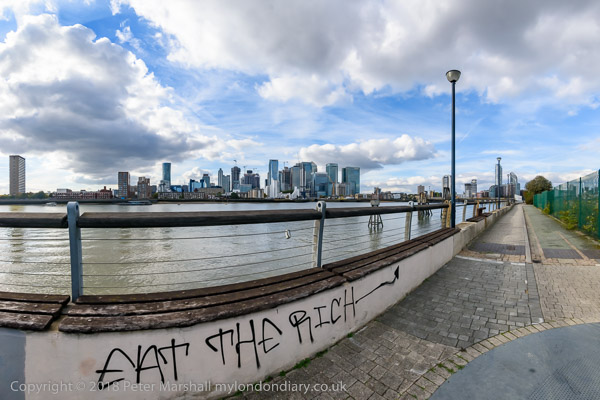
Greenwich Walk: On Thursday 18th October 2018 I walked with two or three other photographers from North Greenwich Station to the centre of Greenwich and made the pictures in this post. You can see many more of them in a post on My London Diary, Greenwich Walk.

Greenwich Walk

Recently on >Re:PHOTO I’ve published a series of posts about my walks in London back in the 1980s, along with some of the pictures I took then which are now in my albums on Flickr. The most recent walk I’ve featured has been in Brixton and Stockwell and began with Stockwell Park, Bus Garage, Tower and Mason, and I’ve still to finish the posts on this, and will do so shortly.

Greenwich Walk

But I’ve continued to walk around London, if less frequently than before in recent years. My walks now are rather shorter in length and duration and are mostly together with a few friends, other photographers who sometimes lure me into pubs on the way (I’m easily tempted.) And we almost always end up with a meal together in one.

Greenwich Walk

Photographically things are rather different too. I don’t even always take any photographs and am no longer working on the kind of extended projects which I had back in those earlier days, recording the fabric of the city and in particular those areas undergoing substantial change – such as the whole of London’s docklands.

Greenwich Walk

Back in the 80s and 90s I always worked with at least two cameras, one with black and white film and the other with colour. So far I’ve included very little of the colour work in those posts here, in part because I was working on a different project with the colour. You can see more of the colour work in the online project initially put together as a dummy for an as yet unpublished book in the early 1990s, ‘Café Ideal, Cool Blondes & Paradise‘.

More recently several web sites have published features using mainly these colour pictures from my Flickr albums sometimes along with some of the black and white. The most recent of these is on Flashbak, ‘34 Photos From A Walk Around Tooting, South London In 1990‘. It puts together images from several visits to the area and includes a few black and white images of people on the streets, In the introduction Paul Sorene comments “What we love about Peter’s pictures is that he shows us the everyday things we saw but didn’t much notice. Now that we get to look again, things looks strangely familiar.” I think this is about the 12th set of my pictures on that site.

But now I only take one camera on my walks, and always work in colour as the camera is digital. I could easily switch the images to black and white, but have only done so extremely rarely.

The other large change for me is the ease with which I can now make panoramic views, no longer needing to carry a separate camera for these, just the right lens. Many of the images from my walk on Thursday 18th October 2018 are panoramic with a horizontal angle of view of around 145 degrees even though they have a ‘normal’ aspect ratio of 3:2 as they also have a large vertical angle of view. Just a few are cropped to a more panoramic format.

Finally, here is the paragraph I wrote about the area in 2018:

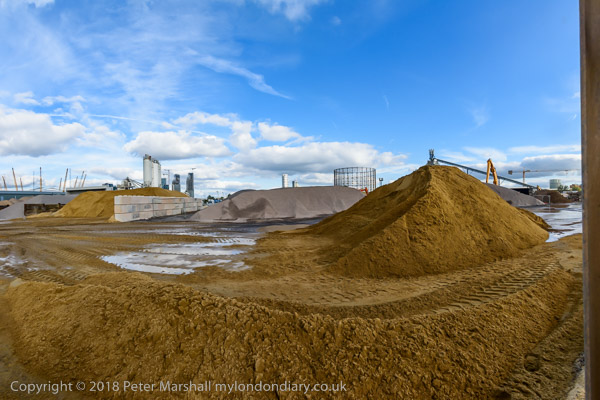
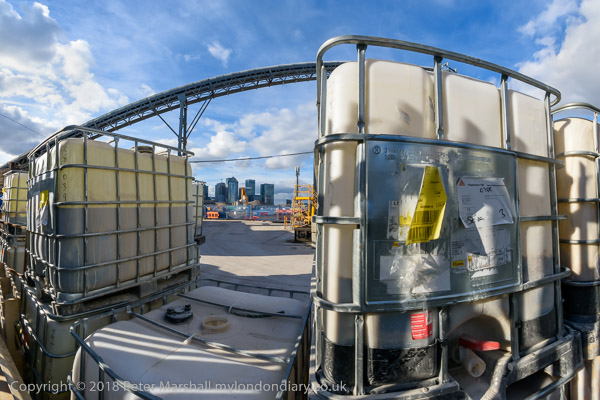
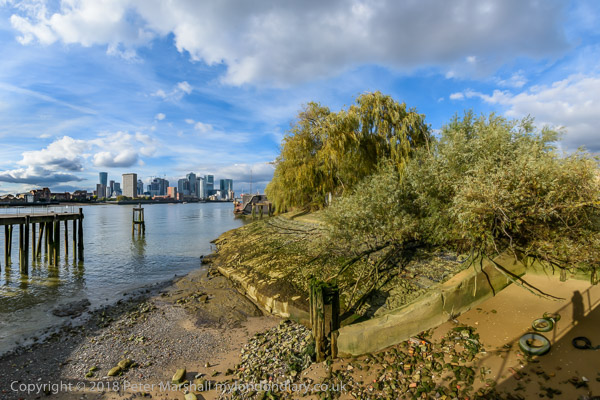
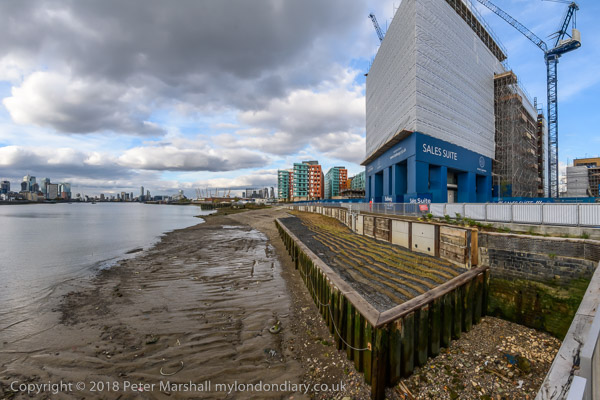
I first walked along here back in 1980, and have done so a number of times since, though in recent years much of the riverside path has been closed as the old wharves are being replaced by luxury flats. It is still an interesting walk, though it has lost virtually all of the industrial interest it once had. A River Thames that is rapidly becoming lined by new and largely characterless buildings is at times a sad state, but there still remain some liminal landscapes and surprising vistas.

Greenwich Walk on My London Diary

European Social Forum & Rosary Crusade -2004

European Social Forum & Rosary Crusade: Two very different things happened on the streets of London on Saturday 16th October 2004.


European Social Forum – Speakers’ Corner, Oxford St and Carnaby St

European Social Forum & Rosary Crusade

Saturday was the second day of the three day European Social Forum, held in London from 15-17 October 2004. This brought together trade unionists, socialists, peace campaigners and greens from all over Europe to demonstrate that “another europe is possible”, but apparently left many complaining about how the event had been organised and manipulated.

European Social Forum & Rosary Crusade
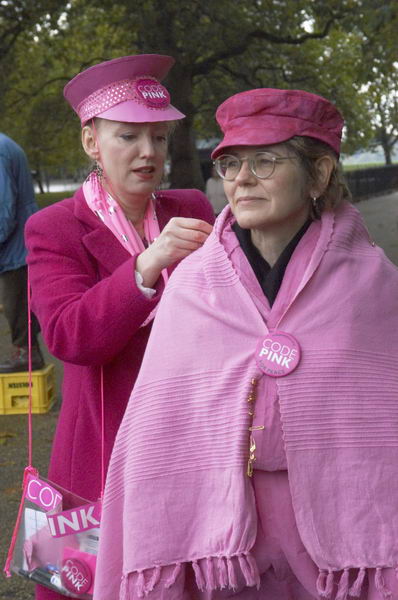
Code Pink protesters prepare at Speakers’ Corner

I chose not to attend the more serious sessions of talks but to photograph the more creative activities outside these on the streets of London.

European Social Forum & Rosary Crusade

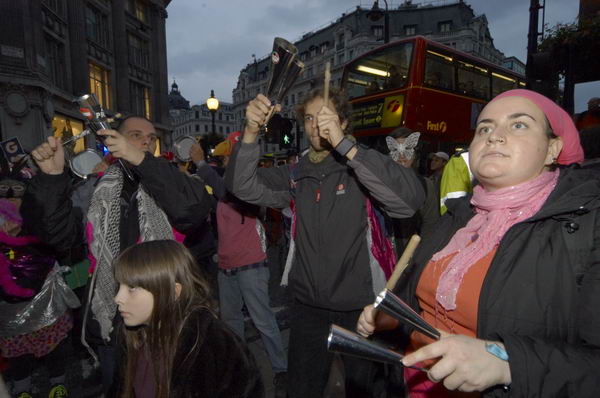
On the Saturday people met at Speakers Corner before marching down Oxford Street, which I called “the Temple of Mammon” and commented it “must rank as about the most depressing place on earth”.

European Social Forum & Rosary Crusade
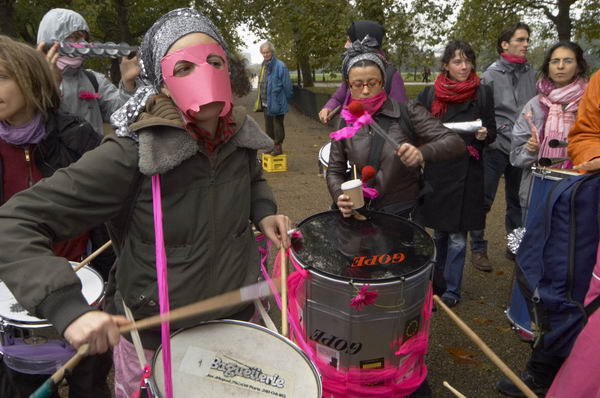
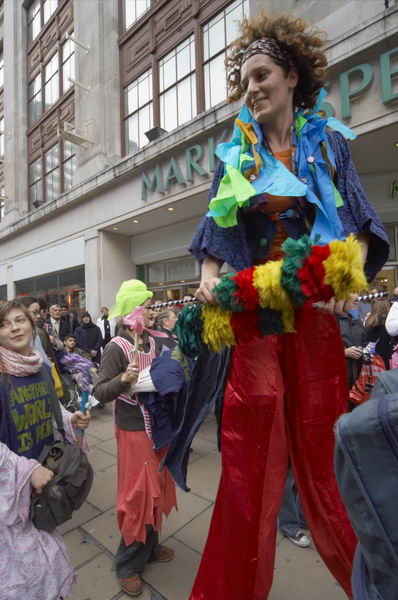
Street theatre on Oxford Street

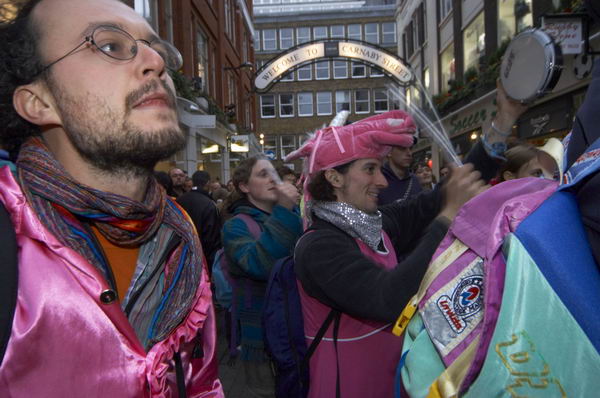
I left them protesting on Oxford Street to go to the Rosary Crusade and then rejoined them on Carnaby Street where the GMB union were protesting together with the French CGT outside the Puma store because of their use of sweated Labour. More recently I’ve photographed protests outside Puma because of their support for Israel and teams from occupied Palestine in the Israel Football League.

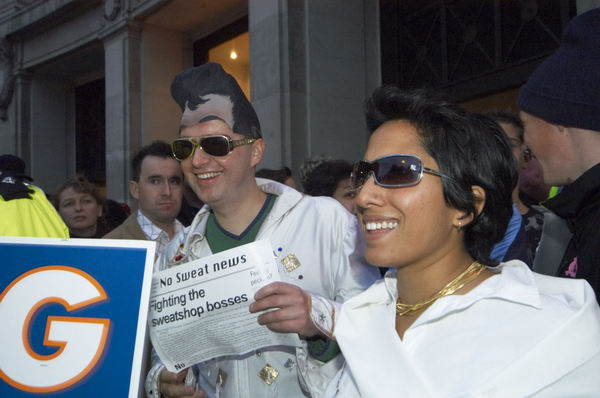
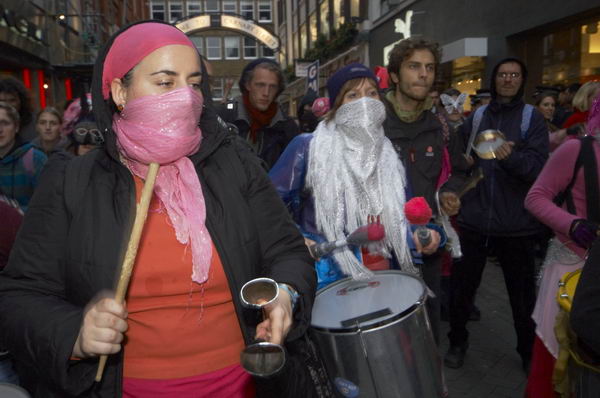
Also in Carnaby Street were members of ‘No Sweat‘, the grassroots campaign group which has highlighted the use of sweated labour to produce clothing sold in the UK including by Burberry. And providing some loud music to make sure the protests were noticed were a large samba band including many from both Sheffield and international guests, particularly from France.

The police began to get rather restless and I overheard one commenting to a member of the public “they’ve been pissing about for six hours and it’s time they went home”. And I wrote that “muscled officers in baggy black fighting gear were flexing muscles and grinning stupidly, obviously relishing the likely opportunity for a little action, as officers and demonstrators argued the toss.”

Eventually the police allowed the protest to keep moving and it returned to Oxford Street, for protests outside Niketown at Oxford Circus and then at the Virgin Megastore. I went inside expecting some of the protesters to follow, but left in a hurry as the store security on police advice lowered the shutters closing the place down as the demonstration arrived outside.

The previous day I and other photographers had been a little harassed by police and at this point I thought it sensible to slip away. The police were doing a great job of stopping all road traffic in the area with a large number of police vans blocking the road, but I was able to walk past along with shoppers still using Oxford Street shops and into the Underground. I had agreed to go for a meal with others at a Nepalese restaurant near Euston and didn’t want to be late.

More about the three days of protest for the European Social Forum on My London Diary.


Rosary Crusade of Reparation – Westminster Cathedral

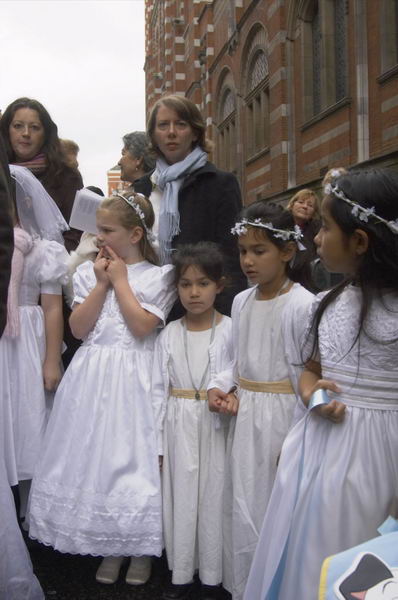
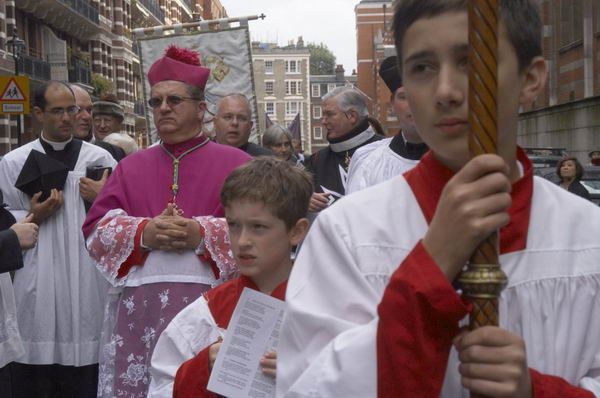
A very different event was taking place outside Westminster Cathedral, where the annual Rosary Crusade Of Reparation procession was preparing to leave on its way to Brompton Oratory.

I talked with some of those taking part and was assured that “the future is latin”. Having masses the people can follow in their own language has not been popular with some traditionalists.

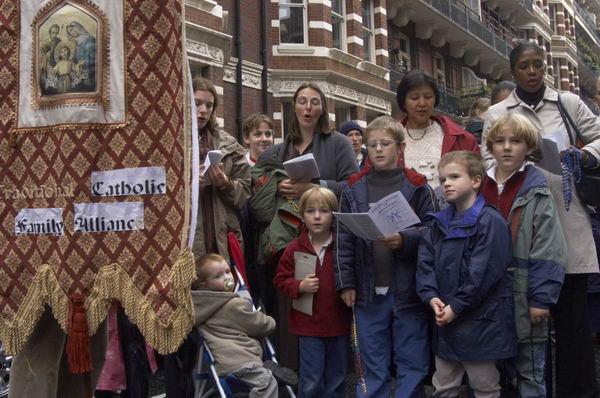
The event started with Bishop Fernando Arêas Rifan from Brazil intoning “Credo in Unum Deum” using the loudspeaker on a police van. The creed was continued by the congregation, led by several Knights of Malta and the traditional Catholic Family Alliance.

More pictures on My London Diary.


Gun & Knife Crime, Equiano & St John’s – 2007

Gun & Knife Crime, Equiano & St John’s: I went to two events in North London on Sunday 14th October 2007, a local march against gun and knife crime and then a Black History Month event in Abney Park Cemetery. And on my way home I stopped to take a few pictures of the church opposite Waterloo Station.


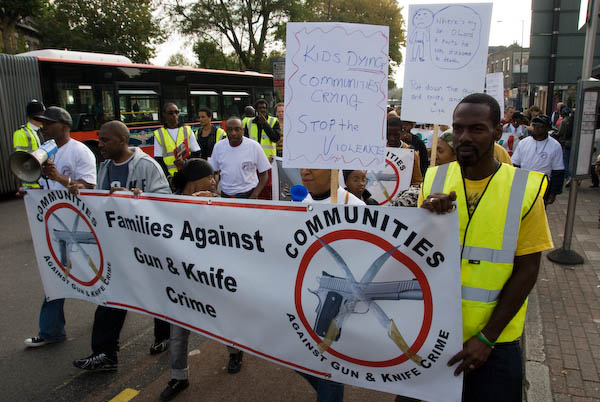
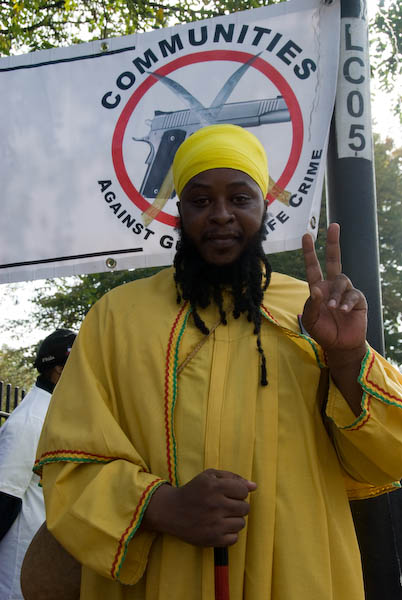
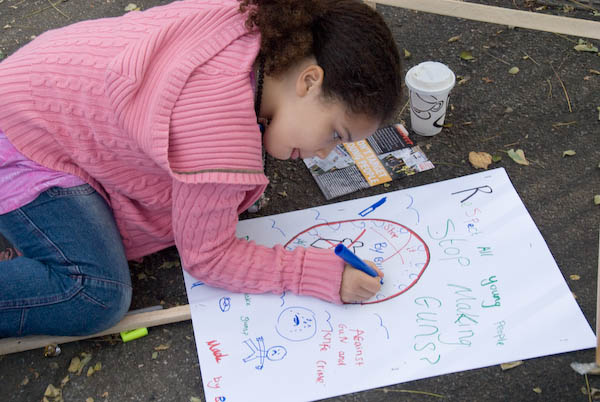
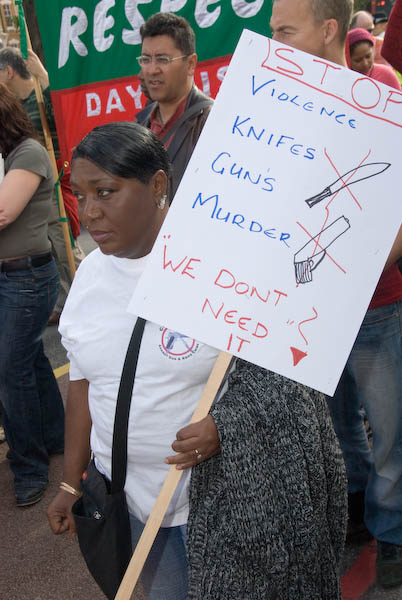
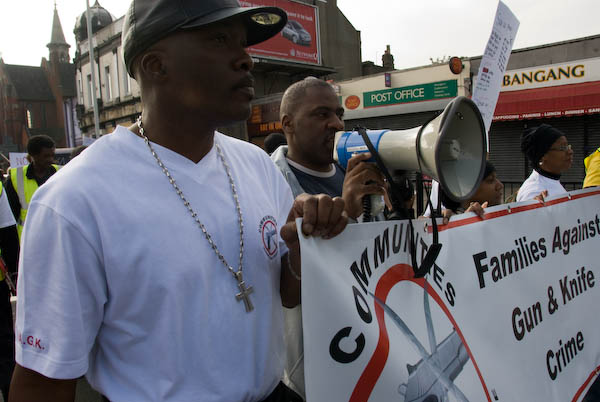
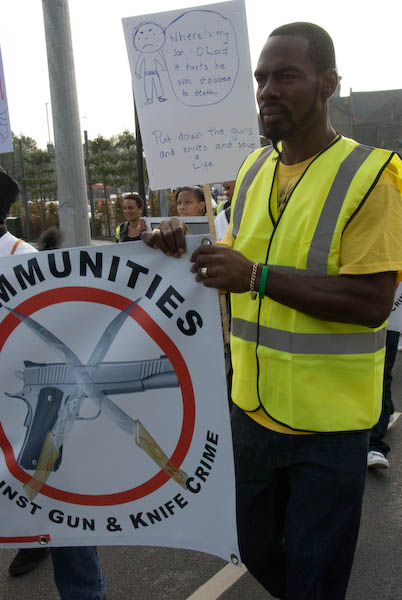
Communities Against Gun and Knife Crime, Hackney

In the 2000’s a stretch of road between Upper Clapton and Lower Clapton attracted the title ‘Murder Mile’ in the press after eight people were shot dead on the street or in the streets just off the main road over a period of two years. Of course there are some other cities around the world – including in the USA – where that number of deaths in a week or even a day would not be unusual. But London is generally a very safe city and Clapton is one of a number of areas which has more than its share of gun and knife crime.

Gun & Knife Crime, Equiano & St John's:

This is an area with a number of night clubs and where drug dealing is common and a large proportion of the shootings and deaths are related to these, often involving people from outside the area.

Gun & Knife Crime, Equiano & St John's:

But young people who live in and around the area are also caught up in gun and knife crime and one death is one too many, particularly when it involves your friends or family. Like many areas of London it houses a wide social mix, and these crimes particularly involve the poorer members of the community, many of whom are black.

Gun & Knife Crime, Equiano & St John's:

The march organised by Communities Against Gun And Knife Crime appeared to have no support from either of the two London Boroughs concerned – Hackney and Haringey – or from the Met police, who did escort it. The only other organisation which I could see was supporting it was Hackney Respect, a local group of the left-wing Respect party.

Gun & Knife Crime, Equiano & St John's:

The march began at Clapton Pond with a prayer by a Black Church Sister, and then moved slowly north up the Lower Clapton Road and across the Lea Bridge Roundabout and up the Upper Clapton Road. I had to leave before the end for my second event.

The march was smaller than I had expected with fewer than a hundred people taking part, and although it atrracted waves and shouts of support from people as it passed, few if any of them came to join it. As I commented, “marches like this are surely useful in raising community awareness, and it is hard to see why there was so little support from either the public, local authorities or other local groups – including the other political parties, churches and other community groups.” Apart from myself there was a photographer from a local paper reporting on the event, but no other media interest. I don’t think any of the pictures or my report which I filed to an agency were ever used.

Here is my final comment from my 2007 article:

The real challenge in cutting youth crime – and gun and knife crime is mainly youth crime – is getting people, and especially young people – real jobs that offer training and possibilities for advancement. At the moment there are too few jobs for young people, and many pay below a living wage, especially a living wage for London. While crime offers the only way to money, prestige and apparent success, many will take that route.

Communities Against Gun and Knife Crime

Equiano Society – His Daughter’s Grave – Abney Park Cemetery, Stoke Newington

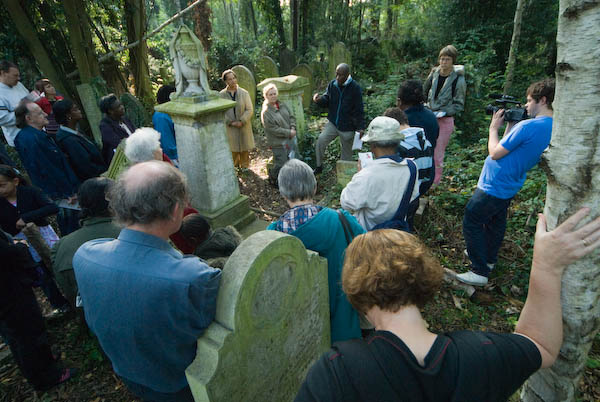
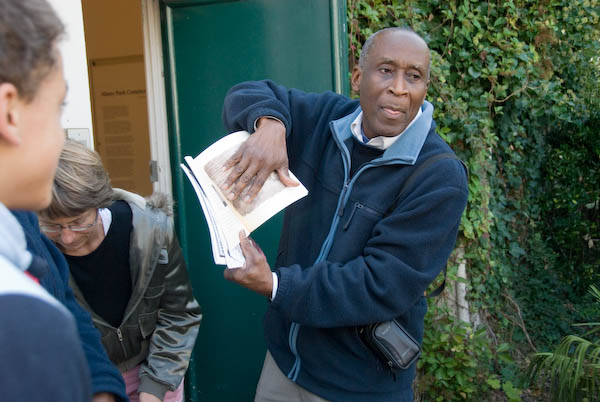
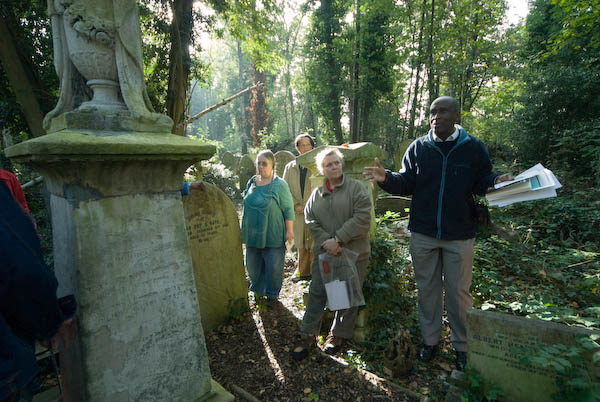
I joined a Black History Month walk led by Arthur Torrington OBE, the secretary of the Equiano Society which ended around the grave of Joanna Vassa, the daughter of Olaudah Equiano.

As the web site Olaudah Equiano, or, Gustavus Vassa, the African shows he was a truly remarkable man. Probably born around 1745 in what is now Nigeria he was kidnapped and sold into slavery as a child and taken to Barbados. In 1745 he became slave to a captain in the Royal Navy who renamed him Gustavus Vassa, and taught him to be a seaman and also sent him to school in London to learn to read and write. Later was bought by a Quaker merchant in Philadelphia who set him to work on one of his trading ships. Equiano was also able to engage in some trading for himself, and in four years made the £40 that his master had paid for him and was able to buy his freedom.

After various adventures in 1743 he came to London and became involved in the fight against slavery, although at first he was engaged in projects to set up black colonies in Central America and Sierra Leone, becoming for the latter the first black civil servant – but after he pointed out corruption among some officials he was quickly sacked.

He then wrote the book which made him famous, ‘The Interesting Narrative of the Life of Olaudah Equiano, or, Gustavus Vassa, the African‘ which was an autobiography, a description of the horrors of slavery and a polemic calling for its abolition. It was a success when published in 1789 and he earned a considerable income from it. In 1792 he married an English woman, Susanna Cullen, at Soham in Cambridgeshire and they had two daughters, one of whom after his death in 1797 inherited his estate of £950 (equivalent to around £100,000 now.)

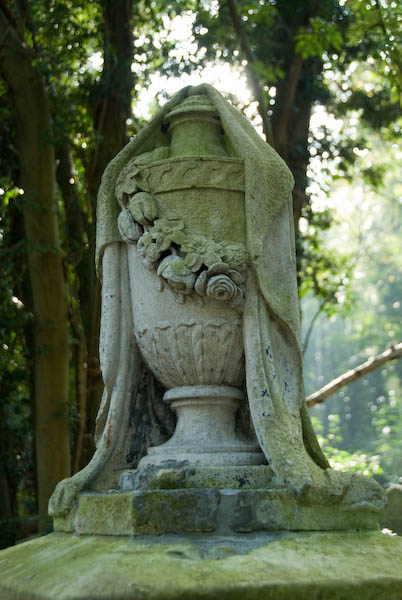
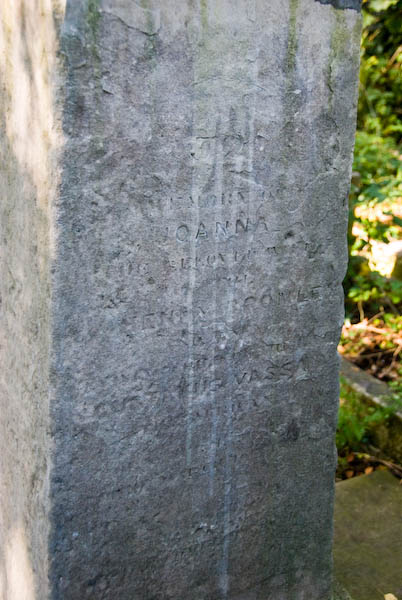
Joanna Vassa later married the Congregational minister, Henry Bromley, and in 2005 their joint grave (also of Henry’s second wife) was discovered in Abney Park Cemetery, fallen down and covered by moss and undergrowth. Much of the inscription was worn away, but the names remained and the stone was restored and re-erected.

Equiano’s daughter


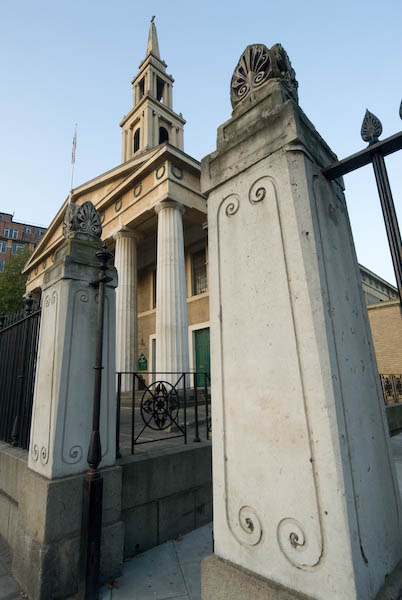
St John’s, Waterloo – A Waterloo Church

St John’s Church, now opposite Waterloo Station was one of a number of churches built in the years of national triumph following the defeat of Napoleon in 1815 with money granted by acts of Parliament to the Church Building Commission in 1818 and 1824 totalling £1.5 million. A total of 612 new churches were built by the Church Commissioners, mainly in the new and expanding industrial towns and cities, but initially “particularly in the Metropolis and its Vicinity“.

London south of the river was expanding rapidly, with new industries and a great deal of housing. The church was designed by Francis Octavius Bedford and built in 1822-1824 in a Greek Revival style – as were his other churches for the commissioners in Camberwell, West Norwood and Trinity Church Square, Southwark.

The site chosen, close to the foot of Waterloo Bridge was a difficult one, being a pond and a swamp, and John Rennie the Younger was consulted for advice about the foundations. This has proved sound as the building, despite being badly bombed in 1940 and standing in ruins until 1950 and the construction of the Jubilee Line underneath is still sound. It was restored and rededicated in 1951 as a part of the Festival of Britain, and again controversially in recent years which removed some of the later features.

I think I probably had just missed a train home from Waterloo Station opposite, a later development which opened as Waterloo Bridge Station in 1848, and had some time to wait for the next. Soon I was on a train home.

St John’s Waterloo


Cable Street – Labour Lost

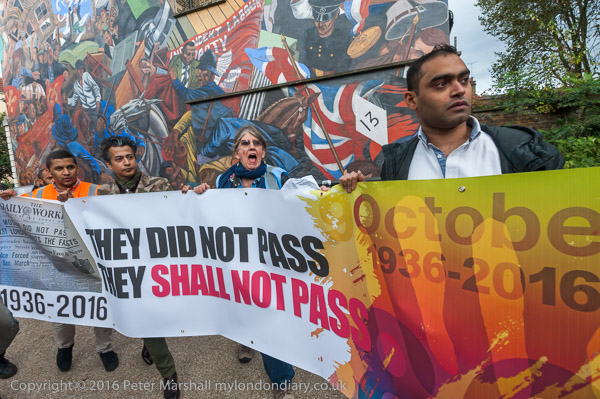
Cable Street – Labour Lost: Over recent days I’ve seen a number of posts and articles celebrating the ‘Battle of Cable Street’, when people from the East End of London prevented a march through their streets by Oswald Mosley and the British Union of Fascists on October 4th 1936.


Battle of Cable Street 80 March – Altab Ali Park & Cable St

Cable Street - Labour Lost

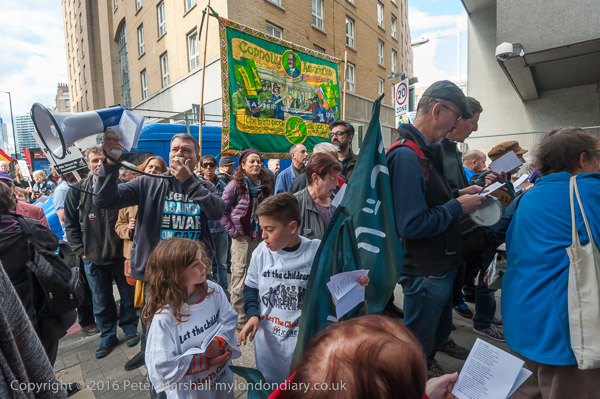
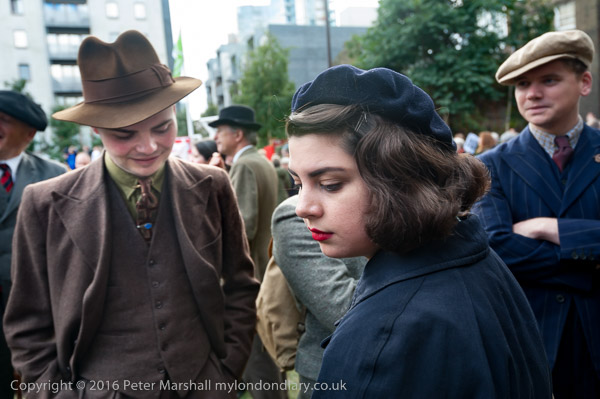
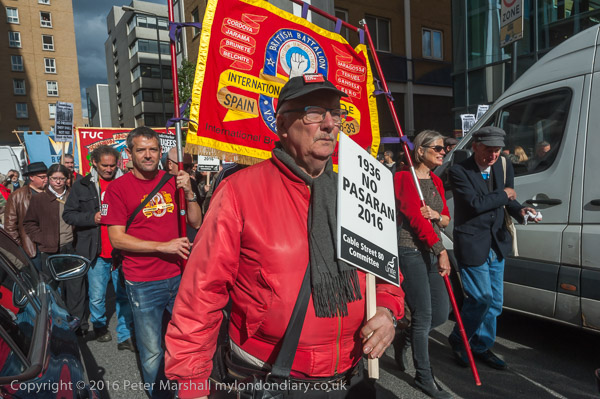
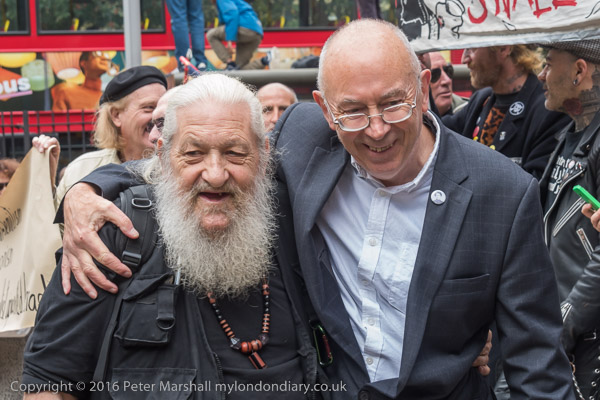
Back on Sunday 9th October 2016 along with many others I went to Cable Street to celebrate the 80th anniversary of that event, and here are a few of the pictures that I made.

Cable Street - Labour Lost

I also wrote a little about what actually happened back in 1936, though of course I wasn’t around then, so what I know about it relies on what others have written and said, including the testimonies I’ve heard over the years from some of those who were there and have spoken at this and various earlier celebrations.

Cable Street - Labour Lost

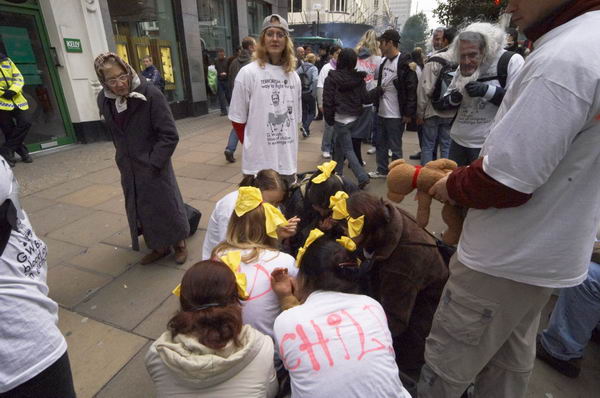
Cable Street has acquired a mythical status that it doesn’t entirely deserve, or at least one which distorts the actual nature of the event. It certainly was not a great victory for the organised left – with the Labour Party actively urging people to stay away. They urged people instead to attend a rally in Hyde Park, miles away in West London. If anything it was a victory for the ordinary common decency and solidarity of the working class population of the area who came out and fought the police (and generally not the fascists) who were trying to clear the streets to allow Mosley and his blackshirts to march. A victory for the kind of community self-organisation which is at the centre of anarchism.
Cable Street - Labour Lost

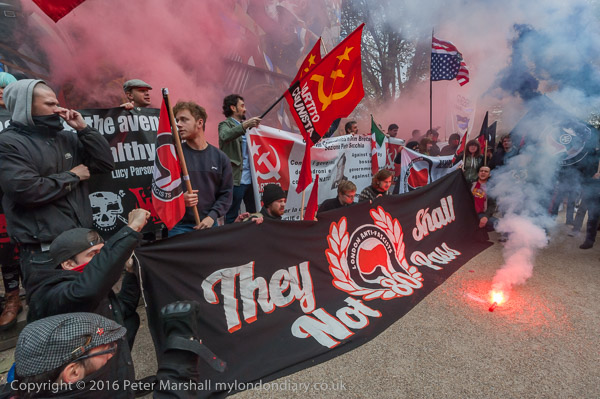
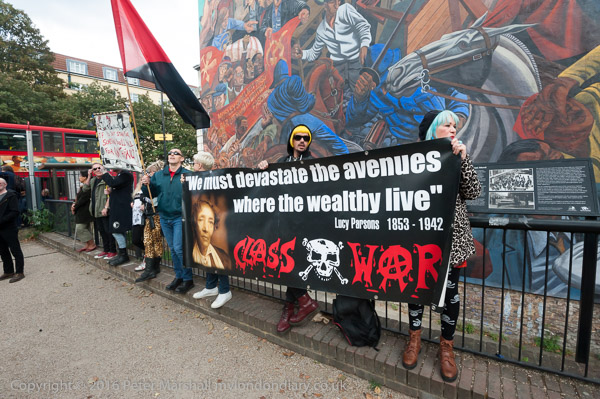
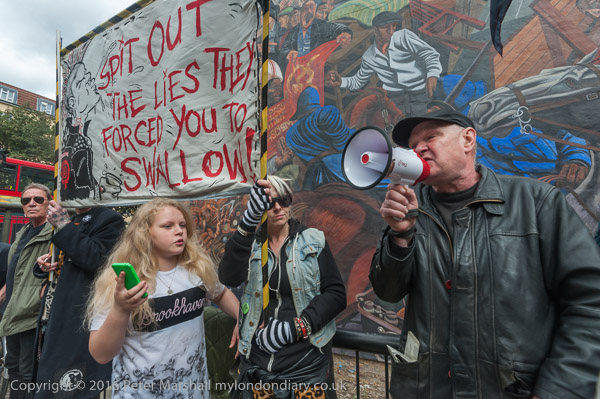
So in 2016 for me the anarchist groups taking part were the real centre of attention rather than the more official aspects of the celebration – this was really their day, though none were invited to speak at the official rallies at the start or finish of the event. And here I’ll repeat a little of what I wrote about the event 4 years ago.

“Probably many of those present already knew that the battle wasn’t fought by the political parties – Labour told people to stay away and urged them to protest in Hyde Park, while the official communist party opposed any opposition on the streets until almost the last minute, when it was pretty clear it was going to happen anyway.

“It was the community that came out onto the streets. People from the mainly Jewish areas of the East End, trade unionists, communist rank and file and Irish dock workers. Men and women in a grass roots movement opposed to Mosley, people who knew that they would be the victims if he came to power. And of course the battle was not against Mosley, but against the police.

“Of course there were communists and socialists among those who came out on the streets, and some who played a leading role. But it was essentially a victory for the working class left, for the anarchists and for many without political affiliations who came together spontaneously to defend their place and their people.

“It wasn’t a great defeat for Mosley and his National Socialists; they actually became more active in the East End after it, and areas such as Bethnal Green remained strongly supporting the Nazis. There was an even larger ‘battle’ the following year in Bermondsey. But Cable Street was undoubtedly an important event for the left, and one that has come to be associated with a much greater battle of the era, the Spanish Civil War. Cable Street radicialised many on the left.”

Many more pictures and more comments on My London Diary:
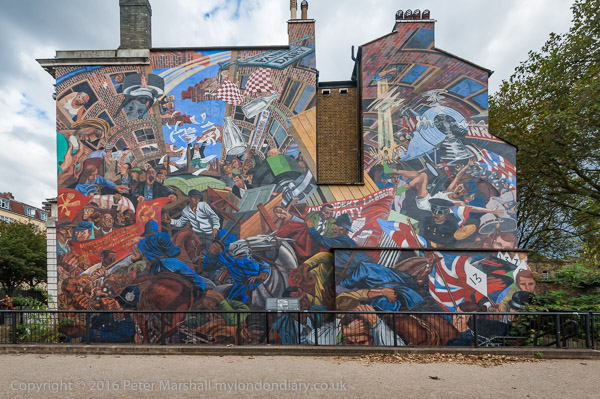
Black bloc rally at the Cable St Mural
Battle of Cable Street 80 March
Battle of Cable Street 80 Rally


Squat, Circus, Garage & Church

Squat, Circus, Garage & Church continues my walk on Wednesday 19th July 1989 in Stockwell and South Lambeth which began with the previous post, Stockwell Park, Bus Garage, Tower and Mason.

House, 38, Guildford Rd, Stockwell, Lambeth, 1989  89-7g-33
House, 38, Guildford Rd, Stockwell, Lambeth, 1989 89-7g-32

I took a couple more pictures of the previously squatted Grade II listed house at 38 Guildford Road, which ended the previous post on this walk. It now seemed firmly bricked up against further occupation.

The garden gate was only tied closed with rope, but I didn’t trespass and photographed from the pavement. At the side of the house the gate was open, announcing thyat this was 38 and The House, with the message to ‘POSTMAN DELIVER LETTERS INSIDE GARDEN PLEASE’ and some drawings, with a leaping figure and the sun for the Solstice Festival as well as smiley faces.

House, 38, Guildford Rd, Stockwell, Lambeth, 1989  89-7g-33
House, 38, Guildford Rd, Stockwell, Lambeth, 1989 89-7g-33

As the smiley faces and the LSD on the wall show, the Solstice Festival in Stockwell was an acid culture event, celebrating peace and love – part of the ‘Second Summer of Love’ in 1989 which also saw raves and parties in deserted warehouses across the UK, largely propelled by Ecstasy. But I can find no details of this Stockwell event online.

Lansdowne Circus, Lansdowne Gardens, Stockwell, Lambeth, 1989 89-7g-35

Landsdowne Circus is the central element of the area laid out in 1843 with houses built shortly afterwards by John Snell; the land was owned by architect James Humphreys who probably designed the houses in the then popular neo-Classical style. These houses are at 35-41 on the south-east of the circus, which I think is all Grade II listed.

The area had deteriorated considerably by the middle of the twentieth century but fortunately escaped much wartime damage. After Lambeth Council failed to find a responsible legal owner they used compulsory purchase to take control of the area in 1951. It became a conservation area in 1968.

Mondragon House, 49, Guildford Rd, Stockwell, Lambeth, 1989 89-7g-22

Grade II listed neo-Jacobean style former vicarage for St Barnabas Church immediately to the south, in a neo-Jacobean style. It is listed as Mandragon House and was built between 1843 and 1850 by John Snell as the vicarage to adjoining St Barnabas Chapel.

The church was deconsecrated in 1978 and converted into flats as Ekarro House by a housing cooperative, Ekarro Housing Co-operative Limited, set up by local residents which leased the church and vicarage, and now also manages some other properties in the area still as a cooperative.

Kelvedon House, a 22 storey tower block built nearby for Lambeth council in 1966 towers 64 metres in the background.

Stockwell Bus Garage, Lansdowne Way, Stockwell, Lambeth, 1989 89-7g-23

I walked back down to Landsowne Way and could not resist another photograph of the Grade II listed concrete bus garage, one of London’s finest postwar buildings completed in 1952. I hope its concrete is still safe.

Stockwell Baptist Church, 276, South Lambeth Rd, Stockwell, Lambeth, 1989 89-7g-25

I turned east down Lansdowne Way to South Lambeth Road where around a hundred yards to the north I came to this fine classical church, Stockwell Baptist Church at No. 276. Again Kelvedon House towers in the background.

Stockwell Baptist Church, 276, South Lambeth Rd, Stockwell, Lambeth, 1989 89-7g-12

The church web site has this short history:

https://www.stockwellbaptistchurch.co.uk/about-us/our-history/

And as it also says, it “has been part of the rich and ever-changing history of this part of London for a long while.

Charles Spurgeon (1834-92) who preached the first sermon in the chapel was a remarkable man and one of the leading non-conformist preachers of the 19th century. For 38 years he was pastor at the Metropolitan Tabernacle at the Elephant & Castle. He founded an almshouse and an orphanage in Stockwell, as well as a college named after him following his death, and set up various institutions to aid the poor, following the Bible example of Jesus and exhorting his congregations to do so too. He had great influence both nationally and internationally and campaigned for free hospitals for the poor, and against slavery which antagonised Southern Baptists in the USA. He wrote many books, some of which are still now re-published and is still held in high esteem by many, particularly evangelical Christians.

My walk continued – more shortly.


Stockwell Park, Bus Garage, Tower and Mason

Two days after my previous walk which had ended at Vauxhall I was back in Stockwell again on Wednesday 19th July to photograph the area to the north, walking towards South Lambeth.

House, 31 Stockwell Park Rd, Stockwell, Lambeth, 1989 89-7e-33

Stockwell Park Road has some interesting properties particular from the mid to late Victorian era with some earlier and later properties, some now very expensive. Probably most of the large houses are now flats, but one four bedroom Georgian house here, 4 storeys including a basement and with four bedrooms was recently put on sale with a guide price of £2,100,000.

This house is something of a mystery, as you will find if you try to view it on Google Street View. It is now divided into flats. Next door is the empty site that was formerly a purpose-built nursery on the corner at 50 Groveway. I think the house still looks much as it did when I photographed it in 1989. The arched doorway with the four square windows above and the narrow slot windows in the gables, one with wood meant to cover it drew my interest and I wondered when and for what purpose it was built but found no answers.

Linden Hall, 38  Stockwell Park Rd, Stockwell, Lambeth, 1989 89-7e-35
Linden Hall, 38 Stockwell Park Rd, Stockwell, Lambeth, 1989 89-7e-35

Linden Hall at 38 Stockwell Park Road is also an interesting building and appears to have been built by the Lambeth Housing Movement, formed in 1927 to help low-income tenants in overcrowded conditions who could not afford private rents but whose conditions were not considered sufficiently bad for the LCC’s slum clearance schemes. In 1957 they joined with the Southwark Housing Association to become the Lambeth and Southwark Housing Society Ltd. I think these flats were built in the early 1950s.

Stockwell Bus Garage, Lansdowne Way, Stockwell, Lambeth, 1989 89-7g-56

I returned along Stockwell Park Road to Clapham Road and crossed it, going down Landsdowne Road to South Lambeth Road and continuing along it to the remarkable concrete Grade II* listed Stockwell Bus Garage, opened for London Transport in 1952. It’s a remarkable structure by Adie, Button and Partners with Thomas Bilbow and probably the most impressive early post-war modern buildings in the UK. I think it is still in good condition and doing its job as a garage now, 70 years late.

Edrich House, Lansdowne Way, Stockwell, Lambeth, 1989 89-7g-42

Continuing along Lansdowne Way brought me to Edrich House which can be seen at the right of the previous image. This impressive block designed by George Finch was completed in 1968. Built using the German designed Large Panel System it contains spacious flats. It was built for Lambeth Council whose chief architect was Edward “Ted” Hollamby at a time when council leaders considered nothing was too good for the working classes. As with other similar developments the estates were well designed with communal provision at ground level. I think at right is a surgery. I think there may now be so concerns over the state of the building as the link above states “Please note that we are unaware of any lenders providing mortgages on this estate at the present time.

F W Poole, Marblemason,12, Larkhall Lane, Stockwell, Lambeth, 1989 89-7g-46

Turning the corner into Larkhall Lane I came to the works of F W Poole, marble mason, with a good collection of marble in its front yard. The company moved out from here in in 2012 to premises in East Lane Business Park Wembley but I think has now ceased trading. This property was sold for £1 million.

House, 38, Guildford Rd, Stockwell, Lambeth, 1989  89-7g-31
House, 38, Guildford Rd, Stockwell, Lambeth, 1989 89-7g-31

One of a number of squatted houses in the area, which had been the location of a Solstice Festival, but was by 1989 emptied and bricked up. It has since been renovated at least twice.

Its Grade II listing begins, “House, derelict at time of resurvey. Part of a planned estate built between 1843 and 1850 by John Snell. Italianate style.” It was part of a scheme for a site known as “THE 34 ACRES”.

The property now looks in good condition and has been divided into a number of flats.

My walk will continue in a later post.