Cable Car, Victoria Dock, Olympic Site & Torture 2013

Cable Car, Victoria Dock, Olympic Site & Torture: I was coming to London to photograph the ‘Say No to Torture‘ protest on the evening of Wednesday 26th June, but as it was a nice day and I came up a few hours earlier to take a ride on London’s cable car and then to take a few pictures around Victoria Dock and Silvertown before making quick visit to the Greenway to see what progress was being made in opening up the former Olympic site.


Emirates ‘Airline’ – Arab Dangleway – North Greenwich – Victoria Dock.

Cable Car, Victoria Dock, Olympic Site & Torture

Now known officially since 2022 as the IFS Cloud Cable Car, the dangleway was never a viable transport system, with longer journey time and costing more than alternative routes on almost every conceivable journey.

Cable Car, Victoria Dock, Olympic Site & Torture

It doesn’t quite connect up with the rest of Transport for London’s system, the south terminal being a short and slightly confusing walk from North Greenwich Jubilee and bus station, and another fairly short walk on the North bank to Royal Victoria DLR. Completed in June 2012 its cost of £60m made it the most expensive cable car system ever built.

Cable Car, Victoria Dock, Olympic Site & Torture

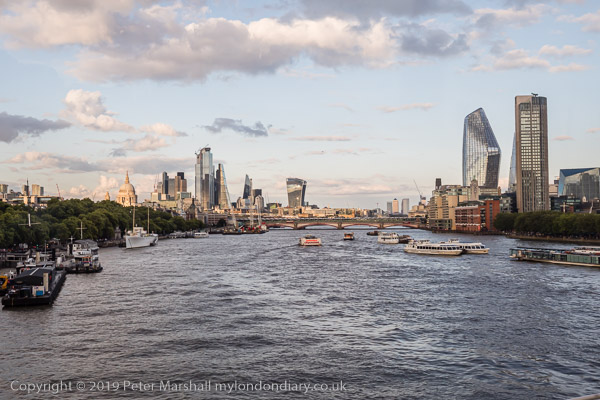
As I noted “it should be promoted as one of London’s cheaper and more interesting tourist attractions” giving great views along the River Thames, although the journey is a relatively short on at 7-10 minutes. with London in the distance, Canary Wharf and the Olympic site a little closer and Bow Creek, Silvertown and the Dome both nearly underneath.

Cable Car, Victoria Dock, Olympic Site & Torture

To my surprise, 11 years later the service is still running and TfL say that with the sponsorship deals it actually makes a profit.

Emirates ‘Airline’ – Arab Dangleway


Victoria Dock and Silvertown

I think the more interesting parts of the Thames shoreline here are not yet publicly accessible, but you can – at least most of the time – walk along by Royal Victoria Dock and across the high level bridge for some more interesting views. The area and bridge get closed off when they are flogging illegal arms at the Excel Centre fairs (if you represent a despotic government you’ll have a ticket to that anyway.)

Most of the pictures here were taken from that high level walkway across the dock, but I think I walked on to the stations on the DLR line to Woolwich (then only to North Woolwich) which are elevated and also give some interesting views.

Victoria Dock and Silvertown


Stratford Greenway Olympic Revisit – Stratford Marsh

I took the DLR to Canning Town, changed to the JUbilee to Stratford then back to the DLR for the short ride to Puddling Mill Lane, and walked up onto the Greenway, where I’d photogaphed many times in the past.

Progress in releasing the Olympic site to the public appeared to be very slow and there sre still routes closed off in 2024.

Stratford Greenway Olympic Revisit


Say No To Torture – Trafalgar Square

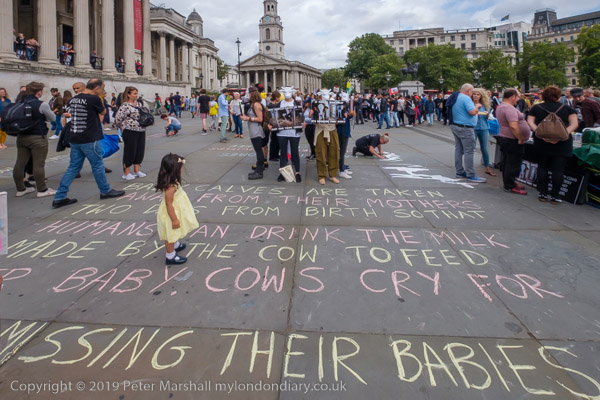
It was the ‘International Day in Support of Victims of Torture‘, the anniversary of the UN Convention Against Torture on 26 June 1987, and the London Guantanamo Campaign had organised a protest in Trafalgar Square.

The London Guantanamo Campaign had been active in calling for the closure of Guantanamo and other torture prisons including Bagram in Afghanistan since 2006. In particular the protest was to draw attention to Shaker Aamer, one of the 166 prisoners still held in Guantanamo. A London resident he was captured by bandits in Afghanistan where he was working for a medical charity and sold to the American forces, who tortured him – with the cooperation of the British Secret Service in Bagram, before illegally rendering him to Guantanamo where he continues to be tortured despite having been cleared for release.

In 2013 he was in very poor health having been – along with the majority of the other prisoners there – on hunger strike for 141 days. It was not until 30 October 2015 that he was finally released to the UK.

The US response to the hunger strike had been regular beatings, keeping those taking part in solitary confinement in bare cells and to use forcible feeding, strapping them into a special chair and forcing a feeding tube up a nostril and down into their stomach. The procedure is extremely painful and both this and the sensory deprivation of solitary confinement in bare cells also constitute torture under the UN definitions.

Many of those taking part wore orange Guanatanamo-style jump suits and black hoods and they held up banners an placards saying ‘No To Torture‘ in 30 languages. Some of those taking part were regular protesters with the ‘Save Shaker Aamer Campaign‘ which has been holding daily lunchtime vigils opposite the House of Commons to put pressure on the UK government to release him. Many think his continued imprisonment is because his testimony would embarrass both the UK and US security services who were clearly involved in his torture.

Others were also protesting against torture, with Balochs in Pakistan being subject to arrests and other human rights violations including torture by the Pakistan authorities for campaigning for independence. The protesters held pictures of a number of Baloch activists who have simply disappeared, believed to be held or possibly killed by Pakistani forces.

And protesters also drew attention to the US treatment of award-winning British poet and translator Talha Ahsan who suffers from Aspergers syndrome. He was extradited from the UK and was currently awaiting trial in solitary confinement in a high-security state prison in Connecticut because of alleged association with an Islamic web site and publishing house said to have links with terrorism. He was eventually released after 8 years following a plea bargain in December 2013 when time already served in the UK and US prisons was ‘time already served.’

Say No To Torture.


FlickrFacebookMy London DiaryHull PhotosLea ValleyParis
London’s Industrial HeritageLondon Photos

All photographs on this page are copyright © Peter Marshall.
Contact me to buy prints or licence to reproduce.
Pride and Migrant Rights & Anti-Racist Pride 2016

Pride and Migrant Rights & Anti-Racist Pride: Saturday 25th June was I think the last time that Pride was an open event where people who wanted to take part in Pride as a protest could just turn up and join in.

Pride and Migrant Rights & Anti-Racist Pride

When I first photographed Pride in 1993 it was much smaller and very definitely a protest. Over the years it has become a parade with many corporate groups taking part and dominating the event attracting huge audiences to watch it on the route through the West End.

Pride and Migrant Rights & Anti-Racist Pride

And now to be in the parade you need a wristband, free for LGBT+ Community Groups but cotsing between £7.50 and £35 for others – and the media centre is insistent we call it Pride in London rather than ‘London Pride’ or ‘gay pride’, hashtag #PrideInLondon.

Pride and Migrant Rights & Anti-Racist Pride

I can’t remember if I had bothered to get official accreditation for the event in 2016, I certainly did some years and suspect by 2016 it was needed to be able to walk around and take photographs as people were preparing for the parade. And they wanted to be photographed.

Pride and Migrant Rights & Anti-Racist Pride

In my pictures I concentrated on those who I felt were continuing the tradition of Pride as a protest, including many I had photographed at other protests. But there were others I couldn’t ignore.

I left the official area where the parade was setting up with its corporate floats and walked down Oxford Street to where people were meeting for a Migrant Rights and Anti-Racist Pride march to join the main parade.

Movement for Justice who had organised this were joined by other protesters including London in Solidarity with Istanbul LGBTI Pride protesting the banning of Istanbul Pride, Lesbians and Gays Support the Migrants and other protesters who feel the official event has been taken over by corporate sponsors such as Barclays and BAE systems and is a parade rather than a protest, no longer representing its roots.

They marched up Oxford Street and Regent Street past the front of the main parade and went to its rear where they joined other protest groups relegated to the extreme end of the Pride parade. They tried to do this again the following year but were prevented by Pride stewards and ended up maching ahead of the main procession past cheering crowds along the main route.

There are many more pictures on My London Diary
Pride London 2016
Migrant Rights & Anti-Racist Pride


FlickrFacebookMy London DiaryHull PhotosLea ValleyParis
London’s Industrial HeritageLondon Photos

All photographs on this page are copyright © Peter Marshall.
Contact me to buy prints or licence to reproduce.

The Day After The Brexit Vote – 2016

The Day After The Brexit Vote – Defend All migrants. On Friday 24th June 2016 almost half the nation woke up to hear with shock and some measure of disbelief to hear the news that a small majority had voted in favour of leaving Europe.

The Day After The Brexit Vot

In any sensible democracy the result of 52% to 48% in an advisory referendum would not have been sufficient to cause such a major constitutional change, but Prime Minister David Cameron had stupidly promised to abide by the result and so we were now en route to Brexit.

The Day After The Brexit Vot

Cameron had been confident that he would win the referendum with a vote to remain but he had severely underestimated the depths of lying and misrepresentation that the Leave campaign would sink to, with some of the leading figures likely to make huge personal profits from the break.

The Day After The Brexit Vot

Brexit of course needn’t have been the major disaster it has been. We could have retained a much closer relationship with Europe, our largest trading partner. It needed the total incompetence of Boris Johnson to get us the worst of all deals, not least because he and his negotiators simply did not understand what negotiation meant, with the politicians largely restricting themselves to making clearly impossible demands and then blaming Europe.

The Day After The Brexit Vot

I don’t expect we will return to Europe during my lifetime, but I hope the next government will make some sensible moves to restore our relationships, although rather avoiding the subject in the current election campaign. But surely we cannot continue being unable to staff our care and medical sectors and with crops rotting unpicked on the fields. And we do need at least some of those plumbers, electricians and other tradesmen.

The Leave campaign reached new lows with things like that £350 million on the side of a bus, which everyone who made the slightest investigation knew was a lie. But the media spread it around with some suggesting it was perhaps not correct, while all should have been deriding it as nonsense. And it was a figure that stuck in many peoples’ minds.

Immigration was an issue that both sides failed on – and at times Remain seemed determined to try and outflank Leave on the right suggesting racist policies. Migrants were attacked and scapegoated not only by both Remain and Leave campaigns but by all our mainstream parties and media over more than 20 years, stoking up hatred by insisting immigrants are a “problem”.

Migration has been and will remain vital to the growth of our economy, as well as enriching our cultural life. Walk through our high streets or page through the TV schedules and cross out the immigrants and the descendants of post-war immigration and what you would be left would be limited and rather boring.

Senior Conservatives are even proposing that we should leave the European Convention on Human Rights so they can deport asylum seekers to Rwanda, and although Labour has said it will end this policy it has not yet put forward plans for safe routes for asylum seekers.

The protest on 24th June by anarchists and socialists against racism and fascist violence had been some planned weeks in advance, called by Movement for Justice, rs21, London Antifascists and Jewdas, and supported by other groups including Brick Lane Debates, National Campaign Against Fees and Cuts (NCAFC), Right to Remain, Radical Assembly, Clapton Ultras, the Antiuniversity, English collective of prostitutes, sex workers open university, lesbians and gays support the migrants, Razem Londyn, London Anarchist Federation, Kent anti-racist network, dywizjon 161, colectivo anticapitalista Londres and Plan C London as well as others who brought banners and many individuals.

A camera team of three working for a right-wing US website arrived and tried to provoke groups in the crowd with silly questions and appearing to gloat over the Brexit decision. Eventually police stepped in to calm things and made sure the group left.

After a number of speeches the protesters set off to march on a roundabout route through the east of the city on their way to protest outside News International in Southwark. But I think they veered off course whenever it looked likely that the large police presence might try to kettle them. Eventually I got fed up with walking and went home.

More on the protest with many more pictures on My London Diary: Defend All Migrants.


FlickrFacebookMy London DiaryHull PhotosLea ValleyParis
London’s Industrial HeritageLondon Photos

All photographs on this page are copyright © Peter Marshall.
Contact me to buy prints or licence to reproduce.


Pensions, Cuts, Murdoch & Cafe Jiro – 2011

Pensions, Cuts, Murdoch & Cafe Jiro: Thursday 23rd June 2011 – Trade unionists march against public sector pension cuts, a protest against Murdoch being allowed to take over BSkyB and one of my favourite artists turns a St John’s Wood gallery into his café.


20,000 March for Pensions & Against Cuts

Pensions, Cuts, Murdoch & Cafe Jiro

Public Service unions had organised a march against pension cuts and itt was joined by many thousands of union members as well as many others protesting against cuts in public services made by the Tory coalition government.

Pensions, Cuts, Murdoch & Cafe Jiro

There was a large crowd waiting when I arrived in Lincoln’s Inn Fields over an hour before the march was due to begin and more were arriving as it left a little early as the organisers and police worried about overcrowding in London’s largest square – around 28,000 square metres.

Pensions, Cuts, Murdoch & Cafe Jiro

Pensions, Cuts, Murdoch & Cafe Jiro
Sally Hunt, UCU, Mary Bousted ATL, Christine Blower NUT, Mark Serwotka PCS & John McDonnell MP,

Before we left there had been speeches by several union leaders and the march was led to Parliament by Christine Blower NUT, Mark Serwotka PCS and Mary Bousted ATL along with MP John McDonnell.

The Hutton review had clearly shown that the government was lying when it said that public service pensions were not affordable. This report had said it expected “benefit payments to fall gradually to around 1.4 per cent of GDP in 2059-60, after peaking at 1.9 per cent of gross domestic product (GDP) in 2010-11.”

There seemed to be a huge number of police on the street for a peaceful march, particularly one that was mainly composed of teachers and civil servants with only a token presence from militant students and anarchists.

Police had earlier been busy in Lincoln’s Inn Fields where they appeared to be conducting stop and searches on any young male demonstrators in black clothing.

Things did get just a little agitated when for some reason police decided to stop the march on Strand for around 20 minutes and it got very noisy on Whitehall as it passed Downing St.

I stood outside Westminster Central Hall for around an hour as more and more marchers arrived from the main march I had been on and a number of others from various parts of London. Police and march stewards there objected to Charlie Veitch and other ‘Love Police’ haranguing the crowd in his usual deadpan fashion upholding his right to freedom of expression and they moved away.

Westminster Central Hall is a large venue but far too small for the numbers at the event and there was a large overflow rally in Tothill Street at the side of the church. A group of 20 or 30 black-clad protesters there were told by police they must remove their hoods and dark glasses and there were some arguments. I heard later in the day there were a few scuffles with them and police in Whitehall and they were kettled for a few hours in Trafalgar Square.

More on My London Diary at 20,000 March for Pensions & Against Cuts.


Save UK Democracy From Murdoch – Dept Culture, Media & Sport

Outside the Department of Culture, Media and Sport was a protest organised by on-line global campaign network Avaaz and my union the NUJ against the decision by Jeremy Hunt to let Rupert Murdoch to take over BSkyB.

This was an emergency protest organised within minutes of the news breaking early that morning, and the email calling it went out when many were already on their way to work or to attend the pensions protest, so numbers were small.

Obviously some planning had taken place earlier and there was a tall stilt walker with a large but rather inappropriately avuncular head of Rupert Murdoch, surely one of the ugliest figures in world media and pursuing a clear aim of world domination, toying with two large string puppets representing David Cameron and Jeremy Hunt.

But most of the posters were clearly last minute, with laser-printed sheets being glued onto generic NUJ placards. NUJ members were “appalled – like most of the thinking population – by the thought of the UK’s largest commercial broadcaster falling into Murdoch’s hands, and the threat that this poses for in particular for news coverage, but also for a diverse and broadly based media culture. “

They want the government to act in the public interest rather than as puppets for Murdoch’s interest and don’t want Sky News to become another Fox News.”

Save UK Democracy From Murdoch


Café Jiro 2011 – Queen’s Terrace Café, St John’s Wood

In the evening I was at The Queen’s Terrace Café, which had opened in April 2011. This was no ordinary café, but a cultural café, run by Mireille Galinou, who for some years had run a charity called the London Arts Café, which never quite managed to open a café but did organise a dozen or so exhibitions and numerous other art events in London.

London Arts Café and The Queen’s Terrace Café are no longer with us, but you can still read online about many of the the activities the London Arts Café organised during its existence from 1996-2007. For some of this time I was Treasurer of the organisation and also wrote the web site.

One of the most enjoyable art shows I went to in 2009 was Café Jiro, an installation in the Flowers Gallery in Cork St, London by a friend of mine, the Japanese artist Jiro Osuga who grow up in north London. The 2011 was a smaller and more intimate version of that show, with one of the large wall-size panels from the Flowers show, along with a number of other works specially produced for this space – including three in the smallest room.

The small gallery was packed for the opening – and for me a great opportunity to meet some old friends, and it was good to see Jiro’s work in a real café environment. You can read more about the show on a 2011 post in >Re:PHOTO.

Café Jiro 2011


FlickrFacebookMy London DiaryHull PhotosLea ValleyParis
London’s Industrial HeritageLondon Photos

All photographs on this page are copyright © Peter Marshall.
Contact me to buy prints or licence to reproduce.


Posters, Pub, Mission, Gym, House & Flats, Leytonstone 1989

More from my walk on Sunday September 3rd 1989 which had begun in Stratford, from which some images appeared in my web site and self-published book ‘1989’, ISBN: 978-1-909363-01-4, still available. For those images which were in the book I’ll show the book pages here.

Posters, Pub, Mission, Gym, House & Flats
Posters, High Rd, Leytonstone, Waltham Forest, 1989 89-9a-44

Posters, Pub, Mission, Gym, House & Flats
Plough & Harrow, pub, 419, High Rd, Leytonstone, Waltham Forest, 1989 89-9a-45

London City Mission, Ferndale Rd, Leytonstone, Waltham Forest, 1989 89-9a-46

The Victoria County History records an incredible number of missions in Leytonstone mostly formed in the late nineteenth century when this area must have seemed particularly Godless. This mission in Ferndale Road began about 1895 “when the five children of Henry Borton, a builders’ merchant at Wanstead, began holding evangelistic services in the Assembly Rooms. In 1901 their father built for them the present hall in Ferndale Road, designed in brick and stone with baroque features by T. & W. Stone. “

In 1948 the last of these children working there invited the London City Mission to take charge of the building and it became their central Hall. Google Street view shows it in 2008 as Christ Apostolic Church but by 2018 it had become Gospel Generation, “A Church Like No Other“.

Hyams Gymnasium, 857 High Rd, Leytonstone, Waltham Forest, 1989 89-9a-32
Hyams Gymnasium, 857 High Rd, Leyton, Waltham Forest, 1989 89-9a-32

I can find little or nothing on-line about Hyams Gynasioum other than my pictures, but the building is still there this side on Gainsborough Road with its entrance on High Rd, but in very different use.

This is now The Walnut Tree, a Wetherspoon pub, and as often it has some history of the area it its web page, but this does not mention Hyams Gym. The figures on the building’s side have gone and its groundfloor windows have been bricked up but the rows of 8 or 9 upper floor gym windows remain.

Leytonstone House, Hanbury Drive, Leytonstone, Waltham Forest, 1989 89-9a-33

Leytonstone House has lost its Virginia creeper but otherwise looks much the same, though I think its surroundsings are now different.

Wikipedia statesLeytonstone House, built 1800 and Grade II-listed, was the home of Sir Edward Buxton, MP and conservationist, who with his brother played a big part in preserving Epping, Hainault and Hatfield forests. It housed Bethnal Green School for the juvenile poor from 1868 to 1936.”

Leyton Flats, Snaresbrook, Waltham Forest, 1989 89-9a-21

Leyton Flats in Snaresbrook is not a tower block but a green space that is part of Epping Forest, largely open grass land but some woodland and two large ponds, Hollow Pond and Eagle Pond which is one of the oldest in the forest and swarms with swans, probably because many injured swans nursed to health by swan resuce organisations on the Thames have been released here. But people are more likely to be imprisoned as the Flats is also home to Snaresbrook Crown Court.

The house in the distance here is at 85, 85a and 87 Whipps Cross Rd, on the corner of Chadwick Road. Locally listed, The Gables was built in 1895 and was part of the Wallwood Park estate which was once the home of the Governor of the Bank of England William Cotton who died in 1845.

Leyton Flats, Snaresbrook, Waltham Forest, 1989 89-9a-23

Another sculptural group of fallen trunks in the south-east corner of Leyton Flats.

Leyton Flats, Snaresbrook, Waltham Forest, 1989 89-9a-26

Men are fishing in the Hollow Pond on Leyton Flats, close to the Whipps Cross roundabout and Whipps Cross Hospital. The pond, the result of gravel workings, is also a boating lake. Water from the ponds may eventually find its way into the River Roding, but they have never as has been claimed fed the ornamental lakes of Wanstead Park.


FlickrFacebookMy London DiaryHull PhotosLea ValleyParis
London’s Industrial HeritageLondon Photos

All photographs on this page are copyright © Peter Marshall.
Contact me to buy prints or licence to reproduce.

Stop the BNP, Olympic Allotments, End Deportation – 2008

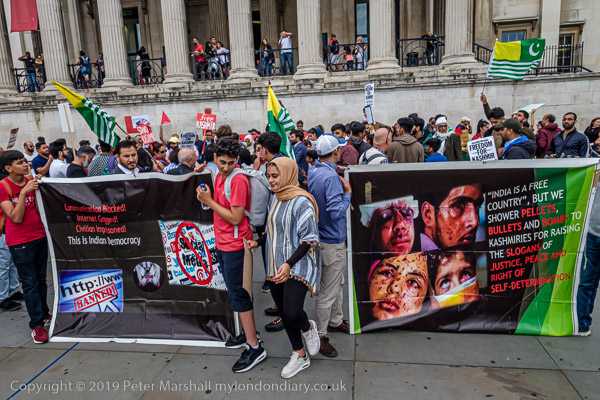
Stop the BNP, Olympic Allotments, End Deportation: Saturday 21st June, 2006. A Love Music Hate Racism/Unite Against Fascism march, a visit to the replacement allotments for the Manor Gardening Society and a curiously legal protest against deporting refugees to Iraq.


Stop the Fascist BNP – LMHR/UAF – Tooley St – Trafalgar Square

Stop the BNP, Olympic Allotments, End Deportation

The Love Music Hate Racism/Unite Against Fascism “Stop the Fascist BNP” march turned out to be a little of a damp squib, although a fairly colourful one, as only 2-3,000 people turned up to march from Tooley Street in Bermondsey to Trafalgar Square.

Stop the BNP, Olympic Allotments, End Deportation

Perhaps Stop the War’s failure to capitalise on the mass following it gained with the largest ever demonstration in the UK in 2003 had discredited the idea of huge marches. Like Stop the War, Unite Against Fascism was seen by many as being largely a front for the Socialist Workers Party. The anti-fascist magazine Searchlight had disaffiliated from them in 2005, arguing for the need for new tactics and in particular to work in communities where the BNP were exploiting real problems rather than just opposing them on the streets and calling them fascists.

Stop the BNP, Olympic Allotments, End Deportation

A bigger march would have been better, but more importantly for the audience which Love Music Hate Racism was attempting to reach it needed to be much more of a free and fun event.

Stop the BNP, Olympic Allotments, End Deportation

The band who played at the start of the march were restricted to a single number, when they could well have played much more, and there was hardly any music on the march – I only saw one small marching band. Where were the great sound systems for people to dance behind?

And as I wrote, “I was frankly appalled by the attitudes of the stewards towards photographers, almost as if the event was trying to hide from publicity. I’ve had less hassle when photographing the BNP.”

More pictures at Stop the Fascist BNP – LMHR/UAF.


Manor Gardening Society – New Allotments – Marsh Lane, Leyton

The Manor Gardens Allotments fight to stay in place for the 2012 had failed. The gardens had presented the opportunity for the Olympics to show a real commitment to green ideas – and of course they had zero interest in really doing so. Green publicity stunts and lies yes, but Green actions and real content you had to be joking.

As I wrote “London in 1948 did really put the modern Olympics back on course, and it did so on vision and a shoestring – and even ended up making a profit. 2012 will be different in every respect. A commitment to corporate profit at high cost to the public purse appears to be the only vision on display, and a legacy of debt and environmental disaster seem to be the most likely outcomes.

All tenants were evicted in late 2007 and the allotments were moved onto some common land in Leyton at a cost of £1.8 million, but the job was done terribly badly. They even took soil from the allotment site, but heat-treated it, killing all the life in it. Healthy soil is full of life – and as well as killing weed the treatment has killed off the microorganisms it needs, as well as larger creatures such as worms.

The soil was dead – and would take years to recover. Over much of the site it had been heavily compacted by heavy machinery working on the road andhad almost zero drainage. Whole areas were waterlogged. The only healthy crops I saw were in grow-bags.

I commented: “Of course it doesn’t look like the old Manor Gardens – more like some kind of prison camp, but I was pleased to see again many of those from the old site, making a good job of getting things growing again. One thing that hadn’t changed was the community spirit and the welcome – and the splendid salad and other food.”

The New Lamas Lands Defence Committee had campaigned against the loss of common land, but were assured it was only temporary – but there is now a permanent site there. In 2016 some of the tenants of the Manor Gardening Society were allowed to return to a small site at Pudding Mill, on the Bridgewater Road in Stratford. Two thirds of this site is now under threat from a development proposed by the London Legacy Development Corporation along its southeast which will put it under permanent shade.

Manor Gardening Society – New Allotments


Tent City – Stop Deporting Iraqis – Parliament Square

Voices UK had organised a 24-hour ‘Tent City’ starting at noon on 21 June, Midsummer Day as a deliberately illegal demonstration in Parliament Square, at the centre of the SOCPA restricted zone.

Much to their surprise, 4 days before it began they received an e-mail from a police office with its subject “Tent City Demonstration” and the message “I would like to inform you that an application has been received for this demonstration and it will be duly authorised“.

They had not made an application and could only think that the police had themselves applied rather than have to police an intentionally illiegal protest. Although it was now legal under SOCPA, the protest was still in breach of Westminster City Council by-laws and a couple of their heritage wardens came out to give letters telling them so – apparently accompanied by the police officer who had sent the email.

Fighting is still taking place in Iraq involving various factions as well as the occupying US and UK forces. Many Iraqis will still be at risk of their lives if they are returned.

But for the Home Office – then under Labour Home Secretary John Reid, deportations are largely a matter of numbers, not of people. Things of course got even worse in later years under Theresa May, Amber Rudd, Sajid Javid, Priti Patel, Suella Braverman and James Cleverly, but I expect little change whoever wins our current election.

Tent City – Stop Deporting Iraqis


FlickrFacebookMy London DiaryHull PhotosLea ValleyParis
London’s Industrial HeritageLondon Photos

All photographs on this page are copyright © Peter Marshall.
Contact me to buy prints or licence to reproduce.

Rathayatra – the Festival of Chariots – 2004

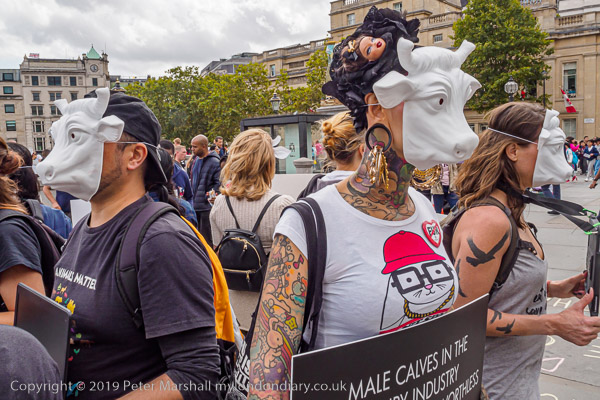
Rathayatra – the Festival of Chariots: Every year in June or July people pull huge decorated chariots through the streets of London. The first festival here took place in 1969 but such chariot festivals have taken place in India since 1150 CE.

Rathayatra - the Festival of Chariots

In 1968 three American couples came from San Francisco and organised London’s first Rathayatra festival, on July 27, 1969. The deities Jagannatha, Baladeva, and Subhadra made for this are still worshipped in London.

Rathayatra - the Festival of Chariots

International Society for Krishna Consciousness (ISKCON) or Hare Krishna, a Gaudiya Vaishnava Hindu religious movement founded in New York in 1966 became well jknown in the UK particularly because the Beatles had visited India in 1967 and they became friends of thye Hare Krishnas with George Harrison particularly promoting them.

Rathayatra - the Festival of Chariots

He persuaded Apple Records to release a single “Hare Krishna Mantra” released in August 1969, and funds from this enabled them to set up a temple in London. They outgrew this and in 1973 Harrison bought a manor house with extensive grounds in Radlett, Hertfordshire which he gave to them as was renamed Bhaktivedanta Manor.

Rathayatra - the Festival of Chariots

The first occasion I photographed the procession was on 20th June 2004 when I followed the procession from Hyde Park to a festival in Trafalgar Square. Here I’ll reproduce (with corrections to case & spelling) what I wrote back then, along with a few of the pictures I took.

“Sunday the streets of London were alive to the sound of ‘Hare Khrisna, Hare Krishna , Krsna Krishna , Hare Hare, Hare Rama, Hare Rama, Rama Rama, Hare Hare….’ as several thousand supporters pulled three 40ft tall decorated wooden chariots from Hyde park to Trafalgar square to celebrate the Indian festival of Rathayatra – the Carnival of Chariots.

An extension from Hinduism, Krishna Consciousness isn’t my thing, involving abstinence from alcohol, coffee, meat, onions, mushrooms and sex except for the purposes of procreation.

The movement has come a long way from its roots in New York’s Lower East Side in the flower-power years, but still seems a part of those times.

All respect to the sincerity, honesty and friendliness of these people, and it was a great show, the biggest in London yet, but a few hours of being kind and good and aiming for perfection was enough to last me the year.

I also photographed the festival in several later year and put accounts and pictures on-line.
You can find more pictures from 20th June 2004 on My London Diary.


FlickrFacebookMy London DiaryHull PhotosLea ValleyParis
London’s Industrial HeritageLondon Photos

All photographs on this page are copyright © Peter Marshall.
Contact me to buy prints or licence to reproduce.

Rip Down the Ripper Facade! – 2016

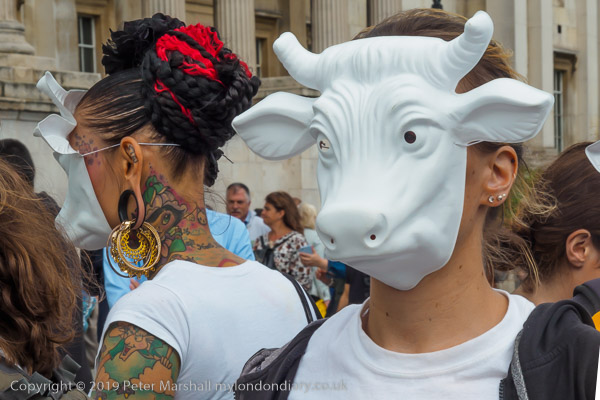
Rip Down the Ripper Facade! On Sunday 19th June 2016 after the ‘Jack the Ripper Museum’ tourist attraction on Cable St had not yet complied with the planning decision against its facade and shutter, Class War and supporters, including London Fourth Wave Feminists in cat masks, protested outside with toy plastic hammers offering to take it down for them.

Rip Down the Ripper Facade!

The so-called museum is a tacky tourist attraction that glorifies the killing of working class women but got planning permission and attracted support for promising to provide a museum promoting the history of East End women.

Rip Down the Ripper Facade!

Before going to the protest I’d been to a temporary exhibition being held in nearby St George in the East church, which shows some of the real history of women in the area, and was rather more interesting than the gory speculation for prurient tourists in the shop.

Rip Down the Ripper Facade!

I photographed the Class War protesters, led by women carrying the Class War Womens Death Brigade banner as they marched to the shop. Several were carrying inflatable plastic hammers but the threat to remove the shutters was purely symbolic.

Rip Down the Ripper Facade!

They crowded around the facade with their banner and several stuck Class War Womens Death Brigade stickers on the facade where police were protecting the doorway and stopping them from entering.

Several black-clad protesters then arrived and the scene was enveloped in bright red smoke.

I moved back both because taking pictures inside the smoke seldom works very well and also the smoke was getting in my lungs and it didn’t feel good.

Unlike at previous protests there was no sign of the shop owner, but the two women staff he had employed to run the shop watched out of the windows. But one of the protesters was wearing a mask of his face.

London Fourth Wave Feminists were wearing cat masks but also held posters expressing their opposition to the shop and calling for an end to male violence against women.

There had been a billboard opposite the shop which advertising the real exhibition about the lives of East End women but this had been vandalised, perhaps by friends of the ‘museum’.

It wasn’t then clear when or how (or even if) Tower Hamlets council intended to enforce their planning decision, and their stated opposition to the grisly shop seems to have been rather half-hearted.

Although police had come to protect the shop against this protest, and had stopped any of the protesters from entering, they had largely stood and watched, and at times some officers appeared rather amused by what was happening. By the time the protest finished the windows were fairly well covered by stickers and egg had been thrown onto one of the signs the shop had been asked to remove.

More pictures on My London Diary at Rip Down the Ripper Facade!


FlickrFacebookMy London DiaryHull PhotosLea ValleyParis
London’s Industrial HeritageLondon Photos

All photographs on this page are copyright © Peter Marshall.
Contact me to buy prints or licence to reproduce.

,

Housing Act, Student rents & Open Gardens – 2016

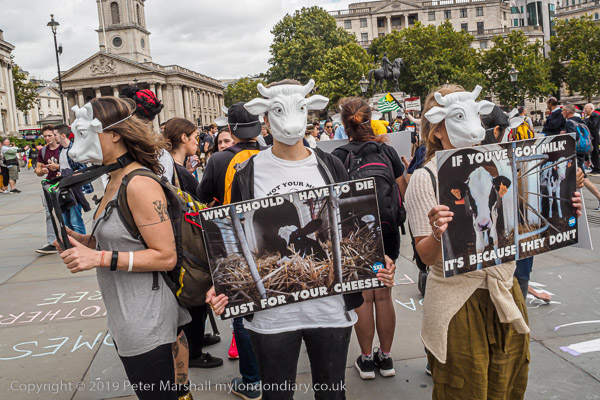
Housing Act, Student rents & Open Gardens: On Saturday 18th June 2016 I went to three events all with a connection with housing. First was a protest against the 2016 Housing and Planning Act passed the previous month, after which I briefly visited students celebrating a victory at UCL before going to South London for an Open Gardens event at an estate which Lambeth Council want to demolish.


Axe the Housing Act March – Hyde Park Corner

Housing Act, Student rents & Open Gardens

Protesters marched from Hyde Park Corner to Parliament against the Housing and Planning Act which tenant and housing groups, councils, academics, trade unions and communities say will deepen the current housing crisis, removing security from many tenants and will result in the demolition and selling off of almost all social housing.

Housing Act, Student rents & Open Gardens

The Act extends the ‘Right to Buy’ to housing association tenants and allows councils to sell vacant ‘higher value’ vacant council homes to fund this.

Housing Act, Student rents & Open Gardens

It brings in mandatory rent increases for households in social housing with a combined family income of ore than £40,000 in London and £31,000 elsewhere with their rents increasing over time to market rents. Amendments made this slightly fairer by limiting the income considered to the taxable income of two main household earners and excluding most of those receiving benefits from the calculations.

Housing Act, Student rents & Open Gardens

The Act removes security of tenure for most council tenants. New tenants will only get fixed term tenancies generally from 2-5 years, with some longer tenancies agreed for those with a disability or children living at home until they reach the age of 19 following pressure from the House of Lords.

The Act reflects and emphasises the Tory view that social housing should be a very limited resource only supporting the the very poorest in society, second-class citizens, with the landlords and house builders being able to make profits from the rest of us. But housing campaigners generally see it as by far the most cost-effective way to provide for one of our basic human needs and also argue that it can provide an income for local councils to support other vital services.

The protesters urged councils to refuse to implement the Act and call on people to stand together to boycott the pay-to-stay tax, resist evictions and block regeneration and estate demolitions.

Among the speakers before the march began was Richard Livingstone, a councillor from the London Borough of Southwark, Cabinet Member for Adult Care and Financial Inclusion and formerly responsible for housing in the borough.

Southwark is a borough with an appalling record on housing and estate demolition and many at the protest were appalled at his presence calling Southwark’s demolition of the Heygate and Aylesbury a shameful example of exactly the kind of social cleansing this protest was against.

Many feel that many Labour councillors and officers are now careerists, driven by political or financial advancement rather than caring for the people in their borough. A number have earned themselves highly paid jobs with developers and other companies in the housing sector.

I left as the march moved off towards Parliament and made my way to UCL.

More at Axe the Housing Act March.


UCL Rent Strike Victory

It was good for once to be able to celebrate a victory, after after the Complaints Panel at UCL decided that the residents of Campbell House West will be compensated in full for the final term last year – up to £1,368 per student.

They determined that UCL Management “Not only demonstrated a lack of empathy towards students’ circumstances and an understanding or appreciation of what would be an acceptable student experience, but was disingenuous to the students concerned.”

So the mass protest that had been planned, an Open Day Manifestation, turned into a celebration of their victory, and also to show their determination to continue their campaign to cut student rents.

I left after a brief visit, missing the lively victory march around the West End with flares and the helium-filled balloons I had watched them preparing.

UCL Rent Strike Victory


Central Hill Open Gardens Estates – Upper Norwood

Lambeth’s Central Hill Estate is a popular and well-planned estate of considerable architectural interest in good condition under threat of demolition by Lambeth Council. Like some other estates it has been refused listing probably on political grounds. The properties, completed in 1974, were well built and are generally in good condition though suffering like most council estates from a lack of proper maintenance and in need of relatively minor refurbishment.

This was one of the estates under threat of demolition by Government Housing policies, council regeneration programmes and property developers which were welcoming visitors to open day events as a part of the Open Garden Estates initiative by Architects for Social Housing, ASH.

There was a display of the alternative plans for the estate by ASH showing how the council’s aims of increasing the capacity of the estate could be achieved without any demolition and at a much lower financial and environmental cost.

Lambeth Council had refused to make any serious consideration of these plans, almost certainly because although the cost would be much less, they would not provide the profits to the developers from the high market value sales of new properties and market rents, and the costs of the ASH scheme to the council would be greater.

One of the visitors to the open day was Labour MP for Dulwich and West Norwood Helen Hayes, who stormed out after being questioned why she was attending when she had given her backing to Labour councillors behind the plans to demolish the estate.

Also at the open day were various food, book and other stalls, a music performance, film show (I watched a film about how Southwark Counci had mistreated the residents of Myatts Fields) and a Marxist puppet show as well as estate tours. I’d visited the estate several times in the past and had photographed parts of it in the 1990s as well as more recently in February 2016 when I wrote more about it and Lambeth’s plans to demolish.

Although New Labour’s ‘Regeneration’ policy possibly had good intentions, its results have often been disastrous, and Labour really needs to rethink its whole approach to council-owned housing.

As I wrote in 2016: “‘Regeneration’ has resulted in huge transfers of public assets into private hands, in a wholesale loss of social housing, and in social cleansing, with people being forced outwards from London, unable to afford either the laughably named ‘affordable’ properties or those at market rates. It has meant the dispersal of functioning communities, in widespread and arguably fraudulent under-compensation of leaseholders, and in a great deal of sub-standard buildings, often to lower specifications of space and worse design than those they replace.

More people were arriving at the event when I left to go home and I was sorry to have to miss some of the activities planned for later in the day.

The estate is still standing and the fight to save it continues. In March 2024 Lambeth Council set up a contract with consultants to reappraise the plans for estate ‘regeneration’ at Cressingham Gardens, Central Hill and Fenwick. Perhaps it will come up with some more sensible proposals …

More at Central Hill Open Gardens Estates.


FlickrFacebookMy London DiaryHull PhotosLea ValleyParis
London’s Industrial HeritageLondon Photos

All photographs on this page are copyright © Peter Marshall.
Contact me to buy prints or licence to reproduce.

Sheep Drive Across the Thames – 2006

Sheep Drive Across the Thames: The sheep drive from Southwark Cathedral to Smithfield Market on Saturday 17 June, 2006 organised as a part of the London Architecture Biennale and if not really leading the sheep, accompanying the sheep over the Millennium Bridge were architects Richard Rogers and Renzo Piano in Biennale “Trust me, I’m an architect” T-shirts as well as Freemen from the Butcher’s Company.

Sheep Drive Across the Thames

The right dates back to the establishment of Freemen of the city, and was first recorded in 1237. Freemen were allowed to drive their sheep across London Bridge – then and for many years the only bridge across the River Thames – without paying the normal Bridge Toll, giving them an important commercial advantage when taking sheep from south of the river to the Wool Exchange or Smithfield Meat Market.

Sheep Drive Across the Thames

It wasn’t just sheep but applied to any livestock such as cattle, pigs, chickens, ducks, geese although some of these might be difficult to drive, and so far as I’m aware there have been no modern revivals involving anything but sheep.

Sheep Drive Across the Thames

Freeman also gained other important privileges, such as immunity from being taken to serve on ships by the press gang and being allowed to carry your sword drawn against muggers when walking around the City.

Sheep Drive Across the Thames

In 2006 there were no signs of the press gang and I didn’t see any of the Freemen present carrying swords. Nor were any convicted of murder or treason and allowed to claim the rather doubtful privilege of being hung by a silk rope.
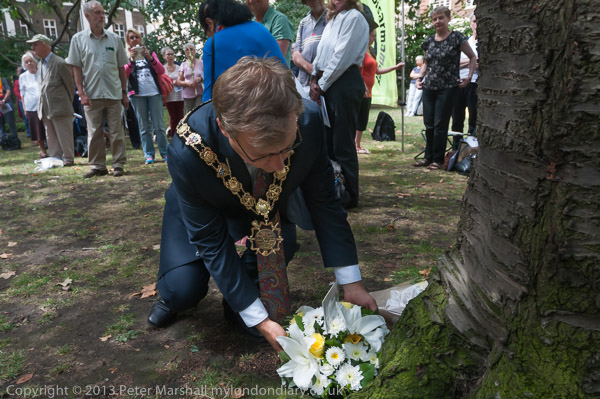
So far as I’m aware first modern revival of the sheep drive came during the Millennium celebrations when the Lord Mayor Sir Clive Haydn Martin arranged for the driving of some pedigree sheep across London Bridge by some members of the Livery Companies – though carefully avoiding the two who might have sheared or slaughtered them, the Woolmen and Butchers.
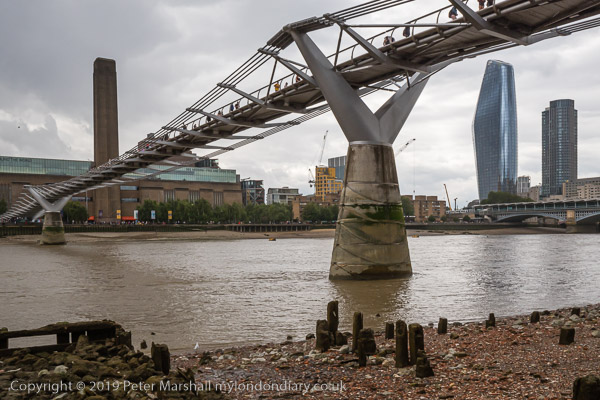
The London Architecture Biennale in 2006 made use not of London Bridge, but the pedestrian Millennium Bridge and this was certainly the first sheep drive across this, fortunately long cured of its initial wobbles, though I did rather wonder if the event might exceed its design loadings. This was perhaps why the police insisted on holding up spectators until the flock had cleared the bridge, much to the annoyance of me and the other press who felt a Press Card should have let us through.

Since 2006 there have been more sheep drives – in 2008 by World Tradeers and in 2009 for the 800th anniversary of Old London Bridge, by the City whose then Lord Mayor David Lewis was the grandson of a Welsh sheep-farmer. And in 2013 it became the Great Annual Sheep Drive organised for Freemen of the City by the Worshipful Company of Woolmen, held on London Bridge in September (though in recent years on Southwark Bridge.)

In 2006 around 30 sheep had brought to a pen at Southwark Cathedral by farmer Andrew Sharp who was a stallholder in Borough Market, and came with several shepherds to help and was also aided by members of the clergy including the Bishop of Southwark, Tom Butler.

Also facing the cathedral were a small and noisy crowd of animal rights protesters. As I commented, “here the sheep were being treated well, by people who so obviously cared for them. You can’t be a successful sheep farmer without having a feeling for and and understanding of them and a dedication to care for them.” Probably for the sheep the most disturbing thing of their day out in London was the shouts of the protesters.

I took pictures of the start of the procession and then of the flock and those accompanying it as far as the south end of the Millennium Bridge. Some of the protesters had followed as well. Police then stopped everyone then behind the sheep of while the crossing continued. A few minutes later we were allowed to proceed and I caught up with the sheep as they reached St Paul’s Cathedral and walked with them to Smithfield Market.

The drive ended in Smithfield, with the Sheriff of London opening the Bartholomew Fair by cutting a number of pink ribbons. I took a few pictures around the fair, and of the flypast taking place for the Queens official 80th birthday before going to St John’s Wood where mounted soldiers were coming back to barracks with a gun carriage before joining a guided tour around the trees in the area.

More pictures from the Sheep Drive as well as the other things I photographed on the day beginning here on My London Diary


FlickrFacebookMy London DiaryHull PhotosLea ValleyParis
London’s Industrial HeritageLondon Photos

All photographs on this page are copyright © Peter Marshall.
Contact me to buy prints or licence to reproduce.