Jesse Jackson, Cuts & Paris • New York • London Opening 2010

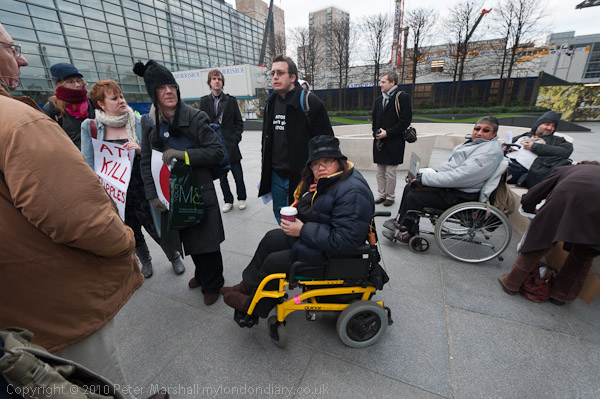
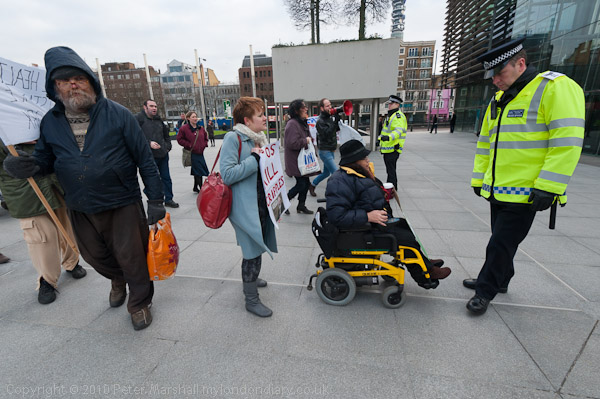
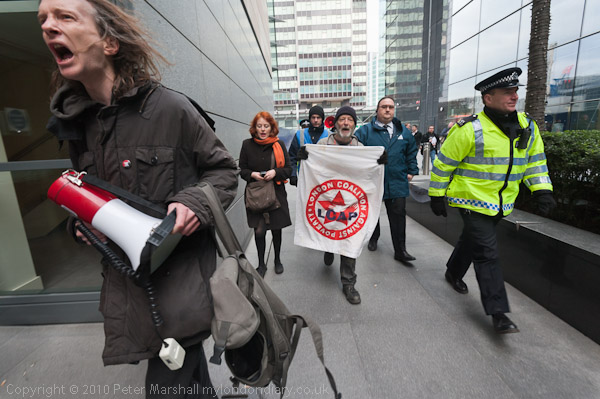
Jesse Jackson, Cuts & Paris • New York • London Opening: Wednesday 20th October 2010 was an unusual day for me. I don’t often photograph conferences, but I started at one where Jesse Jackson was speaking and then went to lobby my MP over tax justice. Kwasi Kwarteng was seldom seen in the constituency but later became notorious when he helped Liz Truss crash the economy. From there I used to cover people marching to Downing Street against the government spending cuts before leaving to go to the Shoreditch Gallery for the opening of a show by three photographers I had organised, ‘Paris – New York – London’ (I was Paris.)


Jesse Jackson & Christian Aid Lobby – Westminster

Jesse Jackson, Cuts & Paris • New York • London Opening 2010

2,500 Christian Aid supporters including my wife had come to Westminster to lobby their MPs on 20.10.2010, asking them to press for transparency and fairness in the global tax system and for action on climate change.

Jesse Jackson, Cuts & Paris • New York • London Opening 2010

According to campaigners for tax justice various forms of tax dodging by multinational companies was then robbing the global South of more than $160 billion a year. And our high dependence of fossil fuels had led to a climate crisis which impacts these countries far more severely despite their much lower per capita carbon footprints.

Jesse Jackson, Cuts & Paris • New York • London Opening 2010

The rally took place in the vast Methodist Central Hall, opposite Westminster Abbey, and as we were reminded where the United Nations started. There was a huge ovation for US Civil Rights leader, activist and politician Jesse Jackson, a protégée of Martin Luther King president and founder of the Rainbow PUSH Coalition.

But there were also other distinguished speakers including the then new director of Christian Aid, Loretta Minghella, Suzanne Matale from Zambia and secretary of state for international development and MP for Sutton Coldfield, Rt. Hon Andrew Mitchell MP.

Jesse Jackson, Cuts & Paris • New York • London Opening 2010

After the rally we met our local MP Kwasi Kwarteng and went with him into a pub opposite Parliament where he he listened to us and basically told us we didn’t understand global finance and climate change, before going outside to pose with for photographs.

Outside there was some street theatre by younger Christian Aid supporters as people queued to meet there MPs and I made a few pictures before rushing away to find people marching to protest against government cuts.

Jesse Jackson & Christian Aid Lobby


March Against Spending Cuts – Malet St & Lincolns Inn Fields

Earlier in the day the government had announced there would be considerable cuts in welfare benefits and the loss of many public sector jobs as services are cut following their comprehensive spending review.

The deficit left by New Labour had given the Tories in the Con-Dem coalition a perfect excuse to slash the public sector and privatise services in a way they would never have dared before. £83 billion to be cut from public services, in a move that the Coalition of Resistance pointed out will mean many workers with less to spend and cause a slump in the economy.

But as I commented “Big business must be rubbing its hands with glee at the thought of the profits it will be able to make in the health service, from so-called ‘free schools’ and elsewhere.”

But for the rest of us the prospect was bleak. More than a million jobs lost – and some would be replaced in the private sector with lower wages, fewer benefits, lower standards of delivery and safety and higher workloads. Profit will come before anything else in the kind of “efficiency” we’ve seen in hospital cleaning – where I found used needles and dressings under my hospital bed as cleaners were not allowed the time to do the job properly.

I went to photograph students setting off from outside the student union in Malet Street for the march to Downing Street, then went to Lincoln’s Inn Fields where trade unionists and more students gathering and there were speeches from an open top bus before they too set off.

But I went in the opposite direction to my opening at the Shoreditch Gallery.

March Against Spending Cuts

Paris • New York • London Opening – Shoreditch Gallery, Hoxton Market

Me at the opening where I gave a speech – photograph © Paul Baldesare, 2010

This show contained work by John Benton-Harris from New York, Paul Baldesare from London and myself from Paris and can still be seen online.

Addicted To Jesus – Arthur Avenue, Bronx NYC – 14th March 2009 © John Benton-Harris

John Benton Harris (1929-2023), one of the finest photographers to come out of New York, settled in London in 1965 but continued also to photograph his native city and elsewhere. He was long a personal friend and I worked with him on a number of his projects including his Café Royal Zines and his unpublished book on the English.

Window dresser, Oxford Circus, London © Paul Baldesare, 2010

Paul Baldesare, another friend of mine with whom I’ve often shown pictures and a former student of John Benton-Harris showed work from one of his many projects on London, He is probably best known for his pictures on the tube.

And I was showing a selection of images made in Paris in 1988 from a book I had also then recently published on Blurb.


FlickrFacebookMy London DiaryHull PhotosLea ValleyParis
London’s Industrial HeritageLondon Photos

All photographs on this page are copyright © Peter Marshall.
Contact me to buy prints or licence to reproduce.
Fracking, Congo & Caste 2013

Fracking, Congo & Caste: On Saturday 19th October 2013 I began work at a protest calling on the former boss of BP to resign from the House of Lords because of his vested interest in fracking, then photographed a protest against the atrocities being committed in the battles for mineral wealth in the DRC, Uganda and Rwanda before covering a march bringing a petition to Downing Street against the continuing delays in making caste discrimination illegal in the UK.


Global Frackdown: Lord Browne resign! Mayfair

Fracking, Congo & Caste

Campaigners went to the offices of private equity firm Riverstone Holdings to call on its managing director Lord Brown of Madingley, a former boss of BP, to resign his seat in the House of Lords because of his vested interests in fracking.

Fracking, Congo & Caste

John Browne joined BP in 1966 and worked his way up the company to become CEO in 1995. Knighted in 1998, he joined the House of Lords as Baron Browne of Madingley. in 2001 while still being BP CEO. In 2007 he resigned from BP when accused of perjury in atempting to stop newspapers publishing details of a former homosexual relationship and of alleged misuse of company funds.

Fracking, Congo & Caste

In his time at BP he was responsible for a ruthless programme of cost-cutting that many feel compromised safety and contributed to the 2005 Texas City Refinery explosion and in 2010, the Deepwater Horizon oil spill.

Fracking, Congo & Caste

In 2013, Browne was Managing Director and Managing Partner (Europe) of Riverstone Holdings LLC, and more significantly for today’s protest the chairman of Britain’s only shale gas driller Cuadrilla Resources.

The protest outside Riverstone was a part of a day of a ‘Global Frackdown’ with protests against fracking in 26 countries and in other cities in the UK.

Friends of the Earth activists met on Oxford Street and walked to the office in Burlington Gardens, where after a brief speech about Lord Browne’s involvement in fracking people were invited to write messages and put them in a small brown rubbish bin which would be left at the offices for him.

People wrote messages and posed with them calling for an end to fracking at Balombe and elsewhere in the UK as well as showing support for the Elsipogtog First Nation who had a few days earlier been attacked by the Royal Canadian Mounted Police with live ammunition and tear gas while protesting against fracking in New Brunswick, Canada.

Fortunately police in London merely came to ask the protesters what they intended to do before saying ‘Fine, no problem’ though they did later ask them to ensure there was a free path along the pavement and remind them and photographers of the danger from the slow moving traffic.

The activists point out that fracking contaminates huge volumes of water with sand and toxic chemicals and also that any fossil fuel production should be avoided as using fossil fuels increases the climate crisis.

Global Frackdown: Lord Browne resign!


Don’t Be Blind to DR Congo Murders – Piccadilly Circus

Continuing battles over the mineral wealth of the Democratic Republic of Congo, Uganda and Rwanda have led to the murder of more than 8 million people and over 500,000 men, women and children have been raped by the various armies funded by various European and African multinational companies.

Gold, diamonds, coltan, tungsten, tin and other ores should make these countries rich, but have led to huge devastation. Coltan, containing both niobium and tantalum is vital for the mobile phones, computers, missiles and other modern technology on which we rely. The fight for it has been the main incentive behind the genocidal wars that have waged in the area.

Despite various protests over the years by Congolese in London there has been little publicity to the atrocities and no action by our government. The ‘Don’t be Blind This Time’ campaigners came to Piccadilly Circus to raise public awareness, some posing in blindfolds and others handing out a thousand free flowers, with the message that that we need to demand justice and an end to the impunity and cover up around this conflict.

The wars continue in 2024 and have recently intensified. China now also being increasing involved as US companies have since 2013 sold their mines to Chinese companies who now own most of the mines in the DRC.

I don’t remember seeing any mention of this protest in the media, and we see few reports of the terrible situation continuing in the area. British editors seldom seem to regard this or conflicts in other areas of Africa such as Sudan as news.

Don’t Be Blind to DR Congo Murders


Make Caste Discrimination Illegal Now – Hyde Park to Whitehall

Negative discrimination on the basis of caste, long a traditional part of Indian society, was banned by law there in 1948 and is a part of the 1950 constitution, though it still continues. In the UK The Equality Act 2010 passed under New Labour in 2010 gave our government the power to make caste discrimination illegal but they lost the election before doing so.

The incoming coalition government was reluctant to action, but pressure continued and in 2013 the Enterprise and Regulatory Reform Act 2013 mandated this to be done; instead the government set up a two year consultation, apparently as a result of lobbying by the Alliance of Hindu Organisations, (AHO) a body set up to oppose what they call “the threat posed by this proposed amendment to the Equality Act 2010.”

The consultation appears also to be only with established groups dominated by upper caste interests, and its length entirely unnecessary. It isn’t clear why a simple elimination of a clearly discriminatory practice should be regarded as a threat.

A report on the consultation was finally published in 2018. In it the government rejected the idea of a law against caste discrimination and instead concluded:

Having given careful and detailed consideration to the findings of the consultation, Government believes that the best way to provide the necessary protection against unlawful discrimination because of caste is by relying on emerging case-law as developed by courts and tribunals. In particular, we feel this is the more proportionate approach given the extremely low numbers of cases involved and the clearly controversial nature of introducing “caste”, as a self-standing element, into British domestic law.

They also state that any law would “as divisive as legislating for “class” to become a protected characteristic would be across British society more widely.” I don’t think this comparison has any merit. Not to act seems to me to be accepting a foreign practice, illegal in its country of origin, into British society, and the low number of cases they comment on surely means that case-law will only emerge at a snail’s pace. Our new Labour government should follow the example begun by New Labour in 2010 and make caste discrimination illegal in the UK.

Make Caste Discrimination Illegal Now


FlickrFacebookMy London DiaryHull PhotosLea ValleyParis
London’s Industrial HeritageLondon Photos

All photographs on this page are copyright © Peter Marshall.
Contact me to buy prints or licence to reproduce.

Inequality, Democracy Camp & the Blessed Sacrament – 2014

Inequality, Democracy Camp & the Blessed Sacrament – On Saturday 18th October 2014 over 80,000 people marched in London to call for workers to share in the economic recovery which has seen a great increase in wages of chief executives while workers have lost out. Later I went to Parliament Square where the Democracy Camp finally took over the area. When police left, I left to photograph a Catholic religious procession.


Britain Needs A Pay Rise – Embankment

Inequality, Democracy Camp & the Blessed Sacrament

I walked along the Embankment a couple of hours before the march was due to start and already it was beginning to fill up with marchers, and I returned later from photographing Democracy Camp protesters in Parliament Square just in time to catch the end of a photocall with TUC General Secretary Frances O’Grady in front of a bus covered with a green banner with the message ‘Britain Needs a Pay Rise’ and people holding large white numbers 1,7 and 5.

Inequality, Democracy Camp & the Blessed Sacrament

The gap between rich and poor is widening in the UK, with company chief executives in 2014 getting 175 times the pay of the average worker. Wealth is also hugely unequally divided, with the “the richest 50 families in the UK held more wealth than half of the UK population” by 2023. Only 8 of the 37 Organization for Economic Co-operation and Development countries are now less equal than the UK.

Inequality, Democracy Camp & the Blessed Sacrament

Eventually the march set off, and after photographing the start of the march I stayed in place to photograph the rest of the march as it came past me.

Inequality, Democracy Camp & the Blessed Sacrament
Matt Wrack, FBU

“At the front were the major unions, the health workers and the teachers, the firefighters and more, a reminder of how much we still depend on unionised workers despite the largely successful attacks by Thatcher and later governments which have almost eliminated the unions in many areas.”

“Further back the marchers were more varied, and I met rather more people I knew, including those with CND, Focus E15, Occupy London and other radical movements.”

I kept taking pictures as people came past me for around an hour and a quarter, when people were still coming past but it was close to the end. Rather than continue with them to Hyde Park where the final rally would be starting I considered taking the Underground – it would probably be over before those marchers arrived. But I decided I had enough pictures of the event and went instead to Parliament Square to see what was happening at the Democracy Camp.

Many more pictures at Britain Needs A Pay Rise.


Democracy Camp Takes the Square – Parliament Square

When I arrived the tense standoff between police and protesters around the edges of the grassed area was continuing. Many of the protesters had temporarily left the square to join in with the TUC march but were beginning to arrive back.

One group “from UK Uncut came into the square dancing to the sound of a music centre on a shopping trolley. As they danced on the pavement in front of the statue of Churchill, Westminster Council officials prompted police into action and together with one of the Heritage Wardens the police moved to attempt to seize the sound system.”

Democracy campers linked arms to make it difficult for the warden and police to reach the system” but eventually the group were surrounded and “Martin Tuohy showed his ID as Senior Westminster Warden at Westminster City Council and together with another employee grabbed the system with police looking on.”

After some tense argument the UK Uncut group were allowed to leave the square along with their sound equipment with the warning that unless they took it away from Parliament Square it would be taken from them.

More people arrived from the TUC march, where some had carried “two large wood and fabric towers, one with the words POWER and OCCUPY and the other the word DEMOCRACY. Together with other protesters they ran onto the grass square and raised the towers

Others joined them including some carrying a long ‘Real Democracy Now!’ banner and the rally began.

The first speaker was “Labour MP John McDonnell. Among the other speakers were Occupy’s George Barda, environmentalist Donnachadh McCarthy and Russell Brand, who after speaking posed for photographs together with many of those present. “

The sudden invasion of the grass had taken the police and Heritage Wardens by surprise, and they had been unable to do anything to prevent it. But during the rally police began “massing around the square in blocks of around 20, obviously posed in a military looking formations ready to run onto the square.” As well as perhaps 200 ordinary police, reinforcements arrived “arrived with two larger groups of blue-capped TSGs obviously spoiling for a fight.”

“Then the police suddenly started to disappear while Brand was speaking. Perhaps someone had realised that with Russell Brand talking, any attack on the protesters would have generated massive and largely negative media coverage. Much better to come back late at night and do it after the mass media had left (which they did.)”

Nothing seemed likely to happen until much later, so I left for another event.

More at Democracy Camp takes the Square.


Procession of the Blessed Sacrament – Westminster Cathedral to Southwark Cathedral

I arrived just in time to see the procession emerge from Westminster Cathedral – no photography was allowed inside.

I followed it down the road to Lambeth Bridge where they stopped for a change of dress as Auxiliary Bishop Paul Hendricks put on his robe to carry the sacrament in Southwark diocese.

I left the procession at the south end of the bridge to catch a bus back to Waterloo and make my way home.

Procession of the Blessed Sacrament.


FlickrFacebookMy London DiaryHull PhotosLea ValleyParis
London’s Industrial HeritageLondon Photos

All photographs on this page are copyright © Peter Marshall.
Contact me to buy prints or licence to reproduce.


Palestine, Boris & Democracy Camp – 2014

Palestine, Boris & Democracy Camp: Ten years ago on Friday 17th October 2014 I covered a protest against bans on family visits to Palestinian prisoners, a spoof newspaper claiming Boris had seen the light over housing shortages and a rally in Parliament Square where Occupy Democracy were intending to camp and hold an unauthorised nine-day event.


Ban on Family visits to Palestinian Prisoners – Victoria

Palestine, Boris & Democracy Camp

People had come to protest outside the new offices of the G4S Chief Executive Officer in Peak House, a new office building opposite Victoria Station.

Palestine, Boris & Democracy Camp

It was a tricky site to hold the protest as most of the area was a building site, with extensive work being carried out to improve Victoria Underground Station (not part of Crossrail as I wrongly thought then, but possible important for the currently suspended Crossrail 2). But the protesters made use of the fences around this part of the building site to attach some of their banners.

Palestine, Boris & Democracy Camp

The building works brought many of those walking towards and from Victoria to pass close to the demonstration and more than usual took the leaflets they were offered, with a few stopping to talk and express their sympathy with the protest. There were also two who made adverse comments and I missed seeing when one of them grabbed the lowest of three Palestinian flags of a long pole held by one of the women; she held on to the pole, others rushed to her assistance and the man hurried away.

Palestine, Boris & Democracy Camp

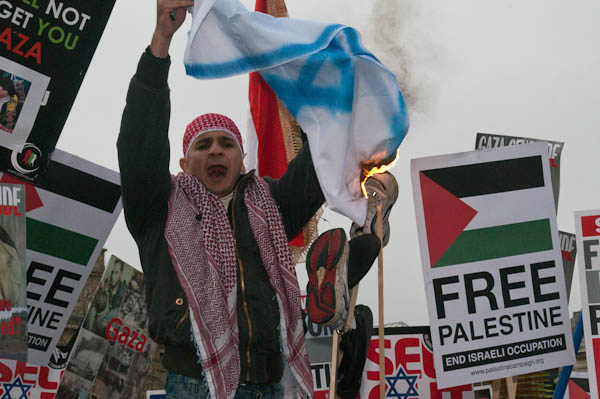
They were protesting against Israel issuing banning orders denying Palestinian families the right to visit their loved ones in prison. A hunger strike in April 2014 by administrative detainees held without trial had ended when Israel had promised to reinstate family visits, but in July Israel reneged on this promise and went back to issuing banning orders again.

Among individuals the protest highlighted the case of Mona Qa’adan, a woman university lecturer who has been held in jail since November 2012 and has not been allowed a single family visit in two years. She is held in poor health without any trial at the G4S secured women’s prison HaSharon, where prisoners endure beatings, insults, threats, sexually explicit harassment and sexual violence, and humiliation at the hands of Israeli guards. The cells at HaSharon prison are overcrowded, dirty and infected with rodents and cockroaches and there is a total absence of basic hygiene.

Ban on Family visits to Palestinian Prisoners


Spoof shock U-turn by Boris on Housing

In Parliament Square I met campaingers from the Radical Housing Network with bags containing thousands of copies of a spoof edition of the ‘London Standard Evening‘ newspaper.

Under the headline ‘Boris in shock housing U-turn‘ the paper had Boris Johnson saying “its time to put the social back into housing” and carried features about London housing scandals.

The spoof edition was produced for the final day of the world’s largest property fair, known as MIPIM, which had taken place over three days at Olympia, with protests outside it and a day of workshops on housing issues. London Mayor Johnson had welcomed property developers, investors, financiers and politicians from around the world and encouraged them to build more large tower blocks here to sell to overseas investors.

“These developments feed the boom in house prices and rents in London and so exacerbate our increasingly serious housing problem, with a desperate shortage of social housing. Ten of thousands of London families are on council house waiting lists, and communities across the city face eviction and displacement at the hands of the profiteering developers Johnson welcomed to the city with open arms.”

The campaigners left carrying the bags to hand them out outside key tube stations around Central London, but I stayed in the square for Occupy Democracy’s rally.

Spoof shock U-turn by Boris on Housing


Democracy Camp starts with rally – Parliament Square

Democracy Camp had widely announced their plans to camp in Parliament Square for nine days and hold a series of protests, rallies and workshops there. Many arrived for the rally with tents and sleeping bags determined to stay.

They intended “to broadcast and demand the solutions we already know exist, to inspire people to be the active citizens required to take back democracy from powerful economic interests.

Police and Mayor Johnson were determined they would not set up camp. Police ‘liaison officers‘ handed out an ‘Important Notice’ – basically telling protesters that democracy was stuffed by Act of Parliament as far as Parliament Square was concerned – and Westminster Council bylaws almost make breathing an offence.

Rather strangely, the Greater London Authority had suddenly decided the the rather healthy looking grass covering most of the square was urgently in need of repair and put up notices closing the area, roping it off, Though those of us who had visited the square knew that they hadn’t done anything about the part of it that really needed attention for weeks. An area that had been damaged by an allowed event some weeks earlier and badly needed roping off and reseeding had still not been touched.

People had come with bags but when asked by police and the private security ‘Heritage Wardens’ stated they intended to sleep elsewhere in London. Police argued with them but I think the media presence stopped them taking the bags away despite the urging by the private security wardens.

Eventually the start of the evening rally was announced and some speeches began with John Hilary, Executive Director of War on Want and author of The Poverty of Capitalism, followed by others including Mansfield vicar Keith Hebden who had fasted for 40 days for the End Hunger Fast campaign and Robin from the Radical Housing Network talking about MIPIM.

It was getting dark and I was getting tired and hungry. I left to file my pictures and to eat and sleep in a comfortable bed while the rally and the occupation of the square continued.

I came back the following morning and covered events later in the day when the camp did take over the grass and set up camp.

More at Democracy Camp starts with rally.


FlickrFacebookMy London DiaryHull PhotosLea ValleyParis
London’s Industrial HeritageLondon Photos

All photographs on this page are copyright © Peter Marshall.
Contact me to buy prints or licence to reproduce.


Southwark Housing, Bermondsey & Rembrandt – 2014

Southwark Housing, Bermondsey & Rembrandt: On Thursday October 16th 2014 I photographed a march from the Elephant to Southwark Council Offices over the borough’s housing scandals, took some time off in Bermondsey to take some panoramic images and then covered a protest at the National Gallery against sponsorship of art exhibitions by companies such as Shell, G4S, BP and Serco.


Compulsory Purchase Orders for Southwark Councillors

Southwark Housing, Bermondsey & Rembrandt

Housing campaigners from Southwark marched from the Elephant and Council to Southwark Council Offices to serve ‘People’s Compulsory Purchase Orders‘ on the homes of the Council leader and other councillors who they say have accepted gifts from developers to sell off council estates at knockdown prices.

Southwark Housing, Bermondsey & Rembrandt

The shameful demolition of over 1200 homes in and close to the well-designed and largely popular Heygate estate has cost the borough dearly, with the costs to the council of ‘decanting’ the residents exceeding the knock-down price it charged the developers.

Southwark Housing, Bermondsey & Rembrandt

Of course the estate residents suffered more, losing their homes and being forced to move further out into the suburbs. Leaseholders were only offered roughly half the true market value of property in the area.

Southwark Housing, Bermondsey & Rembrandt

The demolition and redevelopment has meant the loss of over a thousand social homes, and the new properties on the site had already been advertised to overseas buyers in Singapore and elsewhere as second homes, investment properties, homes for wealthy overseas students studying here, buy-to-let etc. There are just a few so-called affordable units at 80% of market rates, still well above what most Londoners can actually afford.

The protesters met at the base of the Strata Tower, an ugly development of largely luxury flats with three wind turbines built into its roof for show – unable to produce electricity as when running they produce excessive vibration in flats at the top of the building. Facing them ‘One The Elephant‘ was going up, a 44 storey block of luxury flats with no social housing, and is being sold abroad, with ‘studio flats’ starting at around £320,000 or 640,000 Singapore dollars.

Southwark campaigners were joined by members of the Focus E15 ‘Housing for All campaign’ and their first stop for a brief protest was the Elephant Park Sales Office on the Walworth Rd. They then walked through several council estates to the north of the New Kent Road which are also attractive targets for developers who can make huge profits by demolishing them and building high price flats at much higher densities.

They continued through other council estates in the area to London Bridge Station and on to the council offices in Tooley Street, where they were stopped by security from entering the Council offices. Police were called and after much argument two of the campaigners who were Southwark residents were allowed in and waited to present letters containing ‘People’s Compulsory Purchase Orders’ for their homes to council leader Peter John and two other councillors.

They asked at reception to see the councillors and were told to take a seat and wait. They waited and waited. Eventually someone from the council came to tell them that all three named councillors were unavailable but took their letters promising to hand them over personally to them.

More at CPOs for Southwark Councillors.


Bermondsey Thames Panoramas – City Hall to Angel Wharf

I had some time before my next protest and took a short walk by the River Thames,

beginning in Potters Fields where ‘One Tower Bridge’ was going up close to City Hall.

Past Tower Bridge I took a short walk on the foreshore in front of Butler’s Wharf before continuing along Shad Thames and across the footbridge over St Saviour’s Creek.

I continued along the Thames Path past the moorings, and got as far as Angel Wharf before I realised I needed to catch a bus to get me back to Trafalgar Sqaure in time for my next event.

More pictures Bermondsey Thames Panoramas


Art Not Oil Rembrandt Against Shell – National Gallery

The Art Not Oil coalition had gate-crashed the press launch of the National Gallery’s Rembrandt exhibition to give a brief performance protesting against oil sponsorship of the arts and privatisation of gallery staffing.

On the evening of 16th October they met on the steps of St Martin-in-the-Fields before marching the few yards to give a repeat performance outside the gallery which was then holding a gala evening for special guests and highly ranked staff.

The National Gallery was making plans to privatise up to two thirds of the gallery staff and this exhibition was being guarded by a private security firm rather than the gallery’s own staff.

Art Not Oil held banners and placards and handed out flyers agains the sponsorship by Shell stating:

"The presence of unethical sponsors like Shell and the contracting of external security firms shows the growing influence the private sector is having over our arts and culture. With its meagre contribution to the gallery, Shell is buying social legitimacy for its dodgy deeds worldwide, including:

- its failure to clean up its multiple spills in the Niger Delta
- its reckless plans to drill in the Arctic for yet more oil
- its tar sands projects in Canada that are undermining Indigenous people's rights"

They sang a number of specially written songs and performed the short playlet they had previously given inside the gallery during the press launch.

More at Art Not Oil Rembrandt Against Shell.


FlickrFacebookMy London DiaryHull PhotosLea ValleyParis
London’s Industrial HeritageLondon Photos

All photographs on this page are copyright © Peter Marshall.
Contact me to buy prints or licence to reproduce.

Occupy London Begins – 2011

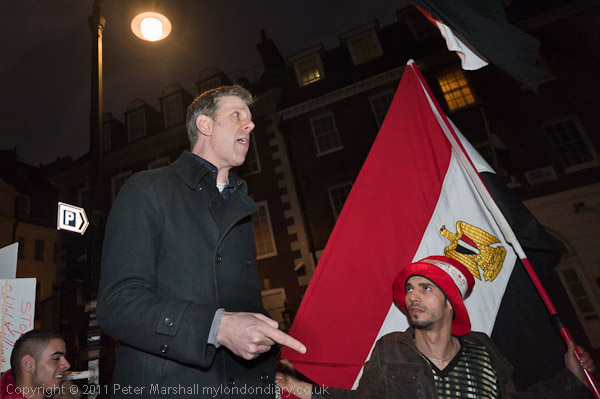
Occupy London Begins: On Saturday 15 Oct 2011 over 2000 protesters came to St Paul’s Cathedral as a part of a world-wide ‘Occupy’ protest “Inspired by Occupy Wall Street and the Arab Spring, and answering to the call out made by the Spanish Plataforma ¡Democracia Real YA! in May 2011 for a Global Day Of Action” and Occupy London began.

Occupy London Begins - 2011

Similar protests were taking place in “Spain, Rome, New York, Portugal, Chile, Berlin,Brussels, Zageb, and many more … inspired by the example of Occupy Wall Street and the Arab Spring.”

Occupy London Begins - 2011

Although people from various groups were present, including the Education Activists Network, Socialist Workers Party, Anonymous, Right to Work, UK Uncut, South London Solidarity Federation and there were several well known figures present who spoke including Peter Tatchell and Julian Assange, the whole movement deliberately lacked overall organisation with all decisions being taken by General Assemblies with the slogan ‘No Leaders, No Hierarchy’.

Occupy London Begins - 2011
A General Assembly on 9th October on Westminster Bridge plans the occupation

The event had actually come about from one such assembly on Sunday 9th October at the end of the ‘Block the Bridge NHS Protest‘ when a ‘General Assembly’ of several hundreds had come together at the north end of Westminster Bridge to discuss and endorse a planned occupation of the London Stock Exchange area.

Occupy London Begins - 2011

In response to this the Stock Exchange obtained a High Court injunction to prevent public access to Paternoster Square, one of the increasingly large areas which appear to be public space in the city but are actually now privately owned, although previously Paternoster Row was a public street and police were present in force to enforce this injunction.

Most of the several thousand protesters were intent on an entirely peaceful protest, calling for a democratic revolution to “fight for a new political and economic system that puts people, democracy and the environment before profit.” They saw that “Our political elites have chosen to protect corporations, financial institutions and the rich at the expense of the majority.

After a few short speeches a few hundred protesters, led by the banner of the Education Activist Network made and attempt to enter the square through Temple Bar, but police on foot and horses were waiting for them, and the relatively narrow entrance of the Bar, moved here a few years ago, was designed to be easily defended.

They then made a tour around the block containing the Stock Exchange but found the narrow passages leading to Paternoster Square heavily defended by police. When finally they found one with only a thin line of a thin line of police, the protesters hesitated for long enough for the police to bring up reinforcements. It was probably for the best as they would have immediately been easily kettled inside the square had they got in.

Eventually a General Meeting began on the steps of St Paul’s. There were a few minor scuffles when police pushed protesters around, which could probably have been avoided had police explained clearly that they only intended to clear a path to clear a path into and out of the cathedral at one end of the steps. Several people were arrested then and later.

I decided to leave, as it really seemed unlikely that anything much more would happen for some time. As I was leaving, police decided to block Ludgate Hill, but along with a group of several hundred protesters I managed to get through their line as it was forming.

The General Assembly takes a show of hands to remain at St Paul’s

Police continued to clear protesters from the steps of St Paul’s and urging people to leave the area, but many set up tents on the level area of St Paul’s Churchyard and the occupation had begun – and was to remain in place until finally removed on 28th February 2012. You can read a great deal about the occupation in the Occupy London web site which includes the various statements agreed by consensus at Occupy London General Assemblies. Unfortunately Wikipedia’s article on Occupy London is unusually poor and misleading about the events of 15th October.

More at Occupy London Kept Out Of Stock Exchange


FlickrFacebookMy London DiaryHull PhotosLea ValleyParis
London’s Industrial HeritageLondon Photos

All photographs on this page are copyright © Peter Marshall.
Contact me to buy prints or licence to reproduce.

Israel, Ripper & Zimbabwe 2017

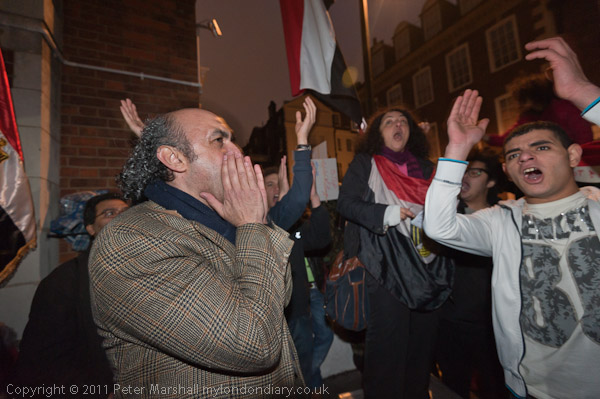
Israel, Ripper & Zimbabwe: On Saturday 14th October 2017 I began work in Mayfair where a protest calling for a restaurant owner and chef not to break the cultural boycott of Israel was opposed by Zionists before going to Cable Street for a protest at the Ripper ‘Museum’ and ending at a celebration of 15 years of the Zimbabwe Embassy vigil.


Little Social don’t break the cultural boycott – Mayfair

Israel, Ripper & Zimbabwe

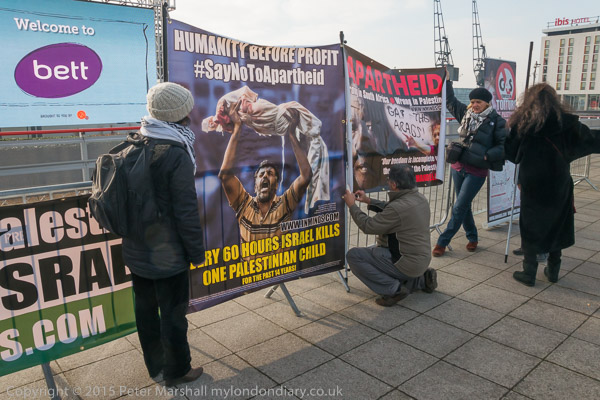
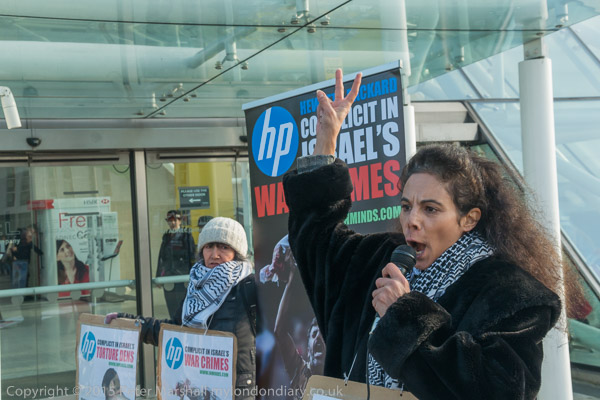
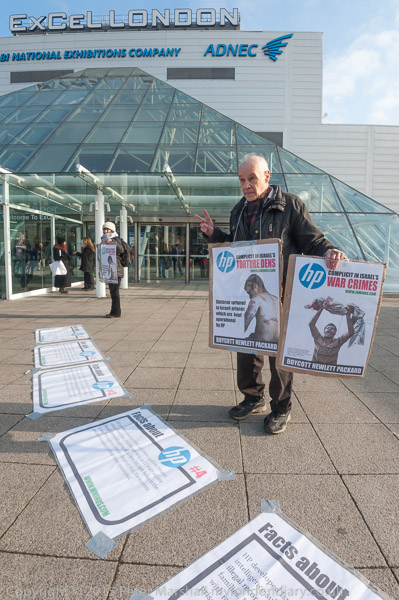
The owner of the Little Social Restuarant and his head chef were going to take part in the Brand Israel culinary event ‘Round Tables’ in Tel Aviv in November 2017 and human rights group Inminds had come to plead with them not to break the Palestinian call for a cultural boycott of Israel.

Israel, Ripper & Zimbabwe

Events such as these are a part of the Israeli government’s Public Relations efforts to distract from its policies of occupation and apartheid. The event was sponsored by Dan Hotels who have a branch built on stolen Palestinian land in occupied East Jerusalem.

Police arrived and talked with the protesters who included several Palestinians and Jews. They assured police they would do nothing illegal, and continued getting out their flags and banners.

Israel, Ripper & Zimbabwe

A few people arrived to put on a counter-protest. One man assured me that everything the people protesting in support of Palestine said and had on their banners was lies, and tried to justify all of Israel’s actions, including the then recent attacks on Gaza. He tried to talk with the protesters but they told him they were not interested in hearing his lies.

Israel, Ripper & Zimbabwe

I told him how my friend had been attacked by settlers in Palestine and who came and stole the olives from the farm – and that Israel’s attacks on Gaza were entirely disproportionate to the rocket attacks on Israel which he said provoked and claimed justified them, and that Israel should respect the United Nations resolutions. He continued to blame the Palestinians for everything and later I was defamed as “a noted anti-Semitic photographer” in a report on this event for my coverage of and other protests over Palestine and by the “wrong type of Jews.”

Little Social don’t break the cultural boycott.


Class War return to Ripper “Museum” – Cable Street

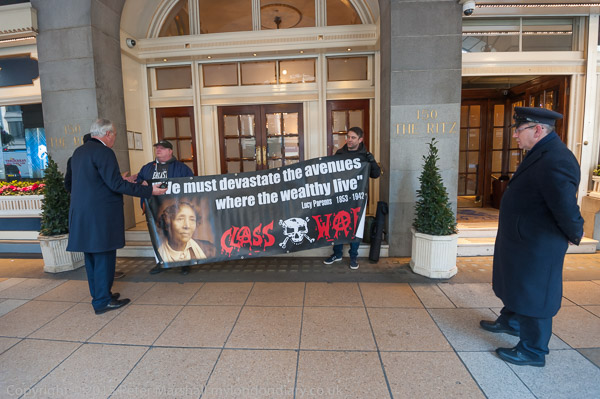
Class War returned with London 4th Wave Feminists to protest peacefuly outside the so-called “museum’ in Cable St displaying exhibits glorifying the brutal series of 19th century murders and exhibiting materials relating to the horrific deaths of working class women.


They came after Tower Hamlets council had failed to enforce the planning decisions against the shop, only given planning permission under the false pretence it would celebrate the history of women in the East End.

They stood with their ‘Womens Death Brigade‘ banner on the pavement in front of the tourist shop and symbolically attacked it and its illegal metal shutters and signage with plastic inflatable hammers.

Police led in a few tourists who had come to visit the shop past the protesters, who refused to move away. Some went away after talking when they heard why people were protesting about the exhibition, and others who went inside came out and told them that they thought the “museum’s” publicity was misleading and they had been very disappointed by the display.

Not much is known about some of the victims, but they were all women struggling to make a living, some with dependents. People from some of their families still live in London and are disgusted at the displays in this tourist attraction.

One of the 4th Wave Feminists read a message from a member of one of those families, complaining about the voyeuristic exploitation of her ancestor in the displays. We were told was known about the unfortunate victims, reminding us that they were real people and should not be exploited in this way by a toruist rip-off.

More pictures at Class War return to Ripper “Museum”


Zimbabwe democracy vigil celebrates 15 years – Zimbabwe Embassy, Strand

The first weekly vigil was held on 12th October 2002 and there have been around 780 every Saturday since then.

They intend to continue to protest until there are free and fair elections and an end the human rights abuses of the Mugabe regime. Their vigils are in solidarity with courageous and inspiring human rights defenders in Zimbabwe who risk life and liberty to demand democracy, human rights and the rule of law.

Among those present were a number who had been at that first vigil, including human rights activist Peter Tatchell who was badly beaten when he attempted a citizen’s arrest on Mugabe in Brussels in 2001. He cut the celebratory cake with others from the vigil.

Since then Mugabe has gone but the human rights situation in Zimbabwe is still dire and vigils continue, now both virtually and twice monthly in person. It “will continue until internationally-monitored, free and fair elections are held in Zimbabwe.”

Zimbabwe vigil celebrates 15 years


FlickrFacebookMy London DiaryHull PhotosLea ValleyParis
London’s Industrial HeritageLondon Photos

All photographs on this page are copyright © Peter Marshall.
Contact me to buy prints or licence to reproduce.

Climate Rush – Deeds Not Words 2008

Climate Rush – Deeds Not Words: In 1903 Emmeline Pankhurst and other women who believed that more direct action was needed to get votes for women founded the Women’s Social and Political Union (WSPU) with the motto ‘Deeds not words‘.

Climate Rush - Deeds Not Words

In September 1908 together with Christabel Pankhurst and Flora Drummond, Emmeline Pankhurst issued a leaflet with the message:

Men and Women,
Help the Suffragettes to Rush the House of Commons,
on
Tuesday Evening, October 13th, at 7.30.

The three women were charged for this with inciting the public to undertake an illegal act. After speaking at a public meeting on 11th October they were instructed to attend Bow Street police station but defied this and a second request to report to police. They were arrested at 6pm on the 13th and so were unable to attend the Suffragette Rush they had called.

Climate Rush - Deeds Not Words

But despite this, 60,000 people came to Parliament Square and some attempts were made to rush through the 5,000 police cordon but failed. “Thirty-seven arrests were made, ten people were taken to hospital and seven police officers were placed on the sick list as a result of their injuries.”

Climate Rush - Deeds Not Words

One woman, MP Keir Hardie’s secretary, was working inside the building and ran into the chamber where MPs were debating, shouting ‘leave off discussing the children’s question and give votes to women first’ before being forcibly evicted.

Climate Rush - Deeds Not Words

The three leaders were tried and fined for conduct likely to provoke a breach of the peace and sent to Holloway when they refused to pay their fines.

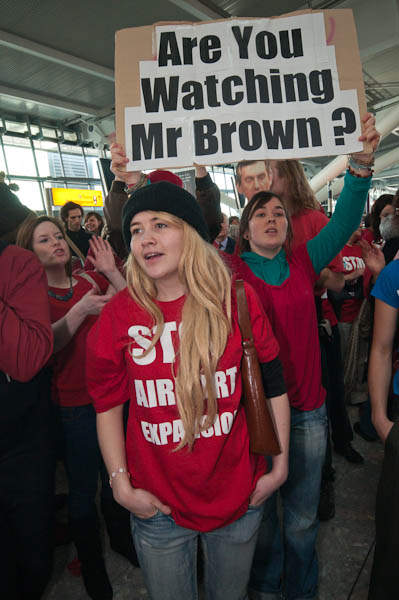
On 13th October 2008, the 100th anniversary of this Suffragette Rush, as I wrote, ‘women concerned with the lack of political action to tackle climate change organised and led a rally in Parliament Square, again calling for “men and women alike” to stand together.’

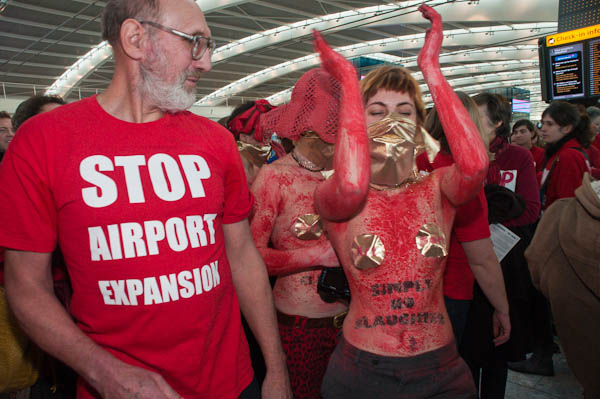
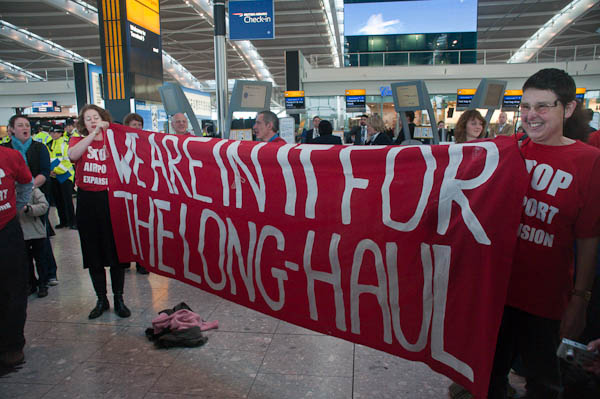
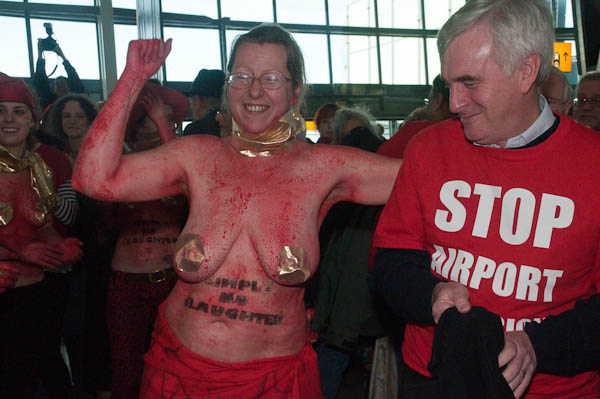
They were making three key demands – “no airport expansion“, “no new coal-fired power stations” and “The creation of policy in line with the most recent climate science and research.”

So far the repeated demands by Heathrow to expand have been resisted, but only by continued protests and helped by financial problems. But expansion remained Tory policy and having ruled it out set up a biased inquiry to reinstate it. The new Labour government has already shown support for expansion at London City Airport and seems likely to support new proposals at Heathrow.

Although the last coal-fired power station closed a few weeks ago, we now have an even more polluting and environmentally damaging wood-fired power station at Drax, which ridiculously receives green subsidies which in 2020 amounted to £832 million as well as “exemptions for taxes on carbon emissions, estimated at savings of £358 million“.

And although successive governments had paid lip-service to “the most recent climate science and research“, their actions and actual policies continue to show any of the urgency that this requires.

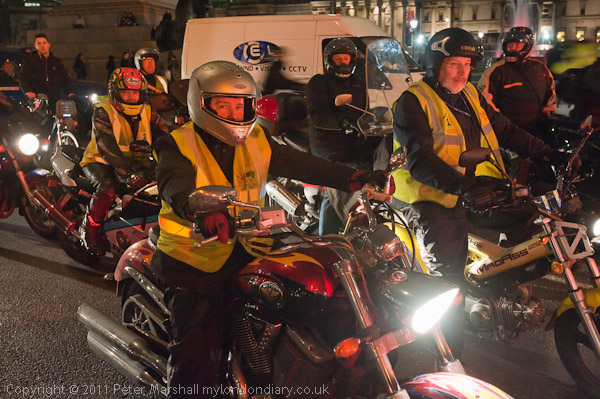
On 13th October 2008, the event began with a rally in Parliament Square with rather fewer attending than in 1908, around a thousand including many wearing white and dressing in the styles of a century earlier.

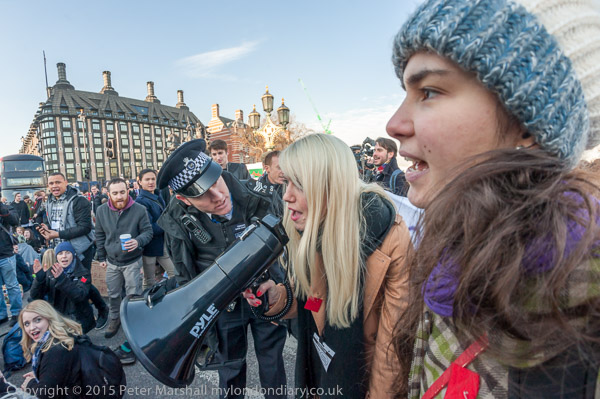
As the final speech by Green Party MEP and leader Caroline Lucas ended, “most of the crowd, led by Tamsin Omond and friends, walked and ran across the road towards the main door into Parliament, chanting the Suffragette slogan ‘Deeds Not Words’. Police “made only a token attempt to stop them on their way, falling back to protect the door itself with several lines of police, and preventing any protesters entering the building.

There was a long melee outside the door, with police picking up demonstrators and throwing them back. I saw no violence by demonstrators towards the police.” Eventually the whole area in front of the door was crowded with protesters and police held them to a standstill.

By the time I left around half an hour later a few people were also beginning to drift away. “Later I heard that around half a dozen people had been arrested, including Tamsin Omond, who was in breach of her bail conditions following the ‘Plane Stupid’ roof-top protest at the Houses of Parliament in February.”

You can read more about the protest in my account on My London Diary, which also has many more pictures: Climate Rush – Deeds Not Words.


FlickrFacebookMy London DiaryHull PhotosLea ValleyParis
London’s Industrial HeritageLondon Photos

All photographs on this page are copyright © Peter Marshall.
Contact me to buy prints or licence to reproduce.


March on the City 2008

March on the City: On Friday 10 October 2008 several hundred anti-capitalist protesters, mainly students, took to the streets of the City of London to say “We Won’t Bail Out the Bankers’.

March on the City 2008

The financial crisis had started in 2007, but reached a climax with the bankruptcy of Lehman Brothers on September 15 2008 which precipitated an international banking crisis.

March on the City 2008

Wikipedia sets out the causes of the crisis in some detail, but essentially US banks had been allowed to make more risky loans by changes in US laws which loosened regulations and allowed banks to take part in high risk operations such as proprietary trading and investment banking.

March on the City 2008

In the US one result of this was the proliferation of mortgage loans to people on low incomes who could really not afford the repayments and eventually defaulted. The problems with ‘subprime mortgages‘ particularly given to many in minority communities in the USA came to a head as a boom in US house prices in the early 2000s was followed by a sharp drop in the value of properties which were the security for the loans.

March on the City 2008

As Wikipedia comments, “governments deployed massive bail-outs of financial institutions and other palliative monetary and fiscal policies to prevent a collapse of the global financial system.” This resulted in the widespread feeling that those who had created the crisis were being rewarded for their failures.

In the UK, the New Labour government under George Brown made a massive financial intervention, paying £137 billion to the banks in loans and new capital, some of which was later recouped, but leaving a cost of £33 billion. While some support was necessary to avoid a total breakdown of the financial system, many felt that the government should have taken a firmer line and that those responsible should have had to pay for their mistakes and not to seem to have kept their highly paid jobs.

Both Northern Rock – the first UK bank to fail in July 2007 and Bradford & Bingley were taken into public ownership, and RBS/Nat West into majority public ownership. But RBS still ended up costing us £35.5 billion – and the leading bankers still ended up getting huge salaries and big bonuses. The Royal Bank of Scotland seemed to be getting off scot free.

Part of the problems we still see in financial markets came from changes worldwide in the way that trading now takes place. In the UK Margaret Thatcher had brought in the ‘Big Bang’ which abolished traditional practices and introduced electronic trading, greatly increasing volatility.

On My London Diary I give a fairly full account of the actual protest which started at Bank where some protesters tried to storm into the Royal Exchange – long just a prestige shopping centre – and the Bank of England but were easily stopped by police.

There then followed a slow march around parts of the City, with police attempting to stop them at various points and the marchers pushing their way through police lines.

As my pictures show, there was some rather forceful policing at times and some of the press also suffered with the protesters. As I write, “I got a few bruises and my glasses were damaged when police rushed in as I was taking pictures in Lombard St.” But there was none of the confrontational use of trained riot squads that have led to extreme violence at some protests policed by the Met. Policing here was by the City of London Police – along with a guest appearance by one French cop.

Eventually there was a short rally with a few speeches on the corner of Bishopsgate and London Wall after which the demonstrators dispersed. Police seemed fairly relaxed at the end of the protest and I saw no arrests.

I don’t think the protest got much if any coverage in the mass media and most accounts I read on-line were confused, with many suggesting it went to the Stock Exchange. While that might have been a logical place to protest, the marchers actually went in the opposite direction.

March on the City.


FlickrFacebookMy London DiaryHull PhotosLea ValleyParis
London’s Industrial HeritageLondon Photos

All photographs on this page are copyright © Peter Marshall.
Contact me to buy prints or licence to reproduce.

Sack Parliament 2006 and the End of Freedom

Sack Parliament on Monday 9 October 2006 was more a demonstration by police of their determination to protect the status quo following protests earlier in the year and the continuing saga of the Parliament Square peace protest which had led to their performance being criticised by politicians and our largely right-wing press than any real protest by the few who had come to protest against the increasing restrictions on our freedom to protest.

It was Brian Haw’s permanent peace protest in Parliament Square which led to the Labour Government including in the Serious and Organised Crime and Police Act 2005 severe restrictions on the right to protest in a large area around Parliament and giving police new powers to control protests.

Sack Parliament 2006 and the End of Freedom

Media frenzy about this protest was whipped up in the days before at least in part by police briefings, and the police clearly saw this as an opportunity to demonstrate that they could control events such as this. I wrote and published an unusually long piece on My London Diary about the event – reproduced here with some minor corrections.

Sack Parliament on Monday 9, and event to mark the return of MPs to Westminster, was of course only ever an amusing idea rather than a serious chance of a Ukrainian-style Orange Revolution. As the large press turnout showed, it was one that had caught the attention of the media (Mondays perhaps tend to be slack) but unfortunately not that of the demonstrating classes.

Sack Parliament 2006 and the End of Freedom

It got off to a bad start with the planned ‘Critical Mass’, which failed to gather more than a handful of cyclists. Heavily outnumbered by the police bike posse, they faded away, a couple cycling down the side of the National Theatre and the other 3 or 4 carrying their bikes up the steps to Waterloo Bridge.

Sack Parliament 2006 and the End of Freedom

At Parliament Square, things were little better. At the advertised start time, apart from the normal Parliament Square Permanent Protest there were perhaps 25 demonstrators and rather more press, along with what must have been around a thousand police, counting those sitting in vans around the area as well as the impressive number standing around.

Sack Parliament 2006 and the End of Freedom

Twenty minutes later the numbers had been more than doubled, mainly by the arrival of a group dressed largely in black. And soon after they made a charge at the police line into the road towards the Houses of Parliament.

From the start it seemed a pointless gesture. The line held, and pushed them back, and soon the two sides were standing a few feet apart and glaring at each other. After a few more attempts to push through the police, the demonstrators ran back onto the grassed area of the square where they were surrounded by a cordon of police.

One of the photographers, an NUJ member I’d been talking to a few minutes earlier, was apparently pushed by police as they rushed the demonstrators. He fell and received a neck injury which left him with no feeling from the waist down. Police medics were on hand to give him first aid and to call an ambulance. Later I was pleased to hear he had been allowed home from hospital, and the injuries were apparently less serious than we feared.

I was inside the cordon to start with, but the police made no attempt to stop me as I decided to walk out, not even asking to see my press card (they had checked it earlier.) Around the square, small teams of police were rounding up anyone looking vaguely like a punk or a hippy and dragging them inside the cordon. Some of those they picked on seemed genuinely to have no connection with the protest. Eventually there were perhaps around 150 in there, including quite a few press, along with a few who clearly had little idea what the whole thing was about.

Apparently others who looked like possible demonstrators were stopped and arrested in Whitehall, or turned back on other roads approaching the square.
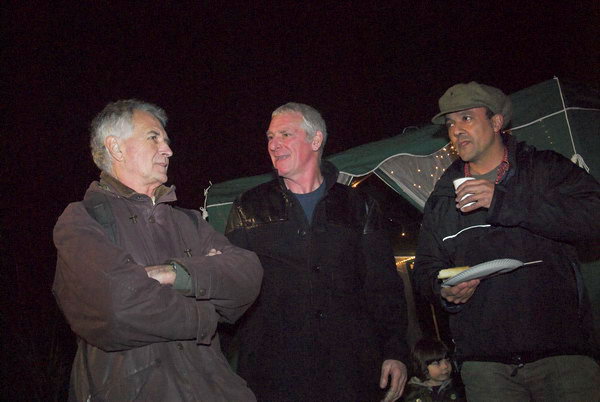
Outside the cordon, the normal demonstrations in the square went on, with the occasional interruptions by the police, nit-picking about where the demonstrators are allowed to stand and being largely ignored or abused.
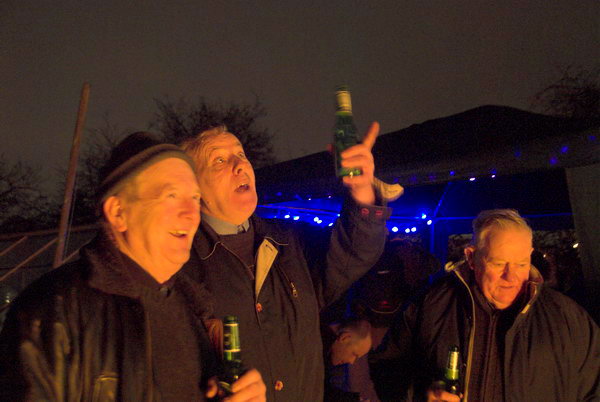
Occasionally there were scuffles inside the cordon as demonstrators made an attempt to breach the police line, or police teams moved in to grab individuals. There were also occasional arrests around the square, including some of those who protested loudly they were simply bystanders.

At 14.13, roughly 40 minutes after the protesters had been imprisoned in the cordon, Police Superintendent Peter Terry (responsible for the taking away and destruction of most of Brian Haw’s property from the square and alleged by demonstrators to have lied in court) read from a handwritten statement telling the protesters that they were being detained in the square because he believed that their continued presence in the area would lead to a serious breach of the peace!

Around 15.00, police began to distribute notices to those outside the cordon warning them “we believe that you may be, or are about to be, involved in a demonstration located within an area subject to the provisions of the Serious and Organised Crime and Police Act 2005” and moving press and spectators well back from the cordon. There seemed to be little chance of getting further photographs, so I went to get on with work elsewhere.

According to a press report later in the evening, there were 38 arrests made. Those caught in the cordon who were not arrested at the event were apparently required to provide evidence of identity and address before being allowed to leave. SOCPA continues to be a blot on human rights in this country, and this protest, despite its apparent pointlessness and lack of support has underlined this point.

I’m one of a generation who grew up believing in British justice and a sense of fair play. We were rightly appalled at those countries where protest was banned, and demonstrators could be arrested. It sickens me to see this happening in front of what used to be a powerful symbol of freedom, the Houses of Parliament.

In 2007 the Labour Government, then led by Gordon Brown began a consultation about managing protest around Parliament which looked at different ways of imposing restrictions and those in SOCPA were repealed in the coalition’s by the Police Reform and Social Responsibility Act 2011. But they were replaced by giving police new powers to control a wide range of activities in the area.

Even more draconian powers allowing police to restrict protests across the UK cane into force under the Tory Police, Crime, Sentencing and Courts Act 2022 which seriously impact free expression, freedom of speech and the right to protest in the United Kingdom, and further powers and increased sentences for protesters were enacted by the Public Order Act 2023. We now have non-violent protesters serving lengthy jail sentences, with a Labour government which appears to be in no hurry to repeal these repressive police state laws.

More pictures on My London Dairy.


FlickrFacebookMy London DiaryHull PhotosLea ValleyParis
London’s Industrial HeritageLondon Photos

All photographs on this page are copyright © Peter Marshall.
Contact me to buy prints or licence to reproduce.