Housing and the Grand Surrey Canal – 1989

The previous post on this walk I made on Sunday 29th January 1989 was Peckham – Pubs, Shops, AEU And A Fire Station.

Derelict House, Peckham Hill St, Peckham, Southwark, 1989 89-1h-22

These two large semi-detached houses are still there on Peckham Hill Street but now restored and in a very different condition. I think they are at Nos 102-108. Built around 1820 they were Grade II listed in 1972 and are part of the Peckham Hill Street Conservation Area designated in 2011. Although that at right seemed still occupied the left-hand pair looked to me as if it had been left empty to decay and I suspect may have once been squatted.

Bonar Garage, Bonar Rd, Peckham, Southwark 89-1h-14

Bonar Road was constructed across the back gardens of some of the houses in Peckham Hill Street and led to a depot for the Metropolitan Borough of Camberwell formed in 1901. Although this is now a part of the conservation area, no part of the Bonar Garage has survived. The house with the chimneys at left is I think onf of the listed buildings in the picture above, but whatever building had the square brick chimney on the right side has been demolished.

Surrey Canal Walk, Canal Bridge, Commercial Way, Peckham, Southwark, 1989 89-1h-12

A number of schemes for canals south of the Thames in London were proposed in the late 18th century and two were approved by Acts of Parliament in 1801. These were the Kent and Surrey Canal (later known as the Grand Surrey Canal) and the Croydon Canal from Rotherhithe. The horse-drawn Surrey Iron Railway roughly following the course of the River Wandle from Wandsworth to Croydon was also given approval the same year. A canal scheme for this was turned down as there were too many mills relying on the water from the Wandle.

Surrey Canal Walk, Canal Bridge, Commercial Way, Peckham, Southwark, 1989 89-1h-16
Surrey Canal Walk, Canal Bridge, Commercial Way, Peckham, Southwark, 1989 89-1i-02

The Grand Surrey Canal was authorised to go from Rotherhithe to Mitcham, with provision for branches, including to Vauxhall, but the proprietors had ambitions to extend it as far as Portsmouth. They began at the Thames in Rotherhithe and soon became a part of the new Surrey Docks scheme with an expanded basin and ship lock completed in 1807 into what became Stave Dock, with the canal running what became Russia Dock. Plans to join with the Croydon Canal at Deptford rather than that canal having its own line from the Thames provided an incentive to open the canal as far as the Old Kent Road by 1807.

Surrey Canal Walk, Canal Bridge, Commercial Way, Peckham, Southwark, 1989 89-1i-61

The Croydon Canal, not being involved with the new docks, got on with digging and the stretch from the Surrey Canal at Deptford was opened to West Croydon in 1809. It didn’t last too long never attracting a great deal of traffic and closed in 1836, though many of us will have travelled along parts of it as it was bought by the London & Croydon Railway company for their line from London Bridge to a station on the former canal basin at West Croydon. Parts of its route not needed for the railway are now parks and nature reserves.

The Grand Surrey Canal company had run out of money and needed another Act of Parliament in 1807 to raise money to go further and were able then to extend the canal to Camberwell, opening this section in 1810. Apart from the entrance lock there are no locks on the canal, but they would have been necessary to go further, and the company could not afford the extra expense, and this was the furthest it ever got, despite the original plans and dreams.

Surrey Canal Walk, Canal Bridge, Commercial Way, Peckham, Southwark, 1989 89-1i-61

Two more Acts of Parliament were needed to enable the company to raise money to cover costs and a short branch to a a large basin at Peckham was added, ocpening in 1826. Other plans put forward for extending the canal to Vauxhall and even Reading failed to attract investors.

But the Surrey Docks were developing and the canal got a new entrance lock in 1860, close to the earlier lock but leading into a new basin, Surrey Basin. There was a new entrance lock into the canal itself at Russia Dock. When Greenland Dock was extended in 1904, a lock from there became the start of the canal, almost a mile from its original entrance from the Thames.

Surrey Canal Walk, Canal Bridge, Commercial Way, Peckham, Southwark, 1989 89-1i-64

Surrey Docks were mainly used for timber, and this also made up much of the traffic on the canal, but an important customer was George Livesey’s South Metropolitan Gas Company with its Old Kent Road gas works relying on coal being brought to it on the canal on its own fleet of barges. Production of gas stopped on the site in 1953.

Other traffic on the canal also fell off dramatically, with many of the industrial sites which had sprung up beside it at various wharves along its length turned to road transport and new companies moved in which had no need for bulk transport. The canal became disused and most of it was filled in by 1960. The section down to the basin at Peckham now occupied by Peckham Library is a pedestrian and cycle route called both the Surrey Canal Walk and Surrey Canal Linear Path.

London Canals has a good account of the canal with some old photographs along with more recent images of various remaining features.

Flats, Willowbrook Estate, Peckham, Southwark, 1989 89-1h-14

Close to the canal was the Willowbrook Estate constructed by the London County Council in the early 1960’s and handed over to the London Borough of Southwark in 1980. It became a part of Southwark’s drastic 1995 Five Estates Peckham Masterplan and the large block at the left of this picture, the 112 home Tonbridge House was demolished, along with Tilbury Close while most of the lower maisonettes remain. The regeneration of the estate had begun in 1988 and was completed by 1995, although there has been considerable refurbishment since the estate voted to be taken over by Willowbrook TMC in 1998.

My 1989 walk in Peckham will continue in a later post.


The first post on this walk I made on Sunday 29th January 1989 was Windows, A Doorway, Horse Trough and Winnie Mandela.
King’s Cross, Victoria Dock, Excel Arms Fair

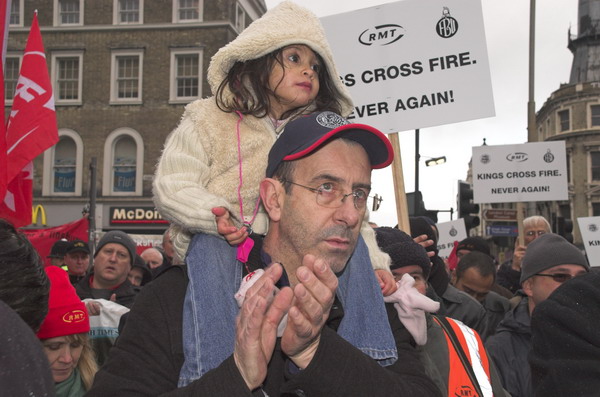
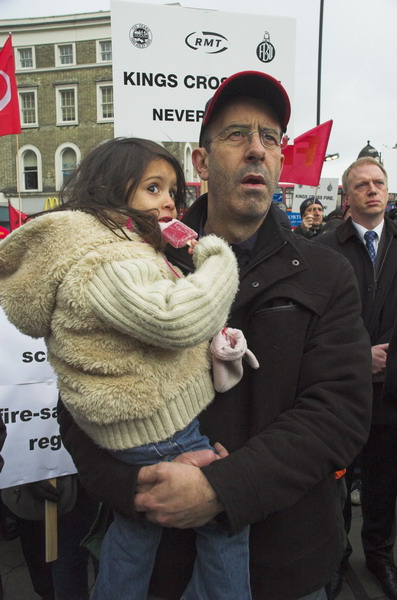
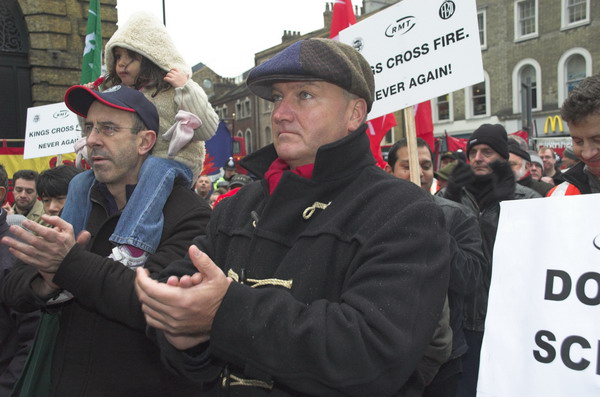
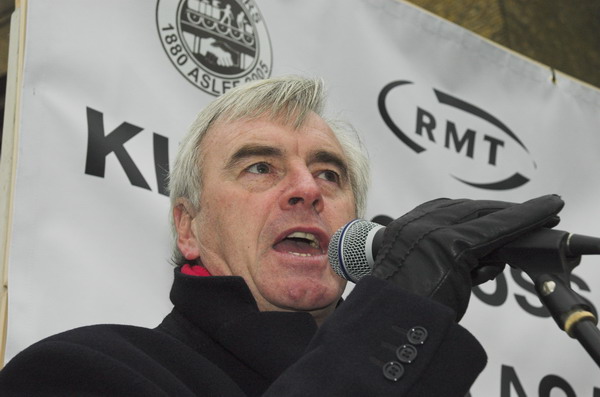
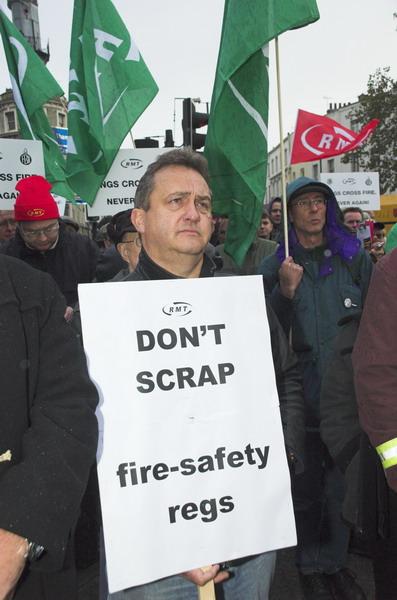
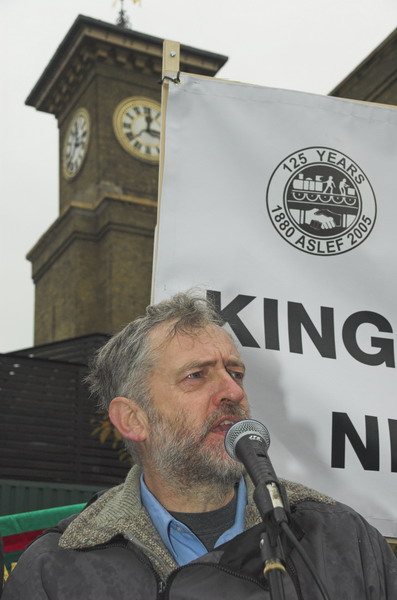
2005 seems a long time ago now, but some of the same names are still often in the news. At a rally at King’s Cross station about fire safety remembering the victims of the disastrous fire in the Underground station there in 1987 that killed 31 people there were speeches from trade unionists and politicians including MPs John McDonnell and Jeremy Corbyn.

King's Cross, Victoria Dock, Excel Arms Fair

RMT leader Bob Crow died in 2014 but since 2021 RMT General Secretary Mick Lynch has been very much in our minds recently – and like Crow putting the case for his members and the working classes effectively to the mass media, challenging the silly class-based observations of many reporters and interviewers and making clear the facts about the rail dispute.

King's Cross, Victoria Dock, Excel Arms Fair
John McDonnell

Trains were very much in my mind at the start of Saturday 26th November 2005, not because of strikes but because of the problems of our privatised rail system which led to me arriving in London half an hour later than anticipated. Privatisation only really made any sense when it could introduce real competition and that was never possible for the railways – and only by introducing an expensive and wasteful middle layer of companies for utilities such as gas, electricity and water. In all these sectors the results have been inefficienies, high prices and large profits at the expense of customers and taxpayers for the largely foreign companies who bought our ‘national silver’.


Kings Cross – never again! – 26th November 2005

King's Cross, Victoria Dock, Excel Arms Fair

So I arrived late, running up the escalators at King’s Cross and remembering the stories of those who had been caught up there in the terrible fire, thinking how hard it would be to find the way out in smoke-filled darkness. Even with good lighting and reasonably clear signage it’s sometimes difficult to take the correct route.

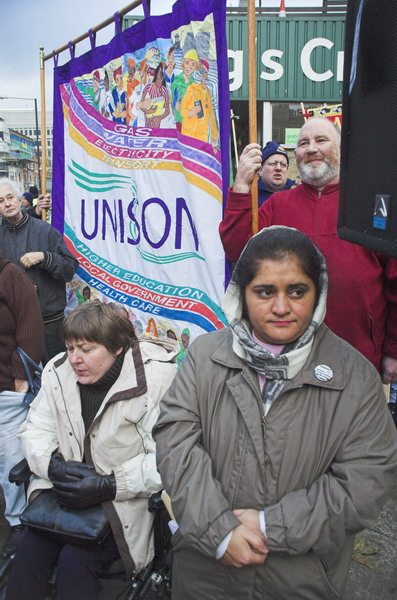
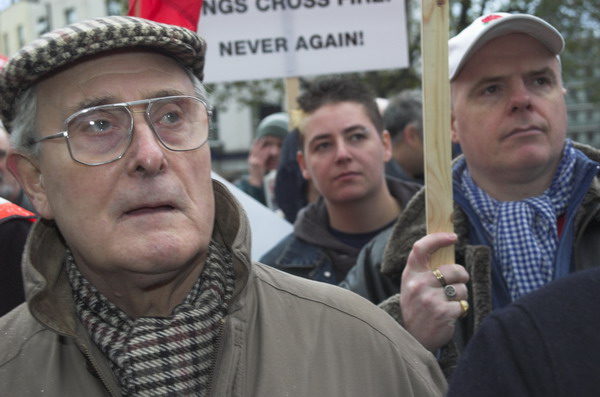
Outside I photographed the joint trade union protest in memory of the fire, made more urgent by the plans of the management to change safety rules which protect workers and public using the system in order to cut costs. As well as those mentioned earlier, there were also speakers from ASLEF, the Fire Brigades Union and others.

On the https://www.london-fire.gov.uk/museum/history-and-stories/historical-fires-and-incidents/the-kings-cross-fire-1987/ 18th November 1987 a fire started when a lit match was dropped on an escalator around the end of the evening rush hour, falling through a gap and setting fire to litter and grease beneath. The small fire this started quickly spread, engulfing the escalator. People were told to leave the station by an alternative escalator and trains were told not to stop at the station.

Then at exactly 7.45pm while the ticket hall was still crowded a fireball suddenly erupted from the escalator into the ticket hall, followed by dense black smoke which made it impossible to see the exits. The heat was intense, melting plastic wall and ceiling tiles which added to the blaze. It took two and a quarter hours to get the fire under control, and a further five hours to put it out completely. 31 people died in the fire including a senior fire officer who was in the ticket hall telling people to get out when the fireball burst in.

Government and management justify cutting safety as “getting rid of red tape” and simplifying procedures and 12 years after this protest we saw the terrifying consequences of their approach to safety at Grenfell Tower.

The inquiry into the fire established a previously unknown mechanism by which the fire had spread so rapidly and also found that an over-complacent management had not had sufficient concern for the dangers of fires underground. New regulations were introduced, smoking was banned and a programme of replacing wooden escalators begun (though it was only in 2014 that the last was taken out of service.) Heat detectors and sprinkler systems were installed and better communications systems, improvements in passenger flow and staff training meant that almost all of the reports recommendations were put into practice.

Things changed in later years as Government and management justified cutting safety as “getting rid of red tape” and simplifying procedures and 12 years after this protest we saw the terrifying consequences of their approach to safety at Grenfell Tower. Had the reports and the coroners recommendations following the Lakanal House fire in 2009 been implemented and the lessons learnt, the fire at Grenfell would have been a minor incident, confined to the flat inside which it started. There would have been no deaths and we would never have heard about it on the news.

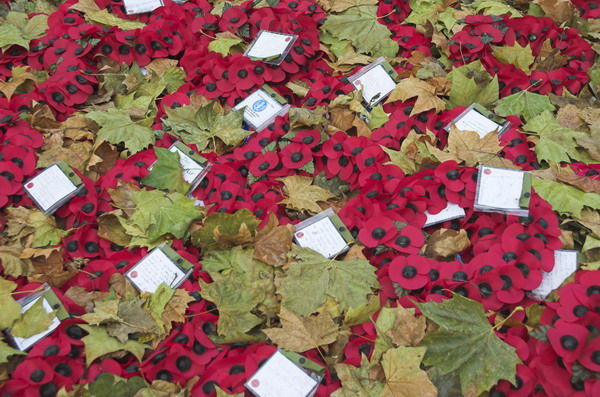
Poppies and leaves in Whitehall

Workers and their unions saw clearly the dangers of this change in attitudes to safety in this 2005 protest.

more pictures


Excel and Victoria Dock – 26th November 2005

I’d hoped to go from the safety protest at King’s Cross to a lecture at the ICA, but my work finished too late, and instead deciding first to go to Whitehall where I had expected to find another protest. There were still quite a few poppies from the Remembrance Sunday event, but I found nothing else to photograph in the area.

I decided the weather would be fine to take a trip to the Royal Victoria Dock and take some more photographs around there. It was a fairly quick journey now thanks to the Jubilee Line from Westminster to Canning Town and then a couple of stops on the DLR.

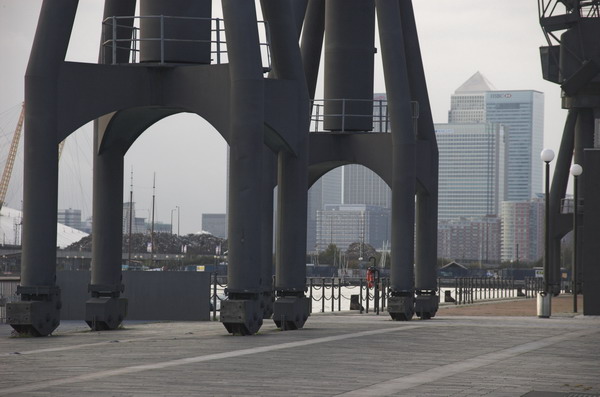
I got off at Custom House and walked past the entrance to the Excel Centre, making my way to the high level bridge across the dock, which had been closed on an earlier visit but was open now. And the lift was working.

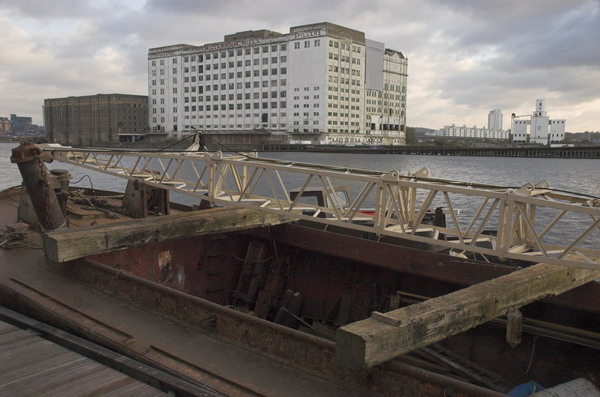
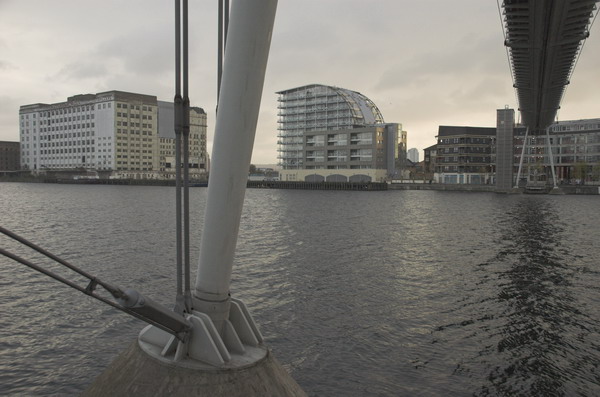
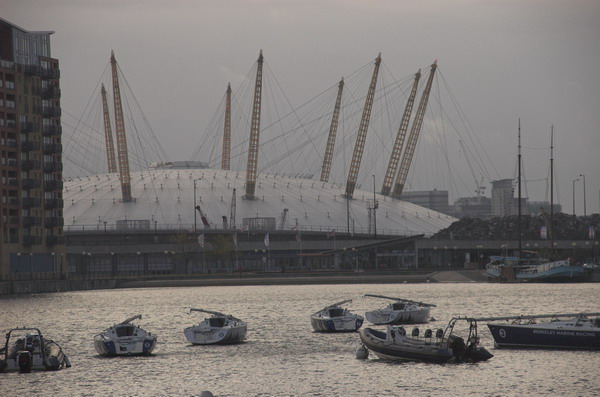
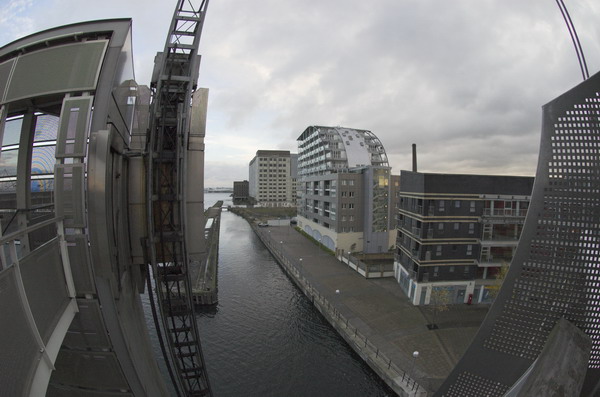
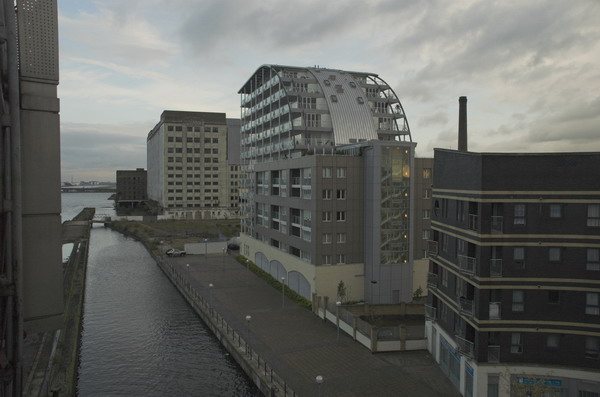
I took rather a lot of pictures both on the dockside and from the bridge which has some interesting views of the buildings around the dock and further afield, including the Millennium Dome on the other side of the Thames, Canary Wharf and the London skyline in the far distance.

I took pictures with the full range of the lenses in my camera bag, from the 8mm fisheye to the a not very impressive telephoto zoom, which I think stretched to 125mm, equivalent on the DX camera I was then using to 187mm, which give a some quite different angles of view. I would now process these rather differently, partly because RAW software has improved significantly since 2005, but also because my own preferences have changed. Most of those fisheye images I would probably now partially ‘defish’ to render the verticals straight.

The camera I was using them, a Nikon D70 also now seems rather primitive, particularly as its images are only 6Mp and only offering a ISO 200 – 1600 range. But it did the job well, and the only real improvements in later models – unless you really want to make very large prints – were in the viewfinders. The D70 viewfinder was usable (and much better than the D100 which it replaced) but still not as good as those on film cameras.

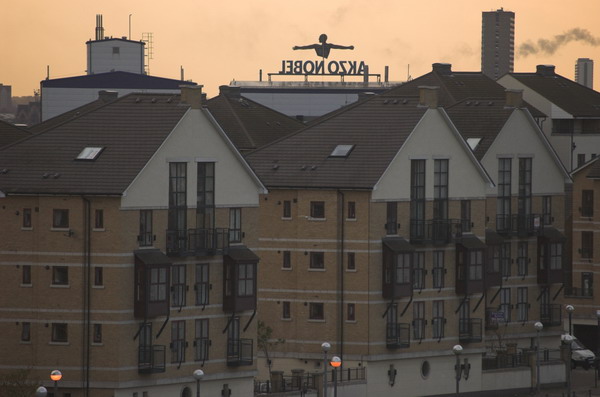
Towards the end of the time I spent there, the sky turned orange, though perhaps the photographs slightly exaggerate the colour.

more pictures


East London Against the Arms Trade – Musical Protest, Excel Centre, 26 Nov 2005

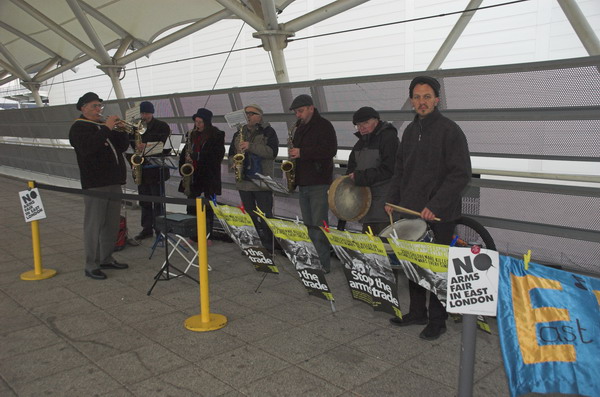
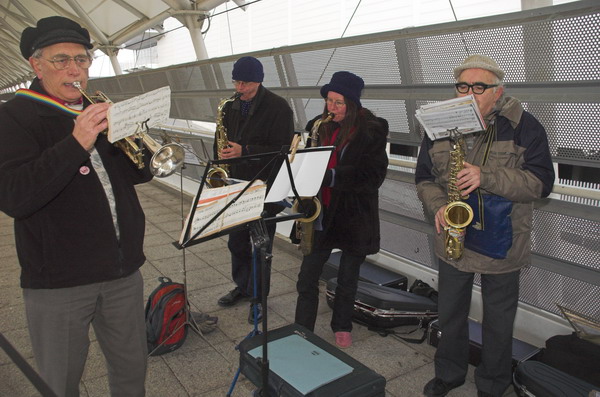
I’d photographed more or less everything I could see and was beginning to make my way back to the DLR station when “I heard the brassy notes of the red flag, and made my way towards them.”

Musicians from ‘East London Against the Arms Fair’ were treating visitors to the Excel centre to a musical welcome. They were calling for Excel to stop hosting the DSEI (Defence & Security Equipment International) arms fairs which attract visitors from around the world, including many repressive regimes to come to London and see and buy arms.

London’s then Mayor, Ken Livingstone had spoken against having the arms fair in London as have the nearby London boroughs, and local residents had voted 79% against them, but the arms fairs continue every other year – with several days of protest against them.

One had taken place here in October, and the musical protest was calling for those already booked for 2007, 2009 and 2011 to be dropped. But their protest fell on deaf ears so fast as Excel’s owners were concerned and they continue, supported by the government, to be held there.

more pictures


As well as seeing more pictures on the links in this post you can also see the accounts I wrote back in 2005 by scrolling down the November 2005 page of My London Diary. You can see photographs of further protests against the DSEI arms fair by putting the four letters DSEI into the search on the front page of My London Diary.


Hampton Hill Christmas Lights 2011

Today’s date reminds me that Christmas is still a month away. Personally I’d like to see a moratorium on any mentions of the forthcoming annual festival banned before December 1st and after January 6th with stiff fines for those who breach the rules. Thirty-seven days is more than a tenth of the year and surely that’s enough?

But perhaps we – and especially photographers – need something to cheer us up ofter the imposed blackout each year at the end of October when the clocks are returned to our archaic Greenwich Mean Time (and usually I forget to change the hour on at least one of my cameras for a week or two.) And at least the event at Hampton Hill was only a month early.

I doubt if there would be a great deal of support for my idea of a time system which came to me in a dream as I was in bed at around 2pm (or was it 3pm) when our clocks were changing, of avoiding the two sudden jumps in time each year by making incremental changes to keep sunrise always at 7am, although it would now be possible when so many timekeeping devices take their time from a distant time-server rather than being altered by pushing around the hands of a clock. But it would be rather better to do as we did for some years to keep to British Summer Time all year, as we did from 1968-71, and perhaps appropriate as our global temperature rises.

I’ve never much liked taking photographs in the dark, and many flash photographs are horrible, with overlit forergrounds and pitch-black backgrounds. Fortunately digital cameras now enable us to get away from this, at least to some extent, by working at much higher ISOs, which enable us to make photographs more readily in low light. Flash systems have also improved tremendously, an Nikon’s iTTL was, at least in 2011, the best of all, though their camera systems were designed to frustrate its best use. I got better at fooling it in later years. And just introduced were cheap handheld LED lighting systems, powerful enough to illuminate subjects a couple of metres away, though not much further. I used both flash and an LED light on different pictures at Hampton Hill as well as making use of available light where I could.

So here is the whole of my introductory text from My London Diary (with a few minor corrections) for the event. You can find more pictures with the original article online along with some picture captions.


Hampton Hill Christmas Lights – Hampton Hill, Middlesex.
Friday 25th November 2011

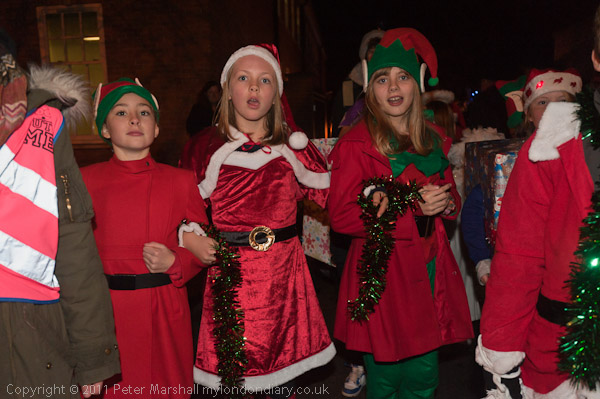
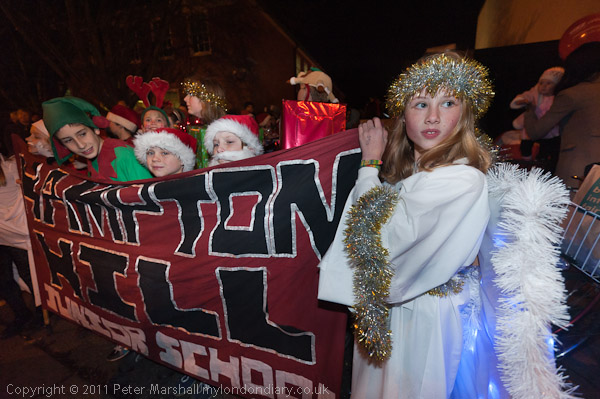
Crowds filled the High St in Hampton Hill for the 43rd annual Christmas parade last night, along with music, Morris Dancing and many stalls on the street and in the URC church hall making this a real community event

Although Christmas is still a month away, the people of Hampton Hill, just to the west of Bushey Park in the London Borough of Richmond, were out on the streets celebrating last night. Many of the shops along the street were open late, with some holding special events and handing out balloons and sweets.

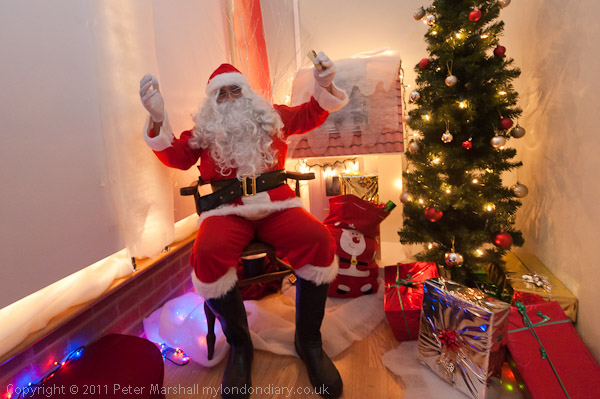
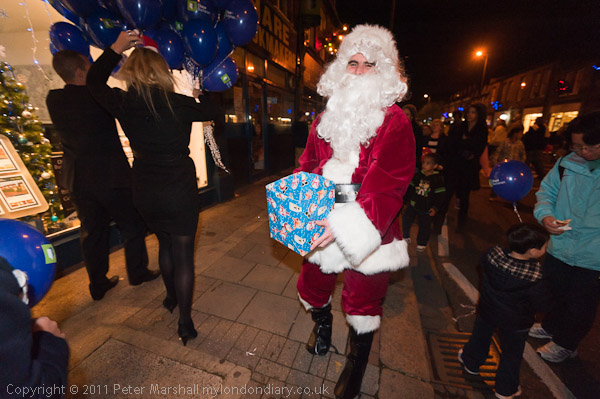
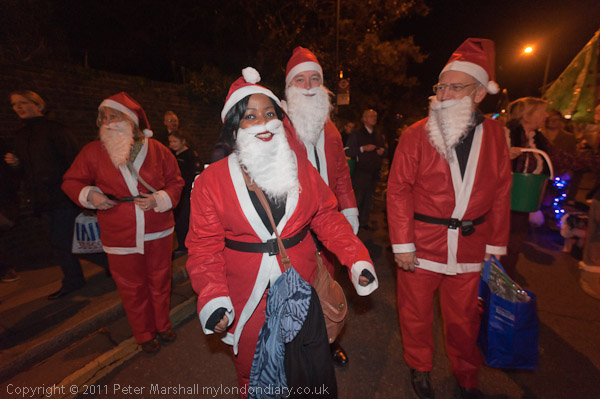
Santa was kept busy in his grotto seeing groups of children, and quite a few other Santas were out on the street, with a group in the parade accompanying the mayor. Morris Dancers performed in the middle of the road, closed to traffic, and tried to teach some brave young ladies one of their dances. The several pubs along the street were all kept busy, and it was also crowded at times inside the church hall, with several rooms full of stalls, as well as a continuing series of events inside the church itself.

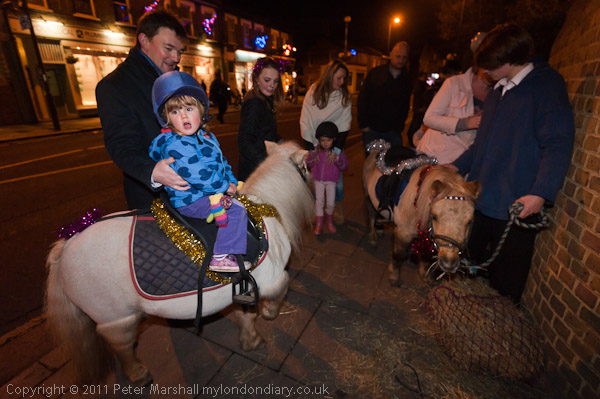
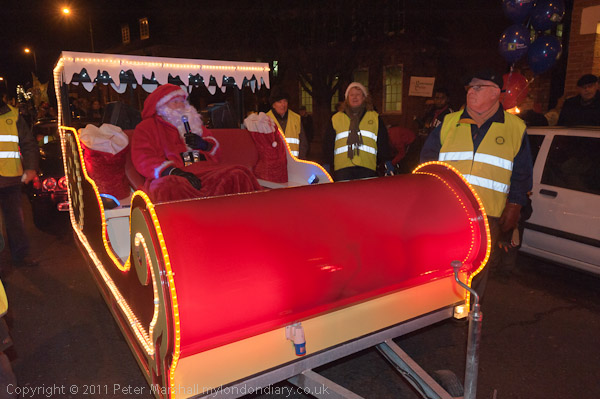
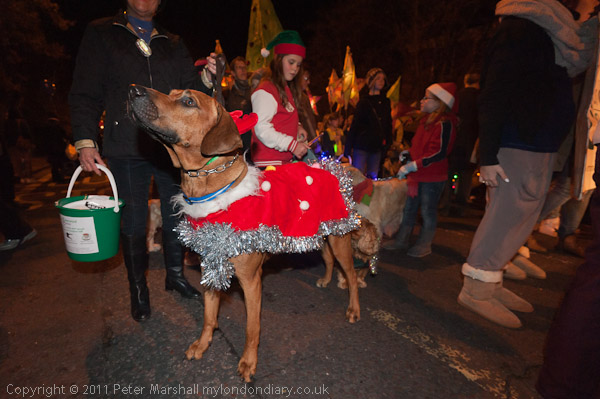
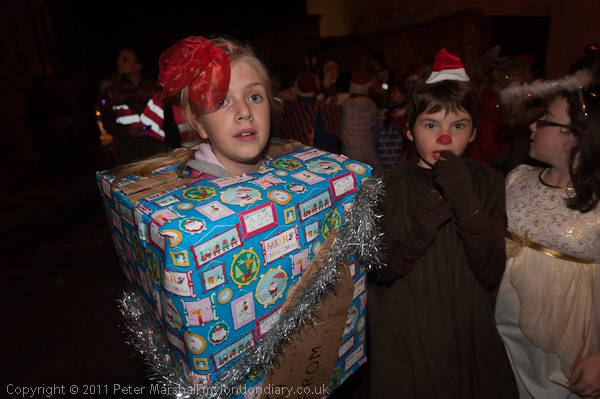
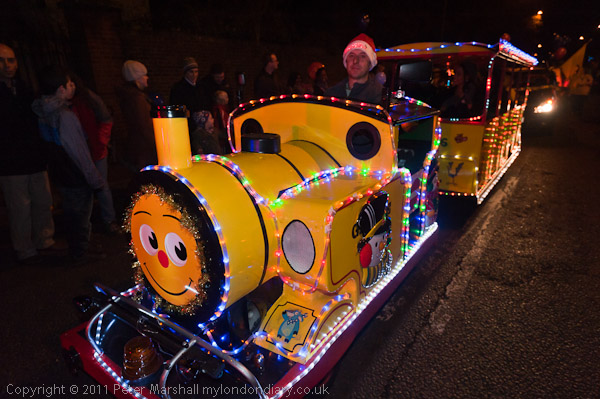
The highlight of the evening was of course the parade, which included some children on ponies and people leading Christmas-decorated dogs behind Santa in a large sled, and a large engine. But it was the energetic kids from local schools and youth groups that really brought the event to life.

Unlike some other Christmas ‘lighting up’ events, Hampton’s seems very much to be one that involves large sections of the local community, which is perhaps why it is still very much alive after 43 years.

More at Hampton Hill Christmas Lights.


Peckham – Pubs, Shops, AEU And A Fire Station

The previous post on this walk I made on Sunday 29th January 1989 was Windows, A Doorway, Horse Trough and Winnie Mandela.
Camberwell Fire Station,Peckham Road, Peckham, Southwark, 198989-1h-45-Edit
Camberwell Fire Station,Peckham Road, Peckham, Southwark, 198989-1h-45

The Grade II listed Camberwell Fire Station by Edward Cresy Junior dating from 1867 is the earliest surviving purpose-built fire station in London, possibly in the country. Two of the three ground floor appliance bays of this gothic building have been converted to windows. It is now South London Gallery Fire Station, a contemporary arts centre for the South London Gallery. It was replaced by a more modern fire station, now demolished, in 1920.

It was only listed in November 2008, and the official listing names it as Former Peckham Fire Station. The h listing text explains that “There are a small number of surviving fire engine sheds dating from the first half of the C19: simple, single cell buildings were designed to house a fire pump and built by local vestries or by public subscriptions. The Metropolitan Fire Brigade stations are of a different order: publicly-funded, multi-storey buildings designed to provide accommodation for the newly-created fire brigade officers and to house engines, horses and equipment. “

Peckham Lodge, Amalgamated Society of Engineers, Peckham Rd, Grummant Rd, Peckham, Southwark, 1989 89-1h-31

The Amalgamated Union of Engineering Workers had their headquarters here from 1900 until 1996 when they became a part of Amicus. Their slogan ‘Be United and Industrious’ is above the door in Grummant Rd. The building was threatened with demolition in 2007 but has so far survived.

Shops, Peckham High St, Sumner Ave, Peckham, Southwark, 1989 89-1h-32

The western start of Peckham High Street and a very down at heel side street, a dead end leading around to the back of the shops. Along it can be seen some buildings of St James the Great R C Primary School. There was a school entrance here, and a footpath still leads to Sumner Street along the side of a brick school wall. What was open space here, Jocelyn Street Park, has now become, despite some local protests, Peckham Flaxyard, a council development with a total of 168 homes, of which just over half are for social rent, and a 24 for shared ownership, with around 48 for sale or rent at market prices. Part of this site was formerly occupied by a factory making laundry machines.

The corner shop was built with an entrance to suggest it was a building of some status and it looks as if it dates from around the end of the Victorian era.

Shops, Peckham High St, Peckham, Southwark, 1989 89-1h-33

The rather grandiose building at left, in 1989 an Opticians, is now the Kentish Drovers, a Wetherspoon’s pub. Until the 1990s there was a pub of the same name on the opposite side of the road with the same name. Stockmen on foot driving flocks of sheep and herds of cows up from Kent to Smithfield market might take a rest or a reviving drink in Peckham before continuing their dusty slow journey to London Bridge and on to market.

I think the doorway at No 77 is probably also a part of the pub, though the door isn’t in use. Everything to the right of this – Hyper Records, Francis Chappell & Sons Funerals, Nature Trail Health Foods and the Soujourner Truth Youth Association at 83 Peckham High Street has since been demolished along with other buildings up to 89. This now the large covered space leading to Peckham Library, Peckham Square, Peckham Pulse and the Surrey Canal Walk.

Shops, The Crown, pub, Peckham High St, Peckham, Southwark, 1989 89-1h-36

The Crown pub was at 119 Peckham Hight St. The building is still there, on the corner of Mission Place but no longer a pub. There appears to have been a pub here in 1851 and was advertising drag nights when I photographed it. It apparently morphed into a bizarrely decorated Irish pub, with a tractor in the window and tables and chairs nailed to the ceiling complete with glasses and playing cards, but apparently Sally O’Brien’s was not a success and the pub soon closed, becoming a series of shops and agencies and most recently a Tapas restaurant.

Junction, Peckham Hill St, Peckham High St, Peckham, Southwark, 1989 89-1h-21

The Bun House, a pub at 96 Peckham High St on the left of this picture has the date 1898. It remained in business as a pub until January 2012 but is now a betting shop. There was a pub on this site at least by 1871. The rest of the frontages along the High Street also remain.

At right is M Manze’s Eel & Pie House, still in business, although temporarily closed in 1989. The vacant shop next door has had a number of occupants and is now a clothing shop. The crossing in the centre is still there but has only a short vestigial length of railings in a rather fancier style than those utilitarian ones in my photograph.

This junction is a convenient place for me to end this post which has mainly been on Peckham High Street. More on this walk shortly.


Art School Nude to Hospital Tower

The final set of pictures from my walk on 27th January 1989. The previous post on this walk is The Workhouse, Town Hall, Council Offices and Art School.

Sculpture, South London Gallery, The Passmore Edwards South London Art Gallery, Peckham Rd, Camberwell, Southwark, 1989 89-1g-26
Nude, South London Gallery, The Passmore Edwards South London Art Gallery, Peckham Rd, Camberwell, Southwark, 1989 89-1g-26

A bronze nude by Karel Vogel was at the entrance to the gallery, and in 1989 seemed under threat by the tree emerging behind. I think both the sculpture and the tree behind it have gone although a large tree closer to the road remains. Vogel, (1897-1961) was a Czech sculptor who came to England fleeing the Nazis in 1938 and taught at the Camberwell School of Arts and Crafts from 1948, and became in charge of the School of Sculpture there.

Perhaps his best-known work in this country is his 1959 Leaning Woman, Grade II listed in 2016, situated close to the A4 by St Peter’s Church in Hammersmith.

The London Institute, Camberwell College of Arts, Peckham Rd, Camberwell, Southwark, 1989 89-1g-11

The Art School and gallery designed by Maurice Adams was built in 1896-8 is Grade II listed. It’s extravagantly baroque exterior includes a number of caryatids in supporting roles. ‘The Buildings of South London’, page 620, describes the 1960 addition at left by Murray, Ward & Partners as “totally unsympathetic” and it is certainly and doubtless intentionally a complete contrast. But it deserves to be seen and judged on its own.

Guardians Offices, London Borough of Southwark, Havil St, Camberwell, Southwark, 1989 89-1g-14

The Havil Street frontage of the Poor Law Guardians building whose frontage on Peckham Road featured in the previous post in this series. It was built in an vaguely Art Nouveau style in 1904. I found the octagonal building with the rectangular blocks behind with its rhythmic patterns of windows and odd towers, together with the odd street wall, its curves echoed by the hood around the doorway quite enchanting.

St Giles' Hospital, Havil Street, Camberwell, Southwark 1989-1g-15
St Giles’ Hospital, Havil Street, Camberwell, Southwark 1989-1g-15

In 1889-90 a new 4-storey ward tower fronting onto Havil Street was opened for the Camberwell Workhouse Infirmary, later St Giles’s Hospital. Circular in design (which was fashionable at that time), it had cost about £14,500. Each storey contained 24 beds radiating around a central shaft, in which heating and ventilation services were located. This Grade II listed building is now flats. The pile of rubble behind the wall is from the demolition of unlisted hospital buildings.

St Giles' Hospital, Havil Street, Camberwell, Southwark, 1989 89-1g-16
St Giles’ Hospital, Havil Street, Camberwell, Southwark, 1989 89-1g-16

Another view of the hospital tower seen from Havil Street. Designed by Robert P Whellock it is Grade II listed. This was the last picture I took on Friday 27th January 1989, but two days later, Sunday 29th I came back here to begin another walk, beginning with more pictures here and a little further along Havil Street and I’ll include these here.

St Giles' Hospital, Havil Street, Camberwell, Southwark, 1989 89-1h-02
St Giles’ Hospital, Havil Street, Camberwell, Southwark, 1989 89-1h-65

Much of the former St Giles Hospital was in 1989 a demolition site with just the listed buildings being left standing. The area is now filled with rather dreary housing with two and three storey solid-looking blocks around ‘St Giles Tower’. I think this picture was taken from the corner of Brunswick Villas, just after I had made a picture (not on-line) of the Grade II listed Bethel Asylum for aged women founded by William Peacock in 1837 at 159-163 Havil Street.

House, Brunswick Villas, (Brunswick Rd) Camberwell, Southwark, 1989 89-1h-62

I walked up Havil Street to the corner with Brunswick Villas, formerly Brunswick Road as the stone pillar still asserts. These houses are presumably a part of W J Hudson’s Brunswick Park development begun in 1847, though rather less grand than some.

From here I made my way towards Peckham – where my next series of posts on my walk on 29th January will begin.


My posts on this walk on 27th January 1989 began at St George’s, Camberwell, Absolutely Board & Alberto.


The Workhouse, Town Hall, Council Offices and Art School

More pictures from my walk on 27th January 1989. The previous post on this walk is
Baptist Chapel, Fine Houses, A Queen And A Hospital.

Guardians Offices, London Borough of Southwark, Peckham Rd, Camberwell, Southwark, 1989 89-1g-55

I walked down St Giles Road to the Peckham Road, turning east along it. At the end of the block on the corner of Havill Street is the former Guardians Offices built in an vaguely Art Nouveau style in 1904 for the Poor Law Guardians who ran the workhouse of which it was part. The sundial has the text ‘Do Today’s Work Today‘. The building is Grade II listed.

Under the 1929 Local Government Act the LCC took over the workhouse and infirmary buildings on the site and the same act abolished the Board of Guardians system in 1930. Many workhouses were redesignated as Public Assistance Institutions but Camberwell’s became St James’s Hospital and these offices became the Divisional Health Offices. Southwark Council inherited the building in 1966 but closed its offices here when it moved to Tooley Street in 2009. The building was bought in 2010 by homelessness charity Thames Reach who use it as an Employment Academy. There is also a cafe and tea room on the Havill Street side as well as a Montessori Nursery on the site.

Guardians Offices, London Borough of Southwark, Peckham Rd, Camberwell, Southwark, 1989 89-1g-45

A wider view of the building, still then in use by Southwark Council.

Camberwell Town Hall, Peckham Rd, Camberwell, Southwark, 1989 89-1g-56

On the east corner of Havill Street is the former Camberwell Town Hall designed in a Classical style by Culpin and Bowers and opened in 1934. It became the town hall for the London Borough of Southwark when this was created in 1965 and was still this when I took my picture. They sold it to a developer in 2009 when the council moved to Tooley St and it was converted into student accommodation for Goldsmiths College.

South House, 30-32 Peckham Rd, Camberwell, Southwark, 1989 89-1g-41

This row of houses are Grade II listed and were built as separate houses ca 1790. Like the council offices across the road they were also in use as council offices until around 2010 with the house and have also been converted into student accommodation, with a total of 125 bedrooms in the three blocks including also listed Central and East Houses on the north side of Peckham Road and South House.. Joined to them the east end of the block (out of picutre at left) is still the Southwark Register Office.

34 Peckham Rd, Camberwell, Southwark, 1989 89-1g-33
Southwark Register Office, 34 Peckham Rd, Camberwell, Southwark, 1989

Southwark Register Office is also Grade II listed and was built around 1790. At some unknown date it was liked to No 32 at right at second floor level, with the curious rooftop extension you see here. Presumably the tall archway in the middle had some purpose, and was possibly at one time without the lower wall and arch. Perhaps giraffes were kept in the gardens behind? Suggestions are welcome in the comments here or on Flickr.

The London Institute, Camberwell College of Arts, Peckham Rd, Camberwell, Southwark, 1989 89-1g-23

John Passmore Edwards gave money for the erection of the South London Gallery and the College, architect Maurice Bingham Adams, in memory of Lord Leighton. The gallery opened in 1891 and the Technical Institute in 1898. It became one of England’s leading art schools particularly after WW2. The Camberwell School of Arts and Crafts became a part of the London Institute formed by ILEA in 1986 and in 1989 it became Camberwell College of Arts becoming a part of the University of the Arts London in 2004.

South London Gallery, The Passmore Edwards South London Art Gallery, Peckham Rd, Camberwell, Southwark, 1989 89-1g-25

The Camberwell School of Arts and Crafts became one of England’s leading art schools particularly after WW2. It became a part of the London Institute formed by ILEA in 1986 and in 1989 it became Camberwell College of Arts becoming a part of the University of the Arts London in 2004.

My next post will start with a couple more pictures of Camberwell College of Arts before taking a walk up Havill Road.


My posts on this walk on 27th January 1989 began at St George’s, Camberwell, Absolutely Board & Alberto.


Baptist Chapel, Fine Houses, A Queen And A Hospital

More pictures from my walk on 27th January 1989. The previous post on this walk is St George’s Tavern and North Peckham 1989

Cottage Green, Camberwell, Southwark, 1989 89-1g-01

Robert Browning the Victorian poet (1812-89) was born in Rainbow Cottage, Cottage Green and grew up in the area – there is a Rainbow Street not far away but the cottage is long gone. But the area still felt a little out of place in the middle of twentieth century London.

The tree is still there on the corner with Wells Way and so too is the chapel down the street and the house beyond on the corner of Southampton Way. At right the brick wall and fence remain, but the site behind, not visible here, has been sold for development. I’m not sure why the foreground railings on the pavement edge were there, but they are now no longer. At left instead of the corrugated iron there is now housing almost up to the pavement and the 11 storey block facing the end of the street has been replaced by flats of half the height.

Browning’s parents – his father was a clerk at the Bank of England on what was for the time a pretty decent salary – moved a few yards to Hanover Cottage on Coleman Rd when he was around 12, and there is a more or less illegible stone plaque on a wall of the shop on the corner of Southampton Way and Coleman Road with a more recent Southwark blue plaque higher up.

Cottage Green Baptist Chapel, Camberwell, Southwark, 1989 89-1g-61

The chapel was built in 1844 and became a Baptist chapel ten years later in 1854. Owned by the Copleston Centre, a Peckham Community Church in Copleston Road it has been in use as a Christian nursery, the Destiny Day Nursery registered in 2007.

When I took this picture is still in use as a Baptist chapel. The commercial building beyond the chapel is still there as is the brick building at left, though the fences have been replace by a low brick structure, perhaps a bin store.

Cottage Green Baptist Chapel, Camberwell, Southwark, 1989 89-1g-62

A second picture gives a clearer view of the church noticeboard with its message ‘SUNDAY FAMILY SERVICE 11.00AM’. I would like to know more about the windowless building to the right.

Haulage Yard, Housing, Southampton Way, Camberwell, Southwark, 1989 89-1g-63

The houses at 73-77 were built in the early 19th century and are Grade II listed. A planning application was made in 2021 for the development of the yard which has an ‘L’ shape behind the houses on Southampton Way to another entrance on Cottage Green, opposite the chapel and next to another listed building, Collingwood House at 1-3 College Green – which I did not photograph.

Brunswick Park area, Camberwell, Southwark, 1989 89-1g-64

I think these houses are near Brunswick Park, but cannot identify the exact location. There are a number of houses of a similar mid-Victorian age and style in the area which was developed by W J Hudson who bought the area in 1847, naming the open space in the centre after the estranged wife of George IV, Caroline of Brunswick. Long separated from her husband she had become a very popular figure by the time he became king in 1820 and died (possibly not naturally) shortly after his coronation in 1821.

The garden at the centre of the square was bought by the Metropolitan Borough of Camberwell in 1901 and opened to the public as a park in 1907.

Brunswick Park, St Giles Rd, Camberwell, Southwark, 1989 89-1g-66

Finding the exact location of photographs I took 33 years ago is much easier when they include street names as this picture of houses on the corner of Brunswick Park does. Princess Caroline of Brunswick-Wolfenbüttel was the daughter of George III’s sister and had a surprising introduction to this country as she first landed at Greenwich at what was then the Royal Hospital for Seamen and asked “Are all Englishman missing an arm or a leg?

The future George IV married her for her money and for the need to provide the country with an heir. She was “short, fat, ugly and never changed her undergarments, and rarely washed. Her body odour was overwhelming.” George had already made a secret and illegal marriage to the beautiful but Roman Catholic Maria Fitzherbert around ten years earlier, but as he had not had his father’s consent for this, the second marriage was not bigamous. Both George and Caroline got very drunk at their wedding and somehow despite their mutual repulsion a daughter and heir Princess Charlotte was born the following year.

The couple separated shortly after. George made a number of unsuccessful attempt to divorce her, including setting up a Royal Commission called the ‘Delicate Investigation’ which failed to find evidence of adultery, possibly because their heart wasn’t really in it, perhaps due to the overwhelming evidence against George.

Caroline left Britain in 1814 for Europe, shocking people in various countries by her behaviour (which included often appearing in public with her dress open to the waist, dancing topless in Geneva and becoming the mistress among others of Napoleon’s brother-in-law.)

When George became king in 1820 as they were still married she was automatically queen consort and decided to return to Britain. The government tried to bribe her, offering her £50,000 to stay away, but she came back and set up house in Hammersmith. She was very popular with the public (at a distance) many of whom were disgusted by her husband’s immoral behaviour, both towards her and with his various mistresses. A mob surrounded Parliament daily when the House of Lords tried for over 7 weeks to dissolve her marriage, eventually forcing them to abandon the attempt.

Uninvited, she tried to attend George IV’s coronation in 1821, but had the door of Westminster Abbey slammed in her face. She died 19 days later, convinced she had been poisoned. It seems more than likely this was so.

St Giles Hospital, Flats, St Giles Rd, Camberwell, Southwark, 1989 89-1g-52

St Giles Hospital was opened in 1875 as the Camberwell Workhouse Infirmary and blocks were added here on St Giles Rd (then Brunswick Rd) around 1900. In 1913 it became the Camberwell Parish Infirmary and in 1930 it was taken over by the London County Council. On joining the NHS in 1948 it became St Giles’ Hospital. It closed in 1983 and the blocks here were converted into flats.

St Giles Hospital, Flats, St Giles Rd, Camberwell, Southwark, 1989 89-1g-54

Another picture from the four I made of the former hospital in St Giles Road on the east side of Brunswick Park. I walked down the road back to Peckham Road, where my walk will continue in a later post.


My posts on this walk on 27th January 1989 began at St George’s, Camberwell, Absolutely Board & Alberto.


St George’s Tavern and North Peckham 1989

More pictures from my walk on 27th January 1989. The previous post on this walk is Houses, British Lion & Elmington Estate.

Wells Way, Coleman Rd, Camberwell, Southwark, 1989 89-1f-31

From Camberwell Road I hurried along Bowyer Place and New Church Road to take my next pictures along Southampton Way, going past The Brewers pub (since closed and converted to residential use) and then down Parkhouse Street and on to Wells Way. None of the nine pictures I made on this section of the walk seemed worth putting on-line, perhaps I was hurrying too much.

The view in this photograph has not changed radically, with the row of houses along Wells Way at right still much the same. You can still see the St George’s Tavern some way down Coleman St on the corner of Rainbow St, though it has lost the signage on the wall. It has apparently been there since at least 1851, though it was closed and boarded up, but re-opened in April 2021. But the estate towering above the end of the road is no longer there.

1JKC and St Georges Tavern, Coleman Rd, Camberwell, Southwark, 1989 89-1f-32

I didn’t expect to see a Bentley with a personalised number plate on the street close to the ‘friendly neighbourhood pub’. I wondered who might own it, and there were certainly some very dubious characters in the area at the time. The registration plate 1KJC would have been expensive to buy – and now probably well into five figures if available, a serious vanity symbol.

The pub at that time was still owned by Taylor Walker whose Barley Mow Brewery in Limehouse and 1,360 pubs and off-licences and were bought by Ind Coope in 1959 – and brewing ceased the following year. The name was revived and used by another pub owning company for its London pubs from 2010 but then they were taken over by Greene King in 2015 and again re-branded.

Houses, Newent Close, Peckham Grove, Camberwell, Peckham, Southwark, 1989 89-1f-35

6-22 Newent Close, Peckham, were Grade II listed in 1972 as in Peckham Grove, Peckham. The nine linked villas date from 1838. This is a remarkable Regency (or rather immediately post-Regency as Victoria came to the throne in 1837) enclave in the area. These houses are on the west side of the street.

Houses, Newent Close, Peckham Grove, Camberwell, Peckham, Southwark, 1989 89-1f-36

The other end of this short row of houses with the blocks of the North Peckham Estate at the right. These houses were clearly rather run-down when I photographed them.

Houses, Newent Close, Peckham Grove, Camberwell, Peckham, Southwark, 1989 89-1f-22

The houses on the east side of the street have these weighty porches. At right is a part of the Gloucester Grove Estate, one of the five estates often known collectively as the North Peckham Estate. Although this gained a terrible reputation, many former residents have fond memories of living there and the quality of their accomodation.

Houses, Newent Close, Peckham Grove, Camberwell, Peckham, Southwark, 1989 89-1f-24

Another view of houses on the east side of Newent Close. The long block at right is I think part of the actual North Peckham Estate, completed around 1972. The five estates were all part of the largest regeneration scheme ever approved in 1994, and were demolished at a cost of £260m over the next ten years or so.

Houses, Newent Close, Peckham Grove, Camberwell, Peckham, Southwark, 1989 89-1f-26

Another view of this remarkable street with the Gloucester Grove Estate in the background at left. I did take one picture of Nailsworth House on the North Peckham estate but haven’t digitised that.

Cottage Green, Camberwell, Southwark, 1989 89-1f-16

Eventually I managed to drag myself away and stop taking pictures of the remarkable short section of street at the top of Peckham Grove – now surrounded by rather mediocre looking properties from the regeneration of the North Peckham estates. I walked back towards Wells Way and down to Cottage Green – where the next post on this walk will begin.

My posts on this walk on 27th January 1989 began at St George’s, Camberwell, Absolutely Board & Alberto.


Houses, British Lion & Elmington Estate

This post continues my walk in Camberwell on 27th January 1989. The previous post on this walk from January 1989 is St Giles, It’s Churchyard and Wilson’s School.

Houses, Benhill Rd, Camberwell, Southwark, 1989 89-1e-11

Benhill Road runs north from Camberwell Church St opposite St Gile’s Church and includes the site of the former vicarage and St Gile’s Parish Hall. These houses are I think mid-Victorian and I admired the slender decorative pillars at the doorways.

Opposite the Parish Hall just inside the property is a small building with a blue plaque which I photographed but have not put online as the lighting was rather poor. It now has a London Borough of Southwark blue plaque with the totally misleading message ‘The Parish Church of St Giles Porch and Doorway Relocated to its current site in the vicarage garden where it was used as a summer house after the church was accidentally burnt down on 7th February 1841.’

While the church was burnt down in 1841 this was never its porch and doorway, though it was largely built with material from the burnt out church and was probably not used as a summer house – and more recently has been used for rubbish bin storage. An article in the Camberley Quarterly by Donald Mason, Old St Giles: blue plaques and history, reveals its true nature and has some excellent illustrations.

British Lion, pub sign, Elmington Rd, Camberwell, Southwark, 1989 89-1e-12

On the corner of Benhill Road and Elmington Road I photographed a bicycle and the British Lion pub sign. The pub itself at 112 Benhill Road was a rather boring 1960s building rebuilt at around the same time as the flats around it. But there had been a pub on the site since at least 1871, The Prince Of Prussia, a name that probably became rather unpopular in the First World War.

Edmund St, Elmington Estate, Camberwell, Southwark, 1989 89-1e-14

I think the’ London County Council’ built the first flats on the Elmington Estate shortly before WW2, but there were four of these large blocks desgned by the LCC Architects department and built around 1956. The winter sun produced a rather elegant repeated pattern of light and shade on the frontage.

Edmund St, Elmington Estate, Camberwell, Southwark, 1989 89-1e-14
Edmund St, Elmington Estate, Camberwell, Southwark, 1989 89-1e-15


I think this large eleven floor slab block and its neighbours on the Elmington Estate, dating from around 1960 were demolished in 1999-2000. The flats passed to Southwark Council, formed in 1965 who lacked the cash to maintain them properly and they were in poor condition by the time I photographed them, and many flats were squatted in the 1990s.

Edmund St, Elmington Estate, Camberwell, Southwark, 1989 89-1f-01

In 1999 Southwark Council decided to demolish the whole of the Elmington Estate and these blocks were a part of the first phase of the redevelopment. Southwark Notes gives a great deal of detail about how this progressed.

In the first phase, most of those who lived in the flats were rehoused in council housing built on the site, but not all were too happy with their new homes. The article quotes one: ‘You will never know what privacy is like again. You will hear your neighbours and everything they do. And they will hear you. Your rooms will be smaller. You’ll be paying more for it. One day you’ll wake up and realise that you’d give anything to be back in your old home’.

The council for Phase 2 adopted “a whole new regeneration model premised on partnership with either corporate developers” or housing associations. Their partner here was the large and aggressive Housing Association Notting Hill Housing Trust who would offer zero social rented homes in the scheme (social rent being the equivalent rent of a council home). Some flats were available at so-called “affordable” rents, roughly twice those of council properties in the area, and unaffordable for most previous tenants. It was a process of ‘social cleansing’, forcing most of the poorer residents out of the area.

Bradbury, Solicitors, 119, Camberwell Rd, Camberwell, Southwark, 1989 89-1f-52

I walked throught the Elmington Estate and on through Burgess Park to Camberwell Road, turning south where a few doors down on the east side I photographed the railings and doorways of 119 and 121. Numbers 117-129 and attached railings are Grade II listed.

From 1863 to 1887 photographer and portrait painter Henry Death (1820-1900), born in Moulton, Cambridgeshire, had his studio at 119 Camberwell Road, having moved there from nearby Addington Place where he set up a studio in 1856. He sold the house when he had to give up his business through ill health in 1887 and died in Camberwell thirteen years later. In !989 it was the offices of Bradleys Solicitors.

No 121 was the premises of the charity IAS, Independent Adoption Service, first registered in 1982 and voluntarily removed in 2009. I think both properties are now private residences.

147, Camberwell Rd, Camberwell, Southwark, 1989 89-1f-53

No 147 Camberwell Road is a part of a terrace of around ten houses directly south of Cambridge House on the corner of Addington Square. These house look in rather better condition now and the tree here was removed a couple of years ago. Most of these houses are now divided into flats.


My posts on this walk on 27th January 1989 began at St George’s, Camberwell, Absolutely Board & Alberto. This walk will continue in a later post.


St Giles, It’s Churchyard and Wilson’s School

St Giles Camberwell, Camberwell Church St, Camberwell, Southwark, 1989 89-1e-42

I didn’t spend a lot of time photographing old churches, not least because most had already been photographed ad nauseam as I found when opening boxes of photographs in the library of the National Building Record. Vicars back in the late nineteenth and early twentieth century had plenty of time on their hands and many became keen amateur photographers, and seem to have spent much of their energy in photographing their churches.

But I made a slight exception for St Giles, largely because it appeared in some rather odd views such as this. Although there had been a church here in the middle of fields in Anglo-Saxon times, its wooden structure later replaced by stone, it burnt down in 1841. The replacement was the first major Gothic building by George Gilbert Scott, who later went on to build the monstrosity of the Albert Memorial. The top part of the spire had to be rebuilt in 2000.

The picture was taken on the usually busy street here and I rather liked the billboard – perhaps an advert for a lager – showing another busy street with a lorry apparently stuck in traffic.

Churchyard Passage, Camberwell, Southwark, 1989 89-1e-31

Another image with a little flare from working into the sun, either just out of frame or hidden behind the tree trunks at the right of picture.

Thos Bourne, gravestone, St Giles Churchyard, Camberwell, Southwark, 1989 89-1e-32

Parts of the inscripton were difficult to read:

‘Ah Cruel Death could nothing move Thy Pity Awe thy Power
To Spare the Object of my Love of all my Hopes the Flower
Thos Bourne Defuncti Pater Poni Fecit
Thos Bourne (1656- 1729)

The inscription was at some point re-inscribed as the two lines most visible the above picture, having previously been as four, a few words of which can still be made out. The tomb has been restored since I photographed this stone.

St Giles Churchyard, Camberwell, Southwark, 1989 89-1e-34

Long shadows from the trees from the low winter sun, and some remarkably wiggly branches on the central tree in the picture. Without any leaves the picture illustrates why I generally prefer trees in winter but meant I was unable to decide on the species.

The building along Wilson Road in the background was built for Wilson’s School in 1882, architect E R Robson. This is an ancient grammar school founded on another site in Camberwell by Edward Wilson, Vicar of Camberwell, in 1615. They left the building in 1975 and moved to Wallington in Sutton to escape becoming a comprehensive school under the Inner London Education Authority and continue there as a boys’ grammar school. The buildings are now a part of the University of the Arts London.

St Giles Churchyard, Churchyard Path, Camberwell, Southwark, 1989 89-1e-36

Another view of the churchyard and Churchyard Path between the railings at the right, looking directly towards the sun. My position in the shadow of some of the bare trunks enabled me to greatly reduce the amount of light flare in the picture. The grass was I think covered with drops of water from frost which had recently melted, giving it a slightly unnatural pale tone.

Camberwell College of Arts, Wilson Rd, Camberwell, Southwark, 1989 89-1e-23

After taking a couple more frames of the remarkable tree shown above I walked on to Wilson Road to photograph the Grade II listed Wilson School building and the west-facing terrace along the street beyond. Above the school doorway is the Wilson coat of arms, which includes a wolf salient – leaping up – and above it a Fleur de Lys and two gold coins.

Camberwell College of Arts, whose main buildings are on Peckham Road later became a part of the University of the Arts London.


My posts on this walk on 27th January 1989 began at St George’s, Camberwell, Absolutely Board & Alberto. This walk will continue in a later post.