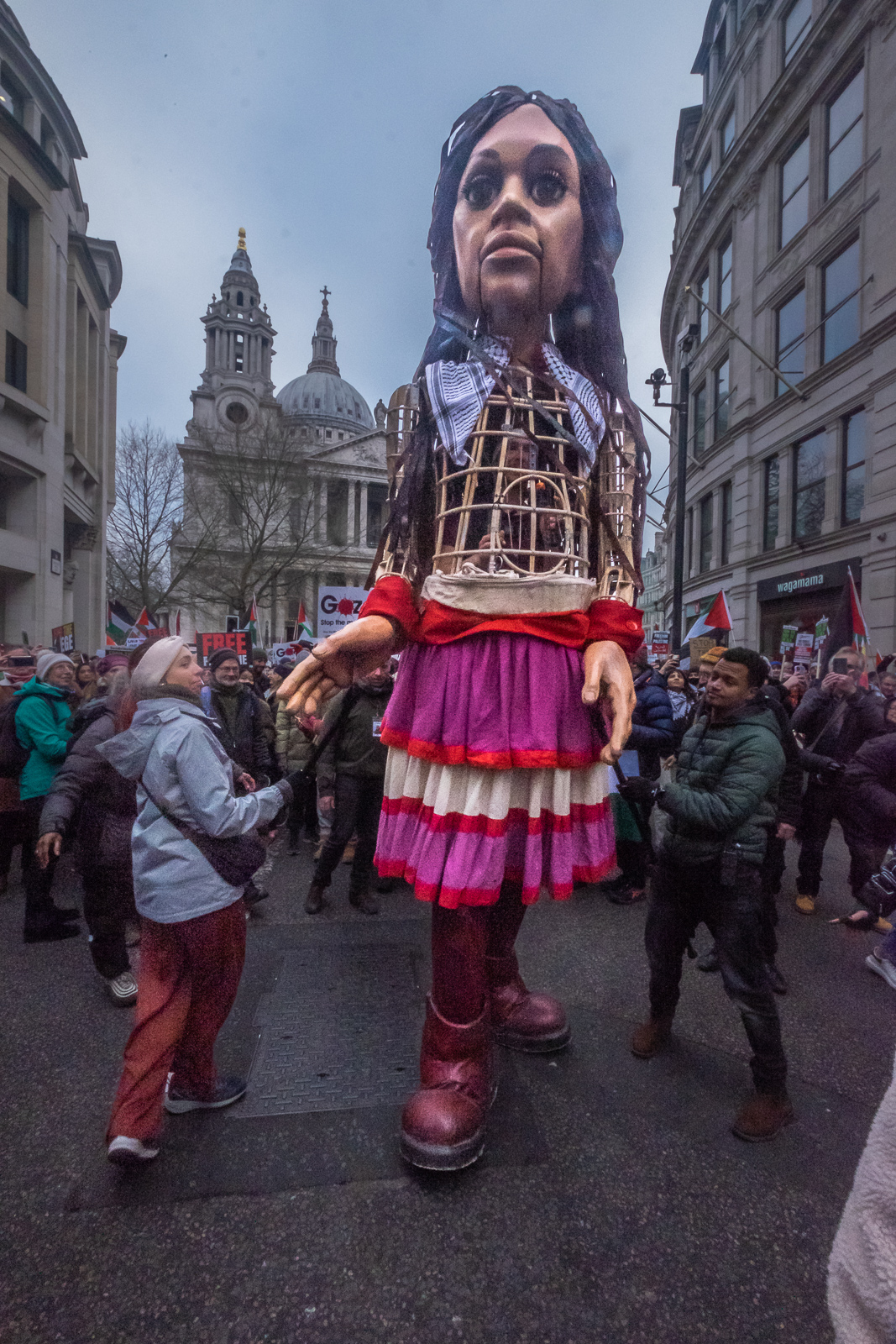
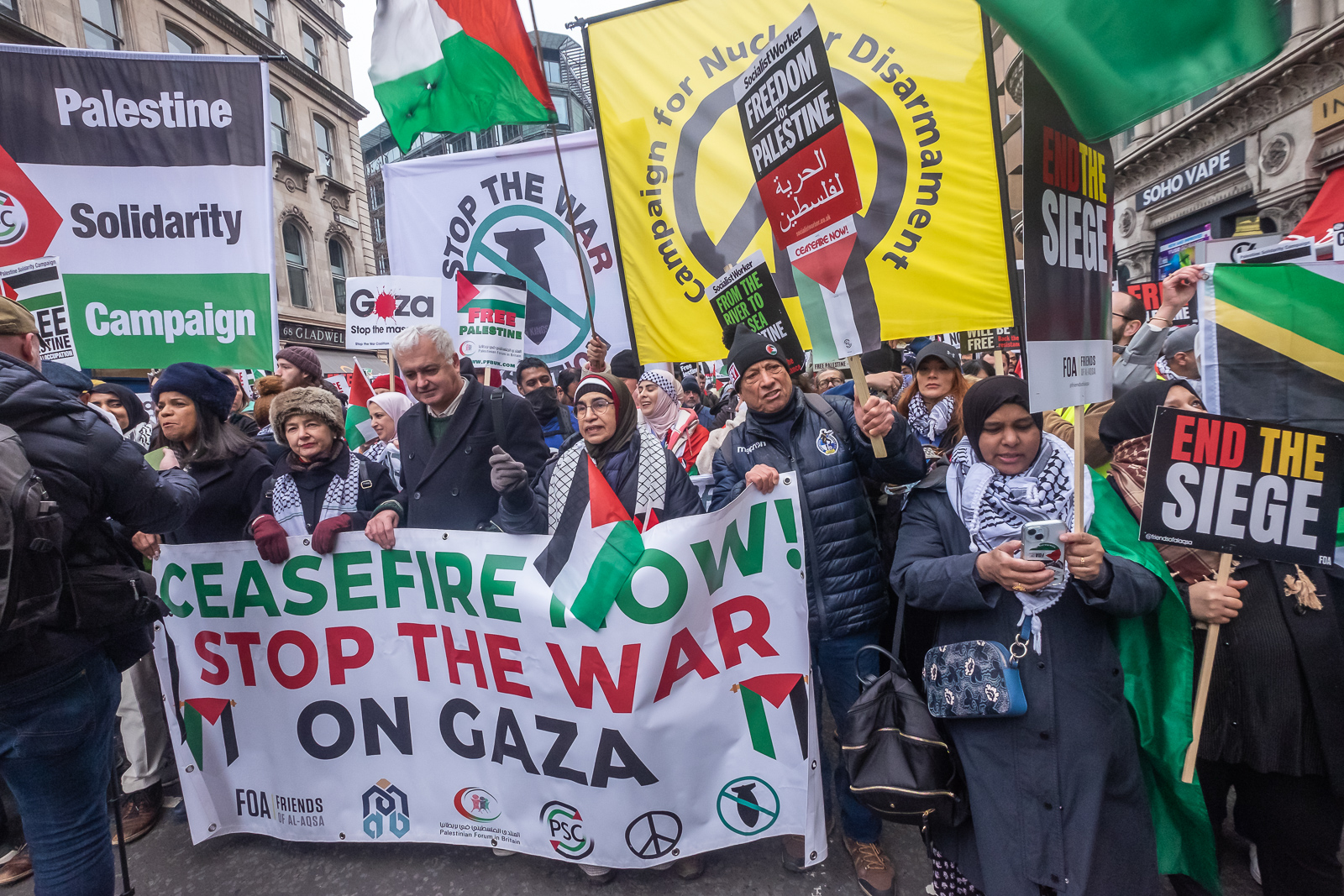
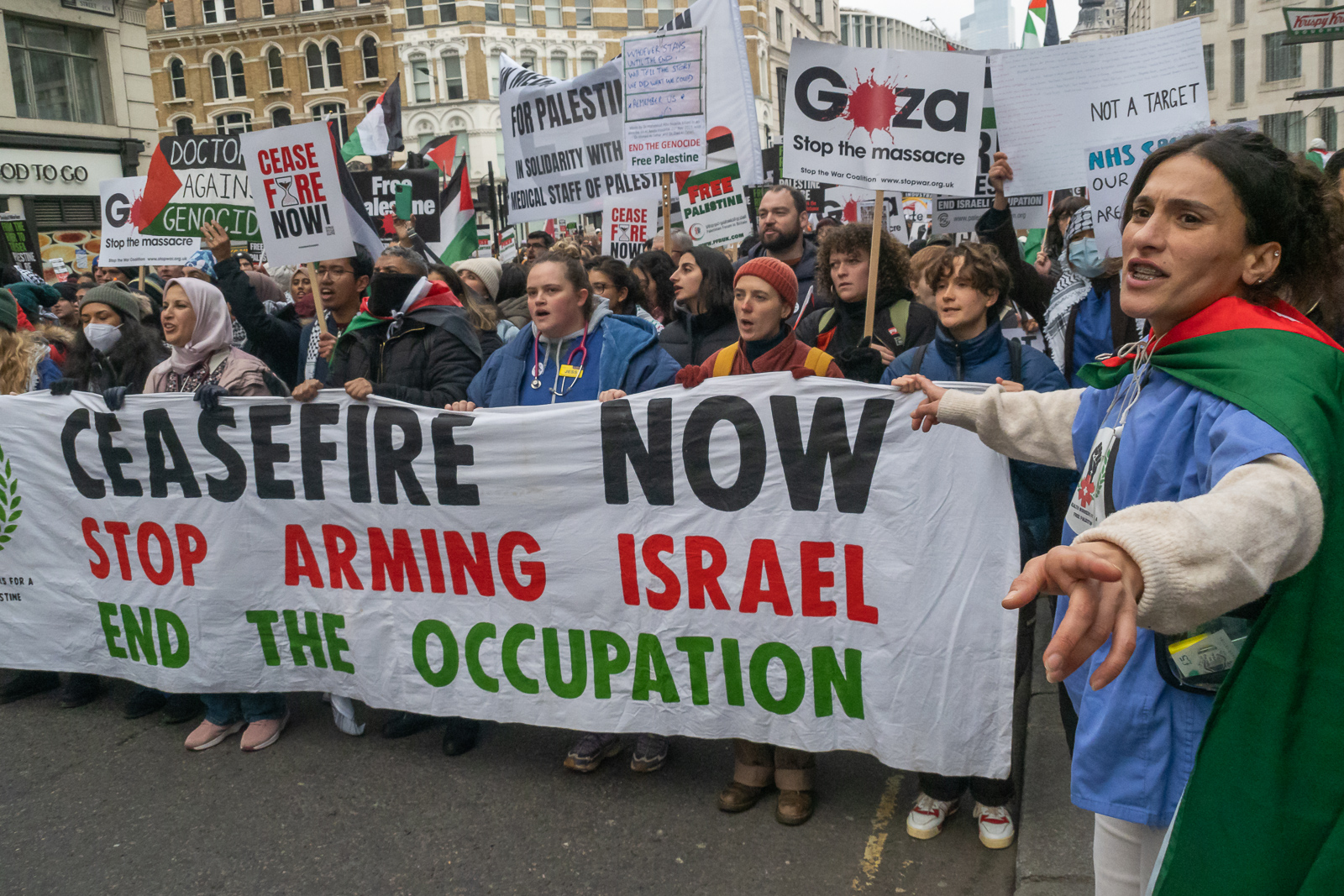
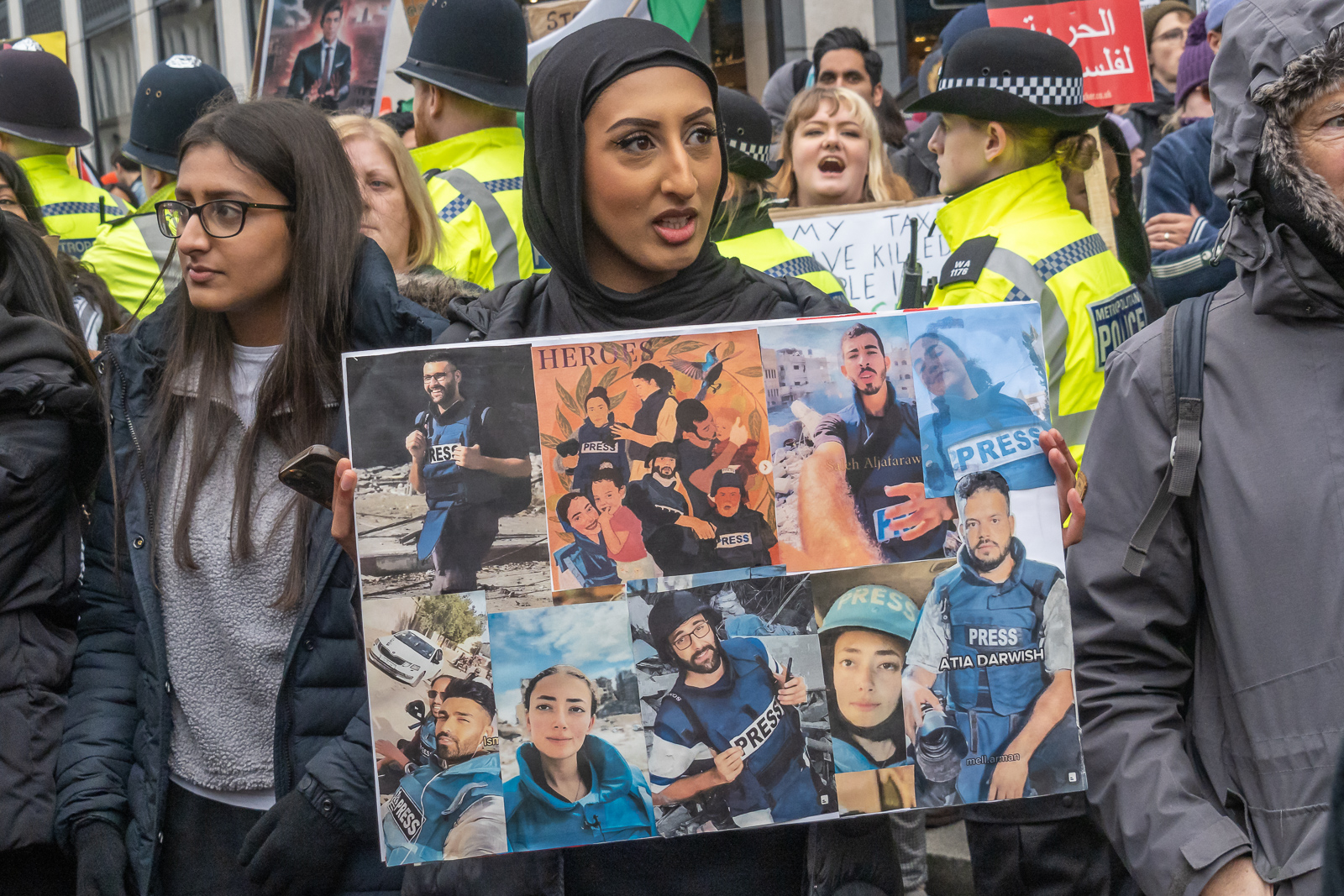
Protest Under Threat – 2008 and 2024

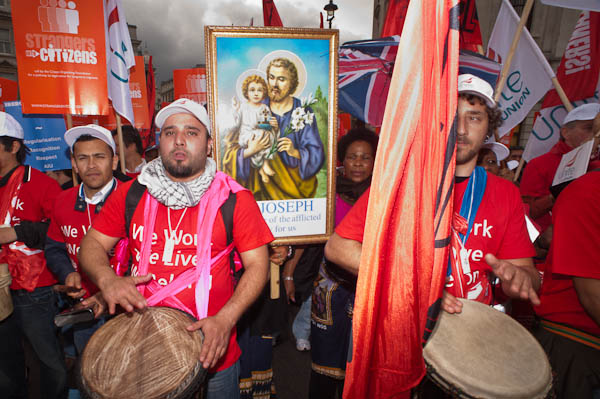
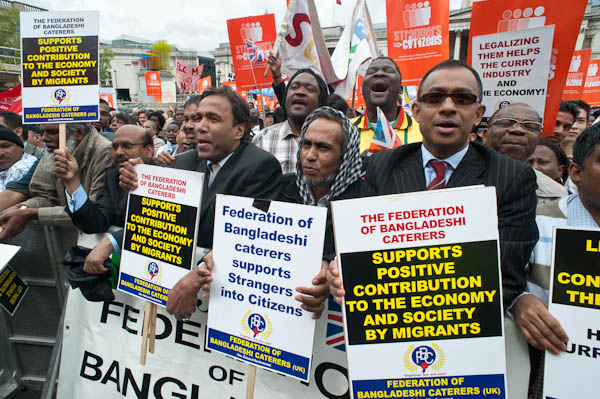
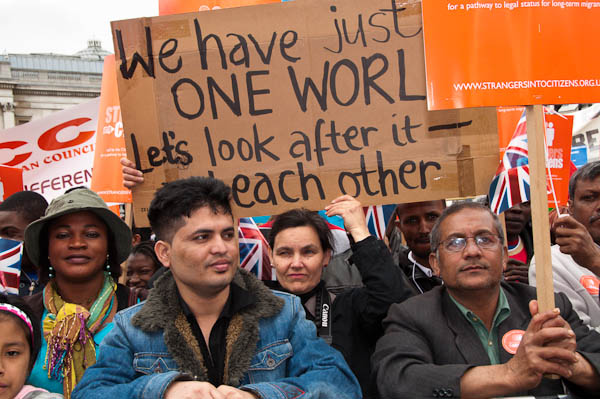
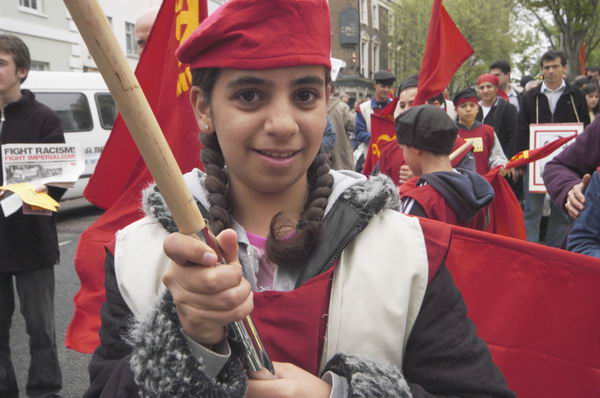
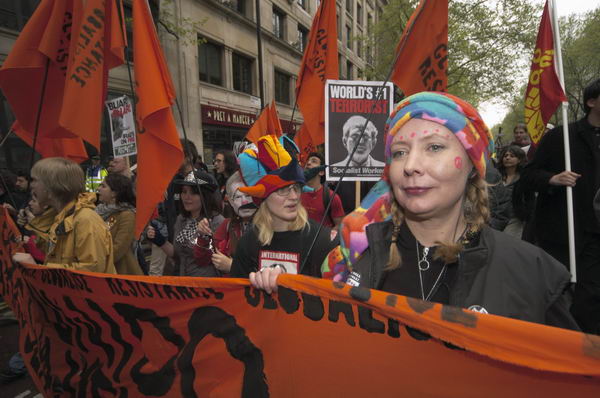
Protest Under Threat – On Saturday 12th January 2008 I photographed six protests in London, and two of them were against the increased restrictions on public protest introduced by SOCPA, the Serious Organised Crime and Police Act 2005 which considerably increased the powers of arrest of police, criminalised trespass at designated ‘Protected Sites’ which included nuclear sites and a long list of royal, parliamentary, and government sites.

Protest Under Threat - 2008 and 2024

But most controversially it seriously restricted our right to demonstrate within a “designated area” of up to one kilometre from any point in Parliament Square. Although Trafalgar Square was excluded from this, it was a wide area which included areas on the south bank of the river including County Hall, the Jubilee Gardens, St Thomas’ Hospital and the London Eye and extended west on the north bank as far as Tate Britain.

Protest Under Threat - 2008 and 2024

These sections of the act were repealed or rather replaced in 2011 by the Police Reform and Social Responsibility Act 2011 which narrowed its scope to prohibiting some activities in Parliament Square, more specifically aimed at protests such as that by Brian Haw.


Hizb ut-Tahrir protest Bush’s Middle East tour – Marble Arch – Saudi Embassy

Protest Under Threat - 2008 and 2024

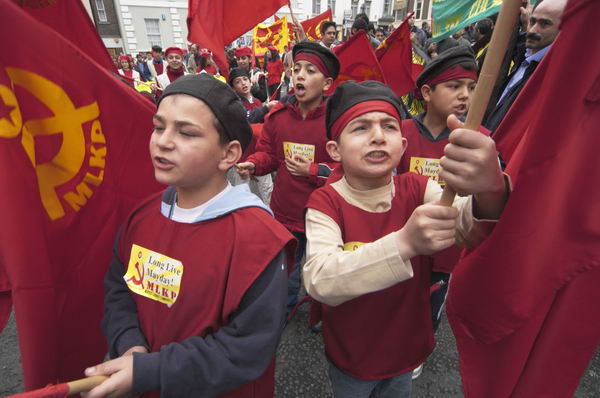
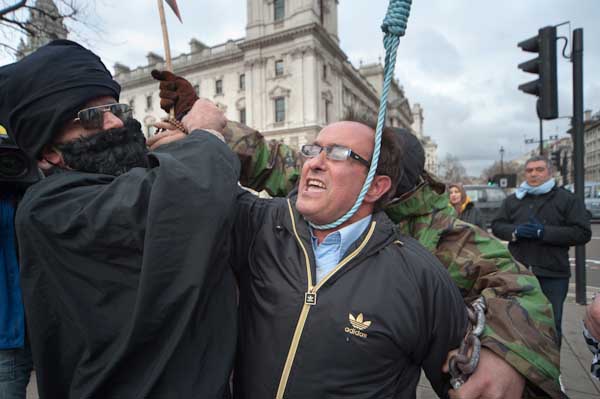
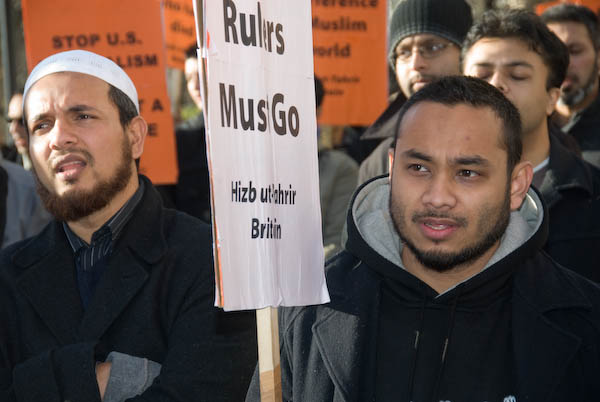
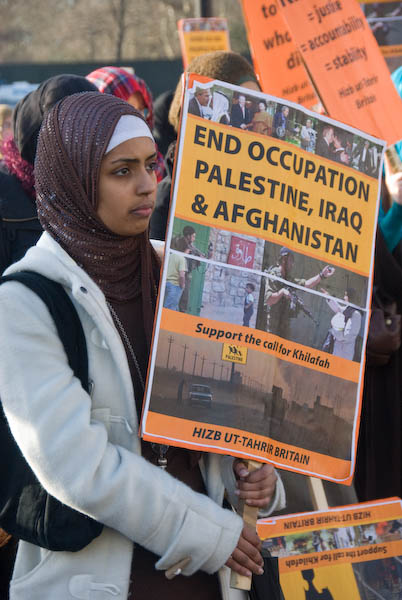
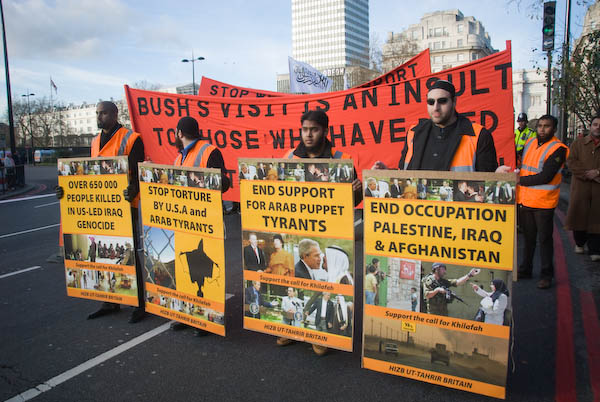
Other protests on the day included a march by supporters of Hizb ut-Tahrir Britain from Marble Arch to the Saudi Embassy in Mayfair to show their opposition to George Bush’s Middle East tour and American policies in the region as well as against the current corrupt ruling elites in the area.

Protest Under Threat - 2008 and 2024

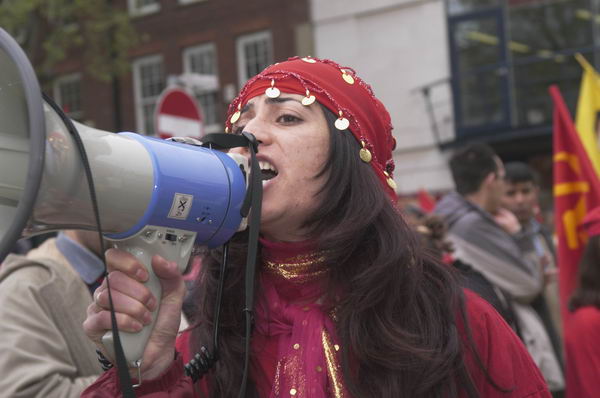
Although I don’t support the ideology of Hizb ut-Tahrir and was certainly worried by their global intentions which we later saw put into practice by Islamic extremists in ISIS in Syria and others elsewhere as well as uneasy about their treatment of the women who were at their protests clearly as second-class citizens (and who I was often requested by stewards not to photograph), this like their other protests was extremely tightly managed by the organisation.

Clearly the protest presented no real threat to public order and it was hard to see why there was such a large police presence, when all that was needed was some traffic control and perhaps a few officers to monitor the speeches for any illegal content – though I don’t think there were any present who could understand those not in English.
more pictures


Young Rich Protest Siena Airport Expansion

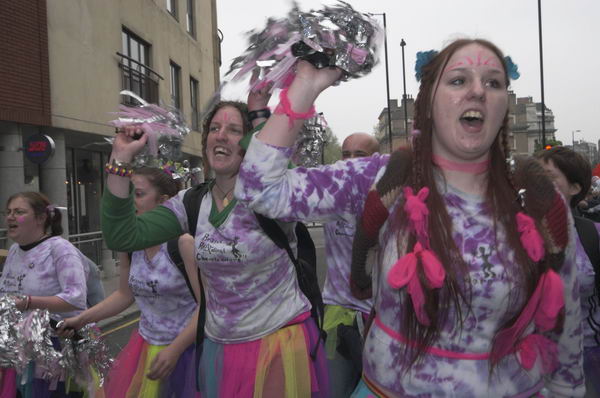
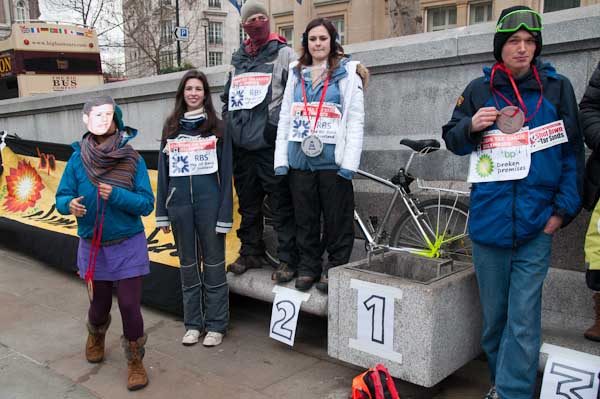
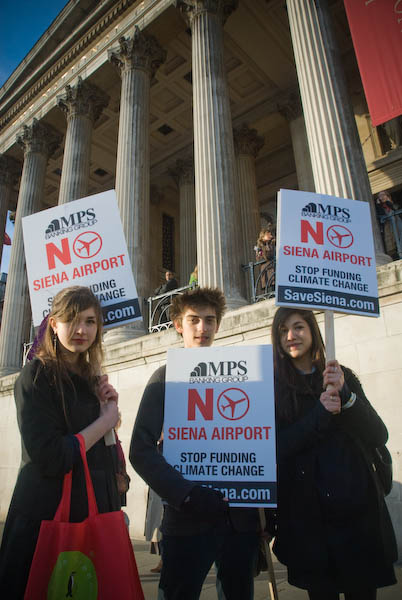
There were two protests taking place around Trafalgar Square, and one of them I found it a little hard to take seriously. This was what I described as a “small but very select” protest against the expansion of Sienna airport “led by the young grandson of a Lord” by “models and young people from some of the richest families around (the kind of people who own Guinness rather than drink it)” who enjoy their times at nice big villas there and don’t “want all sorts of riff-raff coming in on cheap flights“. Of course we should all be against airport expansion.
more pictures


 CSG Freedom to Protest Border Post – Trafalgar Square/Whitehall

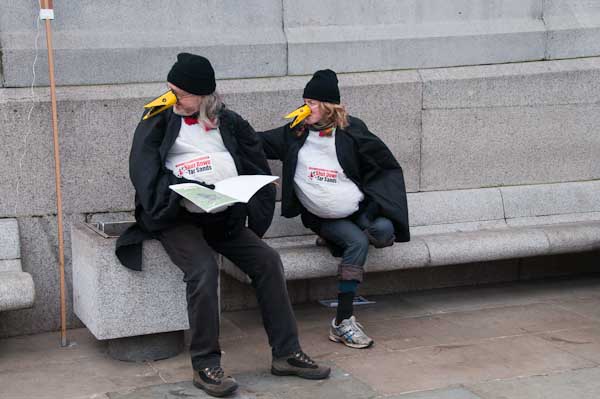
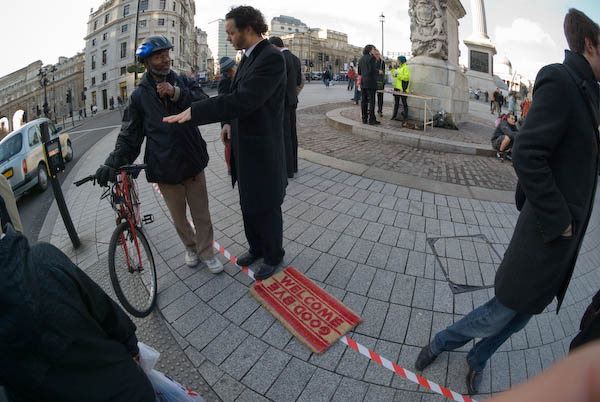
On the traffic island at the south of Trafalgar Square and the top of Whitehall a group calling themselves the CSG (Citizens Supporting Government – rather than the Met’s TSG, sometimes said to stand for Thugs Supporting Government rather than its official Territorial Support Group) set up a ‘Freedom to Protest Border Point’ again on Saturday on the edge of the SOCPA zone to advise the public about the danger of passing into the an area where freedom is severely restricted.
more pictures


Freedom to Protest – outside Downing Street

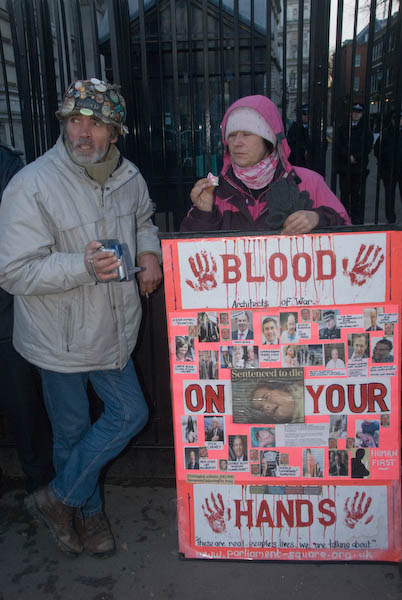
But the main Freedom To Protest demonstration was taking place at the gates of Downing Street with a couple of hundred protesters. Although police usually try to move protesters away from the gates, things as I arrived seemed fairly relaxed.

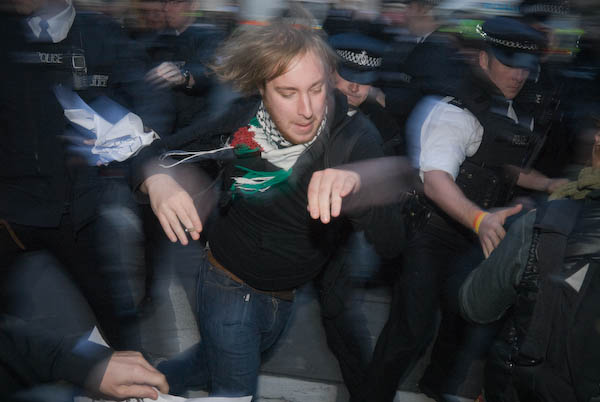
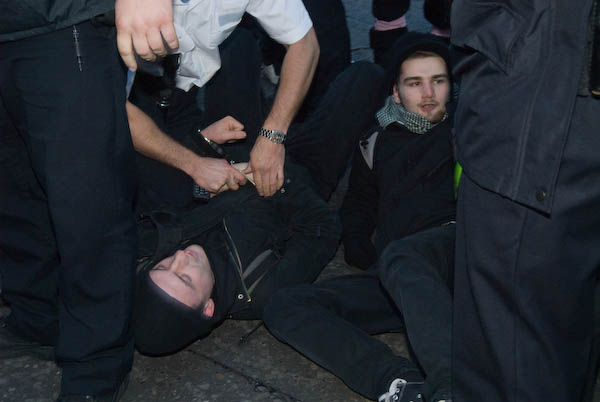
But when a number of protesters decided to sit or lie down in the middle of the road this prompted the police to take action. “They grabbed the first couple of guys who went down on the tarmac and handcuffed them as well as seeming to try out a few strange holds.”

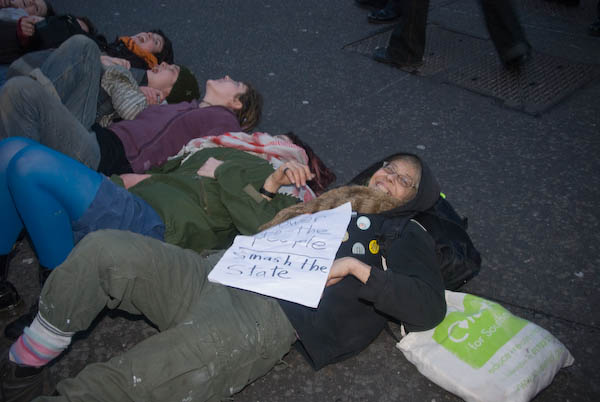
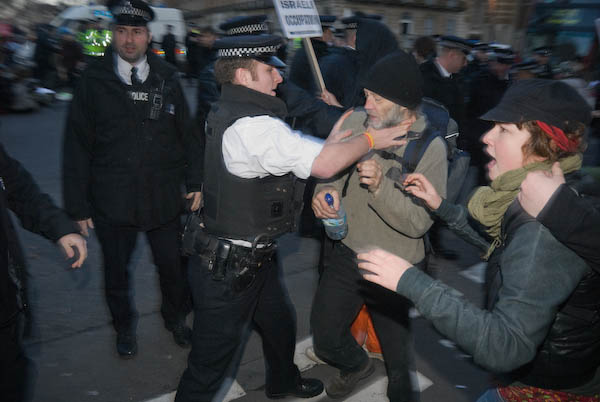
And when a dozen or so laid down in a neat line along the carriageway a squad of around 20 officers who had been waiting 50 yards down the road rushed in and began by clearing photographers and others standing on the road back onto the pavement. “Any who showed a reluctance to move were given a hand, sometimes with what seemed like unnecessary force. I was almost knocked flying when they threw one man bodily backwards – and I was in his way, probably rather luckily for him, as otherwise he could well have cracked his head open on the pavement.”

They then carried those sitting or laid on the ground back to the pavement, warning them they would be arrested if they returned to the road. Some who had linked arms were separated with some of the police clearly seeming to be enjoying themselves using pain compliance holds and inflicting unnecessary pain as they twisted arms behind backs and generally pushed the guys around.

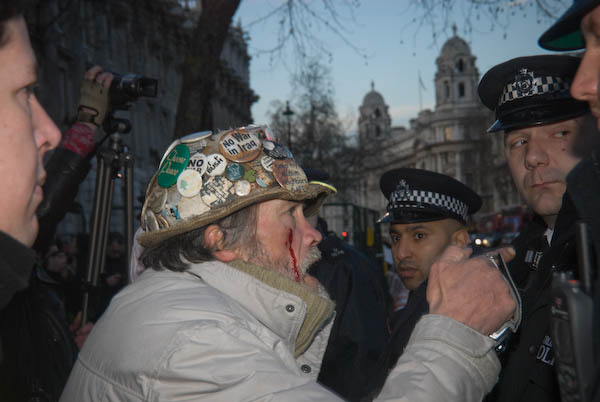
Brian Haw – whose continuing peace protest in Parliament Square had been one of the main targets of SOCPA – was there using a small video camera to record the police violence and I photographed him with a nasty trickle of blood running down his left cheek after an officer had forcefully pushed the camera into his face. When he tried to complain to the officers in charge he was ignored and finally told to go to a police station if he wished to complain. Some of the police were rather obviously amused at both his injury and his complaints.
more pictures


Kenyans Demand Justice after Election Fraud

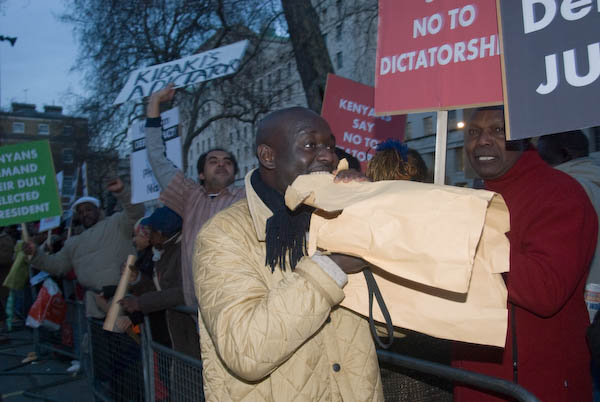
Across Whitehall in the designated protest area there were two protests taking place. Kenyans were protesting against election fraud in their country, where the man who had almost certainly lost the vote set up an electoral commission that was certain to declare him as the winner, and he remains President. SOCPA was having an effect on their protest as my picture shows, with a man using a megaphone hidden under brown paper!
more pictures


End the Siege on Gaza

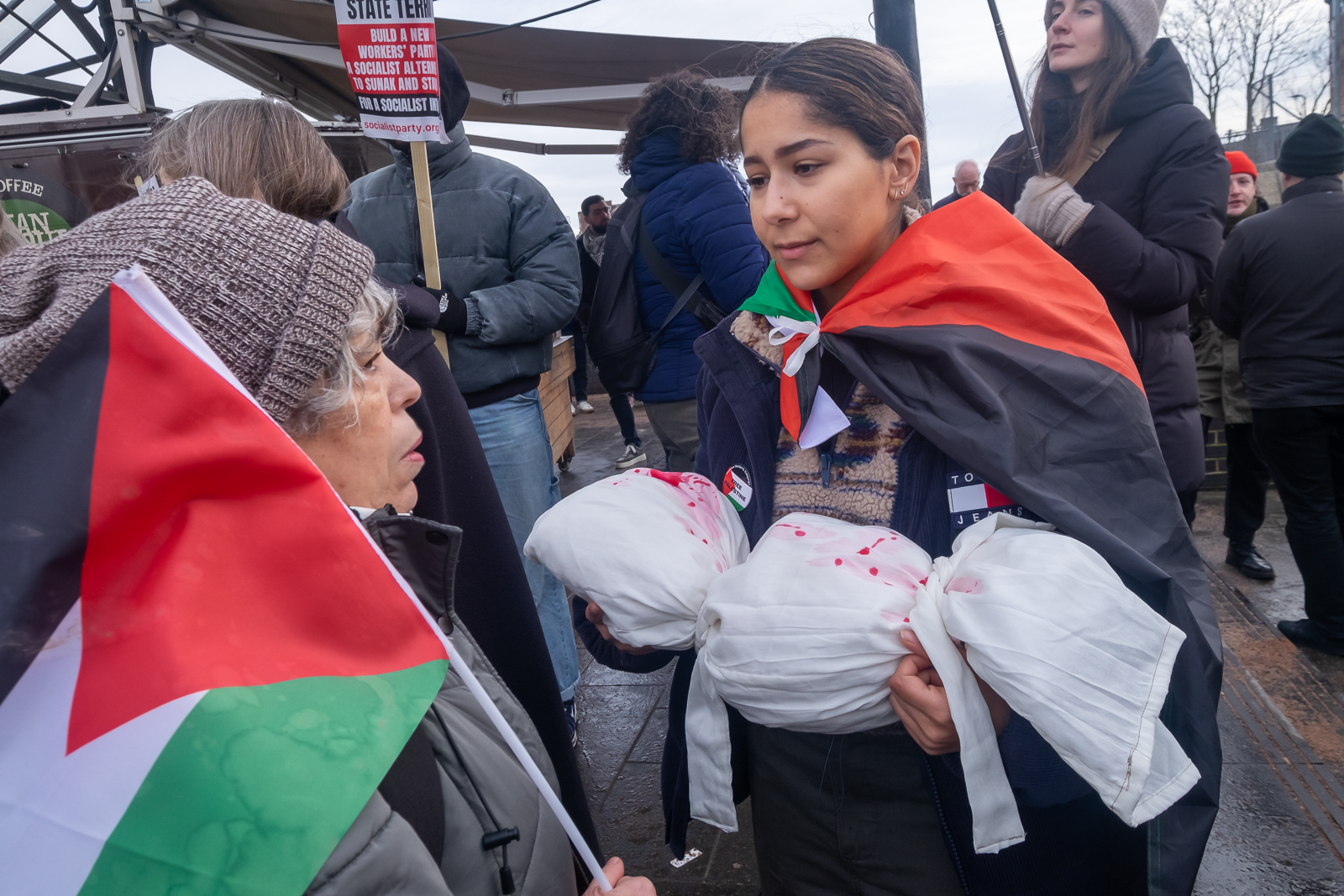
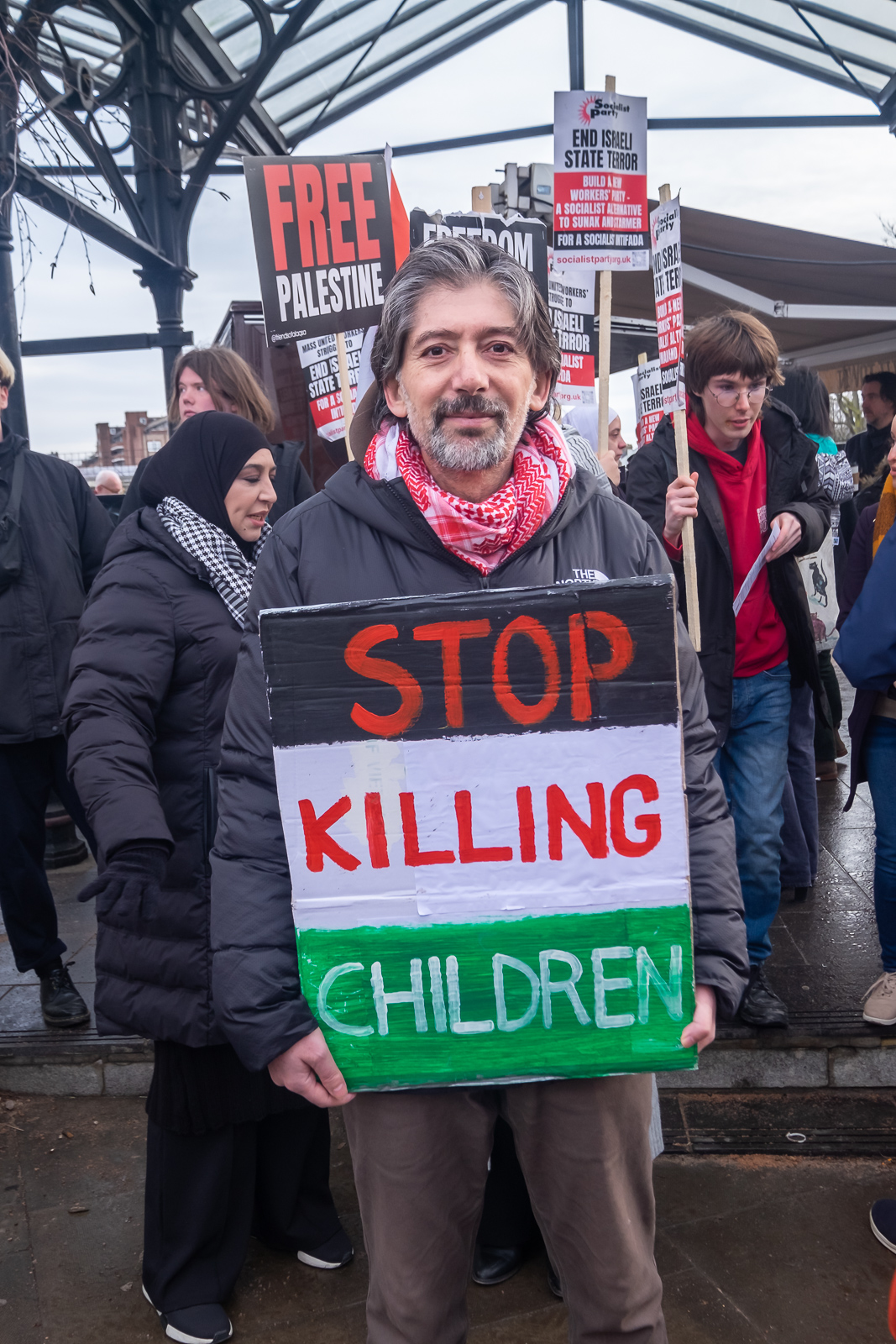
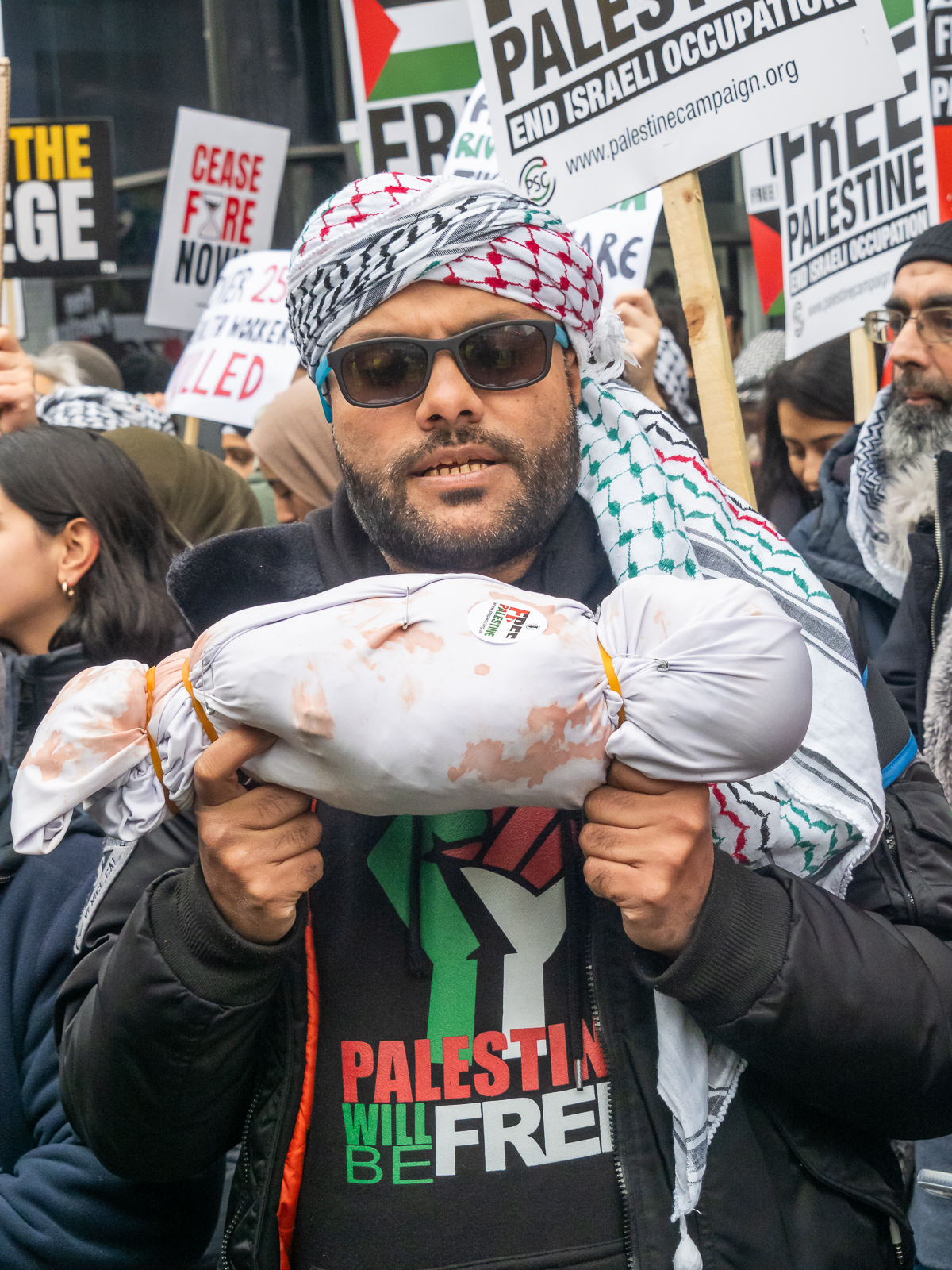
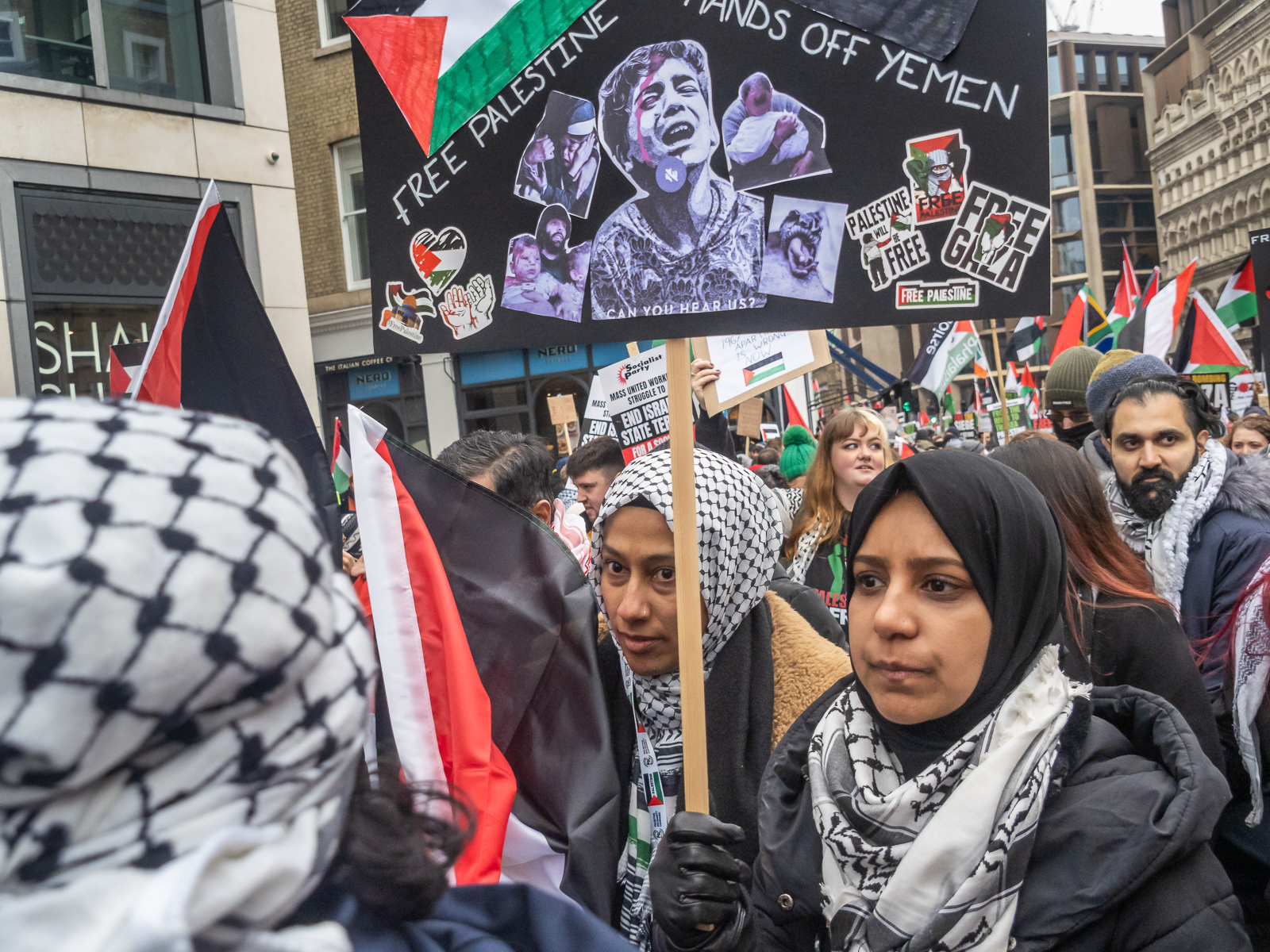
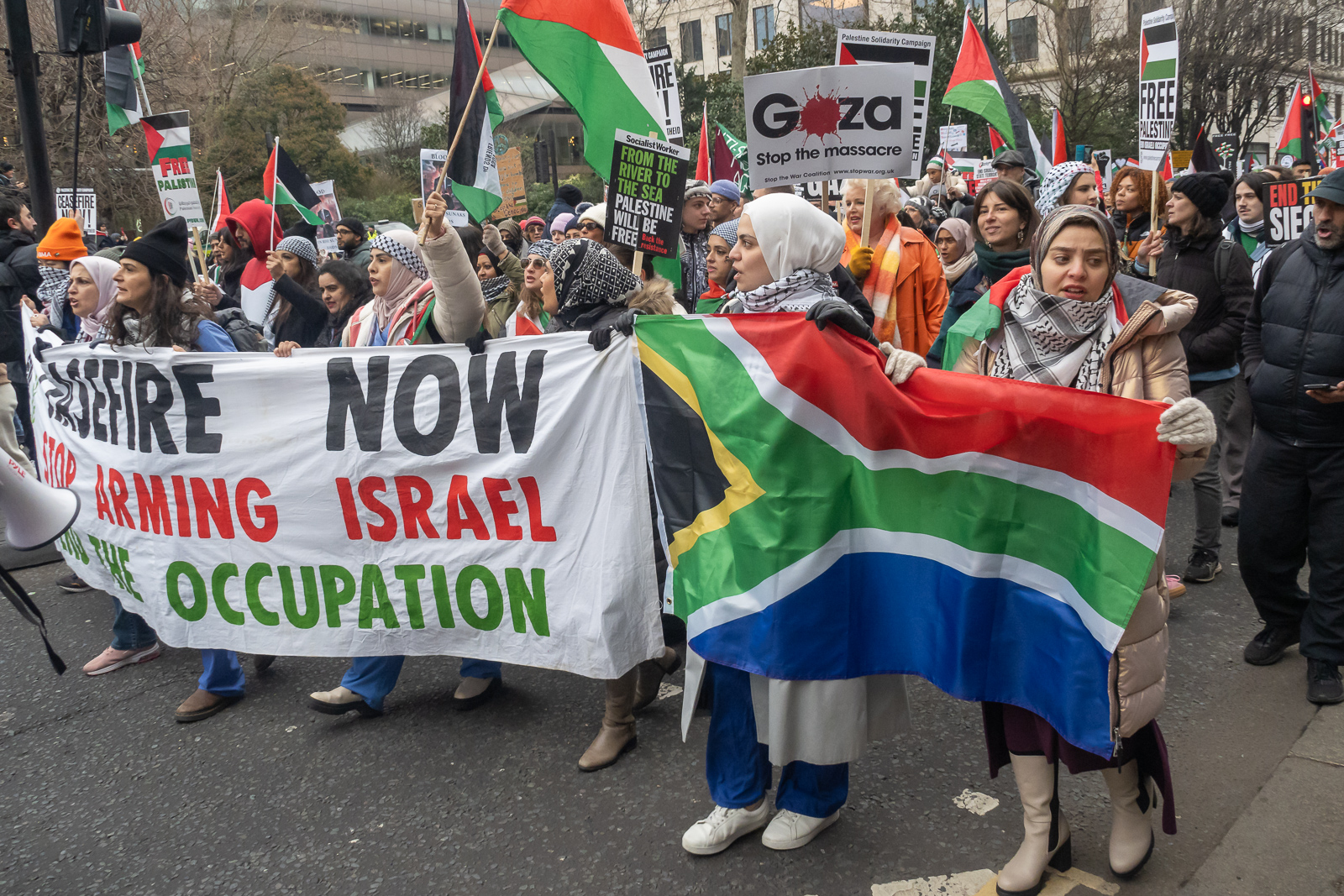
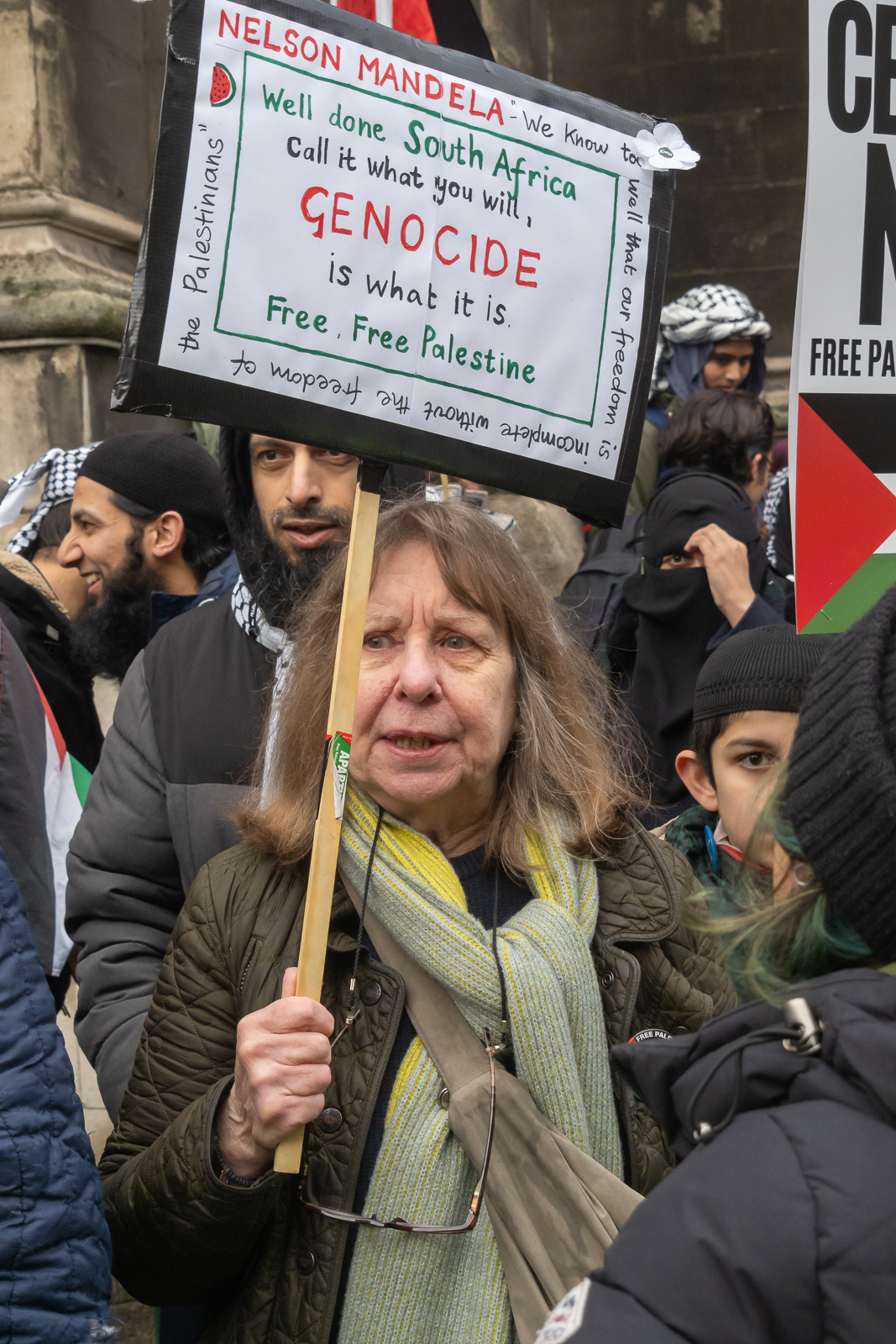
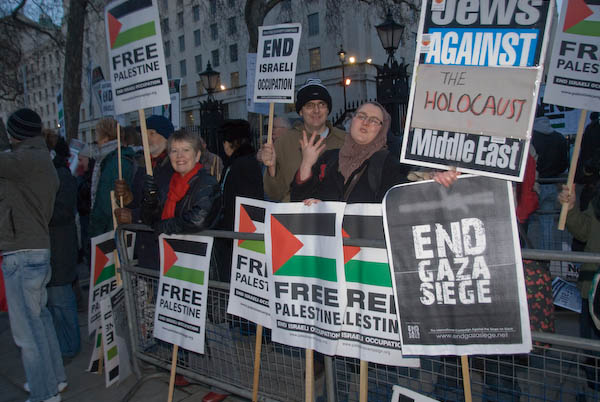
Also across Whitehall from Downing Street were a group of protesters calling for an end to the Israeli siege of Gaza which severely limits the supply of essential goods including medicines and for an end to the military occupation of Palestine.

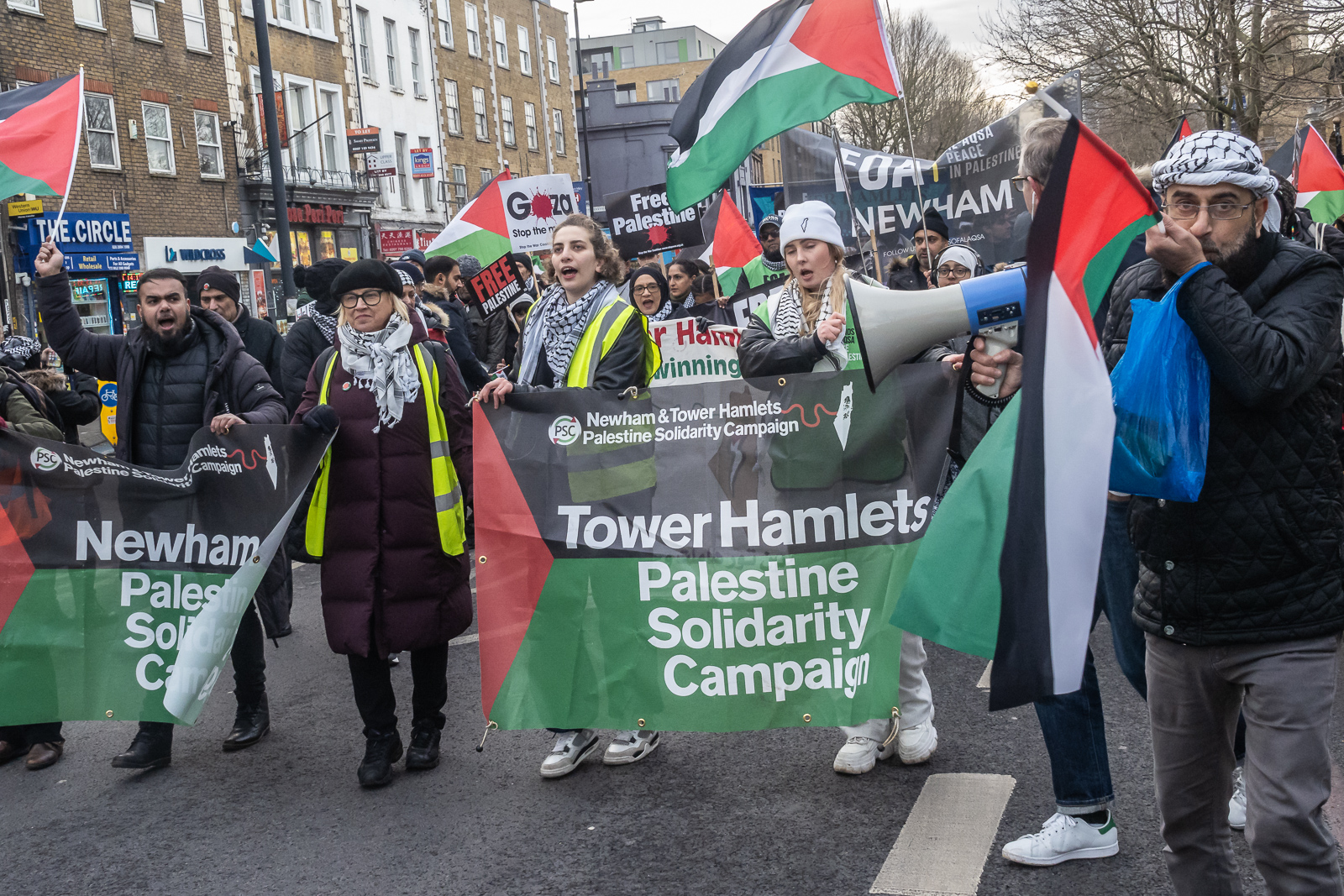
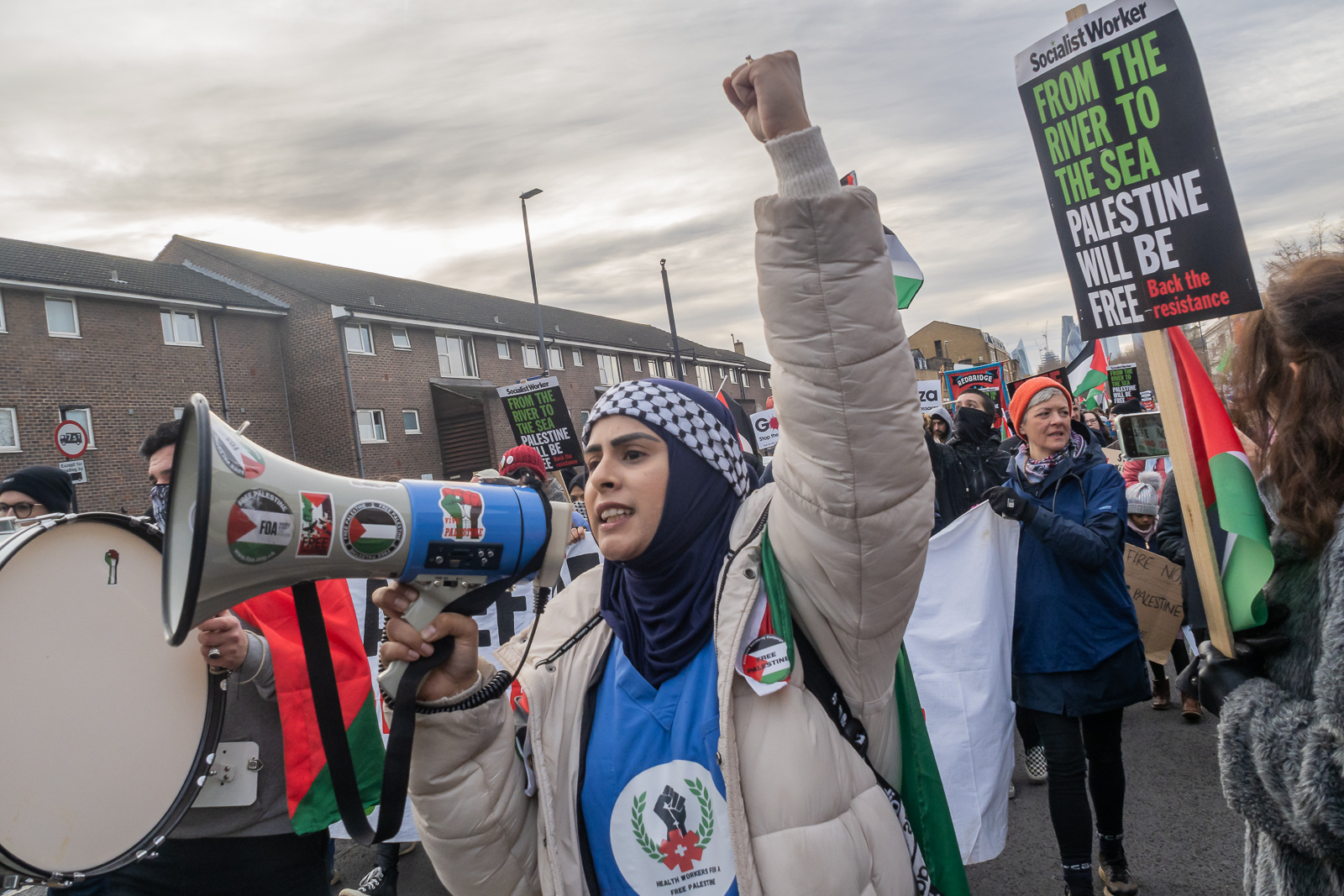
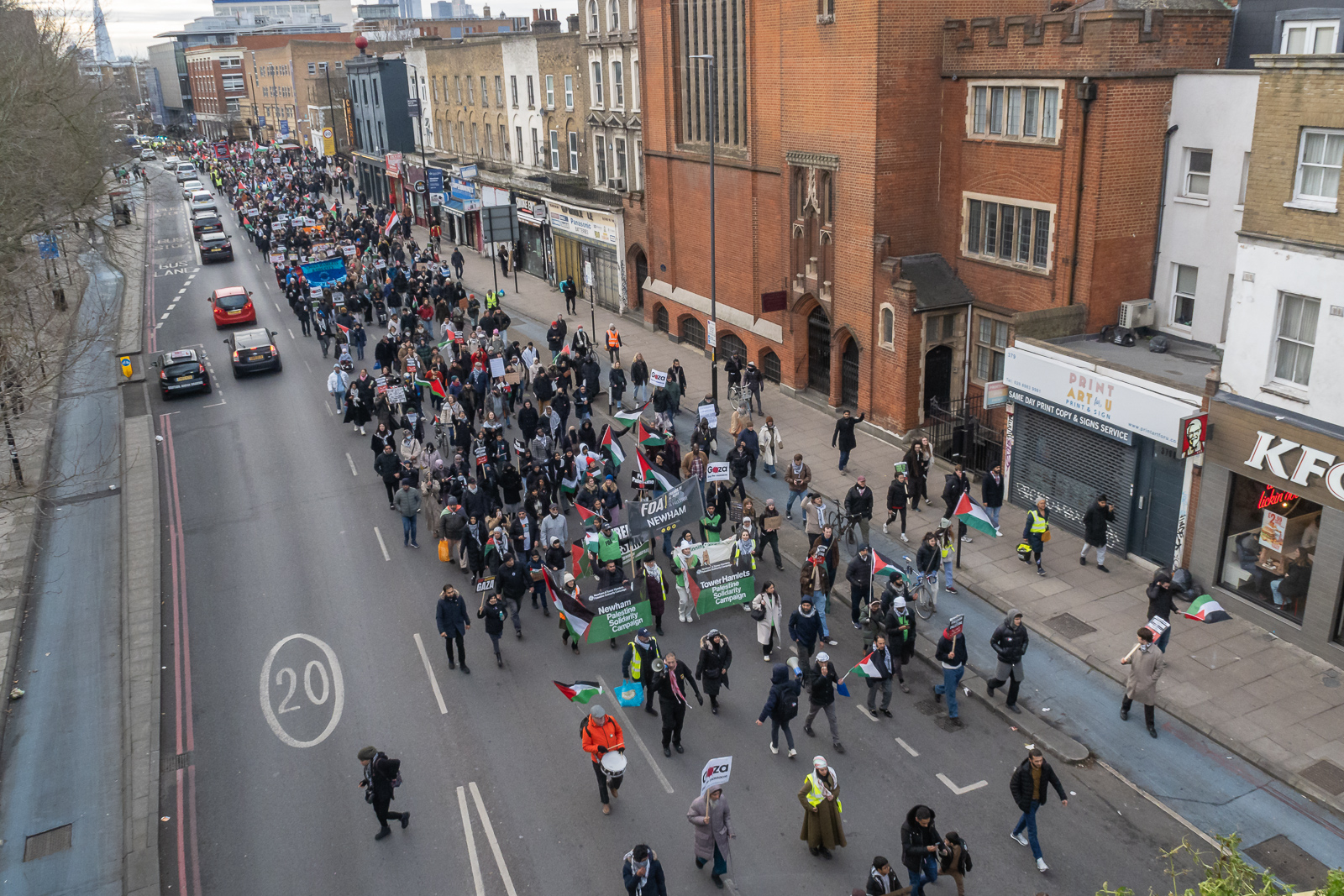
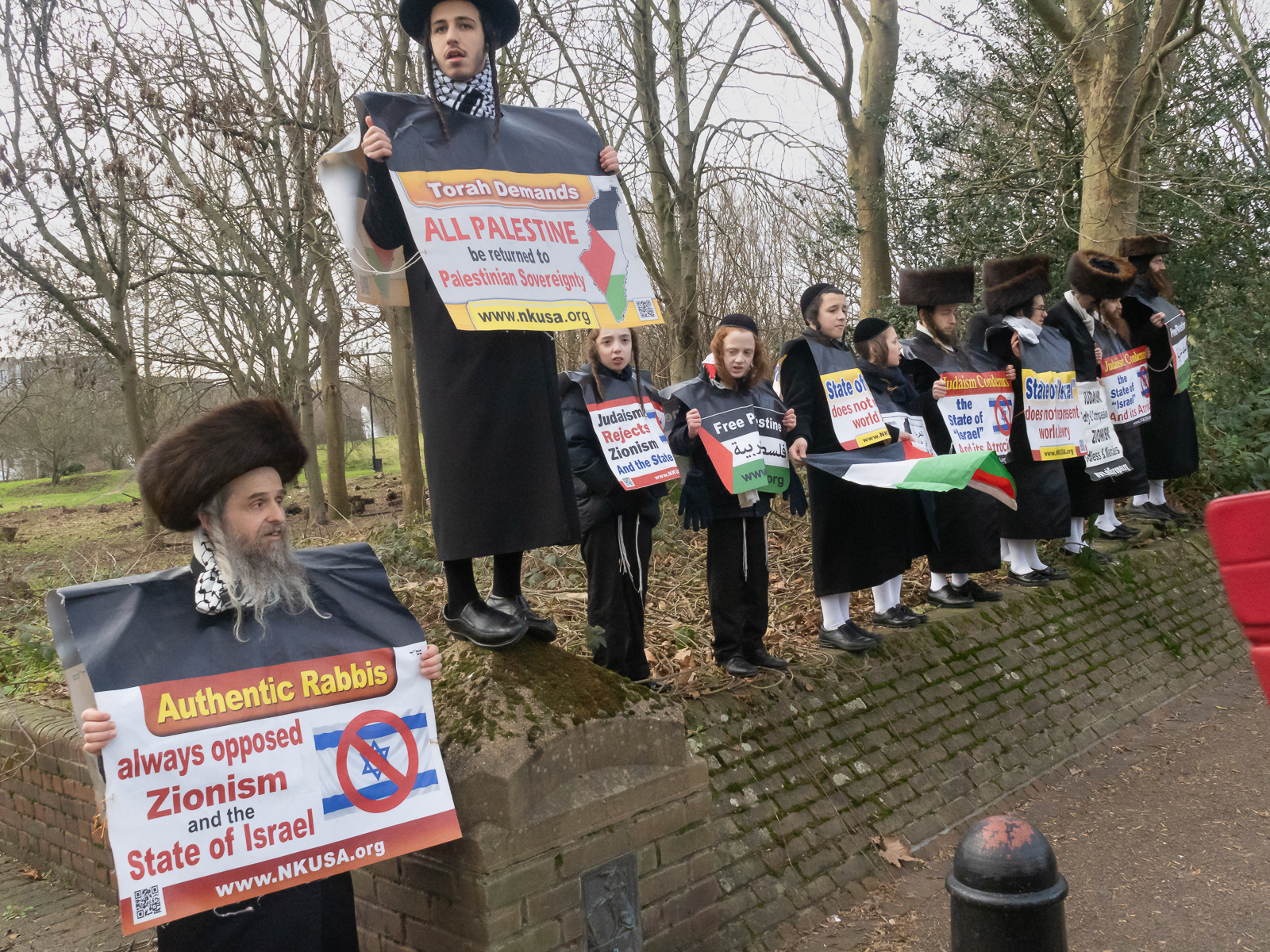
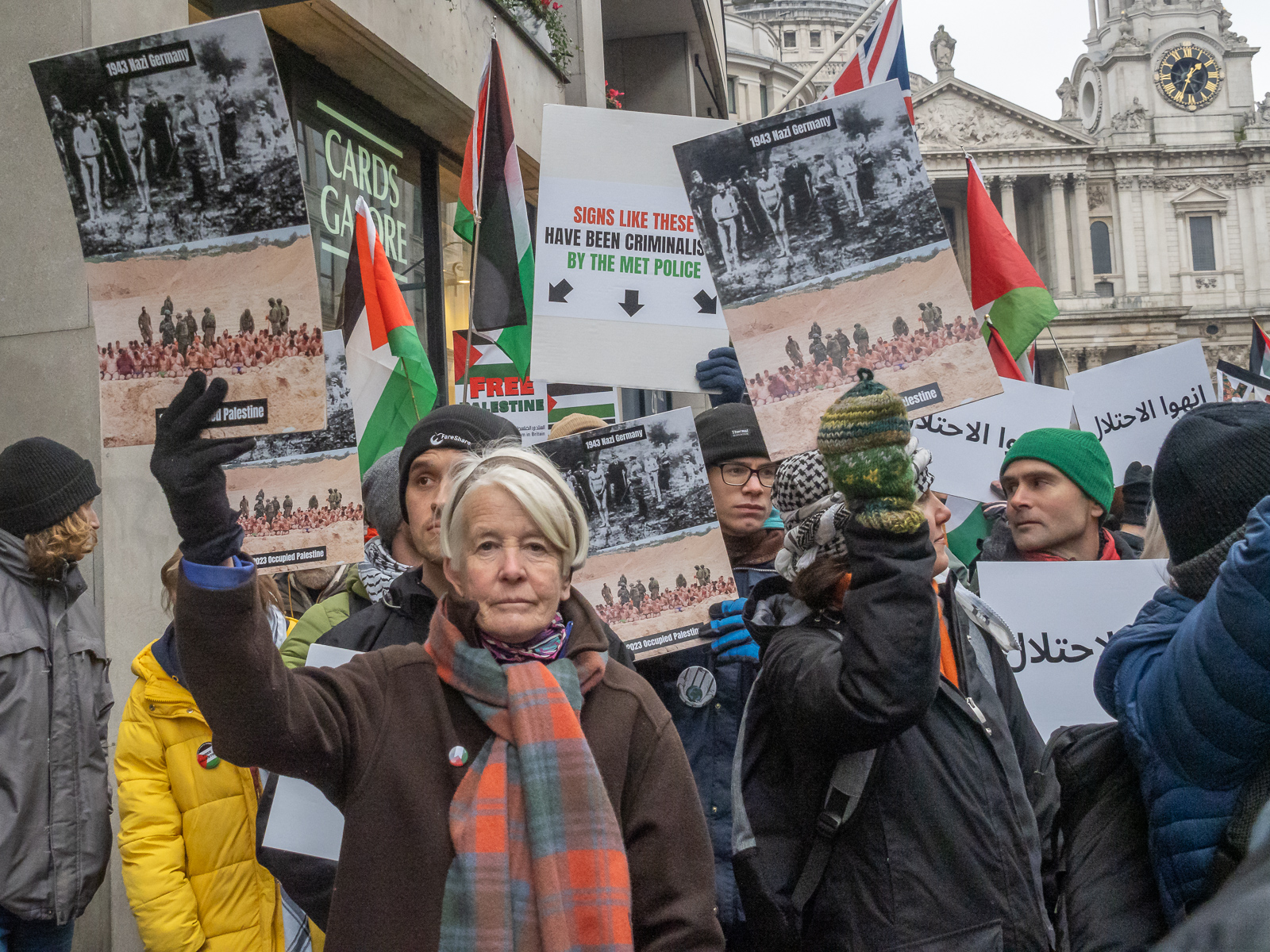
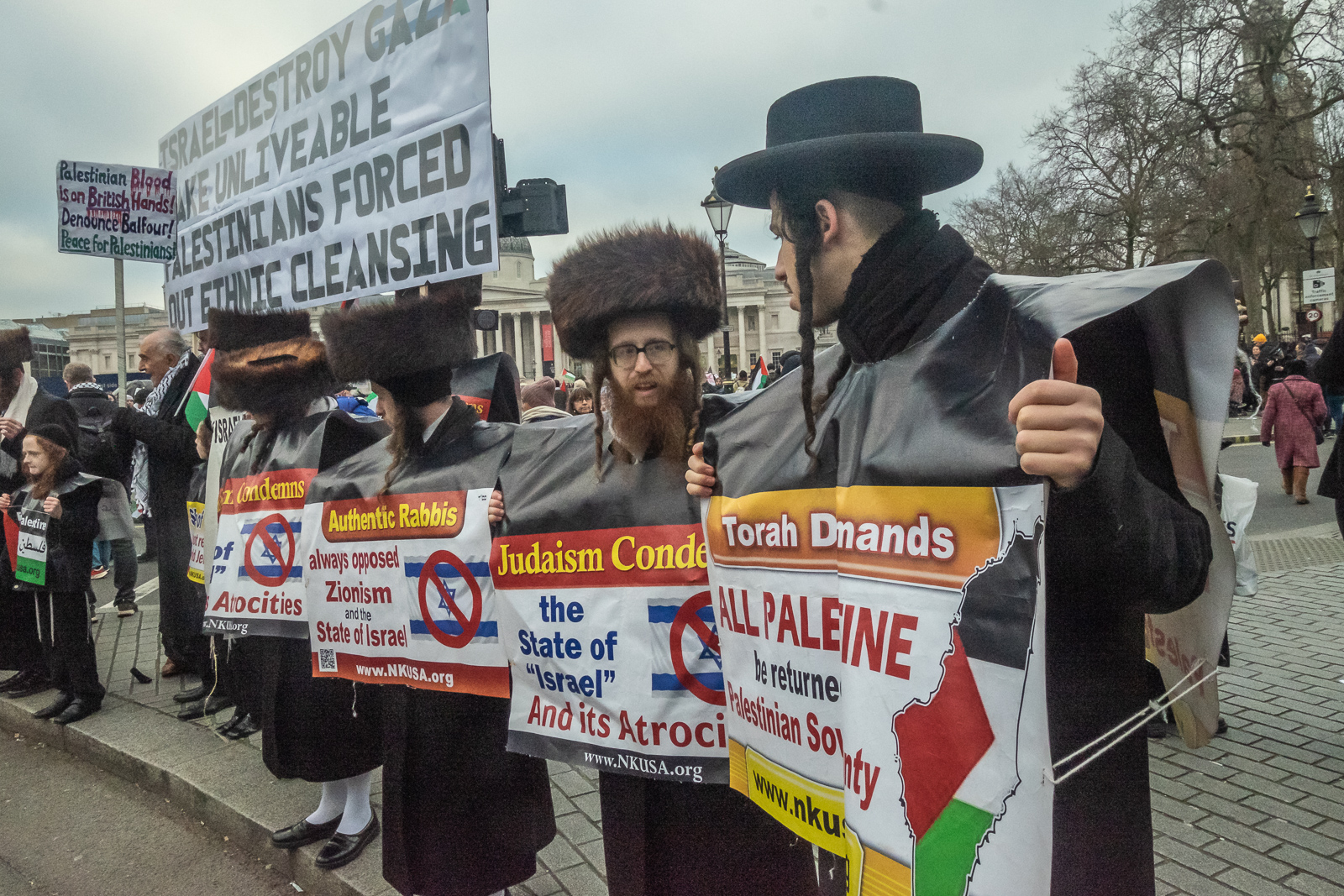
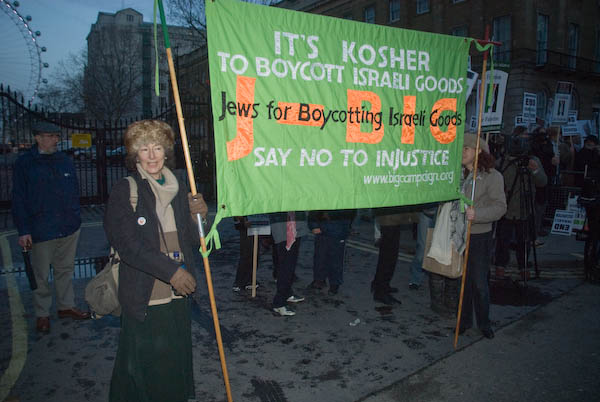
Among the protesters still present when I arrived rather late to photograph it were Jewish activists supporting Palestine and a boycott of Israeli goods, part of the growing campaign for BDS – Boycott, Divestment and Sanctions. In 2024 the UK government is putting through a Bill to stop “businesses and organisations–including those affiliated with Israel-being targeted through ongoing boycotts by public bodies” because of the increasing success of this campaign. If passed it will stop public bodies, “including universities, local authorities, and government departments, from making investment decisions that align with their human rights responsibilities and obligation.” They will be unable “to avoid causing or contributing to human rights abuses and international crimes” such as “the Chinese government’s systematic repression of Uyghurs, Israel’s crimes of apartheid or war crimes in Israeli settlements, Saudi Arabia and UAE’s war crimes in Yemen, or the Myanmar junta’s crimes against humanity.
more pictures


FlickrFacebookMy London DiaryHull PhotosLea ValleyParis
London’s Industrial HeritageLondon Photos

All photographs on this page are copyright © Peter Marshall.
Contact me to buy prints or licence to reproduce.
Goodbye & Good Riddance – September 2003

Goodbye & Good Riddance – September 2003: Of course there were times in 2023 that I remember warmly, and the first week of September when I was with a group of friends in a holiday let in Barmouth was full of them, though getting there and back was harder going with a rail strike and several long rail replacement bus journeys. But even those long bus journeys had their compensations, with some splendid views and clean windows through which I photographed some of them.

Goodbye & Good Riddance - September 2003
Barmouth September 2023
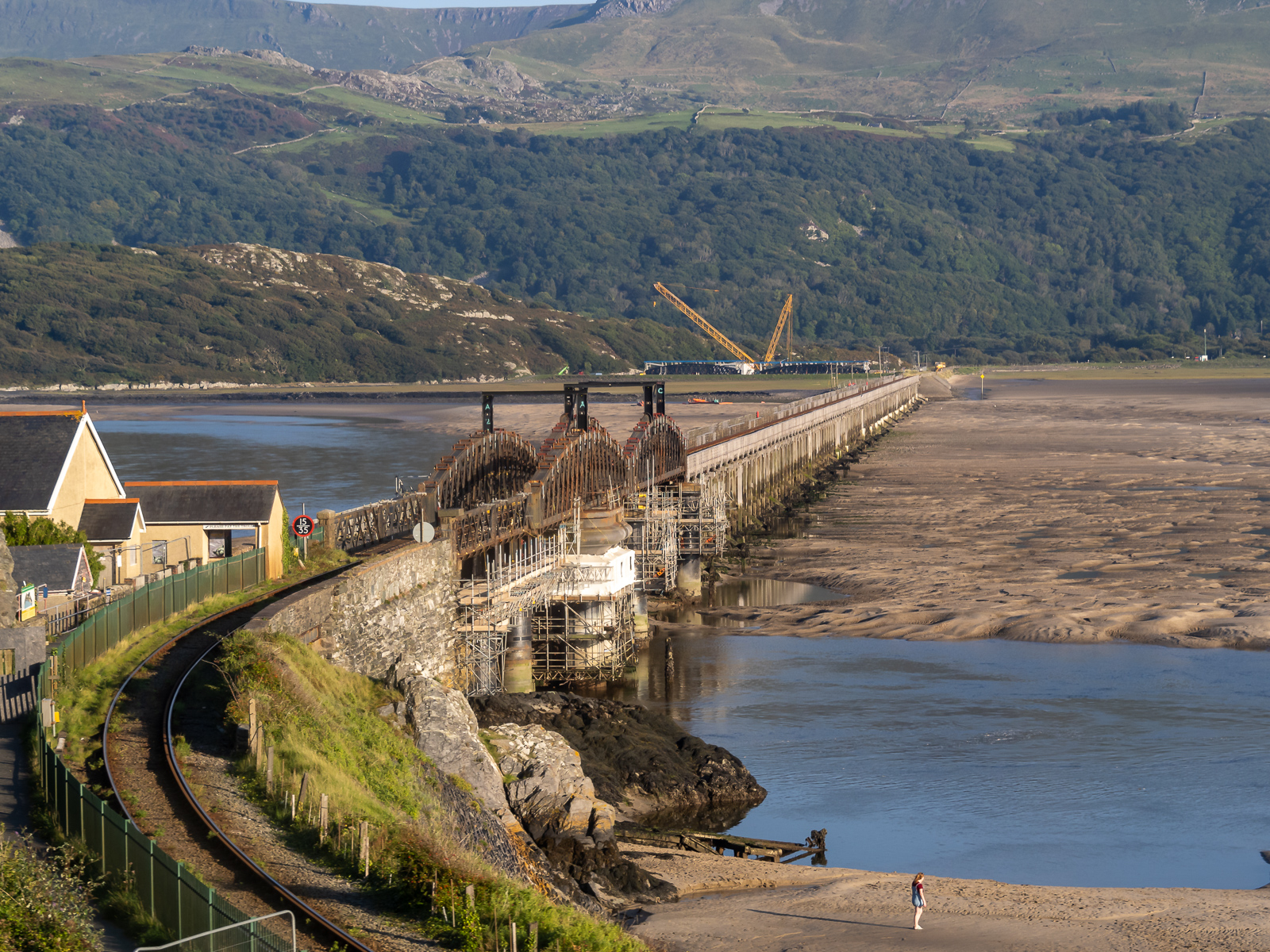
The rail and footbridge across the estuary at Barmouth closed for major engineering work the day before we arrived so we came and left on a rail replacement buses. The footpath across was also closed, which was a dissapointment as it would have allowed more great walks.

The holiday had been a very welcome break, and we were very fortunate with the weather, but too soon we had to return home – starting with two bus journeys to Machynlleth and then on to Shrewsbury and I returned to photographing protests the following day.

Goodbye & Good Riddance - September 2003
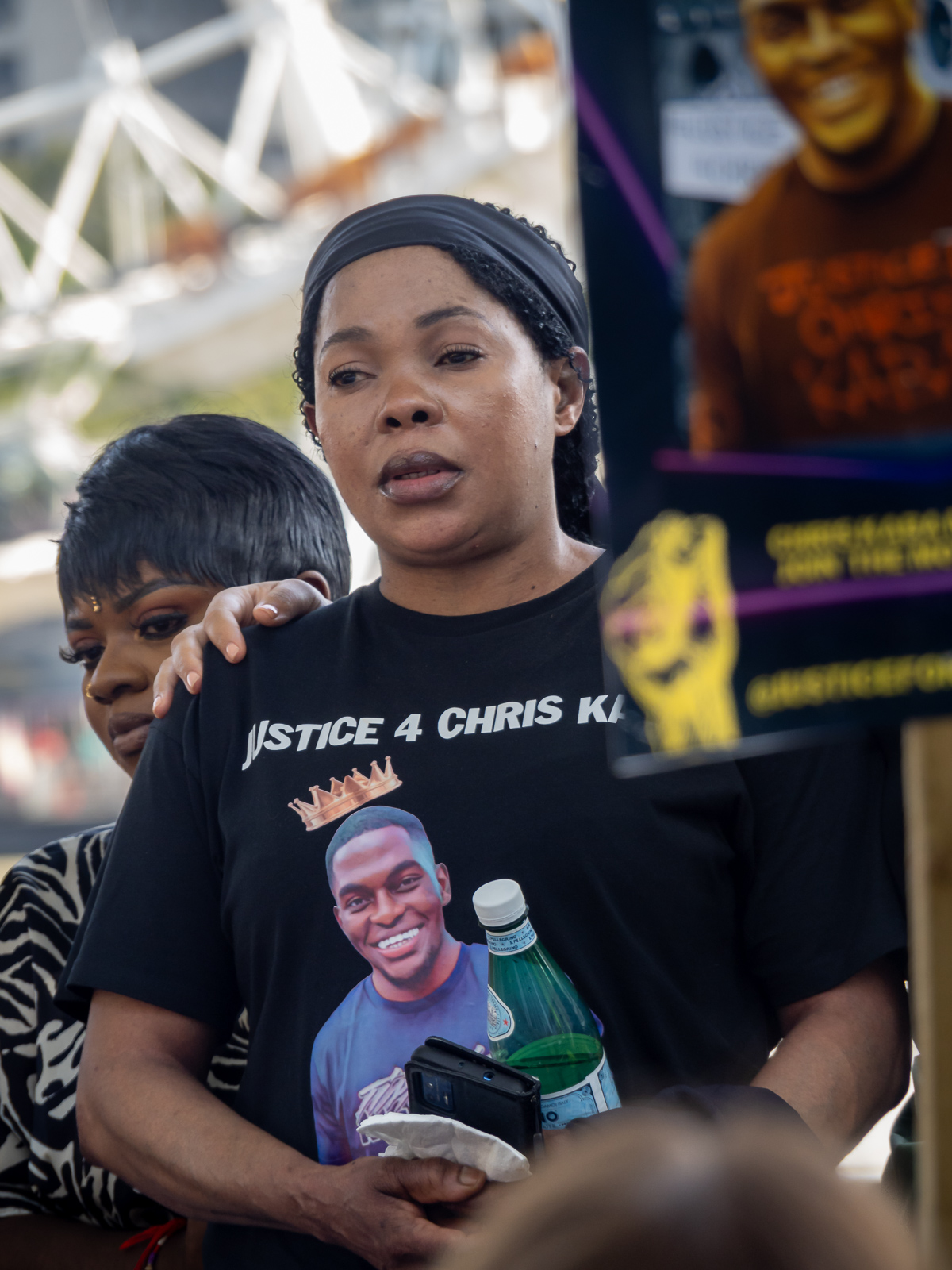
Justice For Chris Kaba – One Year On. London, 9 Sept 2023.
Chris Kaba, a 24-year-old unarmed black man, was driving a friend’s car in Camberwell when police stopped the car and fired a single shot through the windscreen killing him. The CPS received a report on the case in March but have yet to decide if the officer should be charged. Hundreds came a year after his killing to support the family and demand justice at a march from New Scotland Yard and rally in Parliament Square.
Peter Marshall
Goodbye & Good Riddance - September 2003
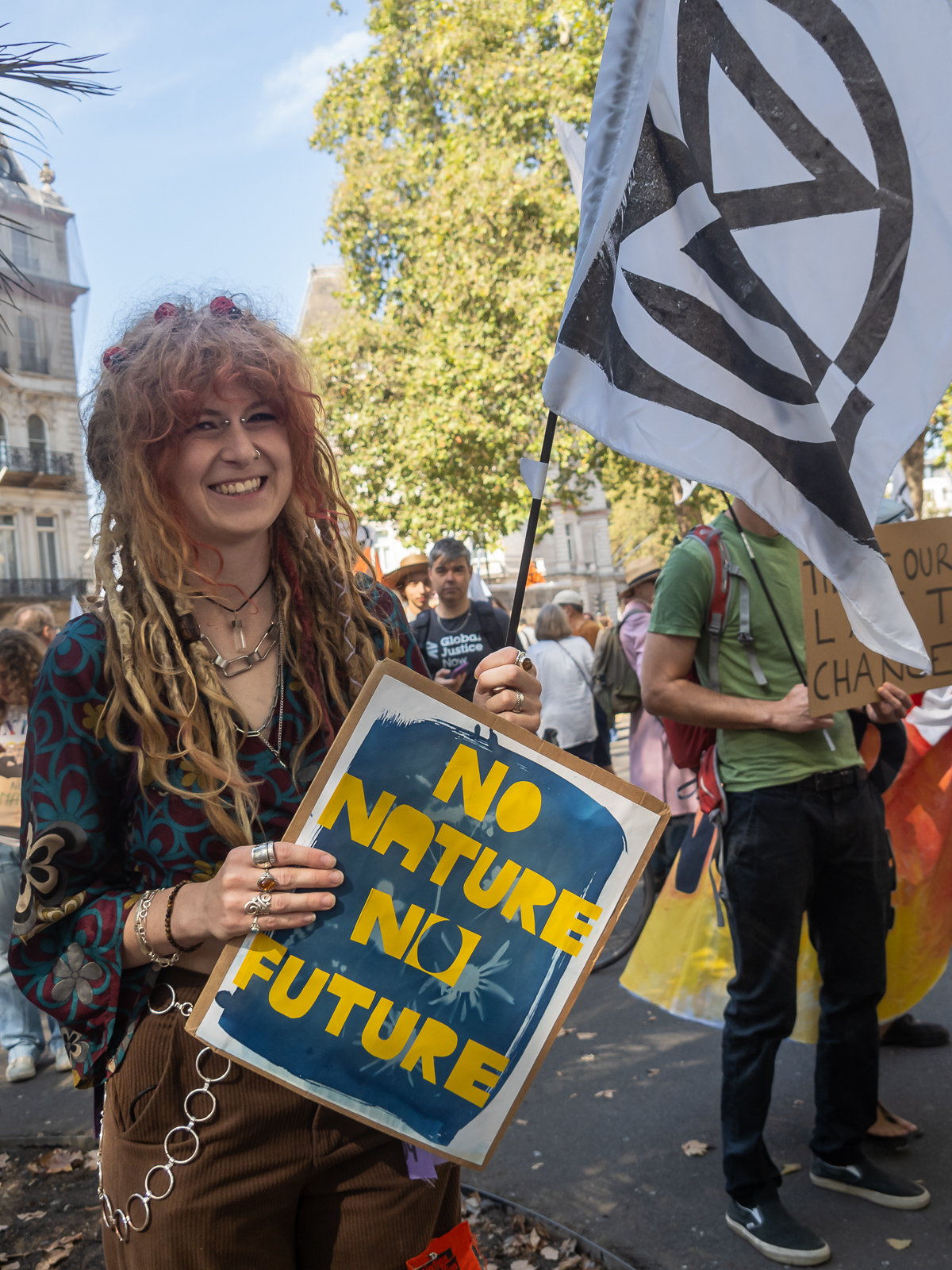
March to End Fossil Fuels, London. 16 Sept 2023.
People march in London as a part of actions by millions around the world to demand the world leaders gathering in New York for the United Nations Secretary General’s Climate Ambition Summit take the urgent action needed for a rapid, just and equitable end to the use of all fossil fuels.
Peter Marshall
Goodbye & Good Riddance - September 2003
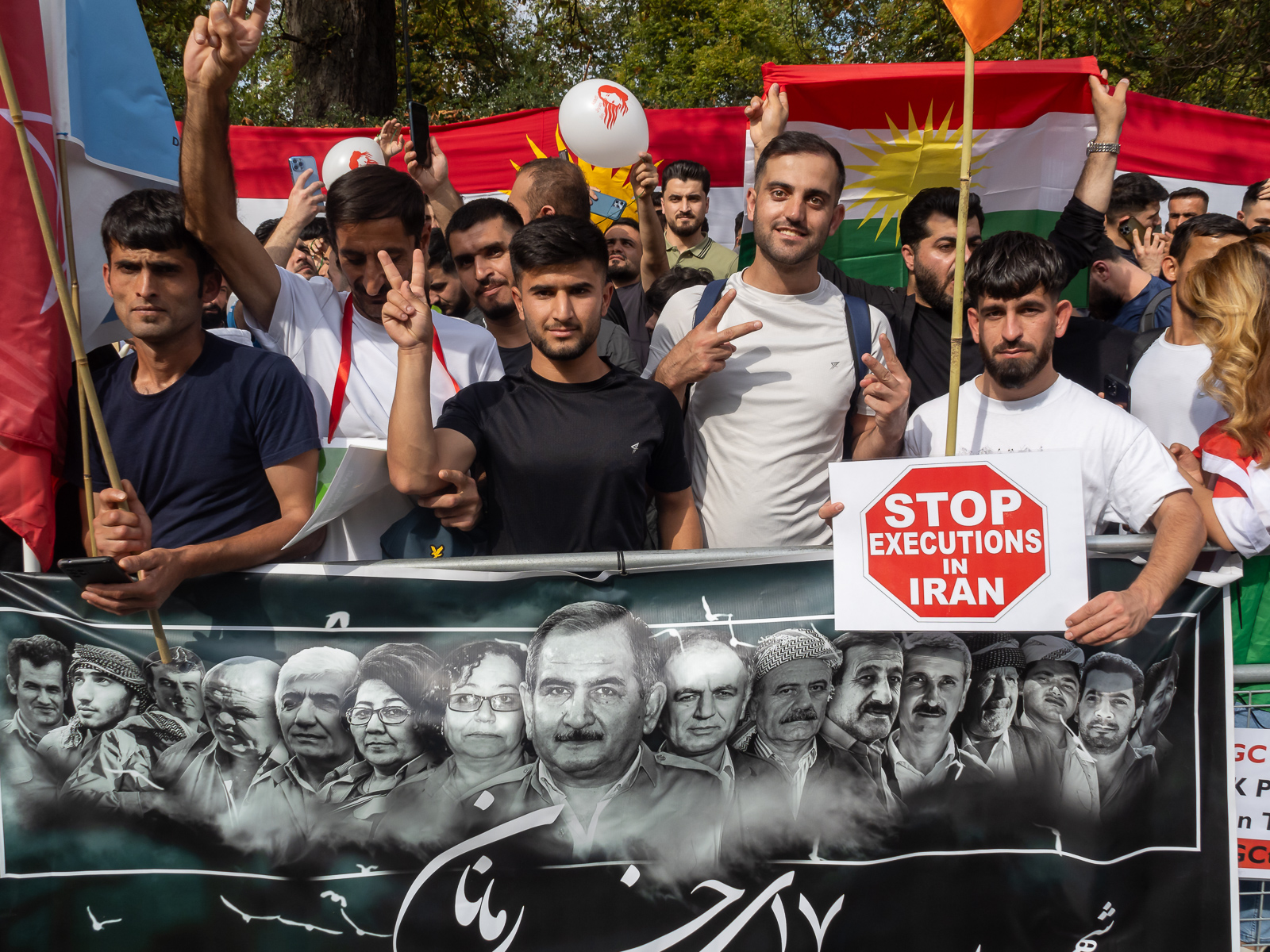
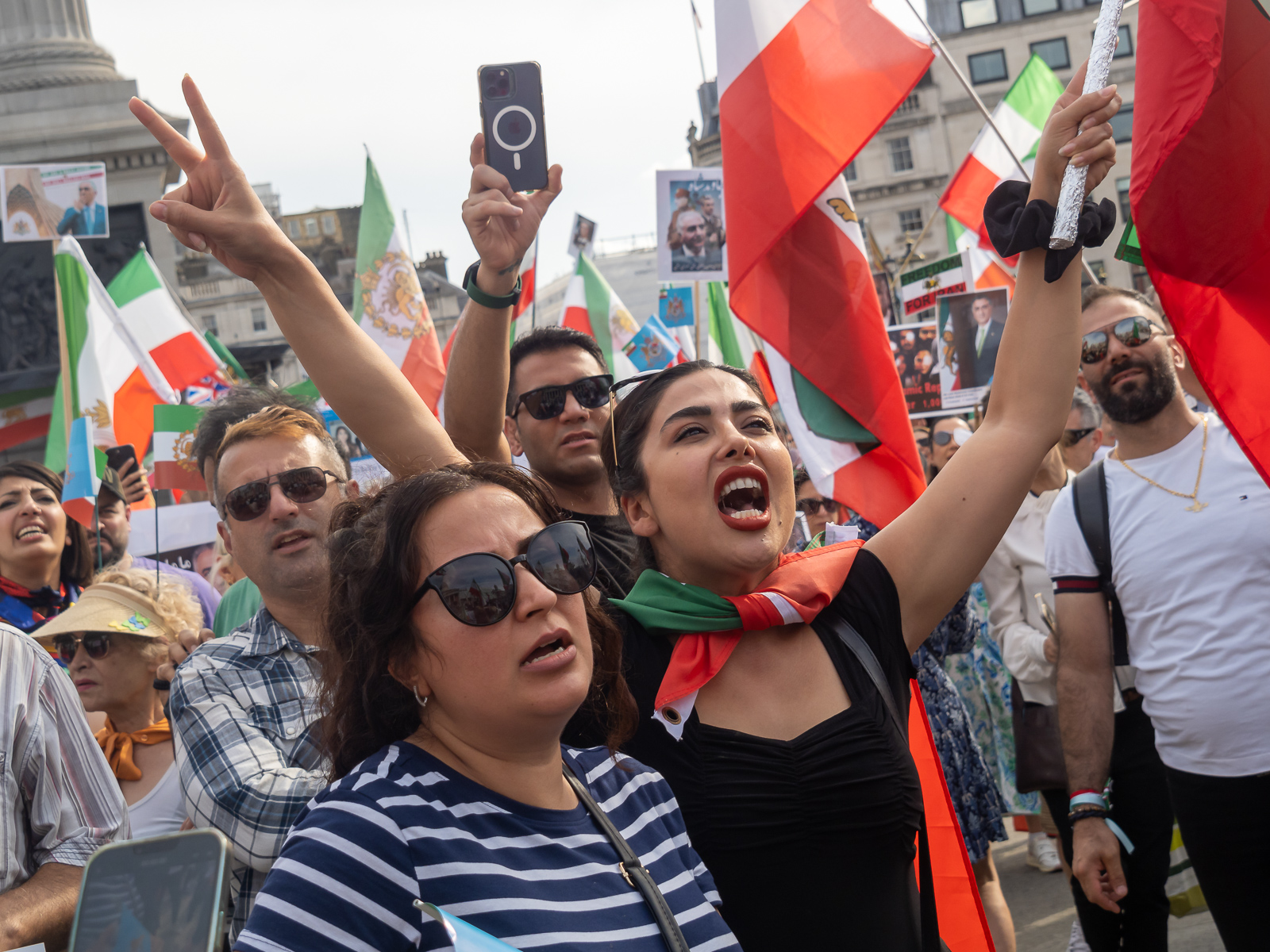
Mahsa Amini Day – Woman Life Freedom, Iranian Embassy, Kensington. 16 Sept 2023.
Protests took place in London and around the world in support of the Woman Life Freedom revolution in Iran on the first anniversary of the killing of Iranian Kurdish woman Mahsa Amini by the IGRC. People in Iran are suffering immense oppression and injustice. There were protests at the Iranian Embassy and a march to Trafalgar Square where a rally and other protests were taking place.
Peter Marshall
Goodbye & Good Riddance - September 2003
Mahsa Amini Day – Woman Life Freedom, Trafalgar Square. 16 Sept 2023.
Protests took place in London and around the world in support of the Woman Life Freedom revolution in Iran on the first anniversary of the killing of Iranian Kurdish woman Mahsa Amini by the IGRC. People in Iran are suffering immense oppression and injustice. There were protests at the Iranian Embassy and a march to Trafalgar Square where a rally and other protests were taking place. Pictures are in the same album as those from the Iranian Embassy above.
Peter Marshall
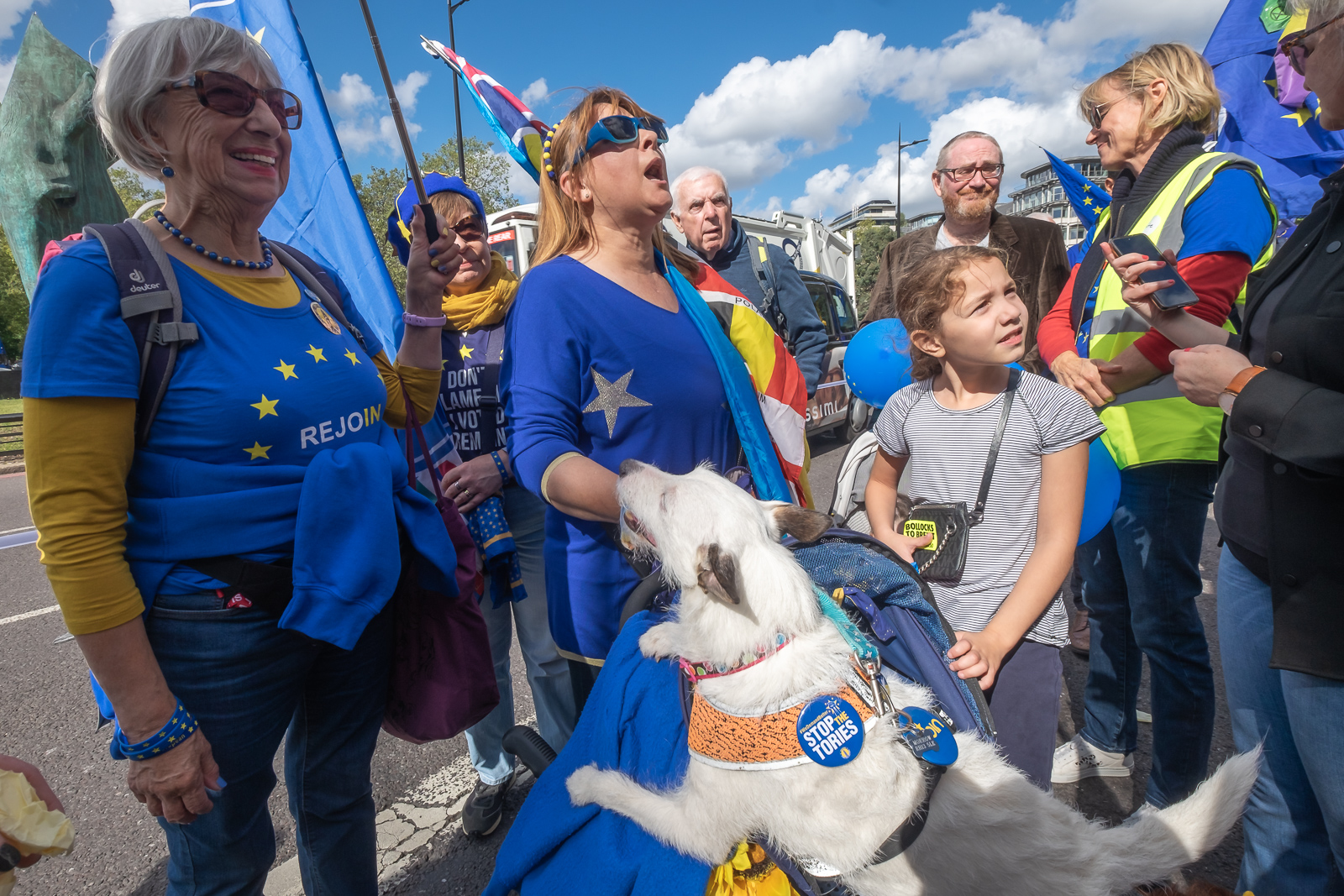
March To Rejoin The EU, London. 23 Sep 2023.
Thousands march in National Rejoin March from Hyde Park calling for an end to Brexit and to restore freedom of movement and reverse the attacks on living standards, public services and workers rights Brexit has caused. The march was followed by a rally in Parliament Square.
Peter Marshall
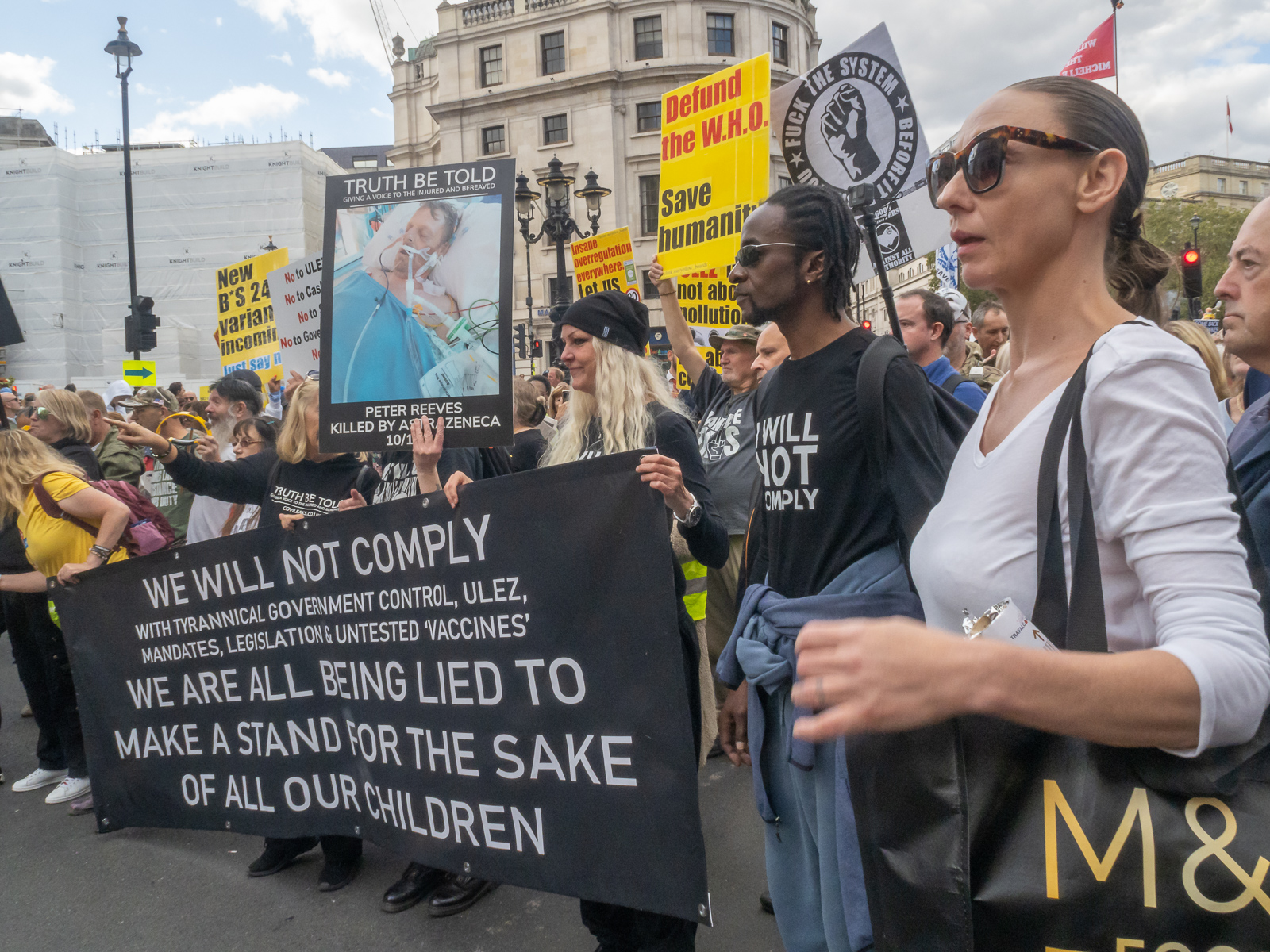
World Wide Rally for Freedom. London, 23 Sept 2023.
More than a thousand people marched from Hyde Park in the World Wide Rally For Freedom of speech, movement, assembly, health and choice.The march included many anti-vaxxers, climate change deniers and others but was dominated by those condemning London Mayor Sadiq Khan’s ULEZ expansion to include all of London. They called for mass non-compliance with this and other tyrannical government control.
Peter Marshall

The Rally For Freedom was in opposition to the various government bills and acts which have seriously restricted our freedom – such as those aimed at preventing protests and severely restricting the right to strike. But we urgently need to take action against climate change “FOR THE SAKE OF ALL OUR CHILDREN” and the vaccinations have certainly saved many, many more lives than few deaths they have caused. Any responsible mayor of London would be taking similar action to improve London’s air quality, and while there may be details in Khan’s approach which could have been better, he has proved a considerably better mayor for London than his predecessor, and deserves to beat the Tory candidate in the 2024 election.

More on the 2023 protests I photographed in later posts.


FlickrFacebookMy London DiaryHull PhotosLea ValleyParis
London’s Industrial HeritageLondon Photos

All photographs on this page are copyright © Peter Marshall.
Contact me to buy prints or licence to reproduce.


Chelsea Manning, Kurdistan & Syria – 2016

Chelsea Manning, Kurdistan & Syria – Three protests in London on Saturday 17th December 2016.


Vigil on Chelsea Manning’s 29th birthday – Trafalgar Square

Chelsea Manning, Kurdistan & Syria

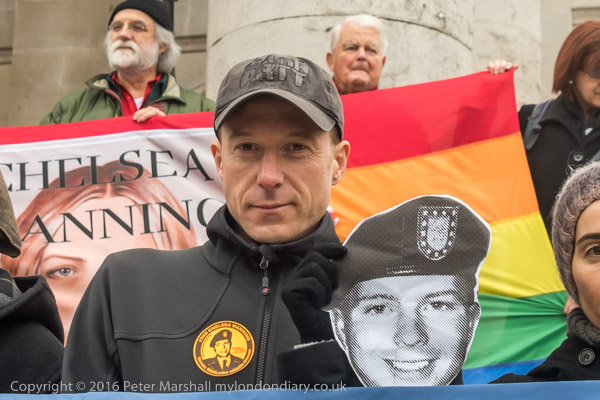
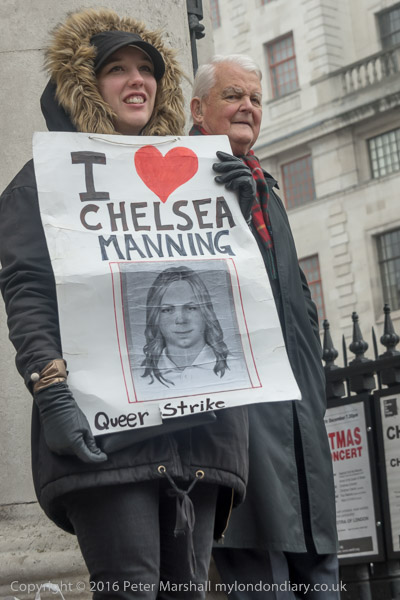
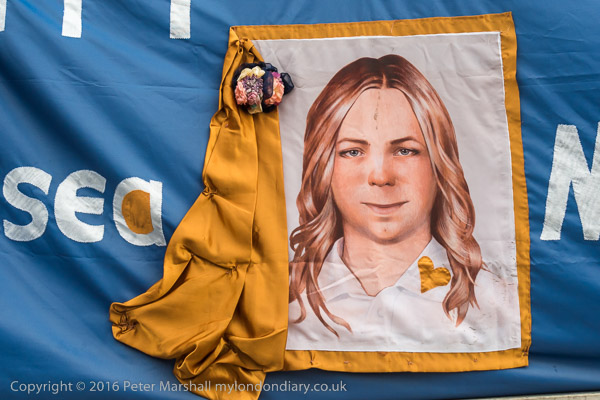
A silent vigil on the steps of St Martin-in-the-Fields in Trafalgar Square marked the 29th birthday of trans-gender whistleblower Chelsea (formerly Bradley) Manning, jailed for 35 years in 2013, whose courageous leaks revealed war crimes by US, UK and other governments.

Chelsea Manning, Kurdistan & Syria
A Queer Strike protester and veteran peace activist Bruce Kent

Working for the US Army as a specialist intelligence analyst as Bradley Manning she released almost 750,000 documents to Wikileaks in 2010 showing the US, UK and other governments’ war crimes and corruption in Afghanistan, Haiti, Iraq, Israel & the Palestinian Authority, Peru, Venezuela and elsewhere. Some were classified and many others were highly sensitive and incriminating. In 2013 she was sentenced to 35 years and held in the maximum security U.S. Disciplinary Barracks at Fort Leavenworth.

Chelsea Manning, Kurdistan & Syria

The London vigil was a part of an international day of action for her release. Since she came out as a trans woman in 2013 she had been repeatedly harassed by the military in prison and twice in 2016 had attempted suicide. Protesters around the world called on President Obama to release her on the basis of the prison time she had already served before he left office. The following month he commuted her sentence to around seven years and she was released from jail. She spent a further year in 2019-2020 after she refused to testify to a grand jury investigating WikiLeaks founder Julian Assange.

Vigil on Chelsea Manning’s 29th birthday


Kurds protest for a Free Kurdistan – Downing St

Chelsea Manning, Kurdistan & Syria

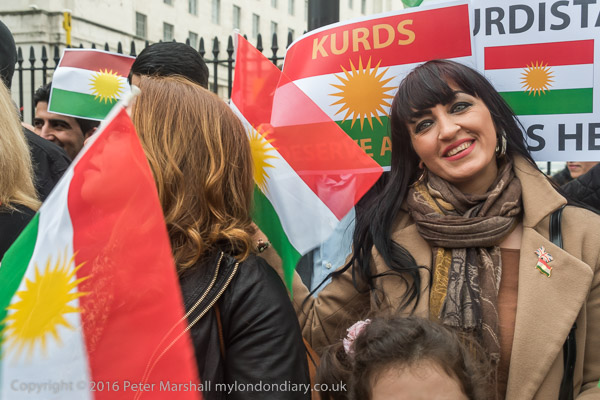
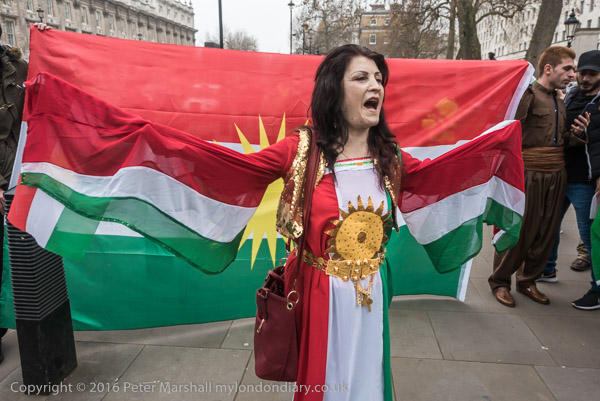
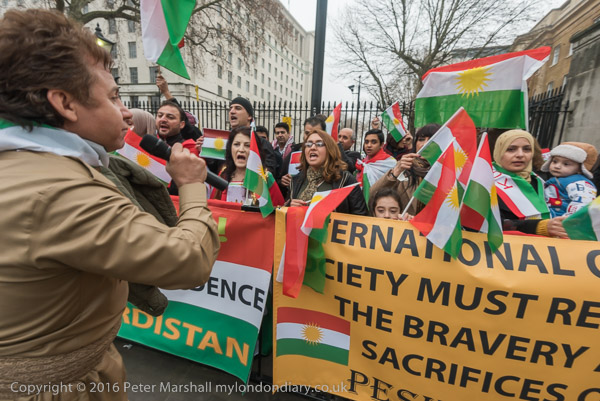
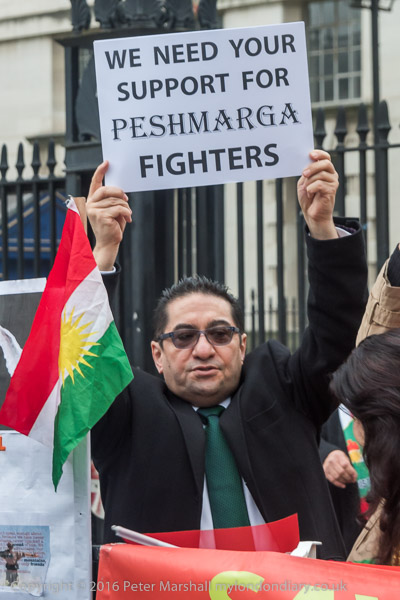
Kurds, many wearing or waving the flag of Free Kurdistan called on the civilised world to recognise the sacrifices made by the Peshmerga in fighting for freedom and against Islamic extremism in Iraq and Syria.

The Peshmerga is the army of the Kurdistan Regional Government (KRG) in Iraq, first formed in the18th century as border guards but more recently fighting for Kurdish autonomy, although it also includes Assyrian and Yazidi units. Iraqi Kurdistan is an autonomous region of Iraq, and under the Iraqi constitution the Pershmerga is responsible for the security of the region.

They played a key role in US missions against al-Qaeda after 9/11and were with other Kurdish forces now fighting against ISIS with some support from the USA. But the USA was refusing to directly supply any weapons except through the Iraqi government who were failing to pass any on the the Pershmerga as they feared they would be used to promote an independent Kurdistan. And in London people seemd to be clearly calling for a free Kurdistan.

The result of this failure to pass on weapons is that the force is poorly armed, mainly using Soviet-era weapons they captured in earlier Iraq uprisings and now weapons captured from ISIS in 2014. This protest called for greater support to provide them with modern weapons and other support they lack including ammunition, ambulances and military communications equipment.

Kurds protest for a Free Kurdistan


Doctors & Nurses Die-in for Syria – Old Palace Yard, Westminster

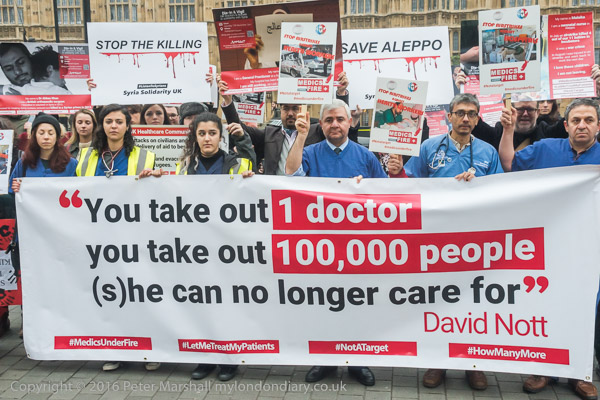
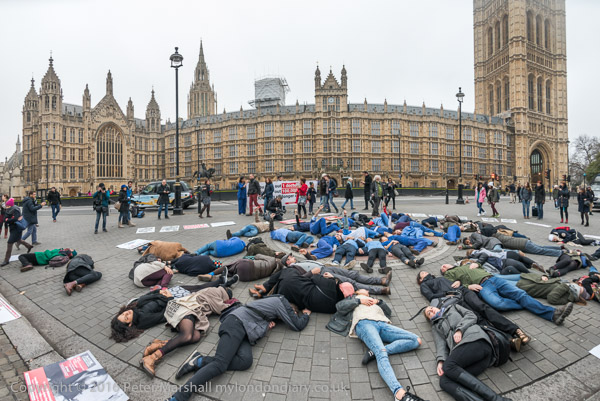
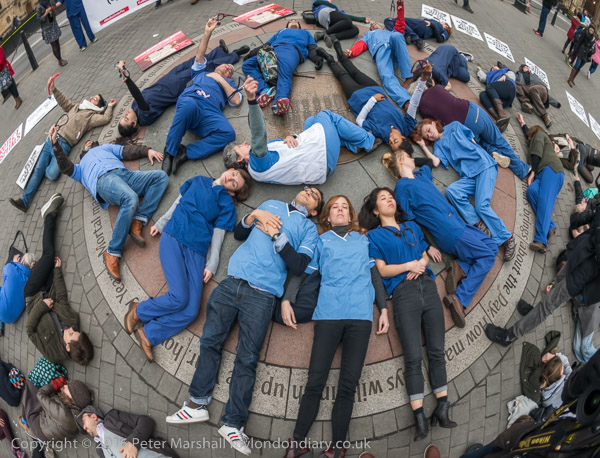
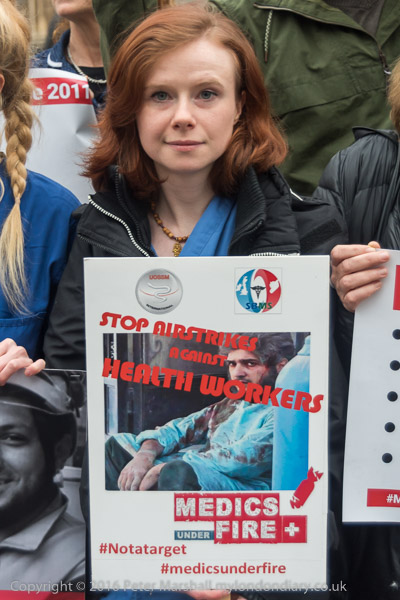
A short walk away in front of the Houses of Parliament Healthcare workers held a die-in at Parliament in solidarity with the Syrian people.

They called for an end to the bombing of civilians, hospitals and schools by the Assad regime and for the UK government to put pressure on the Syrian government to allow the delivery of aid. They urged the UK to make airdrops of aid, provide safe passage to all those trapped and grant asylum to refugees.

The protest was organised by Medact’s Arms and Militarisation (MAM) group along with Syria solidarity activist groups and individuals including the Syrian British Medical Society.

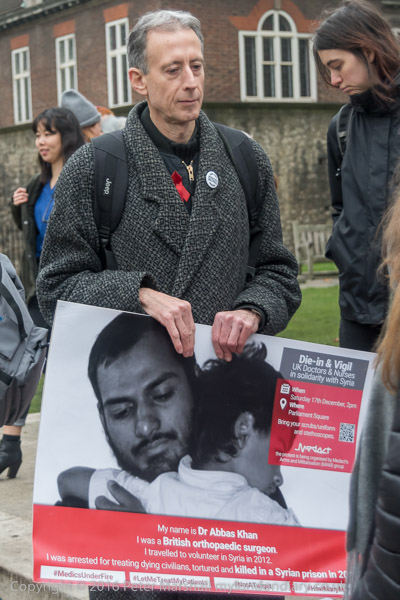
Peter Tatchell holds a poster

Between 2014 and 2021 when the Syrian Vulnerable Persons Resettlement Scheme closed, the UK accepted around 20,000 Syrian refugees. When adjusted to reflect the population size of European countries this puts the UK well down among European countries. For the total number of resettled refugees from 2008-20021 the UK comes fifth behind Germany, Sweden, Norway and France but adjusted for population size we are in 10th position.

But along with the USA, Britain failed to take any effective action in support of the Syrian revolution and the crimes against the people committed by the Assad regime, and were severely outplayed by Russia who backed Assad.

Doctors & Nurses Die-in for Syria


FlickrFacebookMy London DiaryHull PhotosLea ValleyParis
London’s Industrial HeritageLondon Photos

All photographs on this page are copyright © Peter Marshall.
Contact me to buy prints or licence to reproduce.


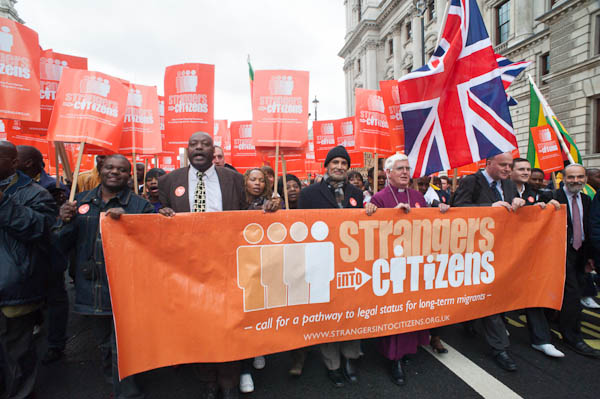
Armistice Day Protests 2006

Armistice Day Protests – Today I hope to be photographing a huge protest calling for a ceasefire in Gaza and peace in the Middle East as it makes its way from Hyde Park to the US Embassy. It’s an event some Tory politicians have tried to arouse controversy around, aided by some of the media in their lies. Armistice Day has always been an occasion for protests for peace and making it out as some huge national celebration we all share in is untrue as this post shows.

Armistice Day Protests

Both the BBC and the Tories seized on the fact that some people at a protest in London shouted ‘Jihad!’ but lie in saying it was an offshoot from the huge march taking place in London calling for peace and justice for Palestine.

It’s a lie that the BBC continues to let them promulgate without question, although their journalists must surely know that this was at an entirely separate protest organised by Hizb ut-Tahrir Britain, an Islamic fundamentalist political organisation dedicated to the establishment of an Islamic caliphate, whose lead banner at their protest read “Muslim Armies! Rescue the People of Palestine!”.

Armistice Day Protests

I’ve photographed many protests by Hizb ut-Tahrir in London since I first came across them in 2004 and they are very different and entirley separate from those organised by mainstream Muslim organisations, Stop The War, CND and the others now leading the protests by hundreds of thousands across the country calling for an end to the killing of civilians – whether Palestinian or Israelis – in Palestine and Israel. Most are particularly enraged by the killing of so many children in Gaza by air strikes which Israel claims are targeted, but are targeted on places where many people live and so die in them.

I think most of us who march – and the many more who support the marches but are unable to attend – want peace and the justice that can only come if there is a thriving country where Palestinians can live normal lives in peace and not under military rule and an apartheid regime.

Armistice Day Protests

Probably that can only come about with a two-state solution and a massive world aid programme to restore the incredible damage in Gaza as well as establishing rational borders for Palestine with the removal of many of the illegal settlements.

I grew up in a largely working class area on the outskirts of London in the 1950s, and then I think it was true that virtually the whole of the country paused to celebrate and commemorate the armistice, joining in with the minute’s silence in schools, shops, works and offices and traffic on the roads coming to a halt.

Armistice Day Protests

But even then relatively few joined in the military style parades on Remembrance Sunday, with most of my friend’s parents who had fought in WW2 having had more than enough of that kind of thing. My attendance was compulsory as a Wolf Cub and Boy Scout but I resented it and my freezing legs as cold November winds blew up my shorts – and the derision from friends who weren’t members. And by the time I was a Senior Scout we collectively refused to take part.

The idea that Armistice Day is not a suitable day for a peaceful protest calling for an end to the fighting and peace in the Middle East seems to me to be beyond absurd – yet again is taken seriously and promoted by the BBC. Armistice Day has I think always seen protests for peace – and November 11th 2006 was no exception.

On that day I began on Park Lane, where there was a brief ceremony in front of the sculpture commemorating animals who died in war in the central area there at 11 am. There were only a small group there, wearing poppies they described as purple, though to me they seemed more lilac or mauve. In 2018, the Peace Pledge Union sold 122,385 white poppies: more than any year since white poppies were first worn in 1933, and many keep their white poppies to wear in following years, as unlike the red poppies their sale is not intended to raise funds but they are simply worn as a symbol of remembrance and peace.
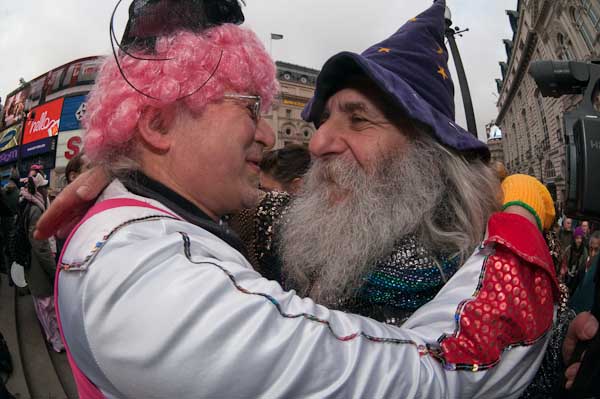
I moved on to Grosvenor Square and the US Embassy where School Students Against The War had scheduled a ‘die-in’. Unfortunately only around 20 had turned up for it – probably now many work on Saturdays or prefer to enjoy a lie-in at home.
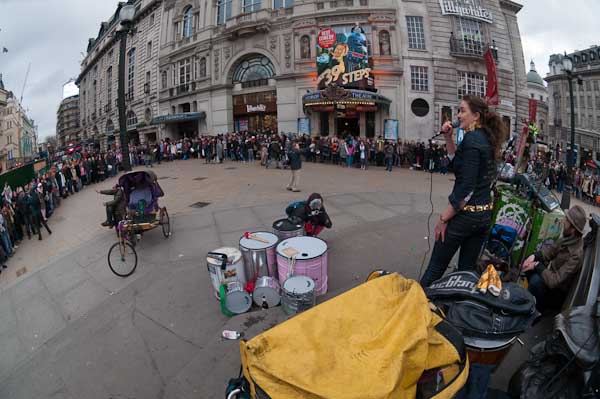
Another short walk took me to Marks & Spencer on Oxford Street, where a protest was taking place as a part of the fourth International Week of Action against the Apartheid Wall in Palestine.
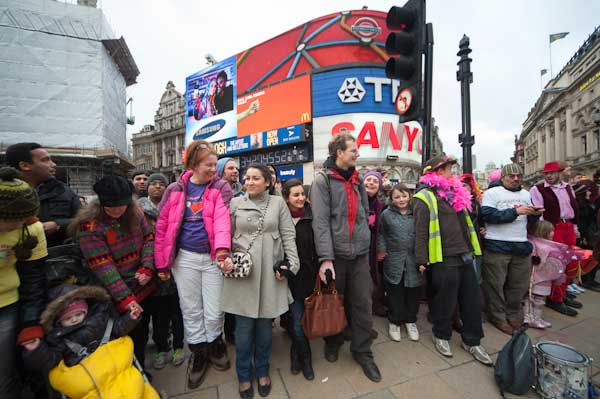
Fight Racism, Fight Imperialism who had organised this event also hold regular vigils outside M&S every Thursday evening, calling for a boycott of the company as part of a wider Boycott Israel campaign. M&S sell goods including those coming illegally from the occupied territories of Palestine and give financial and moral support to Israel.

School Students Against The War came from the US Embassy to join them and staged their die-in on the wide pavement in front of M&S. This certainly generated a great deal of attention and they made some short speeches to the the crowds milling past M&S before marching off down Oxford Street with their megaphones and banner. They staged a second ‘die-in’ further down the street, again attracting the attention of shoppers, although perhaps surprisingly, not the police none of whom seemed to be around.

I went on to Trafalgar Square where I hoped to photograph the fountains filled with red poppies, but I arrived a little late to find a man in waders fishing them out with a shrimp net. It was bizarre if not surreal, although not quite what I’d been hoping for.

My main event of the day was taking place on Whitehall, at the Cenotaph. Not the military parade ‘at the eleventh hour‘ which I had refused to cover, but a commemoration by some of the families of servicemen killed in Iraq.

Led by a piper they marched solemnly to stand in front of it, while they came up to read out the names of the 121 dead British servicemen killed in the Iraq war. A small selection of names of Iraqi civilians killed was also read out. It’s difficult to estimate the exact number who have died, and more deaths have occured since 2006. The US Brown University Watson Institute now states “we know that between 280,771-315,190 have died from direct war related violence caused by the U.S., its allies, the Iraqi military and police, and opposition forces from the time of the invasion through March 2023.”

A deputation then took a letter in to Downing Street for Prime Minister Tony Blair who had misled parliament and ignored the largest protest ever seen in the UK to take the country into a misguided invasion together with the USA.

Among those taking part in what was an extremely moving ceremony were Rose Gentle of Military Families Against The War, and others who have lost sons or partners in Iraq, including Ann Lawrence, Roger Bacon, Natasha Mclellan, Maureen Bacon as well as Lance Corporal George Solomou, from the London Regiment of the Territorial Army who refused to go to fight in Iraq. Families of some serving soldiers also took part.

Also there and supporting the event among others were Kate Hudson of CND, Yvonne Ridley and Lindsey German of Respect and Stop The War, fashion designer Katherine Hamnett, and Jeremy Corbyn MP.

This was an event that attracted considerable media attention; there is a delicate balance between intruding on private grief, but those there had chosen to make their grief public, and we had to record it for them.

More Pictures on My London Dairy – Scroll down the page there for links.


Anonymous March to Parliament – 2012

Anonymous March to Parliament – On Monday 5th of November 2012 around two thousand Anonymous supporters met in Trafalgar Square and marched to Parliament Square against austerity, the cuts and the increasing gap between rich and poor, warning the government they need to change.

Anonymous March to Parliament - 2013

This was part of #Operation Vendetta, which they described as “a worldwide Anonymous operation of global strength and solidarity, a warning to all governments worldwide that if they keep trying to censor, cut, imprison, or silence the free world or the free internet they will not be our governments for much longer.”

Anonymous March to Parliament - 2013

Wikipedia describes Anonymous as “a decentralized international activist and hacktivist collective and movement primarily known for its various cyberattacks against several governments, government institutions and government agencies, corporations and the Church of Scientology.” The article also quotes their common tag-line “We are Anonymous. We are Legion. We do not forgive. We do not forget. Expect us.

Anonymous March to Parliament - 2013

Anonymous supporters or ‘Anons’ remain anonymous by wearing masks styled on those in David Lloyd’s illustrations, based on those used in London in 1605 by Guy Fawkes, for Alan Moore’s graphic novel V for Vendetta which features ‘V’, an anarchist revolutionary and superhero who dresses in a mask and cloak. In 2005 the story was made into a film and masks based on Lloyd’s drawings were mass-produced as merchandise for this, copyrighted by Warner Brothers who collect royalties on them, though there have been many pirated versions.

Anonymous March to Parliament - 2013

The complex story, written when Thatcher was prime minister and set in the near future is set in a Britain after a nuclear war in which the UK suffered little direct damage as a Labour government had renounced nuclear weapons and closed US bases before it broke out. But in the post-war chaos corporations and fascists hadtaken power and established a totalitarian state. In the story which begins on Guy Fawkes Night in London in 1997, V engages in a number of attacks against the regime, including on 5th November 1998 blowing up the Post Office Tower and it ends following V’s death with a general insurrection in which Downing Street is blown up by an Underground train carrying V’s body.

Of course there is no Underground line below Downing Street although there are underground tunnels below much of Whitehall and elsewhere in London some of which are used by police and security services. They were built 100ft down for communications cables during World War 2 and the network was expanded during the Cold War Era.

Across the world Anonymous has carried out a number of sometimes successful cyber-operations as well as launching real-world protests, particularly against Scientology and child pornography sites.

This protest in London called for an end to cuts in education, health and welfare and the end of ‘austerity measures’ that target the poor and vulnerable, calling on the government to tackle the causes of the problems, including the banks and tax avoidance and evasion. They also want freedom for the Internet, with respect for the privacy of Internet users and the dropping of the Communications Data Bill.

They also demanded the release of Internet activists who they say are political prisoners, including Julian Assange then still holed up in a London embassy, Richard O’Dwyer wanted in the US for alleged copyright infringements, and the “PayPal 14, Jeremy Hammond, Topiary and the 4 anons of the UK that will stand trial on November 7th.”

Although the Anons had stressed this was to be an entirely peaceful event the police were taking few chances and were out in force, perhaps reacting more to the events in the novel than the actual event they were policing.

The event itself as might have been expected was chaotic, and the movement from Trafalgar Square to Parliament Square was more a drift than a march. Police reacted angrily after the protests simply walked around a line of police trying to stop them were simply walked around and one officer clearly lost his temper at the insistent taunting and photographing by the activists, but police and other protesters soon calmed things down.

Banners were raised along the fence outside the Houses of Parliament, and one young woman removed her shirt to pose in her bra. The ‘heritage wardens’ tried to stop people using fire poi in the square but soon had to give up as more and more began to perform. Police tried without much success to clear the roads to keep traffic moving around the square, and a ‘Transport for London’ lorry managed to effectively block a junction to hold up the bus I was on for over 10 minutes after I had decided to go home. The protest apparently continued for several hours after I’d left.

More on My London Diary at Anonymous March to Parliament.


Call for Justice over Police Killings

Call for Justice over Police Killings: The huge media outcry over the charging of a police officer for murder over the killing of Chris Kaba is a reminder to me that thousands have died in police custody, in prison, immigration detention and secure psychiatric hospitals, many under very suspicious circumstances, almost certainly over 2000 since 1990.

Call for Justice over Police Killings

Official figures fail to record many of these deaths has having taken place in custody and those responsible have often lied or withheld evidence. Investigations have often been superficial and some inquests, rather than attempting to get at the truth have been used to hide it.
Call for Justice over Police Killings

The Kaba case is something of a landmark and while the officer concerned remains innocent until proved guilty, if convicted he will be the first to be found guilty of either murder or manslaughter for such a death. Although it seems obvious that the police should be held responsible for their actions, until now our justicve system has failed to do so.

Call for Justice over Police Killings

Earlier this month, the IOPC (Independent Office for Police Conduct) published a letter to the family of Sean Rigg, making a unreserved apology for the failures in investigating his death in Brixton Police Station in August 2008. It was an apology which only came about after 15 years of determined campaigning and investigation by the family, particularly Sean’s sister Marcia, doing much of the job the police should have themselves done and being met by lies, deceit and cover-up.

Call for Justice over Police Killings

This apology was also a first, and many other families are still waiting for any semblance of justice and with little hope of ever receiving it.

Policing isn’t an easy job, but it isn’t made easier by some of the actions of the police and the institutional failures, including racism. Policing in the UK is meant to be by consent, but that is a consent that has to be earned, and one that is squandered by failures to properly respond to complaints and investigate the actions of officers.

Every year since 1998, the United Families and Friends Campaign (UFFC), a coalition of families of people killed by police, in prisons, in immigration detention and in secure psychiatric hospitals have met in Trafalgar Square and made a march of remembrance to a rally opposite Downing Street. Most years I’ve taken part and photographed this, and the pictures in this post come from the march on 28th October 2006.

You can read what I wrote then about this some way down the My London Diary October 2006 page, and I won’t repeat it here. There are of course a few more pictures too, linked from there, though you can also go directly to them.
But there are some particular things I’d like to point out about that year’s march. Firstly is that among those taking part were members of the Family of Jean Charles de Menezez, the Brazilian electrician shot without warning as he sat peacefully in an Underground train at Stockwell Station. The woman who ordered this murder was later rewarded with various promotions and honours and cleared at a trial of any personal culpability for his death and rose to become Commissioner of the Metropolitan Police and was honoured for her service.

On her watch we saw the first plans for patrols in the UK by armed police, increased use of controversial stop and search powers, live facial recognition, the heavy handling of a vigil for Sarah Everard, various failures to implement reforms and obstruct the course of justice in cases involving the police.

Pauline Campbell speaking at the event in 2003

Also taking part in 2006 was Pauline Campbell, whose daughter Sarah Campbell died in Styal Prison in 2003, who told us that home office had finally admitted responsibility for the death of her daughter. The death of her daughter drove her to become a powerful and persistent campaigner taking direct action against the increasing number of deaths of women in custody. But Pauline’s story had a tragic end when her body was found on her daughter’s grave after committing suicide on her daughter’s birthday in 2008.


Pollution, Corporate Greed & Cycle Deaths

Pollution, Corporate Greed & Cycle Deaths: Protests in London on Thursday 12th October 2017.


Roadblocks against Air Pollution – Trafalgar Square

Pollution, Corporate Greed & Cycle Deaths

On the day the the London Assembly were discussing the problem of air pollution in London, campaign group ‘Stop Killing Londoners’ carried out a series of short protests holding up traffic in London to draw attention to the problem. They had begun the day by a briefly blocking Tower Bridge, close to City Hall, in the morning rush hour, too early for me to easily cover. Many had criticised the group for these protests which hold up traffic, but it proved effective for getting some media coverage for the issue, when almost all protests go unreported.

Their message was simple. The early deaths each year of almost 10,000 Londoners due to air pollution is a health emergency and the politicians need to prioritise the lives of Londoners over the special interests of the car and oil companies.

As well as early deaths, air pollution is also the cause of health problems that make life miserably for many as well as being a drain on the resources of our health system. And road traffic is a major source of pollutants including nitrogen oxides and particulates that cause most of these health problems.

Roadblocks against Air Pollution


Prime Minister, Please Sentence – Downing St

Pollution, Corporate Greed & Cycle Deaths

As I rushed down Whitehall later I came across this long row of banners along the whole frontage of the protest pen opposite Downing Street. They relate to the case of John Marshall (no relative) a former nuclear engineer who alleges he is a victim of corporate greed which has ruined his career and his family since around 2010, naming Amec, Sellafield and others involved including Derek Twigg MP and calling for justice. Twigg has been Labour MP for Halton in Cheshire since 1997.

There had been an earlier protest with the same banners here a few months before but there was nobody present to ask more about the case when I made these pictures and it remains something of a mystery.

Prime Minister, Please Sentence


Cyclists Kensington Vigil & Die In – Kensington & Chelsea Town Hall

Pollution, Corporate Greed & Cycle Deaths

Campaign group Stop Killing Cyclists held a die-in vigil outside Kensington & Chelsea Town Hall in protest after a young 36 year old woman died at Chelsea Bridge last week when the driver of a heavy goods vehicle turned left crushing her, the second cyclist killed by a HGV in the borough this year.

Pollution, Corporate Greed & Cycle Deaths

The point out that Kensington & Chelsea is one of the worst London boroughs in opposing plans for protected cycle lanes, bus-stop cycle by-passes and 20mph speed limits. The borough had failed to build even a single metre of protected cycle lanes, and cyclists in the borough including children and pensioners have to share the roads with lorries, cars and buses.

Nicola Field

The protesters demanded that the borough end its opposition to safer cycling schemes and provide suitable infrastructure to make cycling safe in the area. They also called on TfL to redesign the Chelsea Bridge roundabout where 36 accidents had been reported in the previous year.

Many of the cyclists who die each year do so when lorries turn left at junctions with the driver unable to see a cyclists on the left of them who gets crushed under their heavy vehicle. The protest demanded that the Transport Minister legislate urgently to introduce the long-demanded regulations for safer HGV design which would eliminate the huge blind areas and get older unsafe vehicles off the road.

TfL had made plans to fine lorries and other vehicles which illegally drive into mandatory cycle lanes, but have been held up by doing so as the Transport Minister has not issued to order to allow them to do so. Protesters demaned this be issued immediately.

Victoria Lebrec

Among those who spoke at the event were Victoria Lebrec, a cyclist who had to have a leg amputated after a skip lorry failed to see her, Stop Killing Cyclists co-founder Nicola Field, other cyclists who had survived accidents and Cynthia Barlow OBE whose daughter was killed by a concrete lorry in 2000. She had become chair of the charity RoadPeace which empowers and support the families of those who are killed and injured on the roads and fights and fights to improve vehicle safety.

Cynthia Barlow OBE

Cycling instructor Philppa Robb said that Kensington & Chelsea has a good cycle training programme but the borough has totally failed to proved a safe infrastructure for cyclists and so few residents feel safe to use their bikes.

Philppa Robb

After the die-in Stop Killing Cyclists co-founders Donnachadh McCarthy spoke and Nicola Field read out one of the posters that someone had brought to the protest, “Why does Kensington & Chelsea give rebates to rich f**kers yet cheapskates vulnerable suckers? Safe Streets 4 All’

The council implemented a partially segregated cycle lane in Kensington High Street in 2020 but it was removed after vocal complaints from some motorists. In 2023 they consulted on proposals to restore the cycle lanes there and on Fulham Road and found a large majority were in favour of some restoration. However this was only for a dashed line advisory lane rather than one properly segregated from traffic, although this may later be upgraded.

More at Cyclists Kensington Vigil & Die In.


March for Peace and Liberty – 2005

March for Peace and Liberty – 2005 Eighteen years ago on Saturday 24th September around 50,000 of us were marching through London for peace and calling for the withdrawal of forces from Iraq.

March for Peace and Liberty

The protest, called by Stop the War Coalition, the Campaign for Nuclear Disarmament (CND) and the Muslim Association of Britain (MAB) coincided with an even larger protest in Washington close to the White House.

March for Peace and Liberty

Organisers of the Washington protest claimed that around 300,000 took part, while US police said the half that number was “as good a guess as any.” Police estimates of the London march were, as usual more political than based on any reality, and their figure of 10,000 was laughably low.

March for Peace and Liberty

I had developed my own simple methods to assess numbers. For smaller protests I’d simply stop at a suitable point and count those passing. When numbers got a little larger I’d count in groups of roughly ten, larger still groups of hundreds. Though sometimes that hundred might only have been 80 or sometimes 125 the overall figure was probably within around ten percent of the actual total.

March for Peace and Liberty

But with really large protests such as this, well over the police figure of 10,000, any form of counting is too time-consuming and tedious. I’d often still try to get a rough figure by counting for a minute where I was taking photographs a few times as the protest went part, and then make a rough estimate using the time the whole protest took to pass me. Typically the answer this gave me was around half the number claimed by the march organisers and anything around four to ten times the figure release by the police and often quoted by news media.

It’s a little difficult to find the text I wrote about the protest on My London Diary in 2005 as there are no headings in the text column on the September page, with headings and images in a separate unlinked column to the right – later I improved the site design to unite text and pictures and provided a list of links to stories which remains at the top of the monthly pages. Back in 2005 you simply had to scroll down a long page, and while the headings and text were simple to find, many viewers never managed to find the of text, which ends with a little art criticism. So here it is, with a few minor corrections:

What a fine mess you’ve got us into” is probably the conclusion of most of the British people about Blair’s decision to join in with Bush’s Iraq invasion in 2003. Quite how many of them turned up on the 24th to march for a British pull-out is a matter of contention. Both police and organisers estimates – ten and a hundred thousand respectively – seem to me extremely unlikely.

So I was there with probably between twenty-five and fifty thousand people, walking across Parliament Square in front of the Houses of Parliament, despite it being a Saturday afternoon, with no business taking place inside, the ban on the use of amplification within a kilometre of parliament was still in force, so the event was a little quieter than usual. Some did choose to defy the ban and the police appeared not to notice.

Gate Gourmet supply in-flight meals for British Airways. It used to be a part of the company, but was separated out, then sold to American management. Rather like what is starting to happen in our National Health Service, and of course British Airways was also originally owned by the nation.

The company takes advantage of a largely Asian labour force living around the edge of the airport, paying them relatively low wages. The new management decided to cut labour costs even more by bringing in casual labour to do much of the work (while apparently employing more managers!) and when the employees held a meeting to protest, they were sacked.

Pressure from both BA and the union (TGWU) led to the company offering to take back some of the sacked workers, but not all, and the strike continues. Some of the strikers came to take part in the rally, to publicise their case as well as call for a withdrawal from Iraq.

Most of the usual people were there at the march, and I took their pictures again – and some are on the site. When the march started I hung around in Parliament Square to watch it go past before walking rather faster than the marchers up Whitehall.

By the time I’d reached Trafalgar Square and waited again for the end of the march to pass, my knee [I’d injured it earlier in the month] was beginning to ache and I didn’t feel up to walking to Hyde Park. I sat down and ate my sandwiches contemplating the new sculpture on the ‘fourth plinth’, ‘Alison Lapper Pregnant’ by Marc Quinn. This 15ft white marble shows Lapper, an artist born without arms, sitting naked and eight months pregnant, and will stay on the plinth until April 2007.

It is a striking piece of work and was obviously attracting a great deal of attention from the tourists in the square. I took my time sitting and looking at it while I was eating, and then walking round it from all sides (slightly impeded by the preparations for a juvenile TV show to be broadcast from the square the following day.) Lapper herself works with photographs of her body, and this statue is perhaps too like her black and white photographs, with a rather unpleasant surface, sometimes more soap than marble. I found myself thinking thank goodness for the pigeons who were perching on it and doubtless adding their contributions to it.

Its position up there on a plinth is not ideal. This is work that would be best seen from roughly the same level as its base. The other plinths in the square are occupied by men on horses, which raise their figures more suitably above the plinths. Perhaps when it leaves the square a more suitable display place can be found, but its present placing is a great for catalysing debate about disability. Of course another disabled figure dominates the square; Nelson has his back to her and does not need to call upon his blind eye not to see her.

Many more pictures on My London Diary


International Day in support of victims of Torture

International Day in support of victims of Torture: The United Nations Convention against Torture and Other Cruel, Inhuman or Degrading Treatment or Punishment came into force internationally on 26 June 1987, and in 1998 the UN declared the 26 June of every year to be the International Day in Support of Victims of Torture.

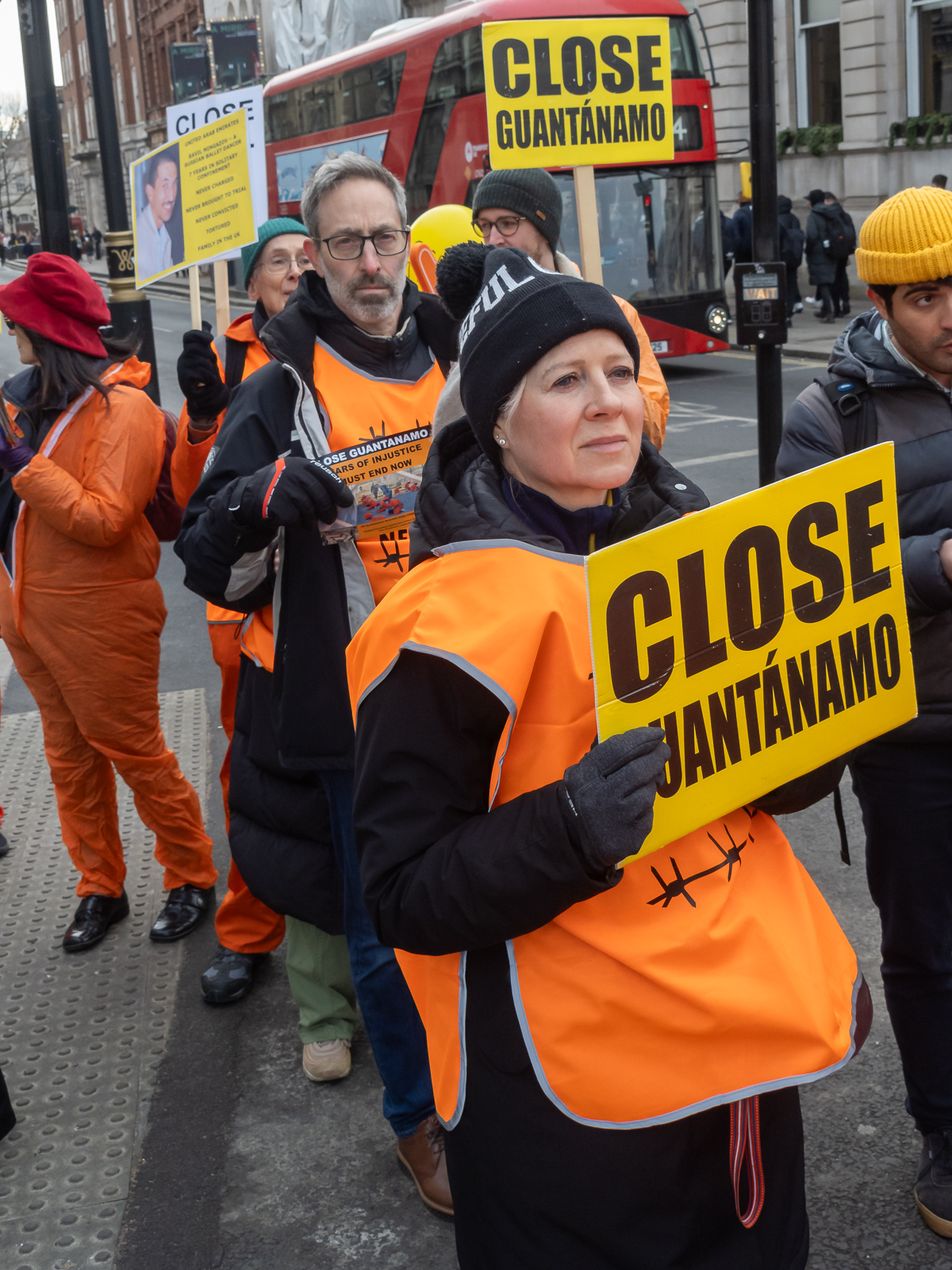
Over the years I’ve photographed a number of vigils and protests marking the day in London by various groups concerned with human rights, mostly organised by the London Guantánamo Campaign but often joined by others.


No to Torture Vigil – Trafalgar Square, London. Tue 26 June 2012

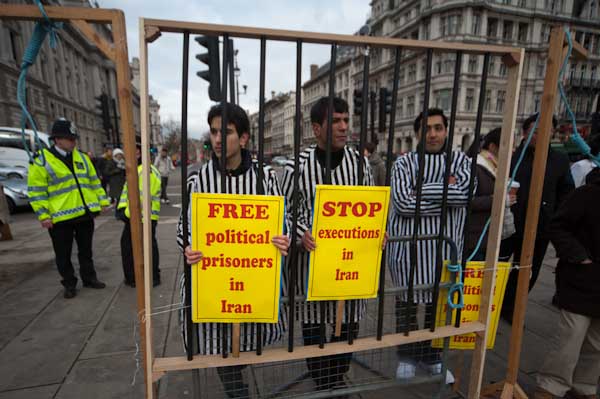
Supporters of the The London Guantánamo Campaign and other human rights activists held up placards saying “NO to torture” in over 30 languages. Other protesters against various human rights violations joined in the protest, including campaigners calling for an end of the Iranian executions of the Baloch people, those against the extraditions of Babar Ahmer, Talha Ahsan and others to the US and the Free Mumia campaign.

International Day in support of victims of Torture

More on My London Diary at No to Torture Vigil.


Say No To Torture – Trafalgar Square, London. Wed 26 Jun 2013

International Day in support of victims of Torture

The London Guantanamo Campaign which has been active in calling for the closure of Guantanamo and other prisons including Bagram in Afghanistan since 2006 again held a vigil in Trafalgar Square.

International Day in support of victims of Torture

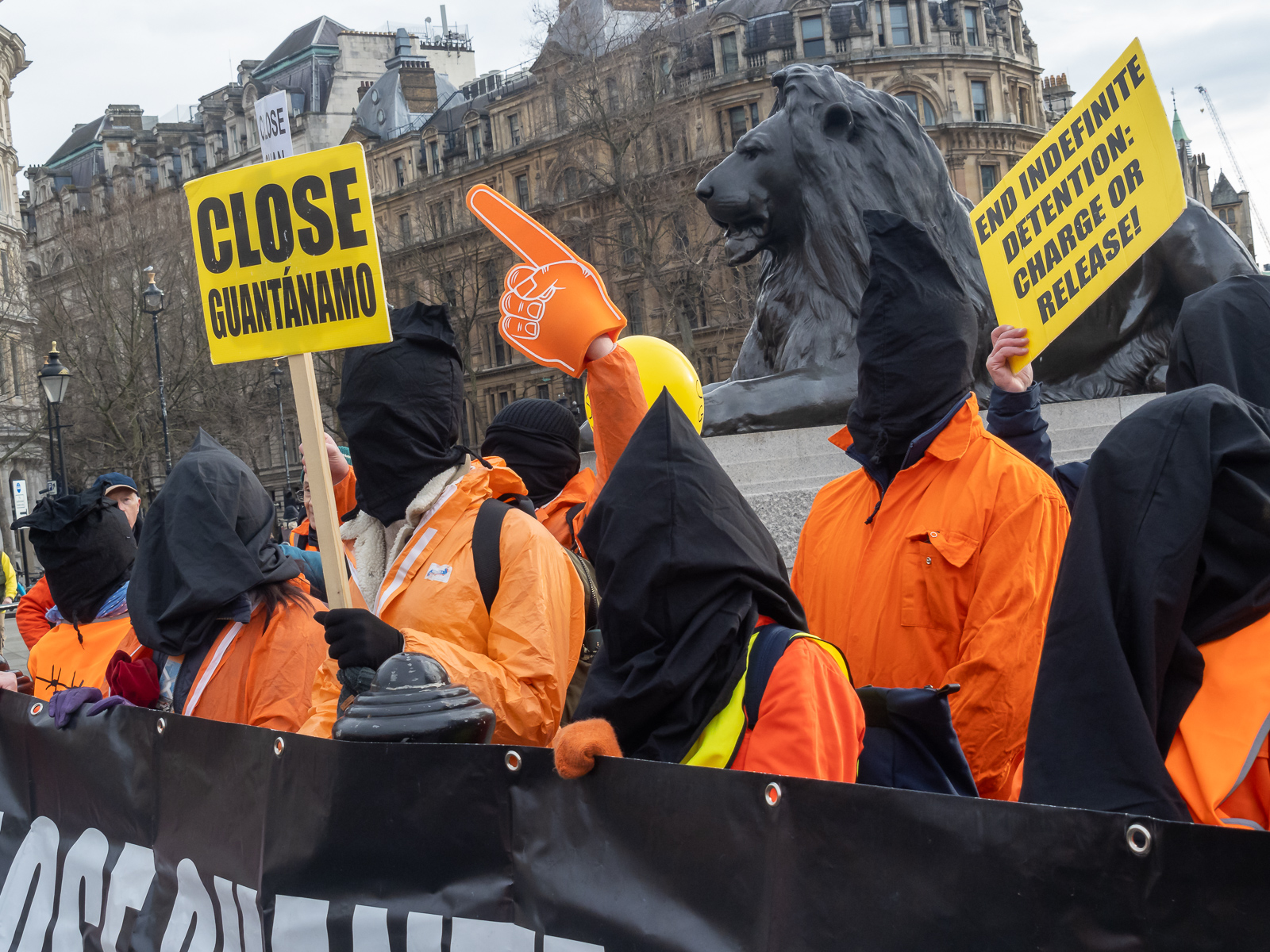
Some wearing orange Guanatanamo-style jump suits and black hoods, they stood in a lin in front of the National Gallery, calling for the release of London resident Shaker Aamer and the other detainees held and tortured without trail. Shaker, along with most of the other prisoners was on the 141st day of a hunger strike, being subjected to regular beatings, being brutally forcibly fed and held in solitary confinement – which also constitues torture under the UN definitions.

International Day in support of victims of Torture

Among those taking part in the vigil was veteran peace campaigner Bruce Kent. The ‘Say No To Torture’ protest overlapped with another human rights protest over Balochistan, a ‘nation without a state.’ Balochs live mainly in Pakistan and have been subject to arrests and other human rights violations including torture by the Pakistan authorities for campaigning for independence.

More on My London Diary at Say No To Torture.


Torture Solidarity Vigil – Trafalgar Square, London. Thu 26 Jun 2014

In 2014, Kashmiris wore black hoods and headbands with messages ‘Mutilated’, ‘Raped’, ‘Tortured’, ‘Executed’ and waved Kashmiri flags to protest at the widespread human rights abuses by the 7,000 custodial killings and torture of prisoners by the Indian state Indian state in Kashmir- 1 in 5 Kashmiris is a torture victim.

Also in Trafalgar Square was a vigil by the The London Guantanamo Campaign with people holding posters and blindfolded or gagged, calling for the release of prisoners from the US prison camp and an end to impunity for torturers.

The UK has failed to take proper action over allegations of prisoner abuse by the British military in Iraq and Afghanistan and has continued to be involved in the “rendition” and torture of British and foreign nationals abroad. Our government prevents violations becoming public knowledge, relying on secret courts and partial and biased investigations.

More on My London Diary at Torture Solidarity Vigil.


UN Day for Victims of Torture – Trafalgar Square, London. Fri 26 Jun 2015

The London Guantánamo Campaign and others were back again in Trafalgar Square in a solidarity vigil in recognition of the suffering and rights of victims and survivors of torture, calling on those in positions of power able to put an end to the use of torture.

Obama had promised in 2010 to end the shame of Guantanamo, but the detentions and torture continued throughout his presidency, though there were some releases.

More on My London Diary at UN Day for Victims of Torture.


Here are links to further protests I covered in recent years on 26 June against torture, in Trafalgar Square in 2016, at the US Embassy in Nine Elms in 2018 and by Balochs in Trafalgar Square in 2019. In 2017 I had a day off work for medical tests, and in 2020 there was no vigil because of the lockdown.


St George’s Day 2009

St George’s Day 2009: On Thursday April 23rd 2009 I came up to London to find and photograph celebrations taking place of St George’s Day. People had for some years been calling for a proper celebration of the English Patron Saint’s day, but it was still hard to find much celebrations to photograph.


St George’s Day – Trafalgar Square

St George's Day 2009

I began at Trafalgar Square, where some events were said to be taking place, but there was relatively little happening when I arrived shortly after lunch. In 2009 St George’s Day was a Thursday which was perhaps why few people had come.

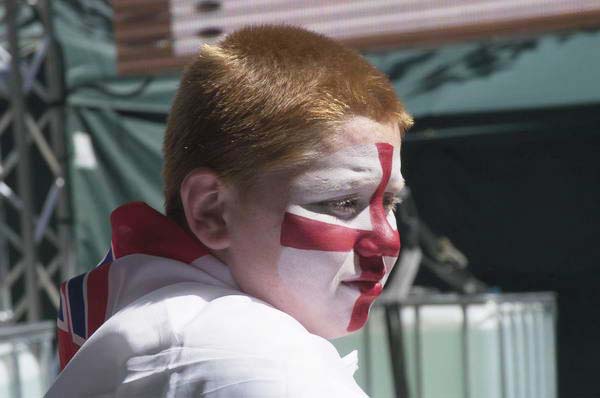
There were a handful of people from ‘The English Democrats’ who had dressed up for the day as a part of their campaign for an English Parliament and for St George’s Day to be made an English national holiday. I photographed them together with a couple of women making a charity collection for ‘Save the Children’.

St George's Day 2009

The English Democrats told me that the previous year they had been refused entry to the National Gallery because they were wearing the flag of St George. I went with them when they tried again this year and they were allowed in but were told they could not campaign or collect money in the gallery.

St George's Day 2009

While I was in the square a number of others wandered in wearing shirts, hats or badges or red roses were obviously expecting something to be happening and were disappointed. Although some event was planned for the Saturday it seemed odd there seemed so little interest on the day itself.

St George’s Day – Trafalgar Square


The Lions part: St George & the Dragon – Red Cross Garden & Southwark Cathedral

St George's Day 2009

Rather more was happening across the river in Southwark, where The Lions part, a group of performers associated with the Globe Theatre on Bankside, were celebrating the day with a series of performances of ‘The Ballad of St George & the Dragon’.

I went to watch their short musical variation on the traditional story of St George in Red Cross Garden, which along with the adjoining hall and cottages was established by the social reformer Octavia Hill in 1897-90. I arrived a little late and the performance had already begun, but fortunately after a short interval they gave a second performance.

Many of the audience were children from the nearby cathedral school, and they clearly enjoyed it.

After the performance I walked with the players as they made their way through Borough Market to Southwark Cathedral to give another performance in the churchyard there.


The Lions part: St George & the Dragon

The George Inn, Borough High St, Southwark

I left the performers at Borough Market and made my way to the George Inn on Borough High St, a Grade I listed galleried coaching inn owned by the National Trust. It was rebuilt in 1677 following a great fire which destroyed much of Southwark with three fronts around a courtyard, though only one has survived. It was formerly known as the George and Dragon.

Again I arrived late, as there had been a procession of people in costume earlier, but there were still a few people there I could photograph.

The George Inn, Southwark


England Supporters, Trafalgar Square

I went back over the river to Trafalgar Square where I now found around 25 football supporters, many in England shirts having a noisy time on the plinth of Nelson’s column.

They seemed to be enjoying themselves and were happy to be photographed. One of the street performers with a regular pitch on the North Terrace had joined them, and the Heritage Wardens seemed to be emulating Nelson and viewing the various breaches of the bylaws with a blind eye.

England Supporters,Trafalgar Square


St George & the Dragon, Trafalgar Square

Apparently the National Gallery had been celebrating the day by inviting the the Suffolk Howlers to perform their traditional ‘St George & The Dragon’ in front of Tintoretto Saint George and the Dragon in the gallery.

After finishing there they had come out from the gallery and were going to give a performance in Trafalgar Square, despite the competition from those celebrating around Nelson.

As I wrote, their version “had a little more complex plot than the version I’d seen earlier in Southwark, including Beelzebub, a doctor and a Turkish knight, with additional contributions from a couple of bystanders, one who had been imbibing from a bottle labelled Lucozade that appeared to have rather more intoxicating properties than usual, and the other the displaced street performer. While he largely draped himself over the “Please do not feed the pigeons banner’, Lucozade man took a far more active role in the proceedings, giving first aid to the injured St George and executing some surprisingly nimble dance steps and generally adding a chaotic improvisation to the performance. He really deserved the applause when he took a bow with the rest of the cast at the end of the play.”

St George & the Dragon