End Iraq Invasion – 2003

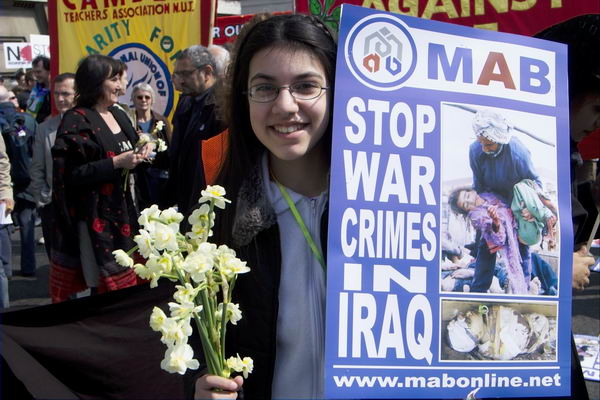
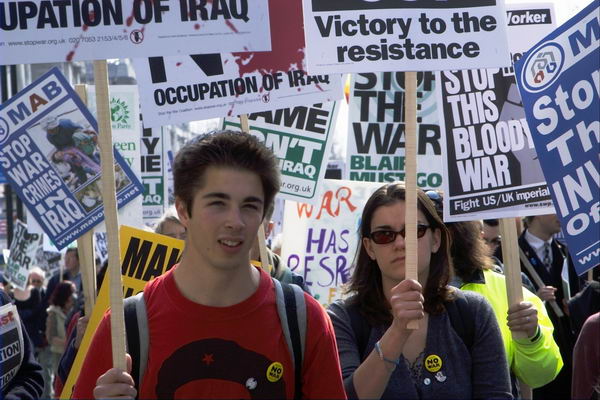
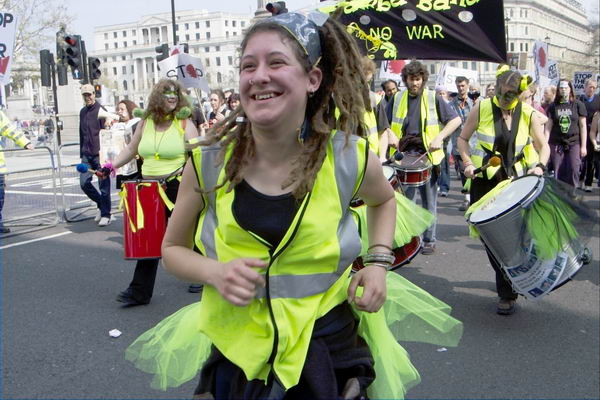
End Iraq Invasion: Saturday 12 April 2003 saw another protest (there had been one a week earlier) against the invasion of Iraq which had begun on 20th March 2003 with US troops supported by those from the UK, Australia and a few from Poland.
End Iraq Invasion - 2003

Before the invasion UN weapons inspectors had reported that they had found no evidence of ‘weapons of mass destruction’ in Iraq. But US and British politicians still insisted Iraq had these, but had just hidden them well. We now know that there were none. It was an invasion and war fought on known lies.
End Iraq Invasion - 2003

Almost certainly both the US and UK authorities at the time of invasion knew that there were no WMDs in Iraq, but the US had been planning and working up to the invasion for several years and were not going to let the facts get in the way of their war. The US had also carried out a long campaign to link Saddam Hussein and the 9/11 attacks although there was no evidence for this and later “assertions of operational links between Iraq and al-Qaeda have largely been discredited by the intelligence community.”
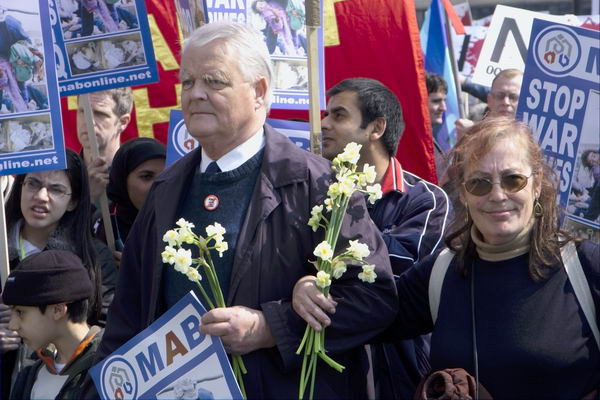
End Iraq Invasion - 2003 Bruce Kent
Bruce Kent

The British public were also clear we should not go to war, with the largest protest ever in London in February 2023 demanding we not not invade Iraq. This had followed a unprecedented long campaign across the country with many local groups out on the streets in protest.
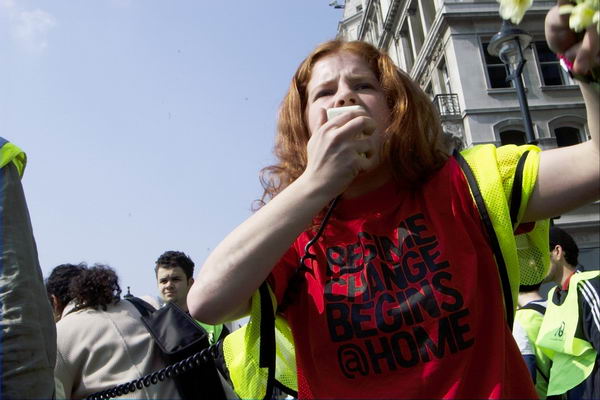
End Iraq Invasion - 2003
Regime Change Begins At Home – a call to get rid of warmonger Tony Blair

There were similar protests in other countries, with the largest of all in Rome where over three million took to the streets – roughly twice as many as in London.
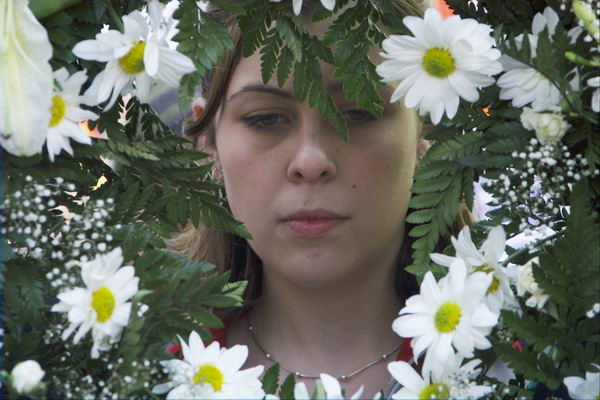
End Iraq Invasion - 2003
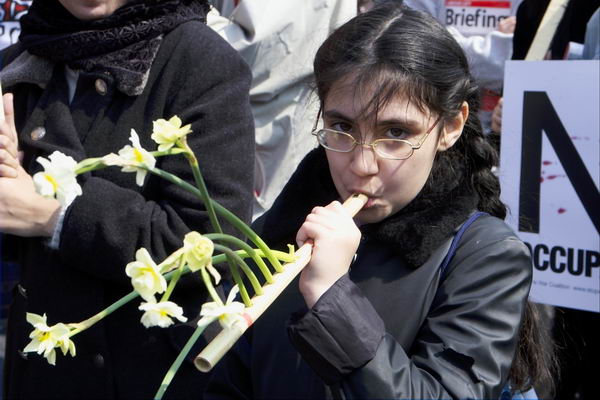
This was a protest with flowers for the dead

Many of our allies also came out against the invasion – including France, Germany, Canada and New Zealand, but Prime Minister Tony Blair was determined to support the invasion – using misleading claims and lies to persuade MPs to back it – including that infamous ‘dodgy dossier’.
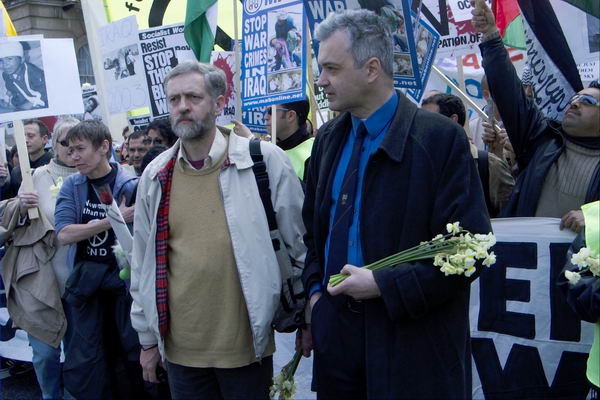
End Iraq Invasion - 2003 Jeremy Corbyn
Labour MP Jeremy Corbyn

By April 12th Baghdad and Kirkuk had been captured, and on May 1st President Bush announced the end of “major combat operations’ although the war continued with an insurgency against the occupying forces and the new US-backed Iranian government.
The insurgency continued after the US pulled out of Iraq in 2011, eventually resulting in the rise of ISIS. Various studies and experts conclude that the invasion and occupation resulted in a huge rise in Islamic terrorism and the global Juhadist movement.
In 2004 “UN Secretary-General Kofi Annan called the invasion illegal under international law, as a breach of the UN Charter.” It was an event that showed the US’s contempt for a rules-based international order or at least their assertion that the rules did not apply to them, operating under the simpler principle that US might is US right.
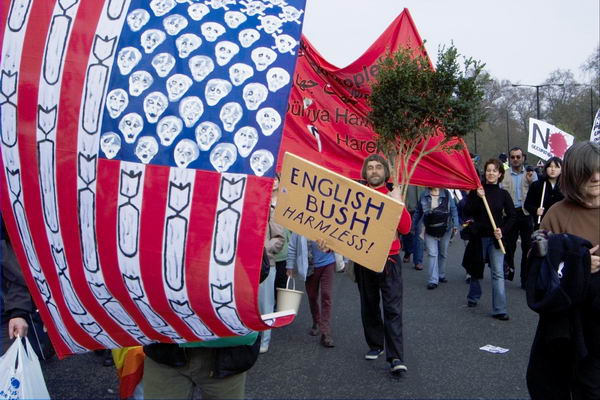
All pictures from Saturday 12 April 2003.

More on My London Diary.


FlickrFacebookMy London DiaryHull PhotosLea ValleyParis
London’s Industrial HeritageLondon Photos

All photographs on this page are copyright © Peter Marshall.
Contact me to buy prints or licence to reproduce.

Muslims Unite Against Samarra Bombing – 2006

Muslims Unite Against Samarra Bombing: Following the bomb attack on the al-Askari mosque in Samara, Iraq there were several days of sectarian violence between Shia Muslims and Sunni Muslims despite attempts by religious leaders there to calm the situation. The structure of the 10th century mosque was badly damaged and although the bombing caused no direct casualties there were many deaths in the few days that followed.

Muslims Unite Against Samarra Bombing - 2006

The bombing was probably carried out by a cell of Al-Qaeda in Iraq although they did not admit responsibility. The US, then occupying Iraq, played down the aftermath of the bombingm claiming the death toll was around 300, but later reports suggest around ten times that number died.

Muslims Unite Against Samarra Bombing - 2006
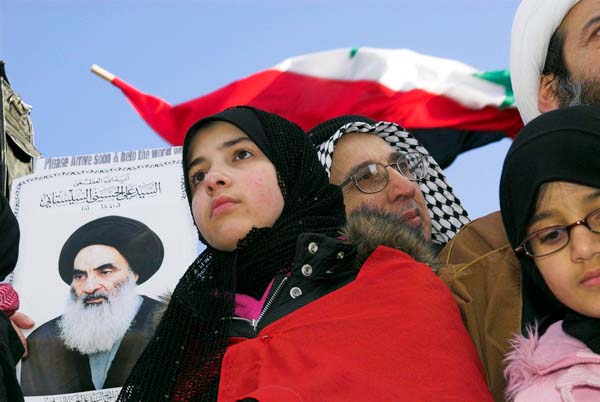
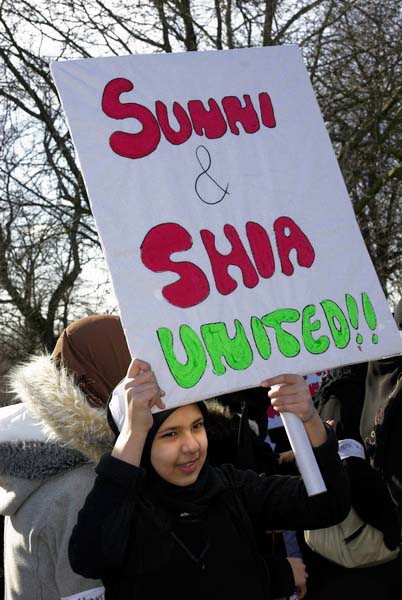
The march was led by children with placards “Sunni & Shia United!!!” , “Have You No Mercy”…

The al-Askari mosque bombing was the start of the First Iraqi Civil War and the mosque was again damaged by a bomb the following year.

Muslims Unite Against Samarra Bombing - 2006
A simple equation: Osama + Bush = Al-Qaida

Here is the account of the march and rally in London on Saturday 25 February, 2006 I wrote for My London Diary at the time – will the usual corrections and some of the many pictures I posted.

Muslims Unite Against Samarra Bombing - 2006
Muslims beating their breasts on the march,

Muslims Unite Against the Samarra Bombing

Muslims Unite Against Samarra Bombing - 2006
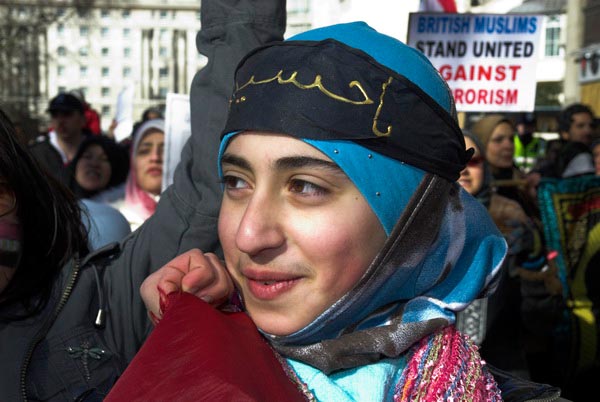
British Muslims Stand United Against Terrorism. On the march in Park Lane

Around ten thousand British Shia and Sunni Muslims marched together through London on Saturday 25th in an unusual gesture of solidarity following the bombing of the mosque at Sammara in Iraq, one of the holiest of Muslim shrines, containing the tombs of the 8th and 9th grandsons of Muhammed.

The march was led by women and children, with the men following behind. They carried placards and chanted calling for an end to violence, denouncing the Wahhabis and Al-Qaeda. Many also carried the Iraqi flag in its pan-arab colours of black, white, red, and green.

Starting from Hyde Park, the march went down Park Lane and Piccadilly to end in a rally in Trafalgar Square. Both the plinth and the square below were crowded with demonstrators.

Demonstrators at Trafalgar Square

Despite the seriousness of the outrage at Samarra, the people on the march were peaceful and good-natured, protesting against violence and against the Muslim fundamentalism that aims to create a “Taliban-like extremist state in Iraq.

Many more pictures on My London Diary.


FlickrFacebookMy London DiaryHull PhotosLea ValleyParis
London’s Industrial HeritageLondon Photos

All photographs on this page are copyright © Peter Marshall.
Contact me to buy prints or licence to reproduce.


Chelsea Manning, Kurdistan & Syria – 2016

Chelsea Manning, Kurdistan & Syria – Three protests in London on Saturday 17th December 2016.


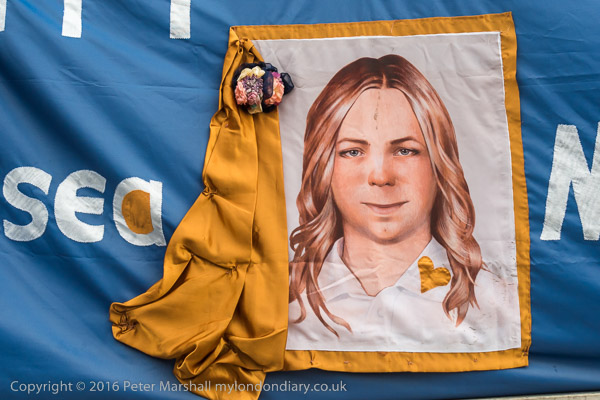
Vigil on Chelsea Manning’s 29th birthday – Trafalgar Square

Chelsea Manning, Kurdistan & Syria

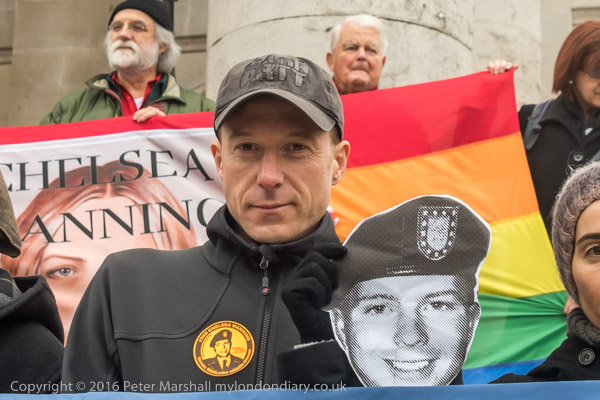
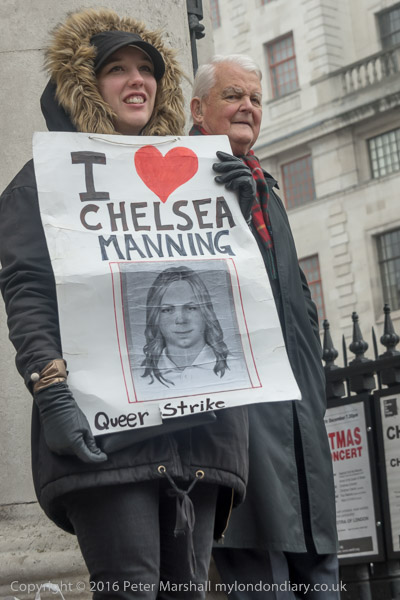
A silent vigil on the steps of St Martin-in-the-Fields in Trafalgar Square marked the 29th birthday of trans-gender whistleblower Chelsea (formerly Bradley) Manning, jailed for 35 years in 2013, whose courageous leaks revealed war crimes by US, UK and other governments.

Chelsea Manning, Kurdistan & Syria
A Queer Strike protester and veteran peace activist Bruce Kent

Working for the US Army as a specialist intelligence analyst as Bradley Manning she released almost 750,000 documents to Wikileaks in 2010 showing the US, UK and other governments’ war crimes and corruption in Afghanistan, Haiti, Iraq, Israel & the Palestinian Authority, Peru, Venezuela and elsewhere. Some were classified and many others were highly sensitive and incriminating. In 2013 she was sentenced to 35 years and held in the maximum security U.S. Disciplinary Barracks at Fort Leavenworth.

Chelsea Manning, Kurdistan & Syria

The London vigil was a part of an international day of action for her release. Since she came out as a trans woman in 2013 she had been repeatedly harassed by the military in prison and twice in 2016 had attempted suicide. Protesters around the world called on President Obama to release her on the basis of the prison time she had already served before he left office. The following month he commuted her sentence to around seven years and she was released from jail. She spent a further year in 2019-2020 after she refused to testify to a grand jury investigating WikiLeaks founder Julian Assange.

Vigil on Chelsea Manning’s 29th birthday


Kurds protest for a Free Kurdistan – Downing St

Chelsea Manning, Kurdistan & Syria

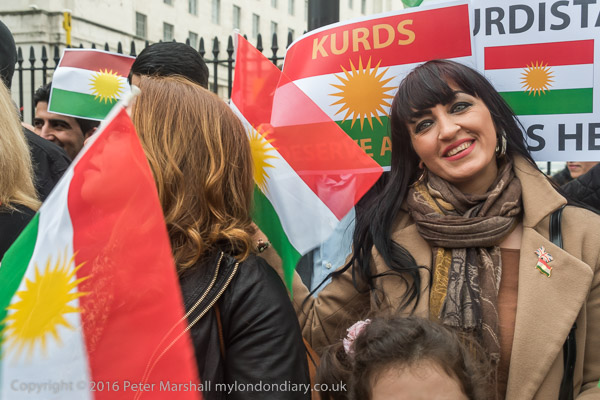
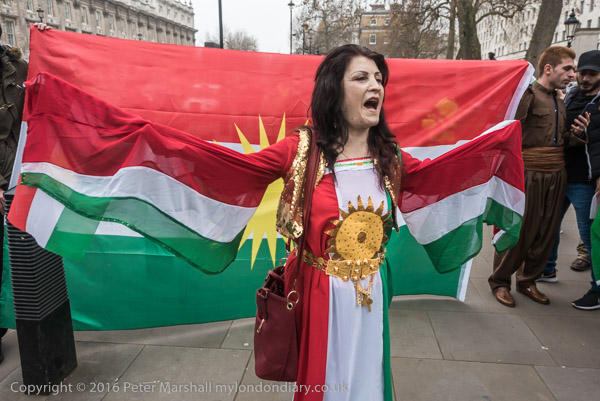
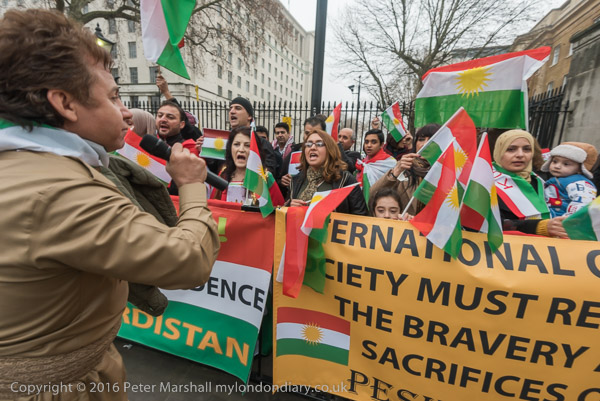
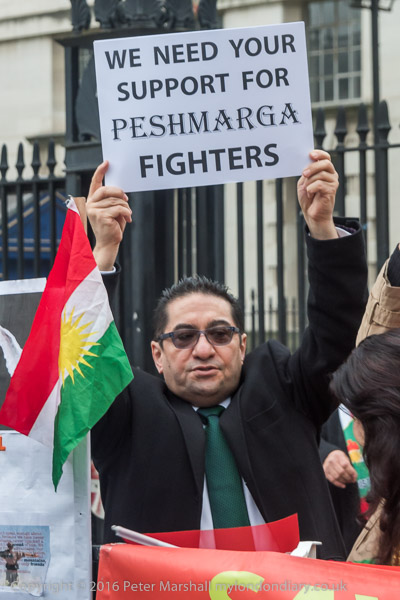
Kurds, many wearing or waving the flag of Free Kurdistan called on the civilised world to recognise the sacrifices made by the Peshmerga in fighting for freedom and against Islamic extremism in Iraq and Syria.

The Peshmerga is the army of the Kurdistan Regional Government (KRG) in Iraq, first formed in the18th century as border guards but more recently fighting for Kurdish autonomy, although it also includes Assyrian and Yazidi units. Iraqi Kurdistan is an autonomous region of Iraq, and under the Iraqi constitution the Pershmerga is responsible for the security of the region.

They played a key role in US missions against al-Qaeda after 9/11and were with other Kurdish forces now fighting against ISIS with some support from the USA. But the USA was refusing to directly supply any weapons except through the Iraqi government who were failing to pass any on the the Pershmerga as they feared they would be used to promote an independent Kurdistan. And in London people seemd to be clearly calling for a free Kurdistan.

The result of this failure to pass on weapons is that the force is poorly armed, mainly using Soviet-era weapons they captured in earlier Iraq uprisings and now weapons captured from ISIS in 2014. This protest called for greater support to provide them with modern weapons and other support they lack including ammunition, ambulances and military communications equipment.

Kurds protest for a Free Kurdistan


Doctors & Nurses Die-in for Syria – Old Palace Yard, Westminster

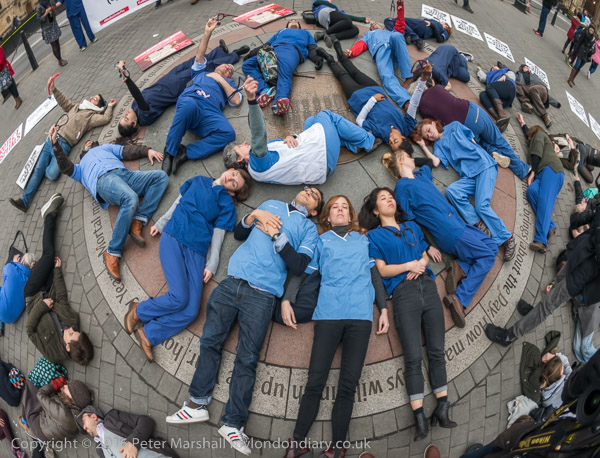
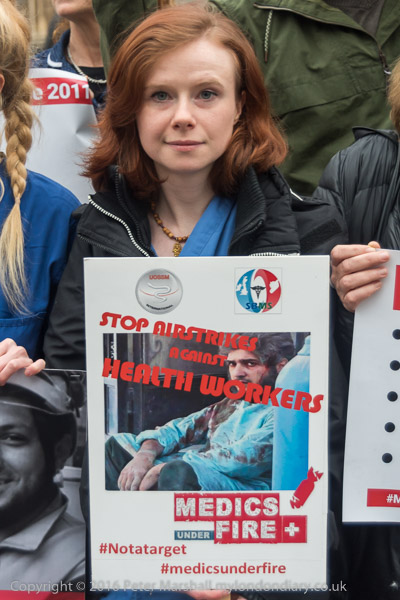
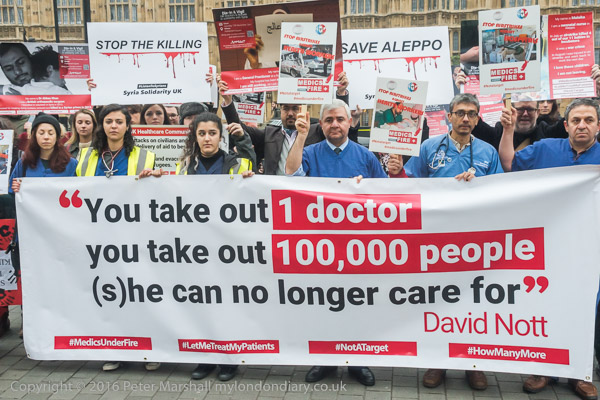
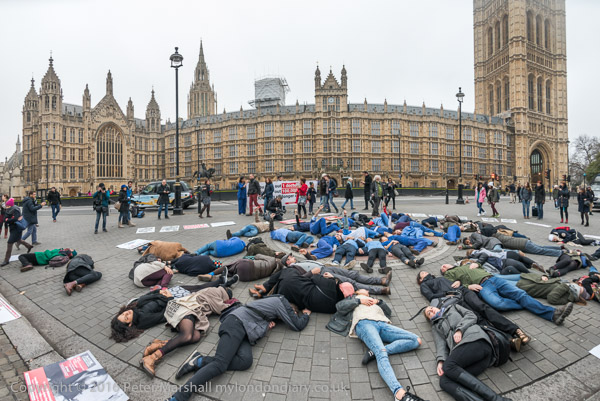
A short walk away in front of the Houses of Parliament Healthcare workers held a die-in at Parliament in solidarity with the Syrian people.

They called for an end to the bombing of civilians, hospitals and schools by the Assad regime and for the UK government to put pressure on the Syrian government to allow the delivery of aid. They urged the UK to make airdrops of aid, provide safe passage to all those trapped and grant asylum to refugees.

The protest was organised by Medact’s Arms and Militarisation (MAM) group along with Syria solidarity activist groups and individuals including the Syrian British Medical Society.

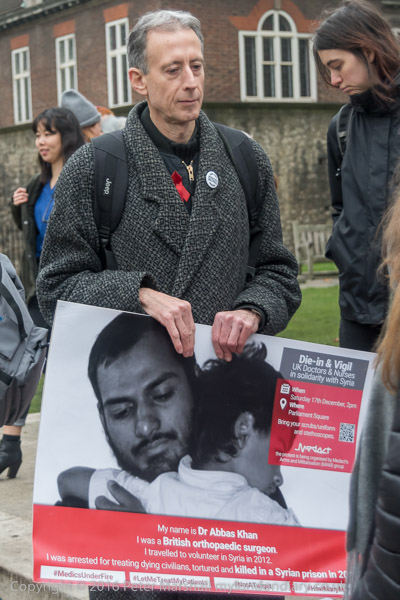
Peter Tatchell holds a poster

Between 2014 and 2021 when the Syrian Vulnerable Persons Resettlement Scheme closed, the UK accepted around 20,000 Syrian refugees. When adjusted to reflect the population size of European countries this puts the UK well down among European countries. For the total number of resettled refugees from 2008-20021 the UK comes fifth behind Germany, Sweden, Norway and France but adjusted for population size we are in 10th position.

But along with the USA, Britain failed to take any effective action in support of the Syrian revolution and the crimes against the people committed by the Assad regime, and were severely outplayed by Russia who backed Assad.

Doctors & Nurses Die-in for Syria


FlickrFacebookMy London DiaryHull PhotosLea ValleyParis
London’s Industrial HeritageLondon Photos

All photographs on this page are copyright © Peter Marshall.
Contact me to buy prints or licence to reproduce.