The Heart of Brixton

The Heart of Brixton continues the account of my walk on Sunday 28th May 1989. The previous post was Sunlight, Trinity, Town Hall & Granada and the walk began with Lavender Hill & Wandsworth Rd – 1989.

D Bess, Bakery, Brighton Terrace, Brixton, Lambeth, 1989 89-5l-21

Was this a Caribbean bakers? D Bess, The Best Bakery. The building is still there at 12-14 Brighton Terrace, trimmed off rather more neatly at the right, modernised and used as an NHS clinic for Lambeth Drug & Alcohol Service, with an extra floor added on top.

Brighton Terrace is one of the older streets in Brixton and was present by the time of the first Skeleton Town plans surveyed by the Ordnance survey in 1848-1851 and by 1870 was lined with smallish houses on both sides, none of which have survived.

At a guess this building dates from around the start of the 20th century but I can find no information about when it was built or its occupiers before it became D Bess Bakery.

A Robson & Sons, 20-22 Brighton Terrace, Brixton, Lambeth, 1989 89-5l-22

A Robson & Sons at 20-22 Brighton Terrace tell us that they are ‘Manufacturers and Rewinders of Replacement xxxxxures Stators and Rotors’ – I think the illegible word must be Armatures, but the state of the sign suggests they were no longer in business at this address. There is still a company in the same business, Robson & Francis Rewinds Ltd, in the Vale Industrial Park in Streatham who call themselves UK Specialists in Rewind & Reconditioning Armatures, Field Coils & Motors and I wonder if this is its successor.

20-22 Brighton Terrace still bears some resemblance to this rather charming small factory building, perhaps dating from the 1930s, but is now the same height as the flats at right of the picture to which it is joined, having four floors rather than the two in my picture. But it still has the same wavy roof line.

Tunstall Hall, Carlton Hall, BrixtonLodge, Bernay's Grove, Lambeth, 1989 89-5l-23
Tunstall Hall, Carlton Hall, Brixton Lodge, Bernay’s Grove, Lambeth, 1989 89-5l-23

Tunstall Hall at the left of the picture was built around 1860 and at one time was storage for Morleys Department Store on Brixton Road, whose rear entrance is just across the street. The central building is Carlton Hall – Bernay’s Grove was originally called Carlton Grove but renamed before 1912. All these buildings apparently became an engineering works in the mid-20th century.

The house at right, 1 Bernays Grove dates from the 1820s and is Grade II listed. It was one of the villas which then lined Brixton Road, set back from it with long front gardens, later built over.

Carlton Hall and No 1 was in 1889 the Carlton Club, the hall used for religious services only, and from 1905 to 1909 Brixton Synagogue. In 1989 it was a Carlton Hall Community Centre. Tunstall Hall is now an architects studio.

The Railway Hotel, Brixton Station, Atlantic Rd, Brixton, Lambeth, 1989 89-5l-25

The London, Chatham and Dover Railway opened Brixton and South Stockwell Station in 1862 taking commuters from what was then a fairly affluent suburb to Victoria, with a further line to Blackfriars opening in 1864. The population of Brixton rapidly expanded. Atlantic Road was laid out in the late 1860s following the railway viaduct and many smaller properties soon appeared. But wealthier residents in the villas along Brixton Road moved out and shops and commercial premises were rapidly built in their place covering their long front gardens.

The Railway Hotel, Electric Avenue, Atlantic Rd, Brixton, Lambeth, 1989 89-5l-26
The Railway Hotel, Brixton Station, Atlantic Rd, Brixton, Lambeth, 1989 89-5l-25

The Railway Hotel has a conveniently located plaque bearing the date 1880 it was built in a finely ornamented neo-Gothic style surmounted by an octagonal clocktower. What can’t be read on my picture is the text underneath the date, LAID BY ANNIE ALLEN, who was its first licensee.

Still the Railway Hotel when I took these pictures, it was renamed Brady’s Bar in the 1990s and became an important music venue, played by Jimi Hendrix, The Clash as well as more local bands such as Alabama 3.

The pub closed in 1999 and was squatted and vandalised. Lambeth Council compulsorily purchased the building, but resisted various local campaigns to turn it into a community asset, selling it off to the highest bidder in 2013. The top floors were converted to flats and the ground floor became a Mexican restuarant, which closed in 2020. It reopened later as DF Tacos. The whole area is under threat from a comprehensive development scheme.

Stairway, Brixton Station, Atlantic Rd, Brixton, Lambeth, 1989 89-5l-13-Edit

I think these old wooden stairs have now been replaced by metal, but I can’t work out exactly where I was standing. They go up to platform level and going above the platforms is the line leading towards Denmark Hill which now carries the Overground but has no stop at Brixton. There used to be an East Brixton station on that line but about a quarter of a mile further on, at Barrington Road, but this closed in 1976.

Brixton’s British Rail stations became less important after the opening of the Victoria Line to Brixton in 1971.

89-5l-14-Edit
Shops, Electric Avenue, Brixton, Lambeth, 1989 89-5l-14

Back in 1989 there was virtually no Sunday trading before the Sunday Trading Act 1994 and I took the opportunity to photograph the normally bustling market street of Electric Avenue when it was almost empty.

This was one of London’s most elegant shopping streets when it was first built in 1885-8 and it was one of the first market streets to be lit by electricity. And around 1890 canopies were erected along both sides of the street so that shoppers could keep dry if it rained.

In 1989 I was surprised to see that these canopies had been removed, perhaps to give more space for the street market. The council I think blamed wartime damage, but it seemed a very thin excuse when they had continued to stand for over 40 years. The street has since been further damaged by partial redevelopment, and more is likely.

Brixton Station, Atlantic Rd, Brixton, Lambeth, 1989 89-5l-15

These huge pillars carry the railway line over the top of Brixton Station. Behind is one of the railway arches which for years were home to many small businesses that served the area well. In 2015 Network Rail decided to close and refurbish the arches over a year – and any traders that wanted to return would be faced with a 350% increase in rents.

The Save Brixton Arches Campaign was set up to oppose the changes, organising a number of public protests which had very wide popular support in the area. Despite this Lambeth Council decided to go ahead with Network Rail and most of the traders went out of business.

Many of the arches have now re-opened, but not with the useful and down-to-earth shops that people in Brixton had used for years, providing useful goods cheaply. When I last walked along Atlantic Road and Brixton Station Road many were still empty. Brixton has lost a large chunk of its heart.

And it was here at the centre of Brixton that the photographs from my walk on 28th June 1989 ended, though I think I will have walked back to Acre Lane to catch my bus back to Clapham Junction.


Sunlight, Trinity, Town Hall & Granada

Sunlight, Trinity, Town Hall & Granada continues the account of my walk on Sunday 28th May 1989. The previous post was The Alexandra, Sanitary Ware & Ace and the walk began with Lavender Hill & Wandsworth Rd – 1989.

Sunlight Laundry, 125 Acre Lane, Brixton, Lambeth, 1989 89-5l-43
Sunlight Laundry, 125, Acre Lane, Brixton, Lambeth, 1989 89-5l-43

Built 1937, architect F E Simpkins Sunlight Laundry is a fine example of Art Deco ‘moderne’ style which unfortunately some architectural historians have turned up their noses at – perhaps why this building and some others are unlisted. Clearly this should be.

The Sunlight company was founded in 1900 and expanded with branches across London and after a merger in 1928 became a national business. Until the 1960s much of its work was for middle class domestic homes, but the wider ownership of washing machines shrunk the market and it concentrated on hotels, factories and other commercial clients. Later it also became a major contractor to hospitals.

Sunlight Laundry, 125 Acre Lane, Brixton, Lambeth, 1989 89-5l-46

There are another three pictures of this building online (click on one of these images to go to the album to see them), and I’ve also photographed it on other occasions when passing, though usually I’ve gone past on a 37 bus and not stopped.

Sunlight became part of the Danish Berendsen group and in 2013 changed its name to reflect this. It continues in business internationally and in the UK is the leading company in textile and laundry services to the hospitality and healthcare sectors. The company was acquired in 2017 by the French laundry services group Elis, whose name and logo now label its frontage.

Trinity Homes, Almshouses,  28, Acre Lane, Brixton, Lambeth, 1989 89-5l-33
Trinity Homes, Almshouses, 28, Acre Lane, Brixton, Lambeth, 1989 89-5l-33

Trinity Homes is a Christian Charity which provides accommodation to both single and married couples over the age of 57 who are members of a Christian denomination. As it states on its frontage it was erected in 1822-4 and was built and Endowed by Thomas Bailey. Additional homes were added in 1860. Initially it was The Trinity Asylum for Aged Persons. The building is Grade II listed.

Bailey was a cut-glass manufacture in the City of London and lived in Bethal House on Trent Road in Brixton Hill behind Corpus Christi Catholic church, built on land given by Bailey. His house, built in 1768, became part of the RC primary school built on the site in 1902 but has since been demolished.

Lambeth Assembly Hall, Buckner Rd, Acre Lane, Brixton, Lambeth, 1989 89-5l-34

The Assembly Hall is at the west end of the Town Hall complex and this striking sculpture relieves a huge plain brick wall area. This rather plain building is covered by the Grade II listing of Lambeth Town Hall and I think dates from 1935-8 when the Town Hall was raised and extended. The striking sculpture on what the listing text calls a particularly handsome rear elevation is ‘Youth rising from the Past‘, by Denis Dunlop (1892–1959).

Lambeth Town Hall, Acre Lane, Brixton 89-5l-35-Edit

Lambeth Town Hall seen from Acre Lane, though my more usual views of it have been either from Windrush Square or in close-up from the bus stop on the opposite side of the road during those long waits for a No 37 bus.

I’m not a great fan of the rather pompous clock tower of this Grade II listed town hall designed by Septimus Warwick and H Austen Hall and built in 1905-8. Edwardian Baroque always seems to me a period where architecture lost its way and was given excessive funding thanks to our plundering the wealth of the Empire.

Granada Brixton, Brighton Terrace, Bernay's Grove, Brixton, Lambeth, 1989 89-5l-36
Granada Brixton, Brighton Terrace, Bernay’s Grove, Brixton, Lambeth, 1989

Opened in 1898 as the Empress Theatre, designed by Wylson & Long, it was reconstructed in Art Deco style by Andrew Mather, reopening in 1931 as the New Empress Theatre. It showed films on Sundays when live performances were not allowed. It closed as a theatre in 1957 and after alterations opened a month later as a cinema. Granada Brixton became a Bingo Club in 1967 and when this closed was used as a furniture store. It was demolished in 1992 and the rather ugly Pavilion Mansions built on the site.

This walk continues along Brighton Terrace in a later post.


River Thames – Battersea Riverside 2012

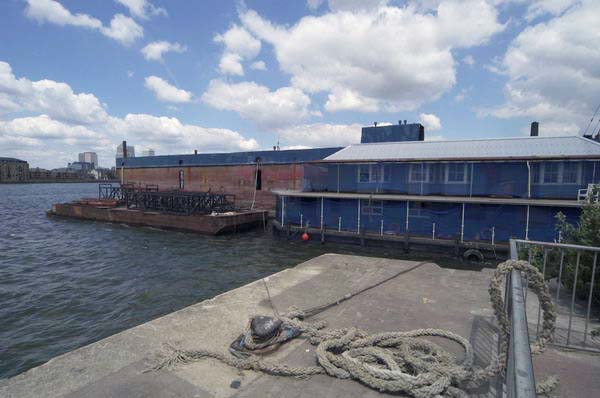
River Thames – Battersea Riverside: Tuesday 14th August 2012 was a nice day with blue sky and some interesting clouds in the sky and I had an hour or two to spare.

River Thames - Battersea Riverside

So I took a walk from Battersea Bridge to Wandsworth along the Thames Path.

River Thames - Battersea Riverside

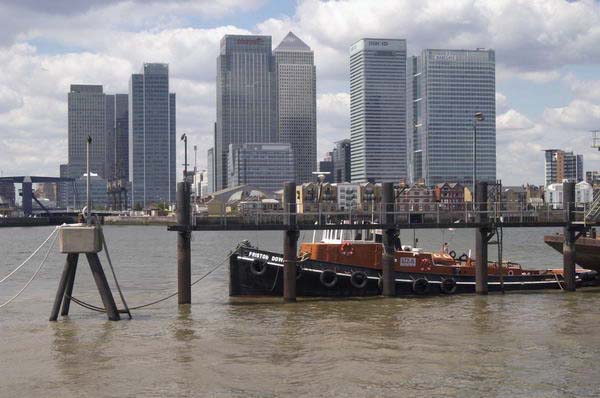
Battersea Bridge crosses the river to Chelsea and I photographed the views over the river towards Lots Road Power Station and Chelsea Harbour.

River Thames - Battersea Riverside

This is a stretch of the river I’ve walked quite a few times over the years. It’s an easy journey for me to get there but it is also one of the more interesting and varied to walk.

River Thames - Battersea Riverside

When I first walked this way in the 1970s this was an industrial area, with factories and wharves and limited access to the river. Now the Thames Path takes you along the riverside with just some short diversions.

River Thames - Battersea Riverside

Most of the riverside is now lined with blocks of expensive flats rather than the flour mills, oil depots and a power station at Fulham I photographed back then.

Silver Belle Flour, mill, Battersea, from Chelsea Harbour, Sands End, Hammersmith & Fulham, 1991, 91-4c-66
Silver Belle Flour, mill, Battersea, 1991

There are still a few traces of that industrial past, though some were being demolished on both sides of the river back in 2012.

Demolition at Fulham Wharf

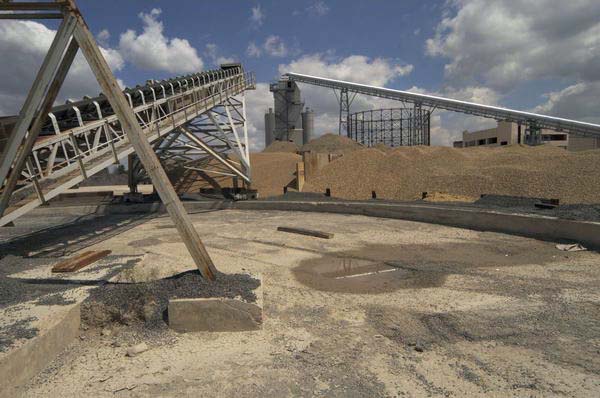
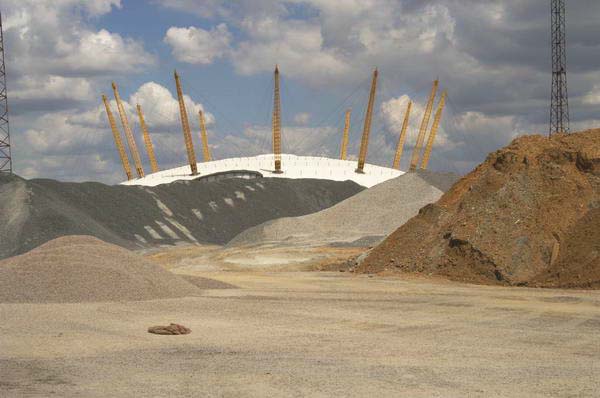
The sand and gravel works immediated upstream from Wandsworth Bridge was still there and still working when I last visited the area a few months ago, although I expect before long it will also be another luxury block of flats.

I think the best images I made that day before catching a train at Wandsworth Town were probably some panoramic images I’ve not included in this post as they don’t fit well in its format. You can see these and others from the walk on My London Diary at Battersea Riverside.


The Alexandra, Sanitary Ware & Ace

The Alexandra, Sanitary Ware & Ace continues the account of my walk on Sunday 28th May 1989. The previous post was http://re-photo.co.uk/?p=15138 Shops, Flats, Trade Unions, Monks… and the walk began with http://re-photo.co.uk/?p=15080 Lavender Hill & Wandsworth Rd – 1989

Shops, The Alexandra, pub, Clapham Common Southside, Clapham, Lambeth, 1989 89-5k-25

The Alex is one of the best known pubs in the area and upstairs is the Clapham Darts Club, open to non-members where you can book an oche, though at £20 an hour you might think it a bit steep. I’ve never played darts in a pub where you had to pay, but then its probably 50 years since I’ve played pub darts. Then you paid by buying beer.

Its a pub too that is best avoided on match nights and at weekends unless you want to watch sport. The pub dates from 1866, though has sadly lost a much of its Victorian interior features.

6 Haselrigge Rd, Clapham, Lambeth, 1989 89-5k-15

I can’t remember what route I took from Clapham Park Road to Bedford Rd, probably cutting through some of the estates but not stopping to take photographs. But this house is visible from Bedford Road and drew me down to make this pictures. It was certainly the slender spire which attracted my attention. Built in 1871 it also has an observatory and apparently a matching coach house behind. Long converted into flats, this locally listed house I feel must have more of a story to tell than I’ve been able to unearth.

Haselrigge Road gets its name from one of the oldest well-connected families in England, which dates back before the Norman invasion and are said to have been the lords of the manor on the now lost West Yorkshire village of Hesselgreave. Bartholomew Clerke lord of the manor of Clapham who died in 1589 and his wife, Eleanor Haselrigge, and their son are commemorated in figures on a monument in St Paul’s Church Clapham.

63, Bedford Rd, Brixton, Lambeth, 1989 89-5k-16

53-63 Bedford Road were Grade II listed in 1981, the listing reads in part “Circa 1870, in stock brick with creamy terra-cotta dressings, built by J G Jennings as part of a larger scheme of houses of varying size and quality, to the designs of T Collcutt.” Josiah George Jennings was a noted sanitary engineer.”

Thomas Edward Collcutt (1840-1924) was an important English architect, better known for designing the Wigmore Hall, Savoy Hotel, Palace Theatre and more. This house at 63 is on the corner with Ferndale Road which now has its very own Conservation Area which provided me with much of the information below.

Rathcoole House, Ferndale Rd, Bedford Rd, Brixton, Lambeth, 1989 89-5l-63

Rathcoole house, Grade II listed in 1981, was the main and final house of a scheme designed by T E Colcutt and built by Josiah George Jennings. Remarkably this house was derelict and had been scheduled for demolition in 1966 but was rented from the GLC as a hostel for vagrant alcoholics and decorated and fully furnished mainly by the efforts of voluntary organisations. A decorated sign on the side has the initials JG, the street name and date 1882.

Rathcoole House, Ferndale Rd, Bedford Rd, Brixton, Lambeth, 1989 89-5l-64

The house is on the corner with Ferndale Road which has its on Conservation Area. Lambeth Council’s document on this gives more detail of George Jenning (1810-1882) who set up a company in Paris Street Lambeth making sanitary ware, “patenting revolutionary improvements to
toilets
.”

His ‘Monkey Closets’ installed at the Crystal Palace in Hyde Park in 1851 were the world’s first public toilets – and for a penny clients “received a clean seat, a towel, a comb and shoe shine“. Ever since we have been going to spend a penny even if that now costs 50p and comes without most of the original accompaniments.

Jennings set up the South Western Pottery in Parkstone, near Poole in Dorset to produce sanitary products from the local clays, later expanding to “bricks, chimney post and architectural terracotta” all in a pale creamy colour. He developed other areas of south London including around Nightingale Lane in Clapham.

Jennings began building Ferndale Road in 1870 and only completed the scheme the year he died in a traffic accident. The completion is commemorated on the side of Rathcoole House which had been one of the earlier houses to be built.

House, Bedford Rd area, Clapham, Lambeth, 1989 89-5l-51

Not all houses in the area were built to the same standards as those by Jennings. I think this small building was probably at the front of some works behind whose corrugated iron roof is visible at left. I’m no longer sure exactly where on Bedford Road it was, but somewhere on the west side quite close to the railway bridge.

Ace, Shop, Bedford Rd, Clapham, Lambeth, 1989 89-5l-52

Another rather basic building a little to the north of the railway bridge at 16 Bedford Road and surprisingly still there, now a minicab office. Ace had a rather wider scope, offering driving lessons and also selling and exchanging books – some of which you can see on the shelves through the window.

I took a second picture without the woman walking past who is reflected in the window, but I think this is better.

I turned around and walked back down Bedford Road to Acre Lane where my account of this walk will continue in a later post.


Shops, Flats, Trade Unions, Monks…

Shops, Flats, Trade Unions, Monks… continues my walk around Clapham on Sunday 28th May 1989. The previous post was Voltaire, Billiards & Methodists and the walk began with Lavender Hill & Wandsworth Rd – 1989.

Shops, Clapham High St, Clapham, Lambeth, 1989 89-5k-42

The rather charming three stroy building occupied on the ground flow at least by Julia Two has gone and together with the low utilitarian shops to the right has been replaced by one of the ugliest buildings on Clapham High Street. But the buildings to the left remain, although with altered shop fronts, as do those on the other side of Venn St.

The Barclays Bank on the corner of Venn St dates from 1895 and closed a few years ago.

Flats, Crescent Lane, Clapham, Lambeth, 1989 89-5k-45

I walked on further along Clapham High Street and on along Clapham Common Southside before turning down Crescent Lane to wander around some of the streets to the south. Worsopp Drive is one of the roads in Lambeth’s Notre Dame Estate off Cresecnt Lane in an enviable location just a short walk south of Clapham Common. The estate was built in 1947-1952 when this was part of the Metropolitan Borough of Wandsworth on the site of the former Notre Dame Convent. It is a mixture of different low and medium rise brick properties and these 8 storey blocks are the tallest.

I don’t know why I didn’t photograph the Clapham Orangery which was retained at the centre of the estate, but I imagine there was some good reason.

UCW House, Union of Communication Workers, Crescent Lane, Clapham, Lambeth, 1989 89-5k-32

From the estate I returned to Crescent Lane where I photographed UCW House, then the home of the Union of Communication Workers. According to the Clapham Society, around 1920 a house on this site was sold to the Amalgamated Union of Building Trade Workers for use as their headquarters, and renamed ‘The Builders. In the 1930s, the Union of Post Office Workers bought the building and the site was divided between the two unions, with both commissioning new buildings with architect L AS Culliford. This building was opened in spetember 1937, with a extra storey being added in 1976.

The union, by then the Union of Communication Workers , sold the building as offices to he Metropolitan Huusing Trust in 1998. They moved out in 2012 and it was converted to residential use as Metropolitan Crescent.

At the south end of Crescent Lane I turned into Abbeville Road, walking along it to the junction with Park Hill where I made my next picture.
Govette, Park Hill, Abbeville Rd, Clapham, Lambeth, 1989 89-5k-33

I first photographed this sign in 1980 and posted this about that picture when I put it on Flickr:

Govette is originally a French name, and a couple of them came over with William the Conqueror back in 1066 and were given land in Somerset. The name was often spelt without the final ‘e’.
Govette Metal & Glass Works, a family firm and was established in 1956 in Clapham, and in the 1970s split up into several divisions, with Govette’s remaining in Clapham. They closed the factory there in the mid-nineties and specialised in the supply, installation and glazing of steel windows and doors, establishing Govette Windows Ltd in 1996, and are now based in Whyteleafe. They also now have a factory in South Godstone.

Peter Marshall on Flickr

I walked back along Abbeville Road and then up St Alphonsus Rd to where it bends at a right angle to the east.

St Mary's Redemptorist Monastery, St Alphonsus Rd, Clapham, Lambeth, 1989 89-5k-35
St Mary’s Redemptorist Monastery, St Alphonsus Rd, Clapham, Lambeth, 1989 89-5k-35

St Mary’s Roman Catholic church in Clapham Park Road whose spire appears in the background of this picture was built in 1849-51. The Redemptorists are a Catholic missionary congregation and came from Belium to set set up houses in the UK, including this Grade II* listed monastery in Clapham designed by J F Bentley in Art and Craft Gothic style and built in 1892-3.

I continued to the end of the road and turned left into Clapham Park Road going back to Clapham High Street as I wanted to take another picture of the Post Office on Venn St – which I posted in a previous post. I came back down Venn St to Bromell’s Road.

Alley, 18-20 Bromells Rd, Clapham, Lambeth, 1989 89-5k-22

You can still see this alley on Bromwells Road but the view down in is much less interesting, with none of the bridges linking 20 with 22 across the street remaining. The buildings on Bromwells Road have been refurbished and those visible down the alley rebuilt or replaced, althhough I think that at the end of the alley is still there. But what looked like a street with various small workshops is now much tidier.

The account of my walk will continue in a later post.


Voltaire, Billiards & Methodists

Voltaire, Billiards & Methodists continues the account of my walk on Sunday 28th May 1989. The previous post was Postmen, The Majestic and More and the walk began with Lavender Hill & Wandsworth Rd – 1989.

Voltaire Motors, 4 Voltaire Rd, Clapham, Lambeth, 1989 89-5k-62
Voltaire Motors, Voltaire Rd, Clapham, Lambeth, 1989 89-5k-62

This street apparently only got the name Voltaire Road in the early 20th century, before which this part of it was called Station Road. The French writer Voltaire came to stay with his friend Everard Fawkener in Wandsworth when he was exiled from France in 1726, and is thought to have moved around the area, but there seems to be no record of him having lived anywhere around this road in Clapham.

The most likely suggestions as to where he lived in Wandsworth is that it was close to the River Wandle in Wandsworth Town or Earlsfield. There is a development on Garratt Lane called Voltaire Buildings, but that only got its name from Barratts in 2004 when they redeveloped the site of the former Wandle School.

Voltaire Motors was in a railway arch at Voltaire Rd, just before the entrance to Clapham High St Station. I think this is now ARCH Clapham or The Bridge, gay bars.

Temperance Billiard Hall, Cato Rd, Clapham High St, Clapham, Lambeth, 1989 89-5k-66

The Temperance Billiard Hall Co Ltd, founded in 1906 built halls like this, built in 1910 by their in-house architect Norman Evans, in many towns and cities across England. It had just become architects offices when I made this and the next picture.

Temperance Billiard Hall, Clapham High St, Clapham, Lambeth, 1989 89-5k-51

According to Wikipedia there were about 20 Temperance Billiard Halls spread around London in July 1958, though it doesn’t state how many of these now remain. At least two of them, including the Grade II listed Temperance Billiard Hall in Fulham later became pubs. The Clapham building is unlisted but is inside the Clapham High Street Conservation Area.

National Provincial Bank Ltd, Tremadoc Rd, Clapham High St, Clapham, Lambeth, 1989 89-5k-53

The National Provincial Bank merged with the National Westminster Bank in 1970, possibly when this late 19th century bank building became solicitors offices. It is still home to solicitors but a different firm. The buildings behind the bank are probably a little older.

Clapham Methodist Church Hall, Nelsons Row, Clapham, Lambeth, 1989 89-5k-54

Clapham Methodist Church Hall and School on Nelson Row was built in 1873, and used for worship until the main church was completed in 1874. The impressive church was badly damaged and made unsafe by wartime bombing and was eventually replaced by a large glass fronted building on Clapham High St which opened in 1961 – and has since been refurbished.

This building remains on Nelsons Row, though the doorway is now bricked up and Studio Voltaire now occupy the site further down the street. I think this may now be a part of their complex.

Nelson Works, Nelsons Row, Clapham, Lambeth, 1989 89-5k-55

These were also part of the Methodist Hall and Sunday School buildings.

Back in 1989 the plates beside the door of Nelson Works were for Universal Metal Fabrications, though there was another name on the Nelson Works sign above the doorway, not quite legible, though some letters can be made out.

Nelson Works, Nelsons Row, Clapham, Lambeth, 1989 89-5k-56

Studio Voltaire, founded in 1994 by a collective of artists and creatives in a disused tram shed on Voltaire Road in 1984 moved to this site in 1999, and in 2019-2021 completed a transformation, refurbishing much of the building.

More from this walk in a later post.


Tamil Chariot Festival – Ealing 2010

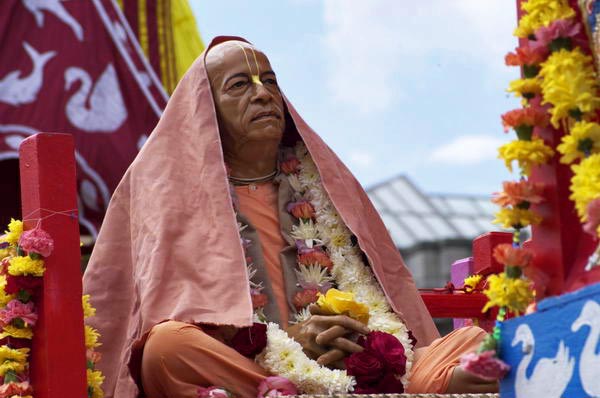
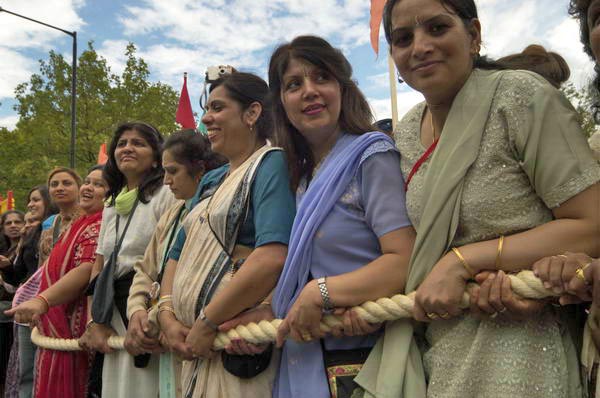
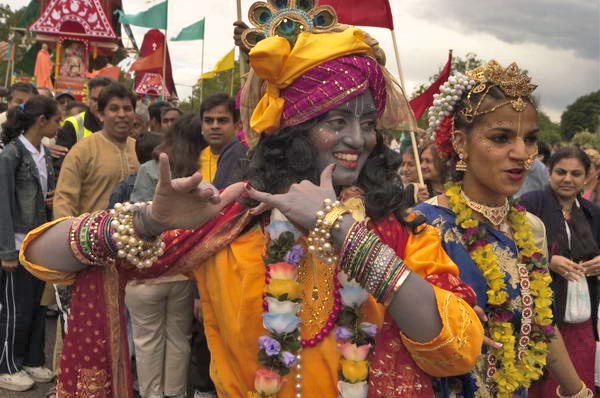
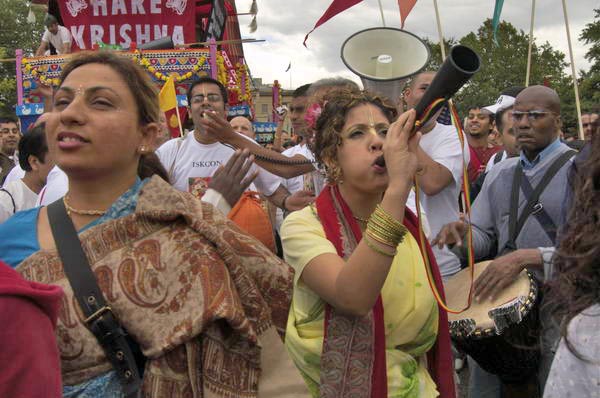
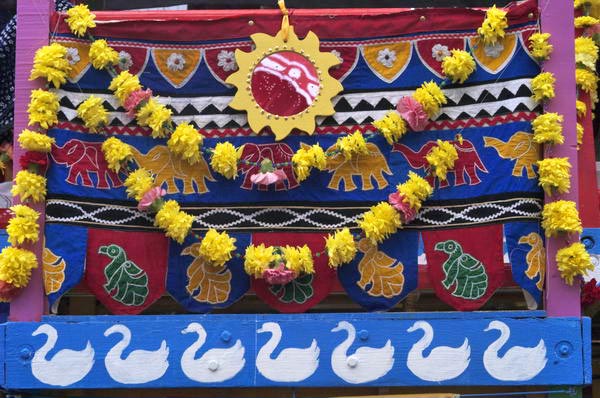
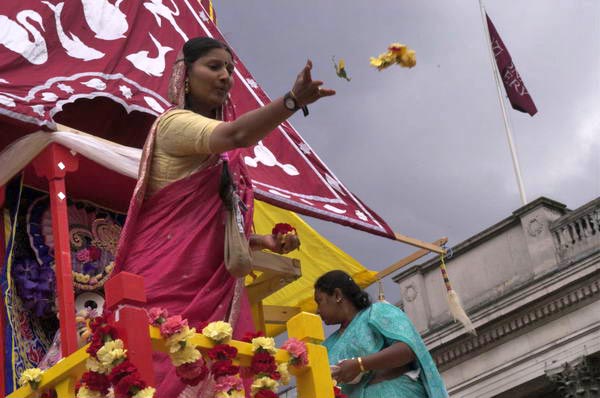
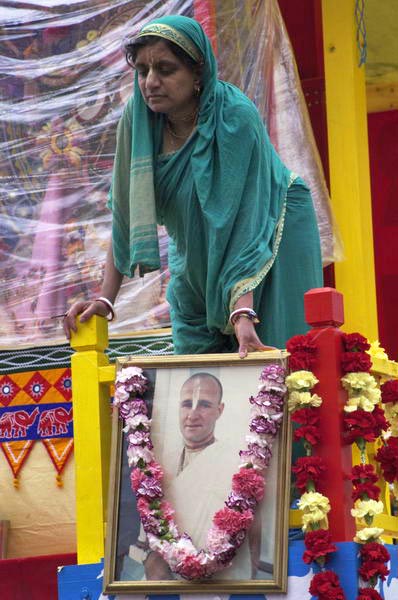
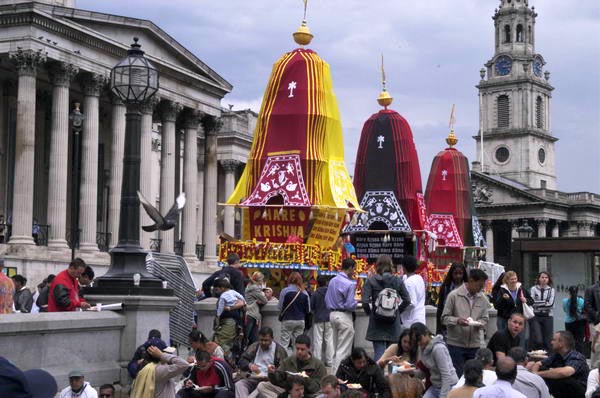
Tamil Chariot Festival: Last Sunday I briefly photographed for another time London’s best-known chariot festival, the Hare Krishna Rathayatra festival where devotees pull a giant chariot from Hyde Park to a festival in Trafalgar Square. But this is only one of a number of Hindu chariot festivals in London and on 8th August 2010 I took off my shoes to photograph a rather different event in West Ealing. Rather than describe it again I’ll reprint here what I wrote on My London Diary in 2010, though there are many more pictures attached to the original.


Tamil Chariot Festival in Ealing – West Ealing, London. 8 August 2010

Tamil Chariot Festival
Tamil Chariot Festival: Men wait with coconuts outside the temple, ready to roll along the road.

Several thousands attended the annual Chariot Festival from the Tamil Hindu Temple in West Ealing this morning, a colourful event in the streets around the temple. The celebration at the Shri Kanagathurkkai Amman (Hindu) Temple in a former chapel in West Ealing comes close to the end of their Mahotsavam festival which lasts for around four weeks each year.

Tamil Chariot Festival

A representation of the temple’s main goddess (Amman is Tamil for Mother) is placed on a chariot with temple priests and dragged around the streets by men and women pulling on large ropes.

Tamil Chariot Festival

Behind the chariot come around 50 men, naked from the waist up and each holding a coconut in front of them with both hands. They roll their bodies along the street for the half mile or so of the route, and behind them are a group of women who prostrate themselves to the ground every few steps. Men and women come and scatter Vibuthi (Holy Ash) on them.

Tamil Chariot Festival

The chariot, preceded by a smaller chariot, was dragged up Chapel Street to the main Uxbridge Road, where the bus lane was reserved for the procession. Once it had moved off the main road, people crowded up to the chariot, holding bowls of coconut and fruits (archanai thattu) as ritual offerings (puja) to be blessed by a temple priest.

Tamil Chariot Festival

Coconuts are a major product of the Tamil areas of India and Sri Lanka and play an important part in many Hindu rituals. Many are cut open or smashed on the ground during the festival, and at times my feet (like those taking part I was not wearing shoes) were soaked in coconut milk.

As I left the festival when the procession had travelled around halfway along its route I passed a group of men bringing more sacks of them to be broken.

A few yards down the road was the rest of the procession, including a number of women with flaming bowls of camphor (it burns with a fairly cool flame and leaves no residue – but at least one steward was standing by with a dry powder fire extinguisher in case flames got out of hand) and a larger group of women carrying jugs on their head.

In front of them were a number of male dancers, some with elaborate tiered towers above their heads. Others had heavy wooden frames decorated with flowers and peacock feathers, representing the weight of the sins of the world that the gods have to carry; they were held by ropes by another man, and the ropes were attached to their backs by a handful of large hooks through their flesh, many turned and twisted violently as if to escape.

The proceeds from the sale in the temple of the ‘archani thattu‘ on the festival day go to the various educational projects for children that the temple sponsors in northern Sri Lanka, devastated by the civil war there. The temple also supports other charitable projects in Sri Lanka, and in the last ten years has sent more the £1.3 million to them.

Many more pictures on My London Diary at Tamil Chariot Festival in Ealing.


Carnaval, Protest For Protest & A Tea Party

Carnaval, Protest For Protest & A Tea Party: On Sunday 7th August, 2005 my working day began with a Latin carnival and ended with a not quite Boston tea party. Sandwiched between the two was a very varied protest against new laws passed by the New Labour government to restrict the right to protest under the Serious Organised Crime and Police Act 2005.


Carnaval del Pueblo – Southwark

Carnaval, Protest For Protest & A Tea Party

The Carnaval Del Pueblo procession by London’s Latin American communities was this year starting from Potters Fields, an empty cleared site between the GLA headquarters then in More London and Tower Bridge. I photographed a number of those taking part in their varied costumes but found it hard to get more interesting pictures as the groups were more spread out.

Carnaval, Protest For Protest & A Tea Party

The pictures, thanks to the various different traditions across South and Central America are very colourful but it was impossible for me to identify the different countries and groups they represented. Most of these countries became colonies of Spain and Portugal and influences from there blended with more traditional indigenous costumes and practices.

Carnaval, Protest For Protest & A Tea Party

Spain was of course traditionally a major enemy of Britain, and this country supported many of the movements to gain independence from Spain in the 19th century as a number of memorials across London testify. Though much of that support was more aimed at getting some of the riches of the continent than freeing the people and was for middle-class movements by people of largely European orgin rather than for the indigenous people – and remains so in UK foreign policy today.

Carnaval, Protest For Protest & A Tea Party

Eventually the procession moved off, on its way to a Latin American Festival in Burgess Park, but I had to leave them as they passed London Bridge station to catch the Jubilee line to Westminster.

It’s hard to choose just a few pictures from so many – so please click on the link to the August page of My London Diary and scroll down to see more.


The Right to Protest – Parliament Square, Westminster

Under New Labour a number of restrictions were introduced which curtailed free speech and the rights of citizens, including a number of measures that they had opposed before they came to power. Some were just been a part of the general trend to central control begun under Thatcher, but others were brought on by the threat of terrorism and even more by the growth of opposition to some government policies, in particular the huge opposition to the invasion of Iran.

This protest followed the passage of the Serious Organised Crime and Police Act 2005 which prohibited “unauthorised demonstrations within a one kilometre radius of Parliament Square” and was one of several in early August 2005 in which protesters were arrested.

Most people believe that this law had been brought in largely to end the ongoing protest by Brian Haw who had the been protesting in Parliament Square since 2nd June 2001, and whose presence embarrassed Tony Blair and other government ministers. Careless drafting meant the law did not apply to him, though on appeal the court decided it had been meant to and that was good enough, but by then Haw had got permission for a smaller area of protest on the pavement. Despite continuing and often illegal harassment by police and others the protest continued even after Haw died in 2011, continued by Barbara Tucker until May 2013.

At the protezt Brian held up a large poster with a quotation from a speech by US Secretary of State Condoleeza Rice in January 2005, when she said “If a person cannot walk into the middle of the town square and express his or her views without fear of arrest, imprisonment, or physical harm, then that person is living in a fear society, not a free society. We cannot rest until every person living in a ”fear society” has finally won their freedom.

The protests in Parliament Square while I was there took various forms. People held up posters, placards and banners; Pax Christi held a service; clowns clowned – all were warned by police they were committing an offence – and five or six were arrested, rather at random from the hundreds present, probably because they argued with police. I got warned for just being there, despite showing the officer my UK Press Card.

Eventually there was some discussion among those taking part and people agreed they would lie down for a short protest together on the grass in Parliament Square.

More pictures on the the link on the August page of My London Diary


The Westminster Tea Party – Time for Tobin Tax, Westminster Bridge

At the end of the Parliament Square protest everyone had been invited to join another short protest about to take place on Westminster Bridge. People gathered there and held tea bags, used here as a political statement against corporate power and in favour of elected governments calling for the introduction of a ‘Tobin Tax’.

Nobel Prize economist James Tobin had in 1972 proposed a small tax on currency transactions to cushion exchange rate volatility by ending speculation, increasingly now carried out by ‘high frequency’ computer algorithms and now relying in AI. It was a development of earlier ideas proposed in the 1930s by John Maynard Keynes.

The idea of a Tobin Tax was taken up by global justice organisations at the start of this century as a way to finance projects to aid the global South such as the Millennium Development goals. In part this came from the Fair Trade movement which gives growers and other producers a fair return for their work. One of its most successful areas has been in promoting fairly traded tea. Once only available from specialist agencies such as the sadly now defunct Traidcraft this is now stocked on many supermarket shelves – as too are Fair Trade certified coffee and chocolate.

More pictures on the the link on the August page of My London Diary


Hiroshima, Arms Trade, Olympics & Green Jobs – 2009

Hiroshima, Arms Trade, Olympics & Green Jobs: August 6th is Hiroshima Day, and every year when I’m in London I try to get to the London memorial ceremony organised by London CND in Tavistock Square, and 2009 was no exception. But other events were also taking place that day, with a picket outside the offices of the company that organises the world’s largest arms fair and a rally to keep green jobs a wind turbine manufacturer. And between the last two I made a short visit to see what was happening to Stratford ahead of the Olympics.


London Remembers Hiroshima – Tavistock Square

Hiroshima, Arms Trade, Olympics & Green Jobs - 2009

The annual ceremony next next to the cherry tree planted there by the Mayor of Camden in 1967 to remember the victims of Hiroshima follows a similar pattern each year, though the speakers and singers change.

Hiroshima, Arms Trade, Olympics & Green Jobs - 2009

In 2009 events were introduced Islington MP Jeremy Corbyn and speakers included the then Mayor of Camden and who was followed by an number of others including Frank Dobson MP, Bruce Kent the Vice President of CND, sadly no longer with us and other peace campaigners.

Hiroshima, Arms Trade, Olympics & Green Jobs - 2009

Between some of the speeches there was music from socialist choirs. Raised Voices are a regular contributor and others have joined them in some years, in 2009 it was the Workers Music Association. Often a folk singer and poets contribute and at the end of the event people lay flowers at the base of the cherry tree before everyone sings together one or more of the protest songs including “Don’t you hear the H Bomb’s Thunder.”

Last year here on >Re:PHOTO I wrote the post Hiroshima Day – 6th August which looked at a number of these events from 2004 until 2017, with links to those in 2018, 2019 and 2o21.

More from 2009 in London Remembers Hiroshima.


Stop East London Arms Fair – Clarion Events, Hatton Garden

I left Tavistock Square in a hurry at the end of the ceremony to rush to Hatton Garden, where campaigners from ‘DISARM DSEi’ were picking the offices of Clarion Events in Hatton Garden, calling for an end to the Defence Systems & Equipment international (DSEi), the world’s largest arms fair, which Clarion are organising at ExCeL in East London next month.

The DSEi arms fair is a vast event, with over a thousand companies from 40 companies exhibiting and selling there lethal weapons. Among the buyers are those from repressive regimes around the world who will use them to keep control in their own countries. The arms trade results in millions of men, women and children being killed in conflicts around the world. According to UNICEF, in the ten years between 1986 and 96, two million children were killed in armed conflict and a further six million injured, many permanently disabled.

British companies are among those making high profits from equipment designed to kill people, and our High Street banks invest huge amounts in arms companies.

This was an entirely peaceful protest with a small group of people handing out leaflets to people passing by explaining to them what goes in an an office which appears to be for the diamond trade. Many stopped to talk with the protesters, surprised to find that our government backed and encouraged such activities. Government statistics show the UK’s global security exports as ranking third in the world, only behind the USA and China.

Although the only weapon carried by the campaigners was a small plastic boomeragn wielded by a young child, armed police watched them from across the road, together with other officers who took copious notes, although they seemed to show more interest in the four press photographers present, who were mainly just standing around talking to each other as there wasn’t a great deal to photograph. When the protesters left after an hour of picketing a police car drove slowly behind them as they walked to the pub.

More at Stop East London Arms Fair.


Olympic Site Update – August – Stratford Marsh,

Welcome to Hell’ says the graffiti at Hackney Wick – and it certainly looks like hell for photographers

I had a few hours to fill before the next event and had decided to go to Stratford to see how the area was being prepared for the Olympics in three years time. The actual site had been fenced off by an 11 mile long blue fence, but there were still some places where parts of the site could be viewed.

I went to Stratford and them walked along a part of the Northern Outfall Sewer which goes through one edge of the site. Part of this was completely closed to the public (and remained so for some years after the Olympics because of Crossrail work) but a public footpath remained as a narrow strip between temporary fencing north of the main line railway to Hackney Wick.

Security along this section was high, with security men roughly every 50 yards standing or sitting with very little to do, and the fencing made it impossible to get an unobstructed view. Later these temporary fences were replaced by impenetrable metal fencing and it became easier to take pictures. But on this occasion I could only really photograph the opposite side to the main part of the site where a lot of activity was taking place.

Even at Hackney Wick much of the Greenway was still fenced off, and I was pleased to come down into the Wick itself. Here I could photograph the stadium under construction from a distance, but rather more interesting was the graffiti on many buildings and walls facing the Lea Navigation.

Sadly much of this was cleaned up for the Olympics.

More at Olympic Update – August.


Rally For Vestas Jobs – Dept of Energy & Climate Change, Whitehall

I was back in Westminster outside for a rally outside the Department of Energy and Climate Change in Whitehall calling for the government to support wind turbine blade manufacturer Vestas based in Newport on the Isle of White.

It had started to rain before the rally started and was pouring by the time it finished, though those present listened intently to speeches from a Vestas worker, trade union speakers from the RMT, PCW and Billy Hayes of the Communications Workers Unions, as well as former Labour Secretary of State for the Environment Michael Meacher MP (top picture) and Green Party GLA member Jenny Jones, who arrived at the event by bicycle.

Vestas problems were very much Government-made and as I wrote a result of “its failure to put it’s money where its mouth is on green energy policies, relying on hot air rather than support for wind power and other alternative energies.

Things are even worse now, with a government driven by lobbying from the oil industry granting licences for getting more oil from the North Sea. The Rosebank field west of Shetland will totally sink any hope of the UK meeting its promises on carbon emissions.

More pictures at Rally for Vestas Jobs.


Postmen, The Majestic and More

Postmen, The Majestic continues my walk on Sunday 28th May 1989. The previous post was Citroen & More Clapham and the walk began with Lavender Hill & Wandsworth Rd – 1989.

Postmen's Office, Venn St, Clapham, Lambeth, 1989 89-5j-23
Postmens Office, Venn St, Clapham, Lambeth, 1989 89-5j-23

Postmen and Postwomen are still using the Postmen’s Office, a rather grand building from AD1902 where Venn Street takes a 90 degree turn to the east with Sedley Place going west. It seems now to be officially known as the Royal Mail Clapham Delivery Office.

I liked this picture partly because it gave some indication of the work which goes on inside the office, but came back for another picture when the rented truck had moved.

Postmen's Office, Venn St, Clapham, Lambeth, 1989 89-5k-36
Postmens Office, Venn St, Clapham, Lambeth, 1989 89-5k-36

When Lambeth Council set up their ‘Local List’ of historic buildings and artifacts which are not included in the statutory listing in 2010 it was one of the first to be listed, along with four others in the Clapham area, recognised by the council itself as being of architectural interest.

The Clapham Society two years later submitted there ow n list of over 70 properties in the area to recommend to the council of which only around ten were added, some excluded because they were inside already designated conservation areas. Clapham really does have a lot of interesting properties

Local listing provides little actual protection to properties but does mean the council will be aware of them in coming to planning decisions and take them into consideration in setting up local development plans. But unlike buildings in conservation areas or listed buildings they can be demolished without consent – which is seldom granted for listed buildings.

Former The Majestic, cinema, Clapham High St, Clapham, Lambeth, 1989 89-5k-41
Former Majestic, cinema, Clapham High St, Clapham, Lambeth, 1989 89-5k-41

The Majestic Cinema at 146 Clapham High St was designed by John Stanley Beard and opened in 1914.
The narrow front entrance – another shopfront between shops – leads to a large auditorium behind behind the shops. It seems that one of the names on the title deeds was Charles Chaplin. The cinema was taken over in 1928 and became part of Gaumont British Cinemas in 1929. Bomb damage closed it for a few months in 1940-1 and in 1950 it was re-named Gaumont Theatre, closing ten years later in 1960.

Majestic Cinema, Stonhouse St, Clapham, Lambeth, 1989 89-5j-24

The side of the cinema gives a better idea of its scale. After it closed as a cinema, the balcony was converted into a recording studio, Majestic Studios, continuing in use even after the main space became a bingo club in 1969, though probably not operating during the same hours. Among those who recorded there were Brian Eno. Adam Faith, David Bowie and the Sex Pistols.

In 1985 it became Cinatra’s nightclub and is now Infernos night club and disco. There are now new blocks on each side of the cinema building.

Langley Electrical, 156-8, Stonhouse St, Clapham, Lambeth, 1989 89-5j-25
Langley Electrical, 158, Stonhouse St, Clapham, Lambeth, 1989 89-5j-25

Langley Electrical, the first of this row of buildings on the opposite side of the street just past the cinema has been removed but the rest from 156 survives and has been tidied up and the ground floor shops mainly converted to residential use.

Houses, 34-40, Voltaire Rd, Clapham, Lambeth, 1989 89-5j-13

I walked along Clapham High Street, wandering a little down the side streets off the north side, and turning down Clapham Manor Road to Voltaire Road, where I amused myself a little with this image, hiding the foreground with the van and the ball on the top of a gate post. I think that gate has since been demolished but the houses are still there.

Shops, Clapham High St, Clapham, Lambeth, 1989 89-5k-61

This picture was taken across the road from the corner with Voltaire Road. There are still shops though looking rather less run down and housing different businesses and the houses behind are still there but no longer advertise the CASH SUPPLY STORES selling VEGETABLES CAULIFLOWERS and something illegible or THE MUSIC ROLL EXCHANGE offering Gramophone Records and claiming to have the LARGEST STOCK OF SECONDHAND MUSIC ROLLS IN ALL LONDON.

The railings have also gone, replaces around 2012 with some stands for locking bikes.

My walk on Sunday 28th May 1989 will continue in another post.