Telling the Story – 19 July 2019

I often find myself thinking about my role as a documentary photographer when I’m taking pictures of protests. And of thinking about how I can carry out that role.

Clearly I’m not their to take part in the protest – though often I support the cause of the protesters I’m making pictures of. I’m an observer rather than a participant, though there are occasions when I will intervene in some way, largely the kind of actions that I would expect anyone to take, like stopping people walking into traffic or helping someone who has fallen down or dropped something.

There have been times too when I reminded police of the law (not always advisable) or protested at their use of unnecessary force. And on some occasions when marches have got lost or taken a wrong turning I’ve pointed this out to the marchers. Some embassies and companies are quite hard to find.

I never set up people or groups, though sometimes when photographing people I may ask or gesture them to look at me or to hold their poster or placard higher or lower. But it isn’t a portrait session and I don’t ask them to smile or scowl or act up for the camera. It would have been much easier to make the picture of the XR symbols in those dark glasses in the studio and it took a number of attempts to catch him looking in exactly the right direction and catch those reflections from a banner which I’d noticed moving across them earlier.

But it isn’t just a matter of passive observing. I’m choosing my position, framing my pictures, selecting the moment, working to try to present the story clearly and effectively.

It isn’t essentially about making dramatic or attractive pictures, though I always hope some might be.

Extinction Rebellion’s ‘Requiem for a Dead Planet’ at Northcliffe House, home of the Daily Mail, Independent, Mail on Sunday, London Live and Evening Standard demanding they publish truth and end lies about climate change was a tricky one to cover, with heavy rain falling much of the time and a very limited area under cover for protesters and photographers. As we’ve seen in the past week, the weather is becoming more violent and this seemed appropriate if making the job more difficult.

Here’s some of the text I wrote at the time – the link below has more and more pictures:

“XR say avoiding climate & ecological devastation needs the media to tell the truth and stop publishing fake science denying climate change as well as advertising and editorial material that promotes high-carbon lifestyles, whether about fashion, travel food or other consumerist content so government can take the drastic action needed.

The protest included suitable requiem music by a small group of musicians in XR Baroque, a eulogy for lost species by a priest, speeches, poems, skeletons, banners and a die-in.”

Requiem for a Dead Planet at Daily Mail

All photographs on this and my other sites, unless otherwise stated, are taken by and copyright of Peter Marshall, and are available for reproduction or can be bought as prints.


XR London Tax Rebellion

Extinction Rebellion launched their campaign for a tax strike against the Greater London Authority, withholding the GLA element of their council tax until they abandon projects which will cause environmental degradation and hasten ecological collapse with a protest outside City Hall on Thursday 18th July 2019.

They were particularly concerned about three major GLA projects, the Silvertown tunnel under the Thames, the Bow East concrete plant in Newham, and the Edmonton incinerator in Enfield, and called for a citizen’s assembly to formulate an “Emergency London Plan”, replacing the current 2020 London Plan with sustainable policies on air quality, land development and transport for the City of London and 32 London Boroughs.

Sian Berry, Green Party

The rebellion called on London residents to withhold the average proportion of their council tax – 22% – which goes to the GLA and to pay that into a special fund which would be used for climate related projects. To have any impact it would have to be supported by large numbers of London council tax payers, and XR set a threshold of 2,700 for it to go ahead – needing the support of around 15% of their London members.

Although some other XR actions involving tax are proceeding, I’ve been unable to find any more announcements about the London Tax rebellion from XR, and suspect that they may not yet have managed to sign up enough supporters for this action which is no longer listed on the on-line platform which was being used to carry the forms concerned.

Possibly the reluctance to take part may have been influenced by the change in policy towards those arrested for minor offences at XR protests. Normally only a fairly small fraction of those arrested are actually charged and brought to court, but political pressure from Home Secretary Priti Patel, who called XR criminals threatening the “UK way of life” has resulted in almost 100% of those arrested during the 2019 protests being brought to court. There is now a very long back-log of cases awaiting trial.

Many more pictures at XR London Tax rebellion.


All photographs on this and my other sites, unless otherwise stated, are taken by and copyright of Peter Marshall, and are available for reproduction or can be bought as prints.


End Austerity, No to Racism, Tories Out! 2016

Five years ago the People’s Assembly and Stand Up To Racism organised a march through London as a response to the referendum campaign conducted by many Brexit campaigners on an anti-immigration platform which had provoked an upsurge in racism and hate attacks on Black and particularly Muslim people online and on the streets of Britain.

The marchers met outside the BBC, as I wrote ” in the forlorn hope that they might for once cover a protest in Britain properly” but of course they ignored the thousands on their doorstep. Probably they were too busy giving Nigel Farage a quite disproportionate amount of publicity and air-time, along with the Labour plotters against Jeremy Corbyn – who sent a message of support to the marchers and like them showing solidarity with refugees and asylum seekers.

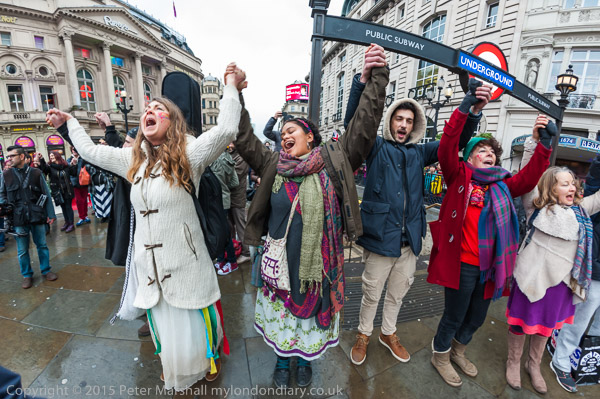
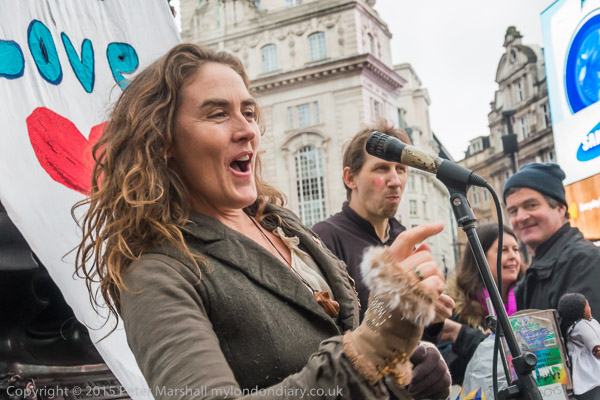
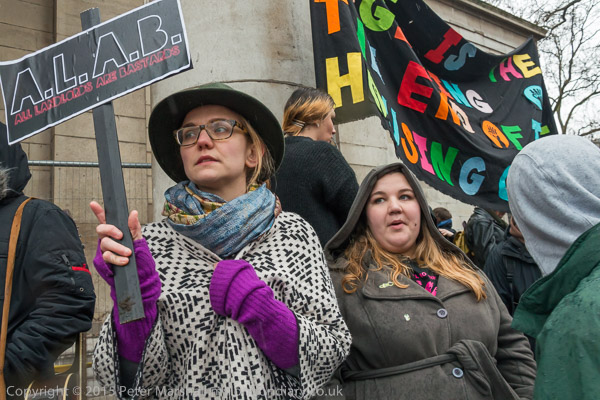
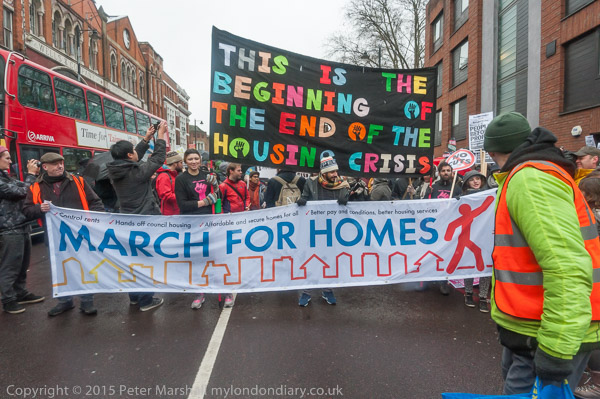
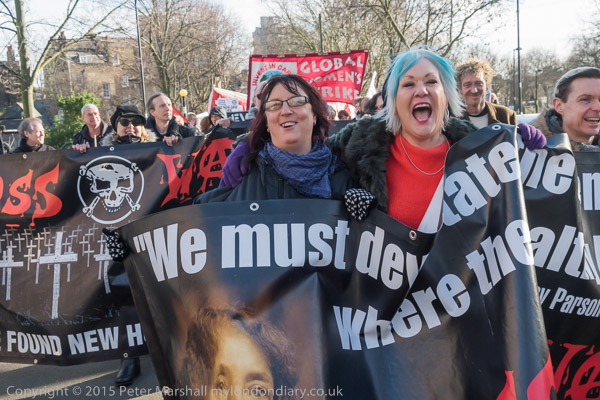
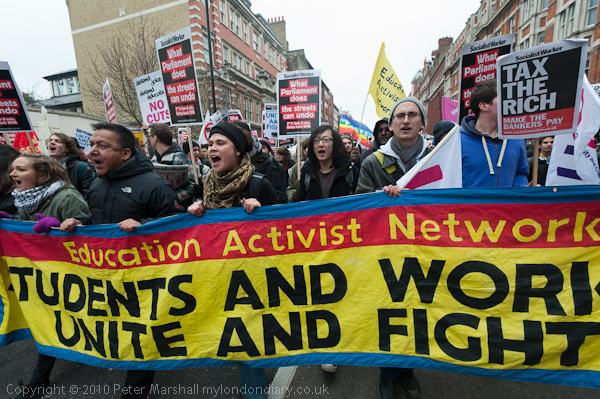
This banner and the placards for me summed up the message of the march, a demand for ‘Hope Not Hate’ and for people of all backgrounds to join hands in love and respect and say ‘No Racism’. We’ve recently seen a huge backlash against racist remarks against footballers in the English team showing that people across the country oppose racism, whether from the far right or Tory ministers and MPs who denigrate footballers who ‘Take the Knee’.

Later I managed to get to Parliament Square for the rally at the end of the march with speakers from many organisations, including an asylum seeker as well as politicians and activists. It was a sunny day and there was a warm and pleasant atmosphere in the large crowd listening and applauding the speakers.

I’d waited on Regent St as the march set off for some time until the last of the several thousand marchers had passed me, then hurried off to the HQ Offices of CBRE in Henrietta Place, where cleaners from the strike at 100 Wood St, managed by CBRE, had broken away from the march to stage a flash mob, along with supporters including United Voices of the World General Secretary Petros Elia and Bakers Union (BFAWU) National President Ian Hodson.

I’d arrived too late to go with them into the foyer, whose large glass doors were firmly locked when I arrived, but after a few minutes photographing through glass the doors were opened I was able to take a few more pictures as they got ready to leave. They went on to rejoin the march, but I went off to look for the English Defence League whose protest had been called to oppose that by the People’s Assembly.

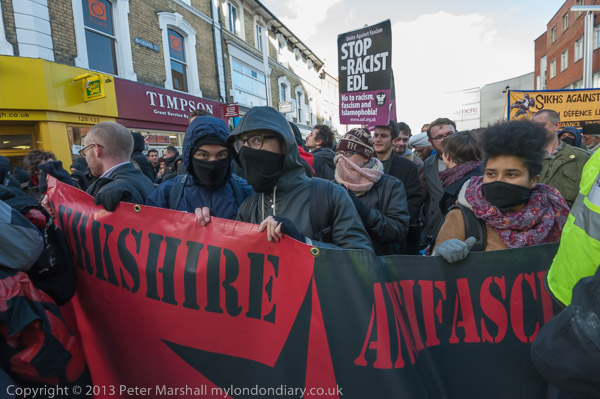
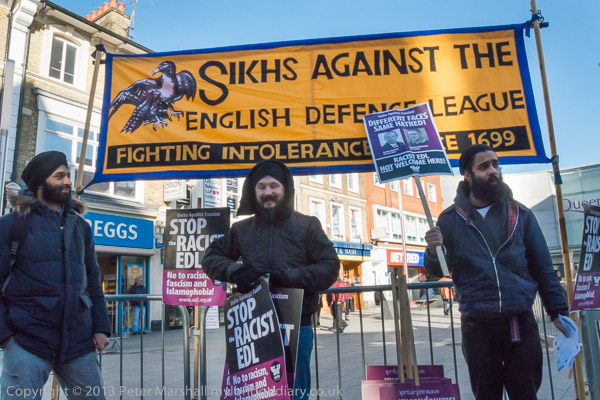
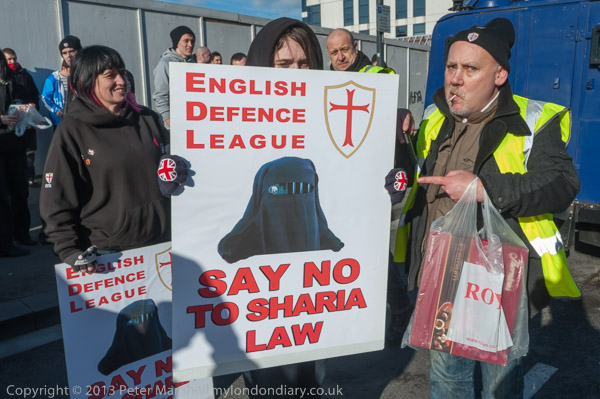
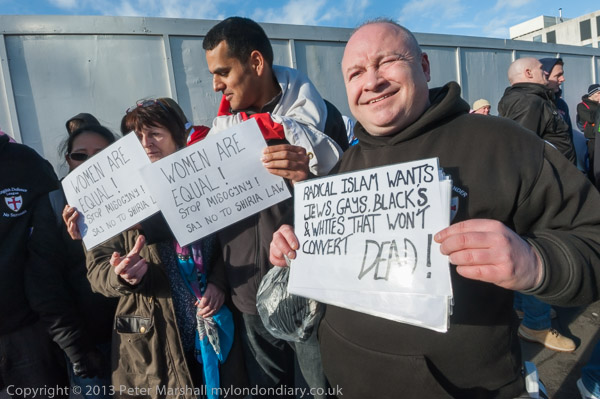
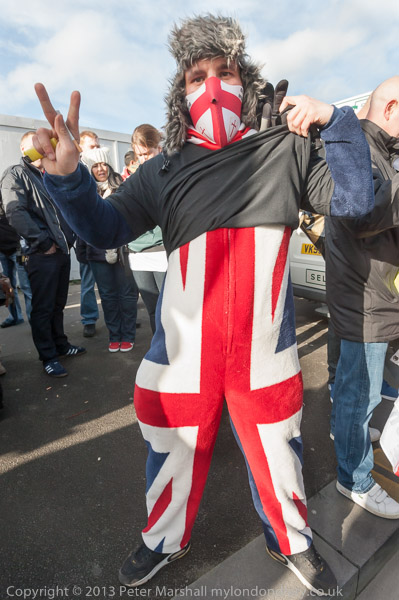
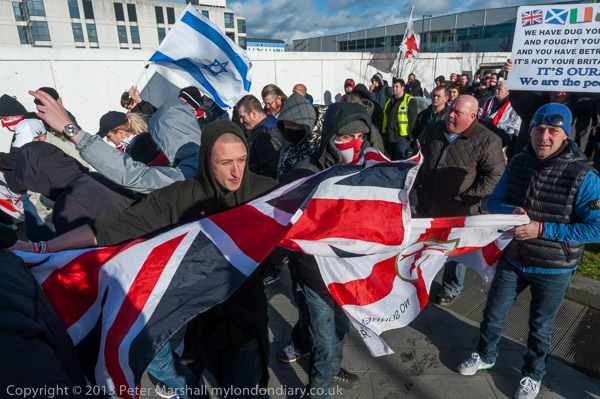
I don’t like photographing extreme right-wing groups such as the EDL. It gives them publicity, which they don’t deserve as it exaggerates their importance. Generally their protests are small and their extremism represents a very small fringe of our society, though racist attitudes unfortunately are much more widespread. But rather more directly they are generally not nice people to be near. They shout and scream messages of hate, often in vile language, and routinely threaten me as I take photographs. I’ve been spat at and even, fortunately not often, grabbed, pushed and punched.

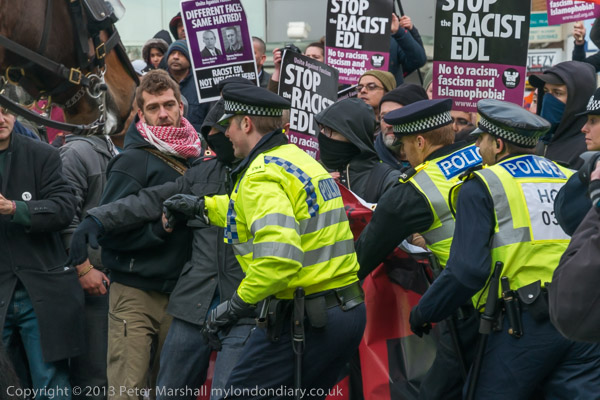
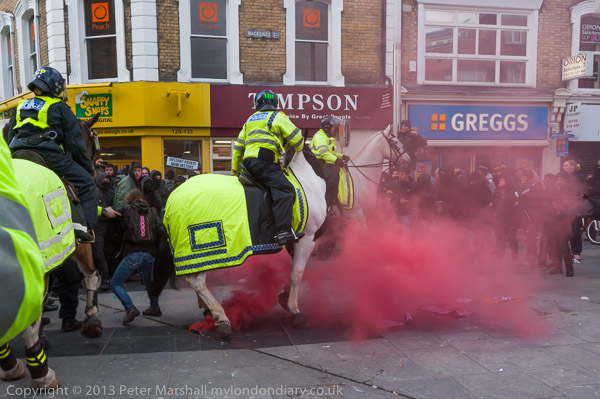
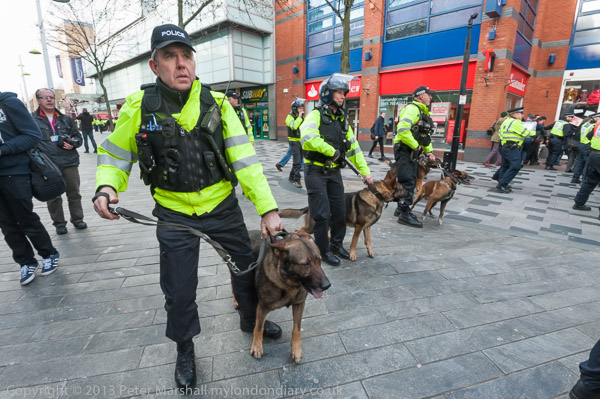
While with most protests I can move freely through the event, at these I need to keep a safe distance away. I’m usually glad that police are present, and without them I would be assaulted and my equipment smashed, but police sometimes make any photography virtually impossible. While I’d managed to cover the march I could only see brief glimpses of the rally which followed through several lines of police with several hundred of them surrounding perhaps a hundred protesters. I gave up then and took the tube to cover the anti-racist rally.

EDL march and rally
Cleaners Flash Mob at CBRE London HQ
End Austerity, No to Racism, Tories Out!


All photographs on this and my other sites, unless otherwise stated, are taken by and copyright of Peter Marshall, and are available for reproduction or can be bought as prints.


Clean Air – 1990 cyclists and 2019 XR East London

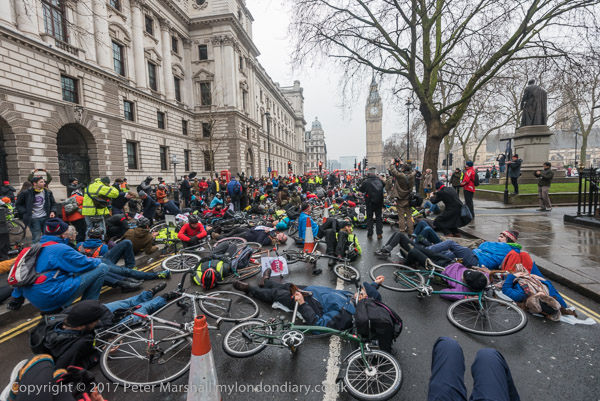
Cyclists protest, Whitehall, Westminster, 1990, 90-11c-14
‘Let London Breathe’ – Cyclists ride down Whitehall to a Trafalgar Square rally – November 1990

Back in 1990, I rode with hundreds of cyclists from the London Cycling Campaign and others protesting about the terrible air quality in London from Battersea Park to a well-attended rally in Trafalgar Square. Following the rally, some MPs raised the issue in Parliament.

XR East London marches for clean air – 12 July 2019

Almost 30 years on there has not been a great deal of progress – and the statistics now show almost 10,000 excess deaths per year in the city due to air pollution, and untold misery from various respiratory conditions, some crippling. In 2019 XR East London met at Bethnal Green on Friday 12 July to march to Hackney behind a banner ‘The Air That We Grieve’, calling for a rapid end to the use of fossil fuels.

Much of the pollution comes from road traffic, and the already announced end to the sale of new trucks, vans and any other combustion-powered vehicle from 2030 onwards will do a little to improve air quality, but existing petrol and diesel vehicles will continue to be used for many years, though we may see more stringent ultra-low emission zones to restrict their use in cities.

But although the switch to electric will cut down pollutants such as nitrogen oxides as well as reducing climate changing carbon dioxide, it will still leave other harmful substances such as particulates from tyres and brakes in the air. And the carbon footprint is only lowered so long as the electricity used to charge those car batteries comes from truly renewable generation.

Cleaner air in cities also needs us to move away from the car to more eco-friendly means of transport – such as public transport and bicycles. Even electric scooters and electric bikes also have a part to play.

Better public transport means more trains, light rail, trams and buses. The simplest and most cost-effective solutions are probably more dedicated bus lanes and bus-only routes, and giving buses greater priority in traffic. Many years ago I cycled in French cities where buses had priority and motorists (and cyclists) had to give way whenever they wanted to pull out from a stop, and changes like this to our Highway Code and traffic rules would make a difference.

In 1990 cyclists were calling for 1000 miles of dedicated cycle routes through London. We do now have some ‘cycle superhighways’ and ‘quietways’, although many of these – we are now supposed to call them ‘cycleways’ – still involve sharing with often dangerous traffic. Progress is still slow, and there is bitter opposition from some interest groups, particularly black cab drivers.

We need too an overhaul of London’s taxi system, with rules still made in the days of horse-drawn Hackney cabs. I’ve often stood at bus stops in the City waiting for my bus, held up by traffic while 20 or 30 or more black cabs drive by, the great majority of them empty. A move away from ‘ply for hire’ to smartphone based systems summoning a cab from a nearby taxi rank would hugely cut both congestion and pollution in the centre of London.

More at XR East London marches for clean air. You can click on the black and white image above to go to the album with more pictures from the 1990 cyclists protest.


As always I was travelling around London on public transport (I sometimes bring up a folding bike on the train) and as the march neared its end I boarded a bus in the opposite direction back to Bethnal Green where I took the tube back to Holborn, then took the short walk to the University of London’s Senate House, where exploited outsourced workers were holding a noisy protest after the newly appointed Vice-Chancellor Wendy Thomson had failed to reply to a request to meet them and discuss their grievances. You can see more about this at IWGB welcome new Vice Chancellor.


All photographs on this and my other sites, unless otherwise stated, are taken by and copyright of Peter Marshall, and are available for reproduction or can be bought as prints.


Black Lives Matter – Brixton 9th July 2016

Five years ago on July 5th 2016, Alton Sterling, a 37 year old black man selling videos outside a convenience store in Baton Rouge, Louisiana was shot and killed by police at close range. The incident was filmed by several bystanders and their mobile phone video clip shocked and enraged viewers around the world.

The following day, July 6th, 32-year-old Philando Castile was driving with his girlfriend in a suburb od St Paul, Minnesota, when police stopped the car and asked to see his driving licence. His girlfriend video the events which ended in Castile being shot five times at point-blank range, dying 20 minutes later. The officer who fired was later charged with second-degree manslaughter and two counts of dangerous discharge of a firearm but found not guilty by a jury.

These two cases provoked protests around the world, including this event in Brixton. Shootings of people by police remain common in the USA at around a thousand a year and Black people are around two and a half times as likely to be shot as White. These cases stood out both because the two men shot were not involved in any crime but also because there was clear evidence from the videos that there was no justification for the shootings. Later the families were to be awarded compensation running into millions of dollars in both cases.

Although policing in this country is generally not carried out at the point of a gun, with an average of around 3 people killed by police shooting a year, there have been many cases of deaths at the hands of police, again disproportionally affecting Black people. As I wrote in my account of the protest:

Brixton Police station has been the scene of a number of black deaths in custody, including that of Sean Rigg, Wayne Douglas and Ricky Bishop, and one of the organisers who spoke wore a t-shirt listing just a few of those who have been killed by police in the UK, with young black men in particular being far more likely to die after arrest – or to be shot rather than arrested. Last year police stripped the tree in front of the police station of its deaths in custody memorials on the day of the annual march in central London against deaths in custody.

My London Diary

The crowd that gathered in Windrush Square (aka Windswept Square after Lambeth Councils re-landscaping to make it deliberately less hospitable) was largely black, and the protest had been called by local black organisers. Most of those who spoke talked about their own experiences of police racism in the local community as well as the shootings that had provoked the protest.

So many people wanted to have their say that the event continued for several hours, eventually going on to march up the Brixton Road to Brixton Police Station and bringing traffic to a standstill for several hours.

But it had come at the end of a long day for me and I had gone home well before that. Earlier in the day I’d photographed protests against the nonsensical ‘Garden Bridge’ across the Thames and the demolition of council estates by Labour Councils, both in Waterloo, in Hackney against domestic violence, at Downing St against Brexit, the scapegoating of immigrants and Islamophobia and a Green Park Brexit picnic and I was exhausted. You can find more about the Black Lives Matter protest and these other events on My London Diary.

Brixton stands with Black victims
Green Park Brexit Picnic
Europe, Free Movement and Migrants
East End Sisters Uncut-Domestic Violence
Housing Protest at ‘Progress’ conference
Garden Bridge ‘Progress’ protest


All photographs on this and my other sites, unless otherwise stated, are taken by and copyright of Peter Marshall, and are available for reproduction or can be bought as prints.


Blair lied, Millions Died – 6th July 2016

Labour scraped in at Batley and Spen by a few hundred votes, which was enough to take the pressure of calls for a replacement for Keir Starmer off the boil for at least a few months. And for the media to call upon some of the more grisly figures from the Labour past to come on and repeat their vilification of Jeremy Corbyn, and call for a return to those policies which had made Labour – New Labour – unelectable.
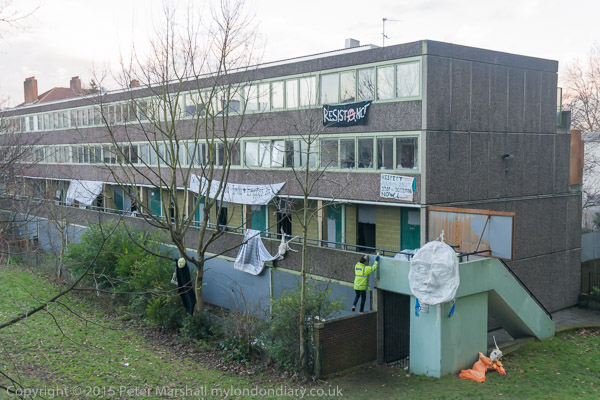
It had started with a great burst of support and enthusiasm in May 1997, when we really believed that ‘Things Can Only Get Better‘, but soon the disillusion set in. One of the major early problems came with PFI, launched by John Major in 1992, but taken up and expanded greatly under New Labour. Private companies were contracted to build and manage major public projects, enabling some very flashy announcements but failing to say we would be paying through the nose for them for many, many years – and in many cases for another 20 years or more from now.
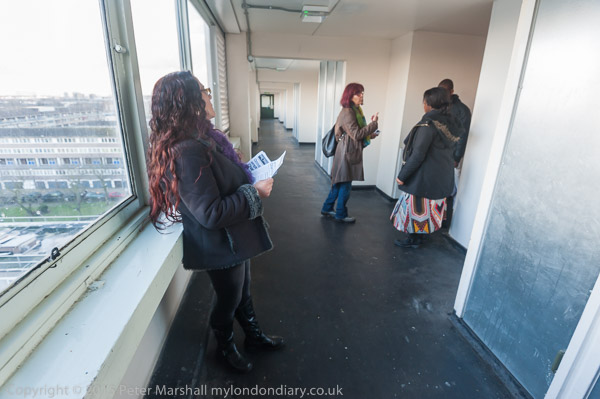
‘Blair’ and ‘Bush’s’ bloody hands – and the cash.

It essentially privatised many public projects, with often poor negotiating skills by civil servants unschooled in such matters resulting in excessive profits for the companies involved. There were many critics of PFI at the time, and in 2011 a critical Treasury report. In 2018 then Chancellor Philip Hammond stopped any new PFI projects.

PFI has been particularly disastrous for the NHS, causing huge financial problems and leading to the cutting down an closures of hospitals. The 127 PFI schemes had a total repayment cost (according to Wikipedia) of £2.1m in 2017 and continuing to rise until 2029. In 2012 seven NHS Trusts had to be given emergency financial support as even with cuts they were unable to meet their PFI repayments.

But, as the recent death of Donald Rumsfield reminded us, the most clear public failure of New Labour was to support what was largely his personal vendetta in the disastrous invasion of Iraq. Richard Wolffe, writing in he Guardian headlined his article ‘Rumsfeld’s much-vaunted ‘courage’ was a smokescreen for lies, crime and death‘ – and Blair colluded whole-heartedly in the deception, with the ‘dodgy dossier’ and various other statements and decisions. His was a special relationship with Bush most politely described as brown-nosing.

This of course is Britain, so instead of taking action we eventually had an inquiry, with Chilcot taking over seven years to allow the long grass to grow. Set up by Gordon Brown in 2009, six years after the invasion, it produced its report on 6 July 2016, when the protest here took place. Wikipedia quotes Richard Norton-Taylor of The Guardian as describing it as “an unprecedented, devastating indictment of how a prime minister was allowed to make decisions by discarding all pretence at cabinet government, subverting the intelligence agencies, and making exaggerated claims about threats to Britain’s national security”.

A banner uderestimates Blairs crime – there were millions who died

Clearly Blair was a war criminal. But of course no legal action followed – and that war criminal and proven liar continues to be invited to give his opinions in the media – and there are even those who suggest he should be brought back to lead the Labour Party. Financially he has done well out of his time as Prime Minister – and probably even better from his property investments, with an estimated net worth according to some of £100m. But as the placards say, ‘Blair lied, Millions Died’ and if there was any justice he should have gone to jail.

More at Blair lied, Millions Died – Chilcot


All photographs on this and my other sites, unless otherwise stated, are taken by and copyright of Peter Marshall, and are available for reproduction or can be bought as prints.


NHS Birthday March – July 5th 2011

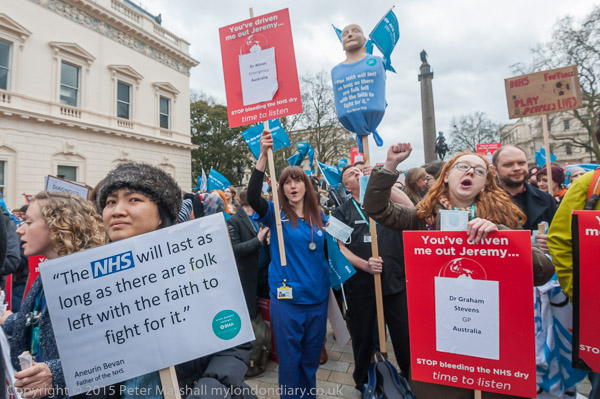
The UK’s National Health Service began on 5 July 1948, 73 years ago today. Earlier in 1946 doctors had voted 10:1 against, but compromises were made to bring more of them on side. It had taken the Labour government a fierce battle to get the proposals through parliament, with the Conservative Party under Winston Churchill voting against its formation 21 times when the bill was being passed.

Churchill followed the example of a former chair of the British Medical Association and compared its formation to Nazism, calling it the “first step to turn Britain into a National Socialist economy.”

It was their often unprincipled opposition that lead Aneurin Bevan to make a famous speech two days before the NHS began that included the following:
That is why no amount of cajolery, and no attempts at ethical or social seduction, can eradicate from my heart a deep burning hatred for the Tory Party that inflicted those bitter experiences on me. So far as I am concerned they are lower than vermin.”

In recent years various Tory MPs have claimed that the Conservative Party should be credited for setting up the NHS, when in fact the party fought tooth and nail against it. They also claim that the NHS is ‘safe in their hands’ while increasingly selling off parts of it, largely to US based healthcare companies. Many MPs have financial interests in healthcare and their votes reflect this, in what seems a clear conflict of interest.

One of the compromises needed to get the bill through was that GP surgeries would remain private businesses that could be bought and sold. Doctors in general practice were to remain independent, with the NHS giving them contracts to provide healthcare. What is now happening is that GP surgeries are increasingly becoming owned by large healthcare companies who organise how they are run and employ doctors.

At the moment we still get to see the doctor for free, though it has become more and more difficult for many to do so, in part because of the systems set up by these healthcare companies. But we have now and then heard proposals for charges to be introduced. We do currently have to pay to see a dentist, and even with these charges it has become difficult for many to get dental treatment under the NHS. Many cannot afford the higher charges for private treatment and even the lower rates under the NHS are a huge problem for those on low pay who are not entitled to exemptions.

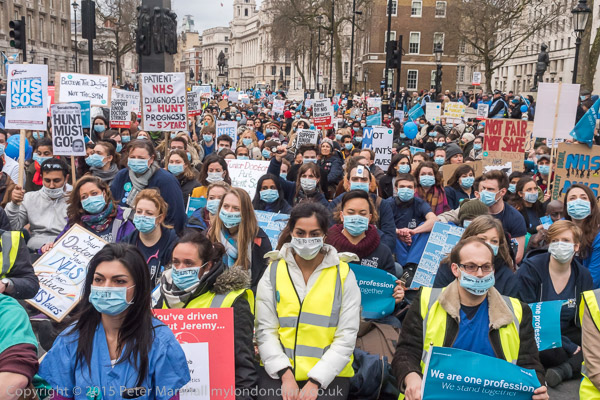
This year there were protests around the country last Saturday, a few days before the NHS’s 73rd anniversary. Ten years ago around a thousand people marched through central London on the actual 63rd anniversary of the foundation of the NHS in a protest to defend the NHS against cuts and privatisation, ending with a rally outside the Houses of Parliament. The changes then being debated under Andrew Lansley’s bill made radical changes which brought in private companies to take over the straightforward and highly profitable areas of NHS services. Now a new bill is under consideration which will make for further back door privatisation of the NHS.

More at NHS 63rd Birthday.


All photographs on this and my other sites, unless otherwise stated, are taken by and copyright of Peter Marshall, and are available for reproduction or can be bought as prints.


Organised Crime – Public & Private Sector

I don’t know who drew the often published cartoon which shows a young boy talking with his father and saying “Dad, I’m considering a career in organised crime” to which his father replies ‘Government or Private Sector”, but it comes to mind when thinking about the secret UK-Iran business meeting which I photographed Ahwazi activists and Peter Tatchell gate-crashing on July 3rd 2015. Though the UK-Iran crimes involve both sectors.

To take pictures I had to rush in with the group of protesters to the National Iranian Oil Company offices in Westminster, which are clearly private property and I Would probably be committing an offence, but I felt there was a clear public interest in covering the protest by the Hashem Shabani Action Group against the exploitation and environmental destruction of their homeland by Iran and the UK and the long history of anti-Arab oppression by the Tehran regime.

Fortunately I was able to enter the building without being personally confronted by the security staff who were busy trying to grab some of the protesters, and along with two other photographers and a couple of videographers was able to run up the six flights of stairs to the floor where the secret meeting was taking place, though I was in a pretty poor state by the time I reached the top landing, worried I might collapse. I was after all probably around 20 years older than most of the others, though only seven older than Peter Tatchell.

I did manage to photograph the peaceful protest inside the meeting, where most of those present were enjoying a buffet lunch, and to take some pictures of the confrontation in the corridor outside, where one youngish man in a blue suit, thought by the protesters to be an Iranian military officer, became rather violent and assaulted another of the photographers. But the corridor was dimly lit and some of my pictures were less than sharp, mainly blurred by moving subjects with the slowish shutter speed I needed.

I may have mentioned in other posts that I very seldom watch TV. I last lived with a TV back in 1968, when I got married and moved into a flat without one, and since then it’s been something I just don’t have time for in my life. Of course I’ve watched TV elsewhere – and can do so now by computer, but its never become a regular habit. One of the consequences of this is that there are many celebrities and public figures that I don’t easily recognise, only hearing them on radio or seeing the occasional picture in the press. So although Lord Lamont or Tory MP Richard Bacon, leader of the All Party Parliamentary Group on Iran, both leading the call for the peaceful and non-violent Hashem Shabani Action Group, (motto ‘Our weapons are pens. Our bullets are words‘), to be banned as a terrorist group were present, I failed to get newsworthy pictures of them.

Having made their point, the protesters decided to leave and I went with them, only to be stopped by police in the foyer of the building. We were prevented from leaving despite showing our press cards, but told we were not under arrest. The photographer who had been assaulted complained to the police, who went upstairs to ask questions, returning after a few minutes to say that the perpetrator probably had diplomatic immunity, and the photographer decided not to press charges.

Eventually after around 45 minutes – during which the building manager brought us fruit juice – press and protesters were allowed to leave and join those outside who had been unable to get past security for more photographs.

More on My London Diary about the dubious history of Britain and Iranian oil and the protest at Ahwazi crash secret UK-Iran business meeting.


All photographs on this and my other sites, unless otherwise stated, are taken by and copyright of Peter Marshall, and are available for reproduction or can be bought as prints.


Tories Out! July 1st 2017

It was the so-called Democratic Unionist Party, the DUP, a deeply bigoted party with links to Loyalist terrorists, that saved Theresa May’s bacon after the 2017 election, bribed to give their support after an election result which showed a rejection of the toxic austerity policies of the Coalition and Tory governments.

And in response, Boris Johnson agreed a Brexit deal which put a border in the Irish Sea which the DUP are now up in arms about. Probably the EU will agree to some relaxation of the rules – and exporters will eventually get used to making the changes in the ‘paperwork’ (surely mainly now digital) which will be required and the Tory government may eventually realise that they need to respect and implement treaties that they sign up to. But it seems inevitable that the sea border will remain, and probably eventually lead on to a united Ireland.

A Grenfell resident holds up some of the flammable cladding

Grenfell had also recently underlined the toxic effects of Tory failure and privatisation of building regulations and inspection and a total lack of concern for the lives of ordinary people.

A huge number of groups came together for the Tories Out march, organised by the People’s Assembly Against Austerity, with around 20,000 gathering outside the BBC (who if they deigned to mention the event in any of their extremely lengthy news broadcasts will probably have called it ‘several hundreds’) to march to a Parliament Square rally calling on the Tory Government to go, saying they had proved themselves unfit to govern, and demanding a decent health service, education system, housing, jobs and living standards for all.

Had the DUP not sold themselves to the Tories, another election seemed inevitable, and perhaps having seen the closeness of the result, at least some of those Labour MPs an officials who had been actively campaigning against their leader might have decided to change sides, backing Labour and the popular policies which had led the Party to its highest vote share since 2001 (40%) and got behind a leader they had previously discarded as ‘unelectable’ to get back into power.

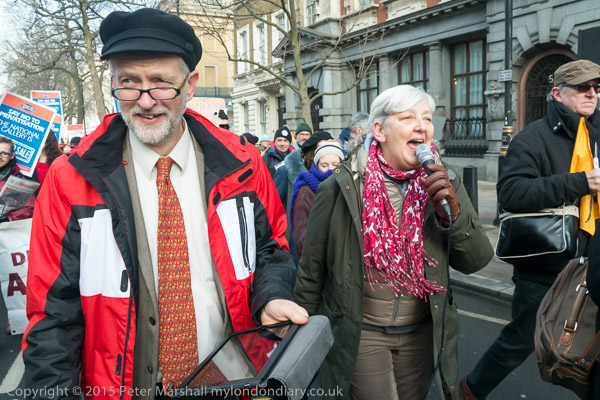
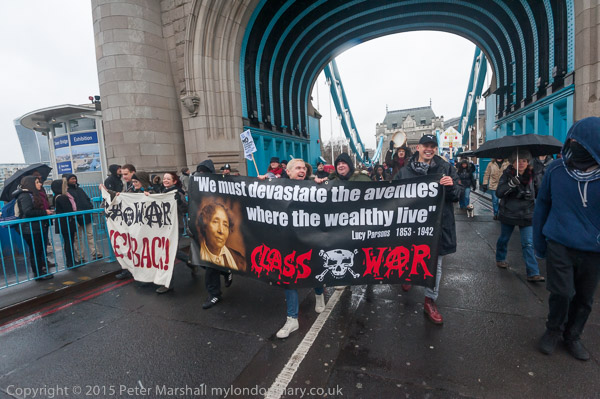
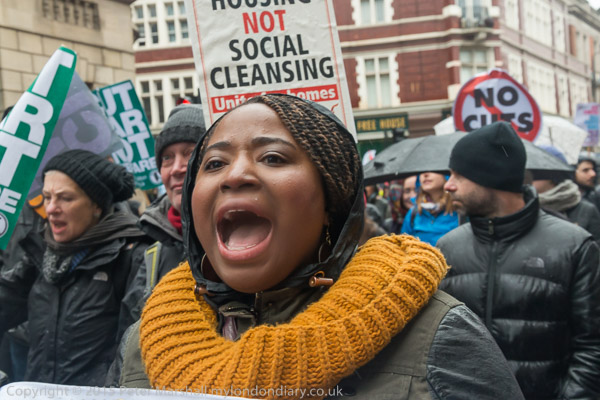
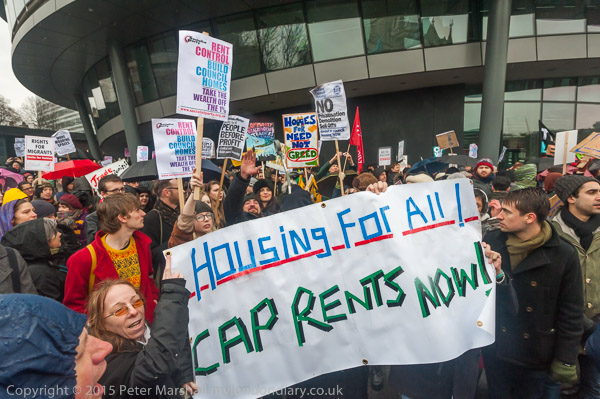
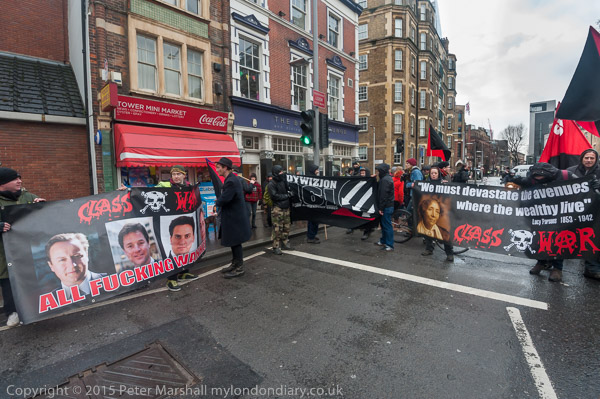
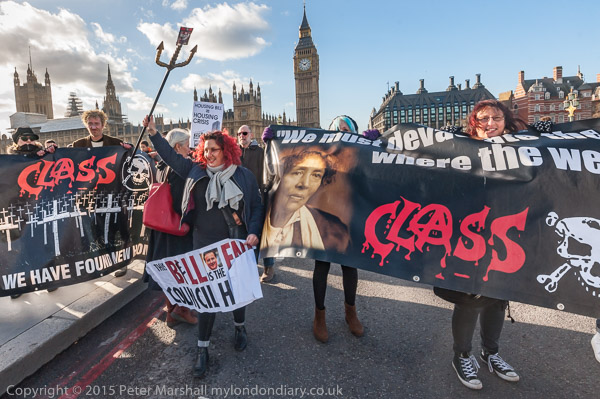
There was certainly huge support for Corbyn on the march, much expressed through that rather inane singing (which I suspect he finds embarrassing.) But there were a significant number who also showed their anger at the housing policies of London Labour boroughs who are demolishing council estates and colluding with huge property developers to replace them with expensive and largely private housing.

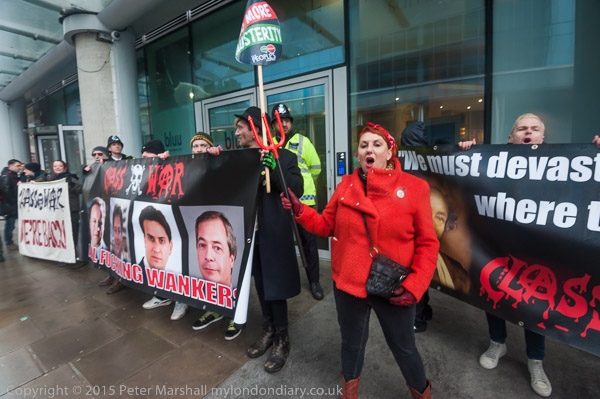
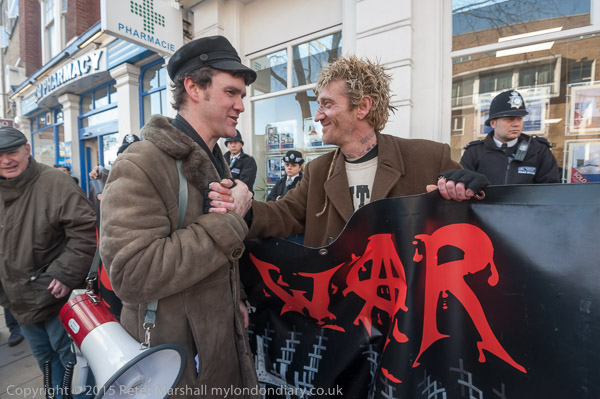
Lisa from Class War greets Victor from the United Voices of the World

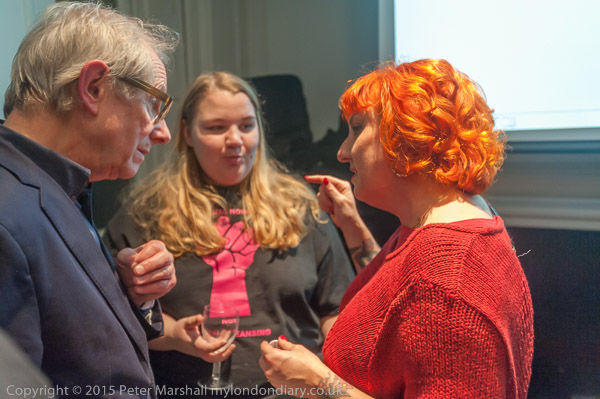
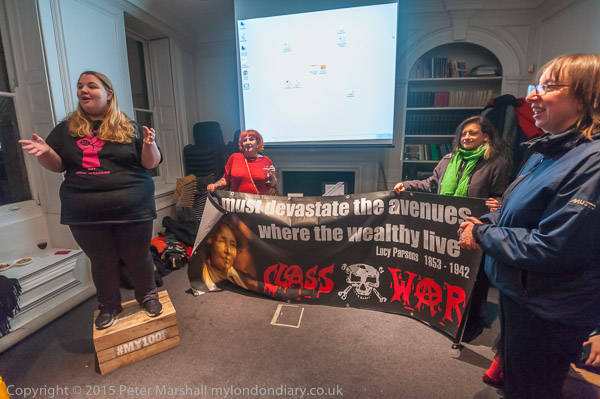
One of those groups was Class War, and later at the rally, unfortunately after I had left, Lisa Mckenzie confronted both Len McCluskey, General Secretary of Unite the Union and Labour Leader Jeremy Corbyn, asking the simple question ‘When are you going to stop Labour councils socially cleansing people out of London?’. Both men simply ignored her and walked away, though Corbyn did look a little shame-faced. His eccentric brother, Piers Corbyn, has long campaigned on the issue, and I suspect Jeremy, like others on the Labour left, would like a change in policy.

More on My London Diary: Tories Out March.

Occupy Westminster Abbey – save the ILF

Broad Sanctuary, Westminster Abbey. 28th June 2014

The Independent Living Fund, ILF, was introduced in 1988 to provide financial support to disabled people with high support needs, including those with severe learning difficulties, cerebral palsy, and a variety of other conditions.

Around 18,000 people relied on the ILF, mainly using the average of £300 a week it provided to employ personal assistants or carers to enable them to live independently, enabling some to work and pursue careers. It was administered independently from the Department for Work and Pensions (DWP) who provided the funding.

The ILF scheme was closed to new applicants in 2010 and the responsibility for providing support in England was passed to local authorities with the ILF ending on 30th June 2015.

There were various problems with the ILF, with regional variations, but the primary reason behind the changes was probably to cut costs. Although the government promised to provide funding to the local authorities for a transitional period, this was around 13% less than under the ILF, and the money, given to cash-strapped authorities already subject to swingeing cuts was not ring-fenced, and so likely to be appropriated for other purposes.

Local authorities were also not given any clear instructions or advice on how to proceed and there were great variations between local authorities in the support that was provided. A survey a year after the end of the scheme showed extreme differences, with some authorities providing similar levels of support to the ILF, but others operating at much reduced levels, creating the real hardship that protests such as this on Saturday 28th June 2014 campaigned against. The loss of ILF was indeed a disaster for many disabled people.

DPAC and others involved in the protest had managed to keep the details hidden from the police, perhaps because it is more difficult for able-bodied police working as undercover officers to infiltrate disabled groups. UK Uncut has provided a diversion with a protest outside Boots on Victoria St when DPAC and Occupy London supporters moved on to the green area in front of Westminster Abbey.

The protesters had hoped for some support from Westminster Abbey authorities as many Christians had called the government’s actions immoral. But they had picked the wrong place, and the Dean of Westminster refused even to talk to the protesters, calling on the police to get rid of them. Labour MP John McDonnell tried without success to phone the Dean who refused to take his call or to phone back.

The weather too was against the protesters, with rain falling steadily, and for once a police officer showed some quick thinking, moving to stand in the middle of the main tent the protesters were attempting to erect, without which there was simply not enough shelter for a lengthy occupation.

I was unsure whether I wanted to go inside the area or not when I arrived, and soon police were surrounding the fairly low wall stopping people from climbing over. But I was able to take pictures from outside and move around freely – and to go home when I decided there seemed to be little point in staying.

Occupy Westminster Abbey – save the ILF
UK Uncut ‘Boot Out Boots’